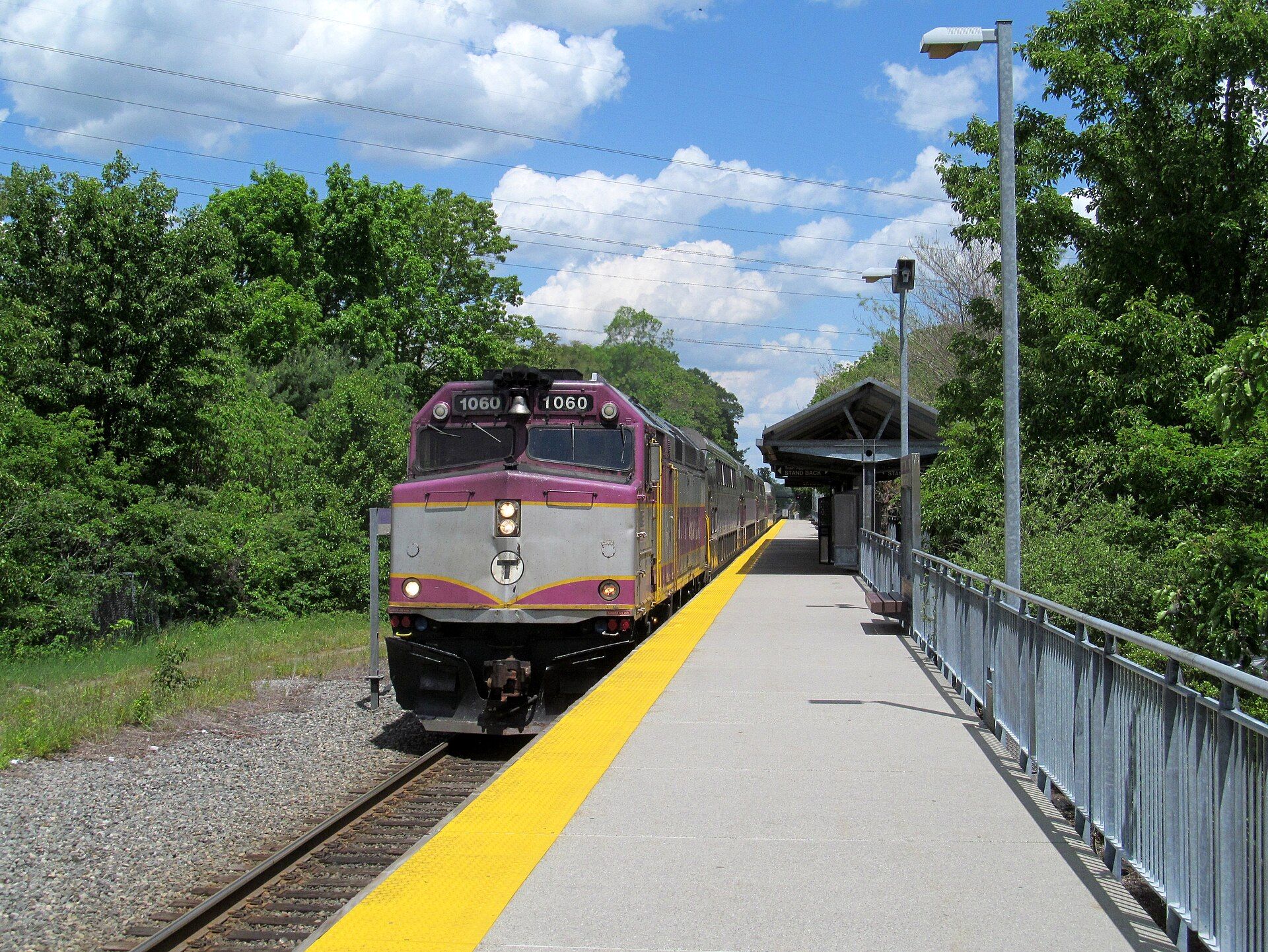
Randolph is a suburban city in Norfolk County, Massachusetts, United States. Landmarks include Stetson Hall and Jonathan Belcher House. Randolph is the birthplace of Mary Eleanor Wilkins Freeman, novelist, short story writer, poet, children's author.
Every piece is drawn from Randolph's own map data and historic archives, then printed and shipped from the USA when you order. No two towns look alike.
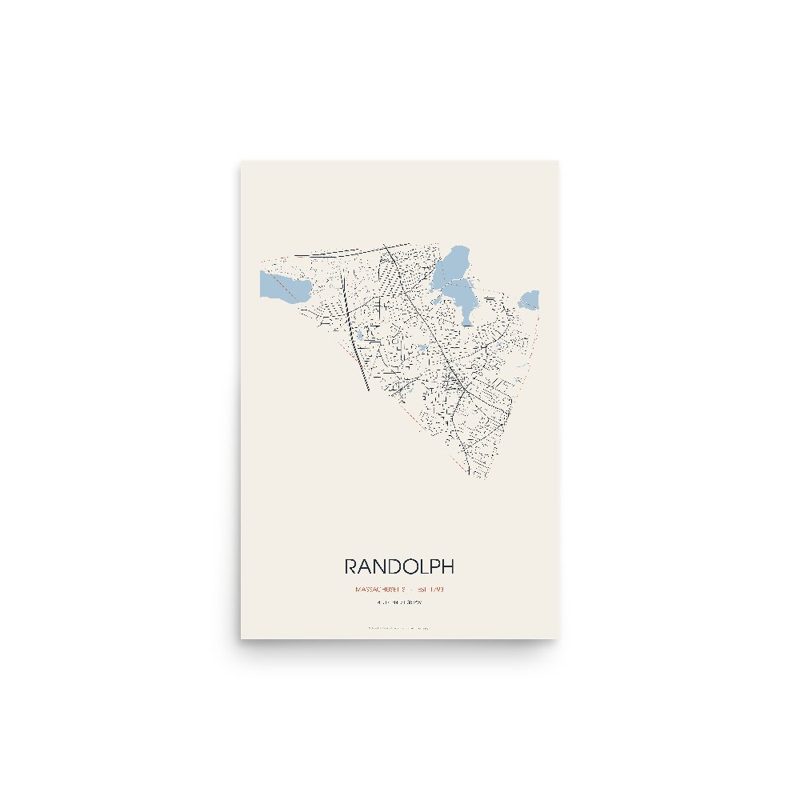
Every road in town, on archival matte paper
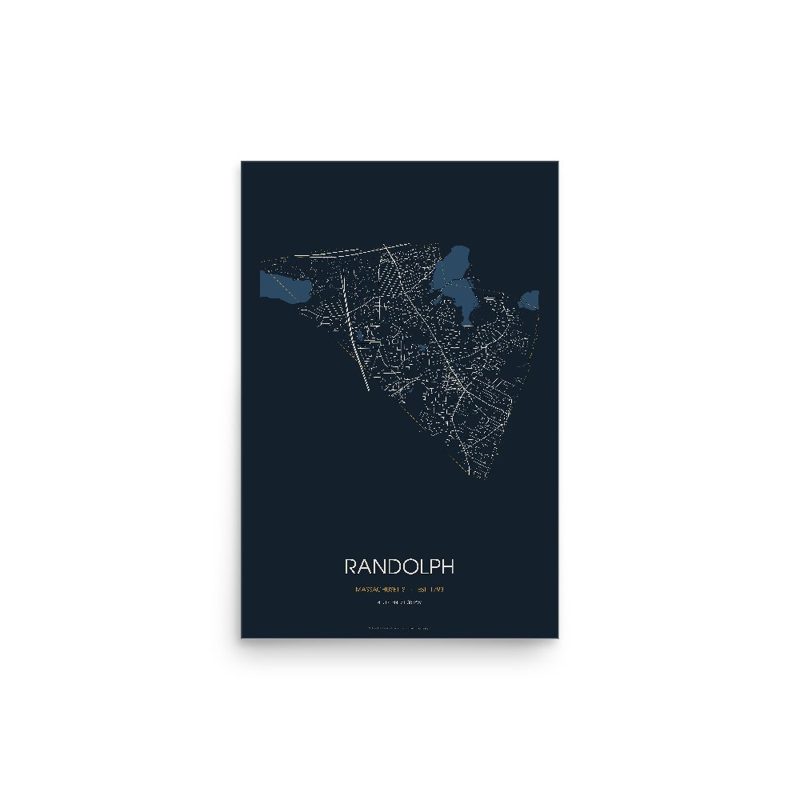
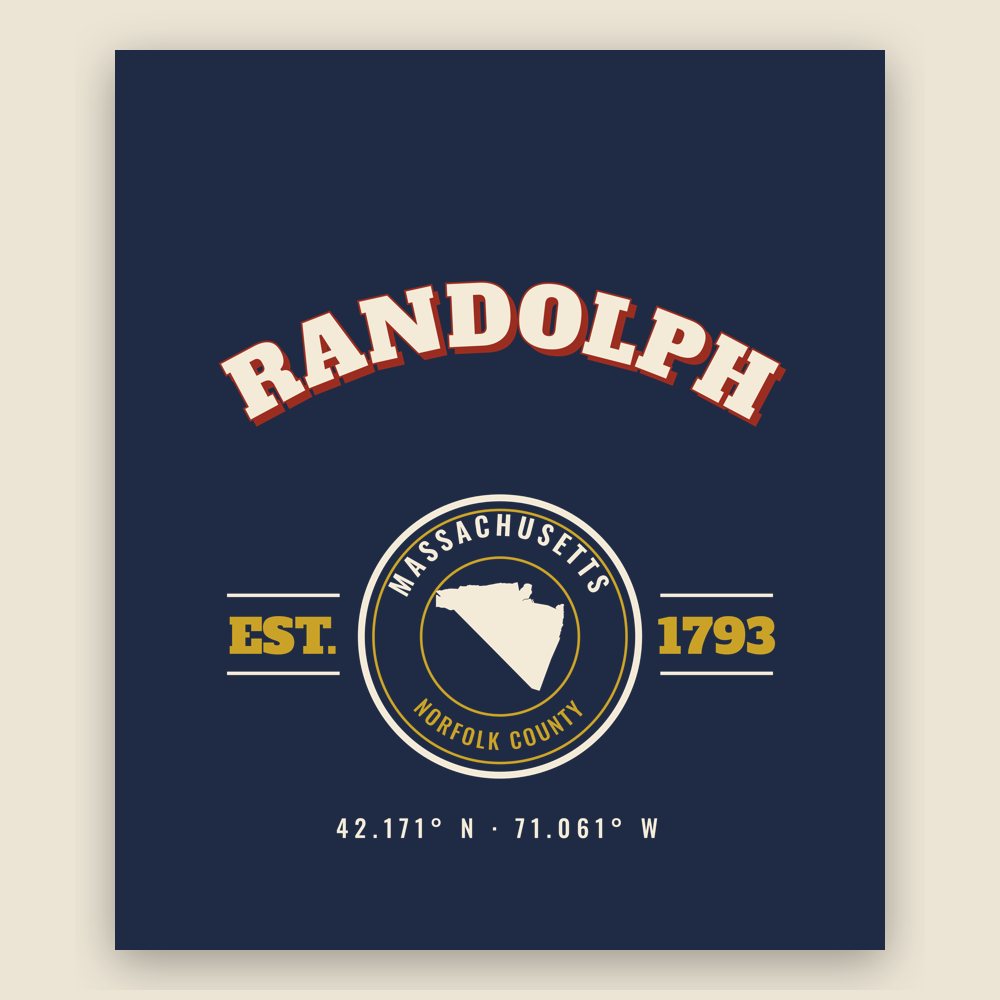
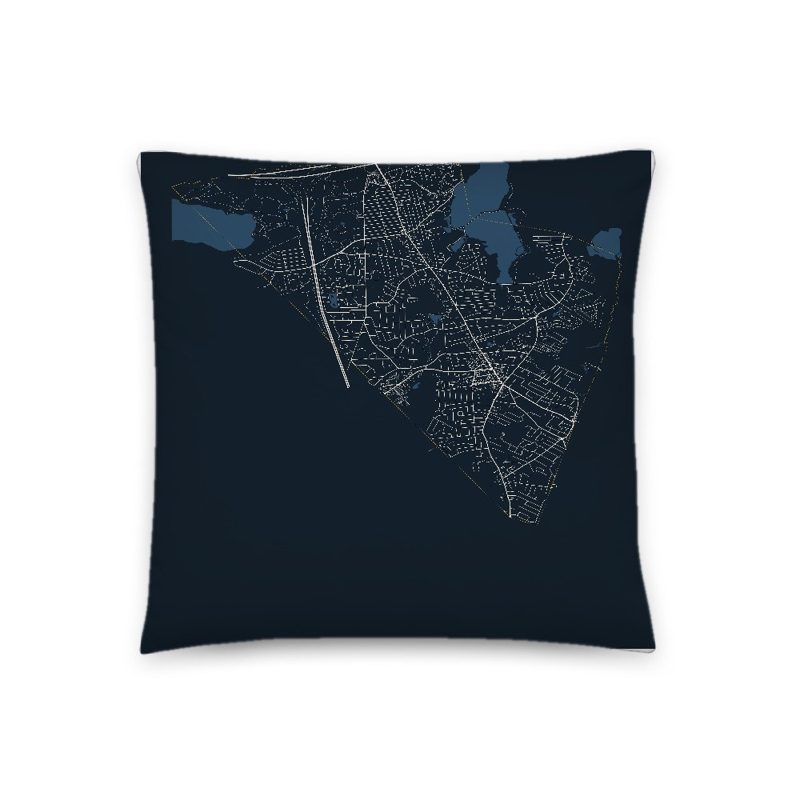
The same map, in navy and silver
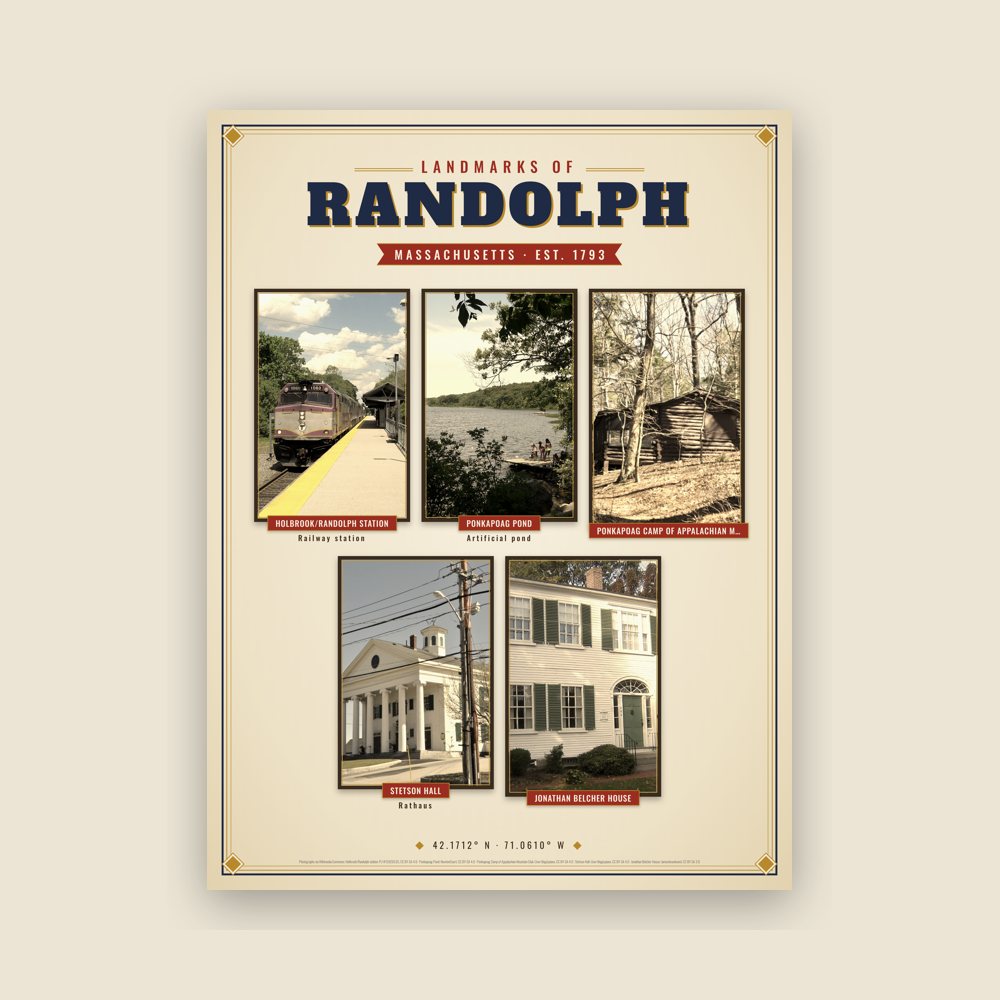
Nine local landmarks, archival matte
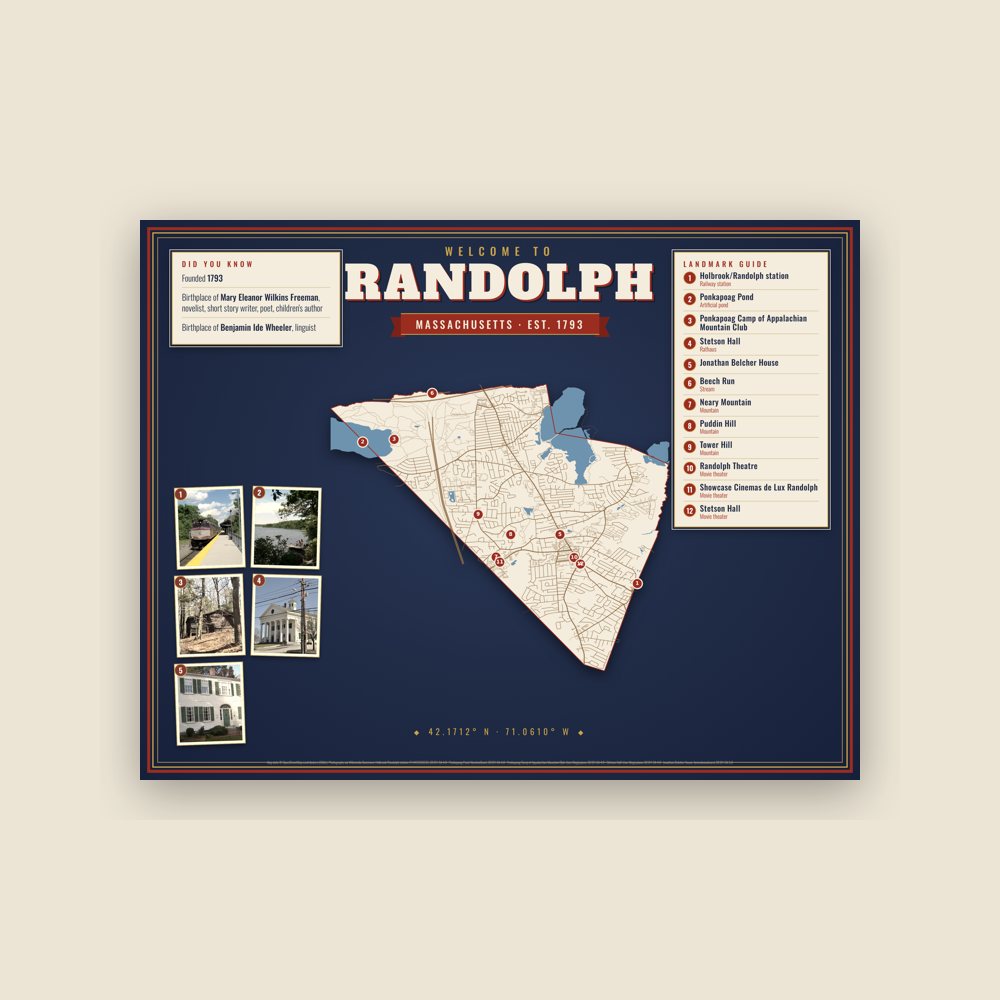
Map of local landmarks, washable fabric
Heavy-blend fleece, street map printed on the back
Soft Bella+Canvas jersey
Glossy ceramic, dishwasher safe
Ceramic keepsake, gold ribbon
Weatherproof, for the front walk
Soft-touch, zip cover
Sturdy all-over-print tote
Glossy top, cork back
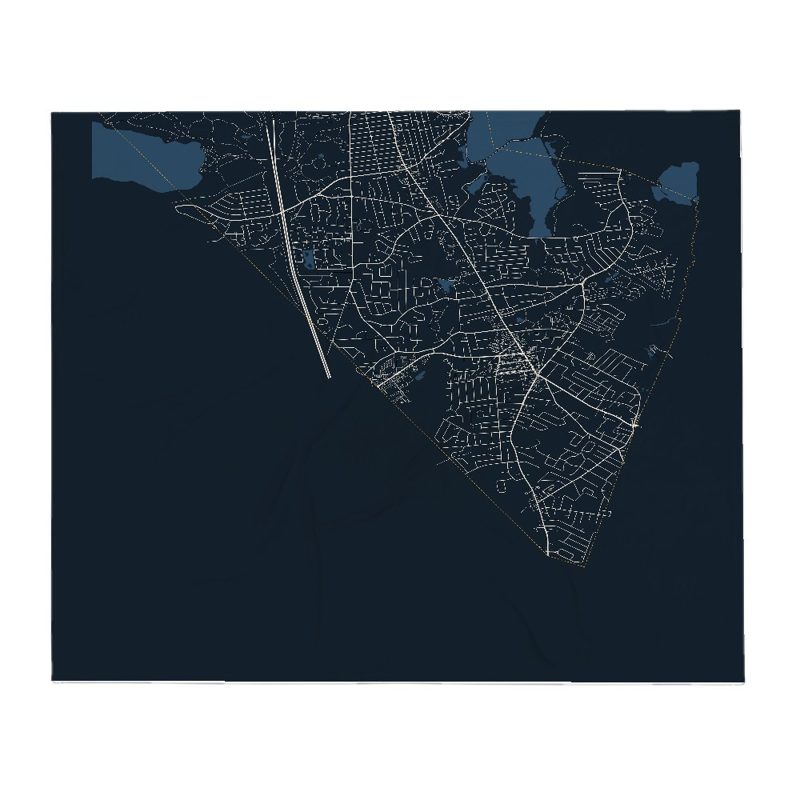
Soft fleece, 50″×60″
20 oz, double-wall stainless
Population 2010: 32,158 → 2020: 34,984
From Wikidata (CC0).
It was called Cochaticquom by the local Cochato tribes. The town was incorporated in 1793 from what was formerly the south precinct of the town of Braintree. According to the centennial address delivered by John V. Beal, the town was named after Peyton Randolph, first president of the Continental Congress.
Randolph was formerly the home of several large shoe companies. Many popular styles were made exclusively in Randolph, including the "Randies". At the time of Randolph's incorporation in 1793, local farmers were making shoes and boots to augment household incomes from subsistence farming. In the next half century, this sideline had become the town's major industry, attracting workers from across New England, Canada and Ireland and later from Italy and Eastern Europe, each adding to the quality of life in the town. By 1850, Randolph had become one of the nation's leading boot producers, shipping boots as far away as California and Australia.
The decline of the shoe industry at the beginning of the twentieth century led to Randolph's evolution as a suburban residential community. Boot and shoe making has been supplanted by light manufacturing and service industries. The town's proximity to major transportation networks has resulted in an influx of families from Boston and other localities who live in Randolph but work throughout the metropolitan area.
Starting in the 1950s, Randolph saw significant growth in its Jewish community with the exodus of Jews from Boston's Dorchester and Mattapan neighborhoods. In 1950, fifteen or twenty Jewish families lived in the town; by 1970, Randolph had about 7,000 Jewish residents, and about 9,000 in 1980, the largest such community south of Boston. At its peak, Randolph had a kosher butcher, Judaica shop, kosher bakery, and two synagogues. By the early 1990s, the population shrank to about 6,000.
The inspiration for the nationally observed Great American Smokeout came from a Randolph High School guidance councilor, who observed in a 1969 discussion with students that he could send all of them to college if he had a nickel for every cigarette butt he found on the ground. This touched off an effort by the Randolph High School class of 1970, supported by the Randolph Rotary Club, to have local smokers give it up for a day and put the savings toward a college scholarship fund. The event went national in 1977.
Adapted (trimmed) from the Wikipedia article Randolph, Massachusetts, revision 1376668041 by its contributors, licensed CC BY-SA 4.0.
We share a part of every Randolph sale with local partners, and we'd love to print from your collection. Old photographs, maps and postcards make the best keepsakes.
Partner with us