
Canton is part of Greater Boston, about 15 miles southwest of Downtown Boston. Landmarks include Norfolk County, Route 128 station and Canton Junction station. Canton is the birthplace of James Batcheller Sumner, chemist.
Every piece is drawn from Canton's own map data and historic archives, then printed and shipped from the USA when you order. No two towns look alike.
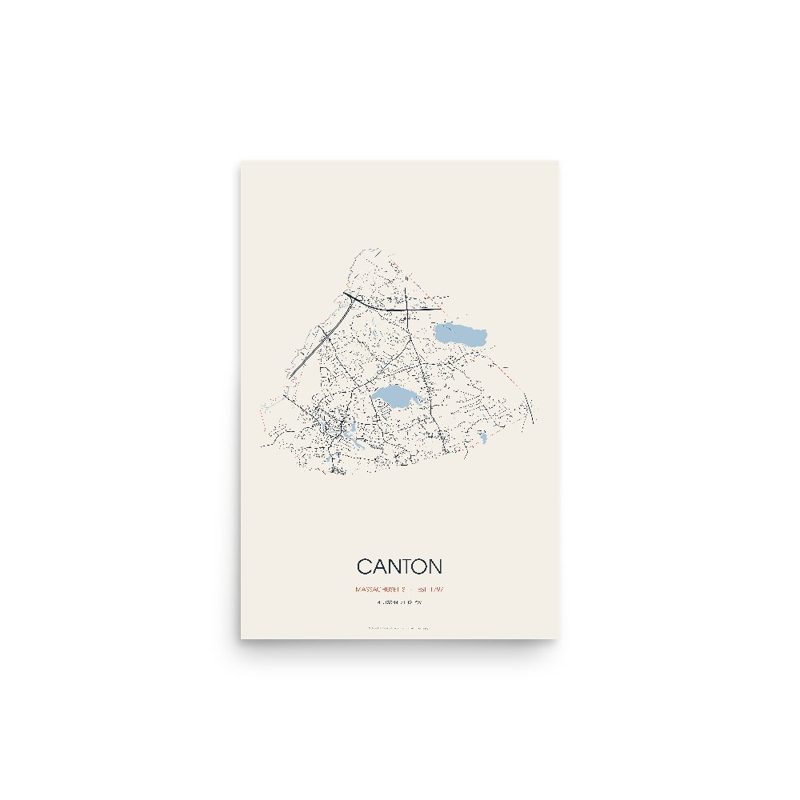
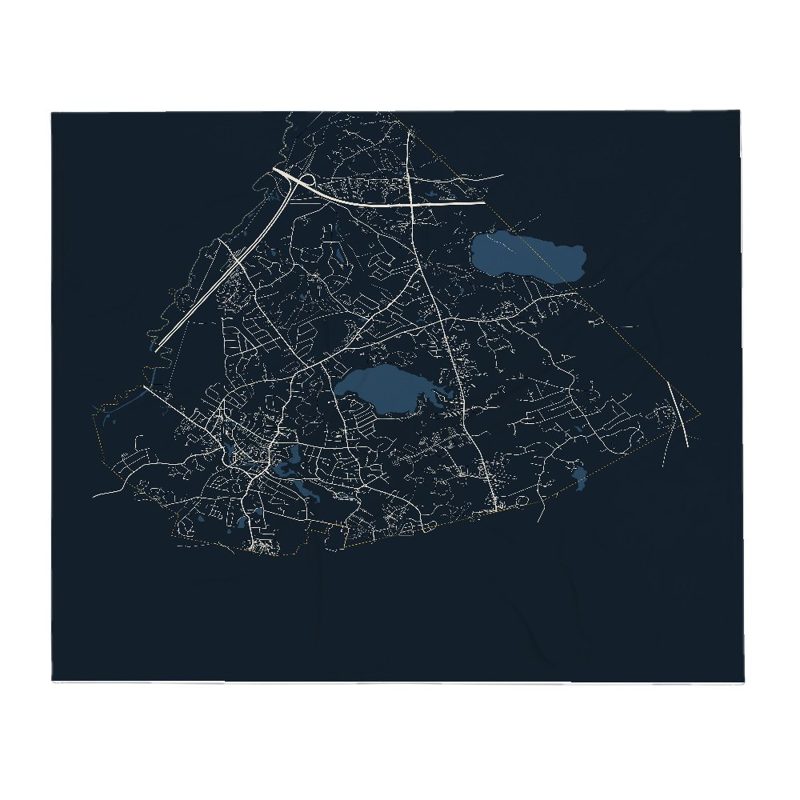
Every road in town, on archival matte paper
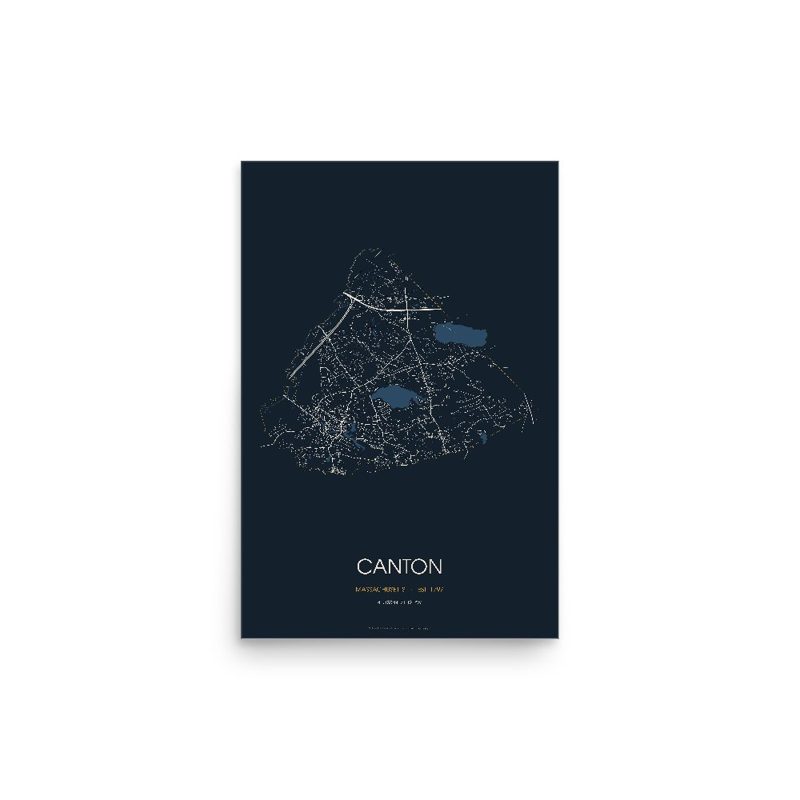
The same map, in navy and silver
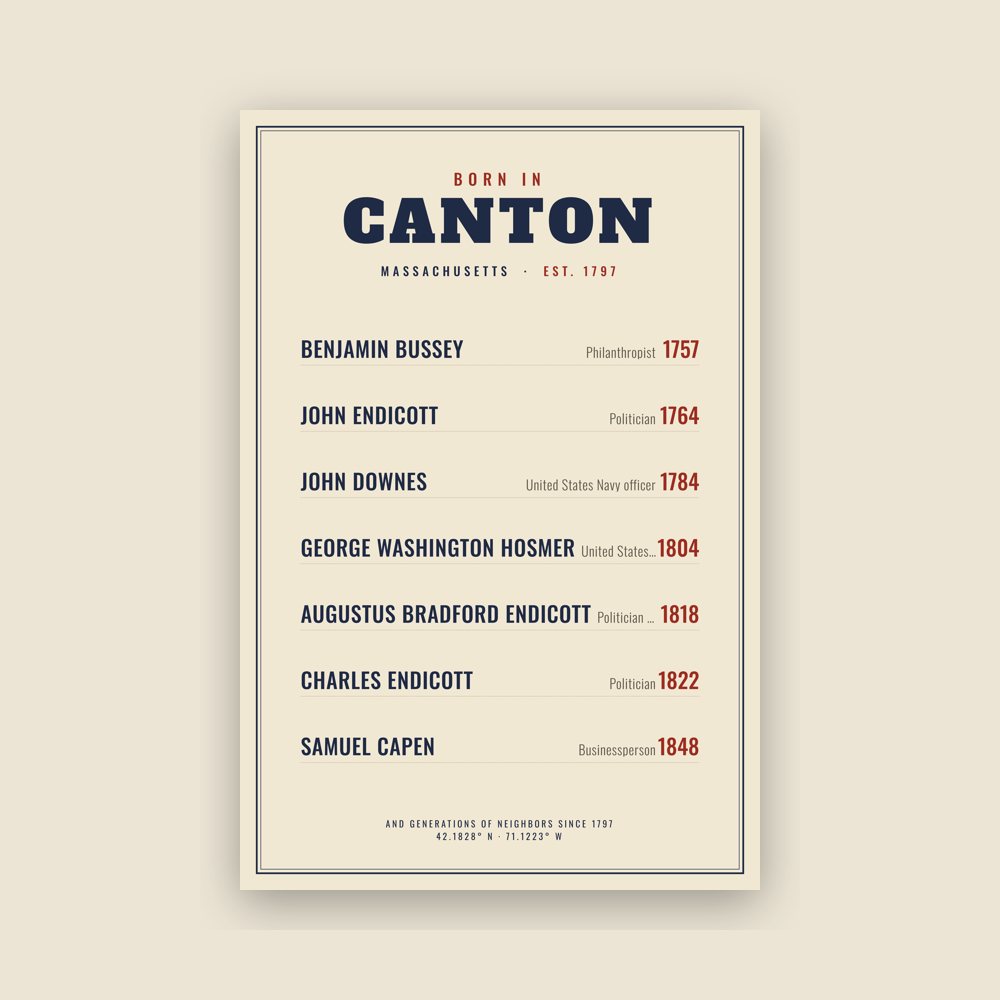
Famous natives, by birth year
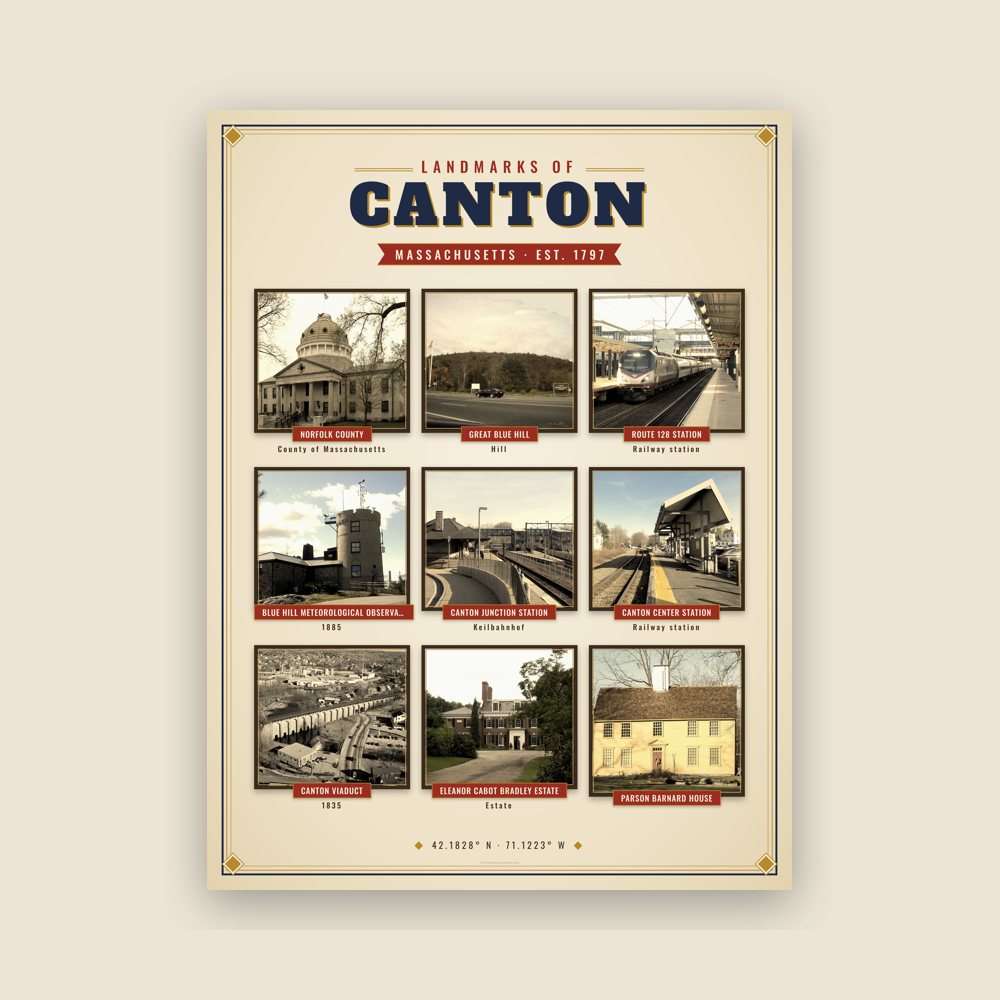
Nine local landmarks, archival matte
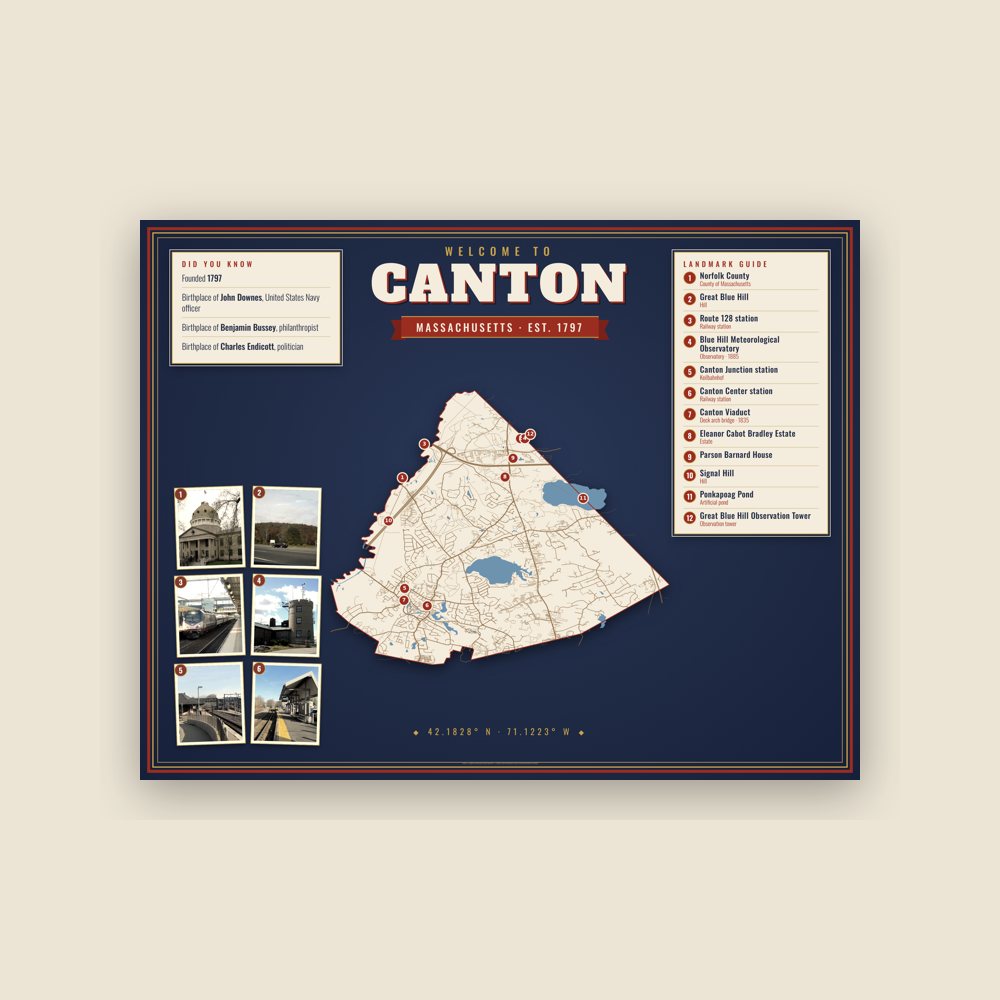
Map of local landmarks, washable fabric
Heavy-blend fleece, street map printed on the back
Soft Bella+Canvas jersey
Glossy ceramic, dishwasher safe
Ceramic keepsake, gold ribbon
Weatherproof, for the front walk

24″×16″, printed coir-look fibers, rubber back
12″×12″ printed wood, ready to hang
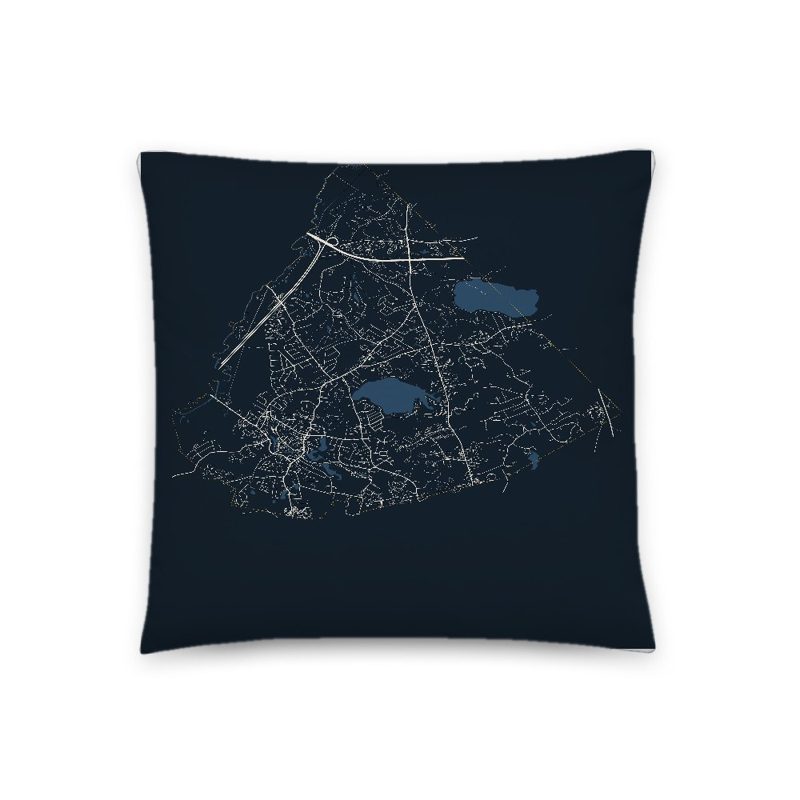
Soft-touch, zip cover
Sturdy all-over-print tote
Glossy top, cork back
Soft fleece, 50″×60″
20 oz, double-wall stainless
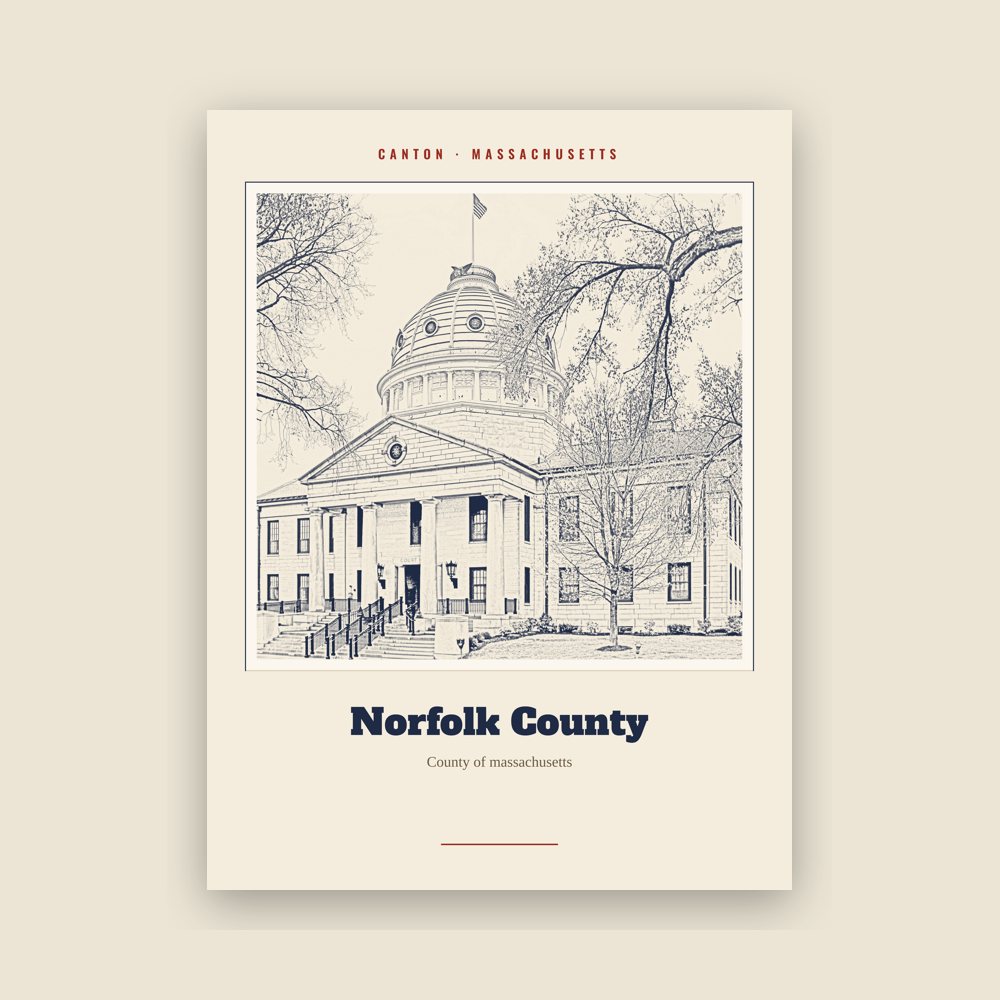
Archival matte print of a local landmark, credited to its photographer
Archival matte print of a local landmark, credited to its photographer
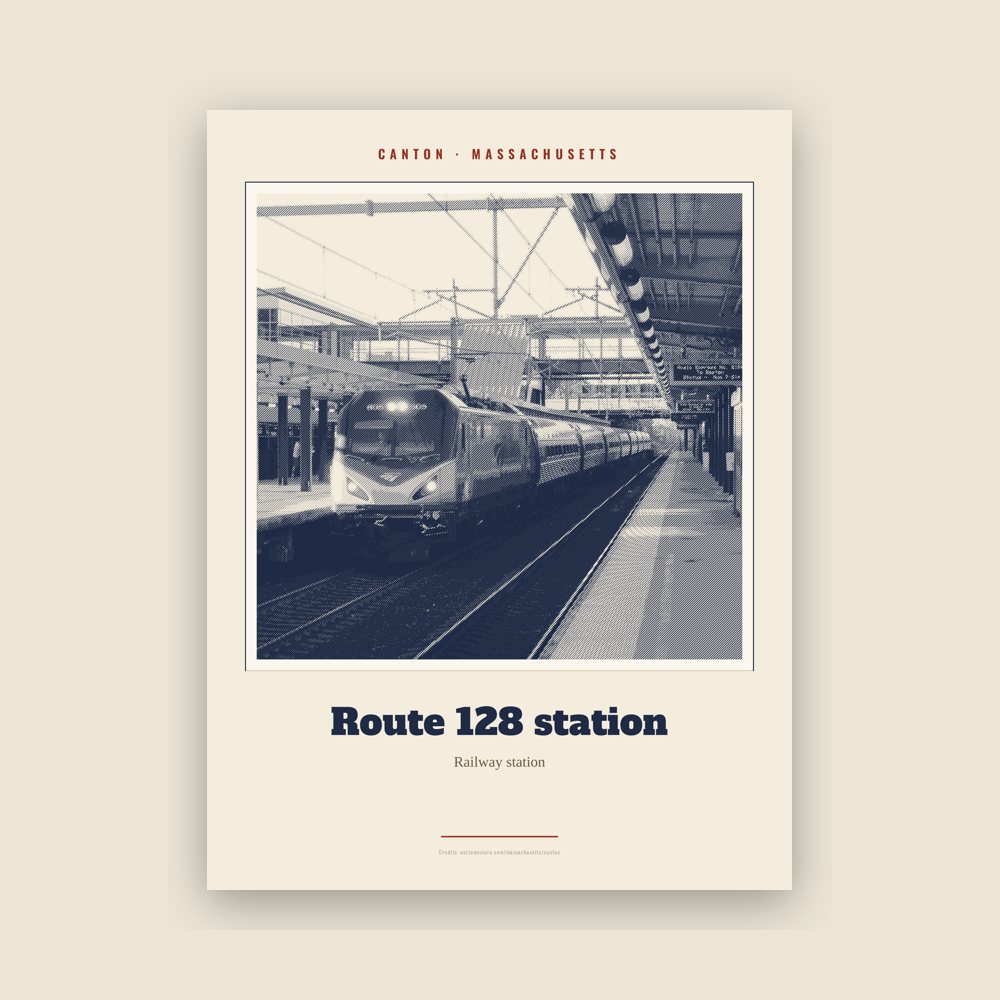
Archival matte print of a local landmark, credited to its photographer
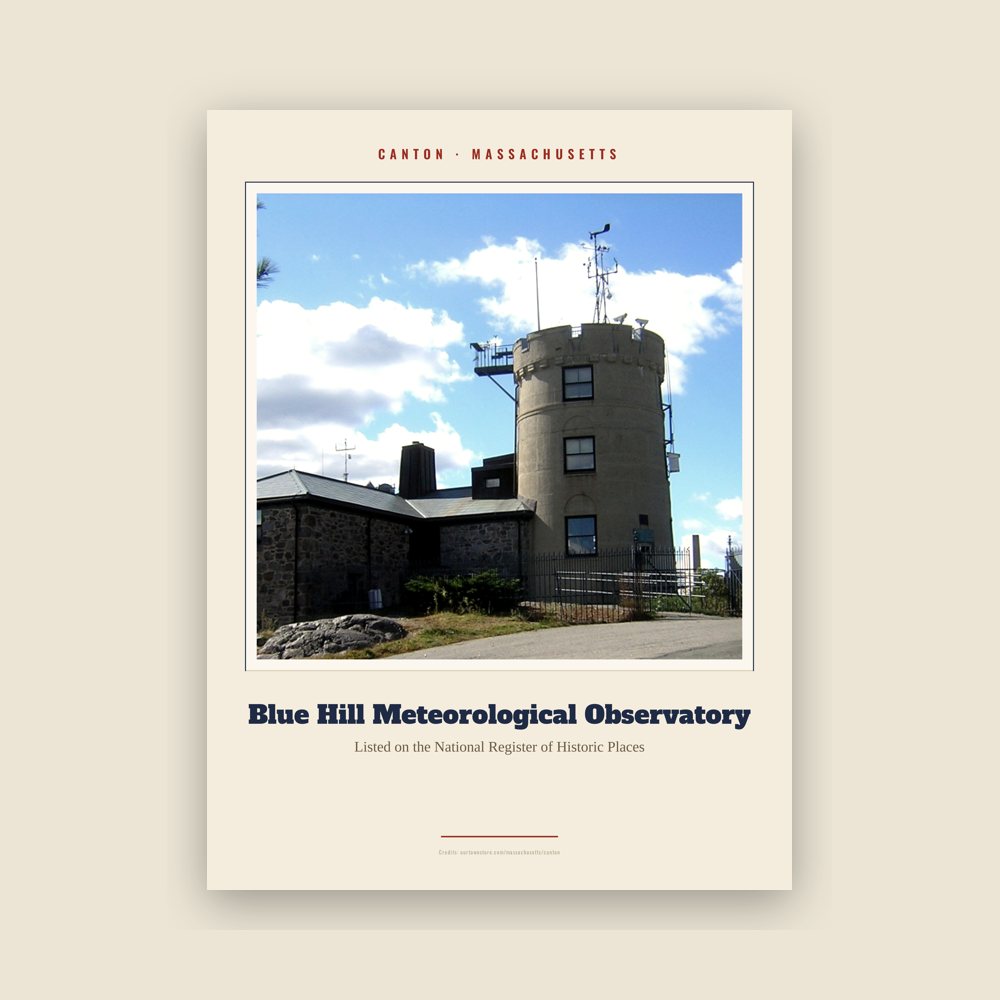
Archival matte print of a local landmark, credited to its photographer
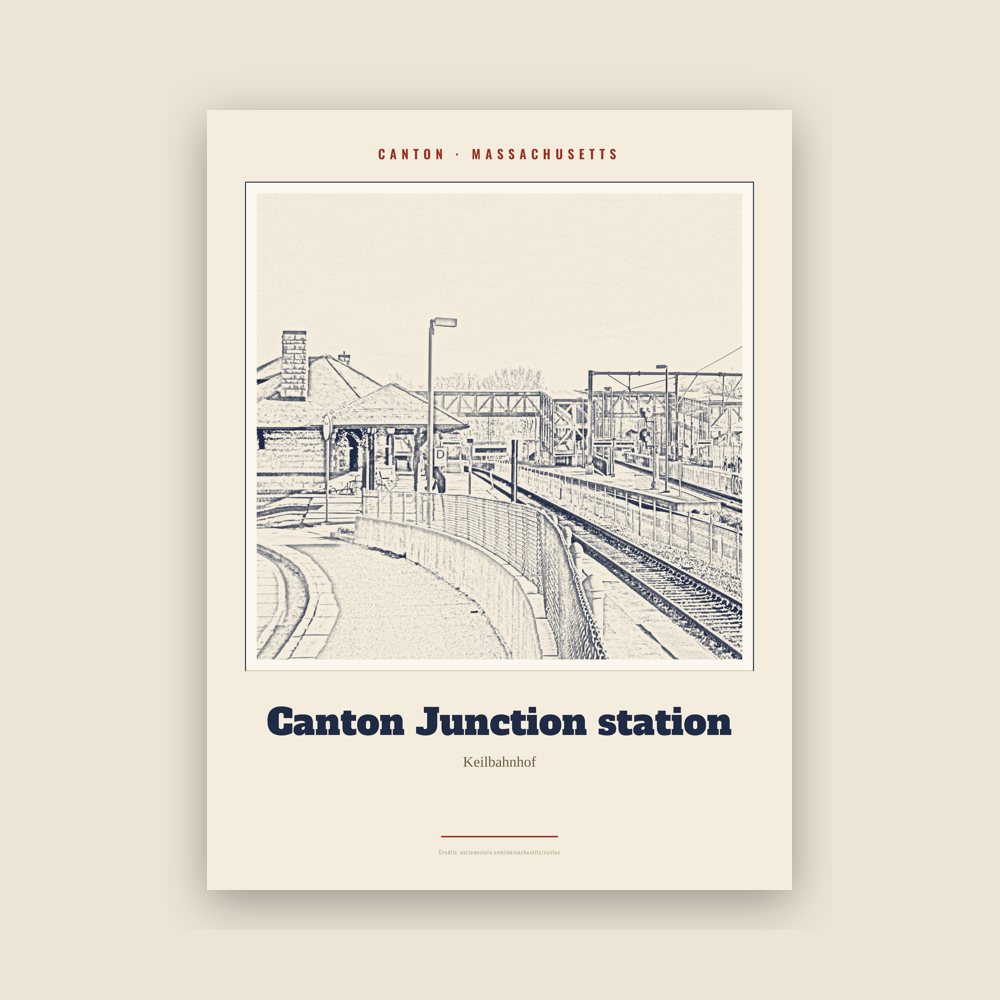
Archival matte print of a local landmark, credited to its photographer
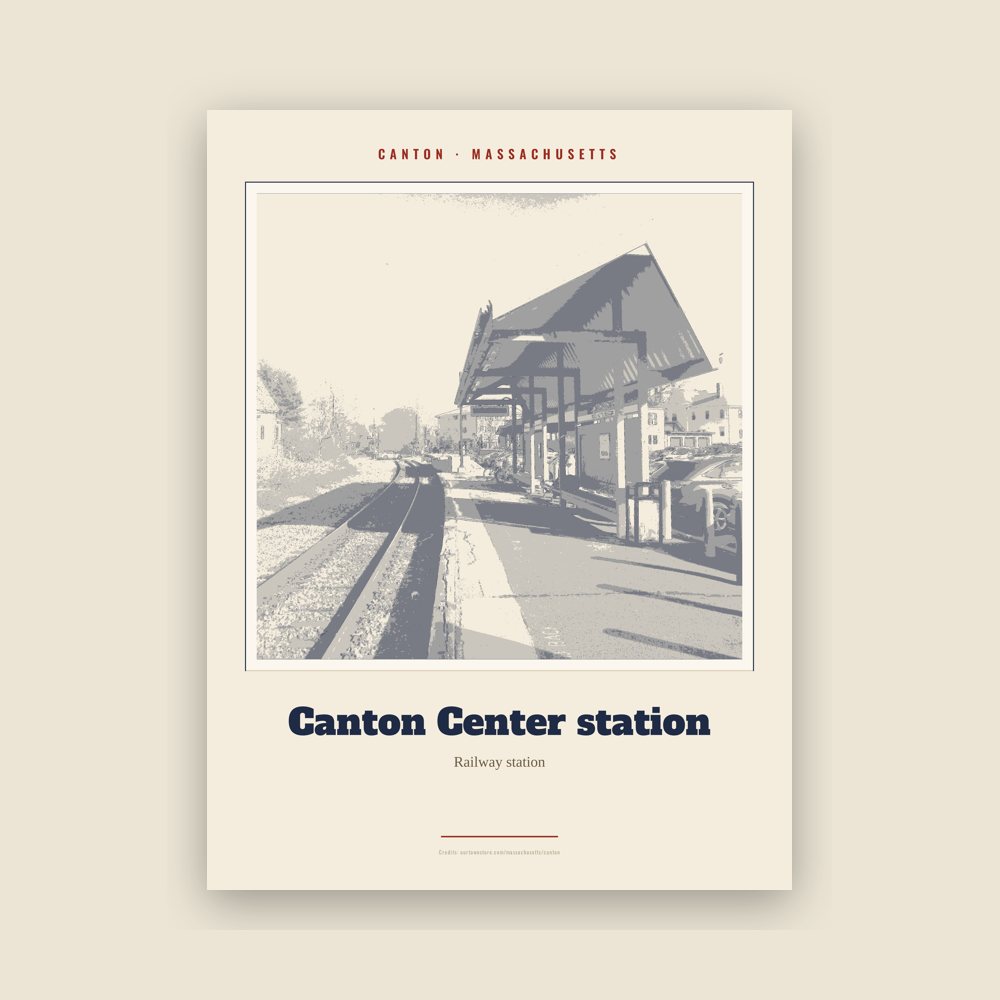
Archival matte print of a local landmark, credited to its photographer

6″×4″ postcard, glossy front
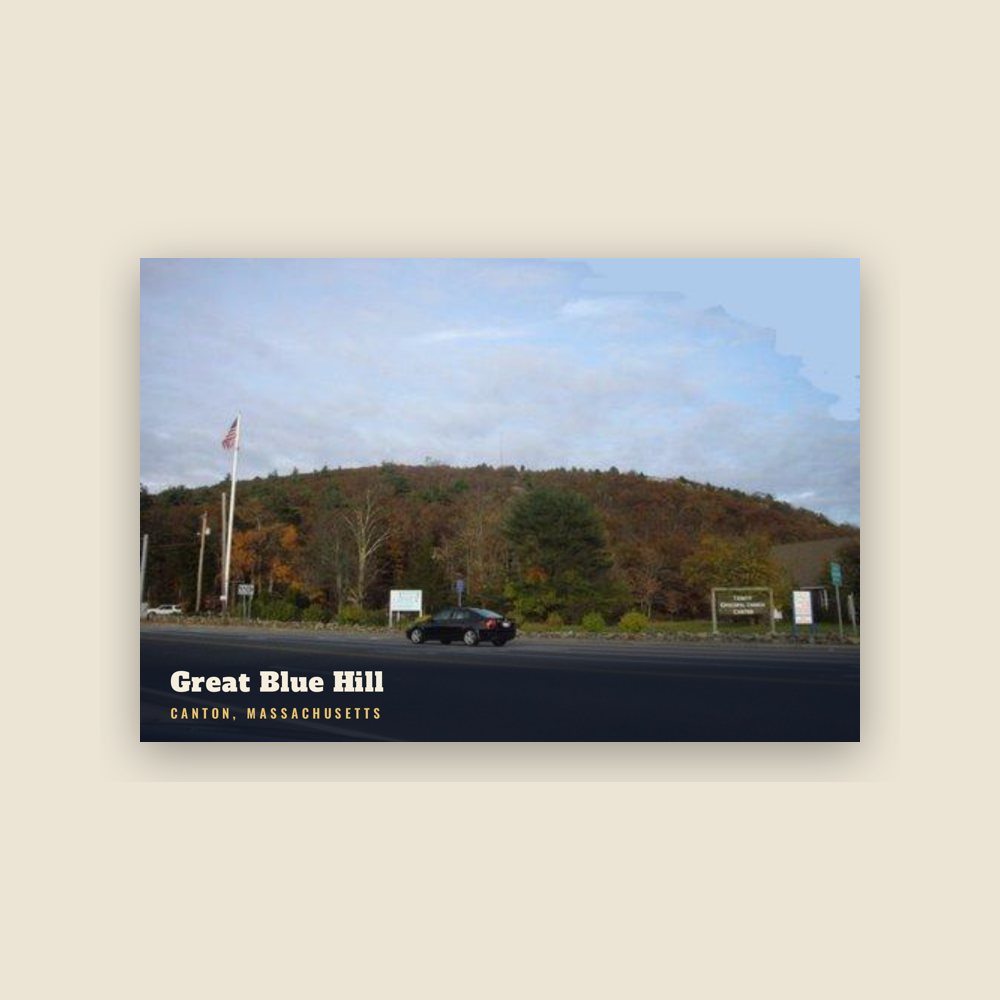
6″×4″ postcard, glossy front
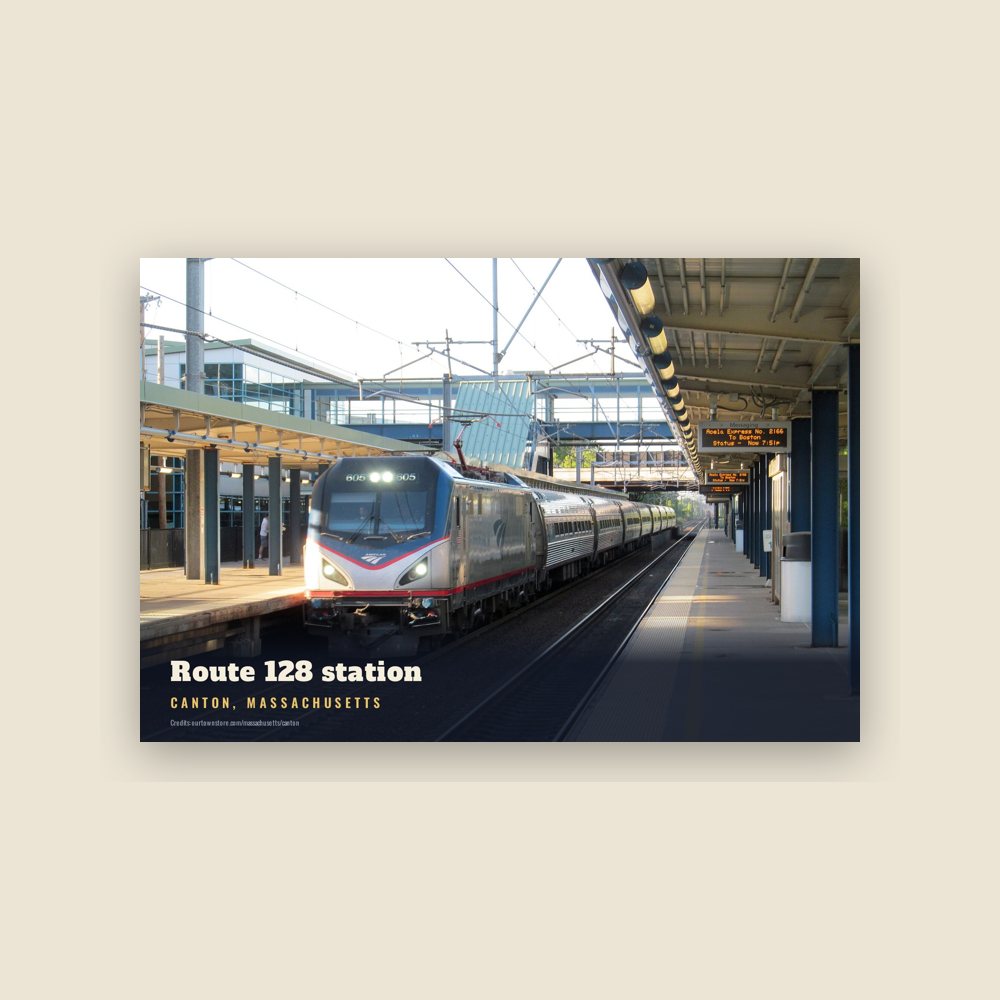
6″×4″ postcard, glossy front

6″×4″ postcard, glossy front
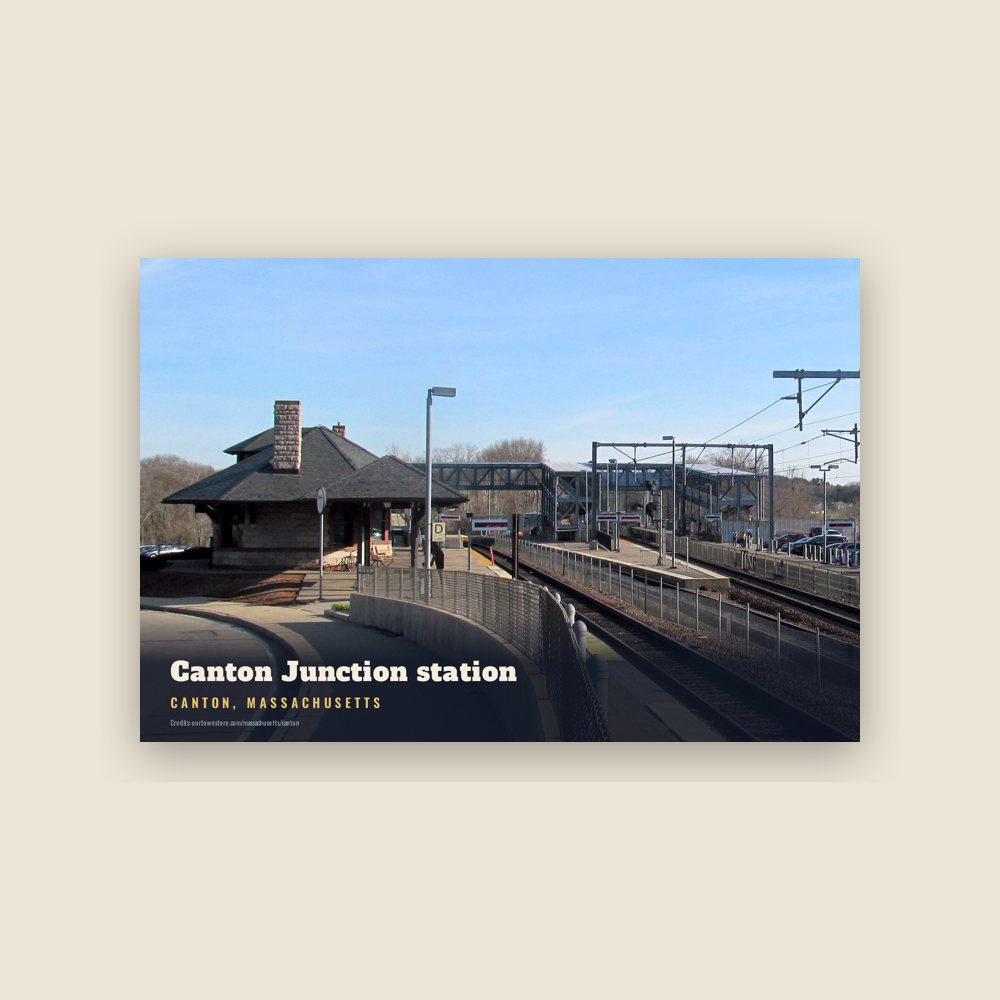
6″×4″ postcard, glossy front
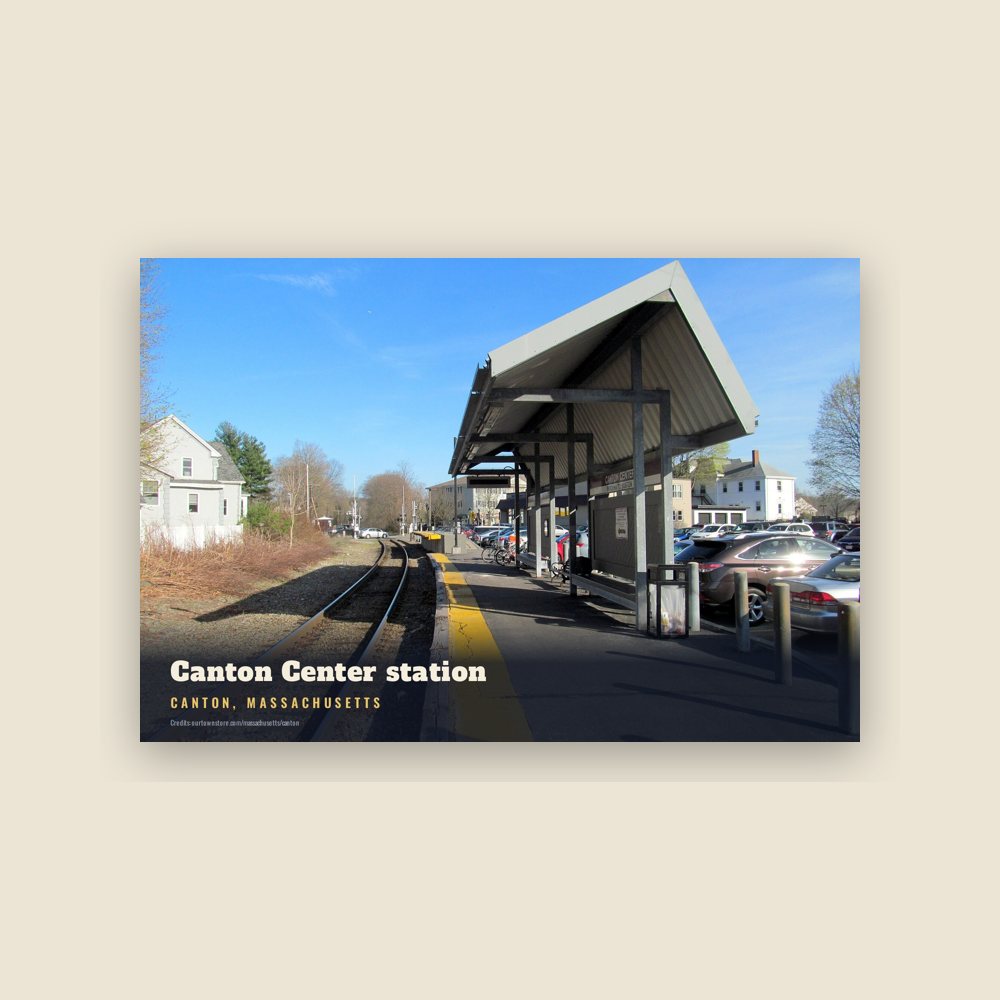
6″×4″ postcard, glossy front
Population 2010: 21,561 → 2020: 24,370
From Wikidata (CC0).
The area that is present-day Canton was inhabited for thousands of years prior to European colonization. The Paleo-Indian site Wamsutta, radiocarbon dated to 12,140 years before present, is located within the bounds of modern-day Canton at Signal Hill.
At the time of the Puritan migration to New England in the early 1600s, Canton was seasonally inhabited by the Neponset band of Massachusett under the leadership of sachem Chickatawbut.
From the 1630s to the 1670s, increasing encroachment by year-round English settlers on lands traditionally inhabited only part of the year, devastating virgin soil epidemics, and English colonial policy pushed native people in to Praying Towns, a precursor to modern day Indian reservations.
The modern town of Canton was the site of Ponkapoag, the second Praying Town in the Massachusetts Bay Colony, which was set off from Dorchester in 1657, three years after English colonists resettled a group of Nemasket there from Cohannet, modern day Taunton. The so-called Praying Indians that settled in Ponkapoag are known today as the Massachusett Tribe at Ponkapoag.
In 1674, King Philip's War led to significant depopulation of Ponkapoag, which found itself on the fault lines of one of the bloodiest conflicts in North American history, and in October 1675 those Praying Indians that remained were forcibly removed to Deer Island by order of the Massachusetts General Court. After the war, in part because of the loss of life and the fleeing of native refugees north to join the Wabanaki Confederacy, the General Court disbanded 10 of the original 14 towns in 1677 and placed the remaining four, including Ponkapoag, under the supervision of colonists.
Over the next 100 years, while Ponkapoag remained an official entity, the loss of self-determination and privatization of collective lands led to the gradual intermixing of native and settler populations in the area.
In 1726, Stoughton, Massachusetts, split from the large original territory of Dorchester; then on February 23, 1797, Canton was officially incorporated from the territory of Stoughton. The name "Canton" was suggested by Elijah Dunbar and comes from a belief that Guangzhou, China, was antipodal to it. This is not possible, since they are both well north of the Equator; they are, however, about 2 degrees from being antipodal in longitude, ignoring latitude. In addition to being a prominent Canton citizen, Elijah Dunbar was the first president of the Stoughton Musical Society from 1786 to 1808. Now named the Old Stoughton Music Society, it is the oldest choral society in the United States.
Paul Revere built the nation's first copper rolling mill in Canton in 1801. His poem entitled Canton Dale expresses his affection for the town. Canton was the location of the Rising Sun Stove Polish Company, founded by Elijah Morse, a wealthy merchant and creator of the pot-belly stove.
Adapted (trimmed) from the Wikipedia article Canton, Massachusetts, revision 1378890502 by its contributors, licensed CC BY-SA 4.0.
We share a part of every Canton sale with local partners, and we'd love to print from your collection. Old photographs, maps and postcards make the best keepsakes.
Partner with us