Alford was first settled in 1756 as part of a land purchase from the Shauanum Stockbridge Mahican tribe by a group led by Timothy Woodbridge. Landmarks include Union Church (Alford, Massachusetts) and Alford Town Hall (Alford, Massachusetts). Alford is the birthplace of John W. Hulbert, politician.
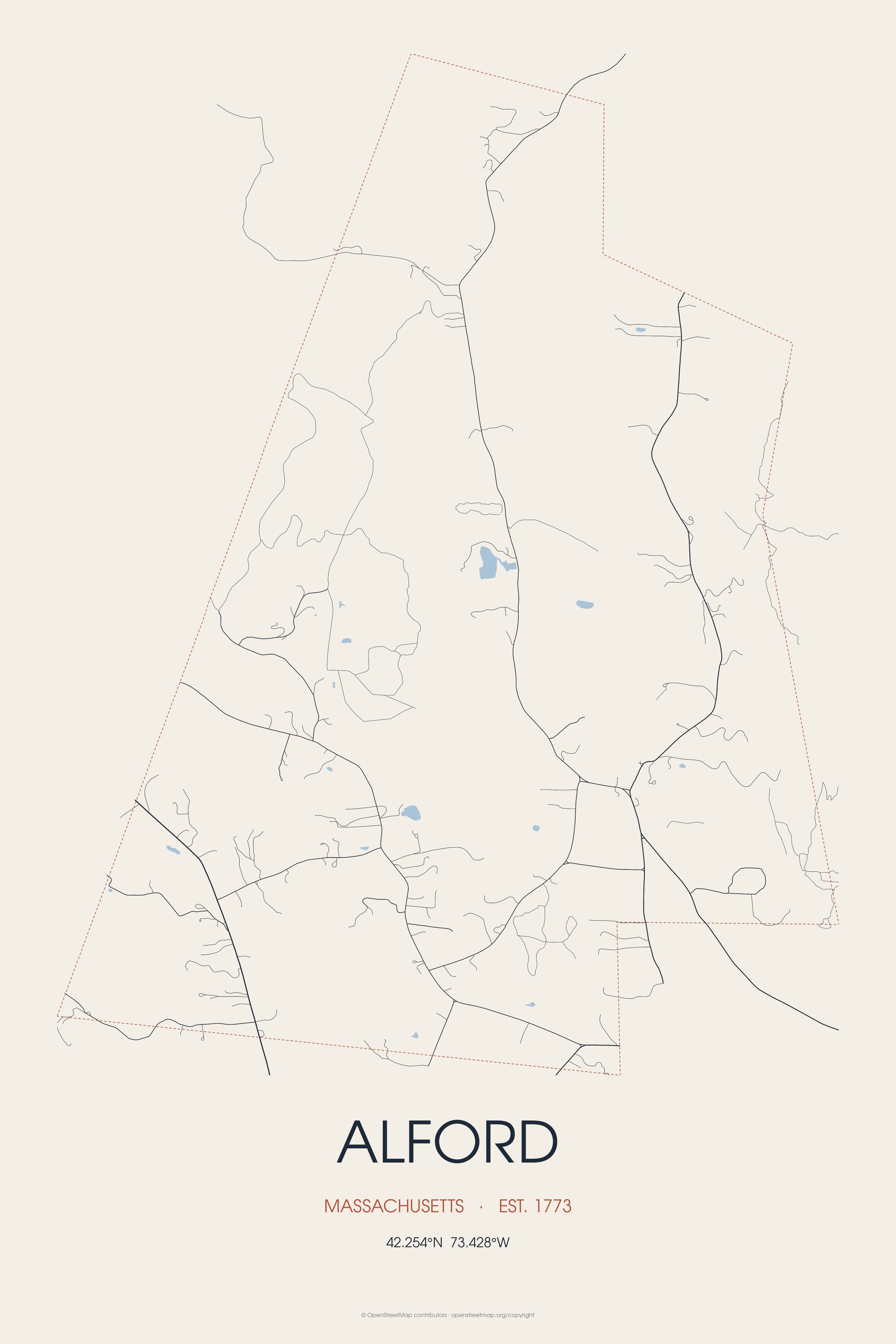
Every piece is drawn from Alford's own map data and historic archives, then printed and shipped from the USA when you order. No two towns look alike.
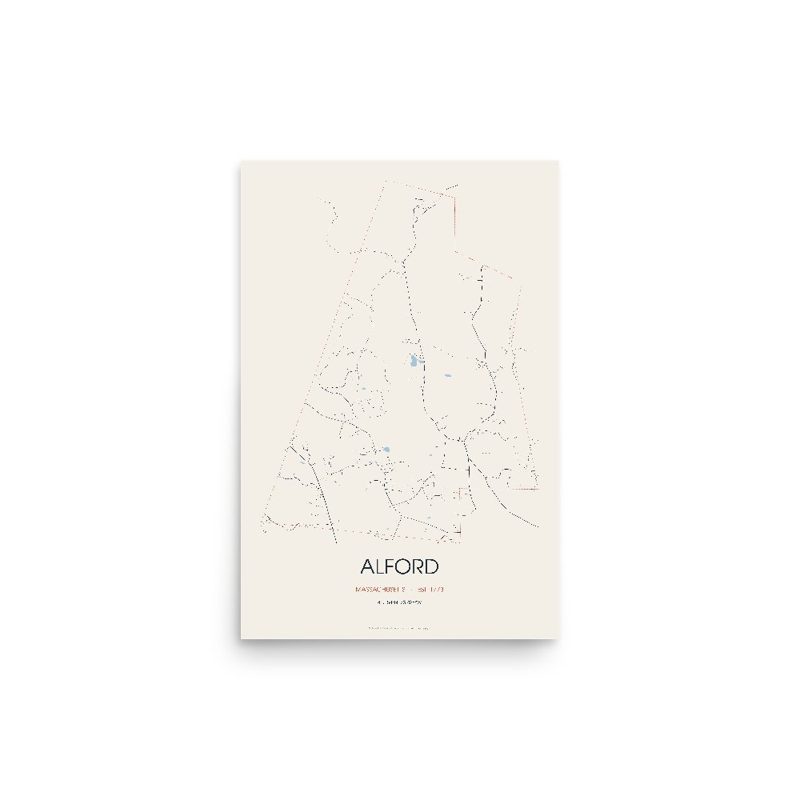
Every road in town, on archival matte paper
The same map, in navy and silver
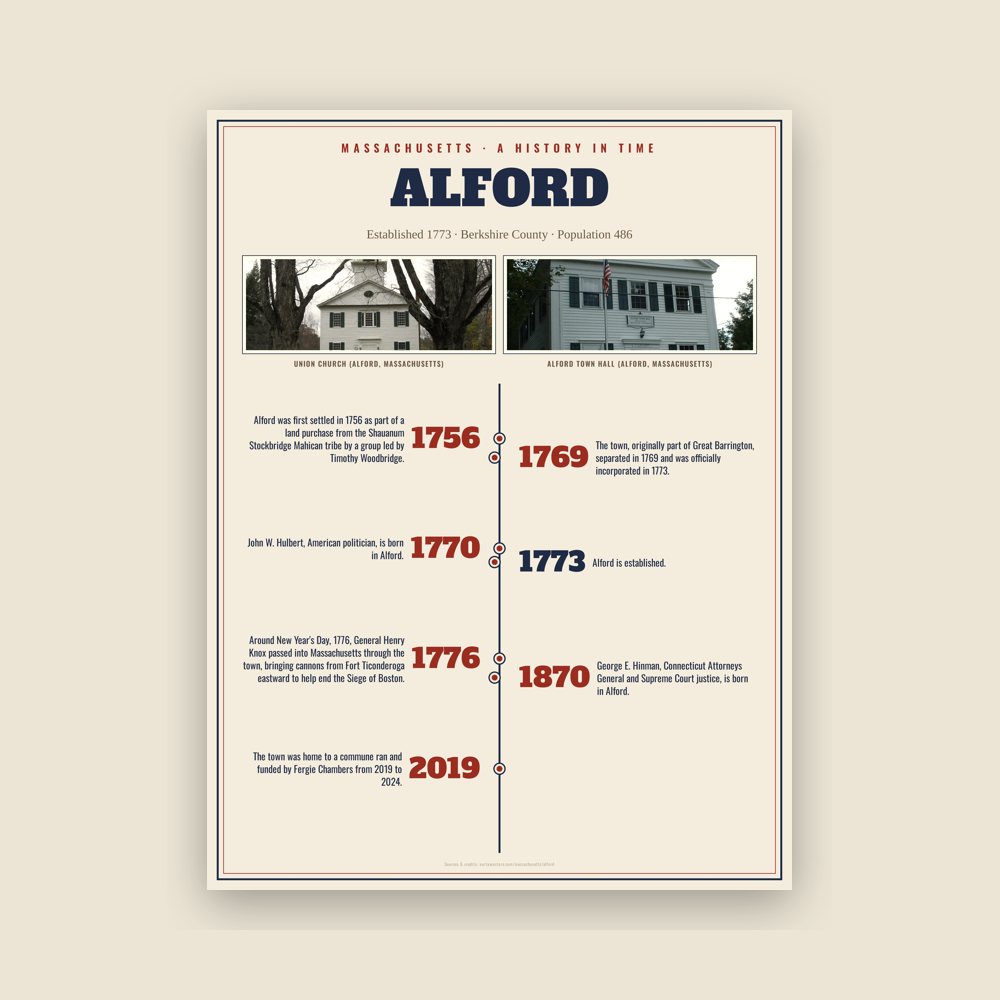
The town's story in dates, from its own records, for home or classroom
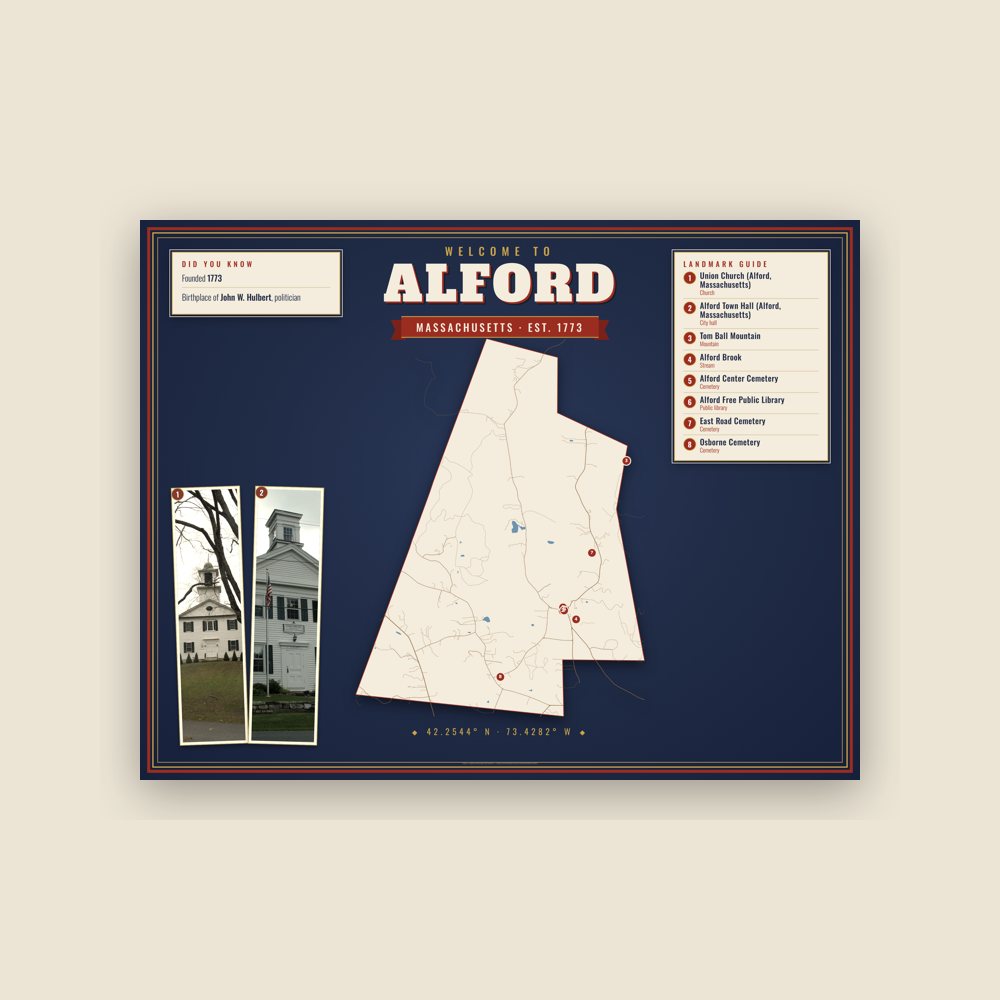
Map of local landmarks, washable fabric
Heavy-blend fleece, street map printed on the back
Soft Bella+Canvas jersey
Glossy ceramic, dishwasher safe
Ceramic keepsake, gold ribbon

Weatherproof, for the front walk
24″×16″, printed coir-look fibers, rubber back

12″×12″ printed wood, ready to hang
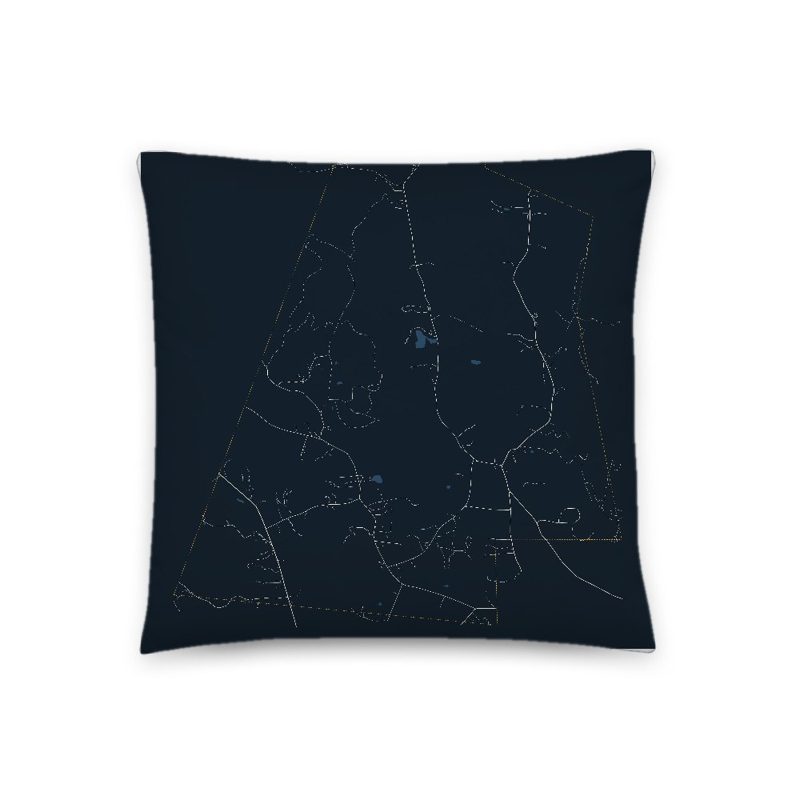
Soft-touch, zip cover
Sturdy all-over-print tote
Glossy top, cork back
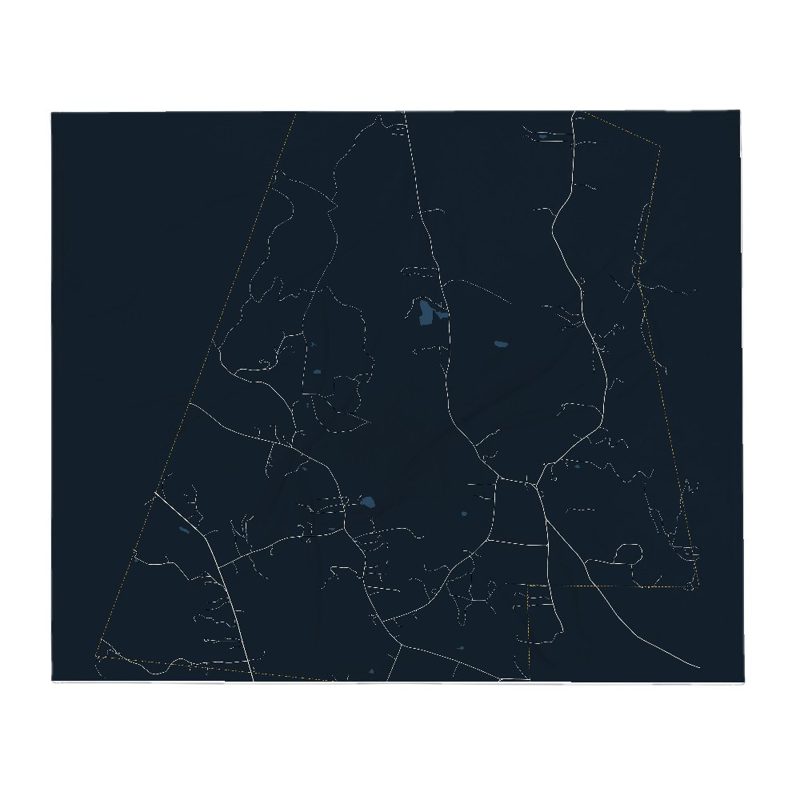
Soft fleece, 50″×60″
20 oz, double-wall stainless
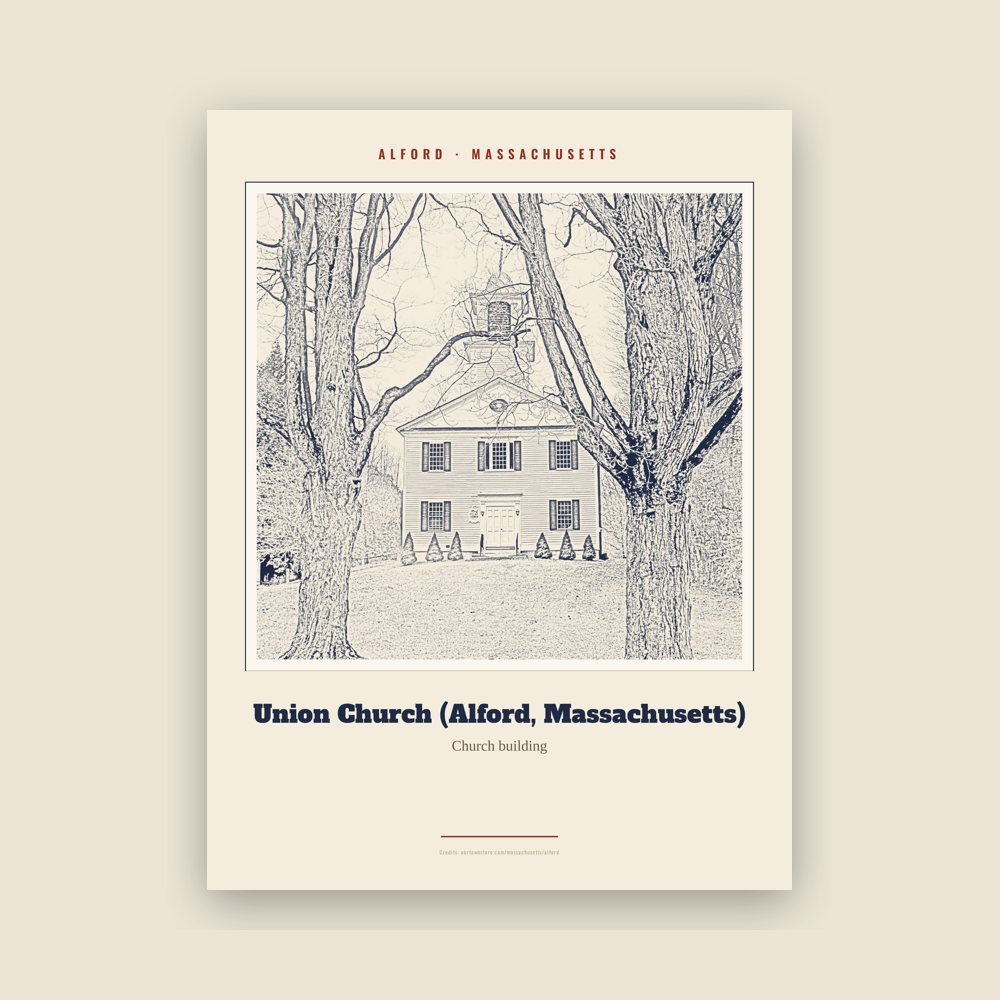
Archival matte print of a local landmark, credited to its photographer
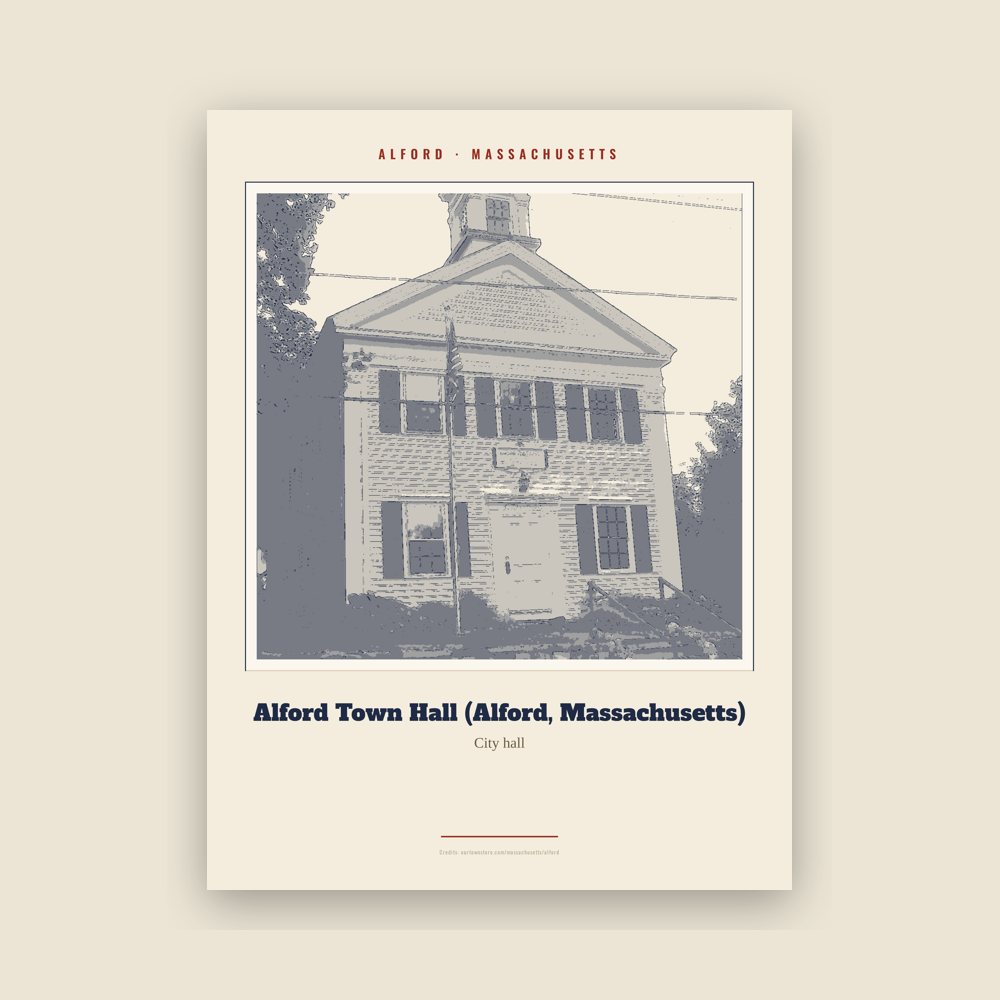
Archival matte print of a local landmark, credited to its photographer
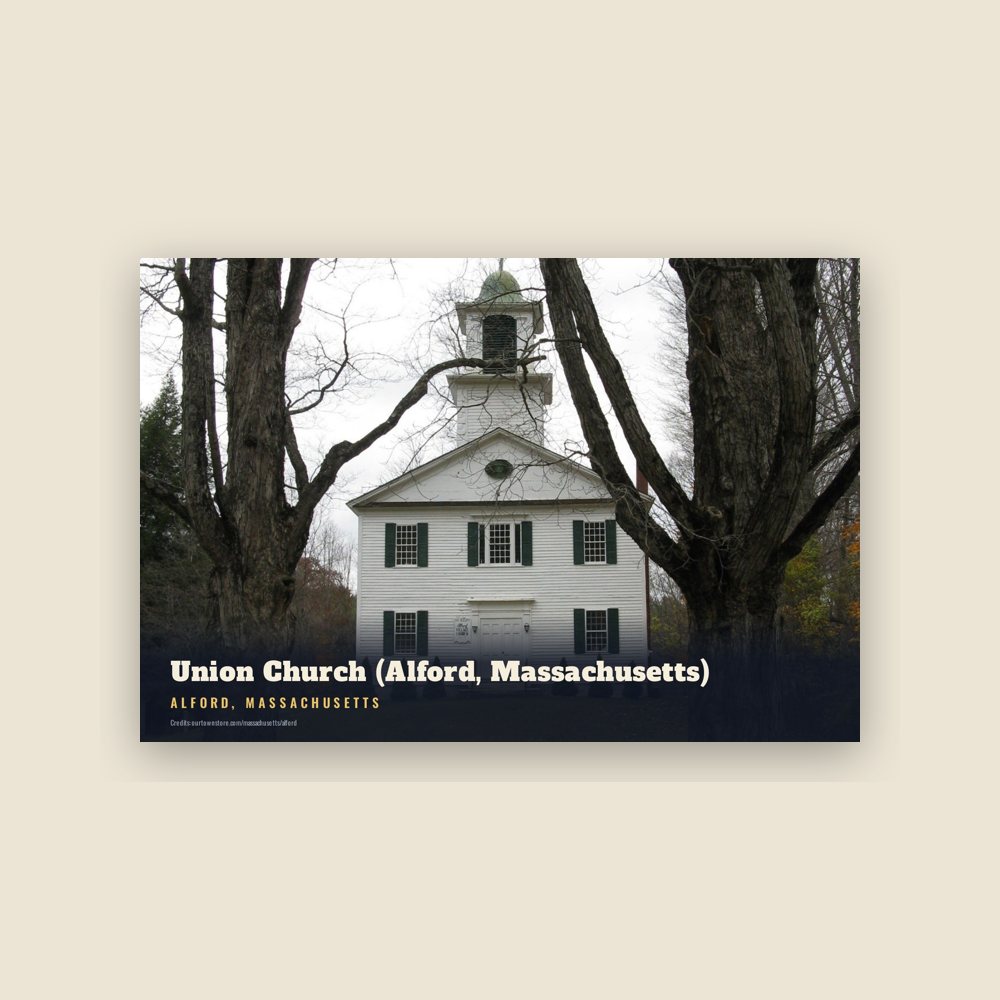
6″×4″ postcard, glossy front
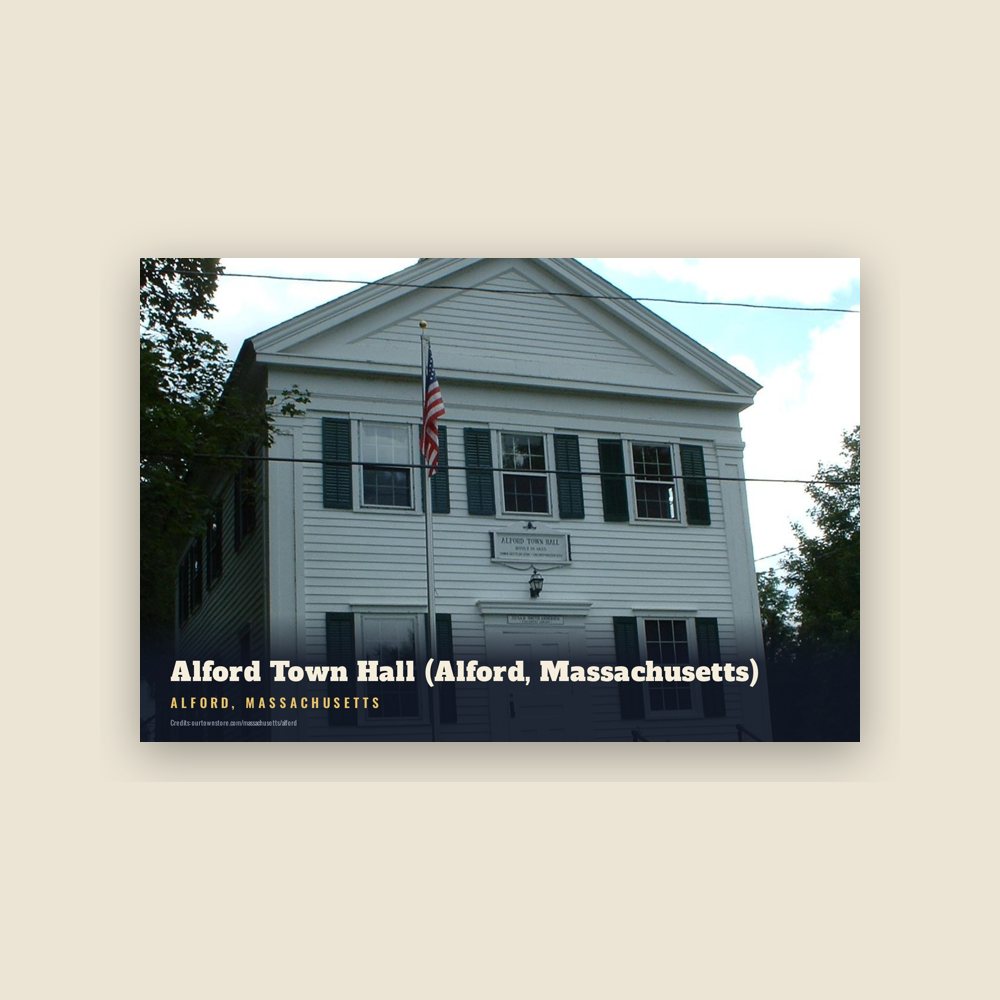
6″×4″ postcard, glossy front
Alford was first settled in 1756 as part of a land purchase from the Shauanum Stockbridge Mahican tribe by a group led by Timothy Woodbridge. The town, originally part of Great Barrington, separated in 1769 and was officially incorporated in 1773. It was named for Colonel John Alford of Charlestown, who was known for preaching Christianity to Native Americans and for sponsoring a theology professorship at Harvard College's Divinity School. The town has been mostly agricultural throughout its existence, however in 1799, large marble deposits were found on the western slopes of Tom Ball Mountain, and for the next 90 or so years it would be an industrious mining town. This would come to an end when the railroad was laid in a neighboring valley, rendering the last operating quarries of Alford unable to compete.
Around New Year's Day, 1776, General Henry Knox passed into Massachusetts through the town, bringing cannons from Fort Ticonderoga eastward to help end the Siege of Boston. Today, this route is known as the Knox Trail, and a marker is located at the state line.
The town was home to a commune ran and funded by Fergie Chambers from 2019 to 2024. It was home to a group known as "Berkshire Communists," a Marxist-Leninist collective, which later dissolved due to legal troubles surrounding a protest held at an Elbit Systems facility in Merrimack, New Hampshire in October 2023. The group was involved in organizing anti-zionist protests in neighboring Great Barrington, Massachusetts, as well as hosting Marxist political education sessions for locals.
Adapted (trimmed) from the Wikipedia article Alford, Massachusetts, revision 1377054043 by its contributors, licensed CC BY-SA 4.0.
We share a part of every Alford sale with local partners, and we'd love to print from your collection. Old photographs, maps and postcards make the best keepsakes.
Partner with us