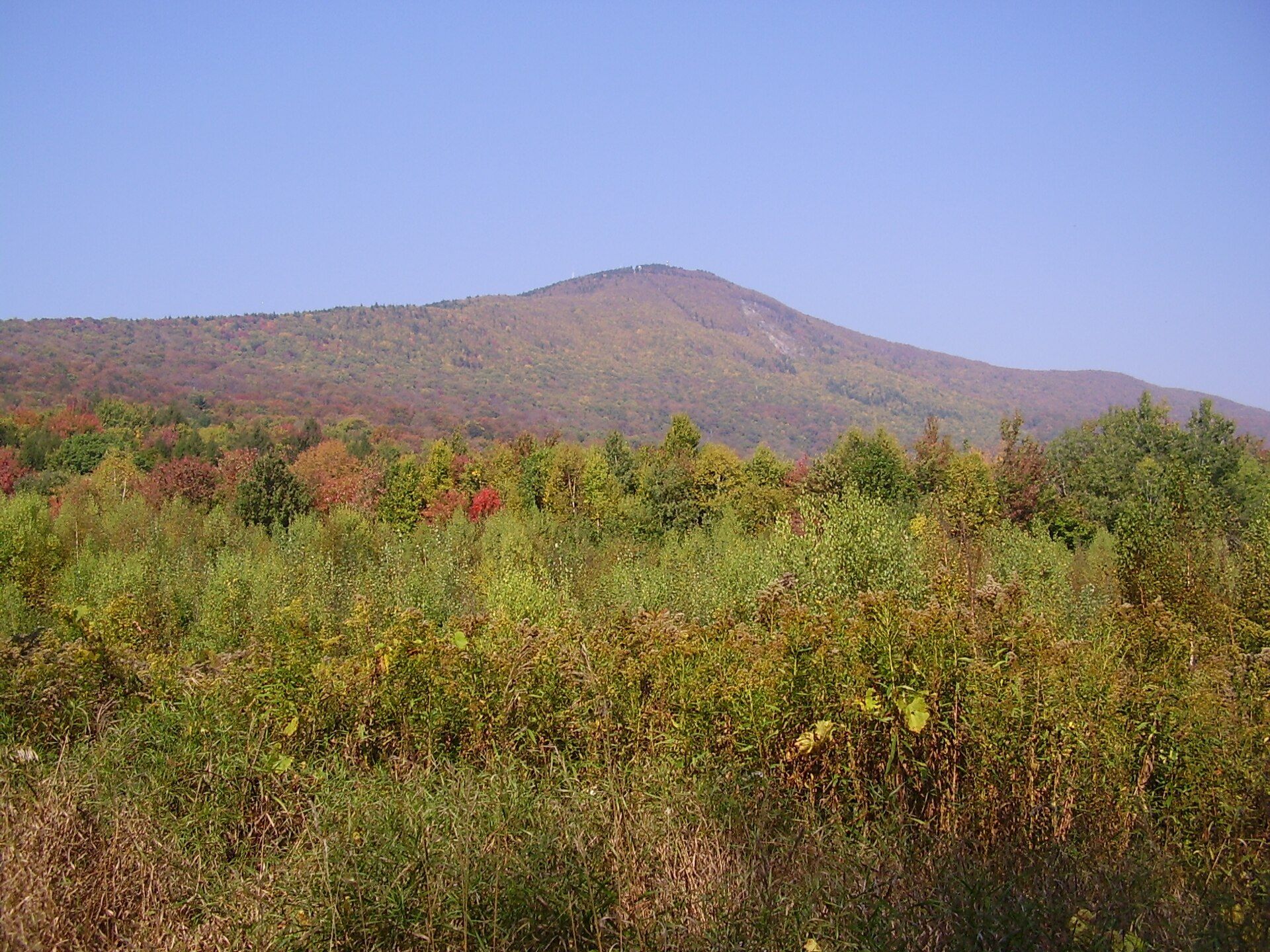
In 1778, the town was officially incorporated as Adams, named in honor of Samuel Adams, a revolutionary leader and signer of the Declaration of Independence. Landmarks include Anthony House, Quaker Meetinghouse and Maple Street Cemetery. Adams is the birthplace of Susan B. Anthony, women's rights activist.
Every piece is drawn from Adams's own map data and historic archives, then printed and shipped from the USA when you order. No two towns look alike.
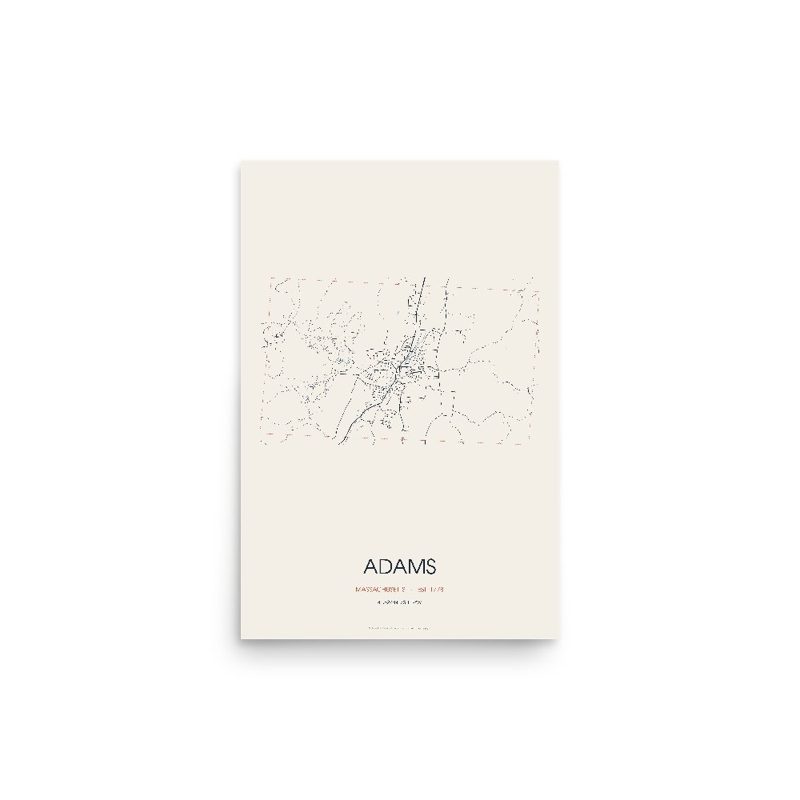
Every road in town, on archival matte paper
The same map, in navy and silver
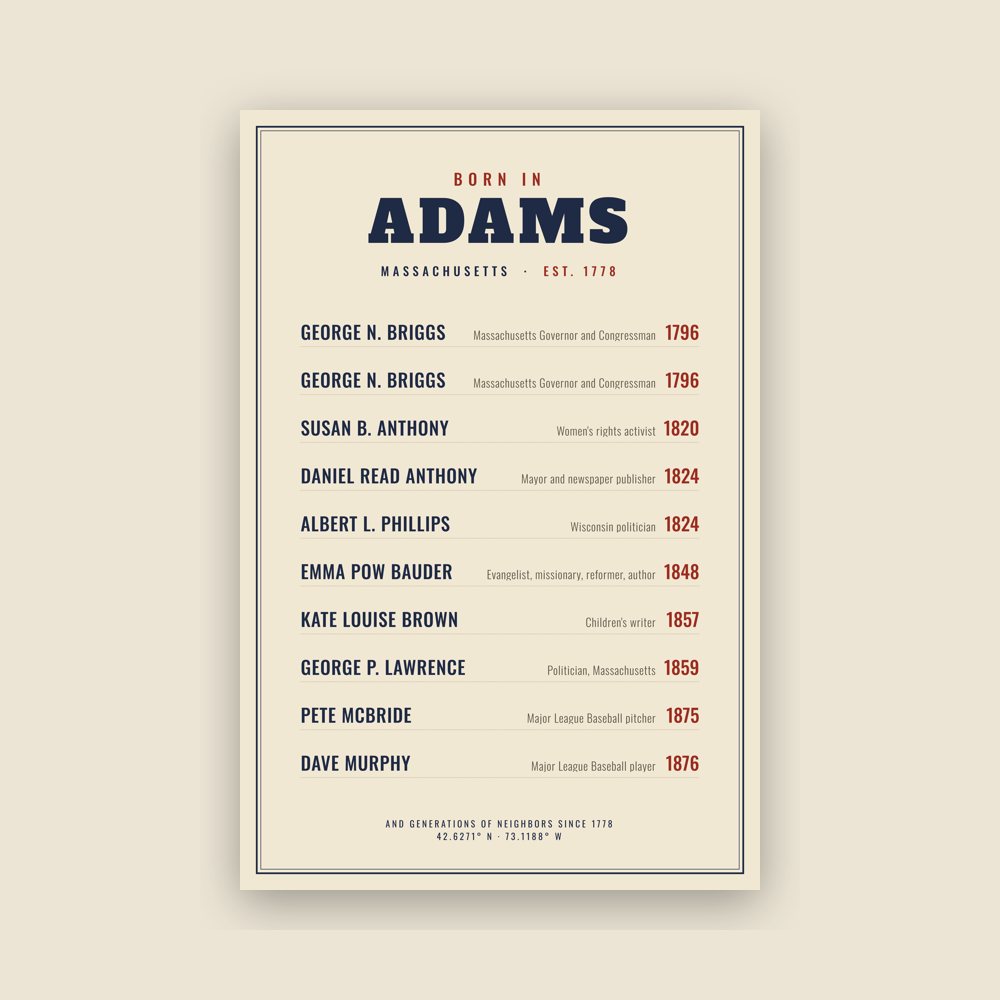
Famous natives, by birth year
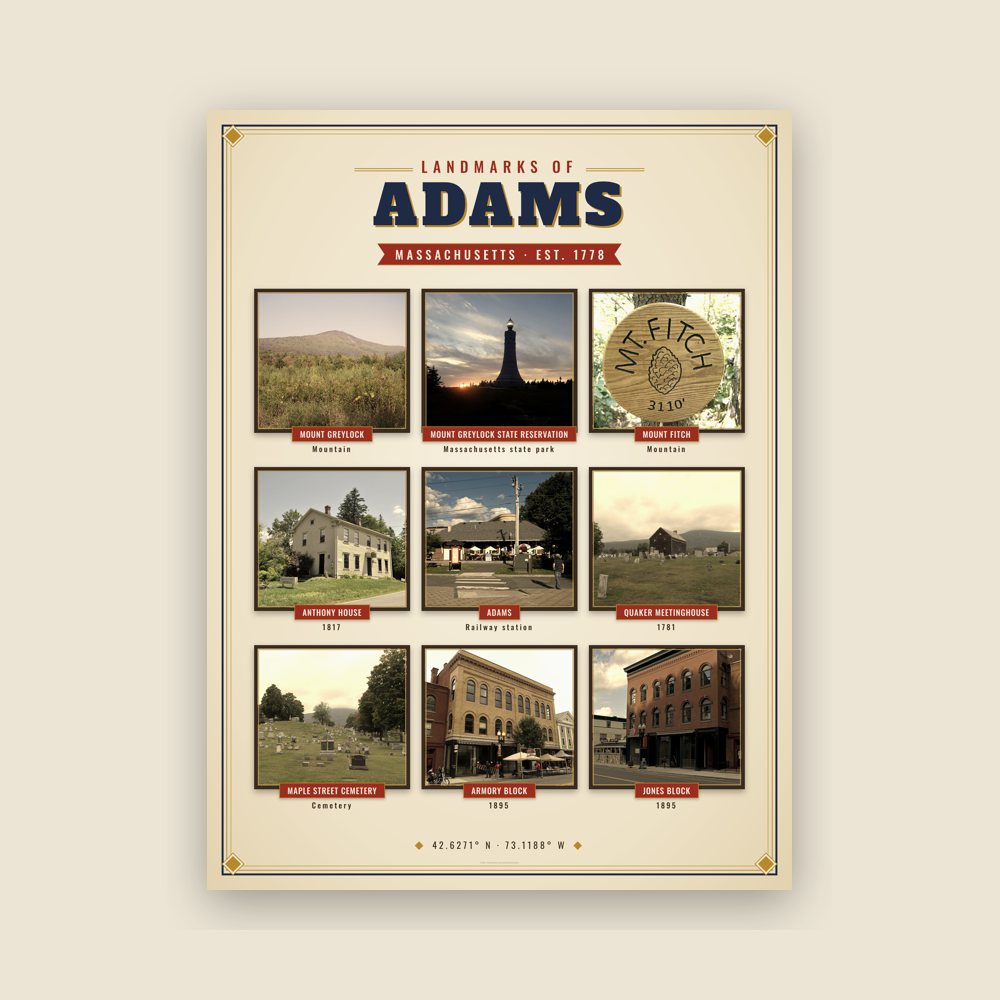
Nine local landmarks, archival matte
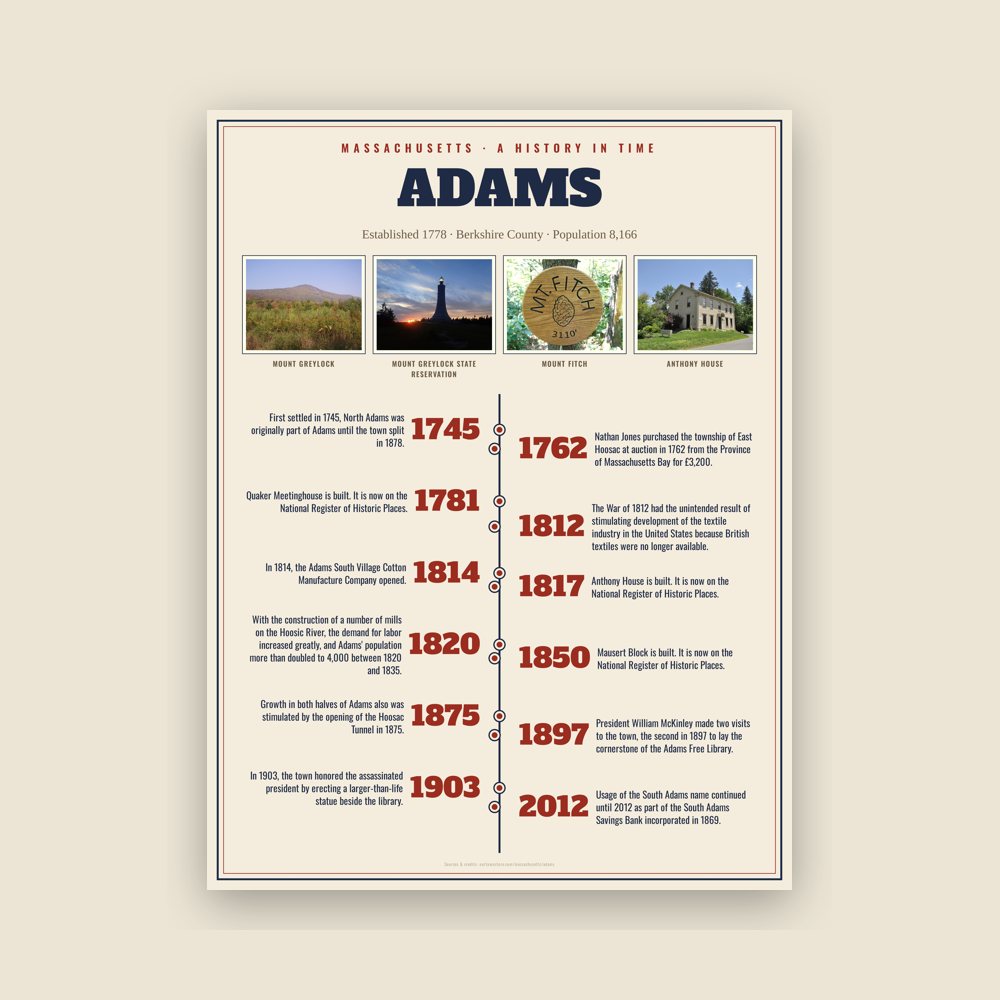
The town's story in dates, from its own records, for home or classroom
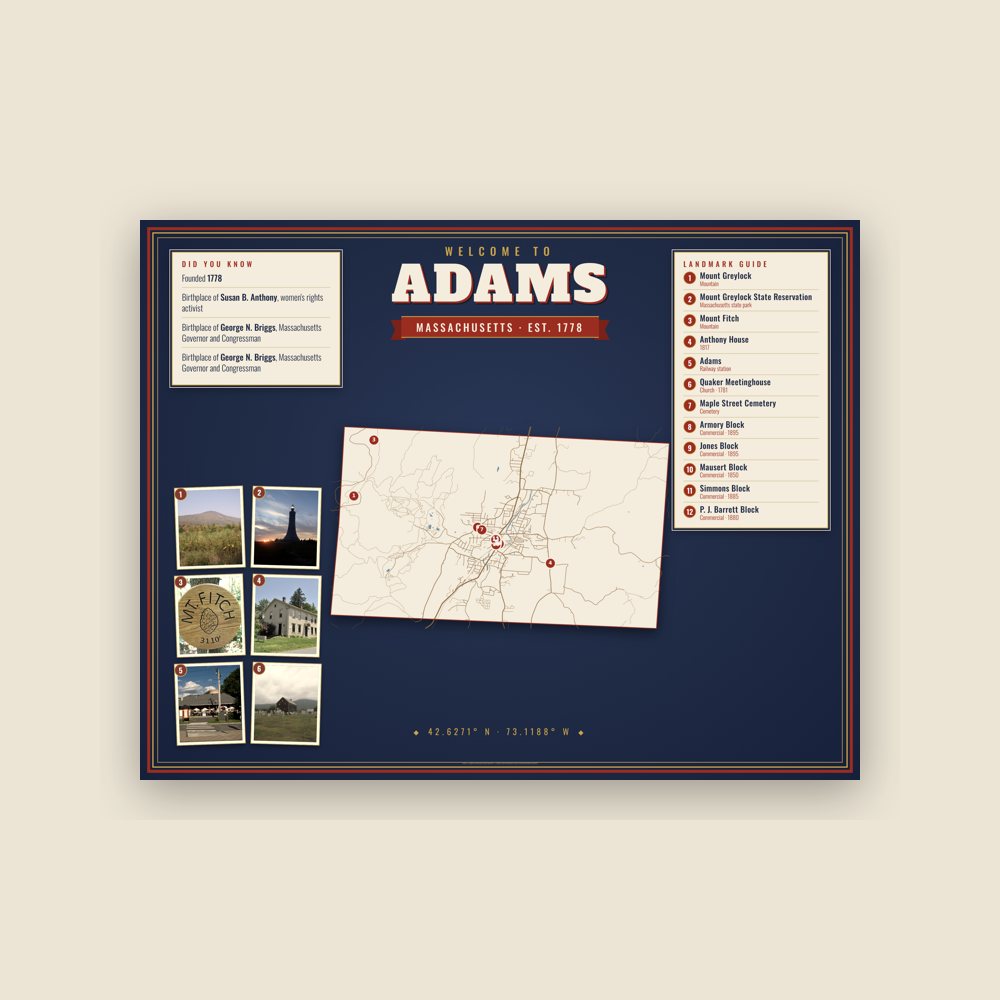
Map of local landmarks, washable fabric
Heavy-blend fleece, street map printed on the back
Soft Bella+Canvas jersey
Glossy ceramic, dishwasher safe
Ceramic keepsake, gold ribbon
Weatherproof, for the front walk
24″×16″, printed coir-look fibers, rubber back
12″×12″ printed wood, ready to hang
Soft-touch, zip cover
Sturdy all-over-print tote
Glossy top, cork back
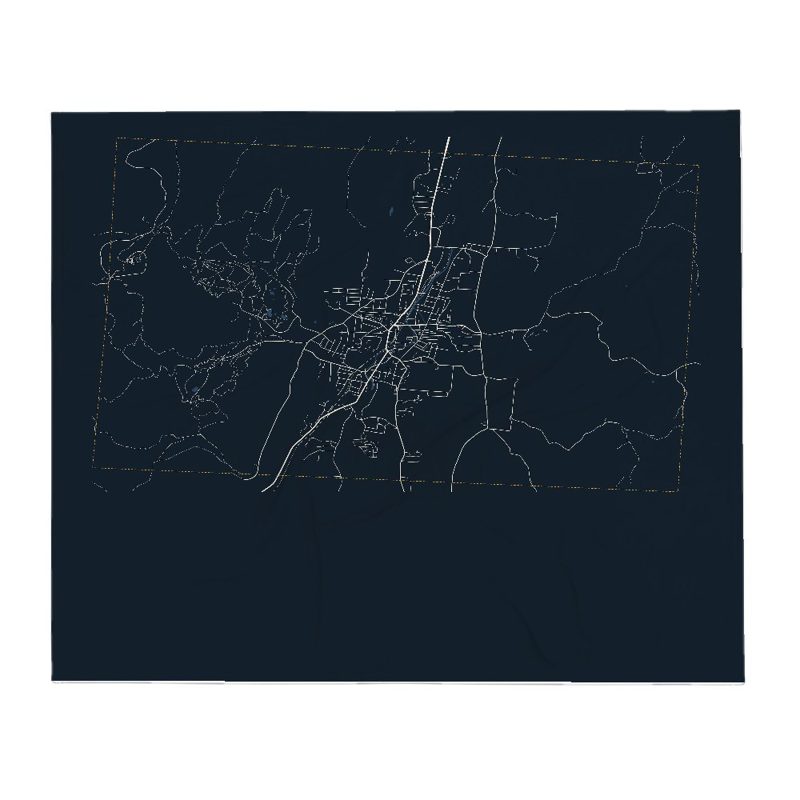
Soft fleece, 50″×60″
20 oz, double-wall stainless
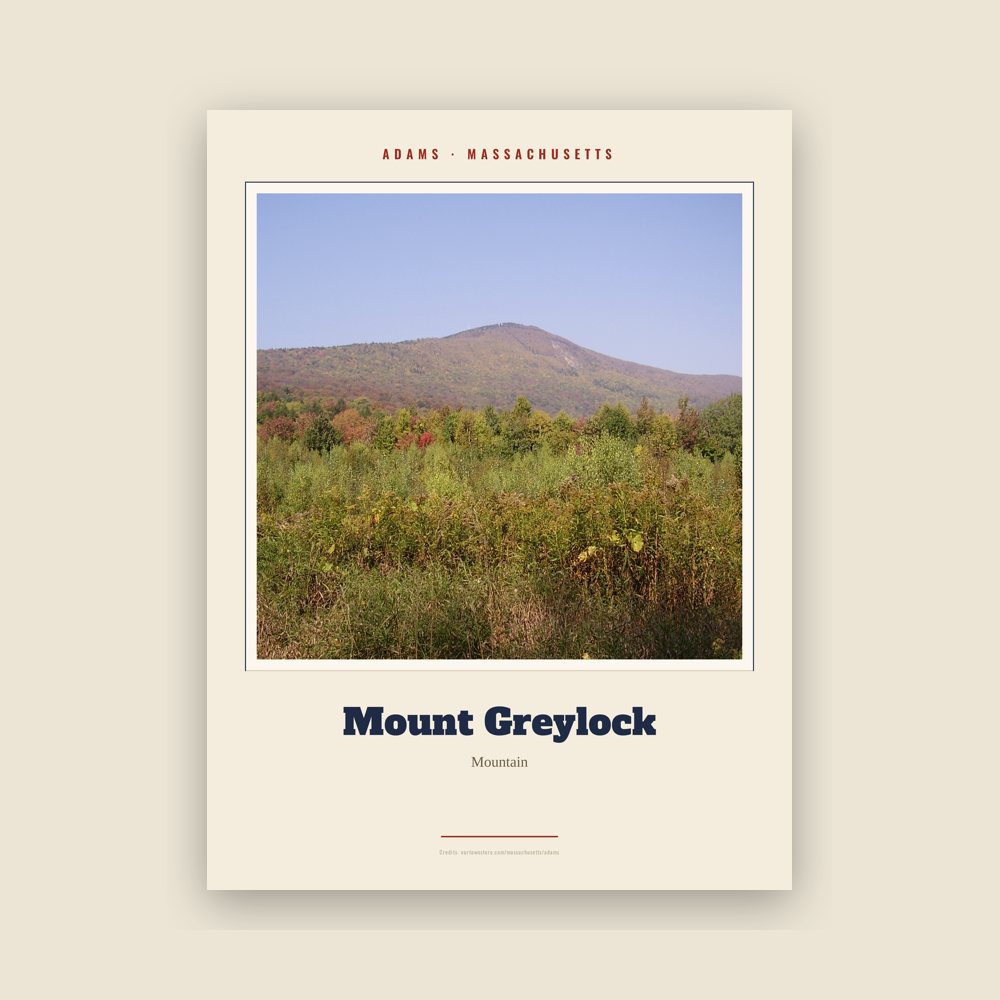
Archival matte print of a local landmark, credited to its photographer
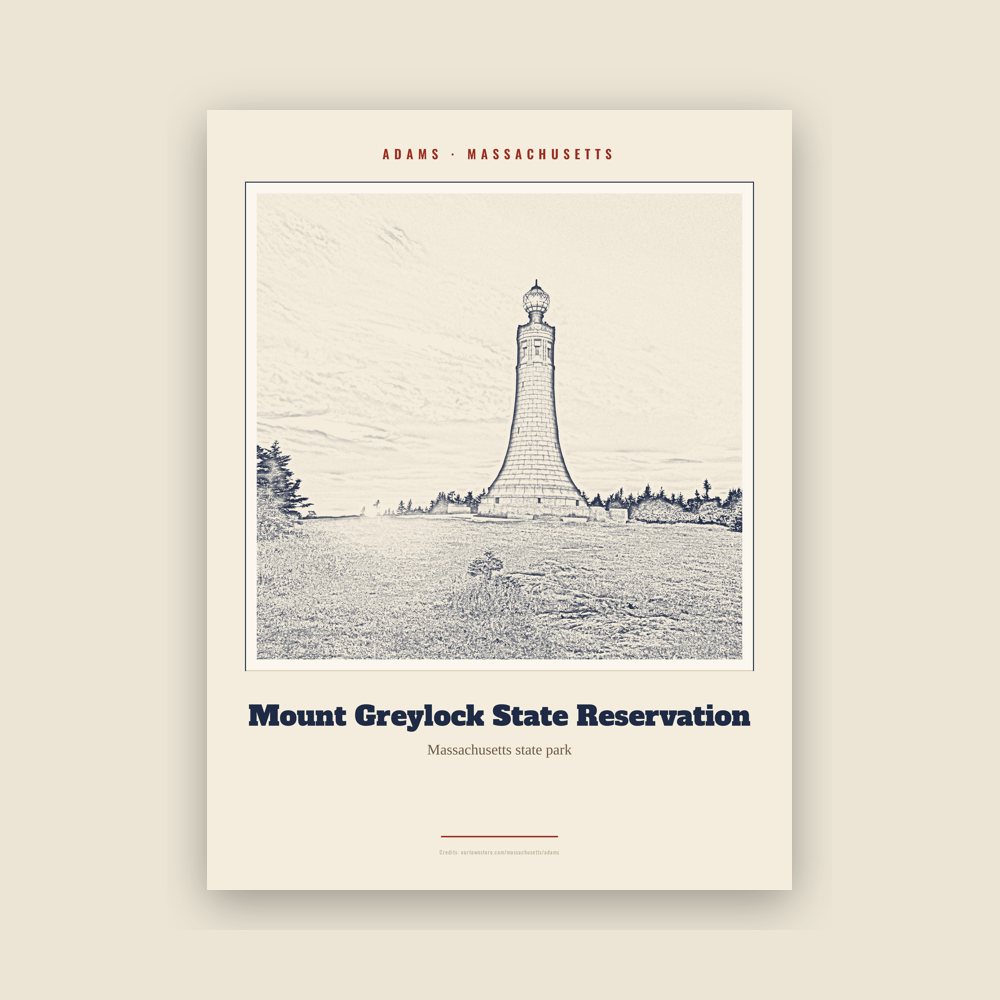
Archival matte print of a local landmark, credited to its photographer
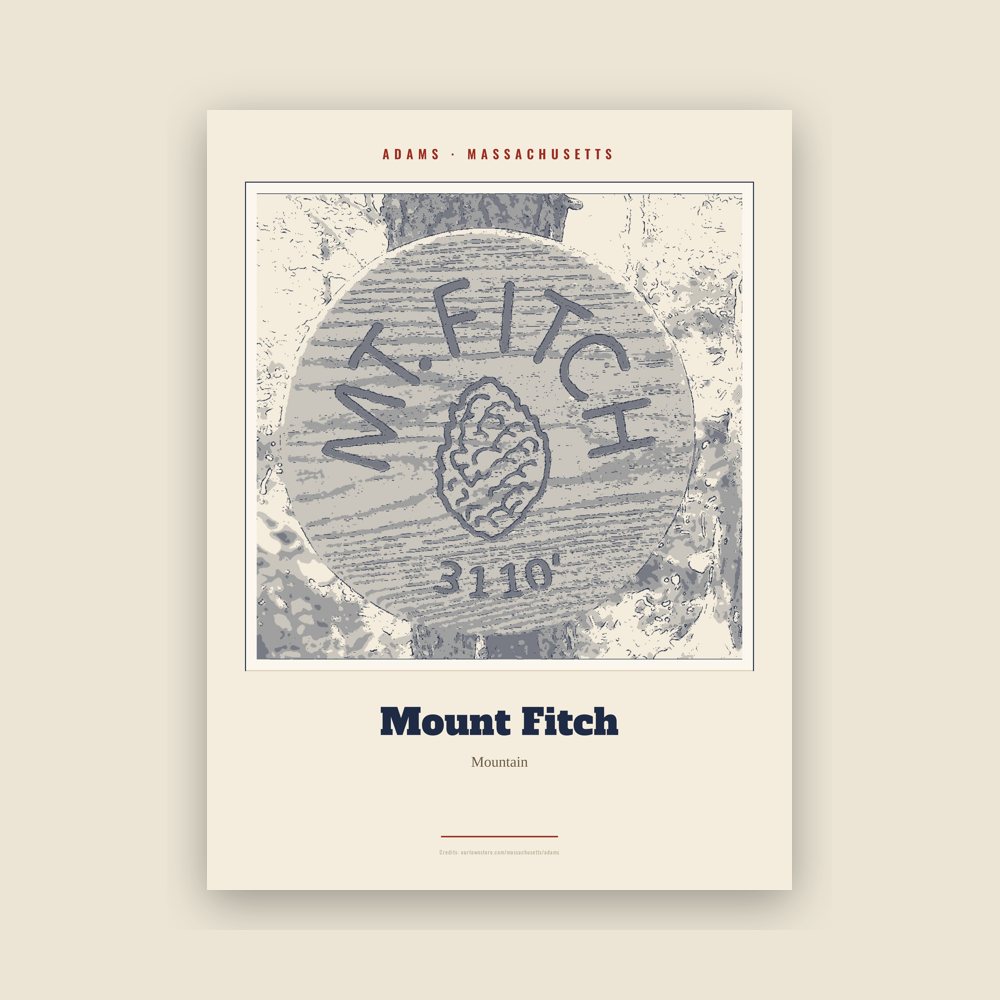
Archival matte print of a local landmark, credited to its photographer

Archival matte print of a local landmark, credited to its photographer
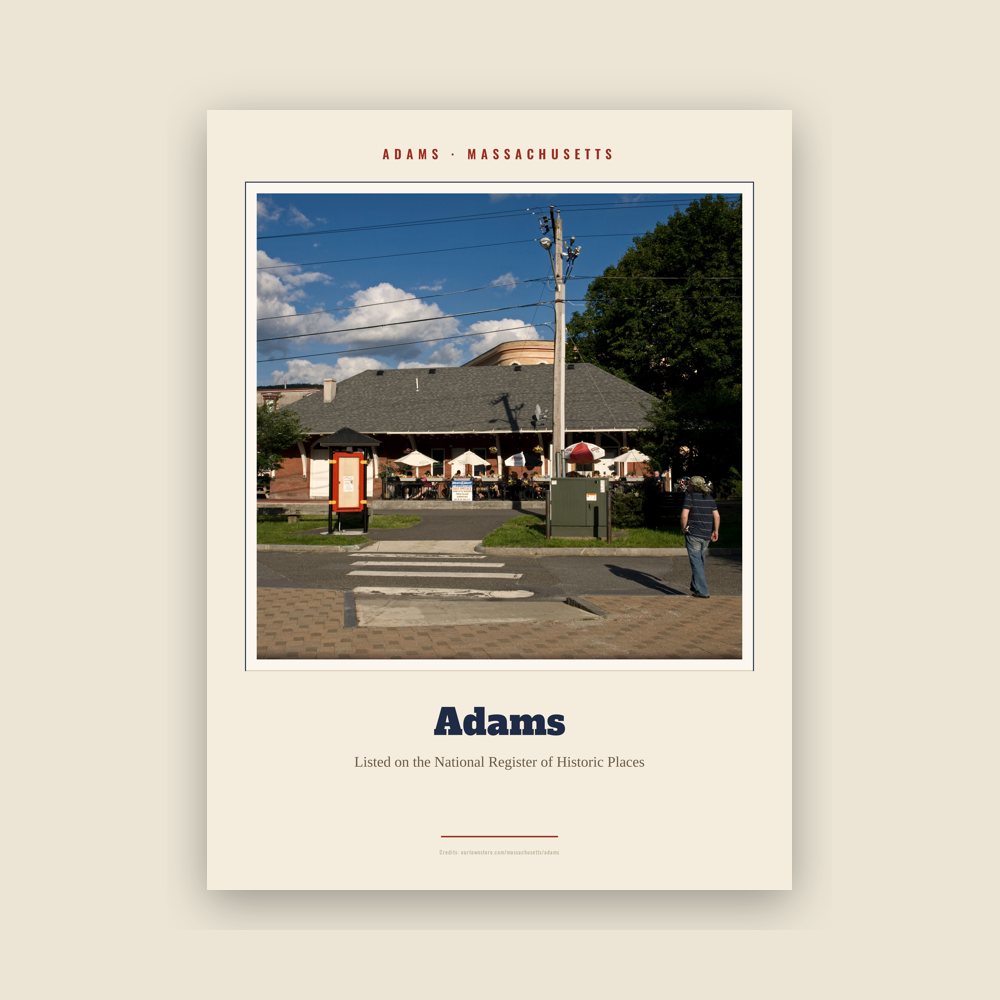
Archival matte print of a local landmark, credited to its photographer
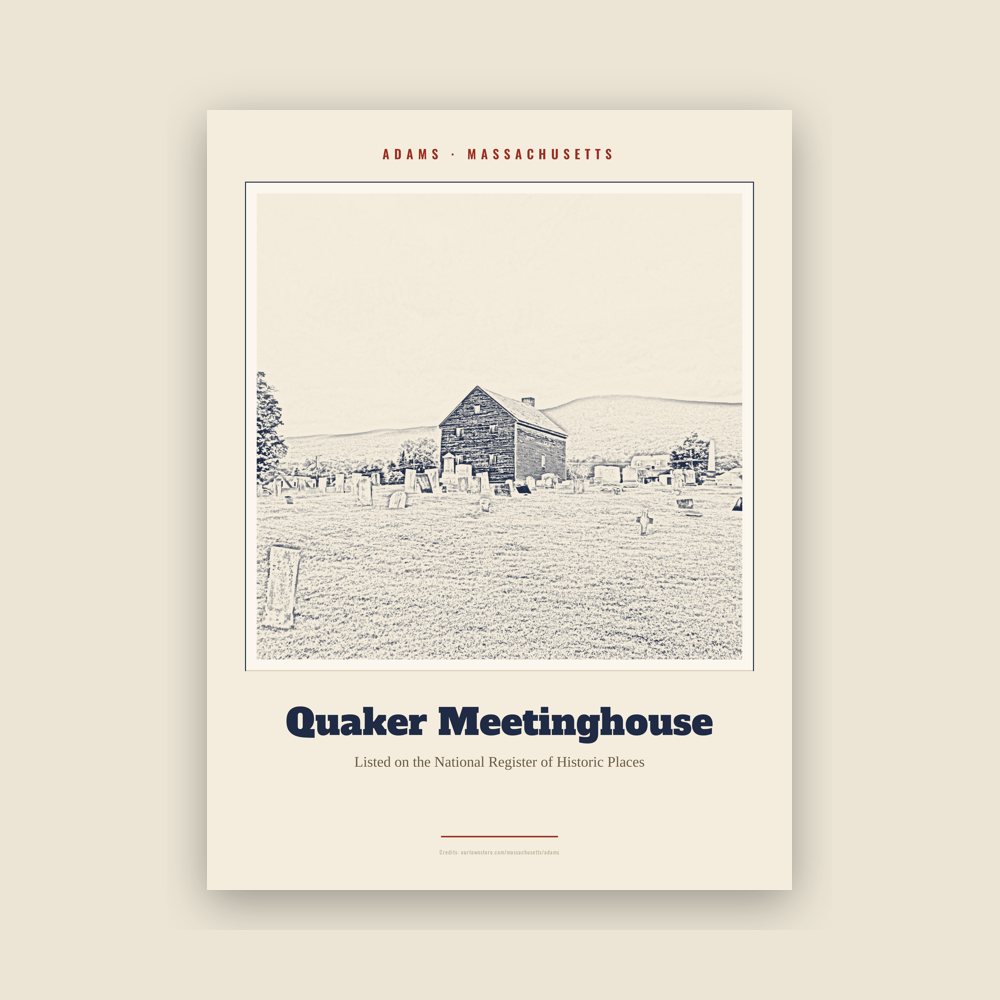
Archival matte print of a local landmark, credited to its photographer
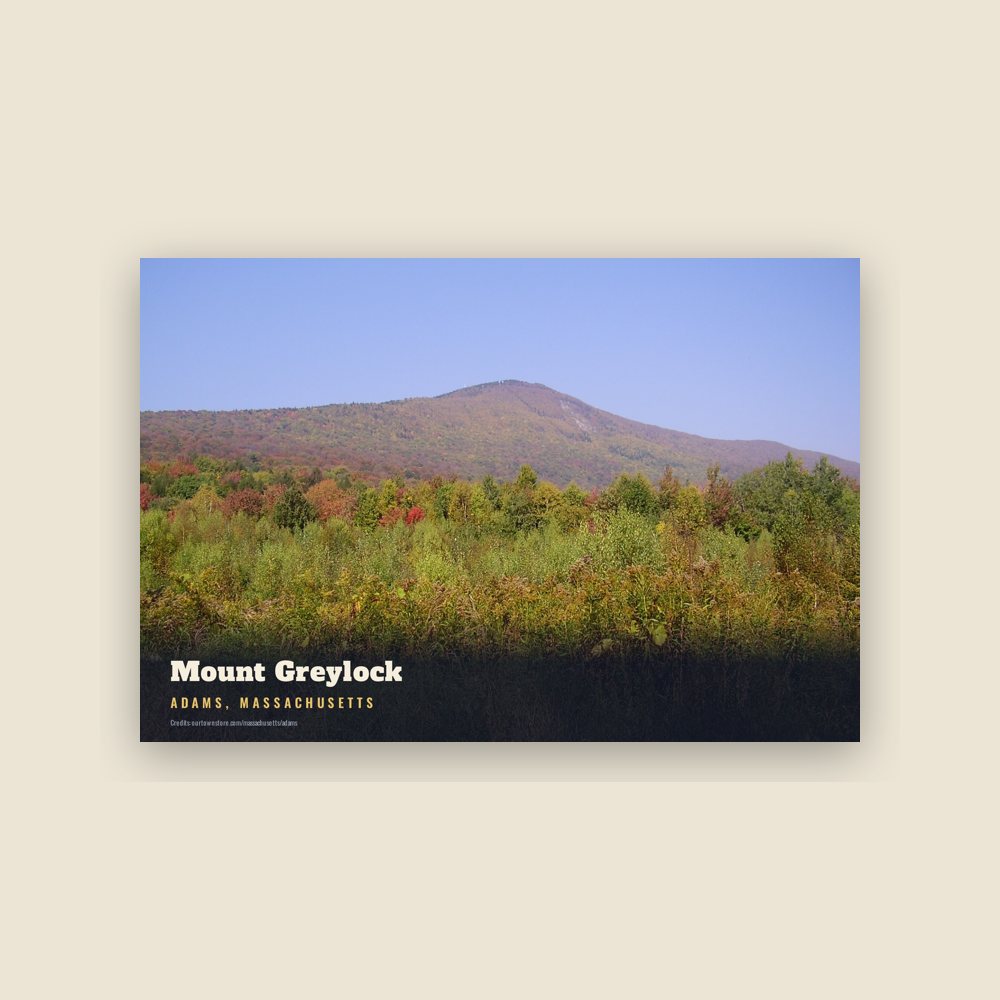
6″×4″ postcard, glossy front
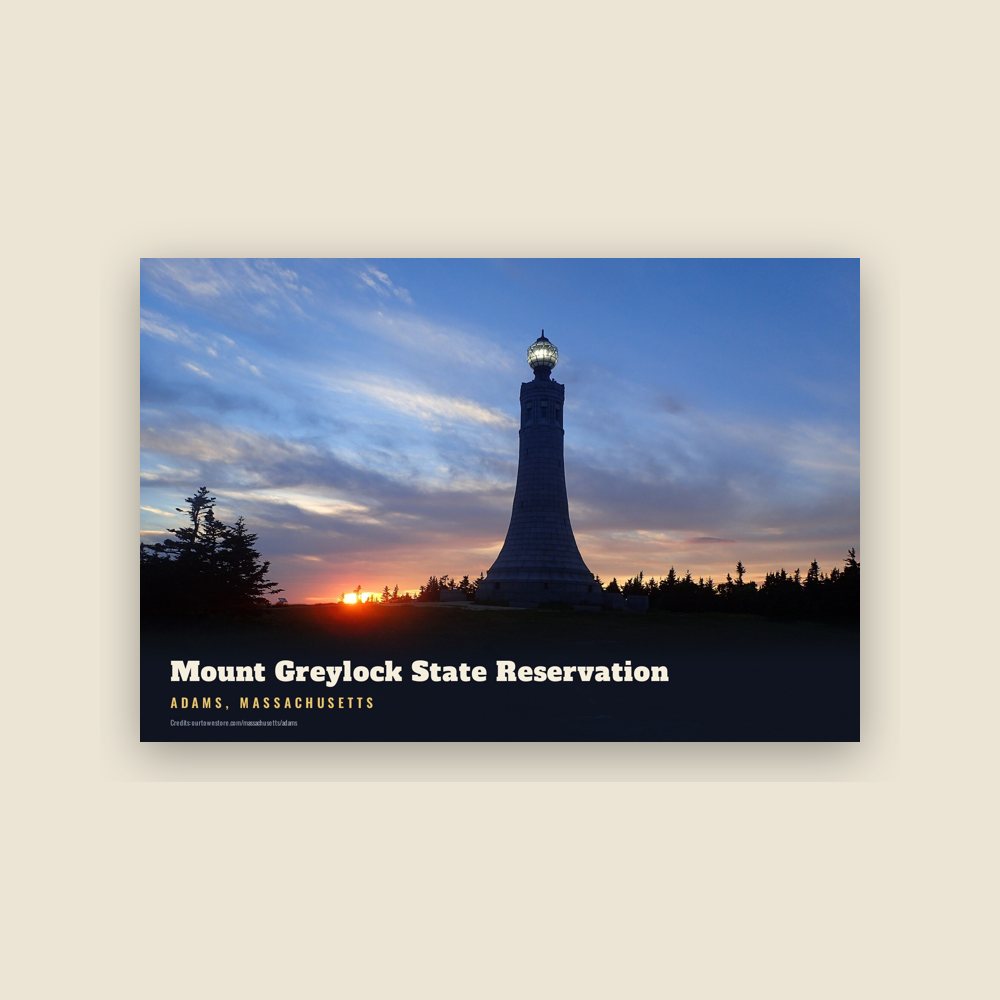
6″×4″ postcard, glossy front
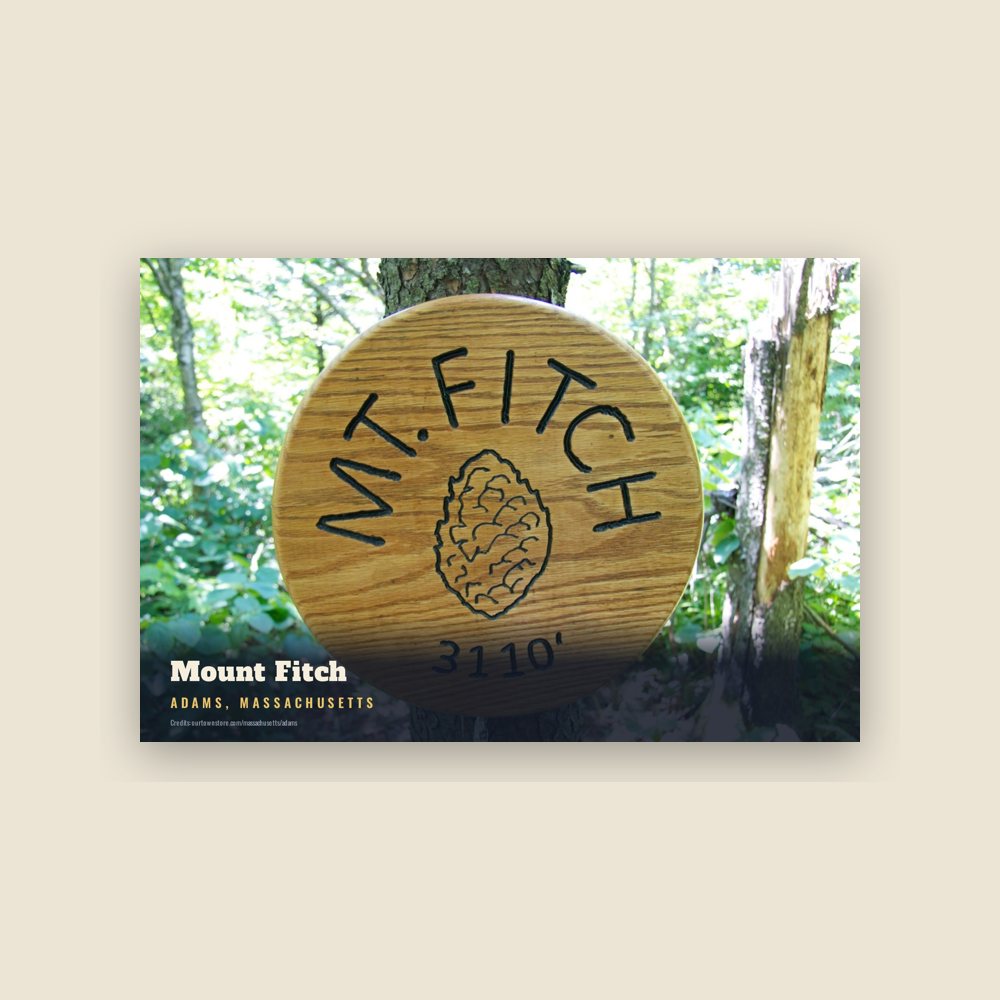
6″×4″ postcard, glossy front
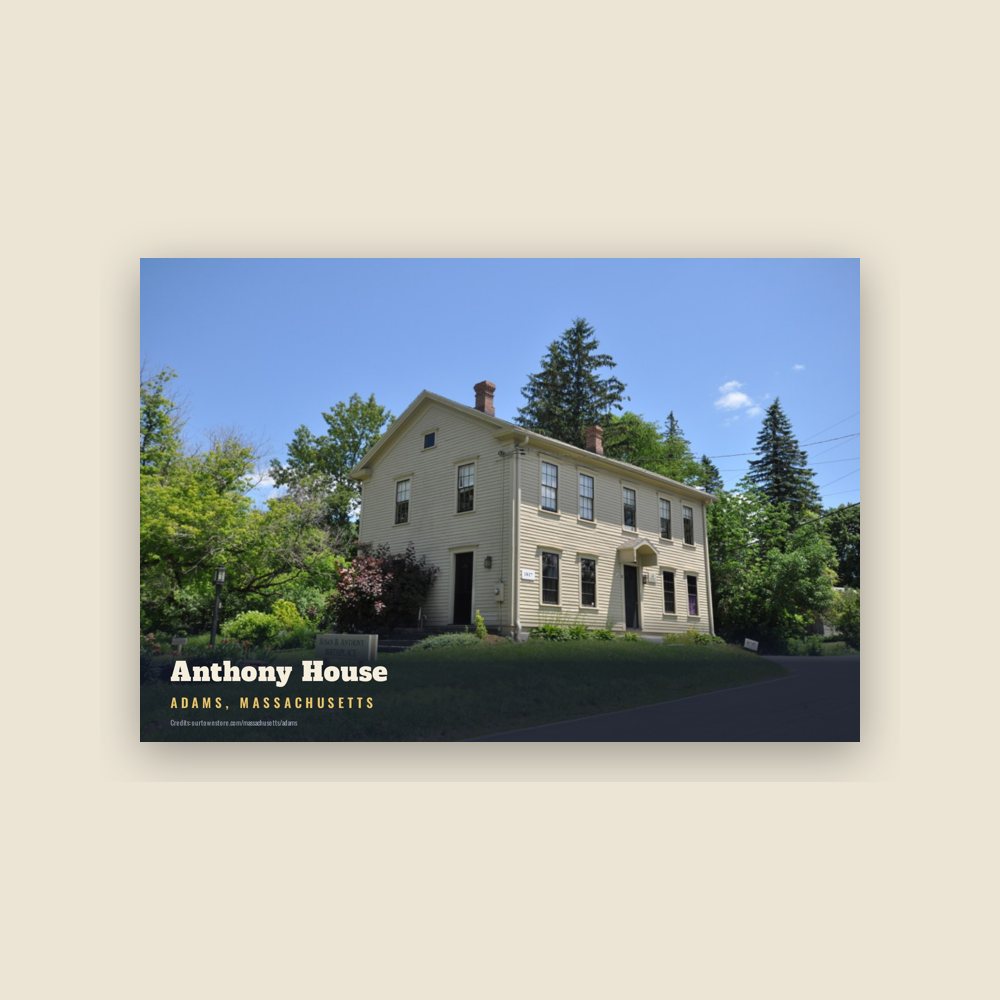
6″×4″ postcard, glossy front
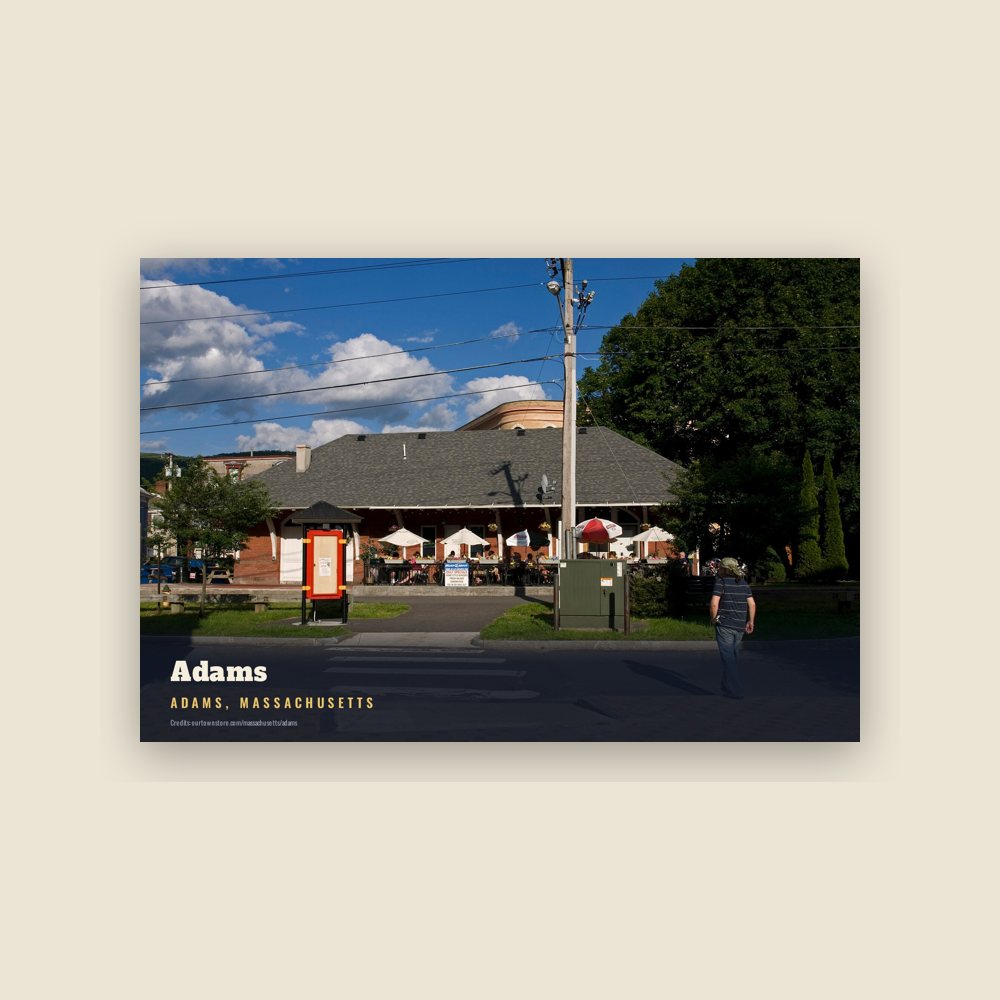
6″×4″ postcard, glossy front
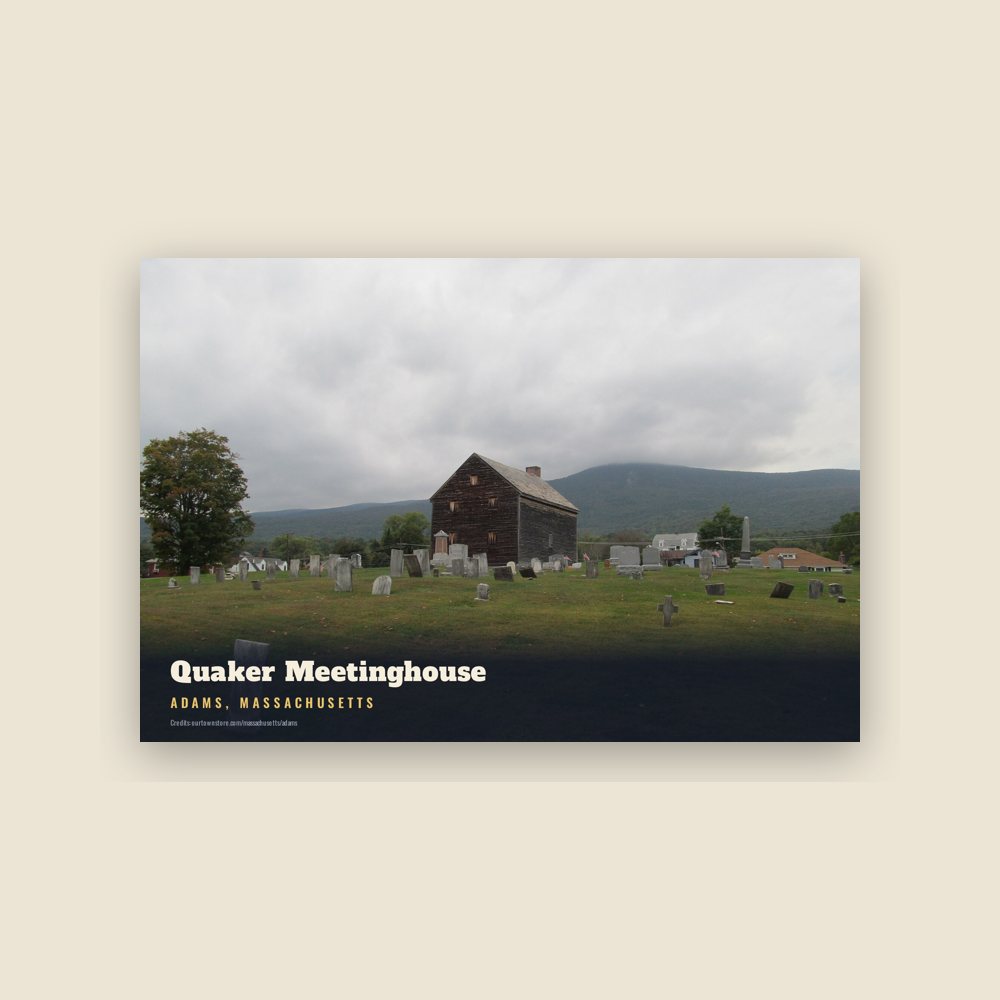
6″×4″ postcard, glossy front
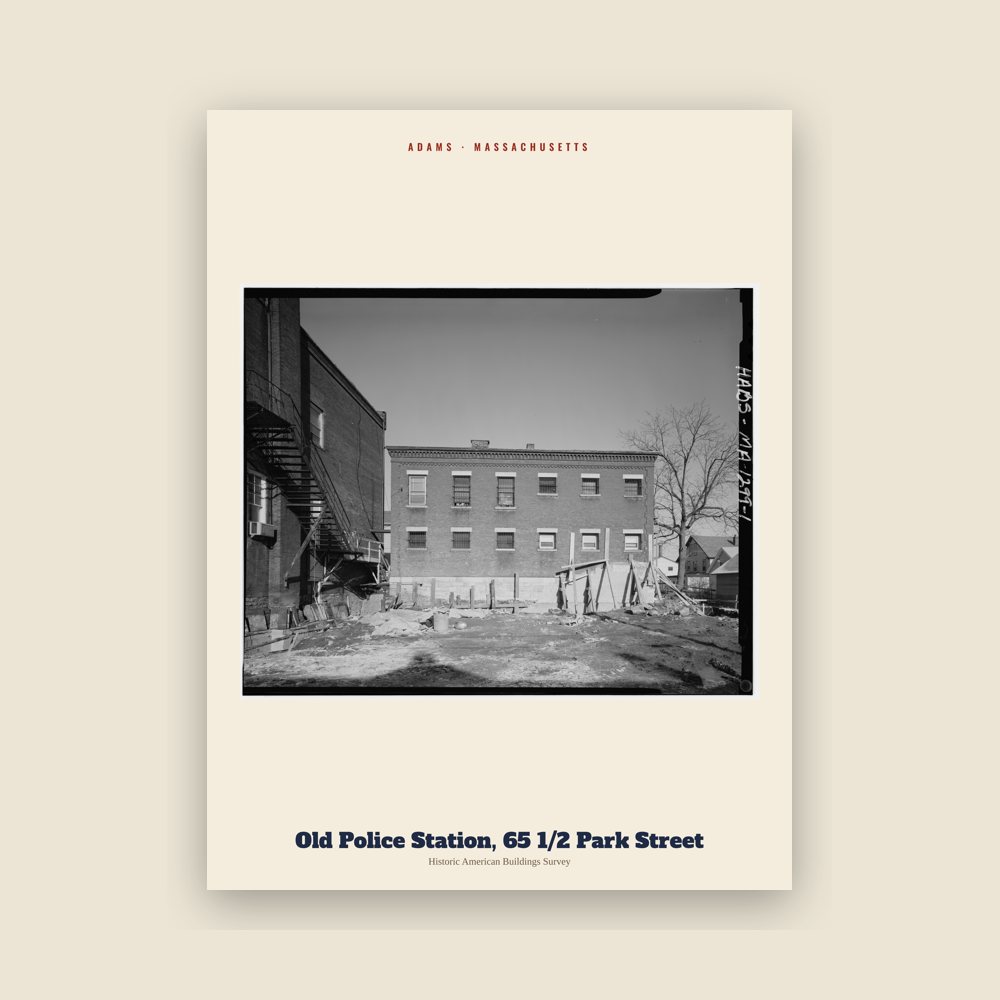
From the Library of Congress collections: a historic survey drawing or photograph of the town
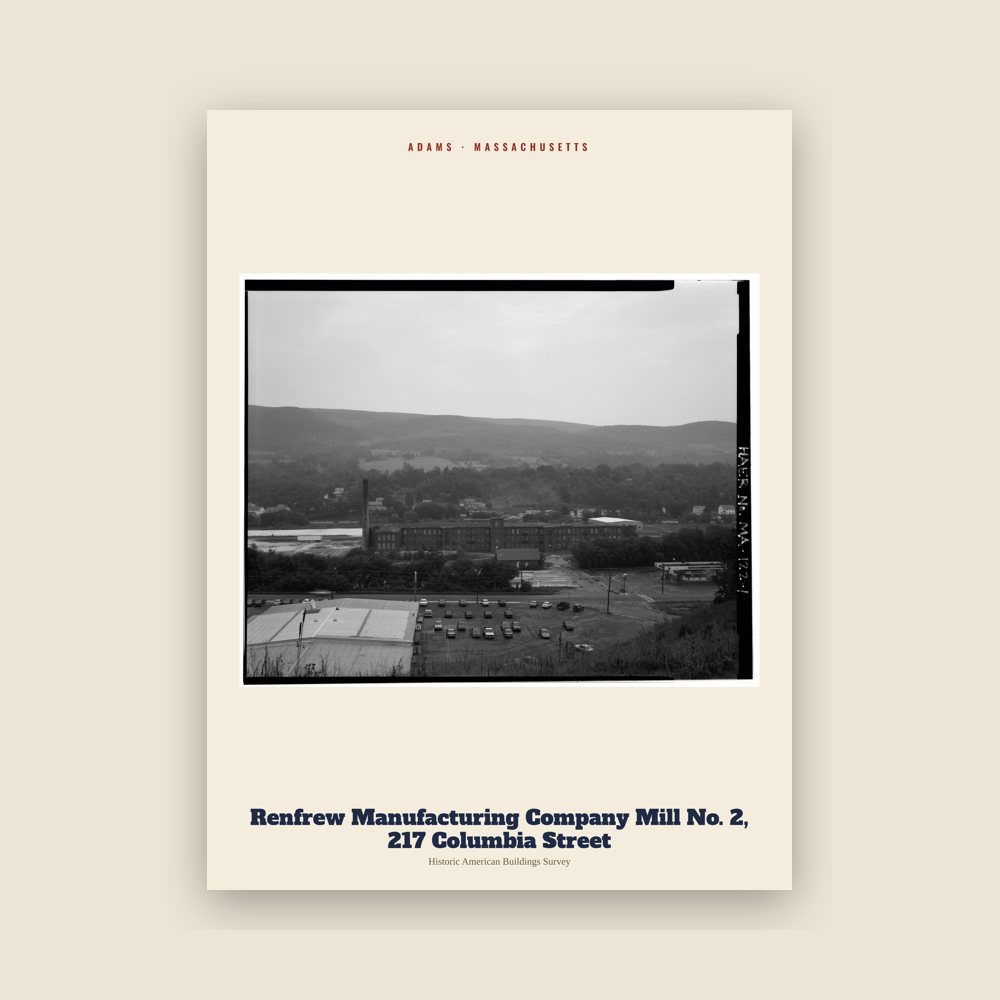
From the Library of Congress collections: a historic survey drawing or photograph of the town
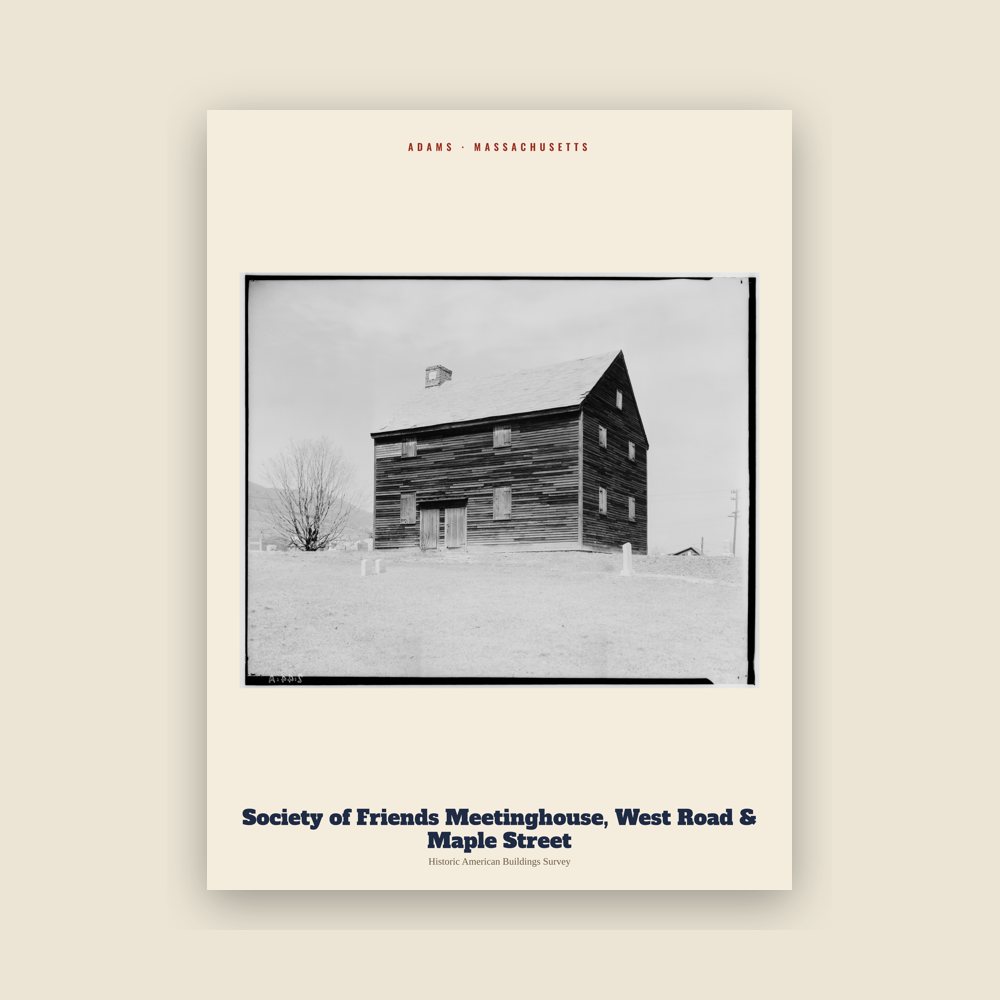
From the Library of Congress collections: a historic survey drawing or photograph of the town
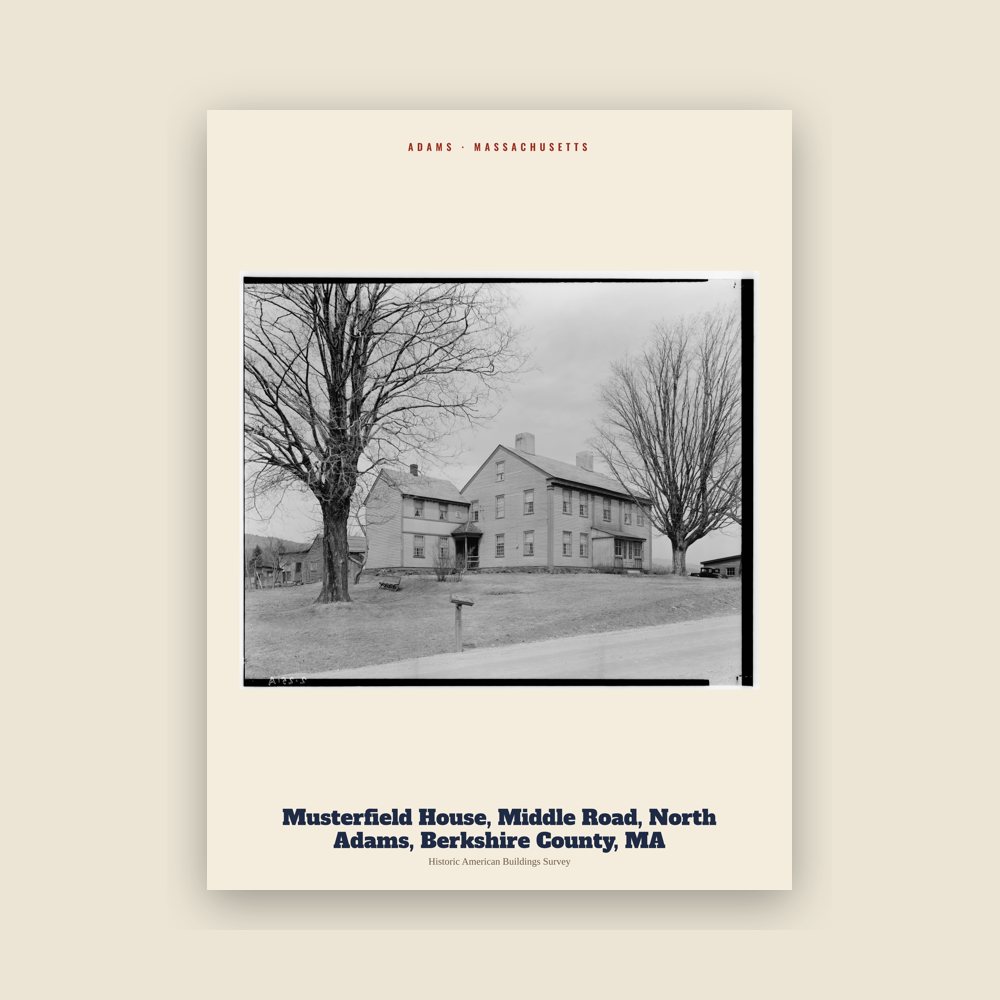
From the Library of Congress collections: a historic survey drawing or photograph of the town
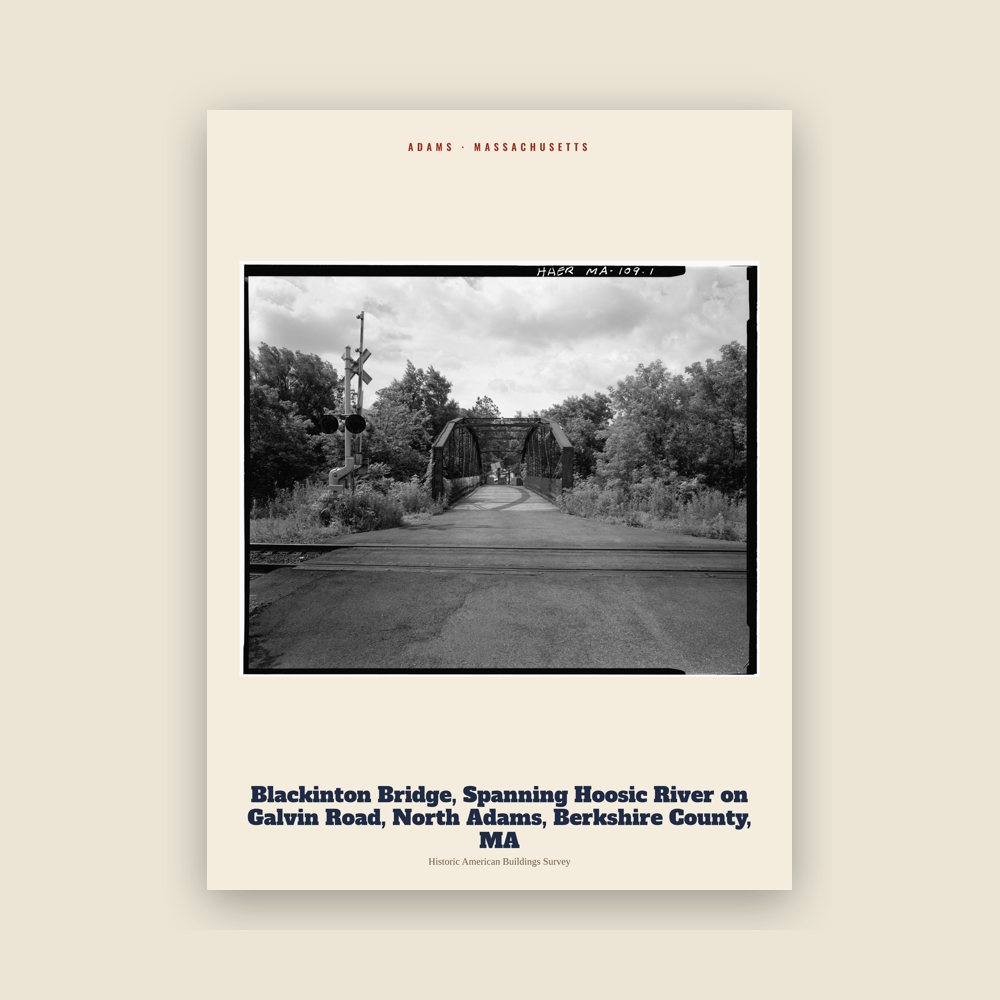
From the Library of Congress collections: a historic survey drawing or photograph of the town
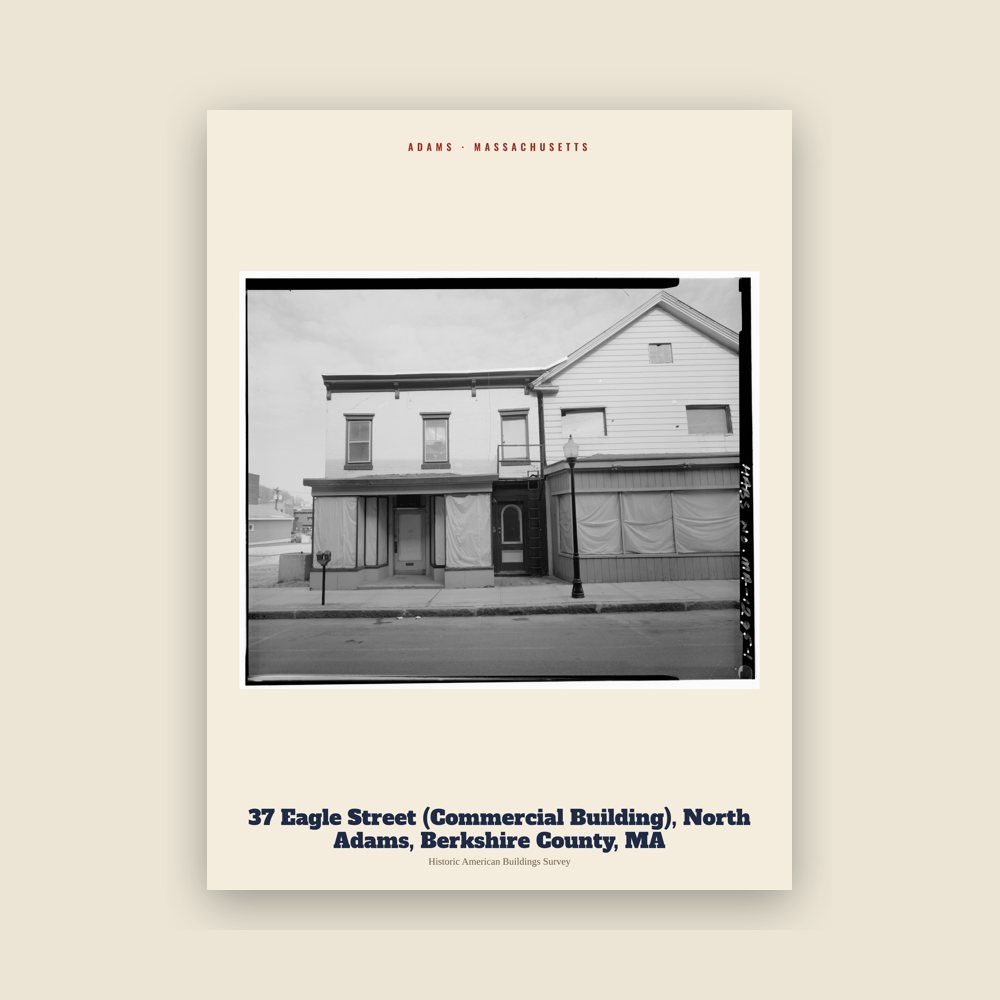
From the Library of Congress collections: a historic survey drawing or photograph of the town
Population 2010: 8,485 → 2020: 8,166
From Wikidata (CC0).
Nathan Jones purchased the township of East Hoosac at auction in 1762 from the Province of Massachusetts Bay for £3,200. In 1778, the town was officially incorporated as Adams, named in honor of Samuel Adams, a revolutionary leader and signer of the Declaration of Independence. Much of the land had been subdivided into 100-acre (40 ha) and 200-acre (81 ha) lots. These were mostly farms with frontage on the Hoosic River, which over time would provide water power for woolen, cotton, lumber, and plastic mills.
First settled in 1745, North Adams was originally part of Adams until the town split in 1878. Although there has never been a town of South Adams, the name was used prior to 1878 to specify the southern part of the town that had long had two primary centers. Usage of the South Adams name continued until 2012 as part of the South Adams Savings Bank incorporated in 1869.
Early settlers in the 1760s included a group of Quakers, many of whom migrated together from Smithfield, Rhode Island. The Quaker civil rights leader, abolitionist, and suffragist Susan B. Anthony was born in 1820 in Adams, where her family lived until she was six. They moved west into New York, and later moved again to western New York. Anthony's childhood home has been preserved and is operated today as a museum.
The town's population declined from 1810 to 1820 as farmers moved west for better soil. The War of 1812 had the unintended result of stimulating development of the textile industry in the United States because British textiles were no longer available. In 1814, the Adams South Village Cotton Manufacture Company opened. With the construction of a number of mills on the Hoosic River, the demand for labor increased greatly, and Adams' population more than doubled to 4,000 between 1820 and 1835. Growth in both halves of Adams also was stimulated by the opening of the Hoosac Tunnel in 1875. In the late 1800s, during the expansion of the cotton mills, four large brick buildings were constructed on Park Street: the P. J. Barrett Block, Jones Block, Armory Block, and the Mausert Block, opposite the Town Hall. They were used for retail stores and offices.
President William McKinley made two visits to the town, the second in 1897 to lay the cornerstone of the Adams Free Library. He was a friend of the Plunkett brothers (founders in 1889 of the Berkshire Cotton Manufacturing Company), and of the textile industry generally. In 1903, the town honored the assassinated president by erecting a larger-than-life statue beside the library.
Berkshire Cotton later became a major part of Berkshire Hathaway; it continued to manufacture high-quality textiles through the mid-20th century. Its large factory in Adams was closed in 1958. Many textile jobs had moved South, as the industry relocated to states with lower wages and weak unions.
The mill town's only major remaining mill, Specialty Minerals, mines and processes limestone for calcium carbonate. This is used in antacids and food supplements, as well as paper whiteners and other industrial purposes.
Since the late 20th century, the town has encouraged historic and destination tourism, part of a broader trend in the Berkshires. It has promoted its natural environment and outdoor activities, and its proximity to the galleries, museums and colleges of North Adams.
Adapted (trimmed) from the Wikipedia article Adams, Massachusetts, revision 1380485159 by its contributors, licensed CC BY-SA 4.0.
We share a part of every Adams sale with local partners, and we'd love to print from your collection. Old photographs, maps and postcards make the best keepsakes.
Partner with us