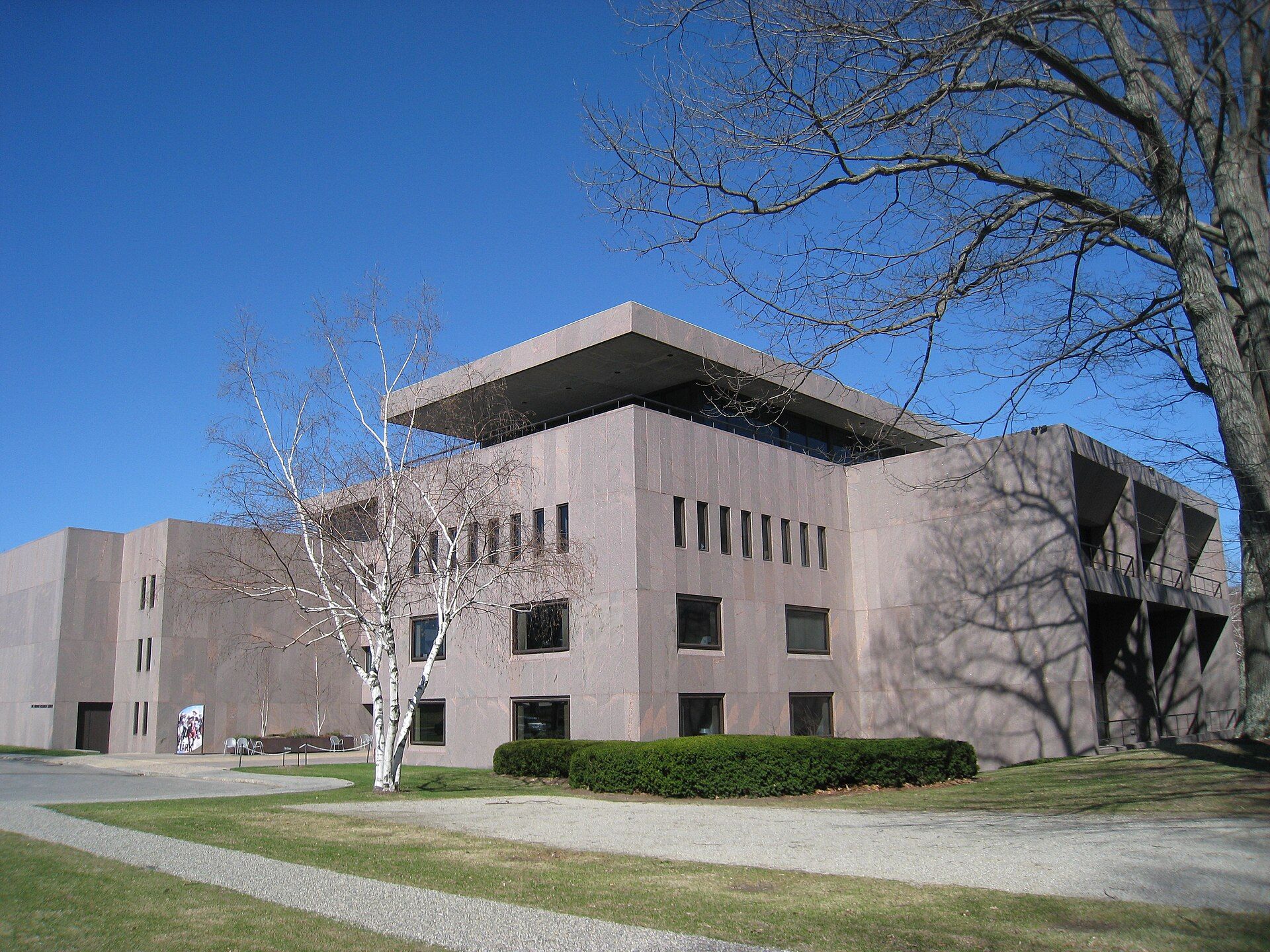
A college town, it is home to Williams College, the Clark Art Institute and the Tony-awarded Williamstown Theatre Festival. Landmarks include Clark Art Institute, Hopkins Observatory and Williams College Museum of Art. Williamstown is the birthplace of Matthew Perry, american-Canadian actor.
Every piece is drawn from Williamstown's own map data and historic archives, then printed and shipped from the USA when you order. No two towns look alike.
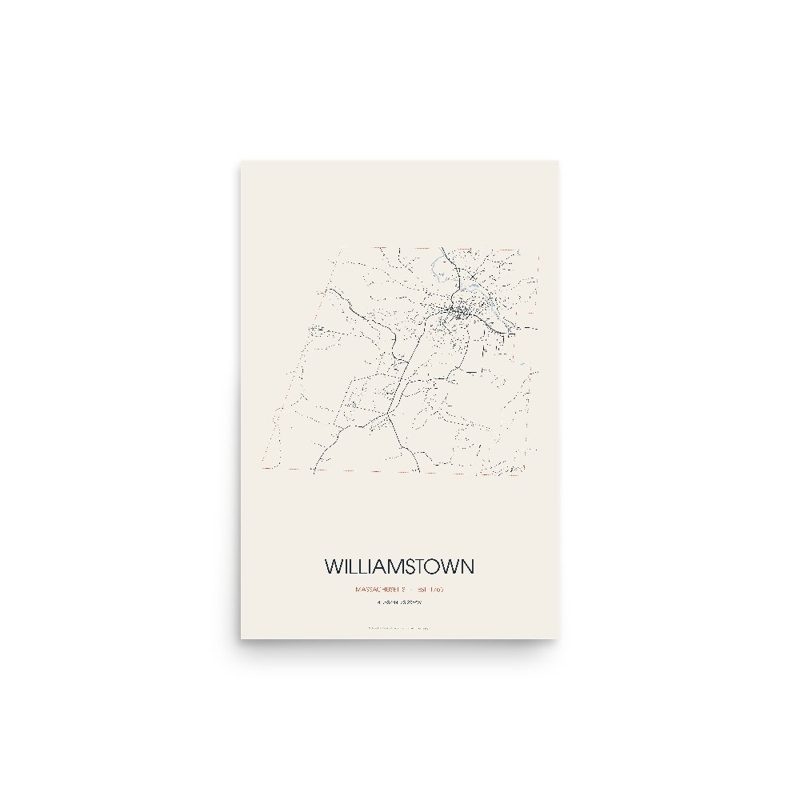
Every road in town, on archival matte paper
The same map, in navy and silver
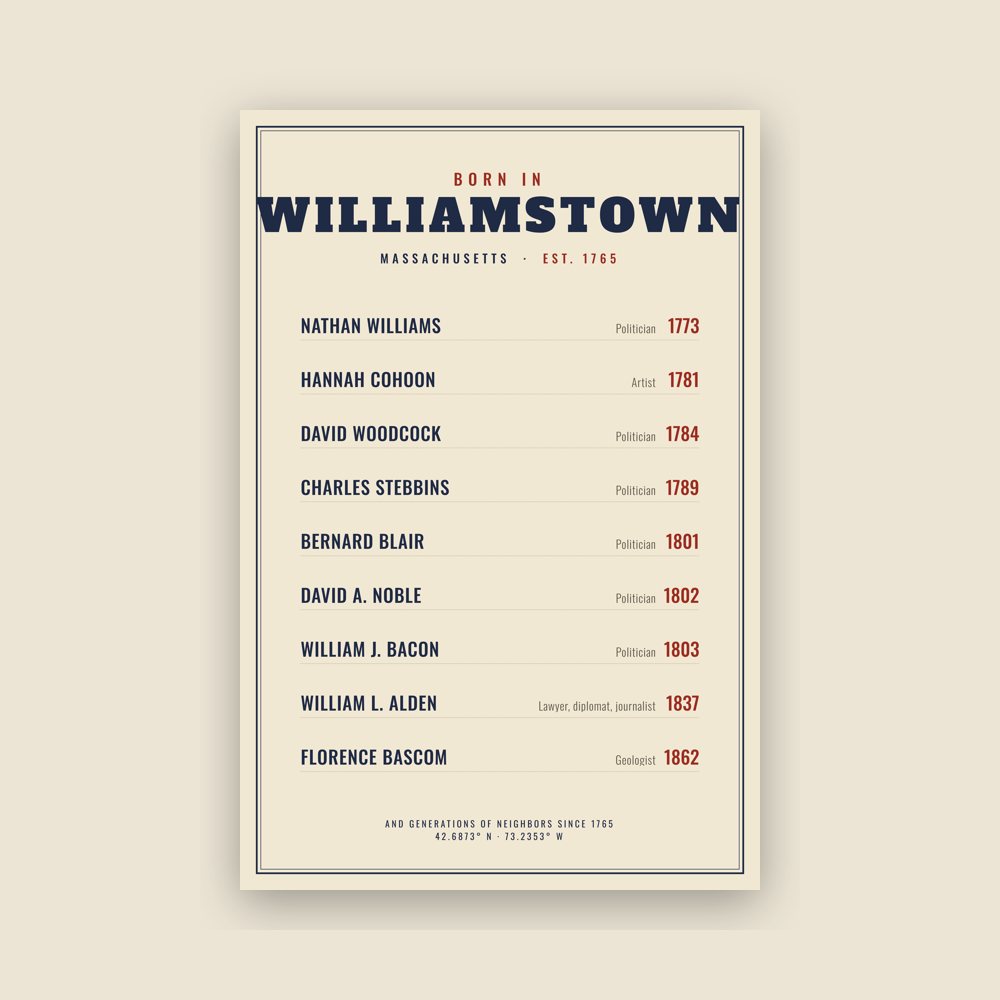
Famous natives, by birth year
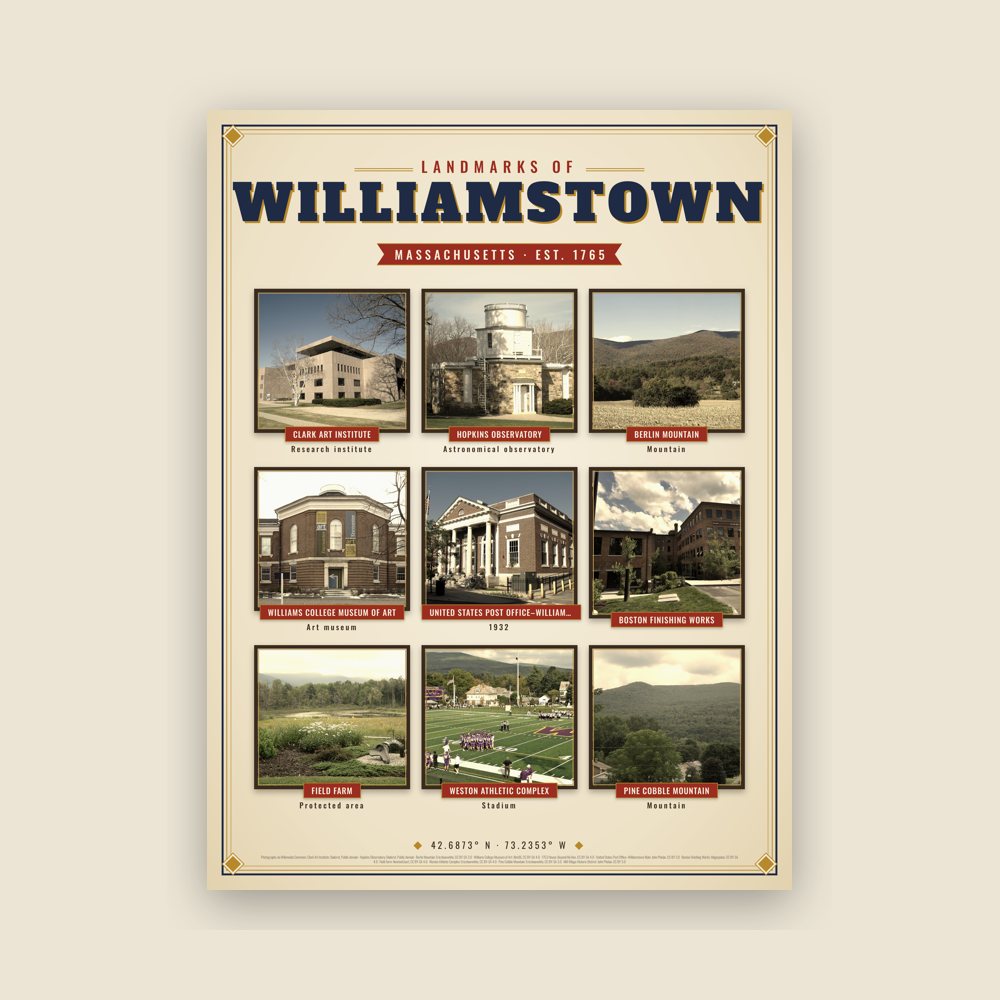
Nine local landmarks, archival matte
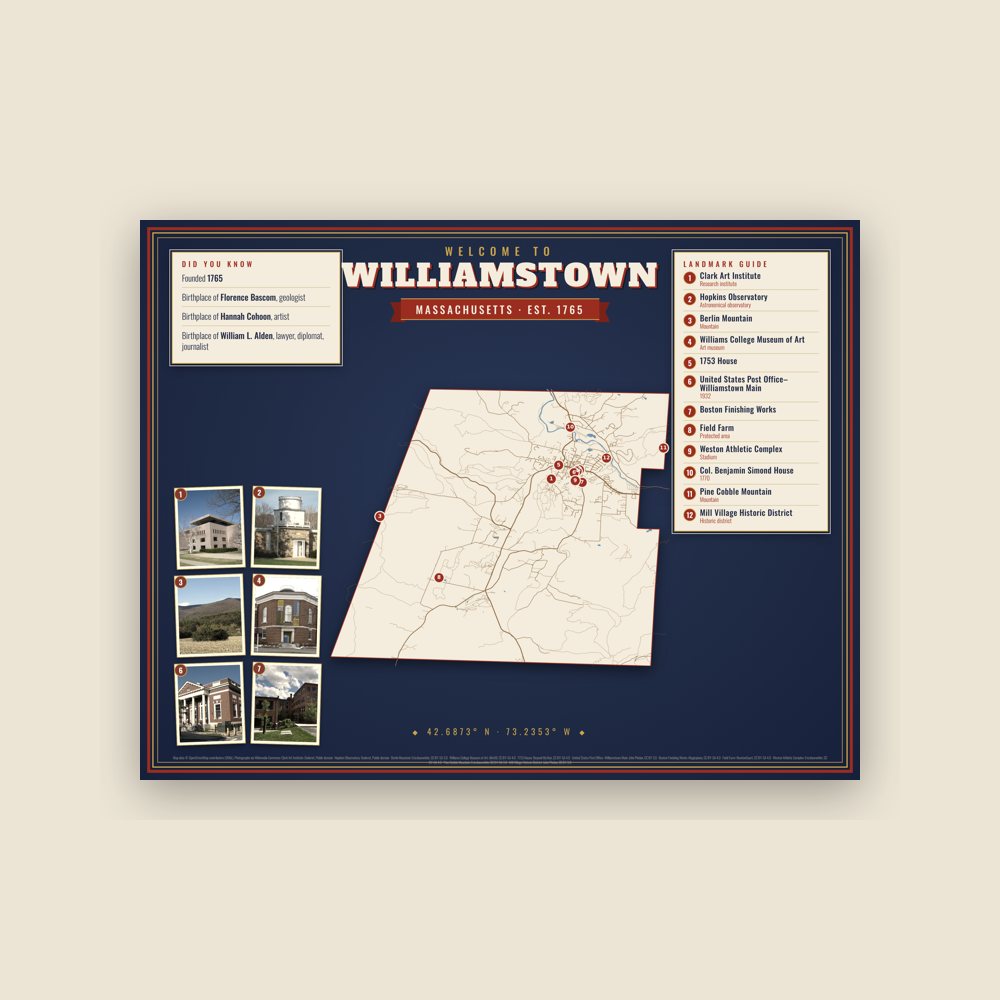
Map of local landmarks, washable fabric
Heavy-blend fleece, street map printed on the back
Soft Bella+Canvas jersey
Glossy ceramic, dishwasher safe
Ceramic keepsake, gold ribbon
Weatherproof, for the front walk
24″×16″, printed coir-look fibers, rubber back
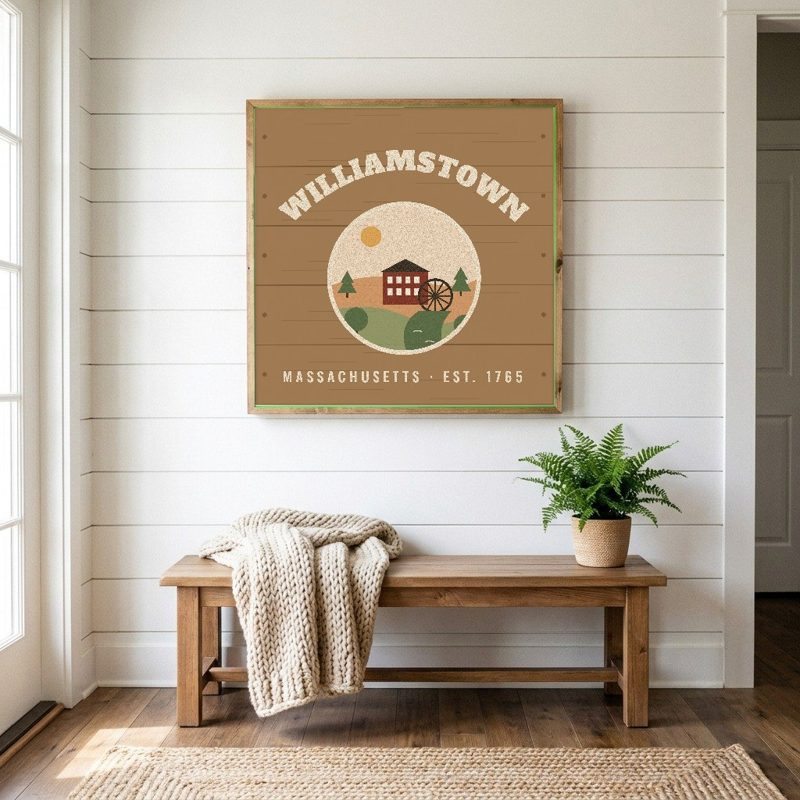
12″×12″ printed wood, ready to hang
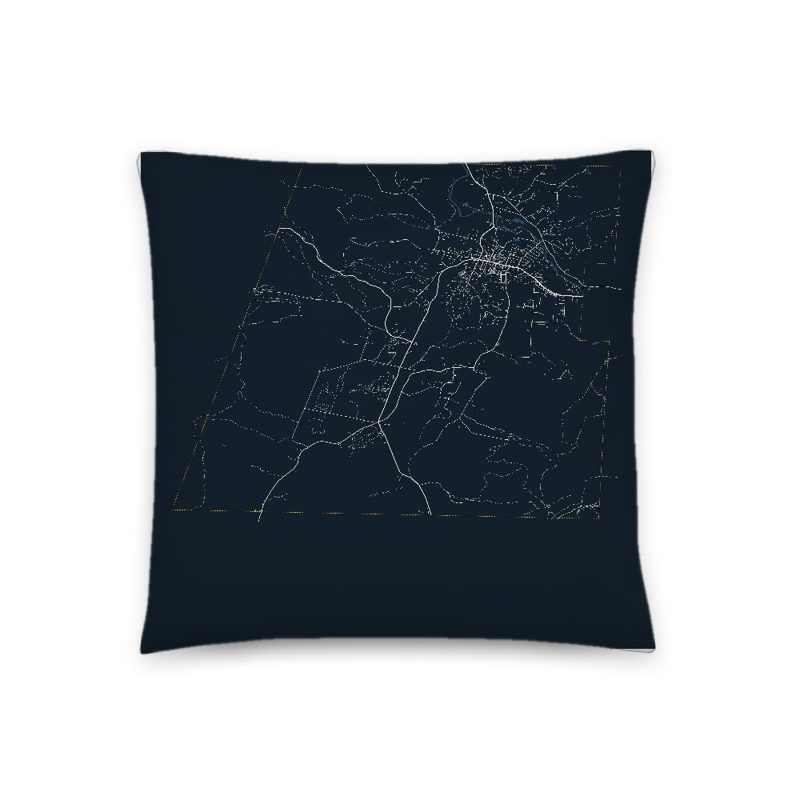
Soft-touch, zip cover
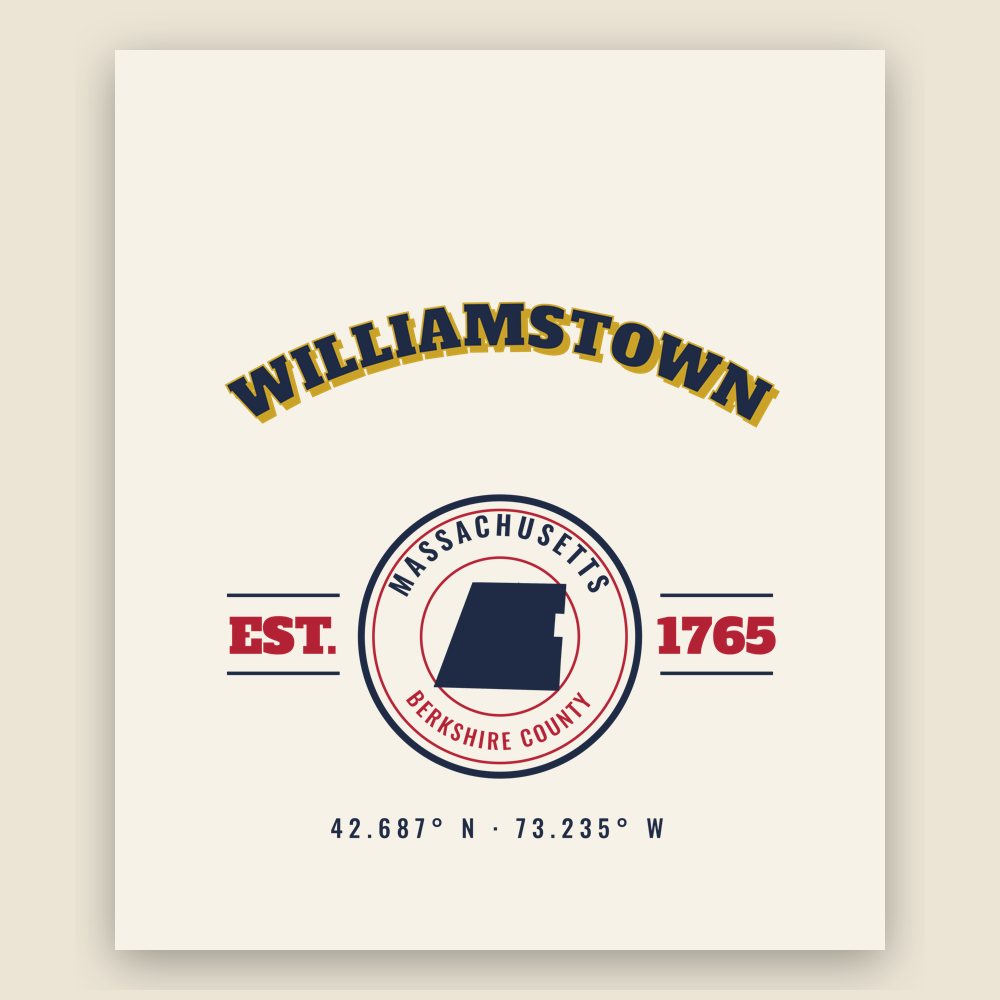
Sturdy all-over-print tote
Glossy top, cork back
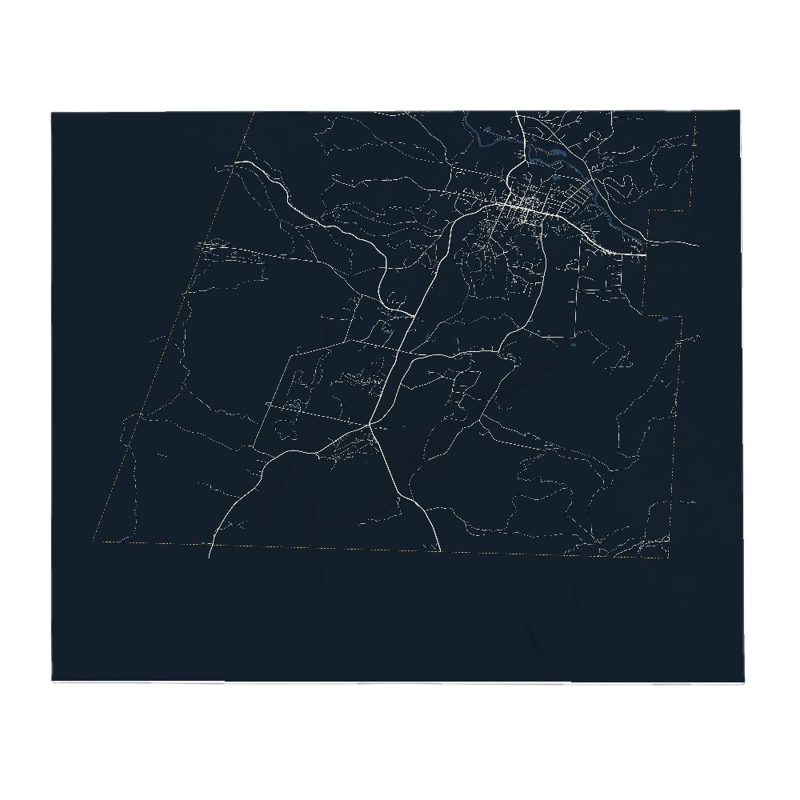
Soft fleece, 50″×60″
20 oz, double-wall stainless
Population 2010: 7,754 → 2020: 7,513
From Wikidata (CC0).
Originally called West Hoosac, the area was first settled in 1749. Prior to this time, its position along the Mohawk Trail made it ideal Mohican hunting grounds. Its strategic location bordering Dutch colonies in New York led to its settlement, because it was needed as a buffer to stop the Dutch from encroaching on Massachusetts. Fort West Hoosac, the westernmost blockhouse and stockade in Massachusetts, was built in 1756. The town was incorporated in 1765 as Williamstown according to the will of Col. Ephraim Williams, who was killed in the French and Indian War. He bequeathed a significant sum to the town on the condition that the town would be named after him and that a free school would be established. In 1791 the school opened but only lasted a short time as a free school. It became Williams College in 1793.
The primary industry was agriculture, particularly dairy farming, sheep herding and wool production. Sawmills and gristmills operated by water power at the streams. With the Industrial Revolution larger mills were added, including the Walley Mill and Williamstown Manufacturing Company (Station Mill), both of which produced textiles. The A. Loop & Company (Water Street Mill) produced twine. With the opening of the railroad, tourists arrived. Several inns and hotels were established, including the Idlewild Hotel and Greylock Hotel. In the late 1930s and 1940s, E. Parmelee Prentice and his wife Alta, the daughter of John D. Rockefeller, created Mount Hope Farm. With a mansion designed by James Gamble Rogers, it was one of the outstanding experimental farms in the country. Today, it belongs to Williams College, which remains the largest employer in town.
Adapted (trimmed) from the Wikipedia article Williamstown, Massachusetts, revision 1379648075 by its contributors, licensed CC BY-SA 4.0.
We share a part of every Williamstown sale with local partners, and we'd love to print from your collection. Old photographs, maps and postcards make the best keepsakes.
Partner with us