Since 1857
A short history of Stockton Springs
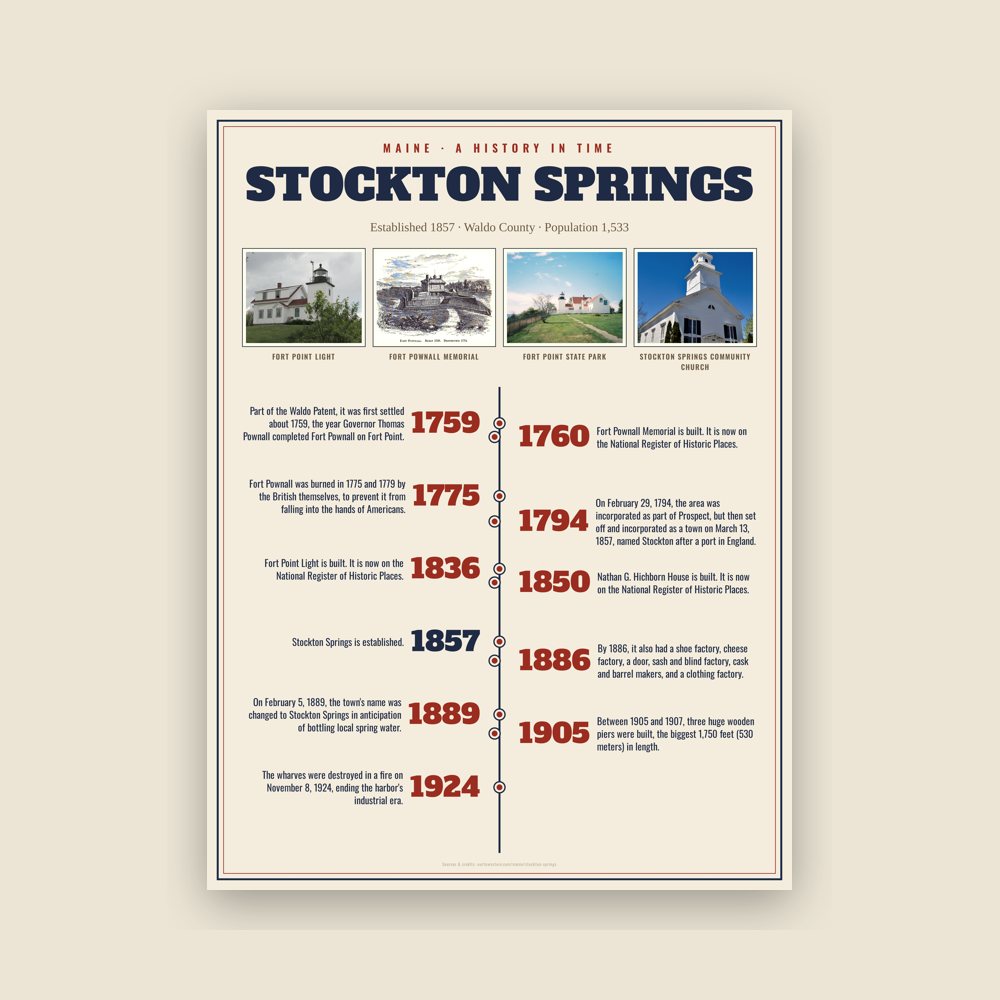
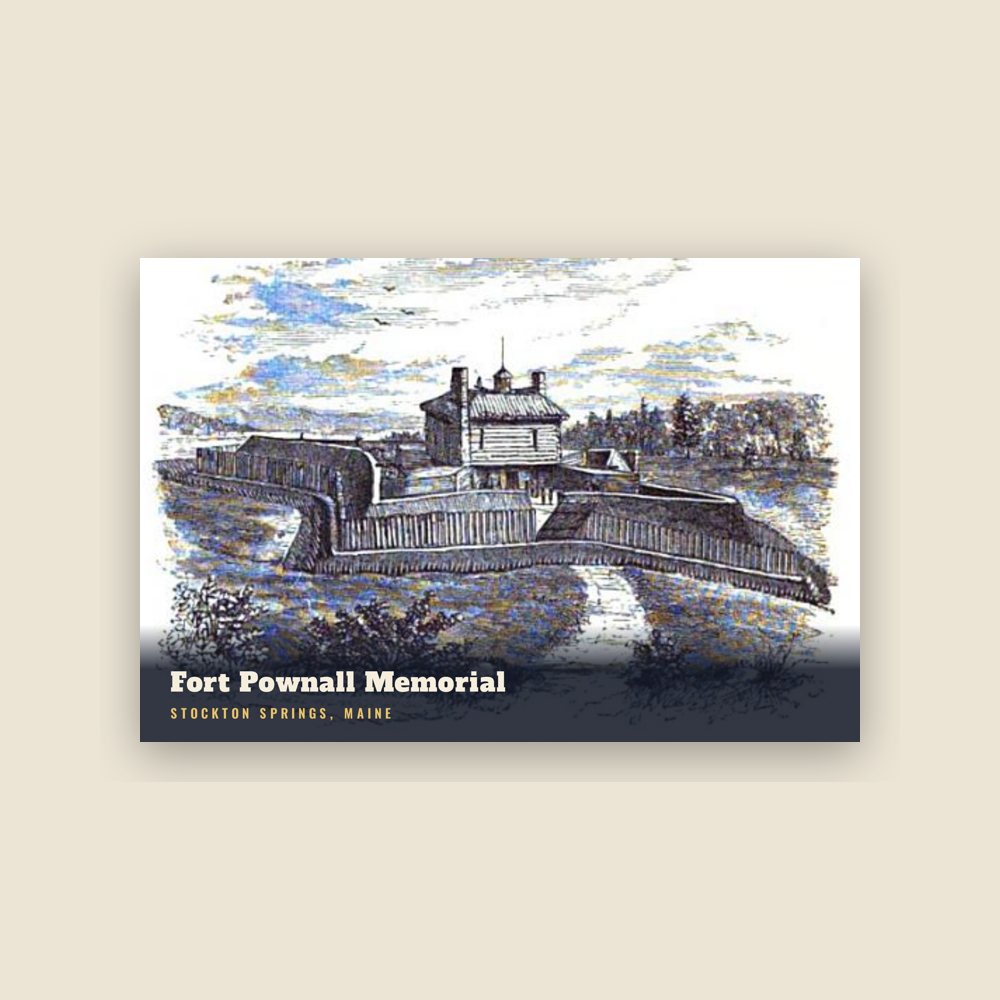
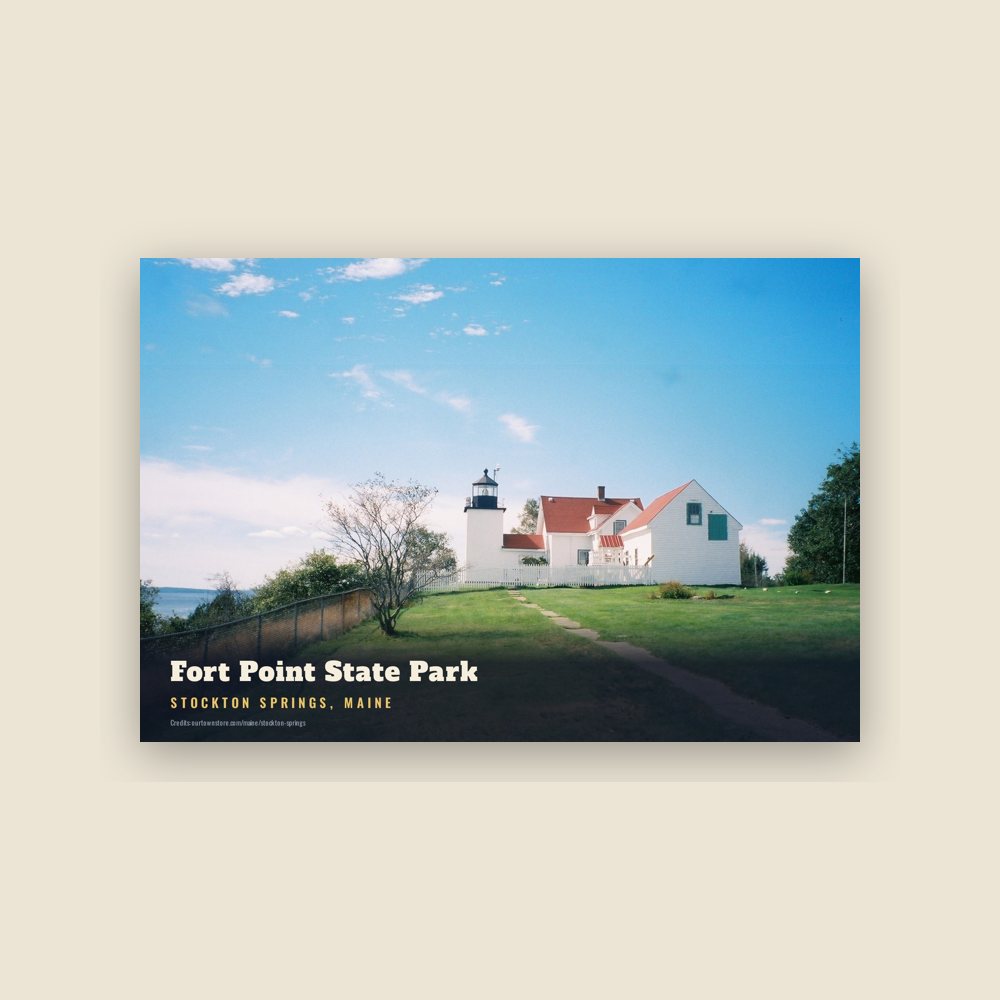
Part of the Waldo Patent, it was first settled about 1759, the year Governor Thomas Pownall completed Fort Pownall on Fort Point. The defense was intended to guard the mouth of the Penobscot River estuary during the French and Indian War. Fort Pownall was burned in 1775 and 1779 by the British themselves, to prevent it from falling into the hands of Americans.
On February 29, 1794, the area was incorporated as part of Prospect, but then set off and incorporated as a town on March 13, 1857, named Stockton after a port in England. In 1859, businesses included four sawmills, three shingle mills, two lath mills, one carding machine, one cloth-dressing mill, one tannery, four shipyards, six blacksmith shops, and several mechanic shops. By 1886, it also had a shoe factory, cheese factory, a door, sash and blind factory, cask and barrel makers, and a clothing factory. On February 5, 1889, the town's name was changed to Stockton Springs in anticipation of bottling local spring water. When sediment was discovered in the bottles, however, the plan was abandoned.
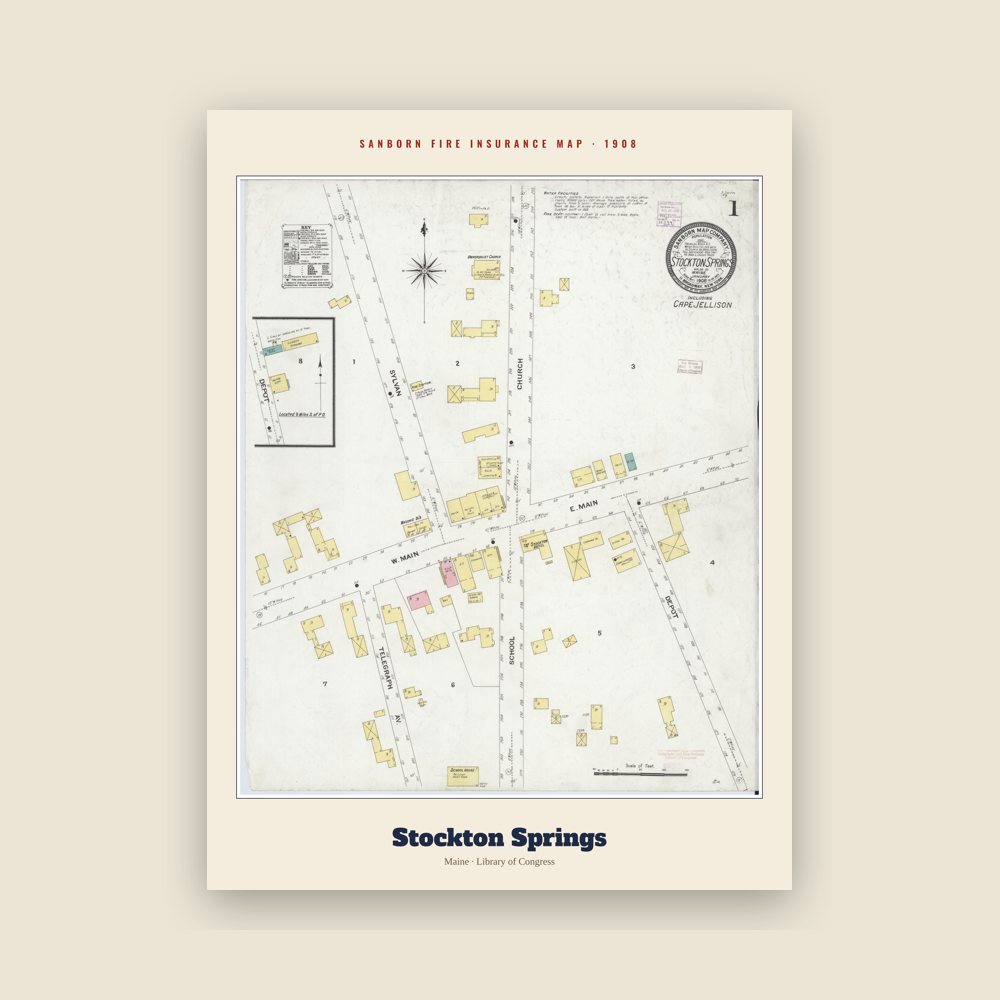
Cape Jellison developed into a bustling port. Between 1905 and 1907, three huge wooden piers were built, the biggest 1,750 feet (530 meters) in length. The Bangor & Aroostook Railroad transported goods to and from the docks. An immense warehouse held potatoes from Aroostook County until schooners could deliver them elsewhere. The wharves were destroyed in a fire on November 8, 1924, ending the harbor's industrial era.
Adapted (trimmed) from the Wikipedia article Stockton Springs, Maine, revision 1374938226 by its contributors, licensed CC BY-SA 4.0.
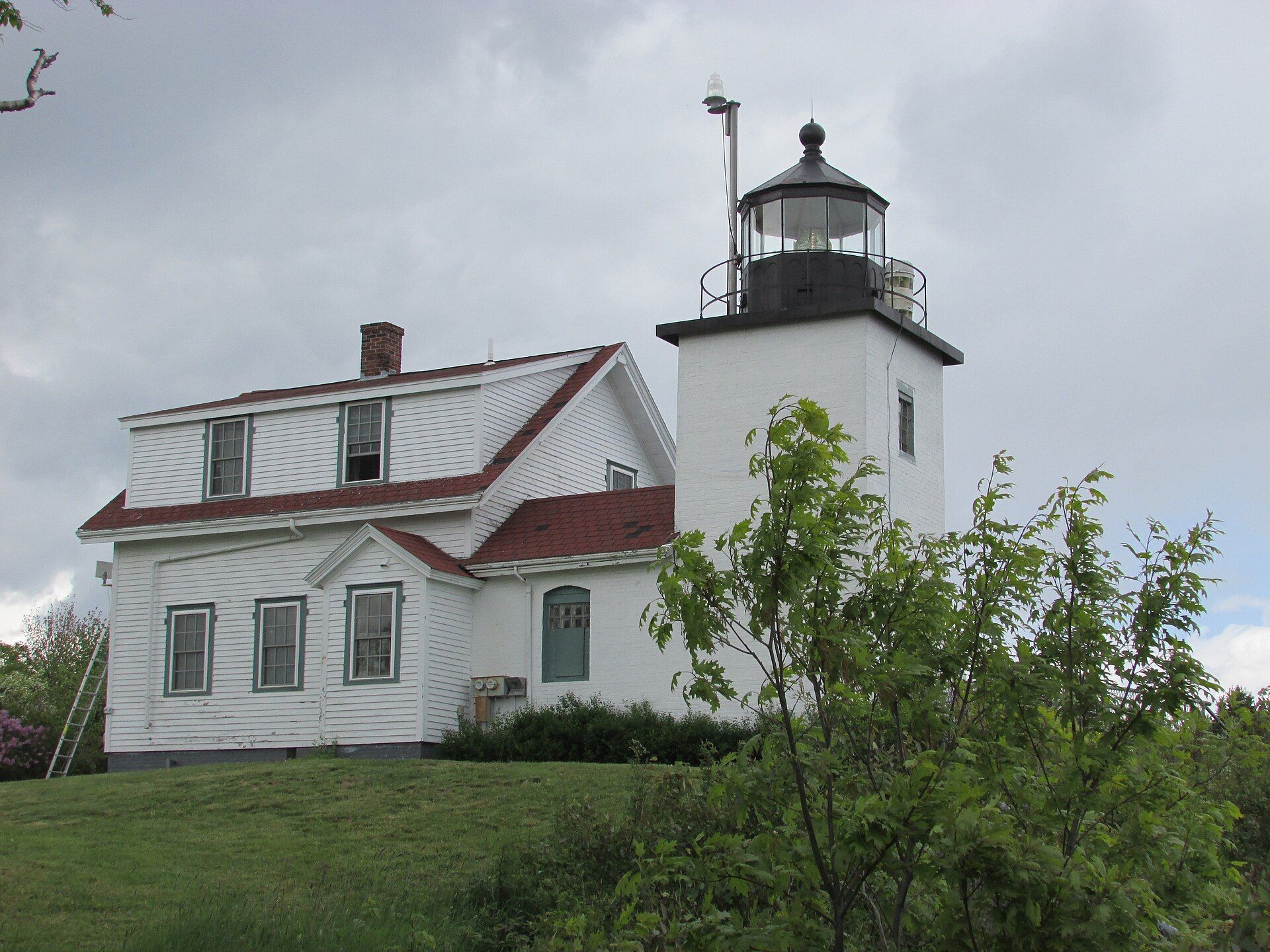
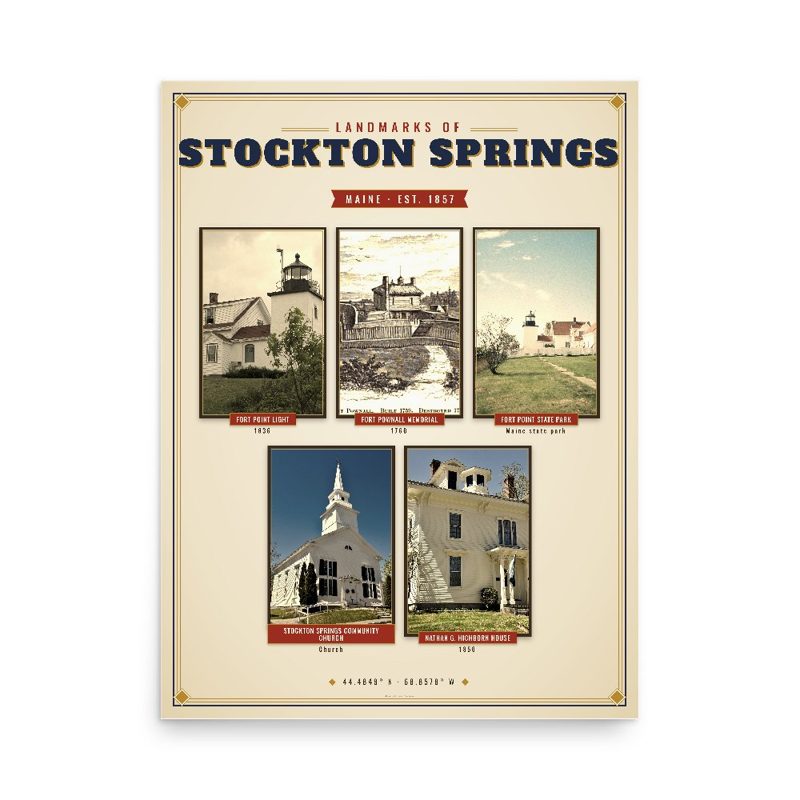
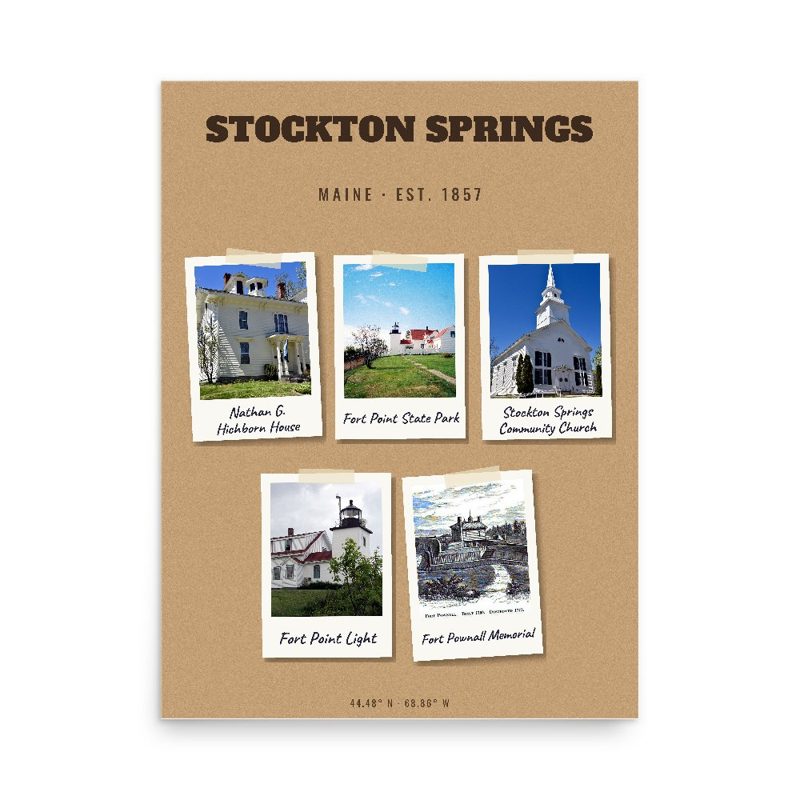
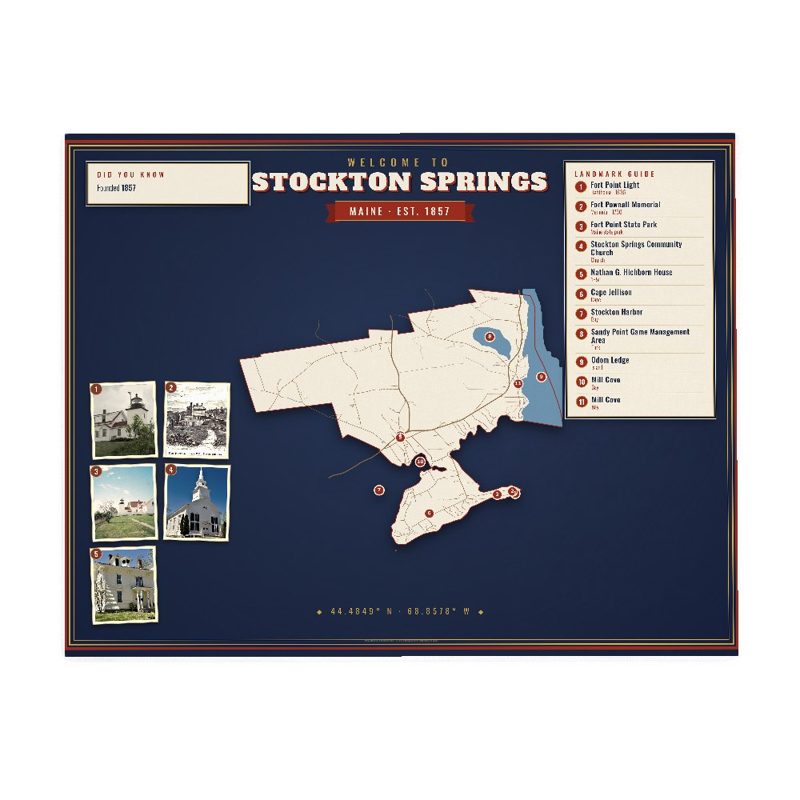











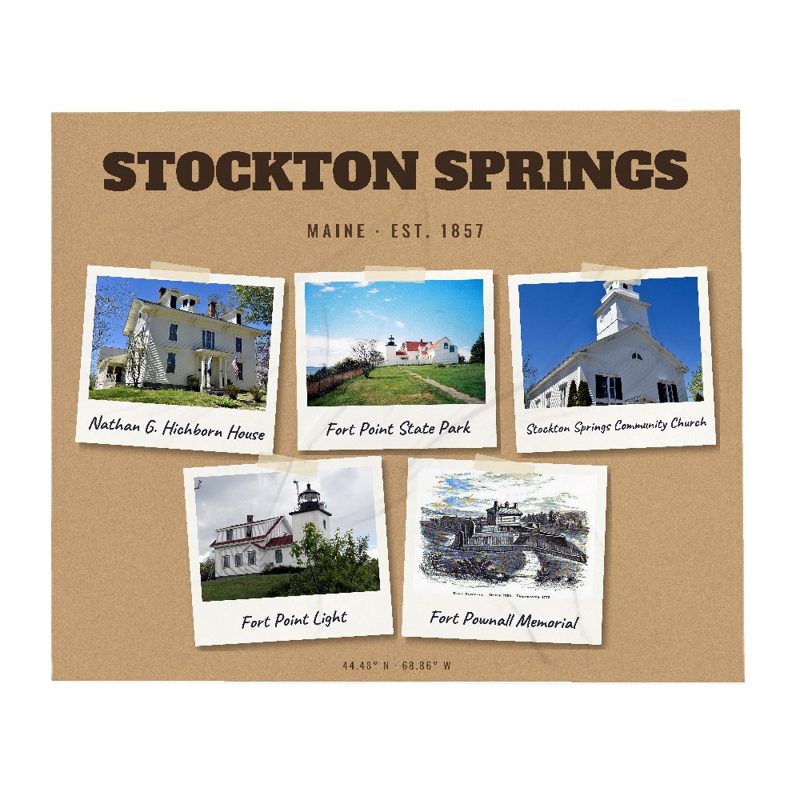



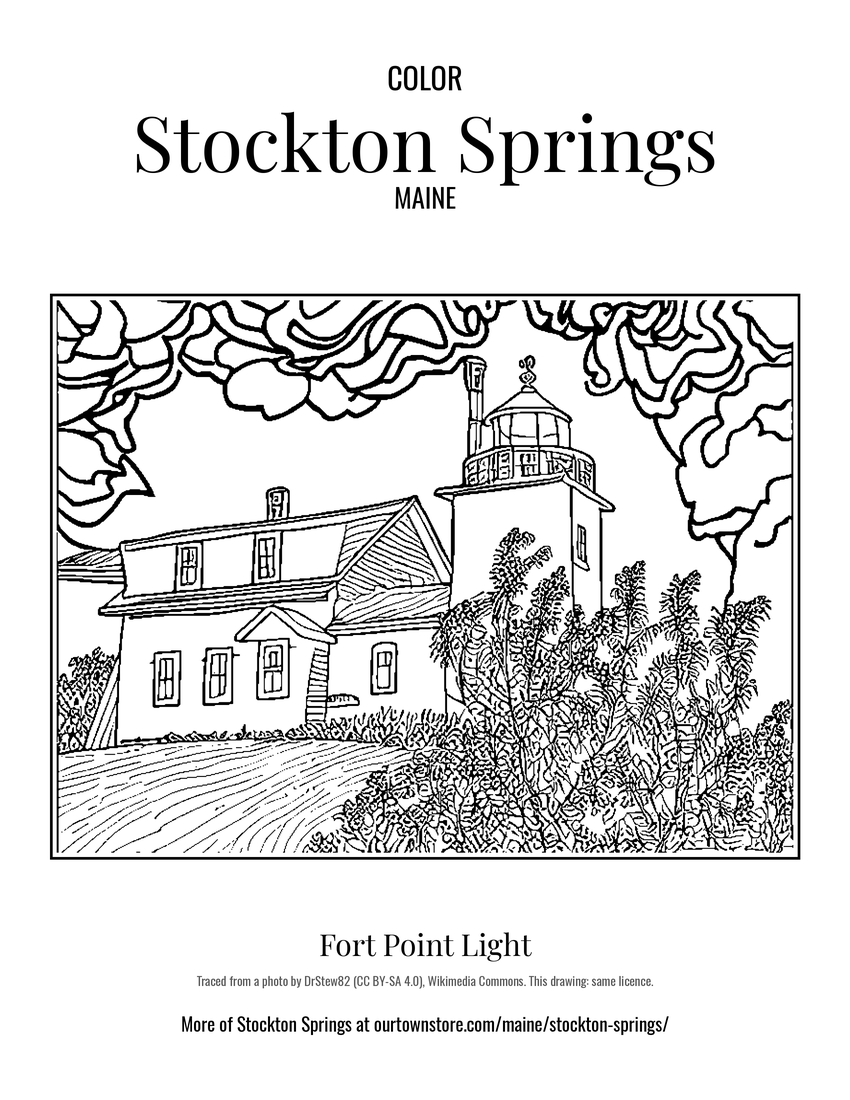 Fort Point Light
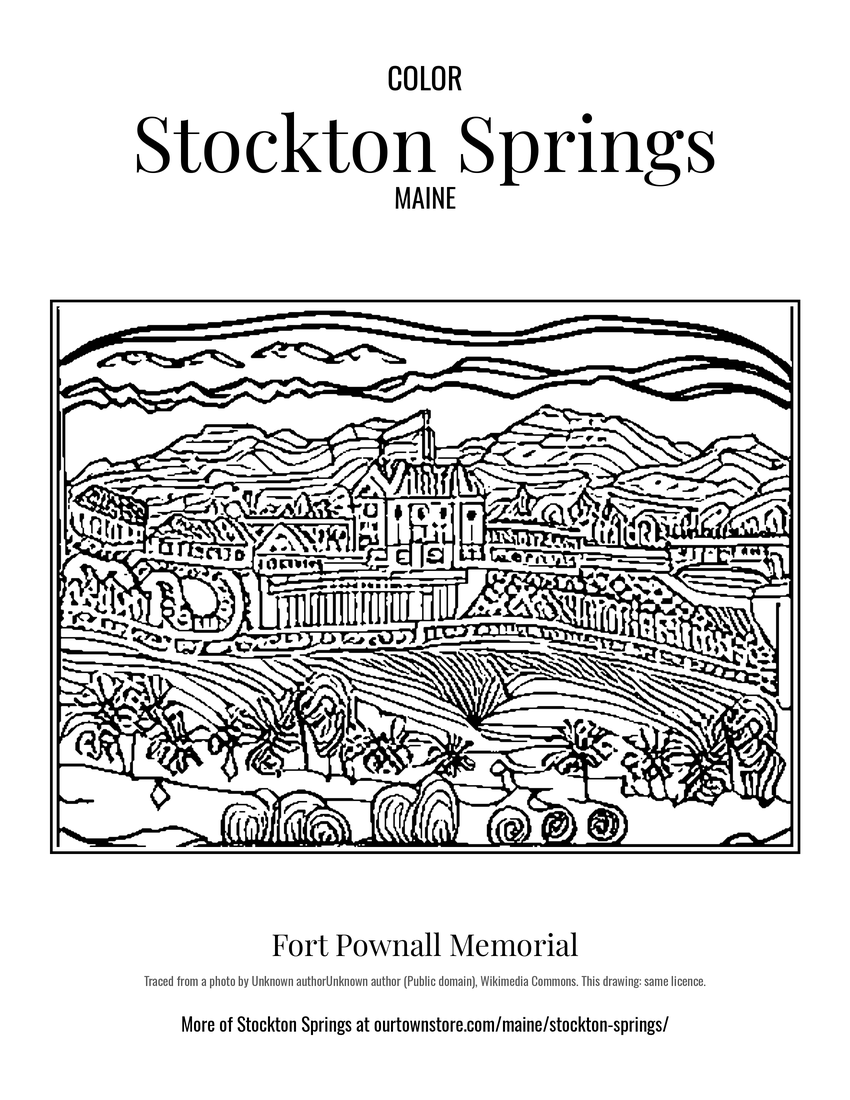 Fort Pownall Memorial
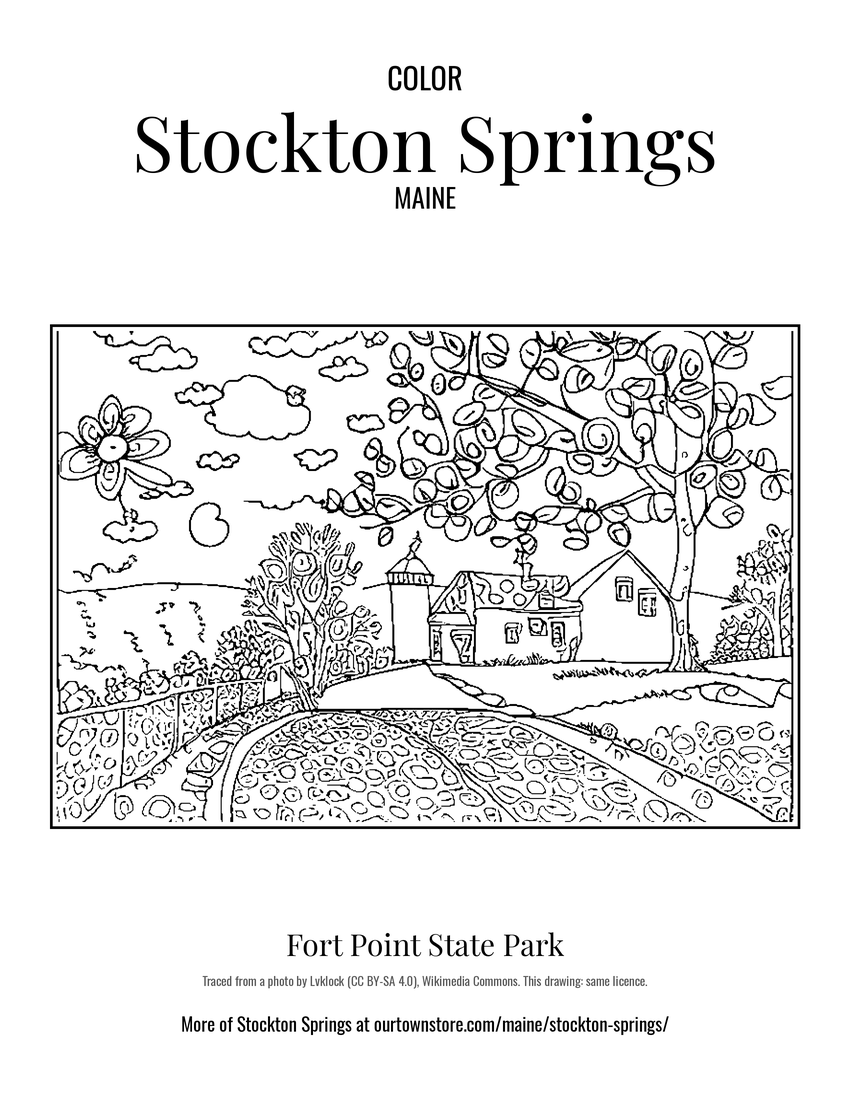 Fort Point State Park
 Stockton Springs Community Church