Since 1653
A short history of Biddeford
The first European to settle at Biddeford was physician Richard Vines in the winter of 1616–17 at Winter Harbor, as he called Biddeford Pool. This 1616 landing by a European antedates the Mayflower landing in Plymouth, Massachusetts (100 miles to the south), by about four years, a fact much of New England lore overlooks. In 1630, the Plymouth Company granted the land south of the River Swanckadocke to Vines and John Oldham. In 1653, the town included both sides of the river, and was incorporated by the Massachusetts General Court as Saco.
Biddeford was first incorporated as the Town of Saco in 1653. Roger Spencer was granted the right in 1653 to build the first sawmill. Lumber and fish became the community's chief exports. In 1659, Major William Phillips of Boston became a proprietor, and constructed a garrison and watermill at the falls. Settlers withdrew to Winter Harbor for safety, and their homes and mills upriver at the falls were burned. In 1693, a stone fort was built a short distance below the falls, but it was allegedly captured by Native Americans in 1703, when 11 colonists were killed and 24 taken captive to Canada. In 1688, Fort Mary was built near the entrance to Biddeford Pool. The town was reorganized in 1718 as Biddeford, after Bideford, a town in Devon, England, from which some settlers had emigrated. After the Fall of Quebec in 1759, hostilities with the indigenous people ceased. During King Philip's War in 1675, the town, once again, was allegedly attacked by Native Americans.
In 1762, the land northeast of the river was set off as Pepperellborough, which in 1805 was renamed Saco. The first bridge to Saco was built in 1767. The river divides into two falls that drop 40 feet (12 m), providing water power for mills. Factories were established to make boots and shoes. The developing mill town also had granite quarries and brickyards, in addition to lumber and grain mills. Major textile manufacturing facilities were constructed along the riverbanks, including the Laconia Company in 1845, and the Pepperell Company in 1850. Biddeford was incorporated as a city in 1855.
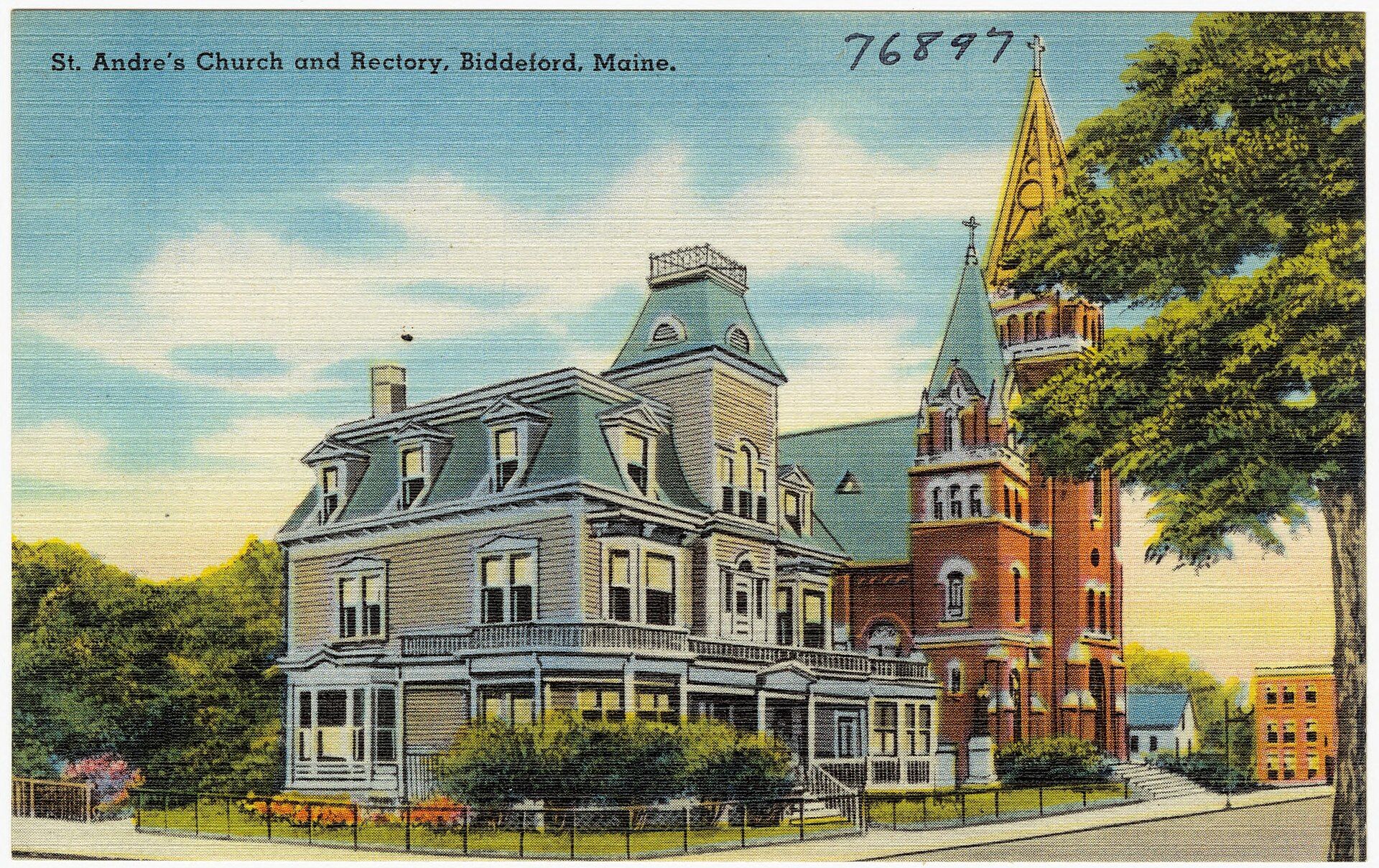
The mills attracted waves of immigrants, including Irish, Albanians, and French-Canadians from Quebec. At one time, the textile mills employed as many as 12,000 people, but as happened elsewhere, the industry entered a long period of decline. As of 2009, the last remaining textile company in the city, WestPoint Home, closed. The property occupying the mill has been sold and is being redeveloped into housing and new businesses. The last log drive down the Saco River was in 1943, with the last log sawn in 1948. Biddeford's name is engraved near the top level of the Pilgrim Monument, in Provincetown, Massachusetts, along with the names of some of the oldest cities and towns in New England.
During World War II, the Biddeford Pool Military Reservation was established from 1942 to 1945, on what is now the Abenakee Golf Club. It had four circular concrete platforms called "Panama mounts" for 155-mm guns, three of which remain today.
On July 13, 2026, a United States Immigration and Customs Enforcement agent fatally shot Joan Sebastián Durán Guerrero, a 26-year old Colombian national, in Biddeford.
Adapted (trimmed) from the Wikipedia article Biddeford, Maine, revision 1379280467 by its contributors, licensed CC BY-SA 4.0.
































 Wood Island Light
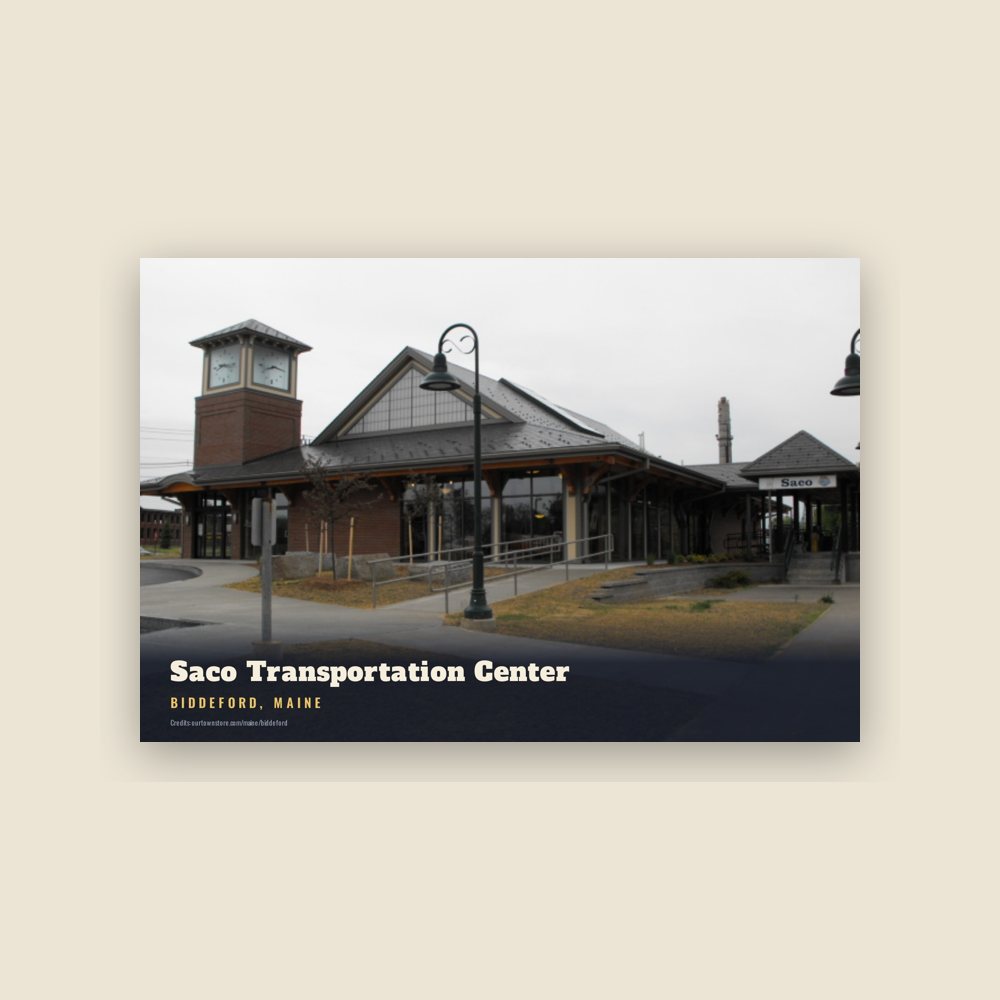
 Saco Transportation Center
 City Theater
 Saint Joseph's Church