A short history of Waverly
Indian reservation
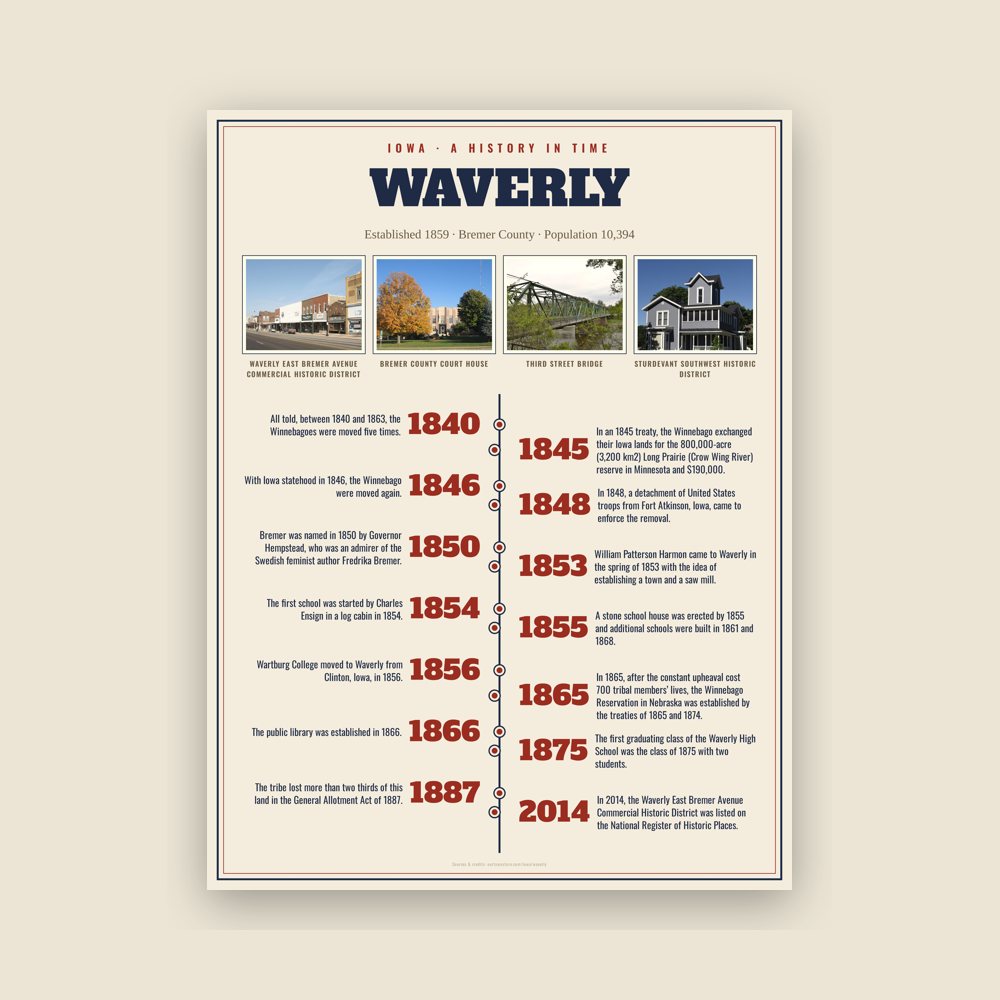
The first permanent residents of Waverly were settled there against their will. Because of their alleged assistance given to Chief Black Hawk during the Blackhawk War of 1832, the Winnebago were forced to cede their lands east of the Mississippi and to move to neutral ground in what later became northeastern Iowa. They were to receive $270,000 ($10,000 per year for 27 years) and were required to surrender several of their tribesmen accused of murdering whites during the war. At that time there were three tribes living in the area, the Ho-Chunk numbering about 500, the Meskwaki numbering about 100 and the Pottawattomi numbering about 50. With Iowa statehood in 1846, the Winnebago were moved again. In an 1845 treaty, the Winnebago exchanged their Iowa lands for the 800,000-acre (3,200 km2) Long Prairie (Crow Wing River) reserve in Minnesota and $190,000. In 1848, a detachment of United States troops from Fort Atkinson, Iowa, came to enforce the removal. All told, between 1840 and 1863, the Winnebagoes were moved five times. They were pushed first to northeastern Iowa, then to Long Prairie, Minnesota, then to Blue Earth, Minnesota, then to Crow Creek, South Dakota. In 1865, after the constant upheaval cost 700 tribal members’ lives, the Winnebago Reservation in Nebraska was established by the treaties of 1865 and 1874. The tribe lost more than two thirds of this land in the General Allotment Act of 1887. By 1913, only 120,000 acres (490 km2) of cropland, woodland, and pasture remained. The tribe is federally recognized and organized under the 1934 Indian Reorganization Act. The Winnebago Tribe established a constitution in 1936 which was amended in 1968.
Read the full history
Settlement
Frederick Cretzmeyer is credited with being the first European settler in Waverly. Having purchased 160 acres (0.6 km2) in 1852, he built a log hut on the east side of the Cedar River (or what was once called the Red Cedar River). Soon more homes were constructed as other settlers arrived, with some of their later homes built just over the hill behind the old recycling center.
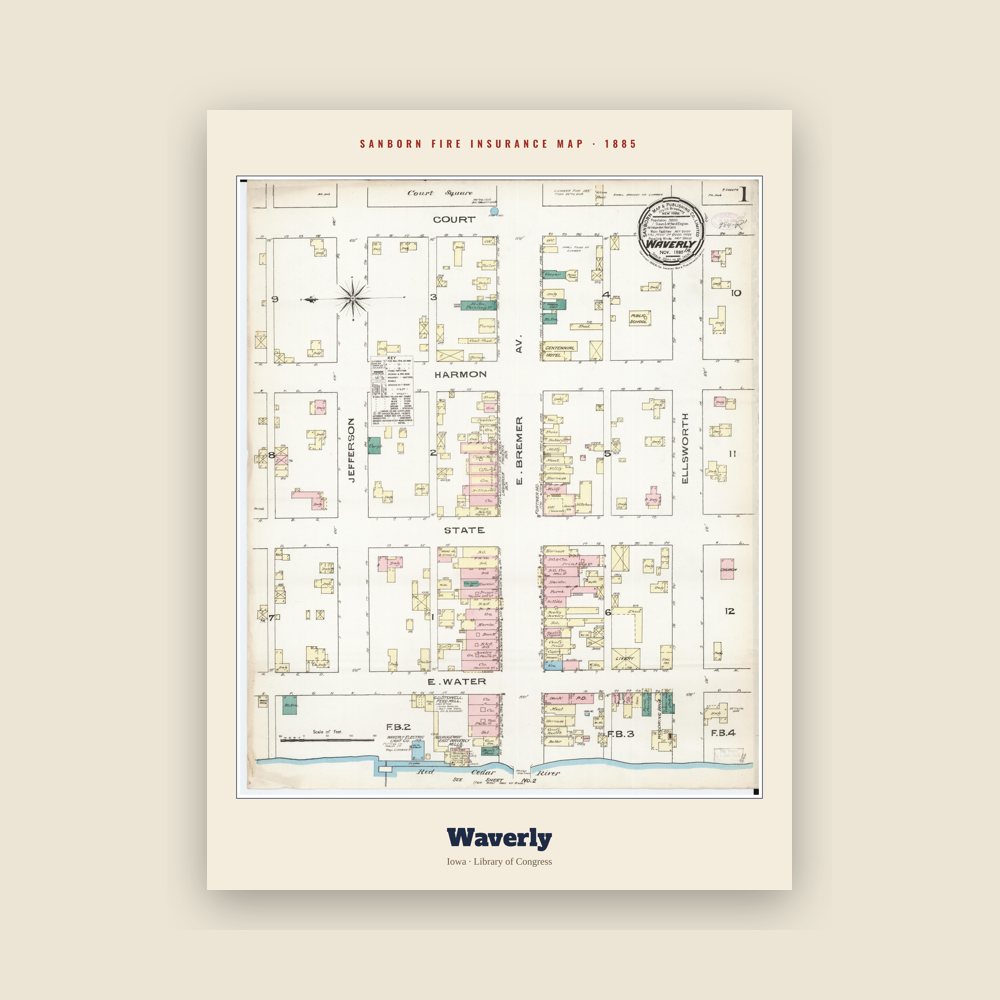
William Patterson Harmon came to Waverly in the spring of 1853 with the idea of establishing a town and a saw mill. He purchased most of what is Waverly from the United States Government for $1.25 an acre. The area was incorporated as a town on April 25, 1859, according to the Library of the State of Iowa. (A centennial celebration was held in August 1956.)
Two stories exist on how the town was named. The speaker at the ceremony was said to have been a fan of Sir Walter Scott's Waverley novels and when it came time to name the town (which settlers had wanted to call Harmonville or Harmon) he inadvertently called it Waverly. The myth goes that Jennie Harmon Case later wrote that it was her father who was the speaker and that he made the decision to name the town after the favorite book, instead of the proposed "Harmonville." Coincidentally, Bremer County's name also honors a person eminent in literature. Bremer was named in 1850 by Governor Hempstead, who was an admirer of the Swedish feminist author Fredrika Bremer.
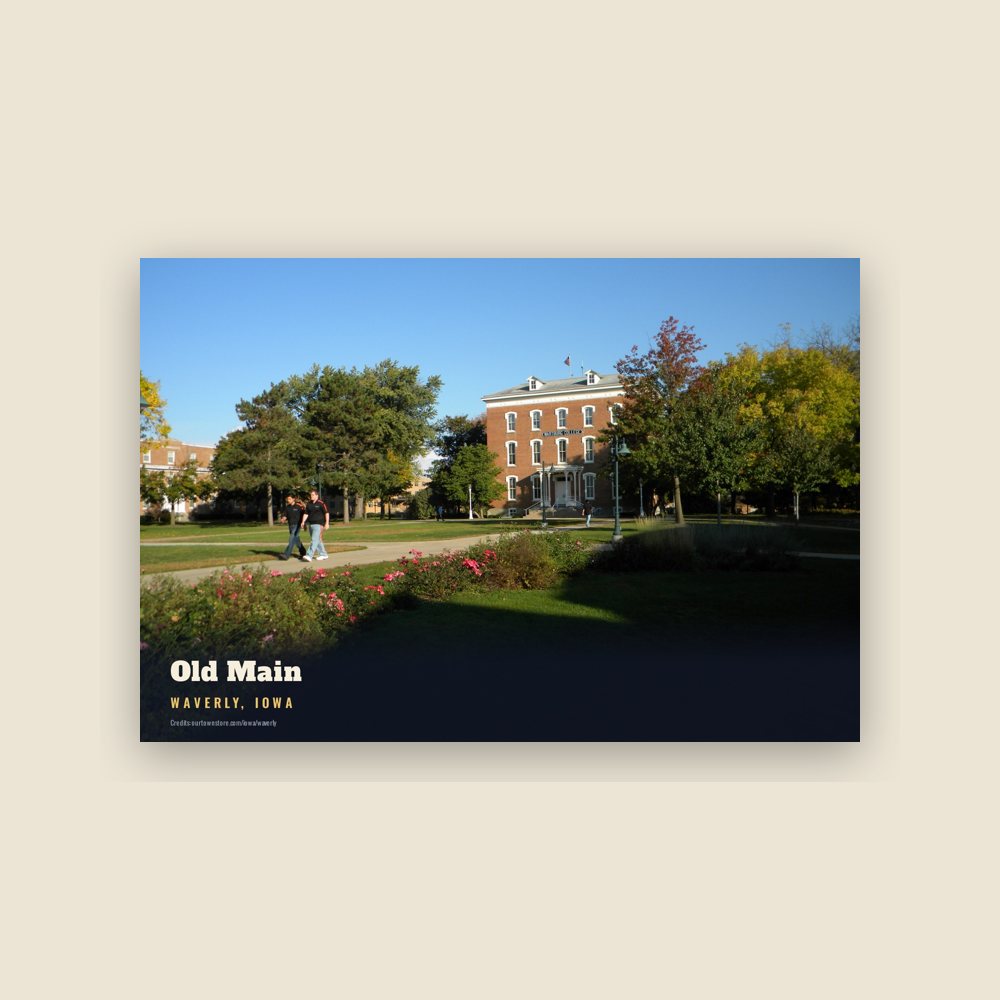
The first school was started by Charles Ensign in a log cabin in 1854. A stone school house was erected by 1855 and additional schools were built in 1861 and 1868. The first graduating class of the Waverly High School was the class of 1875 with two students. Wartburg College moved to Waverly from Clinton, Iowa, in 1856. The public library was established in 1866.
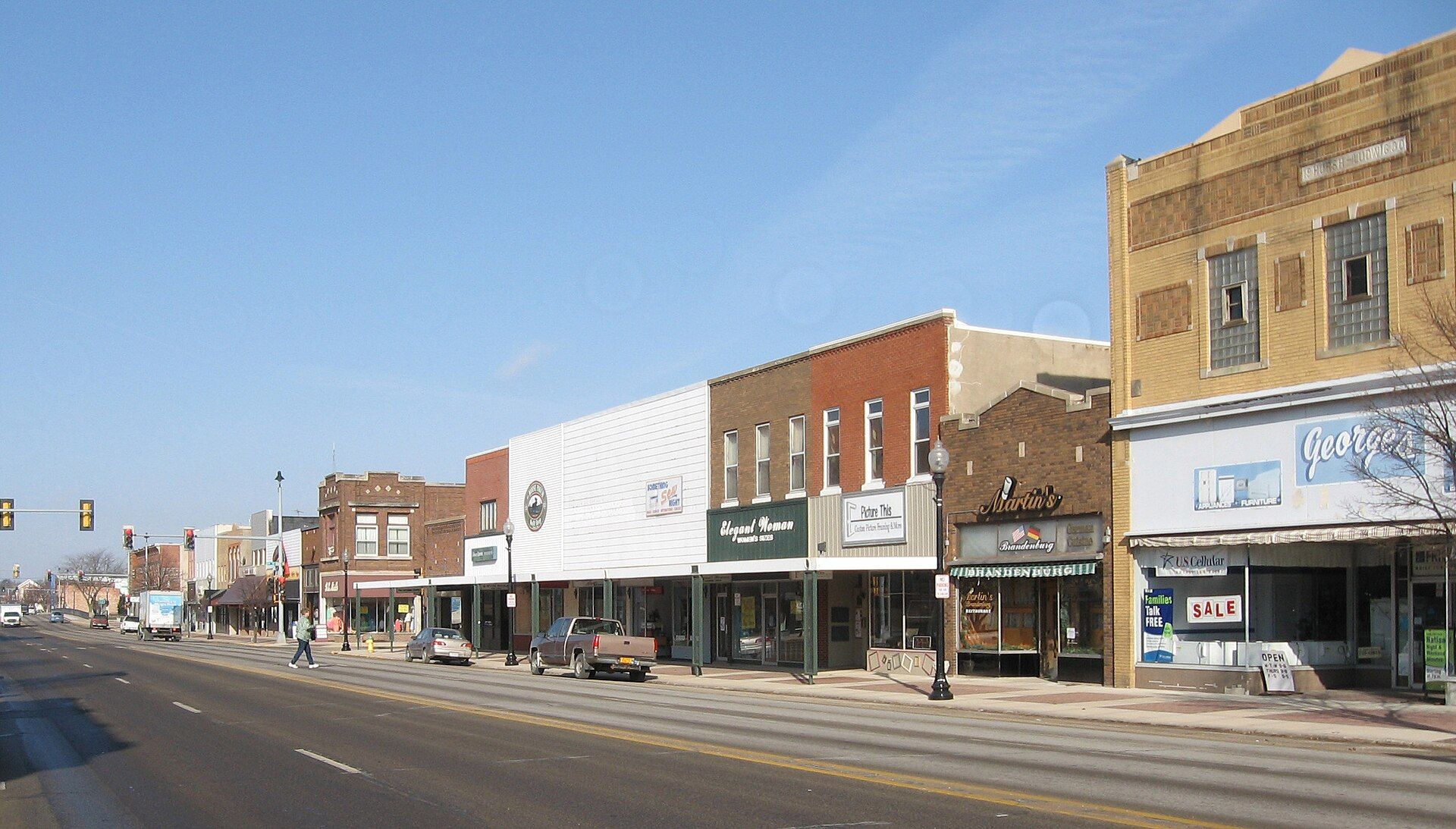
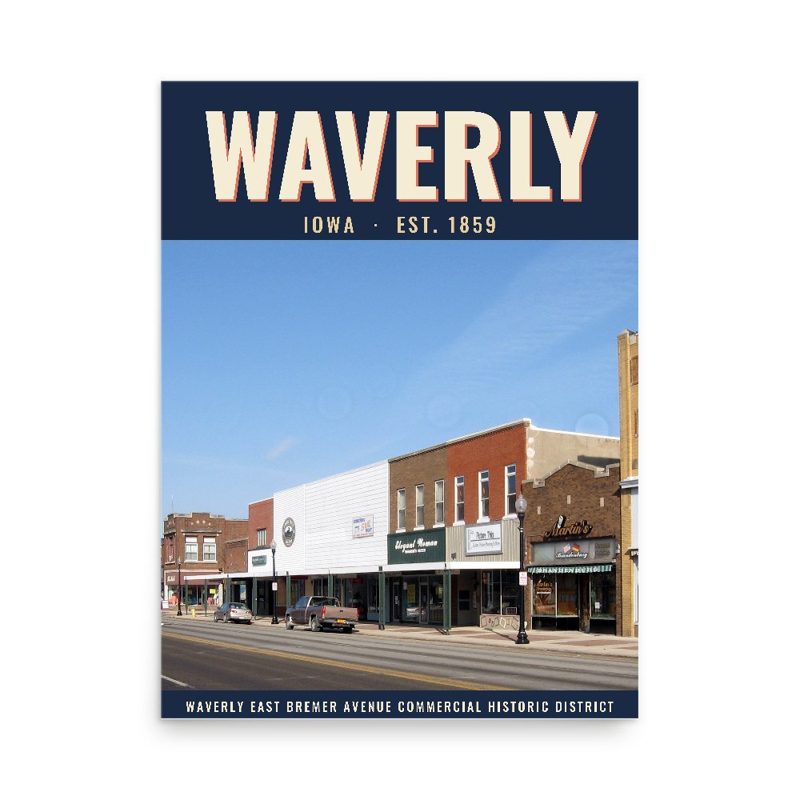
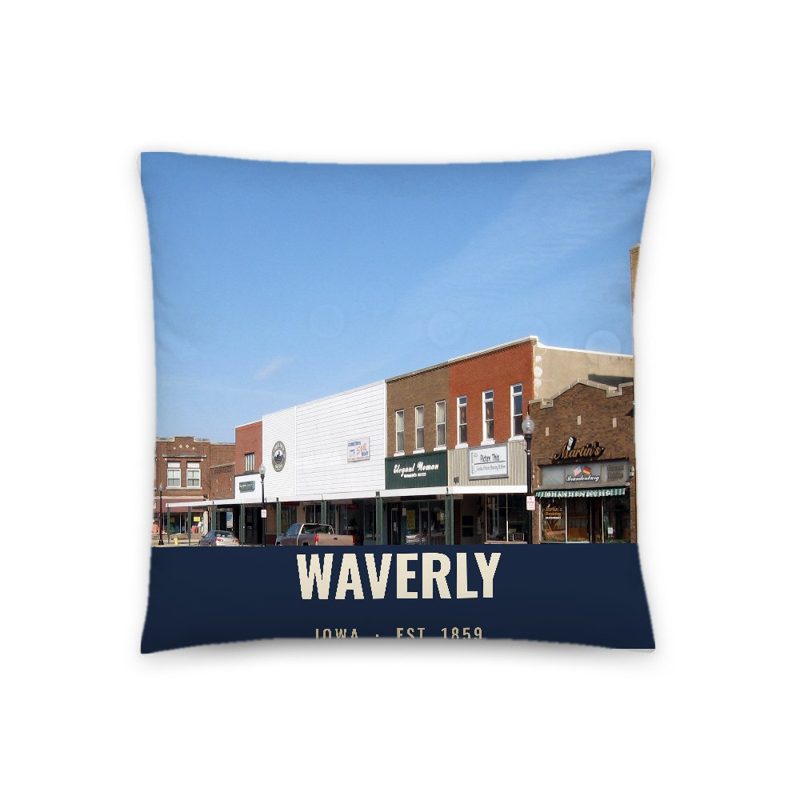
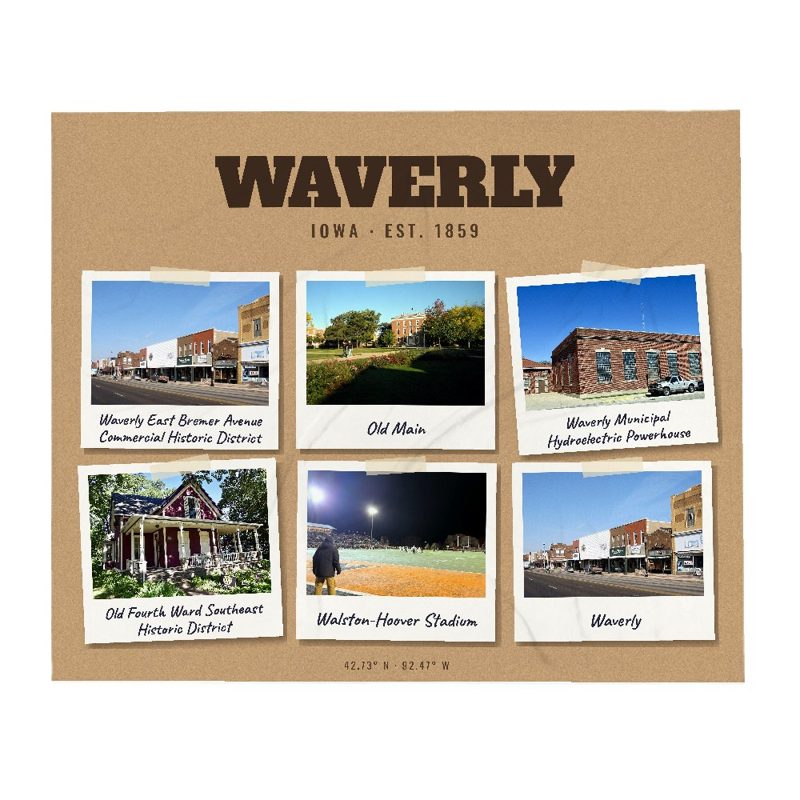
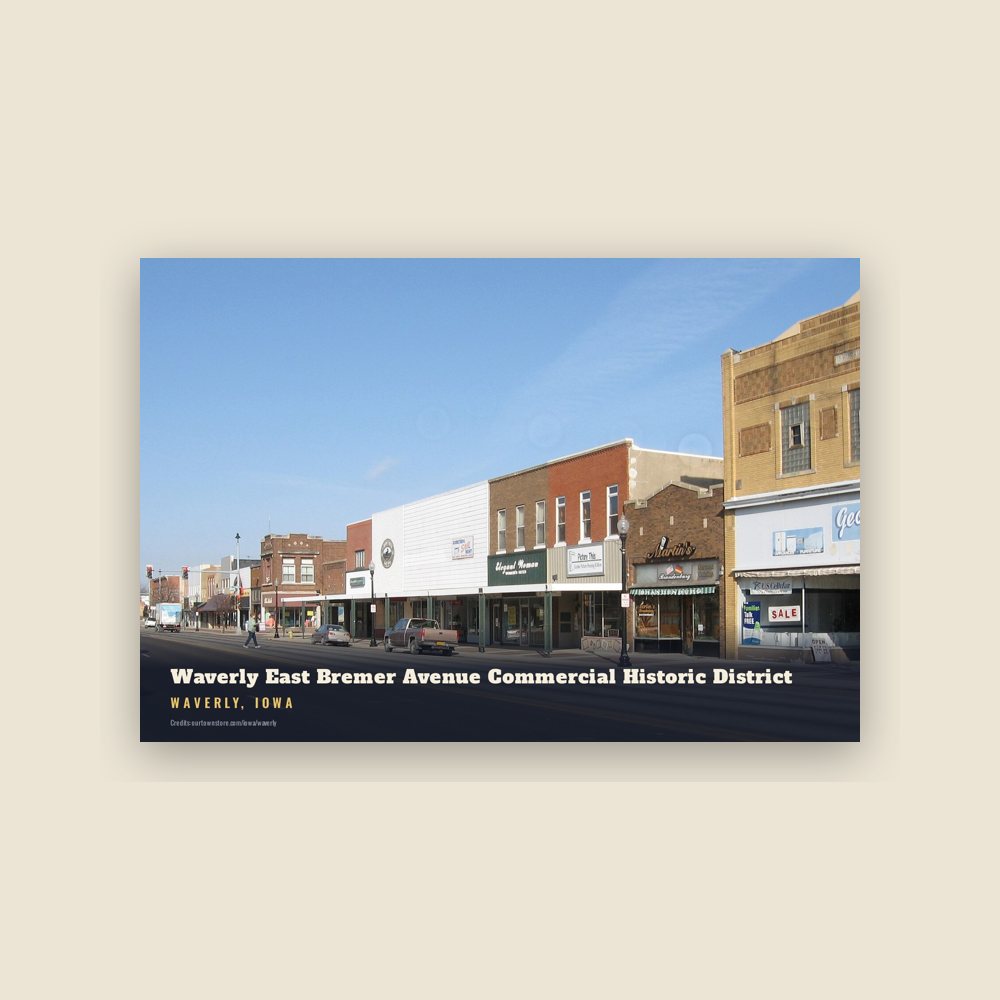
In 2014, the Waverly East Bremer Avenue Commercial Historic District was listed on the National Register of Historic Places. Among the noted buildings in the listing is the WPA-era post office, which contains a mural designed by artist Mildred W. Pelzer for the Section of Painting and Sculpture, later called the Section of Fine Arts, of the Treasury Department. The painting, called A Letter from Home in 1856, depicted a farm family pausing during plowing to read a letter from their former home.
Adapted (trimmed) from the Wikipedia article Waverly, Iowa, revision 1380230548 by its contributors, licensed CC BY-SA 4.0.
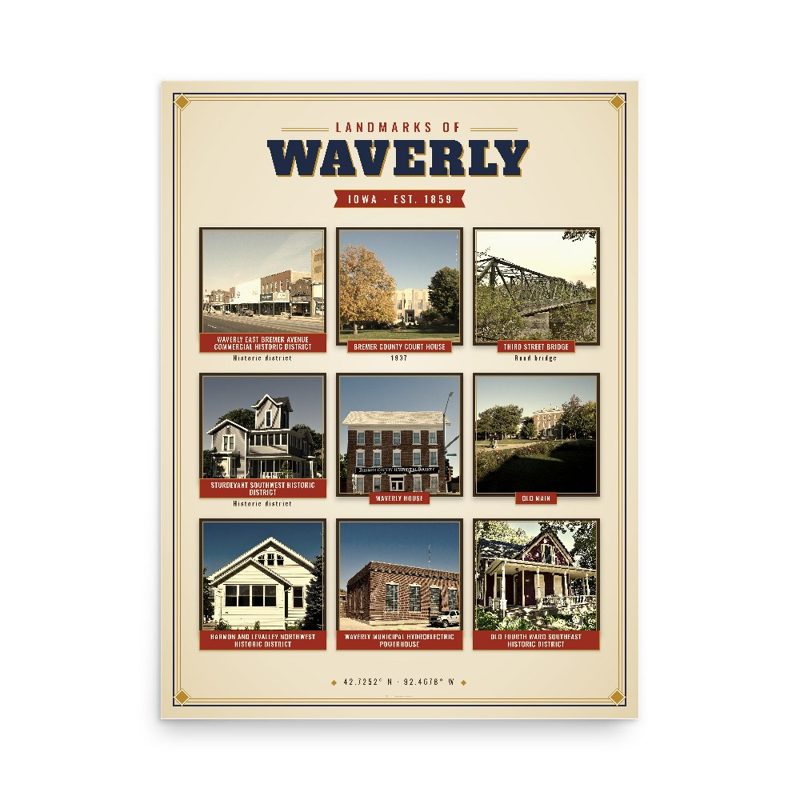

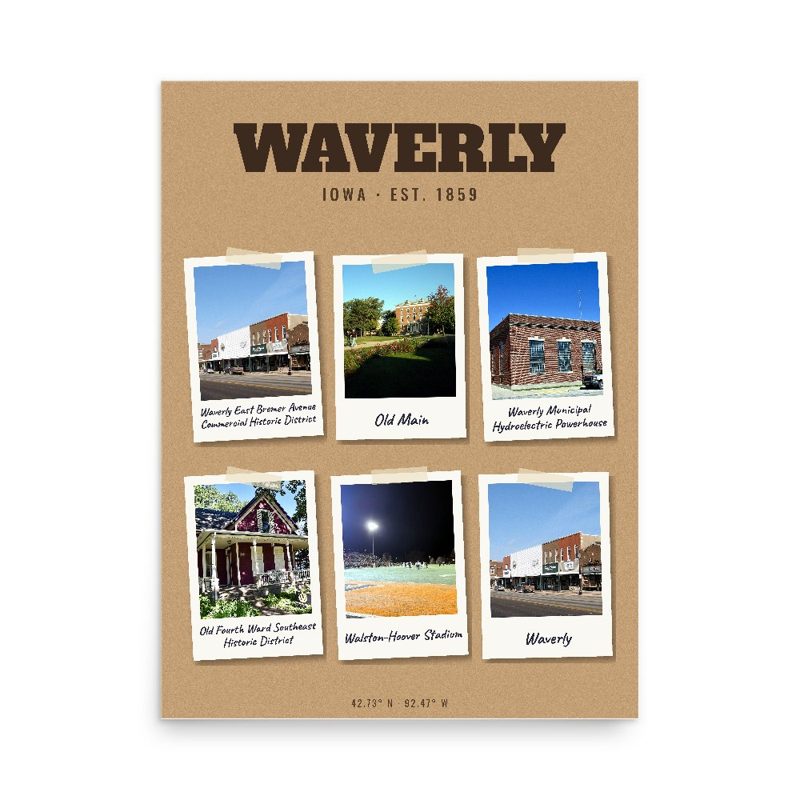
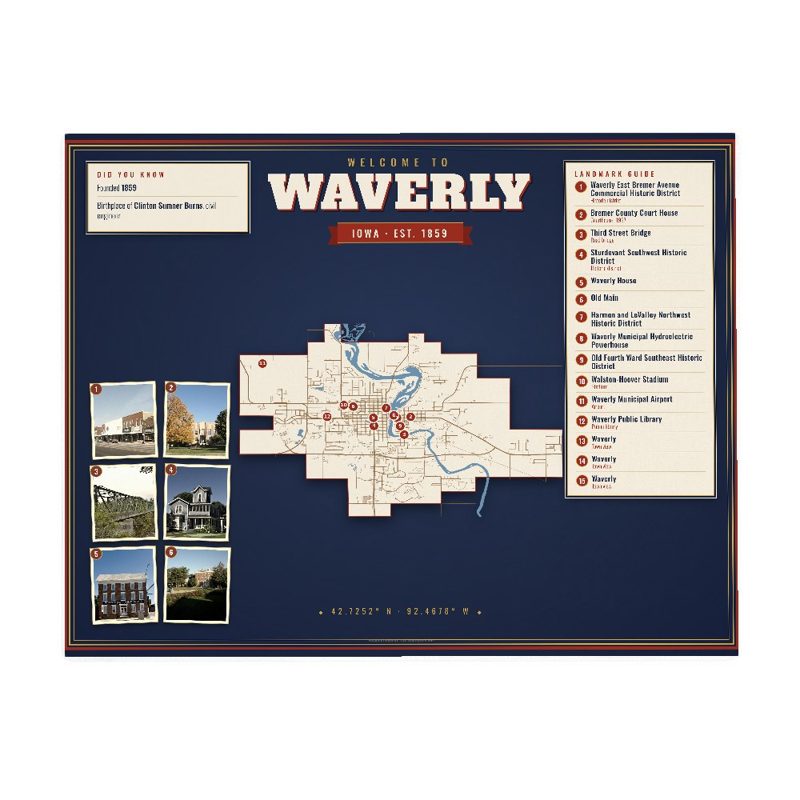














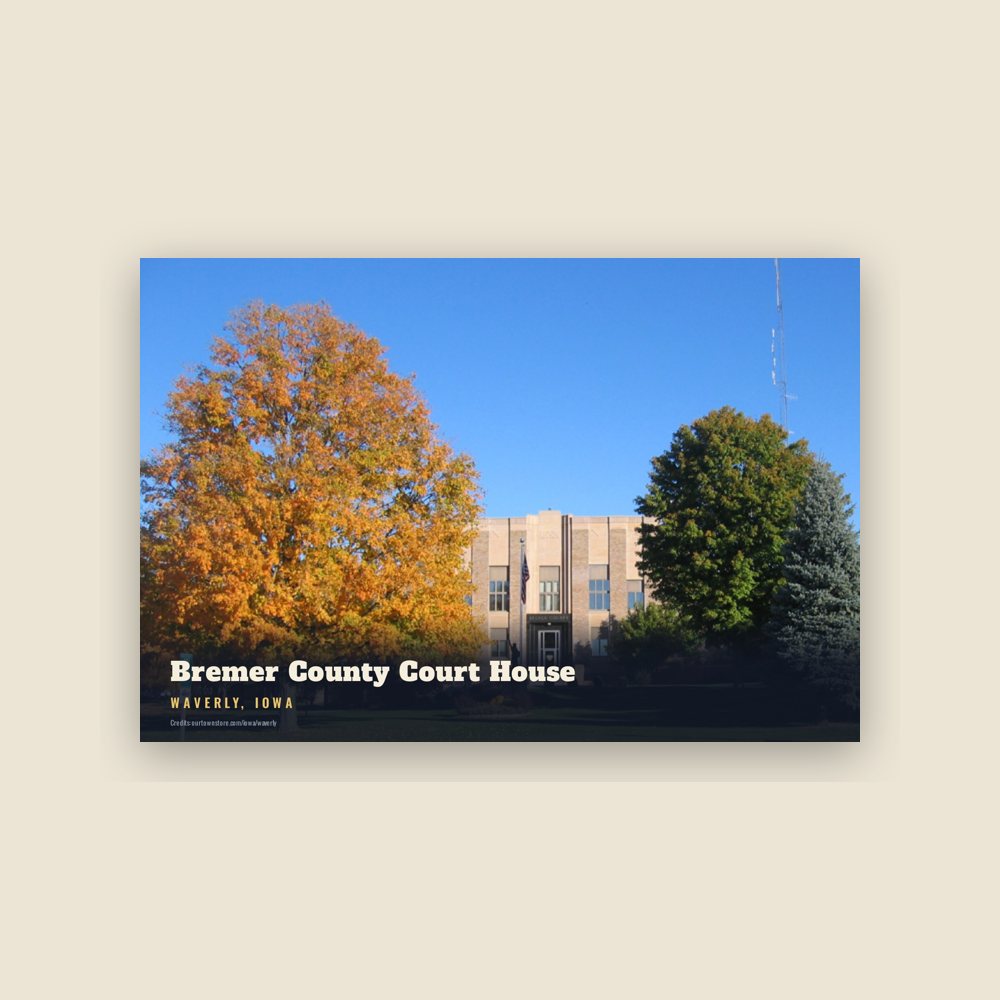
 Bremer County Court House
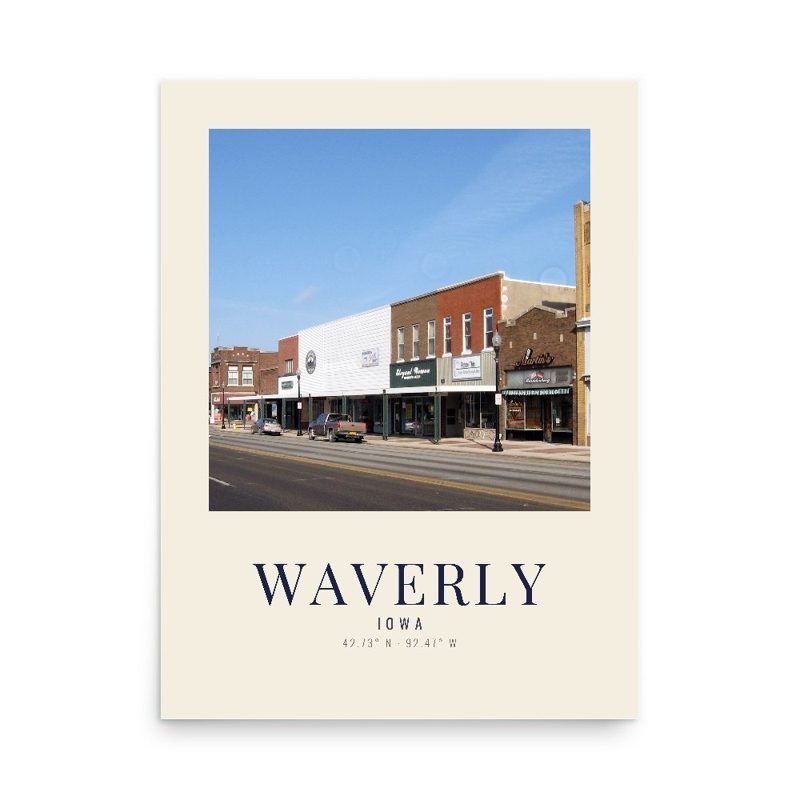
 Waverly East Bremer Avenue Commercial Historic District
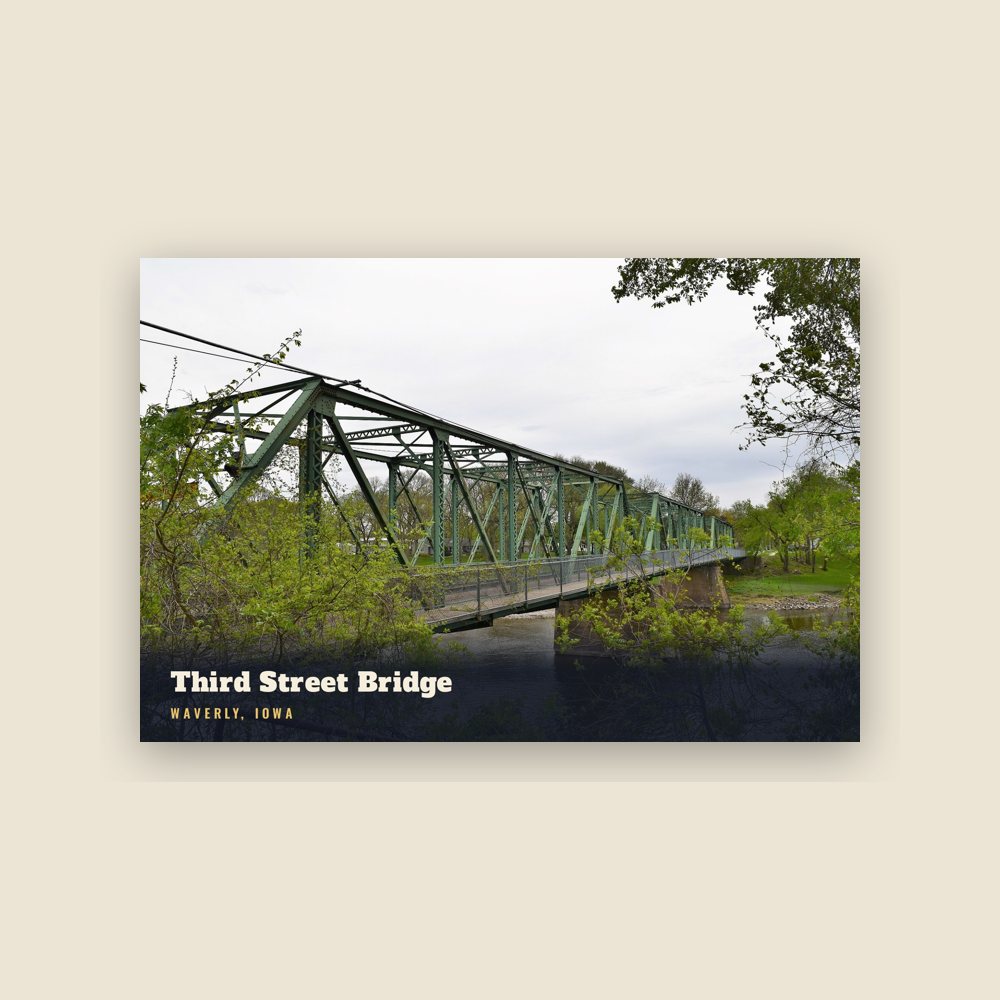
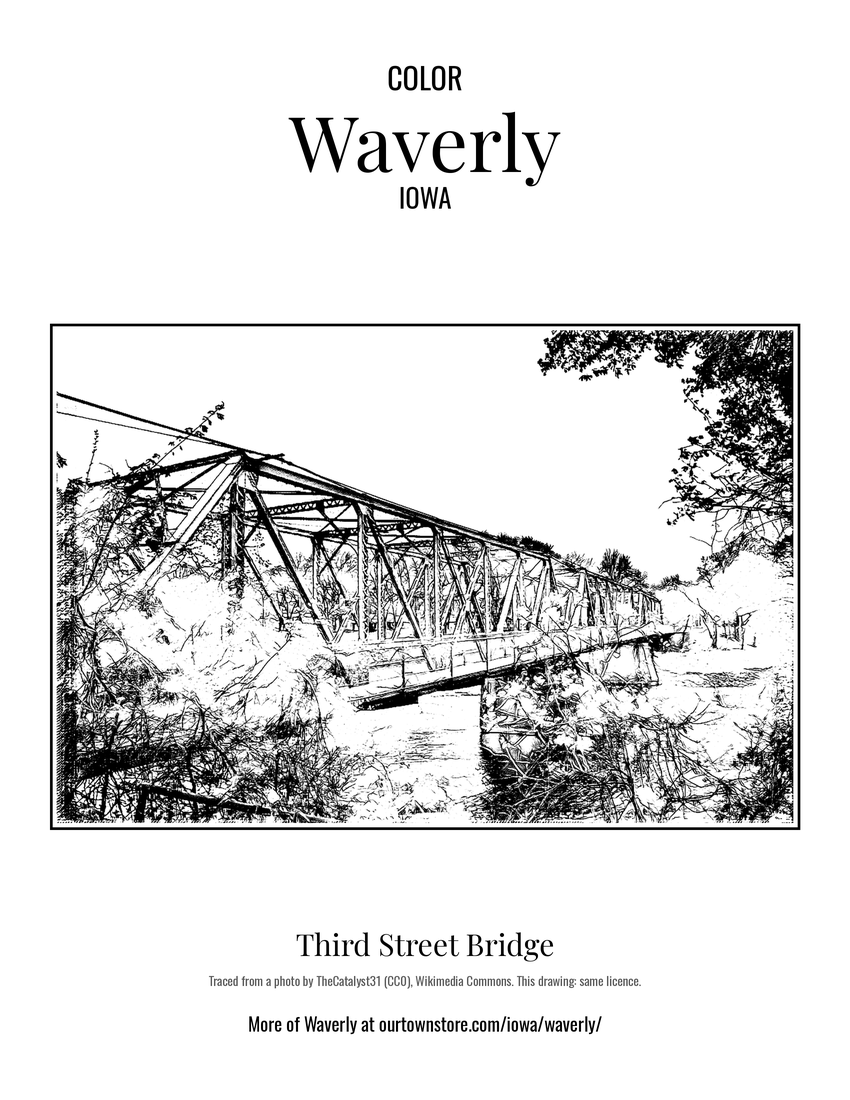 Third Street Bridge
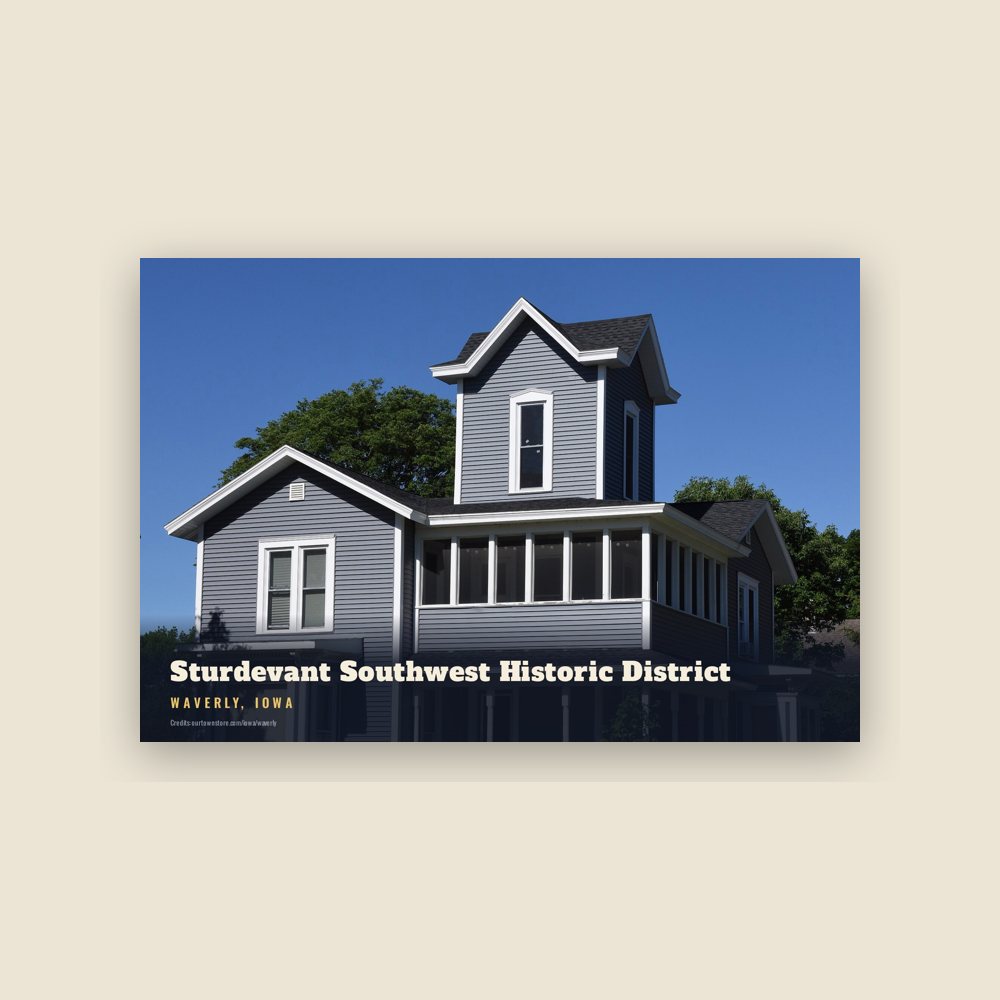
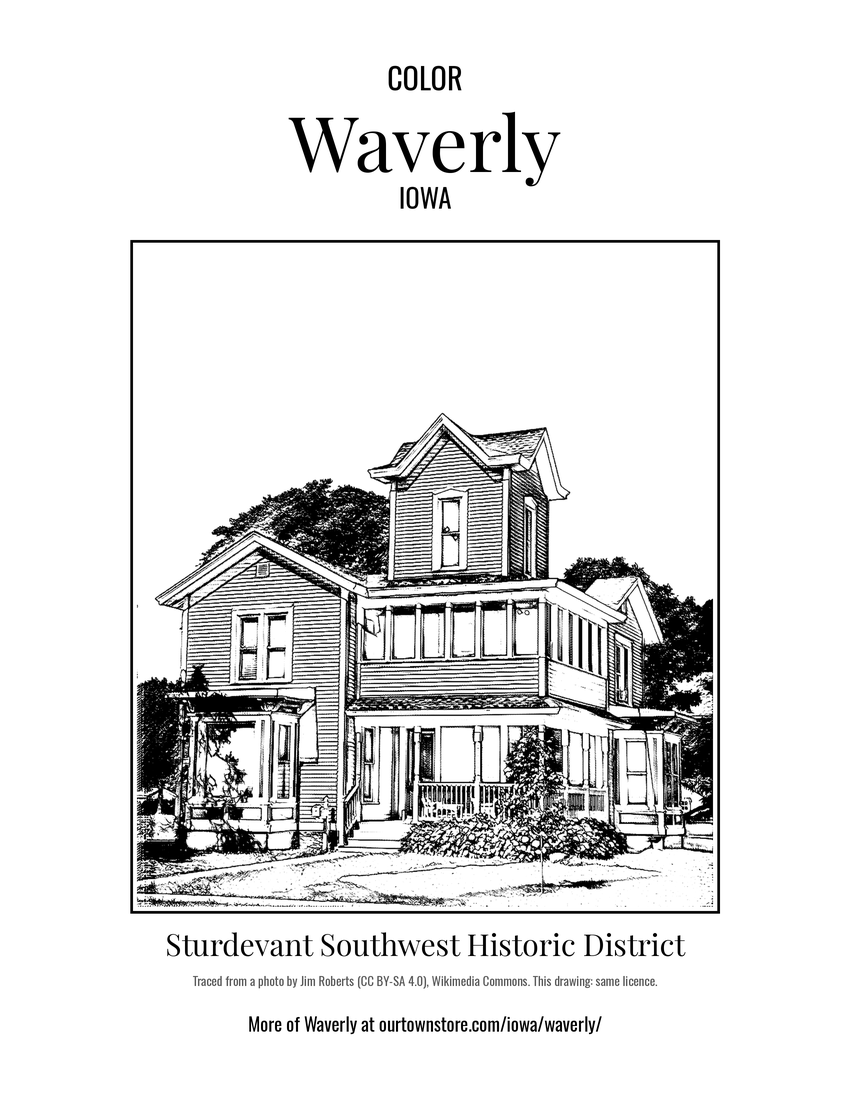 Sturdevant Southwest Historic District