A short history of Winchester
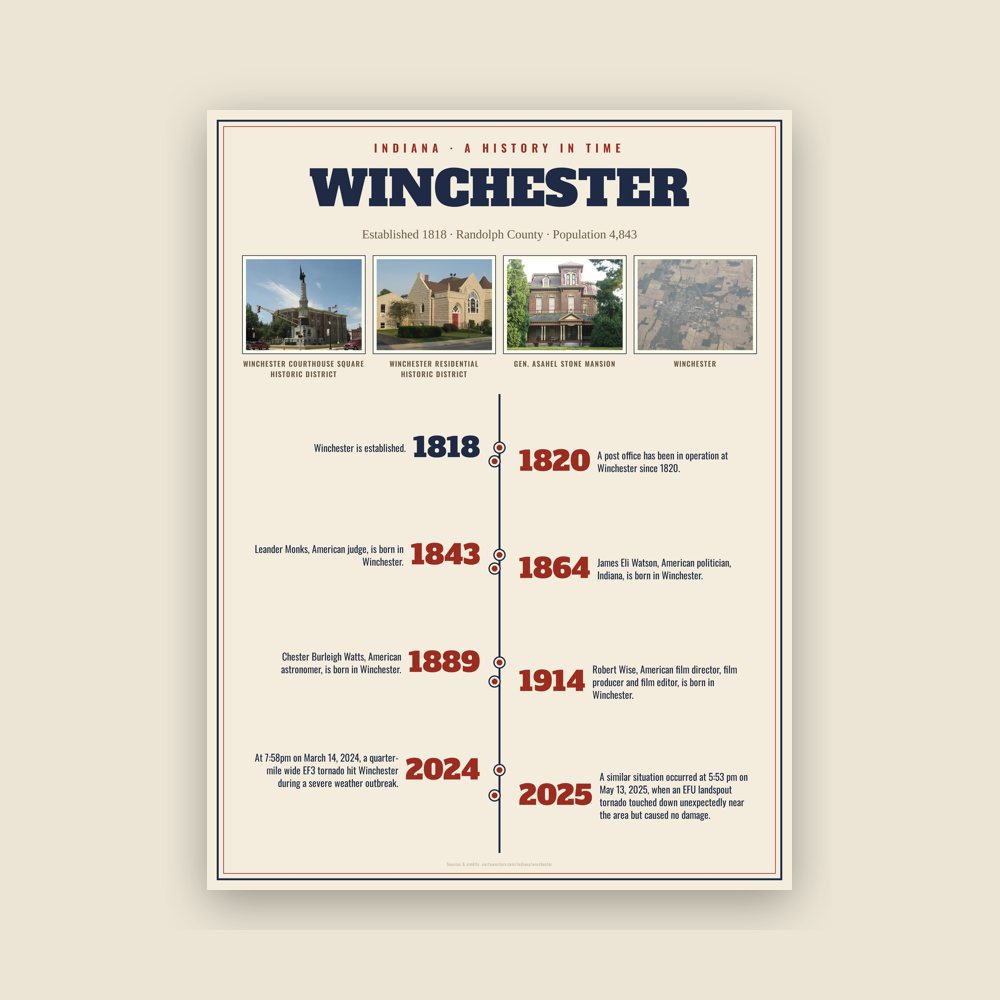
Winchester was laid out in 1818 as the county seat of Randolph County, after five early settlers donated land for that purpose; the town was almost certainly named for Winchester, Virginia. The County government was organized in August of that year in the cabin of Benjamin Cox, a Quaker settler from North Carolina. A post office has been in operation at Winchester since 1820.
During the mid-1800s, Randolph County, and thus Winchester, became notable for its role in abolitionism and the Underground Railroad. The county was home to three distinct settlements of free African Americans, and documentary evidence shows that many local homes and churches served as stops on the Underground Railroad.
With the discovery of oil, natural gas, and other resources in the late 1800s, and 1890s in eastern Indiana, Winchester transitioned from a rural county seat into an industrial town. The local availability of fuel from natural gas and oil wells enabled furnaces in which glassmaking could thrive. These developments made Winchester a center of glass production, part of the broader Indiana Gas Boom era, as factories requiring high heat for glass-blowing setup operations, providing many jobs for local residents.
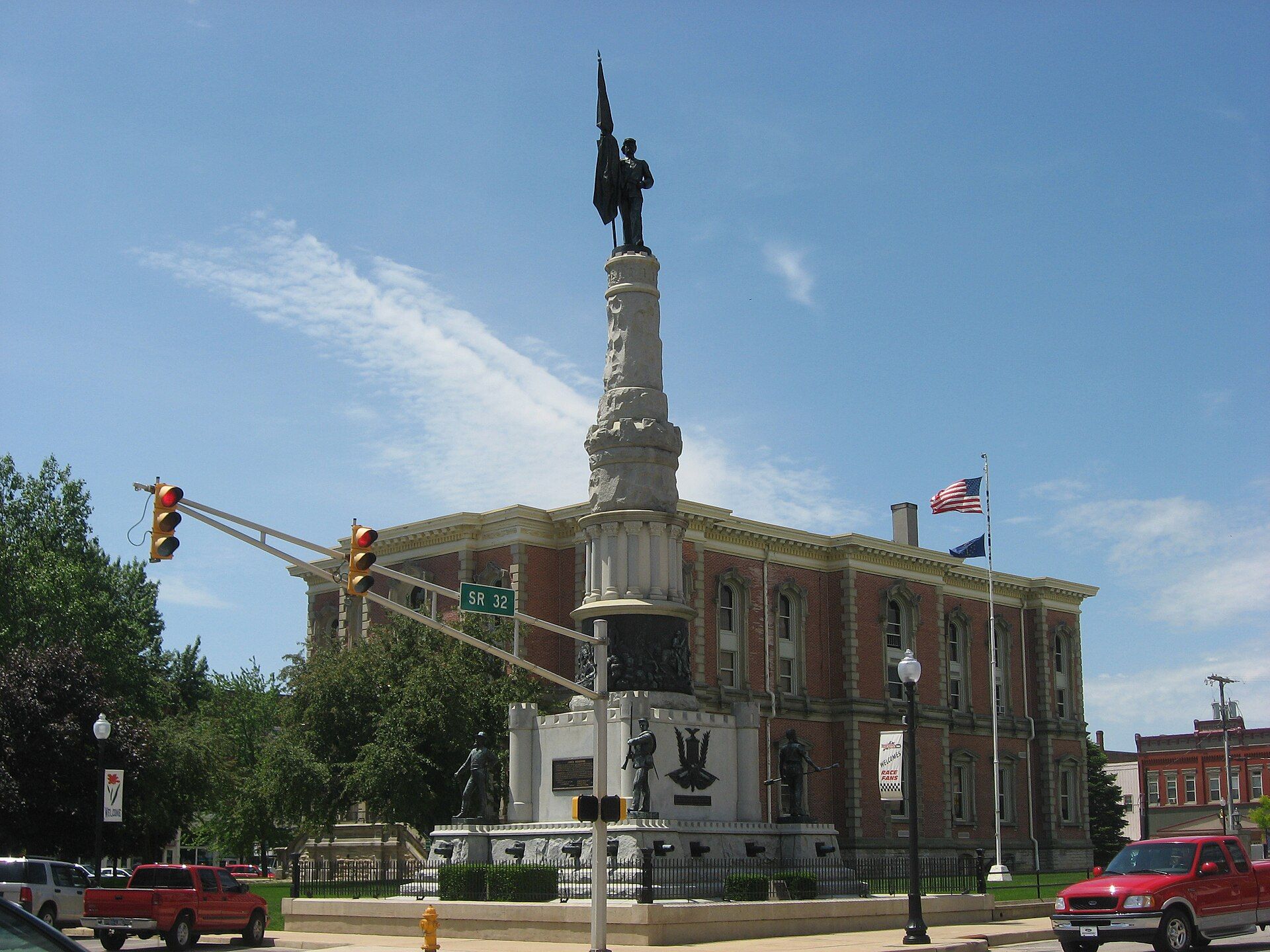
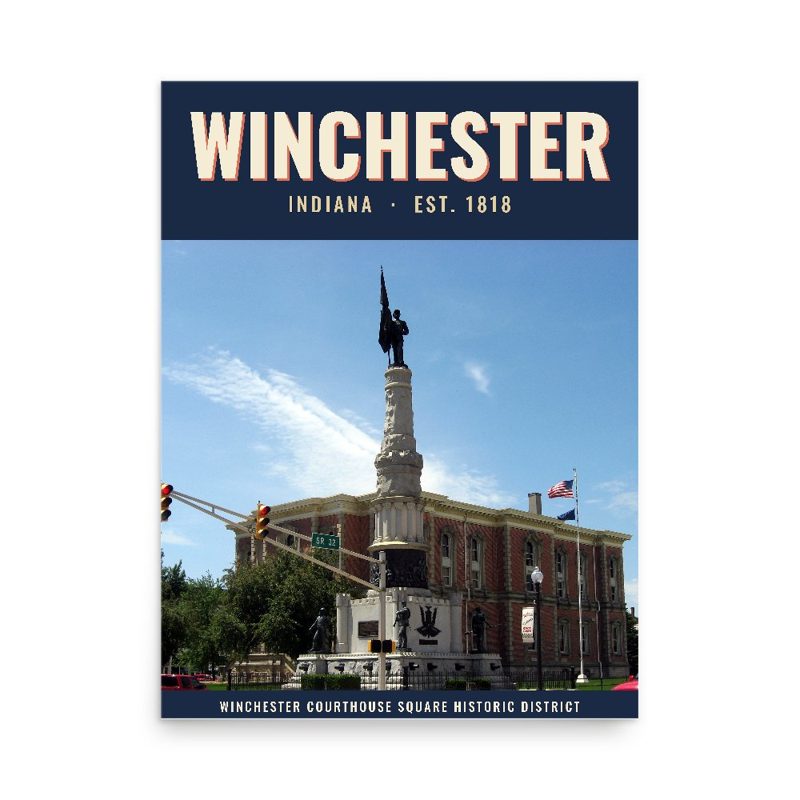
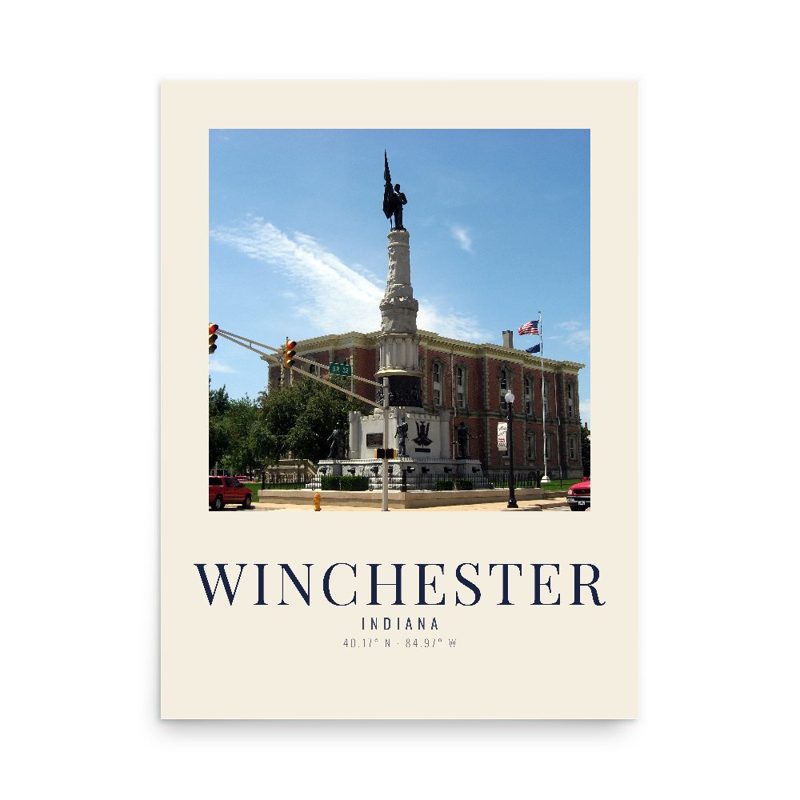
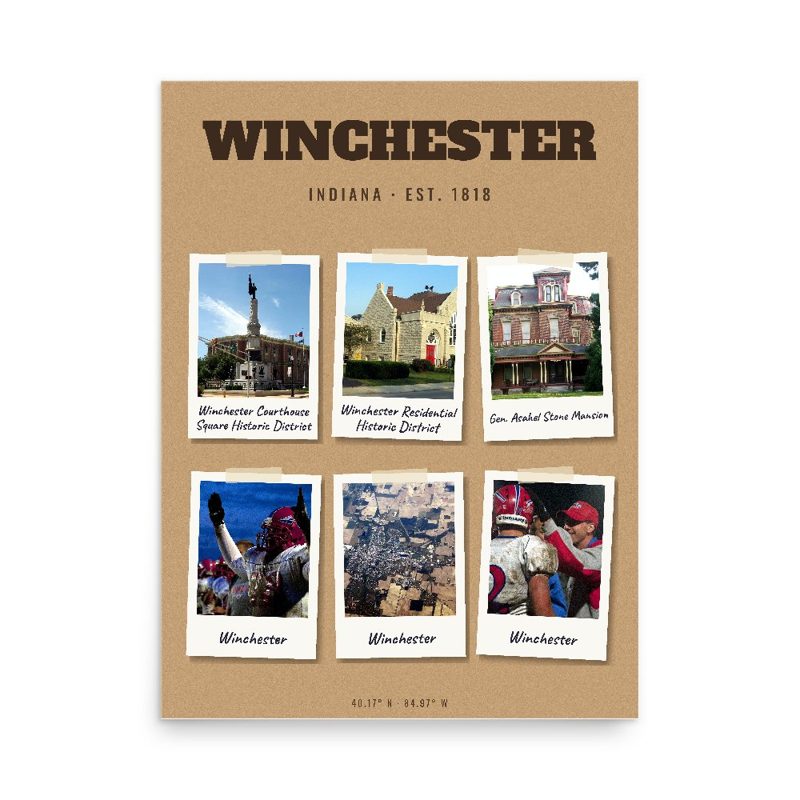
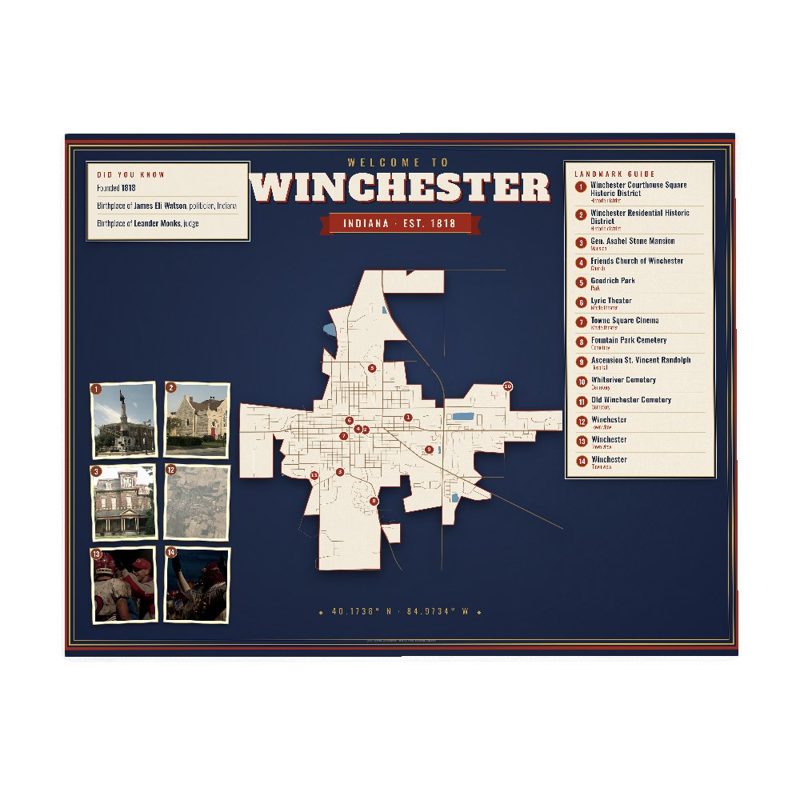
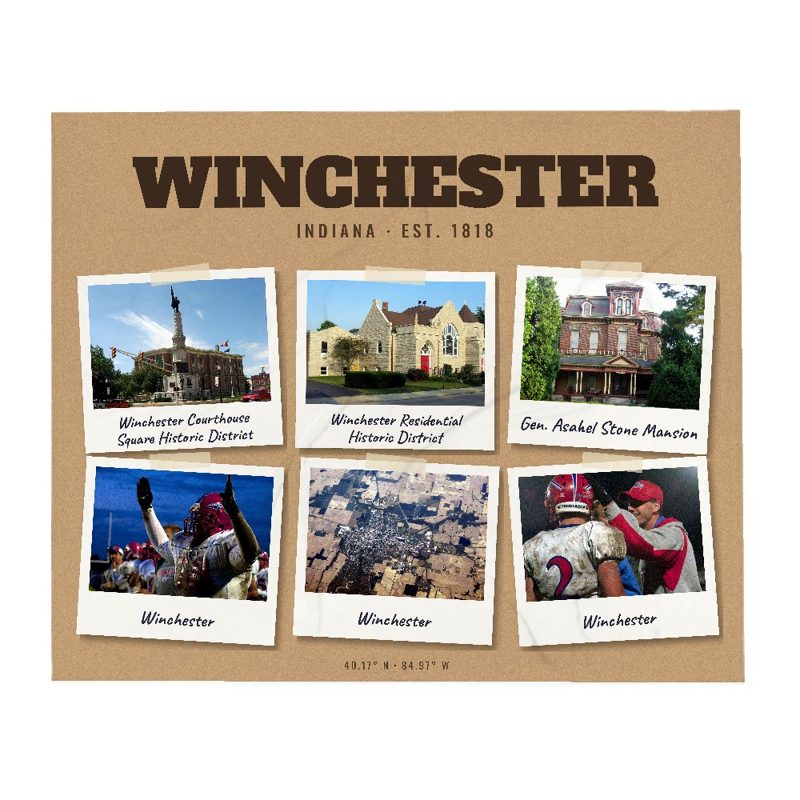
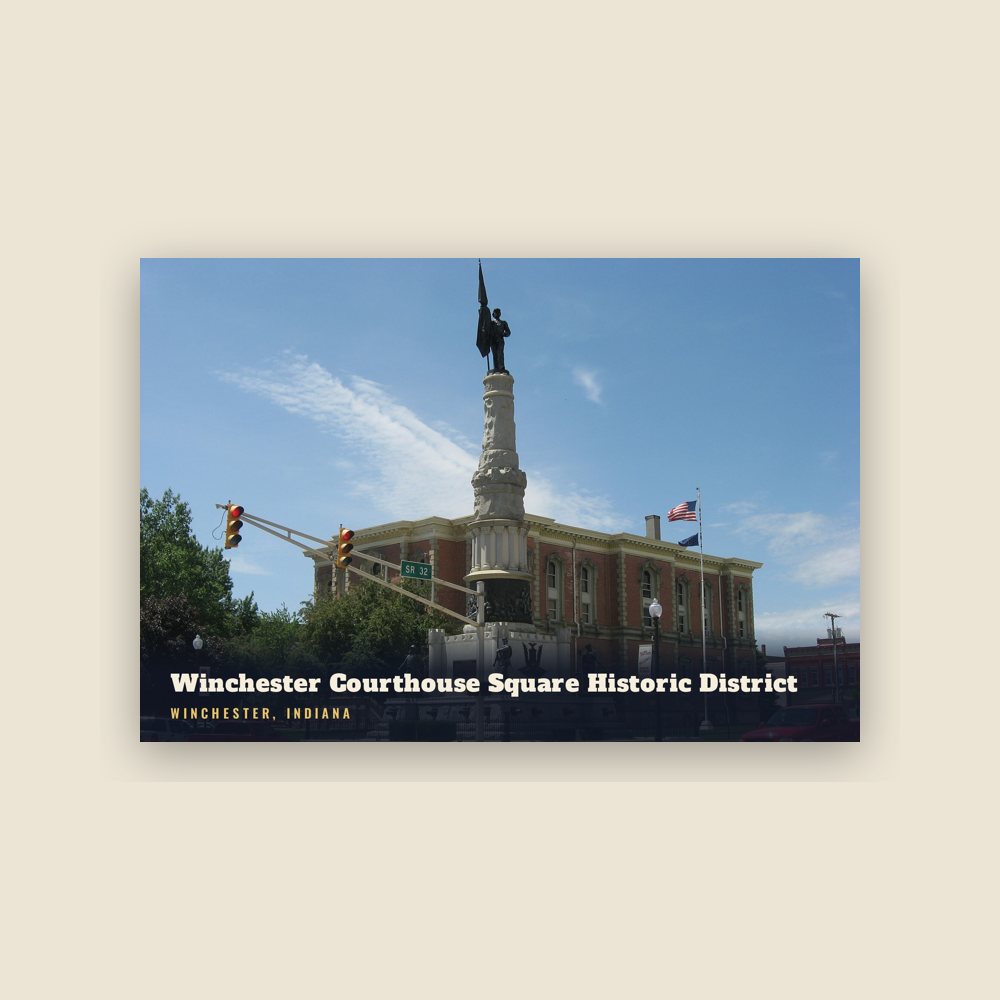
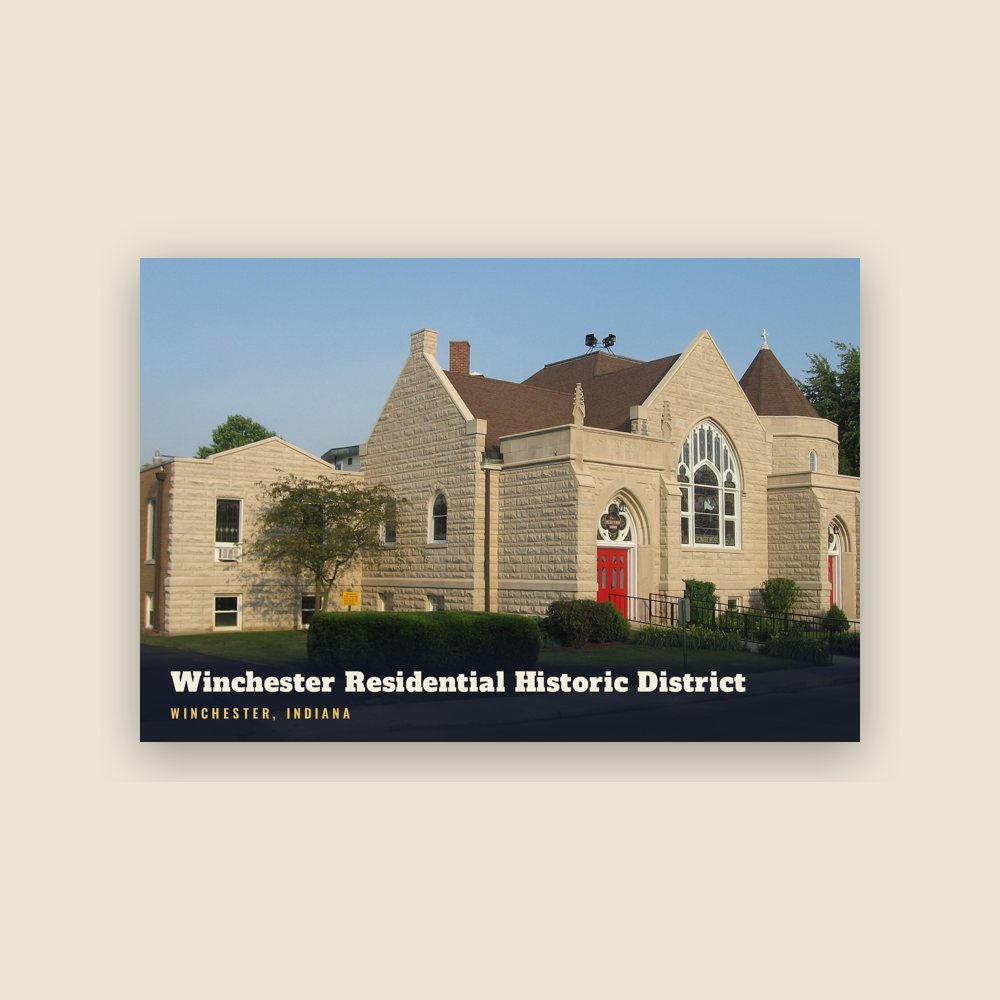
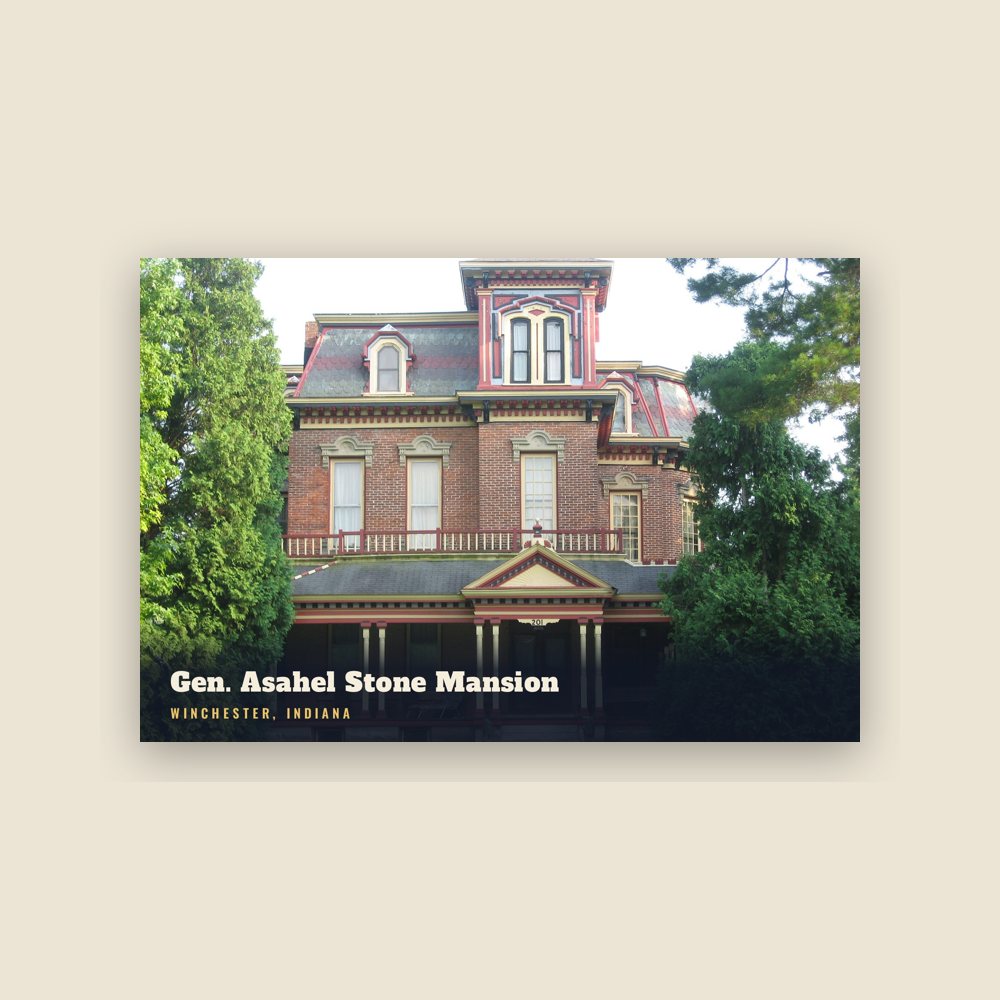
The Gen. Asahel Stone Mansion, Winchester Courthouse Square Historic District, and Winchester Residential Historic District are listed on the National Register of Historic Places.
Adapted (trimmed) from the Wikipedia article Winchester, Indiana, revision 1375491920 by its contributors, licensed CC BY-SA 4.0.