Cart 0
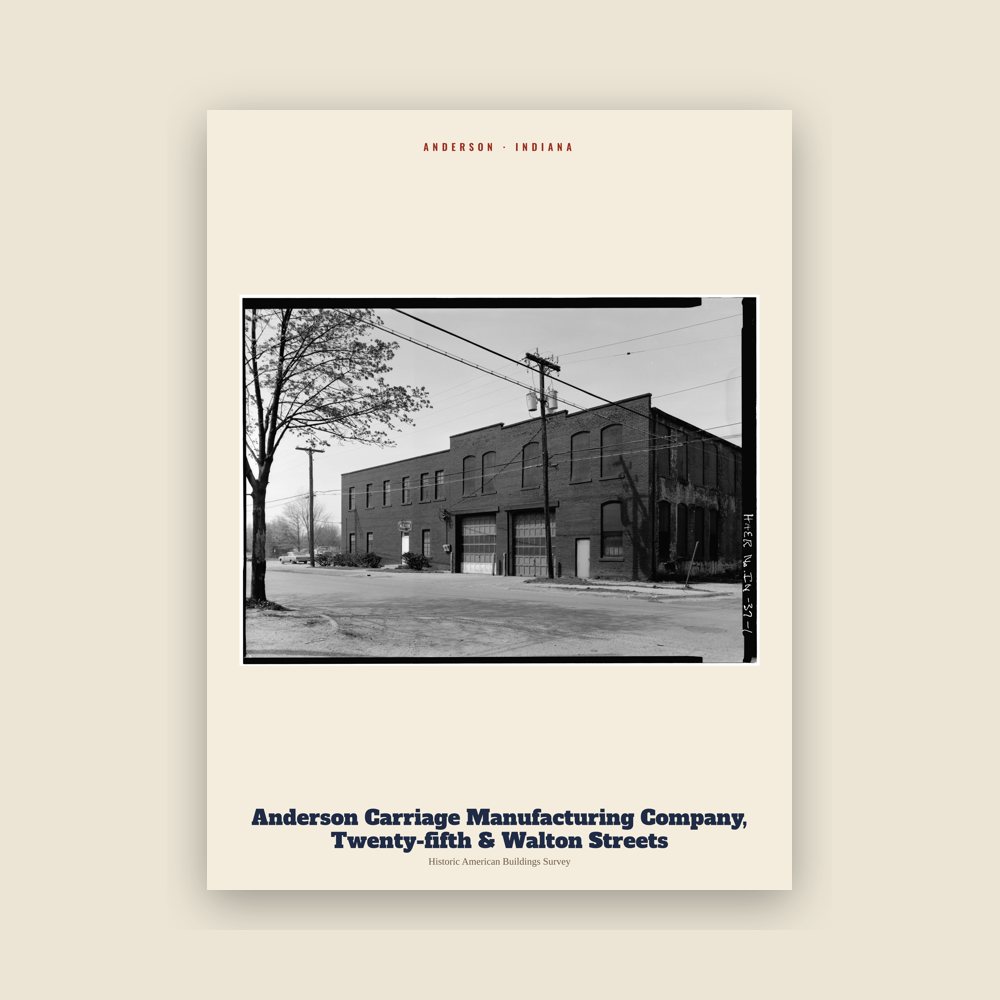
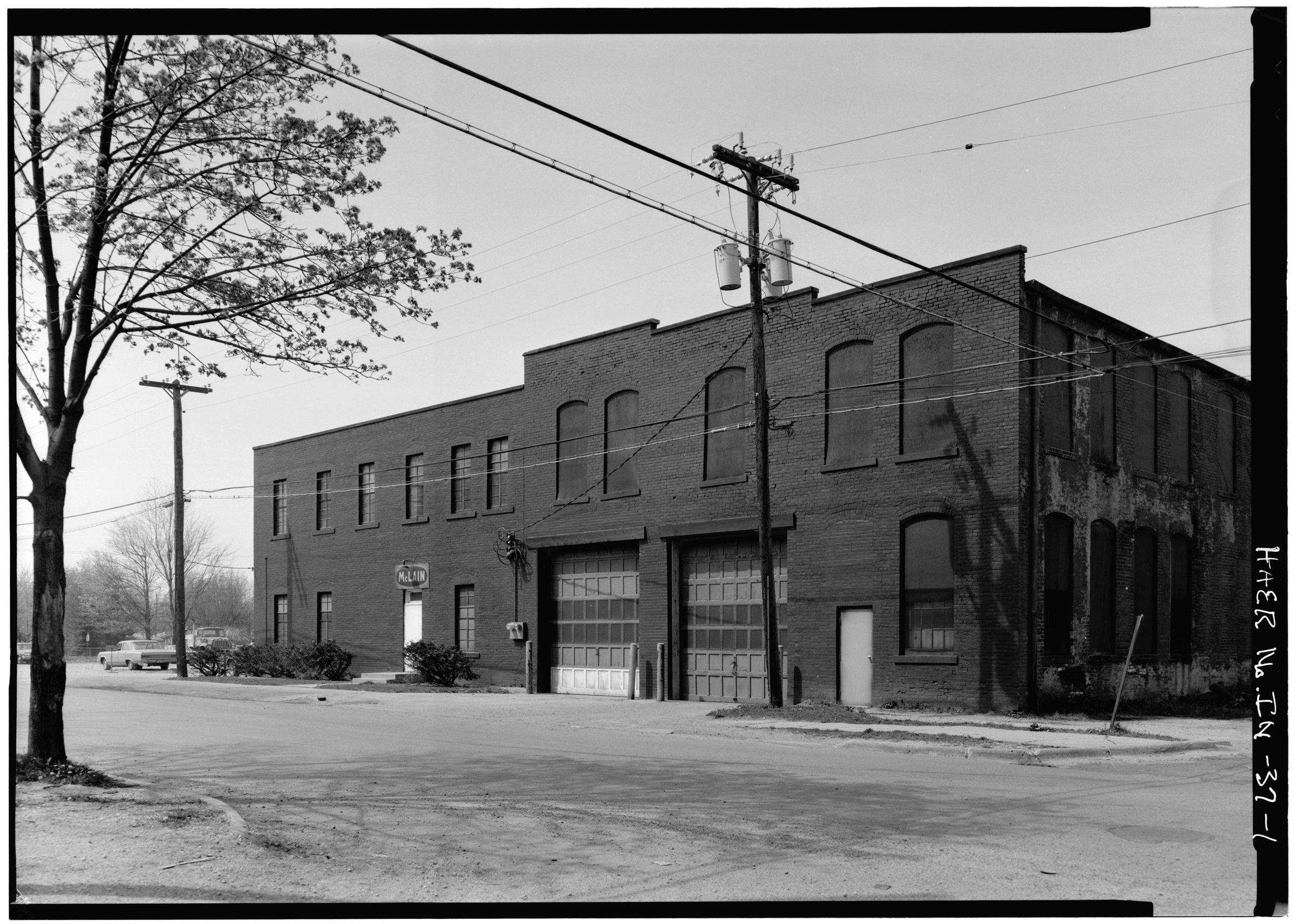
Anderson Carriage Manufacturing Company, Twenty-fifth & Walton Streets, Anderson, Indiana, Historic American Buildings Survey photograph

ANDERSON

Indiana
Shop the collection
The Anderson Collection

Made for Anderson. Printed to order.

Anderson, Indiana gifts and souvenirs: 33 designs made from Anderson's own map, landmarks and history, from $10 to $99. Printed to order and shipped free in the USA.

PopularPrice
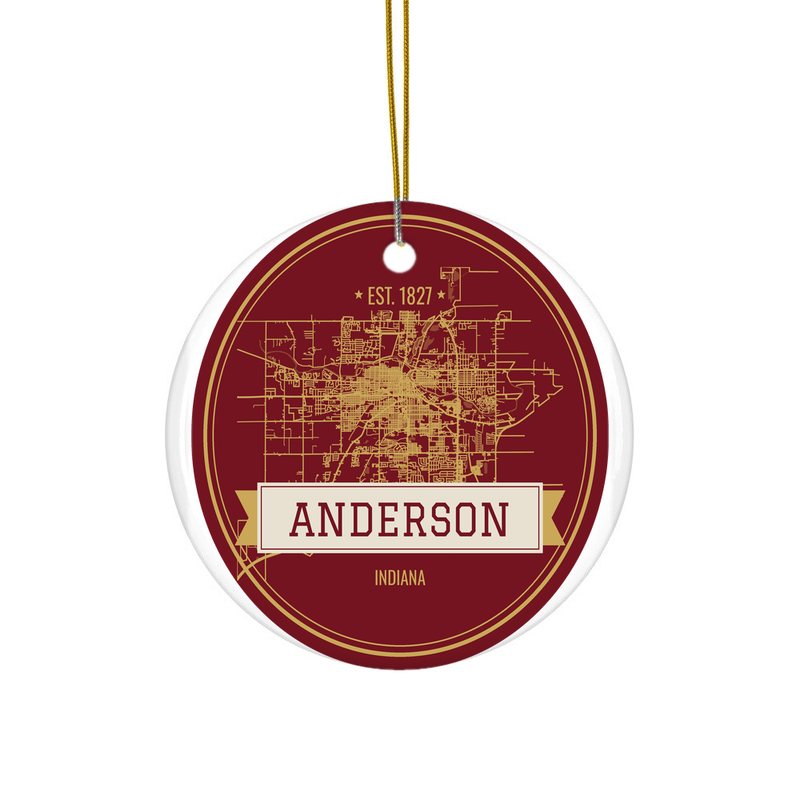
Anderson Hometown Ornament$23
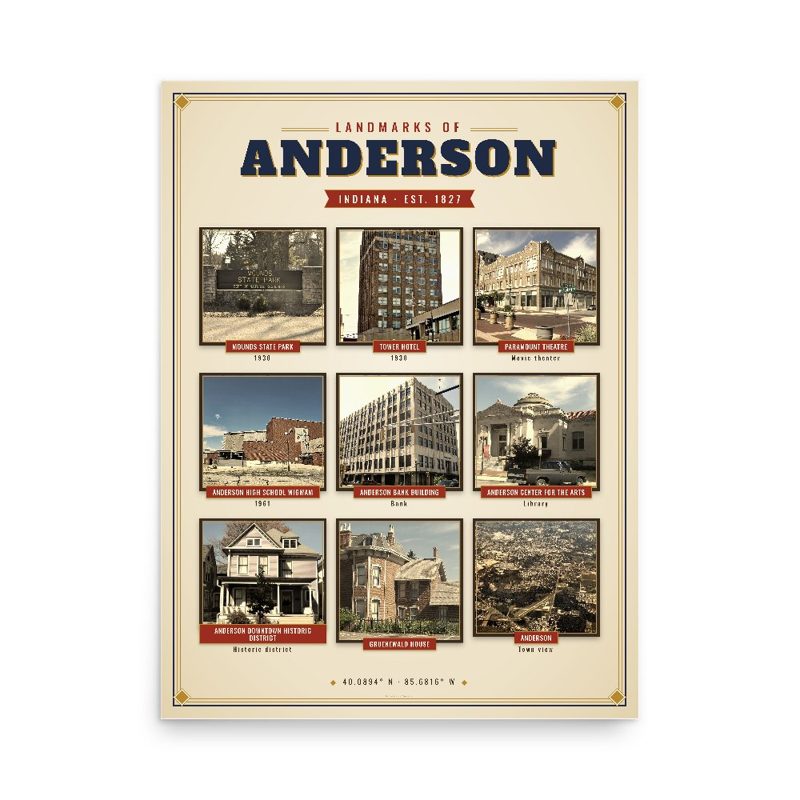
Anderson Landmarks Photo Posterfrom $40
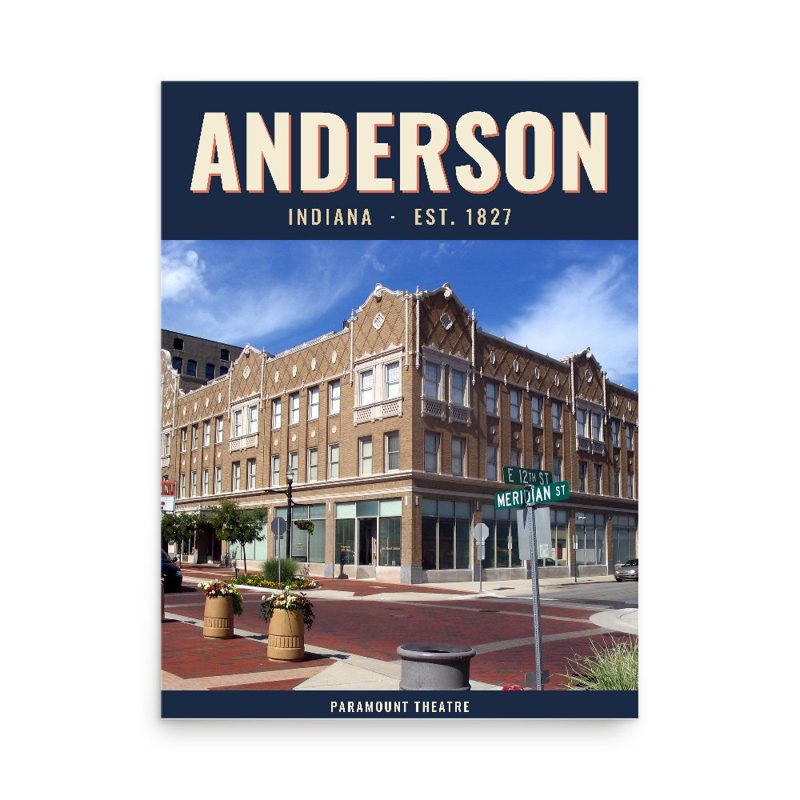
Anderson Vintage Travel Posterfrom $40
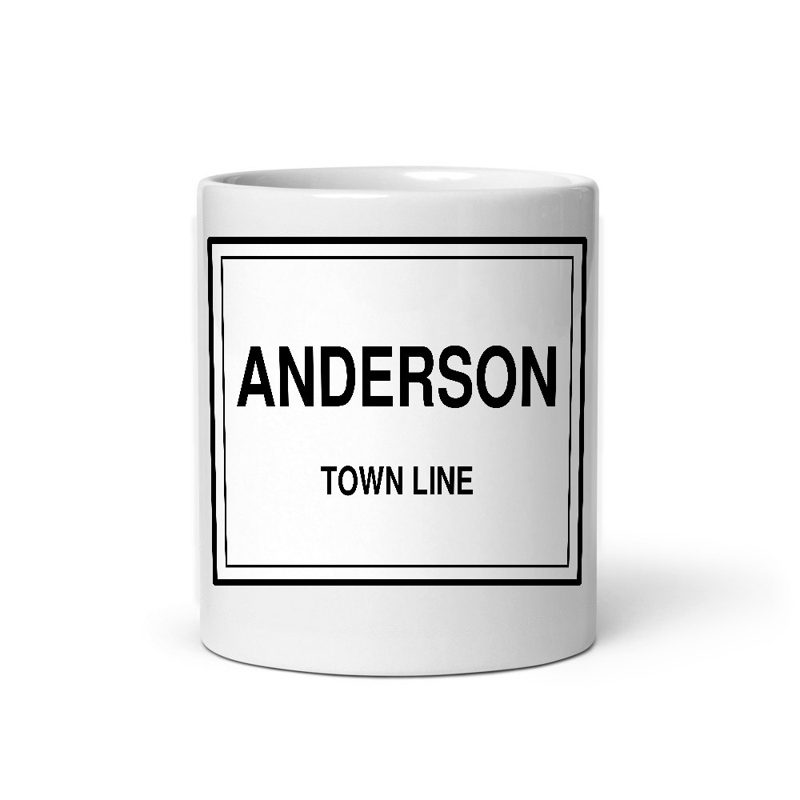
Anderson Town Line Mugfrom $26
Anderson “Greetings From” Trucker Cap$33
Anderson Hometown Ornament

Anderson Hometown Ornament

Ceramic keepsake, gold ribbon

$23
Anderson Landmarks Photo Poster

Anderson Landmarks Photo Poster

Nine local landmarks, archival matte

from $40
Anderson Vintage Travel Poster

Anderson Vintage Travel Poster

Its landmark photo in a classic travel-poster layout

from $40
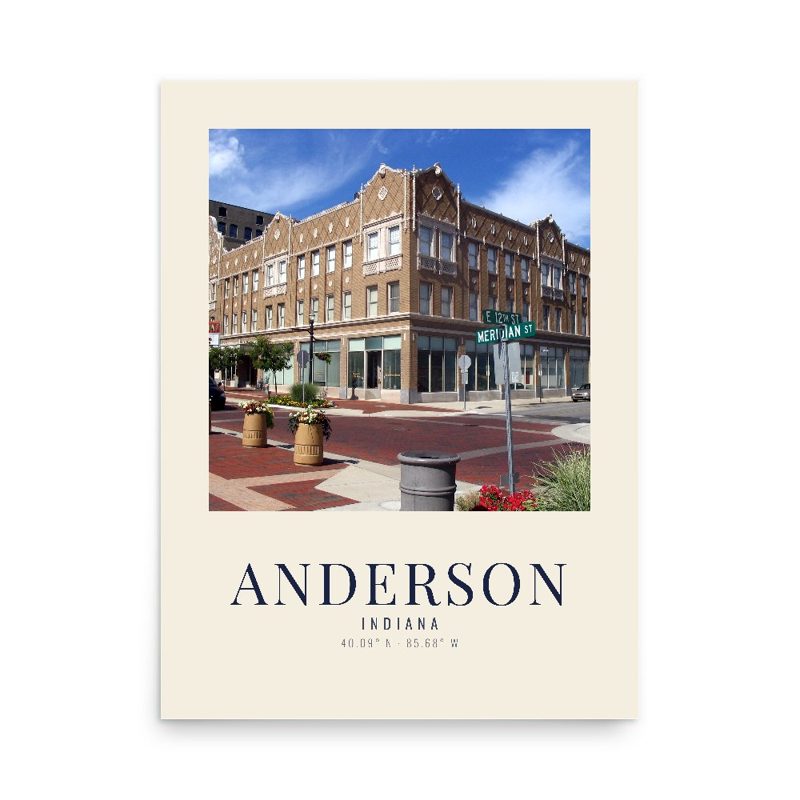
Anderson Photo Art Print

Anderson Photo Art Print

A local landmark photo as a gallery print

from $40
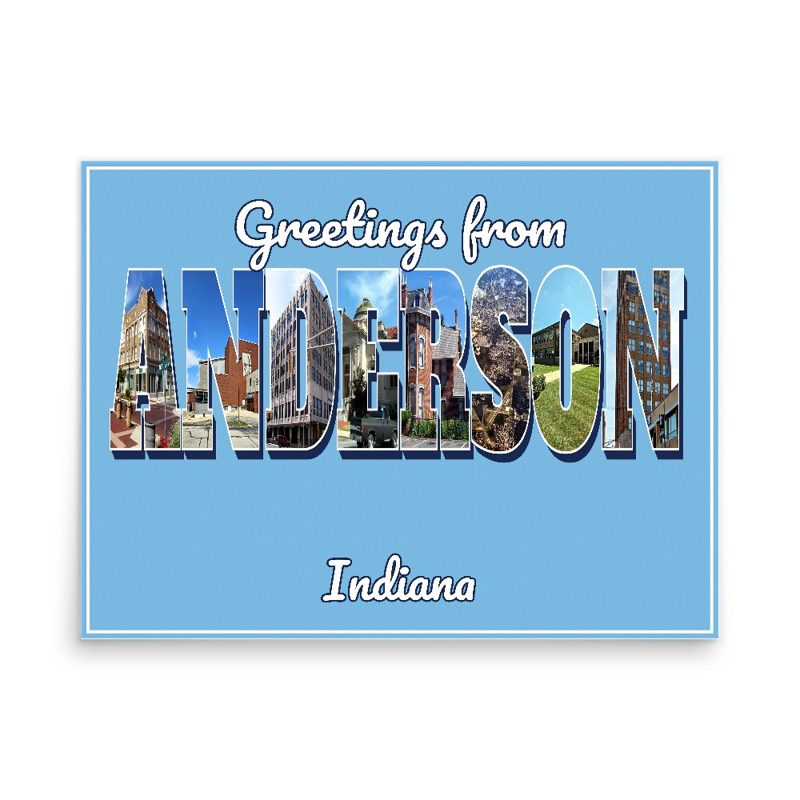
Anderson “Greetings From” Poster

Anderson “Greetings From” Poster

Classic large-letter postcard art, filled with local photos

from $40
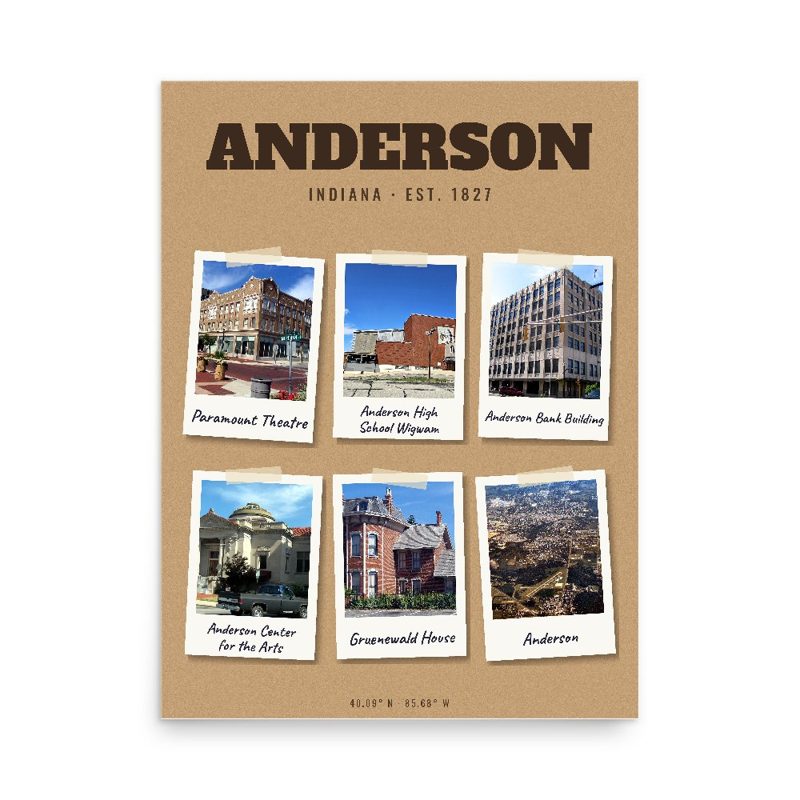
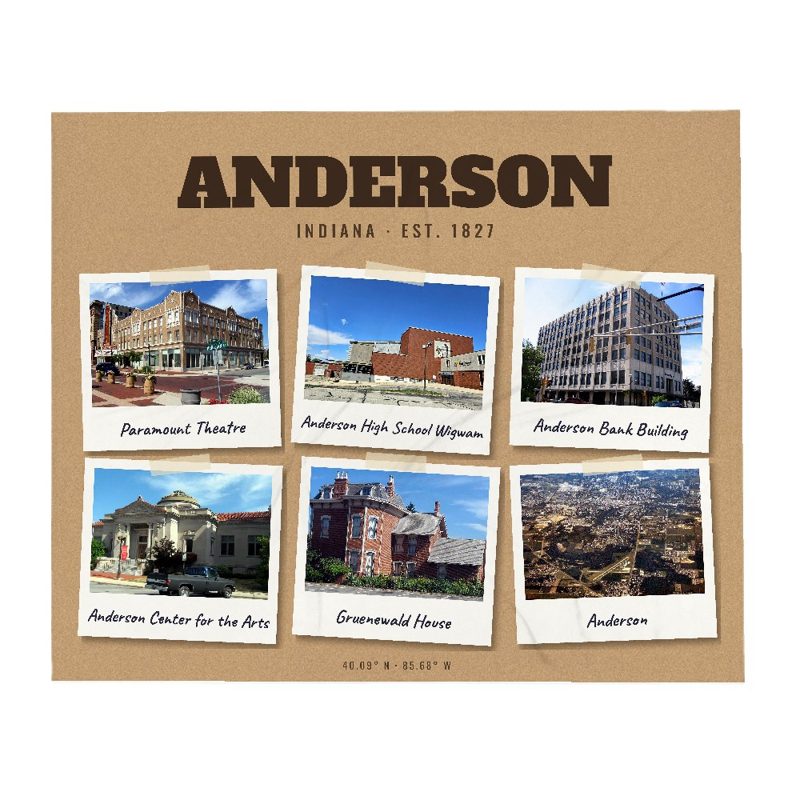
Anderson Snapshot Collage Poster

Anderson Snapshot Collage Poster

Six local landmarks as instant photos on kraft paper

from $40
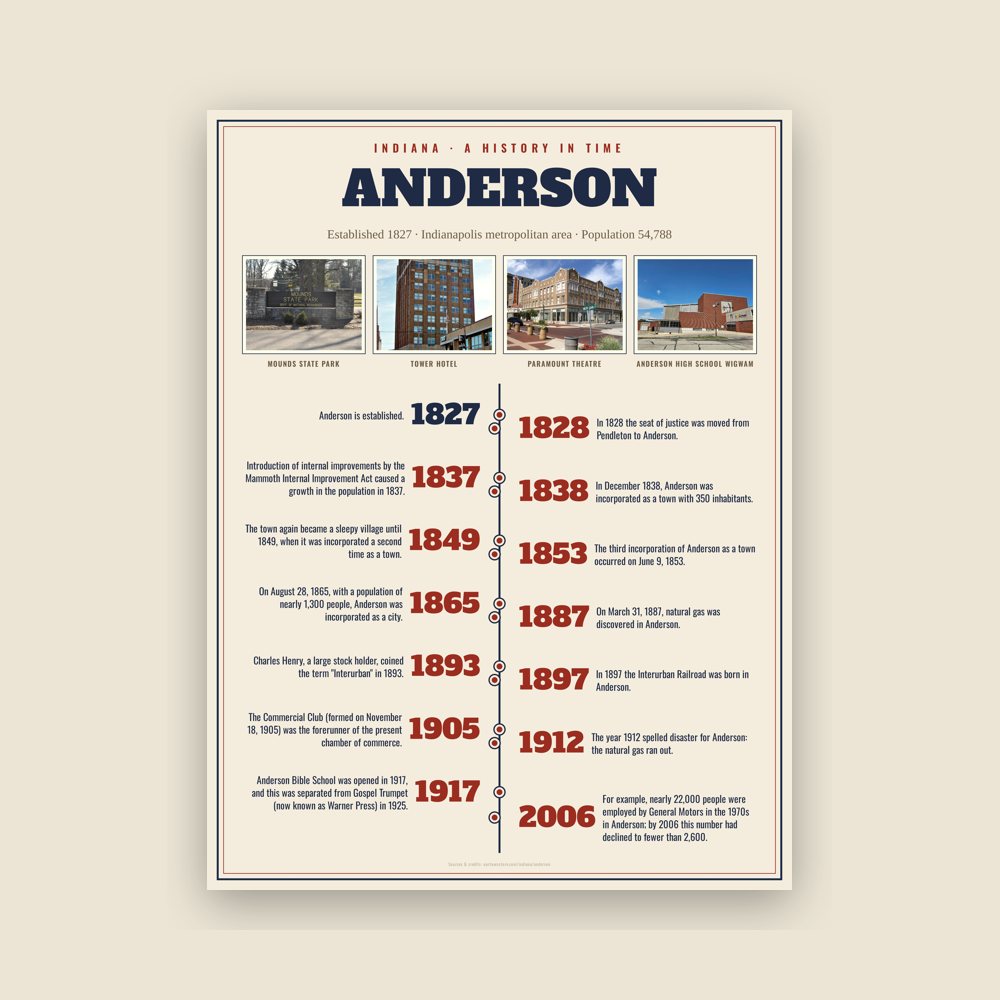
Anderson History Timeline Poster

Anderson History Timeline Poster

The town's story in dates, from its own records, for home or classroom

from $44
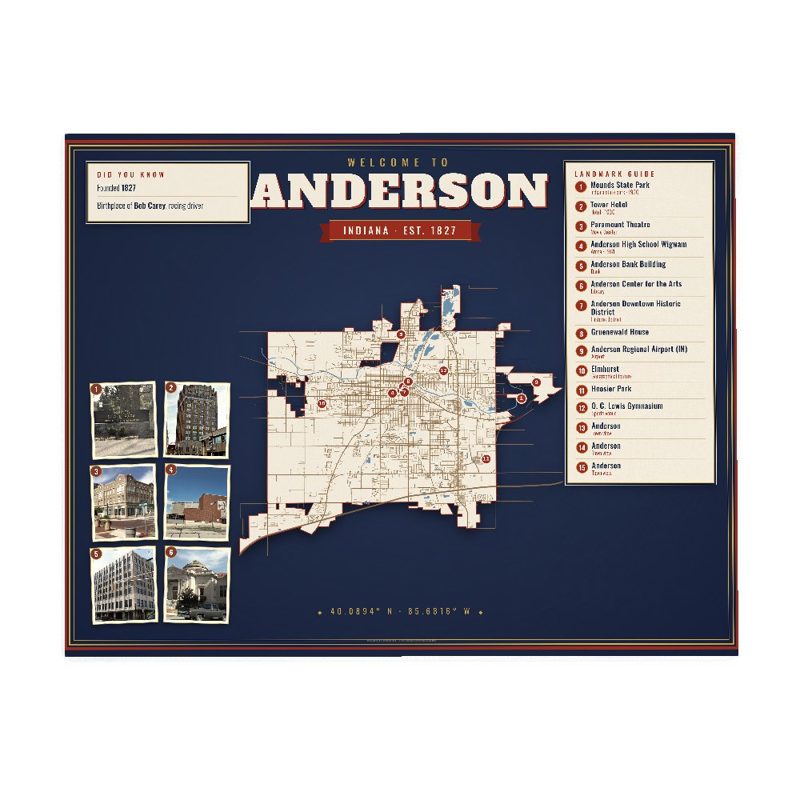
Anderson Map Placemat

Anderson Map Placemat

Map of local landmarks, washable fabric

$31
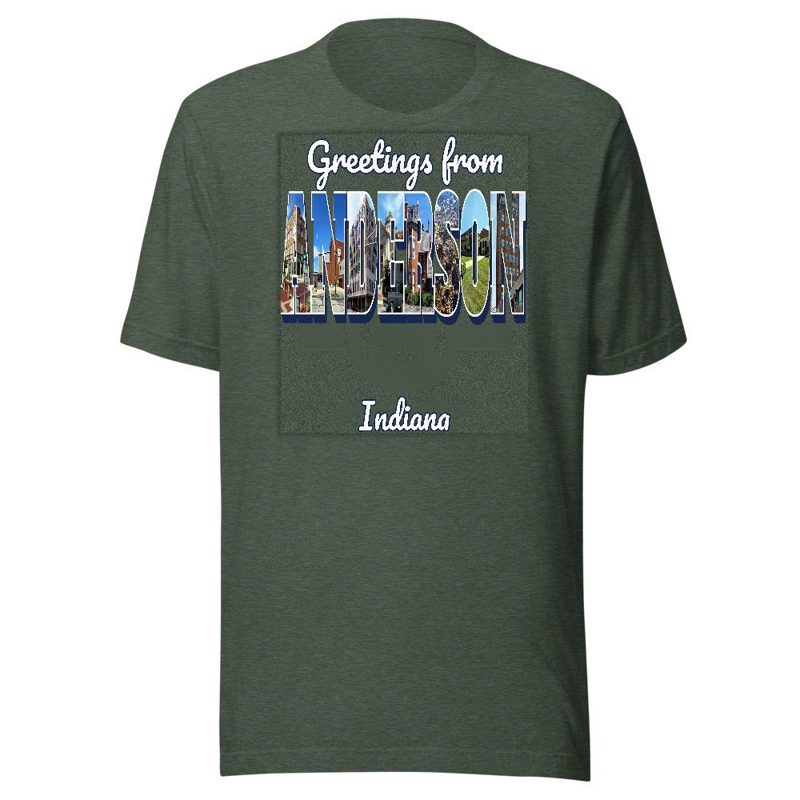
Anderson “Greetings From” Tee

Anderson “Greetings From” Tee

Large-letter postcard art filled with local photos

from $35
Anderson Town Line Mug

Anderson Town Line Mug

Glossy ceramic, dishwasher safe

from $26
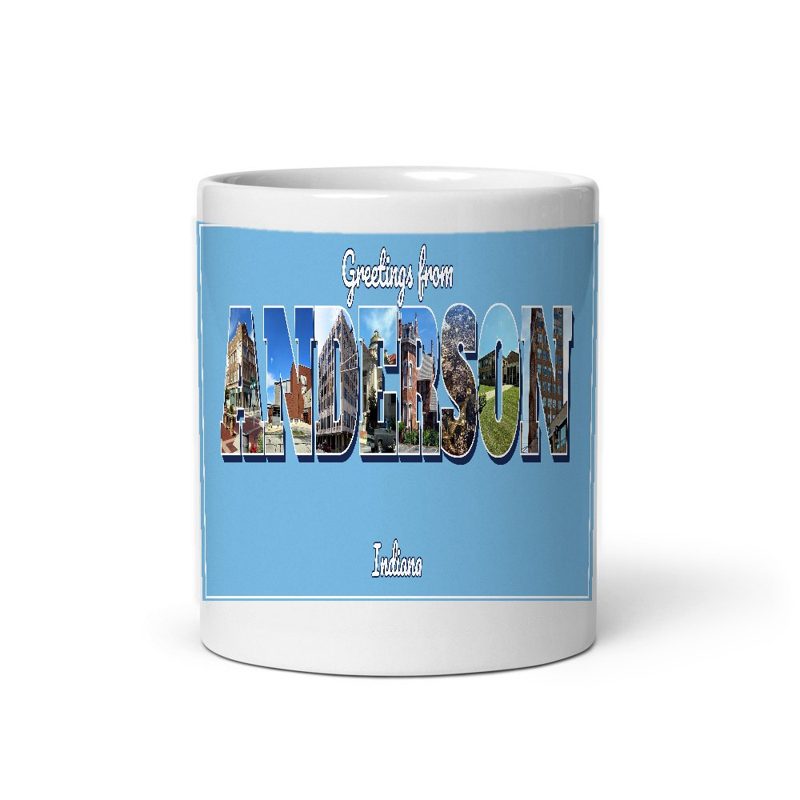
Anderson “Greetings From” Mug

Anderson “Greetings From” Mug

Large-letter postcard art filled with local photos, 11 oz ceramic

from $29
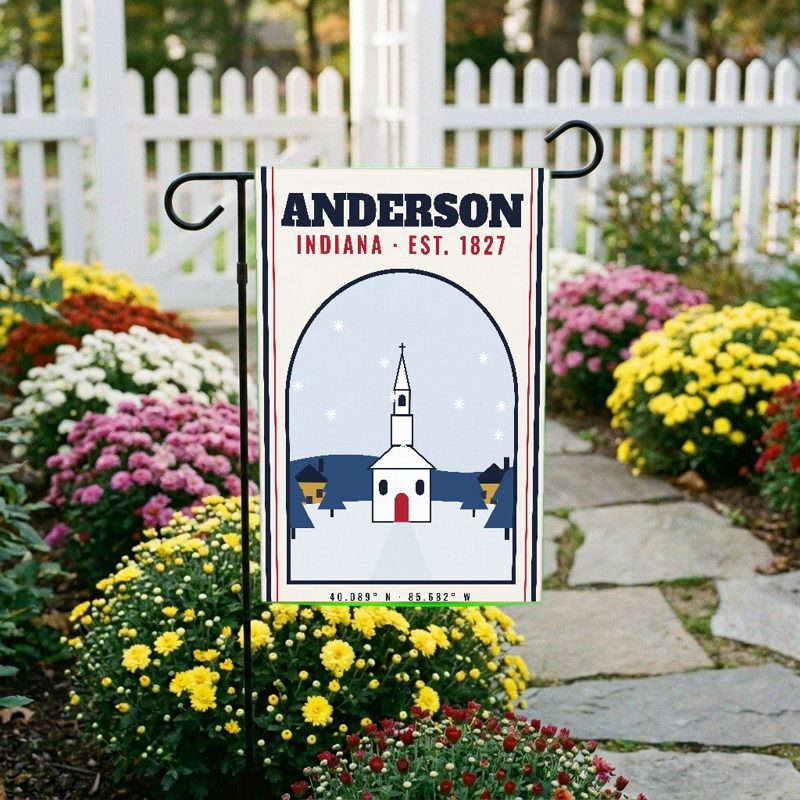
Anderson Garden Flag

Anderson Garden Flag

Weatherproof, for the front walk

$31
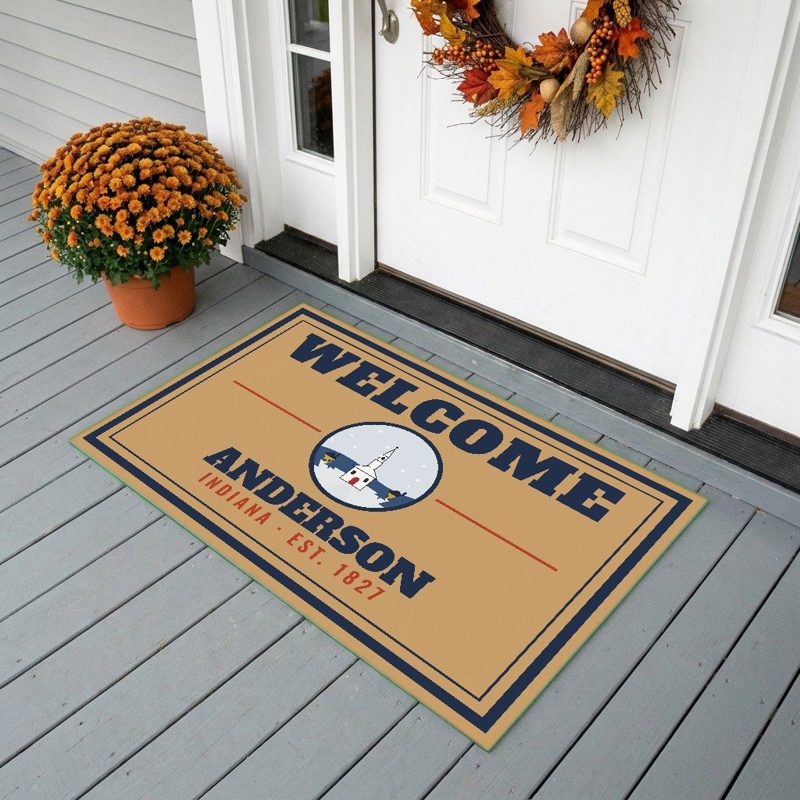
Anderson Welcome Doormat

Anderson Welcome Doormat

24″×16″, printed coir-look fibers, rubber back

$66
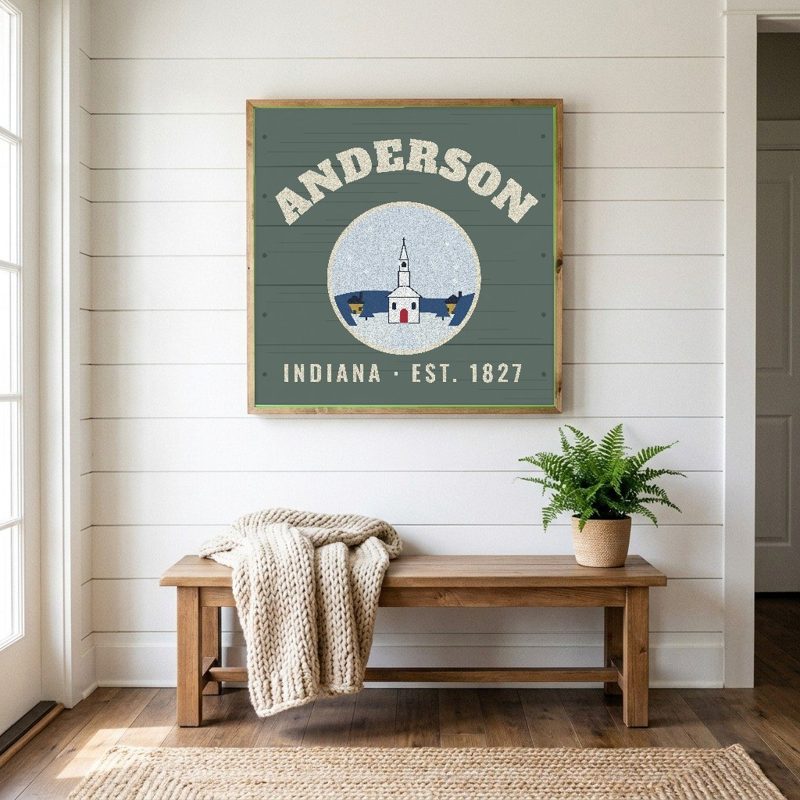
Anderson Hometown Wood Sign

Anderson Hometown Wood Sign

12″×12″ printed wood, ready to hang

$48
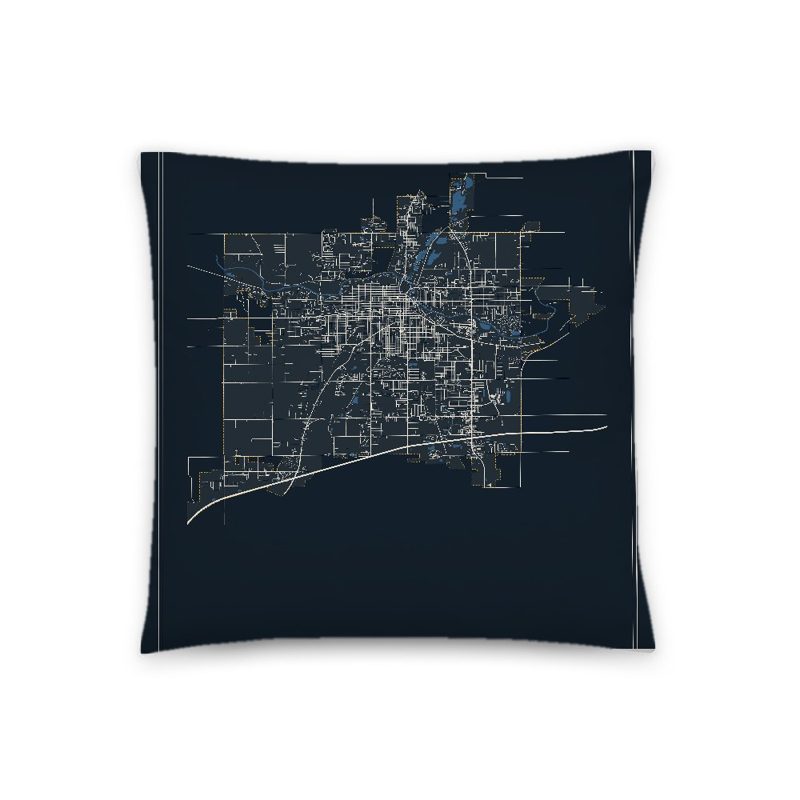
Anderson Map Throw Pillow

Anderson Map Throw Pillow

Soft-touch, zip cover

$47
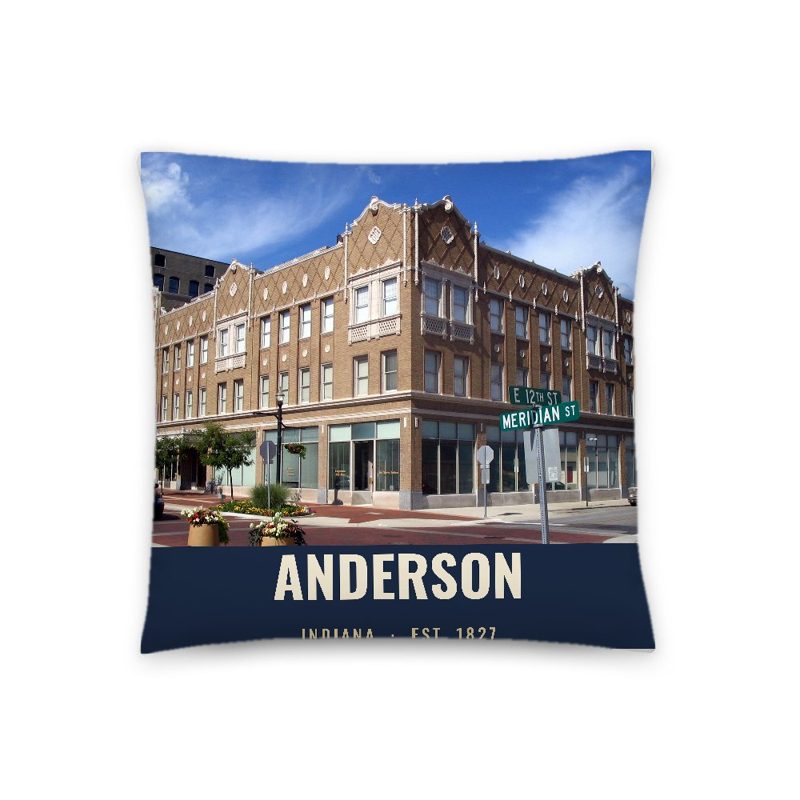
Anderson Landmark Photo Pillow

Anderson Landmark Photo Pillow

A local landmark photo with the town name, 18″×18″

$49
Anderson “Greetings From” Tote

Anderson “Greetings From” Tote

Large-letter postcard art on a sturdy tote

$37
Anderson “Greetings From” Trucker Cap

Anderson “Greetings From” Trucker Cap

Foam-front trucker, printed (not embroidered) with local photos

$33
Anderson Cork Coaster

Anderson Cork Coaster

Glossy top, cork back

$16
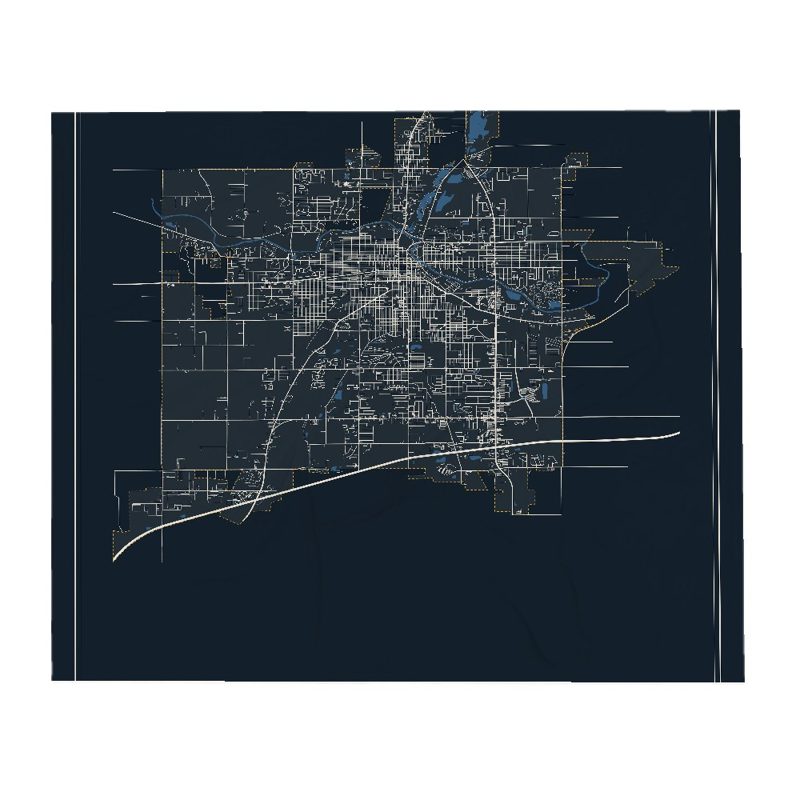
Anderson Street Map Throw Blanket

Anderson Street Map Throw Blanket

Soft fleece, 50″×60″

from $72
Anderson Snapshot Collage Blanket

Anderson Snapshot Collage Blanket

Six local landmarks as instant photos, soft fleece 50″×60″

from $76
Anderson Est. Tumbler

Anderson Est. Tumbler

20 oz, double-wall stainless

$51
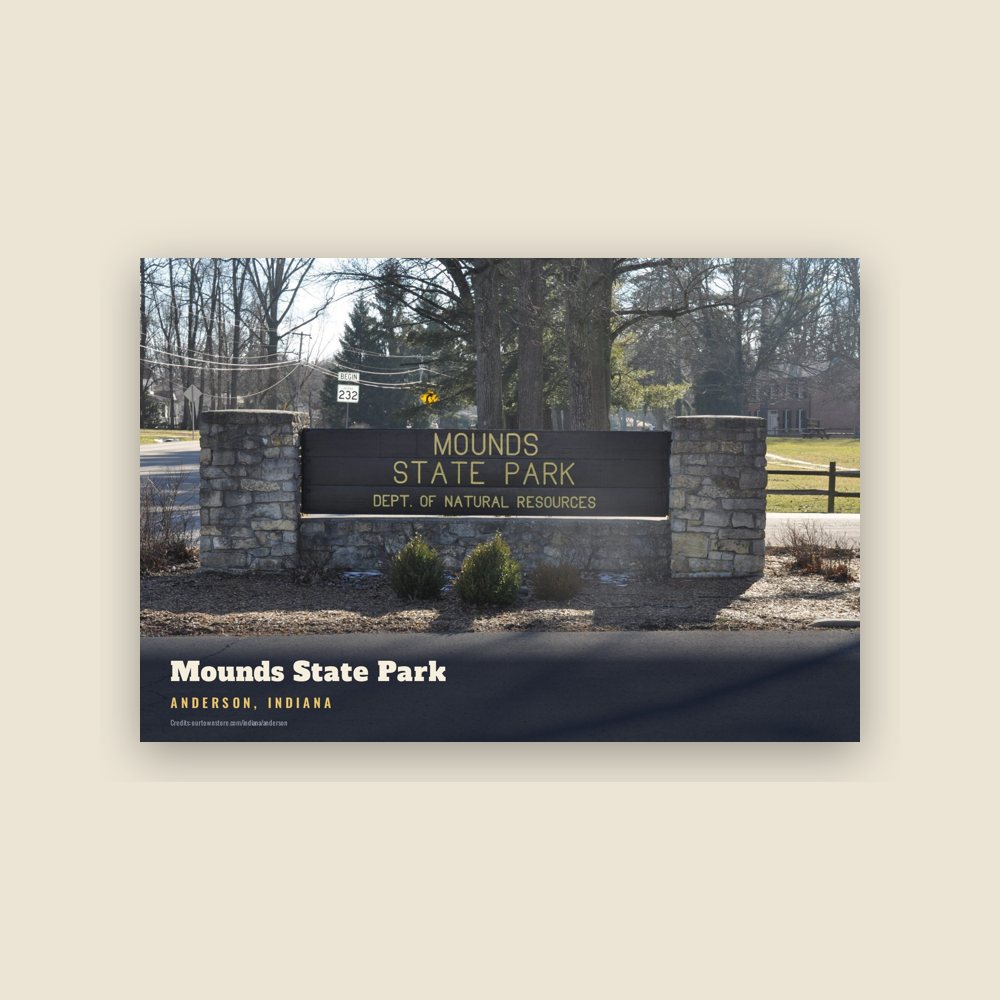
Anderson Mounds State Park Postcard

Anderson Mounds State Park Postcard

6″×4″ postcard, glossy front

$10
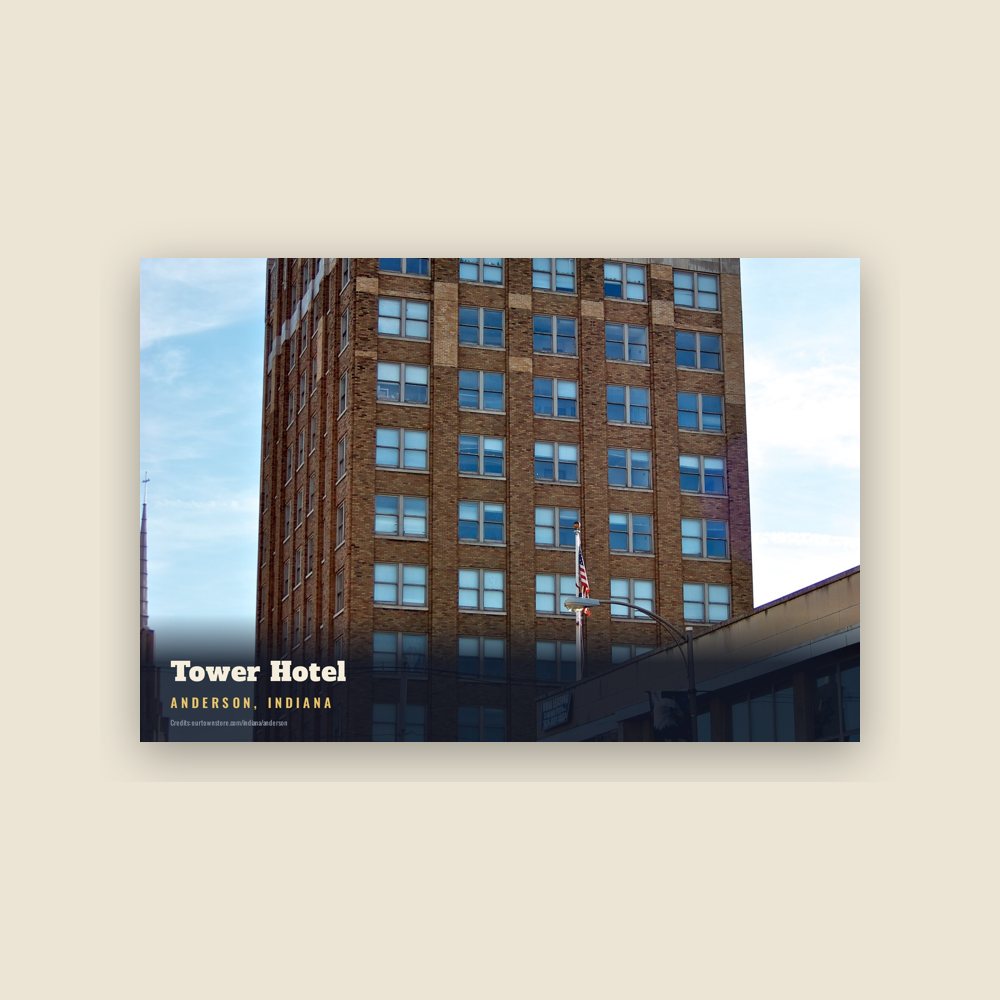
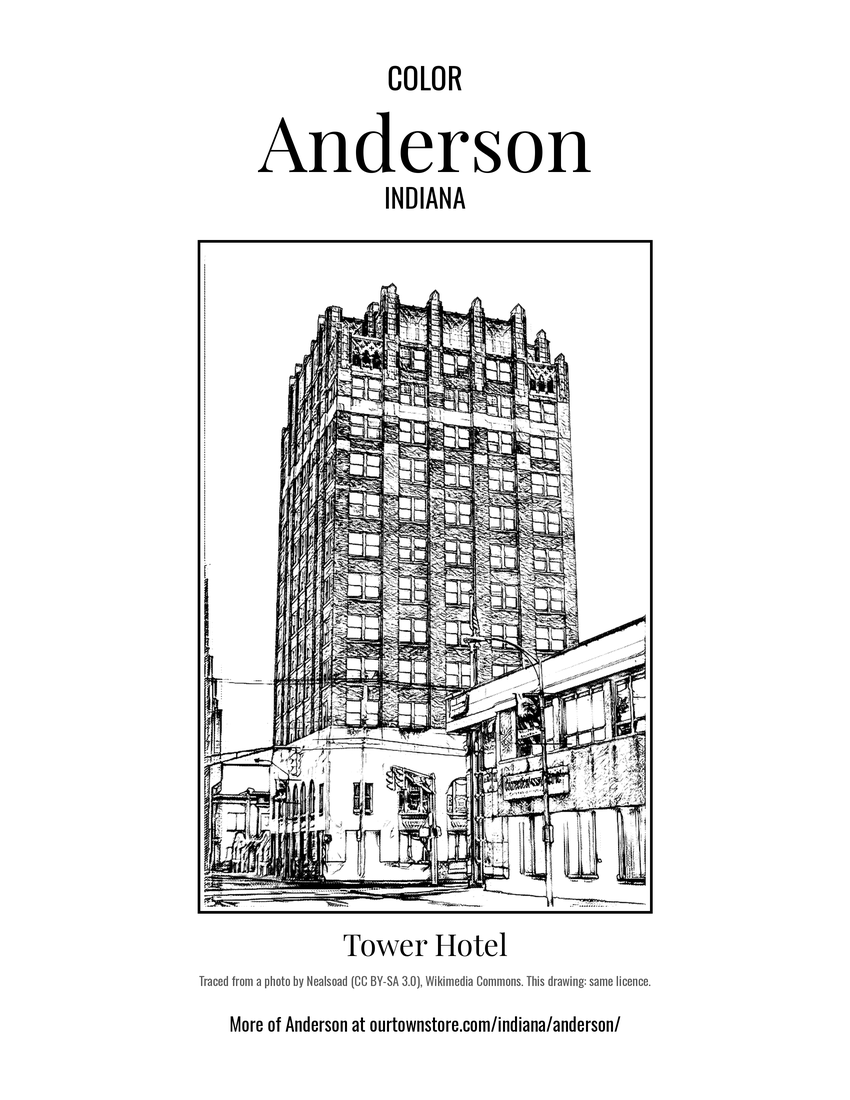
Anderson Tower Hotel Postcard

Anderson Tower Hotel Postcard

6″×4″ postcard, glossy front

$10
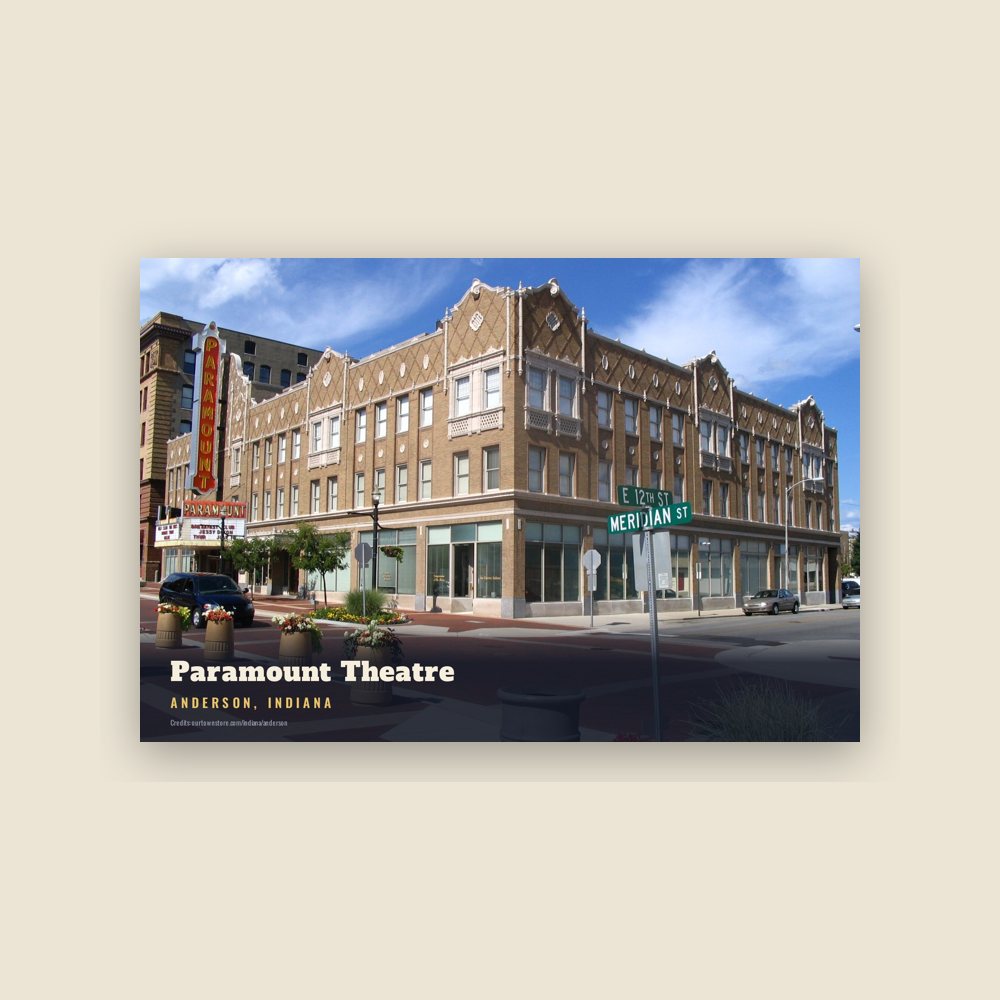
Anderson Paramount Theatre Postcard

Anderson Paramount Theatre Postcard

6″×4″ postcard, glossy front

$10
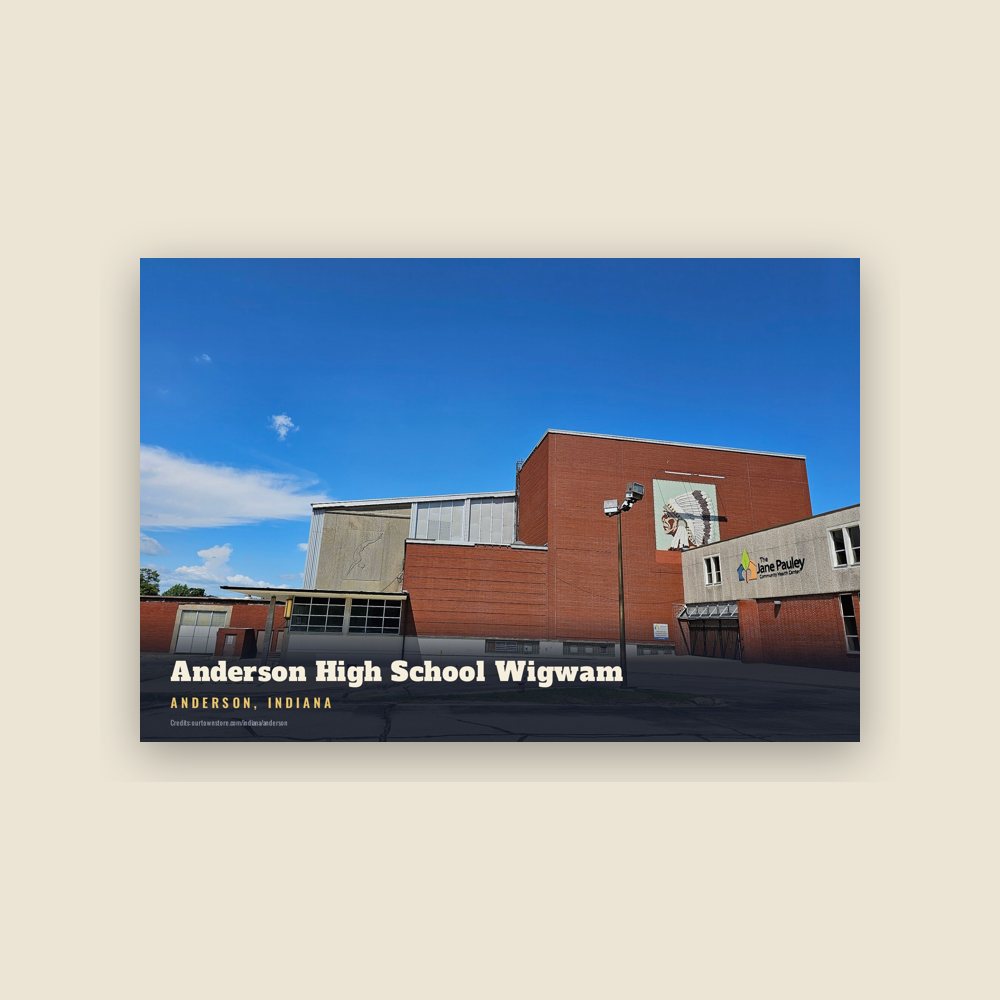
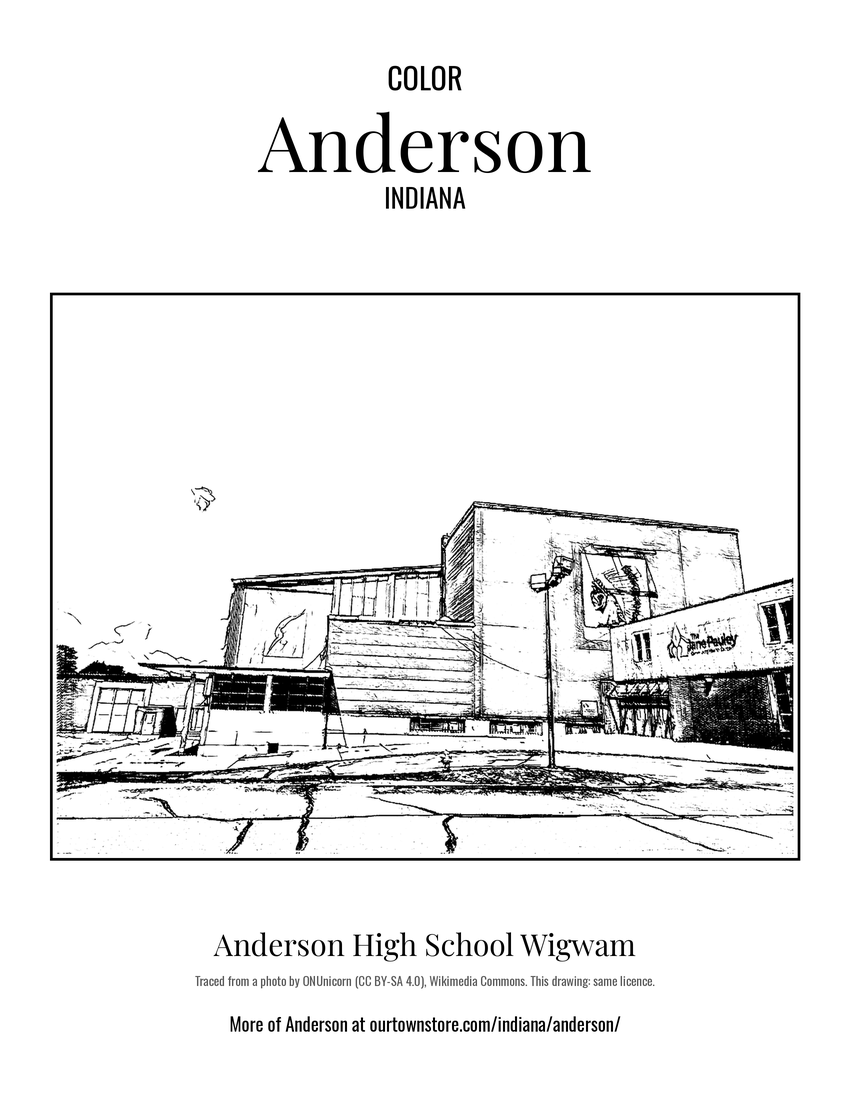
Anderson Anderson High School Wigwam Postcard

Anderson Anderson High School Wigwam Postcard

6″×4″ postcard, glossy front

$10
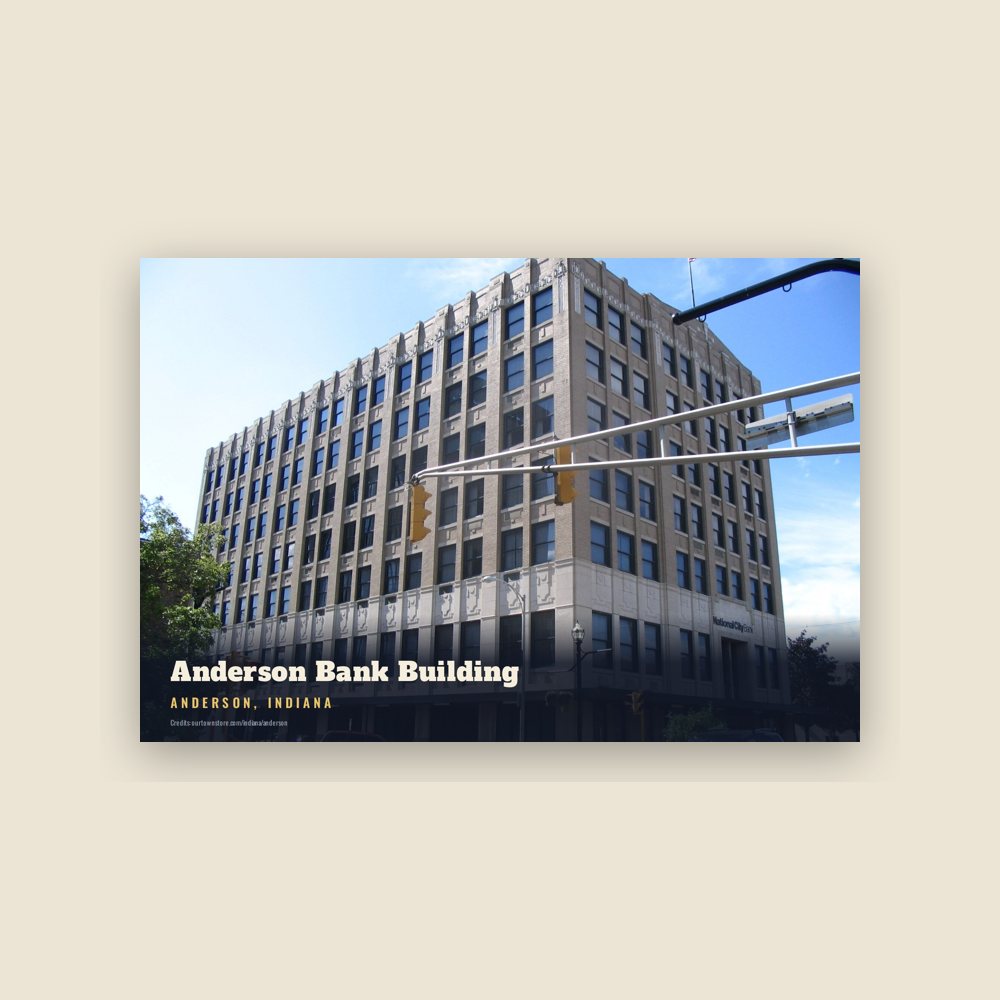
Anderson Anderson Bank Building Postcard

Anderson Anderson Bank Building Postcard

6″×4″ postcard, glossy front

$10
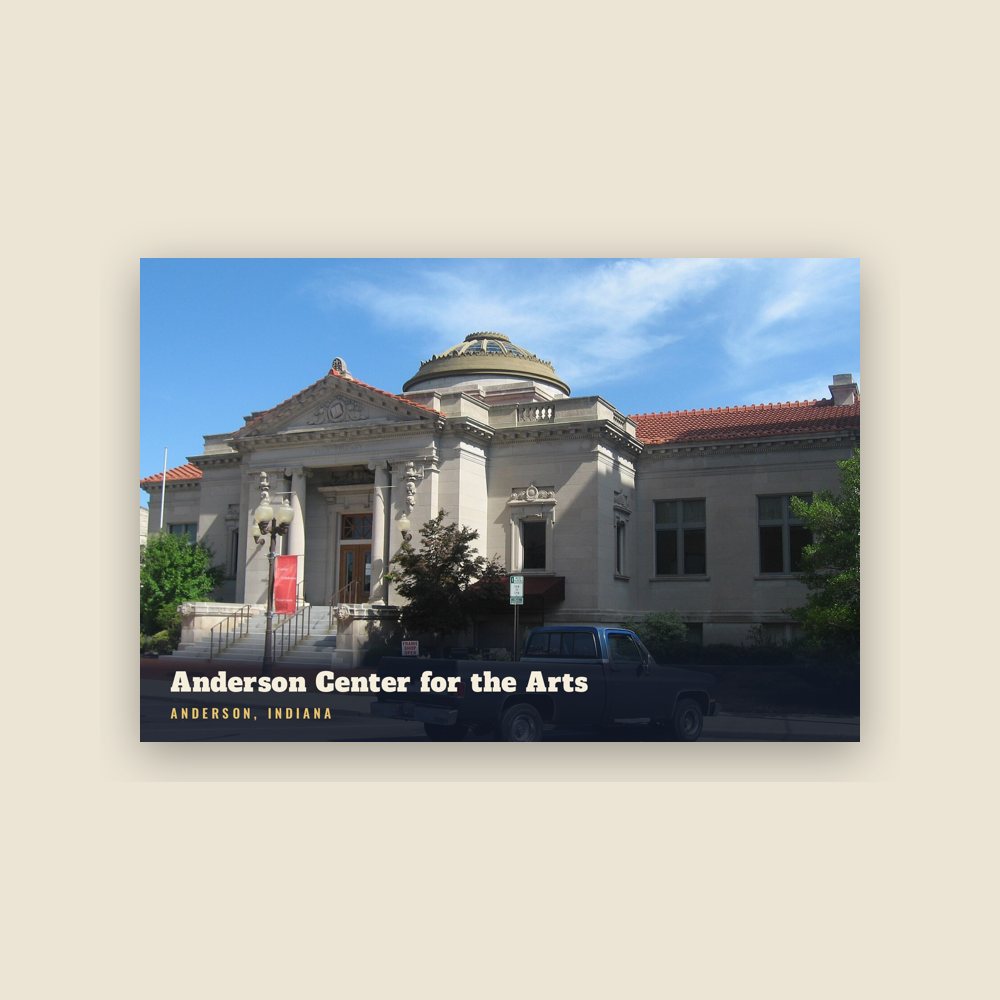
Anderson Anderson Center for the Arts Postcard

Anderson Anderson Center for the Arts Postcard

6″×4″ postcard, glossy front

$10
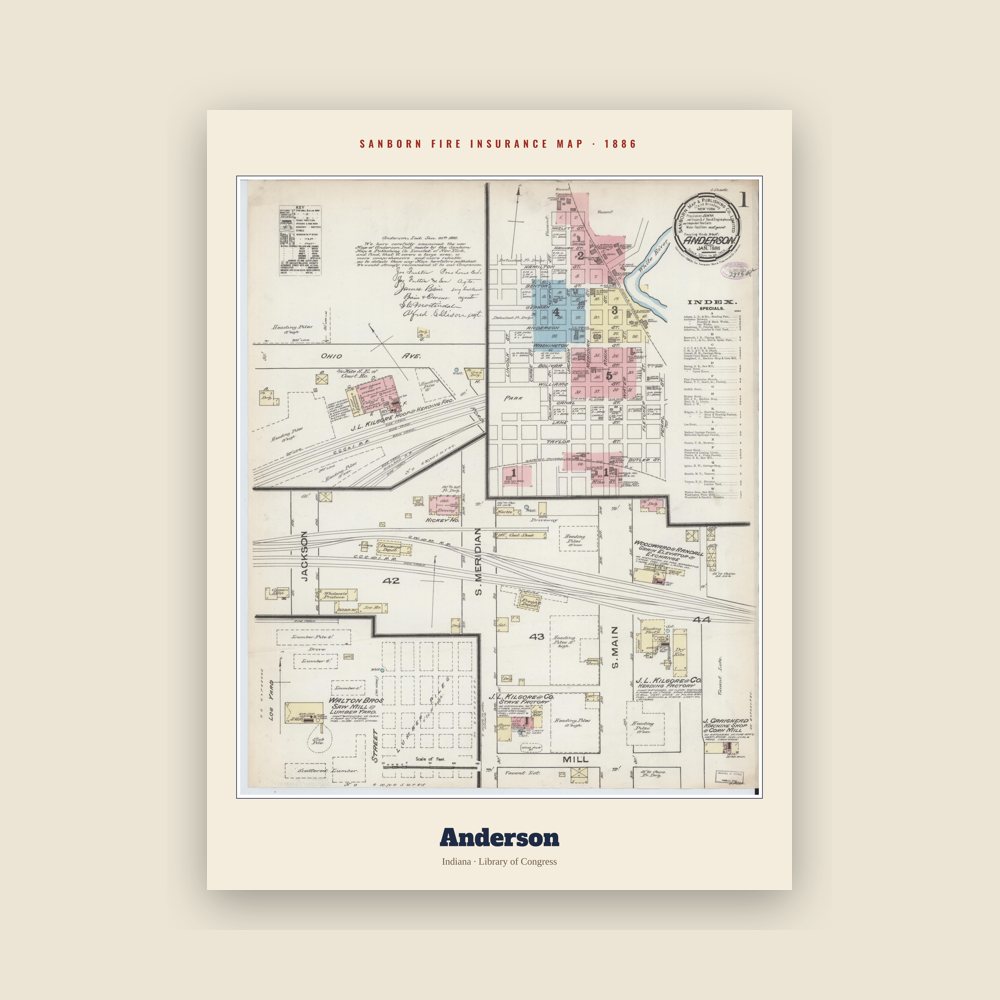
Anderson Sanborn Map Print

Anderson Sanborn Map Print

The town's earliest Sanborn fire-insurance map, drawn building by building and hand-coloured, from the Library of Congress

from $44
Anderson Anderson Carriage Manufacturing Company, Twenty-fifth & Walton Streets Archive Print

Anderson Anderson Carriage Manufacturing Company, Twenty-fifth & Walton Streets Archive Print

From the Library of Congress collections: a historic survey drawing or photograph of the town

from $44
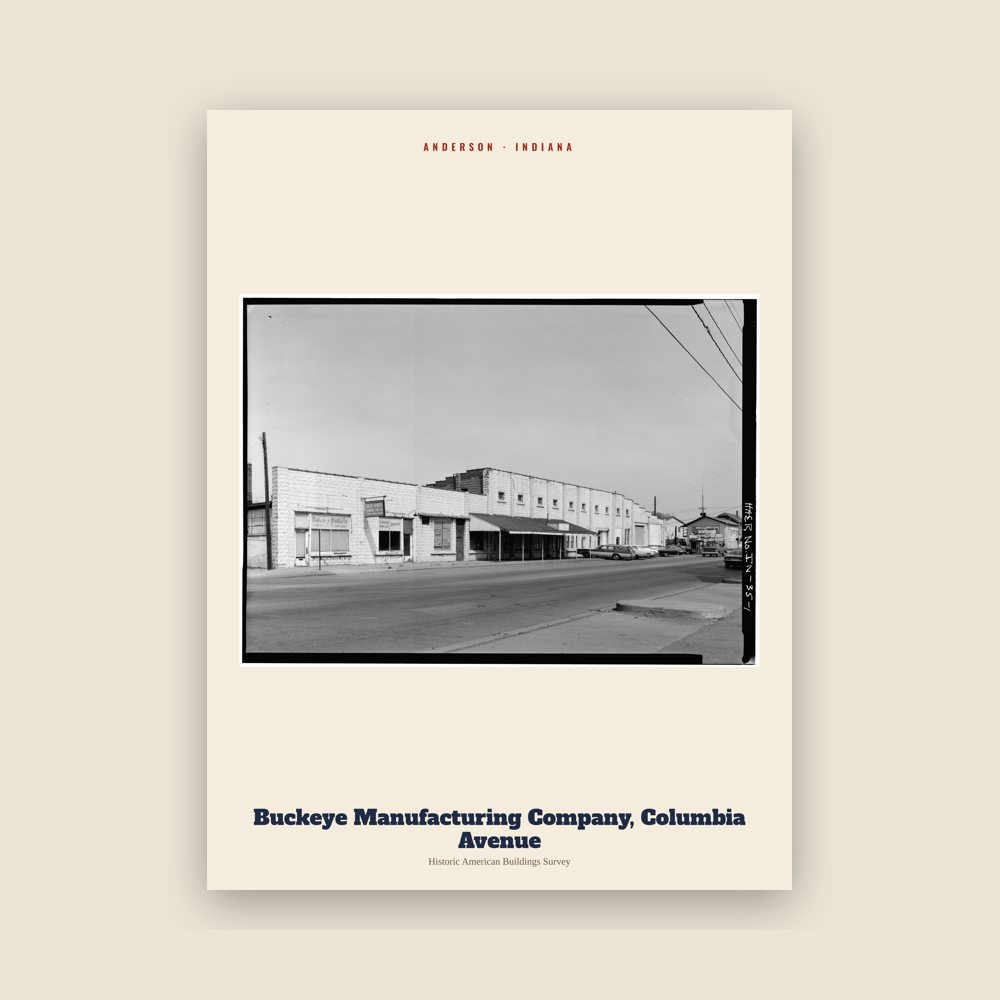
Anderson Buckeye Manufacturing Company, Columbia Avenue Archive Print

Anderson Buckeye Manufacturing Company, Columbia Avenue Archive Print

From the Library of Congress collections: a historic survey drawing or photograph of the town

from $44
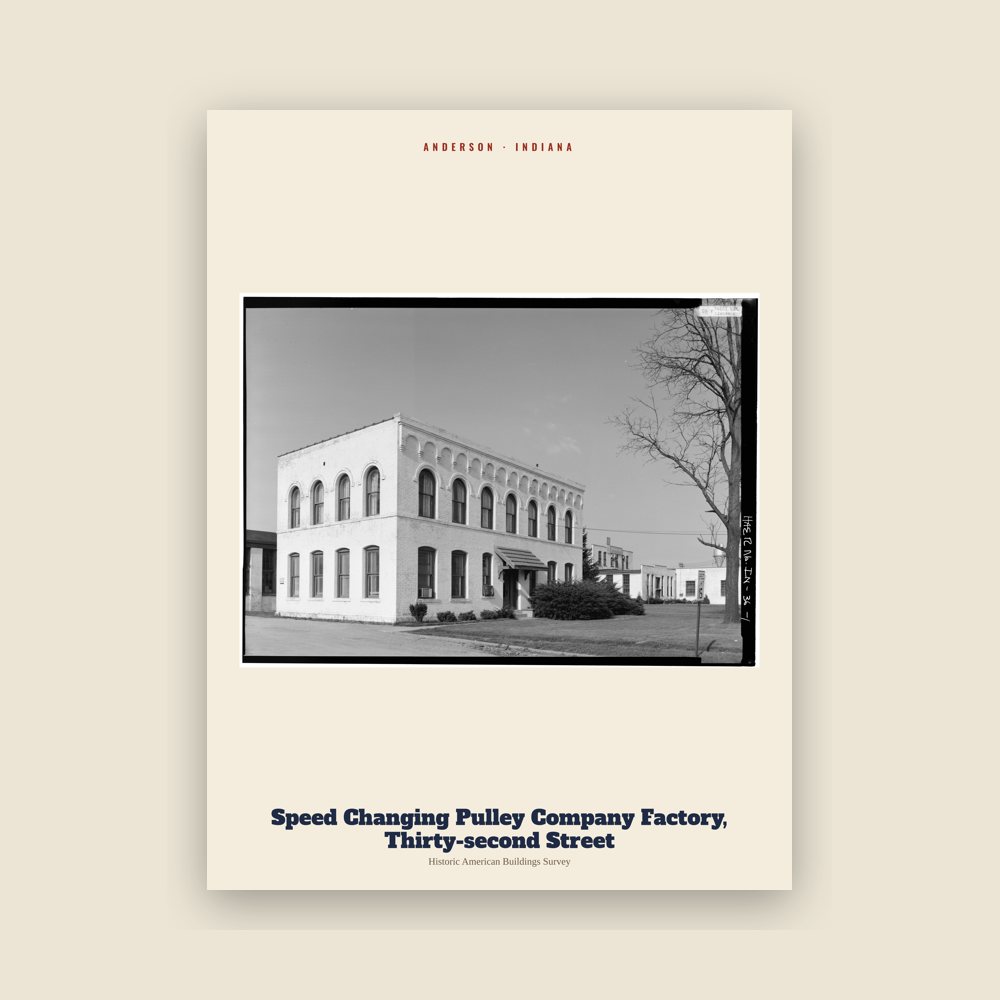
Anderson Speed Changing Pulley Company Factory, Thirty-second Street Archive Print

Anderson Speed Changing Pulley Company Factory, Thirty-second Street Archive Print

From the Library of Congress collections: a historic survey drawing or photograph of the town

from $44
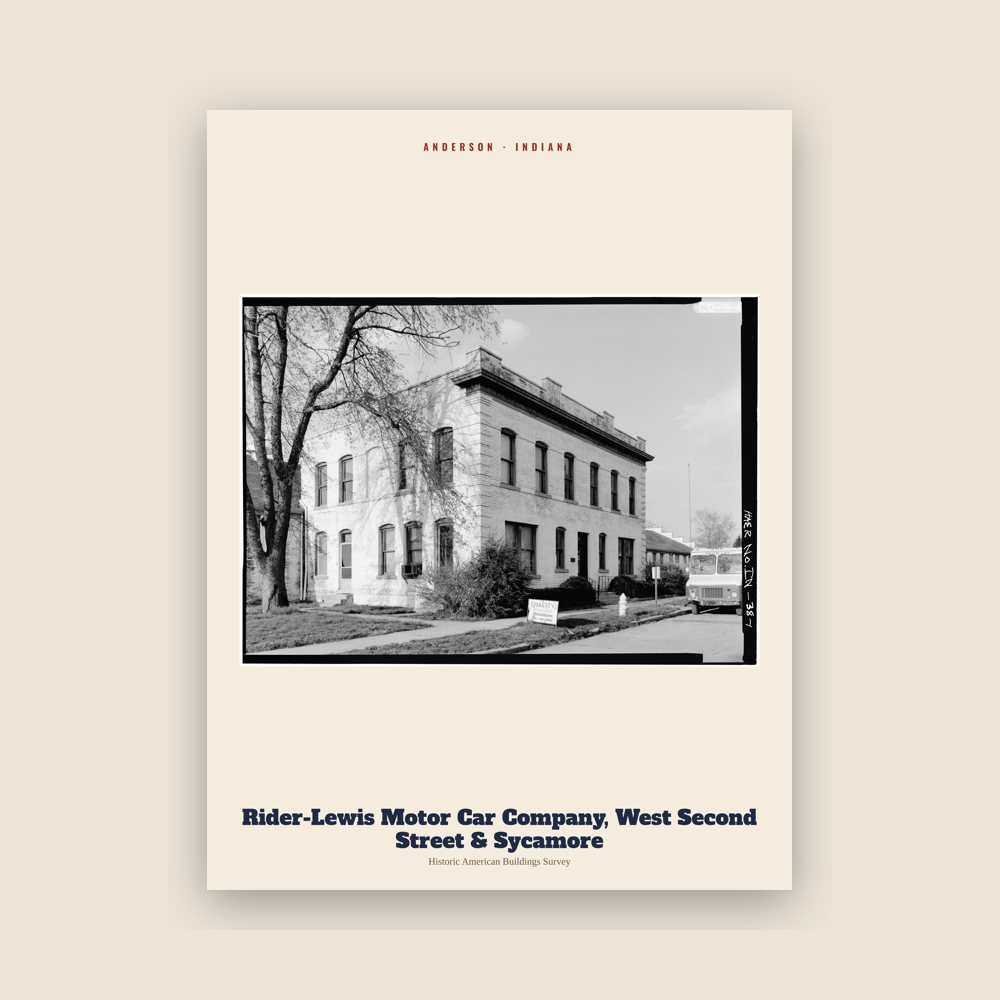
Anderson Rider-Lewis Motor Car Company, West Second Street & Sycamore Archive Print

Anderson Rider-Lewis Motor Car Company, West Second Street & Sycamore Archive Print

From the Library of Congress collections: a historic survey drawing or photograph of the town

from $44

It is named after Chief William Anderson. Landmarks include Mounds State Park, Tower Hotel and Anderson High School Wigwam. Anderson is the birthplace of Cory Edwards, film director and comedian.

Hometown roll

Born in Anderson

On the National Register

Historic places

Population 2010: 56,129 → 2020: 54,788

From Wikidata (CC0).

A short history of Anderson

Prior to the organization of Madison County, William Conner entered the land upon which Anderson is located. Conner later sold the ground to John and Sarah Berry, who donated 32 acres (13 ha) of their land to Madison County on the condition that the county seat be moved from Pendleton to Anderson. John Berry laid out the first plat of Anderson on November 7, 1827. In 1828 the seat of justice was moved from Pendleton to Anderson.

The city is named for Chief William "Adam" Anderson, whose mother was Lenape and whose father was of Swedish descent. Chief Anderson's name in Lenape was Kikthawenund, meaning "creaking boughs". The Lenape village was known as "Anderson's Town", though the Moravian missionaries called it "The Heathen Town Four Miles Away". Anderson was also known as "Andersonton" before being formally organized as Anderson.

Introduction of internal improvements by the Mammoth Internal Improvement Act caused a growth in the population in 1837. In December 1838, Anderson was incorporated as a town with 350 inhabitants. The Central Canal, a branch of the Wabash and Erie Canal, was planned to come through Anderson. Work continued on the canal during 1838 and the beginning of 1839, but the work was soon suspended by the state following effects of the Panic of 1837. The town again became a sleepy village until 1849, when it was incorporated a second time as a town. Many new commercial ventures located around the courthouse square.

This incorporation was short-lived, and Anderson once again went back to village status in 1852. However, with the completion of the Indianapolis Bellefontaine Railroad, as well as their station in 1852, Anderson burst to life. The third incorporation of Anderson as a town occurred on June 9, 1853. The population continued to increase. On August 28, 1865, with a population of nearly 1,300 people, Anderson was incorporated as a city.

Between 1853 and the late 19th century, twenty industries of various sizes located there. On March 31, 1887, natural gas was discovered in Anderson. As the Indiana gas boom began, this discovery led new businesses that could use natural gas, such as glass-making, to move to the city. Anderson grew to such proportions that a Cincinnati newspaper editor labeled the city "The Pittsburgh on White River". Other appellations were "Queen City of the Gas Belt" and (because of the vulcanizing and rubber tire manufacturing business) "Puncture Proof City".

In 1897 the Interurban Railroad was born in Anderson. Charles Henry, a large stock holder, coined the term "Interurban" in 1893. It continued to operate until 1941. The Commercial Club (formed on November 18, 1905) was the forerunner of the present chamber of commerce.

The year 1912 spelled disaster for Anderson: the natural gas ran out. The city had left its gas-powered lights on day and night, and there are stories of a pocket of natural gas being lit in the river and burning for a prolonged period for the spectacle of it. The result of the loss of natural gas was that several factories moved out. The whole city slowed down.

This club persuaded the Remy brothers to stay in Anderson and others to locate there. For decades, Delco Remy and Guide Lamp (later Fisher Guide), which during World War II built the M3 submachine gun and the FP-45 Liberator pistol for the Allies, were the top two employers in the city. From 1913 through the 1950s, the Ward-Stilson Company was one of the country's largest producers of uniforms, regalia, furniture and props for the Freemasons, the Odd Fellows, and dozens of other U.S. fraternal organizations.

The Church of God of Anderson located its world headquarters in Anderson in 1905. Anderson Bible School was opened in 1917, and this was separated from Gospel Trumpet (now known as Warner Press) in 1925. At the same time, it became known as Anderson Bible School and Seminary. In 1925, the name was changed to Anderson College and eventually to Anderson University in 1988.

Over the years, 17 different types of automobiles were manufactured in Anderson, with the Lambert family among the city's leaders in its development and the Buckeye Gasoline Buggy the Lambert product. Many other inventions were perfected in Anderson, including the gas regulator (Miron G. Reynolds), the stamp vending machine (Frank P. Dunn), clothes presser (H. Donald Forse), "Irish Mail" handcars (Hugh Hill), flower car for funeral homes (Francis M. McClain, automatic gearshift (Von D. Polhemus)), Sisson choke (Glenn Sisson), and the vulcanizing process to retread tires (Charles E. Miller).

Anderson hosted a National Basketball Association (NBA) franchise for the 1949–50 season, being one of the smaller cities to have had a major league franchise in a Big Four American sport. The Anderson Packers were a founding member of the NBA (under that name), but folded after one season.

Like most other industrial cities in Indiana and the Rust Belt as a whole, Anderson suffered tremendously from deindustrialization in the 1970s and 1980s. For example, nearly 22,000 people were employed by General Motors in the 1970s in Anderson; by 2006 this number had declined to fewer than 2,600. Anderson has since struggled with higher rates of poverty and unemployment.

Adapted (trimmed) from the Wikipedia article Anderson, Indiana, revision 1378461016 by its contributors, licensed CC BY-SA 4.0.
For local organizations

Are you with a Anderson historical society?

We share a part of every Anderson sale with local partners, and we'd love to print from your collection. Old photographs, maps and postcards make the best keepsakes.

Partner with us
Custom orders

Want something Anderson we don't make yet?

A favorite landmark, your street, a school or team, an anniversary gift, a different product. Tell us and we'll get back to you by email.

Free printables

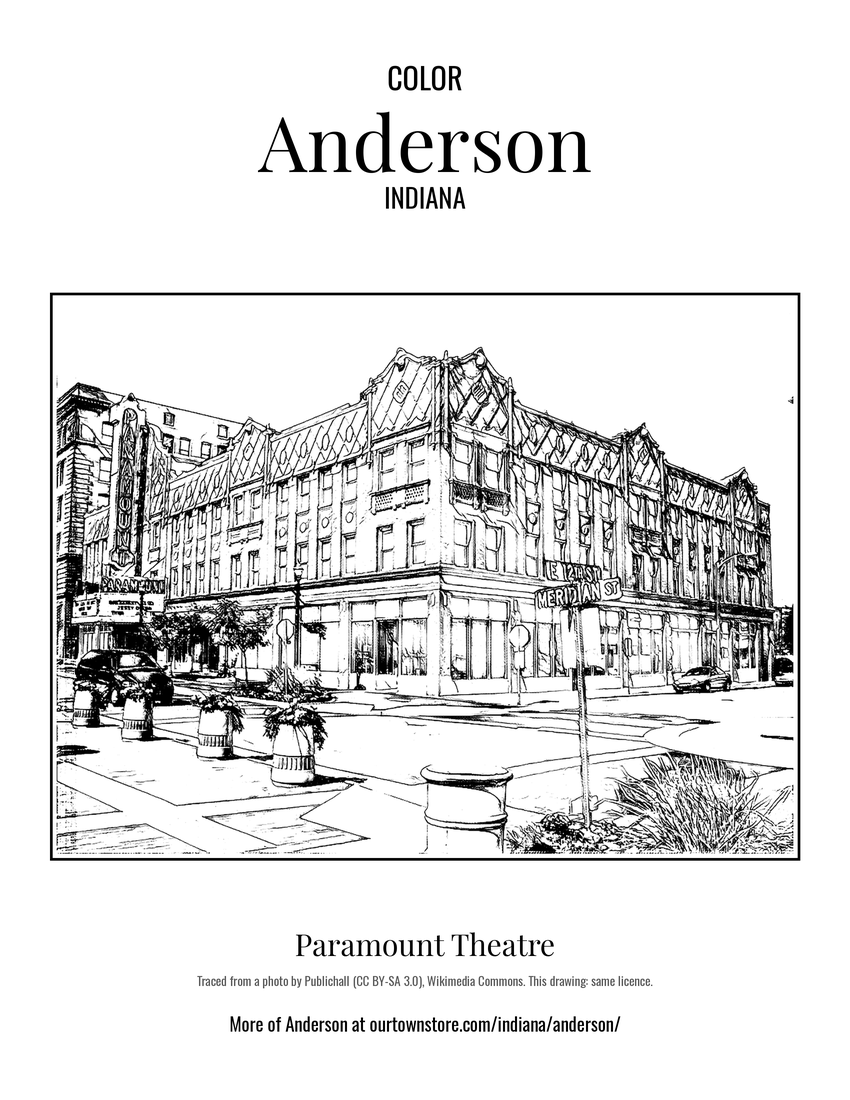
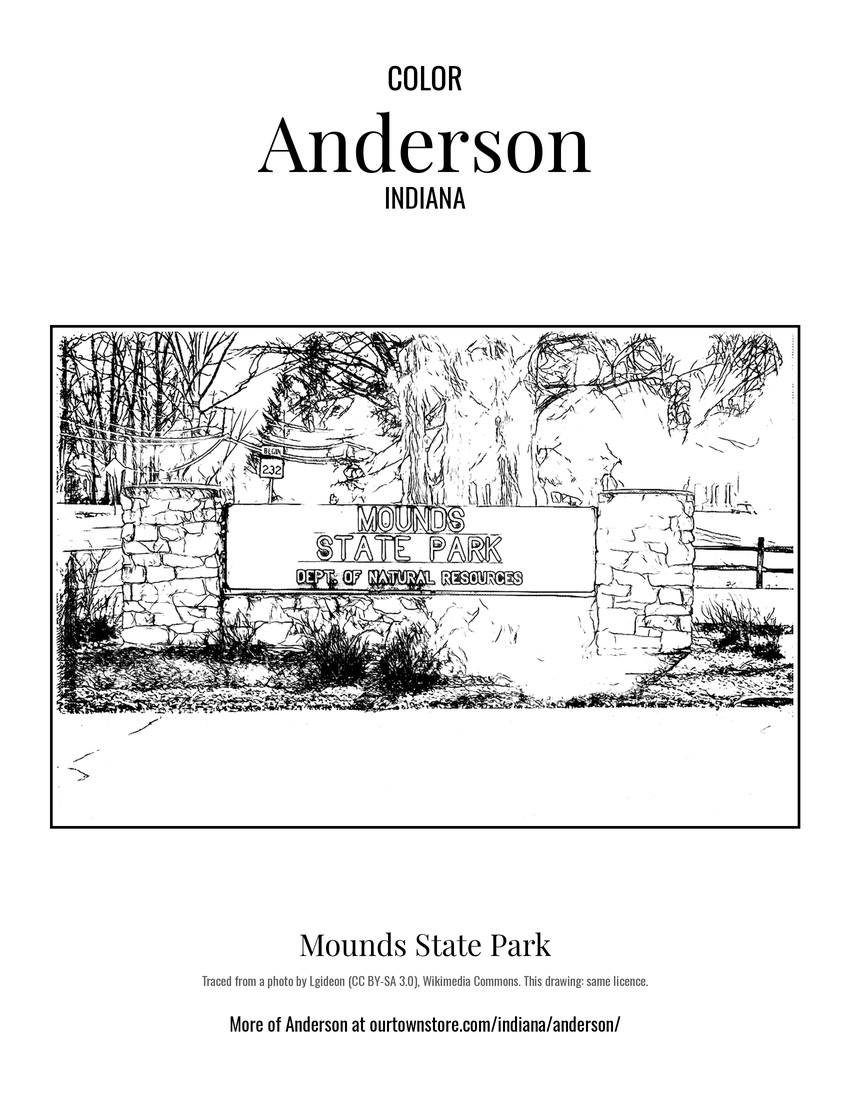
Color Anderson

11 free coloring pages of Anderson, each traced from a photo of a local landmark. Print them at home, at school or for story hour.

Nearby

Neighboring towns

Sources

Anderson's population was 54,788 in the 2020 U.S. Census, down from 56,129 in 2010.