Since 1836
A short history of Valparaiso
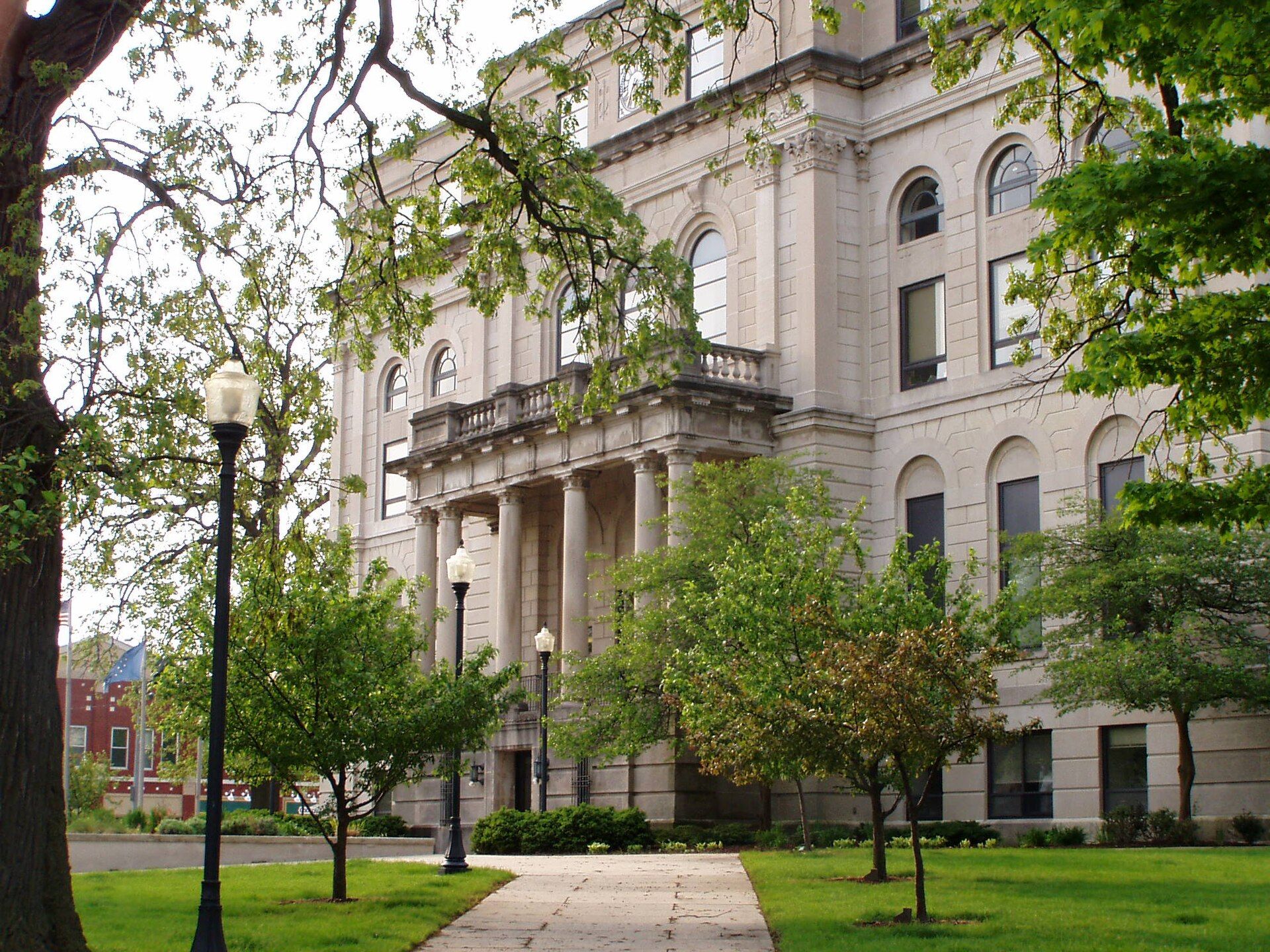
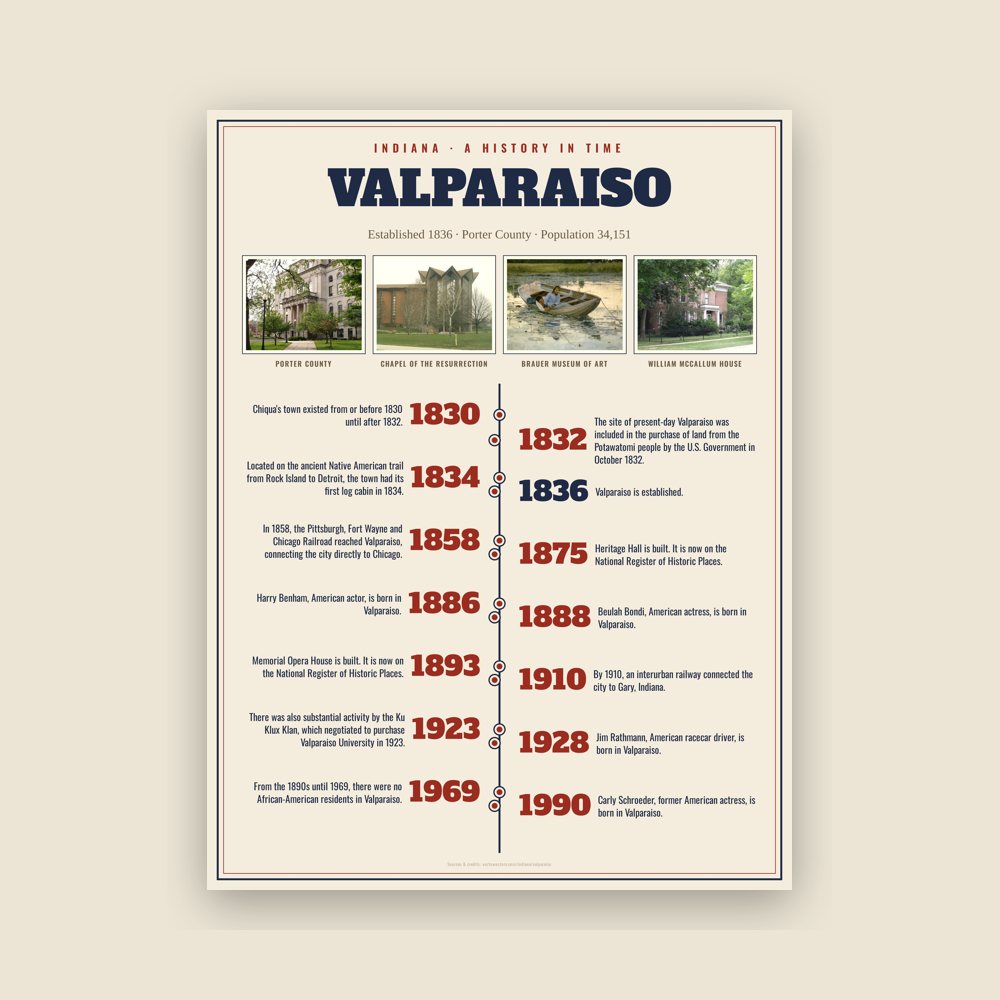
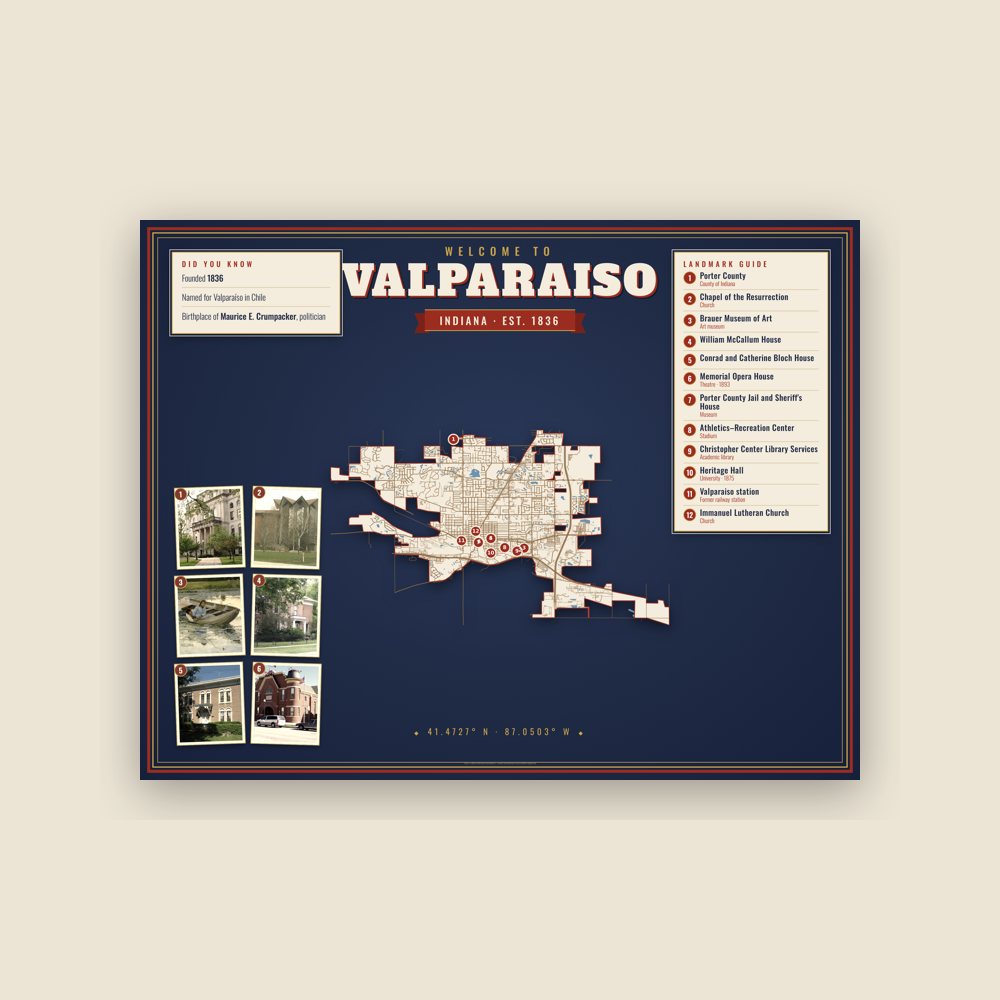
The site of present-day Valparaiso was included in the purchase of land from the Potawatomi people by the U.S. Government in October 1832. Chiqua's town or Chipuaw was located a mile east of the current Courthouse along the Sauk Trail. Chiqua's town existed from or before 1830 until after 1832. The location is just north of the railroad crossing on State Route 2 and County Road 400 North.
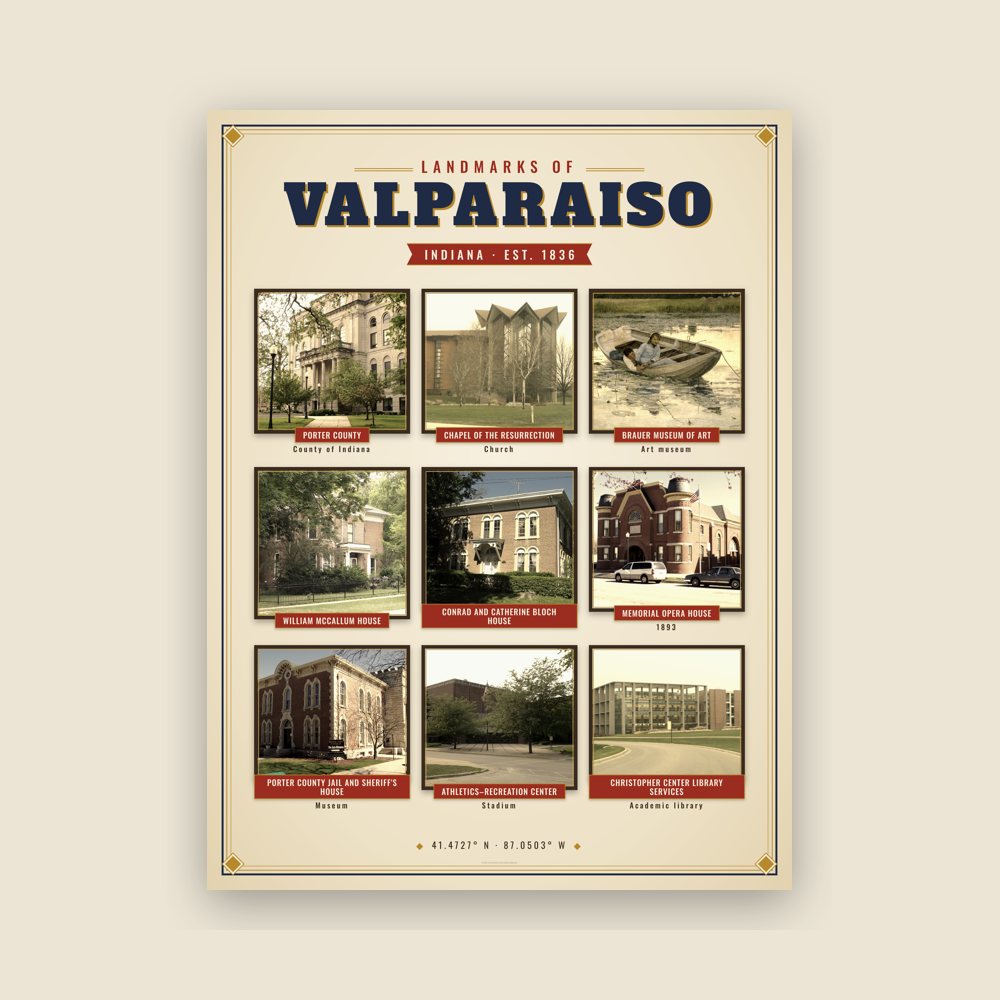
Located on the ancient Native American trail from Rock Island to Detroit, the town had its first log cabin in 1834. Established in 1836 as Portersville, county seat of Porter County, it was renamed to Valparaiso (meaning "Vale of Paradise" in Old Spanish) in 1837 after Valparaíso, Chile, near which the county's namesake David Porter battled in the Battle of Valparaiso during the War of 1812. The city was once called the "City of Churches" due to the large number of churches located there at the end of the 19th century. Valparaiso Male and Female College, one of the earliest higher education institutions admitting both men and women in the country, was founded in Valparaiso in 1859, but closed its doors in 1871 before reopening in 1873 as the Northern Indiana Normal School and Business Institute. In the early 20th century, it became Valparaiso College, then Valparaiso University. It was initially affiliated with the Methodist Church but after 1925 with the Lutheran University Association (which has relationships both with the Lutheran Church Missouri Synod, and with the Evangelical Lutheran Church in America) and expanded significantly after World War II.
From the 1890s until 1969, there were no African-American residents in Valparaiso. This has been attributed to Valparaiso being a sundown town. There was also substantial activity by the Ku Klux Klan, which negotiated to purchase Valparaiso University in 1923. The first African-American family to move to Valparaiso faced intimidation and eventually left the city when a visiting relative was murdered. In recent years, the city's racial composition has diversified.
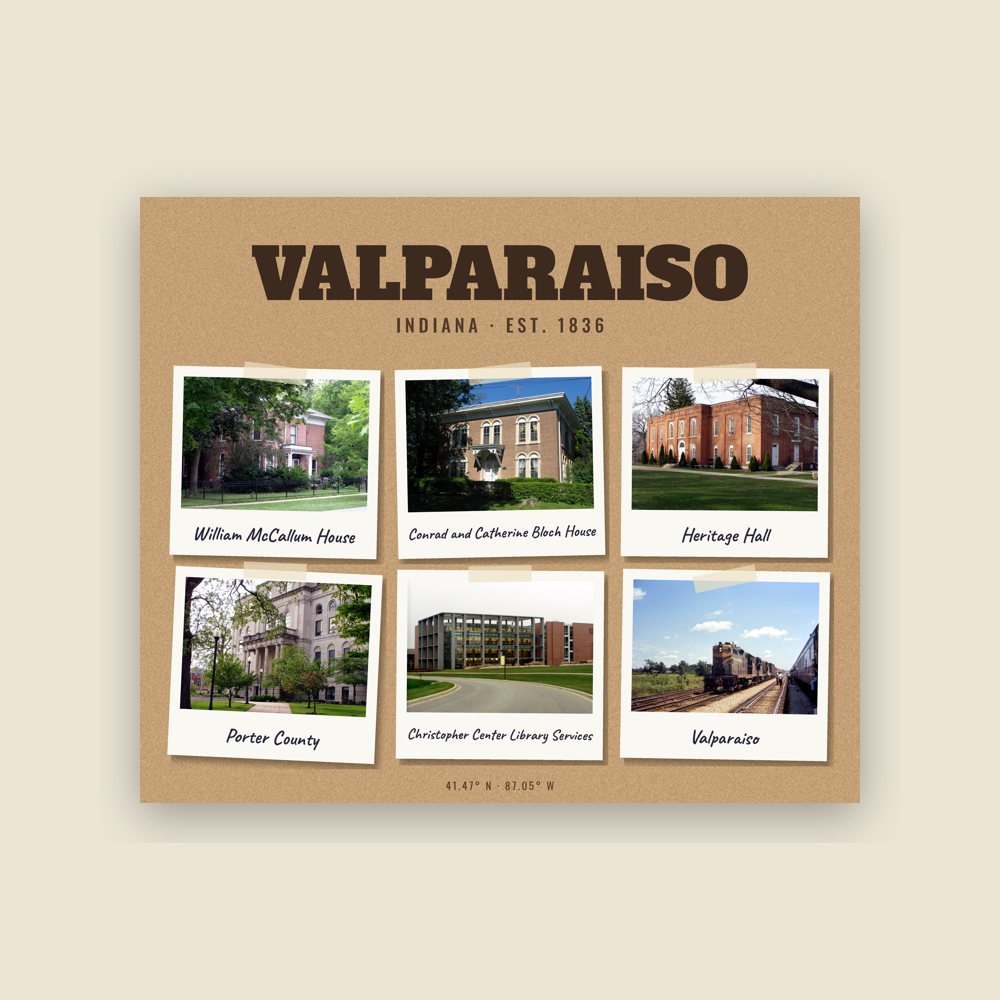
Valparaiso also has a long history of being a transportation hub for the region. In 1858, the Pittsburgh, Fort Wayne and Chicago Railroad reached Valparaiso, connecting the city directly to Chicago. By 1910, an interurban railway connected the city to Gary, Indiana. Today, while the city no longer has a passenger train station, it is still very much a part of the "Crossroads of America" due to its proximity to I-65, I-80, I-90, and I-94. Additionally, the Canadian National railroad still runs freight on the tracks, including through the downtown area.
Adapted (trimmed) from the Wikipedia article Valparaiso, Indiana, revision 1377151363 by its contributors, licensed CC BY-SA 4.0.