Since 1835
A short history of La Porte
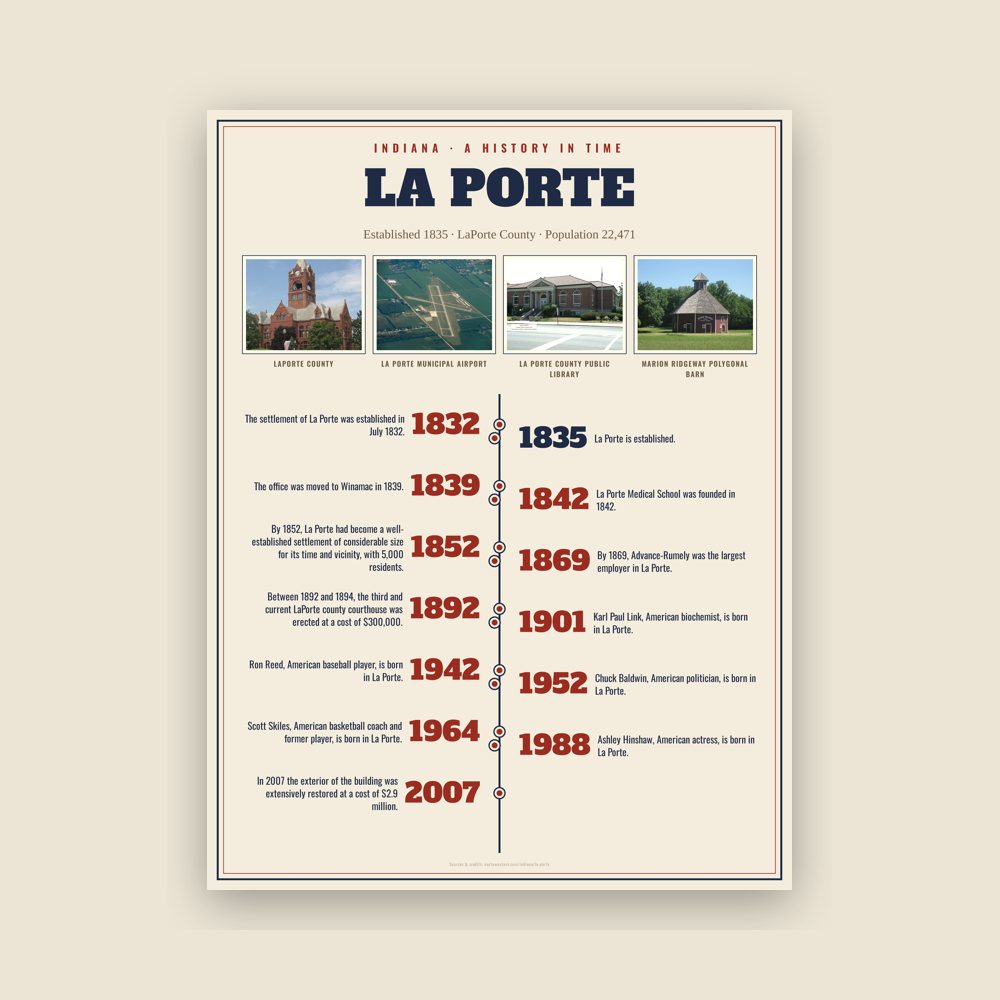
The settlement of La Porte was established in July 1832. Abraham P. Andrew, one of the purchasers of the site, constructed the first sawmill in that year. The first settler arrived in October, building a permanent cabin just north of what would become the courthouse square.
After the US extinguished land claims by the Potowatomi and other historic tribes of the area by treaty and removal to Indian Territory, in 1833, a federal land office was established in La Porte. People came to this office from newly established surrounding counties to buy land from the government, including Solon Robinson, founder of Crown Point. The office was moved to Winamac in 1839.
By 1835, the settlement had grown to the extent that La Porte was incorporated as a town. A newspaper was established in 1836. La Porte Medical School was founded in 1842.
By 1852, La Porte had become a well-established settlement of considerable size for its time and vicinity, with 5,000 residents. In that same year, it was granted a city charter by the Indiana General Assembly, and the first mayor was elected. La Porte continued to grow, attracting numerous, diverse industries, the largest of which became the Advance-Rumely Company. Advance-Rumely developed and manufactured the Oil-Pull tractor engine, considered to have played a pivotal role in the agricultural development of the Great Plains. By 1869, Advance-Rumely was the largest employer in La Porte.
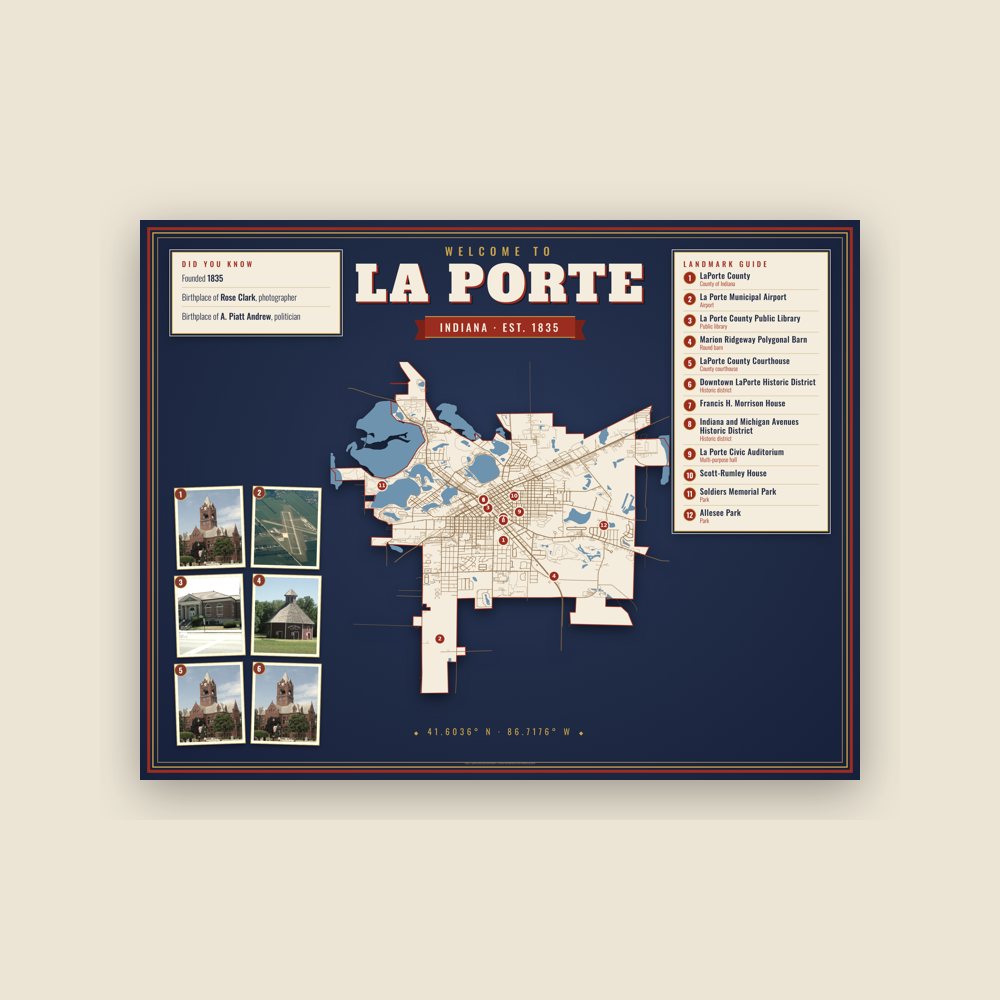
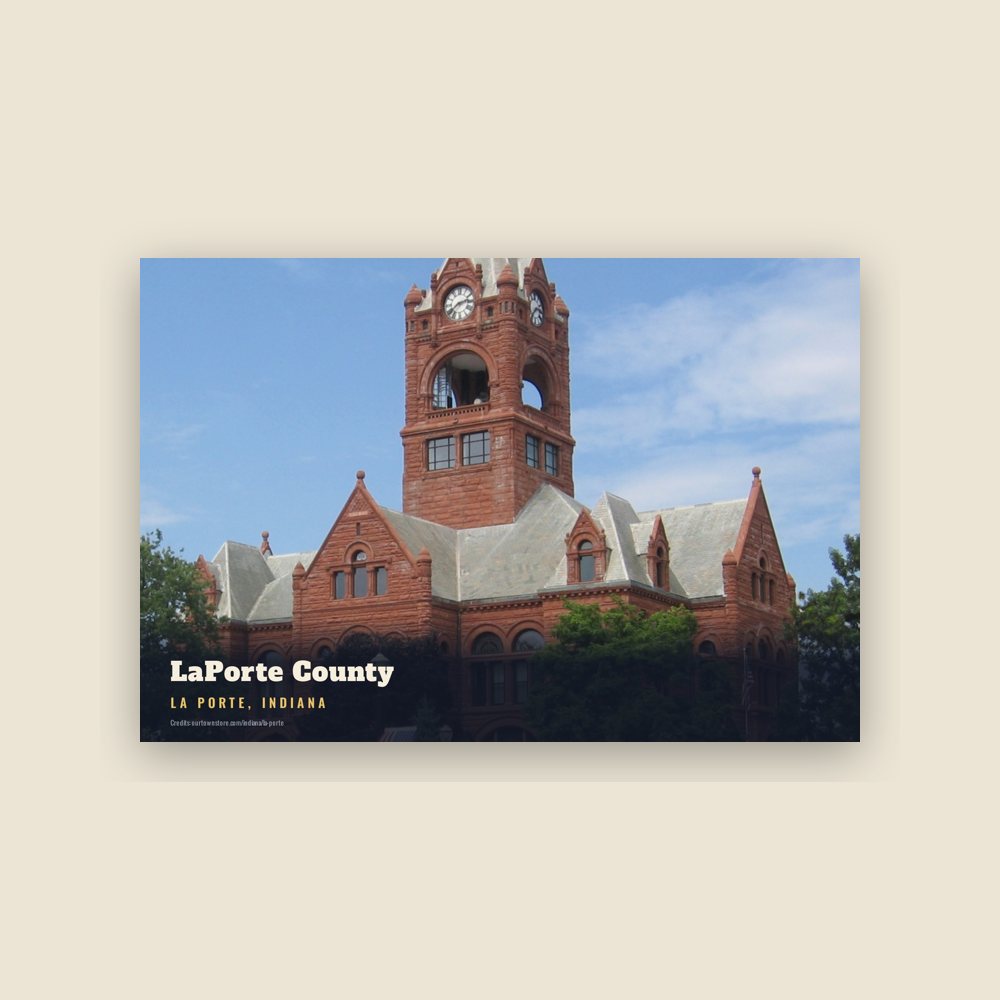
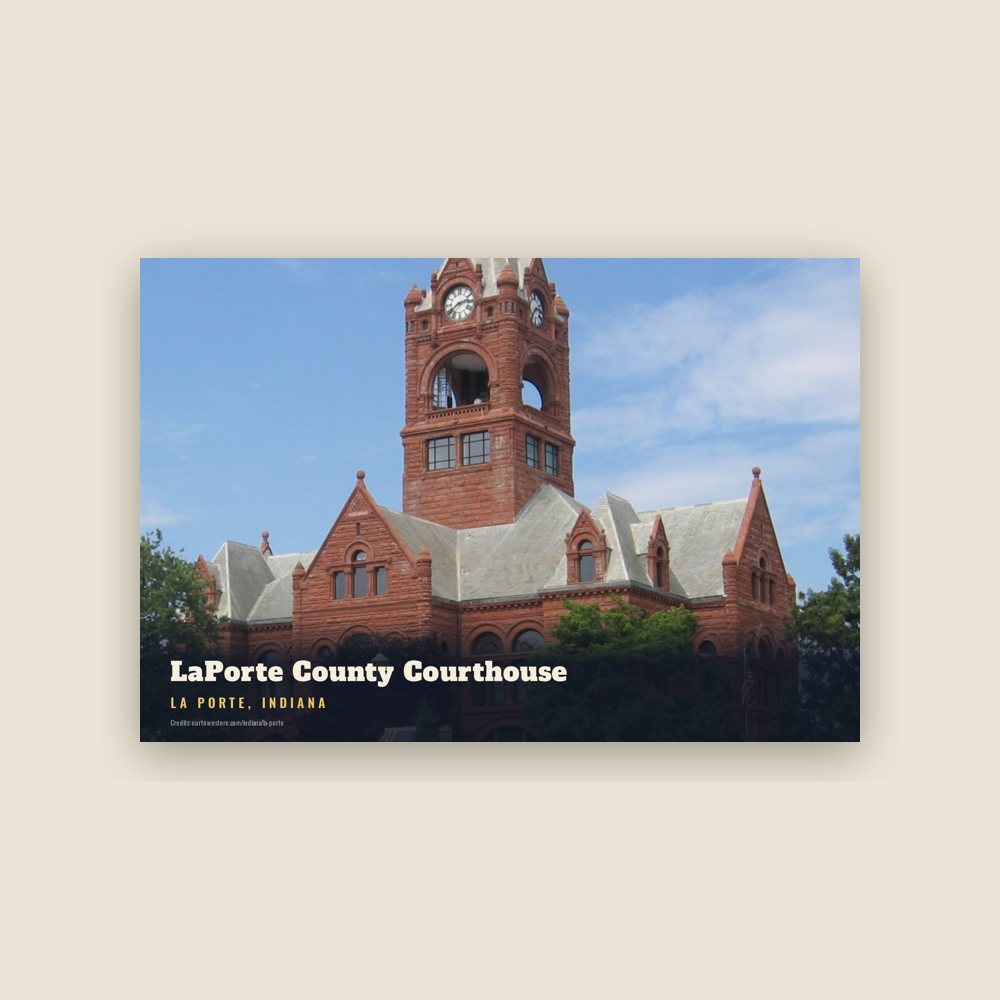
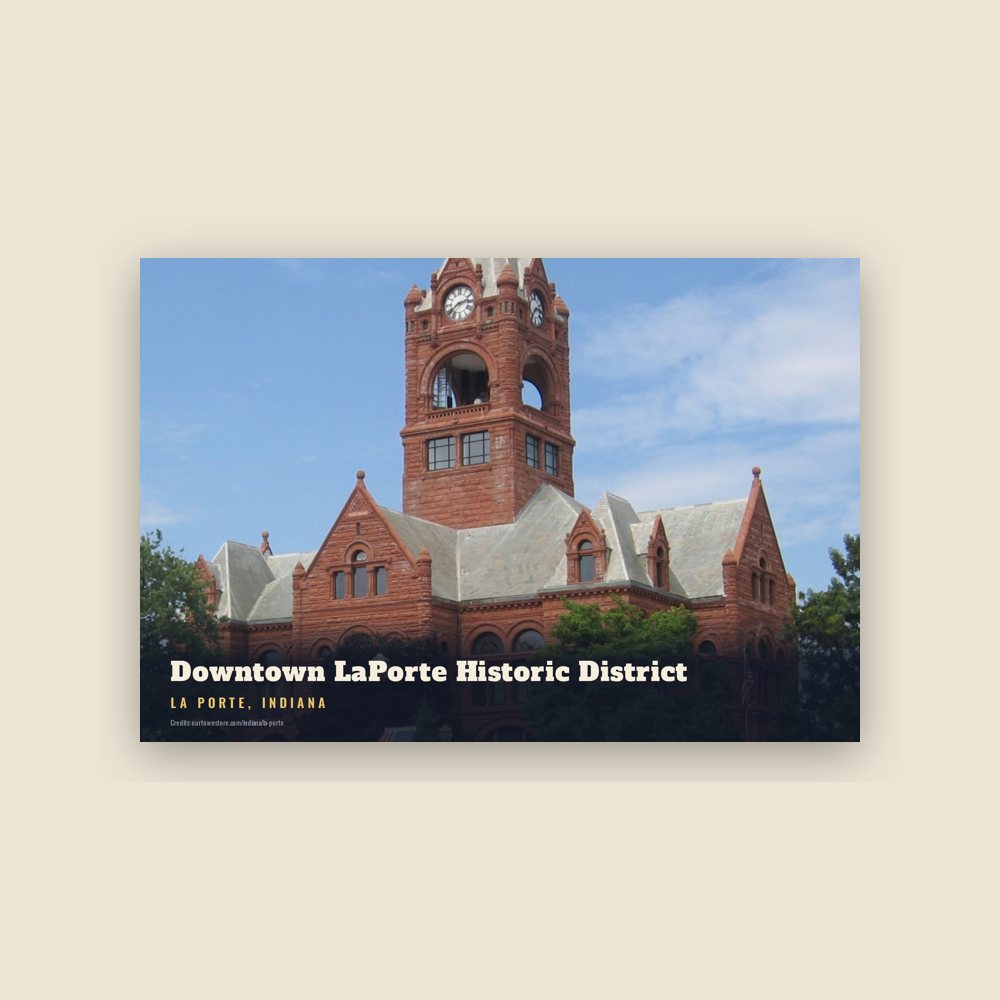
During the 1850s, numerous maple trees were planted along Indiana and Michigan Avenues in the city by local resident Sebastian Lay. Subsequently, La Porte became known as the "Maple City". Today, Indiana and Michigan Avenues comprise a historic district in the city, containing many homes and other structures of architectural and historical interest. Between 1892 and 1894, the third and current LaPorte county courthouse was erected at a cost of $300,000. The structure is built of red sandstone from Lake Superior, shipped by boat to Michigan City and then by rail to La Porte. The courthouse is considered to be one of La Porte's best-known structures. In 2007 the exterior of the building was extensively restored at a cost of $2.9 million.
Read the full history
Historic sites districts
Adapted (trimmed) from the Wikipedia article La Porte, Indiana, revision 1381125167 by its contributors, licensed CC BY-SA 4.0.