A short history of Newburgh
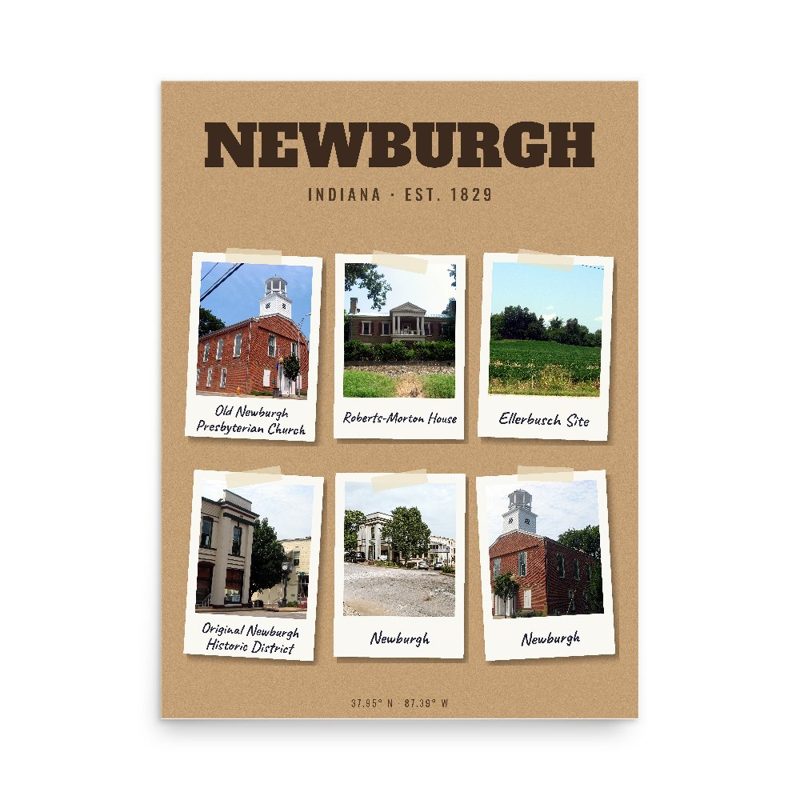
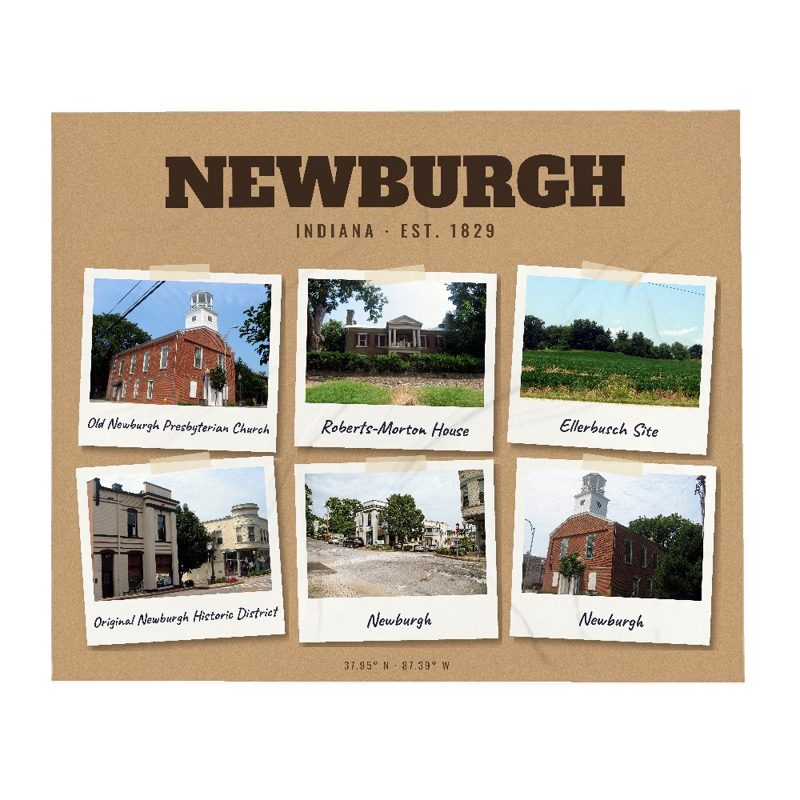
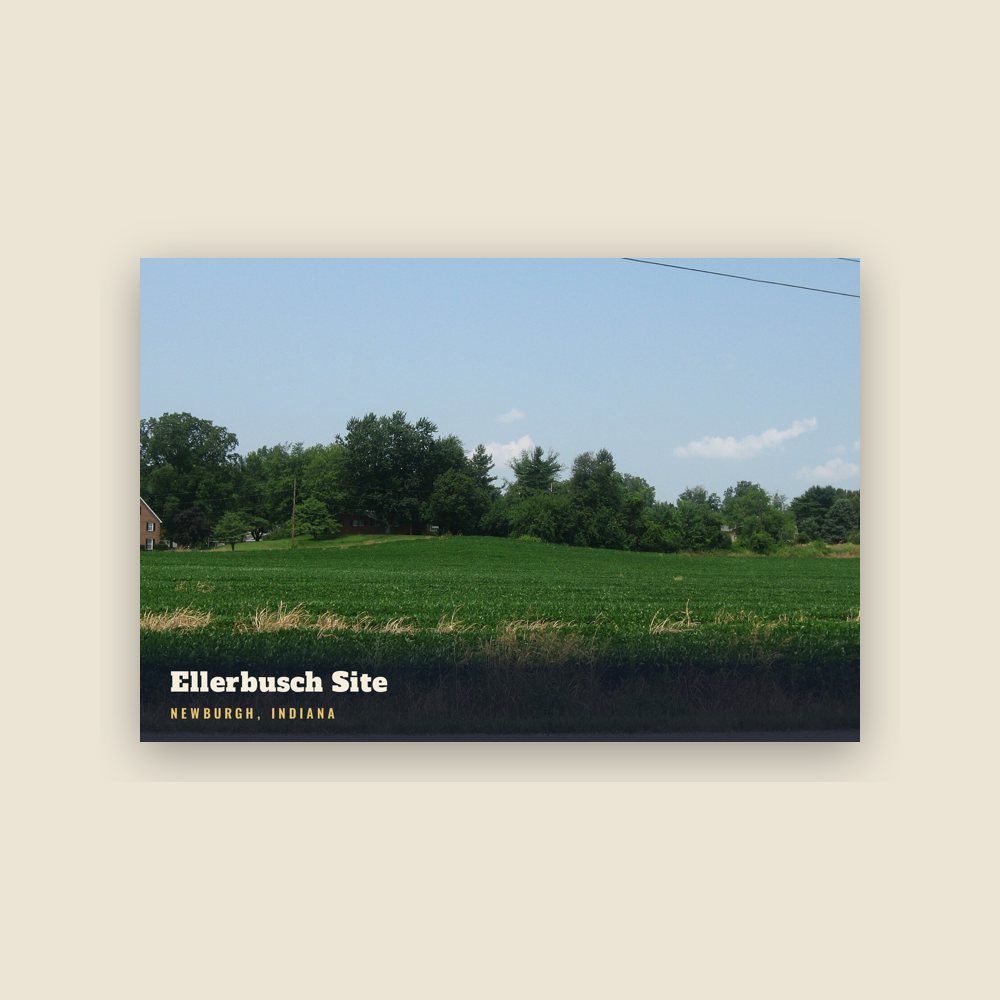
As a town situated on the fertile banks of the Ohio River, Newburgh has a long history of human activity. Western explorers first arrived in the area in the 17th century. For centuries prior to that, it had been inhabited by the Shawnee people and was near the center of prehistoric Mississippian culture as late as 1450 A.D. Evidence of this prehistoric society remains today at Angel Mounds, a National Historic Landmark, and Ellerbusch site, both approximately two miles west of Newburgh.
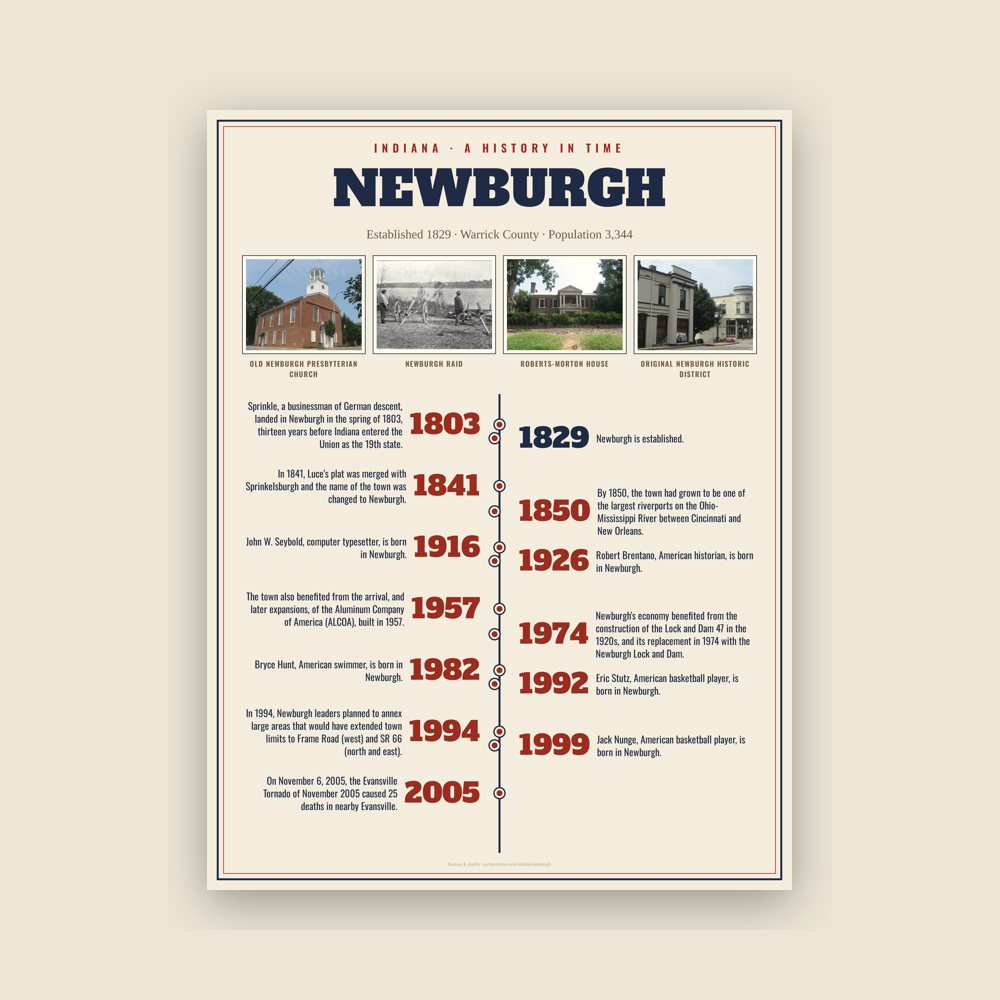
The principal founders of Newburgh are John Sprinkle and Abner Luce. Sprinkle, a businessman of German descent, landed in Newburgh in the spring of 1803, thirteen years before Indiana entered the Union as the 19th state. He secured land grants in 1812 and in 1818 platted what became known as Sprinklesburgh (sometimes called "Mount Pleasant"). It was the first town in Warrick County. The original plat of Sprinklesburgh consisted of about 12 blocks immediately west of today's downtown Newburgh.
Abner Luce founded Newburgh almost directly to the east of Sprinklesburgh in 1829. In 1841, Luce's plat was merged with Sprinkelsburgh and the name of the town was changed to Newburgh. However, it was Samuel Short's land, a strip on the block west of State Street, that now has some of the most visible and important land in modern downtown Newburgh.
By 1850, the town had grown to be one of the largest riverports on the Ohio-Mississippi River between Cincinnati and New Orleans. Much of its growth in this time period was due to coal mining and its beneficial location on the Ohio River. The first underground mine shaft in Indiana was sunk in Newburgh in 1850. However, when the national railway system came to southern Indiana, it bypassed Newburgh completely in favor of Evansville, beginning a permanent shift in regional economic dominance.
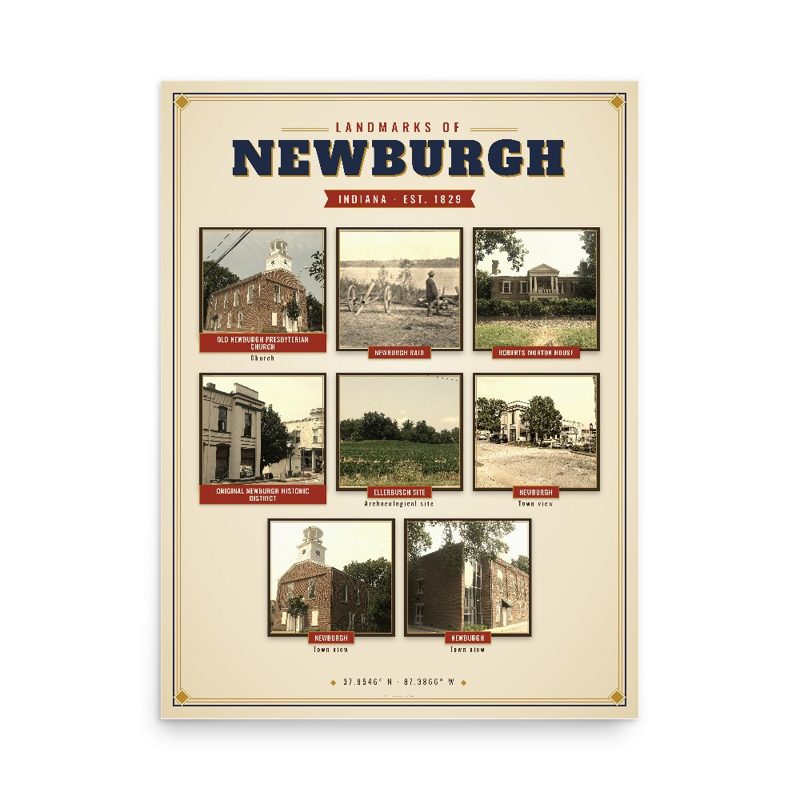
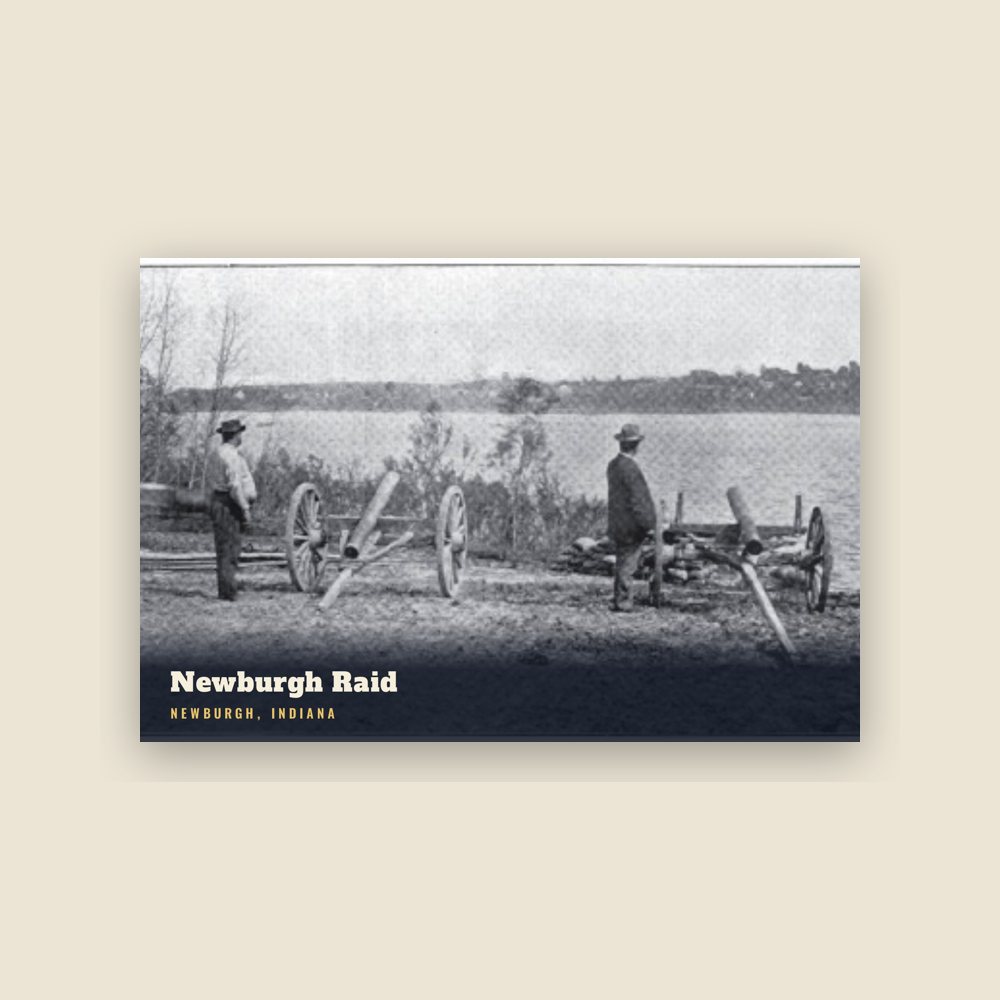
Little Pigeon River and Lake Michigan. On July 18, 1862, Newburgh was the first town north of the Mason–Dixon line to be captured by the Confederate forces during the American Civil War in what would come to be known as the Newburgh Raid. Colonel Adam "Stovepipe" Johnson, with a partisan band, crossed the Ohio River and confiscated supplies and ammunition without a shot being fired. The Confederates would have been unable to shell the city (as promised) had Newburgh put up a fight. The Confederates' cannons were an assemblage of a stove pipe, charred log, and wagon wheels. The raid convinced the federal government that it was necessary to supply Indiana with a permanent force of regular Union Army soldiers to counter future raids. Many of the structures used in this raid are still standing, including the Exchange Hotel.
Newburgh's economy benefited from the construction of the Lock and Dam 47 in the 1920s, and its replacement in 1974 with the Newburgh Lock and Dam. The town also benefited from the arrival, and later expansions, of the Aluminum Company of America (ALCOA), built in 1957. Many of Newburgh's residents are commuters to businesses and industries in Evansville and surrounding areas.
In 1994, Newburgh leaders planned to annex large areas that would have extended town limits to Frame Road (west) and SR 66 (north and east). This would have given Newburgh the ability to plan land use for large open, undeveloped areas. However, by 2001, the town's leadership shifted its focus away from annexation toward planning in the well-established current town limits.
On November 6, 2005, the Evansville Tornado of November 2005 caused 25 deaths in nearby Evansville. Newburgh suffered extensive property damage and some injuries but suffered no fatalities during the 2:06 AM tornadic event.
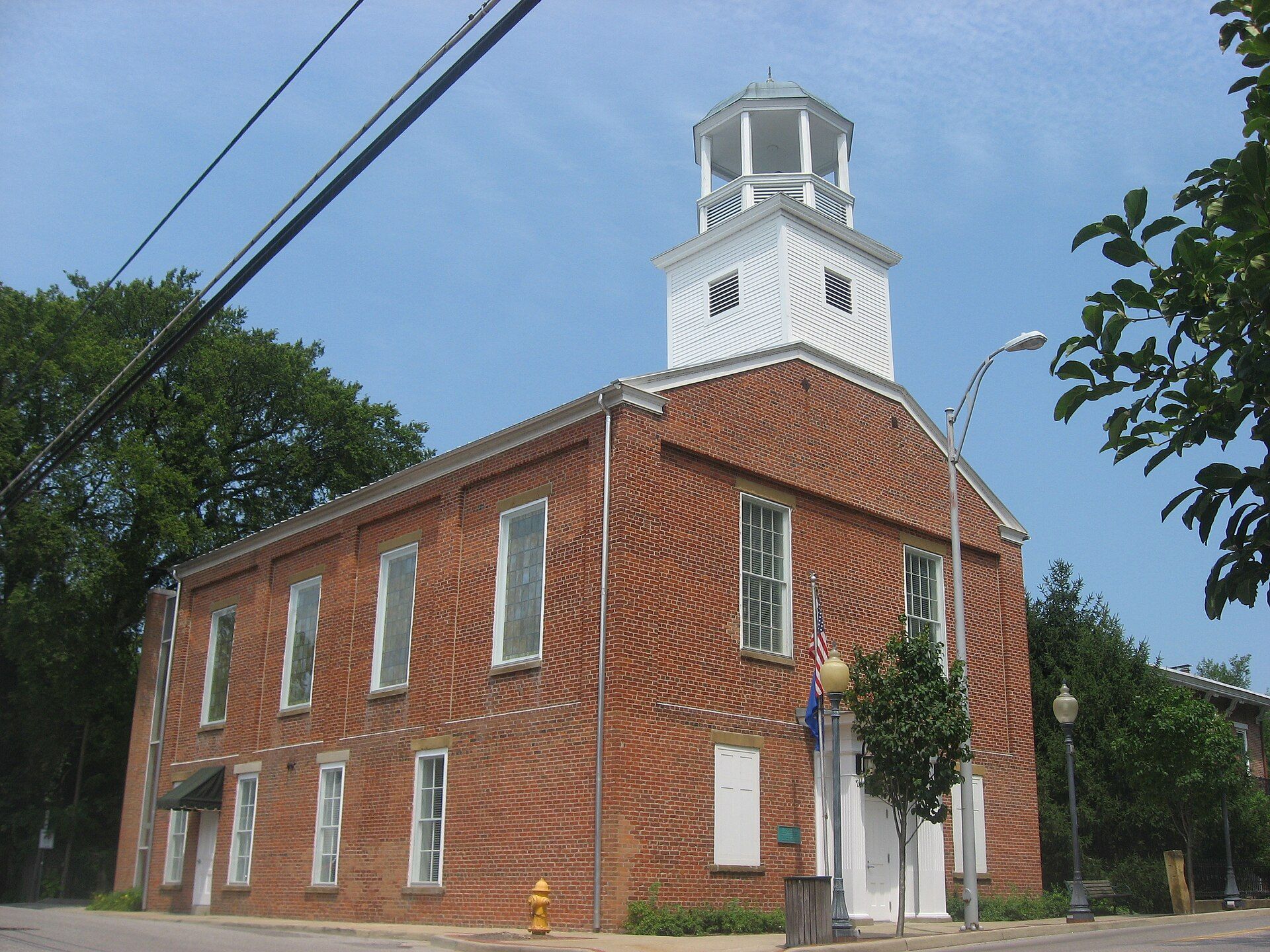
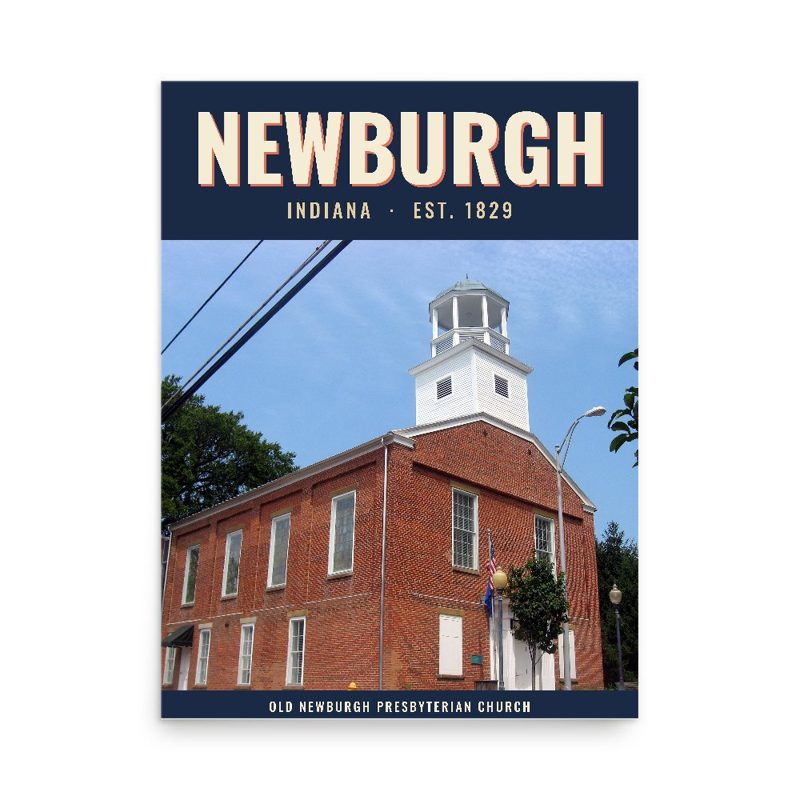
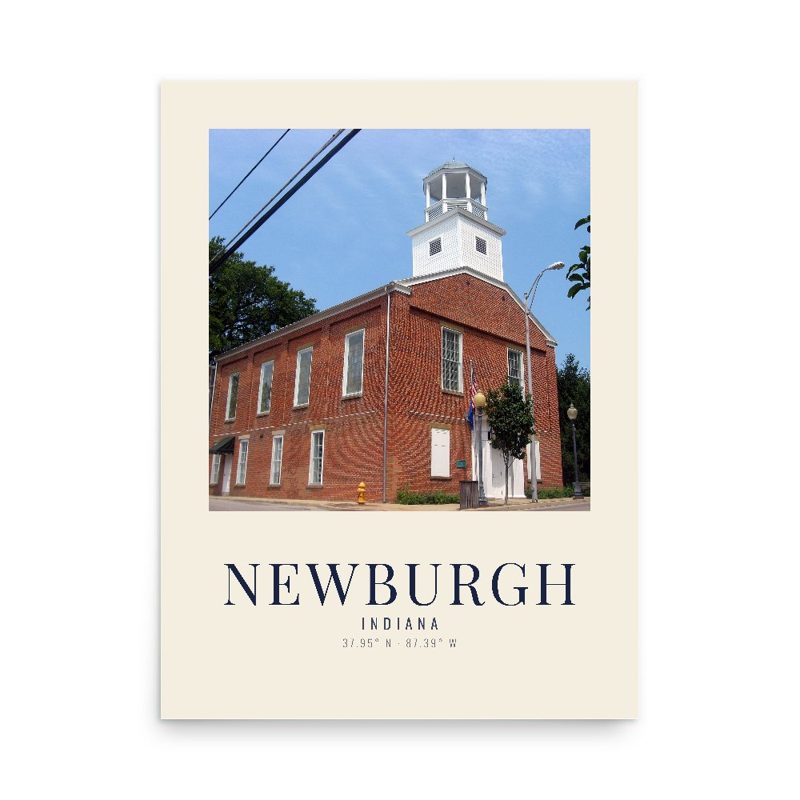
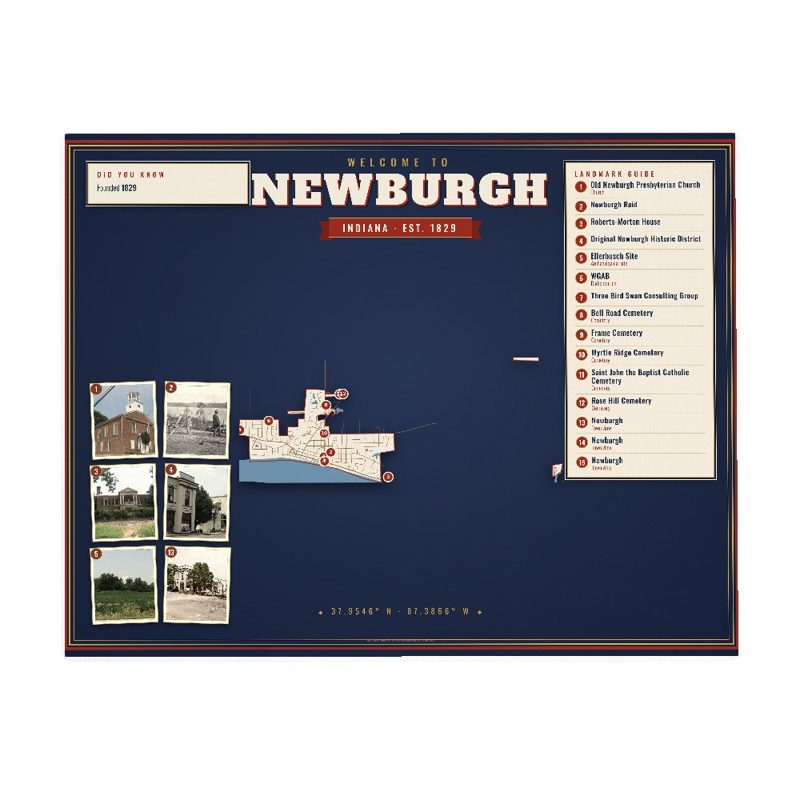
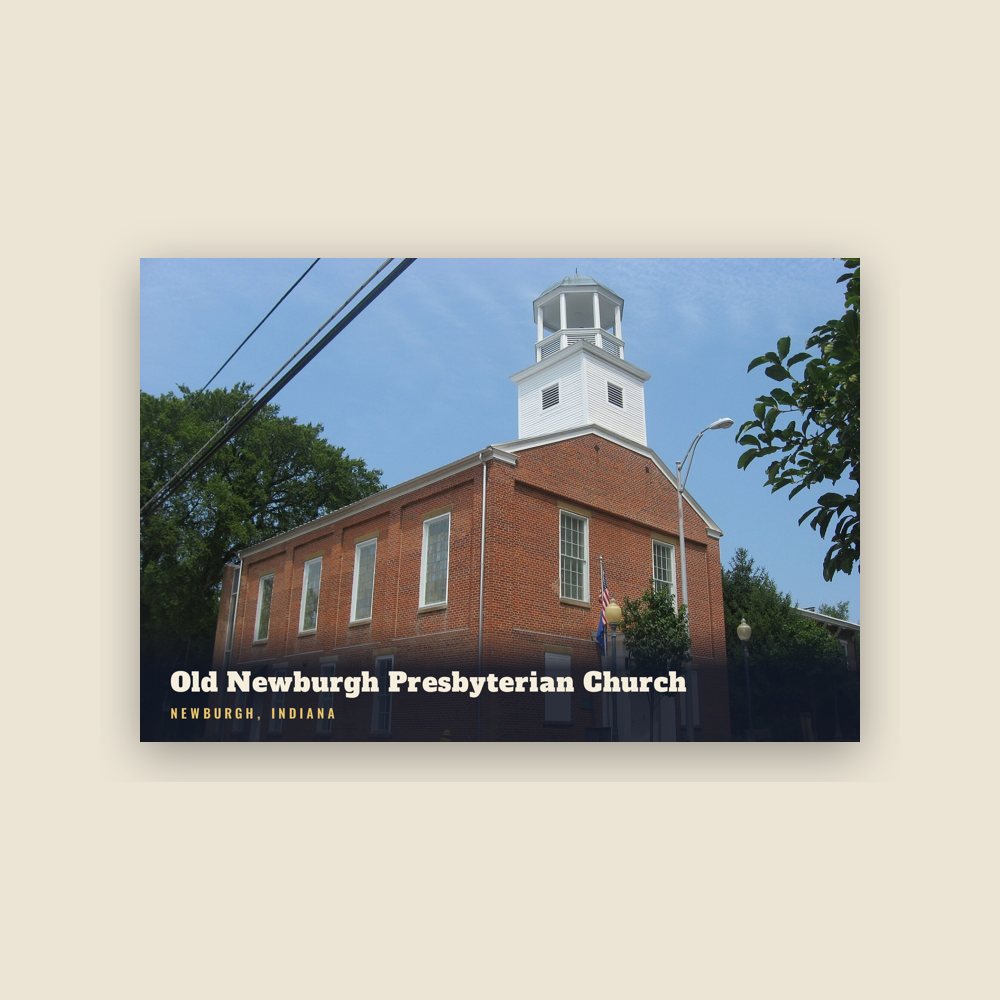
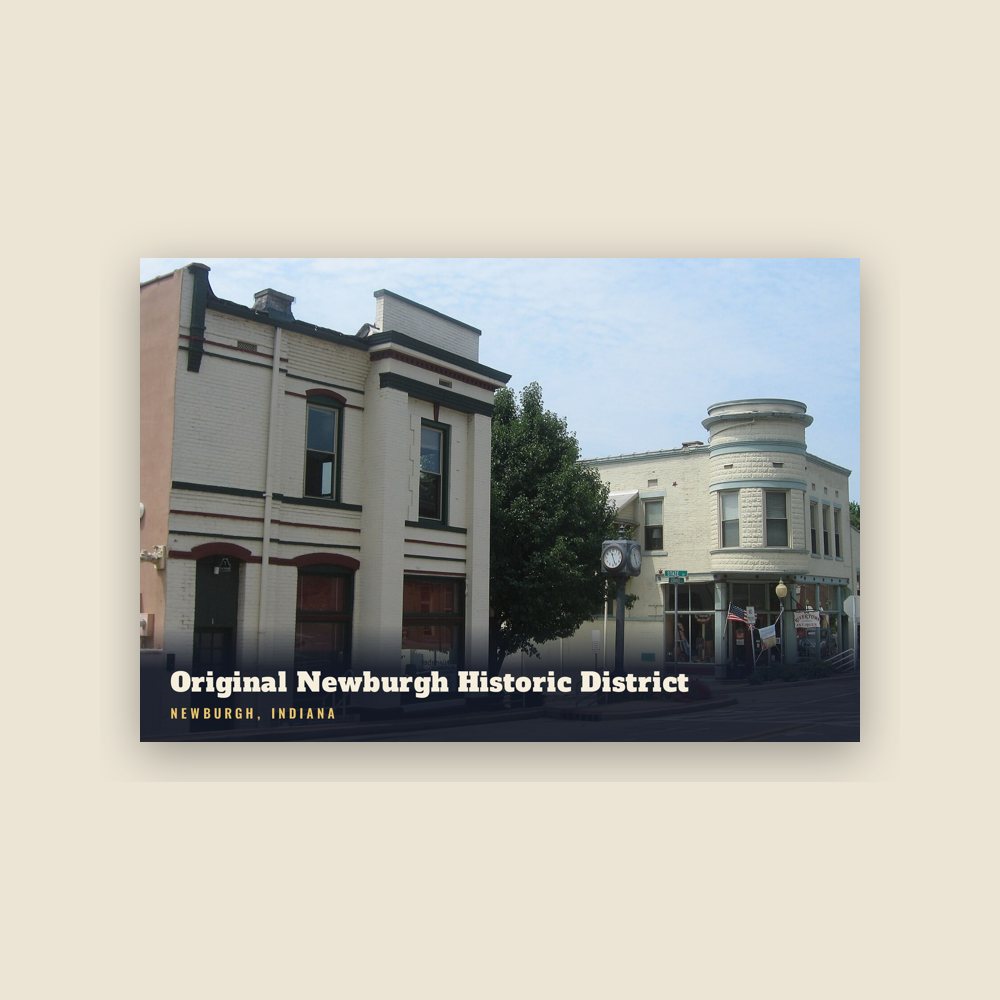
The Old Newburgh Presbyterian Church and Original Newburgh Historic District are listed on the National Register of Historic Places.
Adapted (trimmed) from the Wikipedia article Newburgh, Indiana, revision 1376070037 by its contributors, licensed CC BY-SA 4.0.