Leavenworth was laid out in 1818 in a horseshoe shaped bend of the Ohio River, directly under a large bluff called Mt. Eden.
- CountyCrawford County
- Population289 (2020 U.S. Census)
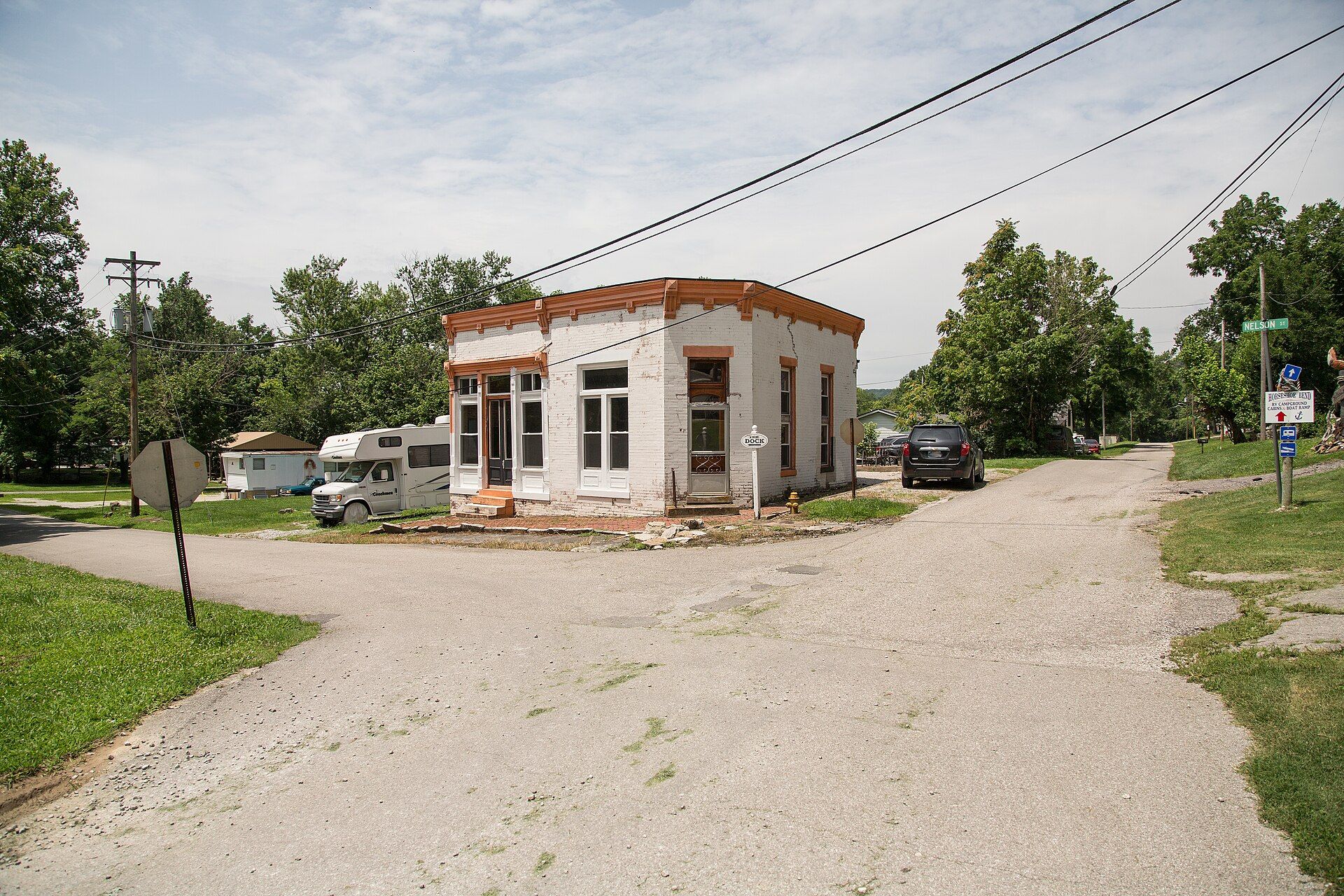
Leavenworth, Indiana gifts and souvenirs: 20 designs made from Leavenworth's own map, landmarks and history, from $16 to $95. Printed to order and shipped free in the USA.
| Popular | Price |
|---|---|
| Leavenworth Hometown Ornament | $23 |
| Leavenworth Vintage Travel Poster | from $40 |
| Leavenworth Varsity Crewneck | from $57 |
| Leavenworth Est. Tee | from $33 |
| Leavenworth Town Line Mug | from $26 |
| Leavenworth Market Tote | $37 |
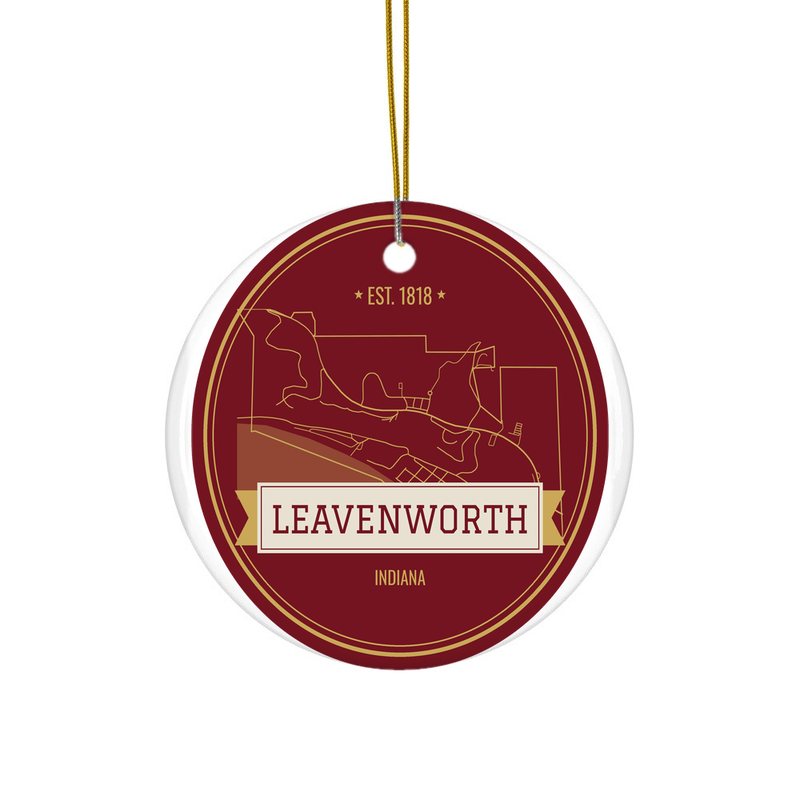
Ceramic keepsake, gold ribbon
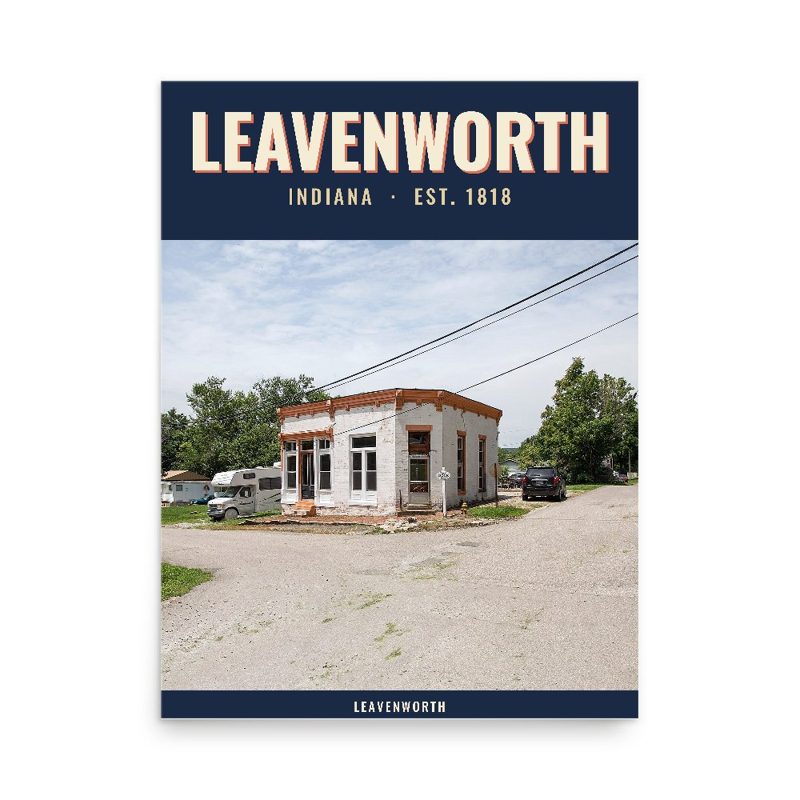
Its landmark photo in a classic travel-poster layout
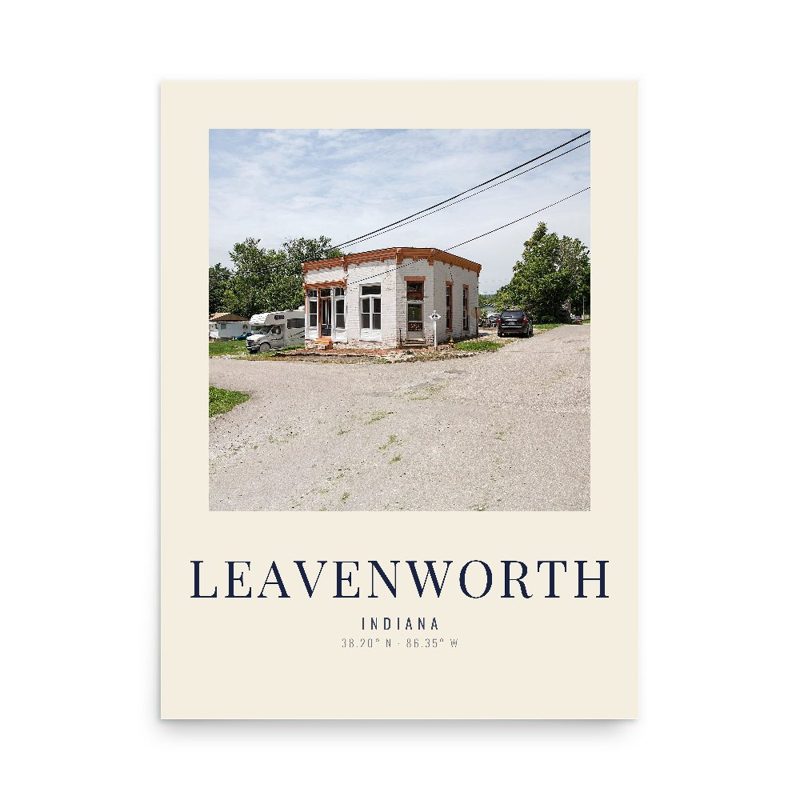
A local landmark photo as a gallery print
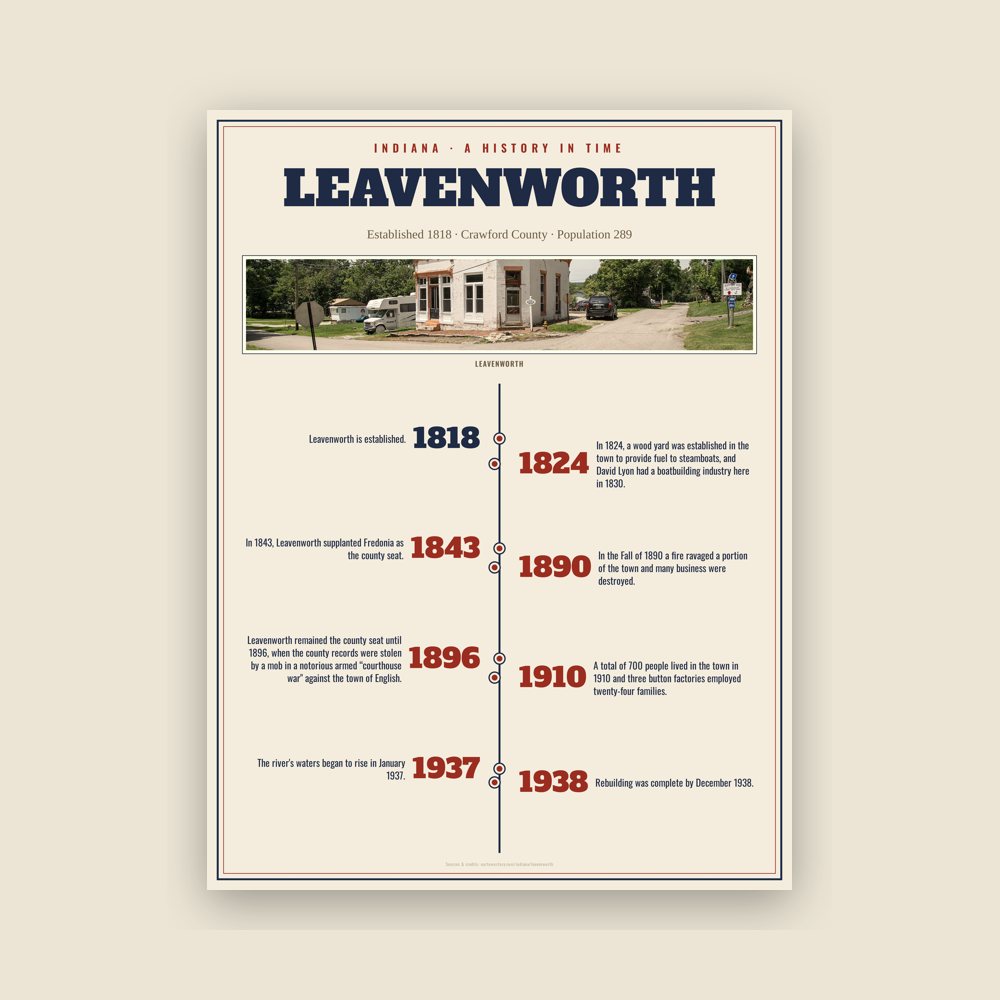
The town's story in dates, from its own records, for home or classroom
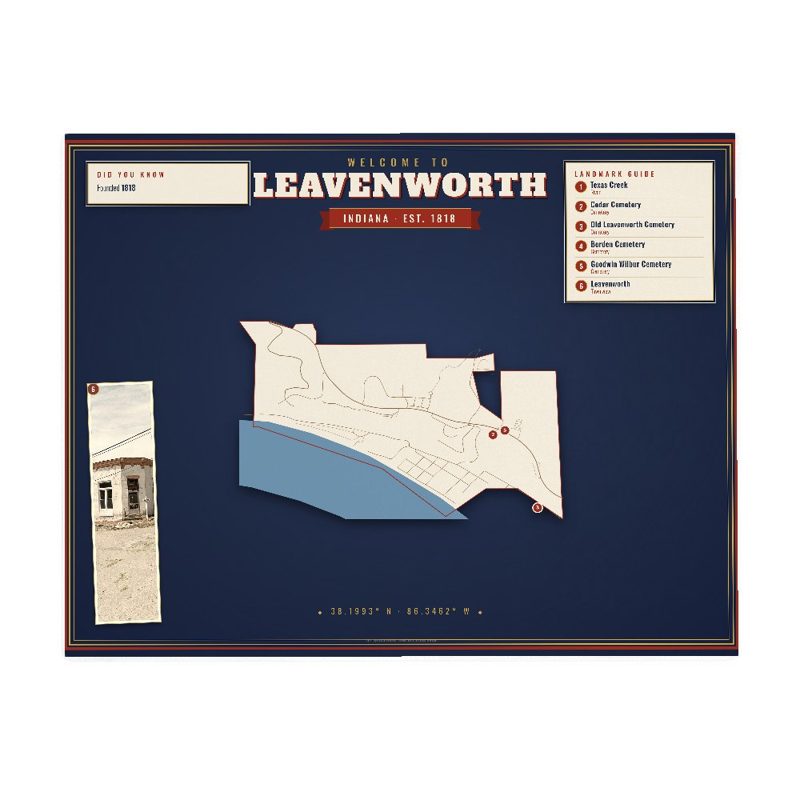
Map of local landmarks, washable fabric
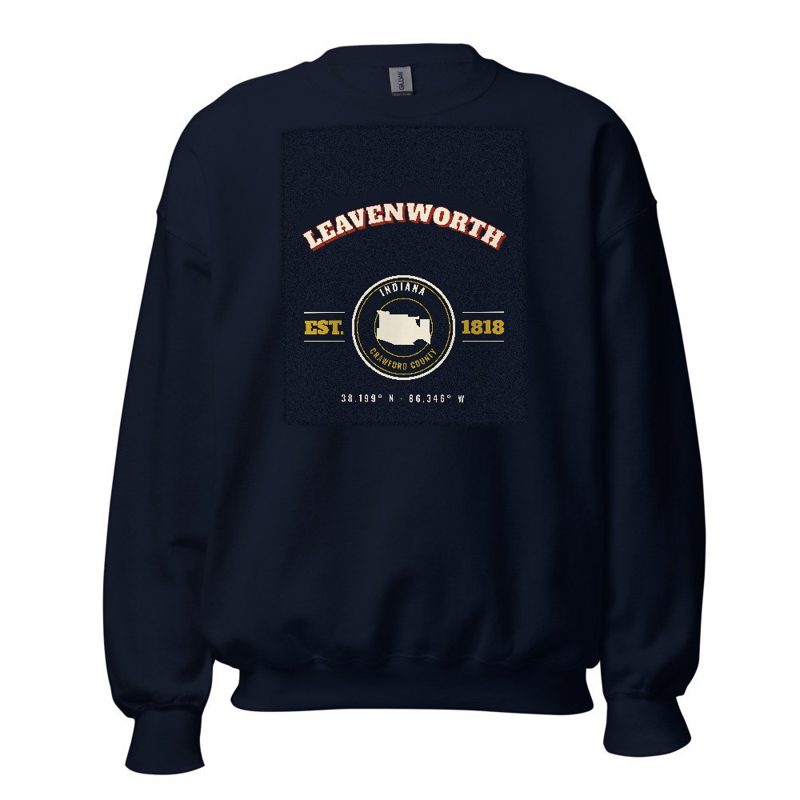
Heavy-blend fleece, street map printed on the back
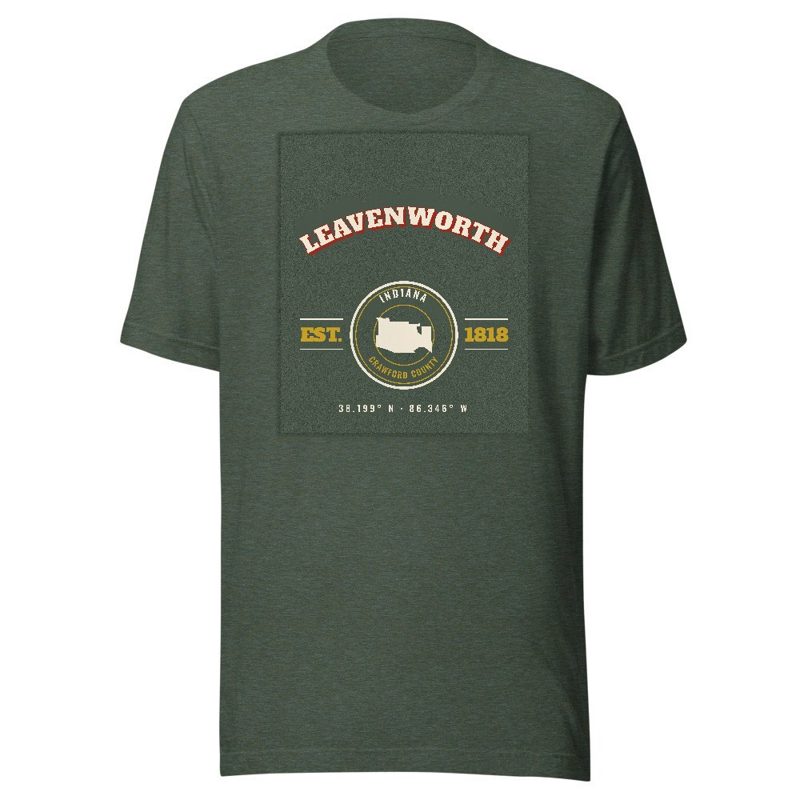
Soft Bella+Canvas jersey
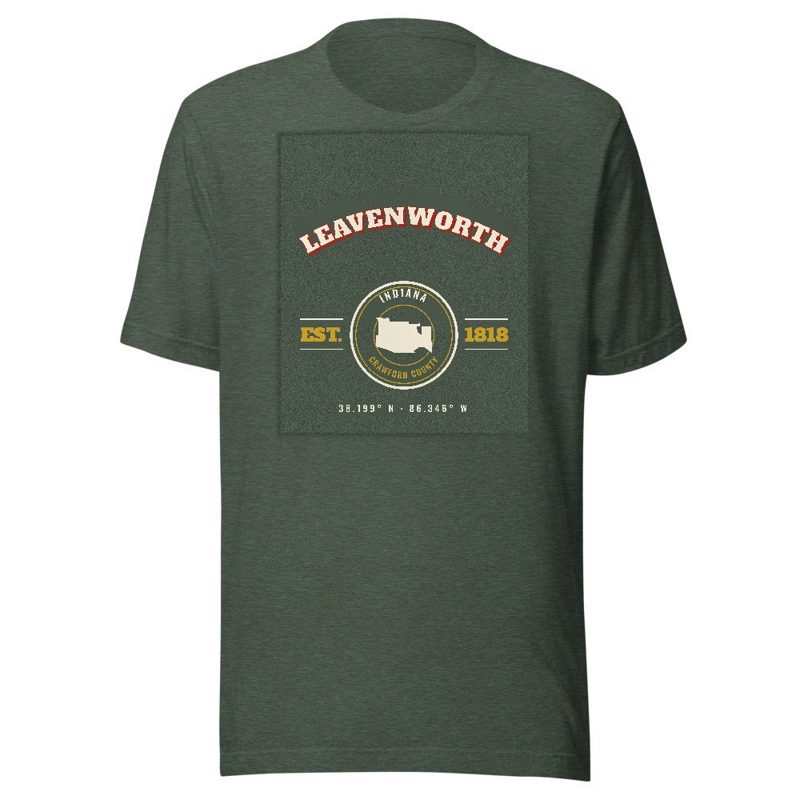
Kids' Bella+Canvas jersey, youth sizes
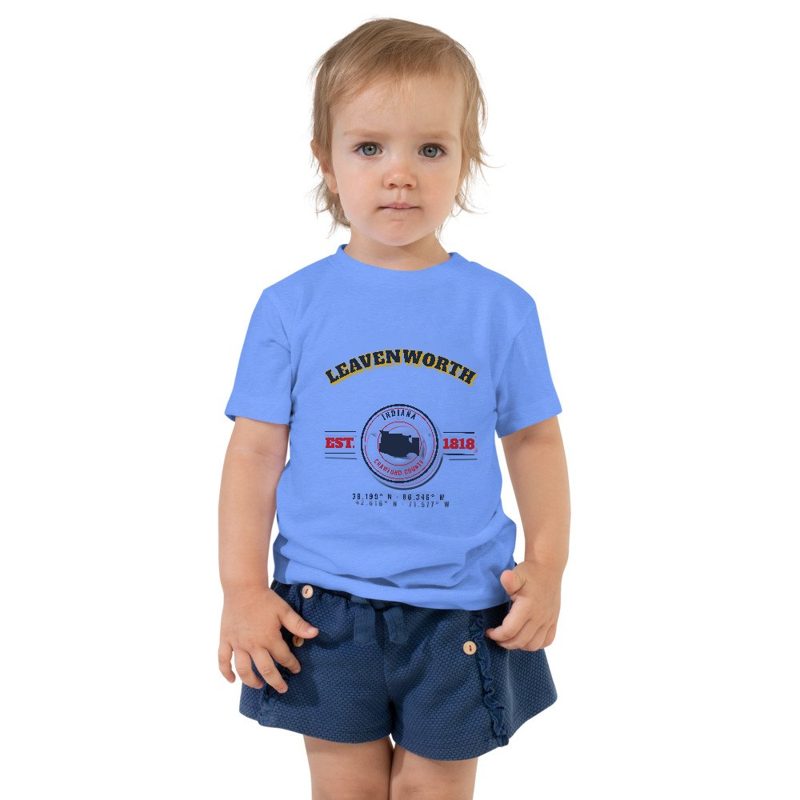
Bella+Canvas toddler jersey
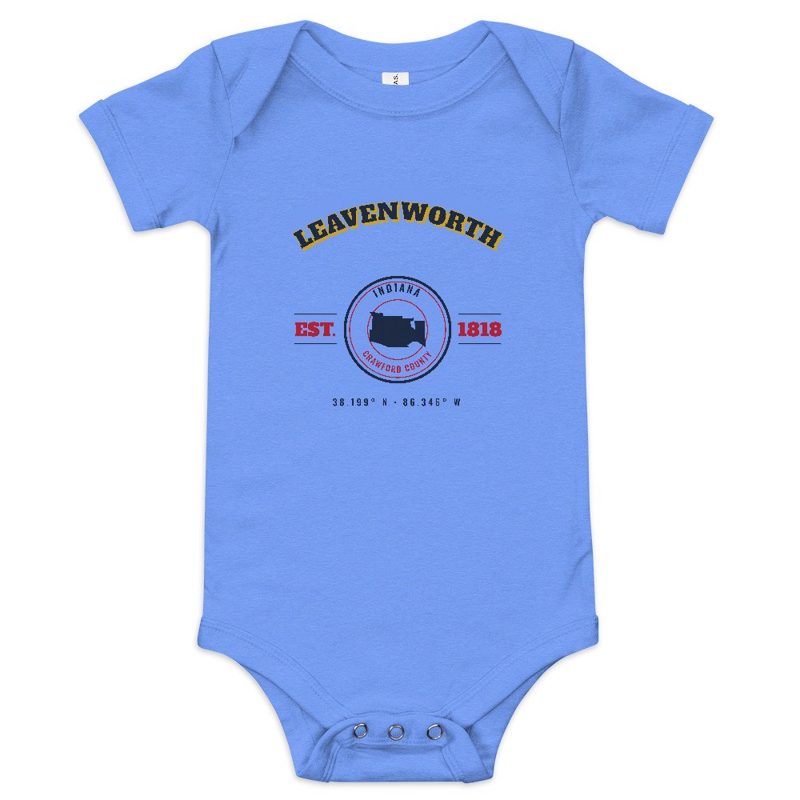
Bella+Canvas baby bodysuit
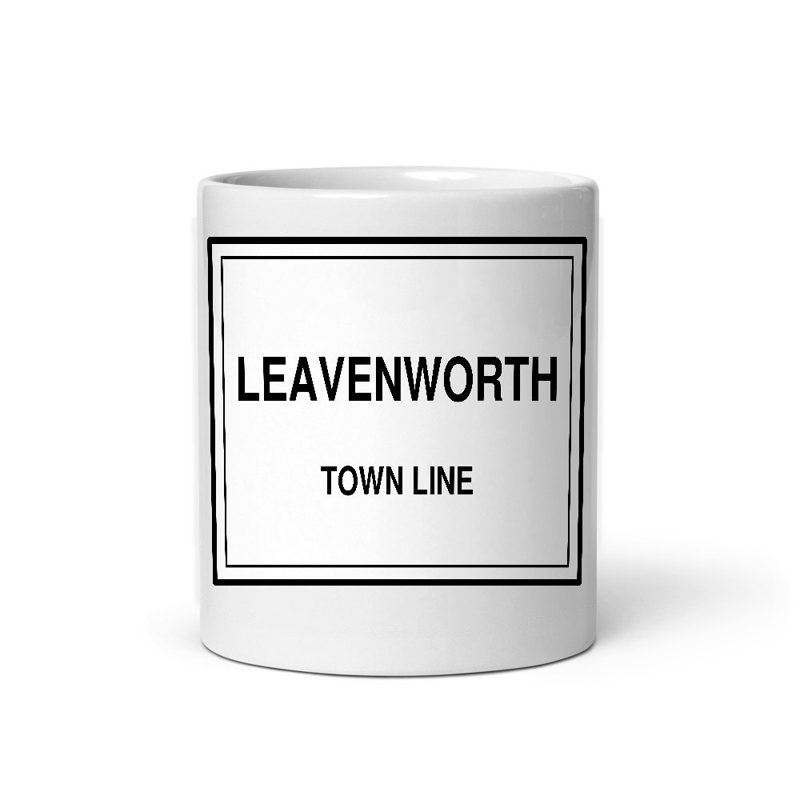
Glossy ceramic, dishwasher safe
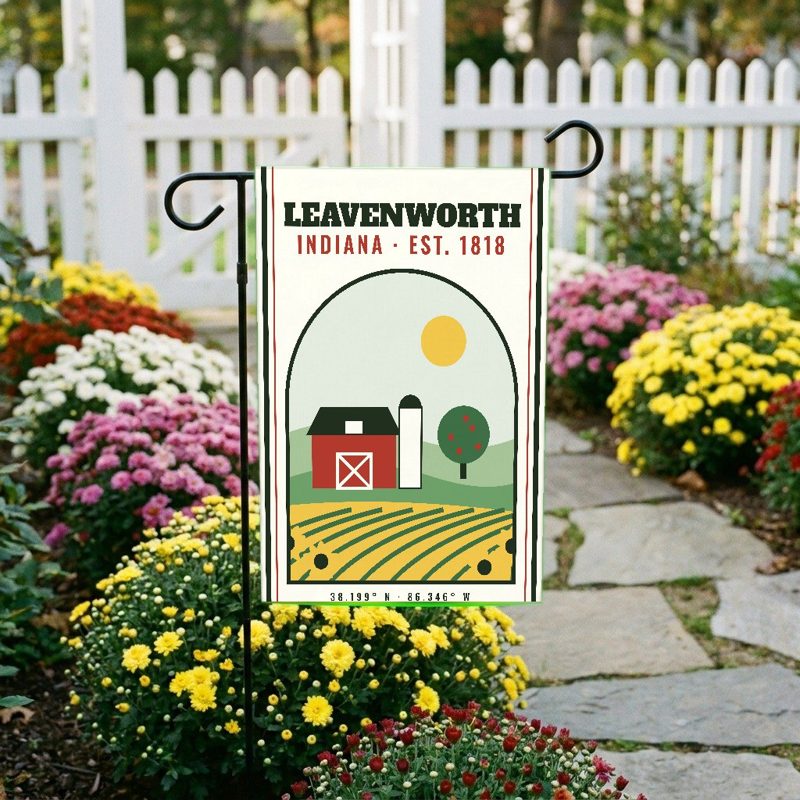
Weatherproof, for the front walk
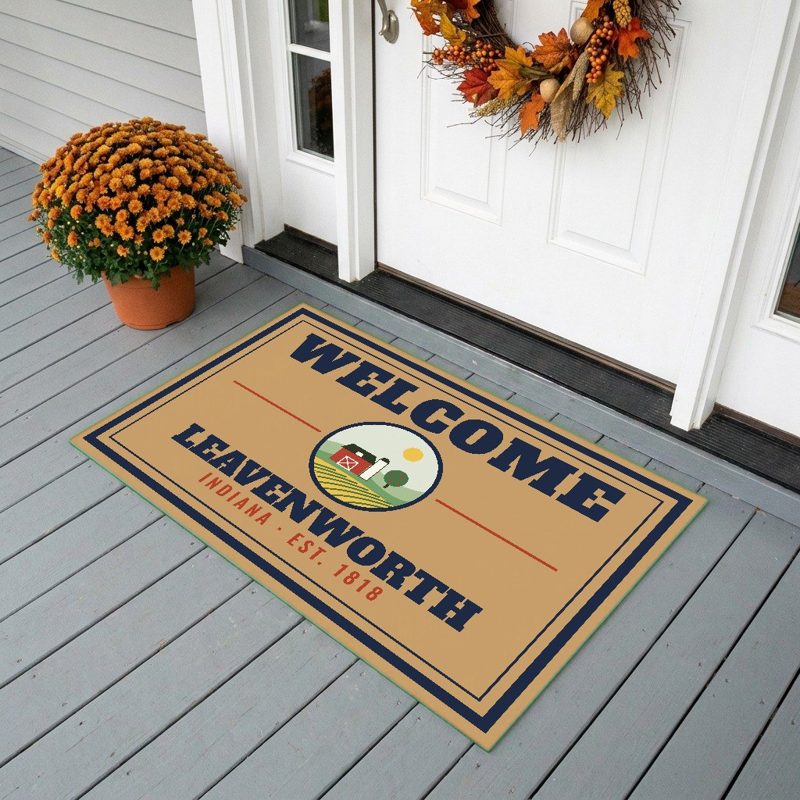
24″×16″, printed coir-look fibers, rubber back
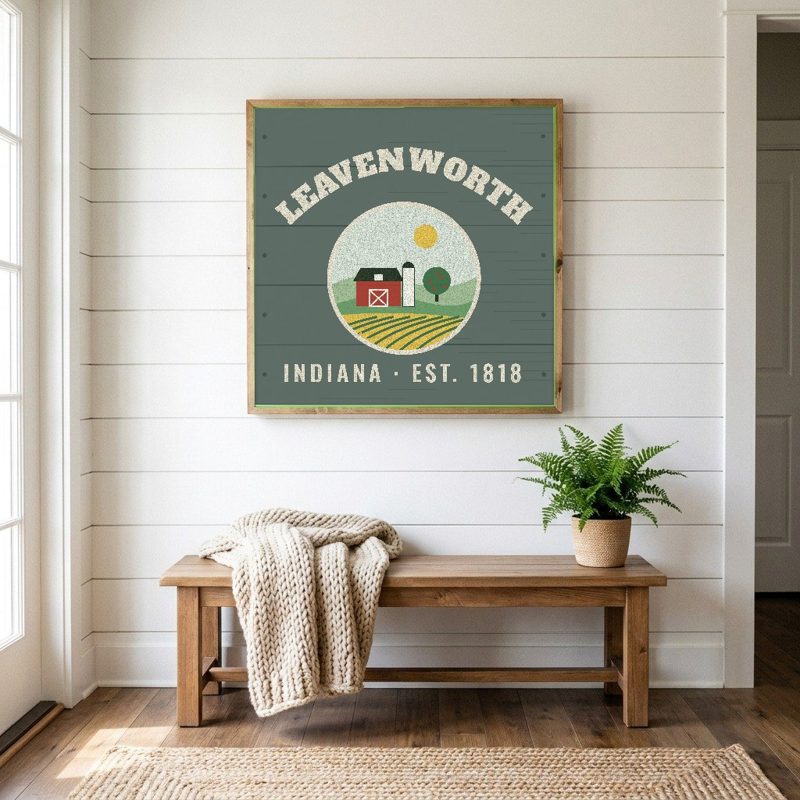
12″×12″ printed wood, ready to hang
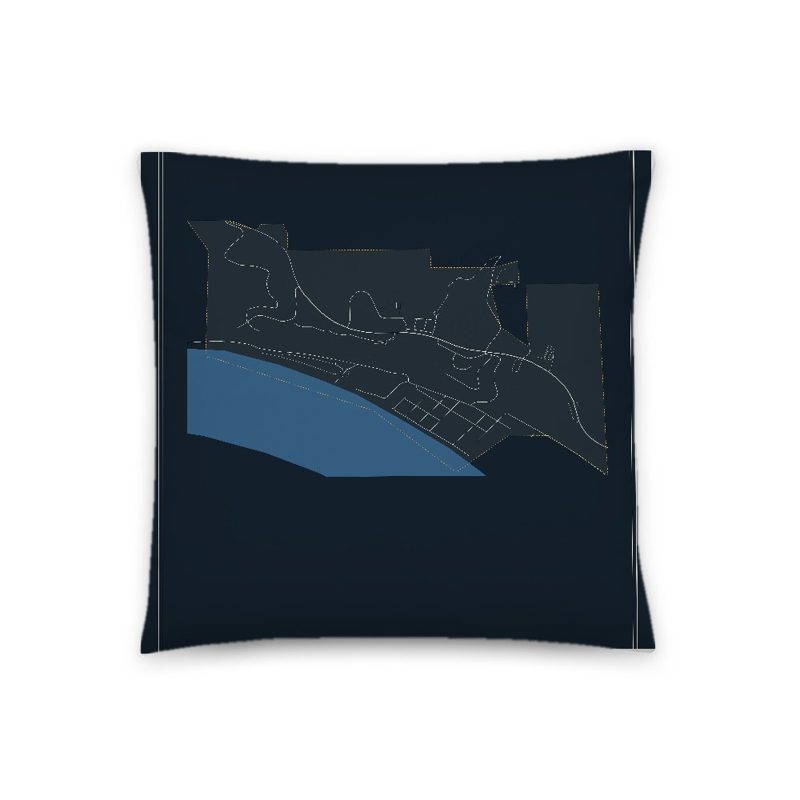
Soft-touch, zip cover
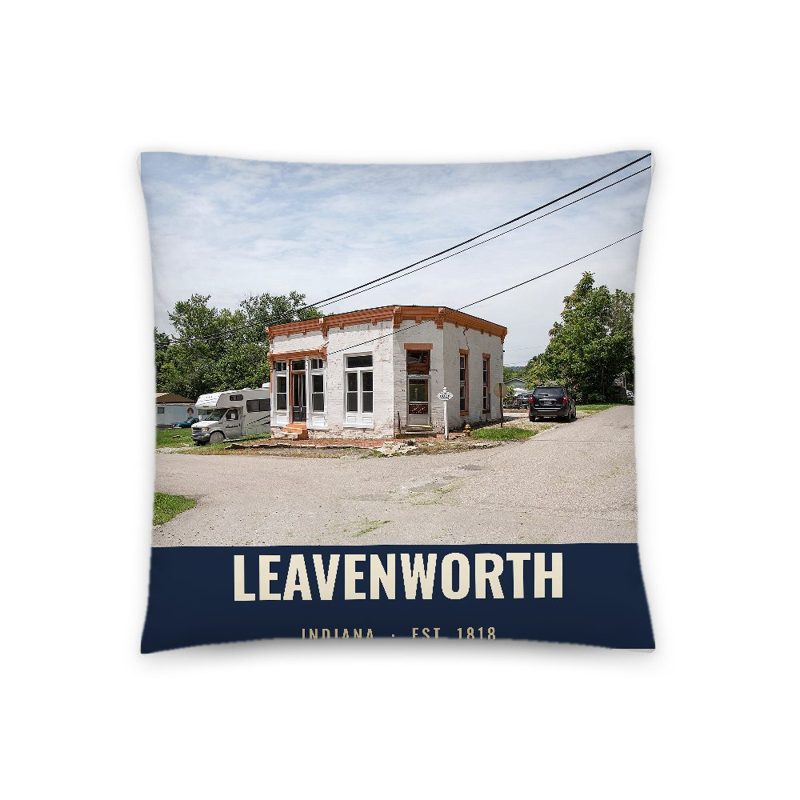
A local landmark photo with the town name, 18″×18″
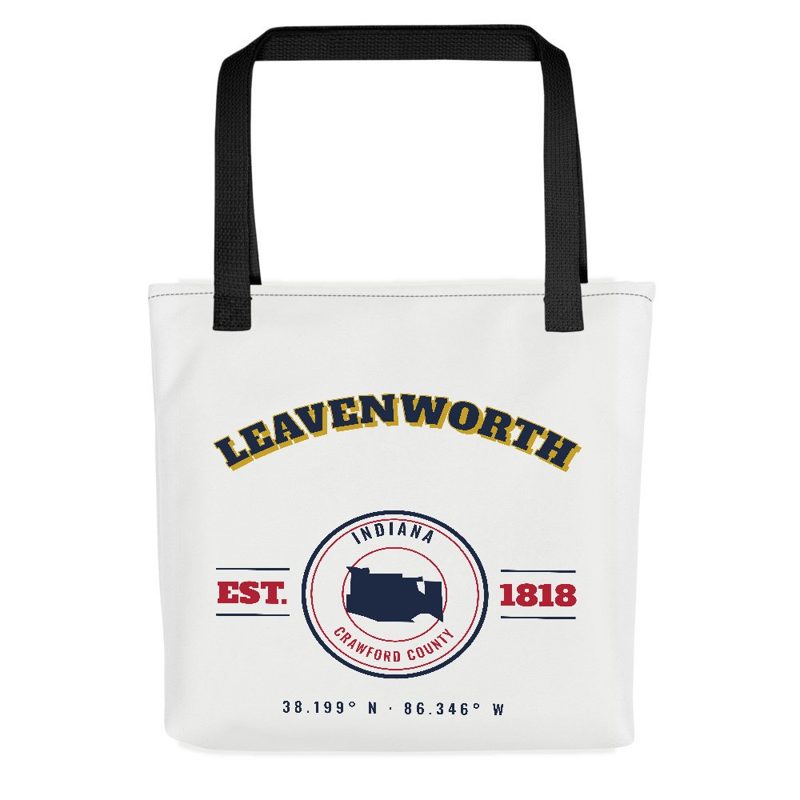
Sturdy all-over-print tote
Glossy top, cork back
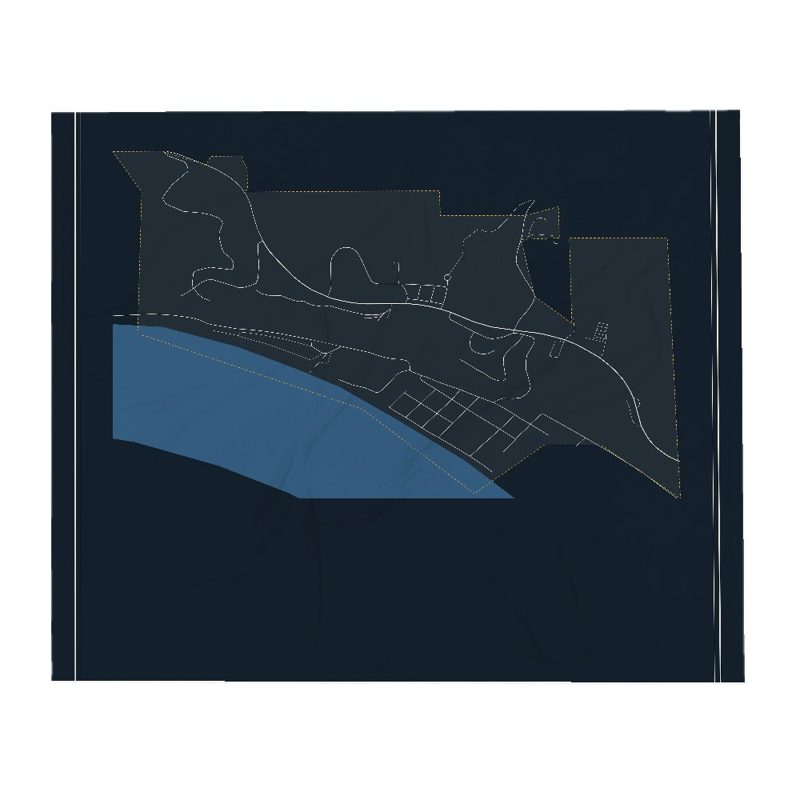
Soft fleece, 50″×60″
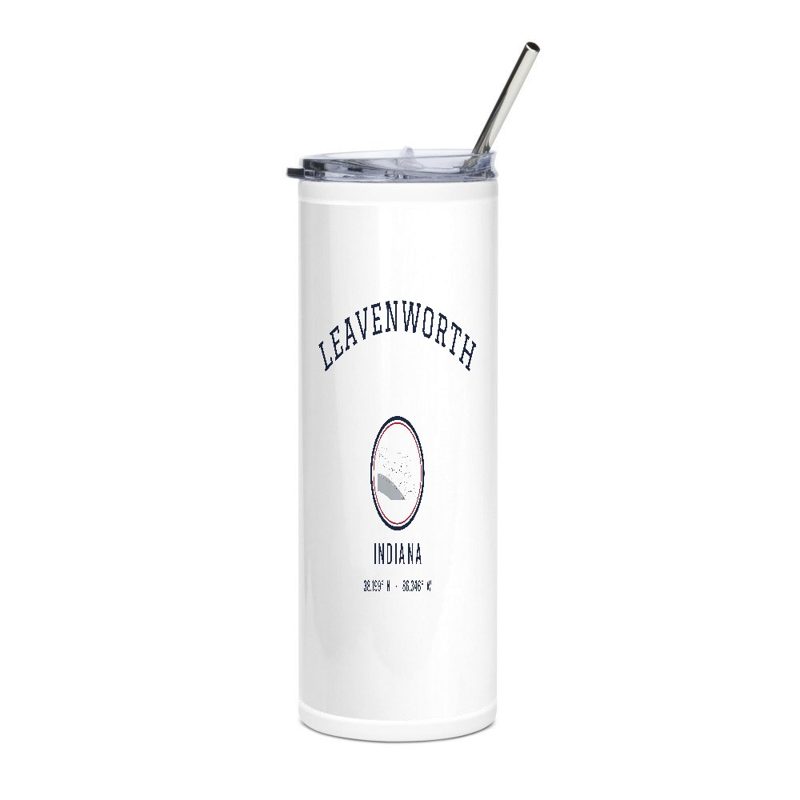
20 oz, double-wall stainless
Leavenworth was laid out in 1818 in a horseshoe shaped bend of the Ohio River, directly under a large bluff called Mt. Eden.
Leavenworth was laid out in 1818 in a horseshoe shaped bend of the Ohio River, directly under a large bluff called Mt. Eden. The bluff forms part of the Indiana Ridge and faces directly across the river toward Kentucky. "Old Leavenworth" (the original town, now practically abandoned) was almost completely wiped out by the huge 1937 Ohio River flood, as it was built directly on the floodplain.
In 1824, a wood yard was established in the town to provide fuel to steamboats, and David Lyon had a boatbuilding industry here in 1830. The Whitcomb brickyard was also a flourishing industry.
In 1835, Zebulon started a stage line from Leavenworth to the new state capitol in Indianapolis, a route intended primarily for students going to the new State College in Bloomington (later Indiana University) and for boatmen returning from downriver.
Riverboat men returning from New Orleans were thought to be carriers of the yellow fever and cholera epidemics that often devastated the Ohio Valley frontier. Seth Leavenworth advocated the construction of a marine hospital for the purpose of quarantine and medical treatment, which he hoped to build somewhere near the town of Leavenworth. The bill he put before the Indiana legislature was never enacted.
In 1843, Leavenworth supplanted Fredonia as the county seat. Leavenworth remained the county seat until 1896, when the county records were stolen by a mob in a notorious armed “courthouse war" against the town of English.
Seth Leavenworth eventually left Indiana and moved to Missouri, where he died in 1854. His son Zebulon, named after the boy's uncle in Indiana, became a famous riverboat pilot on the Mississippi River and was a friend of Mark Twain before Twain became a writer. Together, they piloted the steamboat Nebraska past Memphis at the outbreak of the Civil War, receiving gunshots across their bow as a warning to halt.
In June 1863, a 25-year-old Confederate spy from Kentucky, Thomas Hines, was sent by General John Hunt Morgan to ride north into Indiana and reconnoiter with Southern sympathizers there, whose dedication to the Southern cause Morgan drastically overestimated. Hines and his party of nearly a hundred men stole uniforms from a Union supply depot in Brownsville, Kentucky, then robbed a train in Elizabethtown to acquire Union currency. Dressed as Federal troops, they crossed the Ohio River on horseback a few miles downstream from Leavenworth, then struck out for Paoli, pretending to be in pursuit of Union deserters.
In French Lick, they met with the local Copperhead leader, Doctor William A. Bowles, who headed the Confederate-leaning Democratic party in southern Indiana and was a supporter of slavery. Bowles told them he was unable to help them. Indiana Home Guards were then in pursuit of the Confederates. Hines hired a Leavenworth local to guide them to a safe ford over the river where they could escape into Kentucky, but the local was actually a Union supporter and betrayed them. Residents of Leavenworth carried ammunition to Union troops, who gunned several of the horsemen down as they tried to get across the river at Little Blue Island. Three Confederate soldiers were killed and a large number were taken prisoner and kept in the Methodist Church in Leavenworth. The spy, Hines, escaped.
In the Fall of 1890 a fire ravaged a portion of the town and many business were destroyed. The hotel, the newspaper, and most of the stores in the town suffered a complete loss. The fire was discovered by Lyman Davis, a porter at the Hawn Hotel, but all attempts to extinguish the blaze were to no avail.
Button-making was an important industry, relying on shell banks in the river. The industry declined in the 1920s, when shell banks were exhausted. A total of 700 people lived in the town in 1910 and three button factories employed twenty-four families. Other industries included boat-making, freight hauling, and barrel production.
Quarries opened up in the 1880s and lime was shipped out on flatboats. In October 1890, a fire destroyed about one-third of Leavenworth. The population at this time was over five hundred.
Adapted (trimmed) from the Wikipedia article Leavenworth, Indiana, revision 1371880486 by its contributors, licensed CC BY-SA 4.0.
We share a part of every Leavenworth sale with local partners, and we'd love to print from your collection. Old photographs, maps and postcards make the best keepsakes.
Partner with usA favorite landmark, your street, a school or team, an anniversary gift, a different product. Tell us and we'll get back to you by email.
Leavenworth's population was 289 in the 2020 U.S. Census, up from 238 in 2010.