A short history of Huntington
Name
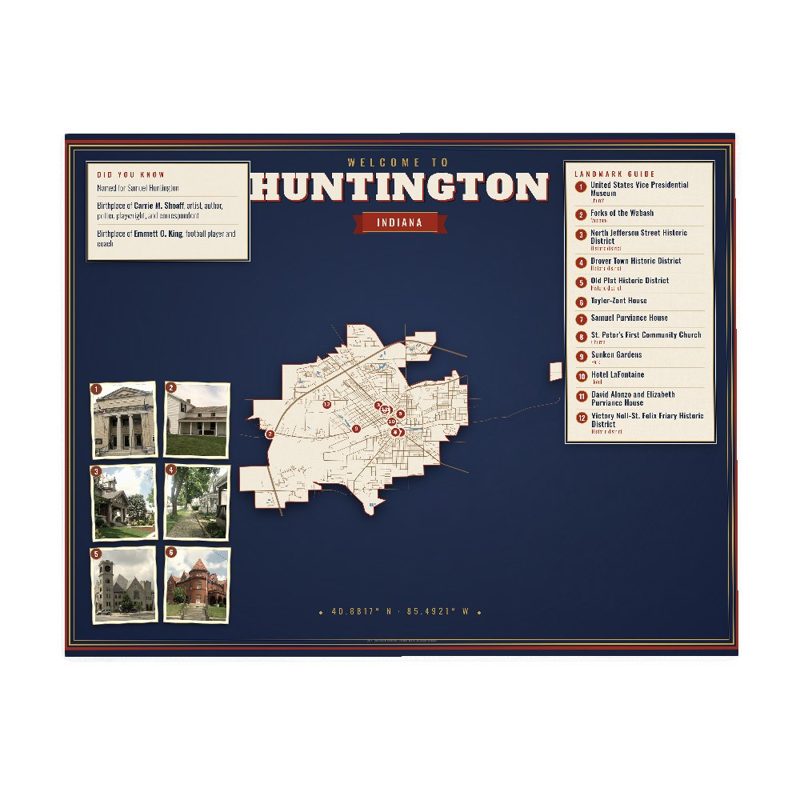
Huntington was named by Captain Elias Murray, a member of the legislature. The name Huntington is derived from Samuel Huntington, a judge, politician, and patriot in the American Revolution. Samuel Huntington is also known for being the third governor of Connecticut and the seventh president of the Continental Congress. Being a delegate to the Second Continental Congress, Huntington took part in voting for and signing the Declaration of Independence and the Articles of Confederation.
Read the full history
Early settlement
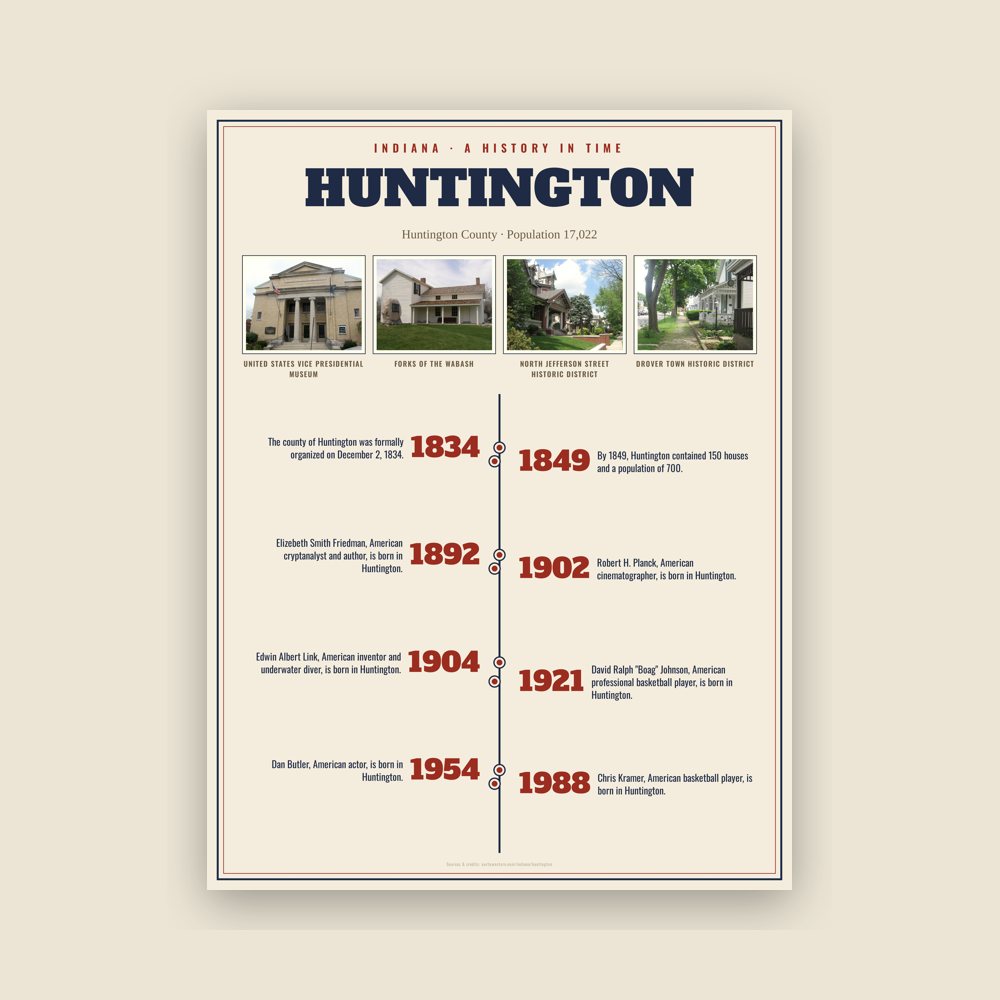
The county of Huntington was formally organized on December 2, 1834. The city of Huntington was first established by a group of pioneers, most notably Captain Elias Murray. By 1849, Huntington contained 150 houses and a population of 700.
Historical literature
A small number of books have been published about the history of Huntington County, the first being History of Huntington County, Indiana originally published by Brant & Fuller. Two other books about Huntington include History of Huntington County, IN by Frank Sumner Bash in 1914 (describing its historical progress, its people, and its principal interests) and Huntington County, IN: Histories and Families by Turner Publishing Company in 1993 as a result of the Huntington County Historical Society officers and board of directors meeting in summer 1992 to discuss the family history of Huntington, the glue that has held together the city and county of Huntington in the heartland of the Midwest for more than 175 years.
Wabash and Erie Canal
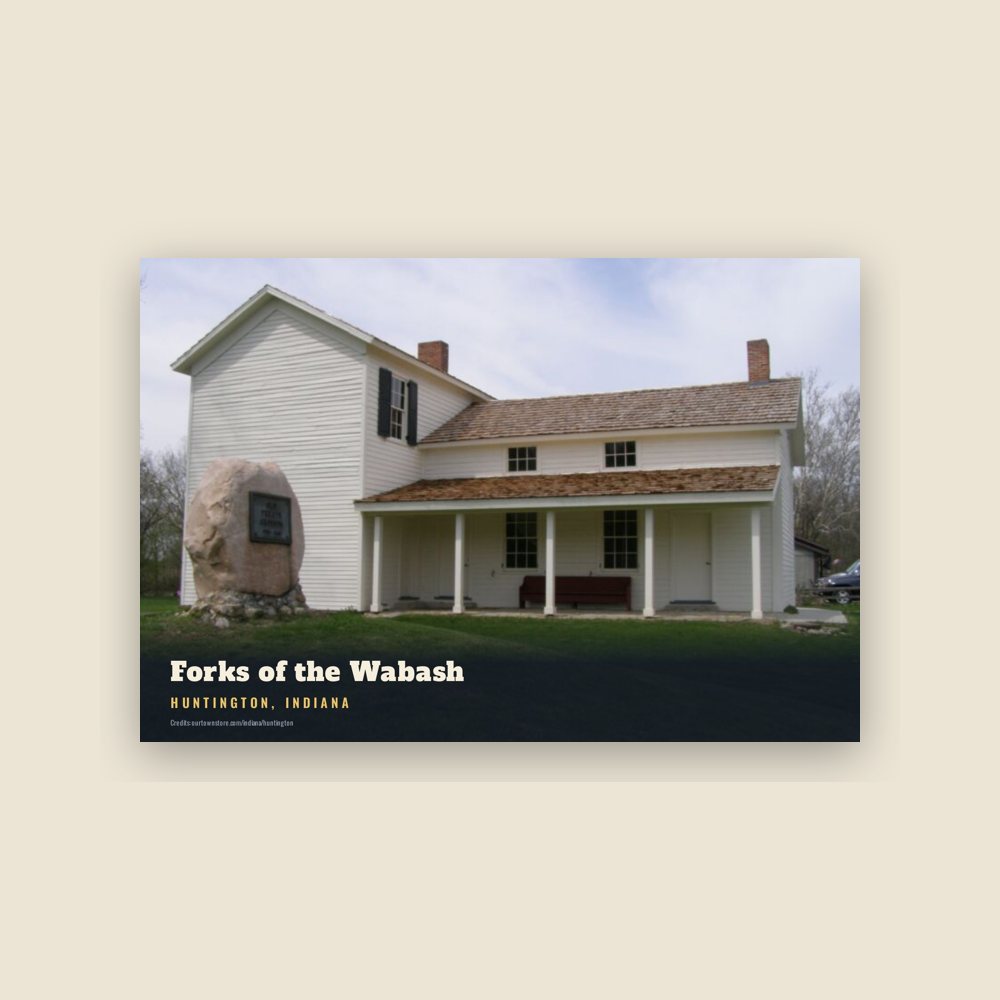
The Wabash and Erie Canal was constructed through Huntington County in 1834 and added a major economic benefit to the area. In addition to the Wabash River cutting through Huntington (see Forks of the Wabash), this newly opened trade route accelerated the population and economic growth in Huntington.
Adapted (trimmed) from the Wikipedia article Huntington, Indiana, revision 1381059761 by its contributors, licensed CC BY-SA 4.0.