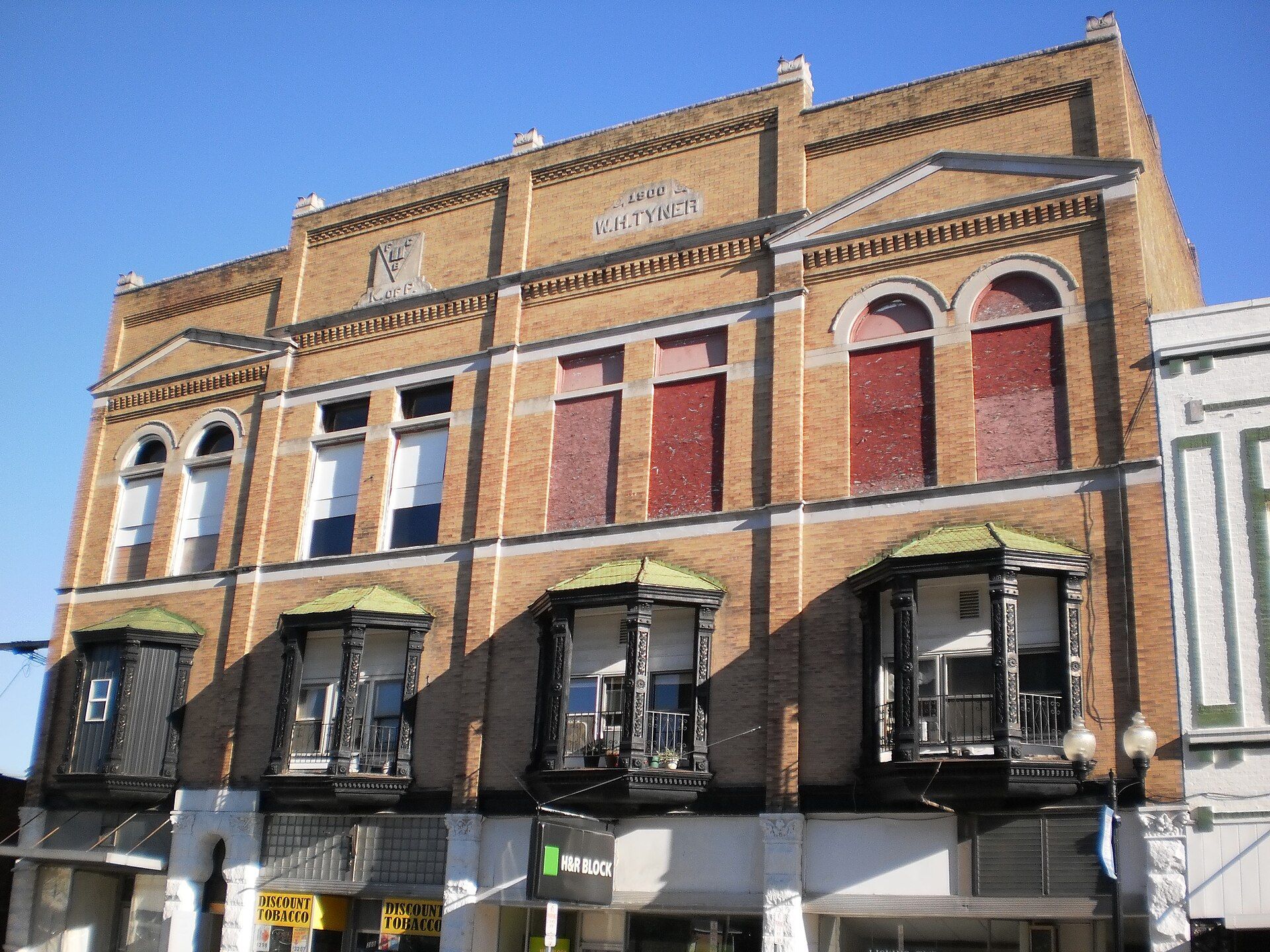
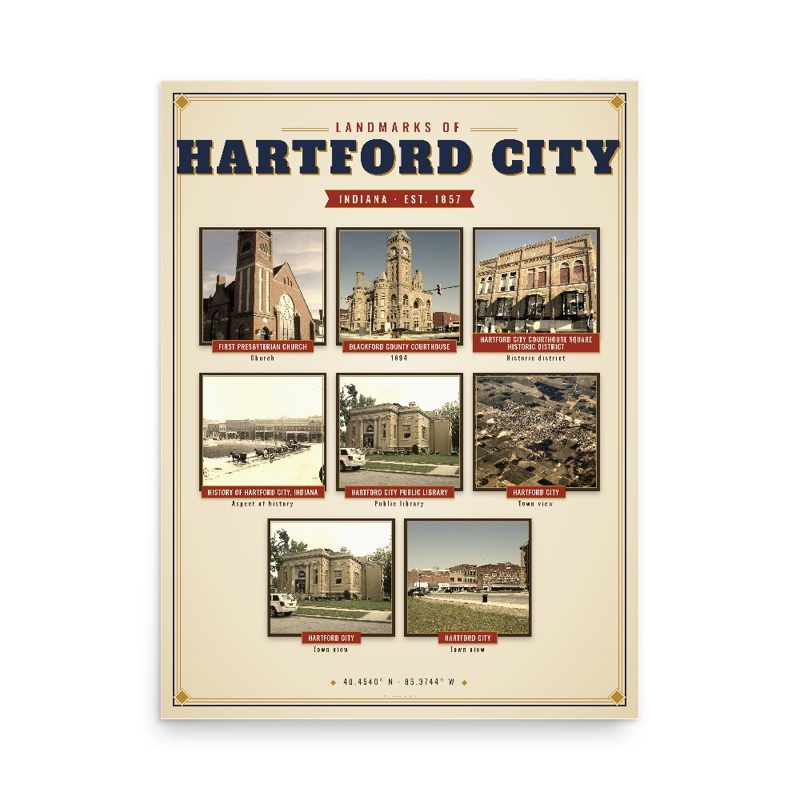
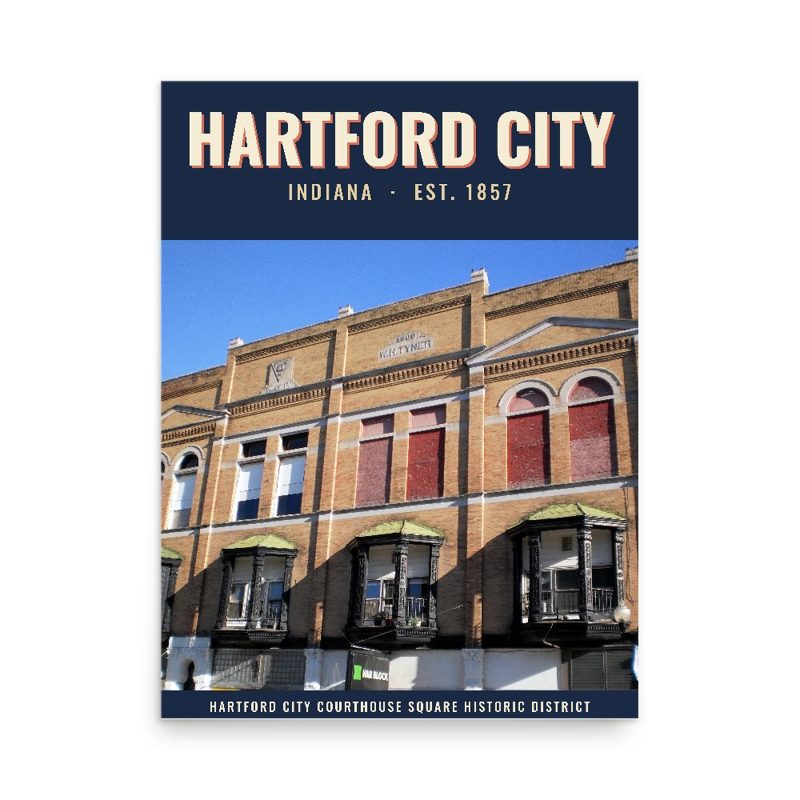
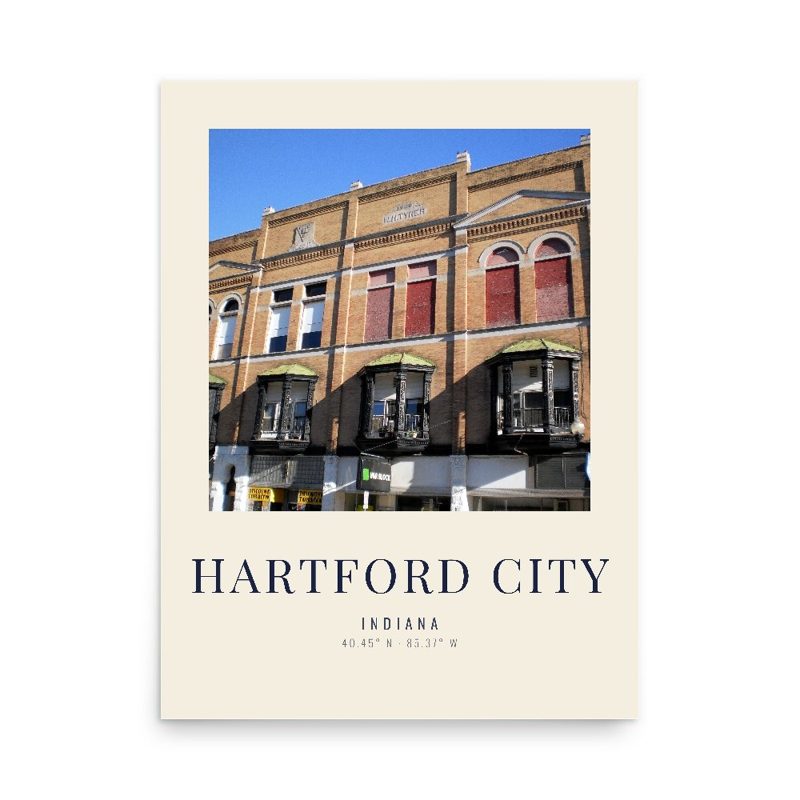
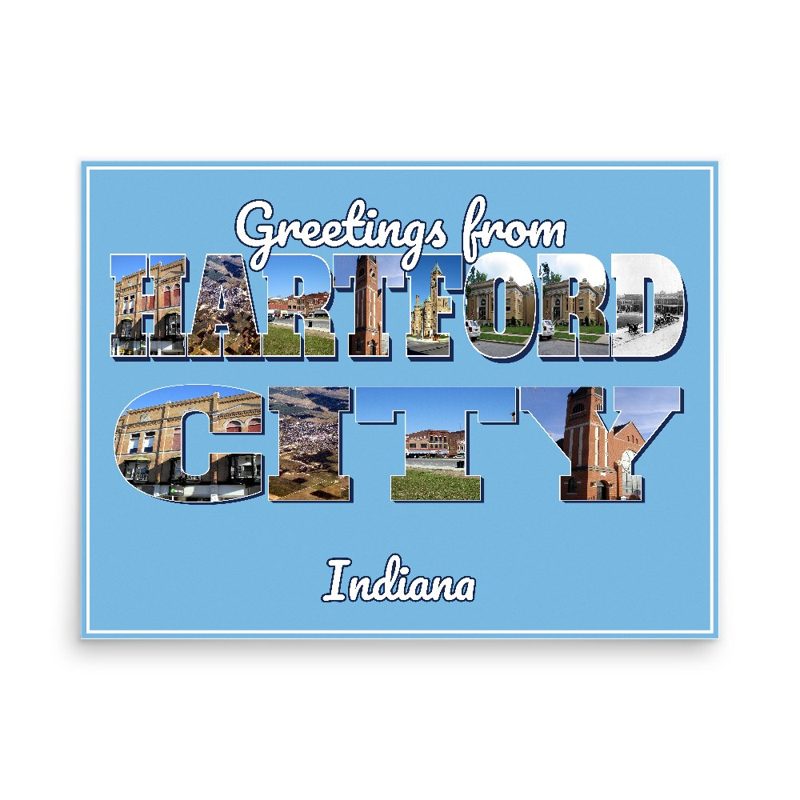
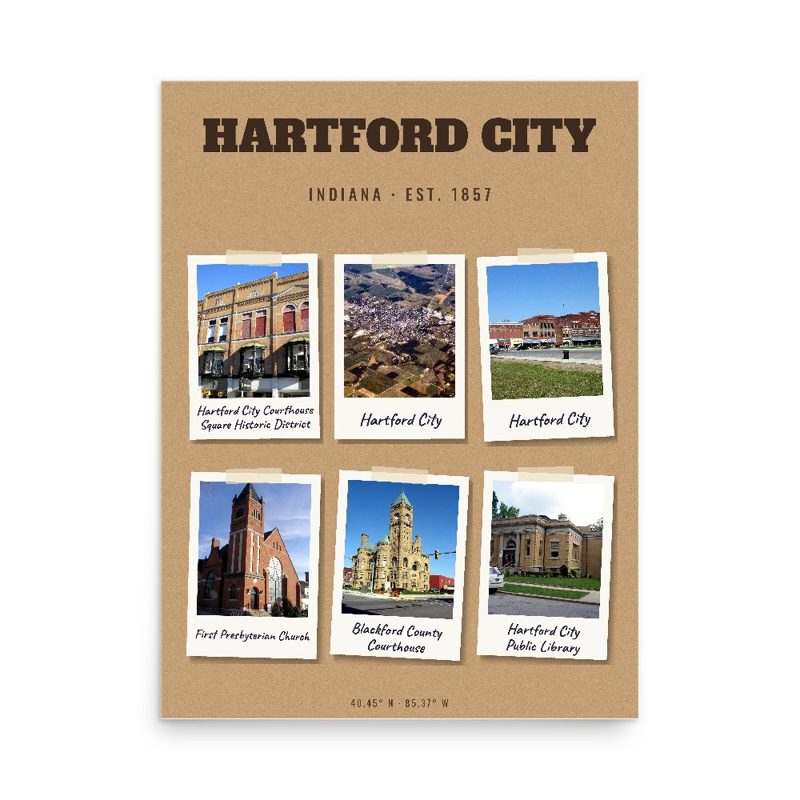
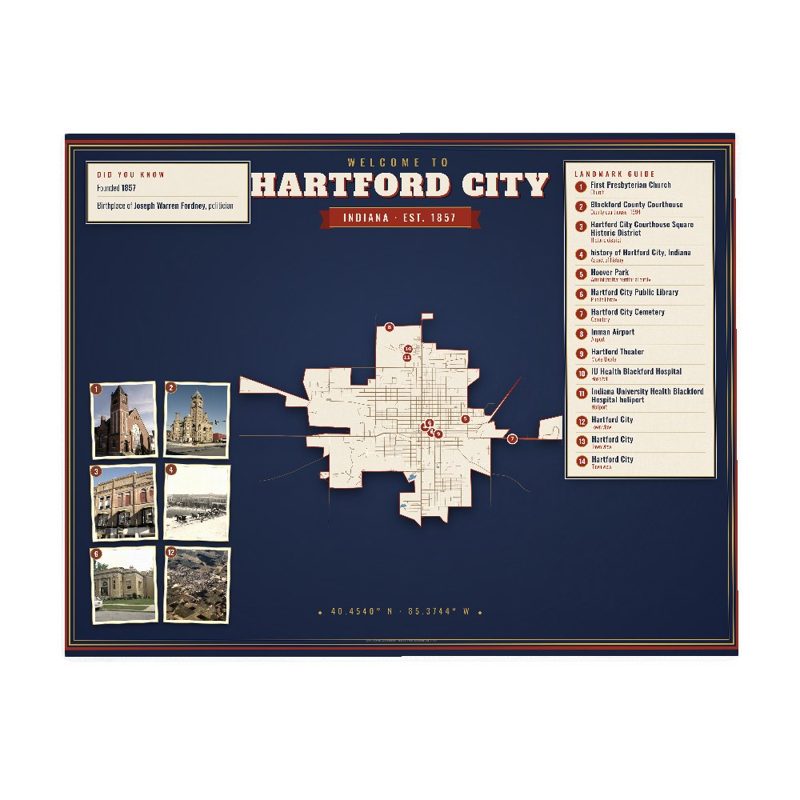
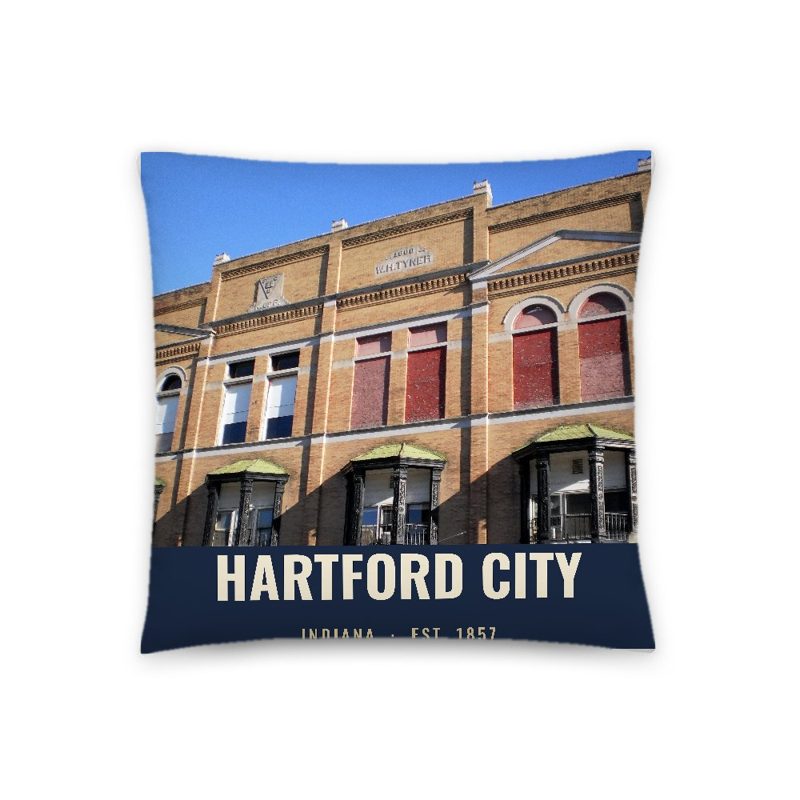
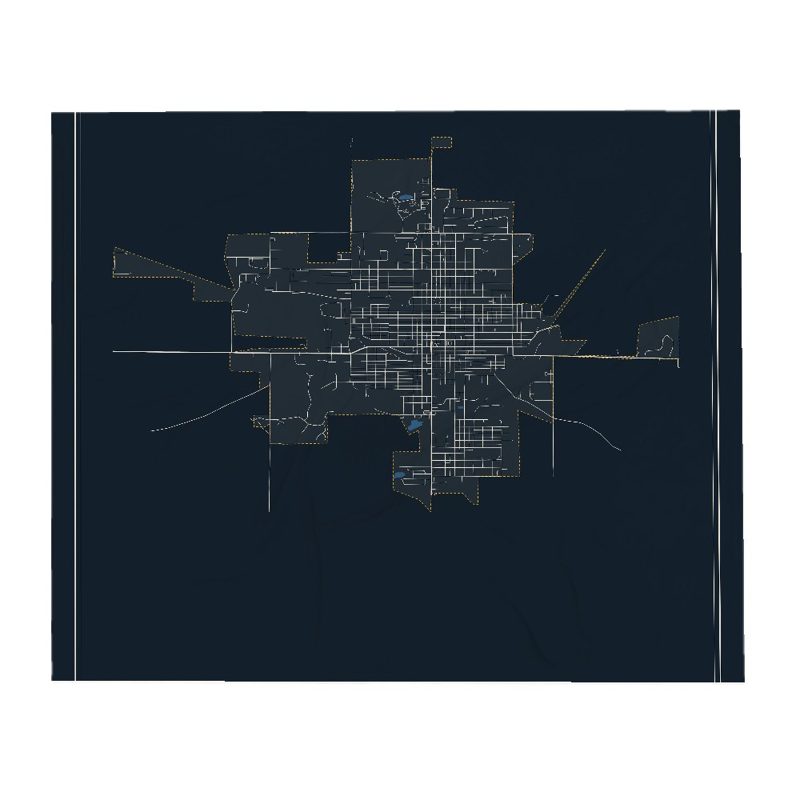
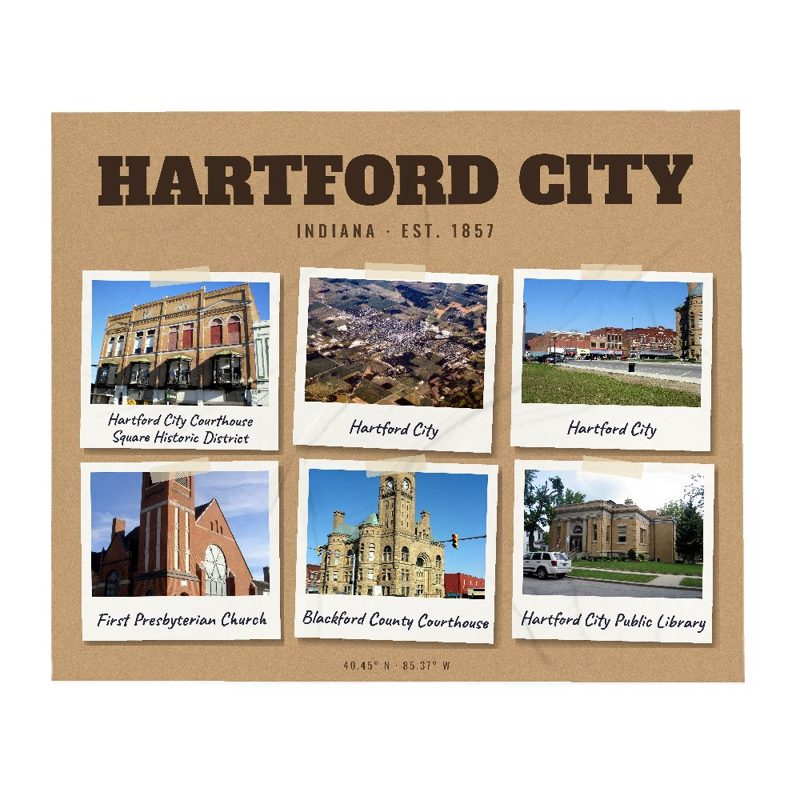
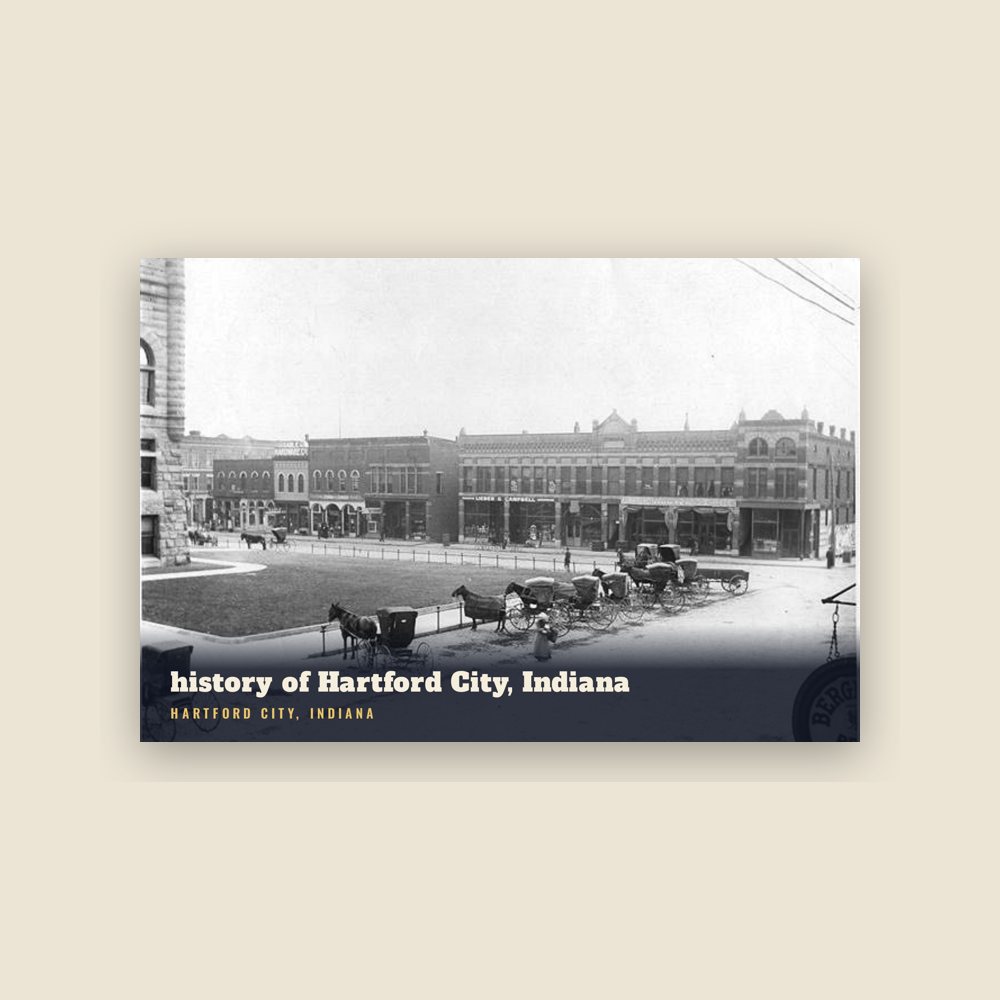
Hartford City, Indiana began in the late 1830s as a few log cabins clustered near a creek. Folklore taught in local elementary schools suggests that Hartford City was originally known as "Hart's ford," a place to cross Lick Creek. The name evolved to Hartford, and eventually to Hartford City. (This was to avoid confusion with another Hartford in the state.)
Read the full history
Early history
Prior to European-American settlement, the area that became Hartford City was frequented by several Native American tribes, including the Miami, Delaware Lenape, and Potawatomi. While no permanent Native settlements are known to have existed at the future city site, Miami and Delaware peoples lived nearby on the Godfroy Reserve in northeastern Blackford County until increasing white settlement prompted their removal westward around 1839.
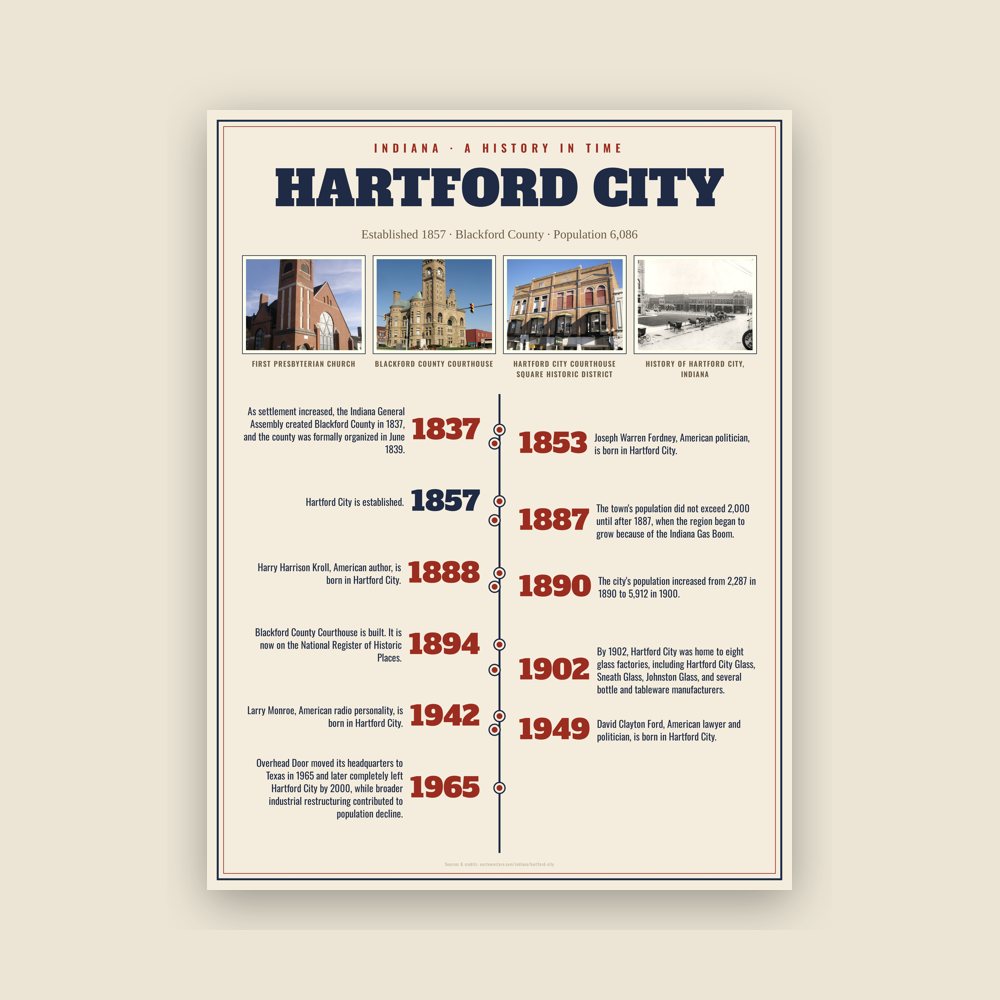
The first known non-Native settler in the area was Benjamin Reasoner, who arrived in 1831 and returned the following year with his family to establish a homestead in what later became Licking Township. Additional settlers arrived throughout the 1830s, including Andrew Boggs, John Grimes, George and Joseph Atkinson, Jacob Slater, and Robert Stewart. As settlement increased, the Indiana General Assembly created Blackford County in 1837, and the county was formally organized in June 1839. Named for Isaac Newton Blackford, the county held its first election in a settler's log cabin in the village of Hartford after Governor David Wallace appointed Nicolas Friend as acting sheriff. The newly elected county commissioners soon designated Hartford as the county seat and began planning infrastructure projects, including a road connecting the community with Portland, Indiana. Located near Lick Creek, Hartford initially consisted of only a handful of log cabins but quickly emerged as the county's governmental and commercial center. By the early 1840s, it was home to seven pioneer families and served as the focal point of settlement in the county.
As Hartford continued to grow, residents sought municipal self-government. A census conducted in May 1857 recorded 311 residents in 51 families, and voters approved incorporation as a town on September 28, 1857, by a vote of 35 to 18. The Blackford County commissioners formally incorporated Hartford on December 7, 1857, establishing a local government headed by an elected clerk-treasurer and town council.
The community was designated as the county seat of Blackford County when that county was created in 1837, and it was incorporated in 1867. During the last half of the 19th century, East Central Indiana consisted mostly of rural farming communities, including Hartford City. The town's population did not exceed 2,000 until after 1887, when the region began to grow because of the Indiana Gas Boom.
Gas Boom and industrial growth
The arrival of railroads in the late nineteenth century connected Hartford City to regional markets and contributed to its economic development. By the 1880s, the city was served by multiple rail lines, improving transportation for passengers and freight and making the community more attractive to industry.
The discovery of natural gas in east-central Indiana transformed Hartford City from a small county-seat town into a regional industrial center. Following the discovery of natural gas in Blackford County in 1887, the city became part of the Indiana Gas Boom. Abundant supplies of inexpensive fuel attracted manufacturers to the area, resulting in a period of rapid economic and population growth. Numerous companies established operations in the city during the following decade, including the Hartford City Glass Company, Sneath Glass Company, Hartford City Paper Company, Utility Paper Company, and Congress Cycle Company. The city's population increased from 2,287 in 1890 to 5,912 in 1900.
Glass manufacturing became the city's dominant industry. The Hartford City Glass Company, founded in 1890, was among the three largest window glass manufacturers in the United States and employed as many as 600 workers. By 1902, Hartford City was home to eight glass factories, including Hartford City Glass, Sneath Glass, Johnston Glass, and several bottle and tableware manufacturers. The industry also attracted skilled immigrant workers, particularly from Belgium, who formed a significant portion of the city's population during the 1890s.
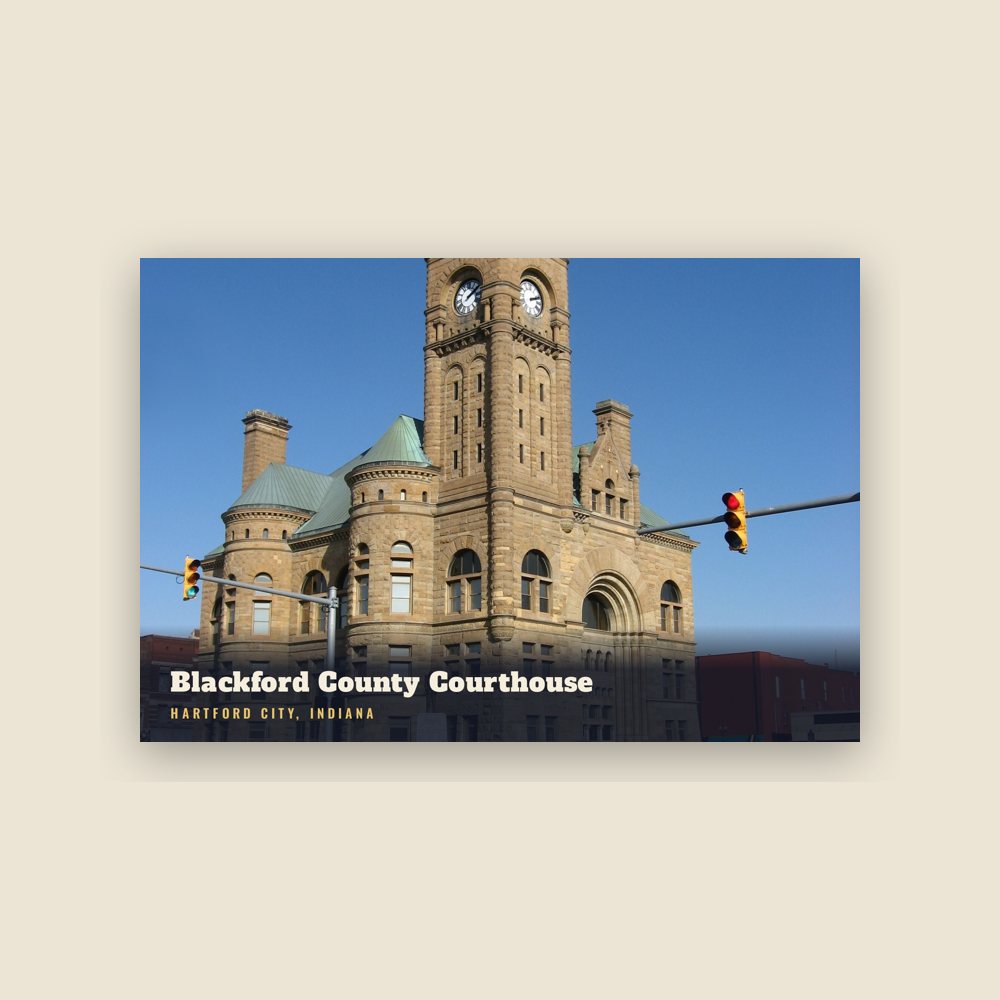
The rapid growth of the Gas Boom era resulted in significant civic and commercial development. The Blackford County Courthouse was completed in 1894, replacing the county's earlier courthouse, while a municipal waterworks system and other public improvements were constructed to accommodate the city's expanding population. By 1901, state inspectors recorded fifteen manufacturing establishments in Hartford City employing more than 1,000 workers, with glass factories accounting for the largest share of industrial employment. Although local natural gas supplies declined during the early twentieth century, several major industries remained in operation after the boom ended, allowing Hartford City to retain an important manufacturing base.
After the Gas Boom
Although the decline of local natural gas supplies ended Hartford City's period of rapid growth, the city retained much of its industrial base. Unlike many smaller communities that emerged during the Indiana Gas Boom, Hartford City remained a regional manufacturing center after the depletion of local gas reserves. Many of the major employers created by the boom, continued operations well into the 1950s and beyond, while many residents found employment in nearby manufacturing centers such as Muncie, Marion, and Anderson.
During the 1920s, the Overhead Door Corporation relocated its headquarters and manufacturing operations to Hartford City, becoming one of the city's largest employers, and in 1955 3M acquired the former Hartford City Paper plant and established a manufacturing facility in the city. Manufacturing remained the foundation of the local economy even after WWll.
Like many communities in the Rust Belt, Hartford City experienced economic challenges during the late twentieth century as manufacturing employment declined. Overhead Door moved its headquarters to Texas in 1965 and later completely left Hartford City by 2000, while broader industrial restructuring contributed to population decline. Despite these challenges, Hartford City has remained the county seat and principal commercial center of Blackford County.