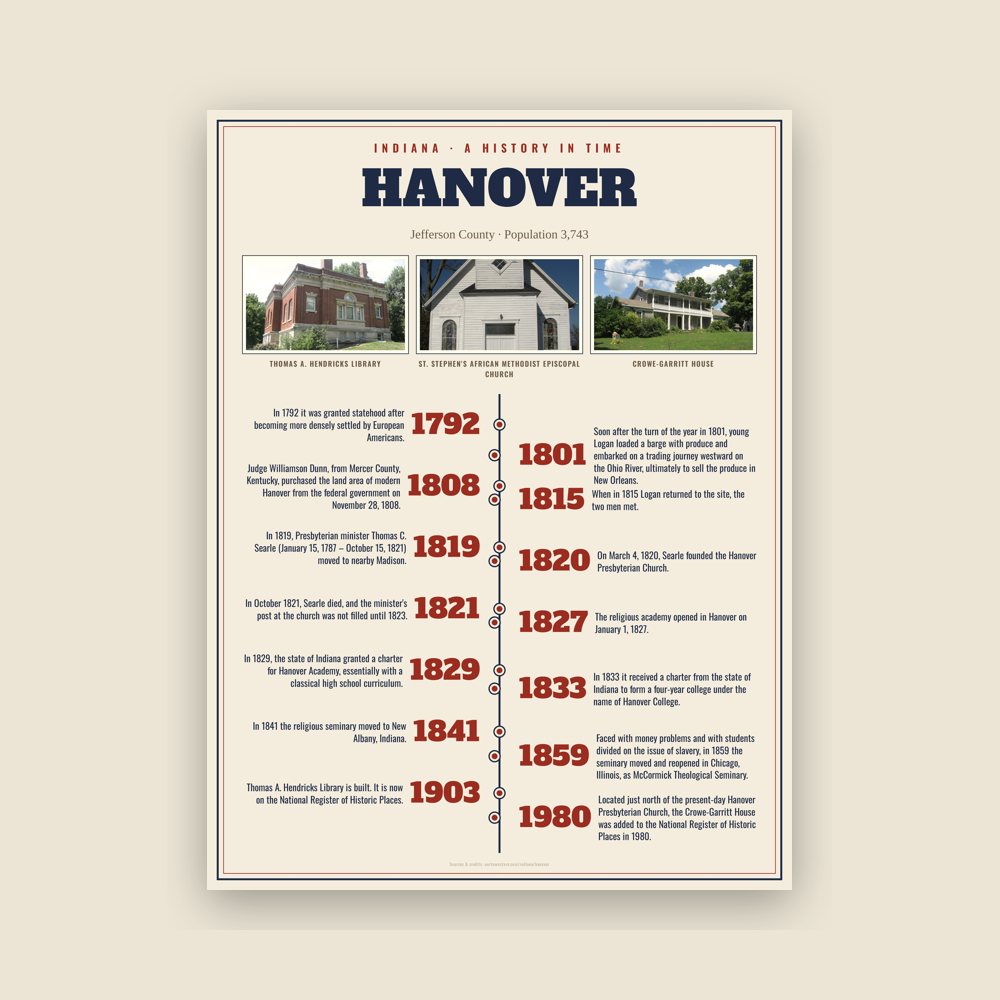
During the late eighteenth century, the area today known as the state of Indiana was a part of the Northwest Territory in the new United States. This large area west of the Appalachians and north of the Ohio River had been ceded by Great Britain after the Revolutionary War. It consisted of the area later organized as the states of Ohio, Indiana, Michigan, Illinois, Wisconsin, and parts of Minnesota. At that time, there were few European settlements on the northern bank of the Ohio River, although French colonists had settled in the west Illinois Country along the Mississippi River. Kentucky, which developed on the southern banks of the Ohio, was originally considered part of Virginia. In 1792 it was granted statehood after becoming more densely settled by European Americans. Prior to the early nineteenth-century European-American settlement of the Hanover area, its predominant inhabitants were the Shawnee people.
George Logan grew up in a farming household in the area of Lexington, Kentucky. Soon after the turn of the year in 1801, young Logan loaded a barge with produce and embarked on a trading journey westward on the Ohio River, ultimately to sell the produce in New Orleans. He later noted that there were no European-American settlements in the area between present-day Carrollton, Kentucky and Louisville. He said both banks of the river were covered in thick forest, and reported seeing Native American hunters and fishermen, numerous buffalo and deer, and heard the cries of coyotes.
Faced with severe weather toward the end of February, Logan stopped his river journey, pulling in roughly half a mile west of the present-day area of Hanover Beach. After a few days, he went ashore. Armed with a rifle, he climbed a nearby hill to the spot today known as Logan's Point, after him. This was the first recorded instance of a European exploring the area of Hanover. Logan was so enamored with the view from this point that he decided to move there some day. He carved his initials and the date, March 1, 1801, on a beech tree. He did not return to settle for fourteen years.
Read the full history
Dunn's Settlement
Judge Williamson Dunn, from Mercer County, Kentucky, purchased the land area of modern Hanover from the federal government on November 28, 1808. The following year, Dunn resettled his family to the area, which became known as a town as "Dunn's Settlement." This was later renamed as Hanover. A steady flow of settlers then followed, most of them Scots-Irish Presbyterians. They were immigrants and their children, mostly from northern Ireland, who had come to Virginia, then to Kentucky, and finally to the area of Hanover.
Among them was Christopher Harrison. He later was elected as Indiana's first lieutenant governor and played a key role in planning the state capital of Indianapolis. Harrison built a homestead at Logan's Point. When in 1815 Logan returned to the site, the two men met. Logan bought the land and settled permanently in Hanover, while Harrison moved to Salem, Indiana. The next year he was elected lieutenant governor.
Although many of the first residents were Presbyterian, for a time the only church in their area was in Charlestown, 25 miles to the west. In 1819, Presbyterian minister Thomas C. Searle (January 15, 1787 – October 15, 1821) moved to nearby Madison. He was a circuit preacher, serving the needs of the minority of Presbyterians in a wide area in southern Indiana, but he quickly realized that a community of Scotch-Irish Presbyterians was concentrated in Dunn's Settlement. On March 4, 1820, Searle founded the Hanover Presbyterian Church. His wife, a native of Hanover, New Hampshire, was greatly admired by the church's congregants; therefore, the church adopted the name in her honor. Before long, the town also adopted the name "Hanover." Officially it was named "South Hanover" as there was already a post office of Hanover in Shelby County. When the other town of Hanover no longer had a post office, South Hanover's name was shortened to Hanover.
Following the founding of the congregation, they organized to construct a church. Williamson Dunn donated land and funding for the cause. In October 1821, Searle died, and the minister's post at the church was not filled until 1823.
Founding of Hanover College
John Finley Crowe was born in Greene County, Tennessee, growing up there and in Missouri, where his family migrated. He grew up in a Presbyterian household. After meeting some Presbyterian elders who had moved from North Carolina to his area in Missouri, Crowe became interested in pursuing a religious education. He attended Transylvania College in Lexington, Kentucky, and continued his education at Princeton Theological Seminary in Princeton, New Jersey. After completing his Masters of Divinity in 1815, Crowe accepted his first ministerial calling in Shelbyville, Kentucky. It was a slave state, but Crowe became actively involved in the abolitionist movement. He established a Sunday school for African-American children, but could not find a place where they were allowed to meet. On May 7, 1822, he began publication of the Abolition Intelligence and Missionary Magazine. Crowe's abolitionist sympathies alienated him from his slave-holding neighbors, and he soon lost access to the printing press.
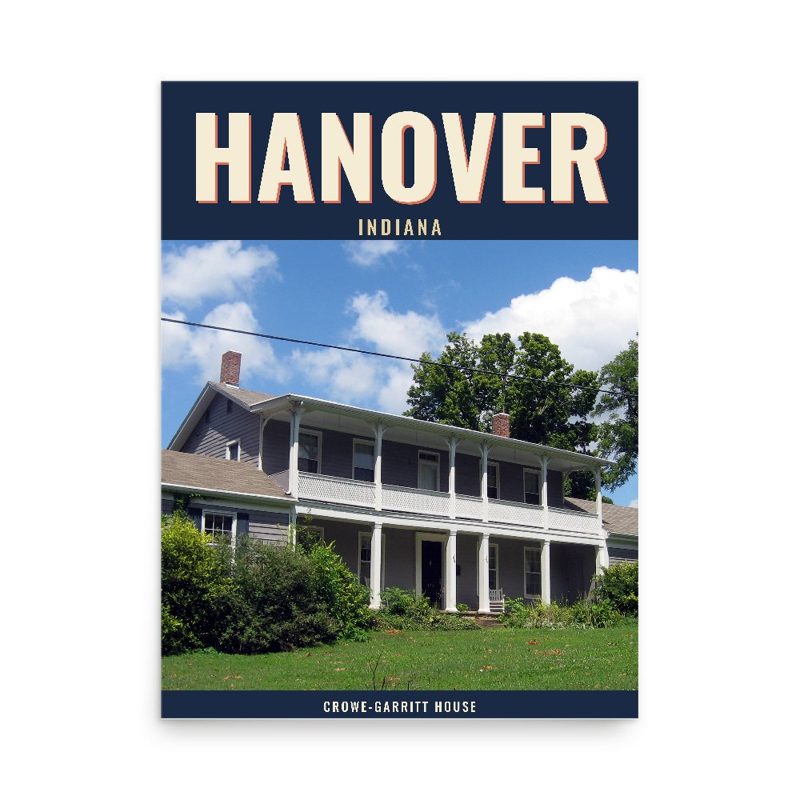
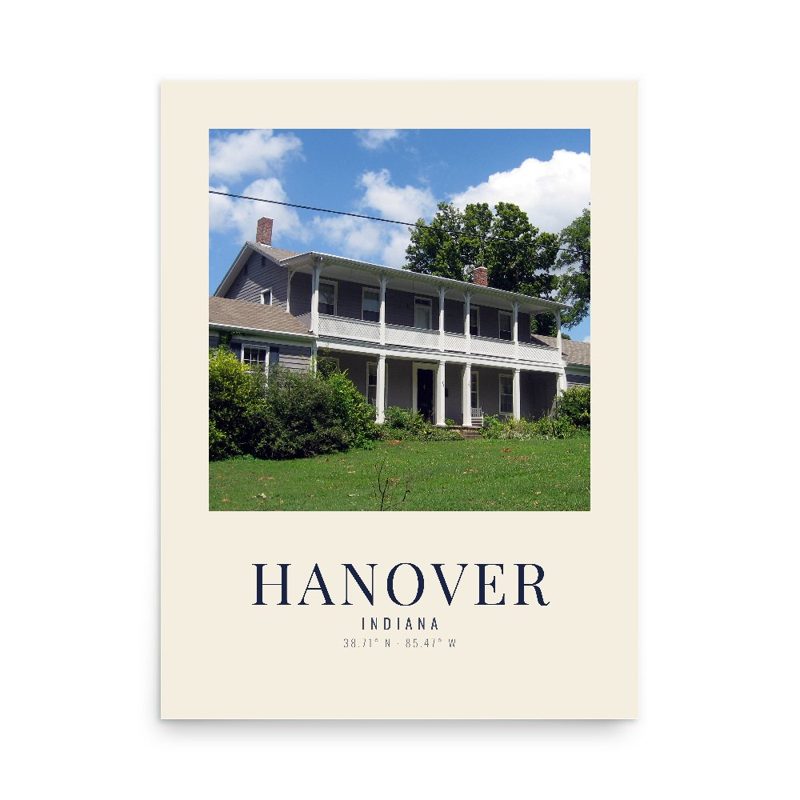
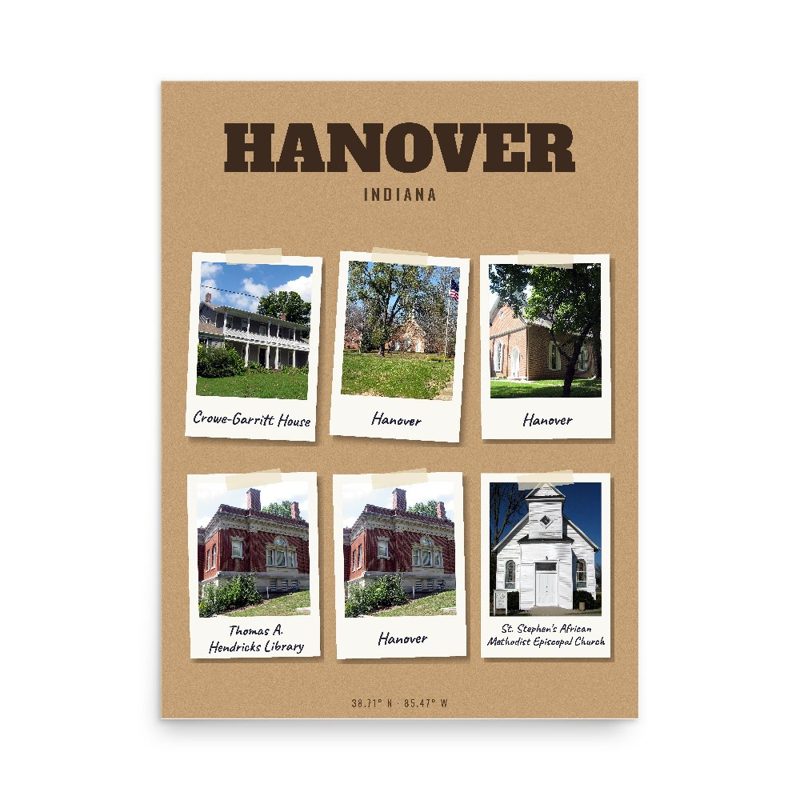
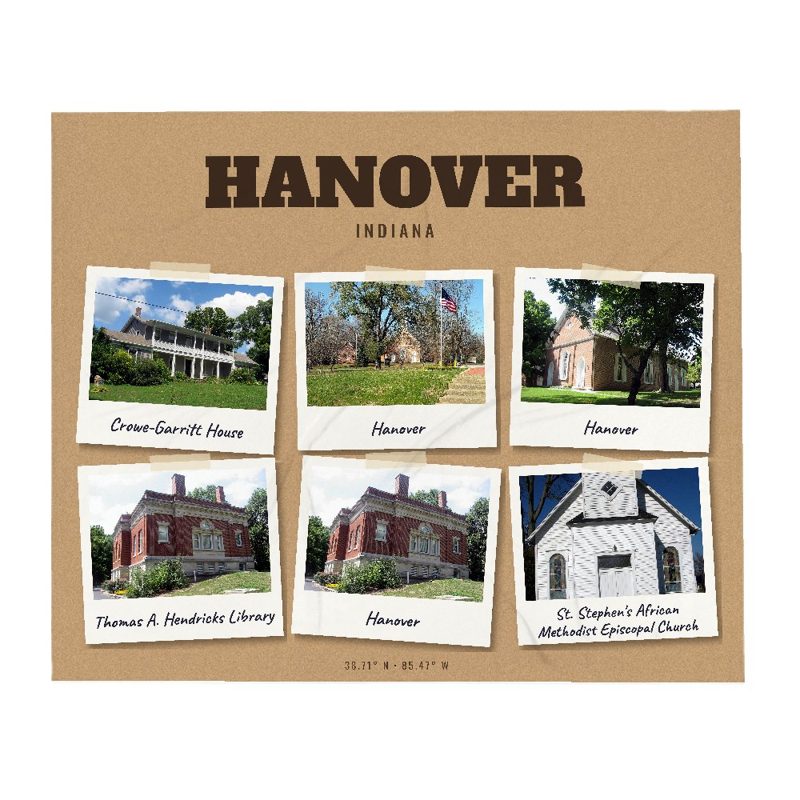
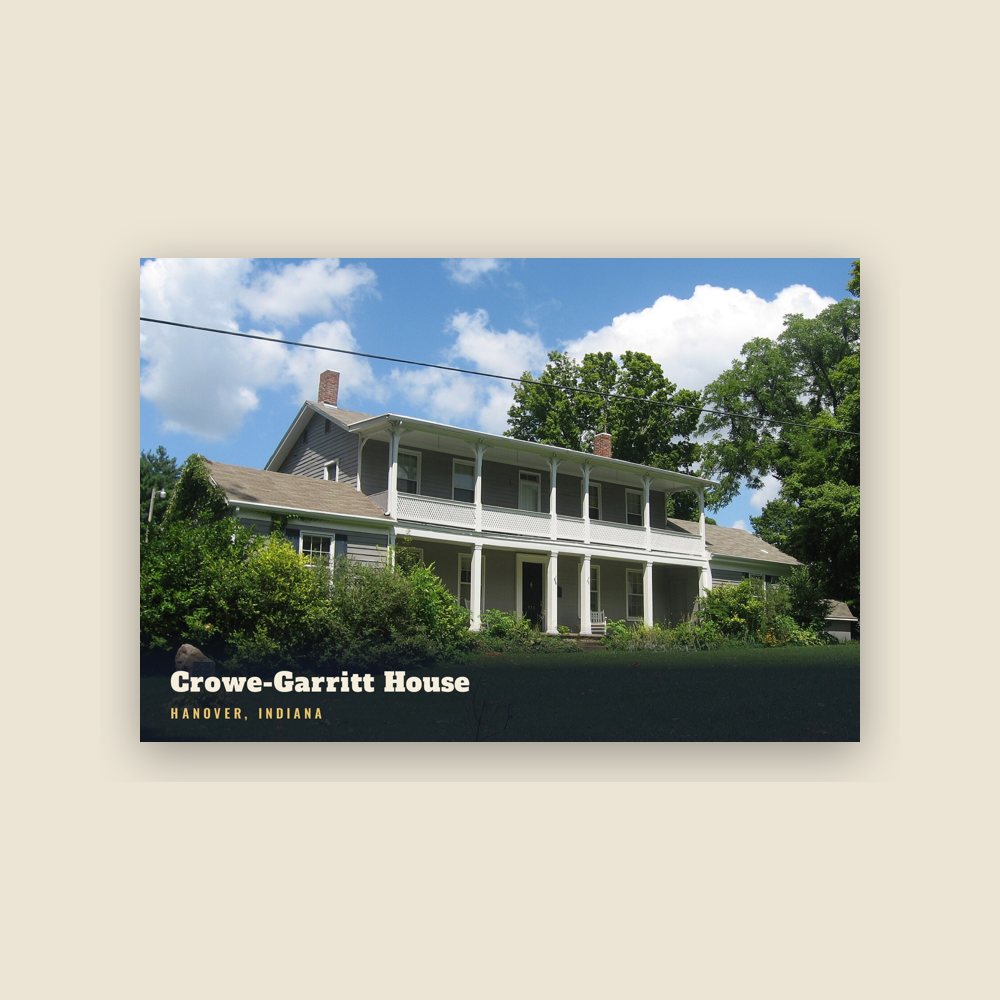
On April 2, 1823, John M. Dickey, moderator of a church session attended by Williamson Dunn and George Logan as elders, sent a letter to Crowe inviting him to serve at the Hanover Presbyterian Church. Disheartened by the hostility of neighbors in Kentucky, Crowe accepted the position, relieved to move to a free state. Soon after arriving in Hanover, Crowe began construction of his house. It still exists and is known today as the Crowe-Garritt House. Located just north of the present-day Hanover Presbyterian Church, the Crowe-Garritt House was added to the National Register of Historic Places in 1980.
Soon after joining the Hanover Presbyterian Church, Crowe began encouraging members to sponsor the founding of a seminary. The religious academy opened in Hanover on January 1, 1827. Initially, classes met in the Presbyterian Church's stone church building, which was located in the present-day area of the Hanover Firehouse. Within a year, however, the school had outgrown this location. Williamson Dunn donated land for the site of a new college building. In 1829, the state of Indiana granted a charter for Hanover Academy, essentially with a classical high school curriculum.
The Presbyterian Synod of Indiana recognized the theological segment of the school as the Indiana Seminary. Hanover Academy grew quickly over the ensuing years, adding to its programs. In 1833 it received a charter from the state of Indiana to form a four-year college under the name of Hanover College. But the seminary stagnated, and the two entities split in 1836. In 1841 the religious seminary moved to New Albany, Indiana. Faced with money problems and with students divided on the issue of slavery, in 1859 the seminary moved and reopened in Chicago, Illinois, as McCormick Theological Seminary. It was sponsored by a major business donor.