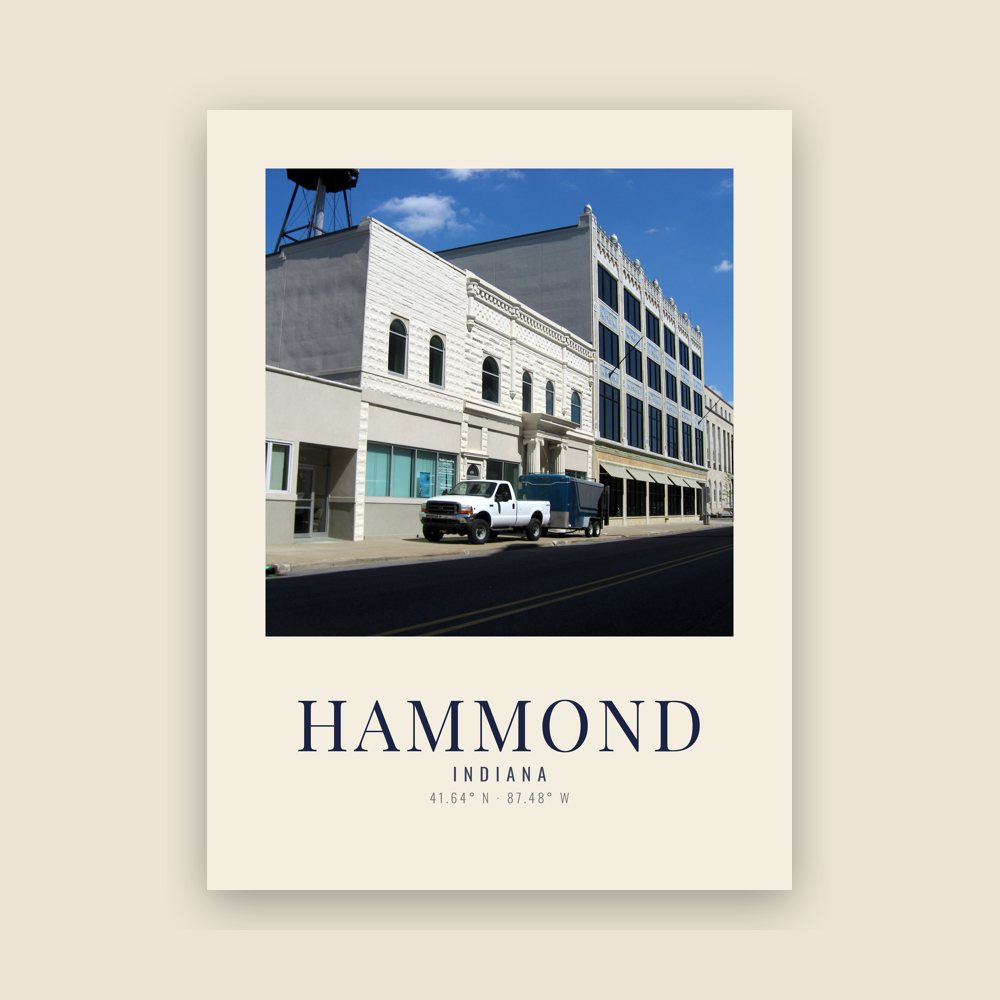
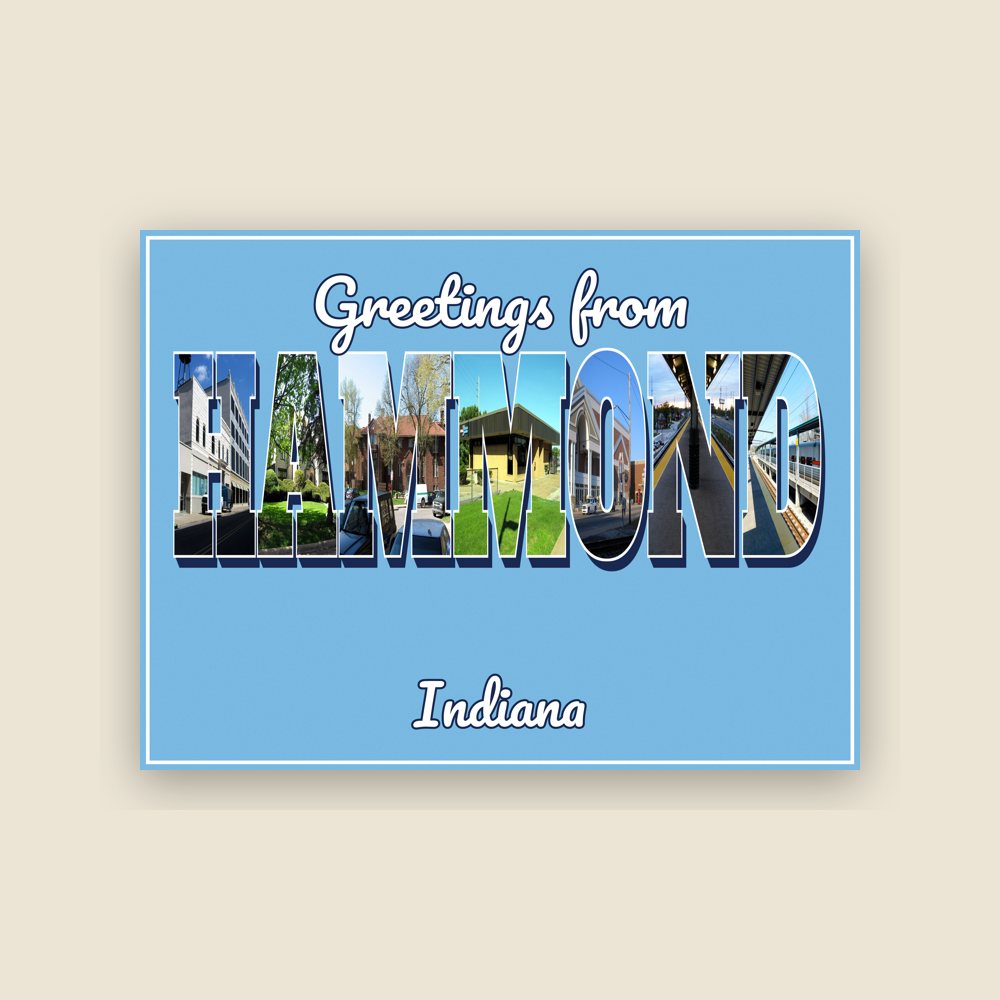
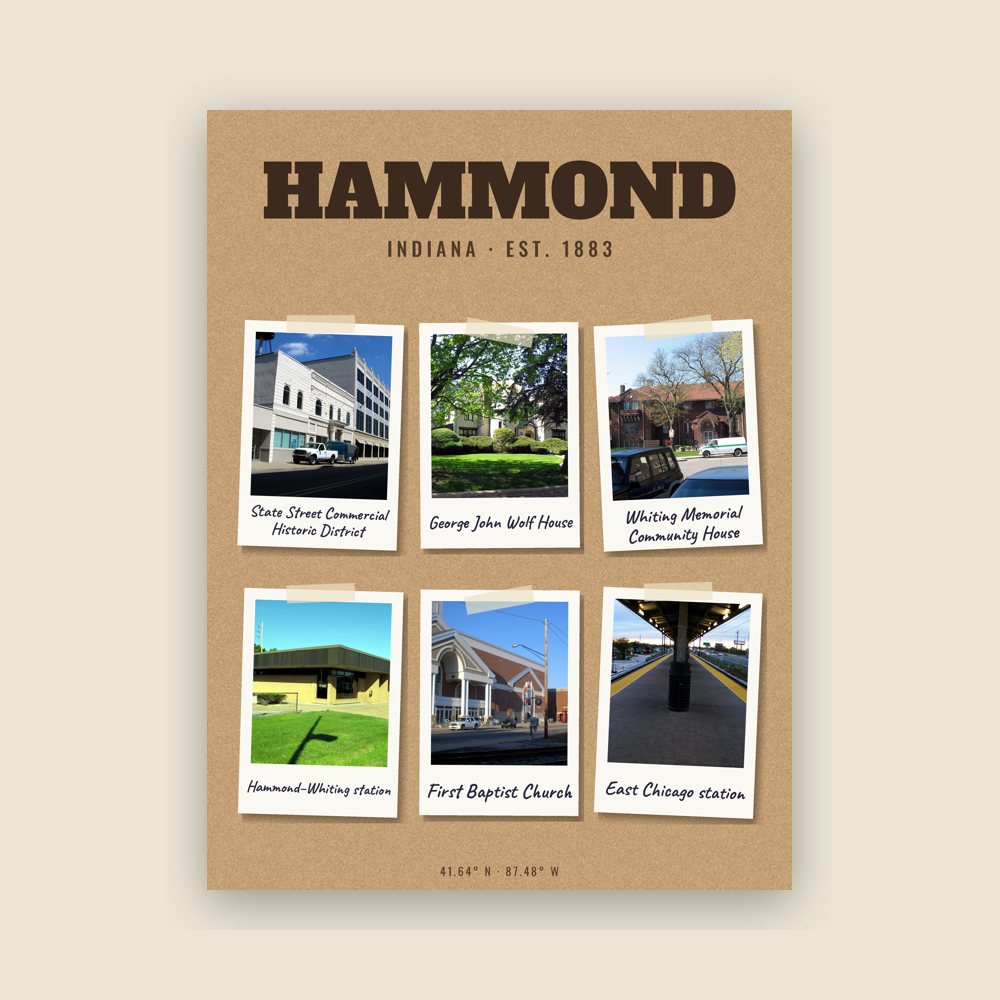
Since 1883
A short history of Hammond
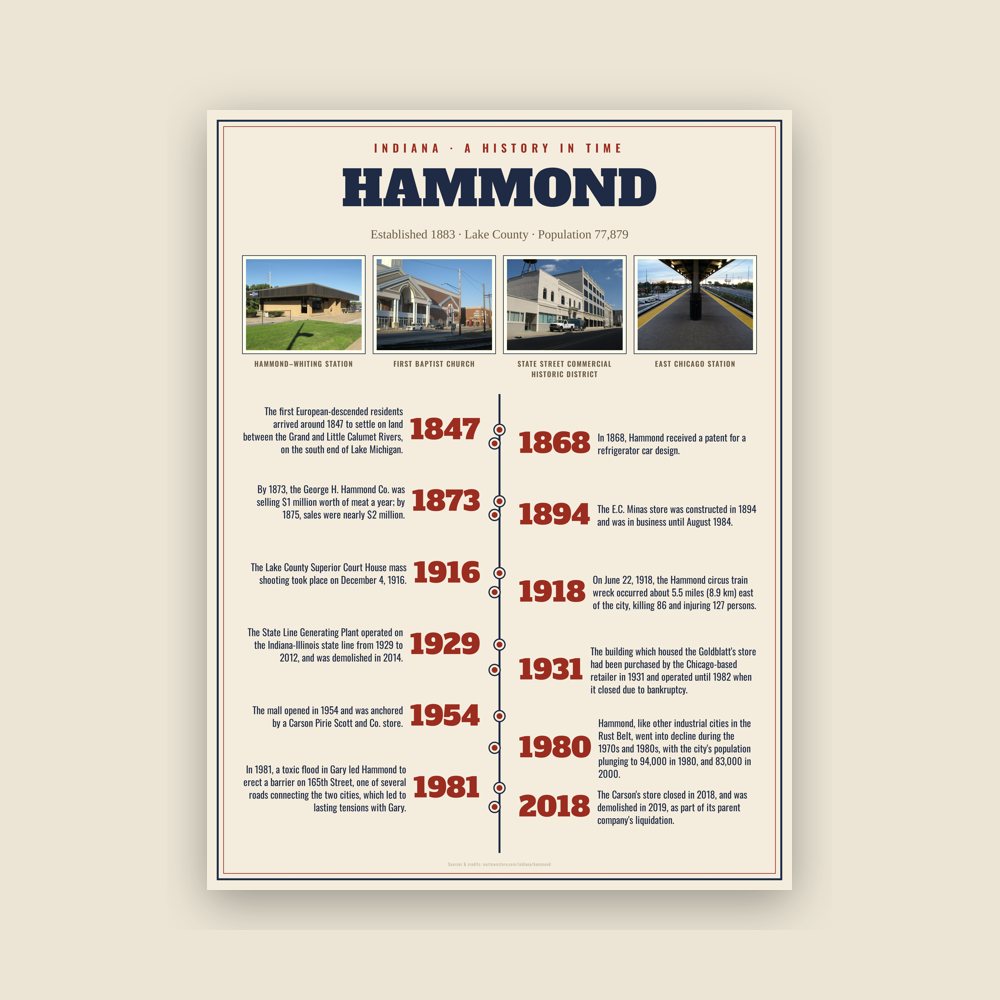
The first European-descended residents arrived around 1847 to settle on land between the Grand and Little Calumet Rivers, on the south end of Lake Michigan. Those first residents were German immigrant farmers looking for land and opportunity. Before that time, the area was a crossroad for Indian tribes, explorers, stagecoach lines, and supply lines to the West. Convenient location and abundant fresh water from Lake Michigan led to the beginning of Hammond's industrialization in 1869 with the George H. Hammond Company meat-packing plant following merchants and farmers to the area. Hammond was incorporated on April 21, 1884, and was named after the Detroit butcher.
According to the Encyclopedia of Chicago, George Henry Hammond, a pioneer in the use of refrigerated railcars for the transport of fresh meat, first used this method with his small packing company in Detroit, Michigan. In 1868, Hammond received a patent for a refrigerator car design. In the early 1870s, he built a new plant in northern Indiana along the tracks of the Michigan Central Railroad. By 1873, the George H. Hammond Co. was selling $1 million worth of meat a year; by 1875, sales were nearly $2 million. The company's large packing house in Hammond rivaled those located at the Union Stock Yard in Chicago. By the middle of the 1880s, when it built a new plant in Omaha, Nebraska, Hammond was slaughtering over 100,000 cattle a year and owned a fleet of 800 refrigerator cars. After Hammond died in 1886, the company became less important and no longer challenged the giant Chicago packers, which acquired Hammond at the turn of the century and merged it into their National Packing Co.
The Lake County Superior Court House mass shooting took place on December 4, 1916. A former U.S. Civil War cavalry veteran named Mike Inik shot three people, one of whom was Judge Greenwood. The motive for the attack was reportedly related to Inik attempting to force the company Standard Oil to pay him $4,000,000 in compensation after he was injured in an oil refinery accident. When the court dismissed his claim as outlandish, Inik allegedly spent nearly 20 years collecting revolvers and sabers from the U.S. military. He later carried out the attack with the intention of killing Judge Greenwood. After the shooting, Inik was apprehended by police and sent to Michigan State Prison. He eventually died there in 1945 and was reportedly buried in the prison's cemetery.
On June 22, 1918, the Hammond circus train wreck occurred about 5.5 miles (8.9 km) east of the city, killing 86 and injuring 127 persons.
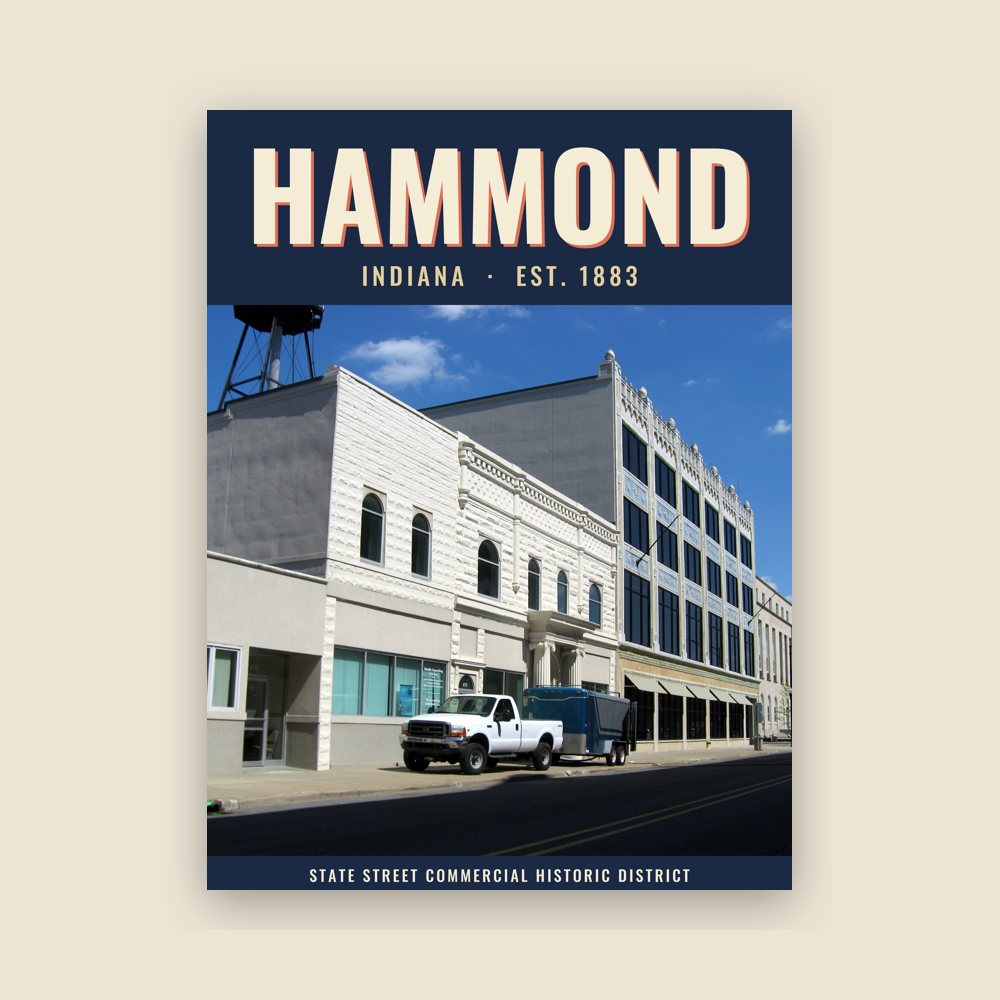
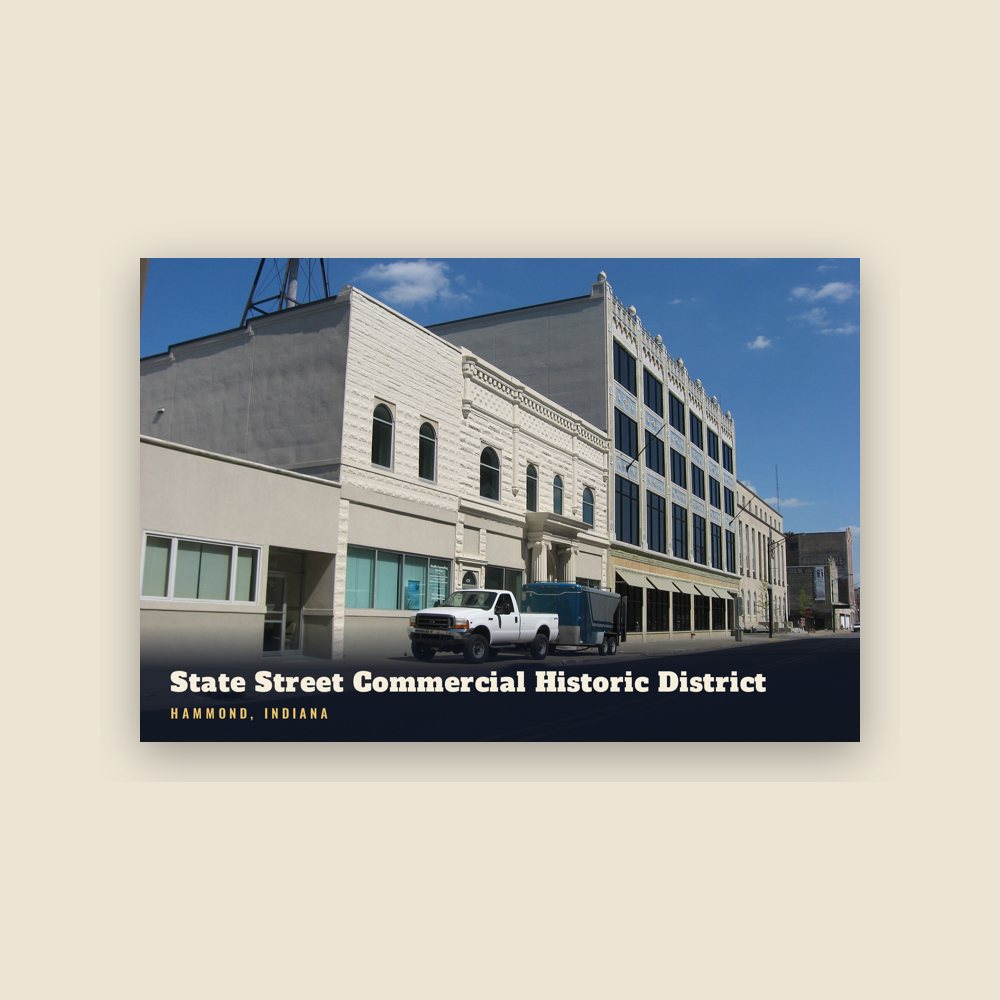
The downtown Hammond shopping district along State Street and Hohman Avenue included major chains such as Sears and J. C. Penney. The largest stores in downtown were the Goldblatt's and E.C. Minas department stores. The E.C. Minas store was constructed in 1894 and was in business until August 1984. The building which housed the Goldblatt's store had been purchased by the Chicago-based retailer in 1931 and operated until 1982 when it closed due to bankruptcy.
Architect Victor Gruen designed the Woodmar Mall in the Woodmar neighborhood. The mall opened in 1954 and was anchored by a Carson Pirie Scott and Co. store.
According to the 1960 United States census Hammond's population reached a record high of 111,698 residents. Hammond, like other industrial cities in the Rust Belt, went into decline during the 1970s and 1980s, with the city's population plunging to 94,000 in 1980, and 83,000 in 2000. However, Hammond's economy was more diversified than neighboring Gary, Indiana, East Chicago, Indiana, and the south side of Chicago, which all relied on heavy industry (primarily steel production). Hammond's economy, though, depended on light manufacturing, transportation and warehousing, retail, banking and insurance, healthcare, hospitality and food service, and construction. In 1981, a toxic flood in Gary led Hammond to erect a barrier on 165th Street, one of several roads connecting the two cities, which led to lasting tensions with Gary.
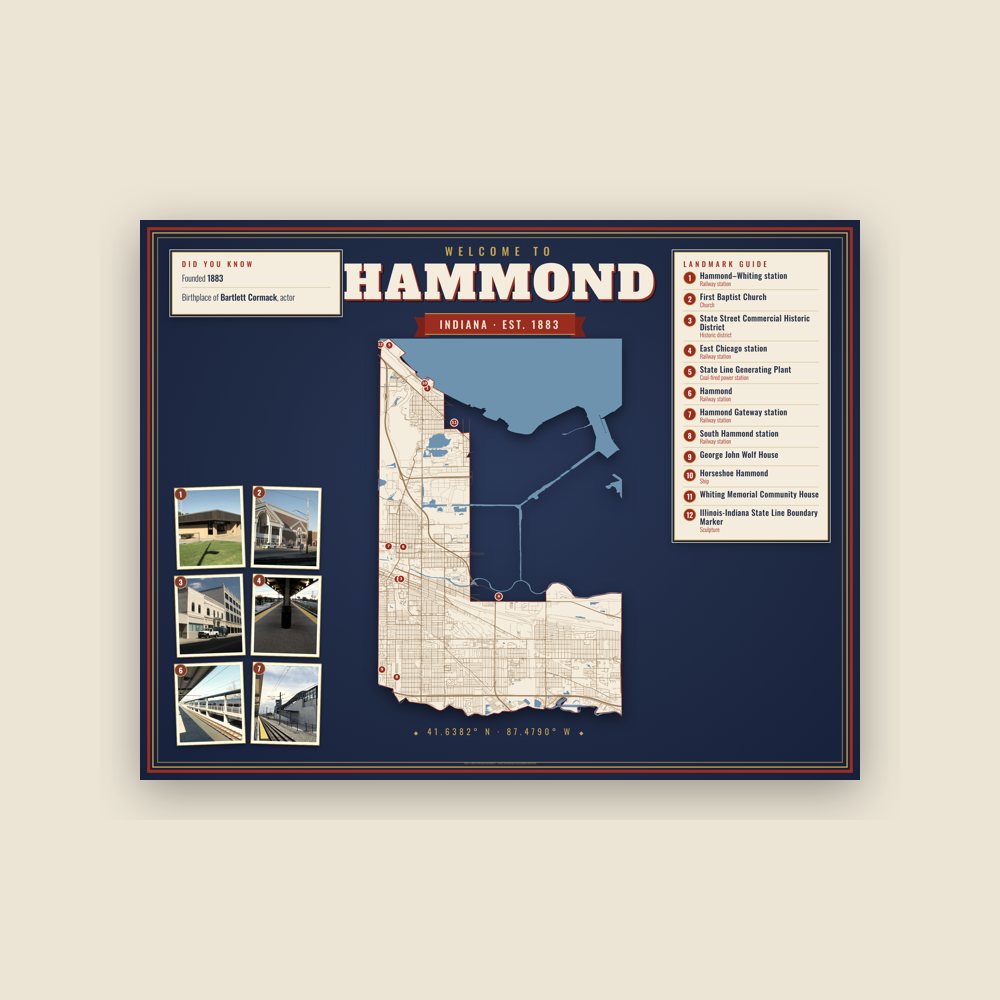
Prominent manufacturing companies in Hammond include Unilever's soap factory, Atlas Tube, Cargill food processing, Munster Steel, Lear Seating Corporation, Jupiter Aluminum, Tri-State Automation, and Dover Chemical. Warehousing and storage is also prominent, with ExxonMobil and Marathon Petroleum having large oil-storage facilities, and FedEx has a distribution center. Large railroad marshalling yards are also present in the city, with the Indiana Harbor Belt Railroad's headquarters in the city. The State Line Generating Plant operated on the Indiana-Illinois state line from 1929 to 2012, and was demolished in 2014.
In February 2006, the decision was made to demolish Woodmar Mall except for the Carson's store. The Hammond Redevelopment Commission announced plans in June 2016 for a $12 million sports complex to be built on the site of the former mall. The Carson's store closed in 2018, and was demolished in 2019, as part of its parent company's liquidation.
Adapted (trimmed) from the Wikipedia article Hammond, Indiana, revision 1379919670 by its contributors, licensed CC BY-SA 4.0.