The development of Phoenix is closely tied to its larger neighbor, Harvey. Phoenix is the birthplace of Quinn Buckner, basketball player and coach.
- CountyIllinois
- Population1,708 (2020 U.S. Census)
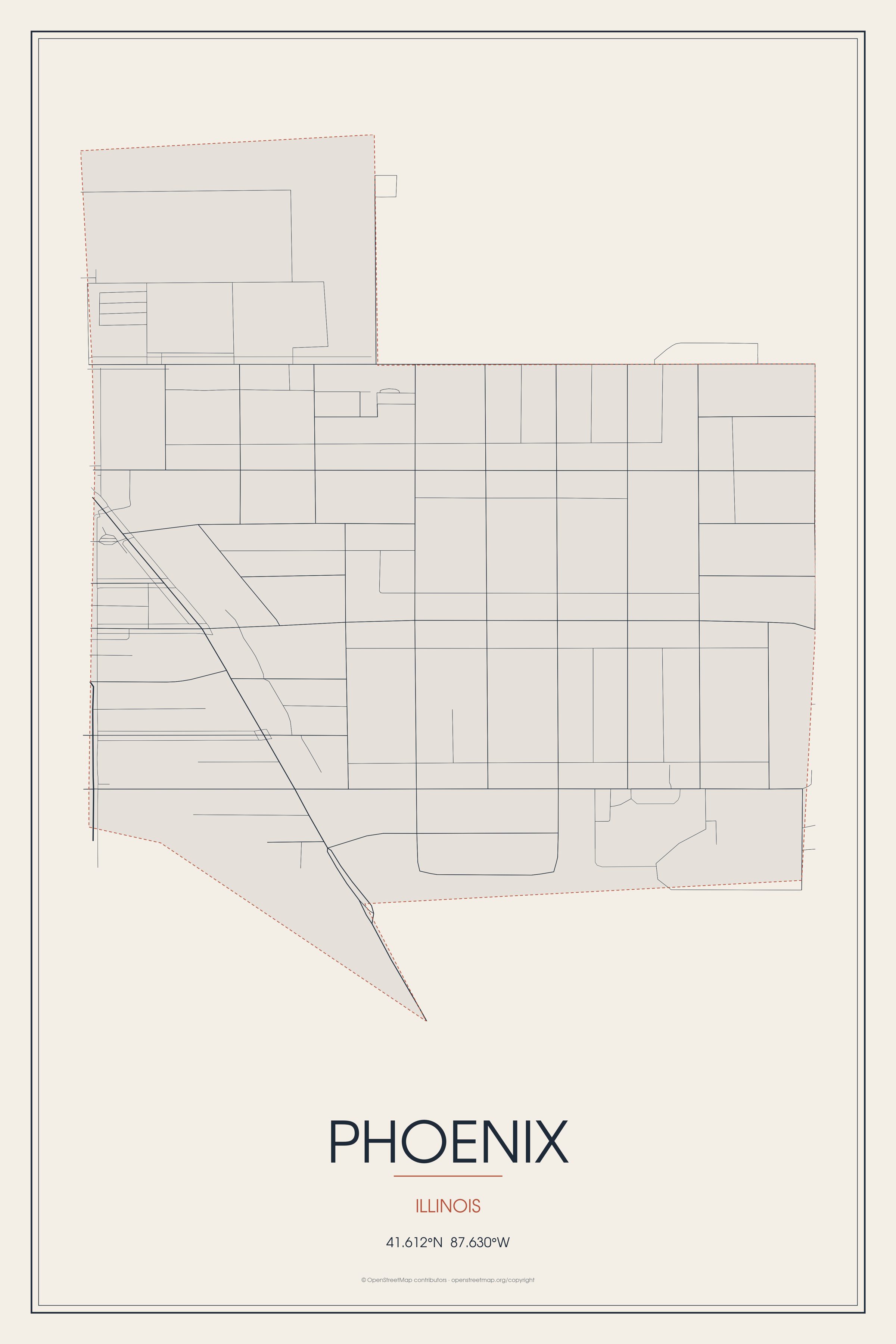
Phoenix, Illinois gifts and souvenirs: 16 designs made from Phoenix's own map, landmarks and history, from $16 to $95. Printed to order and shipped free in the USA.
| Popular | Price |
|---|---|
| Phoenix Hometown Ornament | $23 |
| Phoenix Varsity Crewneck | from $57 |
| Phoenix Est. Tee | from $33 |
| Phoenix Town Line Mug | from $26 |
| Phoenix Market Tote | $37 |
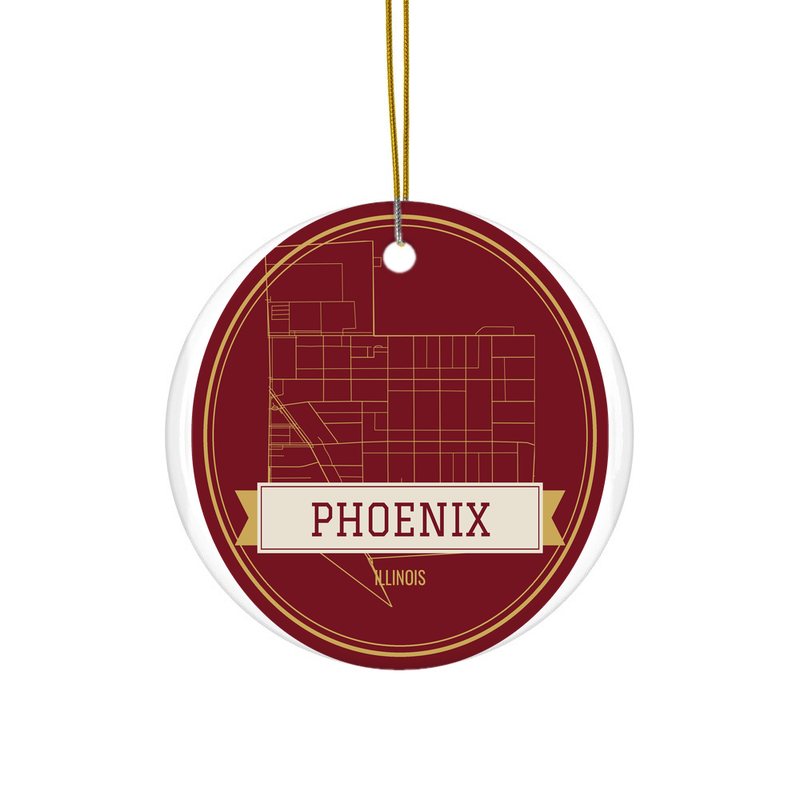
Ceramic keepsake, gold ribbon
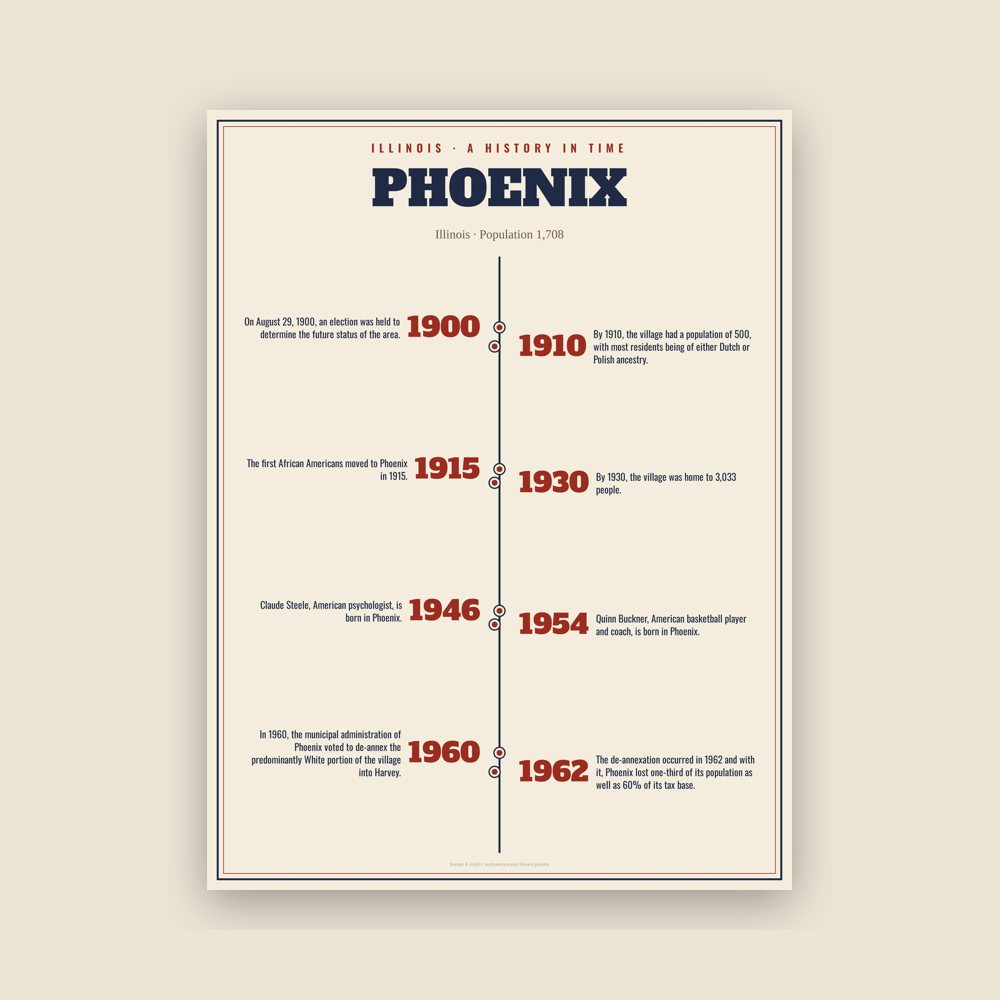
The town's story in dates, from its own records, for home or classroom

Heavy-blend fleece, street map printed on the back
Soft Bella+Canvas jersey
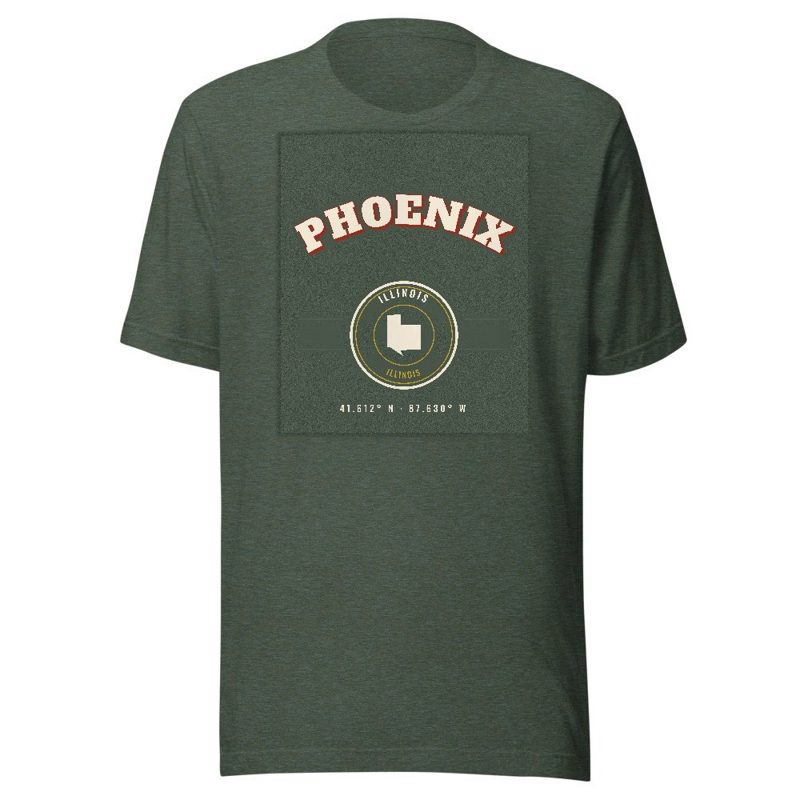
Kids' Bella+Canvas jersey, youth sizes
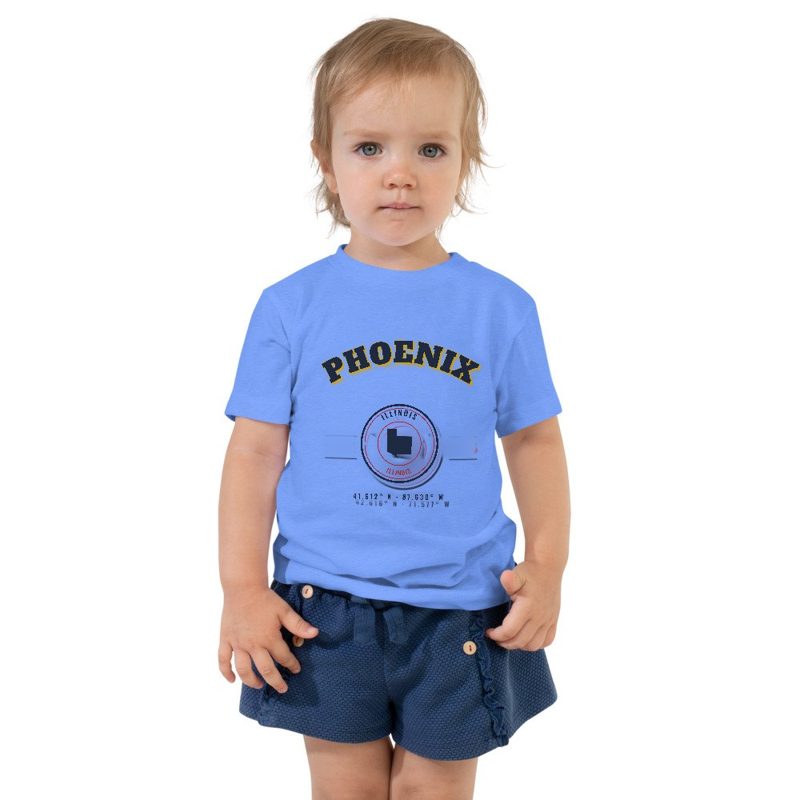
Bella+Canvas toddler jersey
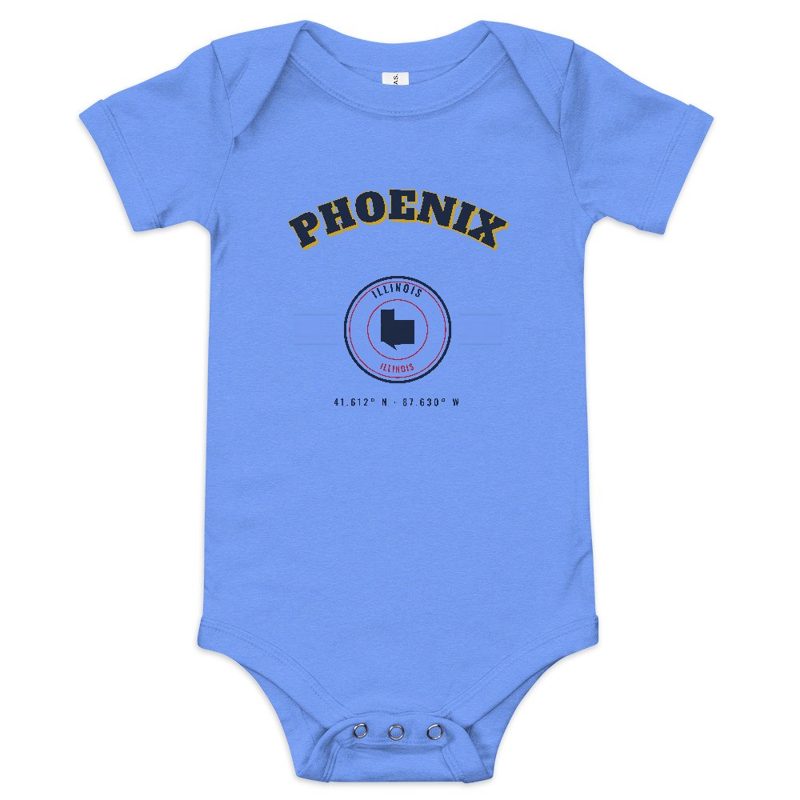
Bella+Canvas baby bodysuit
Glossy ceramic, dishwasher safe
Weatherproof, for the front walk
24″×16″, printed coir-look fibers, rubber back
12″×12″ printed wood, ready to hang
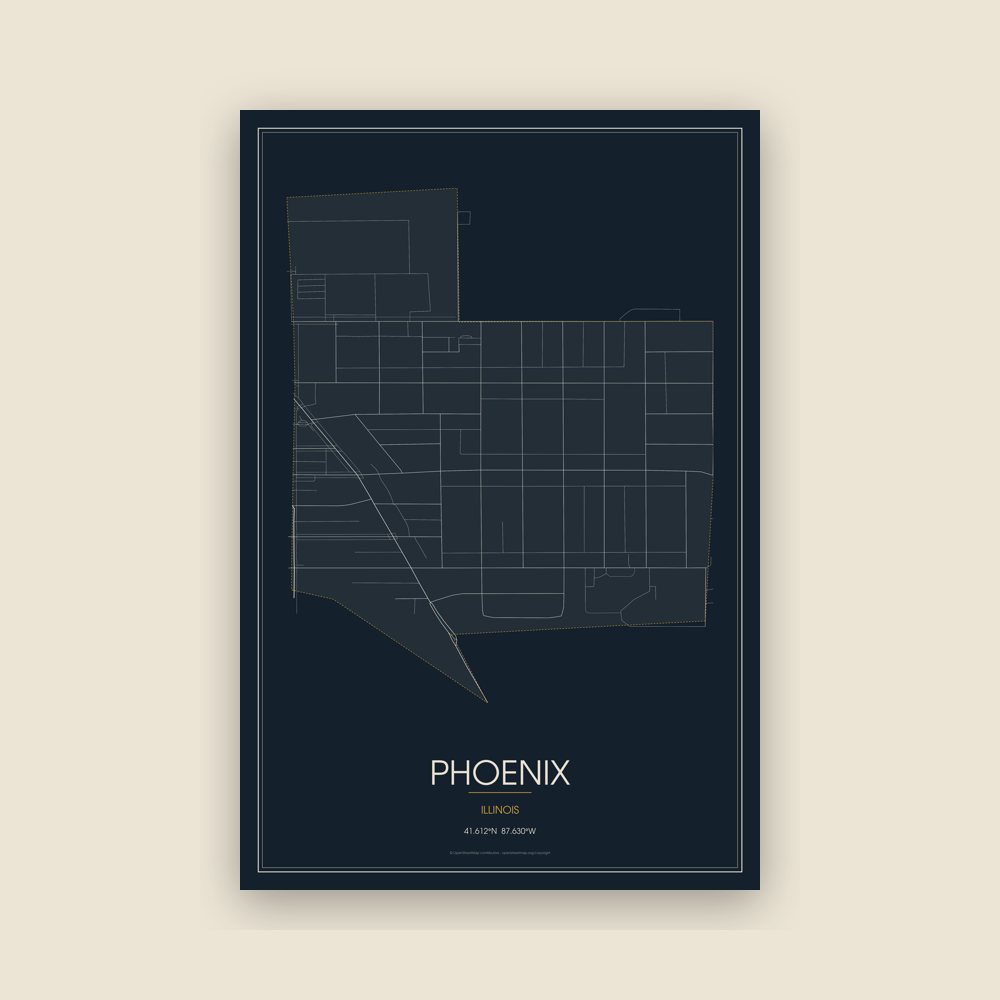
Soft-touch, zip cover

Sturdy all-over-print tote
Glossy top, cork back
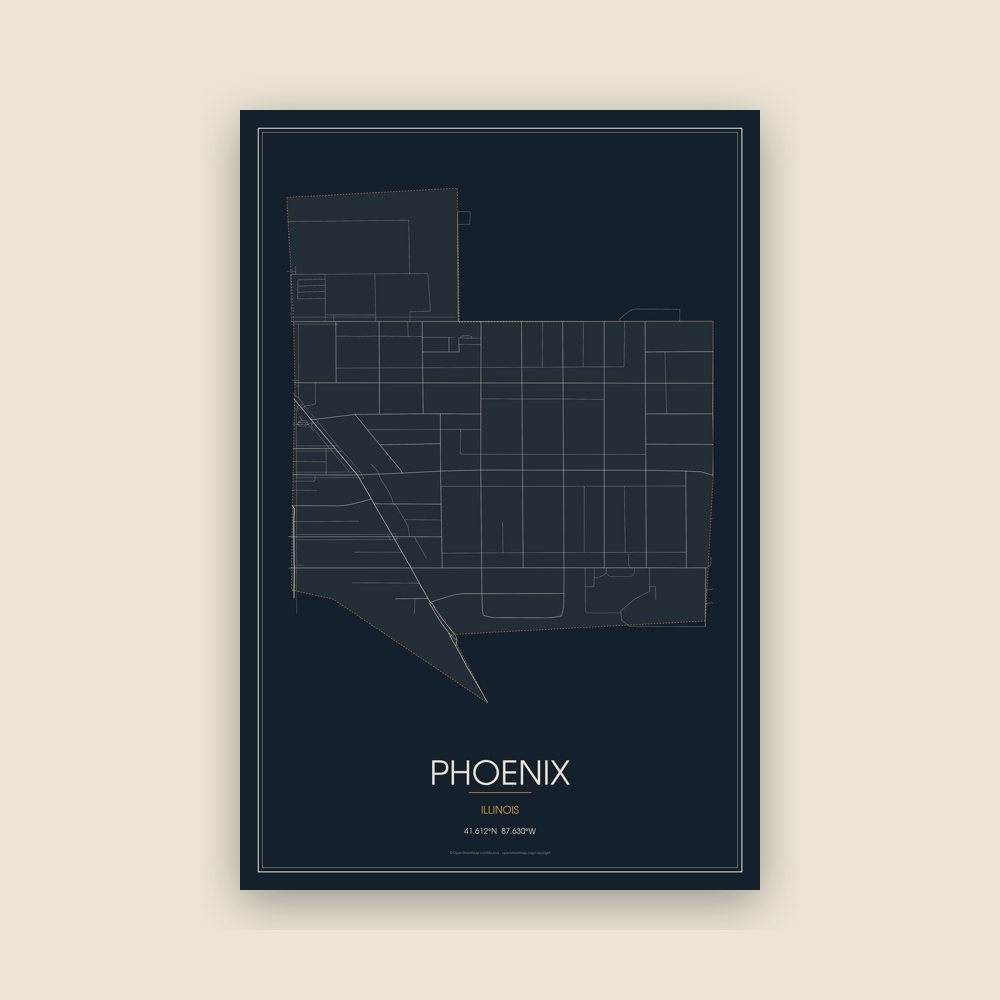
Soft fleece, 50″×60″
20 oz, double-wall stainless
The development of Phoenix is closely tied to its larger neighbor, Harvey. Phoenix is the birthplace of Quinn Buckner, basketball player and coach.
The development of Phoenix is closely tied to its larger neighbor, Harvey. Harvey was established as an industrial city with no saloons. Many of its early factories were located between the Illinois Central Railroad and Harvey's eastern boundary at Halsted Street. One local businessman, William McLatchy, owned a large tract of land in an unincorporated area outside of Harvey. Soon, five saloons had opened in the area and a small housing subdivision known as Phenix Park was constructed during the 1890s. City leaders in Harvey, seeing businesses just outside their boundaries selling alcohol to local workers, sought to annex Phenix Park and render it "dry" or free of alcohol-related establishments. The residents of Phoenix Park wanted to retain local control of their affairs as an independent village. On August 29, 1900, an election was held to determine the future status of the area. A total of 56 votes were cast with 38 (67.9%) voting in favor of incorporation and 18 (32.1%) against. Despite legal challenges from Harvey, the result was upheld.
After incorporation, the name Phenix Park was changed to Phoenix. By 1910, the village had a population of 500, with most residents being of either Dutch or Polish ancestry. The first African Americans moved to Phoenix in 1915. Most came from Chicago and the South. Industry in Harvey and the railroads provided a strong employment base for Phoenix residents. The African American population steadily increased during the 1920s. By 1930, the village was home to 3,033 people. The demographic makeup of the community was 84.2% White, 15.1% Black, and 0.7% other. Growth continued through the 1940s and 1950s. New housing was constructed to accommodate this growth. The population in 1960 was 4,203. At this time, Phoenix had a diverse ethnic composition but the community was racially segregated. African Americans, comprising 65.3% of the population, lived in the northern portion of the village while Whites, forming 34.7% of the population, lived in the southern portion of Phoenix. In 1960, the municipal administration of Phoenix voted to de-annex the predominantly White portion of the village into Harvey. The de-annexation occurred in 1962 and with it, Phoenix lost one-third of its population as well as 60% of its tax base.
On October 16, 1979, Phoenix Mayor William Hawkins was shot and fatally wounded in an ambush outside of his home. He died two days later. Bobby Joe Anderson, a city policeman, was indicted 13 years later for the crime and was convicted of first degree murder in the killing of Hawkins.
Adapted (trimmed) from the Wikipedia article Phoenix, Illinois, revision 1379111503 by its contributors, licensed CC BY-SA 4.0.
We share a part of every Phoenix sale with local partners, and we'd love to print from your collection. Old photographs, maps and postcards make the best keepsakes.
Partner with usA favorite landmark, your street, a school or team, an anniversary gift, a different product. Tell us and we'll get back to you by email.
Phoenix's population was 1,708 in the 2020 U.S. Census, down from 1,964 in 2010.