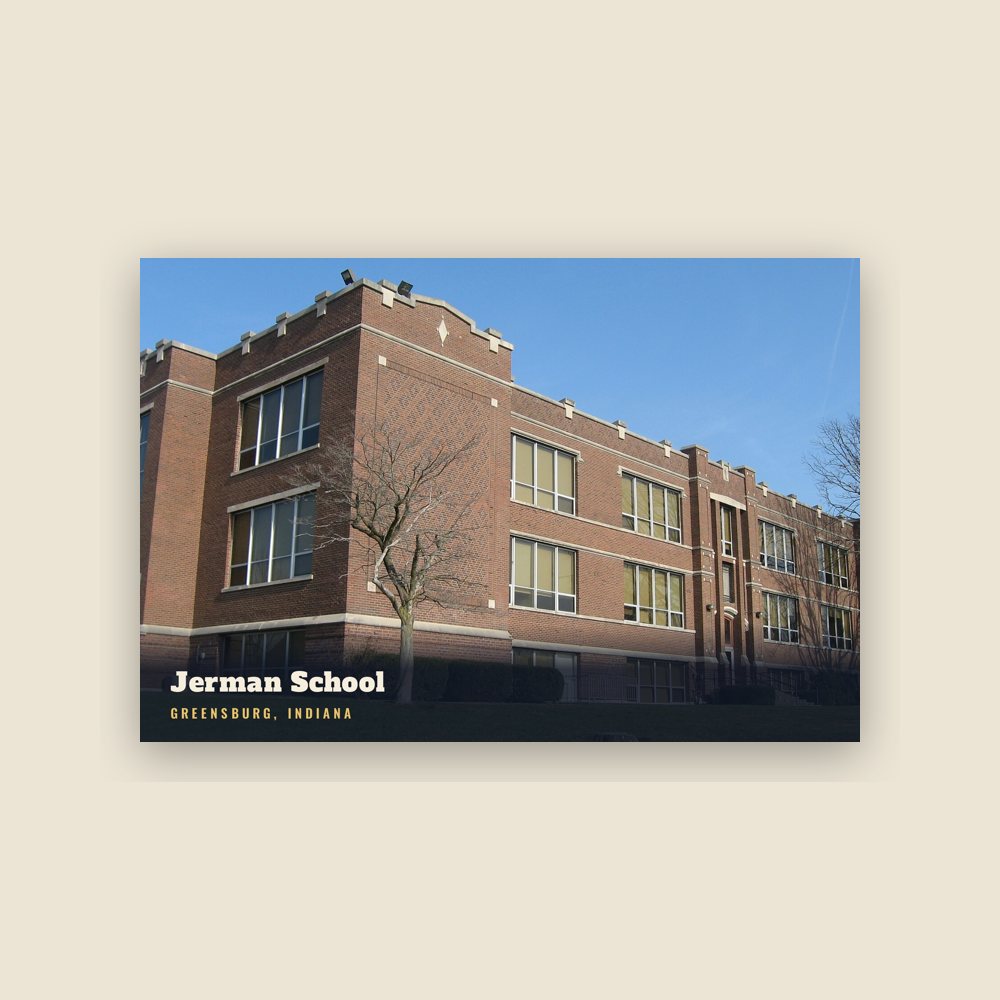
A short history of Greensburg
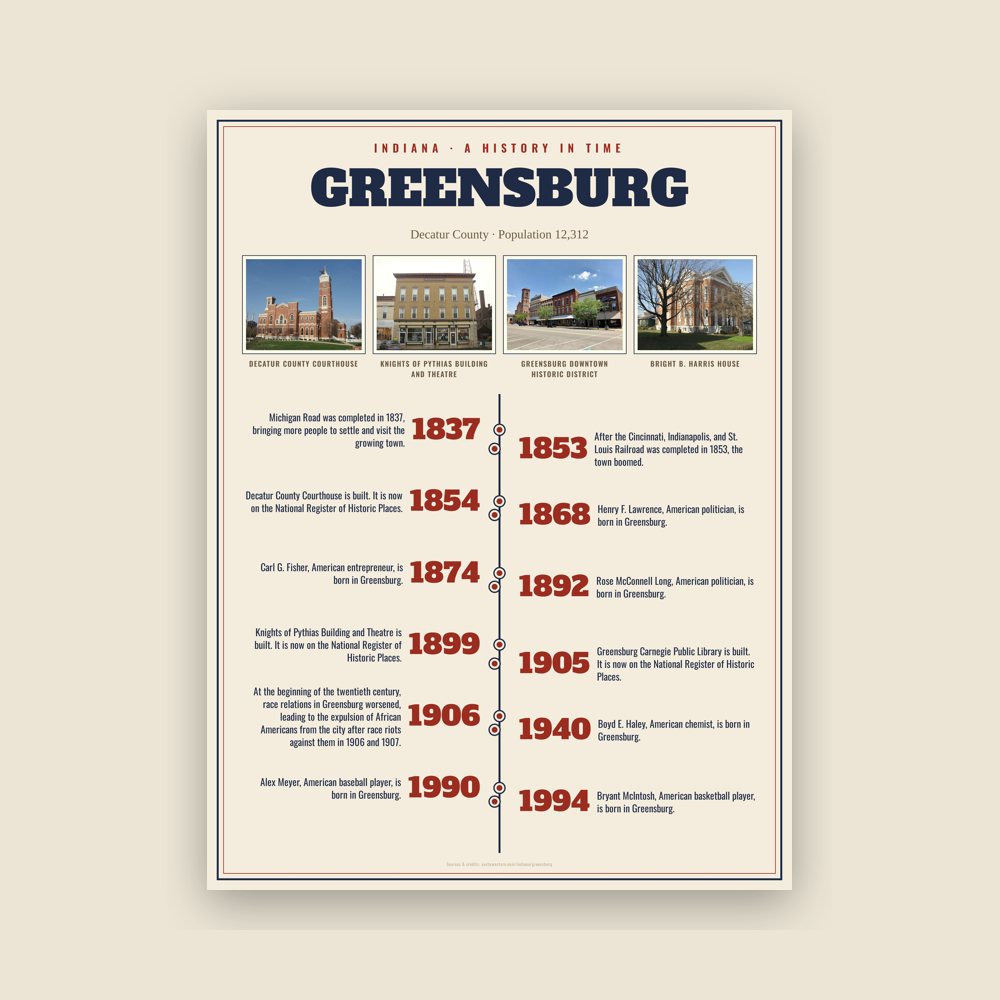
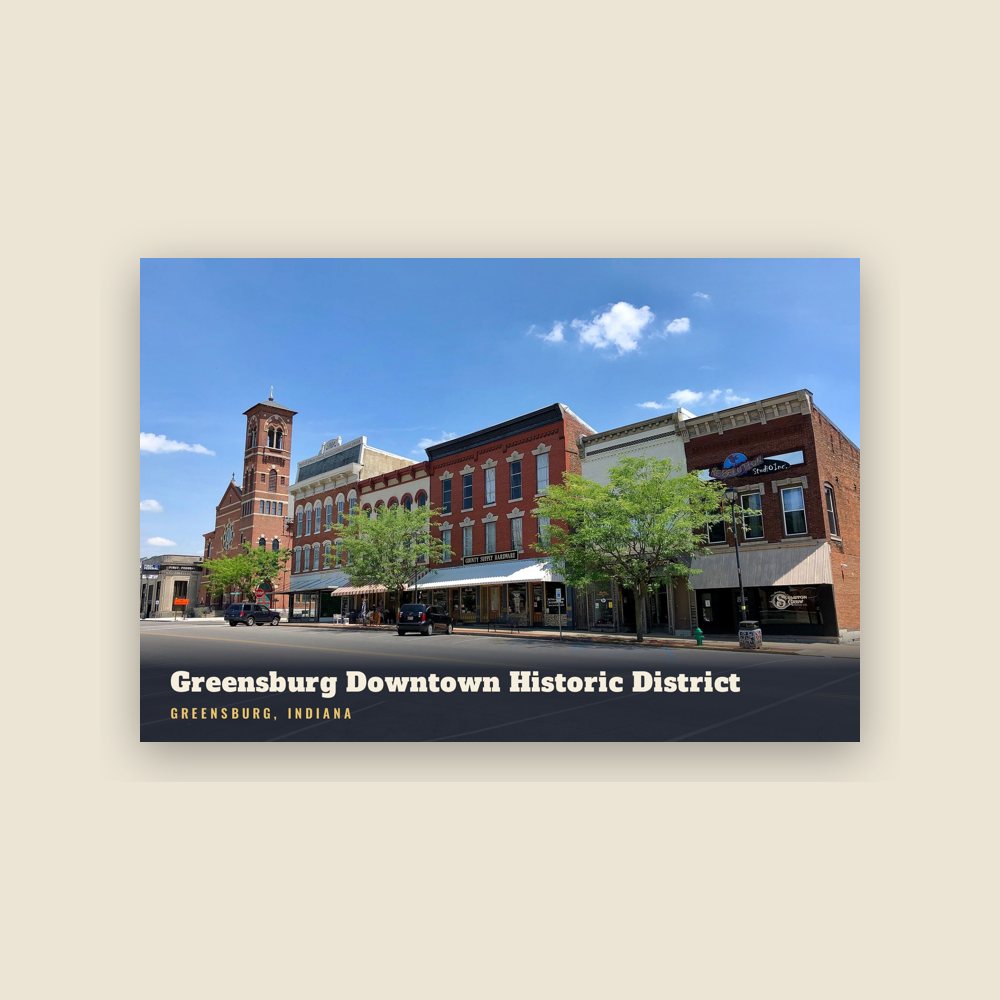
Michigan Road was completed in 1837, bringing more people to settle and visit the growing town. After the Cincinnati, Indianapolis, and St. Louis Railroad was completed in 1853, the town boomed. Agriculture, foundries, millineries, wholesale grocers, and other businesses took advantage of Greenburg's strategic rail position.
Read the full history
20th century
At the beginning of the twentieth century, race relations in Greensburg worsened, leading to the expulsion of African Americans from the city after race riots against them in 1906 and 1907. According to James W. Loewen, Greensburg then was for decades a sundown town, a town that was purposely all-white.
The Indianapolis News reported that the incident on April 30, 1907, in which white residents drove non-whites from Greensburg, began as local outrage increased following a reported assault on a well-known Decatur County woman by John Green, a Black man. The News asserted that the incident was not a race war and was instead "the work of whiskey and every good citizen of Greensburg deplores it." The News put further blame on a "wide-open policy" that allowed "disreputable whites and depraved negroes" that had been in force for two years.
Adapted (trimmed) from the Wikipedia article Greensburg, Indiana, revision 1378798802 by its contributors, licensed CC BY-SA 4.0.