A short history of Wheeling
Prior to incorporation
The land that is now Wheeling, Illinois, was controlled by the Miami Confederacy (which contained the Illini and Kickapoo tribes) starting in the early 1680s. The Confederacy was driven from the area by the Iroquois and Meskwaki in the early 1700s. The French-allied Potawatomi began to raid and take possession of Northern Illinois in the 1700s. In the late 1700s and early 1800s, the Potawatomi expanded southwards from their territory in Green Bay and westward from their holdings in Detroit, until they controlled in an L-shaped swath of territory from Green Bay to the Illinois River, and from the Mississippi River to the Maumee River. The descendants of the Potawatomi who once inhabited the land that is now Wheeling currently live on a reservation in Mayette, Kansas.
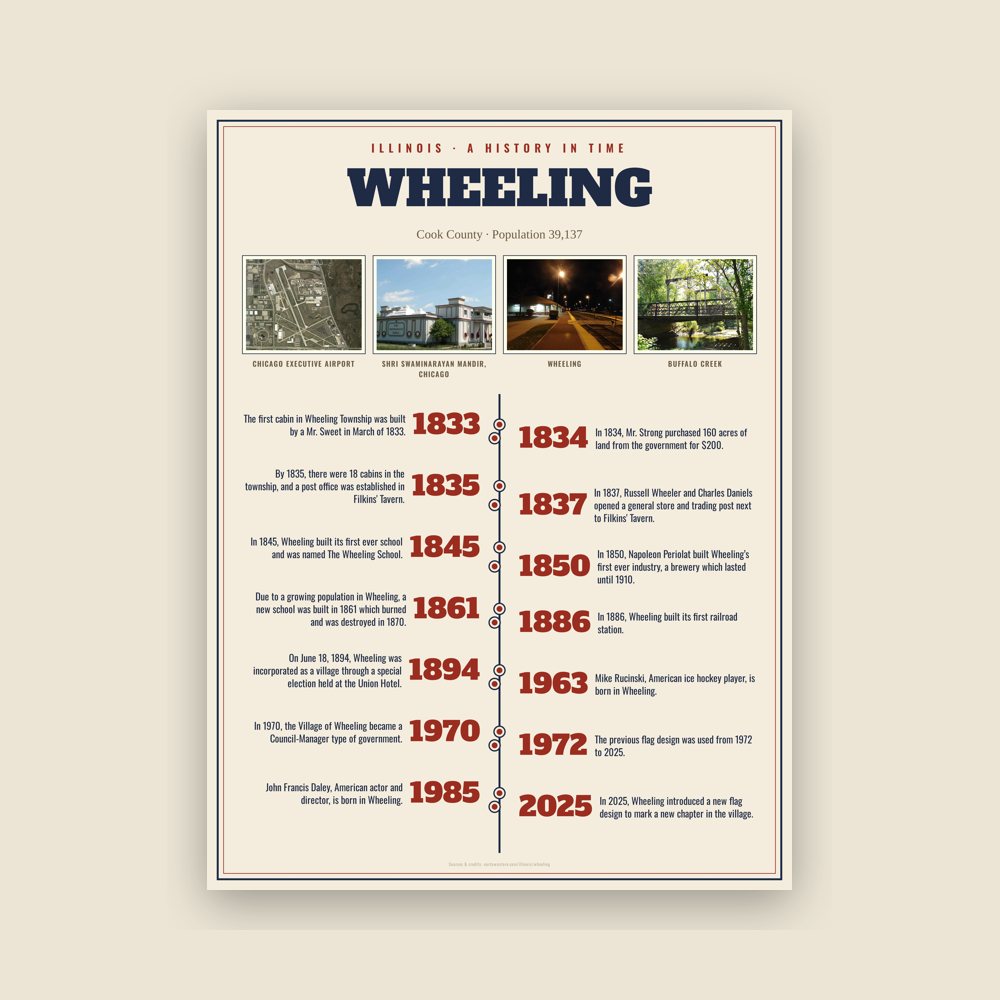
The first cabin in Wheeling Township was built by a Mr. Sweet in March of 1833. He became the first settler and was able to live peacefully alongside the neighboring Native Americans. The following September, Mr. Sweet sold the cabin to George Strong for $60, making Mr. Strong the first permanent resident in Wheeling Township. In 1834, Mr. Strong purchased 160 acres of land from the government for $200. Today, Strong Street is named after him.
In 1834, Joseph Filkins opened the first tavern-hotel in the township at the intersection of Dundee Road and Milwaukee Avenue. Joseph Filkins was also the owner of a 720 acre farm in Wheeling and he spent 15 years living in Wheeling. He laid down roads and served as postmaster, supervisor of Wheeling Township, and as the Justice of Peace. He worked alongside George Strong to help settle land claim disputes. By 1835, there were 18 cabins in the township, and a post office was established in Filkins' Tavern.
In 1837, Russell Wheeler and Charles Daniels opened a general store and trading post next to Filkins' Tavern. The settlers who migrated to that area formed the Village of East Wheeling, which later became known as simply Wheeling. In 1845, Wheeling built its first ever school and was named The Wheeling School. Due to a growing population in Wheeling, a new school was built in 1861 which burned and was destroyed in 1870. In 1850, Napoleon Periolat built Wheeling’s first ever industry, a brewery which lasted until 1910.
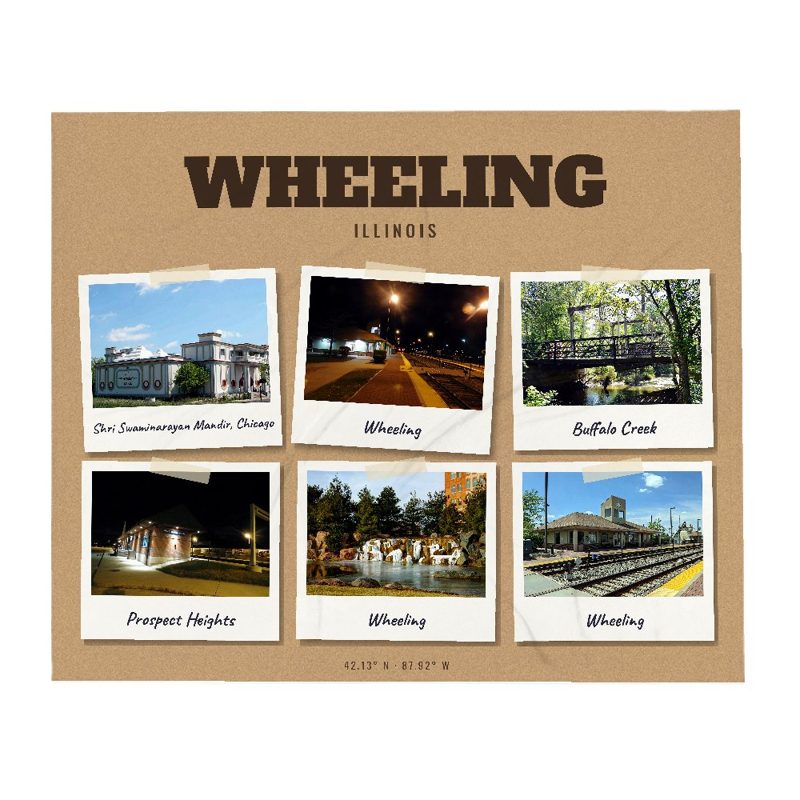
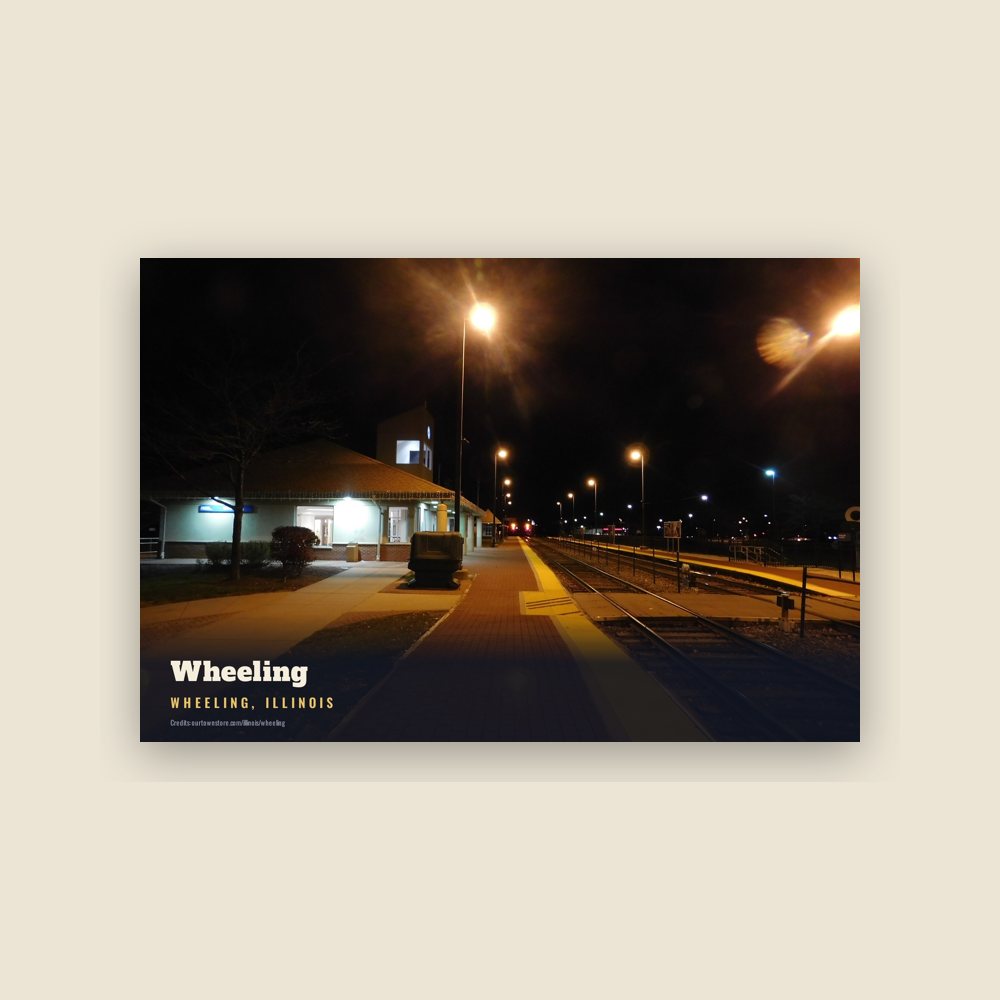
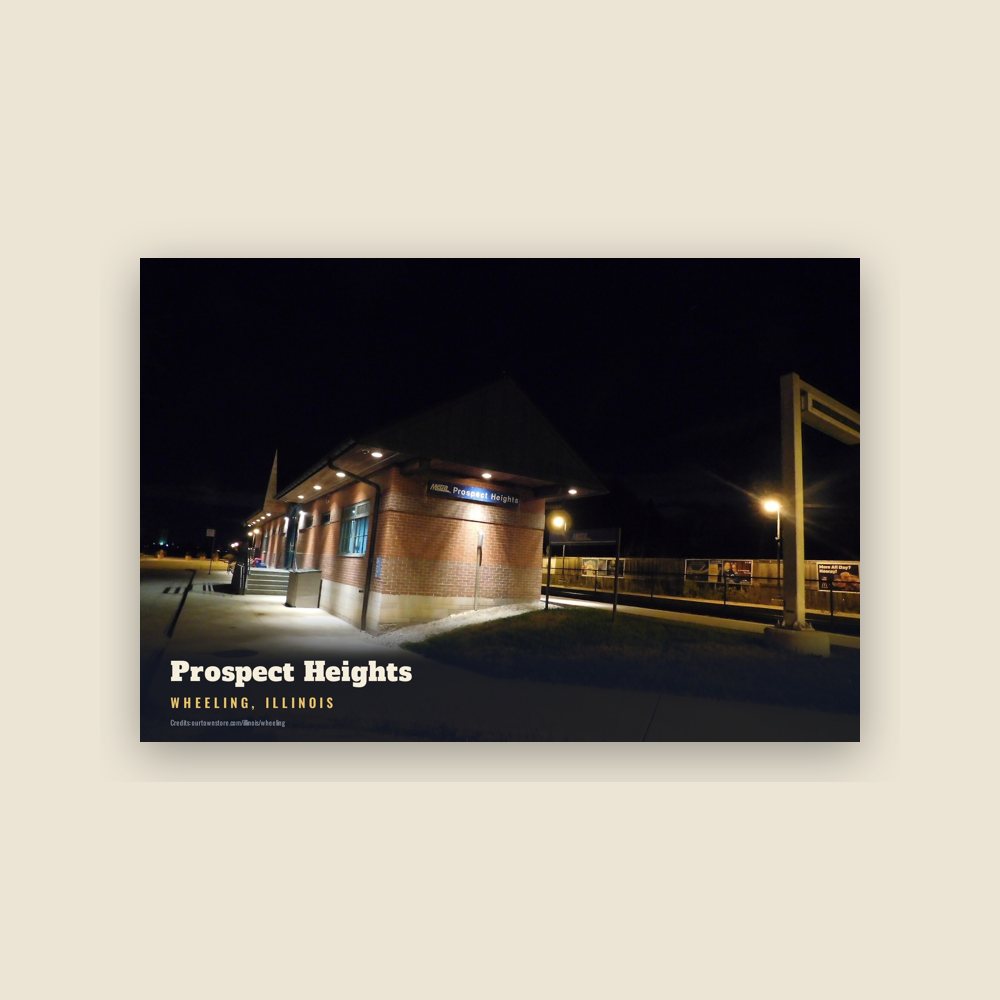
In 1886, Wheeling built its first railroad station. The railroad station wasn't part of Wheeling until the land was purchased by residents in the area. The Old Wheeling Station was part of the Soo Line and only freight trains travelled through. This forced Wheeling residents to hop on milk trains to get to Chicago and back.
Read the full history
Incorporation and post-incorporation
On June 18, 1894, Wheeling was incorporated as a village through a special election held at the Union Hotel. Forty-three people voted in favor and three voted against. On July 18, 1894, another election was held to officially elect a Village President, six trustees, a Police Magistrate, and a Village Clerk. Incorporation was needed to enforce existing ordinances and control illegal activities. Wheeling was struggling to control railroad workers who would go to taverns and drink. By incorporating, they were able to arrest them until they sobered up.
In 1894, the first Village Hall was built. It contained two jail cells and was used by both the Chief of Police and Chief Magistrate. it also served as the only polling place in the village and was where the Village Board met on the first Monday of each month. The original Village Hall is now the Wheeling Historical Museum located in Chamber Park.
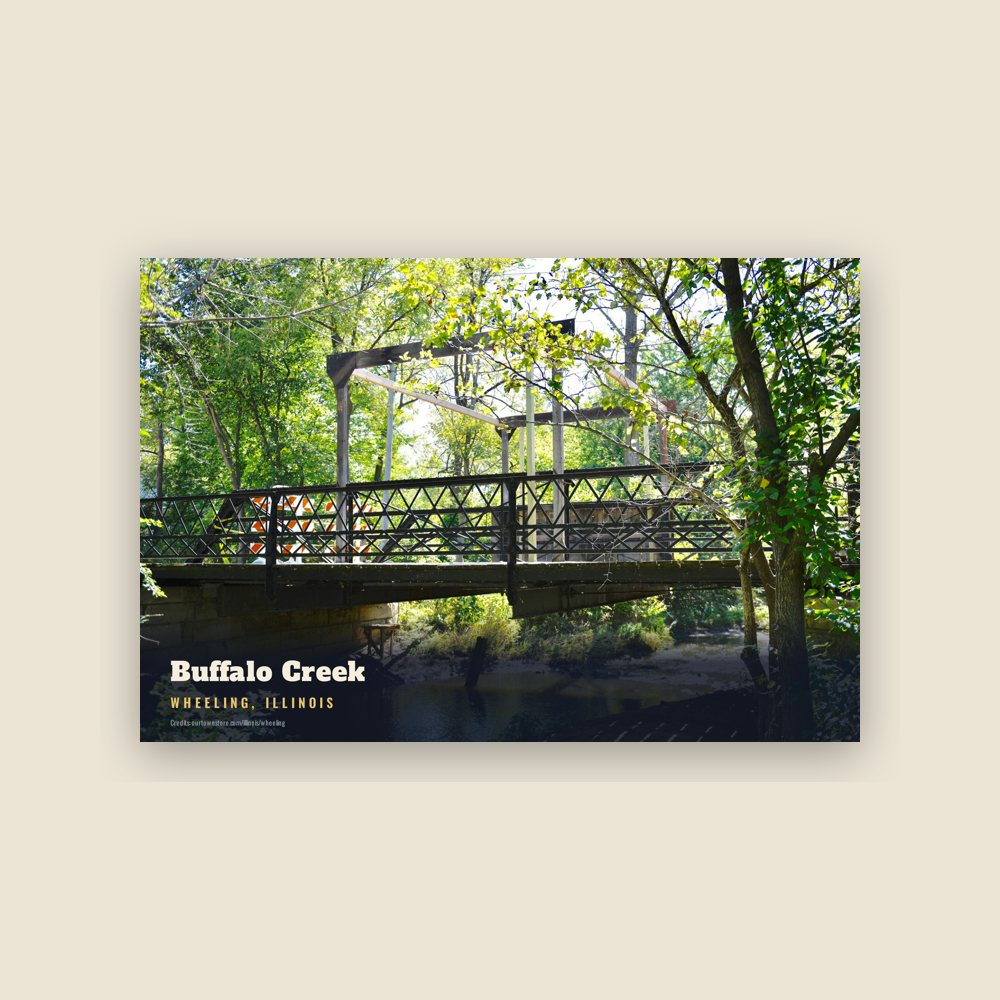
In the 1920s and 1930s, Wheeling had dairy farms like the Buffalo Creek Farm, which supplied milk to restaurants and residents of Wheeling. There was truck farms where vegetables were grown and later sold to markets in Chicago. Spanish-speaking migrants from Texas and Mexico would come and work on the truck farms in Wheeling during the Spring and Summer seasons. Many would go back to their homes when the farming season was over, but some decided to stay year round.
In 1970, the Village of Wheeling became a Council-Manager type of government. Currently, Wheeling has a Village President, six trustees, a Village Clerk, and a Village Manager. The Village is a home-rule community, which allows the Village to make its own laws and carry out its responsibilities.
In 2025, Wheeling introduced a new flag design to mark a new chapter in the village. The previous flag design was used from 1972 to 2025.
Adapted (trimmed) from the Wikipedia article Wheeling, Illinois, revision 1381501946 by its contributors, licensed CC BY-SA 4.0.