There were a series of small settlements near Waltonville prior to its formation.
- CountyJefferson County
- Population408 (2020 U.S. Census)
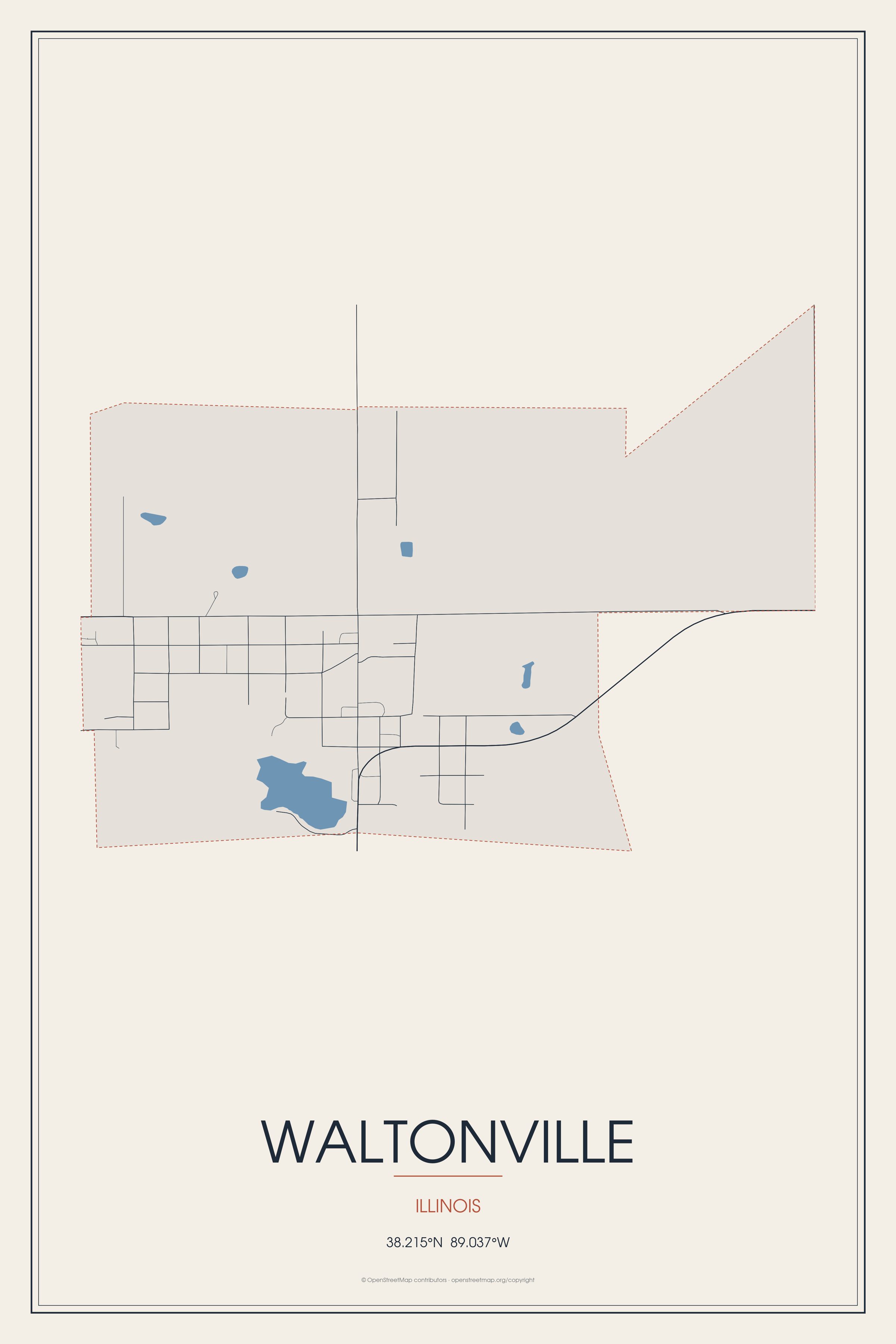
Waltonville, Illinois gifts and souvenirs: 15 designs made from Waltonville's own map, landmarks and history, from $16 to $95. Printed to order and shipped free in the USA.
| Popular | Price |
|---|---|
| Waltonville Hometown Ornament | $23 |
| Waltonville Varsity Crewneck | from $57 |
| Waltonville Est. Tee | from $33 |
| Waltonville Town Line Mug | from $26 |
| Waltonville Market Tote | $37 |
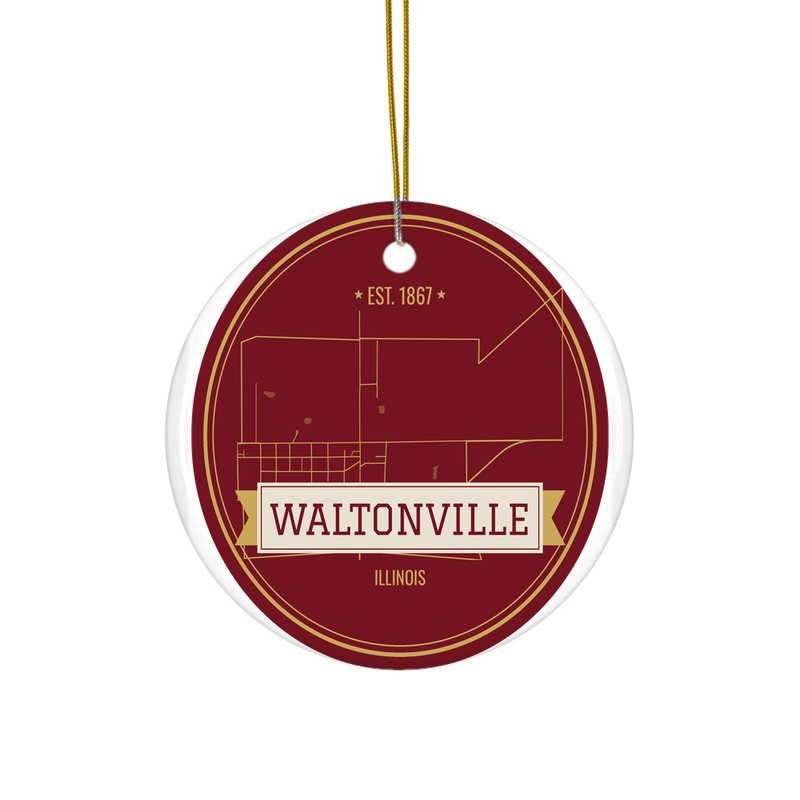
Ceramic keepsake, gold ribbon
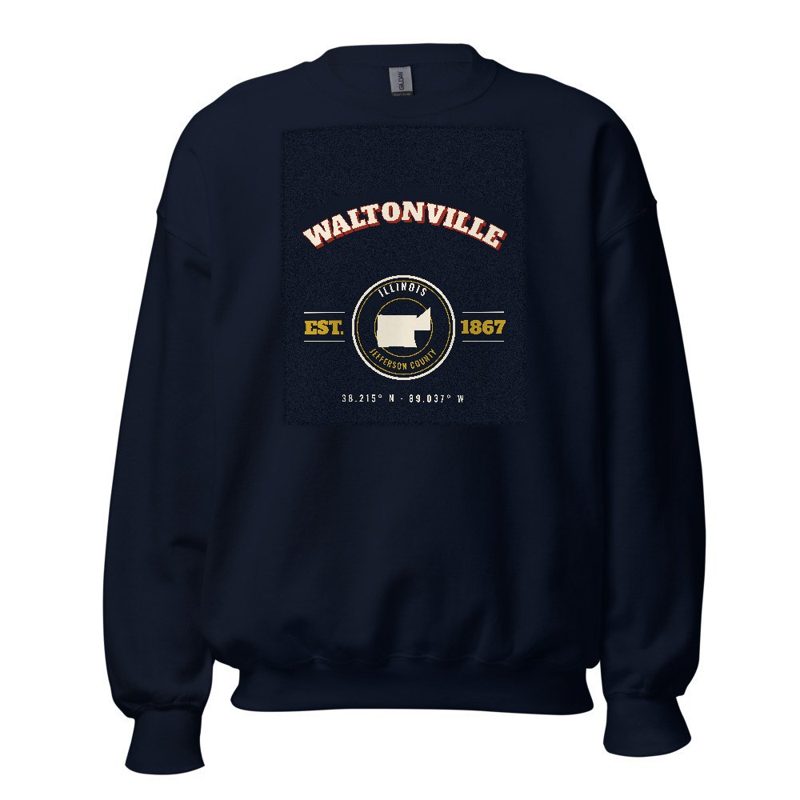
Heavy-blend fleece, street map printed on the back
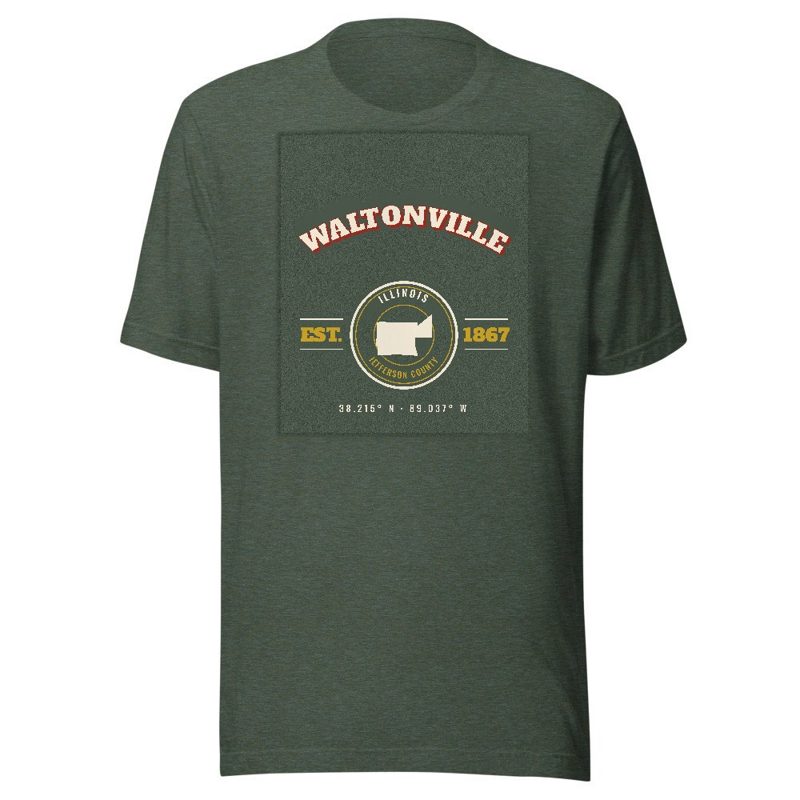
Soft Bella+Canvas jersey
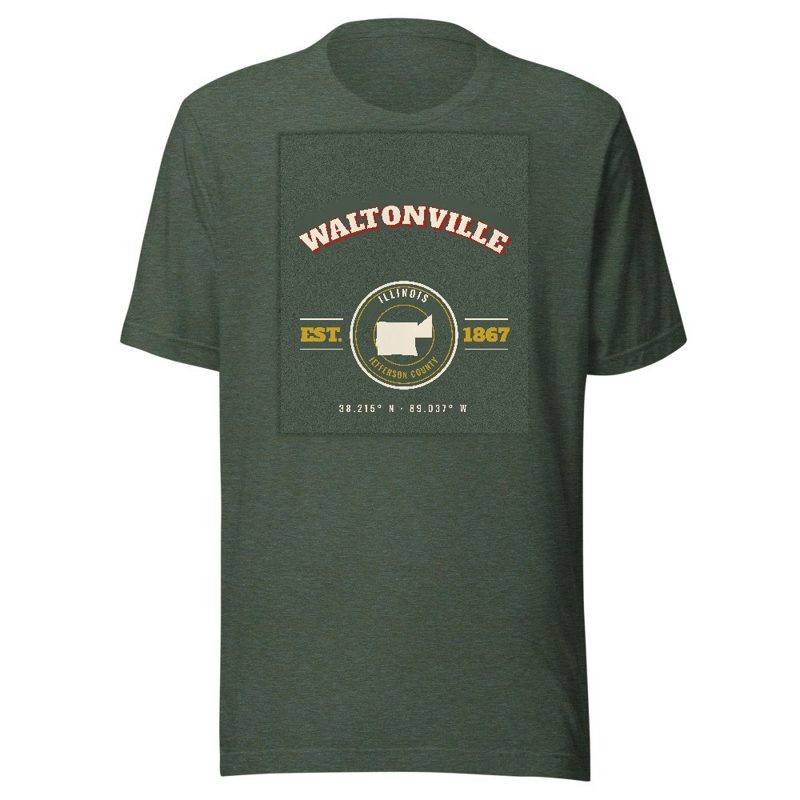
Kids' Bella+Canvas jersey, youth sizes
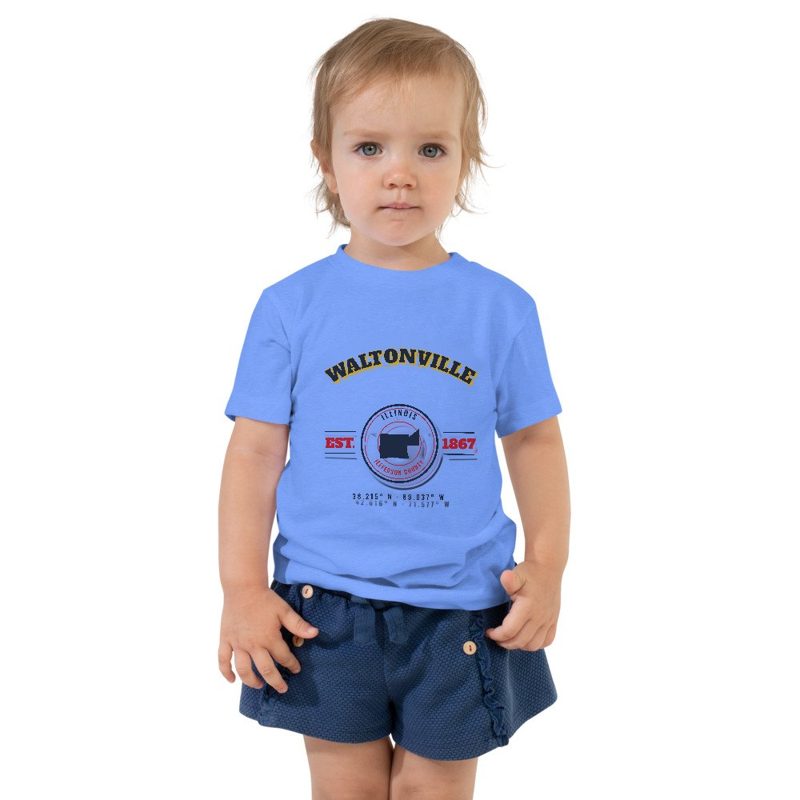
Bella+Canvas toddler jersey
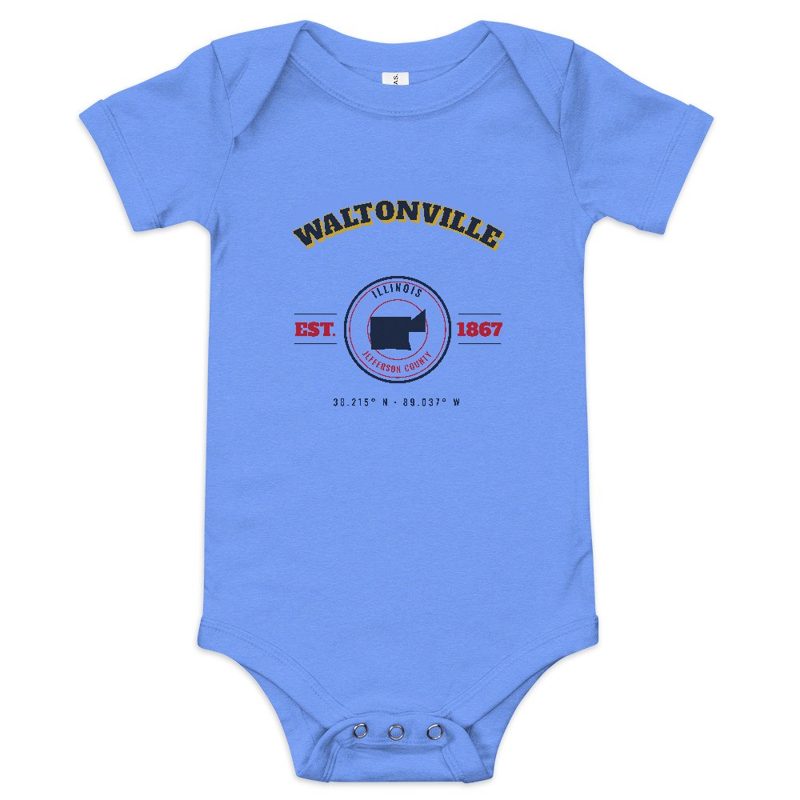
Bella+Canvas baby bodysuit
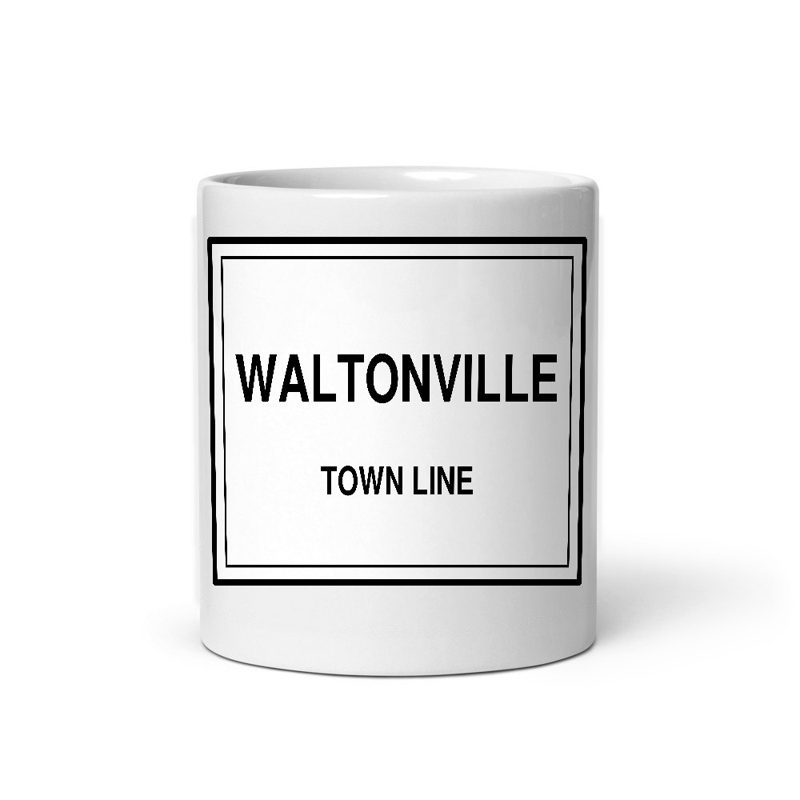
Glossy ceramic, dishwasher safe
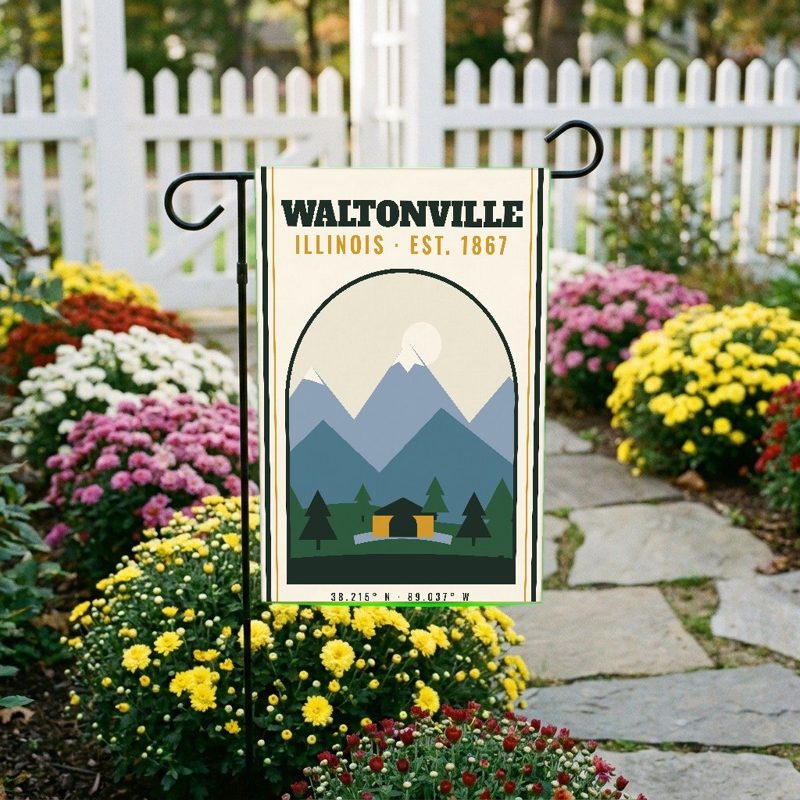
Weatherproof, for the front walk
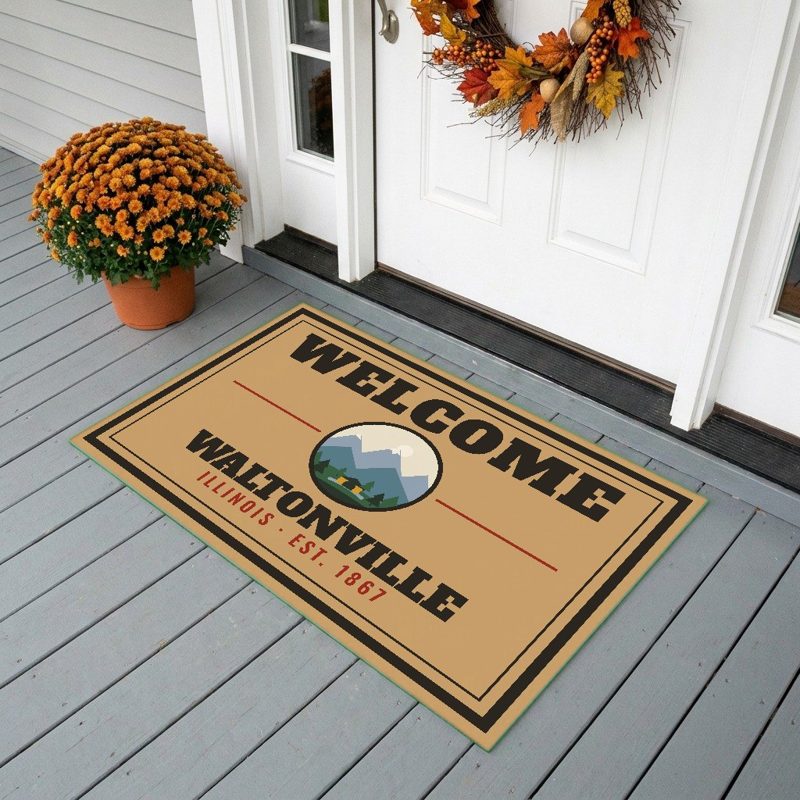
24″×16″, printed coir-look fibers, rubber back
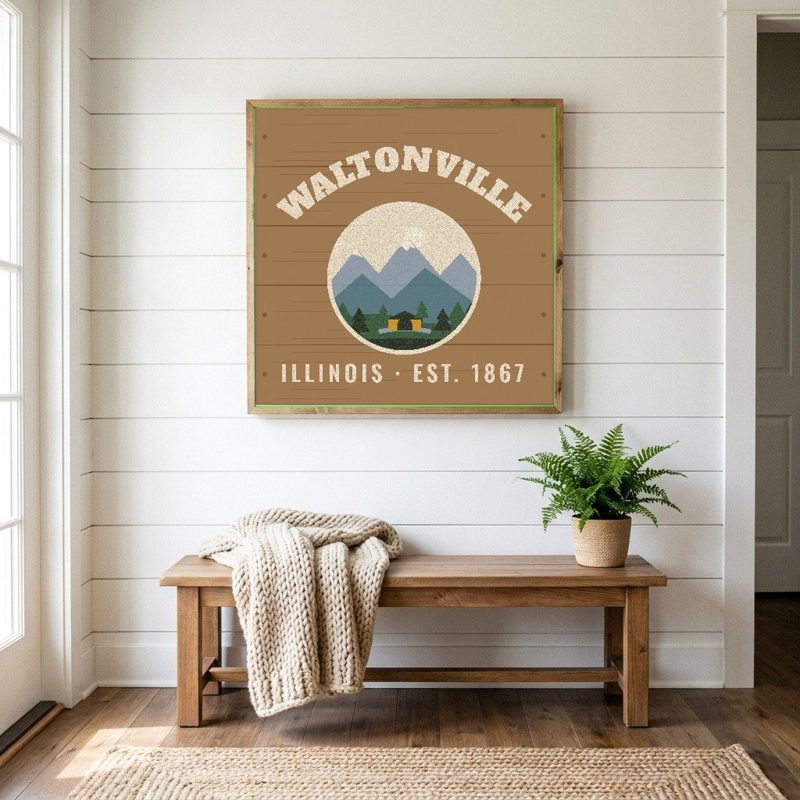
12″×12″ printed wood, ready to hang
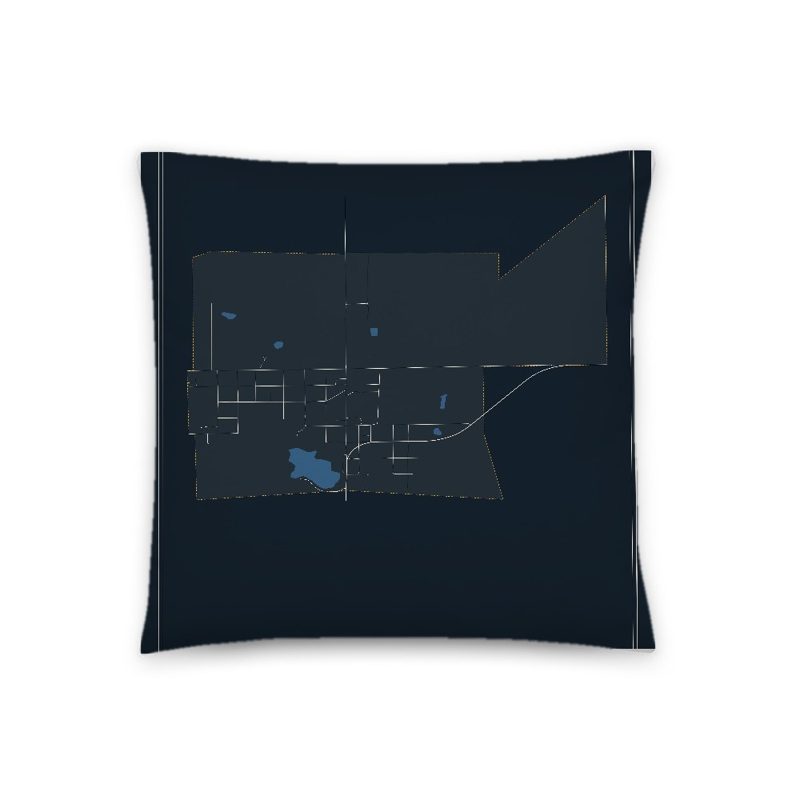
Soft-touch, zip cover
Sturdy all-over-print tote
Glossy top, cork back
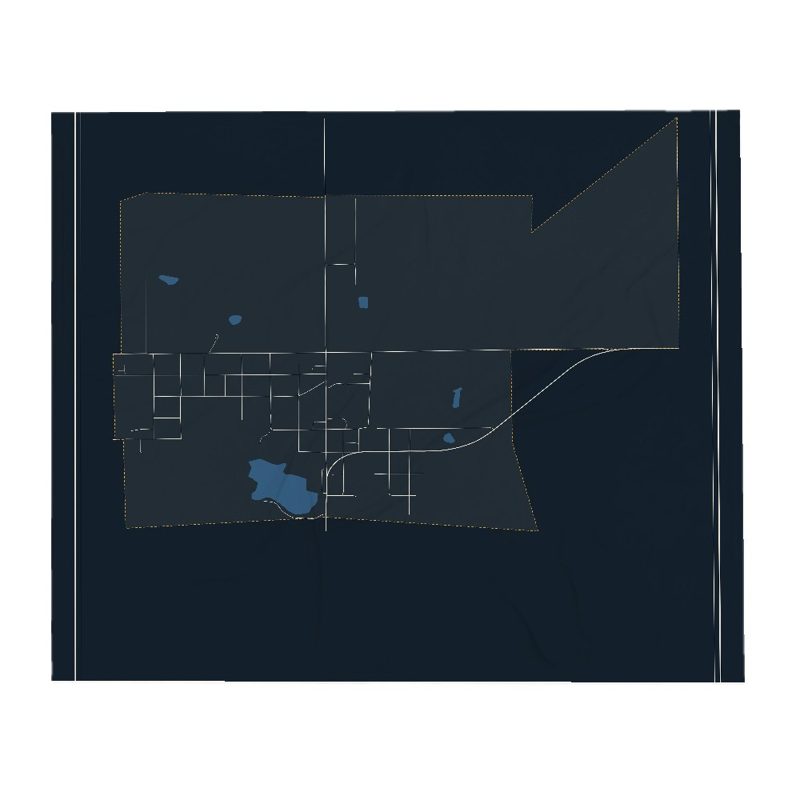
Soft fleece, 50″×60″
20 oz, double-wall stainless
There were a series of small settlements near Waltonville prior to its formation.
There were a series of small settlements near Waltonville prior to its formation. In 1840, Eli Gilbert dammed Rayse Creek about a mile northeast of Waltonville, near the point where the Mt. Vernon/Pinckneyville road crossed the creek. He built a saw mill, grist mill and store at this location, which was called "Mill Town". In 1860, Knob Creek Post Office was opened there. This was in McClellan Township.
In 1867, a settlement called Williamsburg was started, about a half mile west of Mill Town. This was in Knob Prairie, Blissville Township, just to the north of the present town of Waltonville. Knob Prairie owes its name to a steep hill, or knob, that arises just to the northwest of Waltonville. The town's water tower sits atop the knob.
Williamsburg was platted in 1867. It was possibly named for the surveyor, J. D. Williams. Williamsburg was at the intersection of the Shawneetown/Nashville and Mt. Vernon/Pinckneyville roads, neither of which exist any more. After the post office refused to recognize the "Williamsburg" name, it was called the "Laur Post Office", after Capt. Joseph Laur, who commanded a local company in the Civil War.
Waltonville, to the south of the knob, started as a small store owned by Rob Mannen. The town was named for his mother, Eliza A. Walton Mannen. The town took off in 1893 with the completion of a rail line from Mt. Vernon to Chester. Williamsburg moved down to the new rail depot. The rail line is now part of the Union Pacific system.
The Universalist Church existed in Williamsburg prior to 1870, and moved to Waltonville before 1906. This church was still operating as late as 1980. Waltonville was for many years the smallest town in the United States to have a Universalist Church. This may be another reflection of the numerous obscure ethnic groups that maintained an identity in the rural coal fields of Southern Illinois.
Many underground coal mines were opened near Waltonville. Immigrants came to work these mines, mainly from Poland. By the 1950s, the rural areas west of Waltonville were predominantly Polish, and the main language spoken was Polish. That language slowly faded with the advent of television. Today, only a few people speak any Polish. Many still identify as Polish, though, and they continue to attend St. Barbara's Catholic Church in nearby Scheller.
Adapted (trimmed) from the Wikipedia article Waltonville, Illinois, revision 1379598211 by its contributors, licensed CC BY-SA 4.0.
We share a part of every Waltonville sale with local partners, and we'd love to print from your collection. Old photographs, maps and postcards make the best keepsakes.
Partner with usA favorite landmark, your street, a school or team, an anniversary gift, a different product. Tell us and we'll get back to you by email.
Waltonville's population was 408 in the 2020 U.S. Census, down from 434 in 2010.