The original capital of Illinois was at Kaskaskia, 70 miles (110 km) southwest of present-day Walnut Hill. Walnut Hill is the birthplace of William Sherman Jennings, politician.
- CountyMarion County
- Population95 (2020 U.S. Census)
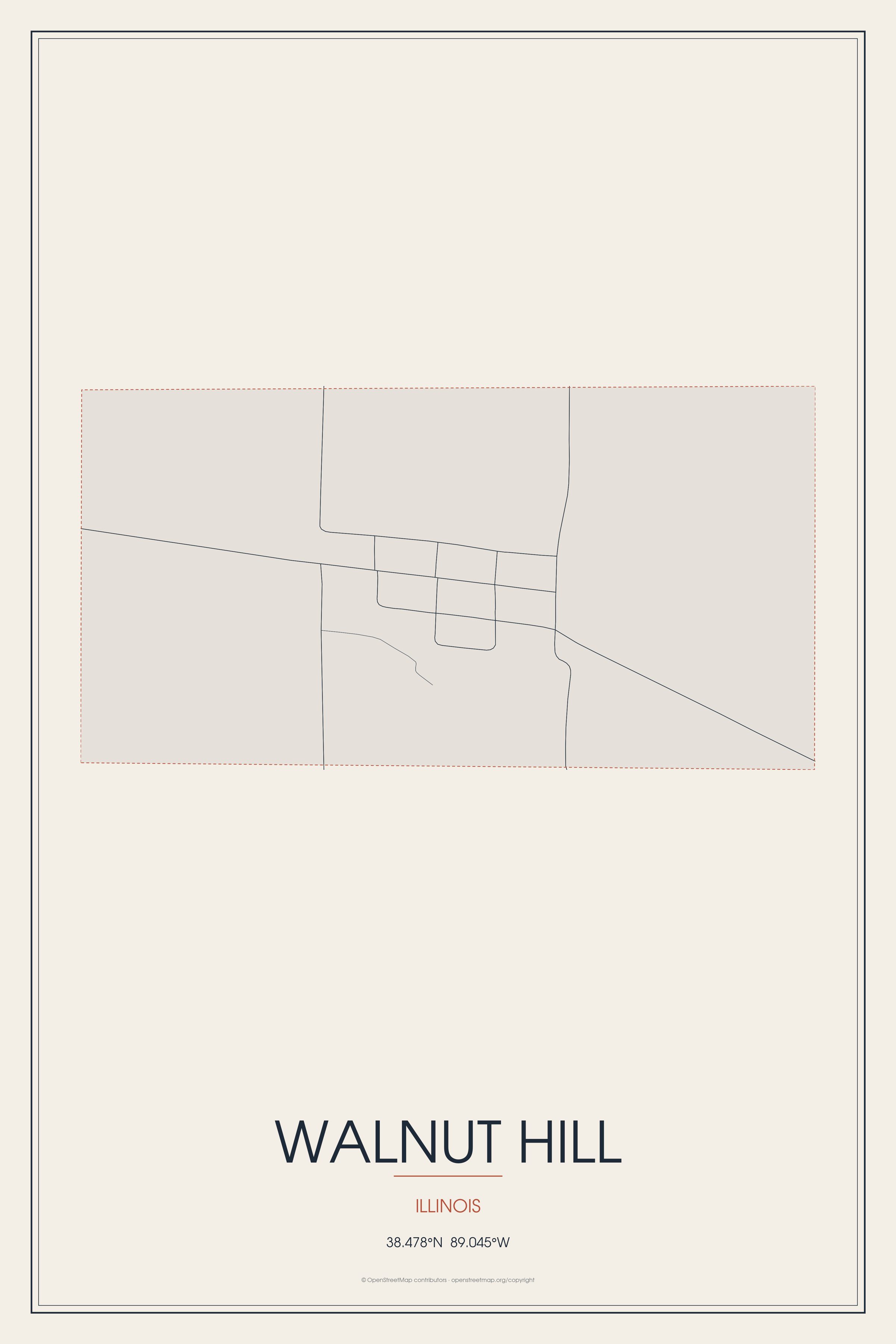
Walnut Hill, Illinois gifts and souvenirs: 15 designs made from Walnut Hill's own map, landmarks and history, from $16 to $95. Printed to order and shipped free in the USA.
| Popular | Price |
|---|---|
| Walnut Hill Hometown Ornament | $23 |
| Walnut Hill Varsity Crewneck | from $57 |
| Walnut Hill Est. Tee | from $33 |
| Walnut Hill Town Line Mug | from $26 |
| Walnut Hill Market Tote | $37 |
Ceramic keepsake, gold ribbon
Heavy-blend fleece, street map printed on the back

Soft Bella+Canvas jersey
Kids' Bella+Canvas jersey, youth sizes

Bella+Canvas toddler jersey
Bella+Canvas baby bodysuit
Glossy ceramic, dishwasher safe
Weatherproof, for the front walk
24″×16″, printed coir-look fibers, rubber back
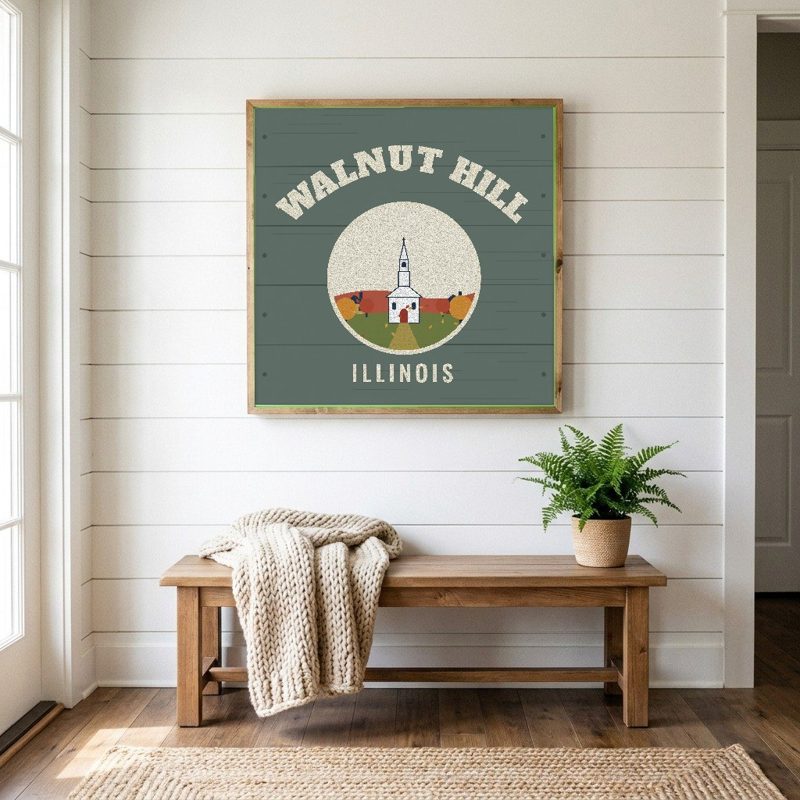
12″×12″ printed wood, ready to hang
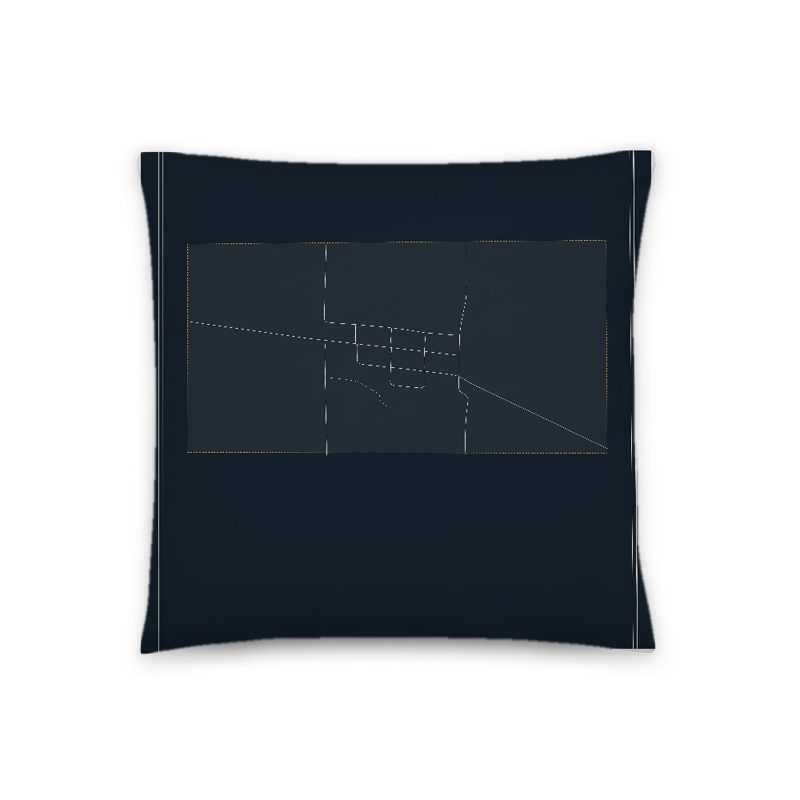
Soft-touch, zip cover

Sturdy all-over-print tote
Glossy top, cork back
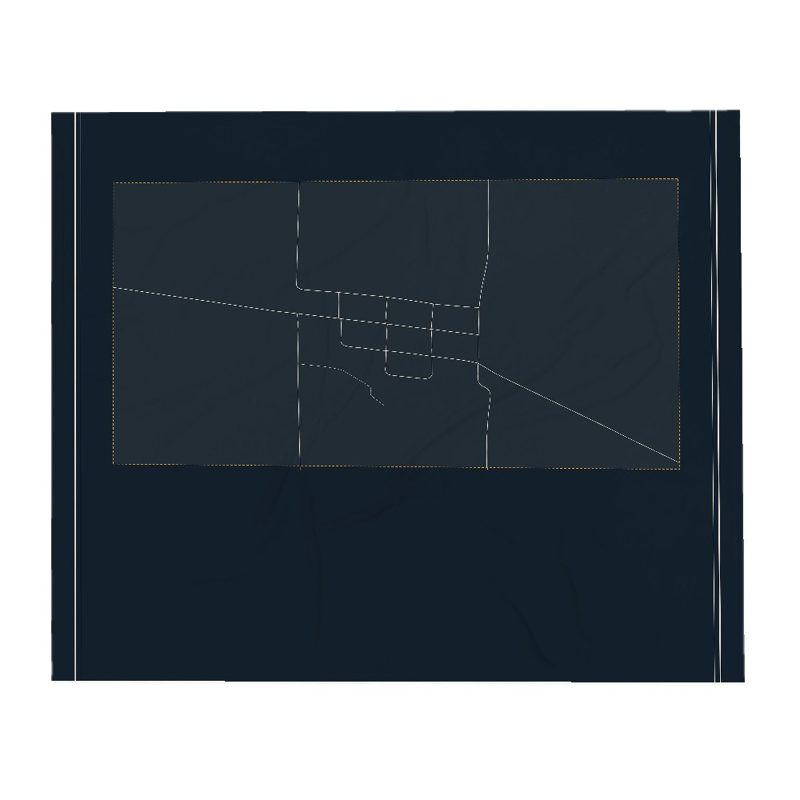
Soft fleece, 50″×60″

20 oz, double-wall stainless
The original capital of Illinois was at Kaskaskia, 70 miles (110 km) southwest of present-day Walnut Hill. Walnut Hill is the birthplace of William Sherman Jennings, politician.
Walnut Hill was once the intersection of two of the main roads in Illinois: the George Rogers Clark Trace and the Yadda Road.
River]] divide, which went through Walnut Hill. George Rogers Clark marched through Walnut Hill in February 1779 on his march from Fort Kaskaskia to Fort Vincennes, which resulted in the conquest of Illinois by the army of Virginia.
Traces of the Kaskaskia/Vincennes road can be seen in several short stretches in northwestern Jefferson County, which point toward Walnut Hill, ignoring the surveyed Section boundaries. Northeast of Walnut Hill, the Kell Road is a winding, pioneer road up to its intersection with Interstate 57, from which it follows the modern Section lines to Kell.
Walnut Hill was also on the Goshen Road, an early road across Illinois, from Shawneetown to the Goshen Settlement near Glen Carbon. Remnants of the Goshen Road can be seen in short segments of Pioneer Road between Dix and Walnut Hill. The construction of the railroad tracks from Dix to Walnut Hill possibly obliterated much of the original Goshen road.
In 1823, Thomas D. Minor built a road from Mount Vernon to Walnut Hill. This was called the "Vandalia Road", in that it connected with roads to the new state capital in Vandalia. The new road joined the Goshen Road just south of Walnut Hill. Today, it is called the "Old Centralia Road". The new road eventually captured much of the traffic on the Goshen Road since it provided a shorter route across Jefferson County.
The modern road (Walnut Hill Road) running northwest out of Walnut Hill toward Centralia is the same as the Goshen Road as shown on the original survey maps of Illinois.
In the early 19th century, William Goings (also spelled Goins) kept a tavern that was presumably on land homesteaded by Goings about two miles south of Walnut Hill in Jefferson County. Goings led a band of robbers known as the "Goings Gang" that preyed on frontier travelers on the Vincennes-St. Louis Trace, a dirt road that was originally an old bison path that extended through southern Illinois. The gang operated a series of connected frontier taverns along this road, passing information on to gang members whenever a traveler worth robbing stopped at one of their taverns. When the unfortunate traveler reached a remote spot, the gang members would assemble and relieve them of their property.
As in other frontier areas, neighboring settlers overlooked this activity until the Goings Gang escalated to murder in 1818–1819. In response, the settlers organized a group of vigilantes or "rangers" who surprised the Goings Gang at Walnut Hill. The gang members were tied to trees, flogged, and ordered to leave the county, an order which all but one obeyed. The following year, the vigilantes returned and cropped the ears of this obstinate gang member, who may have been criminal gang leader William Goings, possibly because they believed he had no use for his ears as he would not listen and cease in his criminal activities. The tavern site of one of the reported gang members, Samuel Young of Marion County, was excavated by archaeologists working for the Illinois Department of Transportation in 1988 prior to its destruction by a highway project.
Adapted (trimmed) from the Wikipedia article Walnut Hill, Illinois, revision 1383252371 by its contributors, licensed CC BY-SA 4.0.
We share a part of every Walnut Hill sale with local partners, and we'd love to print from your collection. Old photographs, maps and postcards make the best keepsakes.
Partner with usA favorite landmark, your street, a school or team, an anniversary gift, a different product. Tell us and we'll get back to you by email.
Walnut Hill's population was 95 in the 2020 U.S. Census, down from 108 in 2010.