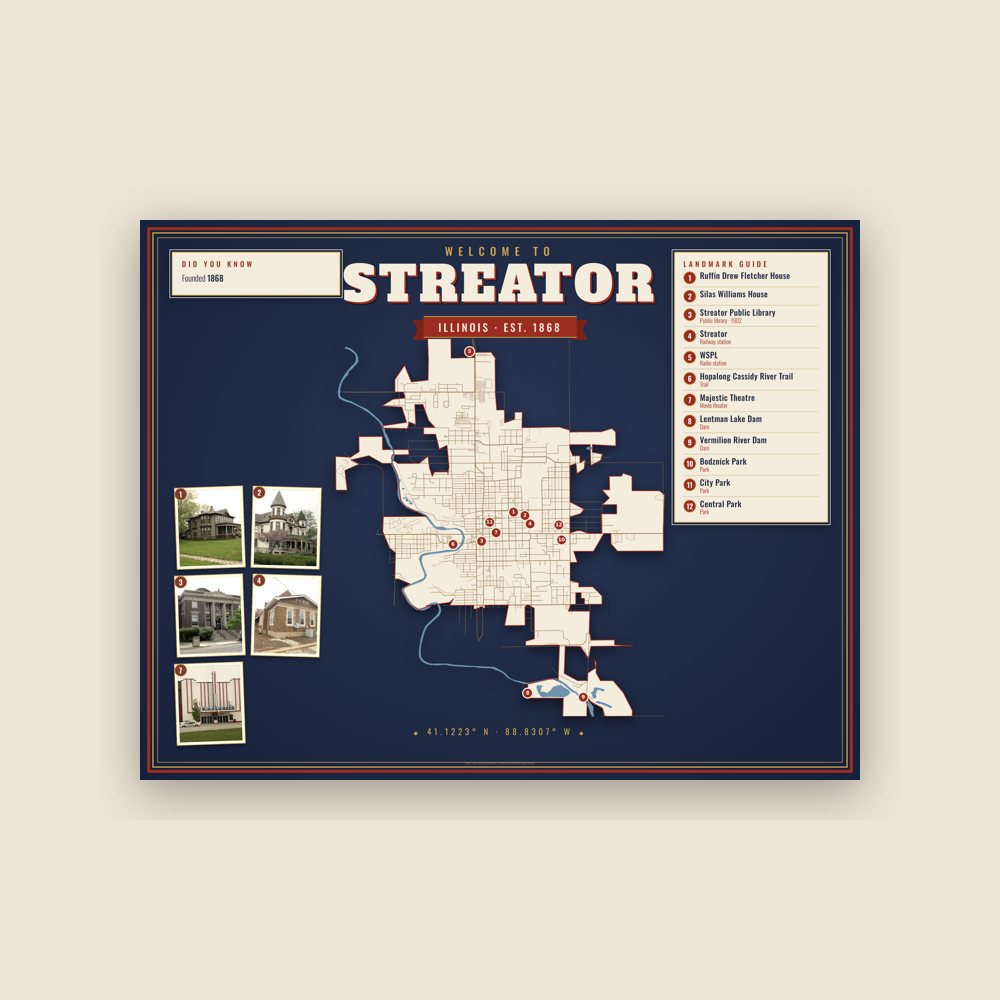
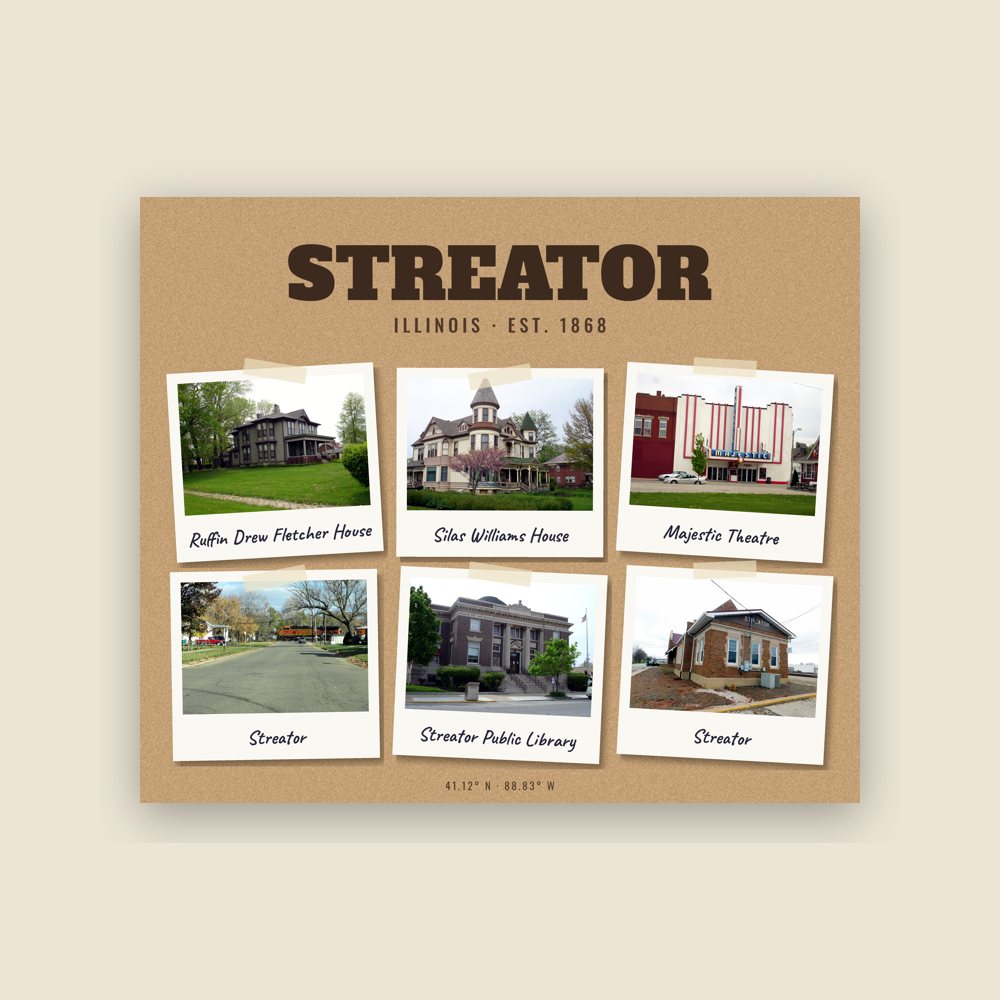
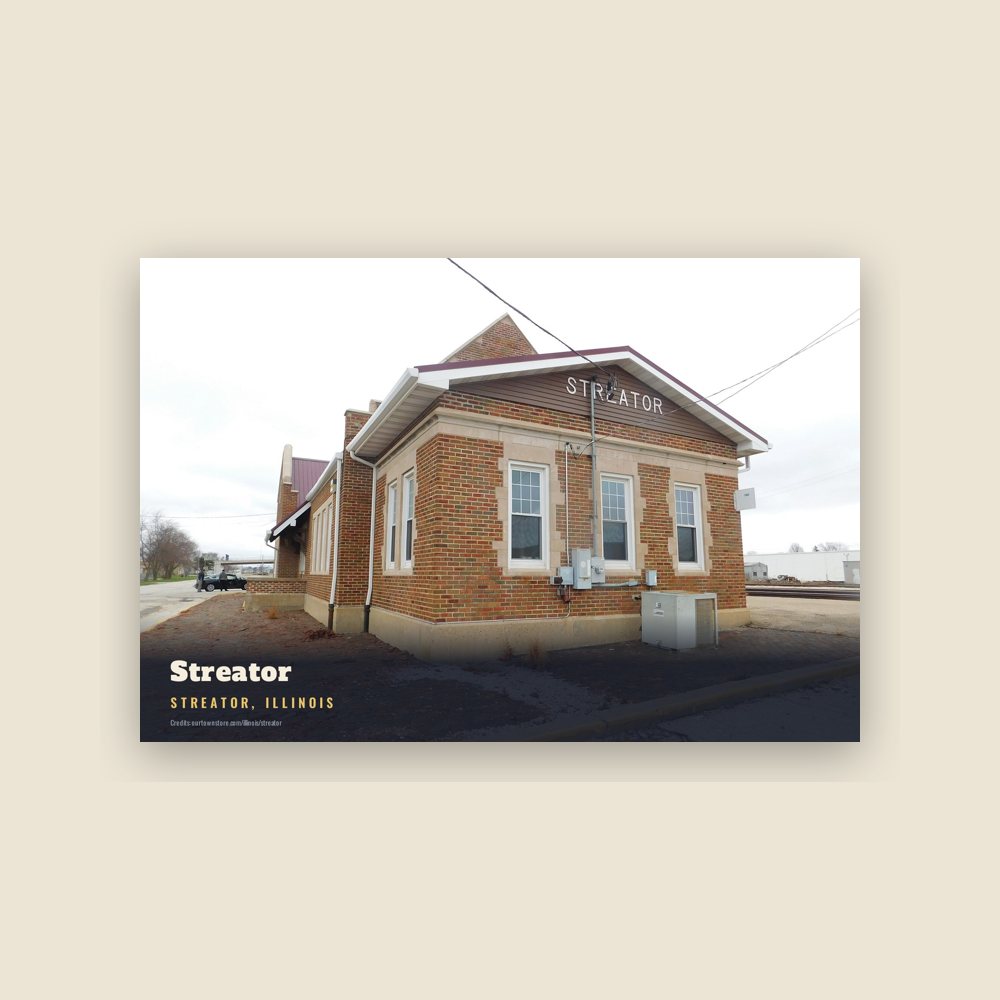
Although settlements had occasionally existed in the area, they were not permanent. In 1824, surveyors for the Illinois and Michigan Canal which would extend from Chicago's Bridgeport neighborhood to the Illinois River, a tributary of the Mississippi River, arrived in this area of the Vermilion River, followed by homesteaders by the 1830s. In 1861, miner John O'Neill established a trading post called "Hardscrabble" (ironically an early name for the Bridgeport neighborhood), supposedly because he watched loaded animals struggle up the river's banks. Another name for the new settlement was "Unionville".
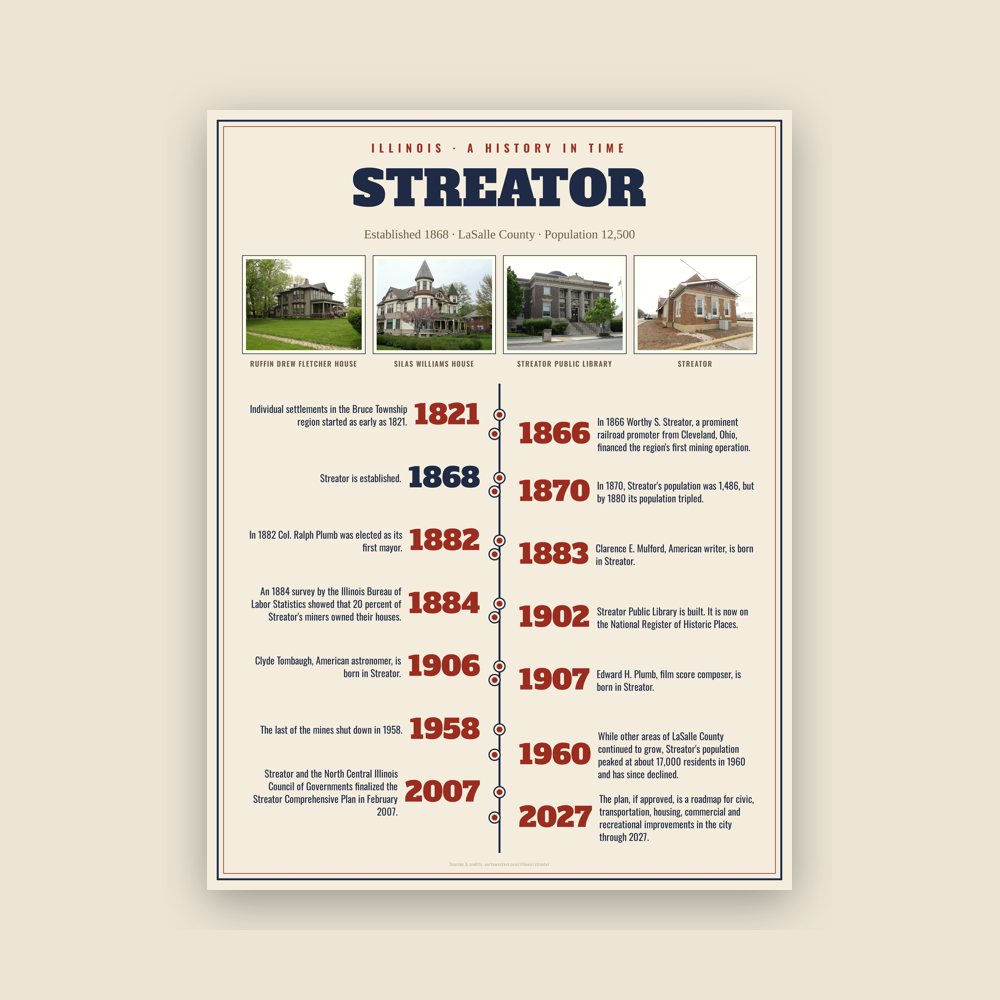
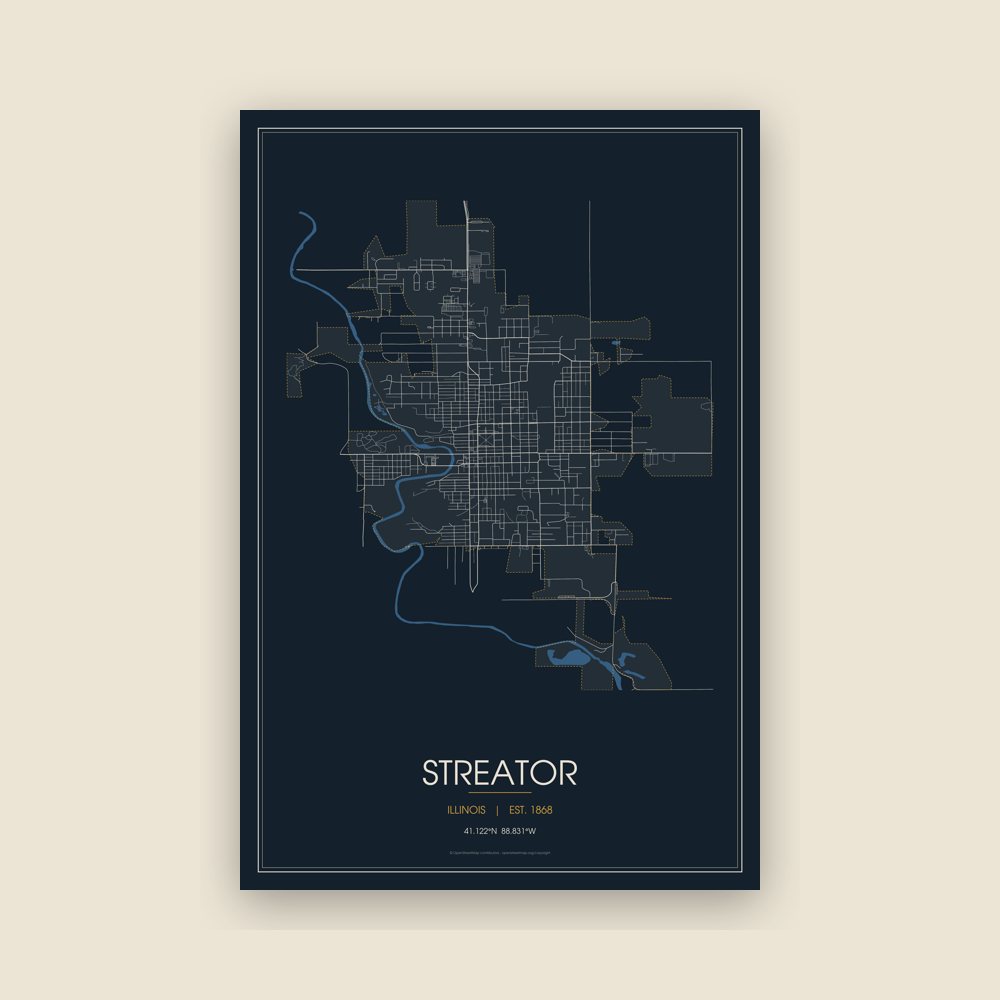
Streator received its current name to honor Worthy S. Streator, an Ohio industrialist who financed the region's first coal mining operation. Streator received a town charter in 1868 and incorporated as a city in 1882. In 1882 Col. Ralph Plumb was elected as its first mayor. Streator's early growth was due to the coal mine, as well as a major glass manufacturer and its status as a Midwestern railroad hub. Today Streator's economy is led by heavy-equipment manufacturer Vactor and food distributor U.S. Foodservice.
The city is the hometown of Clyde Tombaugh, who in 1930 discovered the dwarf planet Pluto, the first object to be discovered in what would later be identified as the Kuiper belt; and George "Honey Boy" Evans, who wrote "In the Good Old Summer Time."
Read the full history
Pre-settlement
The city of Chicago served as the main impetus of growth in the area throughout the early 19th century alongside—of more importance to the region around Streator—the development of the Illinois and Michigan Canal in 1821. This canal connected Lake Michigan to the Mississippi River and greatly increasing shipping traffic in the region. Land speculation in areas lining the canal and rivers ensued and towns sprouted quickly. Individual settlements in the Bruce Township region started as early as 1821. In 1861, John O'Neil established the first settlement in what was to become the city of Streator when he opened a small grocery and trading business.
Coal and cityhood
Streator began with coal. Vast beds of coal lie just beneath the surface throughout much of Illinois. The demand for coal was increasing in the mid-19th century, and East Coast capitalists were willing to invest in this region. The area was originally known as Hardscrabble, "because it was a hard scrabble to cross the Vermilion River and get up the hill to where the town was first located". The town was renamed Unionville in honor of the local men who fought for the Union during the Civil War.
In 1866 Worthy S. Streator, a prominent railroad promoter from Cleveland, Ohio, financed the region's first mining operation. Streator approached his nephew Col. Ralph Plumb at a railway station in December 1865 about overseeing a mining operation in central Illinois for him and several investors. Colonel Plumb agreed and arrived in the town then called Hardscrabble in February 1866. Success of the project required a rail line near the mines. Plumb and Streator "invited" Streator's friend, then-Ohio Congressman James A. Garfield, to sign on as an investor. In return, Garfield was expected to work with Robert C. Schenck, then the president of the American Central railroad, in getting the railroad to "bend their lines" to Streator, though this did not pan out. The Vermilion Company then made arrangements with the Fox River line for their much-needed rail service.
Included in Col. Plumb's duties were overseeing the platting and incorporation of the quickly growing area. Plumb served as Streator's first mayor, serving two terms. Plumb's mark on the early development of Streator was notable. The main hotel and the local opera house bore his name. He financed the construction of the city's first high school. Earlier in his life he served as an Ohio state representative and as an officer in the Union Army. Later in life he served Illinois as a representative in Congress.
Streator grew rapidly due to a number of factors: the need for coal in Chicago, the desire of European immigrants to come to America, and the investments made by East Coast capitalists willing to invest in coal operations. Plumb needed laborers for his mines, but the Vermilion Coal Company was unable to afford European employment agents. Instead, it alerted steamship offices of the new job opportunities and convinced local railroads to carry notices of Streator's promise.
Land was sold to incoming miners at discounted prices as another enticement, but the company retained mineral rights to the land. In 1870, Streator's population was 1,486, but by 1880 its population tripled.
Scottish, English, Welsh, German and Irish immigrants came to the area first, followed later by scores of mostly Slovaks; Czechs, Austrians and Hungarians came in lesser numbers.
Perhaps no city...in Illinois, outside of the great city of Chicago, presents an instance of such rapid and substantial growth as the city of Streator. From a single small grocery house... the locality has grown to be a city of 6,000 prosperous and intelligent people. Churches, school-houses, large, substantial business houses and handsome residences, with elegant grounds and surroundings, now beautify the waste of ten years ago, while the hum of machinery and thronged streets are unmistakable evidences of business importance and prosperity.
In addition to coal, the area around Streator contained rich clay and shale, which gave rise to Streator's brick, tile and pipe industries. In time, these supplanted coal as Streator's leading exports, but Streator was best known for its glass bottle industry. In the early 20th century, Streator held the title of "Glass Manufacturing Capital of the World." Streator continued to flourish for much of the early 20th century. Ultimately the demand for coal was replaced with the growing needs for gas and oil. Many of the underground mines in Streator closed during the 1920s. The last of the mines shut down in 1958. While other areas of LaSalle County continued to grow, Streator's population peaked at about 17,000 residents in 1960 and has since declined. Many of the original downtown buildings have been demolished, but few have been replaced. Another reason for static growth in Streator is its distance from any major Interstate Highway. When the federal highway system started in the 1950s and 1960s no interstate was built near the city. Streator is 23 miles (37 km) from Interstate 55, 16 miles (26 km) from Interstate 80 and Interstate 39.
2007 Comprehensive plan
Streator and the North Central Illinois Council of Governments finalized the Streator Comprehensive Plan in February 2007. The plan, if approved, is a roadmap for civic, transportation, housing, commercial and recreational improvements in the city through 2027.