A short history of Springfield
Pre-Civil War
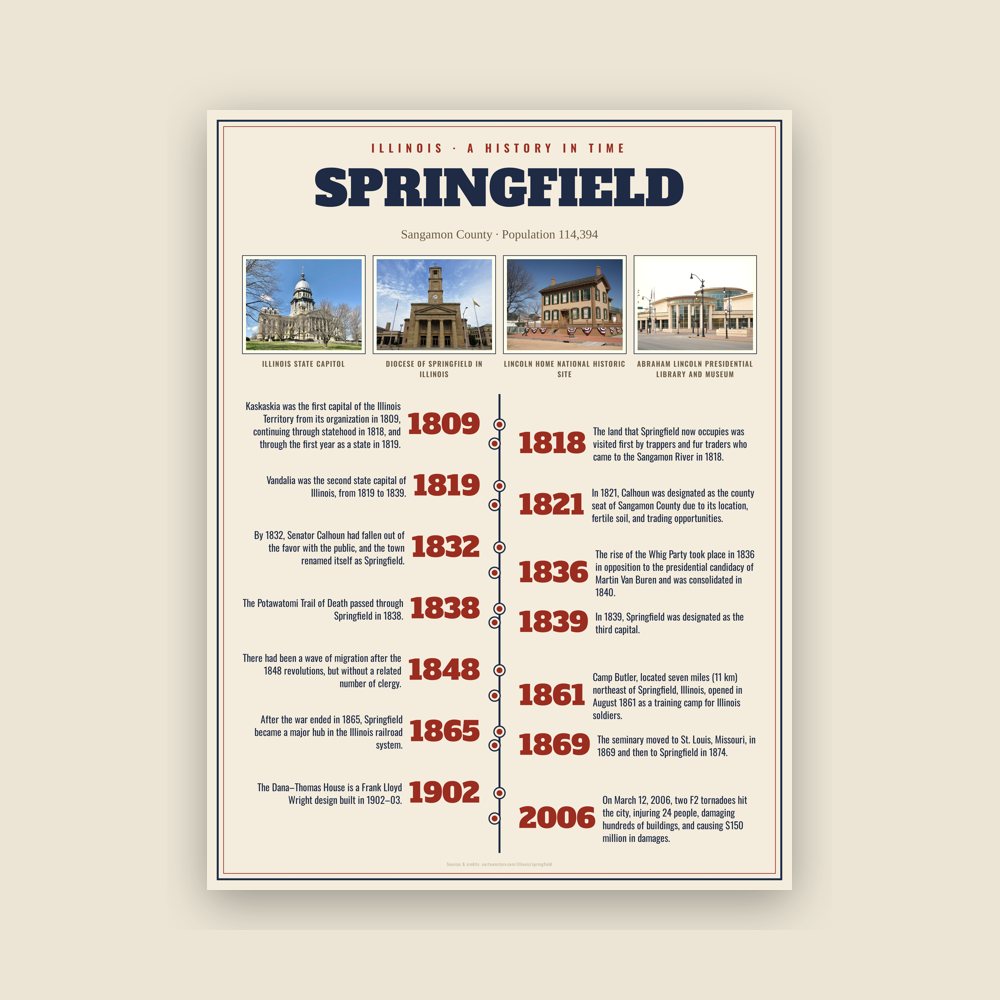
Settlers originally named this community "Calhoun", after Senator John C. Calhoun of South Carolina, expressing their cultural ties. The land that Springfield now occupies was visited first by trappers and fur traders who came to the Sangamon River in 1818.
The first cabin was built in 1820 by John Kelly, after he discovered that the area was plentiful with deer and other wild game. He built his cabin on a hill, overlooking a creek known eventually as the Town Branch. A stone marker on the north side of Jefferson street, halfway between 1st and College streets, marks the location of this original dwelling. A second stone marker at the northwest corner of 2nd St. and Jefferson St., often mistaken for the original home site, marks instead the location of the first county courthouse, which was later built on Kelly's property. In 1821, Calhoun was designated as the county seat of Sangamon County due to its location, fertile soil, and trading opportunities.
Settlers from Kentucky, Virginia, and North Carolina came to the developing settlement. By 1832, Senator Calhoun had fallen out of the favor with the public, and the town renamed itself as Springfield. According to local history, the name was suggested by the wife of John Kelly, after Spring Creek, which ran through the area known as "Kelly's Field".
Kaskaskia was the first capital of the Illinois Territory from its organization in 1809, continuing through statehood in 1818, and through the first year as a state in 1819. Vandalia was the second state capital of Illinois, from 1819 to 1839. In 1839, Springfield was designated as the third capital. The designation was largely due to the efforts of Abraham Lincoln and his associates, who were nicknamed the "Long Nine" for their combined height of 54 feet (16 m).
The Potawatomi Trail of Death passed through Springfield in 1838. The Native Americans were forced west to Indian Territory by the government's Indian Removal policy.
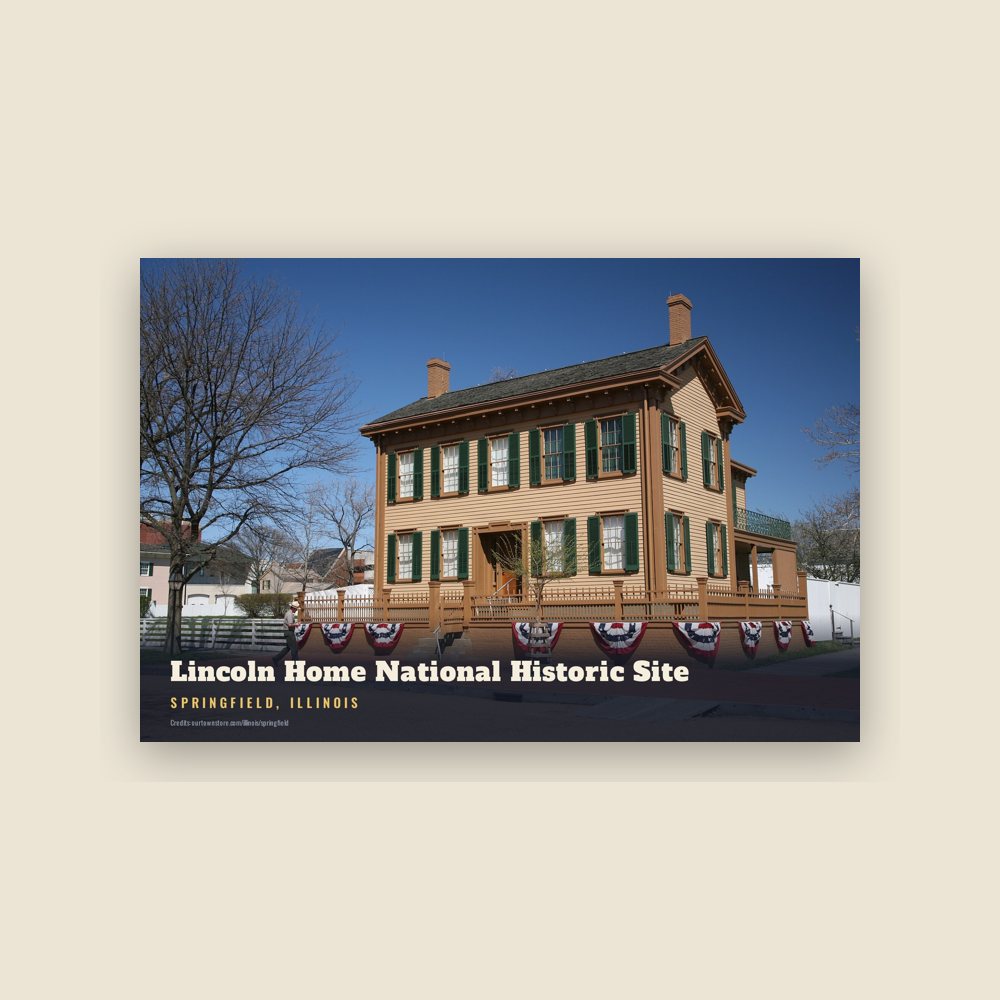
Abraham Lincoln arrived in the Springfield area in 1831, but he did not live in the city until 1837. He spent the next six years in New Salem, where he began his legal studies, joined the state militia, and was elected to the Illinois General Assembly.
In 1837, Lincoln moved to Springfield, where he lived and worked for the next 24 years as a lawyer and politician. Lincoln delivered his Lyceum address in Springfield. Abraham Lincoln's farewell address when he left for Washington is a classic in American oratory.
Historian Kenneth J. Winkle (1998) examines the historiography concerning the development of the Second Party System (Whigs versus Democrats). He applied these ideas to the study of Springfield, a strong Whig enclave in a Democratic region. He chiefly studied poll books for presidential years. The rise of the Whig Party took place in 1836 in opposition to the presidential candidacy of Martin Van Buren and was consolidated in 1840. Springfield Whigs tend to validate several expectations of party characteristics as they were largely native-born, either in New England or Kentucky, professional or agricultural in occupation, and devoted to partisan organization. Abraham Lincoln's career reflects the Whigs' political rise but, by the 1840s, Springfield began to be dominated by Democratic politicians. Waves of new European immigrants had changed the city's demographics, and they became aligned with the Democrats, who made more effort to assist and connect with them. By the 1860 presidential election, Lincoln was barely able to win his home city.
Read the full history
Population
Winkle earlier had studied the effect of migration on residents' political participation in Springfield during the 1850s. Widespread migration in the 19th-century United States produced frequent population turnover within Midwestern communities, which influenced patterns of voter turnout and office-holding. Examination of the manuscript census, poll books, and office-holding records reveals the effects of migration on the behavior and voting patterns of 8,000 participants in 10 elections in Springfield. Most voters were short-term residents who participated in only one or two elections during the 1850s. Fewer than 1% of all voters participated in all 10 elections.
Instead of producing political instability, however, rapid turnover enhanced the influence of the more stable residents. Migration was selective by age, occupation, wealth, and birthplace. Longer-term or "persistent" voters, as Winkle terms them, tended to be wealthier, more highly skilled, more often native-born, and socially more stable than non-persisters. Officeholders were particularly persistent and socially and economically advantaged. Persisters represented a small "core community" of economically successful, socially homogeneous, and politically active voters and officeholders who controlled local political affairs, while most residents moved in and out of the city. Members of a tightly knit and exclusive "core community", exemplified by Abraham Lincoln, blunted the potentially disruptive impact of migration on local communities.
Business
The case of John Williams illustrates the important role of the merchant banker in the economic development of central Illinois before the Civil War. Williams began his career as a clerk in frontier stores and saved to begin his own business. Later, in addition to operating retail and wholesale stores, he acted as a local banker and organized a national bank in Springfield. He was active in railroad promotion and as an agent for farm machinery.
Religion
During the mid-19th century, the spiritual needs of German Lutherans in the Midwest were not being tended. There had been a wave of migration after the 1848 revolutions, but without a related number of clergy. As a result of the efforts of such missionaries as Friedrich Wyneken, Wilhelm Loehe, and Wilhelm Sihler, additional Lutheran ministers were sent to the Midwest, Lutheran schools were opened, and Concordia Theological Seminary was founded in Ft. Wayne, Indiana in 1846.
The seminary moved to St. Louis, Missouri, in 1869 and then to Springfield in 1874. During the last half of the 19th century and the first half of the 20th century, the Lutheran Church–Missouri Synod succeeded in serving the spiritual needs of Midwestern congregations by establishing additional seminaries from ministers trained at Concordia and by developing a viable synodical tradition.
Civil War to 1900
Springfield became a major center of activity during the American Civil War. Illinois regiments trained there, the first ones under Ulysses S. Grant. He led his soldiers to a remarkable series of victories in 1861–62. The city was a political and financial center of Union support. New industries, businesses, and railroads were constructed to help support the war effort. The war's first official death was a Springfield resident, Colonel Elmer E. Ellsworth.
Camp Butler, located seven miles (11 km) northeast of Springfield, Illinois, opened in August 1861 as a training camp for Illinois soldiers. It also served as a camp for Confederate prisoners of war through 1865. In the beginning, Springfield residents visited the camp to take part in the excitement of a military venture, but many reacted sympathetically to mortally wounded and ill prisoners. While the city's businesses prospered from camp traffic, drunken behavior and rowdiness on the part of the soldiers stationed there strained relations. Neither civil nor military authorities proved able to control disorderly outbreaks.
After the war ended in 1865, Springfield became a major hub in the Illinois railroad system. It was a center of government and farming, and by 1900, it had also become involved in coal mining and processing.
20th century
Utopia
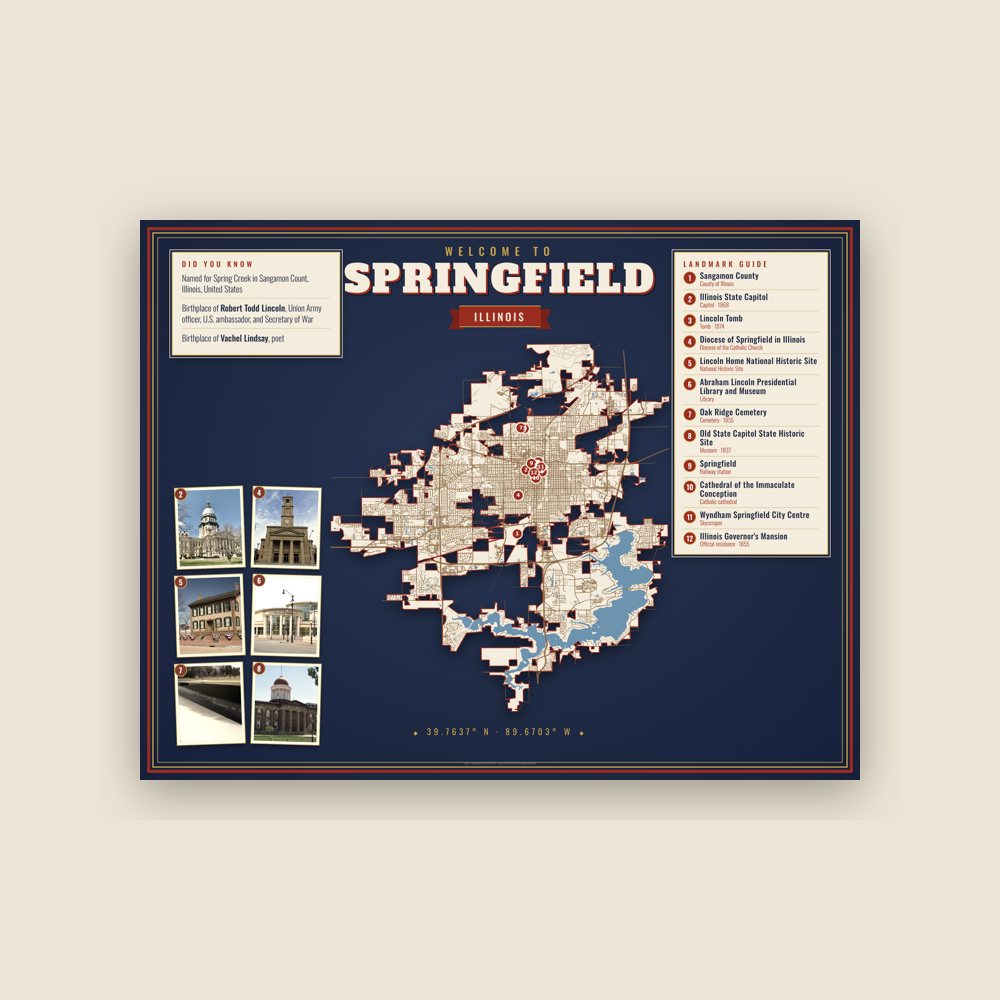
Local poet Vachel Lindsay's notions of utopia were expressed in his only novel, The Golden Book of Springfield (1920), which draws on ideas of anarchistic socialism in projecting the progress of Lindsay's hometown toward utopia.
The Dana–Thomas House is a Frank Lloyd Wright design built in 1902–03. Wright began work on the house in 1902. Commissioned by Susan Lawrence Dana, a local patron of the arts and public benefactor, Wright designed a house to harmonize with the owner's devotion to the performance of music. Coordinating art glass designs for 250 windows, doors, and panels as well as over 200 light fixtures, Wright enlisted Oak Park artisans. The house is a radical departure from Victorian architectural traditions. Covering 12,000 square feet (1,100 m2), the house contained vaulted ceilings and 16 major spaces. As the nation was changing, so Wright intended this structure to reflect the changes. Creating an organic and natural atmosphere, Wright saw himself as an "architect of democracy" and intended his work to be a monument to America's social landscape.
It is the only historic site later acquired by the state exclusively because of its architectural merit. The structure was opened to the public as a museum house in September 1990; tours are available, 9:00 a.m.–4:00 p.m. Wednesdays through Sundays.
21st century
On March 12, 2006, two F2 tornadoes hit the city, injuring 24 people, damaging hundreds of buildings, and causing $150 million in damages.
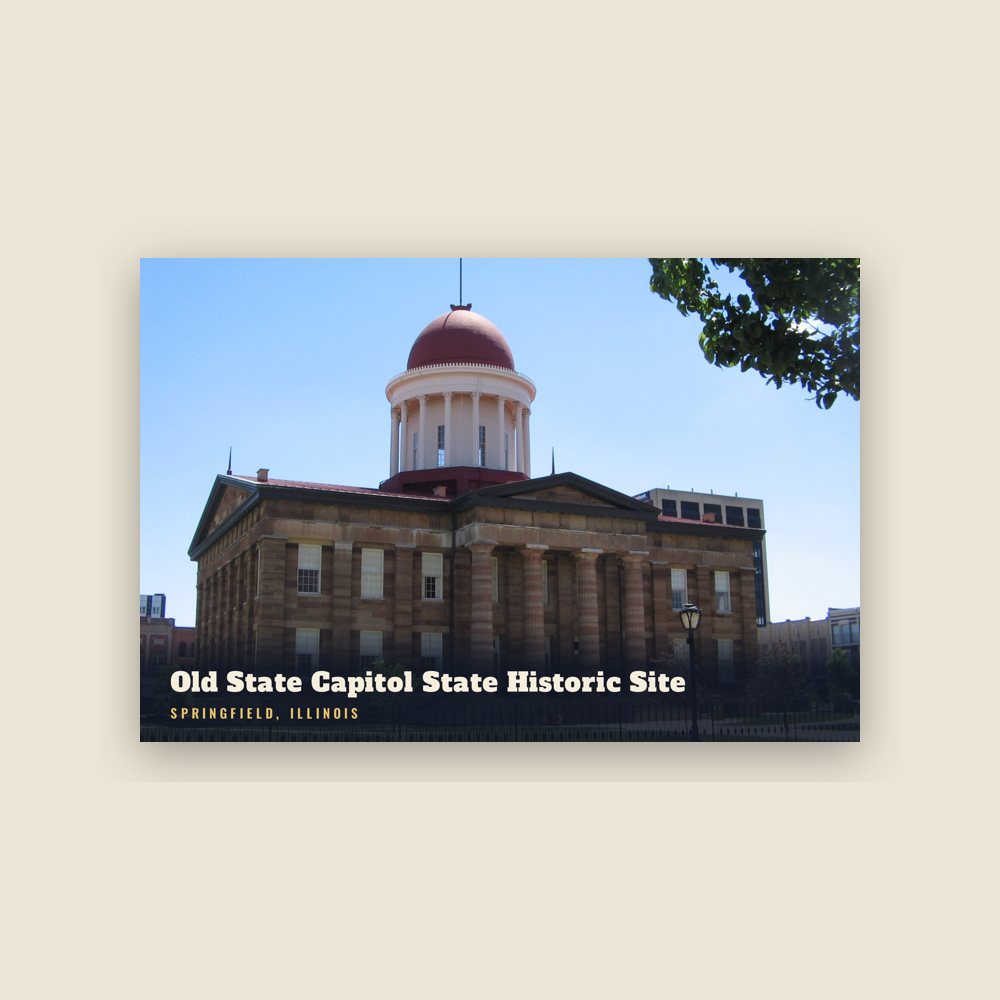
On February 10, 2007, then-senator Barack Obama announced his presidential candidacy in Springfield, standing on the grounds of the Old State Capitol. Senator Obama also used the Old State Capitol in Springfield as a backdrop when he announced Joe Biden as his running mate on August 23, 2008.
Adapted (trimmed) from the Wikipedia article Springfield, Illinois, revision 1379134353 by its contributors, licensed CC BY-SA 4.0.