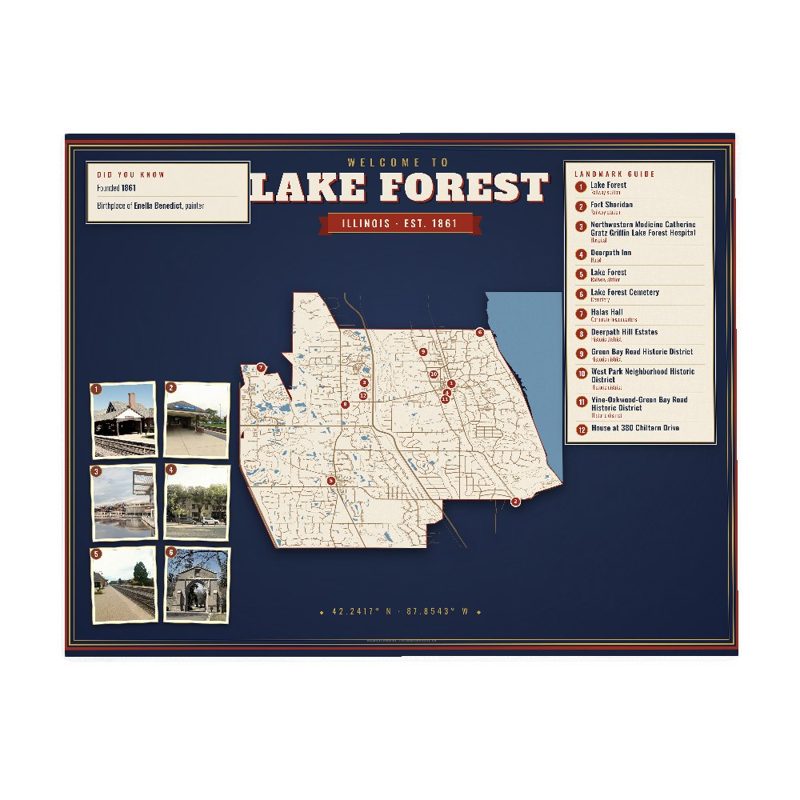
Since 1861
A short history of Lake Forest
Early history
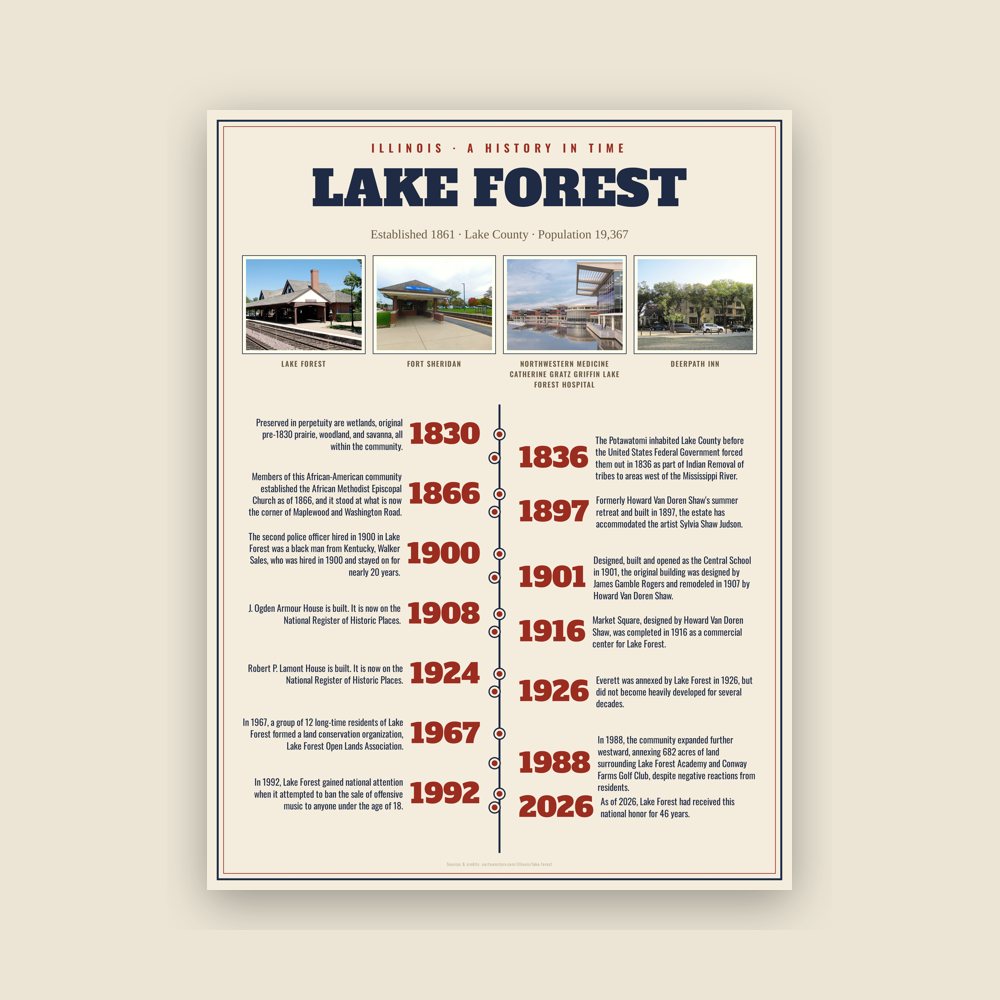
The Potawatomi inhabited Lake County before the United States Federal Government forced them out in 1836 as part of Indian Removal of tribes to areas west of the Mississippi River.
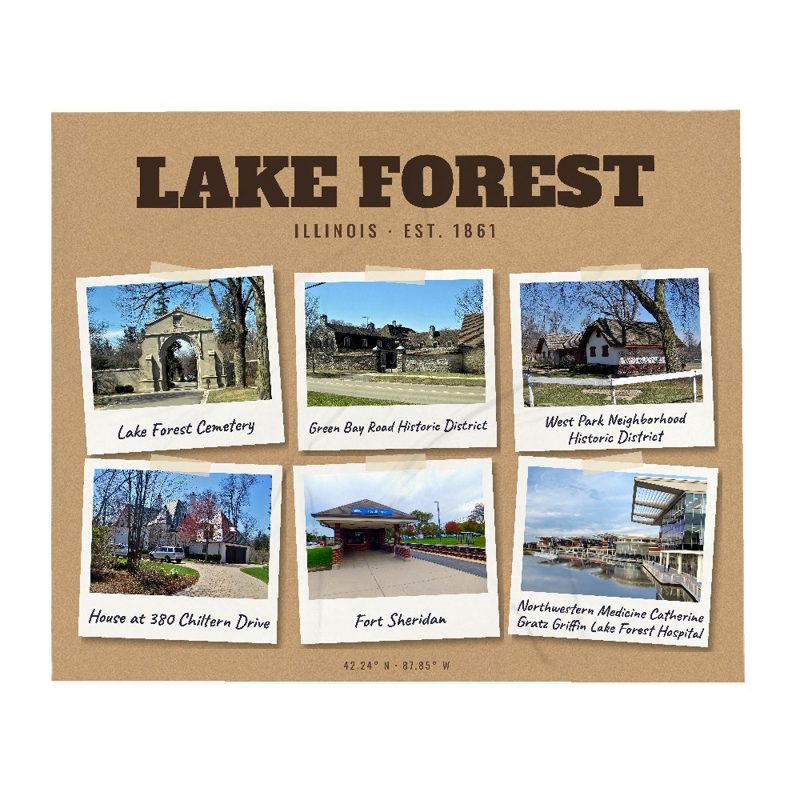
As Lake Forest was first developed in 1857, the planners laid roads that would provide limited access to the city in an effort to prevent outside traffic and isolate the tranquil settlement from neighboring areas. Though the town is considerably more accessible today, due in part to the extensive new construction taking place further west, the much smaller neighborhood of eastern Lake Forest, near the coast of Lake Michigan, remains relatively secluded. It is one of the most scenic, historical, and architecturally significant suburbs of Chicago. These neighborhoods include estates and homes designed by distinguished architects such as Howard Van Doren Shaw, David Adler, Frank Lloyd Wright, Arthur Heun, Jerome Cerny, Henry Ives Cobb, and modernist George Fred Keck, among others. Landscape architects Frederick Law Olmsted and Jens Jensen also designed projects in Lake Forest. Market Square, designed by Howard Van Doren Shaw, was completed in 1916 as a commercial center for Lake Forest.
Lake Forest had an African-American community from very early on in its history, drawn to employment opportunities on the estates and educational institutions in the late 19th century. Unlike other communities in the area, Lake Forest had many residents who were associated with the Abolitionist movement. Lake Forest's first mayor and a founder of Lake Forest College, Sylvester Lind, was a major figure on the Underground Railroad, and was known to help escaped slaves settle in Lake Forest. Roxana Beecher, niece of abolitionist Harriet Beecher Stowe, taught integrated school in Lake Forest. A prominent early Lake Forest businessman was Samuel Dent, an escaped slave and Union veteran who ran a livery stable. A local jazz band was named in Dent's memory. Another black entrepreneur was Julian Matthews, who ran a bakery, restaurant, and ice cream parlor with his wife Octavia. The second police officer hired in 1900 in Lake Forest was a black man from Kentucky, Walker Sales, who was hired in 1900 and stayed on for nearly 20 years. Members of this African-American community established the African Methodist Episcopal Church as of 1866, and it stood at what is now the corner of Maplewood and Washington Road. By 1900, another black church, the First Baptist Church of Lake Forest, had opened and is still active. By the 1980s, increased housing prices had encouraged some older black residents to sell their properties lucratively, but others stayed in the community. Lake Forest also had a small community of Jews, typified by wealthy socialites such as Albert Lasker and David Adler.
The secluded style of Lake Forest was intended as a form of protection. According to the president of the Lake Forest-Lake Bluff Historical Society, the captains of industry and upper-class elite who first settled in Lake Forest sought a refuge from late 19th and early 20th-century Chicago. In their view, the city was overrun with immigrants from southern and eastern Europe who had dangerous socialist ideas and indulged in excessive alcoholic consumption.
Country clubs became important centers of social activity in Lake Forest's early decades. The Onwentsia Club was, in the words of one writer, "the premiere social and sporting club in the Midwest".
Read the full history
Growth to present day
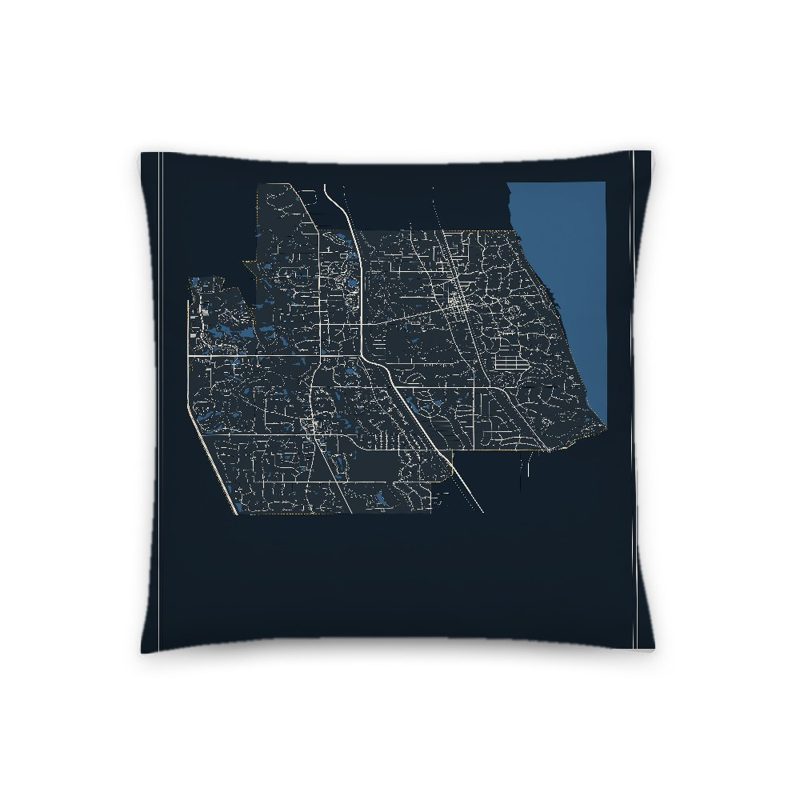
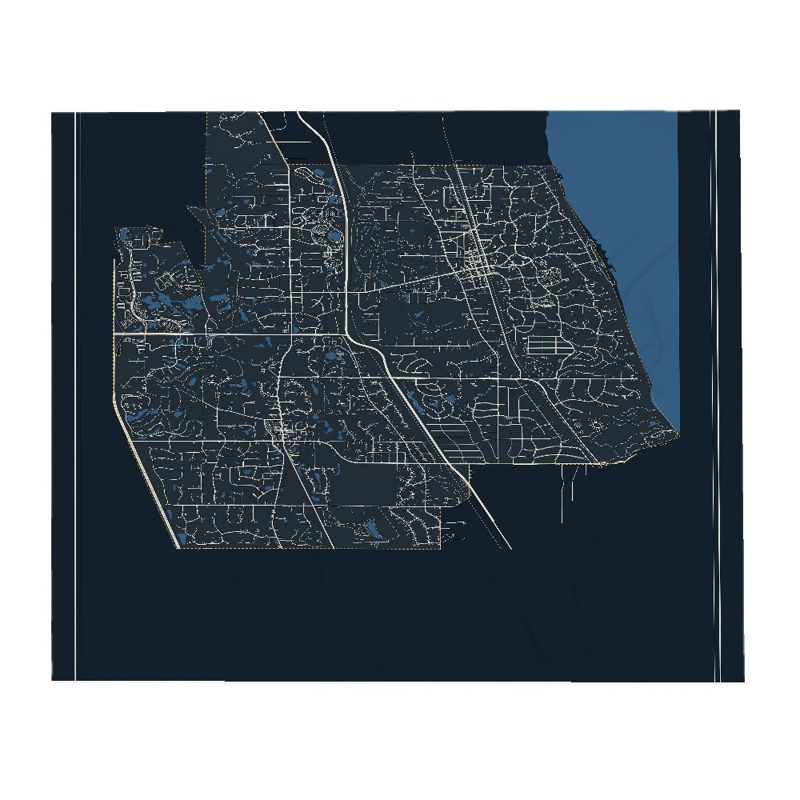
Beginning in the 1950s, Lake Forest's population increased dramatically due to an aggressive program of real estate development and annexation of surrounding areas. While city limits did not originally extend west of Green Bay Road, they gradually expanded. The neighborhood now known as "West Lake Forest" was started as an unincorporated community known as Everett, with many Irish farm workers, who were served by Saint Patrick's Catholic Church. This expansion was not without controversy, as many residents felt that the community was losing its character. Novelist Arthur Meeker Jr., who grew up in West Lake Forest in the early 1900s, considered moving back to his childhood community, but upon visiting in the 1950s "to my dismay I found this region wasn't really rural anymore. … The Lake Forest of my childhood had all but vanished". Everett was annexed by Lake Forest in 1926, but did not become heavily developed for several decades. In 1988, the community expanded further westward, annexing 682 acres of land surrounding Lake Forest Academy and Conway Farms Golf Club, despite negative reactions from residents. The city government justified the expansion as necessary to prevent unwanted commercial development encroaching the edges of the community.
One of Lake Forest's most notable features is its virgin prairies and other nature preserves. In 1967, a group of 12 long-time residents of Lake Forest formed a land conservation organization, Lake Forest Open Lands Association. Its express purpose was to purchase or otherwise set aside the rapidly disappearing open spaces in the city, in the interests of preserving animal habitat, restoring ecosystems, and providing environmental education for the city's children. In the next 38 years, the group managed to acquire more than 700 acres (2.8 km2) within the city limits, which now form six nature preserves with 12 miles (19 km) of walking trails open to the public.
Preserved in perpetuity are wetlands, original pre-1830 prairie, woodland, and savanna, all within the community. The restoration of these lands is celebrated by an annual "Bagpipes and Bonfire" event in September, which started as a community event in which controlled fires were burned to clear underbrush and preserve the savannah. From an early time, the playing of bagpipes has accompanied the community gathering, as the town had numerous Scots-Irish residents in its early years. This has also been an annual fundraising event for Lake Forest Open Lands Association.
Gorton Center, which originally housed the town's first K-8 school, is a hub for arts and culture and a community venue. Gorton presents live music, storytelling, children's events and community events; has a film program; produces and offers classes for youth and adults, including Gorton Drama Studio, theater and acting classes for all ages; houses a children's learning center; houses other nonprofits; provides places for others to rent for their special events and meetings. Designed, built and opened as the Central School in 1901, the original building was designed by James Gamble Rogers and remodeled in 1907 by Howard Van Doren Shaw.
The Ragdale Foundation, an artists' community and residence, is located in Lake Forest. Formerly Howard Van Doren Shaw's summer retreat and built in 1897, the estate has accommodated the artist Sylvia Shaw Judson.
In 1992, Lake Forest gained national attention when it attempted to ban the sale of offensive music to anyone under the age of 18. City council members used existing ordinances against obscenity—defined in the codes as "morbid interest in nudity, sex or excretion"—to buttress their campaign. Mayor Charles Clarke stated, "If they sell an obscene tape to somebody underage, we will prosecute." The person who came up most frequently in discussions of obscene content was Ice-T, a rapper who has since also performed as an actor.
Lake Forest has been named a Tree City USA by the National Arbor Day Foundation in recognition of its commitment to community forest. As of 2026, Lake Forest had received this national honor for 46 years. The actor Mr. T angered town residents by cutting down more than 100 oak trees on his estate, in what is now referred to as the "Lake Forest Chain Saw Massacre".
Adapted (trimmed) from the Wikipedia article Lake Forest, Illinois, revision 1380172244 by its contributors, licensed CC BY-SA 4.0.