Hainesville has the distinction of being the oldest incorporated community within Lake County.
- CountyLake County
- Population3,546 (2020 U.S. Census)
Hainesville, Illinois gifts and souvenirs: 19 designs made from Hainesville's own map, landmarks and history, from $16 to $95. Printed to order and shipped free in the USA.
| Popular | Price |
|---|---|
| Hainesville Hometown Ornament | $23 |
| Hainesville Vintage Travel Poster | from $40 |
| Hainesville Varsity Crewneck | from $57 |
| Hainesville Est. Tee | from $33 |
| Hainesville Town Line Mug | from $26 |
| Hainesville Market Tote | $37 |
Ceramic keepsake, gold ribbon
Its landmark photo in a classic travel-poster layout
A local landmark photo as a gallery print
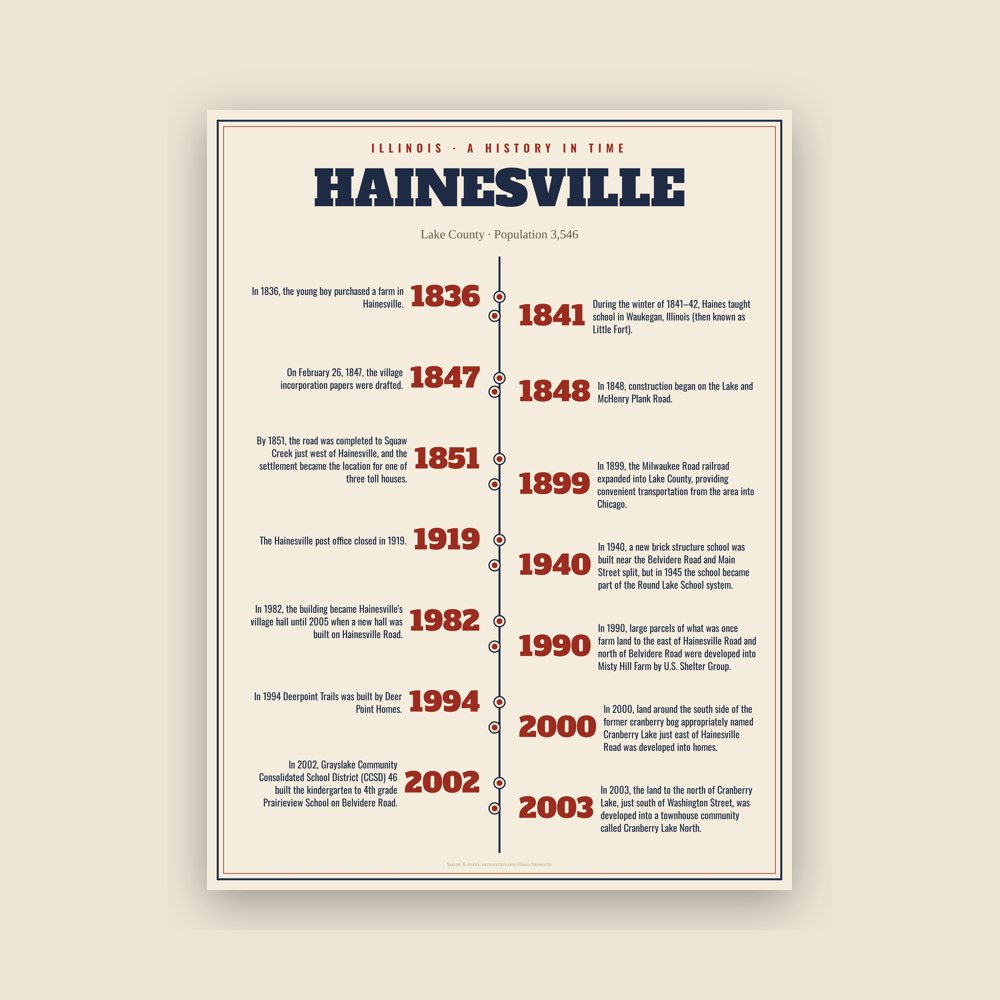
The town's story in dates, from its own records, for home or classroom
Heavy-blend fleece, street map printed on the back
Soft Bella+Canvas jersey
Kids' Bella+Canvas jersey, youth sizes
Bella+Canvas toddler jersey
Bella+Canvas baby bodysuit
Glossy ceramic, dishwasher safe
Weatherproof, for the front walk
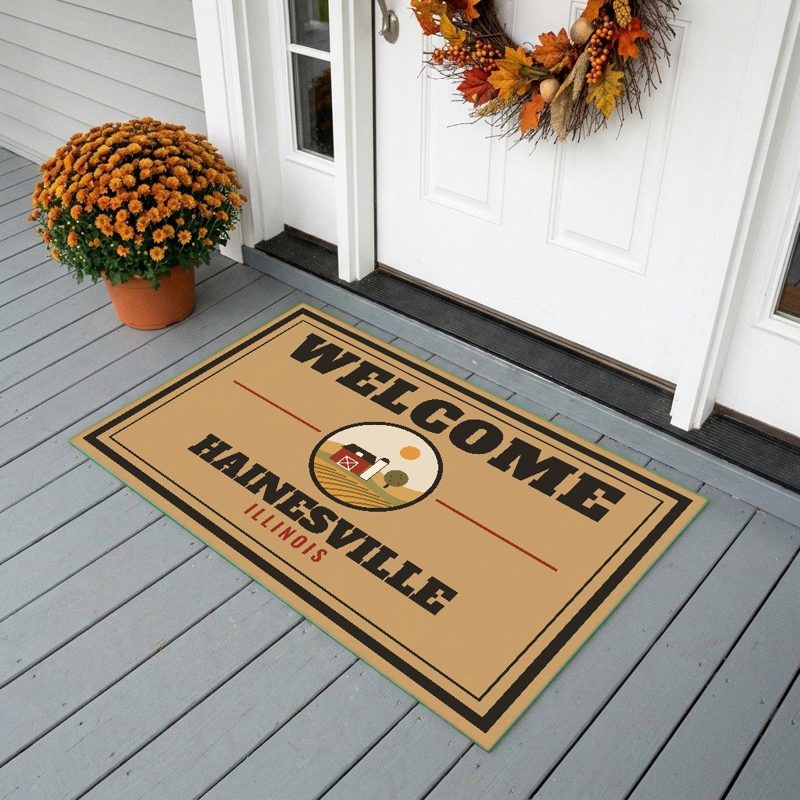
24″×16″, printed coir-look fibers, rubber back
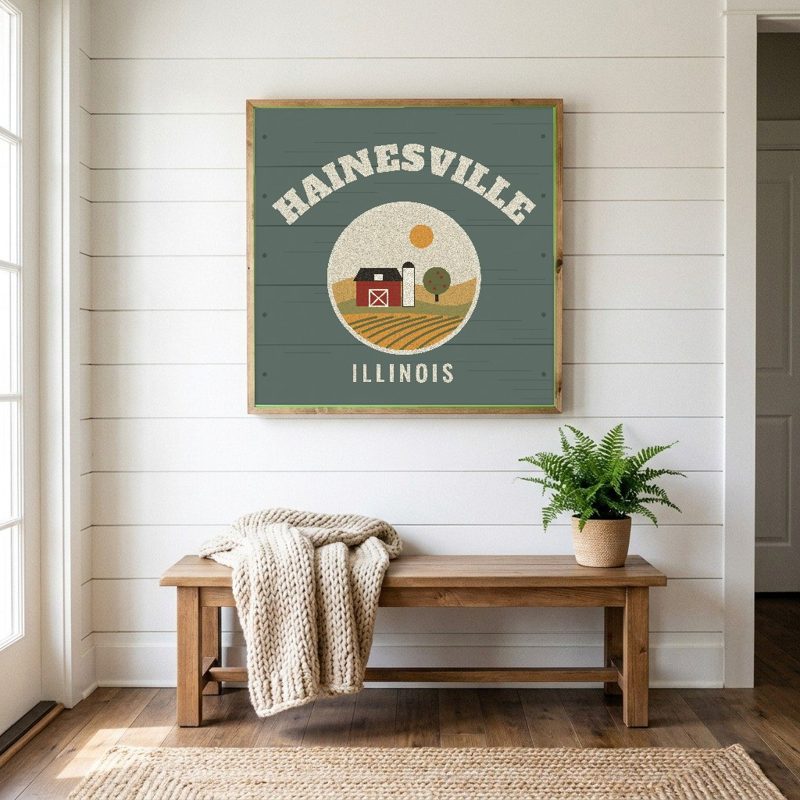
12″×12″ printed wood, ready to hang
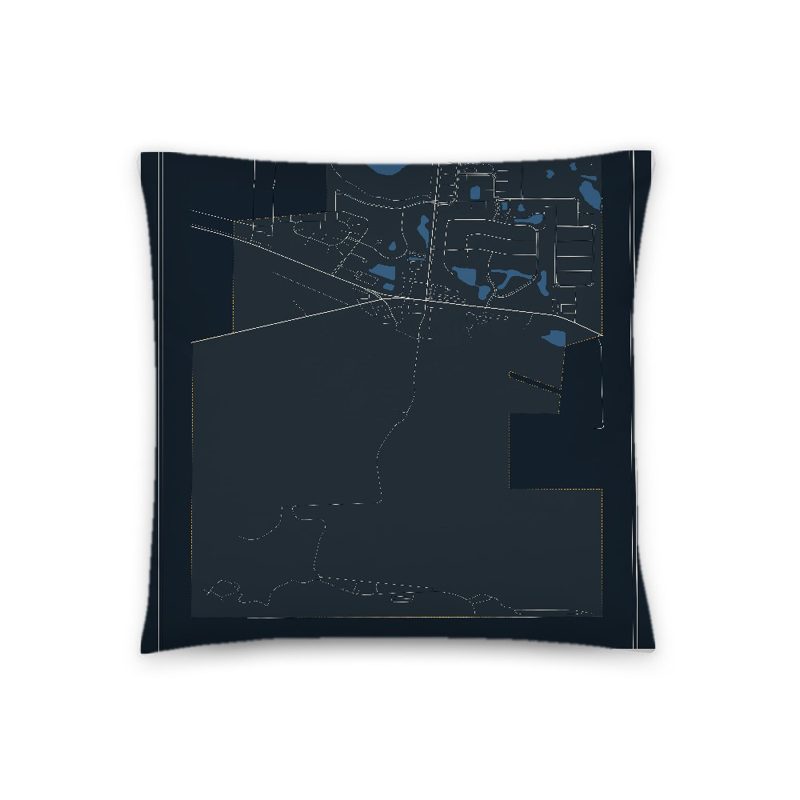
Soft-touch, zip cover
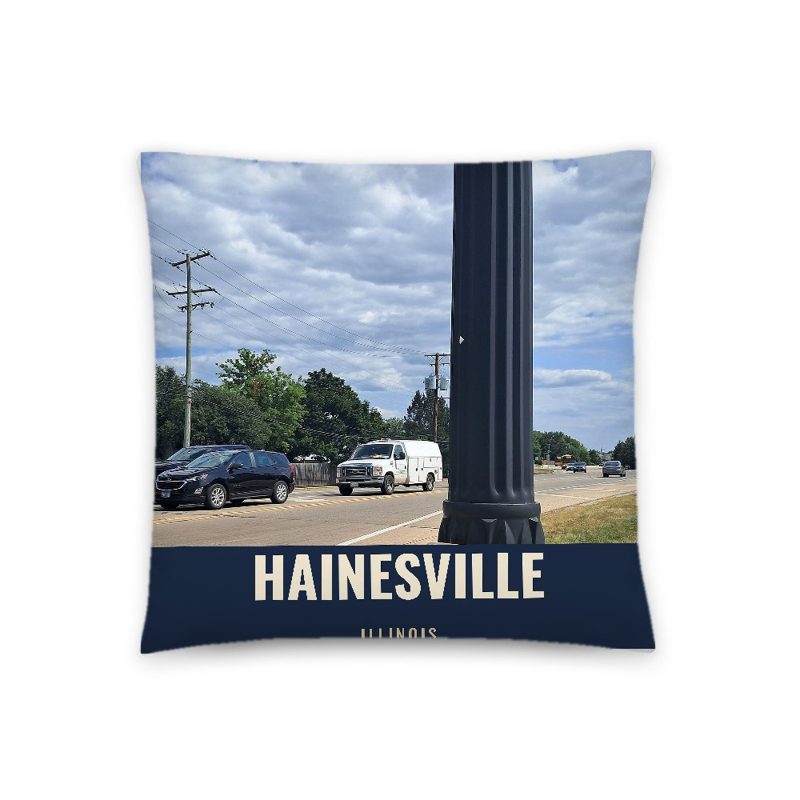
A local landmark photo with the town name, 18″×18″
Sturdy all-over-print tote
Glossy top, cork back
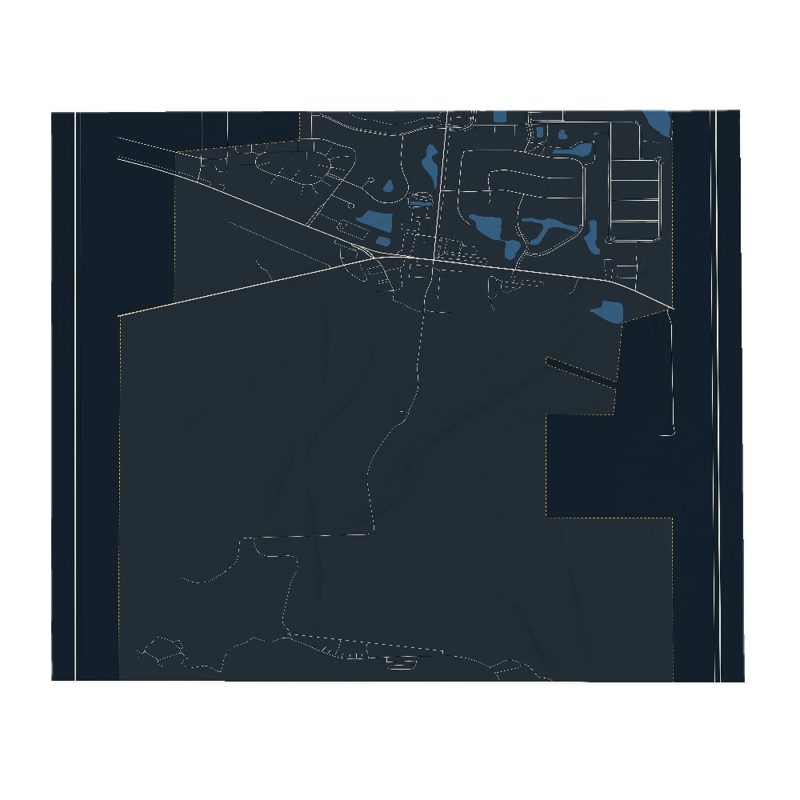
Soft fleece, 50″×60″
20 oz, double-wall stainless
Hainesville has the distinction of being the oldest incorporated community within Lake County.
In 1838, a young boy named Elijah M. Haines (1822–1889) and his family moved from New York City to the Chicago area. In 1836, the young boy purchased a farm in Hainesville. During the winter of 1841–42, Haines taught school in Waukegan, Illinois (then known as Little Fort). In 1846, he surveyed and platted Hainesville. On February 26, 1847, the village incorporation papers were drafted. It is recorded that Elijah Haines met Abraham Lincoln in 1847. The two men met frequently and became well acquainted. It has been said that Lincoln spent the night in Hainesville a few times.
In 1848, construction began on the Lake and McHenry Plank Road. By 1851, the road was completed to Squaw Creek just west of Hainesville, and the settlement became the location for one of three toll houses.
In 1851, Haines was accepted to the bar, and a year later he moved to Waukegan. In 1859, he was sent to the state legislature where he served eight terms. He was a member of the Illinois Constitutional Convention of 1869-70 and is considered by some historians to have been its most influential member.
Hainesville was becoming a thriving village, but the village all but disappeared off the map until recent years. In 1899, the Milwaukee Road railroad expanded into Lake County, providing convenient transportation from the area into Chicago. Local land owner, general store proprietor and Hainesville postmaster George Battershall asked for a large sum of money to build a train station in Hainesville. Milwaukee Road had no other options in Hainesville as the railway entered and exited the village of Hainesville on Battershall's property (essentially everything south of the Plank Road in Hainesville). Amarias M. White, an early settler of what is now Round Lake, knowing that a railroad stop in Round Lake would spark commerce for his area, attracted the railroad company by offering the land for a depot for free. Commerce did start to move away from Hainesville and into Round Lake, as well as neighboring Grayslake.
The Hainesville post office closed in 1919. A few years later, the old wooden Hainesville School was destroyed by a tornado. In 1940, a new brick structure school was built near the Belvidere Road and Main Street split, but in 1945 the school became part of the Round Lake School system. In 1982, the building became Hainesville's village hall until 2005 when a new hall was built on Hainesville Road.
After several decades of being not much more than a handful of crossroads, Hainesville finally exploded into a sprawling suburban neighborhood. In 1990, large parcels of what was once farm land to the east of Hainesville Road and north of Belvidere Road were developed into Misty Hill Farm by U.S. Shelter Group. In 1994 Deerpoint Trails was built by Deer Point Homes. In 2000, land around the south side of the former cranberry bog appropriately named Cranberry Lake just east of Hainesville Road was developed into homes. In 2001, the former Softball City, a multi-use sports complex adjacent to the Avon Township Youth Baseball Organization facilities, sold its land to Ryland Homes, and this became the townhouse community called Union Square.
In 2002, Grayslake Community Consolidated School District (CCSD) 46 built the kindergarten to 4th grade Prairieview School on Belvidere Road. In 2003, the land to the north of Cranberry Lake, just south of Washington Street, was developed into a townhouse community called Cranberry Lake North.
Despite a census just being taken in 2000, a special census was requested in 2004 due to the explosive growth of the area. This census yielded a population totaling 3,444, up over 60% from what it was only four years prior.
Adapted (trimmed) from the Wikipedia article Hainesville, Illinois, revision 1378972250 by its contributors, licensed CC BY-SA 4.0.
We share a part of every Hainesville sale with local partners, and we'd love to print from your collection. Old photographs, maps and postcards make the best keepsakes.
Partner with usA favorite landmark, your street, a school or team, an anniversary gift, a different product. Tell us and we'll get back to you by email.
Hainesville's population was 3,546 in the 2020 U.S. Census, down from 3,597 in 2010.