In the early 1930s, Zeb Vance Hooker and his family became the first settlers in modern-day Lake Clarke Shores by squatting in a wooden shack on land by the southeast side of Lake Clarke.
- CountyPalm Beach County
- Population3,564 (2020 U.S. Census)
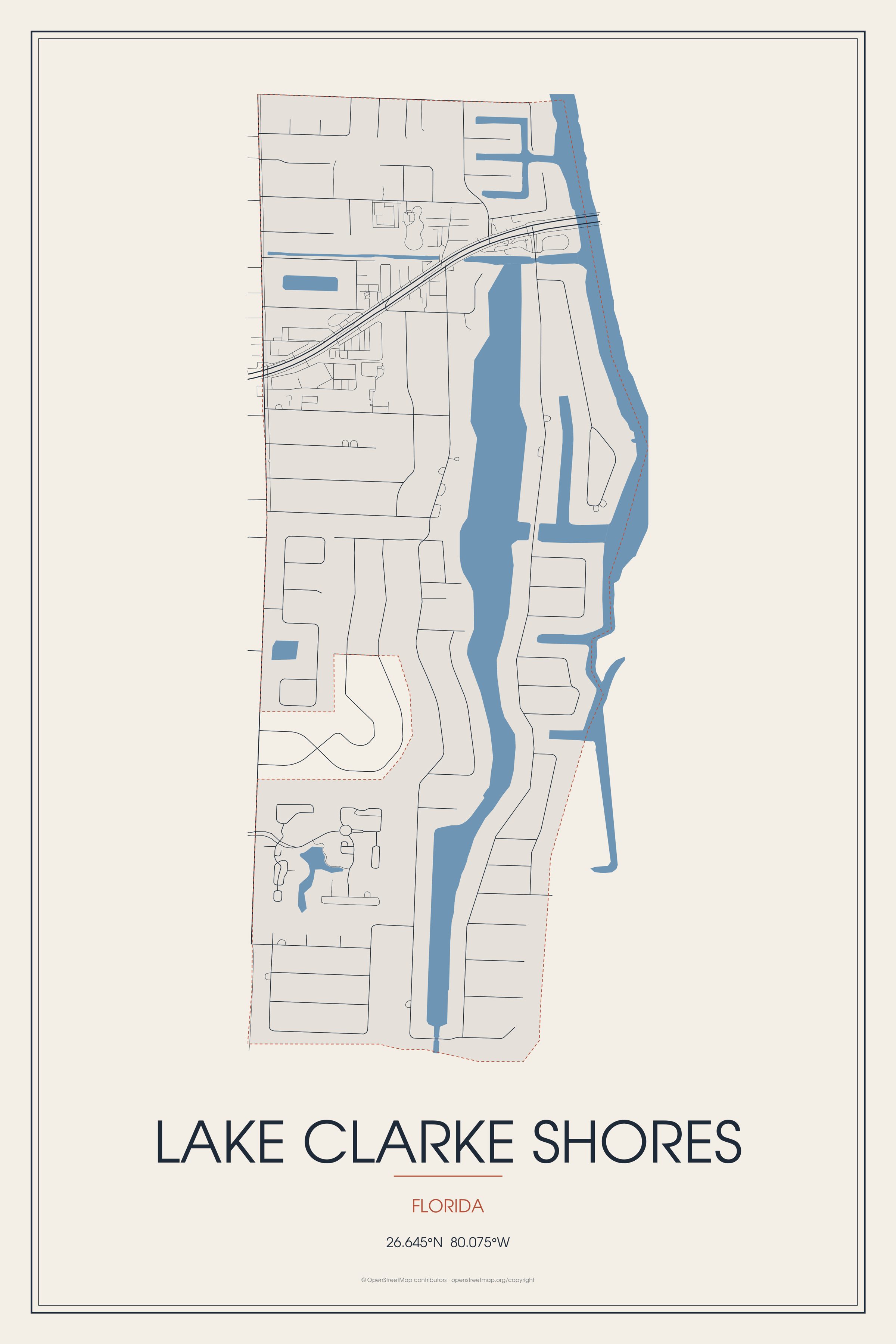
Lake Clarke Shores, Florida gifts and souvenirs: 17 designs made from Lake Clarke Shores's own map, landmarks and history, from $16 to $95. Printed to order and shipped free in the USA.
| Popular | Price |
|---|---|
| Lake Clarke Shores Hometown Ornament | $23 |
| Lake Clarke Shores Varsity Crewneck | from $57 |
| Lake Clarke Shores Est. Tee | from $33 |
| Lake Clarke Shores Town Line Mug | from $26 |
| Lake Clarke Shores Market Tote | $37 |
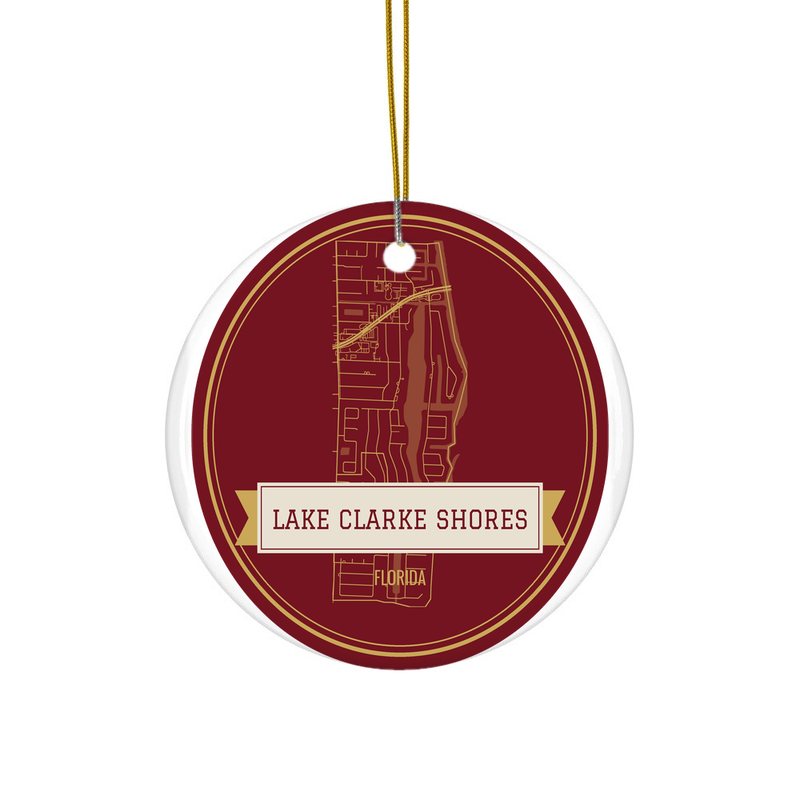
Ceramic keepsake, gold ribbon, in 3 styles
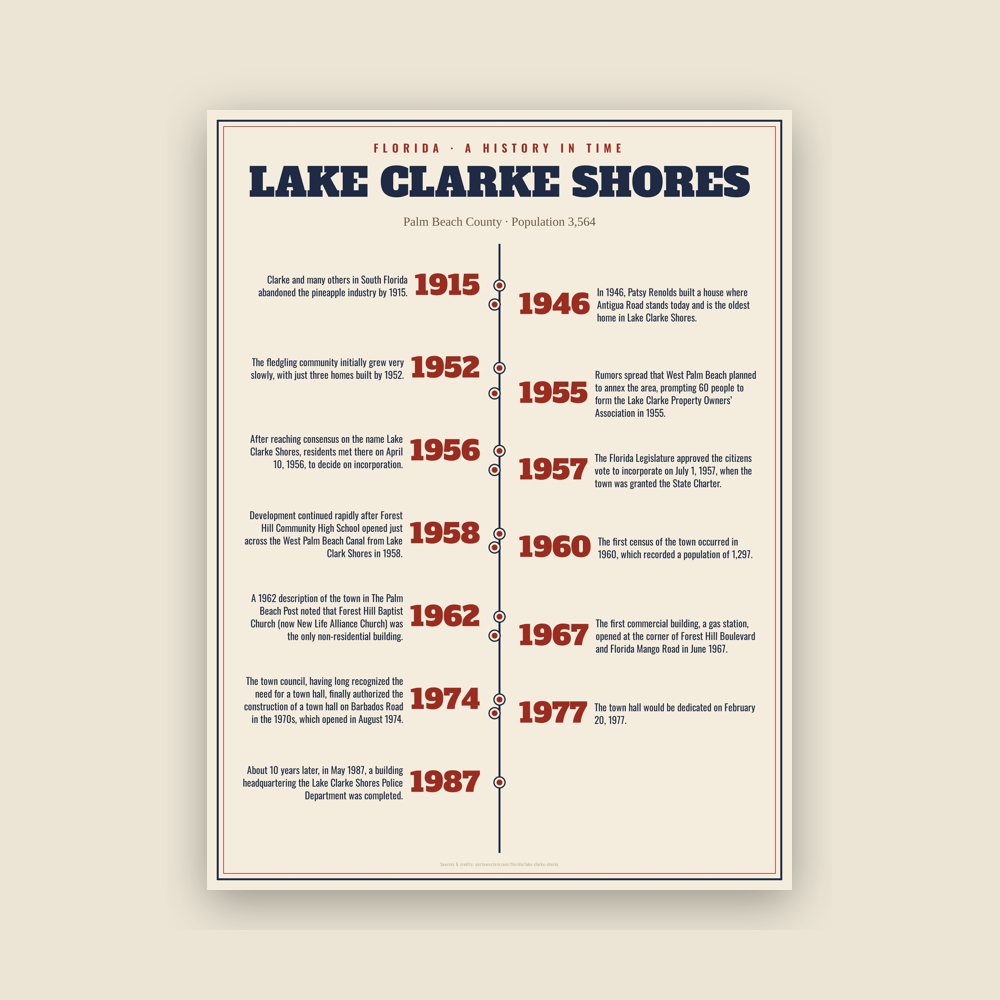
The town's story in dates, from its own records, for home or classroom
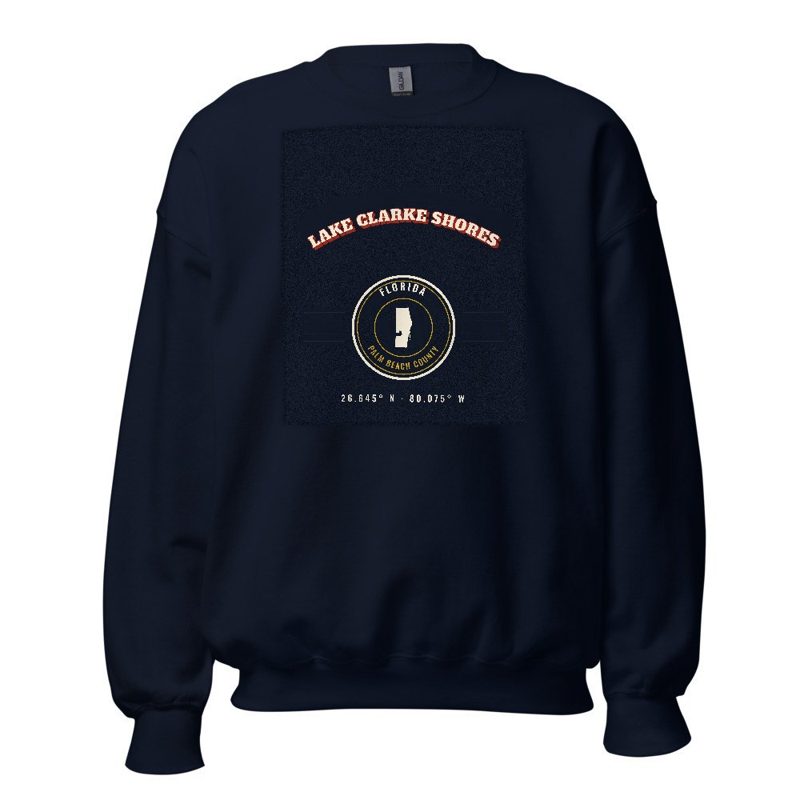
Heavy-blend fleece, street map printed on the back
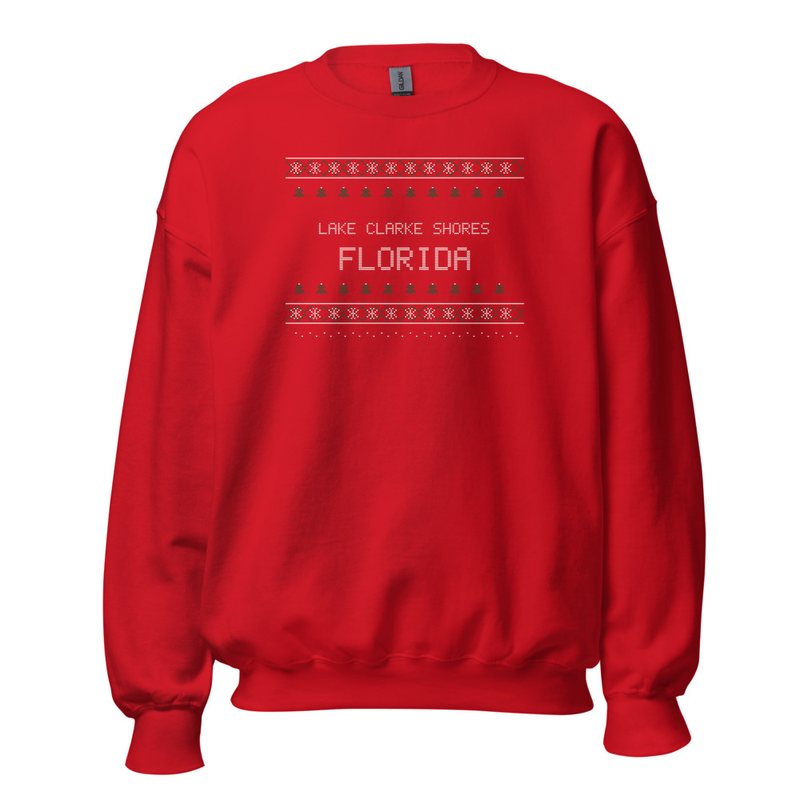
Red heavy-blend crewneck, knit-stitch town print
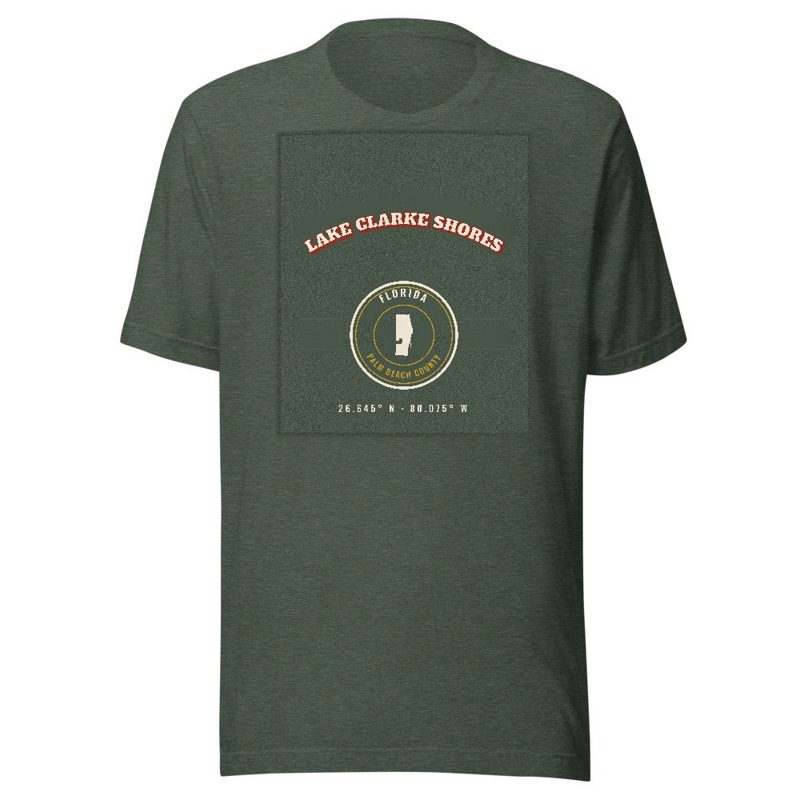
Soft Bella+Canvas jersey
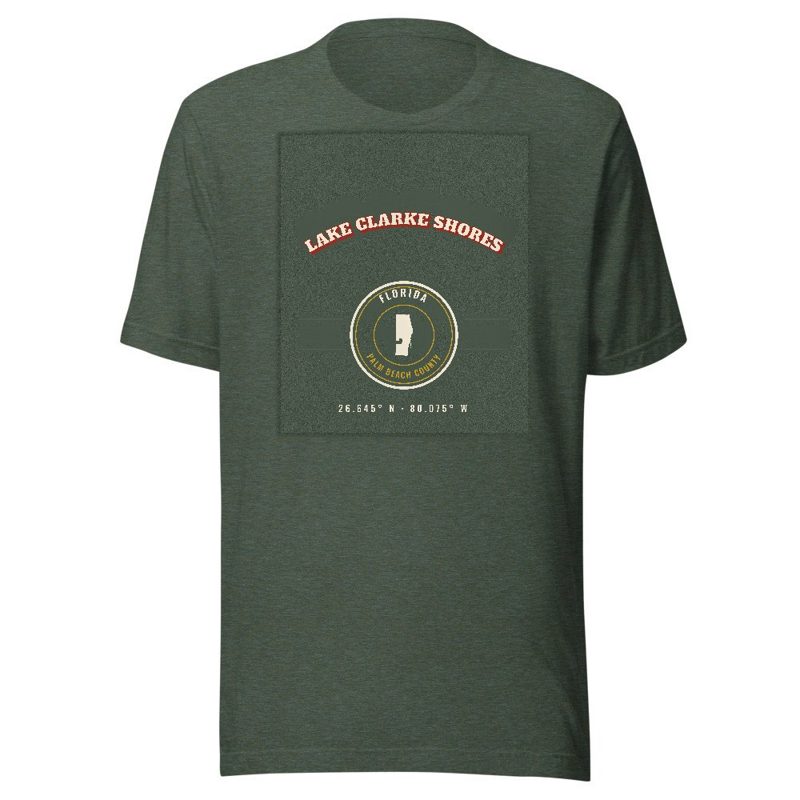
Kids' Bella+Canvas jersey, youth sizes
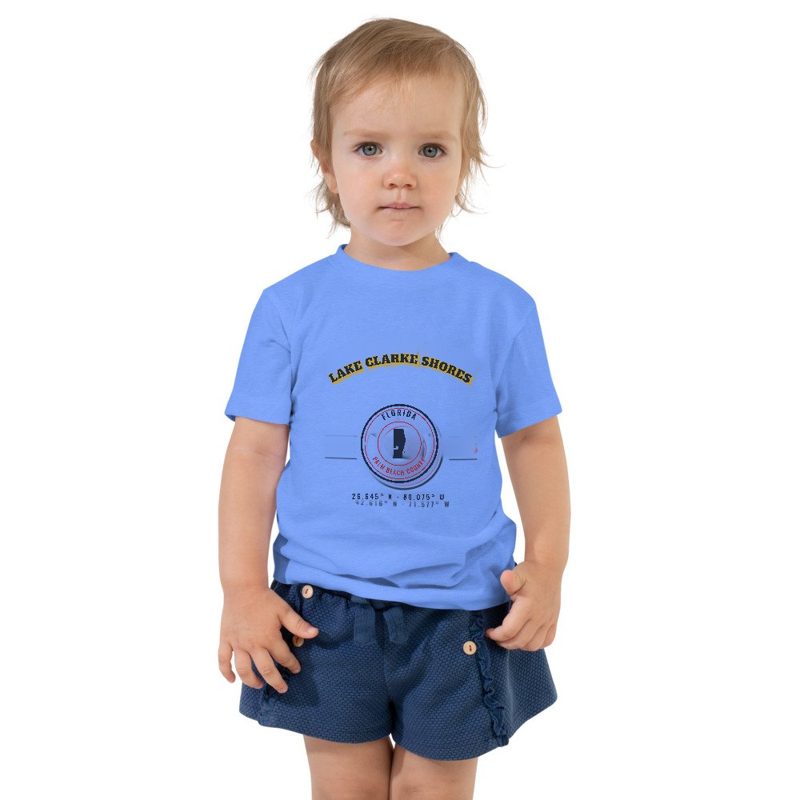
Bella+Canvas toddler jersey
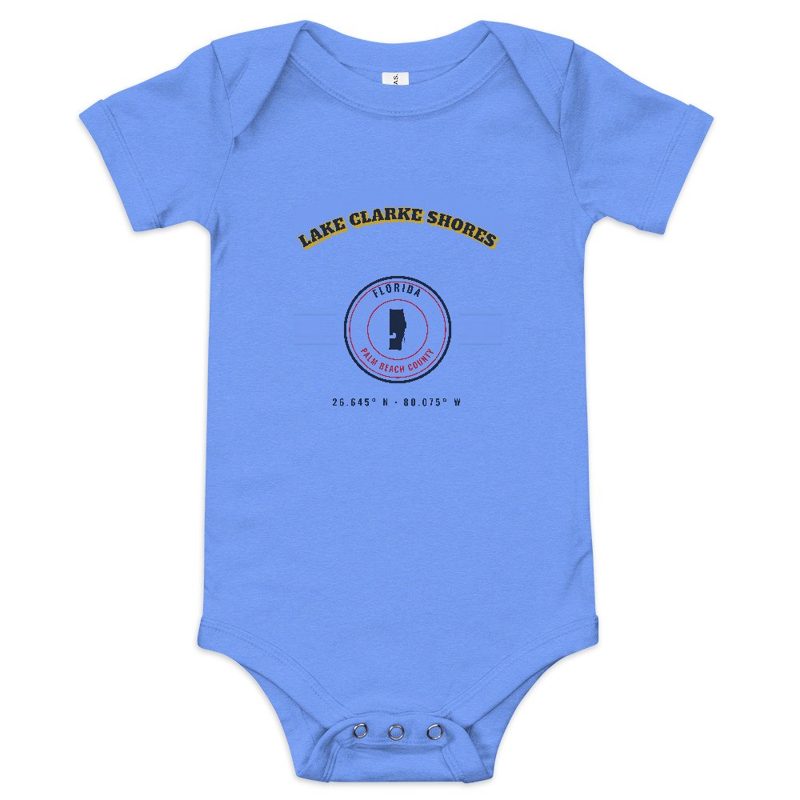
Bella+Canvas baby bodysuit
Glossy ceramic, dishwasher safe
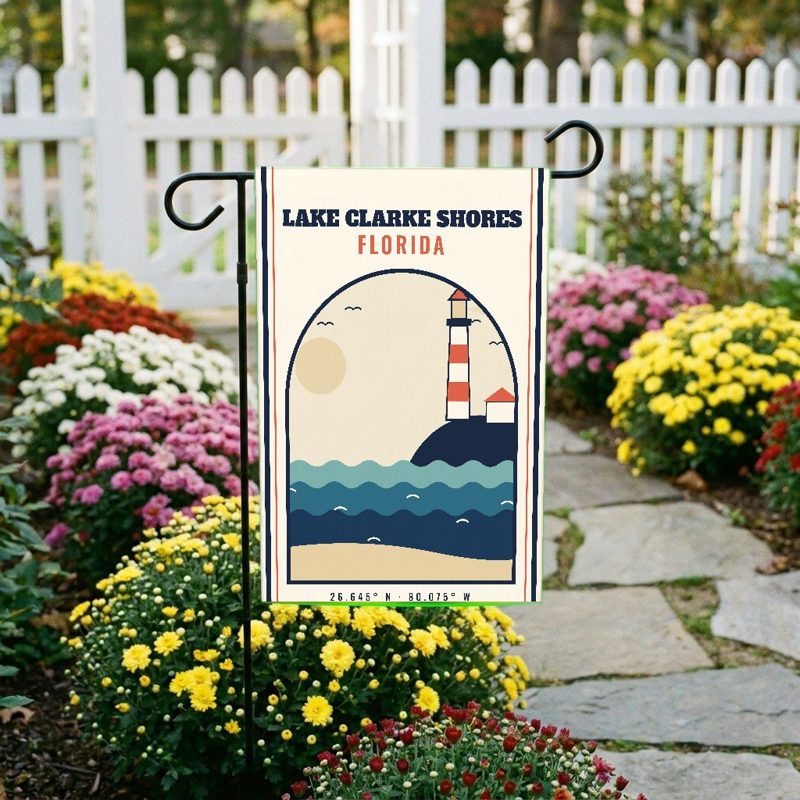
Weatherproof, for the front walk
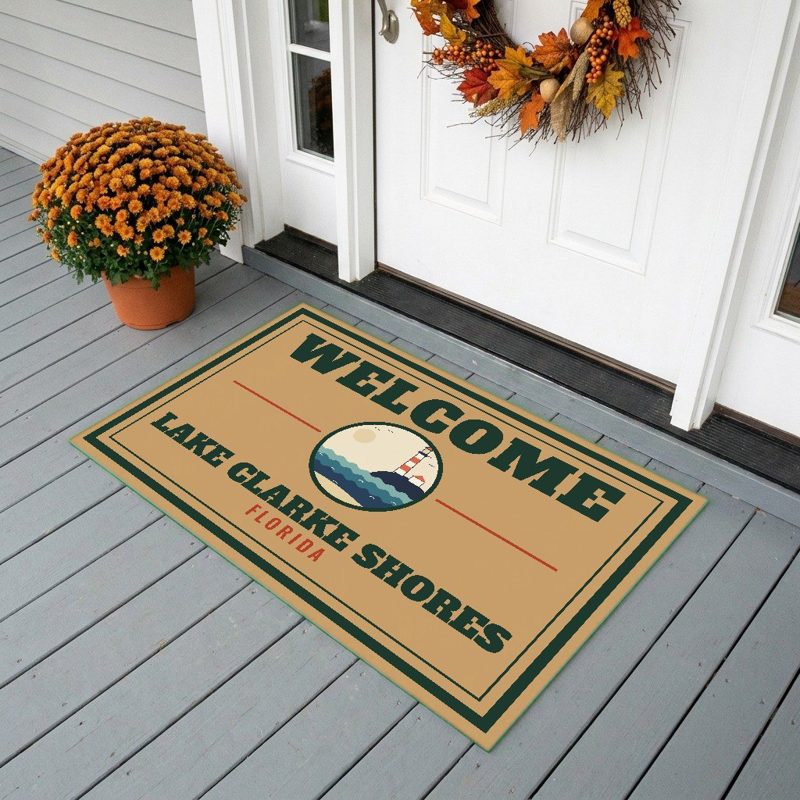
24″×16″, printed coir-look fibers, rubber back
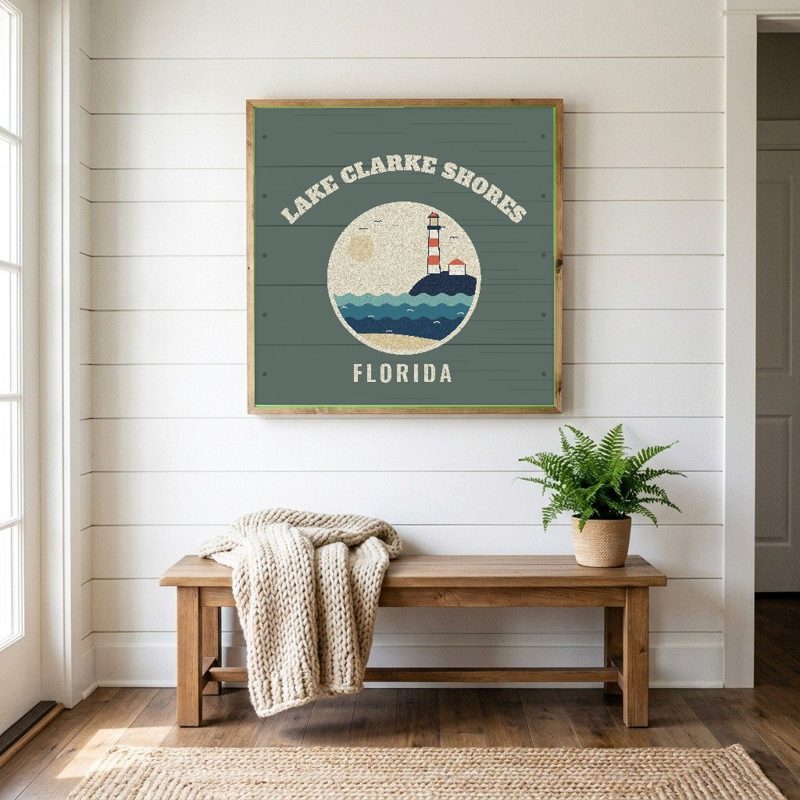
12″×12″ printed wood, ready to hang
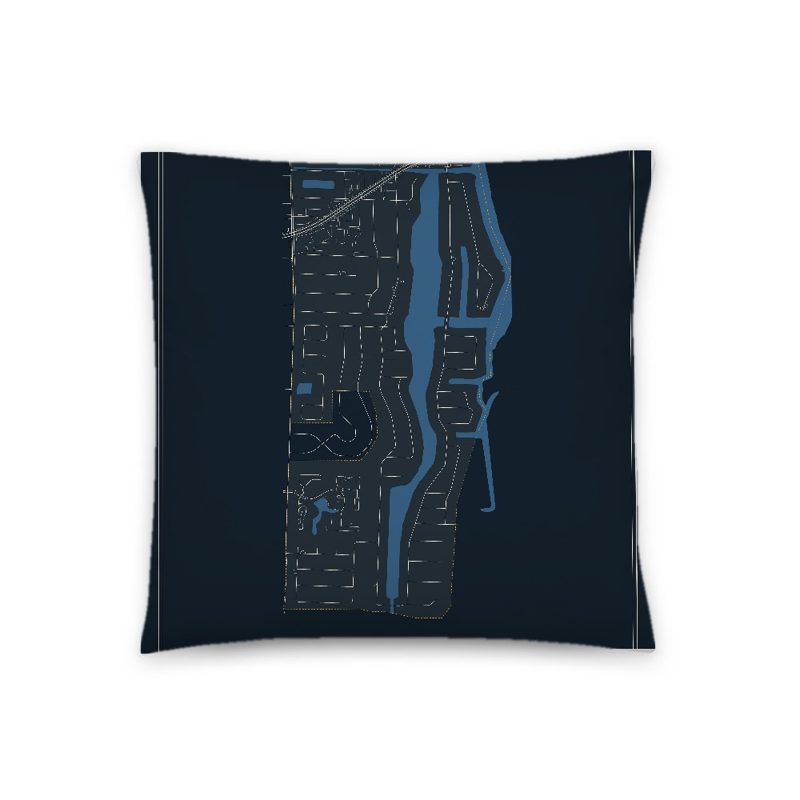
Soft-touch, zip cover
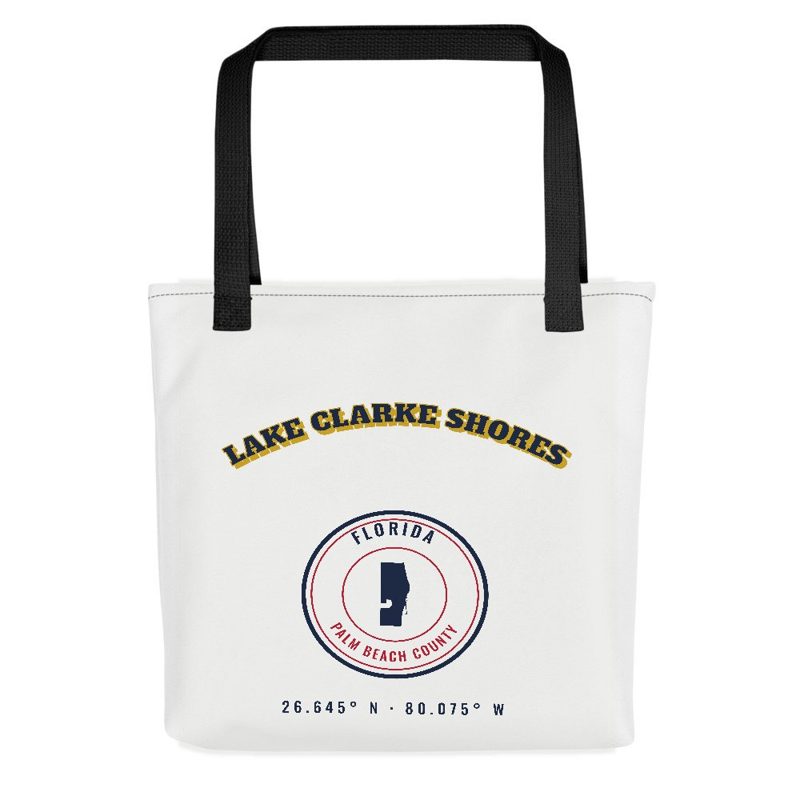
Sturdy all-over-print tote
Glossy top, cork back
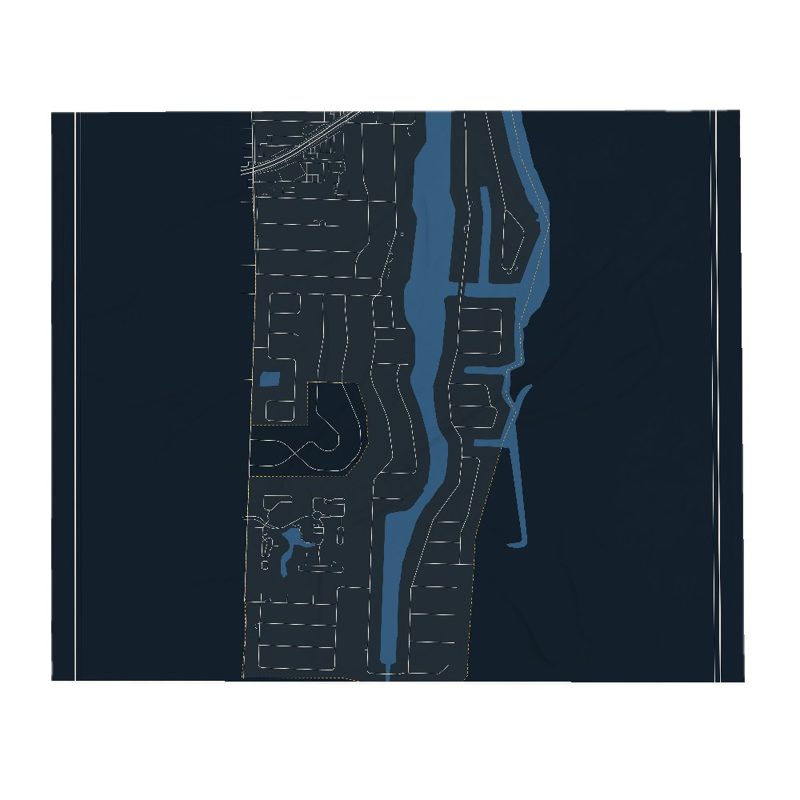
Soft fleece, 50″×60″
20 oz, double-wall stainless
In the early 1930s, Zeb Vance Hooker and his family became the first settlers in modern-day Lake Clarke Shores by squatting in a wooden shack on land by the southeast side of Lake Clarke.
The Town of Lake Clarke Shores was named after John Newton Clarke, a general store grocer, postmaster in Lake Worth (now known as Lake Worth Beach), and Royal Poinciana Hotel employee who filed a homestead claim (via the Homestead Acts) in 1889, for a 139 acre (56 hectare) area of land on the eastern shore of a lake situated just west of West Palm Beach. Clarke would later name the lake after himself. He also purchased 5 acres (2.0 ha) of land in West Palm Beach near where Hillcrest Cemetery and Parker Avenue stand today. Attempting to capitalize on the promising pineapple growing business, Clarke used the property for growing pineapples and operating a packinghouse. However, the thriving pineapple business in South Florida suffered extensive losses in 1910, and the completion Henry Flagler's railway to Key West in 1912, allowed pineapples from Cuba to be shipped to the northern United States more cost-effectively than from Florida. Clarke and many others in South Florida abandoned the pineapple industry by 1915. Thereafter, Clarke used the land as a fishing retreat. However, Lake Clarke, which had stretched from Southern Boulevard (State Road 84) to the city of Lake Worth, was reduced to a marsh and fell about 8 ft (2.4 m) in height in 1917 upon completion of the West Palm Beach Canal.
In the early 1930s, Zeb Vance Hooker and his family became the first settlers in modern-day Lake Clarke Shores by squatting in a wooden shack on land by the southeast side of Lake Clarke. In 1946, Patsy Renolds built a house where Antigua Road stands today and is the oldest home in Lake Clarke Shores. By the late 1940s, local attorney Walter Travers visited the area and bought the lakeshore properties from their respective owners. Travers then attempted to buy land which had been drained during the construction of the West Palm Beach Canal in the 1910s. The state of Florida initially denied his request. However, after meeting with the Trustees of the Internal Improvement Fund in Tallahassee, the board offered Travers the land for $300 per acre. Travers partially agreed but attempted to negotiate a lesser cost for land at lower elevations. The state then decided to auction the land. Travers was the only bidder and obtained 250 acres (100 ha) of land on the northwest periphery of the lake for $10,000, which a friend loaned to him. After obtaining $5,000 for an unrelated lawsuit settlement, Travers invested that money into his project to transform the area into a waterfront community and brought in dredging equipment in 1949. The fledgling community initially grew very slowly, with just three homes built by 1952. One reason for the slow growth was the lack of a bridge across the West Palm Beach Canal. Palm Beach County Commissioner Lake Lytal convinced the county commission to approve the building of a bridge, knowing that Travers intended to contribute $10,000 to its construction. The bridge, completed in 1953, connected Selby Road and Forest Hill Boulevard (State Road 882) – with the entirety of the road becoming Forest Hill Boulevard – and resulted in a quicker increase in development and population.
Rumors spread that West Palm Beach planned to annex the area, prompting 60 people to form the Lake Clarke Property Owners’ Association in 1955. The association first met at a private residence, before meeting regularly at Meadow Park Elementary School. After reaching consensus on the name Lake Clarke Shores, residents met there on April 10, 1956, to decide on incorporation. Because the Florida Legislature did not meet in 1956, incorporation would have to be supported by two-thirds of voters. A total of 117 votes were cast, with 113 in favor and 4 in opposition to incorporating. Thus, the motion succeeded. William H. McLaughlin was unanimously selected to be the first mayor of Lake Clarke Shores, while Horace J. Cunningham, William M. Diemer, Robert G. Hillbert, Charles G. Platt, and Frank M. Seay served as the town's first aldermen. Other elected officials included Betty Diemer as town clerk, William H. Blythe as town marshal, and John Farrell as town attorney. The Florida Legislature approved the citizens vote to incorporate on July 1, 1957, when the town was granted the State Charter.
Development continued rapidly after Forest Hill Community High School opened just across the West Palm Beach Canal from Lake Clark Shores in 1958. The first census of the town occurred in 1960, which recorded a population of 1,297. In its early years, Lake Clarke Shores was almost entirely residential in nature. A 1962 description of the town in The Palm Beach Post noted that Forest Hill Baptist Church (now New Life Alliance Church) was the only non-residential building. However, the town council began passing ordinances later in the 1960s to allow commercial properties along Forest Hill Boulevard. The first commercial building, a gas station, opened at the corner of Forest Hill Boulevard and Florida Mango Road in June 1967. The town council, having long recognized the need for a town hall, finally authorized the construction of a town hall on Barbados Road in the 1970s, which opened in August 1974. The town hall would be dedicated on February 20, 1977. About 10 years later, in May 1987, a building headquartering the Lake Clarke Shores Police Department was completed.
Adapted (trimmed) from the Wikipedia article Lake Clarke Shores, Florida, revision 1378408307 by its contributors, licensed CC BY-SA 4.0.
We share a part of every Lake Clarke Shores sale with local partners, and we'd love to print from your collection. Old photographs, maps and postcards make the best keepsakes.
Partner with usA favorite landmark, your street, a school or team, an anniversary gift, a different product. Tell us and we'll get back to you by email.
Lake Clarke Shores's population was 3,564 in the 2020 U.S. Census, up from 3,451 in 2000.