The town was originally incorporated as Greenacres City on May 24, 1926. Landmarks include Pine Jog Environmental Education Center. Greenacres is the birthplace of Matt Bosher, NFL punter.
- CountyPalm Beach County
- Population43,990 (2020 U.S. Census)
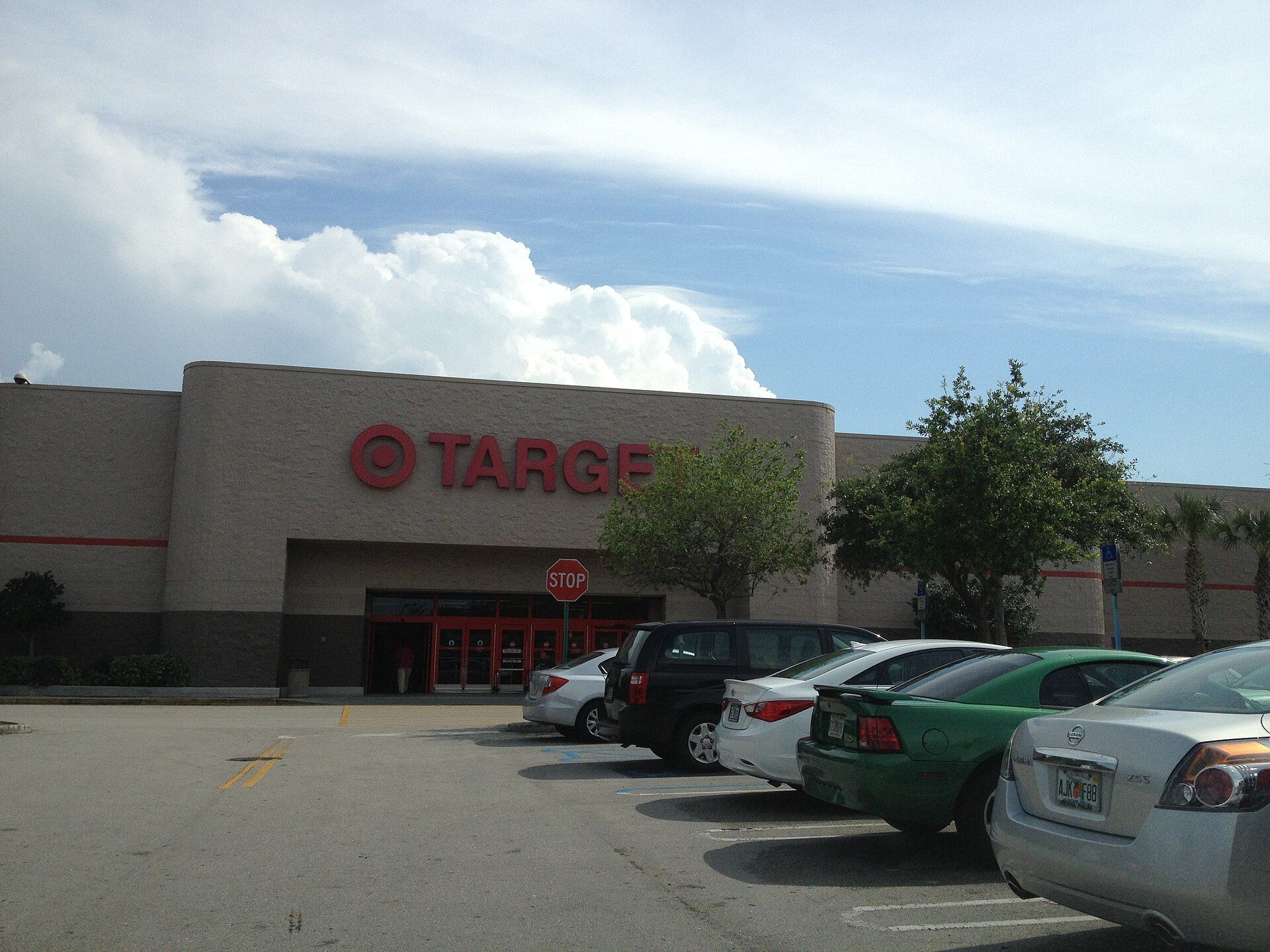
The town was originally incorporated as Greenacres City on May 24, 1926. Landmarks include Pine Jog Environmental Education Center. Greenacres is the birthplace of Matt Bosher, NFL punter.
Greenacres, Florida gifts and souvenirs: 21 designs made from Greenacres's own map, landmarks and history, from $16 to $95. Printed to order and shipped free in the USA.
| Popular | Price |
|---|---|
| Greenacres Hometown Ornament | $23 |
| Greenacres Vintage Travel Poster | from $40 |
| Greenacres Varsity Crewneck | from $57 |
| Greenacres Est. Tee | from $33 |
| Greenacres Town Line Mug | from $26 |
| Greenacres Market Tote | $37 |
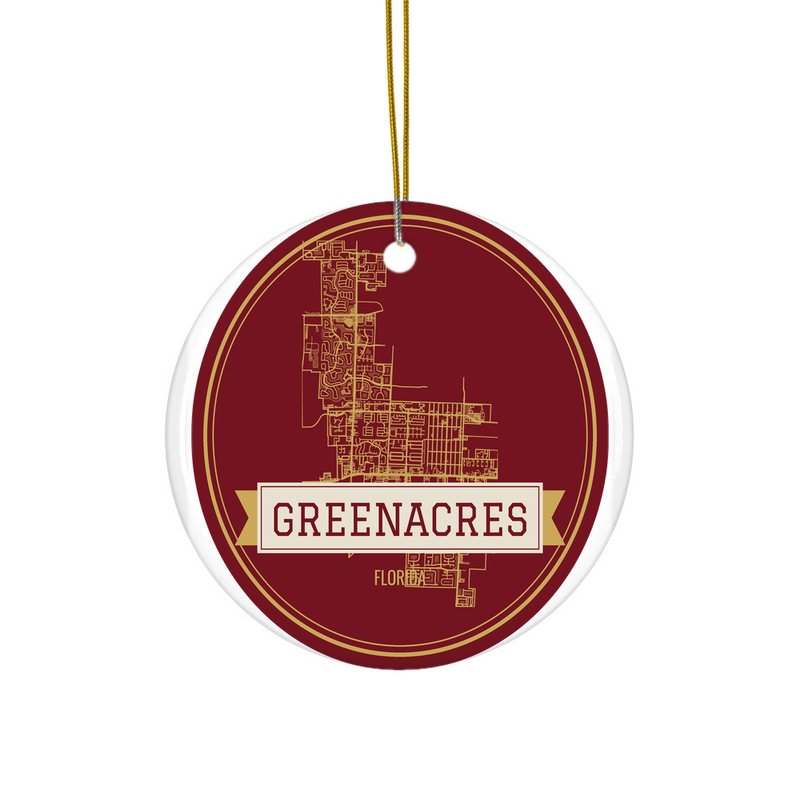
Ceramic keepsake, gold ribbon, in 3 styles
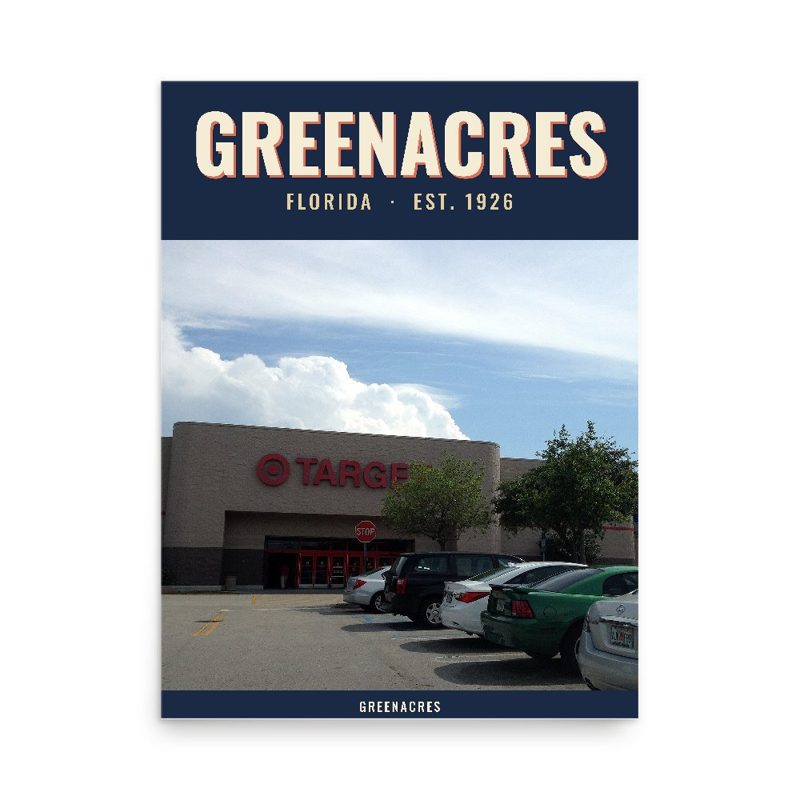
Its landmark photo in a classic travel-poster layout
A local landmark photo as a gallery print
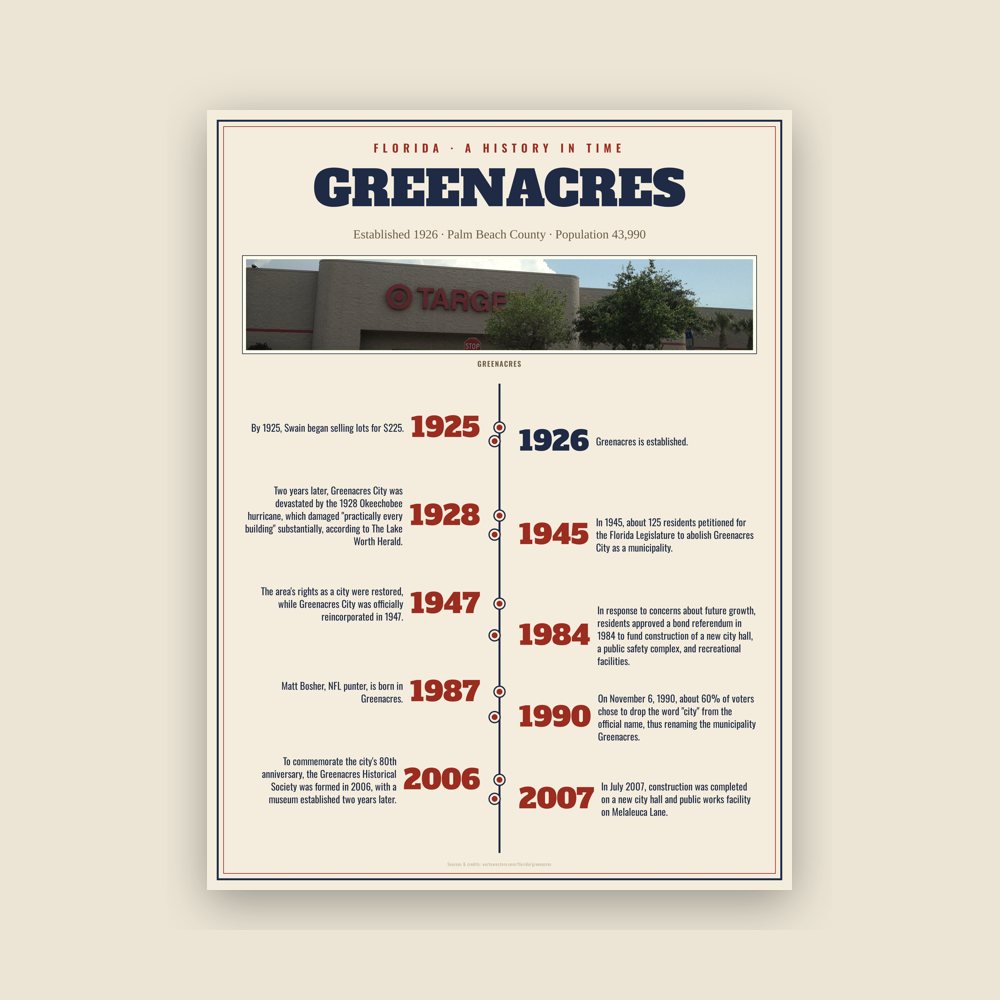
The town's story in dates, from its own records, for home or classroom
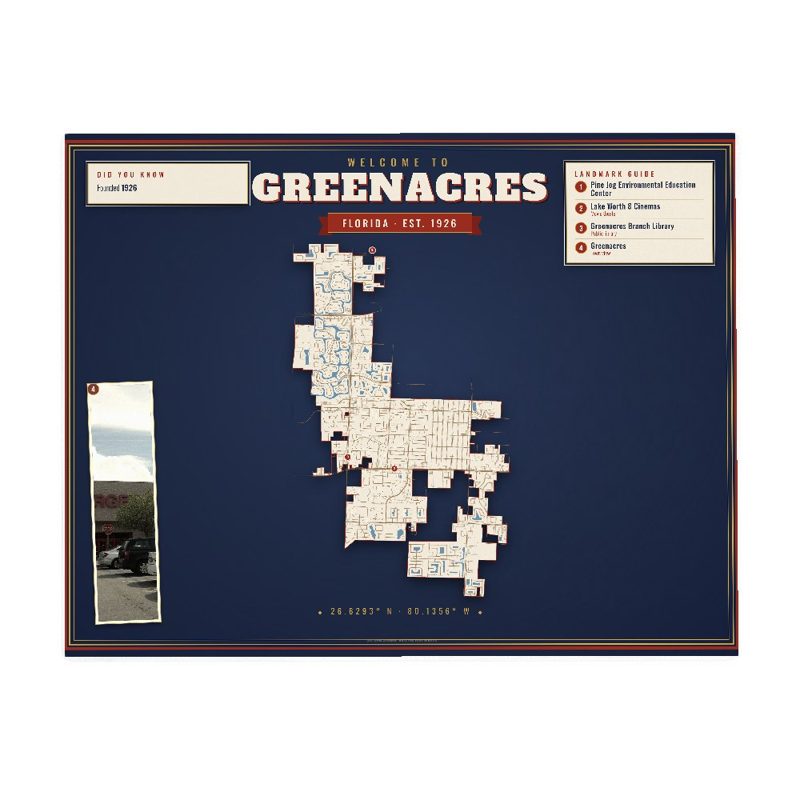
Map of local landmarks, washable fabric
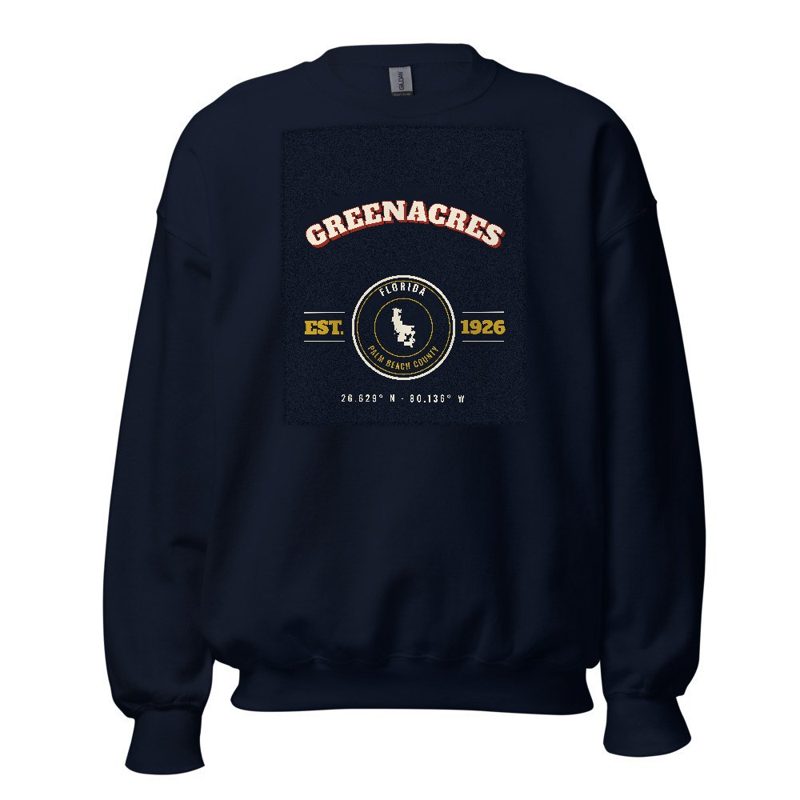
Heavy-blend fleece, street map printed on the back
Red heavy-blend crewneck, knit-stitch town print
Soft Bella+Canvas jersey
Kids' Bella+Canvas jersey, youth sizes
Bella+Canvas toddler jersey
Bella+Canvas baby bodysuit
Glossy ceramic, dishwasher safe
Weatherproof, for the front walk
24″×16″, printed coir-look fibers, rubber back
12″×12″ printed wood, ready to hang
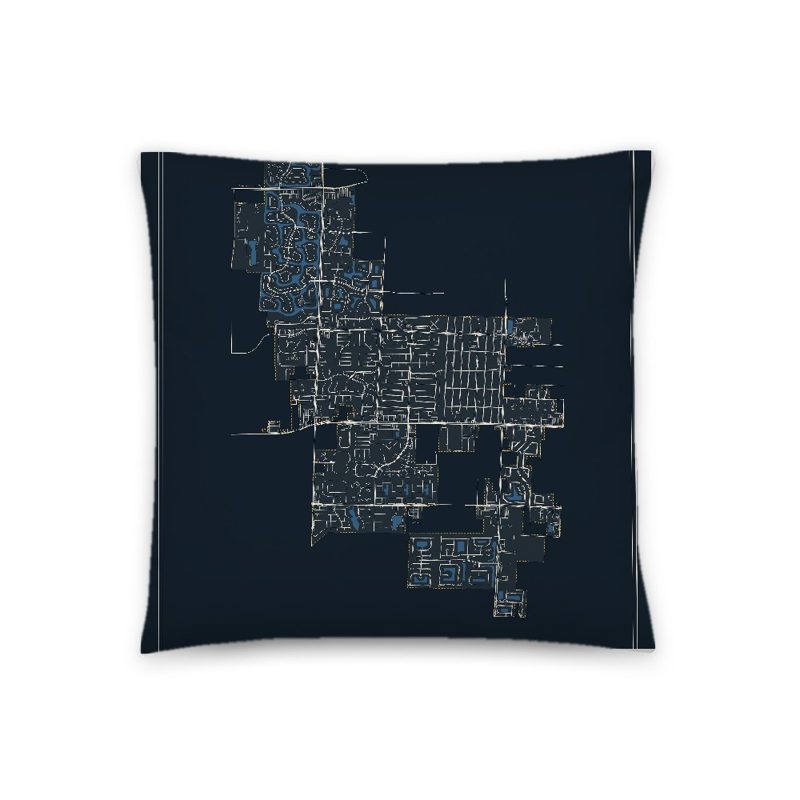
Soft-touch, zip cover
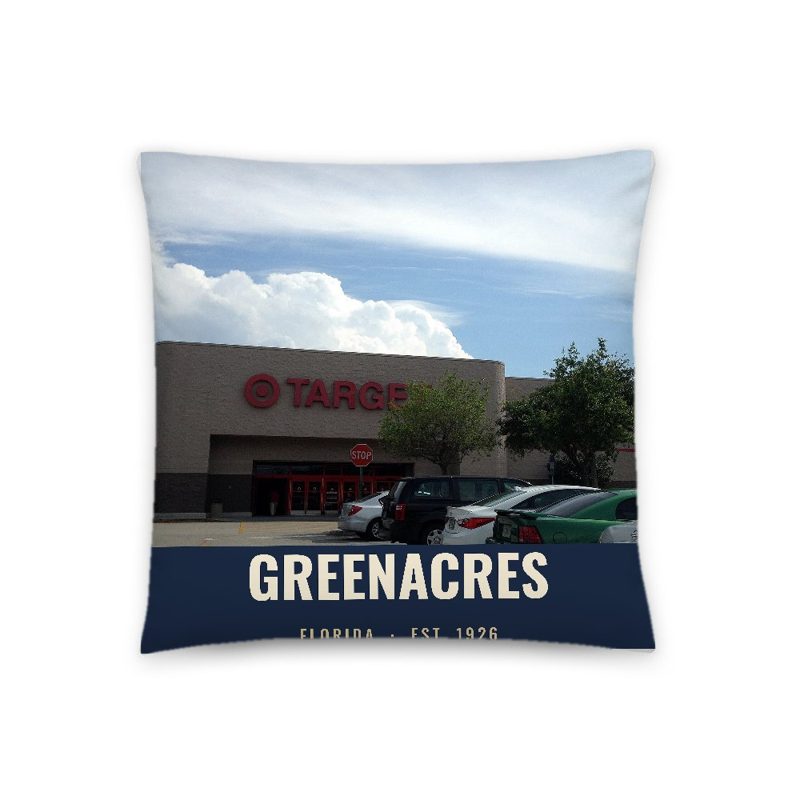
A local landmark photo with the town name, 18″×18″
Sturdy all-over-print tote
Glossy top, cork back
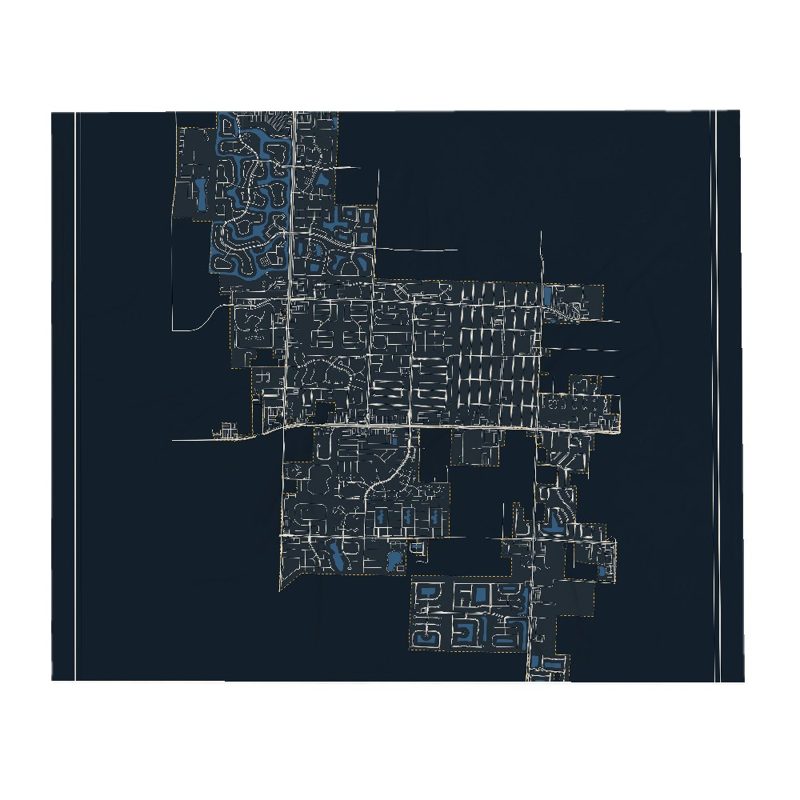
Soft fleece, 50″×60″
20 oz, double-wall stainless
In 1909, Frederick E. Bryant—a British agriculturalist—Harold J. Bryant, and William Greenwood of the Palm Beach Farms Company in Colorado, bought thousands of acres of land in the Everglades and later along the coast of Lake Worth in 1910. The men sold the land to buyers throughout the United States and Canada, offering 5 acres (2.0 ha) plots for $250, with a $10 down payment and a $10 per month charge, which also included a 25 by 25 ft (7.6 by 7.6 m) parcel on the shore of Lake Worth. However, difficulties involved with farming in the Everglades forced 308 buyers to settle at their properties along Lake Worth, an area that would later become the city of Lake Worth Beach. Until the land boom of the 1920s, these lots were effectively abandoned. Around that time, Lawrence Carter "L. C." Swain of Massachusetts acquired 320 acres (130 ha) of land, with the intention of creating a community for the working class. He initially platted approximately half of the land in 1923, with a plat just west of Military Trail becoming the original section of the city. By 1925, Swain began selling lots for $225.
The town was originally incorporated as Greenacres City on May 24, 1926. The name Greenacres was the winning entry in a local naming contest. Upon incorporating, the town had an estimated 1,250 residents. Swain also became honorary mayor, before the first officials were elected, which included J. H. Southard as mayor, G. W. Simpson as clerk, A. P. Lane as marshal, and S. R. Allen, A. E. Fernell, Robert Hansen, C. Martin, I. E. Shivers, and F. L. Woods as aldermen. Additionally, G. W. Fleenor of Lake Worth became acting attorney. In September of that year, a hurricane destroyed the civic building and community hall, but did not cause much other significant damage. Two years later, Greenacres City was devastated by the 1928 Okeechobee hurricane, which damaged "practically every building" substantially, according to The Lake Worth Herald.
Swain died in 1944; Swain Boulevard and L. C. Swain Middle School are named in his honor. In 1945, about 125 residents petitioned for the Florida Legislature to abolish Greenacres City as a municipality. The legislature passed a bill to dis-incorporate Greenacres City in April of that year, which became a law on April 24, 1945, without the signature of Governor Millard Caldwell. Then-Mayor Charles A. Grabowski actively fought the new law, as no referendum to forfeit the town's charter had been held. Additionally, Grabowski accused a resident of starting the dissolution movement out of spite after being denied a homestead exemption and claimed that many of the signatories did not actually own property in Greenacres City. Grabowski also asserted that the pleas of city officials and a large number of residents in favor of remaining a town were ignored. On December 4, 1945, a meeting was held to reincorporate Greenacres City. A total of 86 out of 120 registered voters turned out, more than the two-thirds of voters quorum required. The 86 voters unanimously decided to reincorporate. The area's rights as a city were restored, while Greenacres City was officially reincorporated in 1947. Over the subsequent decades, Greenacres City eventually expanded to 6 sq mi (16 km2) through annexation.
In the 1960s, a city hall complex was constructed at the intersection of Perry Avenue and Fourth Street, while a community center was built nearby. The city hall complex originally included a public library and all other city departments, except for the fire and public works departments. By the 1970s, full-time police and fire departments were established. In response to concerns about future growth, residents approved a bond referendum in 1984 to fund construction of a new city hall, a public safety complex, and recreational facilities. On November 6, 1990, about 60% of voters chose to drop the word "city" from the official name, thus renaming the municipality Greenacres. After the 1990 census indicated a population of 18,638, city council authorized a special census in 1993, which added more than 3,000 additional residents to the official population count, making Greenacres eligible for funds from the state government of Florida. To commemorate the city's 80th anniversary, the Greenacres Historical Society was formed in 2006, with a museum established two years later. In July 2007, construction was completed on a new city hall and public works facility on Melaleuca Lane.
Adapted (trimmed) from the Wikipedia article Greenacres, Florida, revision 1378798524 by its contributors, licensed CC BY-SA 4.0.
We share a part of every Greenacres sale with local partners, and we'd love to print from your collection. Old photographs, maps and postcards make the best keepsakes.
Partner with usA favorite landmark, your street, a school or team, an anniversary gift, a different product. Tell us and we'll get back to you by email.
1 free coloring page of Greenacres, each traced from a photo of a local landmark. Print them at home, at school or for story hour.
Greenacres's population was 43,990 in the 2020 U.S. Census, up from 37,573 in 2010.
 A view of Greenacres