The city of San Bernardino, California, occupies much of the San Bernardino Valley, a valley long inhabited by the Tongva. Several of their villages dotted the San Bernardino valley prior to the arrival of Europeans in the valley. Kaawchama was perhaps the most significant in the region, being a regional center for trade that was connected to villages in Southern California and the Colorado River through the Mohave Trail, that was used by the Mohave, Serrano, Cahuilla, Payomkawichum, and others. The village was located in the eastern expanse of Tovaangar, and was established along the Santa Ana River.
Read the full history
Spanish and Mexican era
With the establishment of Mission San Gabriel in 1771, Spanish missionaries traveling through the area expressed a desire to establish a supply station in the area, which became the Guachama Rancheria. The settlement was also referred to as Politana and became the first Spanish settlement in what they referred to as San Bernardino Valley, named for Bernardino of Siena, being established in 1810 as a mission chapel and supply station by the Mission San Gabriel.
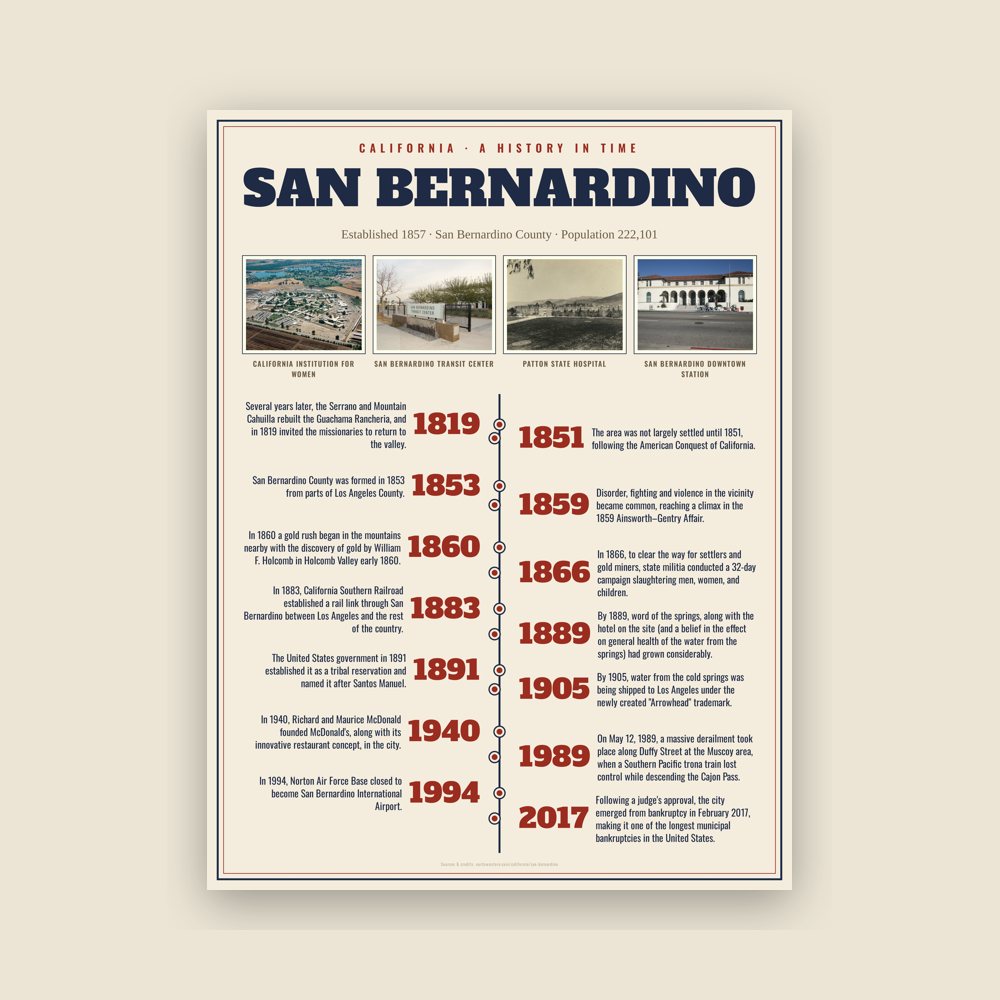
Two years later the settlement was destroyed by local tribesmen, following powerful earthquakes that shook the region. Several years later, the Serrano and Mountain Cahuilla rebuilt the Guachama Rancheria, and in 1819 invited the missionaries to return to the valley. They did and established the San Bernardino de Sena Estancia. Serrano and Cahuilla people inhabited Politana until long after the 1830s decree of secularization and the 1842 inclusion into the Rancho San Bernardino land grant of the José del Carmen Lugo family.
Post-Conquest era
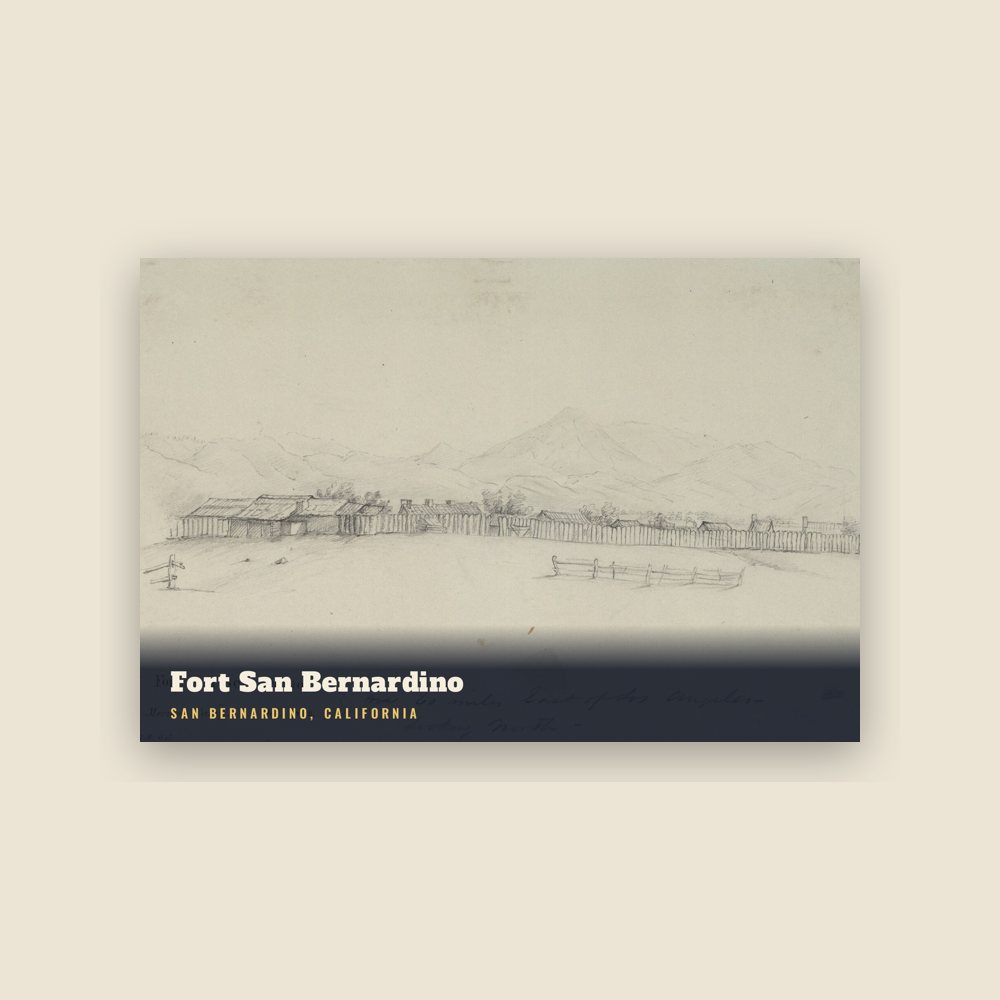
The area was not largely settled until 1851, following the American Conquest of California. The first Anglo-American colony was established by pioneers associated with the Church of Jesus Christ of Latter-day Saints in 1851. San Bernardino County was formed in 1853 from parts of Los Angeles County. Mormons laid out the town based on the "City of Zion" plan which was typical of Mormon urban planning. Mormon colonists developed irrigated, commercial farming and lumbering, supplying agricultural produce and lumber throughout Southern California.
The city was officially incorporated in 1857. Later that year, most of the colonists were recalled by Brigham Young in 1857 due to the Utah War. Some Mormons would stay in San Bernardino and some later returned from Utah, but a real estate consortium from El Monte and Los Angeles bought most of the lands of the old rancho and of the departing colonists. They sold these lands to new settlers who came to dominate the culture and politics in the county, and San Bernardino became a typical American frontier town. Many of the new land owners disliked the sober Mormons, indulging in drinking at saloons now allowed in the town. Disorder, fighting and violence in the vicinity became common, reaching a climax in the 1859 Ainsworth–Gentry Affair.
In 1860 a gold rush began in the mountains nearby with the discovery of gold by William F. Holcomb in Holcomb Valley early 1860. Another strike followed in the upper reach of Lytle Creek. By the 1860s, San Bernardino had also become an important trading hub in Southern California. The city, already on the Los Angeles – Salt Lake Road, became the starting point for the Mojave Road from 1858 and Bradshaw Trail from 1862 to the mines along the Colorado River and within the Arizona Territory in the gold rush of 1862–1864.
In a 2007 report in The California Geographer, however, California State University, San Bernardino geography professor Norman Meek noted that the first direct record of the feature appeared in an 1864 photograph taken shortly after the establishment of the health resort by David Noble Smith at the hot springs. No mention of the arrowhead appears in any records of Spanish travelers in the area in the 18th or early 19th centuries, nor in records of Mormon settlement in the area in the 1850s, nor in the first scientific geological survey conducted in the area of the feature in 1853. Meek conducted analysis of soil samples, finding no significant difference in substrate composition of arrowhead itself compared to its surroundings aside from increased traces of fire retardant chemicals used for wildfire control, casting doubt on the hypothesis that the feature could be explained as a purely natural formation. Based on this, and the sudden increase in reports and purported legends of the arrowhead in late 19th century reporting and advertising for the resort, Meek contended that "the arrowhead may be a human-made advertisement created sometime in the late 1850s or early 1860s, perhaps by the founder of the hot springs resort". He suggested that the feature may have been constructed with the help of local native tribespeople, possibly modifying a landslide scar.
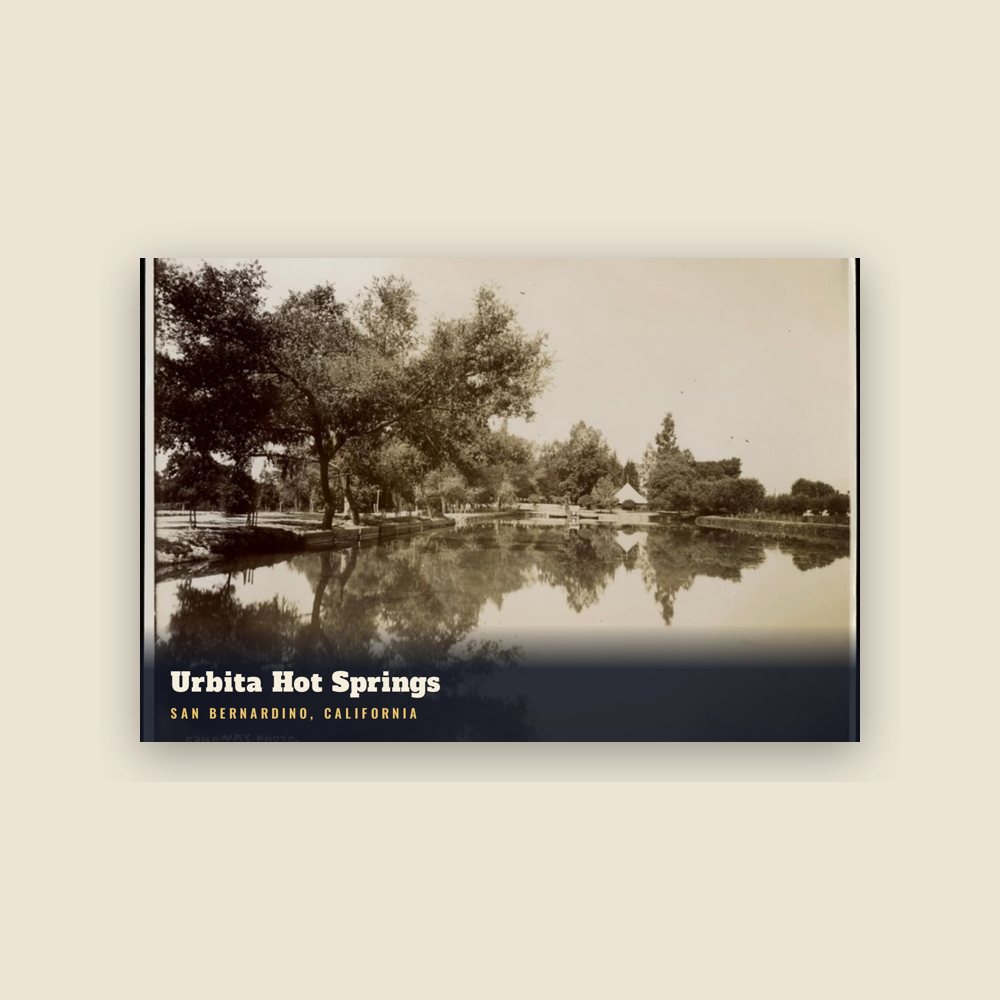
By 1889, word of the springs, along with the hotel on the site (and a belief in the effect on general health of the water from the springs) had grown considerably. Hotel guests often raved about the crystal-clear water from the cold springs, which prompted Seth Marshall to set up a bottling operation in the hotel's basement. By 1905, water from the cold springs was being shipped to Los Angeles under the newly created "Arrowhead" trademark.
Indigenous people of the San Bernardino Valley and Mountains were collectively identified by Spanish explorers in the 19th century as Serrano, a term meaning highlander. Serrano living near what is now Big Bear Lake were called Yuhaviatam, or "People of the Pines". In 1866, to clear the way for settlers and gold miners, state militia conducted a 32-day campaign slaughtering men, women, and children. Yuhaviatam leader Santos Manuel guided his people from their ancient homeland to a village site in the San Bernardino foothills. The United States government in 1891 established it as a tribal reservation and named it after Santos Manuel.
In 1883, California Southern Railroad established a rail link through San Bernardino between Los Angeles and the rest of the country.
Modern era
Norton Air Force Base was established during World War II. In 1994, Norton Air Force Base closed to become San Bernardino International Airport.
In 1940, Richard and Maurice McDonald founded McDonald's, along with its innovative restaurant concept, in the city. In 1955, Glen Bell started his first taco stand after learning from Gloria Hoyle at Mitla Café, later developing into the first Taco Bell.
On May 12, 1989, a massive derailment took place along Duffy Street at the Muscoy area, when a Southern Pacific trona train lost control while descending the Cajon Pass. The disaster killed 4 people and destroyed seven homes. Then, on May 25, an underground petroleum pipeline ruptured, killing 2 more people and burning down 11 more homes.
In August 2012, San Bernardino filed for Chapter 9 bankruptcy, with more than $1 billion in debt. The move froze the city's payments to creditors, including its pension payments to the California Public Employees' Retirement System for nearly a year. San Bernardino became the largest city at the time to file for a Chapter 9 bankruptcy; this was superseded by Detroit's filing in July 2013. Following a judge's approval, the city emerged from bankruptcy in February 2017, making it one of the longest municipal bankruptcies in the United States.
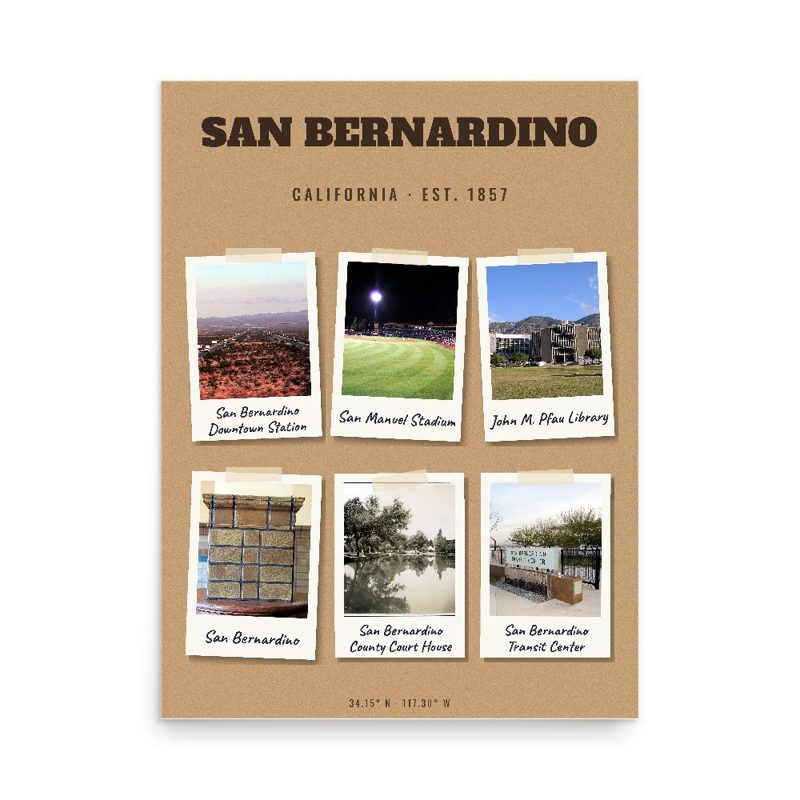

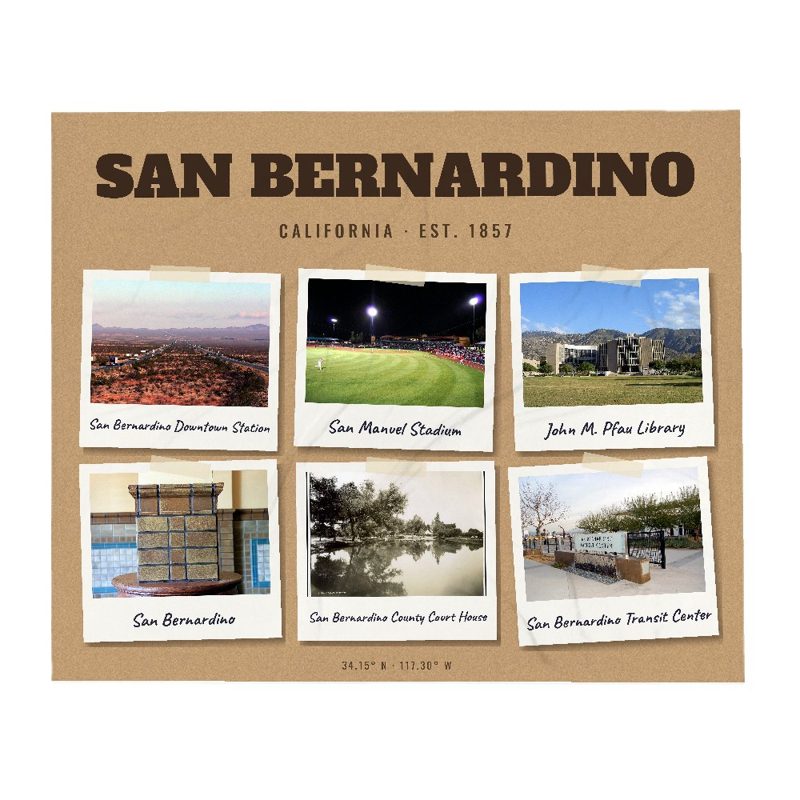
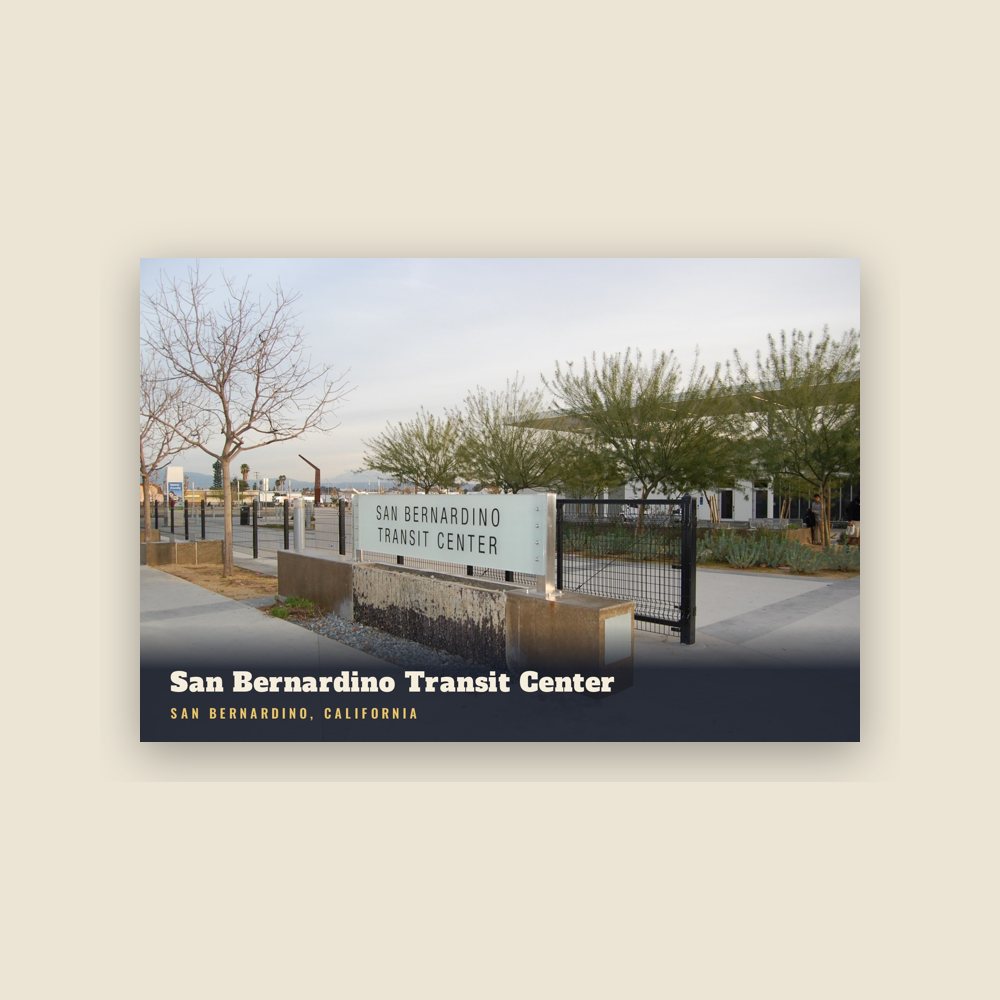
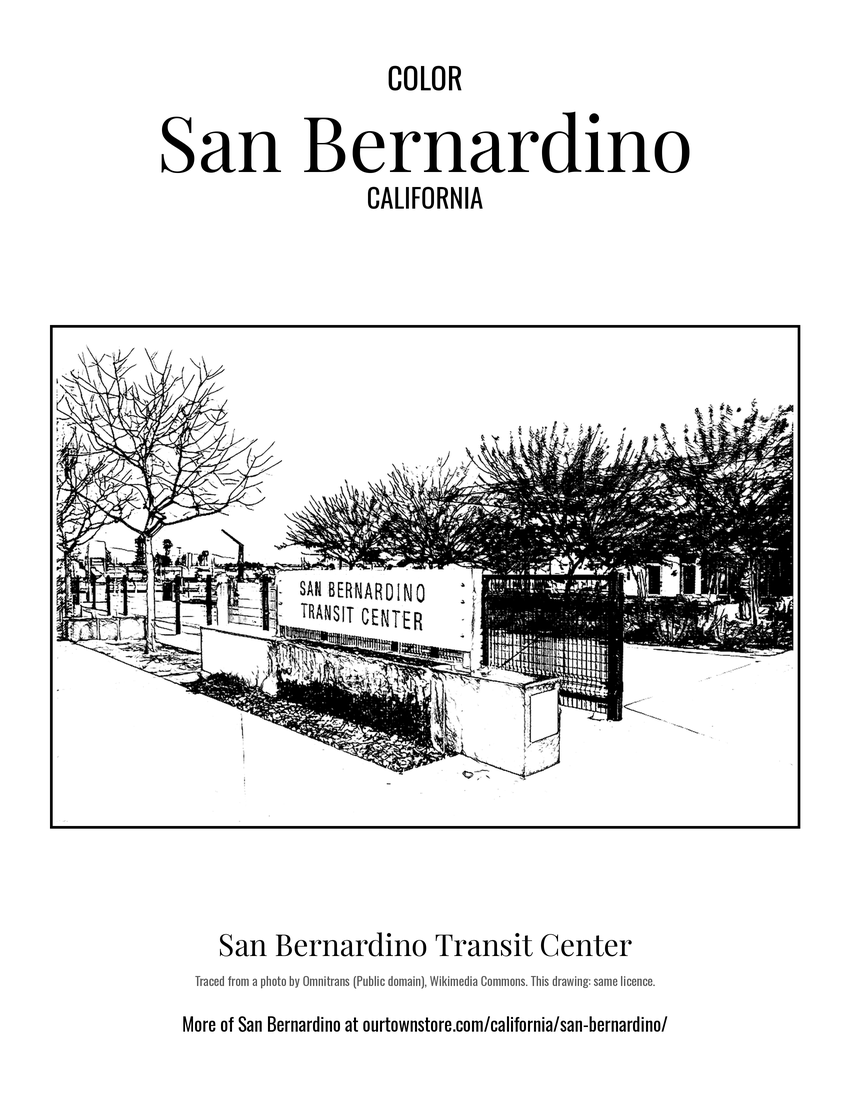 San Bernardino Transit Center
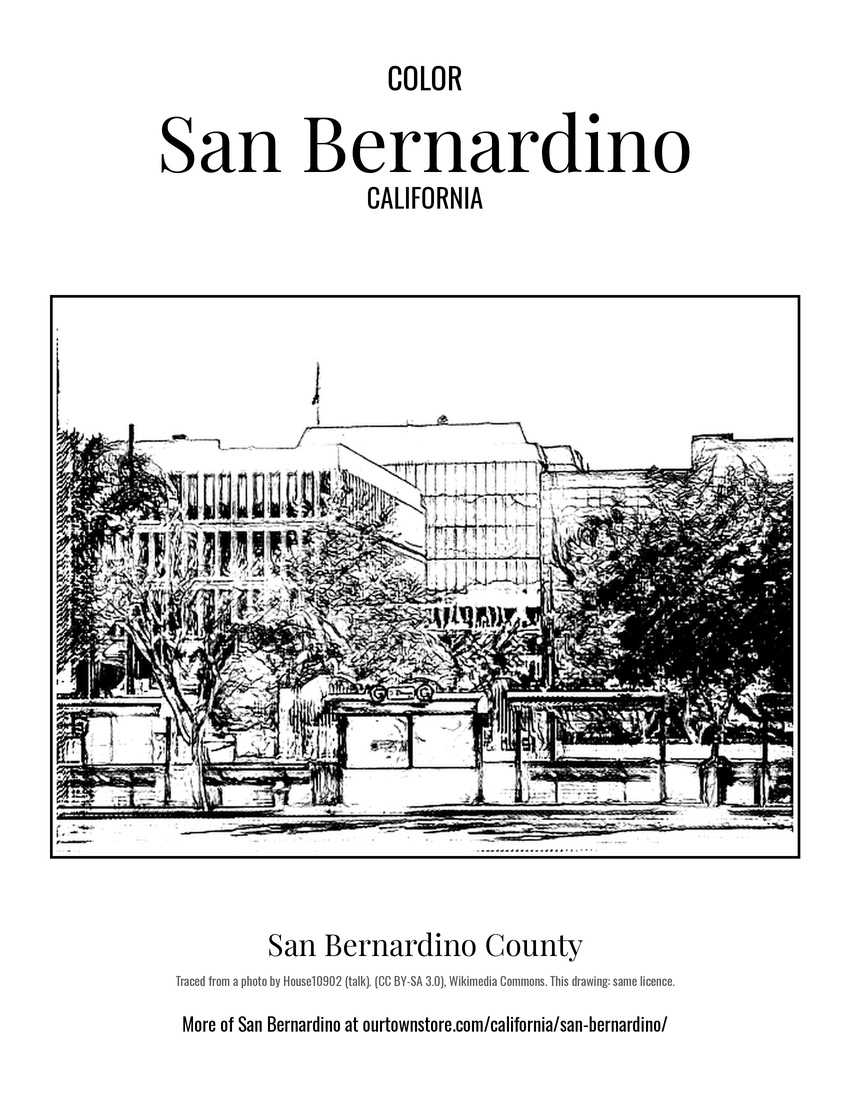 San Bernardino County
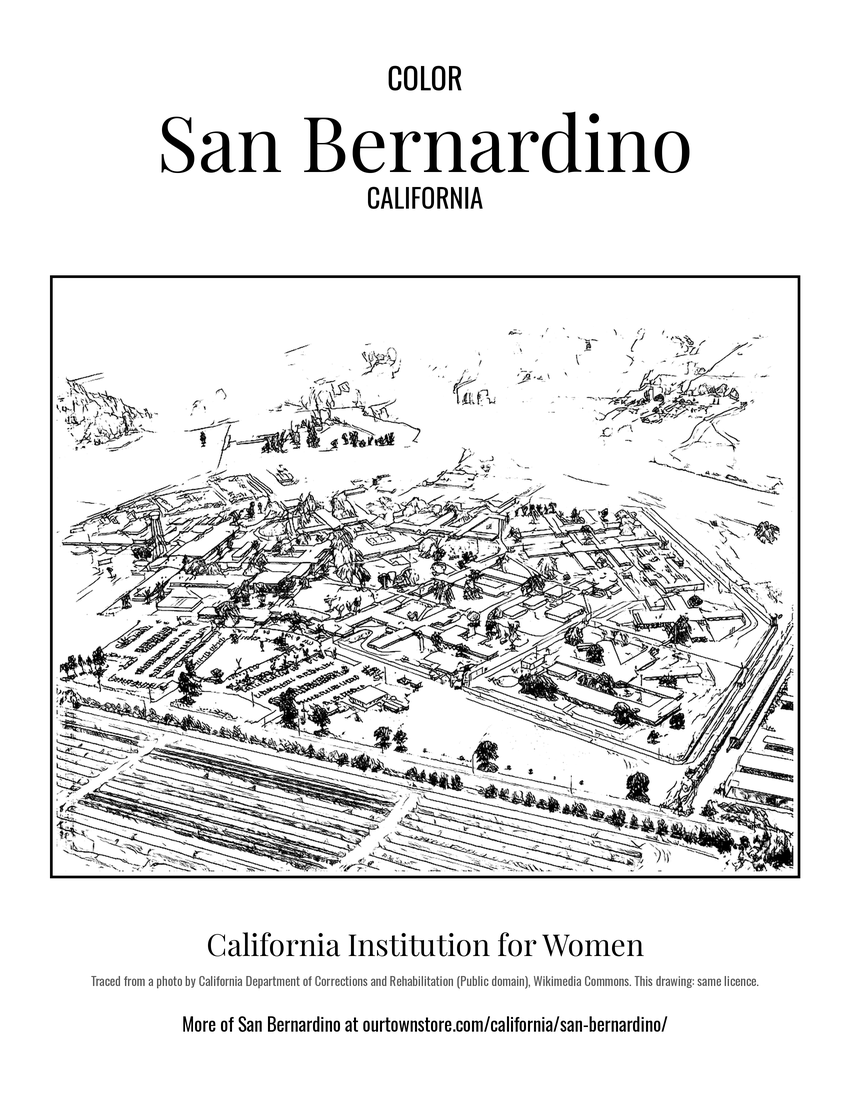 California Institution for Women
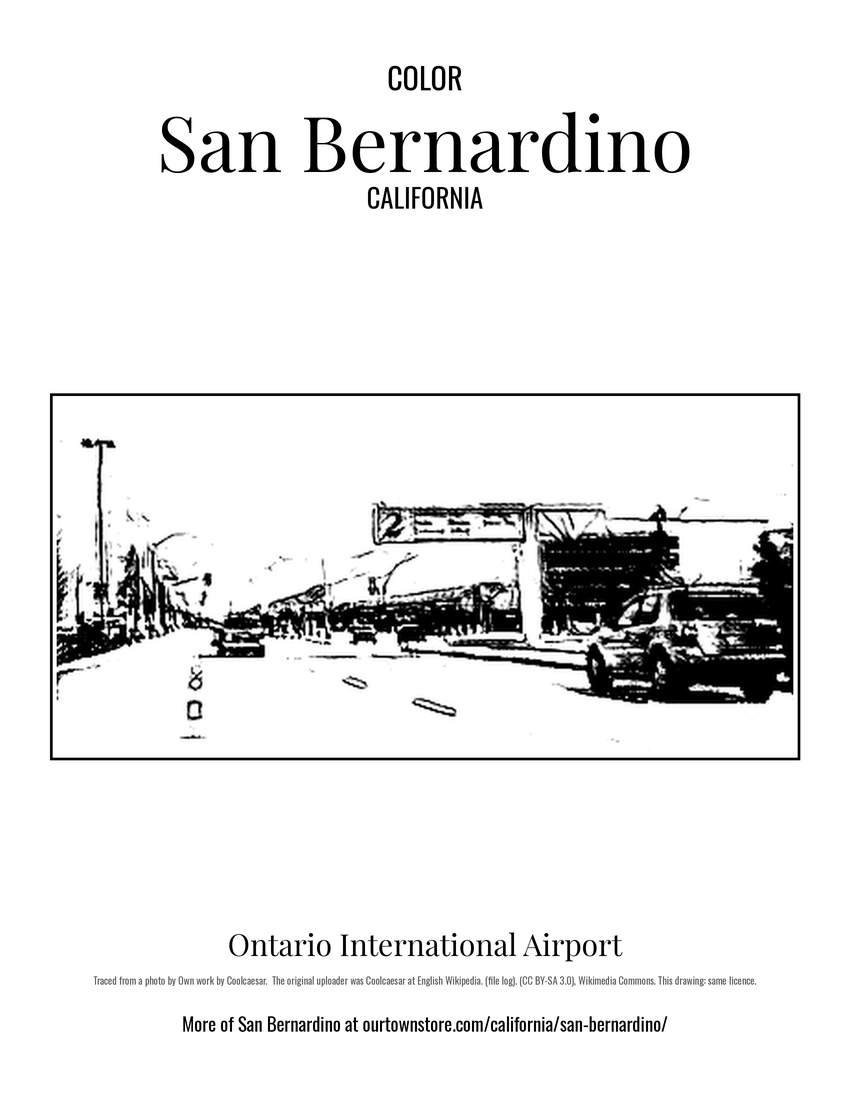 Ontario International Airport