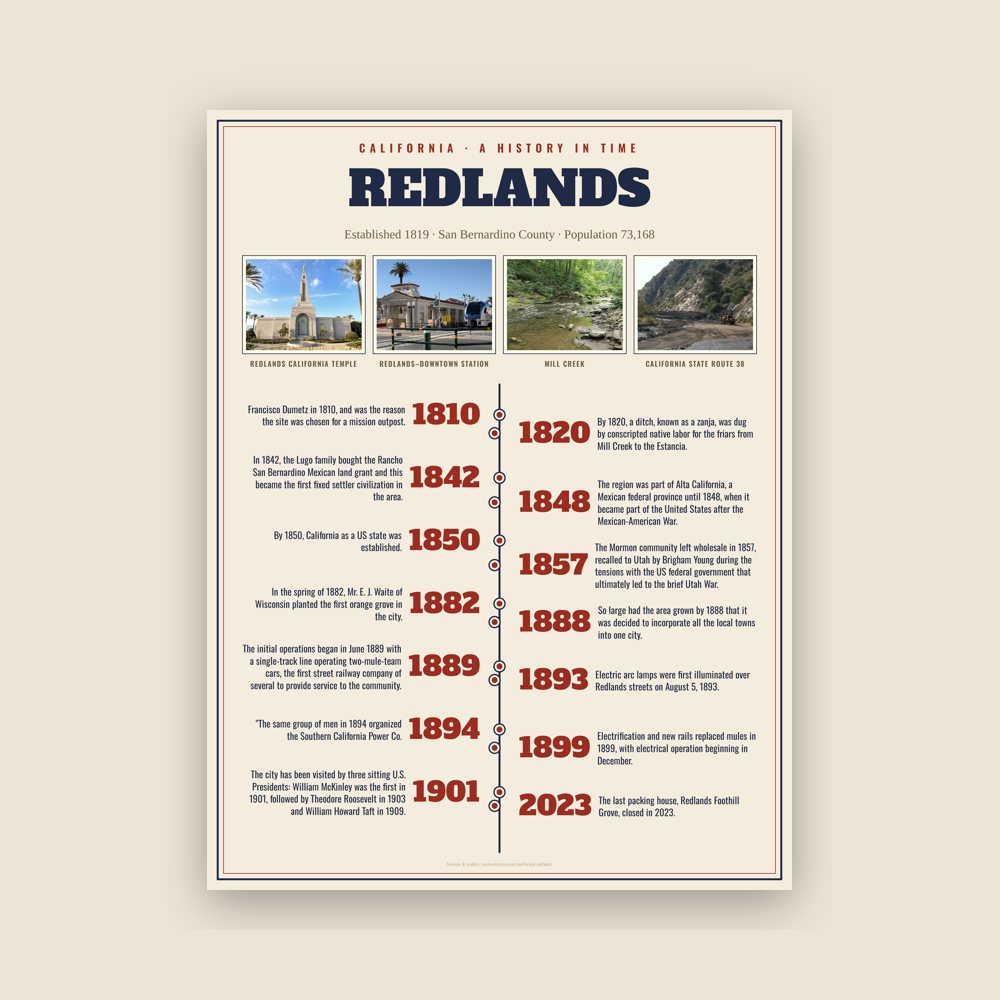
The area of Redlands was territory that historically was occupied by the Morongo and Aguas Calientes tribes of Cahuilla people. Explorations such as those of Pedro Fages and Francisco Garcés sought to extend Catholic influence to the indigenous people and the dominion of the Spanish crown into the area in the 1770s. The Tongva village of Kaawchama, located just to the west of present-day Redlands, was visited by Fr. Francisco Dumetz in 1810, and was the reason the site was chosen for a mission outpost. Dumetz reached the village on May 20, the feast day of Saint Bernardino of Siena, and thus named the region the San Bernardino Valley. The Franciscan friars from Mission San Gabriel established the San Bernardino Estancia in 1819 and embarked on the usual program of training the native tribes to raise crops and mandating permanent settlements. By 1820, a ditch, known as a zanja, was dug by conscripted native labor for the friars from Mill Creek to the Estancia. In 1822, word of the Mexican triumph in the War of Independence reached the inland area, and lands previously claimed by Spain passed to the custody of the newly established Mexican government.
Read the full history
Townships into Cityhood
Lugonia and Redlands Colony
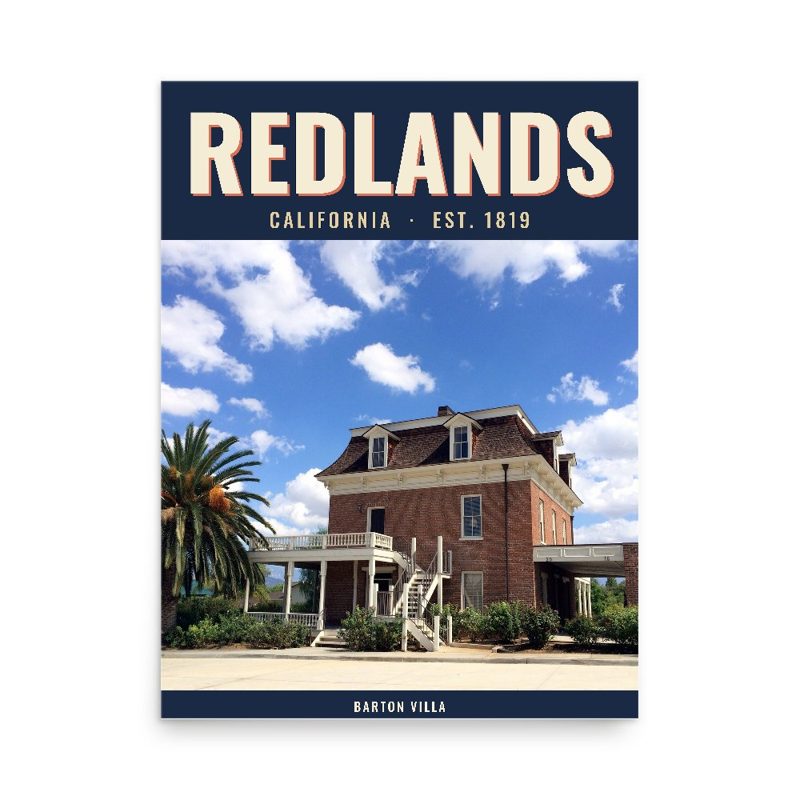
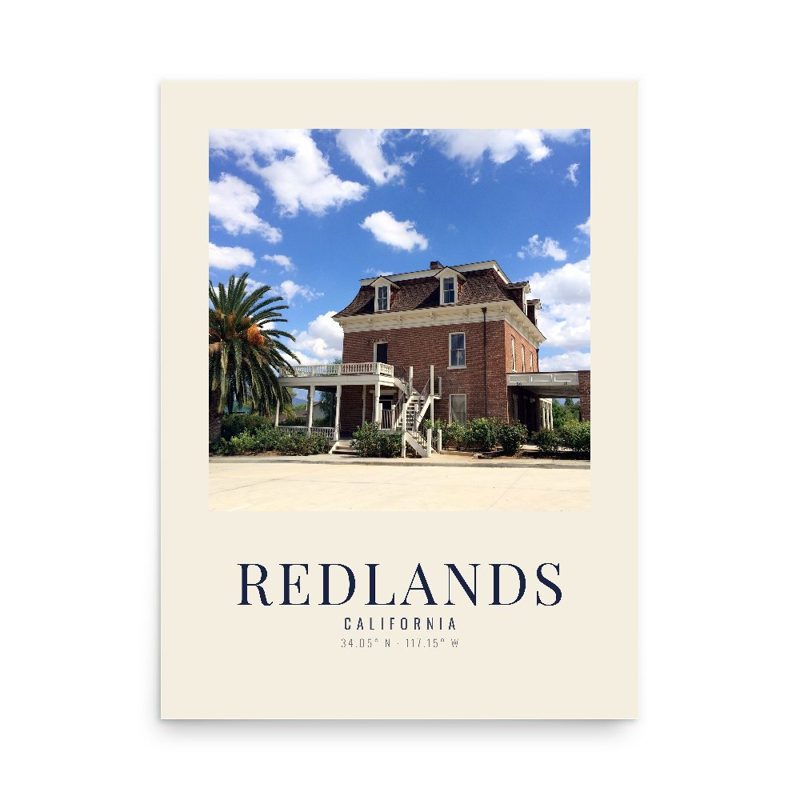
In 1842, the Lugo family bought the Rancho San Bernardino Mexican land grant and this became the first fixed settler civilization in the area. The current northwest area of Redlands, that astrides the Santa Ana River, was founded as Lugonia. The region was part of Alta California, a Mexican federal province until 1848, when it became part of the United States after the Mexican-American War. By 1850, California as a US state was established. The area received its first Anglo inhabitants in the form of several hundred Mormon pioneers, who purchased the entire Rancho San Bernardino, founded nearby San Bernardino, and established a prosperous farming community watered by the many lakes and streams of the San Bernardino Mountains. The Mormon community left wholesale in 1857, recalled to Utah by Brigham Young during the tensions with the US federal government that ultimately led to the brief Utah War. Benjamin Barton purchased 1,000 acres (4 km2) from the Latter-Day Saints. On this land, he planted extensive vineyards and a winery.
Lugonia attracted settlers including, Barry Roberts in 1869, followed a year later by the Craw and Glover families. "The first school teacher in Lugonia, George W. Beattie, arrived in 1874—shortly followed by the town's first negro settler, Israel Beal." Charles Nordhoff's 1873 book, "California: for Health, Pleasure, and Residence" was published. Nordhoff noted the regions warm winters and abundance of land. It attracted many people to Lugonia suffering from tuberculosis, among other ailments seeking health benefits in a dry climate, and available lands for sale.
"The first settler on the site of the present Redlands is recorded to have erected a hut at the corner of what is now Cajon St. and Cypress Ave.; he was a sheep herder, and the year, 1865," reported Ira L. Swett in "Tractions of the Orange Empire".
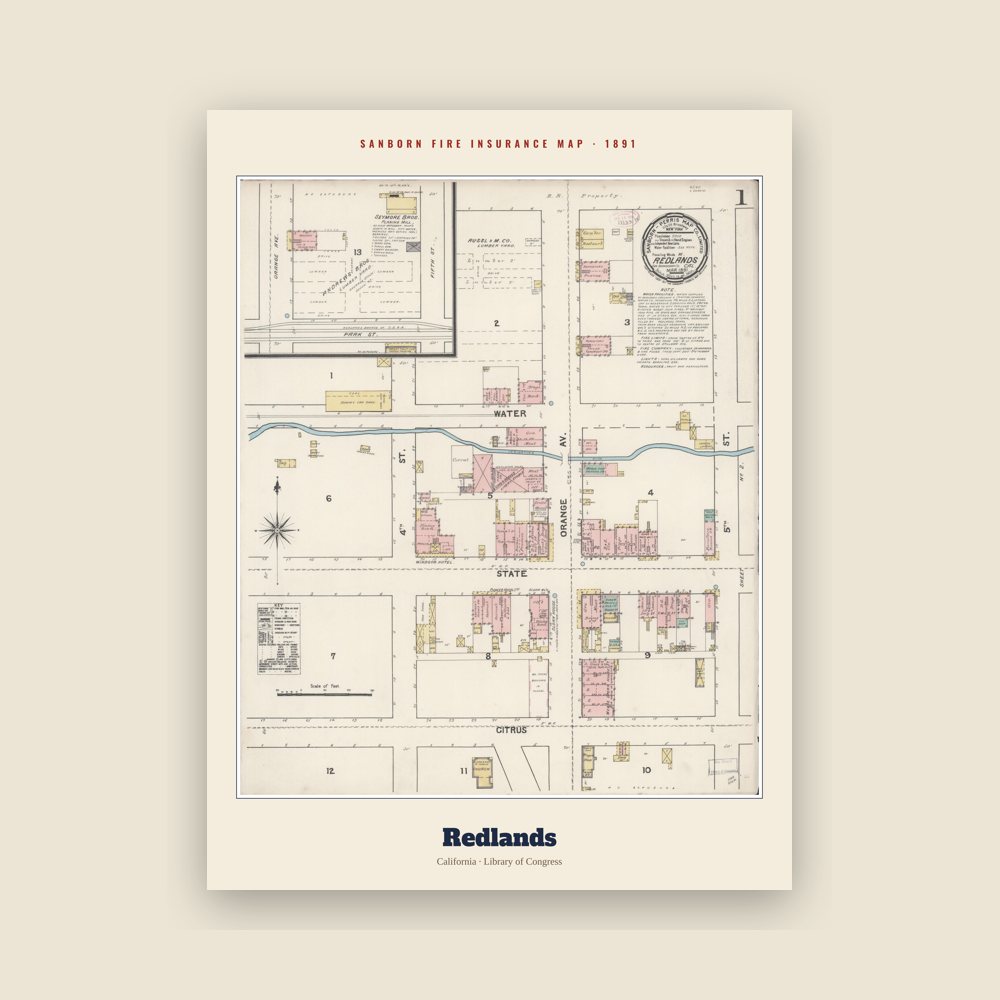
In the 1880s, the arrival of the Southern Pacific and Atchison, Topeka and Santa Fe Railroads, connecting Southern California to San Francisco and Salt Lake triggered a land boom, with speculators such as John W. North flooding the area now known as the Inland Empire. The Redlands Colony was soon established by Frank E. Brown, a civil engineer, and E. G. Judson, a New York stock broker, to provide a center (along with John W. North's nearby settlement of Riverside) for the burgeoning citrus industry. They named their area, just south of Lugonia, "Redlands" after the color of the adobe soil. So large had the area grown by 1888 that it was decided to incorporate all the local towns into one city. The original townships of Lugonia, Bryn Mawr, Barton, Terracina Colony, Victoria Colony, Gladysta, parts of Mentone, and parts of Crafton Colony were mended into one incorporated city with the newly established Redlands Colony. "A red-letter day in the annals of Redlands", pronounced Scipio Craig, editor of The Citrograph newspaper, of the November 26 incorporation. The newspaper was first published in July 1887 by The Citrograph Printing Company, which remains in 2026 as both Redlands' oldest business and the longest-operating printing company in California. E. G. Judson served as the first mayor of Redlands.
Railroads
The Redlands Street Railway Company was incorporated on March 22, 1888, acquiring on June 5 a franchise from the San Bernardino County Supervisors dating to December 1887, conveying the right to construct, operate and maintain for a term of 50 years a line of street railways in Redlands, Terracina and vicinity. The initial operations began in June 1889 with a single-track line operating two-mule-team cars, the first street railway company of several to provide service to the community. Electrification and new rails replaced mules in 1899, with electrical operation beginning in December. Most Redlands street railways would pass to the San Bernardino Valley Traction Company in a consolidation on June 3, 1903, and thence to the Pacific Electric in the "Great Merger" of Huntington properties under new ownership by the Southern Pacific Transportation Company on February 8, 1911. Henry E. Huntington, nephew of late Southern Pacific president Collis P. Huntington, had gained control of the four-mile-long (6.4 km) streetcar line of the Redlands Central Railway Company in 1908.
The Pacific Electric Railway (PE) completed an interurban connection between Los Angeles and San Bernardino in 1914, providing a convenient, speedy connection to the fast-growing city of Los Angeles and its new port at San Pedro, bringing greater prosperity to the town and a new role as a vacation destination for wealthy Angelenos. Redlands was the eastern terminus of the "Big Red Car" system. At its peak, PE operated five local routes in Redlands, with streetcars running to Smiley Heights and on Orange, Olive, and Citrus Avenues. Pacific Electric's interurban service to Redlands was abandoned on July 20, 1936, with 2.07 miles (3.33 km) of track into the city lifted, although PE and Southern Pacific (parent company of PE) provided freight service as far as the Sunkist packing plant at Redlands Heights on San Bernardino Avenue into at least the 1970s. The Smiley Heights line was abandoned at this time, as well. Bus service operated by the Motor Transit Company, a subsidiary of Pacific Electric, began on July 20. This also affected mail delivery in Redlands as "Approximately 80 percent of our mail from all directions arrives on the 5 a.m. electric car," explained Postmaster James B. Stone. "This dispatch is sorted and morning deliveries started by 8:30 a.m. on most routes. The post office department has temporarily arranged for this mail to be brought in by the Santa Fe train at 6:05 a.m. As this arrival is an hour later, our service will be one hour later." The abandoned Pacific Electric La Quinta trestle over the Santa Ana River stood immediately south of San Bernardino International Airport into the 2010s but was removed when an Amazon facility was built adjacent to the site.
Electricity
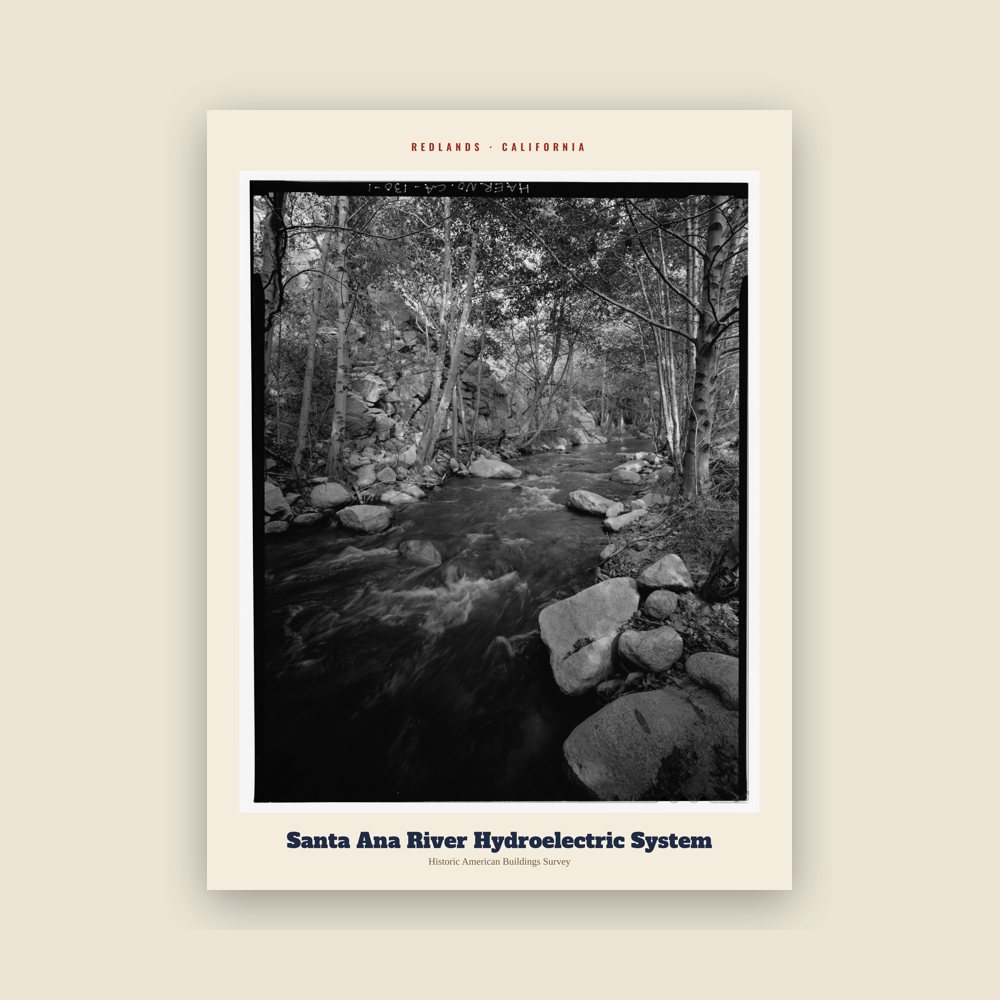
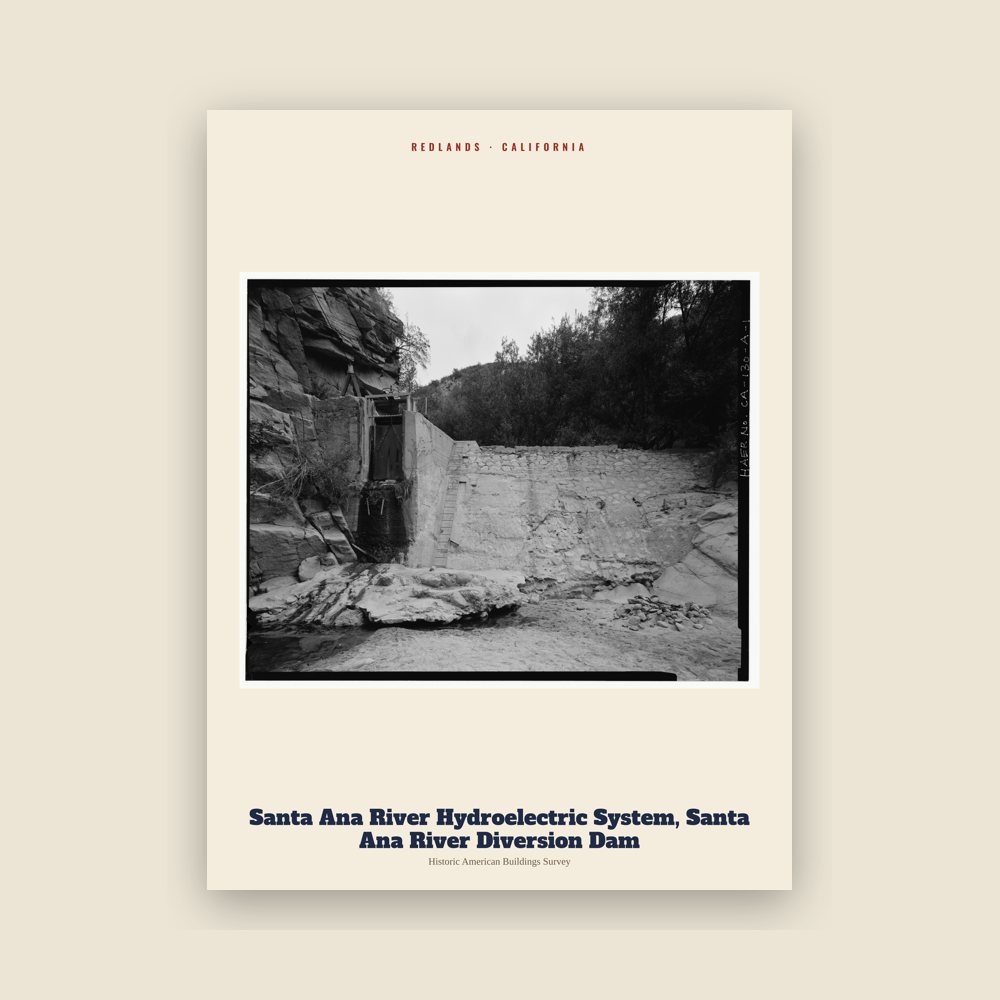
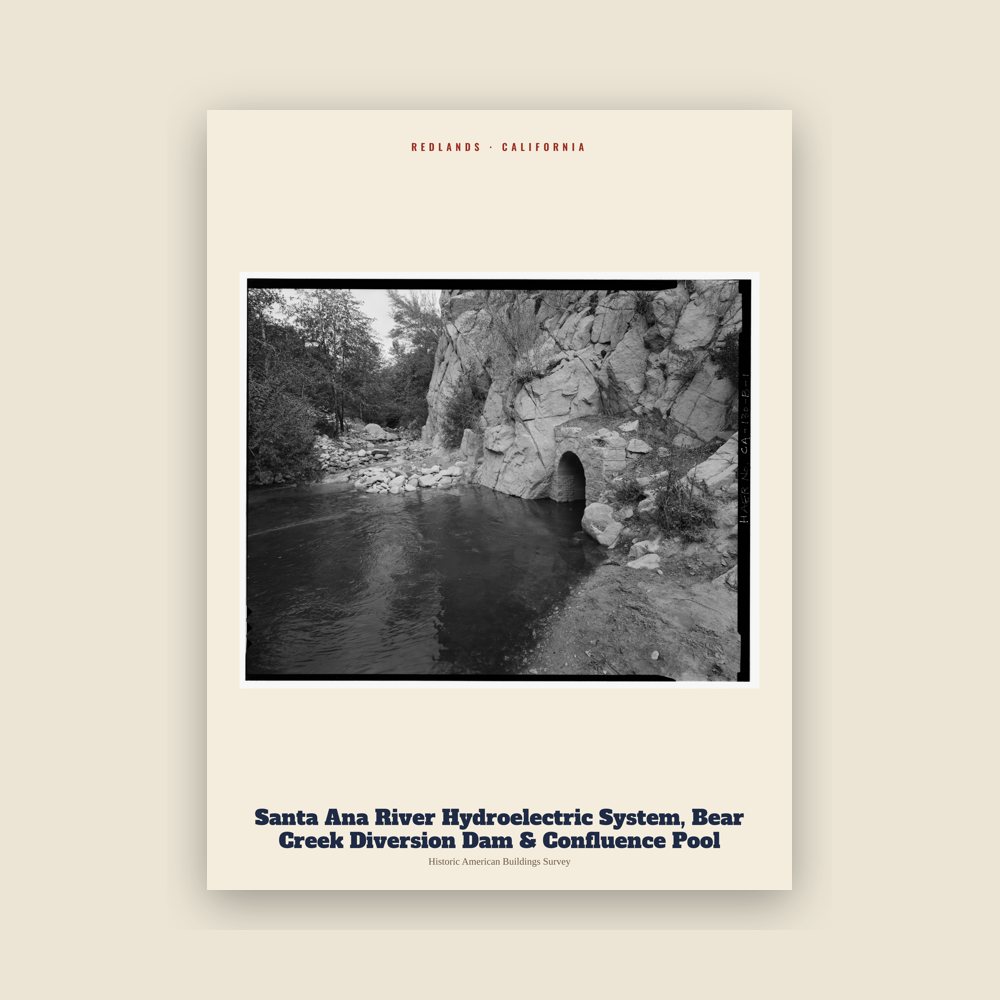
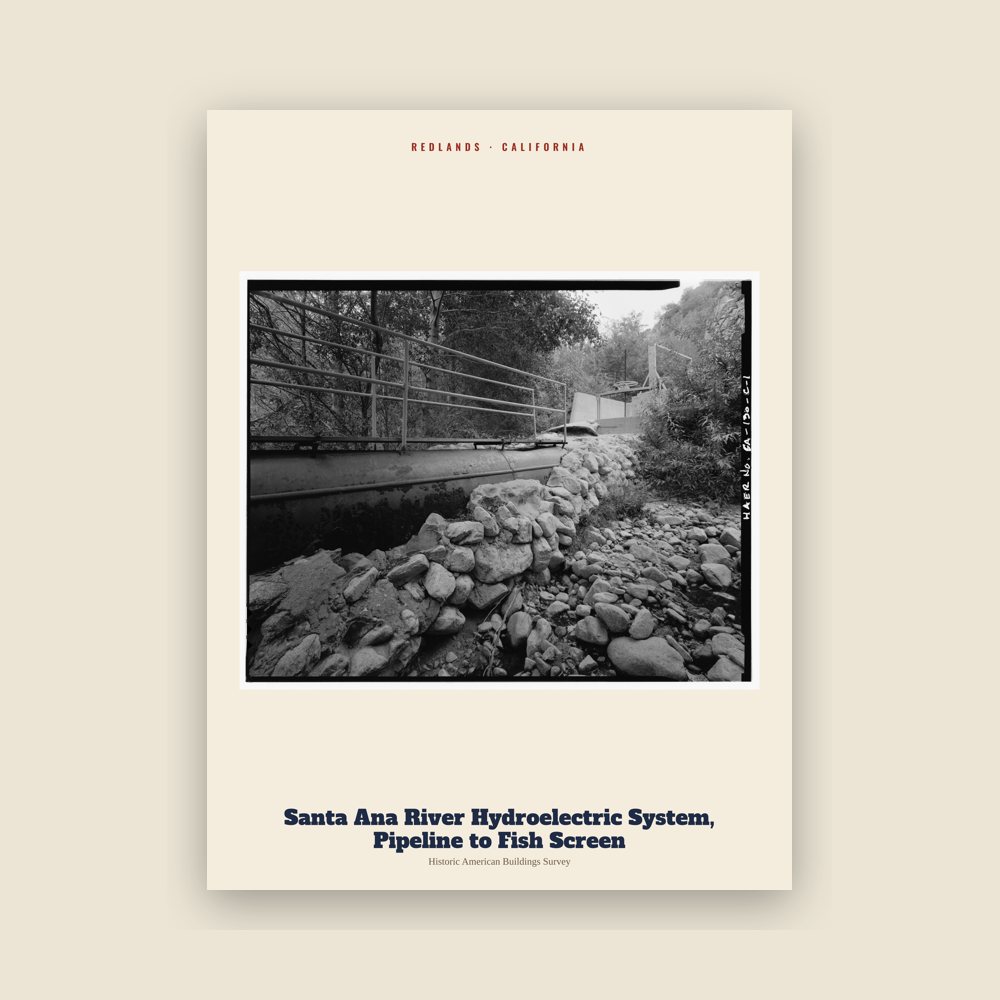
"History was made in the electrical industry July 27, 1892, when a franchise was granted to the Electric Light & Power Co., which was incorporated Oct. 6 and began building a powerhouse in Mill Creek canyon. Thus the groundwork was laid for the world's first (three)-phase transmission line, which brought electricity to Redlands and later became a unit in the Southern California Edison Co." The 250 kilowatt AC Mill Creek No. 1 Hydroelectric Plant was designed by Almirian Decker. Electric arc lamps were first illuminated over Redlands streets on August 5, 1893. George B. Ellis, one of seven men who spearheaded the undertaking, is largely credited with originating the plan.
"The first line was extended from the Mill Creek powerhouse to East Citrus avenue, thence to Redlands and to Mr. Ellis' Terracina hotel. By September the company was advertising power for sale to the public. The firm boasted of ability to supply current enough for 55 arc lamps, and 1,500 homes." Engineer O. H. Ensign was "largely responsible for the success of the undertaking." When gas lighting became available in Redlands in 1900, many homes already had electricity.
"The same group of men in 1894 organized the Southern California Power Co. Later it was merged with the Edison Electric Co., of Los Angeles, a forerunner of the Southern California Edison Co."
Citrus
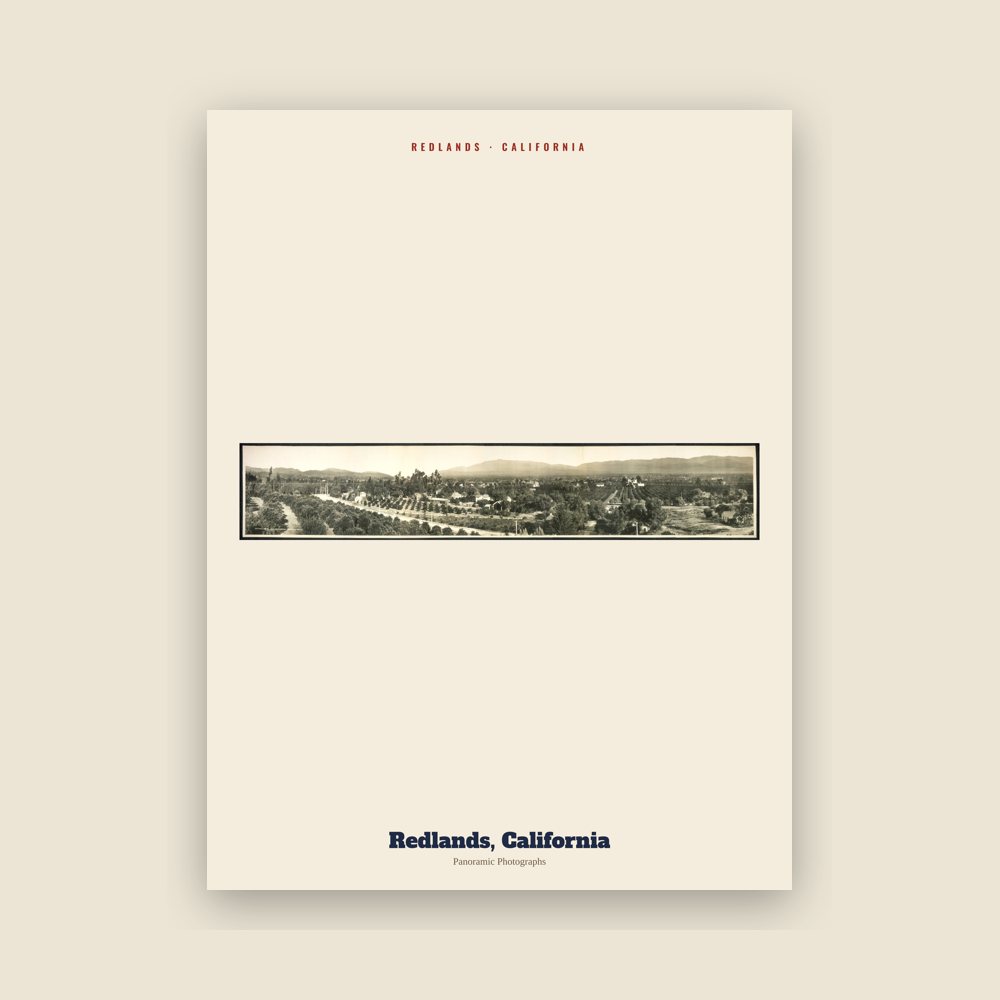
In the spring of 1882, Mr. E. J. Waite of Wisconsin planted the first orange grove in the city. For almost 75 years, the city was the center of the largest navel orange-producing region in the world. By the late 1930s, Redlands was a fruit-packing center surrounded by more than 15,000 acres (61 km2) of citrus groves. The city produced more than 4,200 railcars of navel oranges and 1,300 cars of Valencia oranges during the 1937–38 growing season. During the 1930s and 1940s, labor activists campaigned in the canneries and packing houses for union representation and higher wages. The United Cannery, Agricultural, Packing, and Allied Workers of America (UCAPAWA) won 13 National Labor Relations Board representation elections in the Riverside-Redlands area in 1943. In 1945, the first annual Orange Queen Ball at the Redlands City Auditorium was held to raise funds for the union.
The citrus industry declined in the area due to restrictions on the citrus growers by the newly formed EPA established by President Richard Nixon. As more growers sold their land, Developers replaced orange groves with subdivisions, and all three citrus packing houses (two in downtown and one on San Bernardino Avenue) had closed by the end of the 20th century. The last packing house, Redlands Foothill Grove, closed in 2023.
Community
At the turn of the 20th century, Redlands was the "Palm Springs" of that era, drawing tourists from around the world for the appreciation of winter gardens, rare botanical plantings, and the fragrance of orange blossom season, as well as healthful water from local mountains and springs. Roses and other trophy plant specimens were planted along many city thoroughfares. Some of these plantings would survive as wild thickets into the 1970s, especially adjacent to orange groves where property management was lax. Washingtonia palms (Washingtonia filifera var. robusta) were planted along many main avenues. So beautifully kept was the area, with the dramatic mountain backdrops, that for several years the Santa Fe Railroad operated excursion trains along the loop that passed through the orange groves of Redlands and Mentone, across the Santa Ana River, and back into San Bernardino via East Highlands, Highlands and Patton, and advertised as the "Kite-Shaped Track" due to its multi-sided alignment. The trestle over "the Wash" north of Mentone was carried away during a flood in March 1938 and never replaced, the line being truncated there. The Southern Pacific branch line from the San Timoteo Canyon to Crafton was abandoned after the downtown packing house business died. A thru-truss bridge over the Zanja (locally pronounced "san-kee") exists today, abandoned in place. Burlington Northern Santa Fe, result of the AT&SF-Burlington Northern merger, applied to abandon its San Bernardino-connected branch line east of downtown Redlands in 2007, the last shippers at Crafton and Mentone having ceased operations. A move was made by transit activists beginning in the 1990s to have this branch revitalized as part of the Southern California transit districts, but it came to nothing for many years. After Metrolink regional commuter rail became involved and funds secured, reconstruction began in 2019 and named Arrow. It was completed in 2022, a Metrolink branch from San Bernardino to end-of-track on the eastern side of town adjacent to the campus of the University of Redlands. 5 new stations with mostly local service to and from the San Bernardino Transit Center and one daily ride to Los Angeles Union Station.
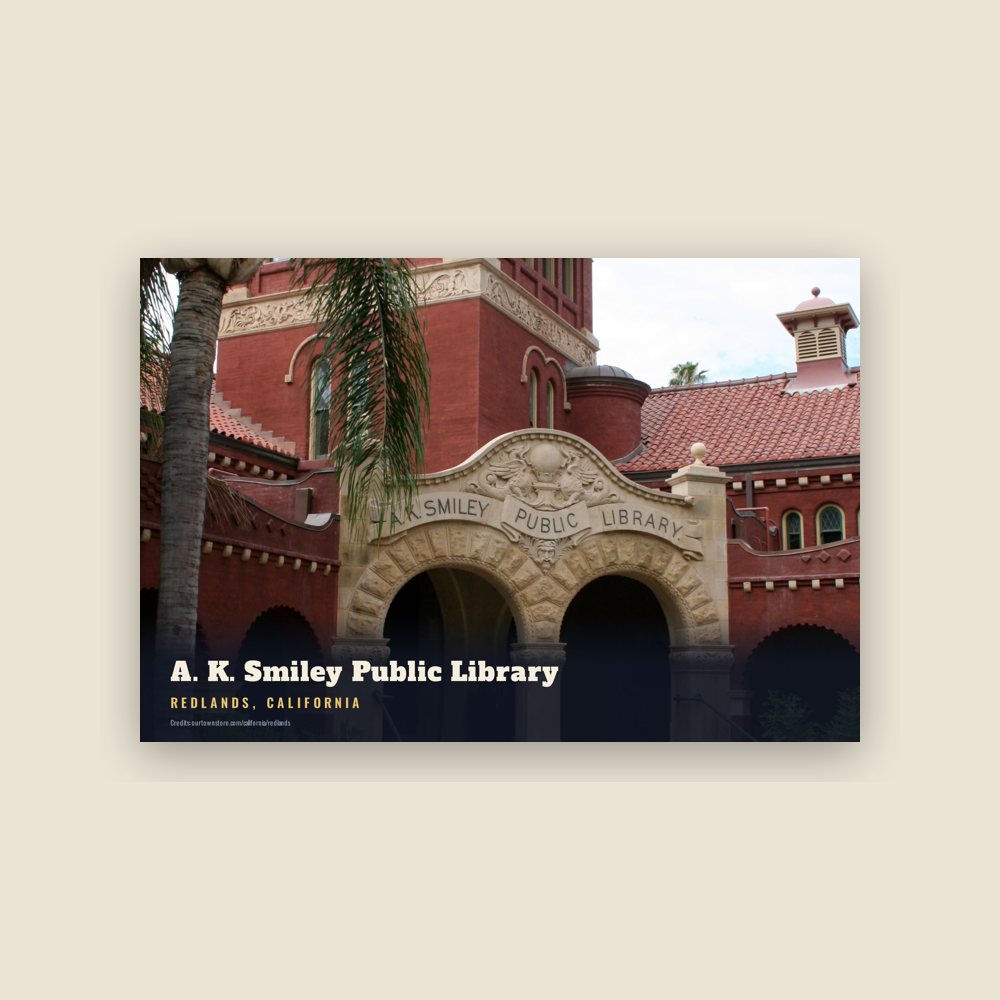
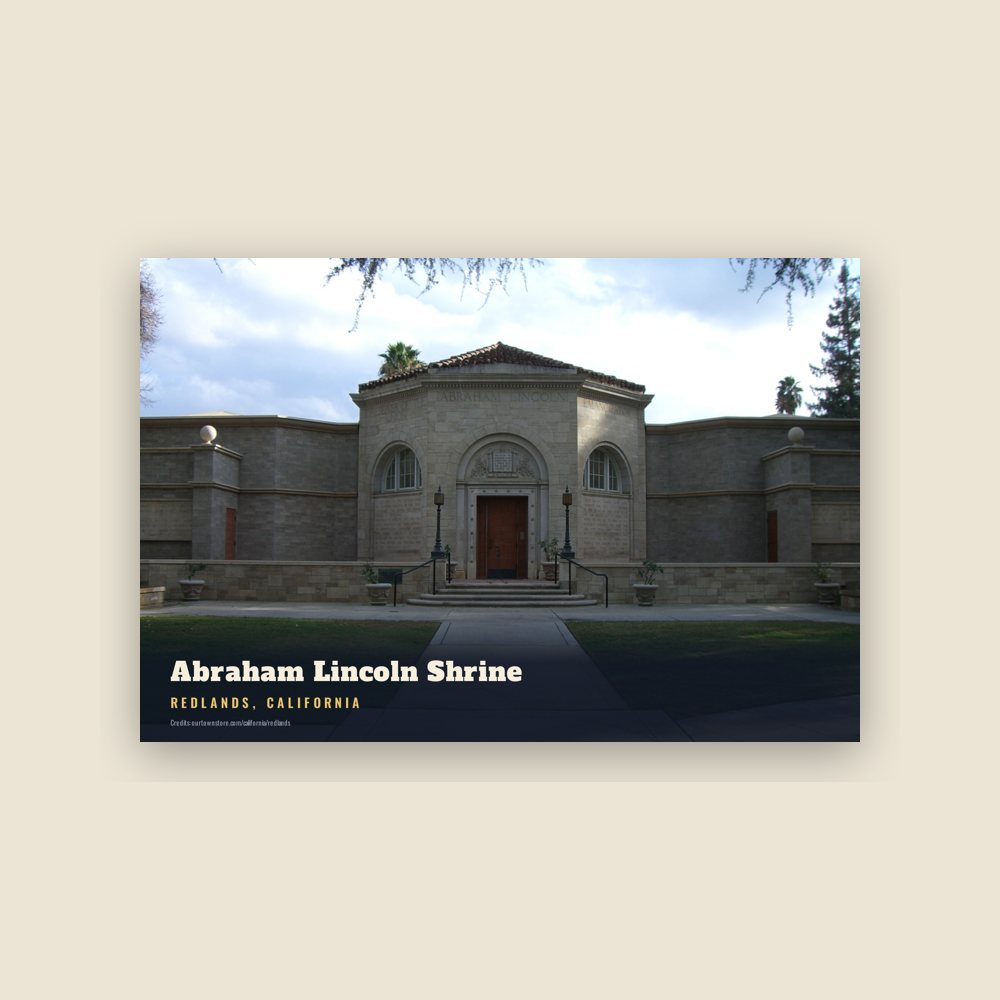
The city has been visited by three sitting U.S. Presidents: William McKinley was the first in 1901, followed by Theodore Roosevelt in 1903 and William Howard Taft in 1909. Local landmarks include the A.K. Smiley Public Library, a Moorish-style library built in 1898, and the Redlands Bowl, built in 1930 and home of the oldest continuously free outdoor concert series in the United States. Located behind the Smiley Library is the Lincoln Shrine, the only memorial honoring the "Great Emancipator", the sixteenth president Abraham Lincoln, west of the Mississippi River. Famous homes include "America's Favorite Victorian", the Morey Mansion, on Terracina Boulevard, and the Kimberly Crest House and Gardens, a home museum featured on the PBS series "America's Castles". Named after the family that purchased the house, the owners of Kimberly-Clark (makers of paper goods and Kleenex), it is a beautiful mansion set high on a hill overlooking the whole valley. Redlands is still regarded as the "Jewel of the Inland Empire".
In the mid-late 20th Century, Redlands was home to various light manufacturing firms, and became a bedroom community for the military personnel and contractor employees of the aerospace industry that supported missions at Norton Air Force Base, as well as the Lockheed Propulsion Company plant in Mentone. In 1989, Norton Air Force Base was placed on the Department of Defense closure list. Norton Air Force Base closed in 1994–1995 and the population dropped in the area, with a mild local economic recession occurring due to the closure in the area. The former Air Force Base is now the home of the San Bernardino International Airport and a variety of other business concerns also utilize the space. Jack Dangermond established Esri in 1969, a local software company. By the year 2000, he was the largest employer in Redlands. Redlands remains a regional destination, with its vibrant downtown, shopping, restaurants and college nightlife. A modern car centric shopping center was built in 2004 named Citrus Plaza. The plaza was built in unincorporated land surrounded by the city of Redlands, in land locally known as the "Donut Hole". The city invested in infrastructure for the donut hole for many years prior to the county approving the plaza with plans to annex the large block. The county went ahead and approved the plaza without the city of Redlands approval. The plaza remains a popular shopping destination.

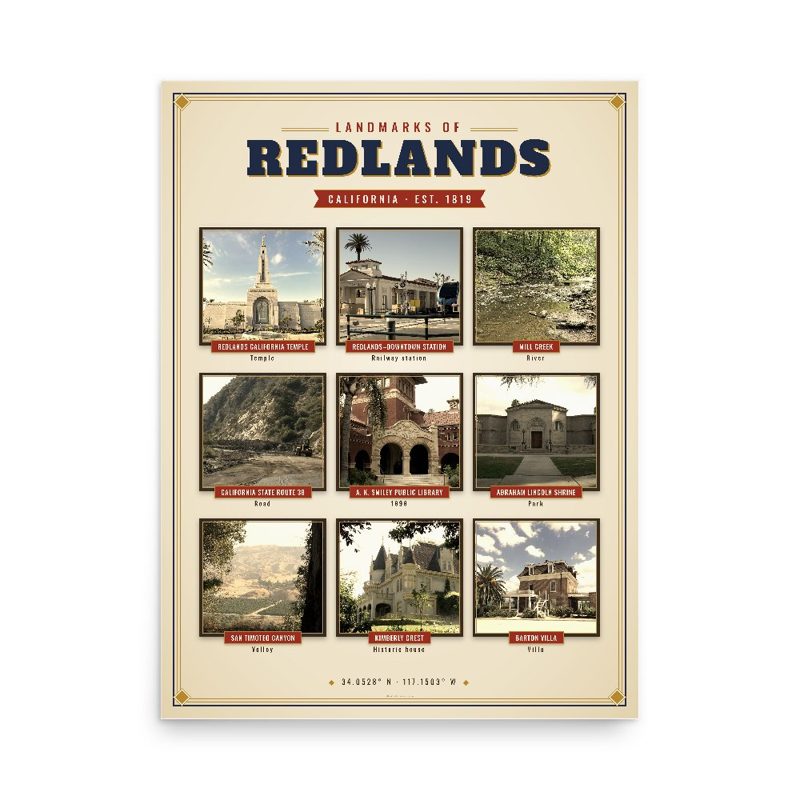
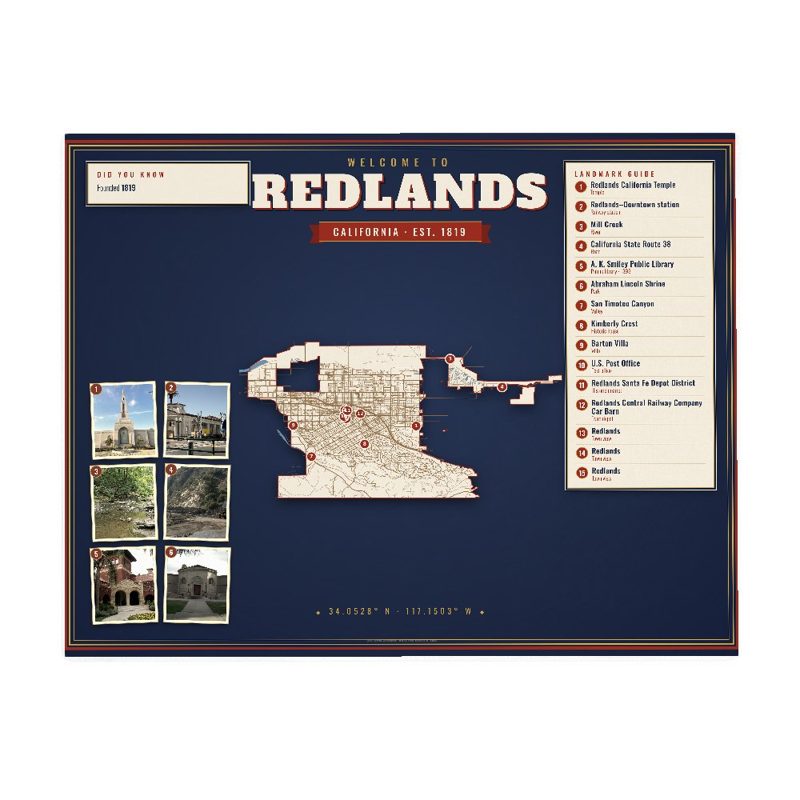

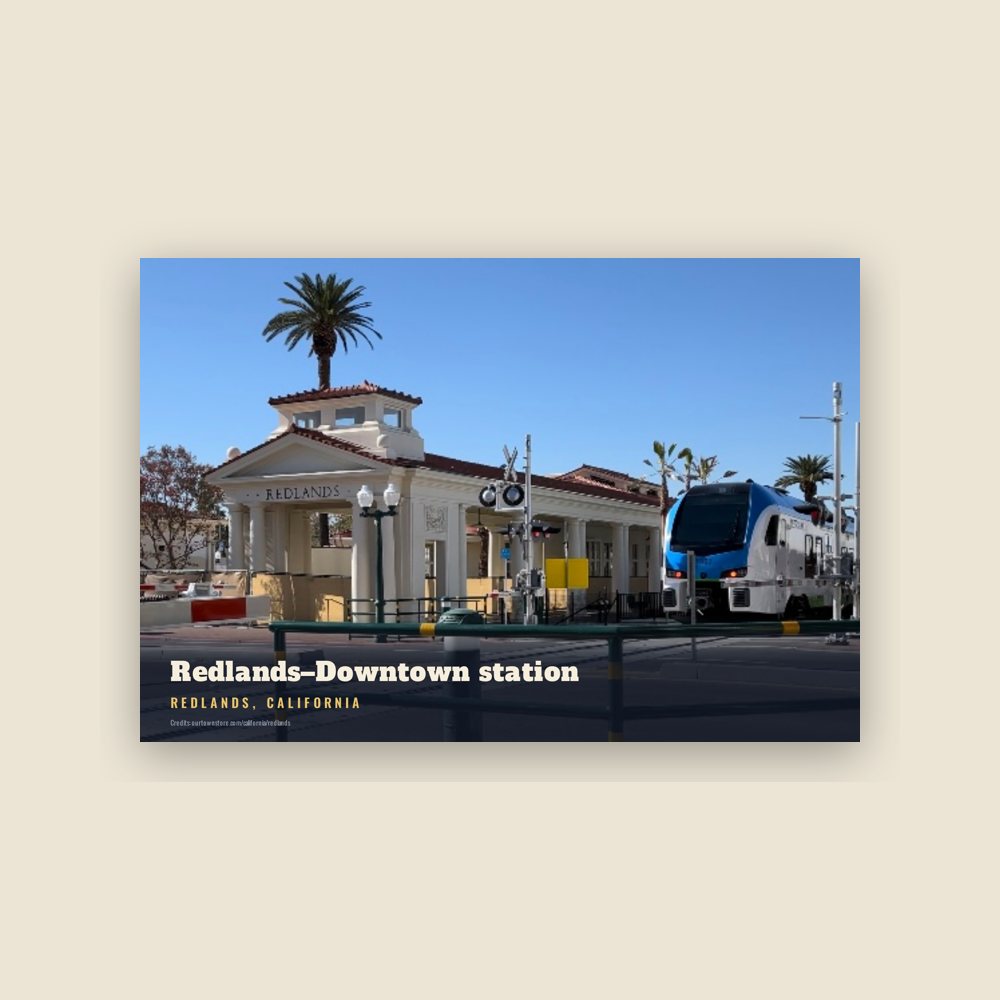
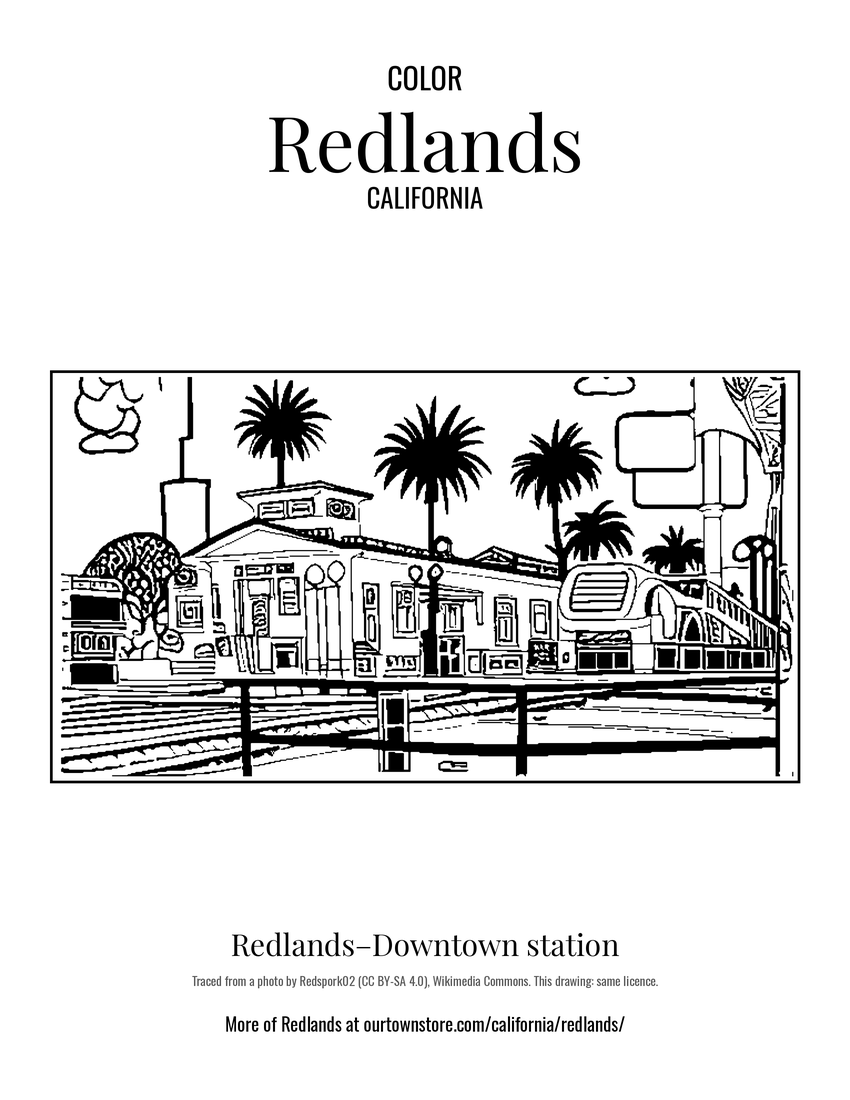 Redlands–Downtown station
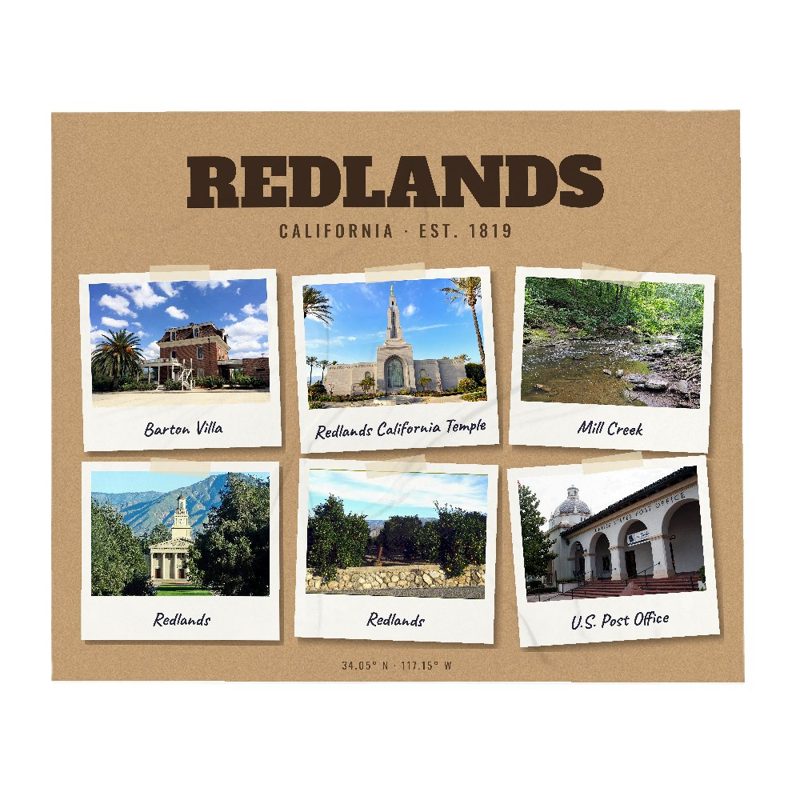
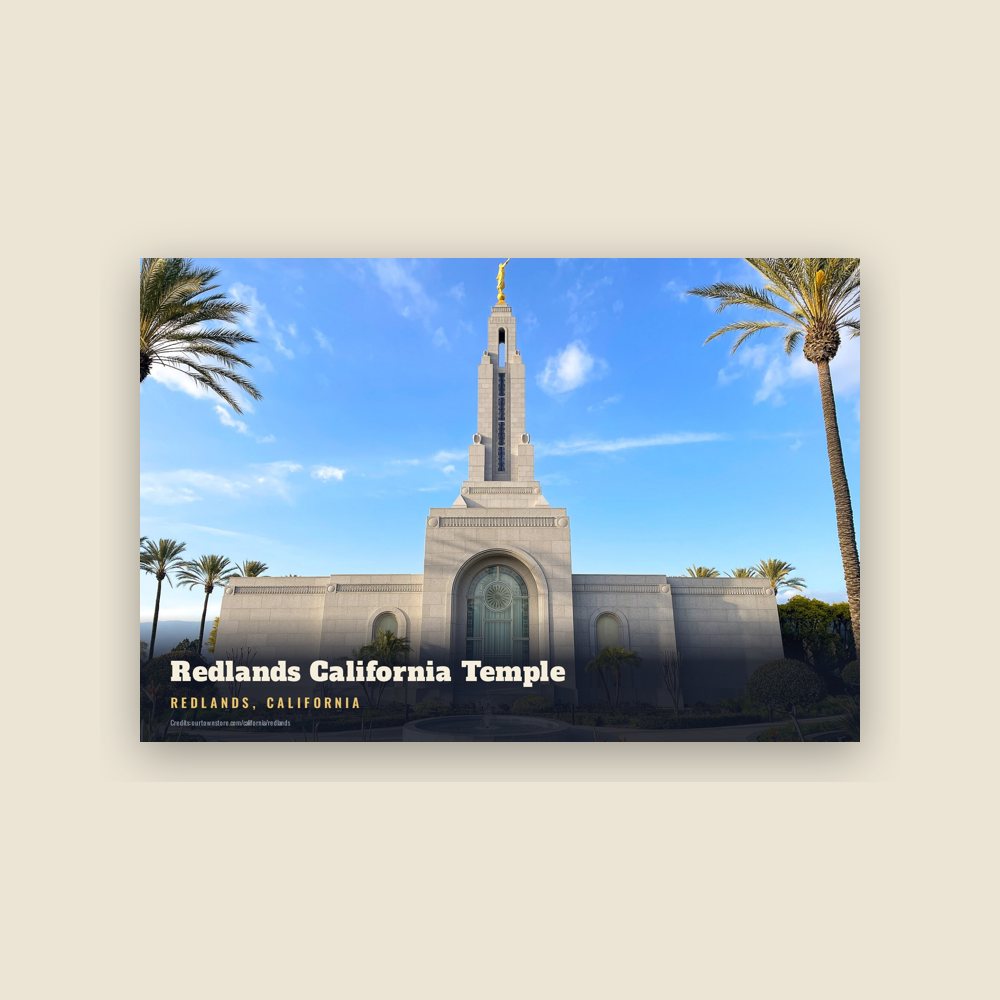
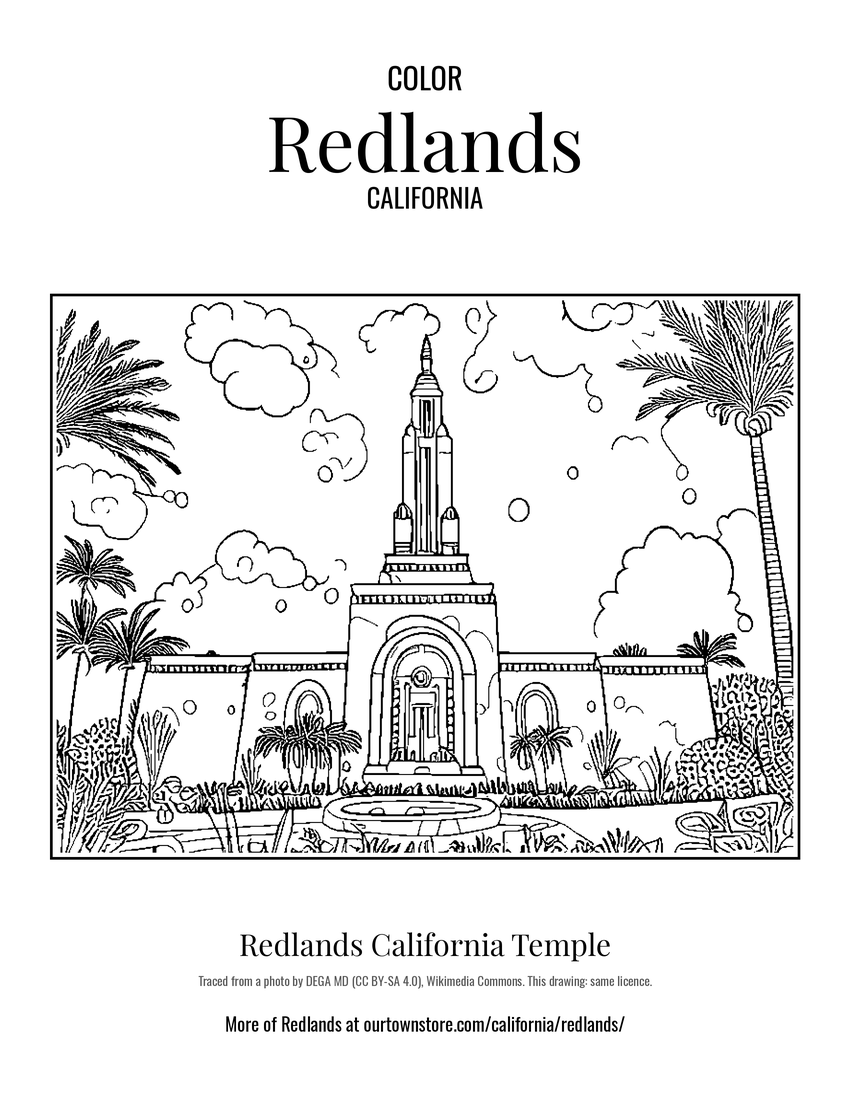 Redlands California Temple
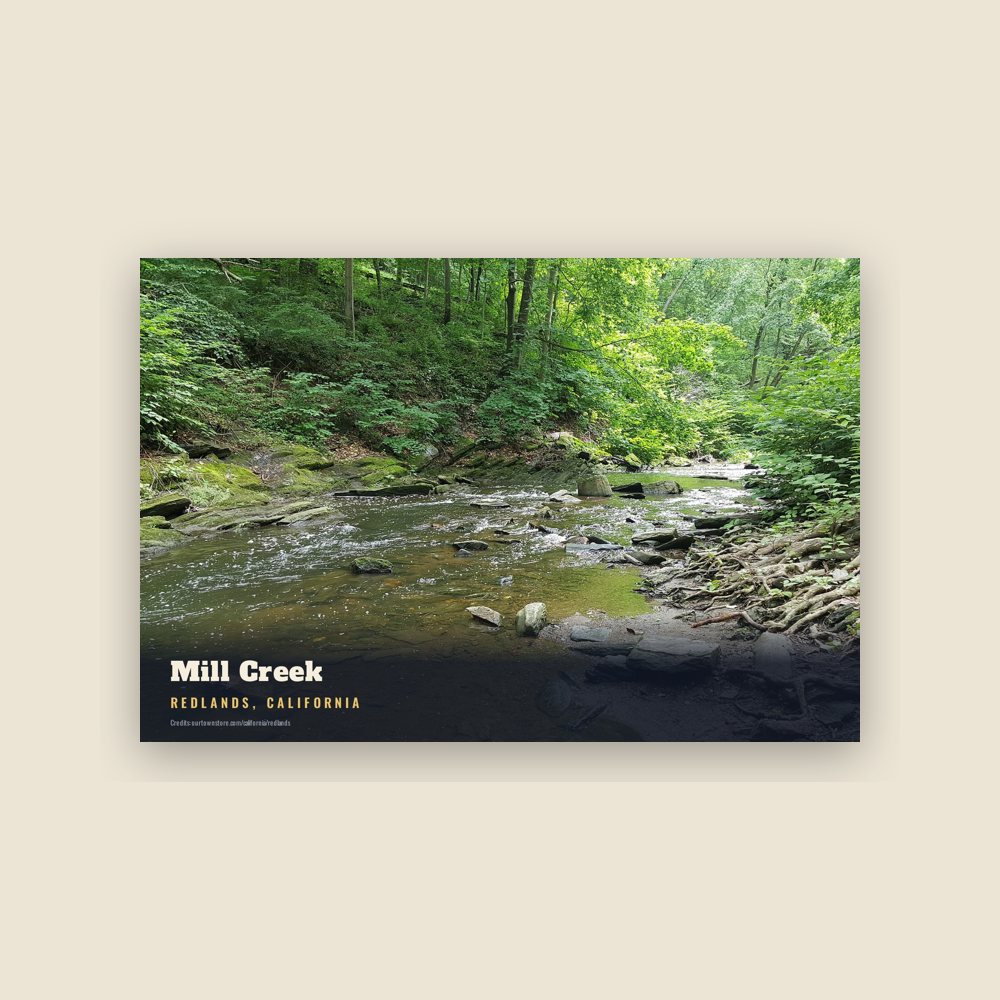
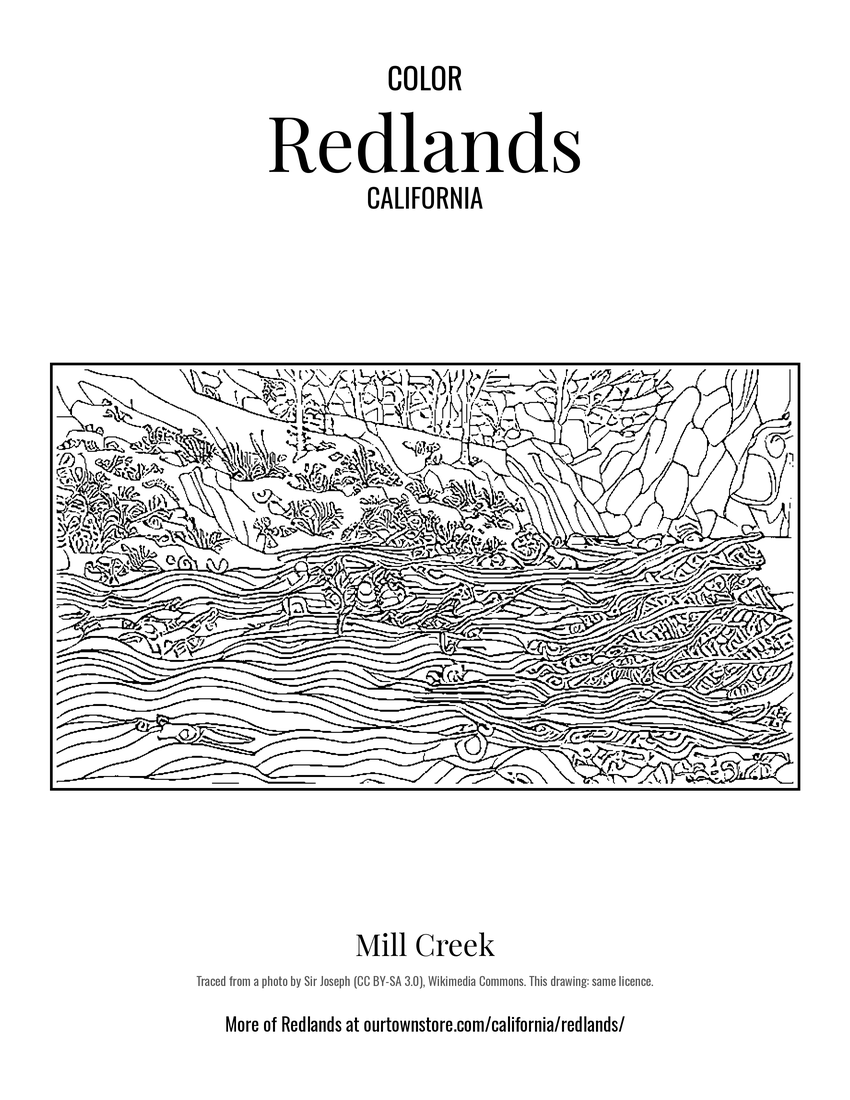 Mill Creek
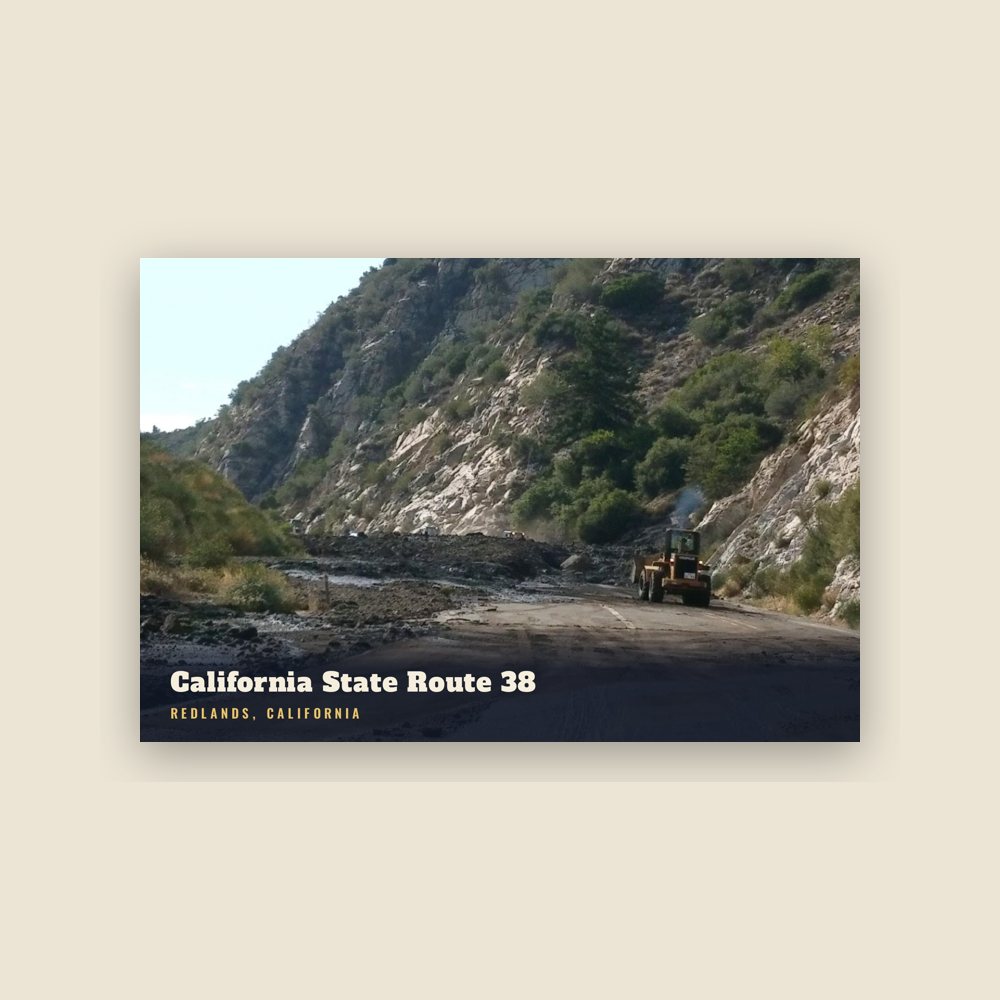
 California State Route 38