A short history of Rancho Palos Verdes
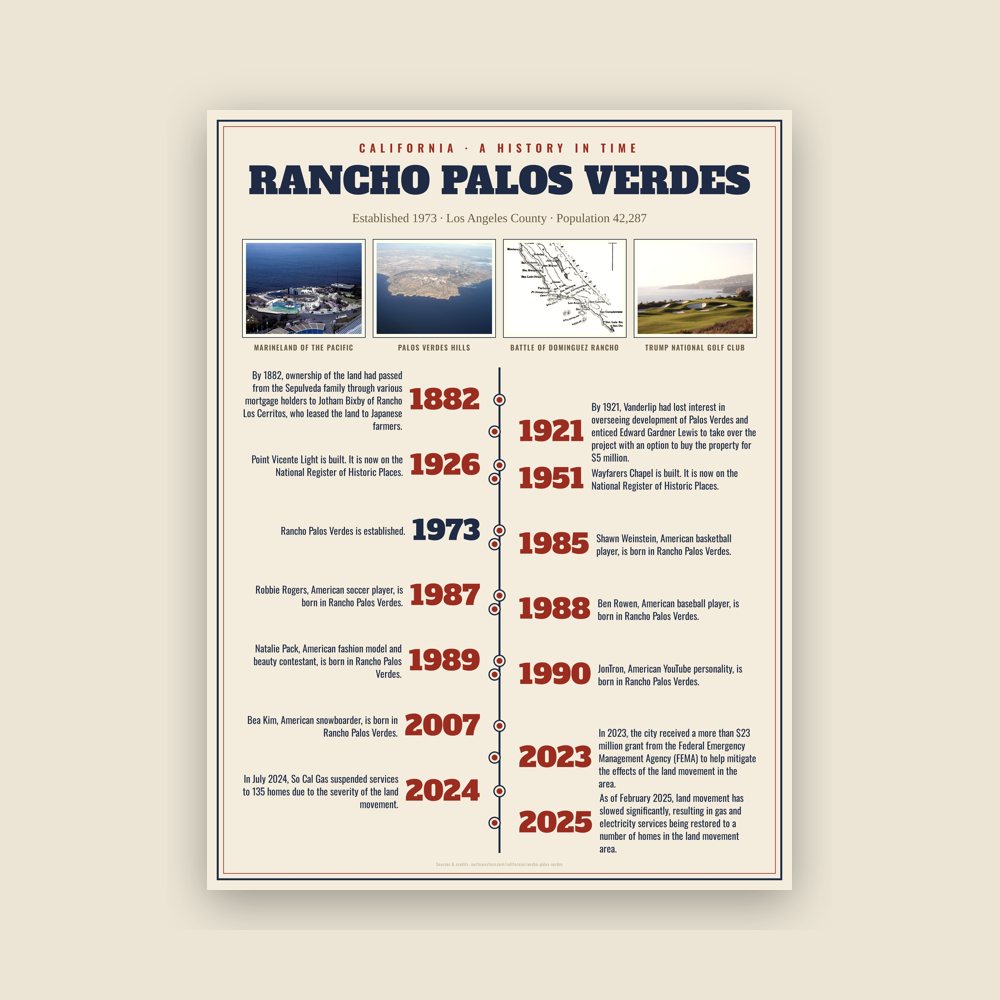
By 1882, ownership of the land had passed from the Sepulveda family through various mortgage holders to Jotham Bixby of Rancho Los Cerritos, who leased the land to Japanese farmers. Japanese families farmed the most southern slopes, growing fields of beans, peas, and tomatoes in the area. Barley, hay, and grain were grown on the dryer northern slopes.
Frank Vanderlip, known as the "Father of Palos Verdes", representing a group of wealthy east coast investors, purchased 25 square miles of land on the Palos Verdes Peninsula in 1913 for $1.5 million. The Olmsted Brothers contracted Koebig & Koebig to perform engineering work, including surveying and road planning.
By 1921, Vanderlip had lost interest in overseeing development of Palos Verdes and enticed Edward Gardner Lewis to take over the project with an option to buy the property for $5 million. Lewis was an experienced developer, but lacked the capital to purchase and develop Palos Verdes. Instead, he established a real estate trust, capitalizing the project through the sale of notes which were convertible to Palos Verdes property. Under the terms of the trust, Lewis sought to raise $30 million for infrastructure improvements, effectively borrowing from investors for both the land and the improvements. He succeeded in attracting $15 million in capital, but far short of the $35 million needed. The trust dissolved and ownership of Palos Verdes reverted to Vanderlip.
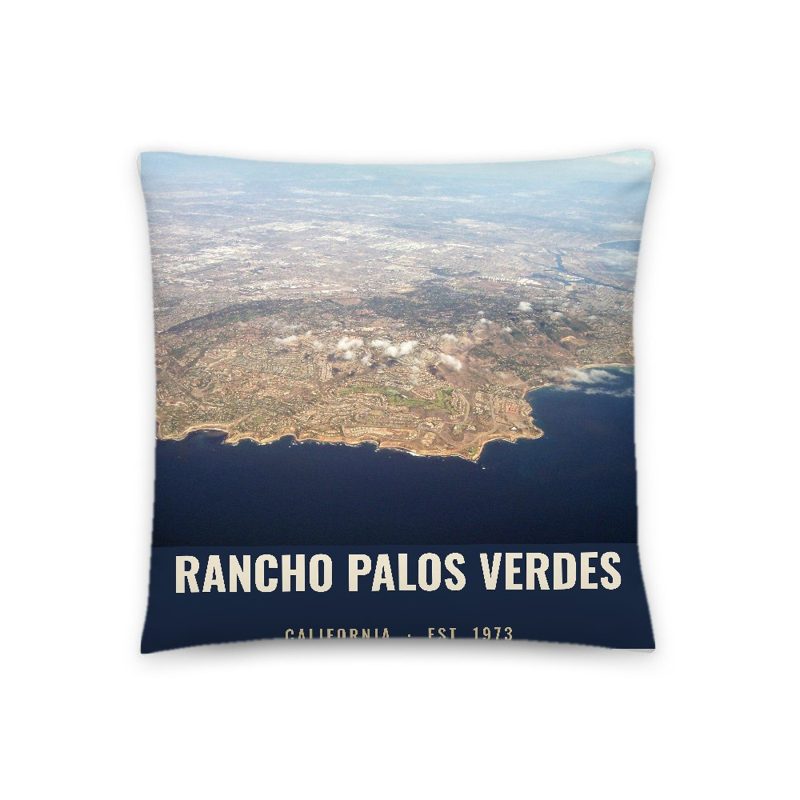
In the 1970s, development along the California coastline increased significantly, with numerous condominium projects emerging in areas such as Santa Monica. On the peninsula, construction of the Palos Verdes Bay Club on the coast and other multi-unit residential complexes inland prompted local concerns. In response, residents voted to incorporate as a city and Rancho Palos Verdes was officially incorporated on September 7, 1973. Because of this history, the city has maintained significantly restrictive zoning policies when compared to other jurisdictions in California.
Read the full history
Landslide area
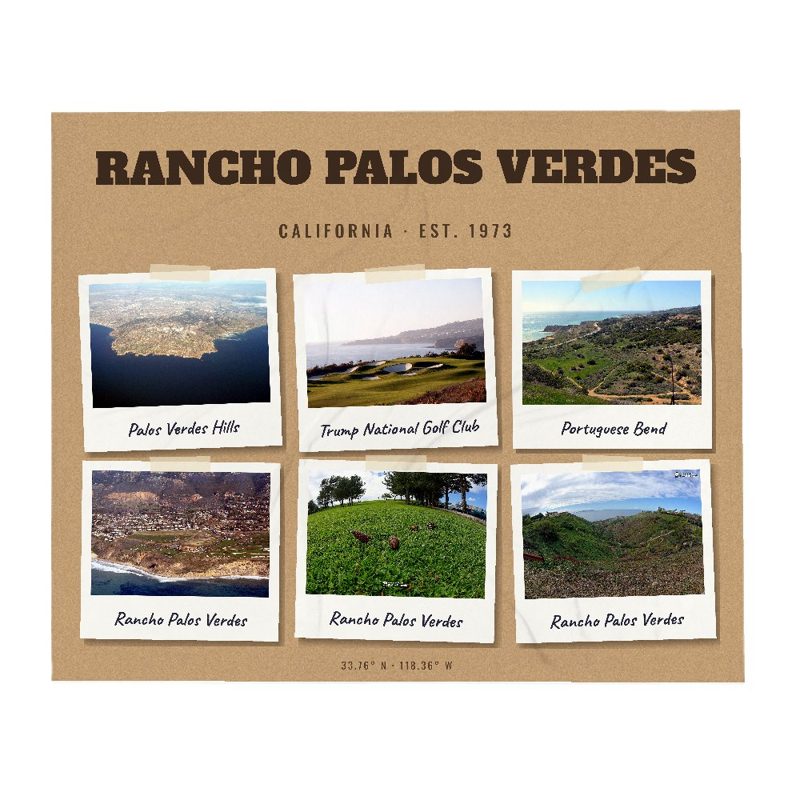
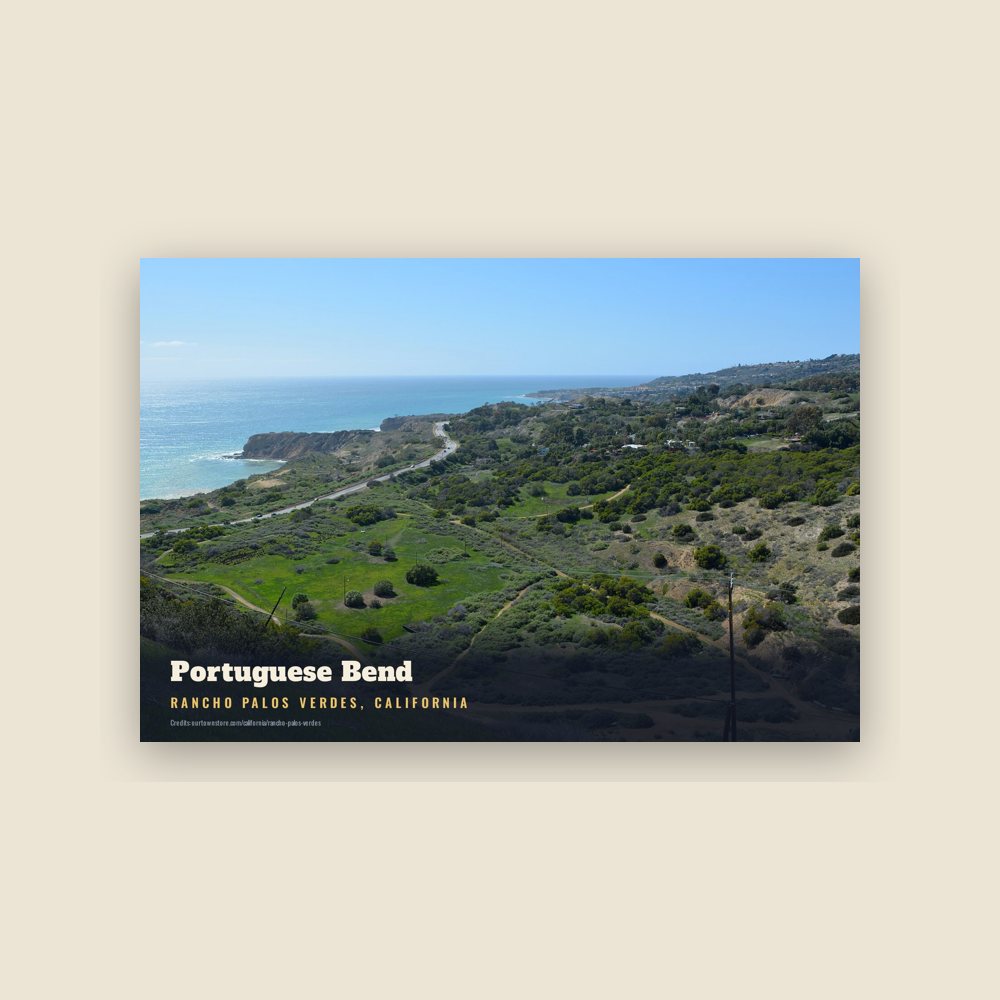
A small section of the city, the Portuguese Bend area of the Palos Verdes Peninsula has a history of landslides going back 250,000 years. The landslide spans 260 acres (1.1 km2), around 4% of the total landmass of the peninsula, with an average thickness of 135 feet (41 m). The ground failure occurs on an overall smooth surface approximately 100 feet (30 m) below the surface. The ground failure over the years has been due to seaward-dipping strata, rock weakness and continual coastal erosion.
In 2023, the city received a more than $23 million grant from the Federal Emergency Management Agency (FEMA) to help mitigate the effects of the land movement in the area. Later in the year, the Rancho Palos Verdes City Council declared a local emergency due to increasing land movement following landslides.
In July 2024, So Cal Gas suspended services to 135 homes due to the severity of the land movement. On September 2, 2024, California Governor Gavin Newsom declared a state of emergency, and officials cut power to 245 homes. As of February 2025, land movement has slowed significantly, resulting in gas and electricity services being restored to a number of homes in the land movement area. The city also installed dozens of dewatering wells and drainage improvements as a long‑term stabilization project in the area.
As of May 2025, SoCalGas has begun to restore gas services to the majority of homes in the landslide area following reports that monitoring has shown no measurable movement in the land because of the city's mitigation efforts.
Adapted (trimmed) from the Wikipedia article Rancho Palos Verdes, California, revision 1381349172 by its contributors, licensed CC BY-SA 4.0.














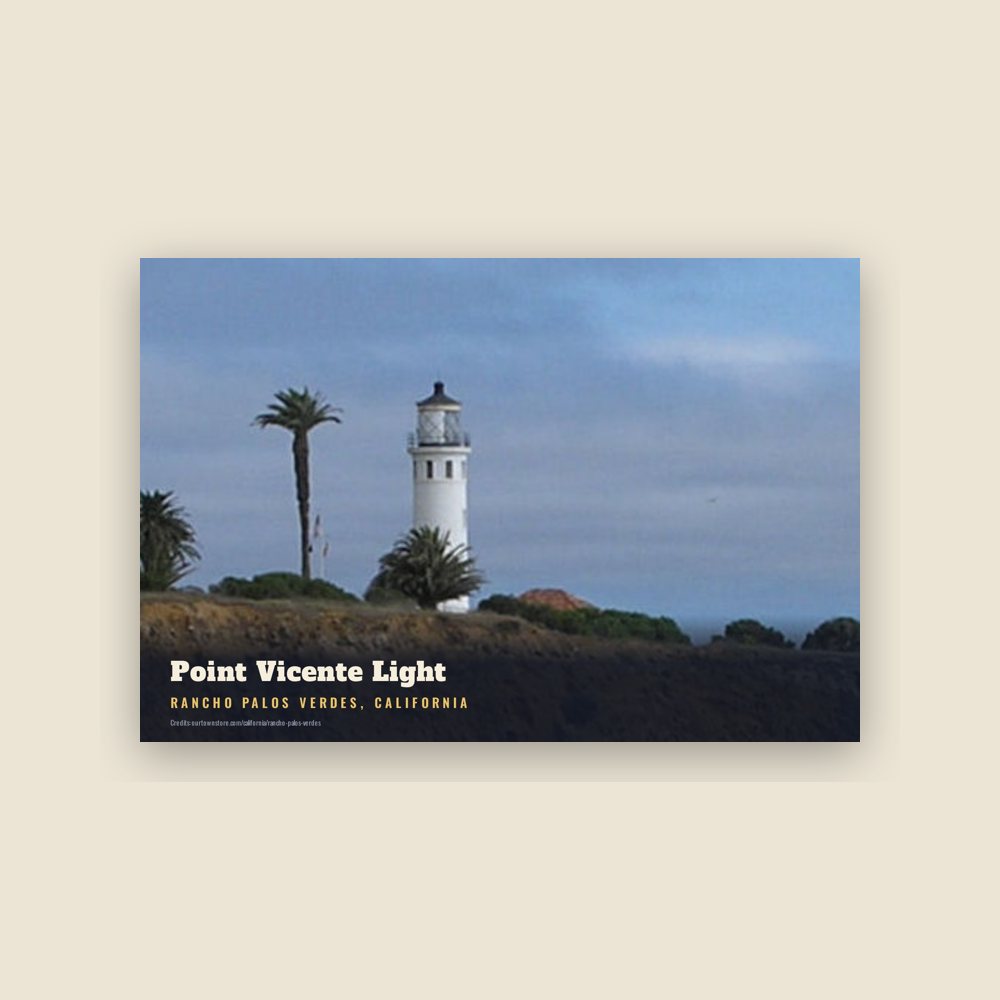
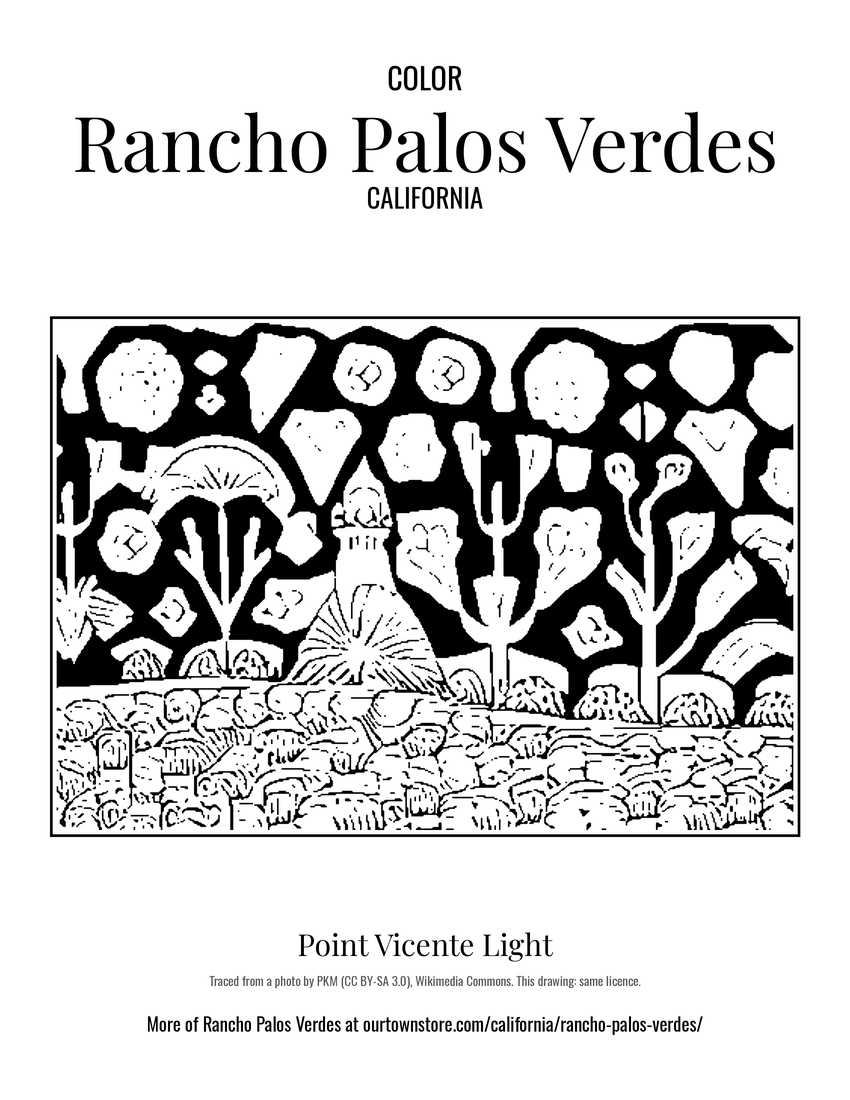 Point Vicente Light
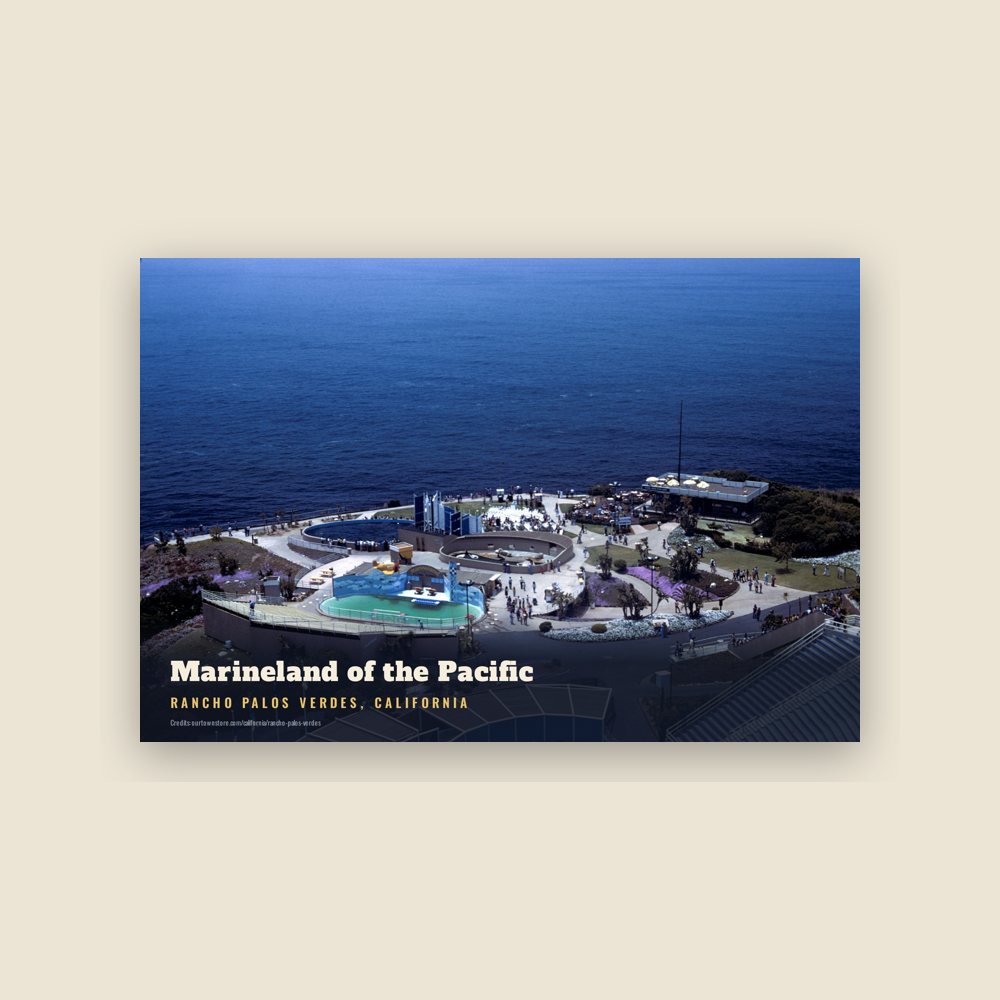
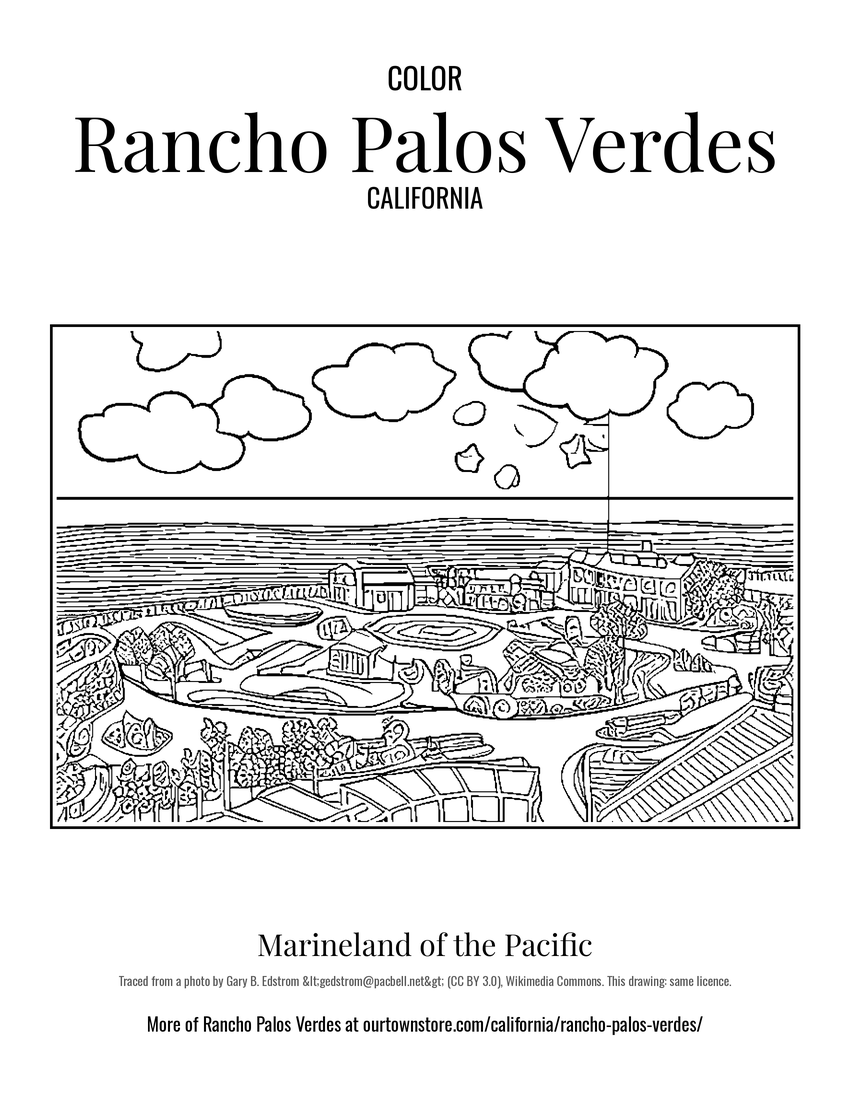 Marineland of the Pacific
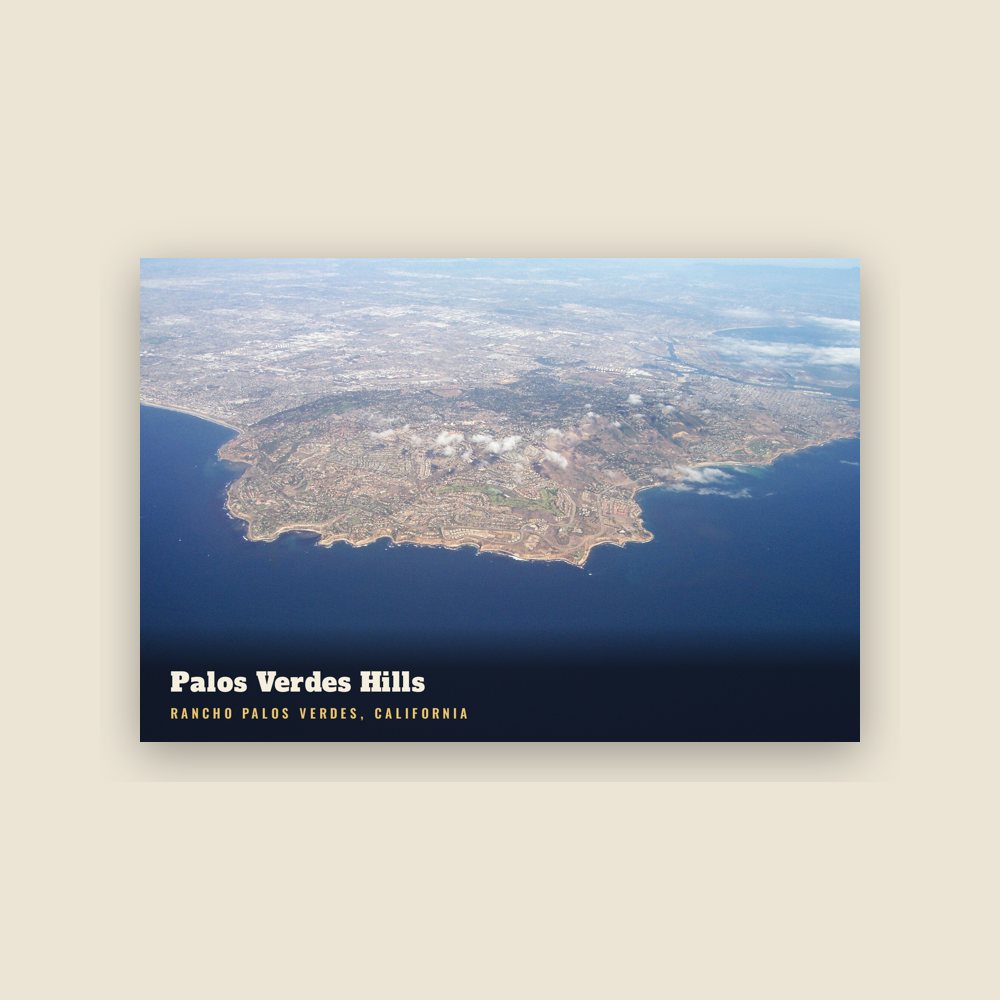
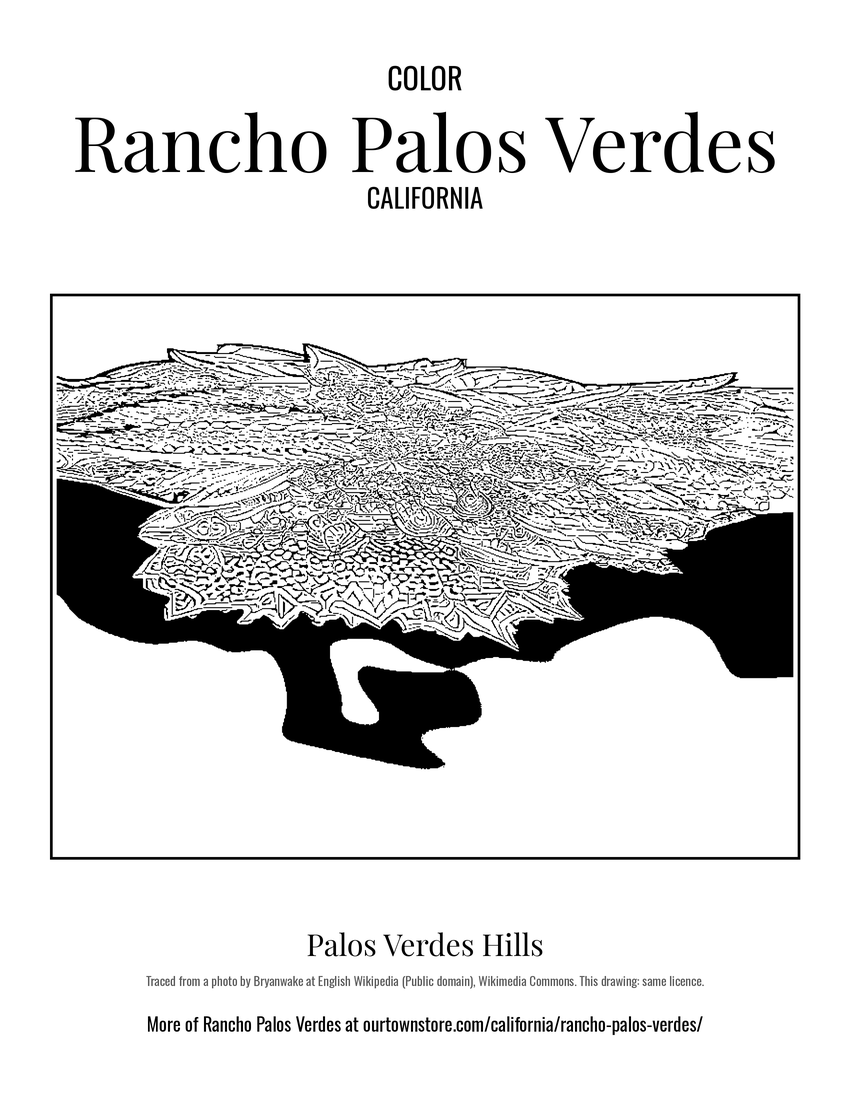 Palos Verdes Hills
 Battle of Dominguez Rancho