A short history of Pismo Beach
The Chumash people are the historic inhabitants of the region, with indigenous peoples having lived along the California coast for at least 11,000 years.
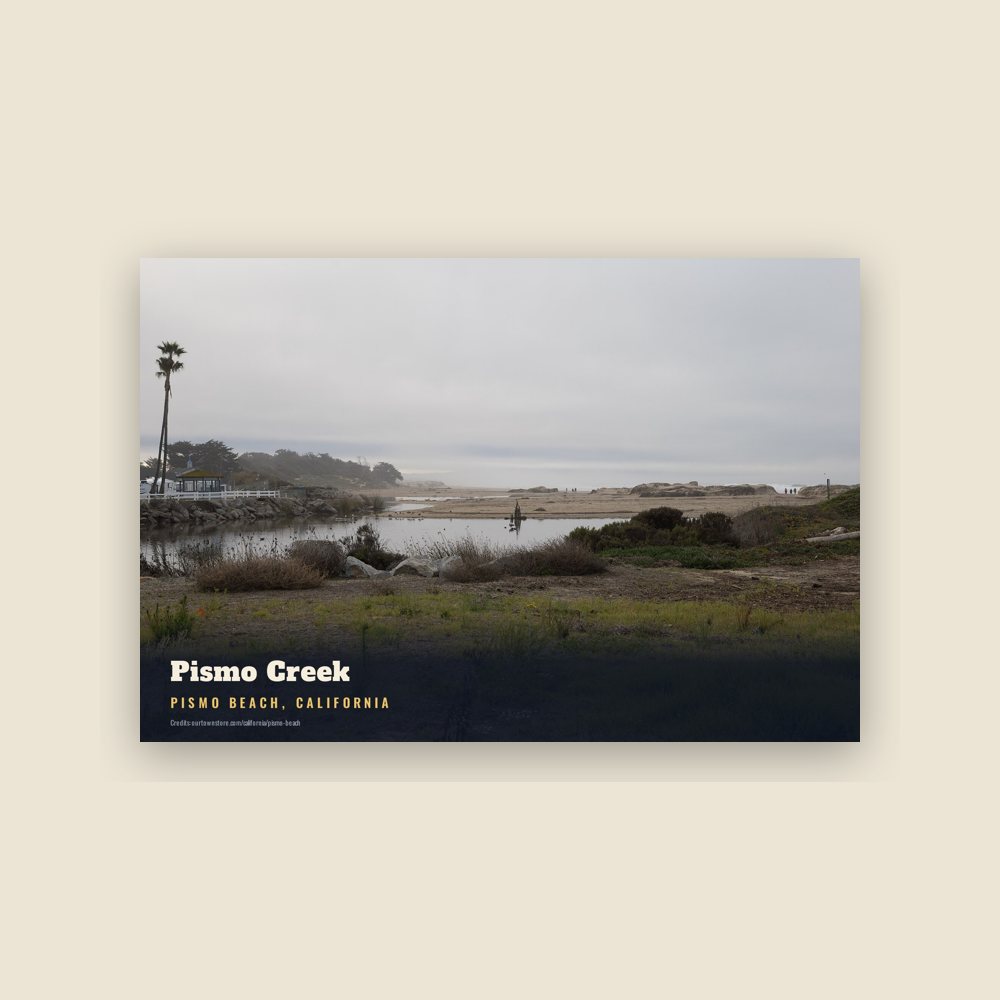
The name Pismo comes from the Chumash language word for tar, pismuʔ, which was gathered from tar springs in Price Canyon near Pismo Beach. Tar was a valuable product, which the Chumash used to caulk their canoes, called tomol, which traveled along the coast and out to the Channel Islands. The first European land exploration of Alta California, the Spanish Portolá expedition, passed through the area, traveling up Price Canyon from Pismo Beach, where they camped on September 4, 1769. Franciscan missionary and expedition member Juan Crespí noted in his diary that they found a Chumash village near the creek.
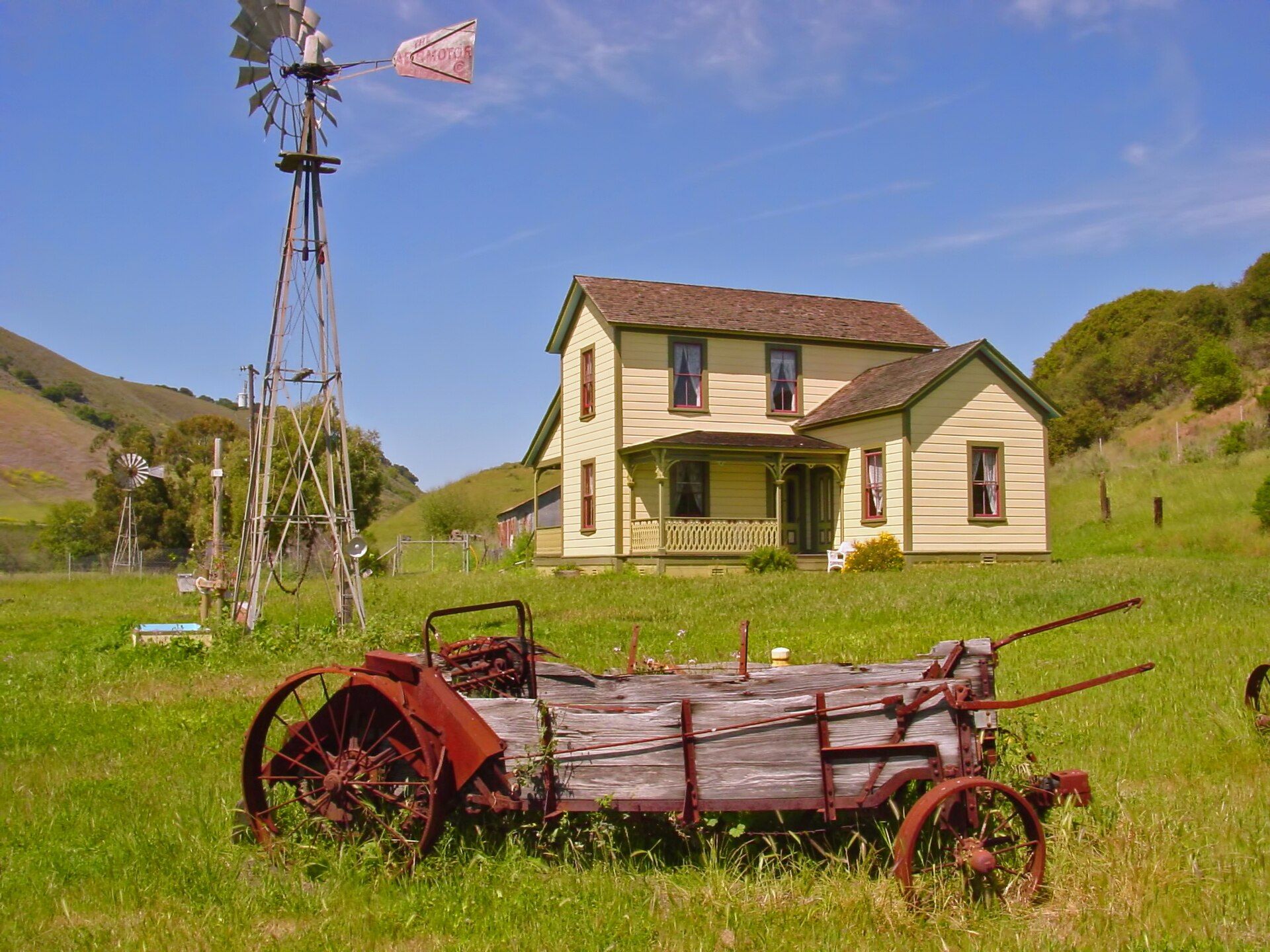
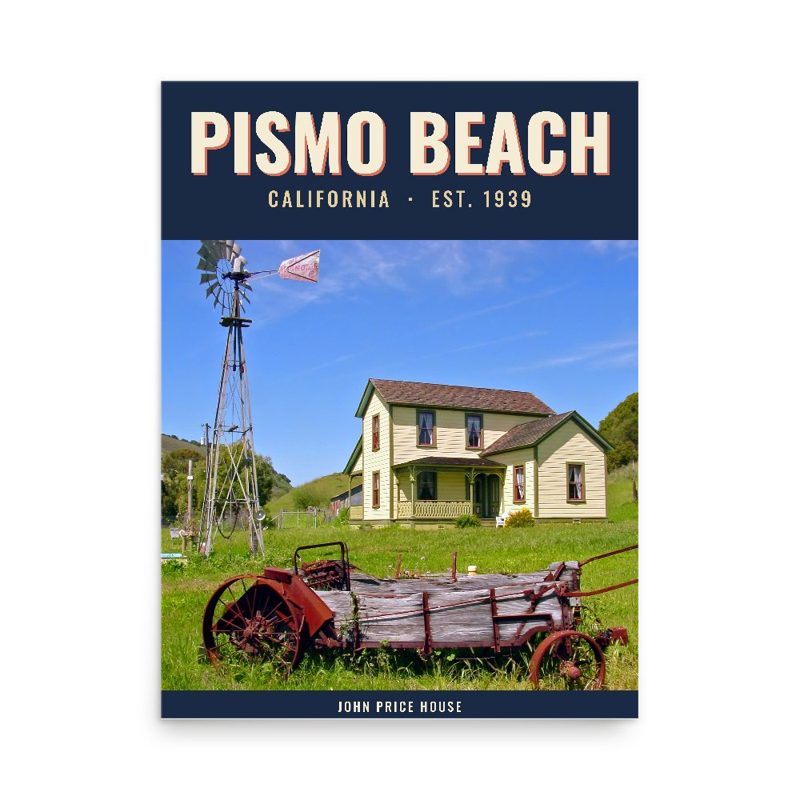
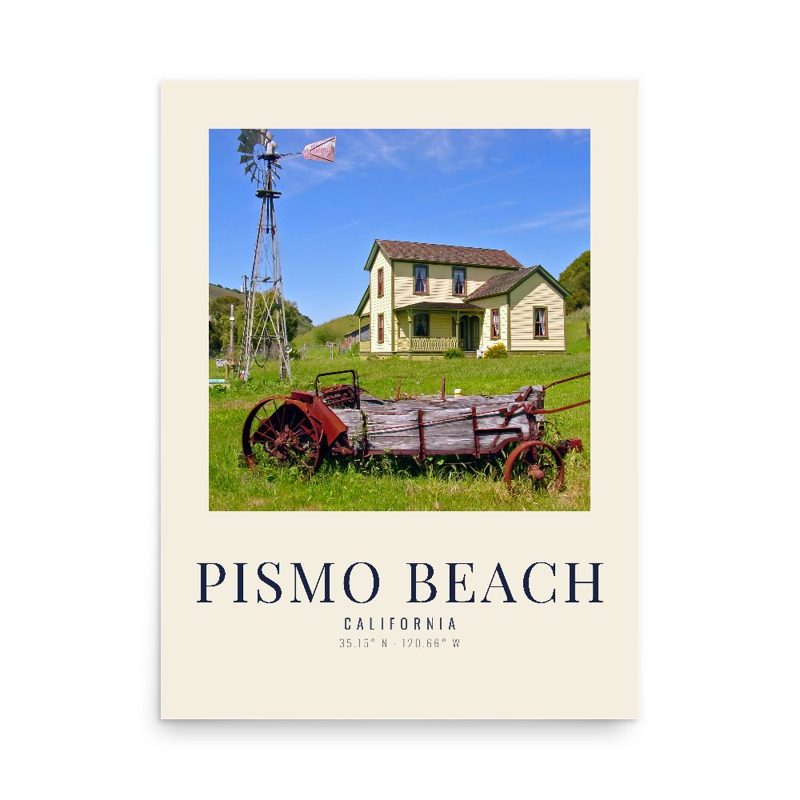
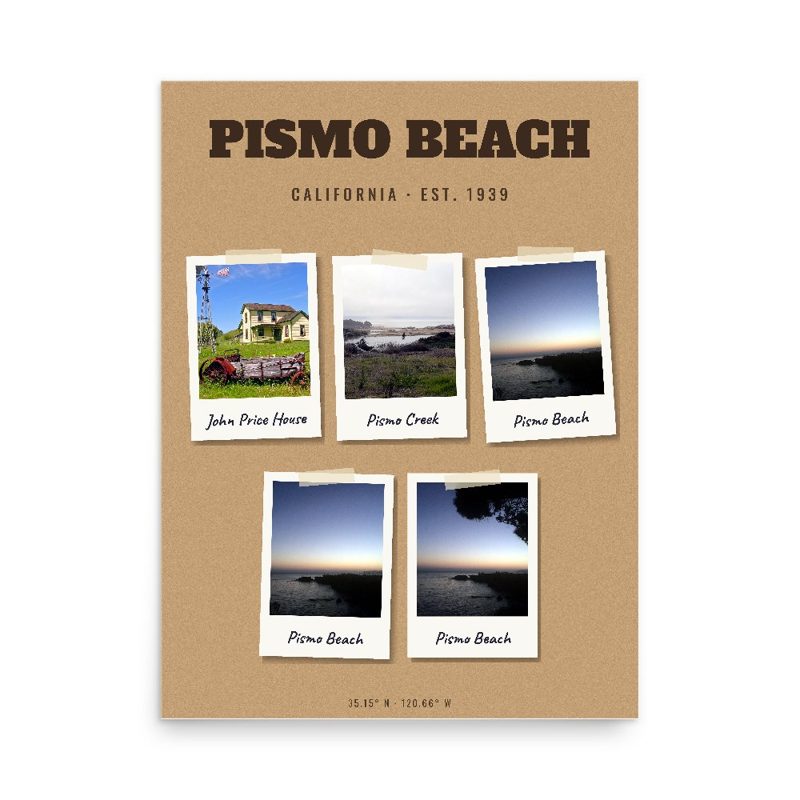
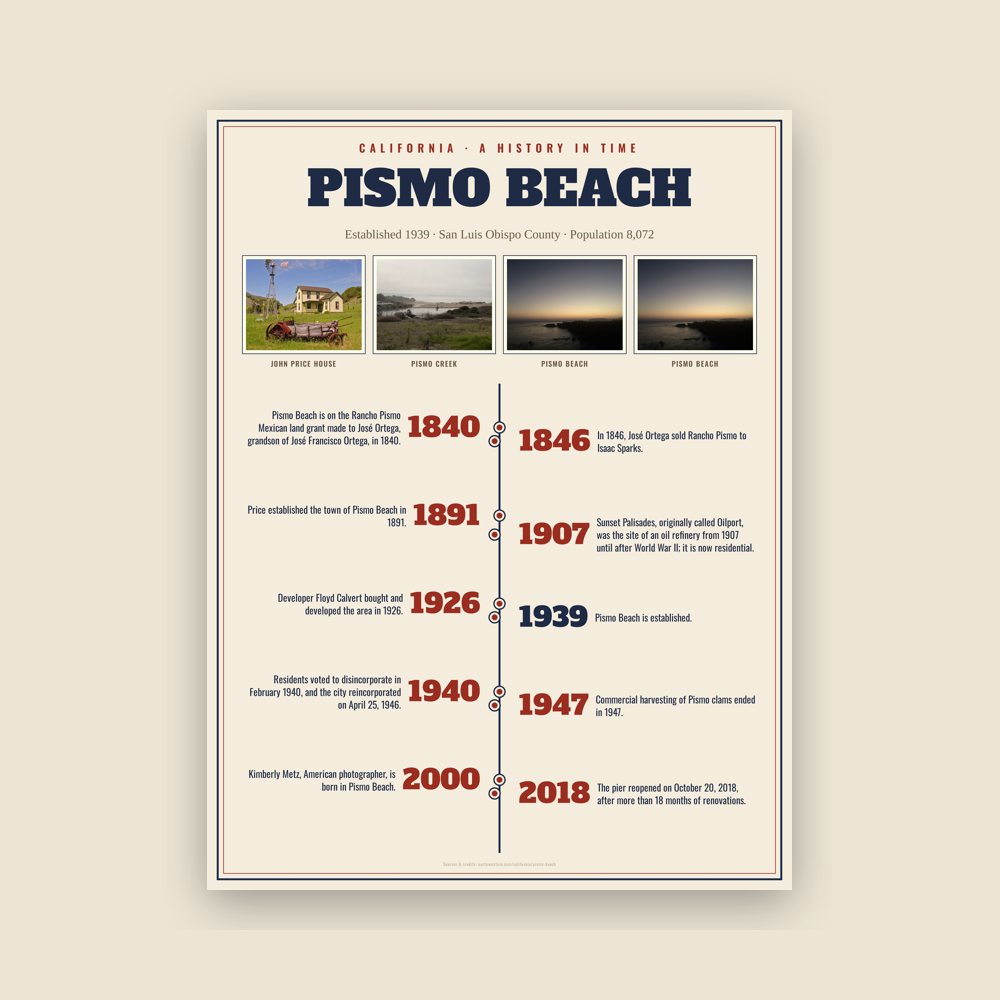
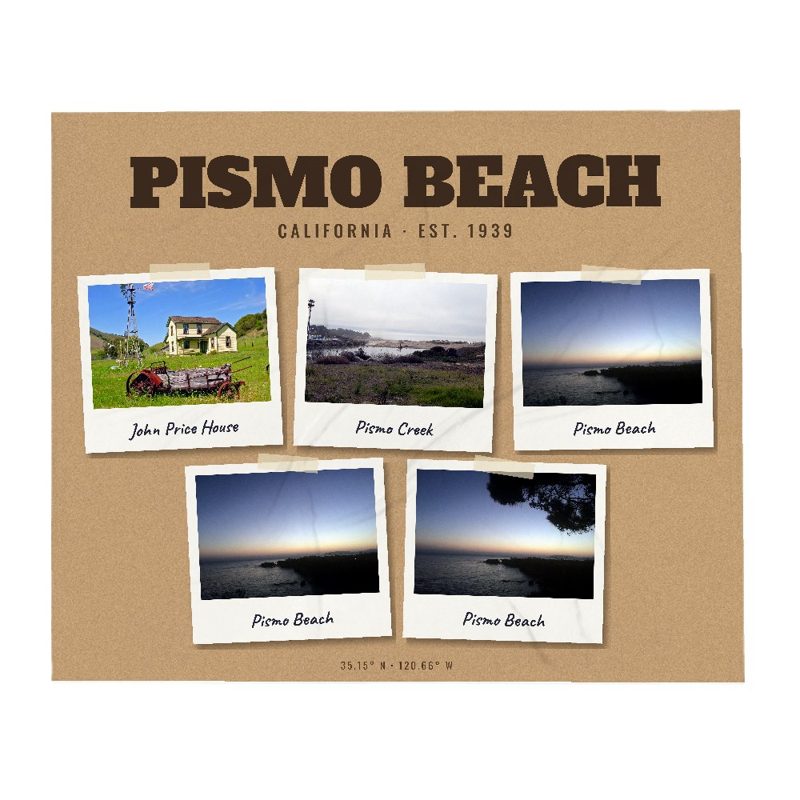
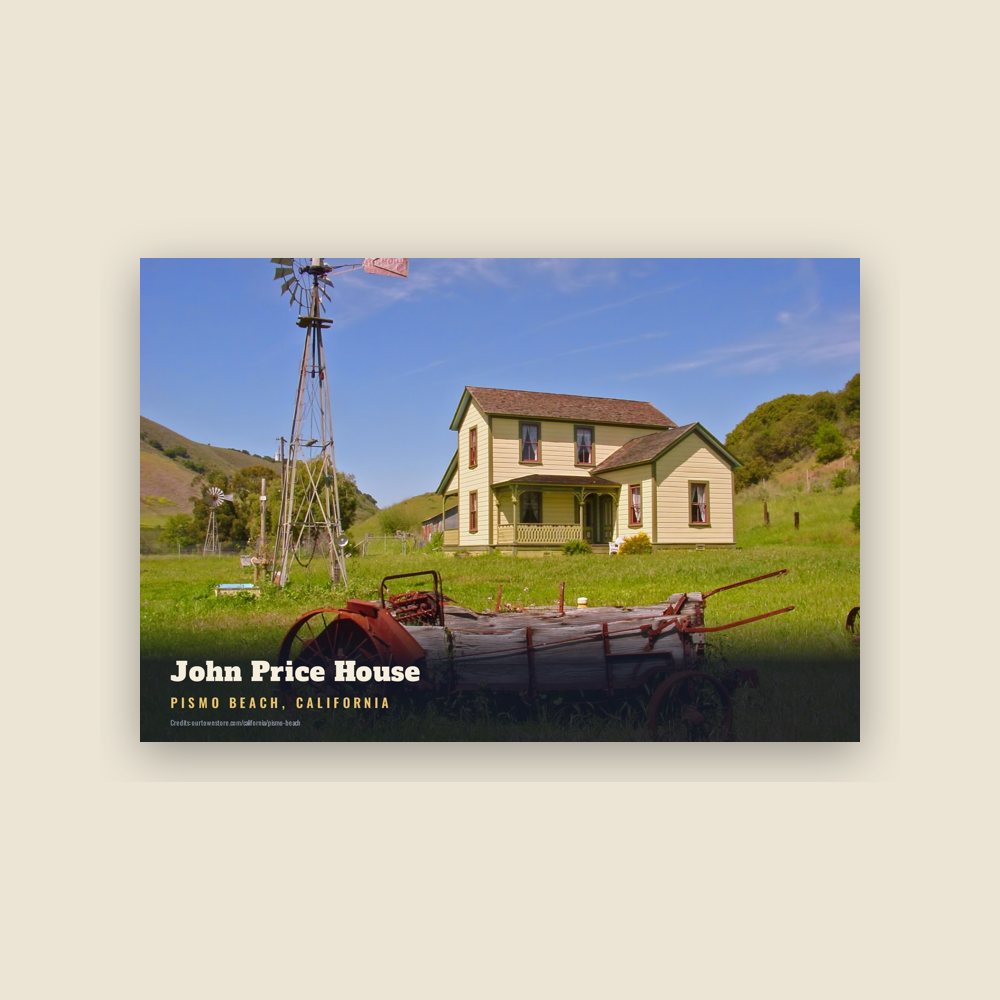
Pismo Beach is on the Rancho Pismo Mexican land grant made to José Ortega, grandson of José Francisco Ortega, in 1840. In 1846, José Ortega sold Rancho Pismo to Isaac Sparks. John Michael Price bought most of the rancho from Sparks. Price established the town of Pismo Beach in 1891. His homestead is now Price Historical Park, a registered historical landmark.
Pismo Pier was built in 1924. Storm damage led to subsequent repairs and reconstruction. The pier reopened on October 20, 2018, after more than 18 months of renovations.
The Shell Beach and Sunset Palisades neighborhoods were the site of a Chumash village, and there are significant archeological sites in both. Shell Beach became agricultural land, mostly pea fields. Developer Floyd Calvert bought and developed the area in 1926. At first, it was a local resort area; after World War II, it became primarily residential. Sunset Palisades, originally called Oilport, was the site of an oil refinery from 1907 until after World War II; it is now residential.
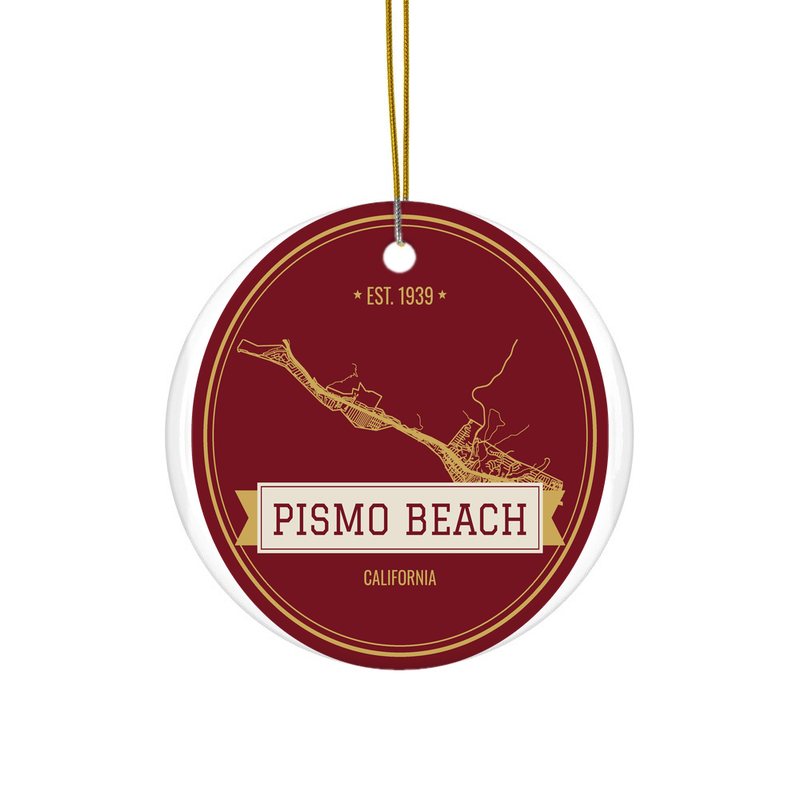
Pismo Beach first incorporated on January 11, 1939. Residents voted to disincorporate in February 1940, and the city reincorporated on April 25, 1946.
Read the full history
Clams
The city was known as the "Clam Capital of the World" in the 1950s. Commercial harvesting of Pismo clams ended in 1947. The California Department of Fish and Wildlife reports that clam numbers have increased in recent years and that harvestable-sized clams have returned to the Pismo Beach area, although smaller clams remain more numerous.
Adapted (trimmed) from the Wikipedia article Pismo Beach, California, revision 1382746286 by its contributors, licensed CC BY-SA 4.0.