With 76,654 residents as of 2024, Maricopa is the second largest incorporated municipality in Pinal County. Landmarks include Basin and Range Province, Maricopa and Harrah's Ak-Chin Casino.
- CountyPinal County
- Population58,125 (2020 U.S. Census)
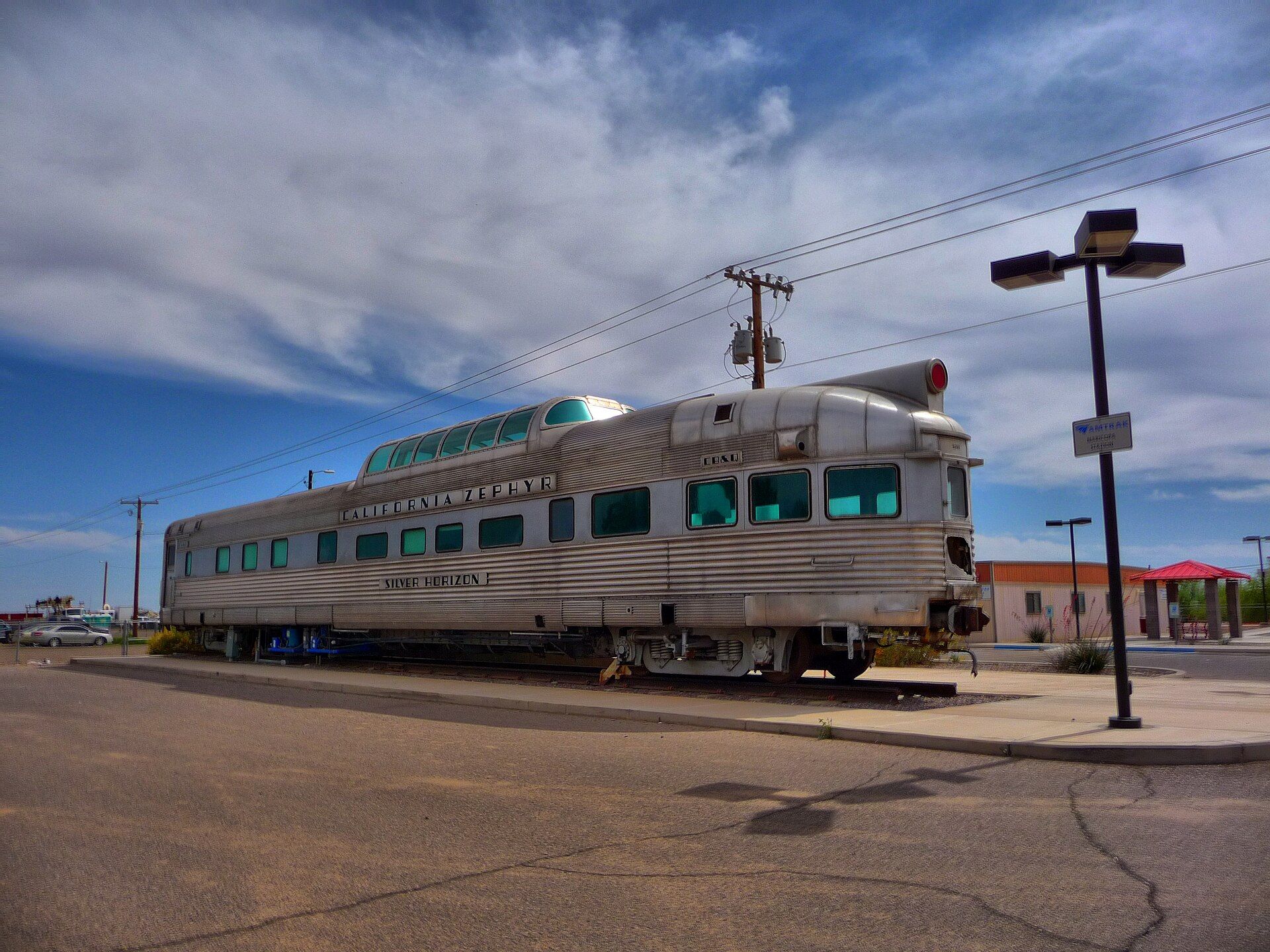
Maricopa, Arizona gifts and souvenirs: 27 designs made from Maricopa's own map, landmarks and history, from $10 to $95. Printed to order and shipped free in the USA.
| Popular | Price |
|---|---|
| Maricopa Hometown Ornament | $23 |
| Maricopa Vintage Travel Poster | from $40 |
| Maricopa Varsity Crewneck | from $57 |
| Maricopa Est. Tee | from $33 |
| Maricopa Town Line Mug | from $26 |
| Maricopa Market Tote | $37 |
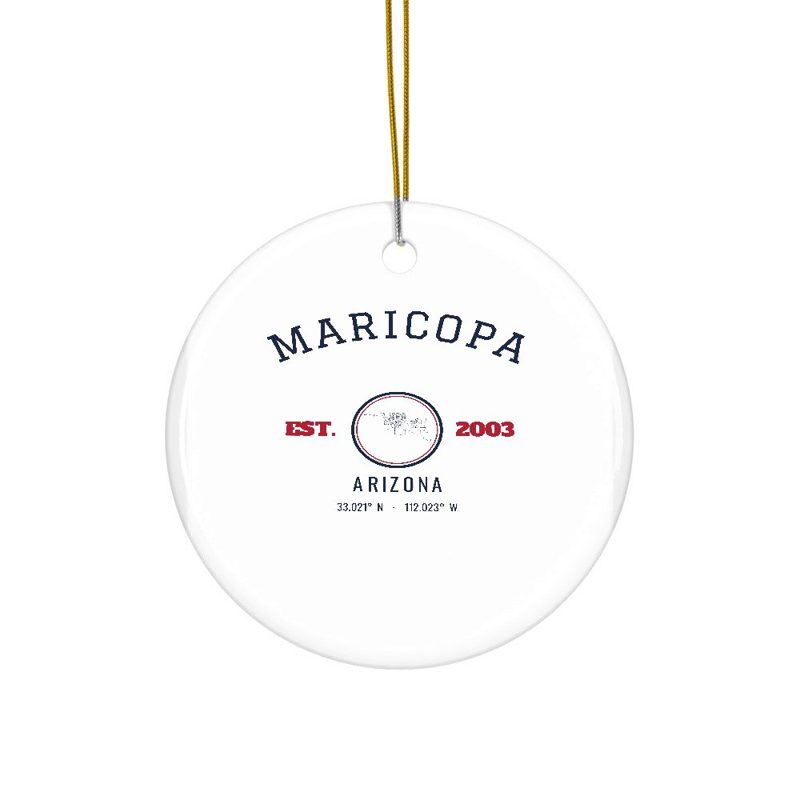
Ceramic keepsake, gold ribbon
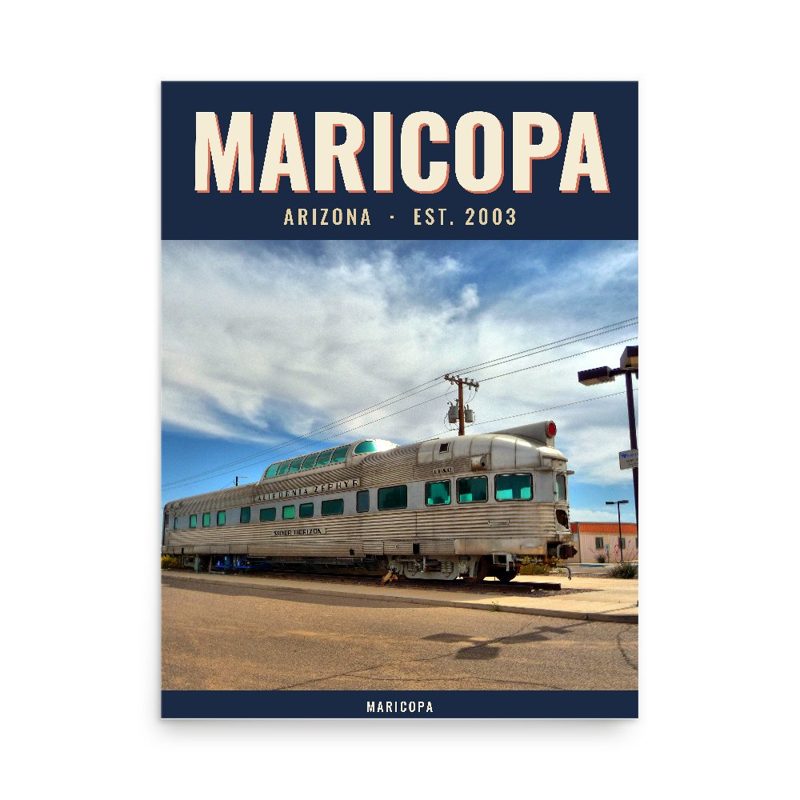
Its landmark photo in a classic travel-poster layout
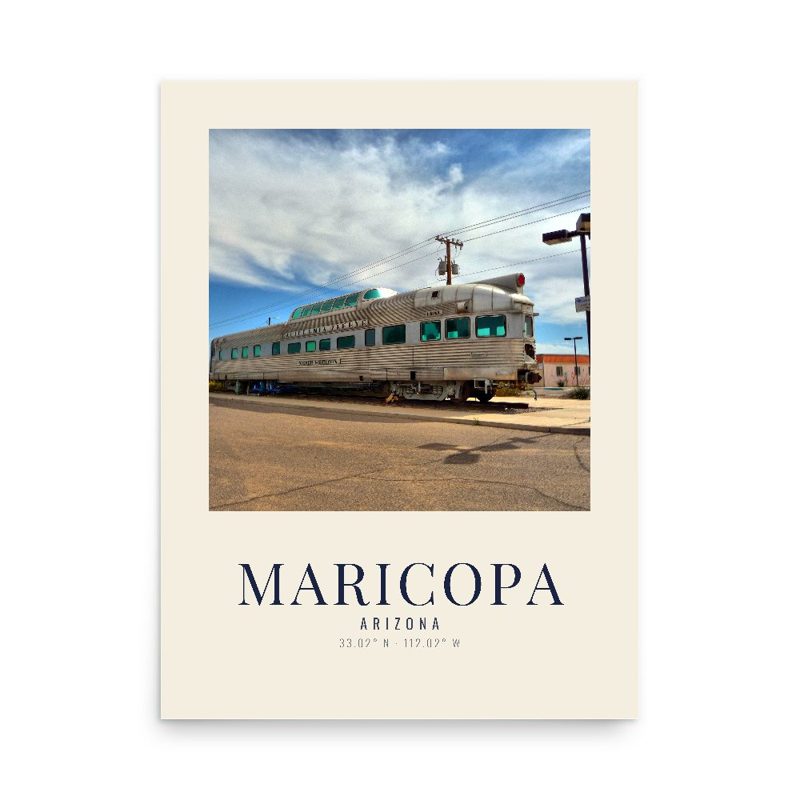
A local landmark photo as a gallery print
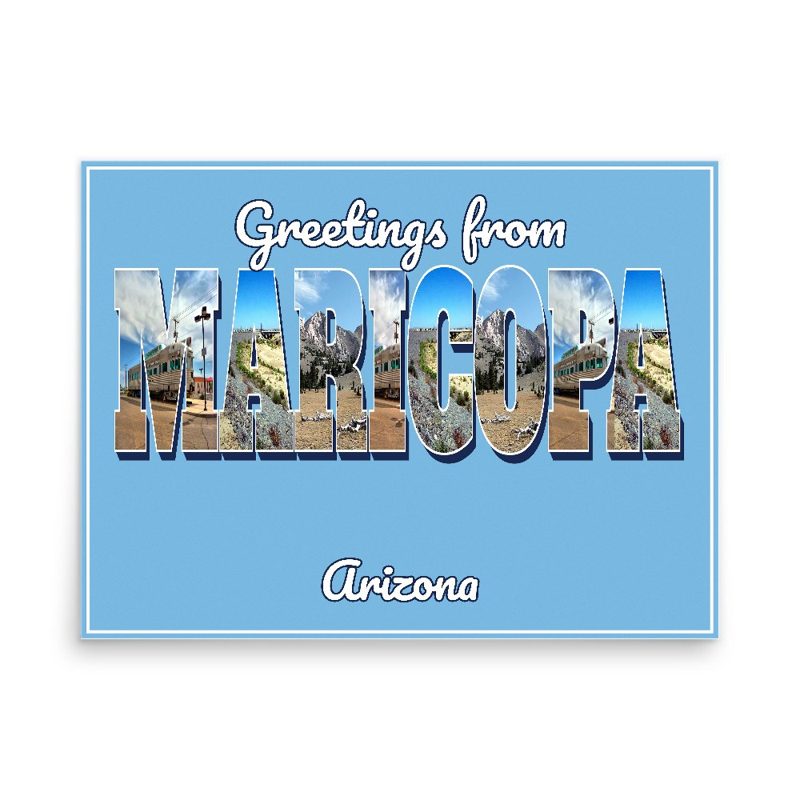
Classic large-letter postcard art, filled with local photos
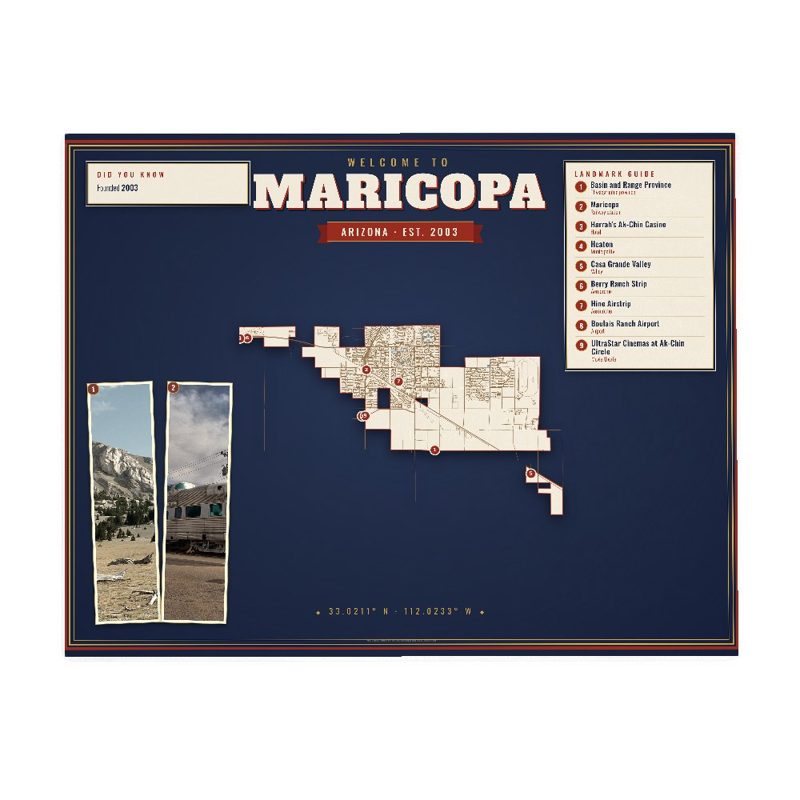
Map of local landmarks, washable fabric
Heavy-blend fleece, street map printed on the back
Soft Bella+Canvas jersey
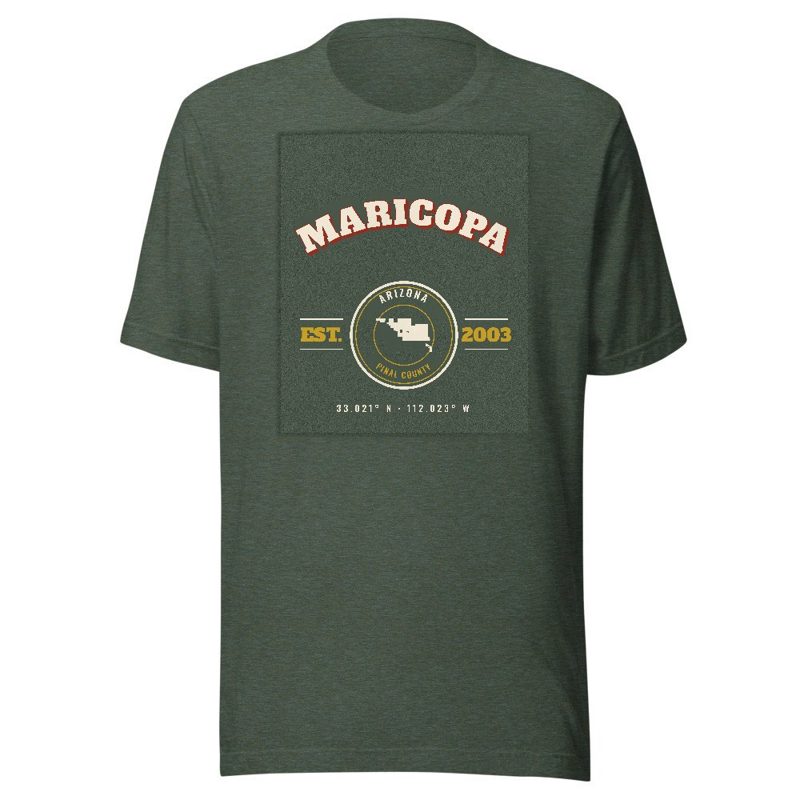
Kids' Bella+Canvas jersey, youth sizes

Bella+Canvas toddler jersey
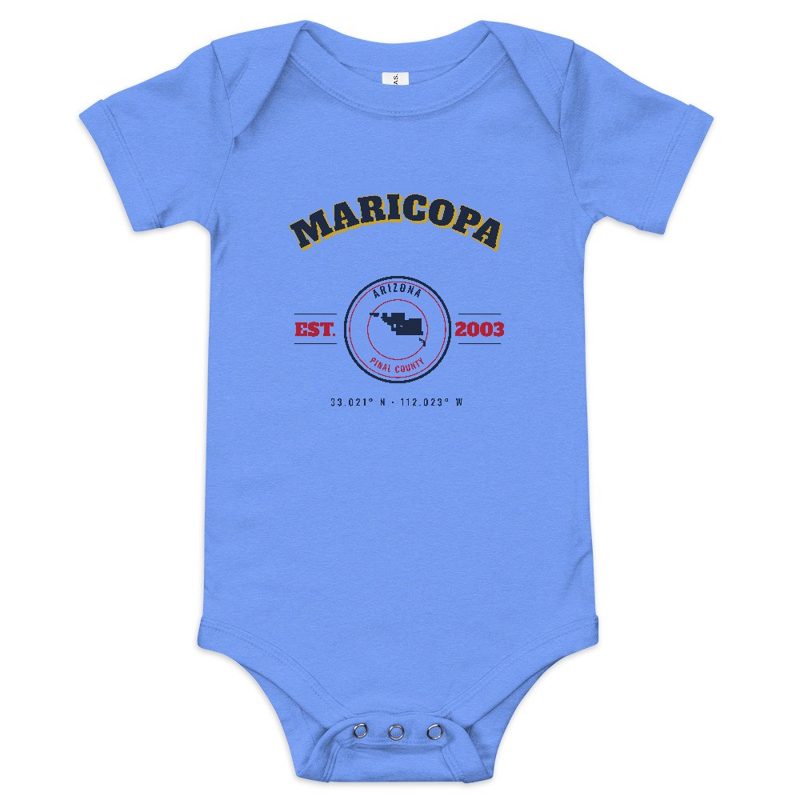
Bella+Canvas baby bodysuit
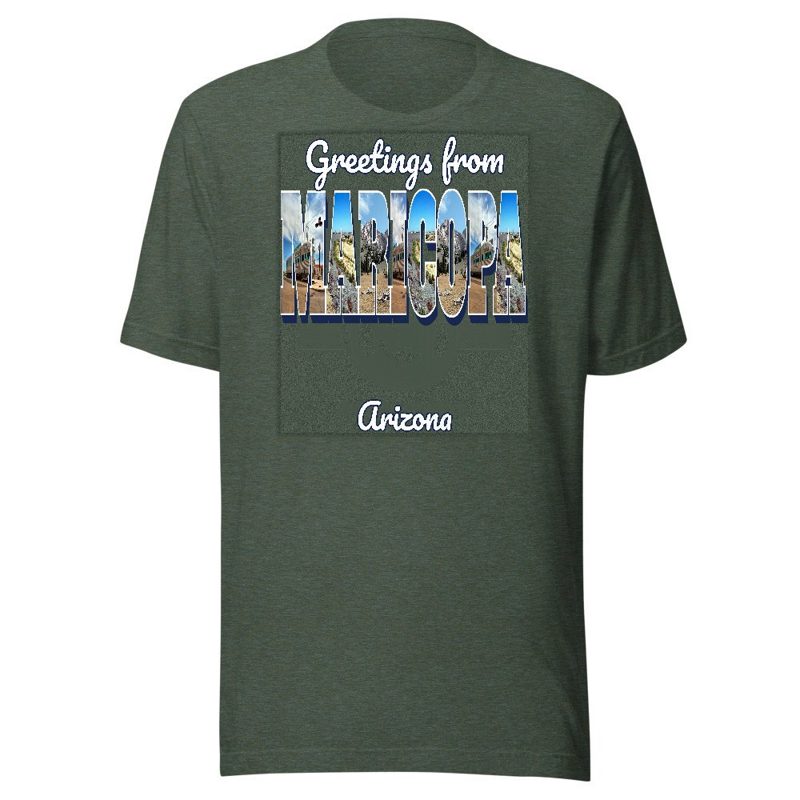
Large-letter postcard art filled with local photos
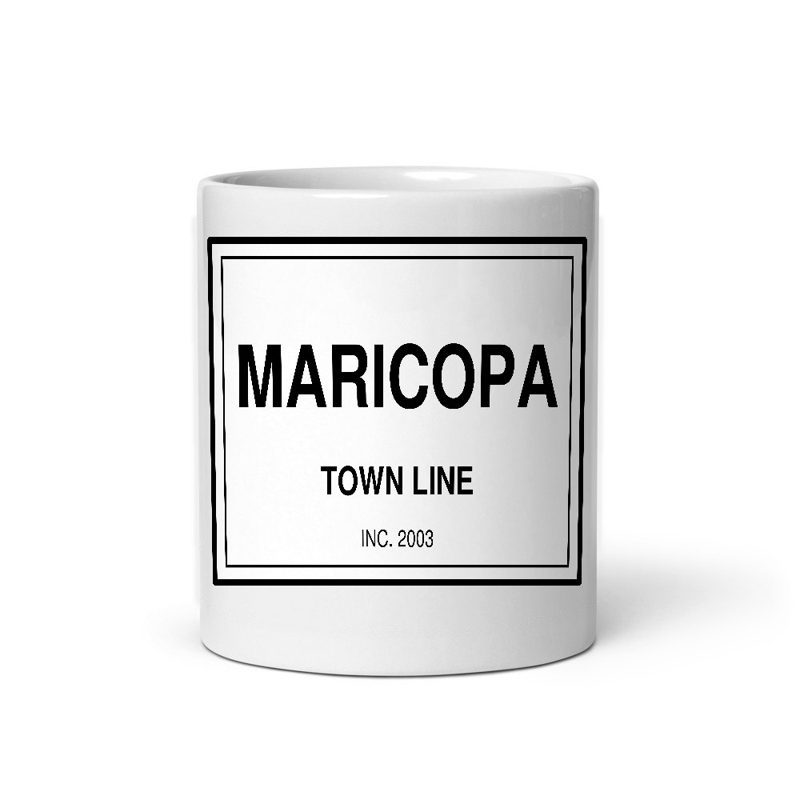
Glossy ceramic, dishwasher safe

Large-letter postcard art filled with local photos, 11 oz ceramic
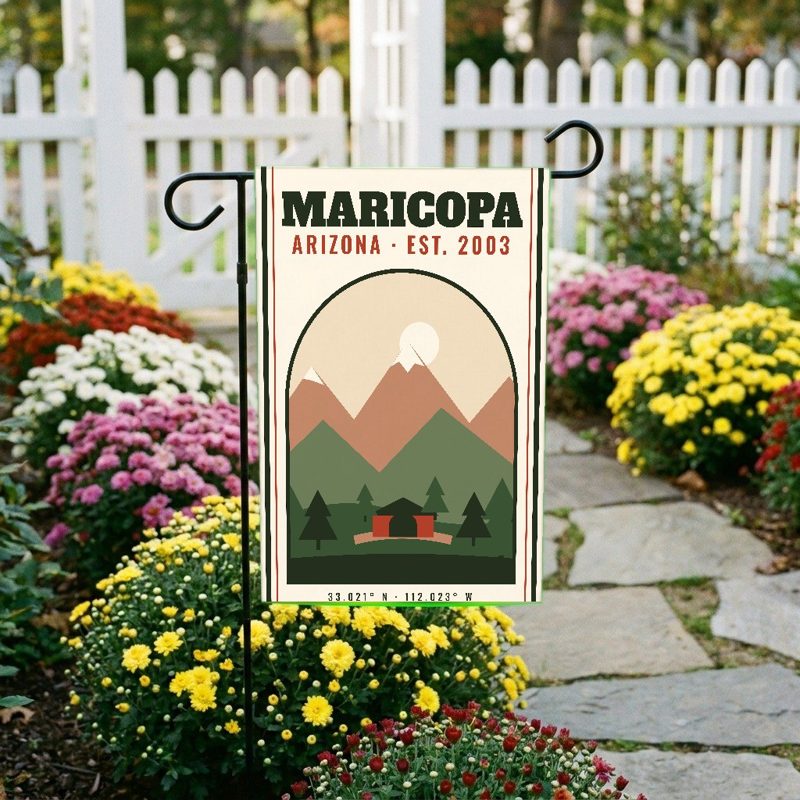
Weatherproof, for the front walk
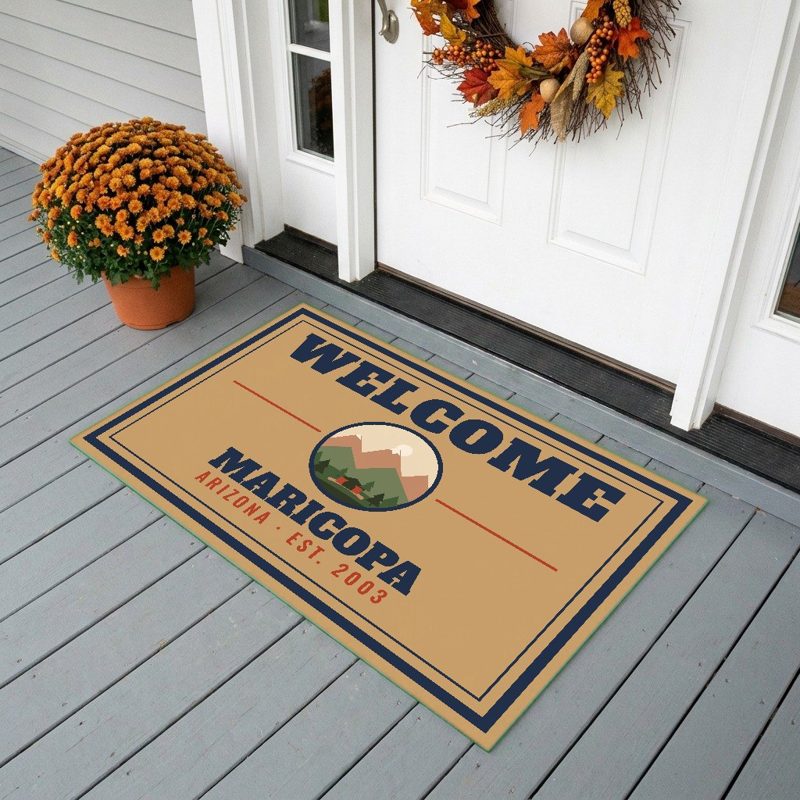
24″×16″, printed coir-look fibers, rubber back
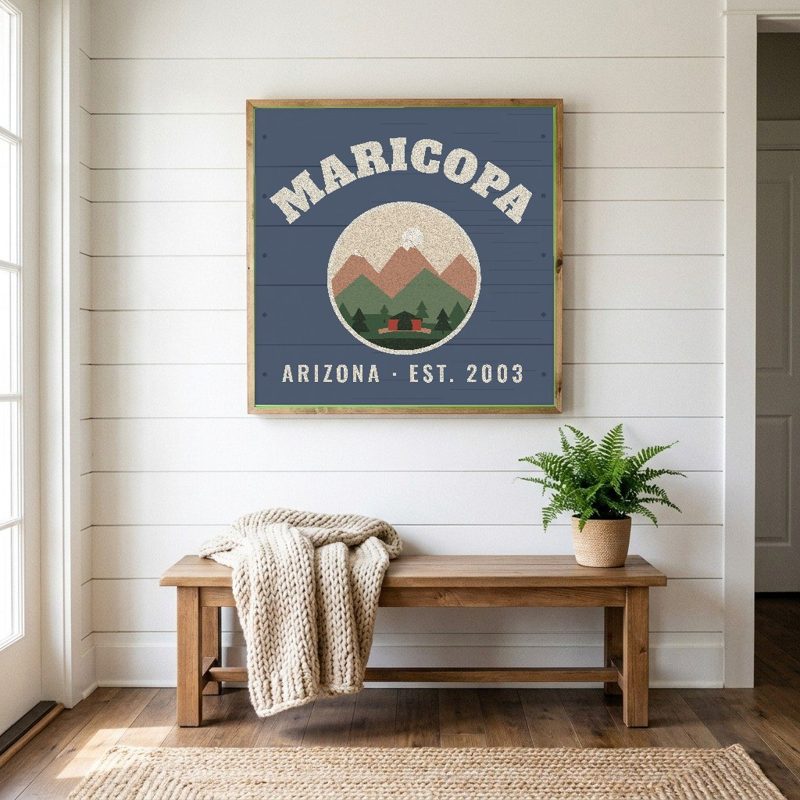
12″×12″ printed wood, ready to hang
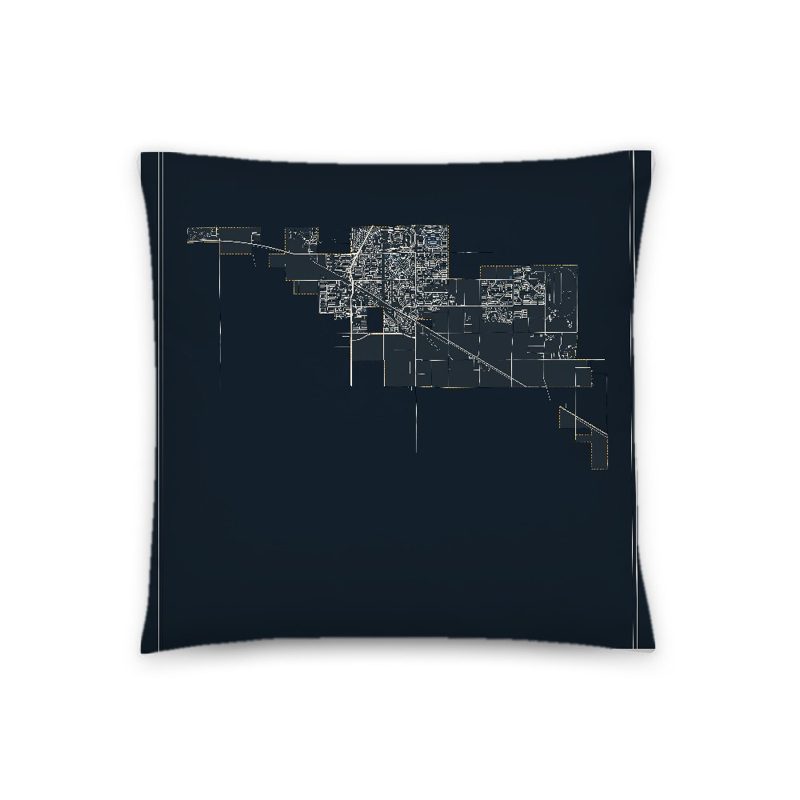
Soft-touch, zip cover
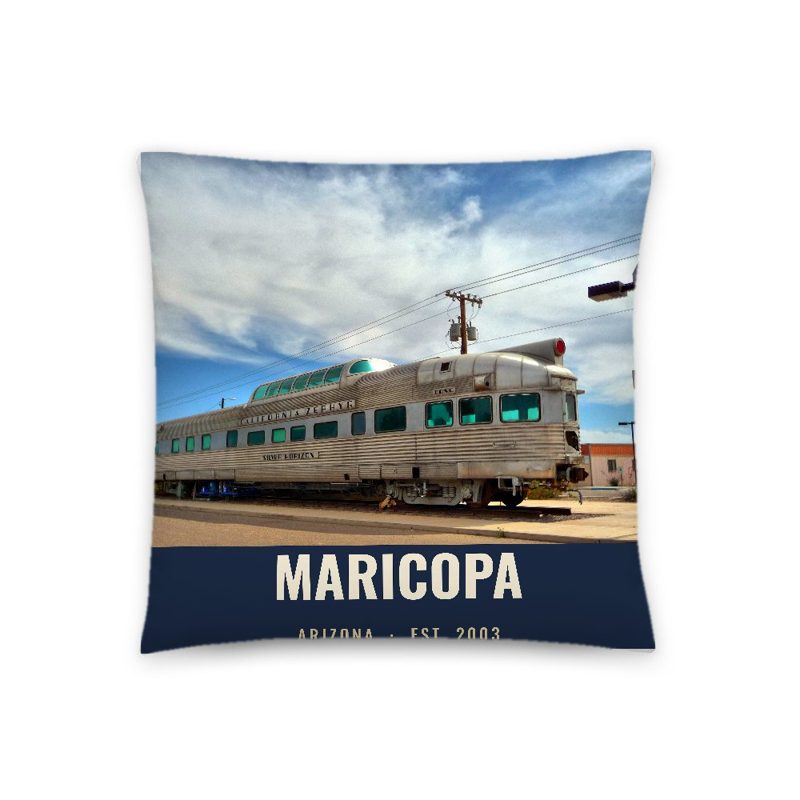
A local landmark photo with the town name, 18″×18″
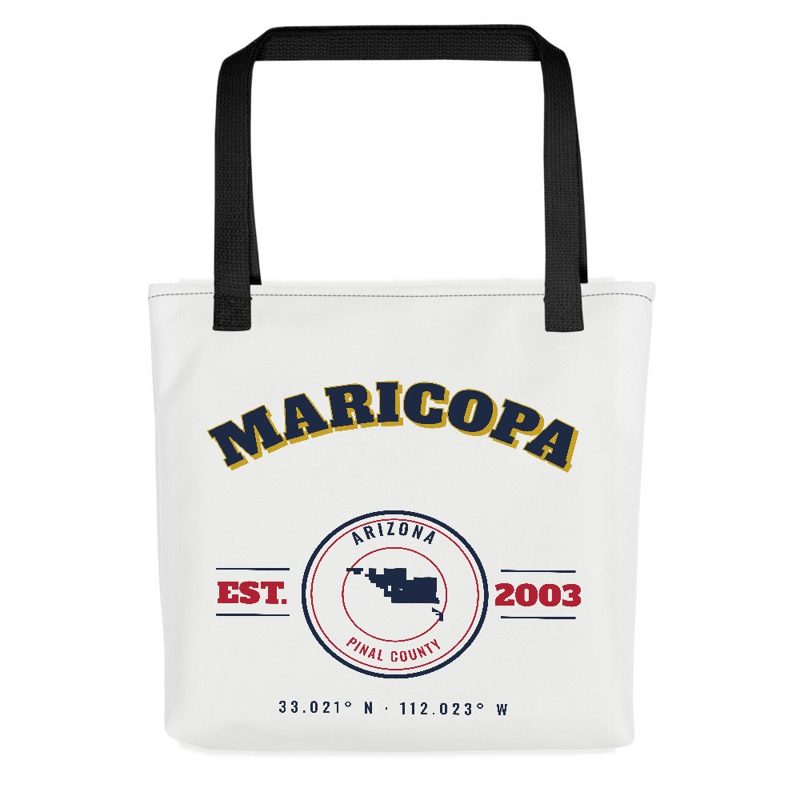
Sturdy all-over-print tote
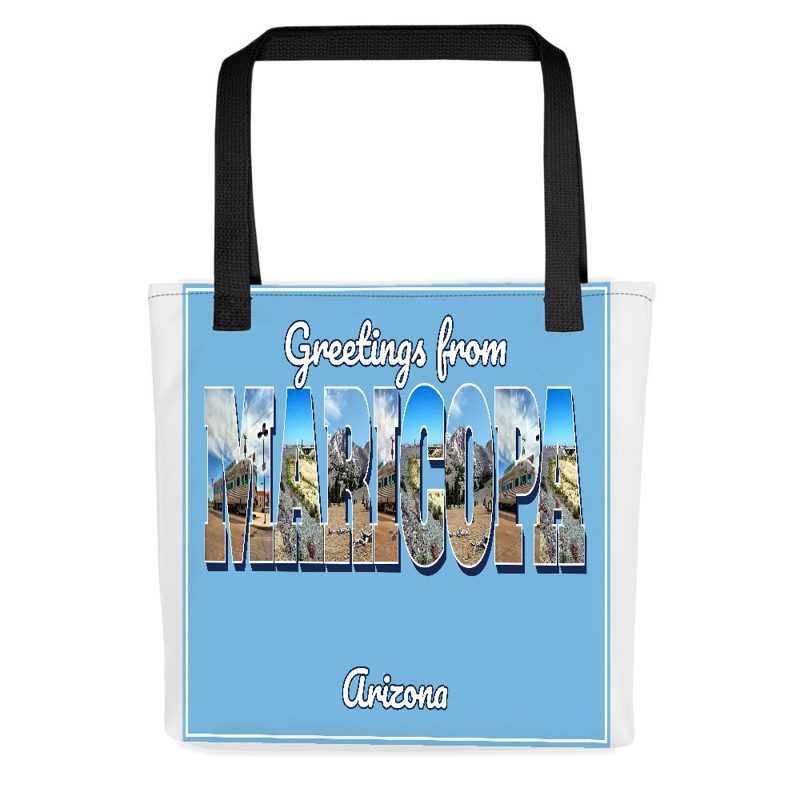
Large-letter postcard art on a sturdy tote
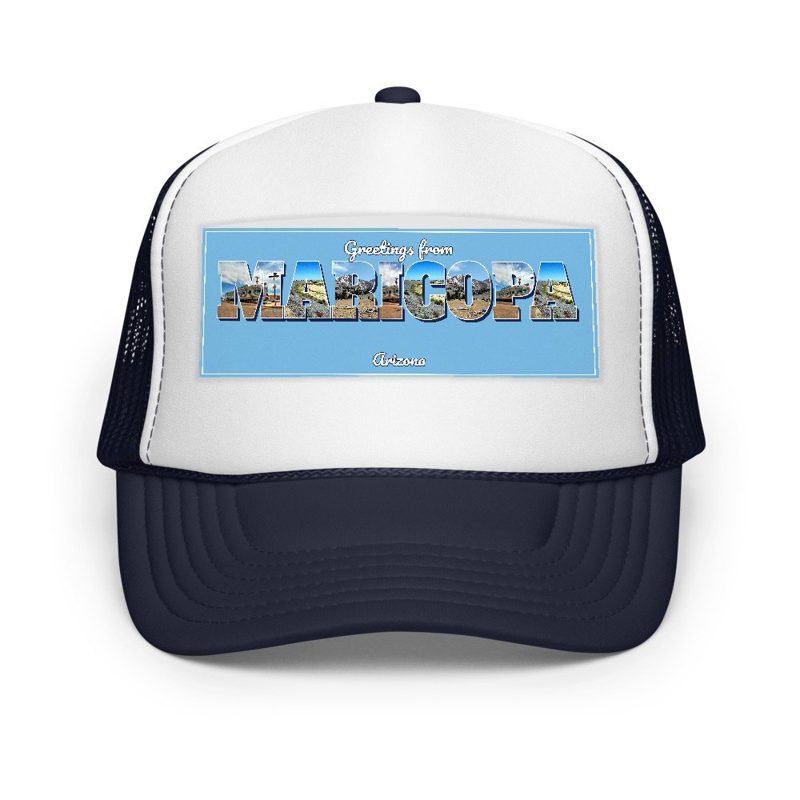
Foam-front trucker, printed (not embroidered) with local photos
Glossy top, cork back
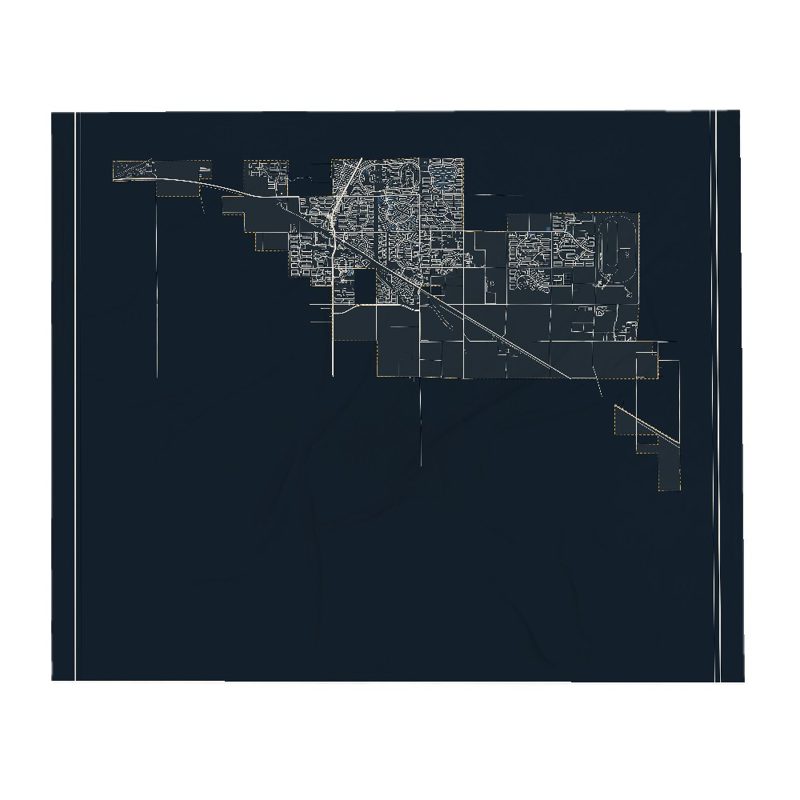
Soft fleece, 50″×60″
20 oz, double-wall stainless
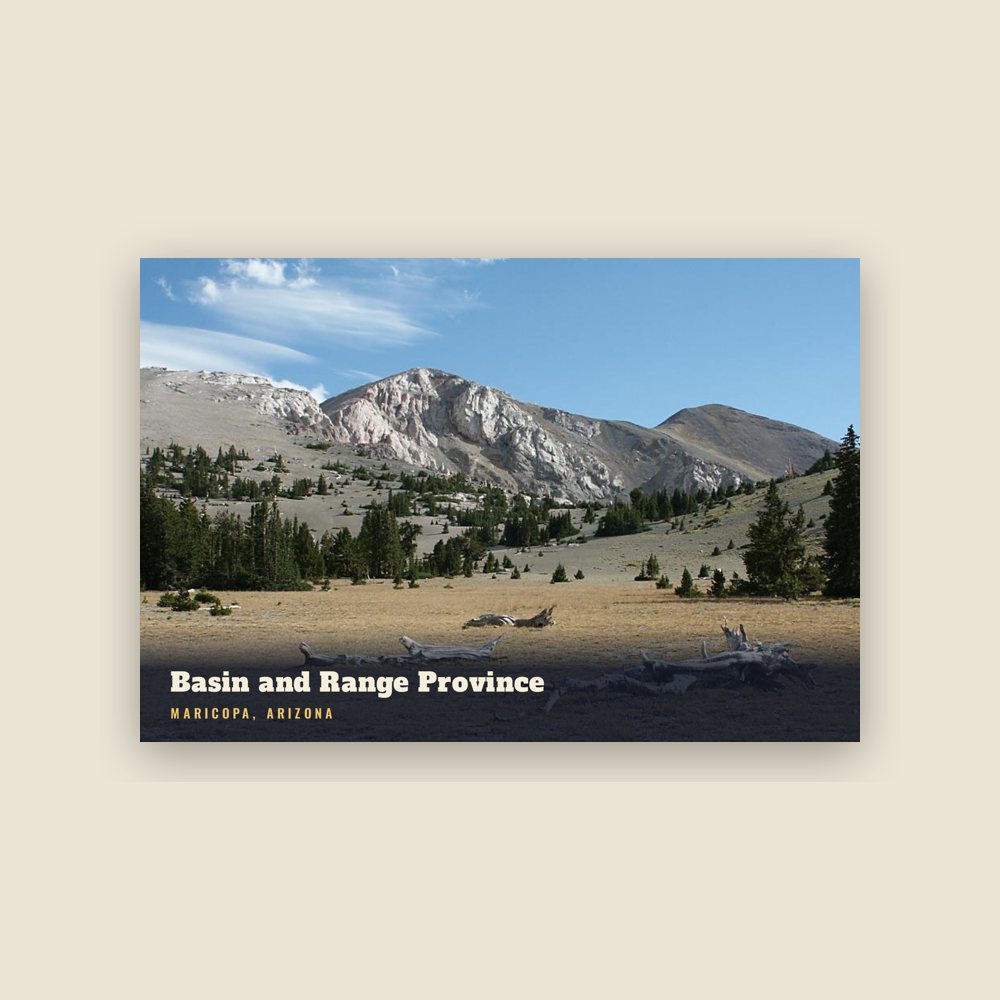
6″×4″ postcard, glossy front
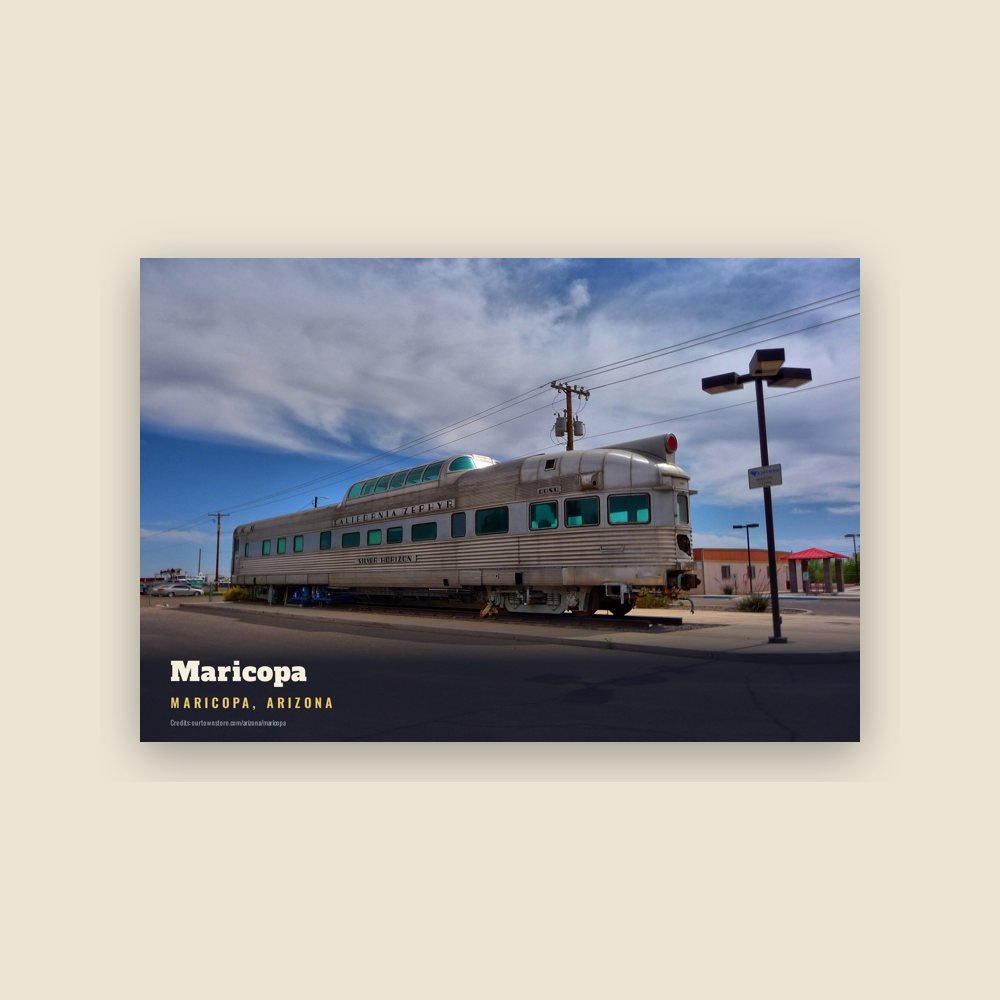
6″×4″ postcard, glossy front
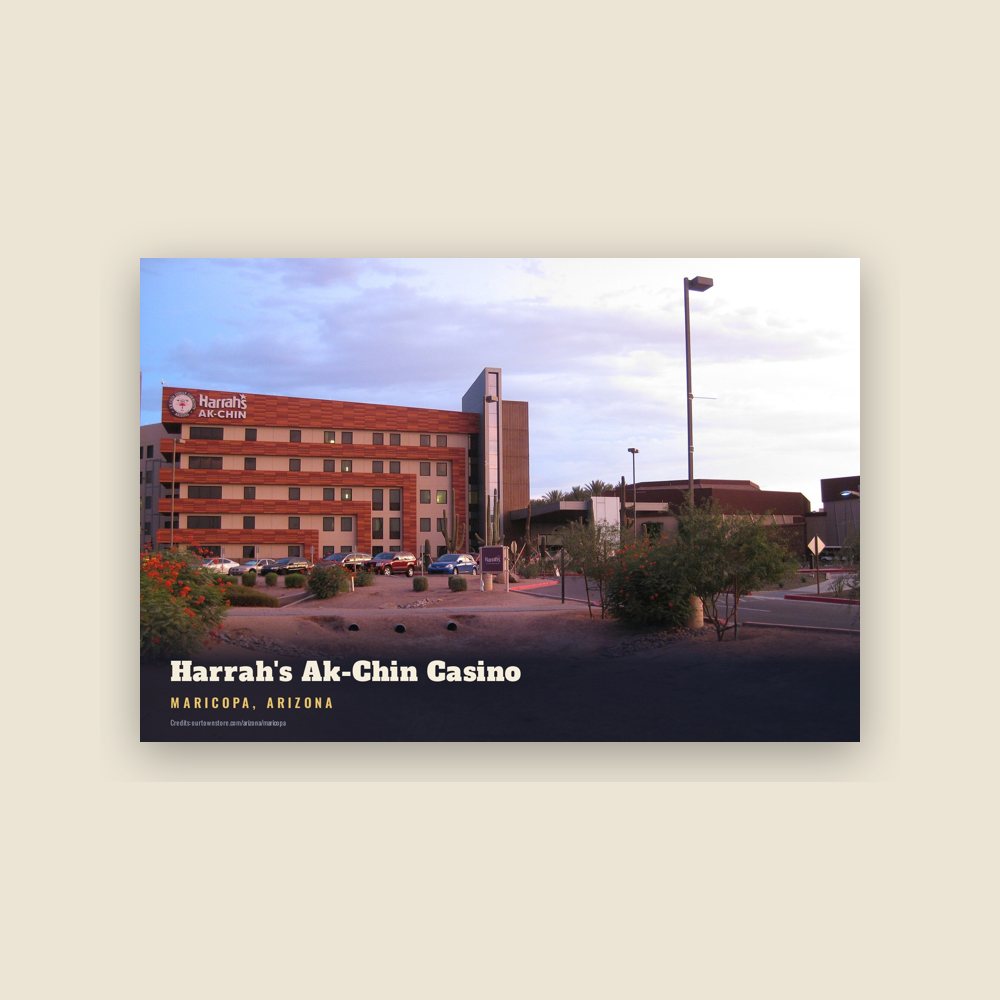
6″×4″ postcard, glossy front
With 76,654 residents as of 2024, Maricopa is the second largest incorporated municipality in Pinal County. Landmarks include Basin and Range Province, Maricopa and Harrah's Ak-Chin Casino.
The settlement currently known as Maricopa has been located in three different places with three previous names: Maricopa Wells, Maricopaville and Maricopa Junction; the latter gradually became known as Maricopa. It began as an oasis around a series of watering holes eight miles north of present-day Maricopa, and about a mile west of Pima Butte. European-American traders and travelers called it Maricopa Wells. Several of Arizona's rivers, the Gila, Santa Cruz, Vekol and Santa Rosa, provided this oasis in the desert with an ample supply of water during this time.
During the late 1800s, Maricopa Wells was one of the most important relay stations along the San Antonio-San Diego Mail Line and the later more famous Butterfield Overland Mail Route. Today, very little remains of this once bustling community, but it played an important part in the progress and development of the Southwest. It was one of the best-known spots in Arizona during this period of time because it had a reliable source of water, and offered an abundant supply of food. The peaceful Pima and Maricopa farmers who lived and farmed nearby sold supplies to travelers and migrants.
The most prosperous period of time for Maricopa Wells was in the 1870s. During this time the trading center at the Wells provided water and food for not only the east–west travelers, but those who traveled to the north to Phoenix. Fairly good roads had been built by James A. Moore, the proprietor at Maricopa Wells, to all points north.
Maricopaville developed south and west of the Wells, following construction of a railroad line from this terminus to Phoenix. In 1879, the Southern Pacific Railroad was in the process of building a railroad line from Yuma to Tucson, and a second railroad line was to be built from Maricopaville, wrapping around the western edge of South Mountain into Phoenix. With the railroad, Maricopaville took on the appearance of a gold rush boom town, as men worked day and night building hotels, saloons, warehouses, restaurants, theaters, and other facilities. One local newspaper at the time believed that with its thousands of people and good location, Maricopaville would be an ideal choice for the location of the state capital. But the railroad never built the anticipated line from Maricopaville into Phoenix. Tempe also wanted to be on the railroad line and lobbied the territorial government for a stop; officials agreed.
In the early 1880s, the settlement was essentially rebuilt as Maricopa Junction, three miles to the east, at the present location of Maricopa, in order to accommodate the Maricopa and Phoenix Railroad, which was planned to go through Kyrene and Tempe to the north on the way to Phoenix. The first train departed from Maricopa for Phoenix on July 4, 1887. All east–west rail travelers had to stop at Maricopa, and those who wanted to go north had to shift to the M & P Railroad.
Maricopa was officially incorporated as a city on October 15, 2003, becoming the 88th incorporated municipality in Arizona. Between 2000 and 2010, the city's population grew from 1,040 residents to 43,482, an increase of 4080%. In 2018, estimates by the US Census Bureau and Arizona State Demographer's Office put Maricopa's population at 51,977, pushing the city over the 50,000 mark for the first time.
Data from the 2020 Census put Maricopa's population at 58,125, surpassing Casa Grande to become the most populous incorporated place in Pinal County and second most populous place in the county overall, behind the unincorporated San Tan Valley (incorporated as of 2025). Population of Maricopa has continued to grow, reaching 66,290 residents as of 2022; a 6.2% increase from 2021, making Maricopa the 12th fastest growing municipality in the United States and second fastest growing in Arizona (behind Queen Creek, which is partially in Pinal County).
A part of the city is within the boundaries of the Ak-Chin Indian Community. The small, federally recognized tribe has developed Harrah's Ak-Chin Casino and resort, cinema multiplex, and operates a golf course. All are open to the public and draw customers from Maricopa as well as the greater Phoenix area. In addition, the tribe operates the Ak-Chin Regional Airport and an industrial park. A 2011 study said that its casino and resort made up a large part of the economy of Pinal County, in terms of number of jobs and revenue generated.
Adapted (trimmed) from the Wikipedia article Maricopa, Arizona, revision 1383019773 by its contributors, licensed CC BY-SA 4.0.
We share a part of every Maricopa sale with local partners, and we'd love to print from your collection. Old photographs, maps and postcards make the best keepsakes.
Partner with usA favorite landmark, your street, a school or team, an anniversary gift, a different product. Tell us and we'll get back to you by email.
Maricopa's population was 58,125 in the 2020 U.S. Census, up from 43,482 in 2010.