Cart 0
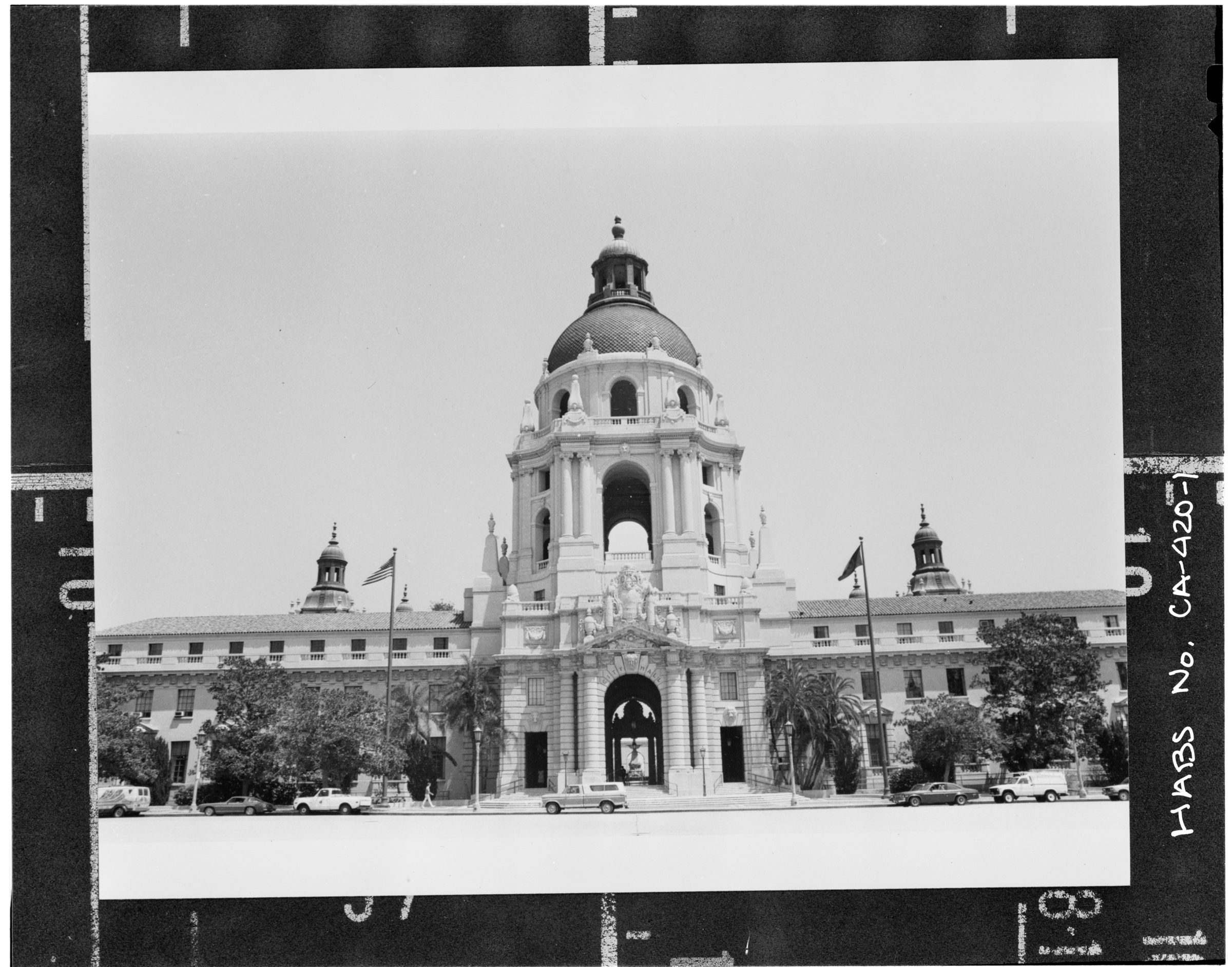
Pasadena City Hall, 100 North Garfield Avenue, Pasadena, California, Historic American Buildings Survey photograph

PASADENA

California
Shop the collection

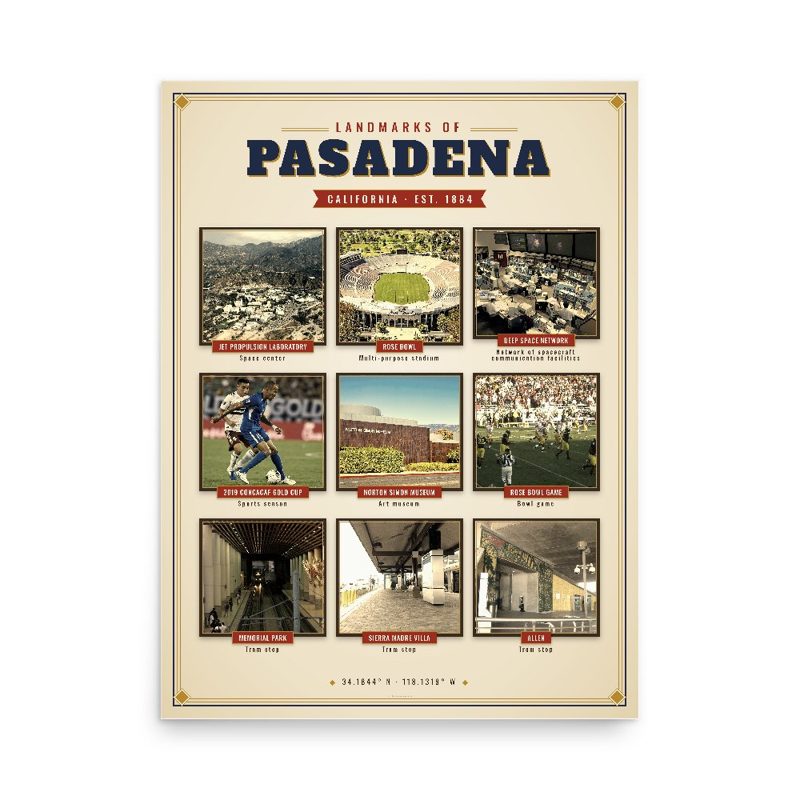
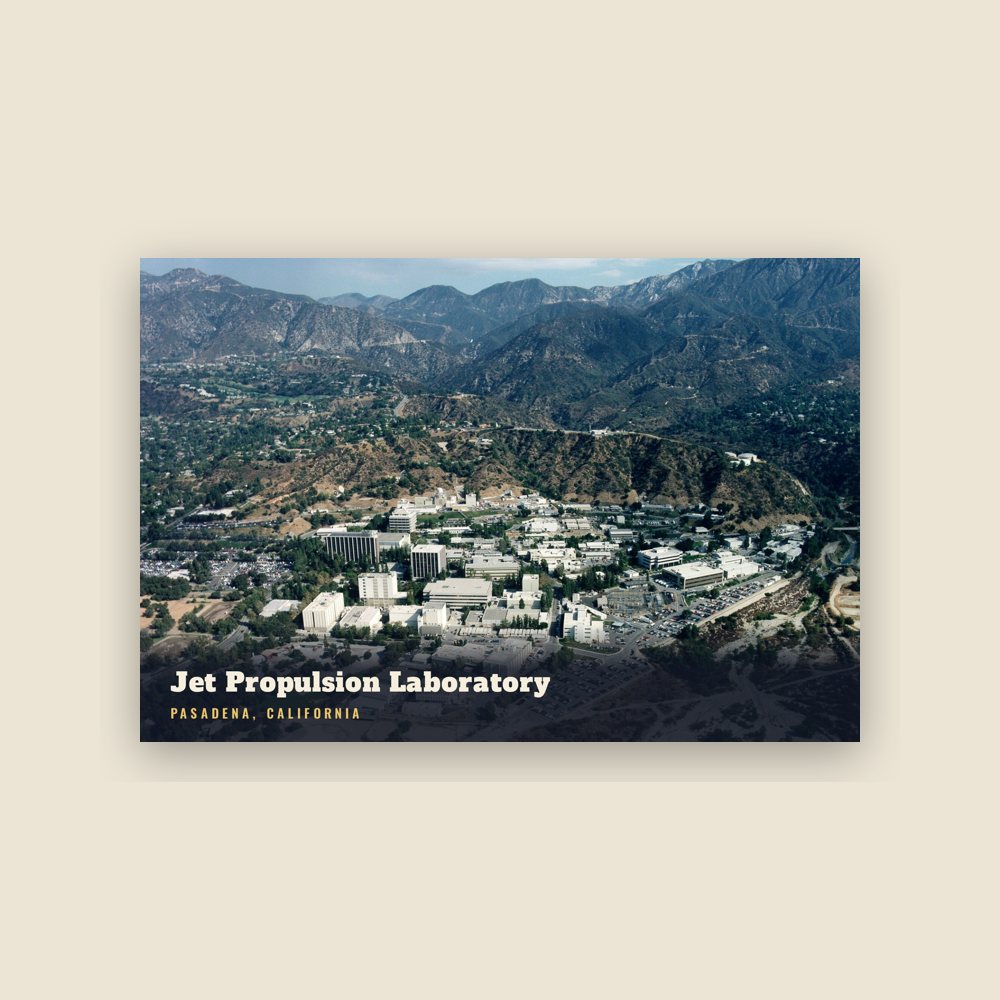
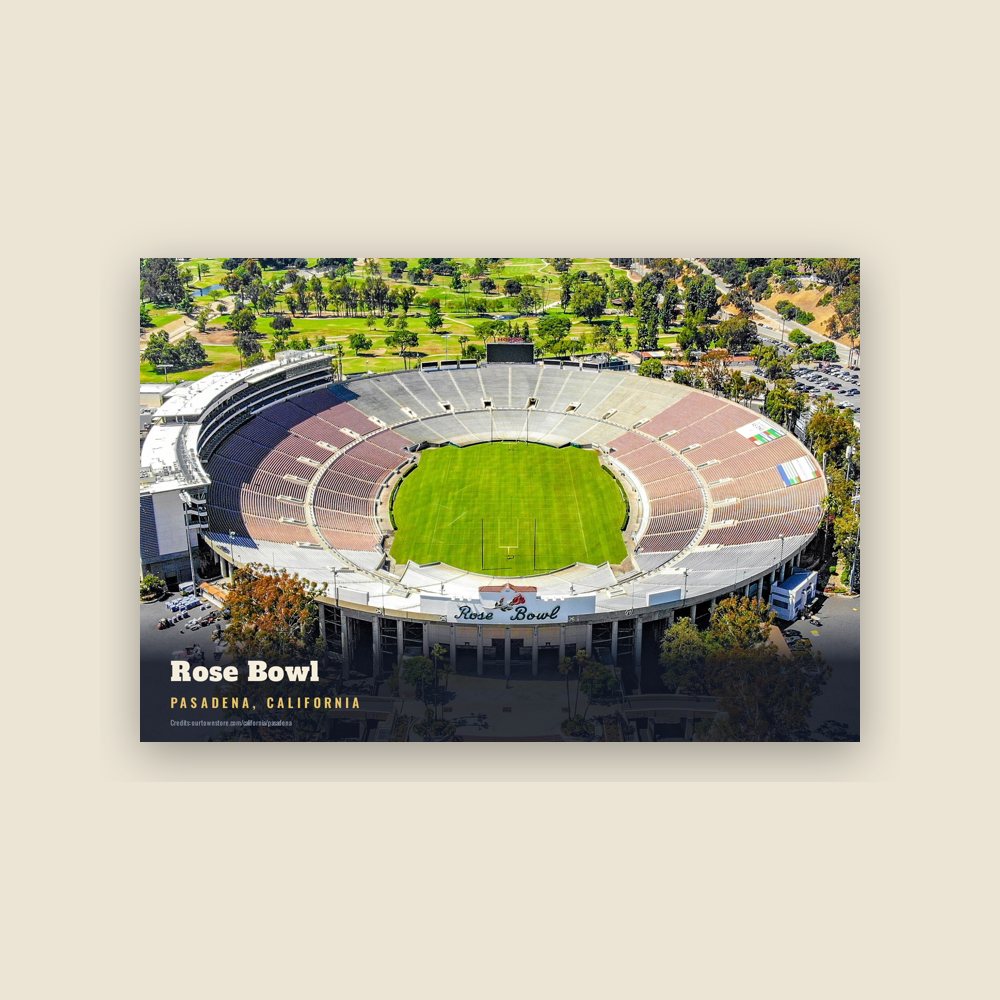
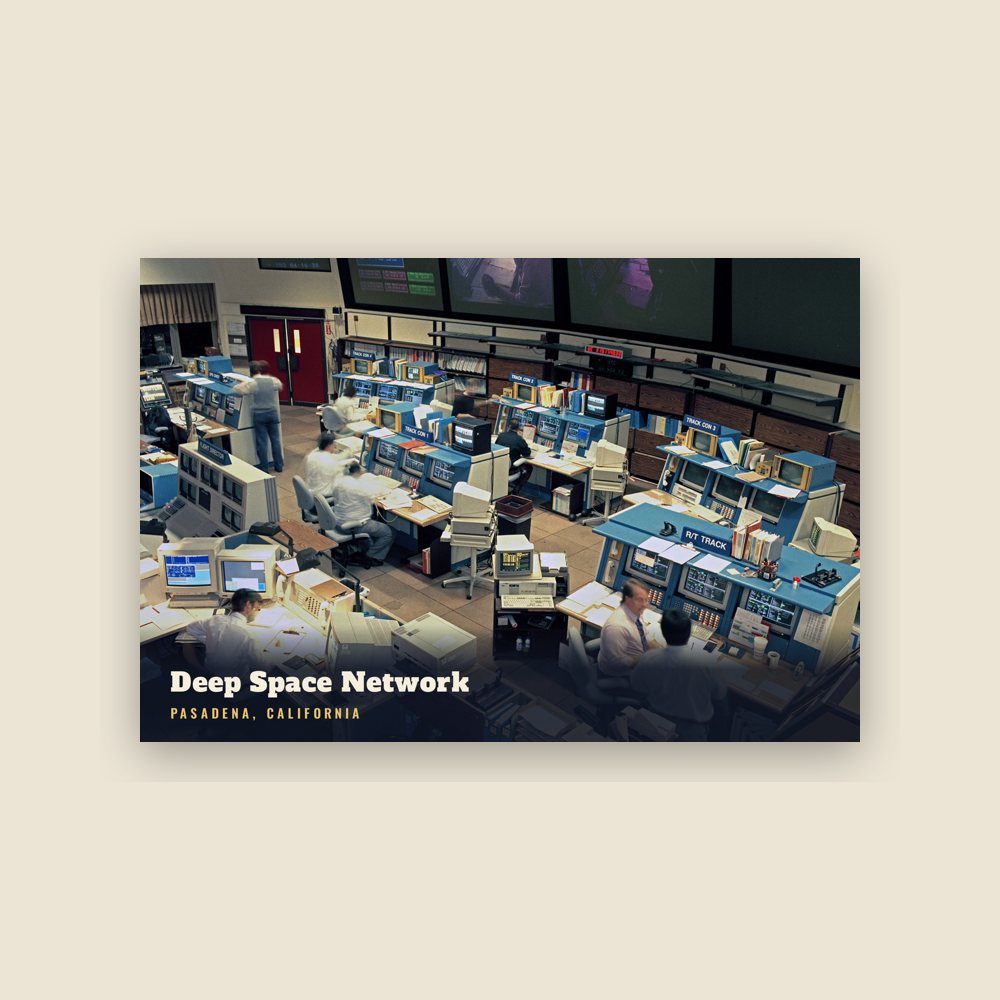
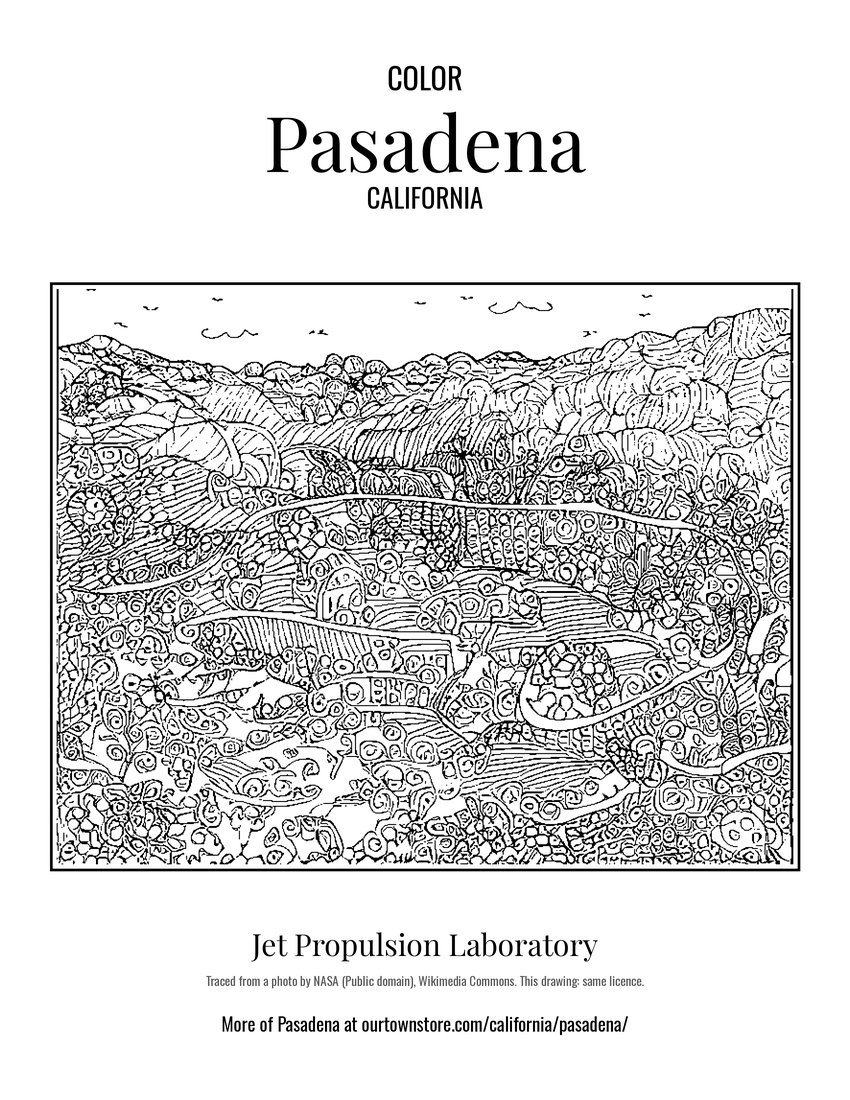
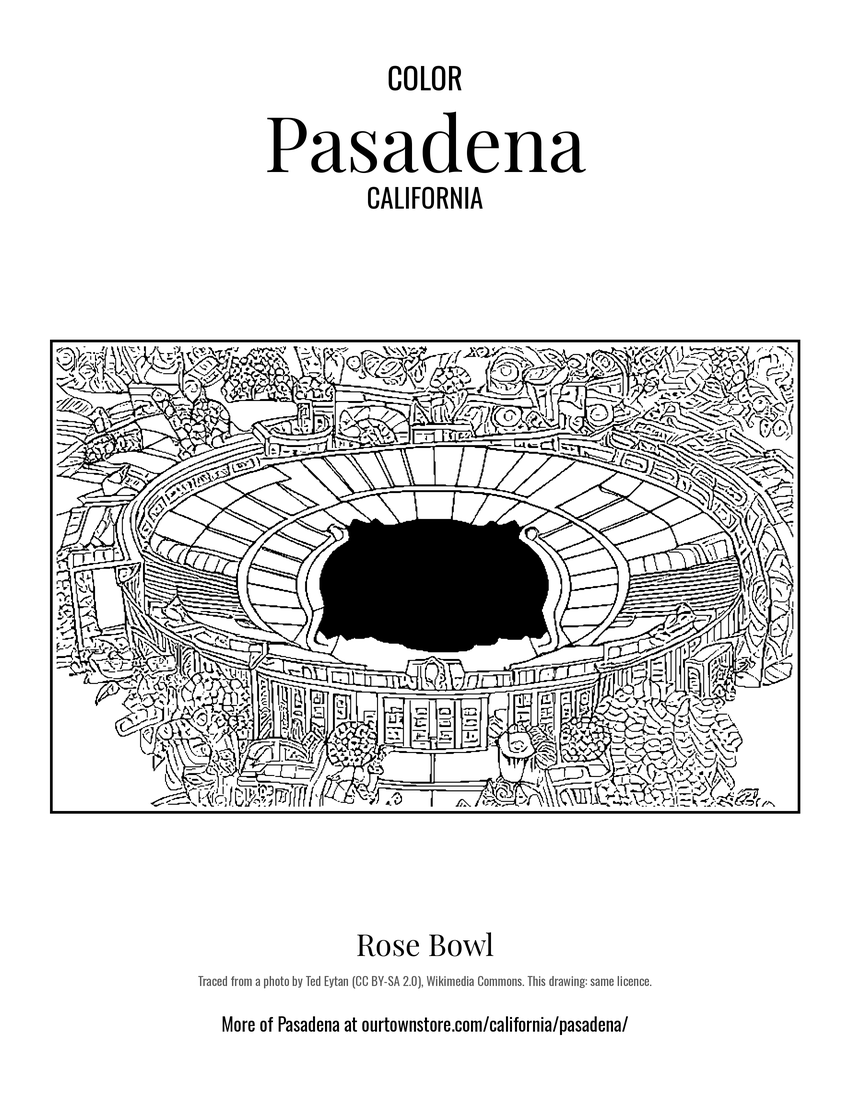
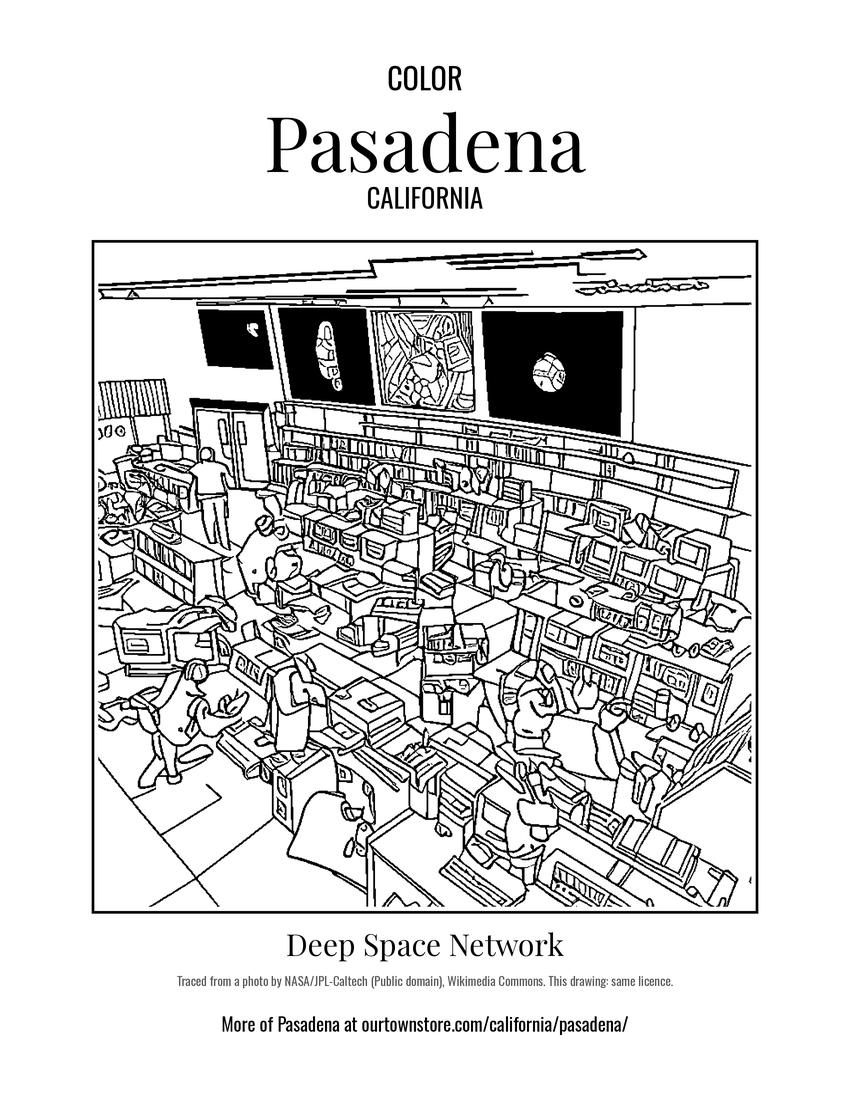
Old Pasadena is the city's original commercial district. Landmarks include Jet Propulsion Laboratory, Rose Bowl and Deep Space Network. Pasadena is the birthplace of Sally Field, actress.

The Pasadena Collection

Made for Pasadena. Printed to order.

Pasadena, California gifts and souvenirs: 42 designs made from Pasadena's own map, landmarks and history, from $10 to $99. Printed to order and shipped free in the USA.

PopularPrice
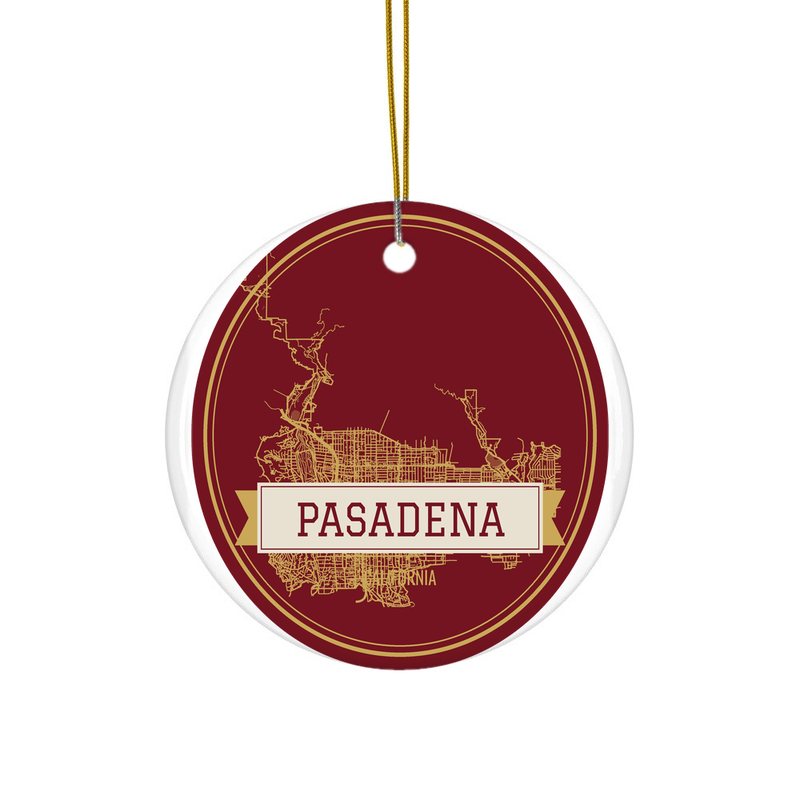
Pasadena Hometown Ornament$23
Pasadena Landmarks Photo Posterfrom $40
Pasadena Vintage Travel Posterfrom $40
Pasadena Varsity Crewneckfrom $57
Pasadena Est. Teefrom $33
Pasadena Town Line Mugfrom $26
Pasadena Hometown Ornament

Pasadena Hometown Ornament

Ceramic keepsake, gold ribbon, in 4 styles

$23
Pasadena Landmarks Photo Poster

Pasadena Landmarks Photo Poster

Nine local landmarks, archival matte

from $40
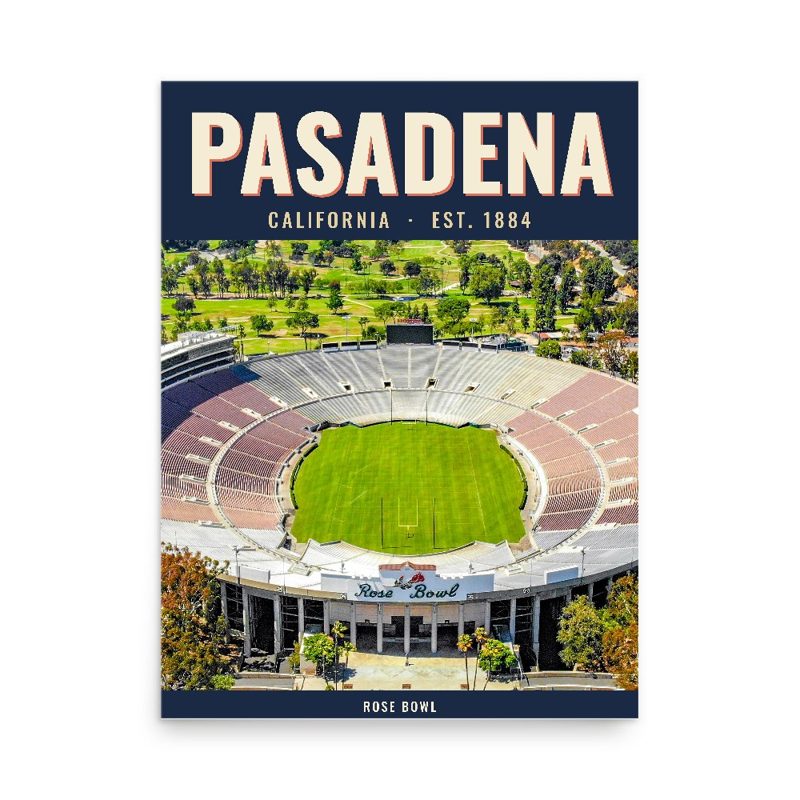
Pasadena Vintage Travel Poster

Pasadena Vintage Travel Poster

Its landmark photo in a classic travel-poster layout

from $40
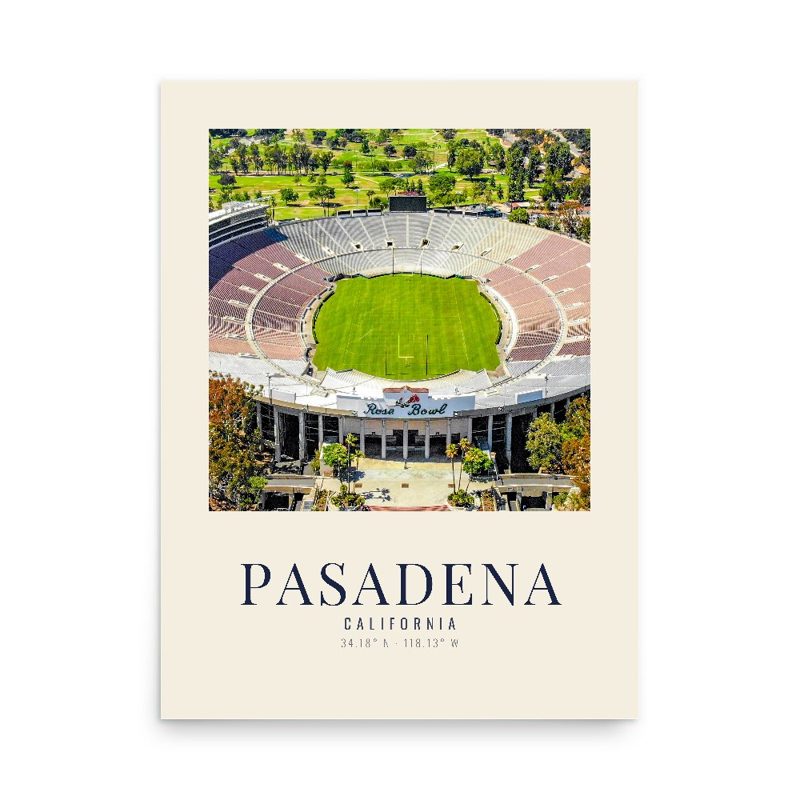
Pasadena Photo Art Print

Pasadena Photo Art Print

A local landmark photo as a gallery print

from $40
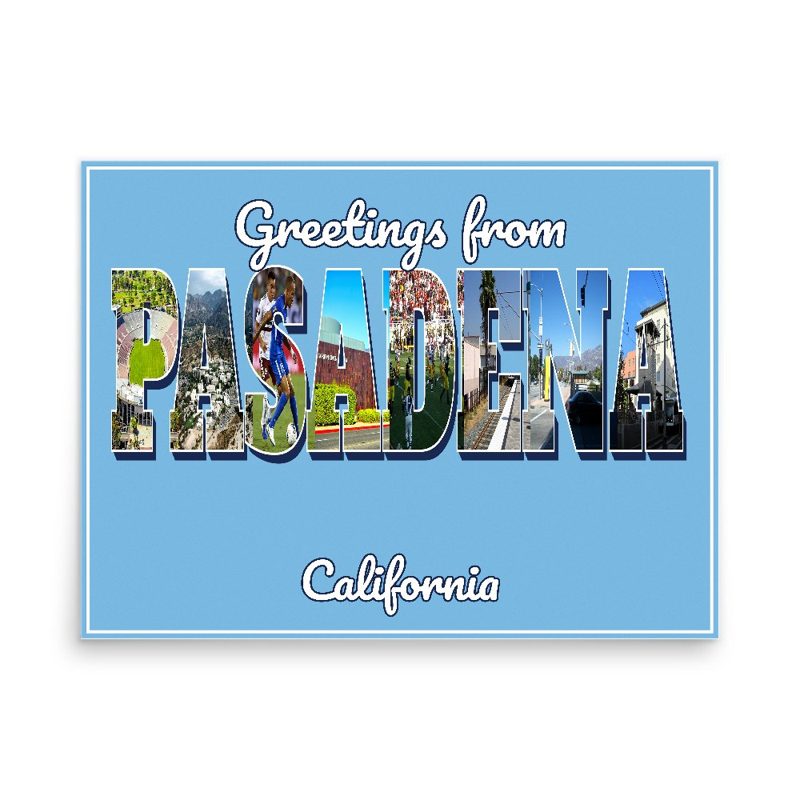
Pasadena “Greetings From” Poster

Pasadena “Greetings From” Poster

Classic large-letter postcard art, filled with local photos

from $40
Pasadena Snapshot Collage Poster

Pasadena Snapshot Collage Poster

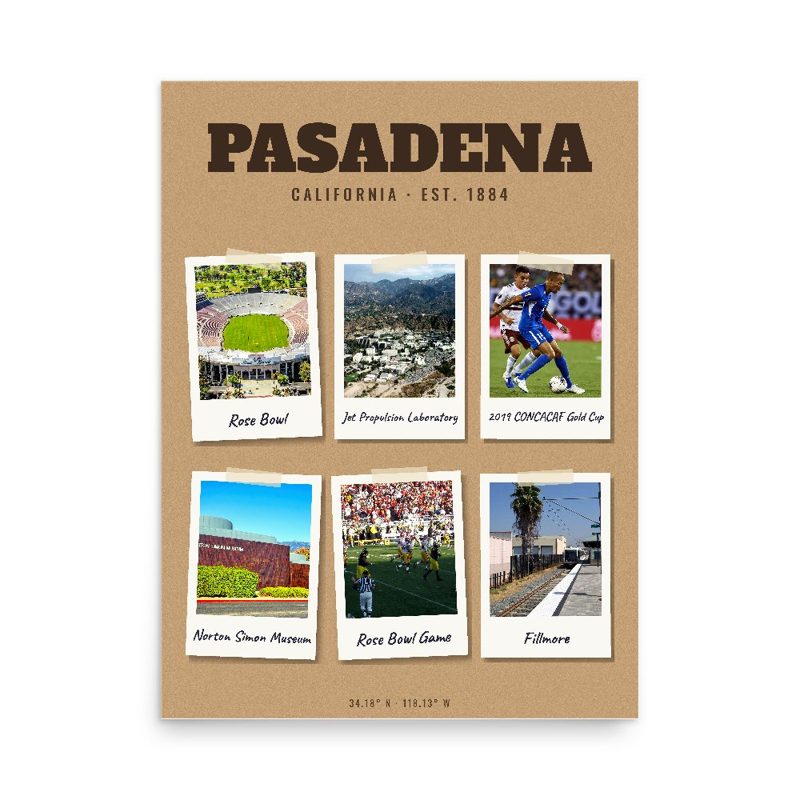
Six local landmarks as instant photos on kraft paper

from $40
Pasadena History Timeline Poster

Pasadena History Timeline Poster

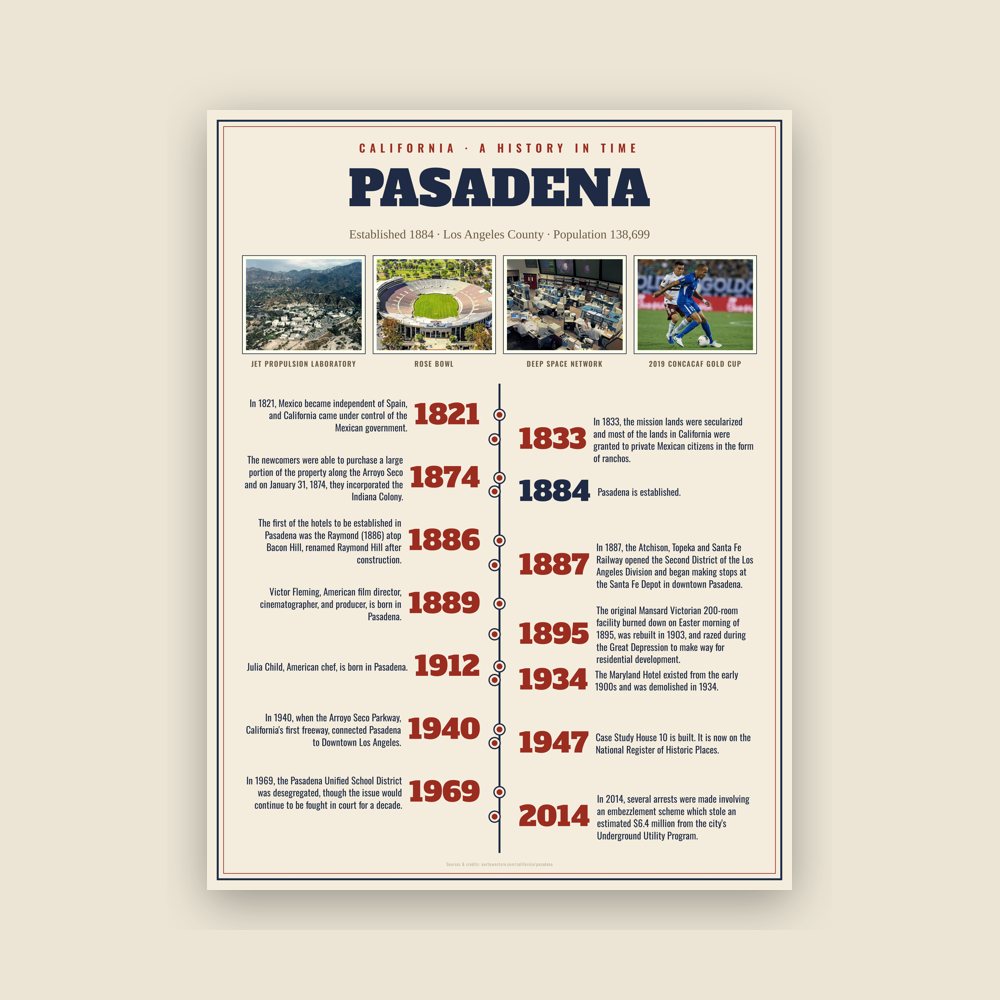
The town's story in dates, from its own records, for home or classroom

from $44
Pasadena Map Placemat

Pasadena Map Placemat

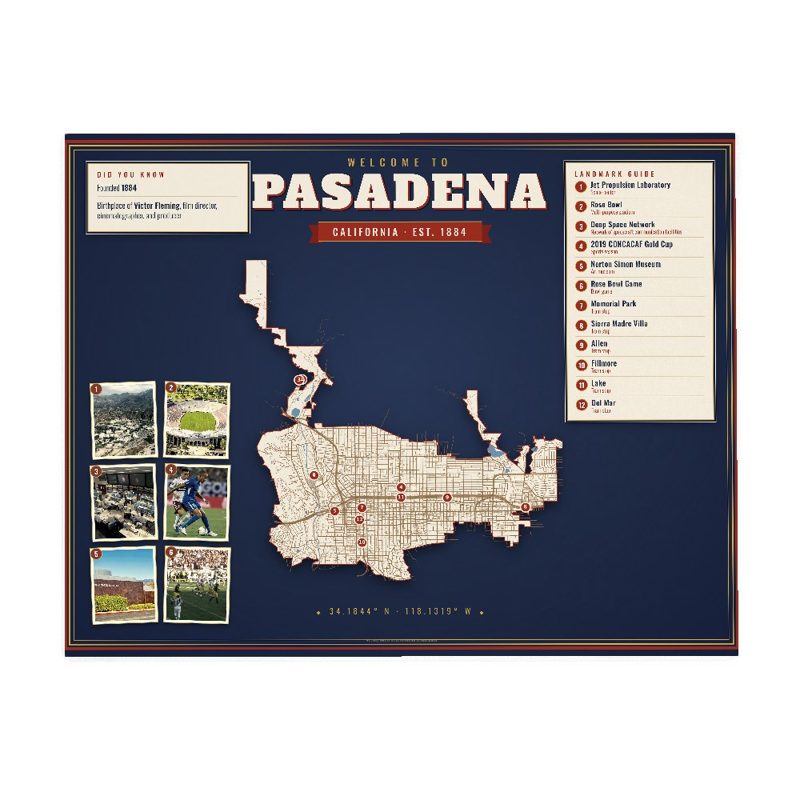
Map of local landmarks, washable fabric

$31
Pasadena Varsity Crewneck

Pasadena Varsity Crewneck

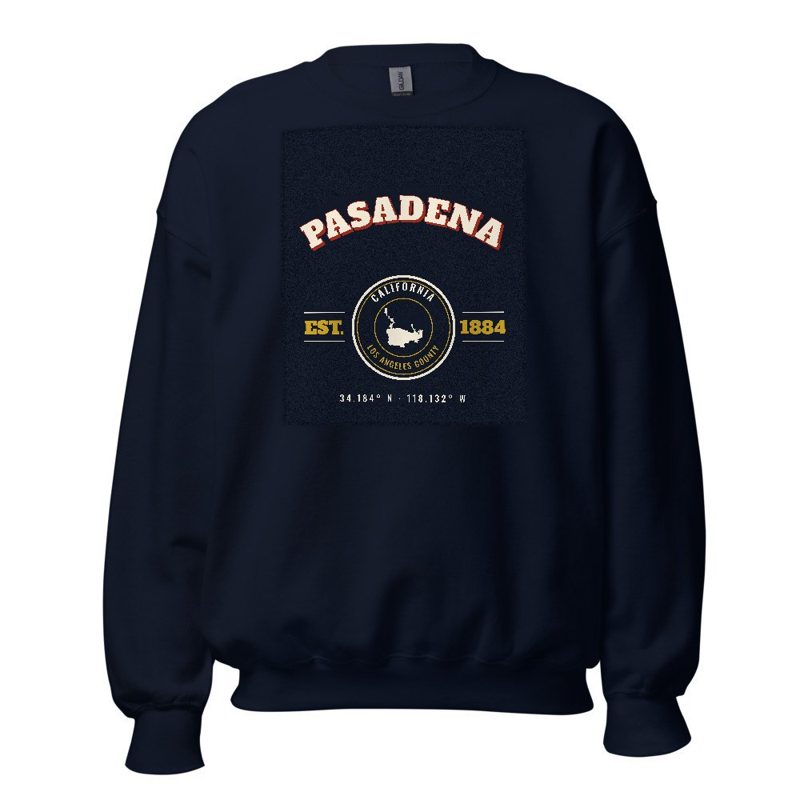
Heavy-blend fleece, street map printed on the back

from $57
Pasadena Hometown Knit Sweater

Pasadena Hometown Knit Sweater

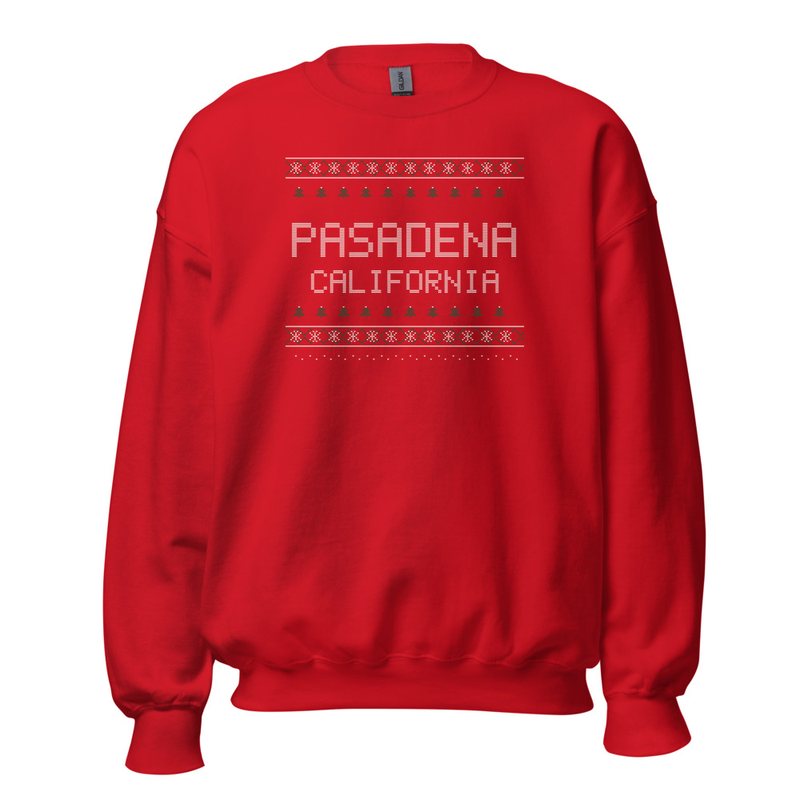
Red heavy-blend crewneck, knit-stitch town print

from $57
Pasadena Est. Tee

Pasadena Est. Tee

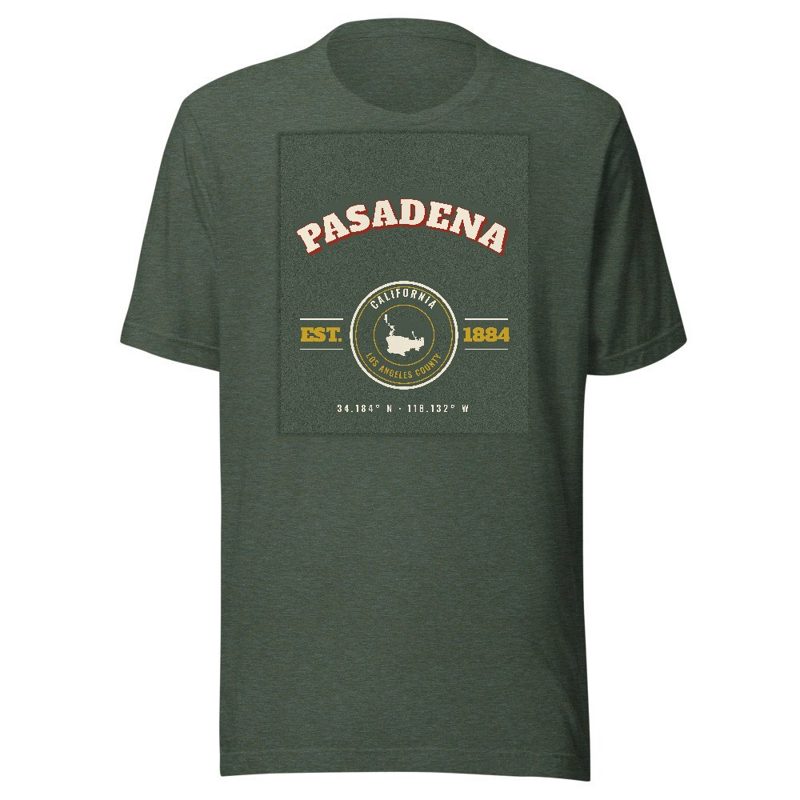
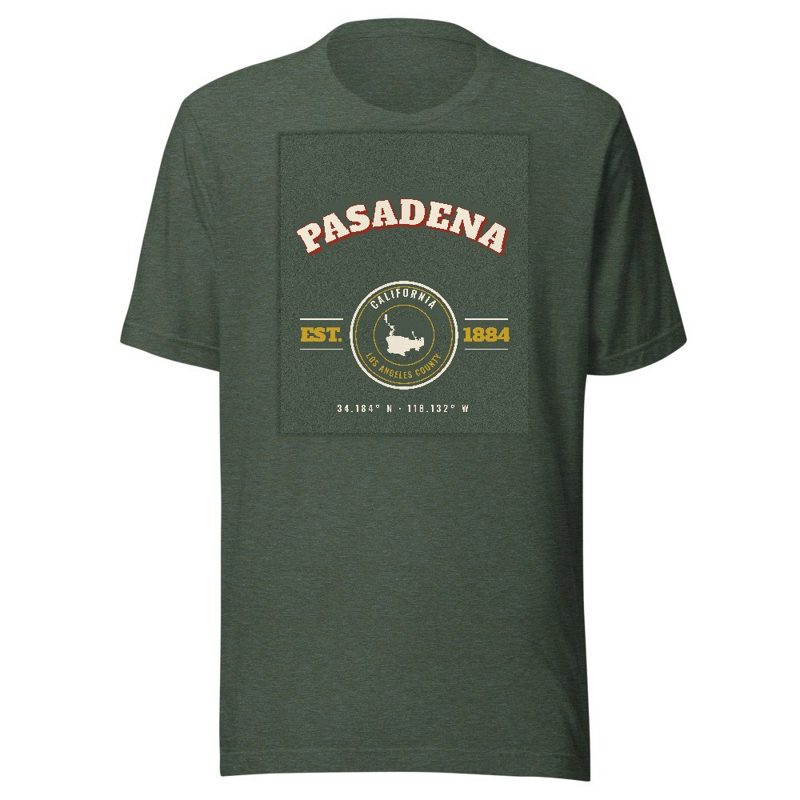
Soft Bella+Canvas jersey

from $33
Pasadena Est. Youth Tee

Pasadena Est. Youth Tee

Kids' Bella+Canvas jersey, youth sizes

$30
Pasadena Est. Toddler Tee

Pasadena Est. Toddler Tee

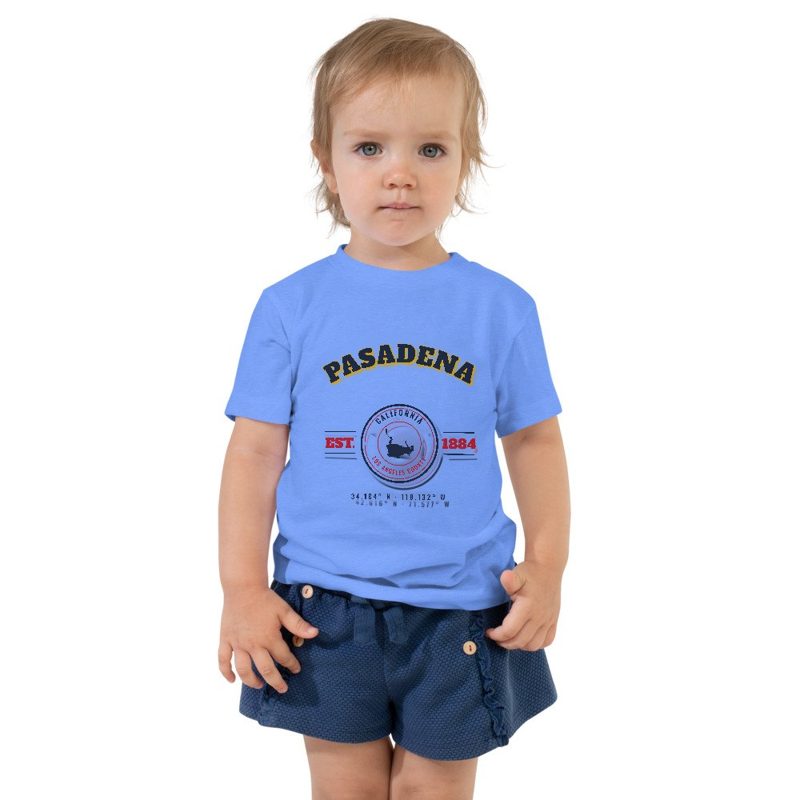
Bella+Canvas toddler jersey

$29
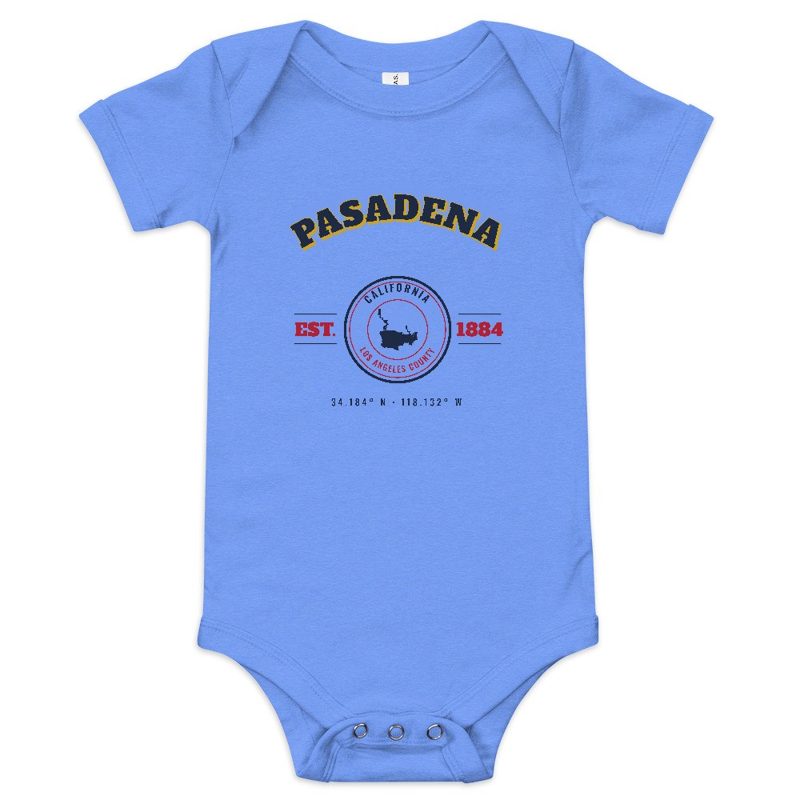
Pasadena Est. Baby One Piece

Pasadena Est. Baby One Piece

Bella+Canvas baby bodysuit

$30
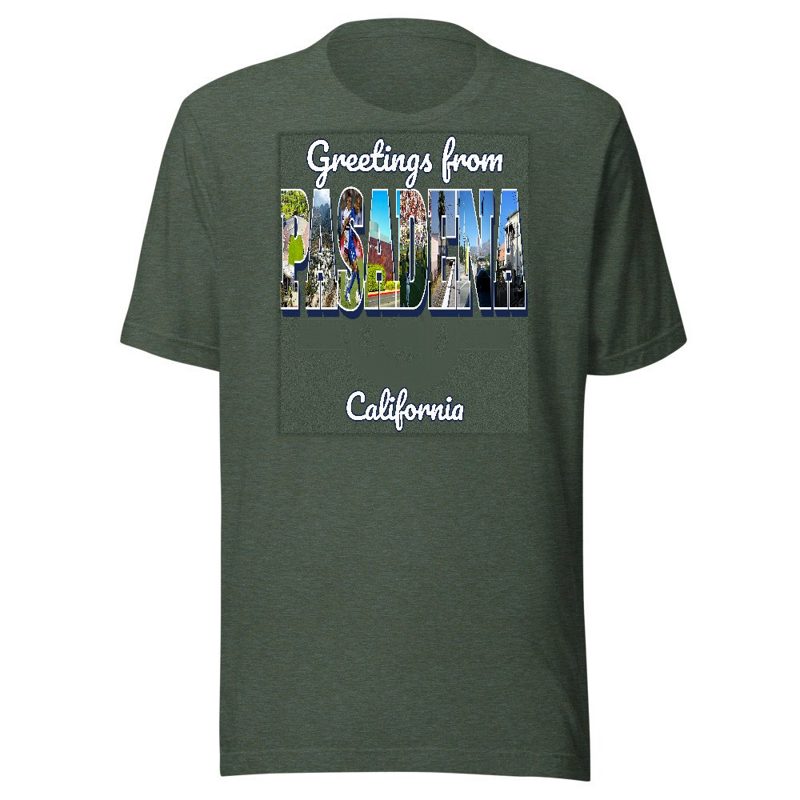
Pasadena “Greetings From” Tee

Pasadena “Greetings From” Tee

Large-letter postcard art filled with local photos

from $35
Pasadena Town Line Mug

Pasadena Town Line Mug

Glossy ceramic, dishwasher safe

from $26
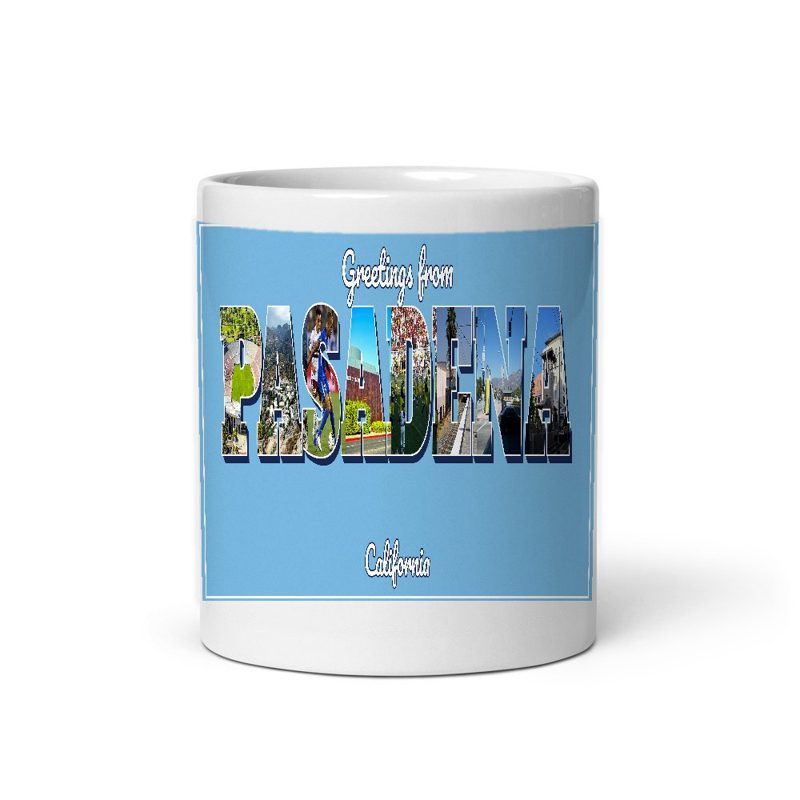
Pasadena “Greetings From” Mug

Pasadena “Greetings From” Mug

Large-letter postcard art filled with local photos, 11 oz ceramic

from $29
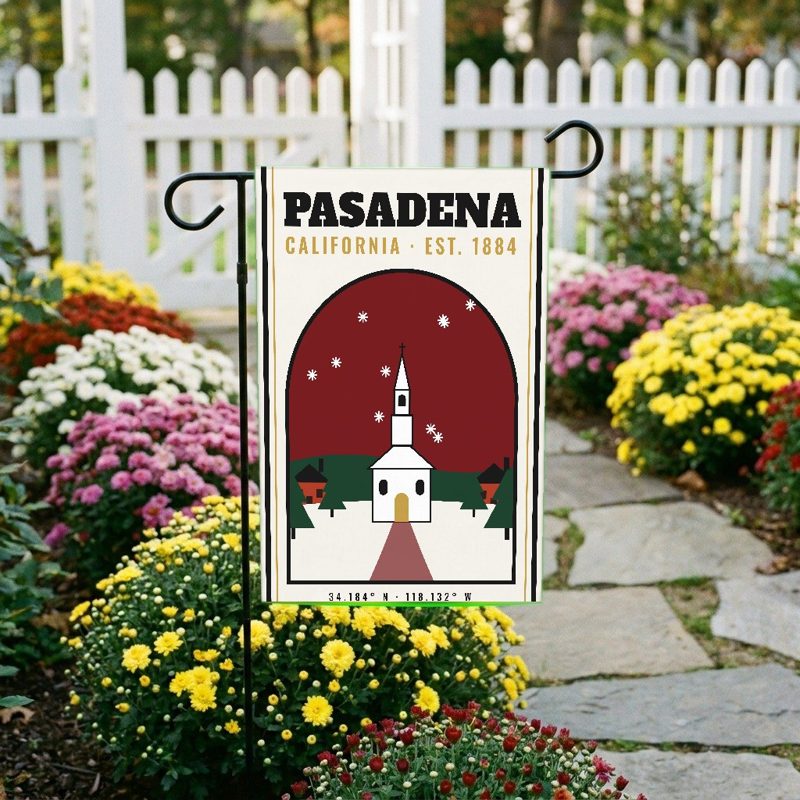
Pasadena Garden Flag

Pasadena Garden Flag

Weatherproof, for the front walk

$31
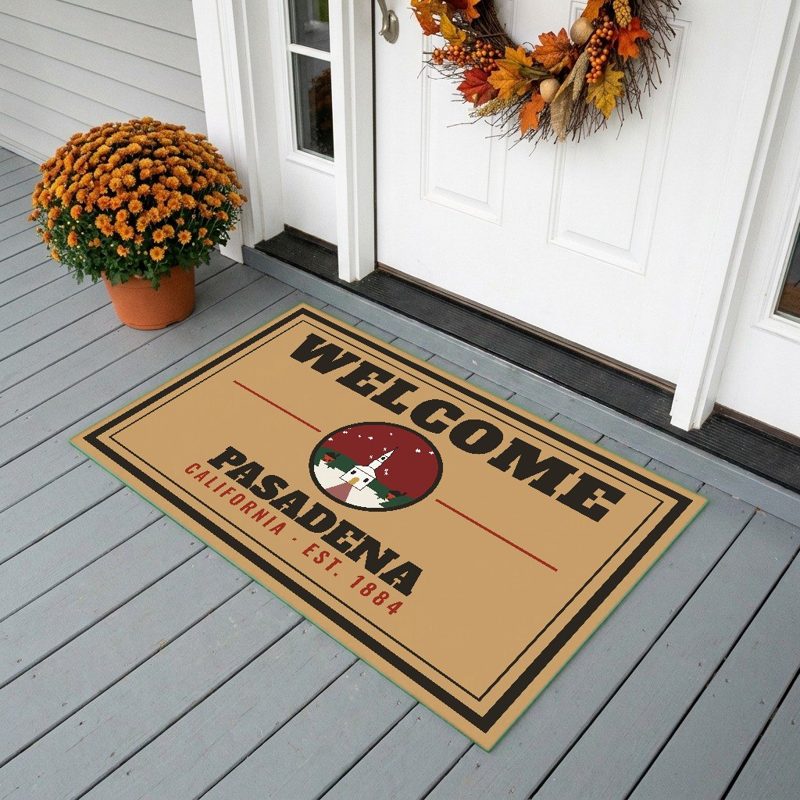
Pasadena Welcome Doormat

Pasadena Welcome Doormat

24″×16″, printed coir-look fibers, rubber back

$66
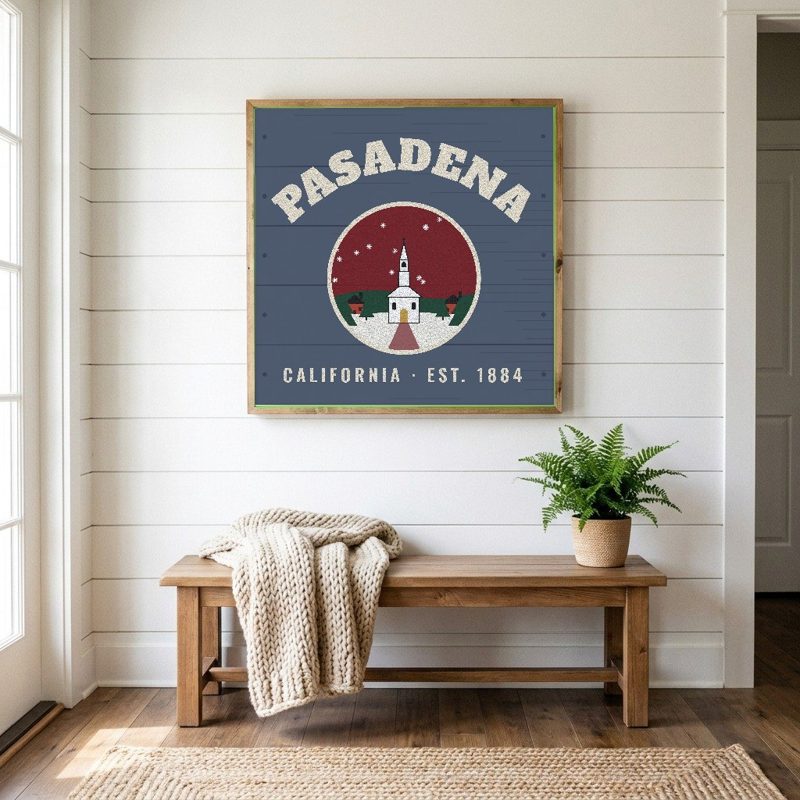
Pasadena Hometown Wood Sign

Pasadena Hometown Wood Sign

12″×12″ printed wood, ready to hang

$48
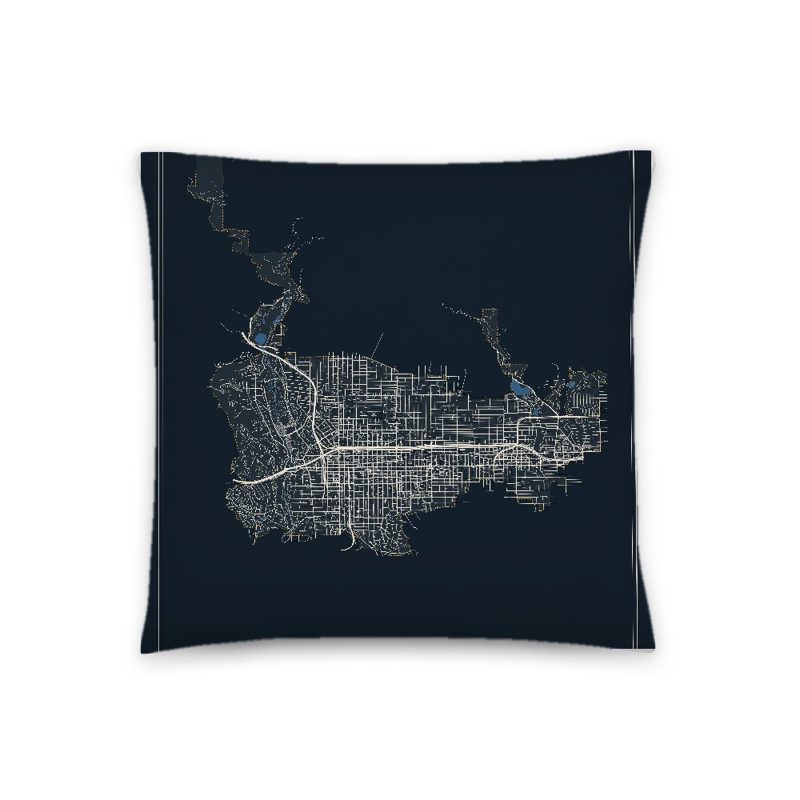
Pasadena Map Throw Pillow

Pasadena Map Throw Pillow

Soft-touch, zip cover

$47
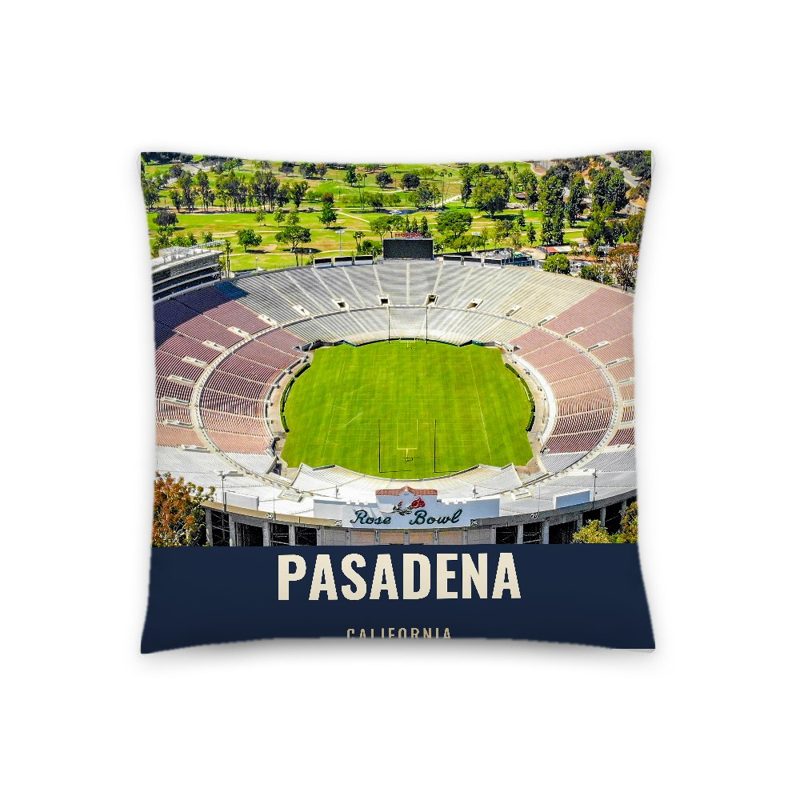
Pasadena Landmark Photo Pillow

Pasadena Landmark Photo Pillow

A local landmark photo with the town name, 18″×18″

$49
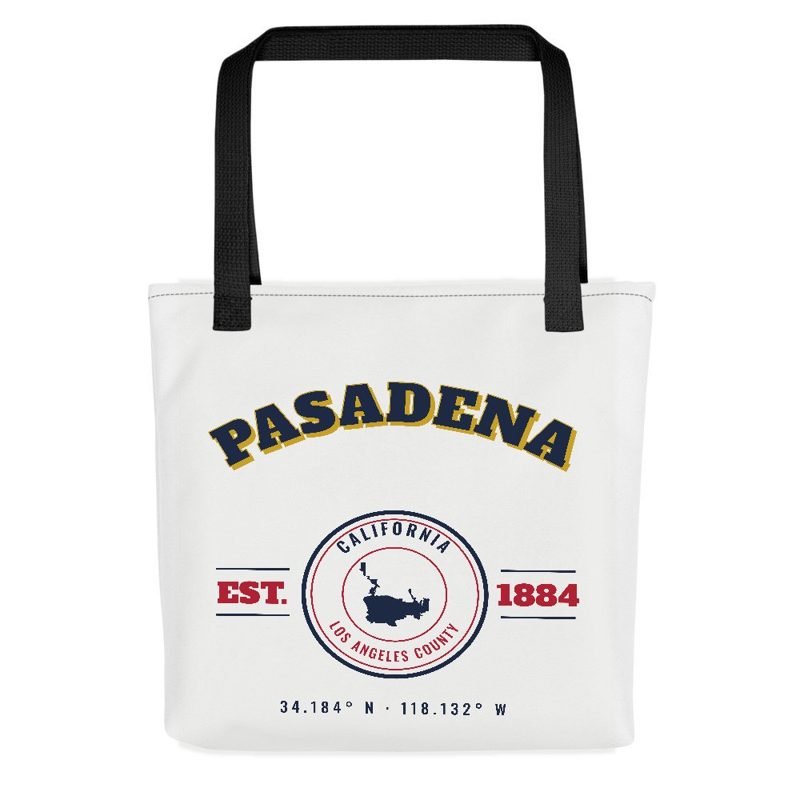
Pasadena Market Tote

Pasadena Market Tote

Sturdy all-over-print tote

$37
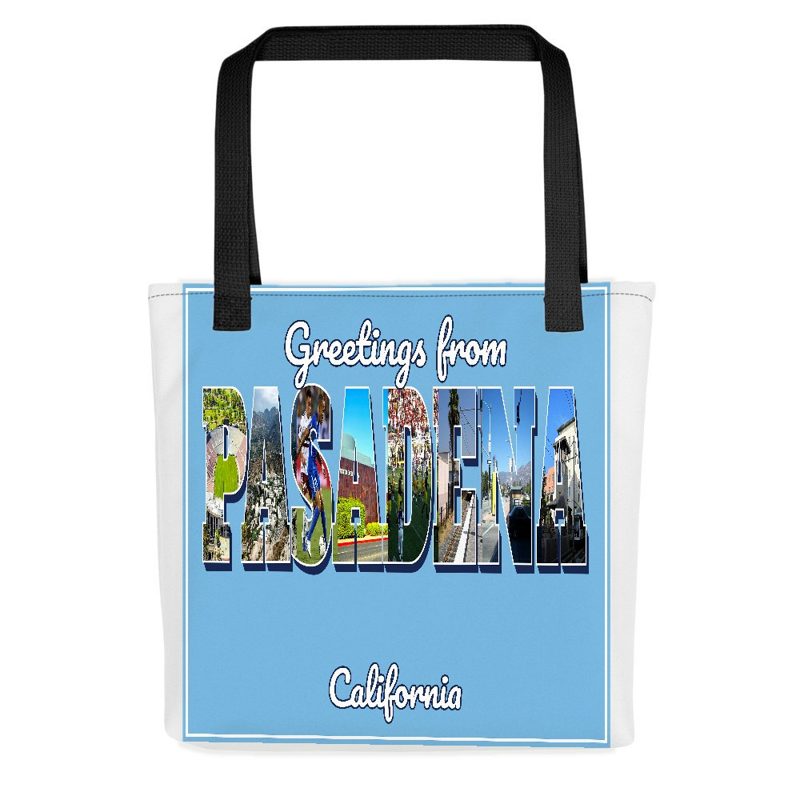
Pasadena “Greetings From” Tote

Pasadena “Greetings From” Tote

Large-letter postcard art on a sturdy tote

$37
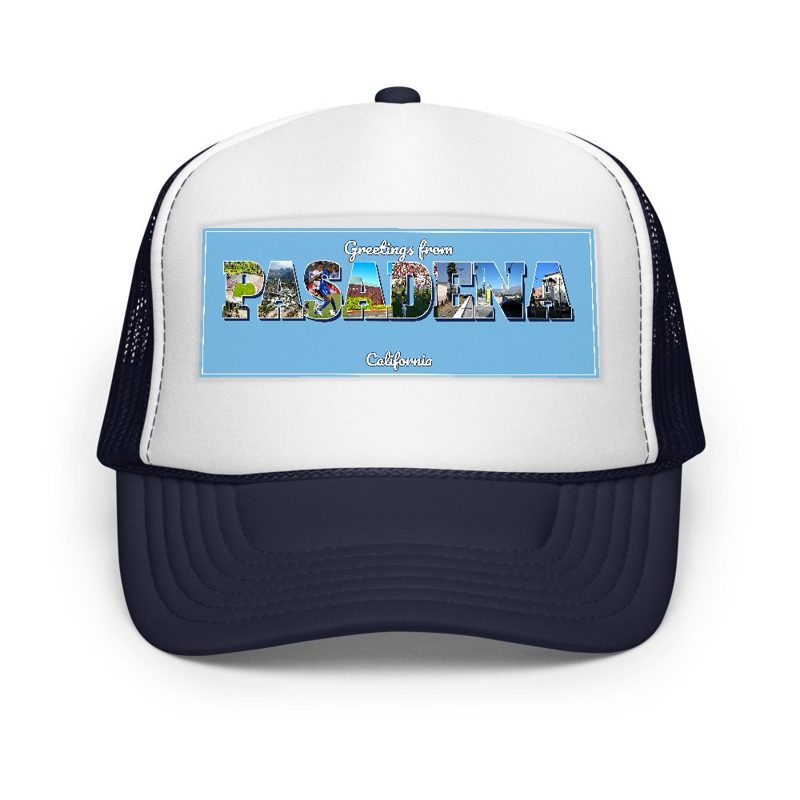
Pasadena “Greetings From” Trucker Cap

Pasadena “Greetings From” Trucker Cap

Foam-front trucker, printed (not embroidered) with local photos

$33
Pasadena Cork Coaster

Pasadena Cork Coaster

Glossy top, cork back

$16
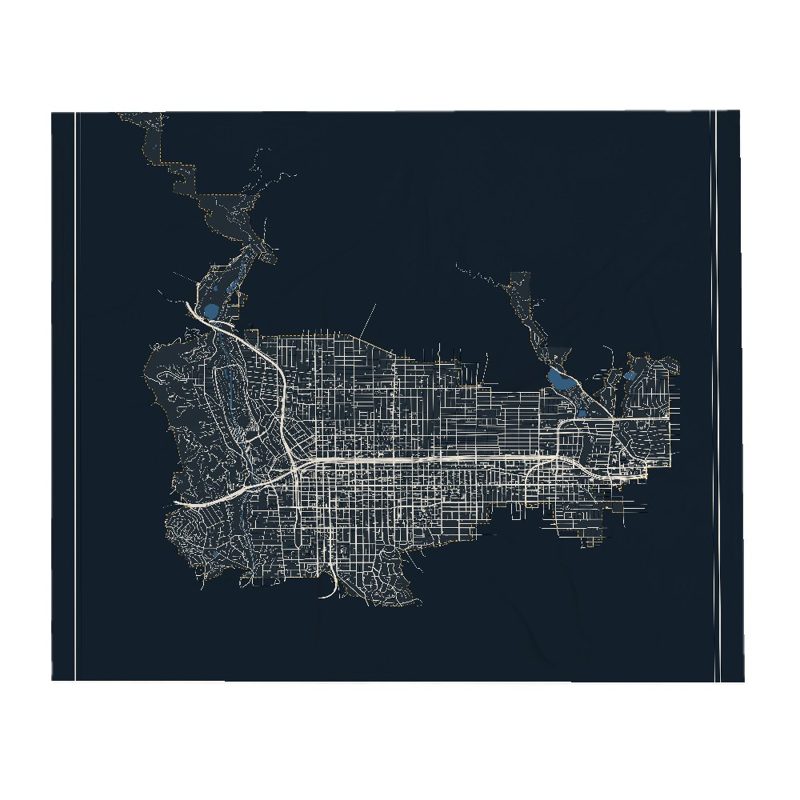
Pasadena Street Map Throw Blanket

Pasadena Street Map Throw Blanket

Soft fleece, 50″×60″

from $72
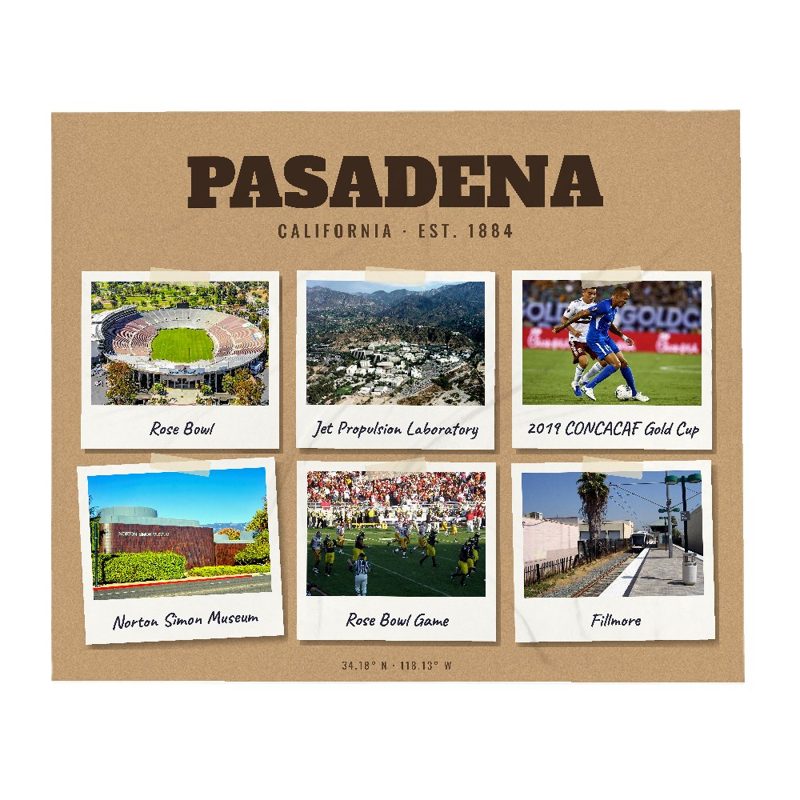
Pasadena Snapshot Collage Blanket

Pasadena Snapshot Collage Blanket

Six local landmarks as instant photos, soft fleece 50″×60″

from $76
Pasadena Est. Tumbler

Pasadena Est. Tumbler

20 oz, double-wall stainless

$51
Pasadena Jet Propulsion Laboratory Postcard

Pasadena Jet Propulsion Laboratory Postcard

6″×4″ postcard, glossy front

$10
Pasadena Rose Bowl Postcard

Pasadena Rose Bowl Postcard

6″×4″ postcard, glossy front

$10
Pasadena Deep Space Network Postcard

Pasadena Deep Space Network Postcard

6″×4″ postcard, glossy front

$10
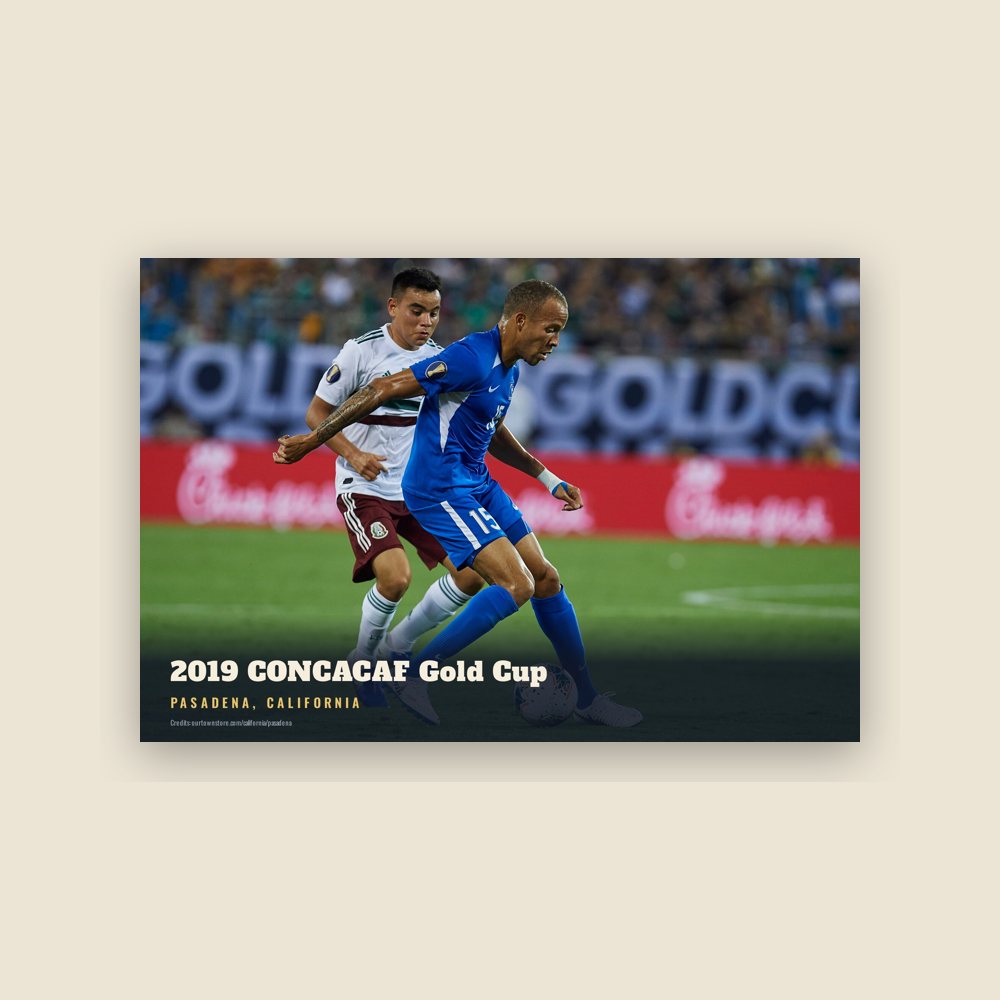
Pasadena 2019 CONCACAF Gold Cup Postcard

Pasadena 2019 CONCACAF Gold Cup Postcard

6″×4″ postcard, glossy front

$10
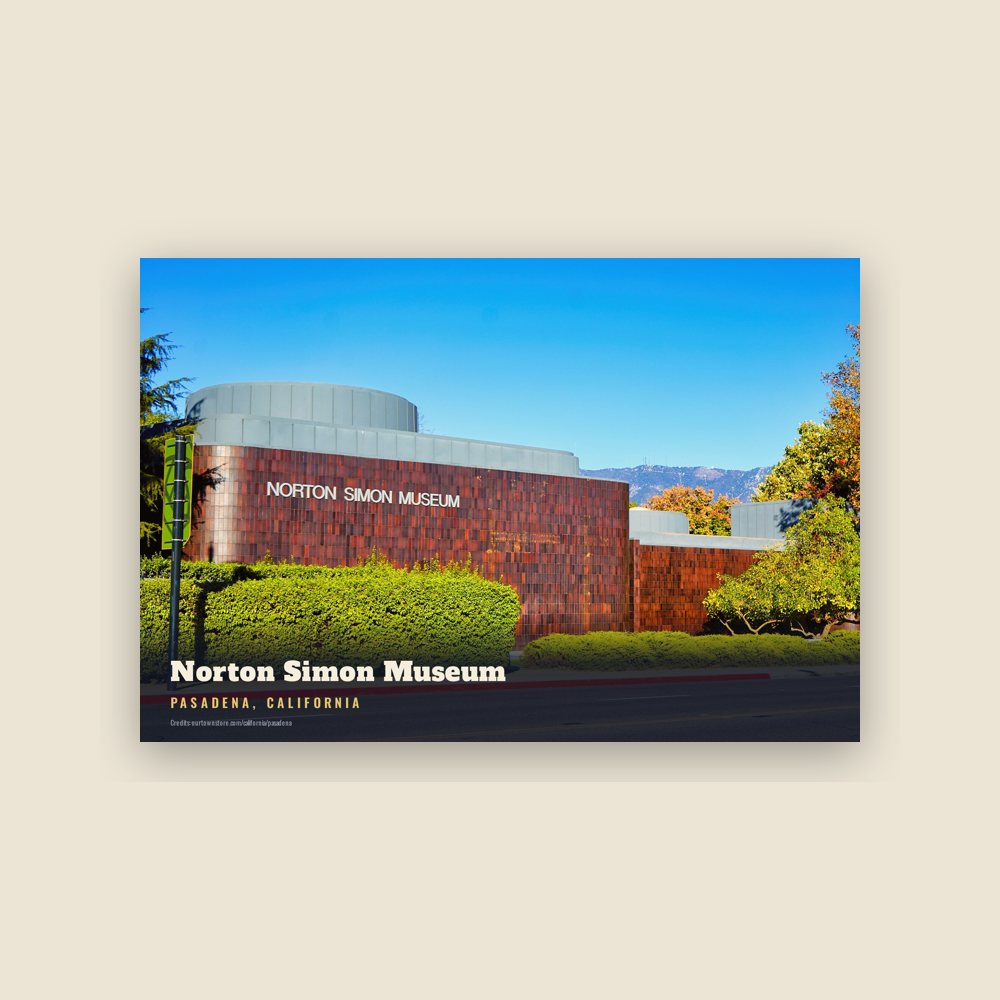
Pasadena Norton Simon Museum Postcard

Pasadena Norton Simon Museum Postcard

6″×4″ postcard, glossy front

$10
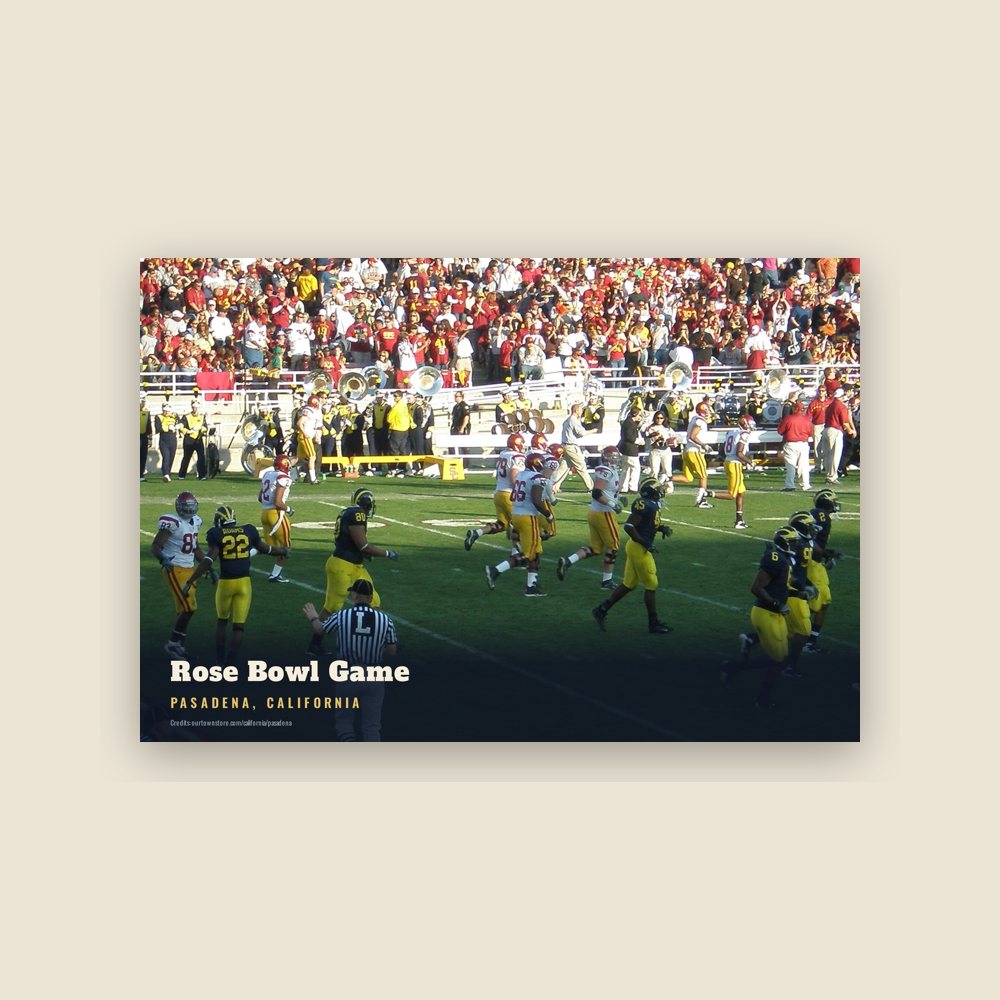
Pasadena Rose Bowl Game Postcard

Pasadena Rose Bowl Game Postcard

6″×4″ postcard, glossy front

$10
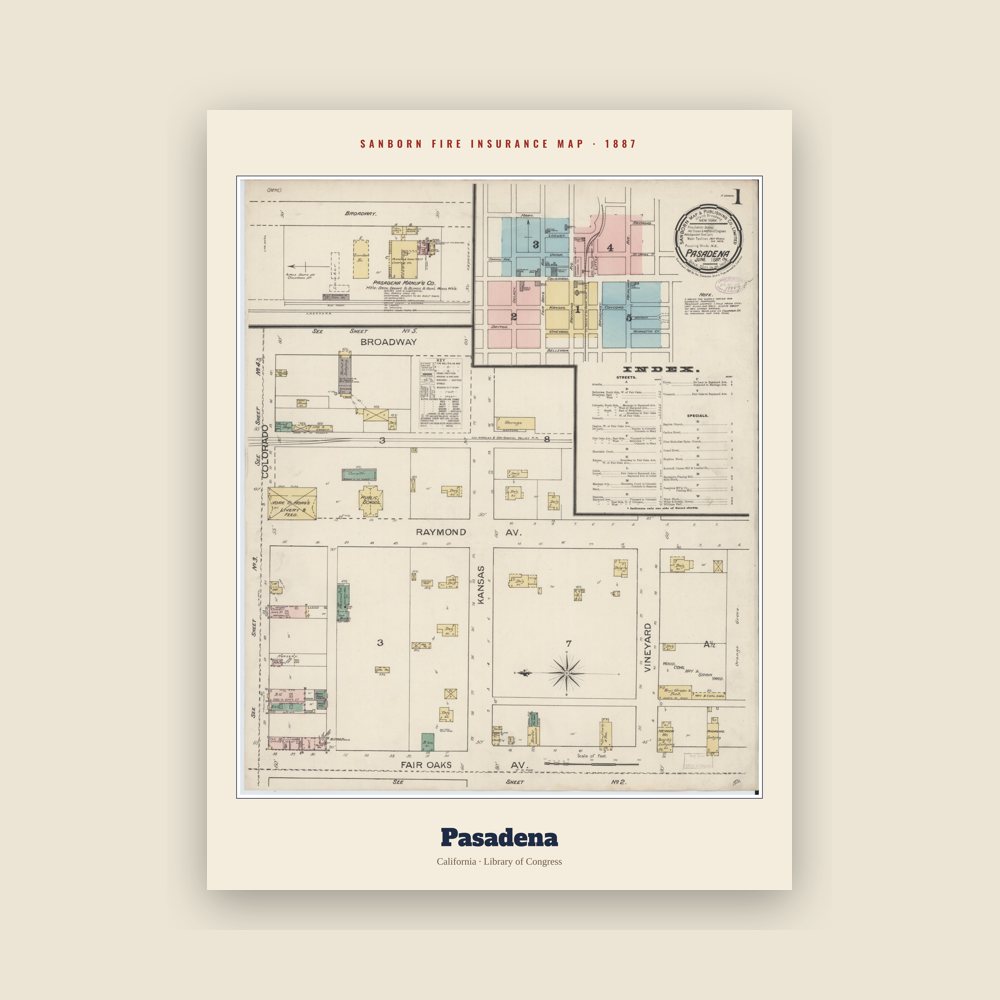
Pasadena Sanborn Map Print

Pasadena Sanborn Map Print

The town's earliest Sanborn fire-insurance map, drawn building by building and hand-coloured, from the Library of Congress

from $44
Pasadena This photocopy of an engineering drawing shows the floor plan of the Liner Lab, including room functions. Austin, Field  &  Fry,  Architects Engineers, 22311 West Third Street, Los Angeles 57, California: Edwards Test Station Complex Phase II, Jet Propulsion Laboratory, California Institute of Technology, Edwards   Air  Force  Base, Edwards, California: "Liner Laboratory, Floor Plan and Schedules," drawing no. E33/4-2, 26 June 1962. California Institute of Technology, Jet Propulsion Laboratory, Plant Engineering: engineering drawings of structures at JPL Edwards Facility. Drawings on file  at    JPL   Plant   Engineering Archive Print

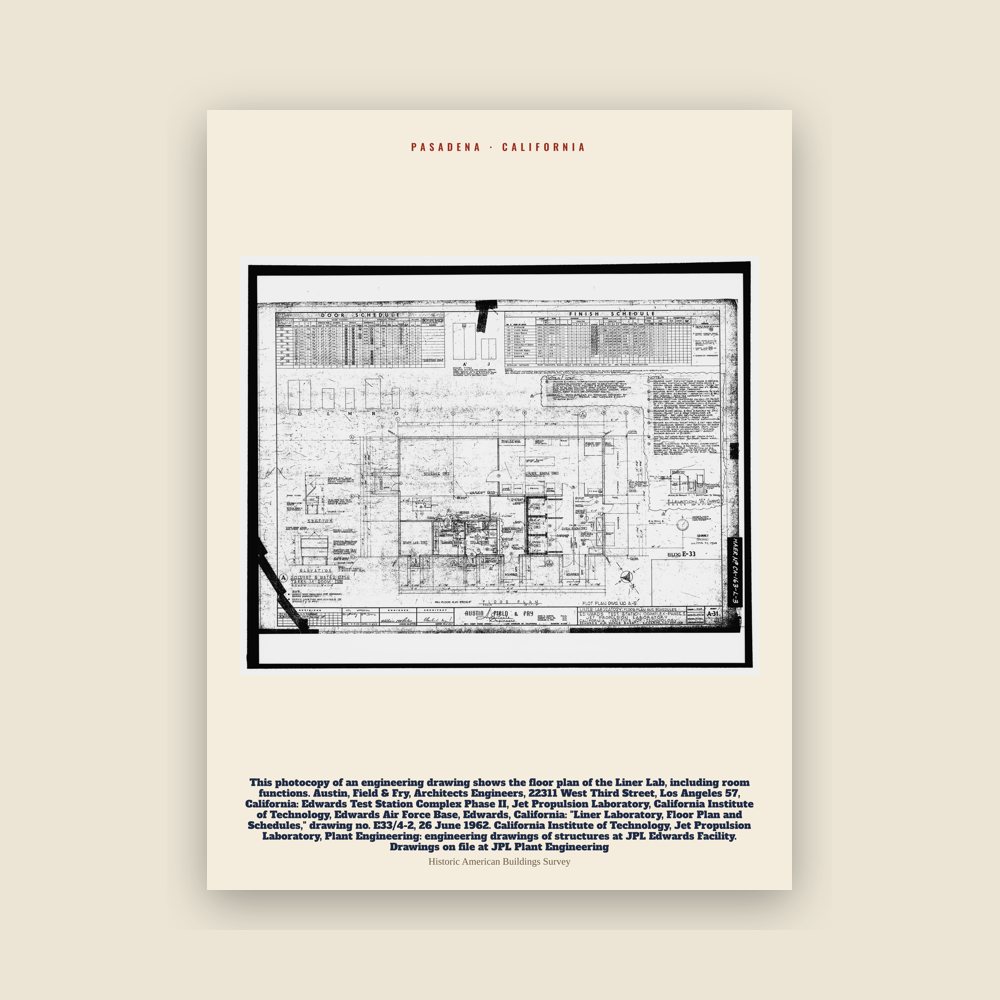
Pasadena This photocopy of an engineering drawing shows the floor plan of the Liner Lab, including room functions. Austin, Field & Fry, Architects Engineers, 22311 West Third Street, Los Angeles 57, California: Edwards Test Station Complex Phase II, Jet Propulsion Laboratory, California Institute of Technology, Edwards Air Force Base, Edwards, California: "Liner Laboratory, Floor Plan and Schedules," drawing no. E33/4-2, 26 June 1962. California Institute of Technology, Jet Propulsion Laboratory, Plant Engineering: engineering drawings of structures at JPL Edwards Facility. Drawings on file at JPL Plant Engineering Archive Print

From the Library of Congress collections: a historic survey drawing or photograph of the town

from $44
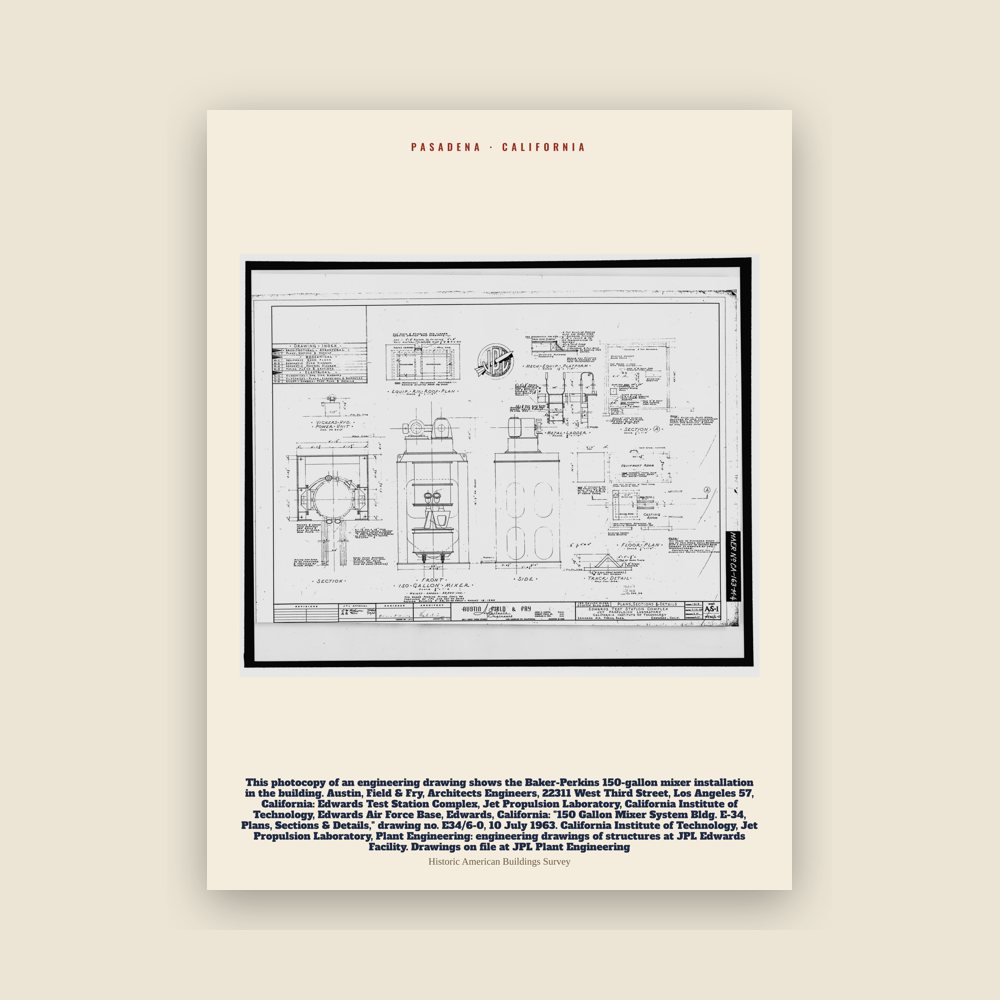
Pasadena This photocopy of an engineering drawing shows the Baker-Perkins 150-gallon mixer installation in the building. Austin, Field & Fry, Architects Engineers, 22311 West Third Street, Los Angeles 57, California:   Edwards Test Station Complex, Jet Propulsion  Laboratory, California  Institute  of Technology,  Edwards Air   Force  Base,  Edwards, California: "150 Gallon Mixer System Bldg. E-34, Plans, Sections & Details," drawing no. E34/6-0, 10 July 1963. California Institute of Technology, Jet Propulsion    Laboratory,    Plant   Engineering: engineering drawings of structures at JPL Edwards Facility. Drawings on file at JPL Plant Engineering Archive Print

Pasadena This photocopy of an engineering drawing shows the Baker-Perkins 150-gallon mixer installation in the building. Austin, Field & Fry, Architects Engineers, 22311 West Third Street, Los Angeles 57, California: Edwards Test Station Complex, Jet Propulsion Laboratory, California Institute of Technology, Edwards Air Force Base, Edwards, California: "150 Gallon Mixer System Bldg. E-34, Plans, Sections & Details," drawing no. E34/6-0, 10 July 1963. California Institute of Technology, Jet Propulsion Laboratory, Plant Engineering: engineering drawings of structures at JPL Edwards Facility. Drawings on file at JPL Plant Engineering Archive Print

From the Library of Congress collections: a historic survey drawing or photograph of the town

from $44
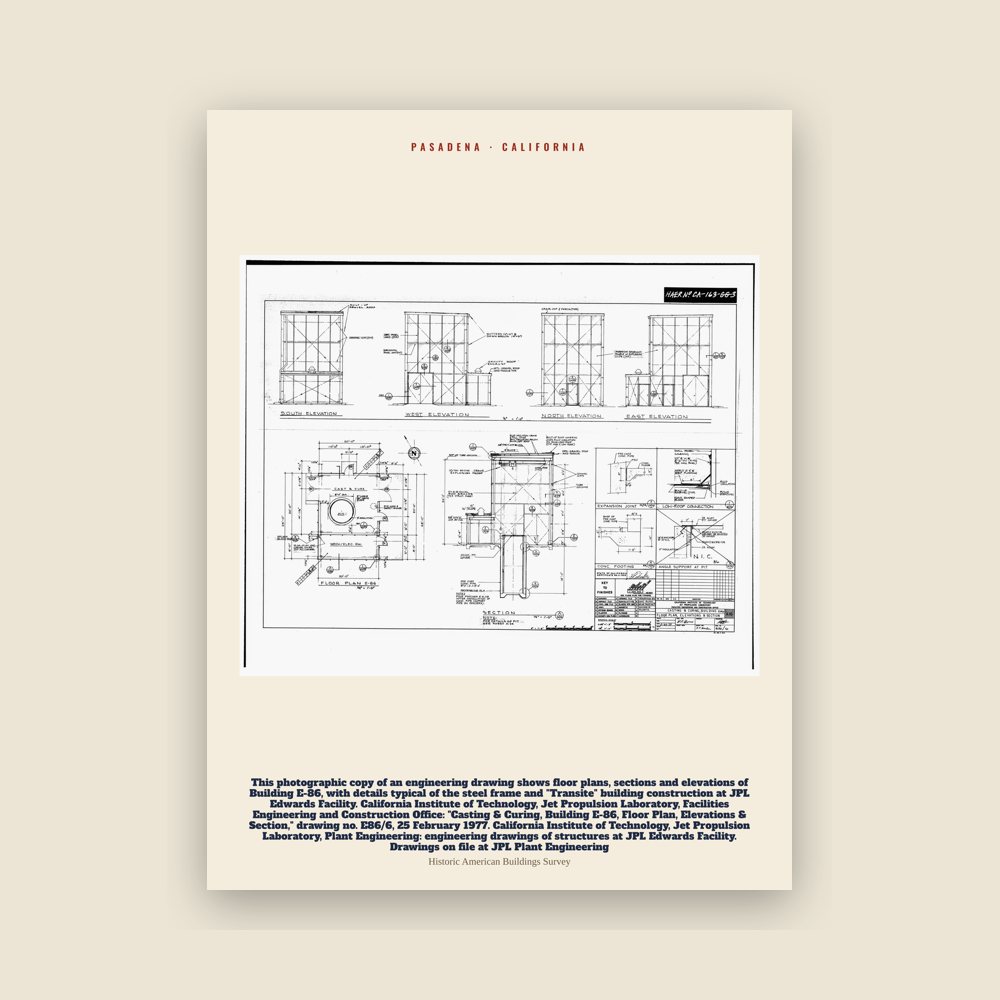
Pasadena This photographic copy of an engineering drawing shows floor plans, sections and elevations of Building E-86, with details typical of the steel frame and "Transite" building construction at JPL Edwards  Facility. California Institute  of Technology, Jet Propulsion Laboratory, Facilities Engineering and Construction Office: "Casting & Curing, Building E-86, Floor Plan, Elevations & Section," drawing no. E86/6, 25 February 1977. California Institute of Technology, Jet Propulsion Laboratory, Plant Engineering: engineering drawings of structures at JPL Edwards Facility. Drawings on file at JPL Plant Engineering Archive Print

Pasadena This photographic copy of an engineering drawing shows floor plans, sections and elevations of Building E-86, with details typical of the steel frame and "Transite" building construction at JPL Edwards Facility. California Institute of Technology, Jet Propulsion Laboratory, Facilities Engineering and Construction Office: "Casting & Curing, Building E-86, Floor Plan, Elevations & Section," drawing no. E86/6, 25 February 1977. California Institute of Technology, Jet Propulsion Laboratory, Plant Engineering: engineering drawings of structures at JPL Edwards Facility. Drawings on file at JPL Plant Engineering Archive Print

From the Library of Congress collections: a historic survey drawing or photograph of the town

from $44
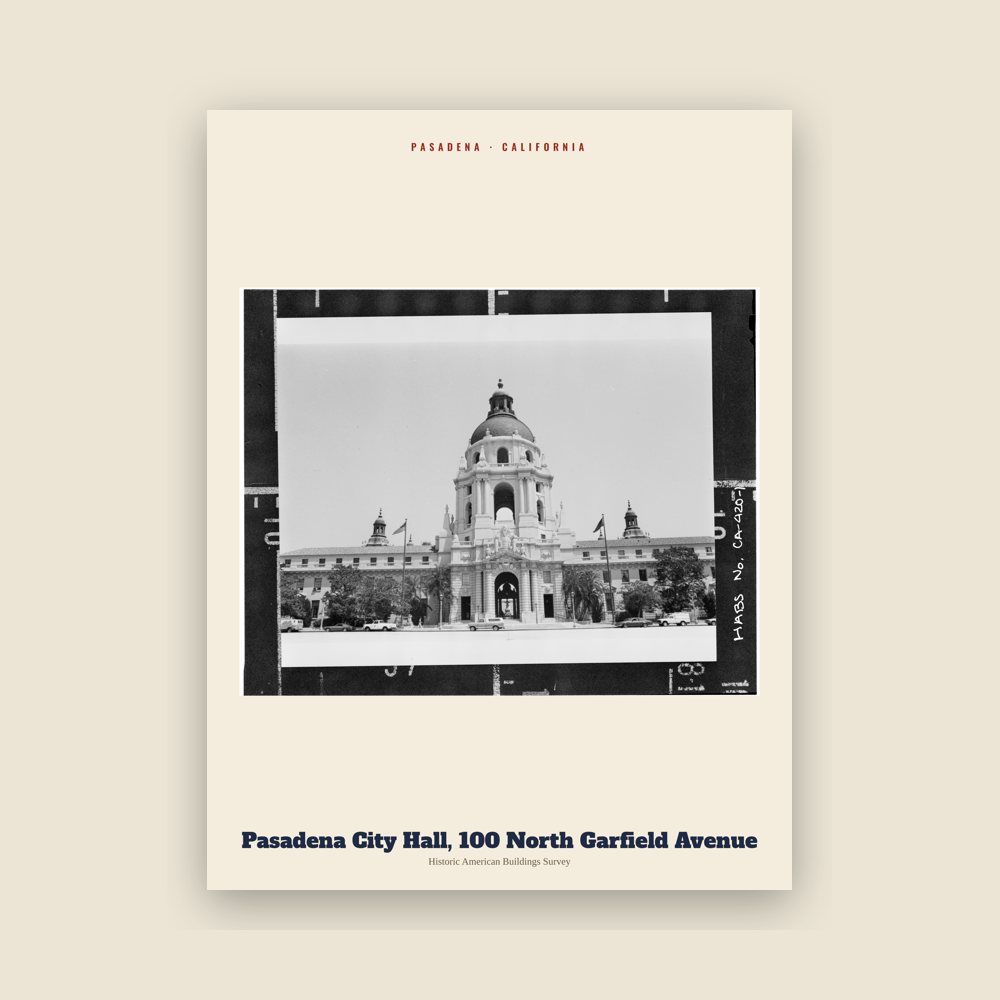
Pasadena Pasadena City Hall, 100 North Garfield Avenue Archive Print

Pasadena Pasadena City Hall, 100 North Garfield Avenue Archive Print

From the Library of Congress collections: a historic survey drawing or photograph of the town

from $44
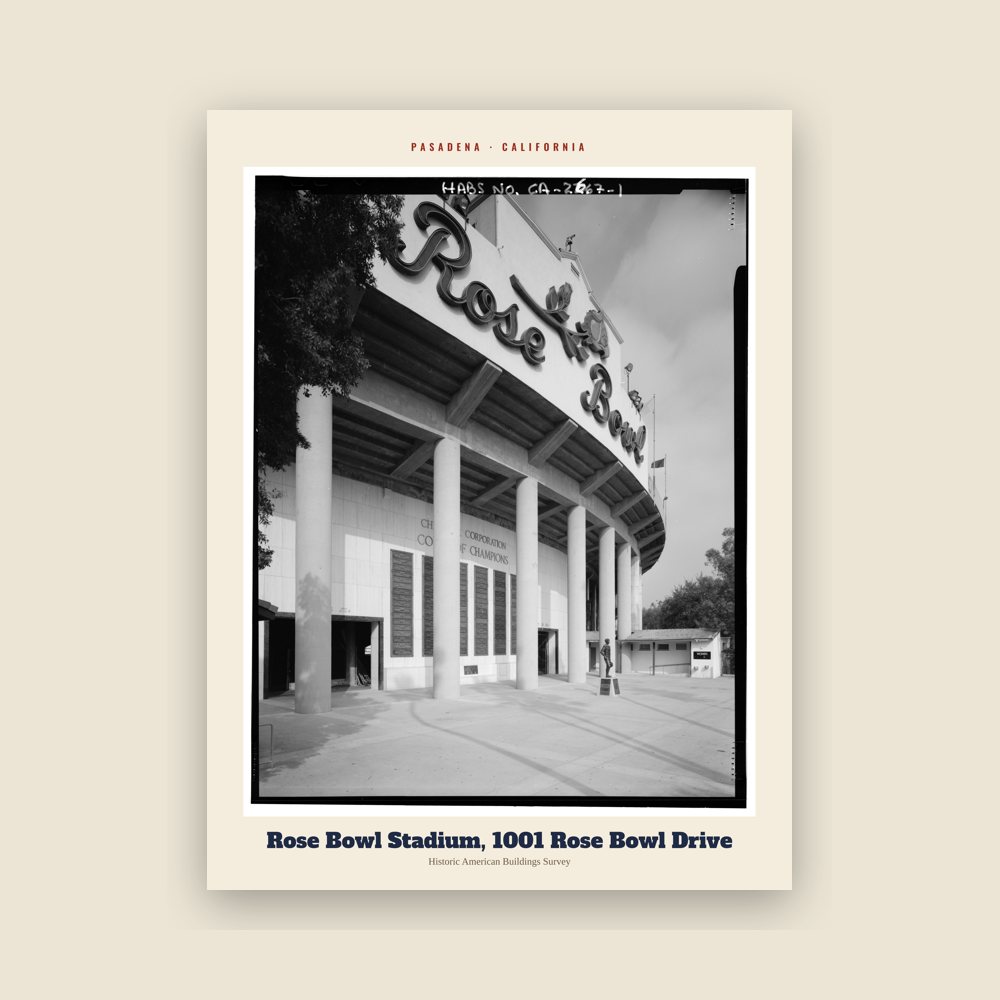
Pasadena Rose Bowl Stadium, 1001 Rose Bowl Drive Archive Print

Pasadena Rose Bowl Stadium, 1001 Rose Bowl Drive Archive Print

From the Library of Congress collections: a historic survey drawing or photograph of the town

from $44
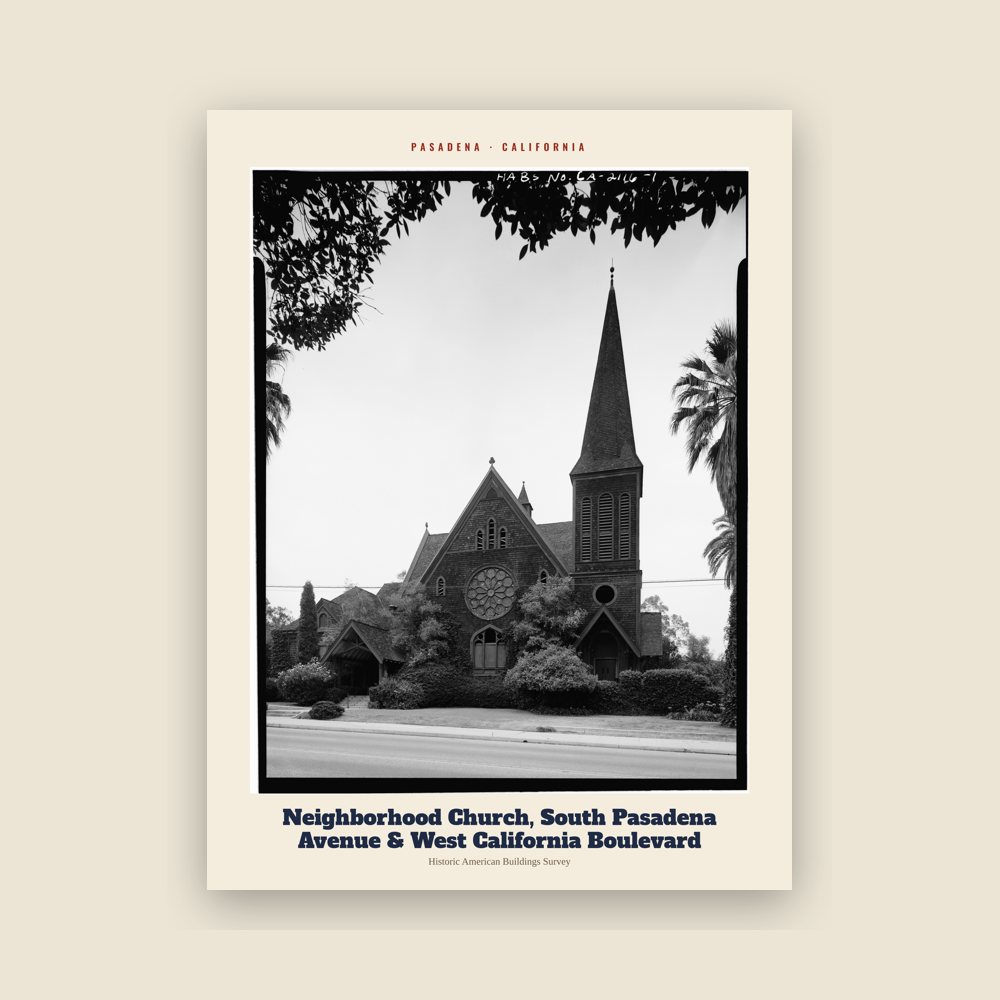
Pasadena Neighborhood Church, South Pasadena Avenue & West California Boulevard Archive Print

Pasadena Neighborhood Church, South Pasadena Avenue & West California Boulevard Archive Print

From the Library of Congress collections: a historic survey drawing or photograph of the town

from $44
Hometown roll

Born in Pasadena

On the National Register

Historic places

Population 2010: 137,122 → 2020: 138,699

From Wikidata (CC0).

A short history of Pasadena

Indigenous history

Native Americans lived in the Los Angeles Basin for thousands of years. The earliest known inhabitants of present-day Pasadena and its surroundings were members of the Hahamog-na tribe, a branch of the Tongva Nation. They spoke the Tongva language, belonging to the Northern subfamily of the Uto-Aztecan language group.

Pasadena means "valley" in the language of the Ojibwe, a Native American tribe not local to the region. The name was chosen by American settlers from Indiana who would later move to the area.

Read the full history

Spanish era

The Spanish first colonized the Los Angeles Basin in the 1770s as part of the Viceroyalty of New Spain, building the San Gabriel Mission and renaming the local Tongva people "Gabrielinos" or "Gabrieleños", after the name of the mission. Today, several bands of Tongva people live in the Los Angeles area.

Mexican era

In 1821, Mexico became independent of Spain, and California came under control of the Mexican government. In 1833, the mission lands were secularized and most of the lands in California were granted to private Mexican citizens in the form of ranchos. Present-day Pasadena was divided between Rancho San Rafael (lands west of the Arroyo Seco extending to present-day Burbank in the northwest to Glassell Park in the southwest), Rancho del Rincon de San Pascual, (present-day central Pasadena, Altadena, and South Pasadena), and Rancho Santa Anita (present-day east Pasadena, Arcadia, and Monrovia). Rancho del Rincon de San Pascual was so named because it was deeded on Easter Sunday to Eulalia Perez de Guillén Mariné of Mission San Gabriel Arcángel.

American era

The last of the Mexican owners of Rancho del Rincon de San Pascual was Manuel Garfias, who retained title to the property through the American conquest of California in 1848 and statehood in 1850. Garfias sold sections of the property to the first Anglo settlers to come into the area: Dr. Benjamin Eaton, the father of Fred Eaton; and Dr. S. Griffin. Much of the property was purchased by Benjamin Wilson, who established his Lake Vineyard property in the vicinity. Wilson, known as Don Benito to the local Indians, also owned the Rancho Jurupa (Riverside, California) and was mayor of Los Angeles. He was the grandfather of WWII General George S. Patton Jr. and the namesake of Mount Wilson.

In 1873, Wilson was visited by Dr. Daniel M. Berry of Indiana, who was looking for a place in the country that could offer a mild climate for his patients, most of whom suffered from respiratory ailments. Berry, an asthmatic, concluded that he had his best three nights' sleep at Rancho San Pascual. To keep the find a secret, Berry code-named the area "Muscat" after the grape that Wilson grew. To raise funds to bring the company of people to San Pascual, Berry formed the Southern California Orange and Citrus Growers Association and sold stock in it. The newcomers were able to purchase a large portion of the property along the Arroyo Seco and on January 31, 1874, they incorporated the Indiana Colony. As a gesture of good will, Wilson added 2,000 acres (8 km2) of then-useless highland property, part of which would become Altadena. Colonel Jabez Banbury opened the first school on South Orange Grove Avenue. Banbury had twin daughters, named Jennie and Jessie. The two became the first students to attend Pasadena's first school on Orange Grove.

At the time, the Indiana Colony was a narrow strip of land between the Arroyo Seco and Fair Oaks Avenue. On the other side of the street was Wilson's Lake Vineyard development. After more than a decade of parallel development on both sides, the two settlements merged into the City of Pasadena.

Resort town

The region drew people from across the country. In 1887, the Atchison, Topeka and Santa Fe Railway opened the Second District of the Los Angeles Division and began making stops at the Santa Fe Depot in downtown Pasadena. This triggered a real estate boom. Tourist hotels were developed in the city. Pasadena became a winter resort for wealthy Easterners, spurring the development of new neighborhoods and business districts, and increased road and transit connections with Los Angeles. In 1940, when the Arroyo Seco Parkway, California's first freeway, connected Pasadena to Downtown Los Angeles. By that time, Pasadena had become the eighth-largest city in California and was widely considered a twin city to Los Angeles.

The first of the hotels to be established in Pasadena was the Raymond (1886) atop Bacon Hill, renamed Raymond Hill after construction. The original Mansard Victorian 200-room facility burned down on Easter morning of 1895, was rebuilt in 1903, and razed during the Great Depression to make way for residential development. The Maryland Hotel existed from the early 1900s and was demolished in 1934. The world-famous Mount Lowe Railway and associated mountain hotels shut down four years later due to fire damage. Three hotel structures have survived, the Green Hotel (a co-op since 1926), the Vista Del Arroyo (now used as a Federal courthouse), and a residential tower of the Maryland at 80 North Euclid Avenue (a co-op since 1953).

The American Craftsman era in art and design is well represented in Pasadena. The architectural firm Greene and Greene developed the style; many of its residences still stand. Two examples of their Ultimate bungalow are the masterpiece Gamble House and the Robert R. Blacker House, both designated California Historical Landmarks and enrolled on the U.S. National Register of Historic Places.

Contemporary

World War II was a boon to Pasadena. Southern California became a major staging area for the Pacific War. High-tech manufacturing and scientific companies made the city their home, a trend that continued in the decades following the war, notably with NASA's Jet Propulsion Laboratory, Tetra Tech, and Ameron International.

In the 1950s, Pasadena saw a steady influx of people from the Southern United States, especially African-Americans from Texas and Louisiana. Pasadena also began hosting a large immigrant community, particularly from China, Japan, Philippines, Mexico, Guatemala, El Salvador, Italy, Armenia, and India.

The American Academy of Dramatic Arts, founded in 1884 in New York, opened its Pasadena campus in 1974. However, in 2001 the conservatory moved from Pasadena to Hollywood. Training actors for the stage in a two year program, the conservatory was the first school in the United States to offer professional education in the field of acting. Point Loma Nazarene University was located in Pasadena for many years before relocating to San Diego County, and retained the names Pasadena University and Pasadena College.

In 1969, the Pasadena Unified School District was desegregated, though the issue would continue to be fought in court for a decade. A year later, the 210 Freeway was built along a newly chosen route. The freeway's construction was controversial, as it caused the demolition of over a thousand homes, many historic, and many claimed that the route was designed to cut off the city's less wealthy neighborhoods.

Downtown Pasadena became dangerous in some parts and deserted in others, and incidences of murder and arson skyrocketed. Old Pasadena faced destruction as plans for new high-rise developments were drawn up, though they were mostly stopped by increasingly active preservation advocates. Pasadena suffered demographically as many residents moved for the nearby suburbs or the Inland Empire, causing an overall decrease in population. Despite these setbacks, many local artists and hipsters moved in to take advantage of low property values. Their legacy can be seen today in the Doo Dah Parade which began in 1976.

In 2014, several arrests were made involving an embezzlement scheme which stole an estimated $6.4 million from the city's Underground Utility Program.
Adapted (trimmed) from the Wikipedia article Pasadena, California, revision 1379081255 by its contributors, licensed CC BY-SA 4.0.
For local organizations

Are you with a Pasadena historical society?

We share a part of every Pasadena sale with local partners, and we'd love to print from your collection. Old photographs, maps and postcards make the best keepsakes.

Partner with us
Custom orders

Want something Pasadena we don't make yet?

A favorite landmark, your street, a school or team, an anniversary gift, a different product. Tell us and we'll get back to you by email.

Free printables

Color Pasadena

12 free coloring pages of Pasadena, each traced from a photo of a local landmark. Print them at home, at school or for story hour.

Nearby

Neighboring towns

Sources

Pasadena's population was 138,699 in the 2020 U.S. Census, up from 137,122 in 2010.