For over 8,000 years, the site of Arcadia was part of the homeland of the Tongva people ("Gabrieleño" tribe), a Californian Native American tribe whose territory spanned the greater Los Angeles Basin, and the San Gabriel and San Fernando Valleys. Their fluid borders stretched between the Santa Susana Mountains, San Bernardino Mountains, and San Gabriel Mountains in the north; the Santa Monica Mountains and Simi Hills in the west; the San Jacinto Mountains and Santa Ana Mountains in the east; and the coast and Catalina Island (Pimu) in the south. A Tongva settlement site within present-day Arcadia was known as Alyeupkigna (or Aluupkenga).
Read the full history
Rancho period
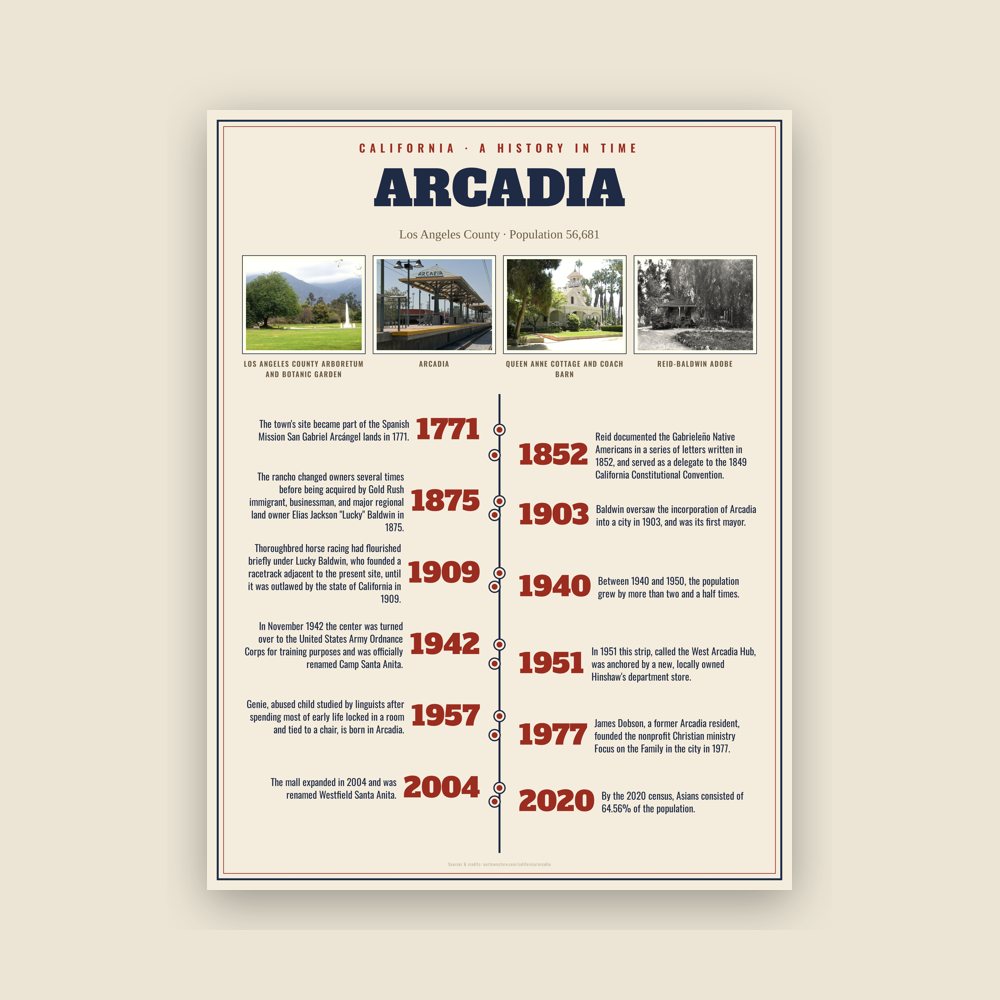
The town's site became part of the Spanish Mission San Gabriel Arcángel lands in 1771. After Indian Reductions to become Mission Indians, the Tongva were known as the Gabrieleños, after the name of the Mission under whose control they worked during the mission period in California. Currently there are 1,700 people self-identifying as members of the Tongva or Gabrieleño tribe.
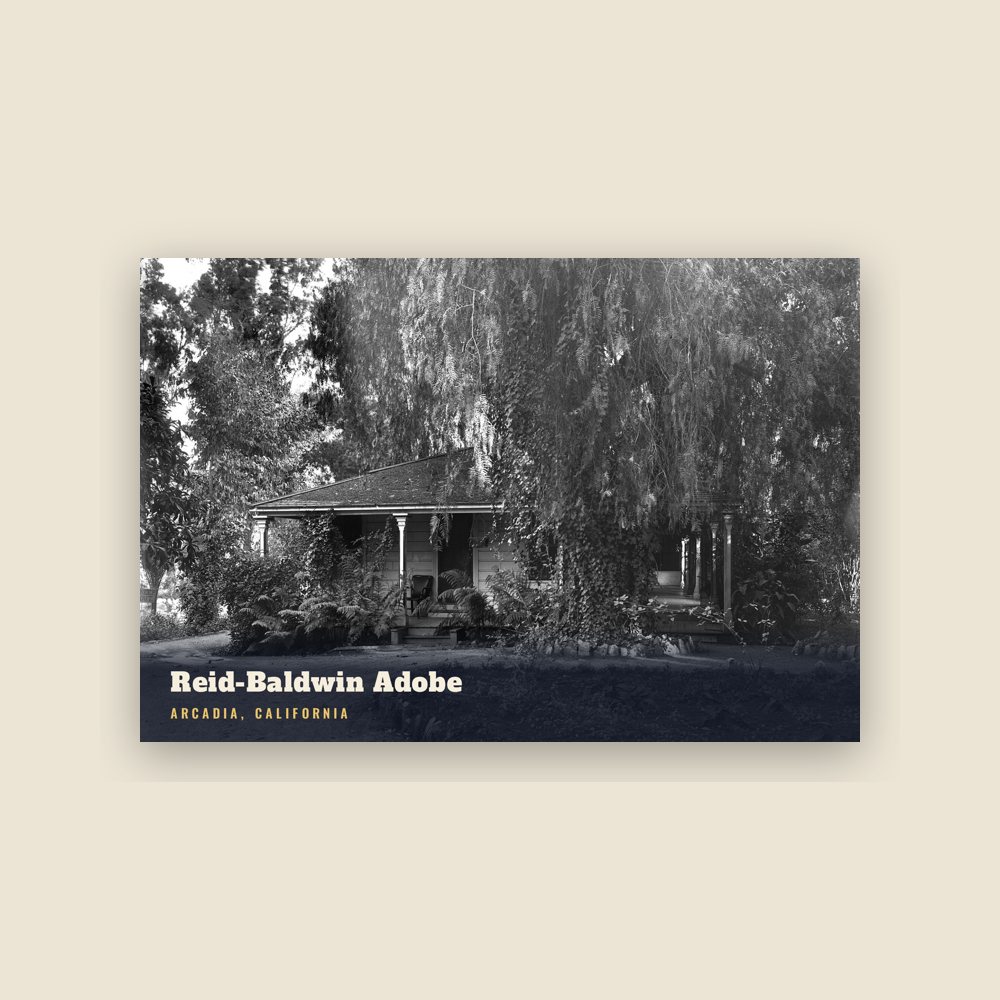
The Mexican land grant for Rancho Santa Anita was issued to Perfecto Hugo Reid and his Tongva wife, Victoria Bartolomea Comicrabit, in 1845. It was named after a family relation, Anita Cota, on his wife's side. Reid documented the Gabrieleño Native Americans in a series of letters written in 1852, and served as a delegate to the 1849 California Constitutional Convention. In 1847, Reid sold Rancho Santa Anita to his Rancho Azusa neighbor, Henry Dalton.
Lucky Baldwin
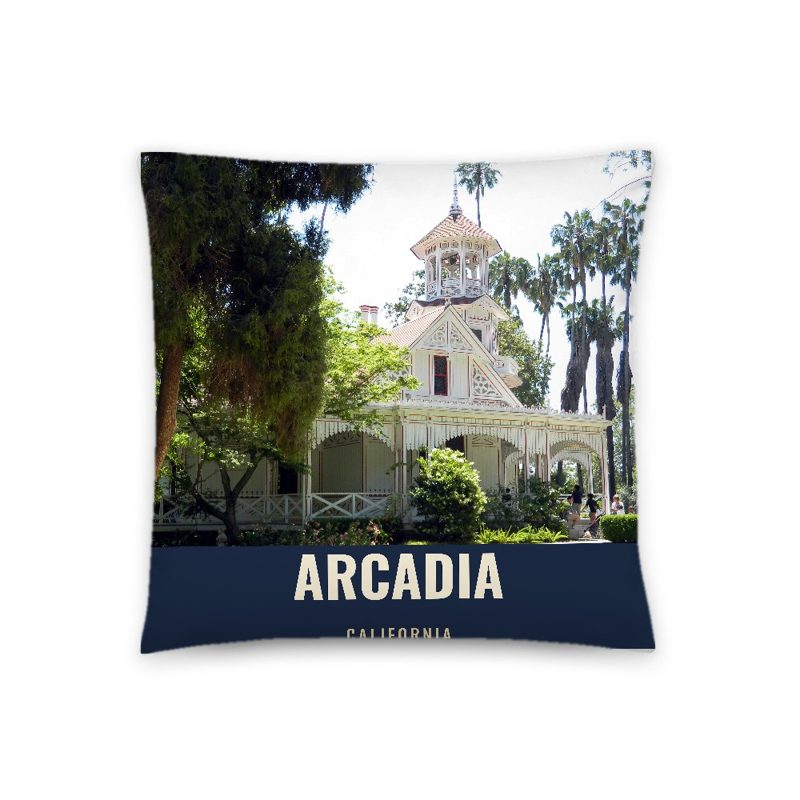
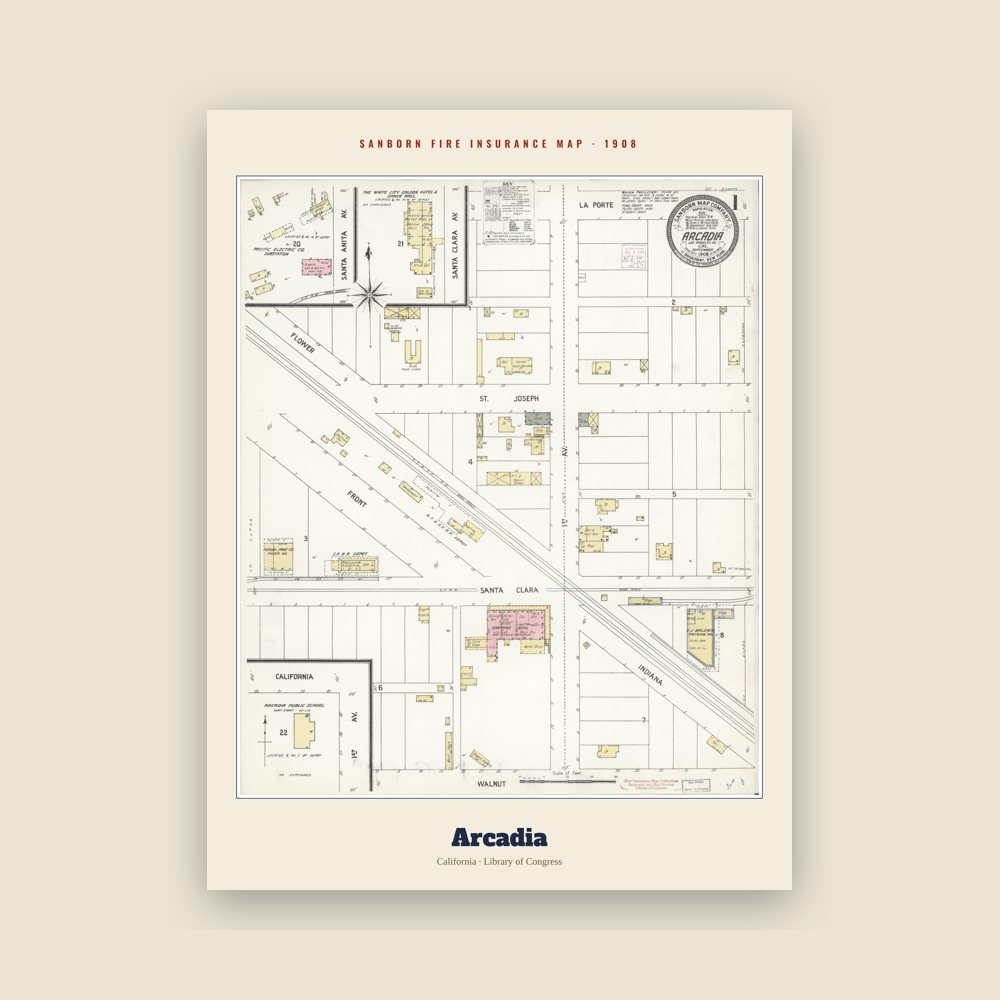
The rancho changed owners several times before being acquired by Gold Rush immigrant, businessman, and major regional land owner Elias Jackson "Lucky" Baldwin in 1875. Baldwin purchased 8,000 acres (32 km2) of Rancho Santa Anita for $200,000. Upon seeing the area, he gasped "By Gads! This is paradise!" Upon buying the land, Baldwin chose to make the area his home and immediately started erecting buildings and cultivating the land for farming, orchards, and ranches. Baldwin built the Queen Anne Cottage for his fourth wife and himself in 1885–1886, now preserved within the Arboretum. In 1885, the main line of the Los Angeles and San Gabriel Valley Railroad, in which Baldwin was a stockholder, was opened through the ranch, making subdivision of part of the land into a town site practical. Later, this rail line became a Santa Fe Railroad line. In 1889, on a site just north of the corner of First Avenue and St. Joseph Street, adjacent to the Santa Fe tracks, Baldwin opened the 35-room Hotel Oakwood to be the centerpiece of his new town. In 1890, the extant Rancho Santa Anita Depot was built.
20th century until World War II
By the turn of the 20th century, Arcadia had a population nearing 500 and an economy that was coming to be based on entertainment, sporting, hospitality, and gambling opportunities, the latter including an early version of the Santa Anita race track. Baldwin oversaw the incorporation of Arcadia into a city in 1903, and was its first mayor.
Anoakia
In 1913, Anita Baldwin, Lucky's daughter, built a 50-room mansion on 19 acres (77,000 m2) of the Baldwin Ranch she inherited from him, and named it "Anoakia" (a portmanteau of Anita and oak). The 17,000-square-foot (1,600 m2) residence was in the Italian Renaissance Revival style, with murals by Maynard Dixon. The estate had a significant Greek Revival-style colonnaded "Parthenon" bathhouse/gymnasium beside a large pool, an apiary and aviaries, kennels and stables, tennis courts and pergolas, and preserved the native oak woodlands.
After her death in 1939, the estate became the Anoakia School for Girls, which became the coeducational Anoakia School in 1967, then moved to Duarte in 1990 as the Anita Oaks School. The school owner's efforts to develop the property into a village of homes with the old mansion as its centerpiece were rejected by the city. Despite efforts by local citizens and regional preservationists to preserve the historic main house, the city council voted in 1999 to approve demolition by new owners for a real estate development. The "Anoakia" mansion, all other significant estate structures and outbuildings, garden features, and numerous California sycamore and Coast live oak trees were demolished for 31 luxury home sites in 2000. Some of the mansion's architectural elements were salvaged and removed. The gatehouse, on the estate's former southeast corner at Foothill and Baldwin, and the perimeter walls remained after the "Anoakia Estates" development was built. The bas-relief fountain was moved to just inside the new gated entrance.
Inter-war decades
During World War I, Arcadia was home to the U.S. Army's Ross Field Balloon School, at the present-day Santa Anita Park site. Army observers were trained here in techniques to observe enemy activity from hot air balloons.
After World War I, Arcadia's population grew and local businesses included many chicken ranches and other agricultural activities. During the 1920s and 1930s, Arcadia began its transition to the residential city that it is today, as small farms and chicken ranches gave way to homes and numerous civic improvements, including a city library and a city hall. Scenes of many of Arcadia's interesting older sites can be viewed in a series of historic watercolors painted by local artists Edna Lenz and Justine Wishek. The city was on historic U.S. Route 66, present-day Colorado Boulevard, with businesses serving travelers on it.
Thoroughbred horse racing had flourished briefly under Lucky Baldwin, who founded a racetrack adjacent to the present site, until it was outlawed by the state of California in 1909. It returned to Arcadia when racing was legalized again, with the opening of Santa Anita Park in December 1934. Architect Gordon Kaufmann designed its various buildings in a combination of Colonial Revival and Streamline Moderne styles.
Santa Anita Assembly Center
The Santa Anita Assembly Center site is California Historical Landmark #934. In 1942 during World War II, the racetrack grounds were used as a processing and holding site for Japanese Americans who had been removed from their homes and communities for forced relocation and internment under President Franklin Roosevelt's Executive Order 9066. The Civilian Assembly Center at the racetrack became the largest and longest operating one of the eighteen, holding citizens until the Relocation Center camps were completed in interior areas of California and other states. More than 18,000 persons resided at the racetrack in primitive conditions. Four hundred temporary tarpaper barracks were constructed on the racetrack grounds to house many of the detainees, where they lived three families per unit. 8,500 detainees lived in converted horse stalls. Bachelors were housed in the grandstand building. They had group showers, non-private bathrooms, and 24-hour armed surveillance. Each resident was given an "Army manufacture bed, one blanket and one straw tick." The Assembly Center held people from late March through the end of October 1942, when the internees were relocated inland to permanent internment camps at Manzanar and Tule Lake in California, and eight others in Western states and Arkansas.
In November 1942 the center was turned over to the United States Army Ordnance Corps for training purposes and was officially renamed Camp Santa Anita. Later in the war it served as a prisoner of war—POW camp, holding several thousand of Rommel's German Afrika Korps soldiers.
Postwar period
Arcadia largely grew up as the well-to-do suburb of neighboring Pasadena, with many early residents being the sons and daughters of long-established Southern California families. A large tract of estate homes was developed by Harry Chandler, the scion of the Los Angeles Times, who lived in adjacent Sierra Madre, California. The city became the residence of choice for many corporate chief executives, including those in the aerospace, horse-racing, and finance industries.
The postwar boom saw Arcadia grow rapidly into a suburban residential community, with many of the chicken ranches being subdivided into home lots. Between 1940 and 1950, the population grew by more than two and a half times. The housing boom continued through the 1950s and 1960s and along with that growth came the necessary infrastructure of schools, commercial buildings, and expanded city services.
During the postwar boom, a modern commercial district developed along Baldwin Avenue south of Huntington Drive in west Arcadia. In 1951 this strip, called the West Arcadia Hub, was anchored by a new, locally owned Hinshaw's department store. This was the first large department store to be built in Arcadia, and the largest in the western San Gabriel Valley outside the city of Pasadena. This development marked the beginning of Arcadia's gradual transformation into one of the leading shopping districts of the San Gabriel Valley.
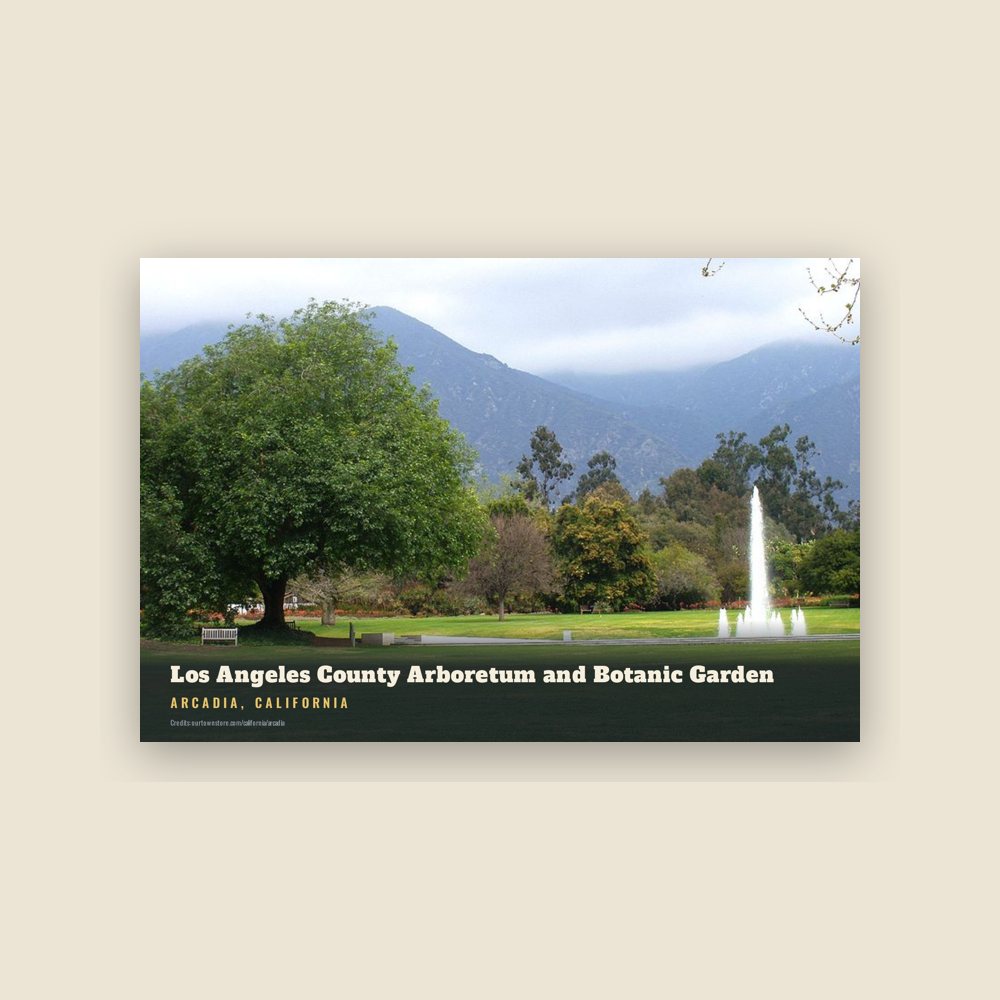
In 1947, 111 acres (0.45 km2) that comprised the heart of the Baldwin Ranch were deeded to the State of California and the County of Los Angeles, and developed into Los Angeles County Arboretum and Botanic Garden.
In October 1975, the Santa Anita Fashion Park was opened to the public on the corner of Baldwin Avenue and Huntington Drive, on part of the former Santa Anita Assembly Center site. The center court featured a very large "Blue head" by artist Roy Lichtenstein, which was later removed. The mall expanded in 2004 and was renamed Westfield Santa Anita. It was affected by the Great Recession of the late 2000s.
James Dobson, a former Arcadia resident, founded the nonprofit Christian ministry Focus on the Family in the city in 1977. Focus on the Family is now based in Colorado Springs, Colorado, but still has thousands of members in Arcadia.
In the 1980s, the Asian population in Arcadia began to grow. The city had remained 99% white until the late 1970s, but in 1985, the Los Angeles Times reported that the Asian population had grown from 4% in 1980 to an estimated 9%, overtaking Latinos, who accounted for roughly 7% of the population. By the 2020 census, Asians consisted of 64.56% of the population.
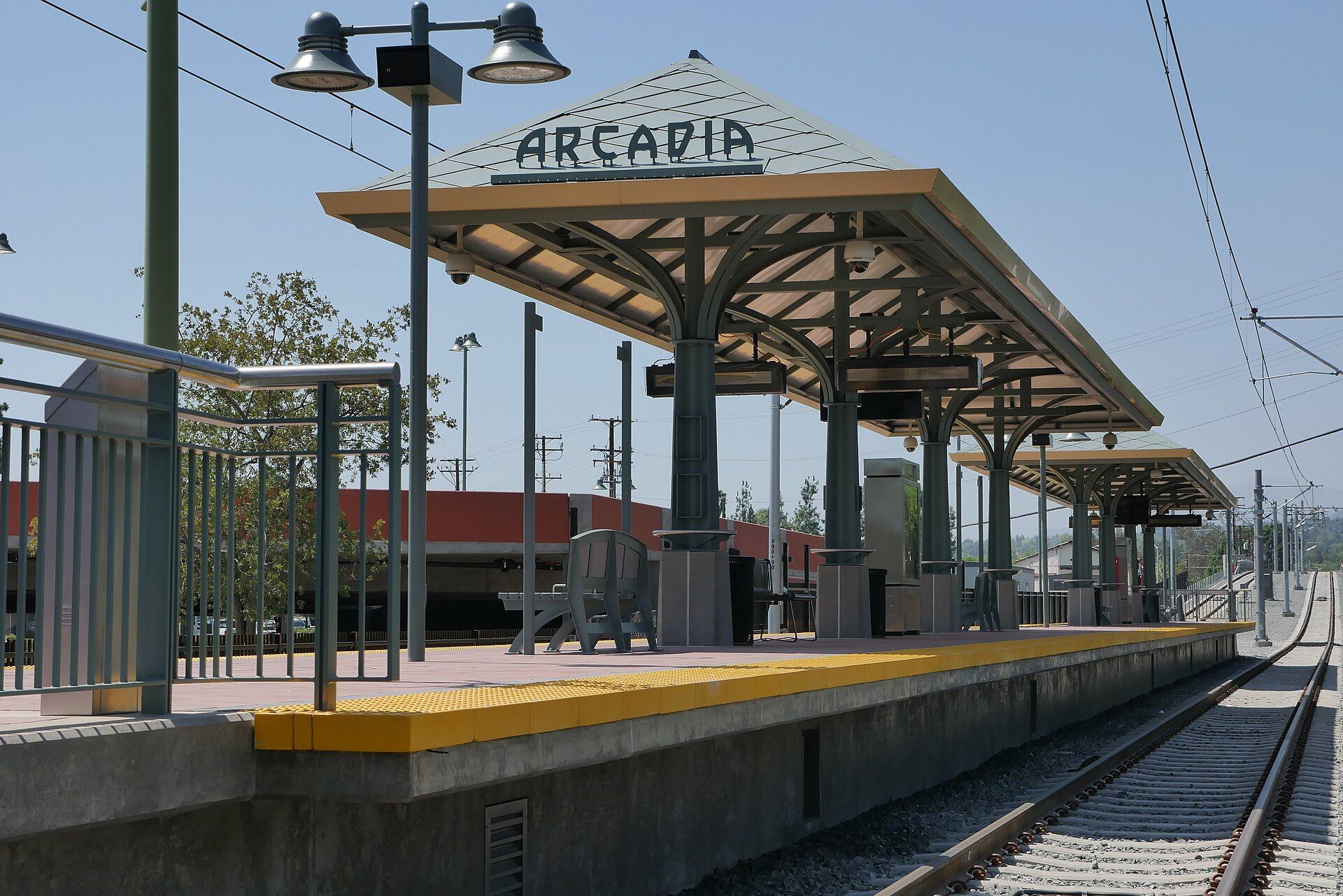

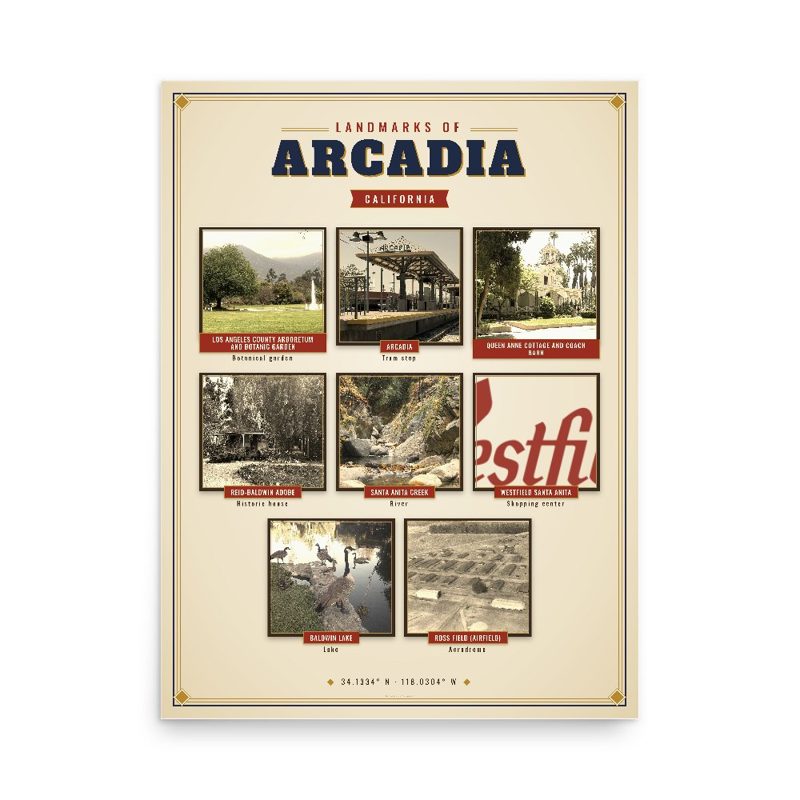
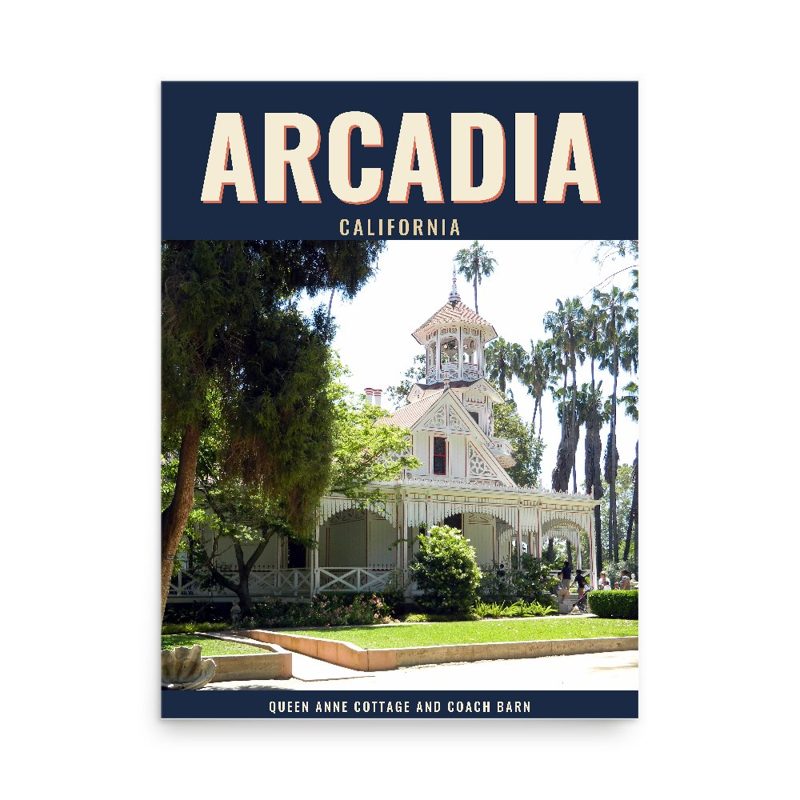
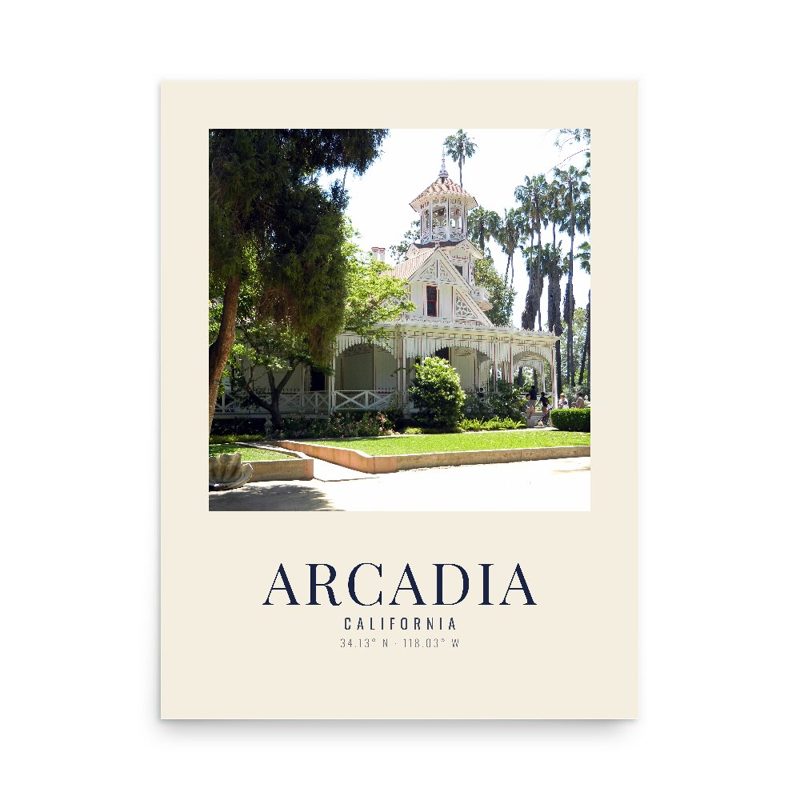
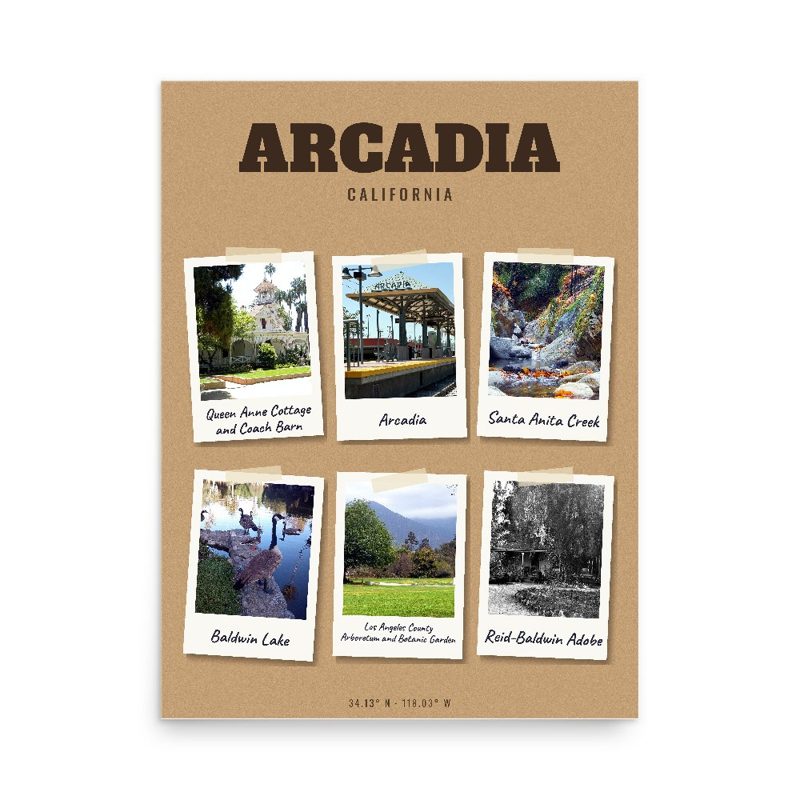
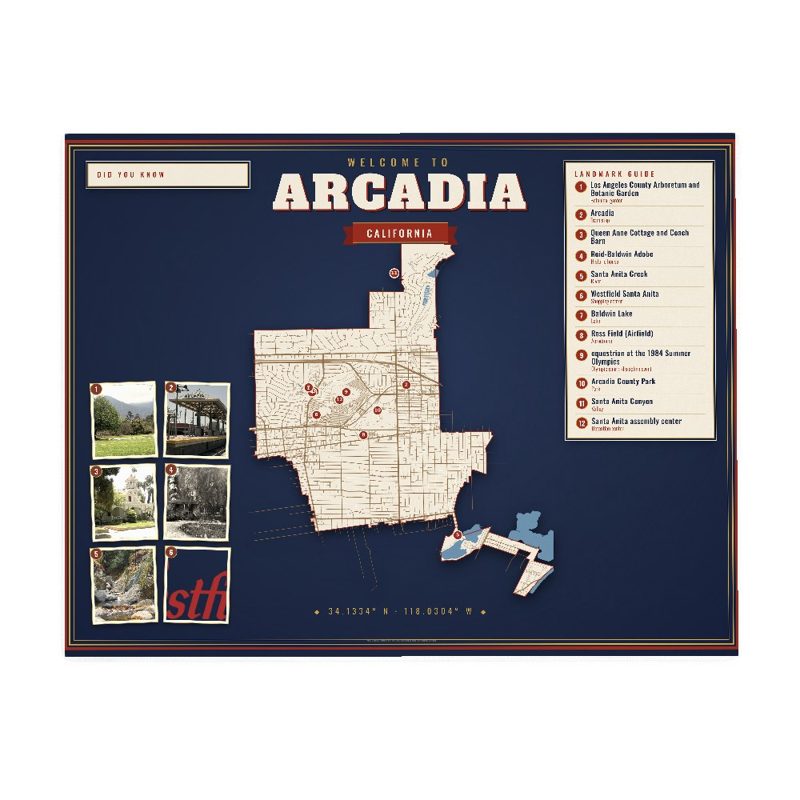



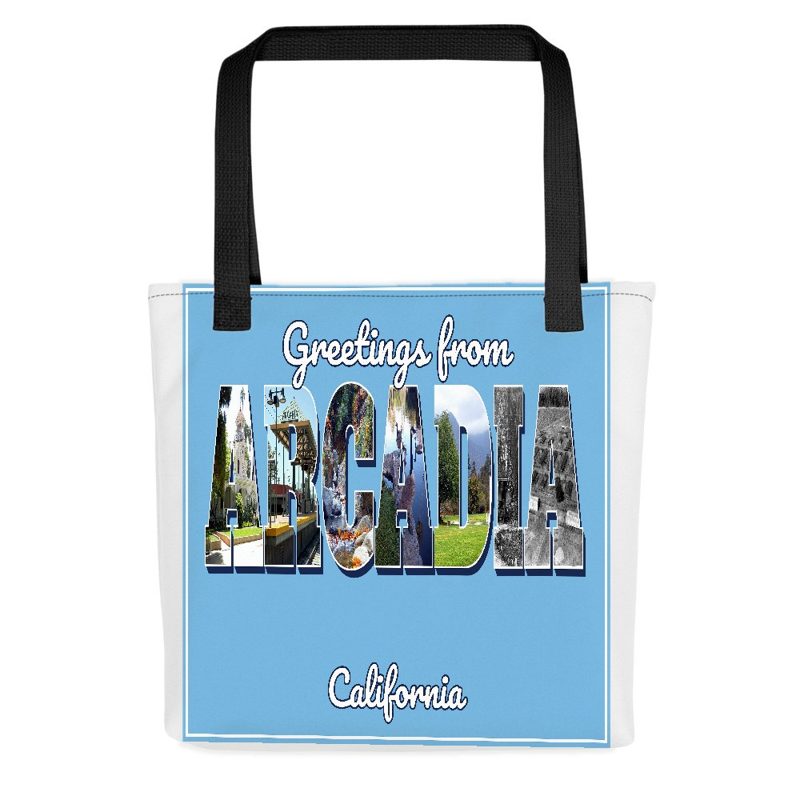


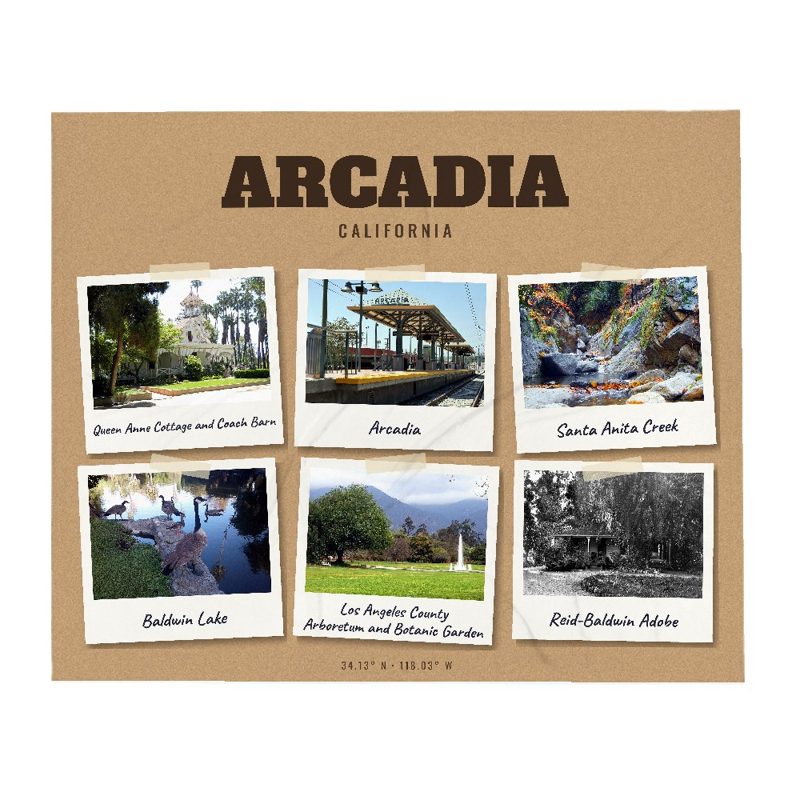
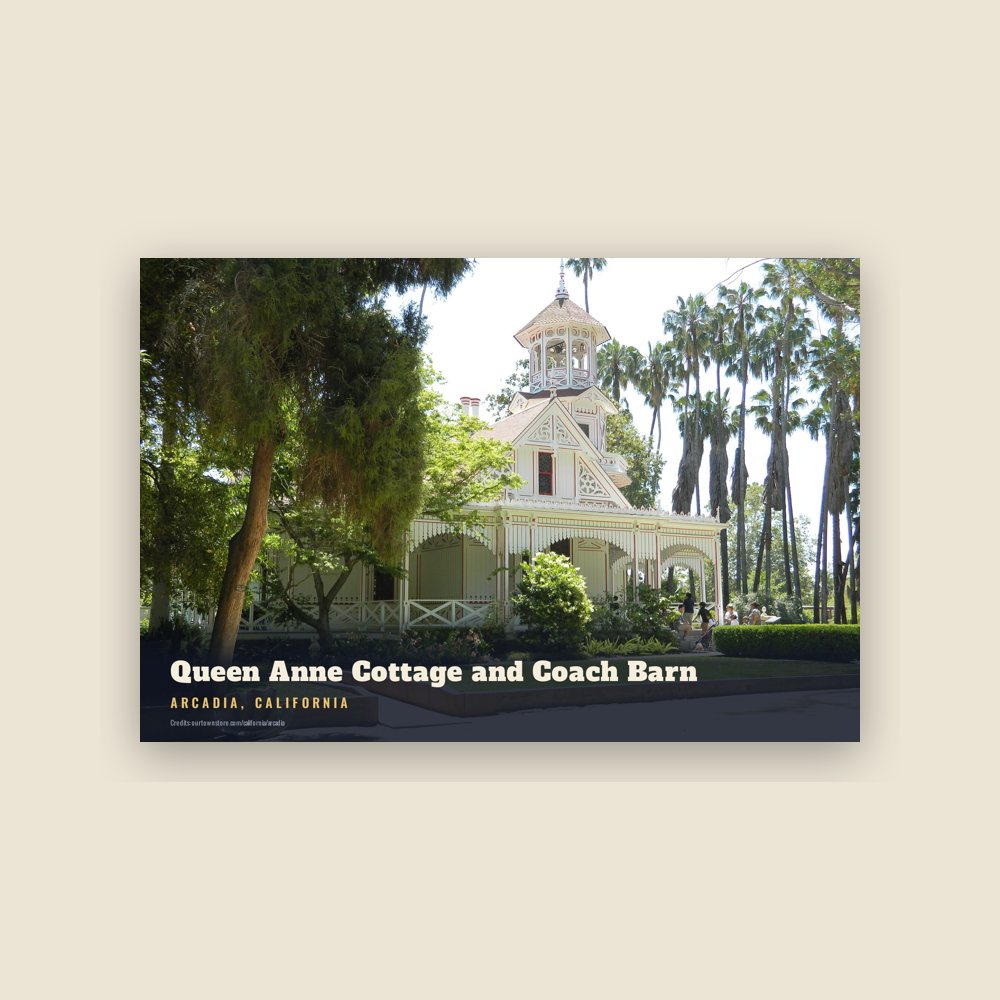
 Queen Anne Cottage and Coach Barn
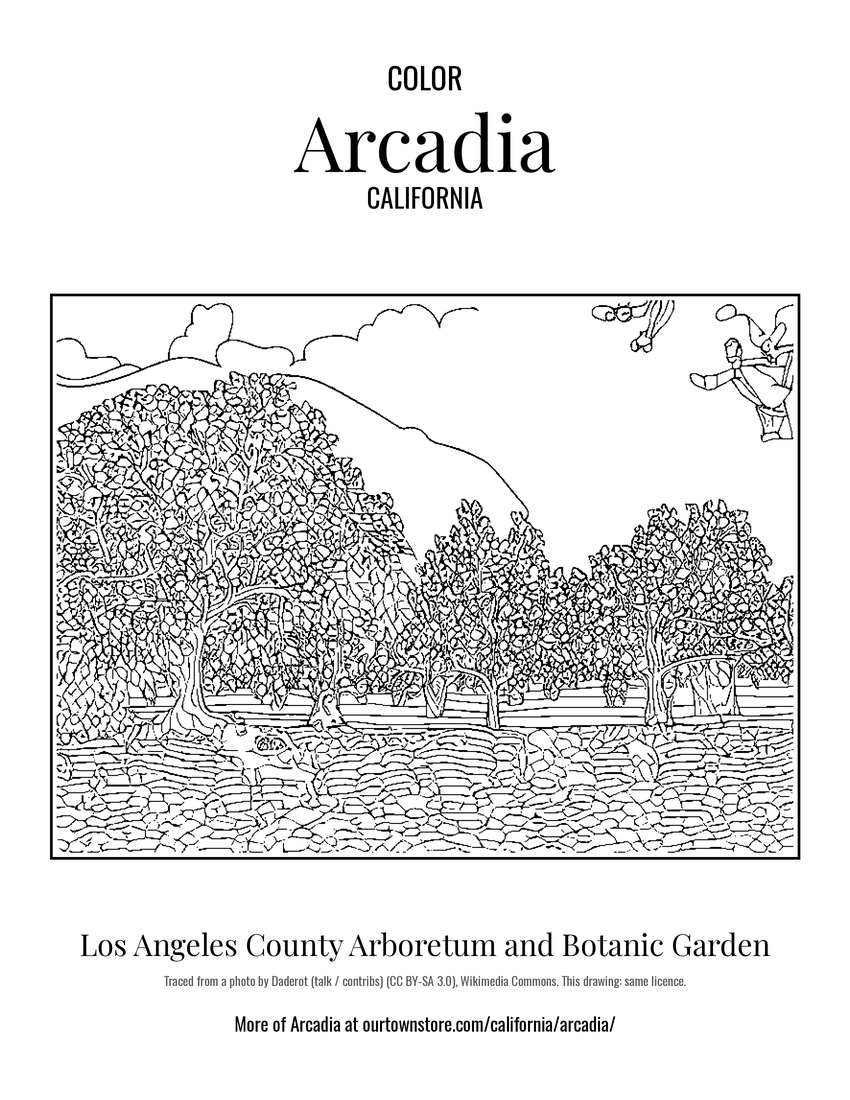 Los Angeles County Arboretum and Botanic Garden
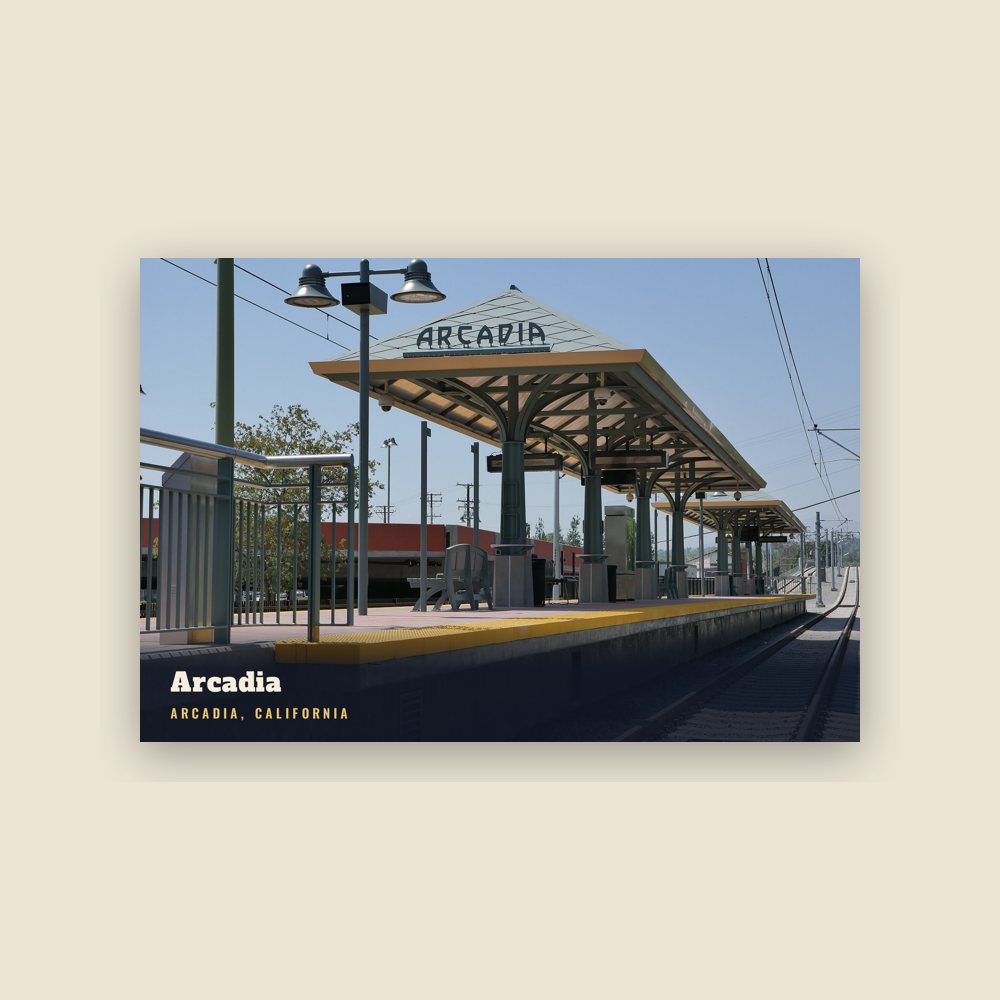
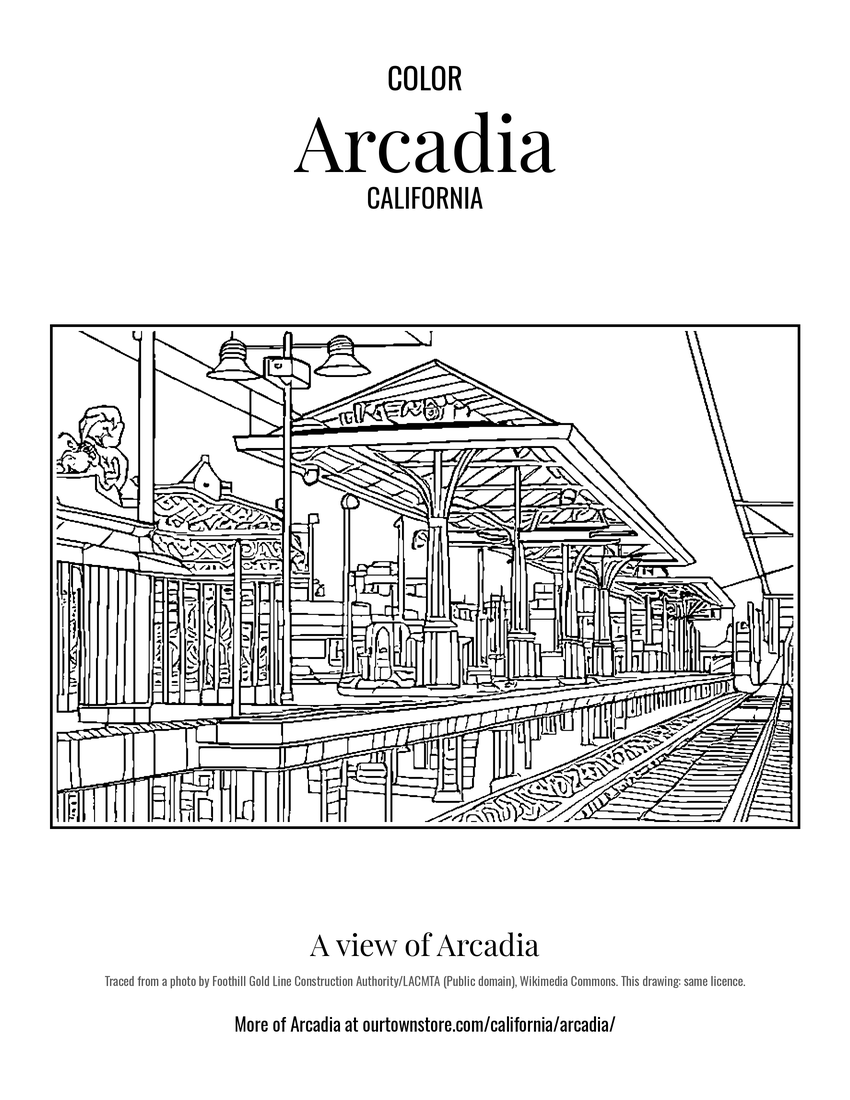 A view of Arcadia
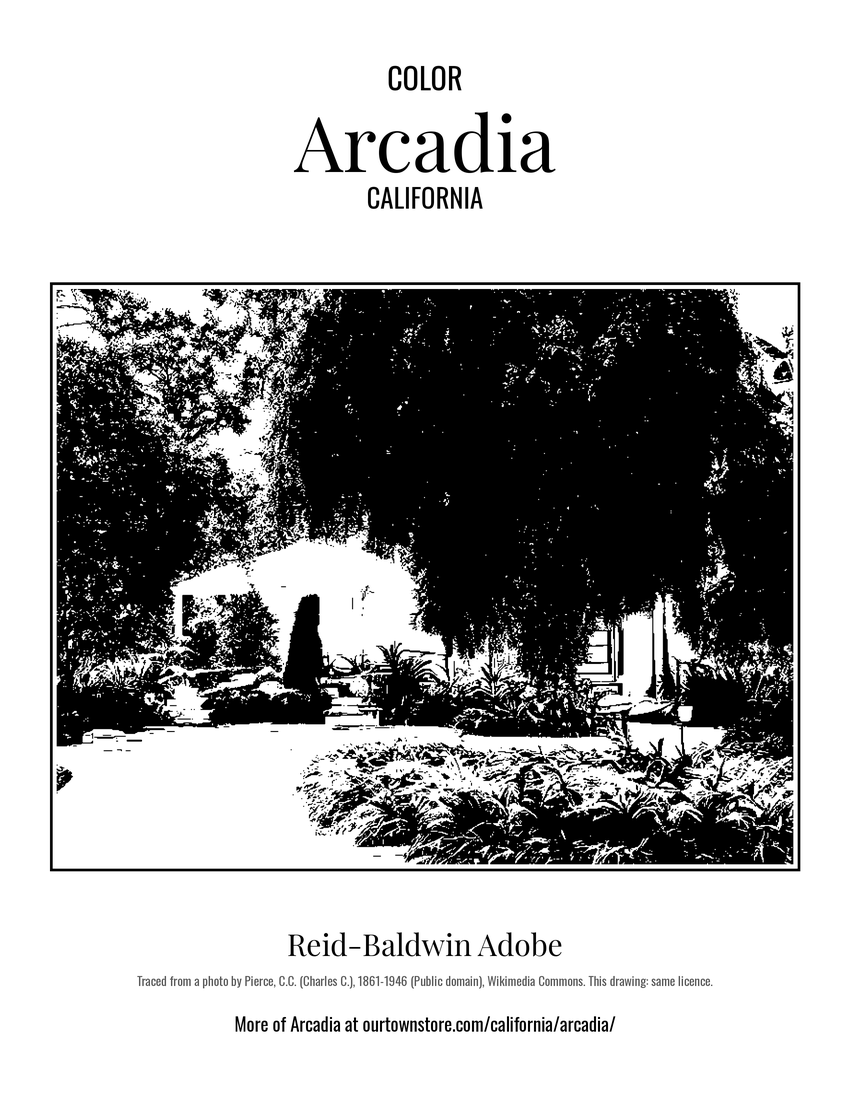 Reid-Baldwin Adobe