A short history of Morgan Hill
Prior to the arrival of Spanish colonists, Santa Clara Valley had been inhabited by the Tamien nation of Ohlone people for more than 6,000 years. In that area, the Matalan tribe lived in a hunter-gatherer society.
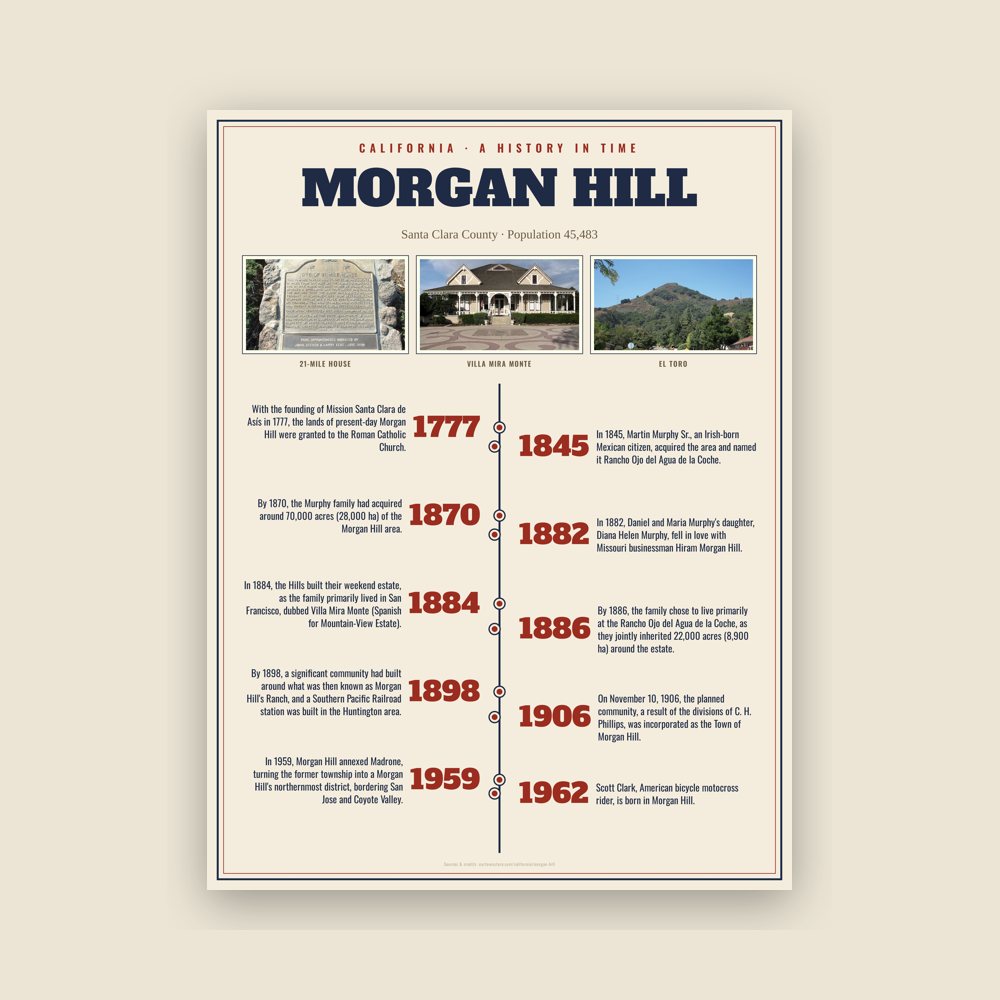
Before the area was colonized as part of the Alta California province of the Viceroyalty of New Spain, the 1772 Spanish expedition led by Pedro Fages and Father Juan Crespí, the two explorers camped in the area around Morgan Hill alongside Llagas Creek. The location of their camp subsequently became a campsite for Spanish soldiers on their way from New Spain to Alta California. With the founding of Mission Santa Clara de Asís in 1777, the lands of present-day Morgan Hill were granted to the Roman Catholic Church.
Following Mexico's independence from Spain, land was redistributed to Mexican citizens across California and the land encompassing modern-day Morgan Hill was granted to Juan María Hernández, in 1835. In 1845, Martin Murphy Sr., an Irish-born Mexican citizen, acquired the area and named it Rancho Ojo del Agua de la Coche.
In 1850, Martin Murphy Sr.'s youngest son, Daniel Martin Murphy, married Maria Fisher, heiress of the neighboring 19,000-acre (7,700 ha) Rancho Refugio de la Laguna Seca, thus combining the two estates. By 1870, the Murphy family had acquired around 70,000 acres (28,000 ha) of the Morgan Hill area.
Martin Murphy Sr.'s middle son, Bernard Murphy died in 1853, leaving the majority of his estate to Martin Murphy Sr., but a substantial portion of the land in the Morgan Hill area to his surviving wife, Catherine O'Toole, who later married James Dunne.
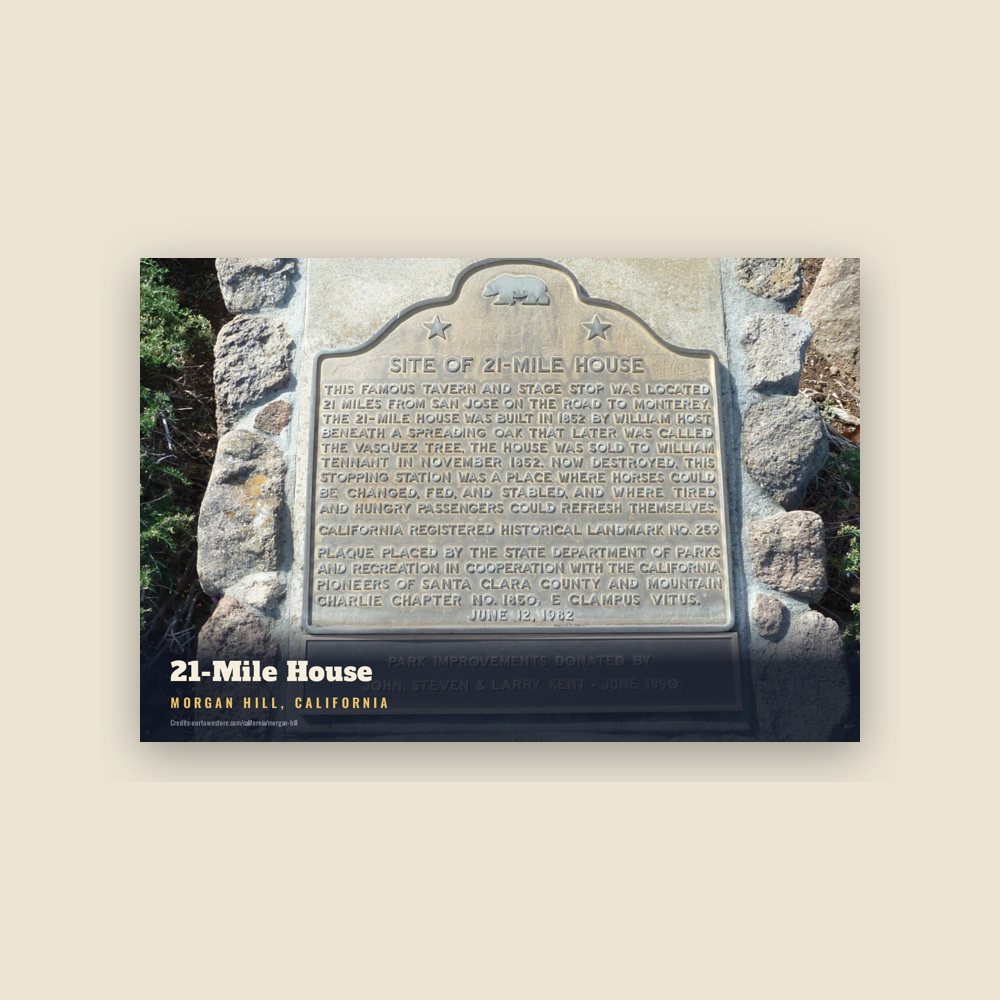
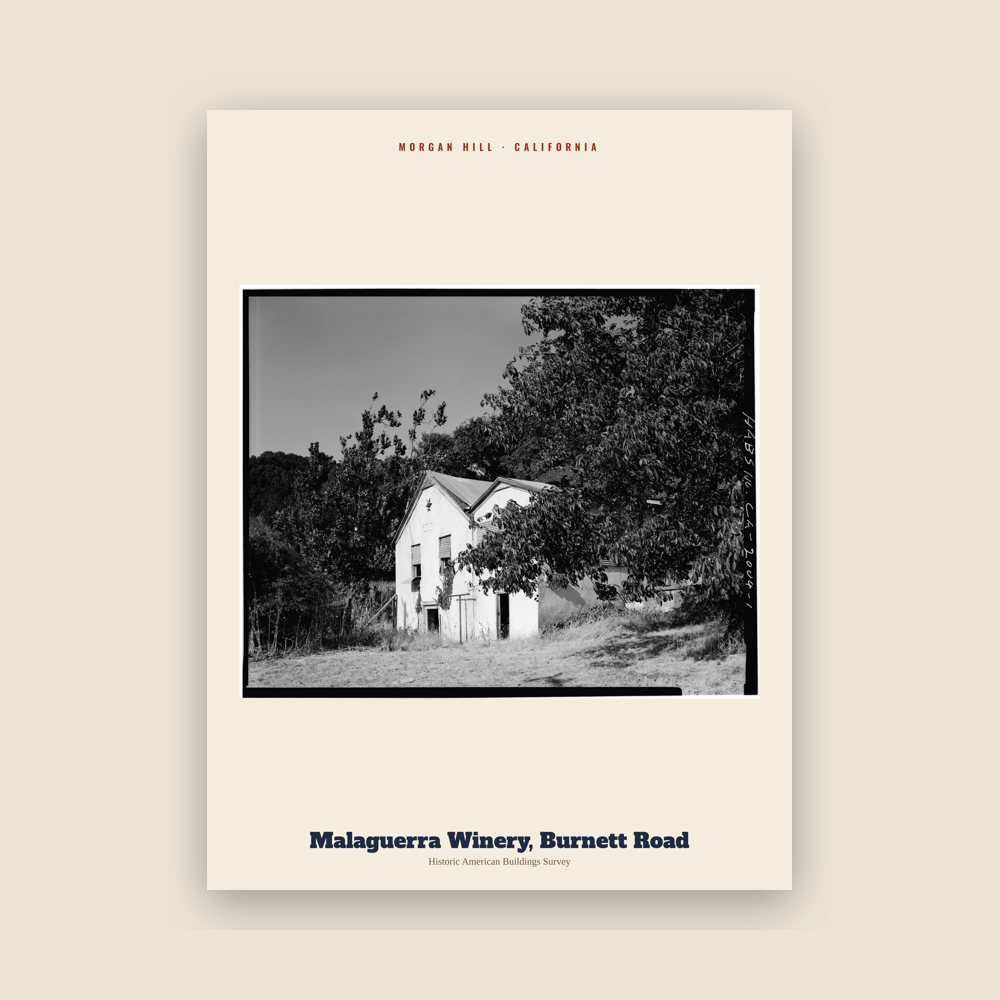
By the late 1850s, Californio ranchero José María Malaguerra began cultivating vineyards in Madrone, then an independent township just north of Morgan Hill. In 1869, he founded the Malaguerra Winery, the oldest extant winery in Santa Clara Valley, which is listed on the National Register of Historic Places. In 1875, Tiburcio Vásquez, famed Californio bandido, robbed 21-Mile House; the Vásquez Oak that stands there today is named in his memory.
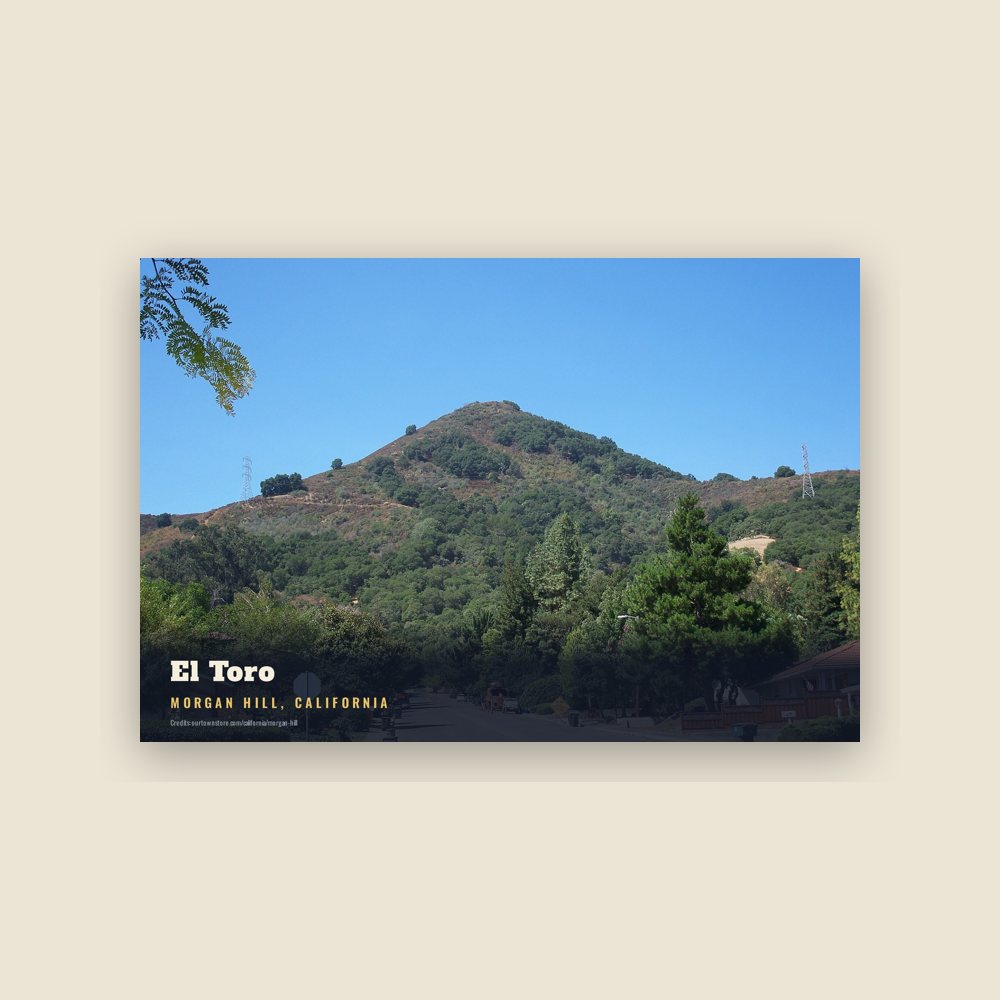
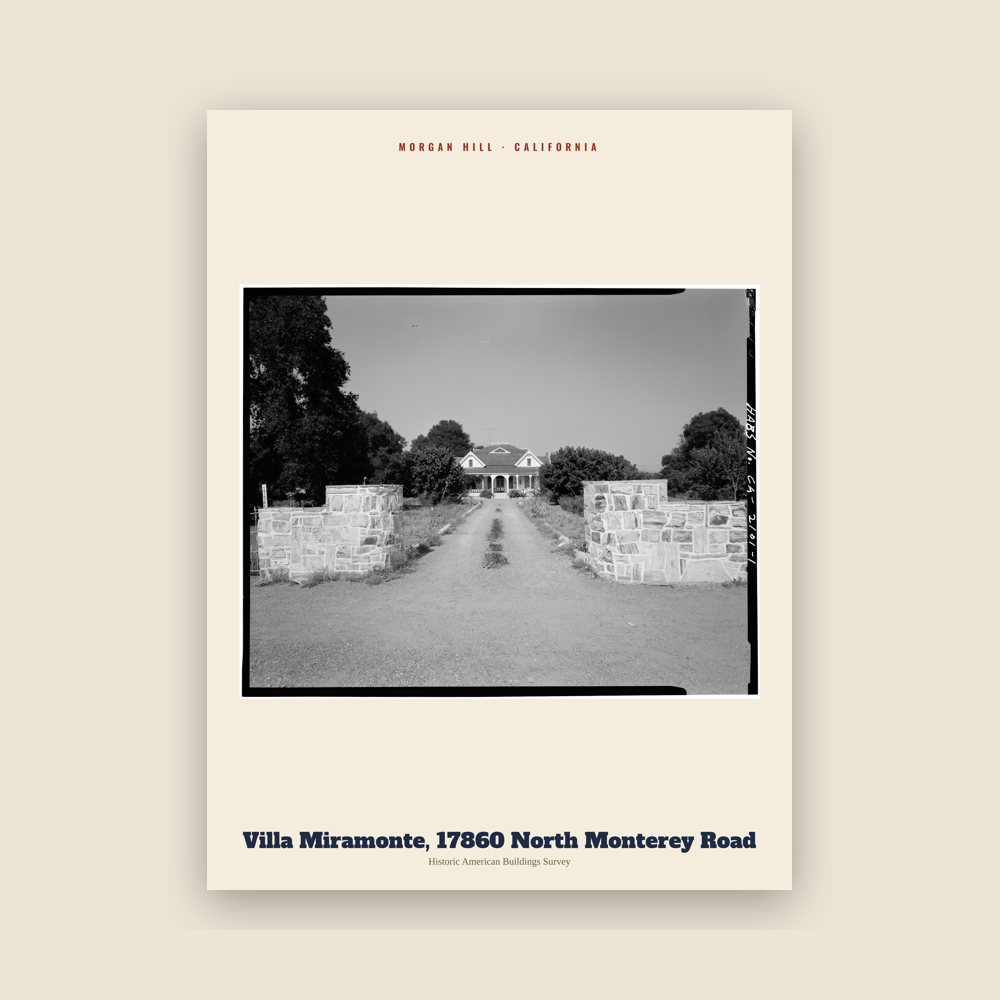
In 1882, Daniel and Maria Murphy's daughter, Diana Helen Murphy, fell in love with Missouri businessman Hiram Morgan Hill. They married in secret, there are discrepancies on why this happened with some sources stating her father disapproved of the union and didn't think Hiram could be a rancher, and others stating it was due to the religious differences with his family being Quaker and her family being Roman Catholic. When Daniel Martin Murphy died, Diana and Hiram Morgan Hill inherited the 4,500 acres (1,800 ha) surrounding the original Murphy estate, near Murphy's Peak (now known as El Toro). In 1884, the Hills built their weekend estate, as the family primarily lived in San Francisco, dubbed Villa Mira Monte (Spanish for Mountain-View Estate).
By 1886, the family chose to live primarily at the Rancho Ojo del Agua de la Coche, as they jointly inherited 22,000 acres (8,900 ha) around the estate. However, the move was temporary, as scandal caused by the marital complications of Hiram Morgan Hill's prominent socialite sister, Sarah Althea Hill, and her husband, Senator William Sharon, made the Hills a source of social ridicule, thus causing them to start spending the majority of their time between San Francisco and Washington, D.C., thus leaving their rancho untouched for long periods of time.
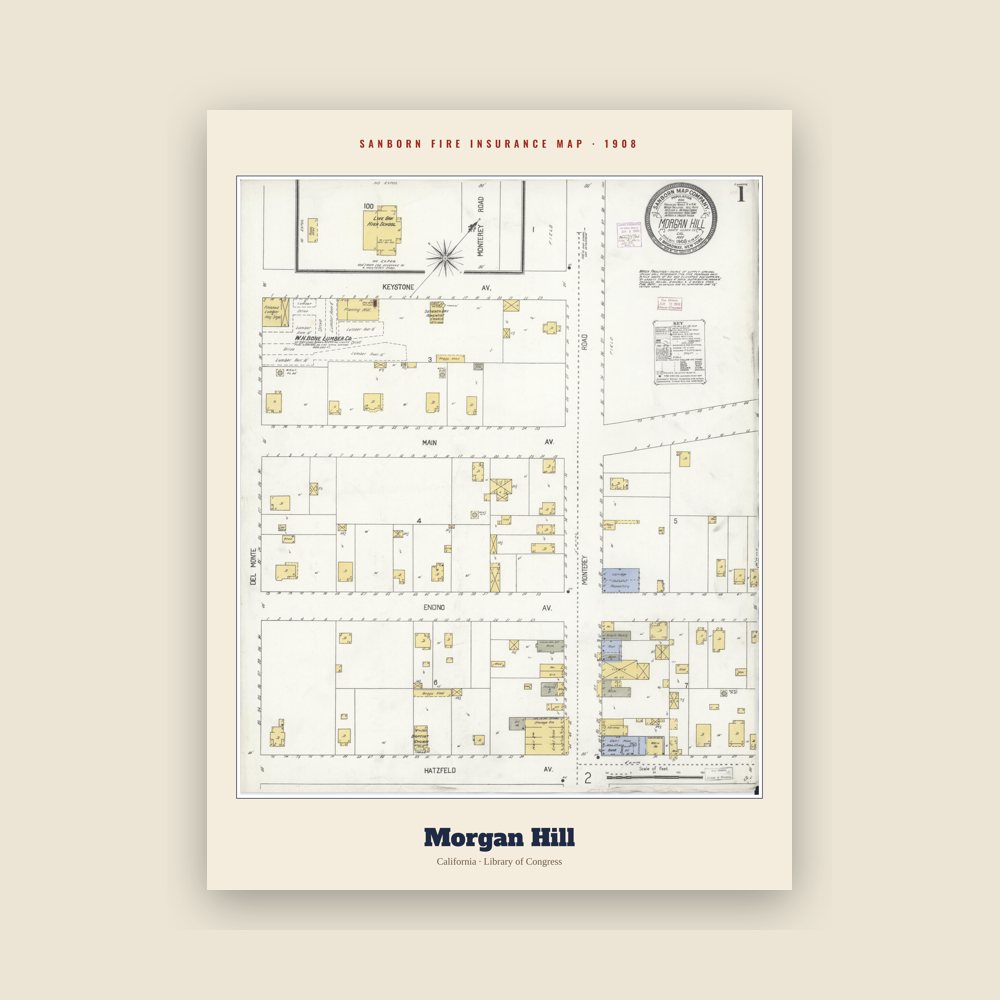
In 1892, Hiram Morgan Hill contracted land developer C. H. Phillips to divide and liquidate the Rancho Ojo del Agua de la Coche, only retaining the Villa Mira Monte estate and the surrounding 200 acres (81 ha), which the Hill family would hold until 1916. By 1898, a significant community had built around what was then known as Morgan Hill's Ranch, and a Southern Pacific Railroad station was built in the Huntington area. Rather than ask to stop at Huntington station, passengers would ask to stop at "Morgan Hill's Ranch", which eventually shortened to "Morgan Hill".
On November 10, 1906, the planned community, a result of the divisions of C. H. Phillips, was incorporated as the Town of Morgan Hill. Hiram Morgan and Diana Hill's only child, Diana Murphy Hill, married the French nobleman, Baron Hadouin de Reinach-Werth, and thus Baron Hadouin started to help manage Hiram Morgan Hill's properties between California and Nevada. However, the baron was called back to France to serve in the military and never returned. In 1913, Hiram Morgan Hill died at his Elko estate in Nevada, thus leaving his properties to his daughter. Diana Murphy Hill later remarried, in 1916, to Sir George Rhodes, thus causing the Murphy heiress of the Morgan Hill estate to relocate to the United Kingdom, taking her and Hiram Morgan Hill's daughter, Diana Murphy Hill, thus finally selling off the Villa Mira Monte and ending the Hill family presence in the community named after them.
In 1959, Morgan Hill annexed Madrone, turning the former township into a Morgan Hill's northernmost district, bordering San Jose and Coyote Valley.
Adapted (trimmed) from the Wikipedia article Morgan Hill, California, revision 1380352627 by its contributors, licensed CC BY-SA 4.0.
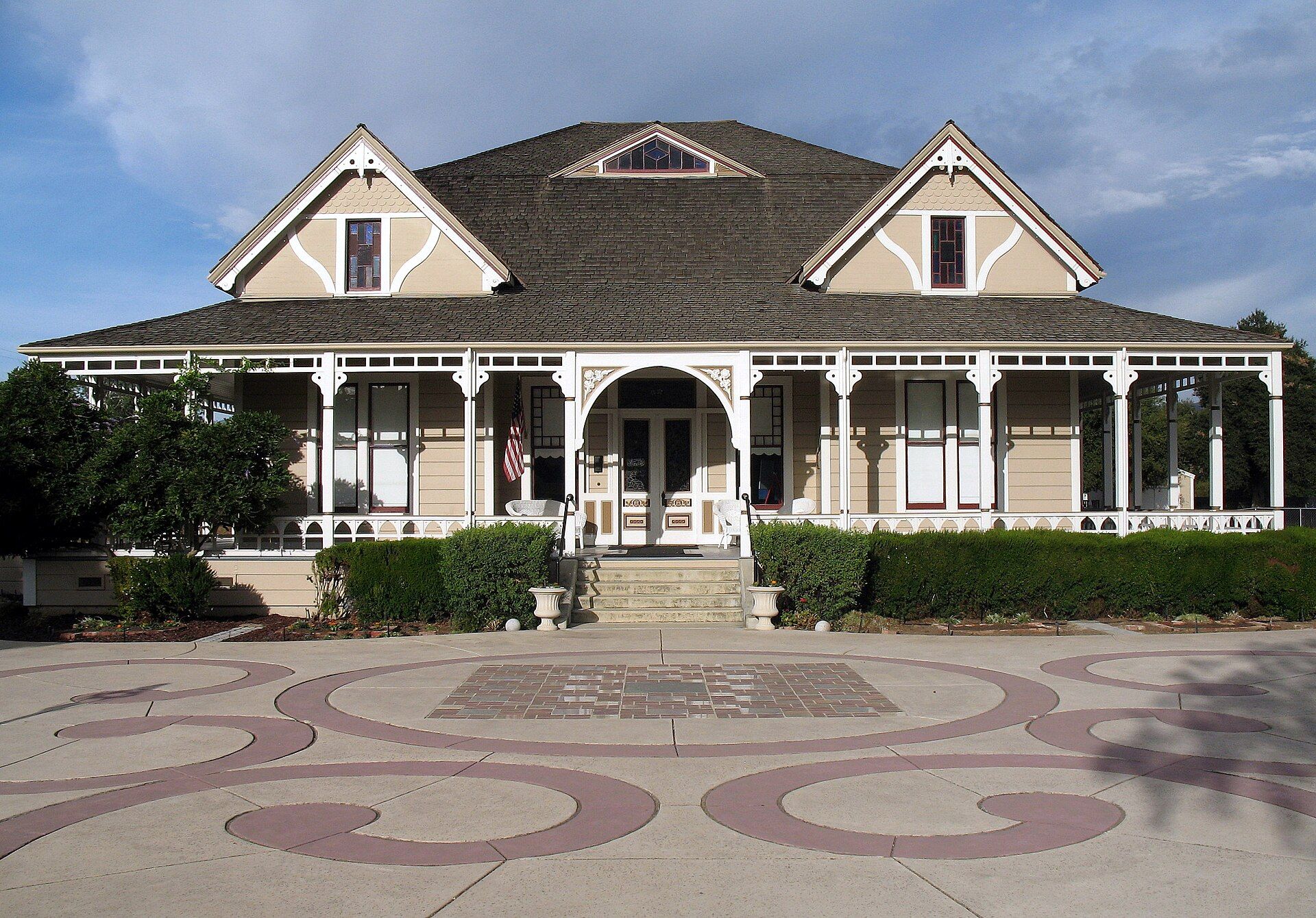
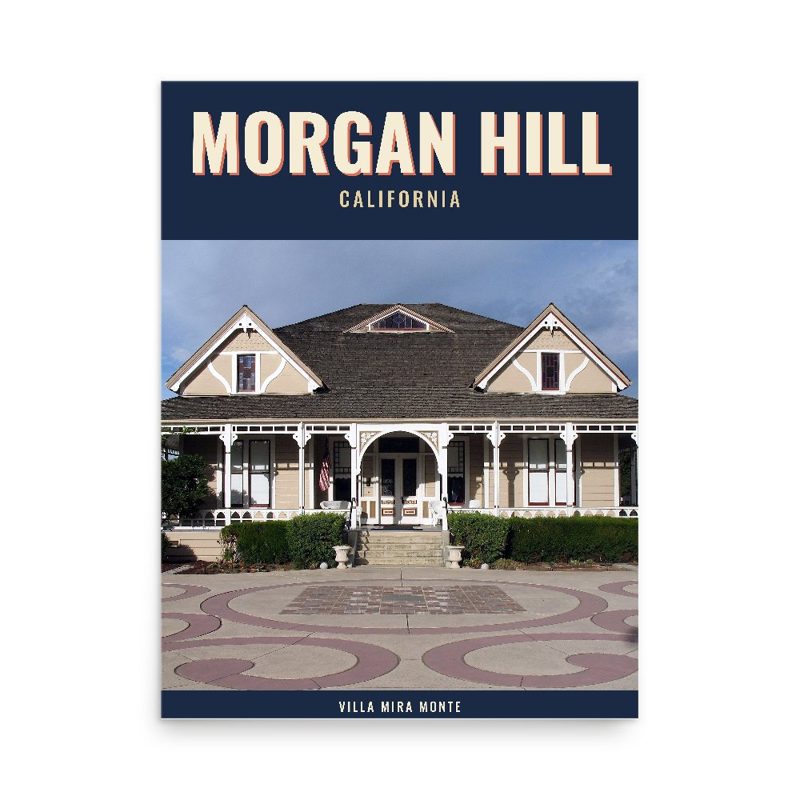
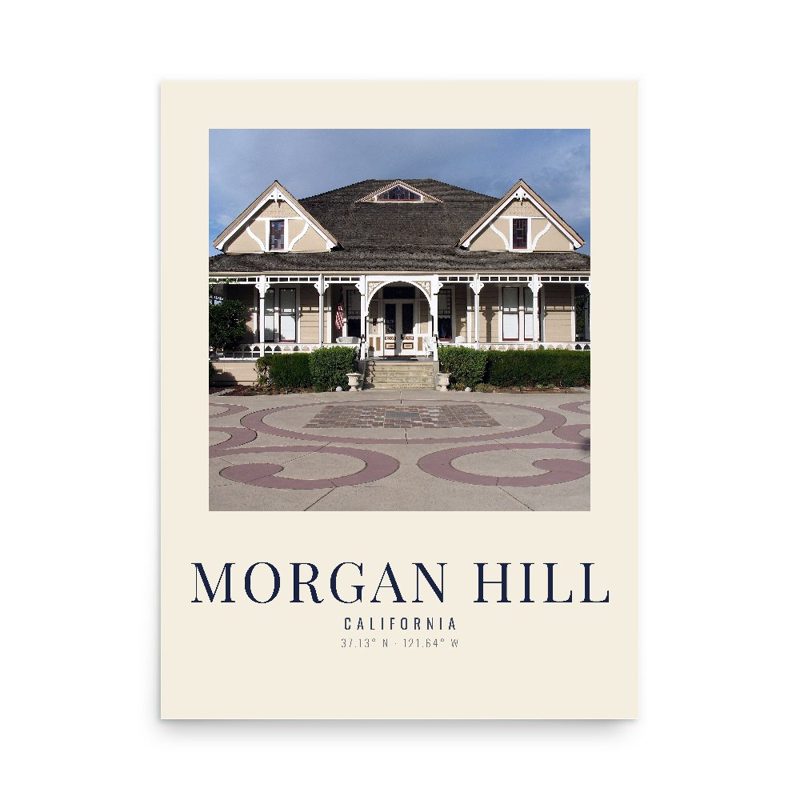
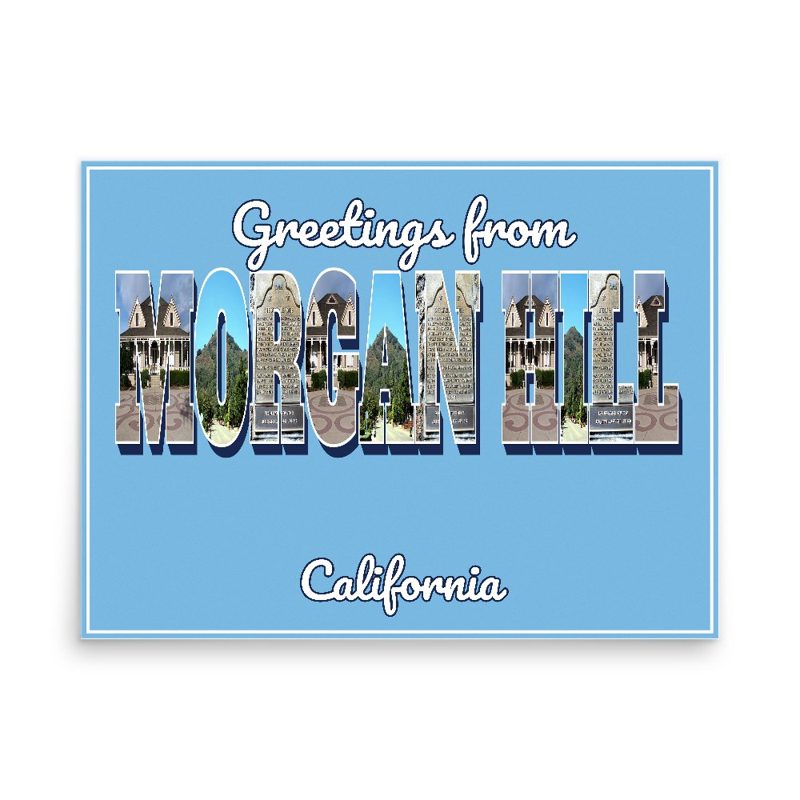
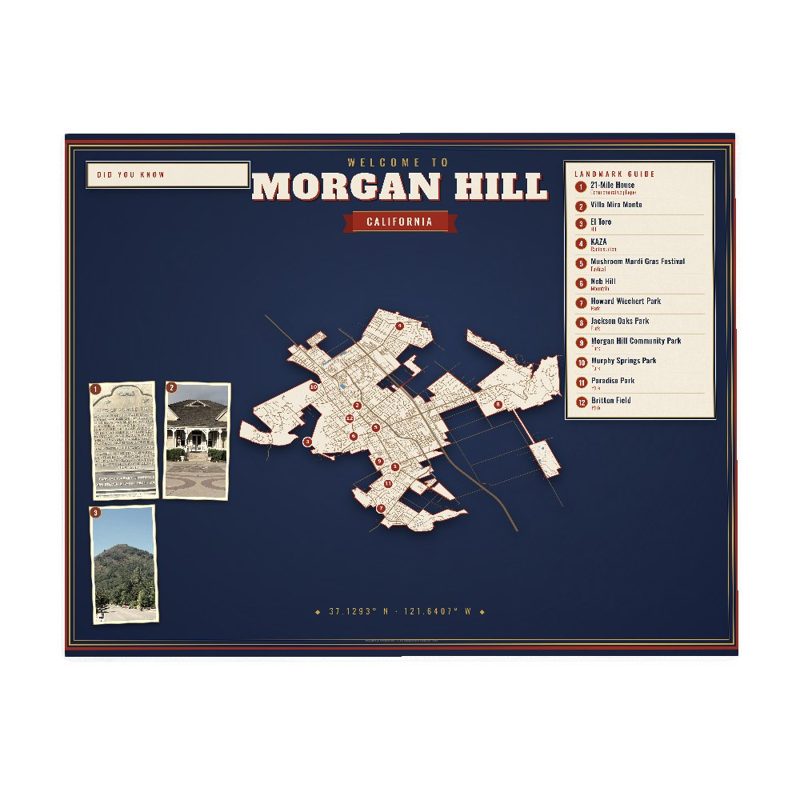










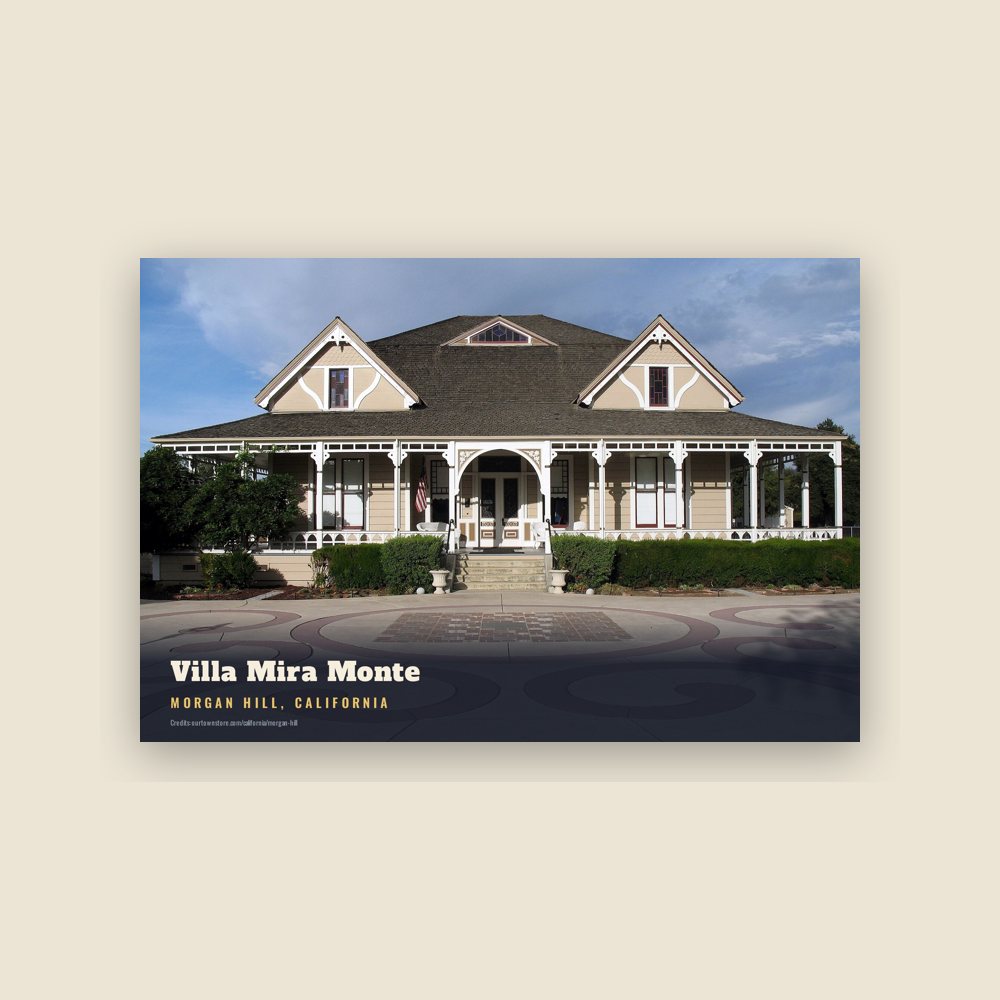
 Villa Mira Monte
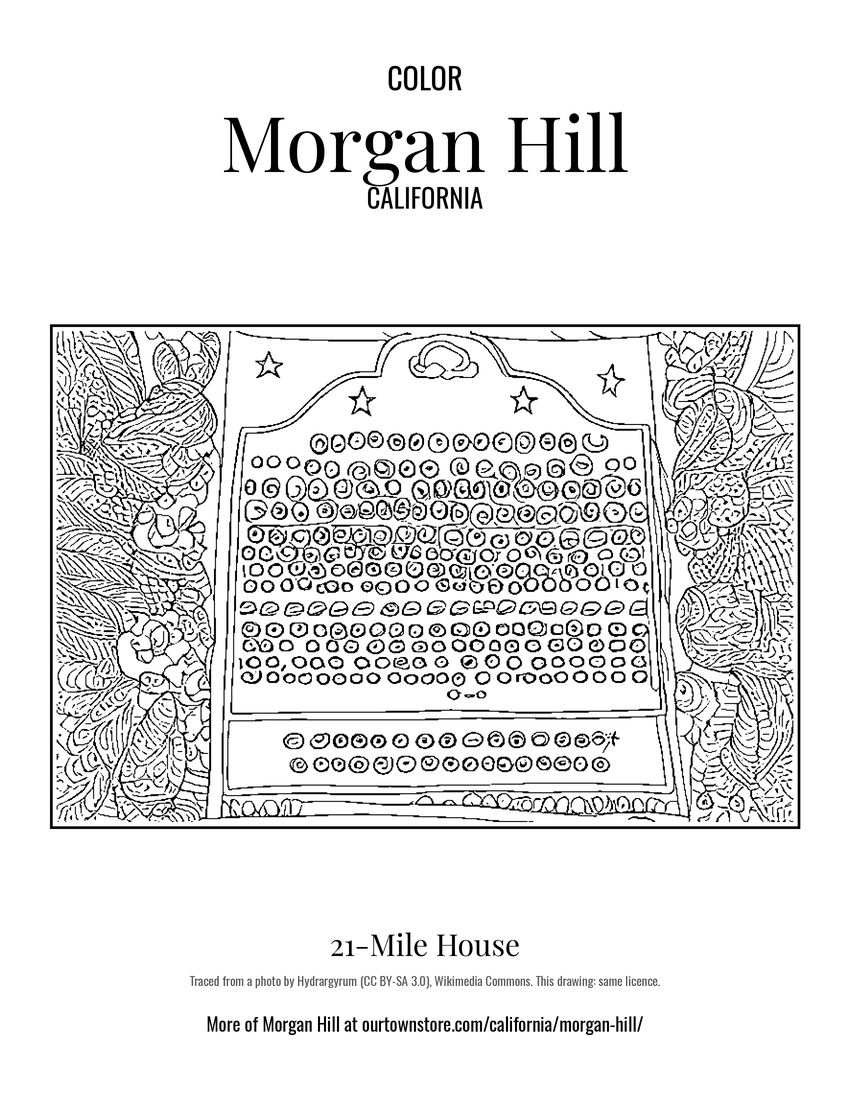 21-Mile House
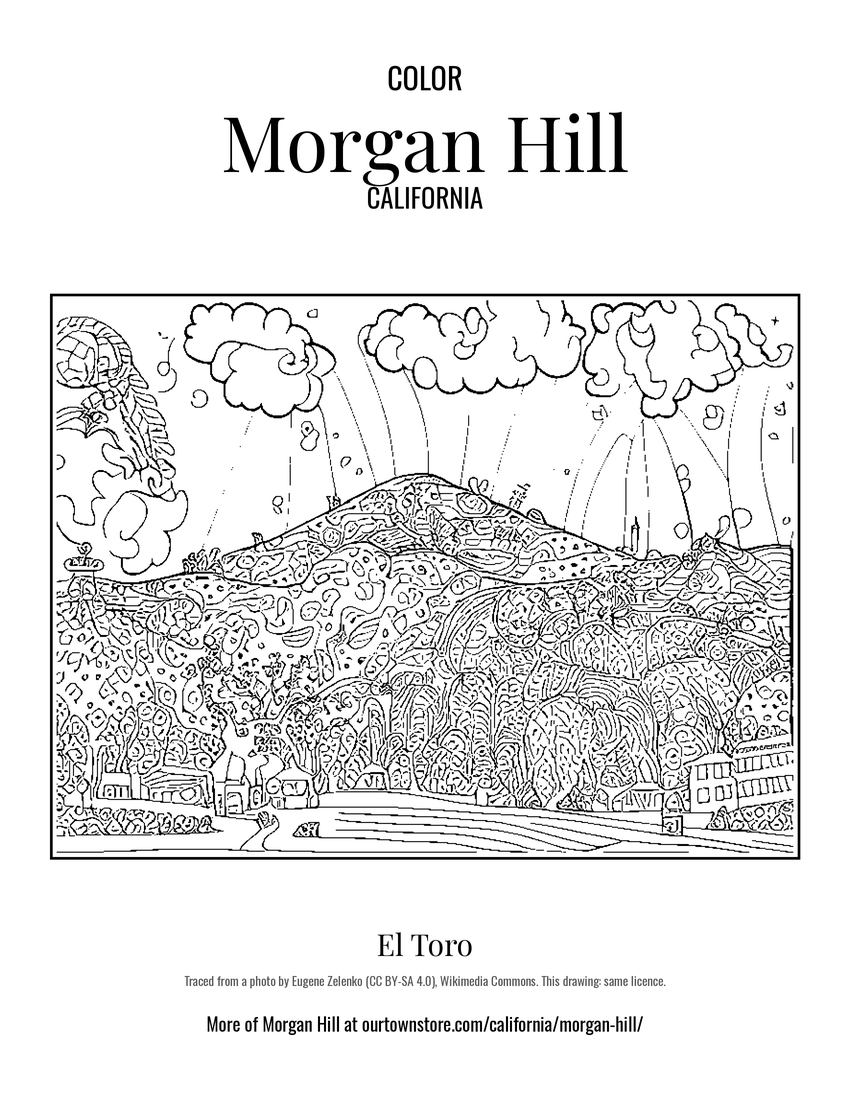 El Toro