A short history of Manhattan Beach
The sandy coastal area was likely inhabited by the Tongva tribe of Native Americans. Archeological work in the nearby Chowigna excavation shows evidence of inhabitants as far back as 7,100 years ago. The Tongva Village of Ongovanga was located near neighboring Redondo Beach.
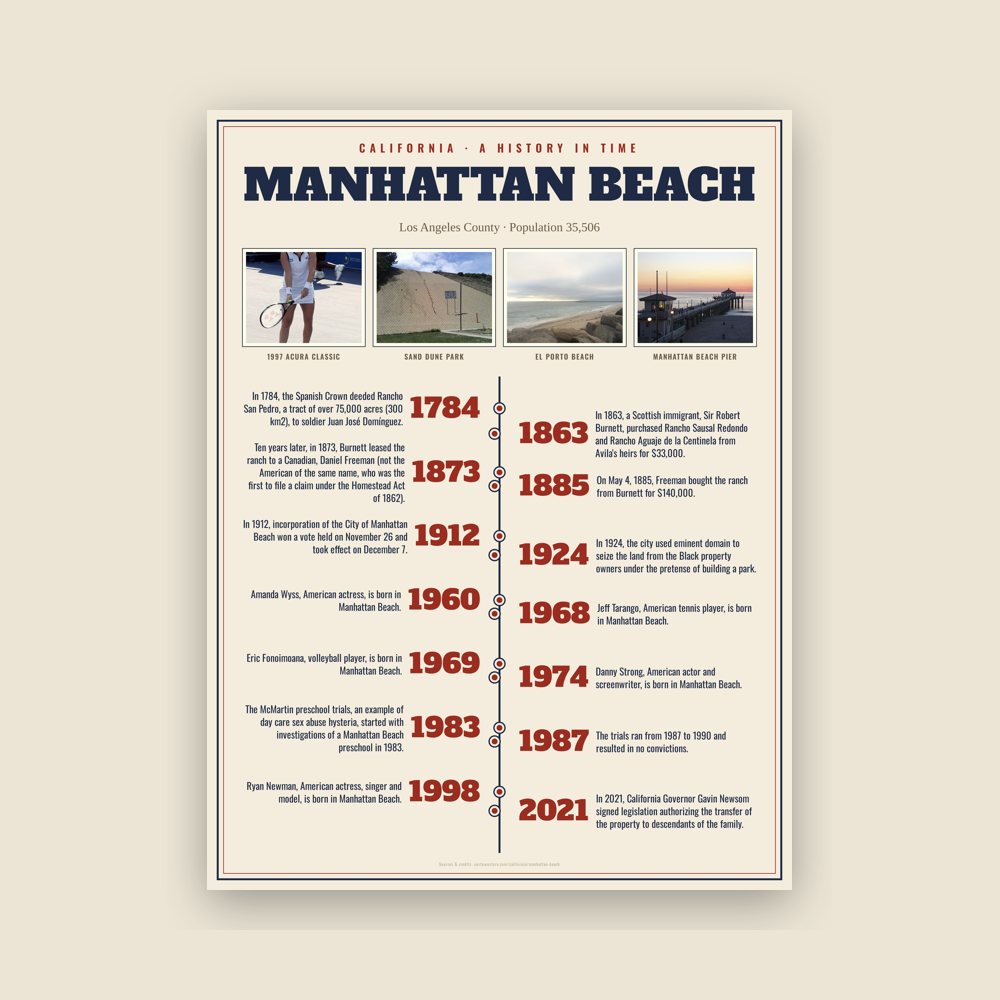
In the mid-18th century, the Portolá expedition was the first European land exploration of present-day California. It traveled north from San Diego to the San Gabriel Valley, Los Angeles Basin, San Fernando Valley, Monterey Bay, and San Francisco Bay. In 1784, the Spanish Crown deeded Rancho San Pedro, a tract of over 75,000 acres (300 km2), to soldier Juan José Domínguez. It included what is today the entire Port of Los Angeles; San Pedro, Los Angeles; Harbor City, Los Angeles; Wilmington, Los Angeles; Carson; Compton; the Dominguez Hills; Lomita; the Palos Verdes Peninsula; Redondo Beach; Hermosa Beach; Manhattan Beach; and Torrance.
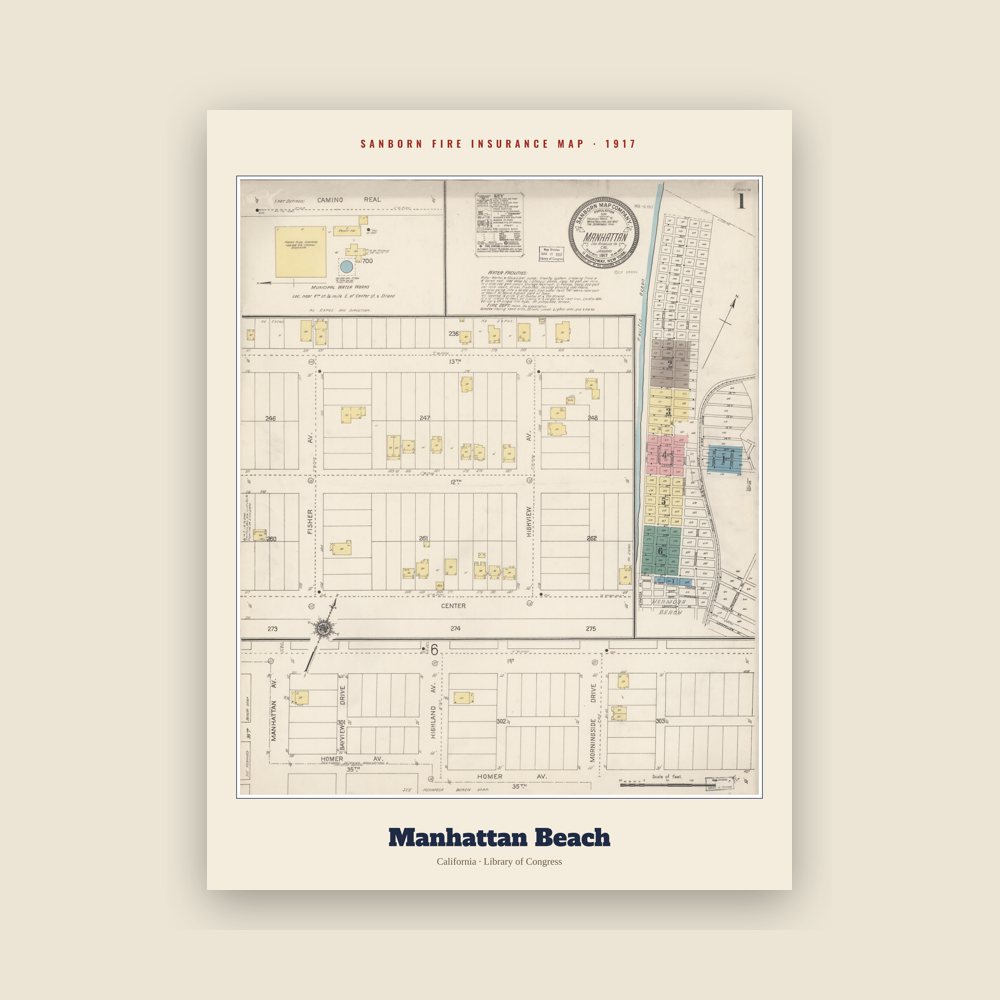
In 1863, a Scottish immigrant, Sir Robert Burnett, purchased Rancho Sausal Redondo and Rancho Aguaje de la Centinela from Avila's heirs for $33,000. Ten years later, in 1873, Burnett leased the ranch to a Canadian, Daniel Freeman (not the American of the same name, who was the first to file a claim under the Homestead Act of 1862). Burnett returned to Scotland. Freeman moved his wife and three children onto the ranch and started growing various crops. On May 4, 1885, Freeman bought the ranch from Burnett for $140,000. At some point after this, the location was informally called "Shore Acres." Shortly thereafter, in 1888, the area's first freight and passenger railroad tracks were built by the Santa Fe Railroad Company. The tracks ran through today’s Manhattan Beach and spanned all the way to Redondo Beach with a substation constructed in later years at Center Street, which today is Manhattan Beach Boulevard.
George H. Peck owned the land that became part of the north section of Manhattan Beach. A coin flip decided the town's name. Around 1902, the beach suburb was named "Manhattan" after developer Stewart Merrill's home, the New York City borough of Manhattan. "Beach" was appended to the city's name at the behest of the postmaster. In 1912, incorporation of the City of Manhattan Beach won a vote held on November 26 and took effect on December 7.
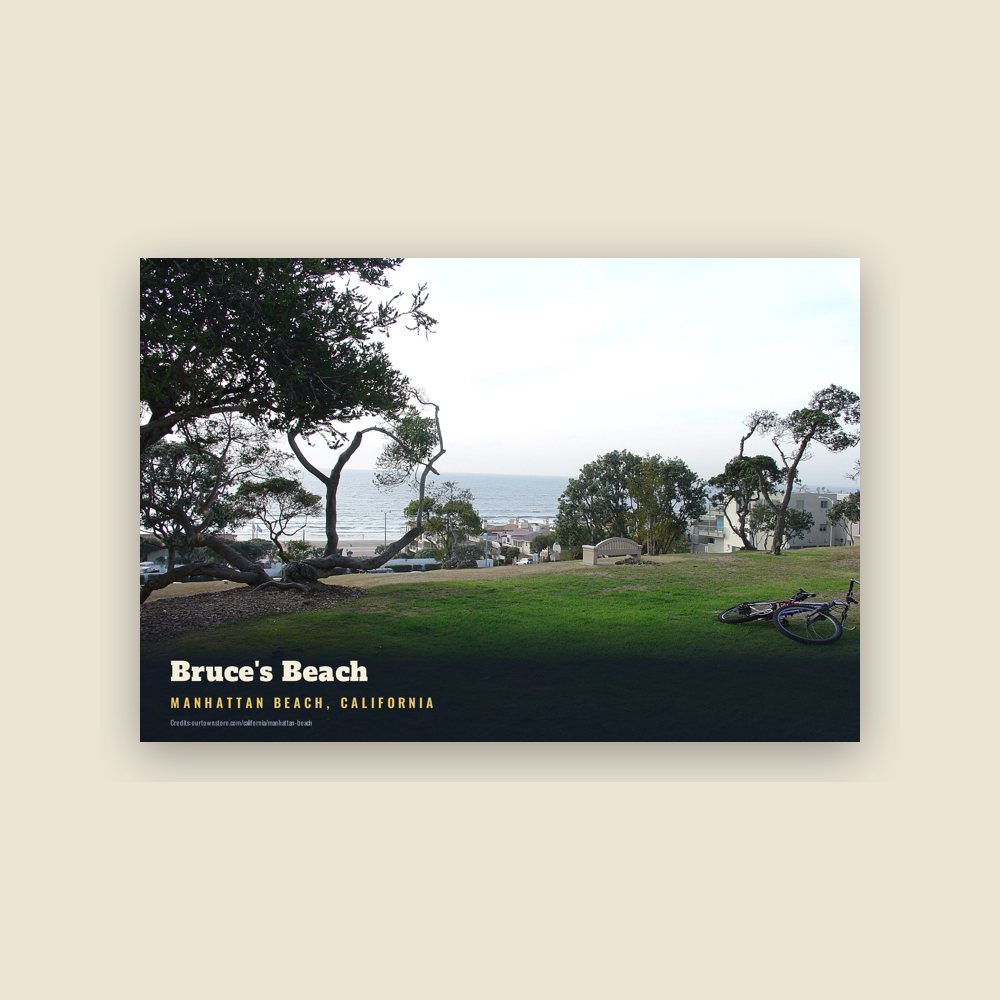
Mrs. W. A. Bruce, a landowner of property near the coast, created the first beach resort for Black Americans in Southern California, Bruce's Beach. Bruce set up a small portable cottage with a stand in front where soda and lunches were sold. There were two dressing tents with showers, and fifty bathing suits were available for rent. Peck's land was located between Bruce's land and the beach itself, and Peck erected "no trespassing signs" on his land, which required beachgoers to walk a half-mile around his land in order to go to the beach. Many beachgoers did so, which made the nearby white landowners unhappy. In the 1920s, the Ku Klux Klan began violently harassing the resort's visitors, the Bruce family, and four other Black families that bought lots. In 1924, the city used eminent domain to seize the land from the Black property owners under the pretense of building a park. Bruce's attorney noted that there was a lot of vacant property located on both sides of Bruce's Beach that could have been used for a public park, and that the city's insistence on seizing Bruce's property was a ruse to carry out the city's racist objection to Black people using the public beach. In 2021, California Governor Gavin Newsom signed legislation authorizing the transfer of the property to descendants of the family.
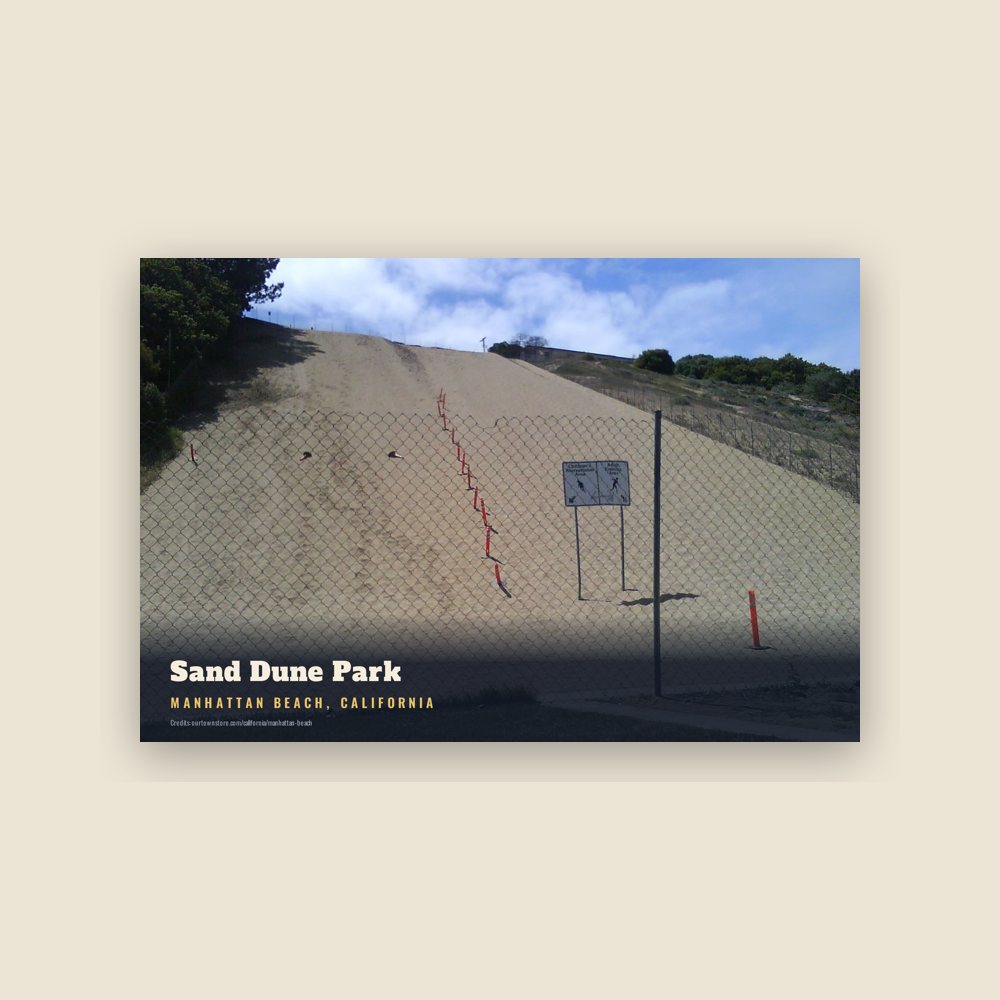
The land in Manhattan Beach was formerly sand dunes. During the 1920s and 1930s, Kuhn Brothers Construction Company leveled uneven sandy sites, and some excess sand was sold and shipped to Waikiki, Hawaii to convert their reef and rock beach into a sandy beach.
The McMartin preschool trials, an example of day care sex abuse hysteria, started with investigations of a Manhattan Beach preschool in 1983. The trials ran from 1987 to 1990 and resulted in no convictions. HBO dramatized this case in the Emmy-winning Indictment: The McMartin Trial, which was partially filmed in Manhattan Beach.
Adapted (trimmed) from the Wikipedia article Manhattan Beach, California, revision 1378541760 by its contributors, licensed CC BY-SA 4.0.
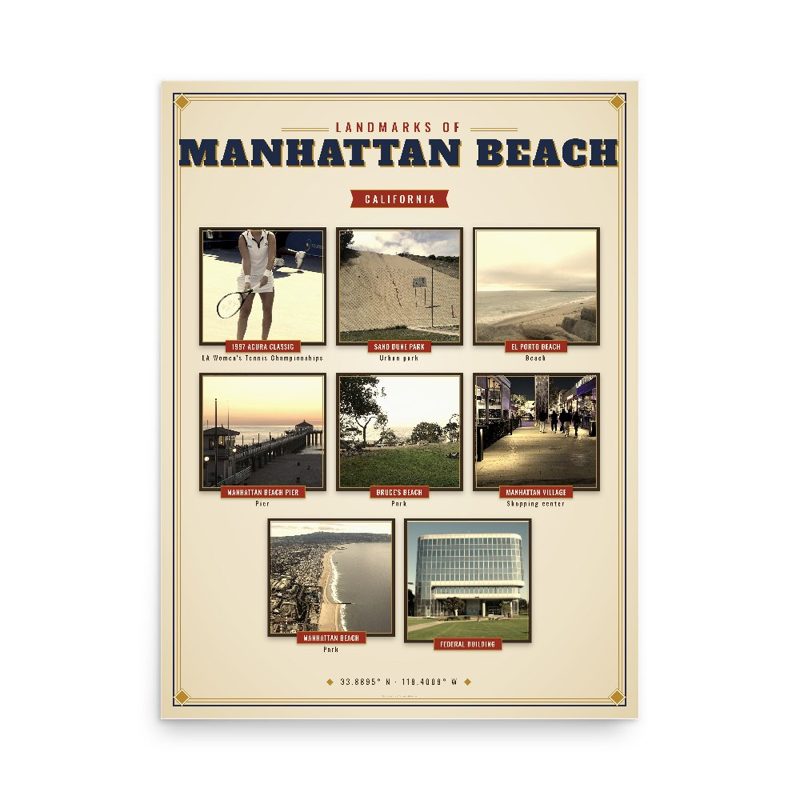
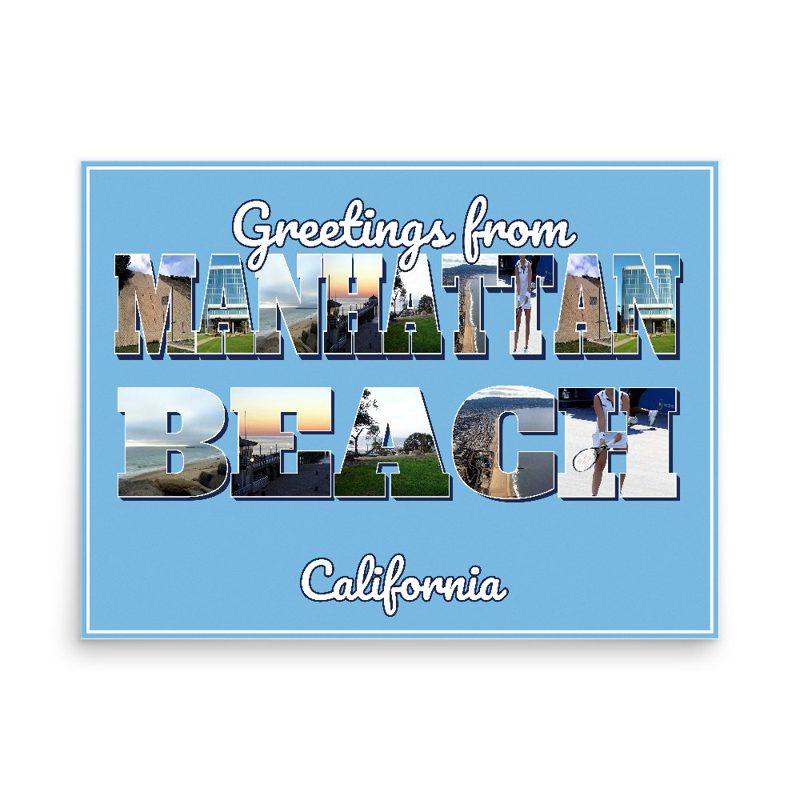
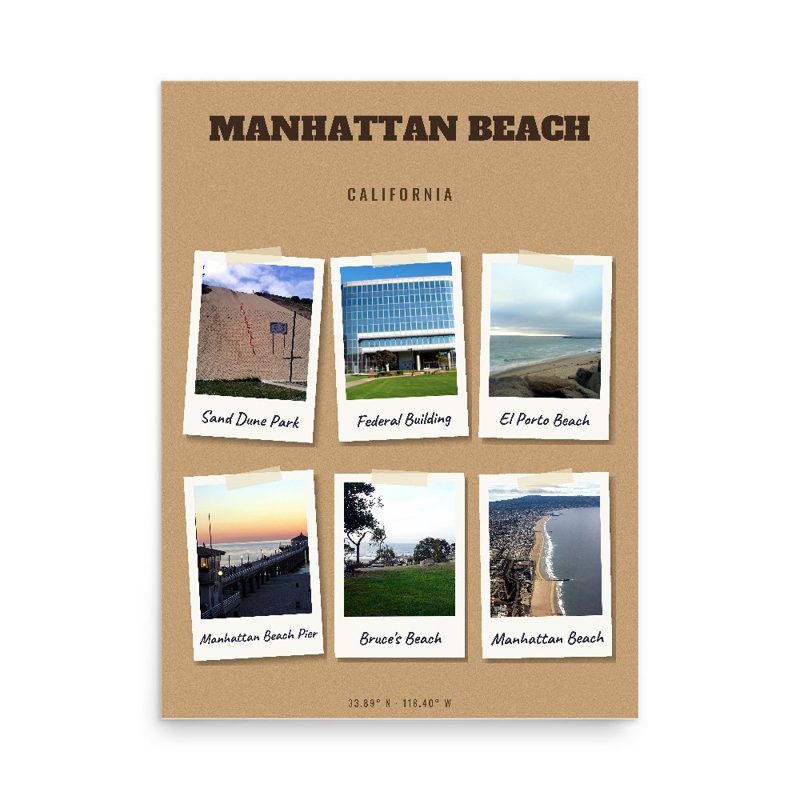
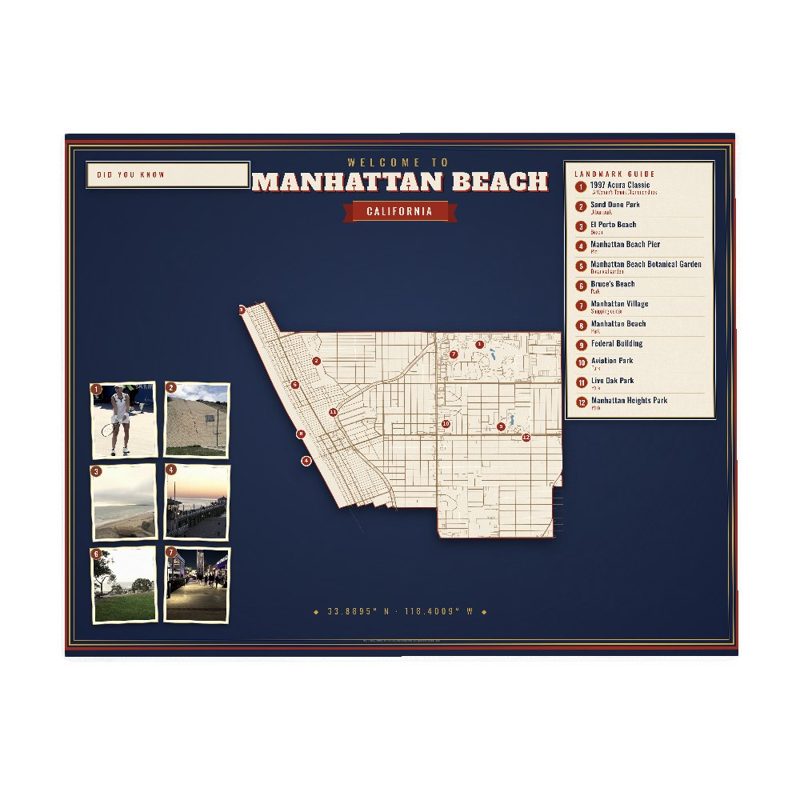

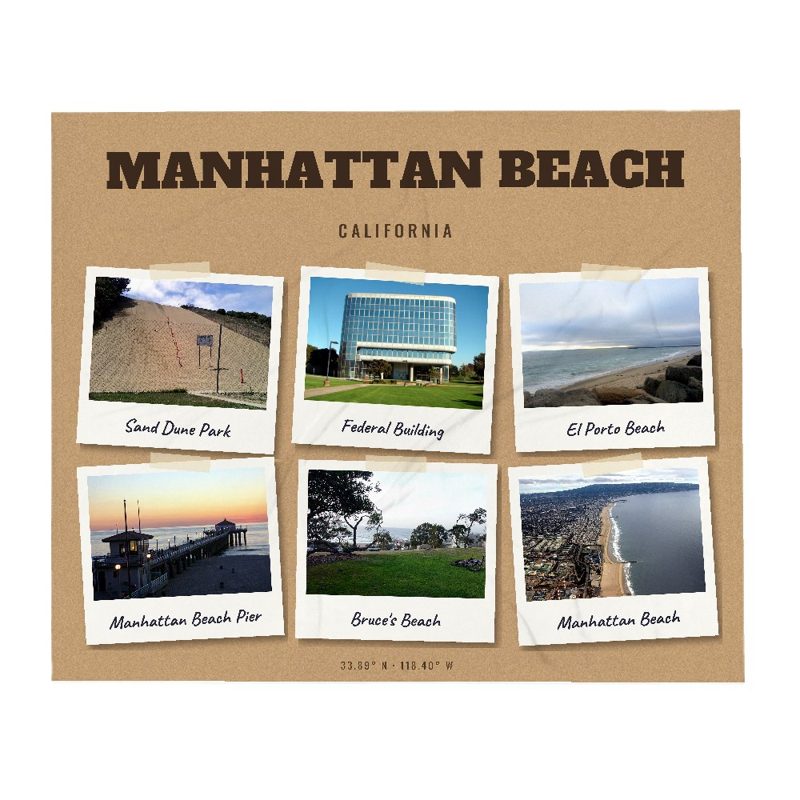
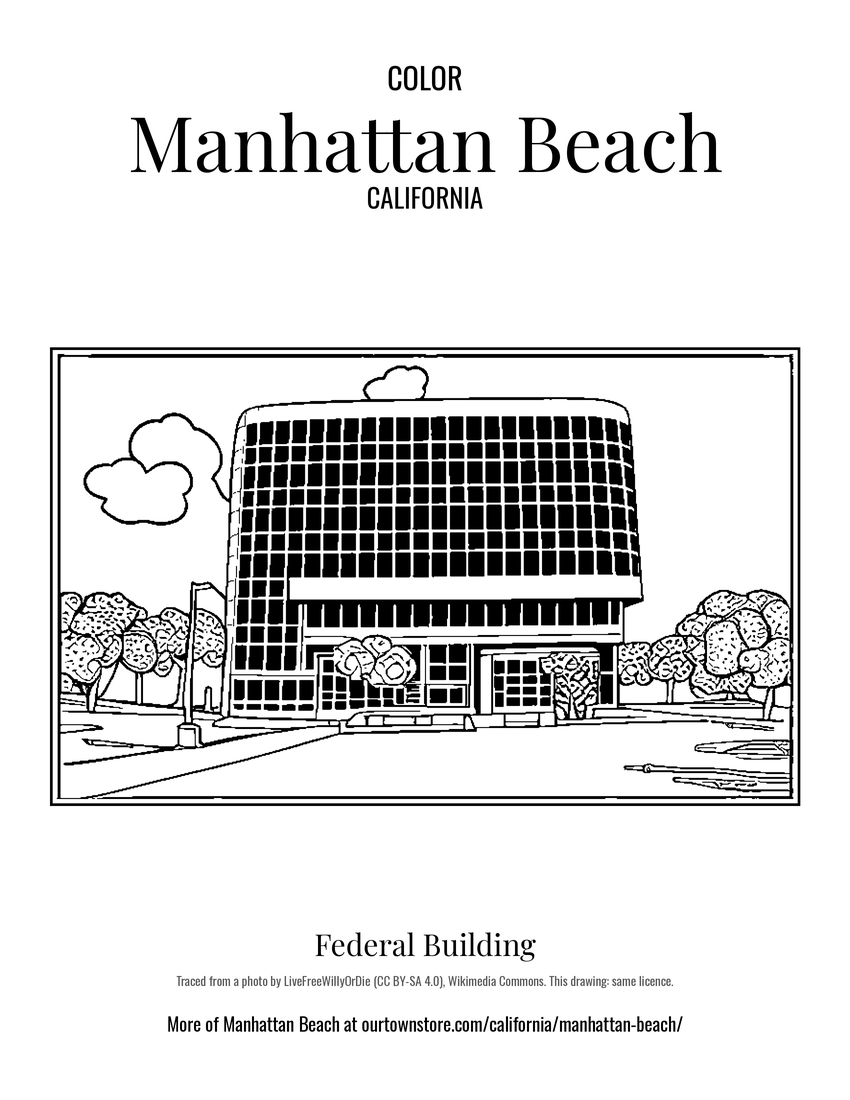 Federal Building
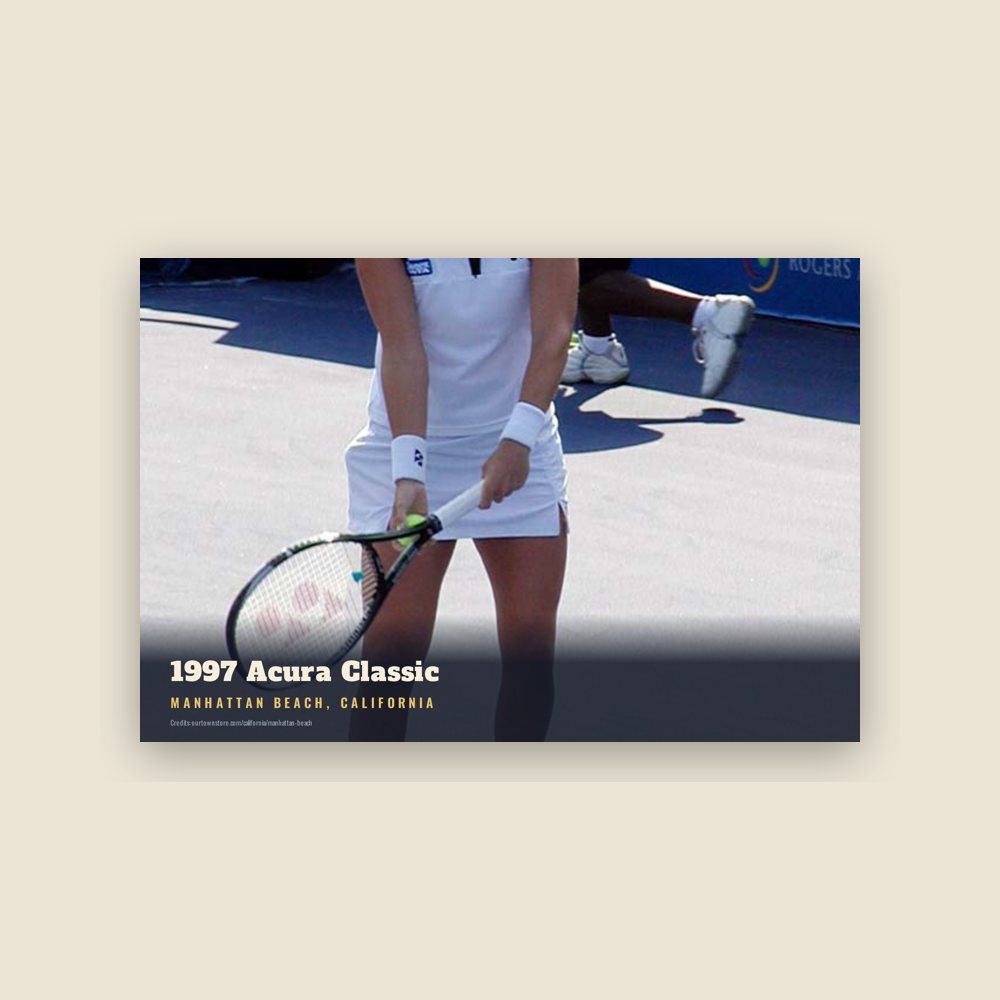
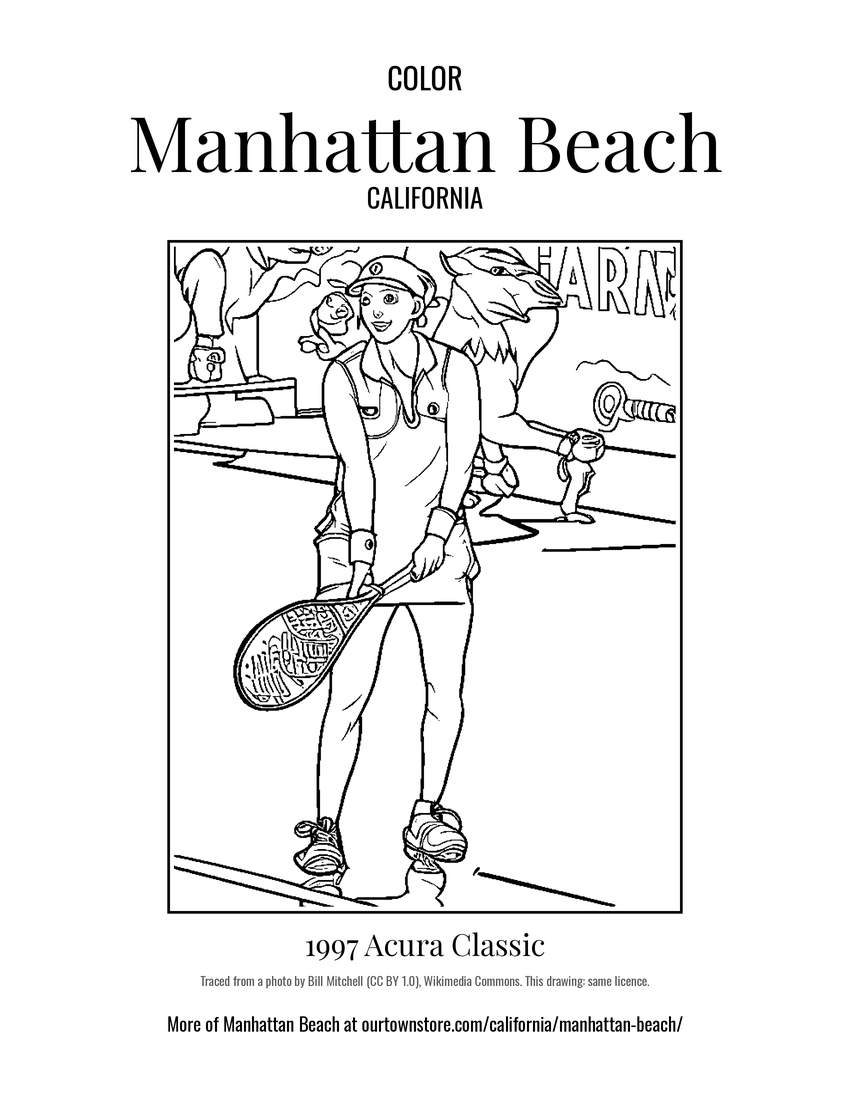 1997 Acura Classic
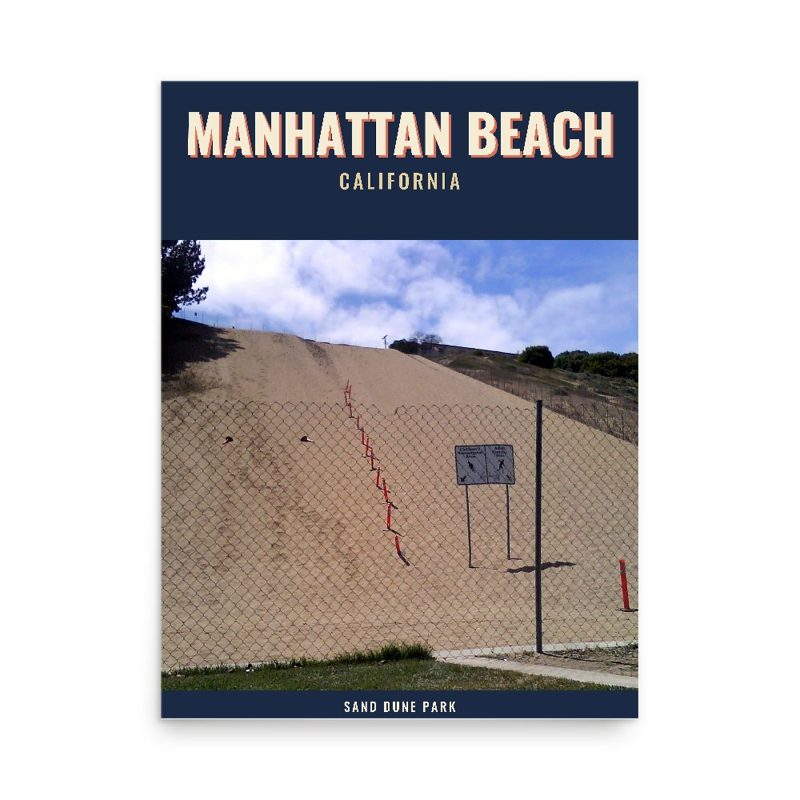
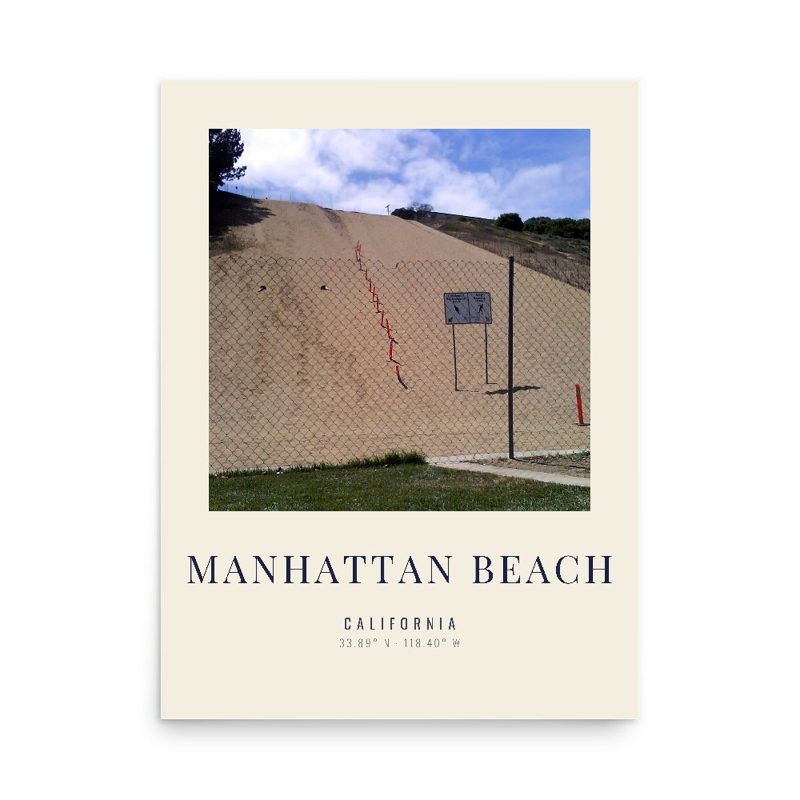
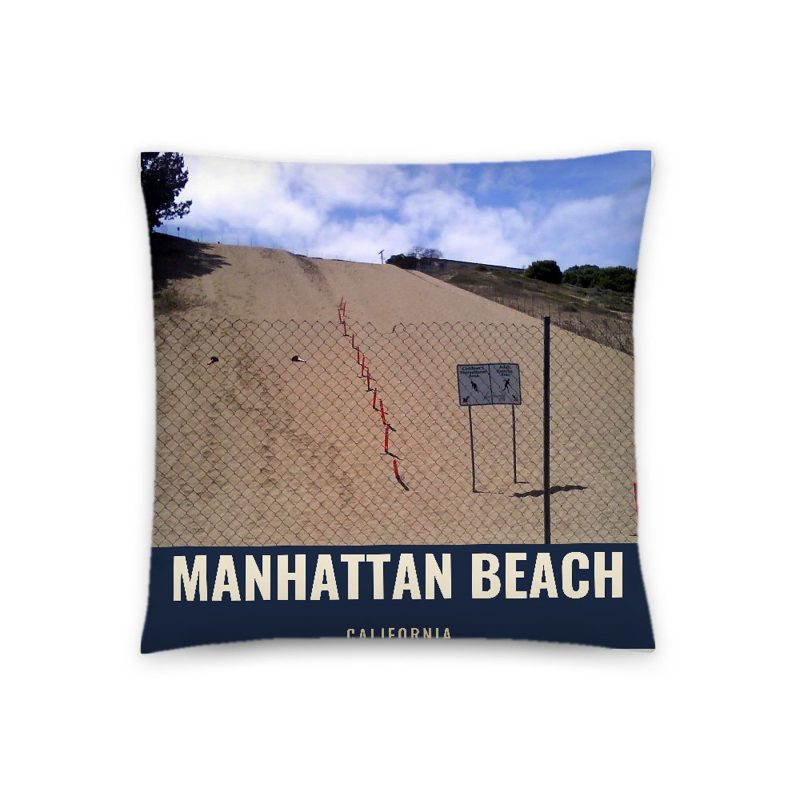
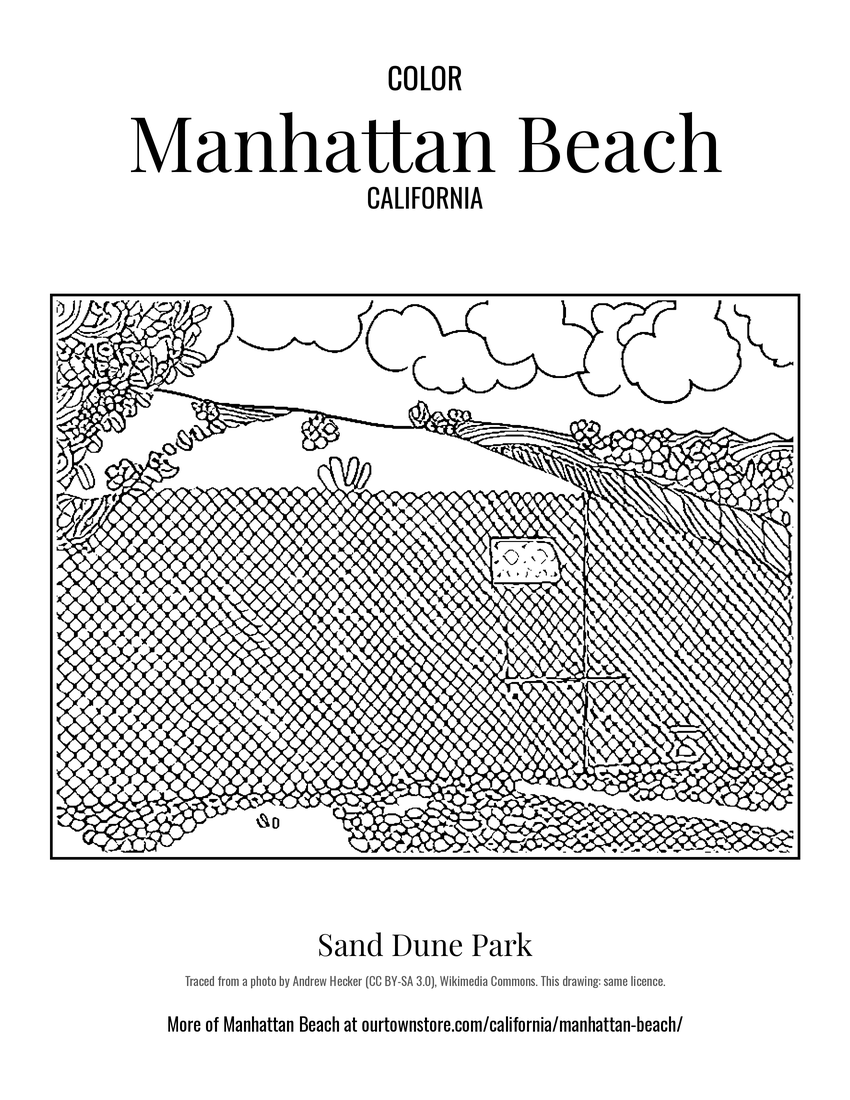 Sand Dune Park
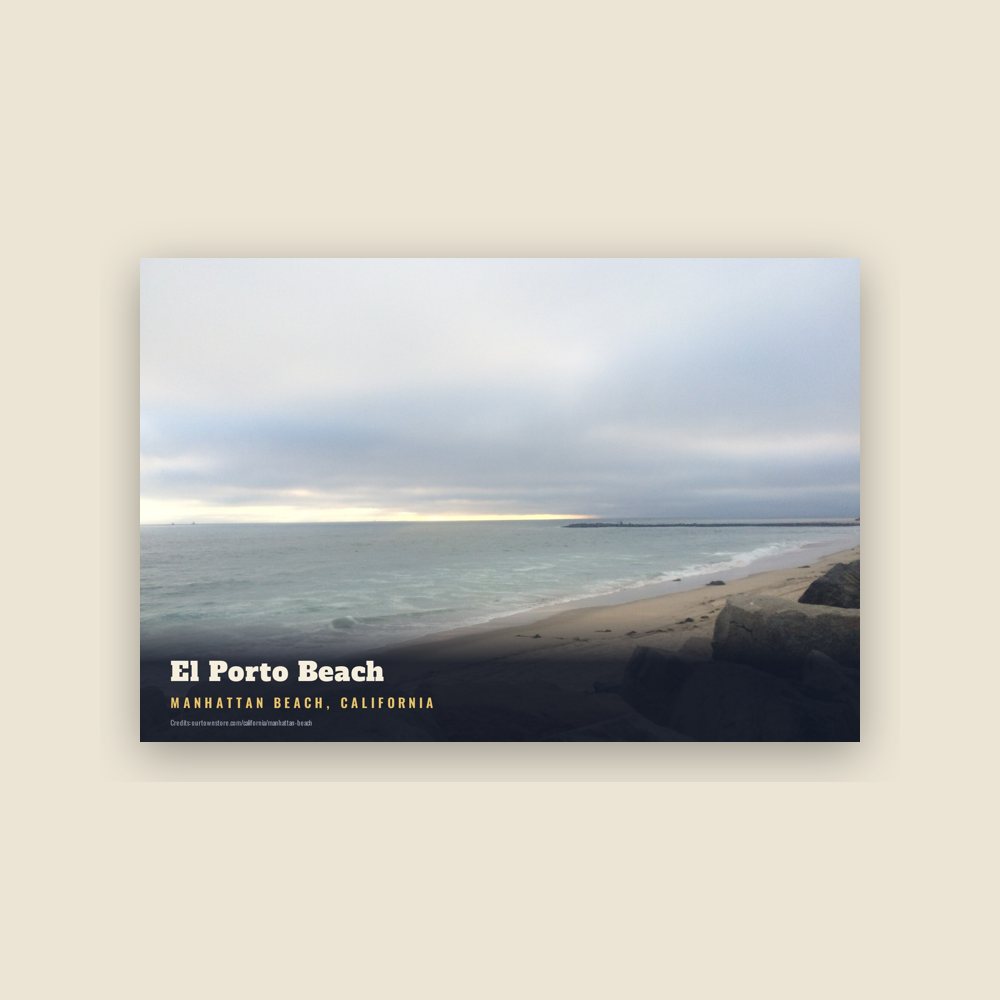
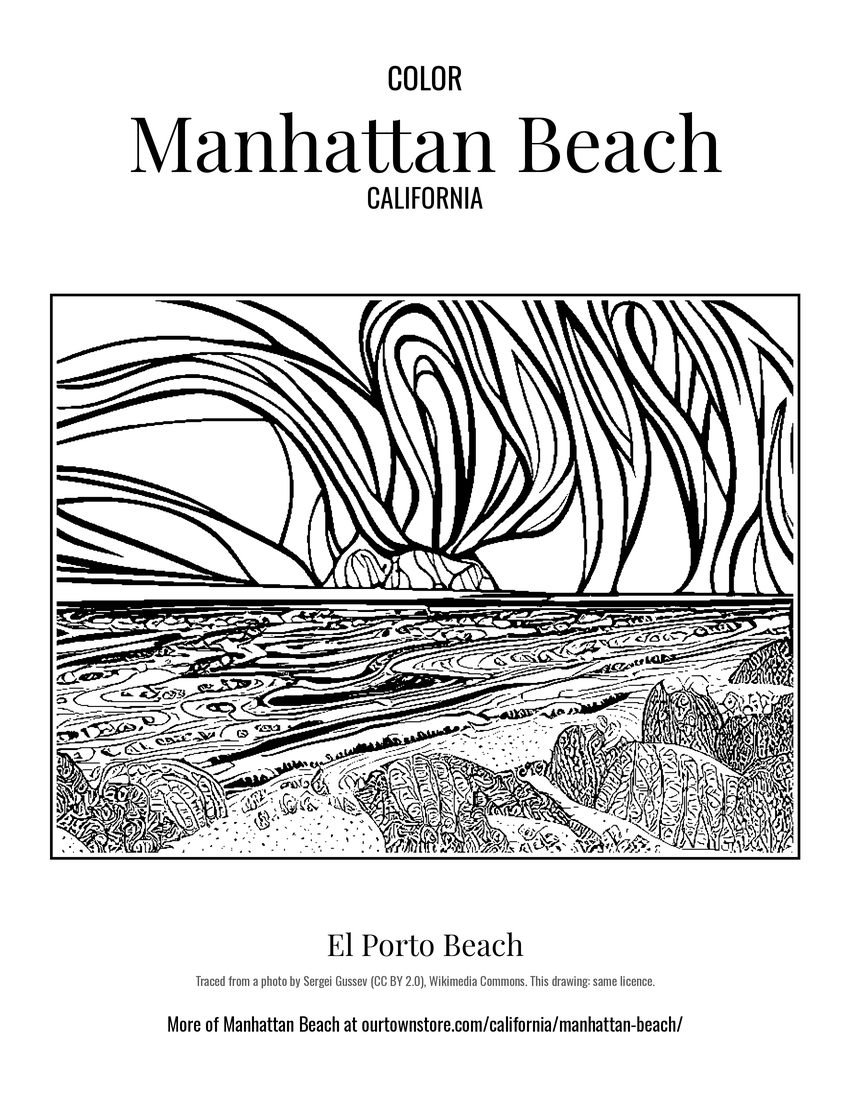 El Porto Beach