A short history of Davis
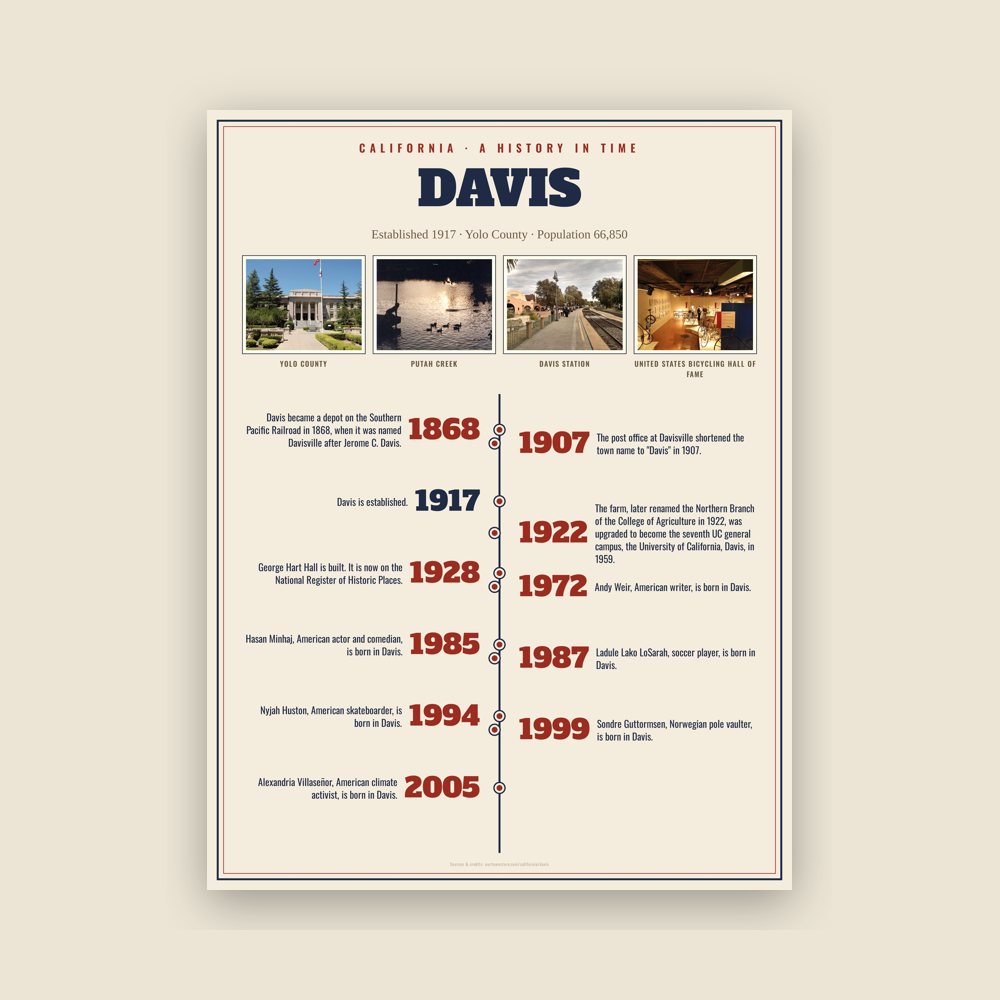
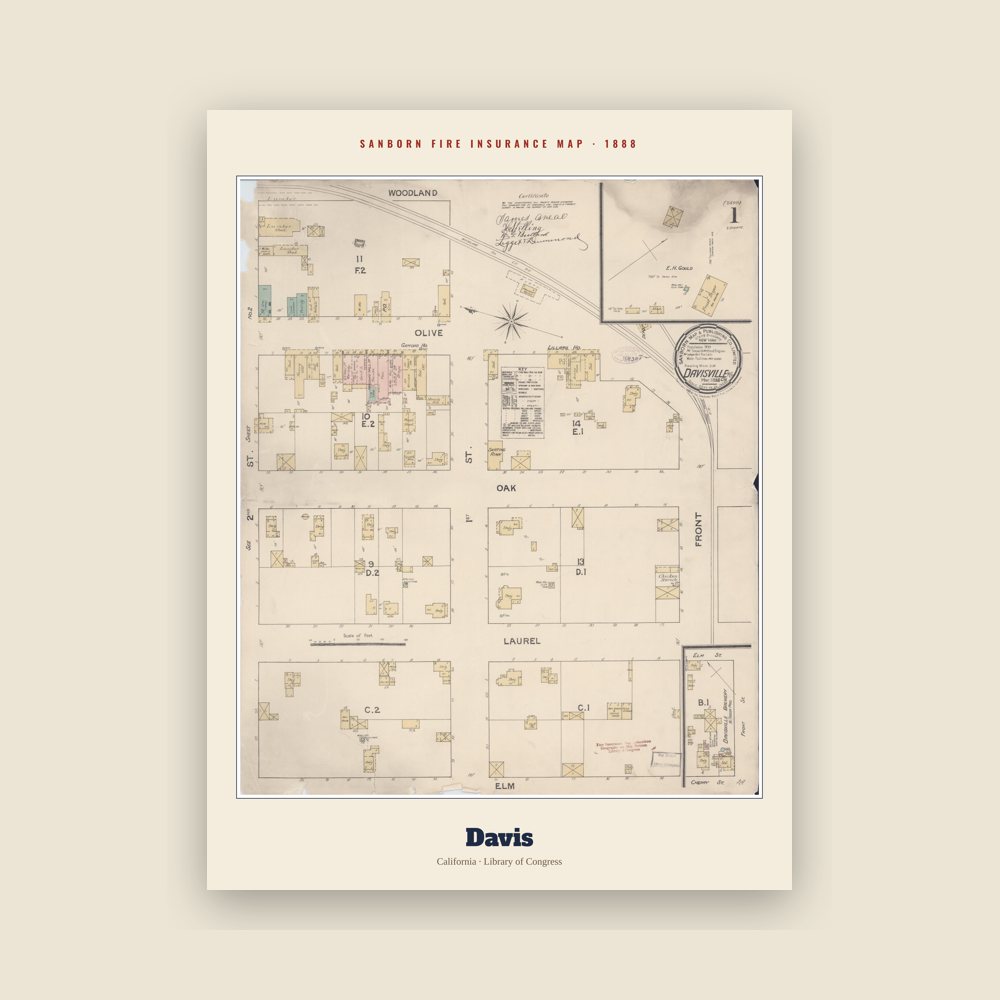
Davis sits on land that was historically inhabited by Indigenous people associated with the Clovis culture. The Patwin, a southern branch of Wintun people, eventually displaced existing Indigenous tribes. The Patwin were subsequently displaced by the American and Mexican government in the 1830s as part of the California genocide. Patwin burial grounds have been found across Davis, including on the site of the UC Davis Mondavi Center. Territory that eventually became Davis emerged from ranchos, Laguna de Santos Callé. Jerome C. Davis, a prominent farmer and one of the early claimants to land in Laguna de Santos Callé, lobbied to the United States Congress to retain the land that eventually became Davis. Davis became a depot on the Southern Pacific Railroad in 1868, when it was named Davisville after Jerome C. Davis. The post office at Davisville shortened the town name to "Davis" in 1907. The name stuck, and the city of Davis was incorporated on March 28, 1917.
From its inception as a farming community, Davis is known primarily for its contributions to agricultural science and policy along with veterinary care and animal husbandry. Following the passage of the University Farm Bill in 1905 by the California State Legislature, Governor George Pardee selected Davis out of 50 other sites as the future home to the University of California's University Farm, officially opening to students in 1908. The farm, later renamed the Northern Branch of the College of Agriculture in 1922, was upgraded to become the seventh UC general campus, the University of California, Davis, in 1959.
Adapted (trimmed) from the Wikipedia article Davis, California, revision 1378300528 by its contributors, licensed CC BY-SA 4.0.

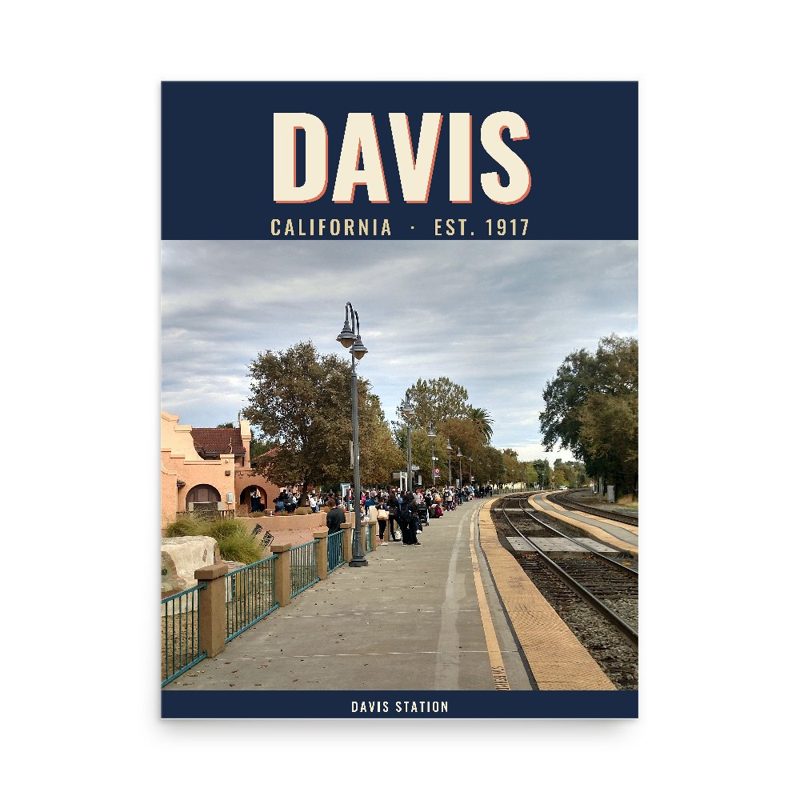
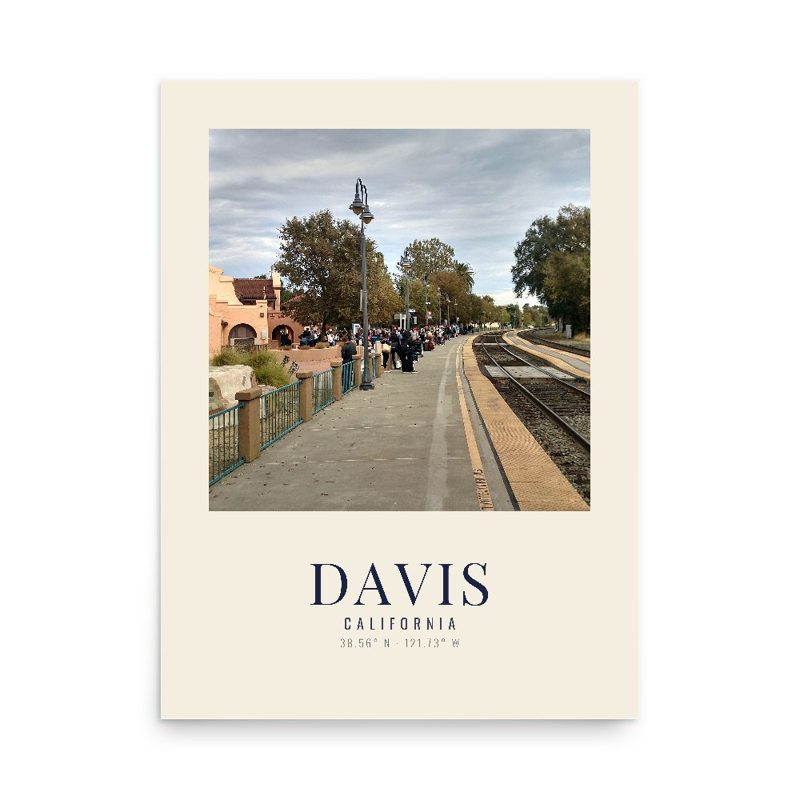
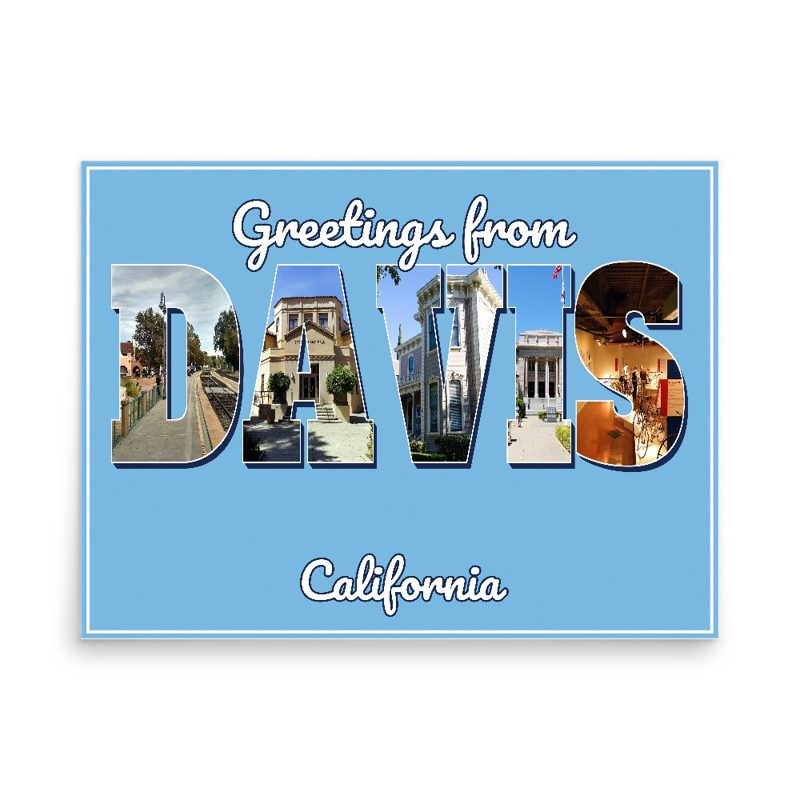
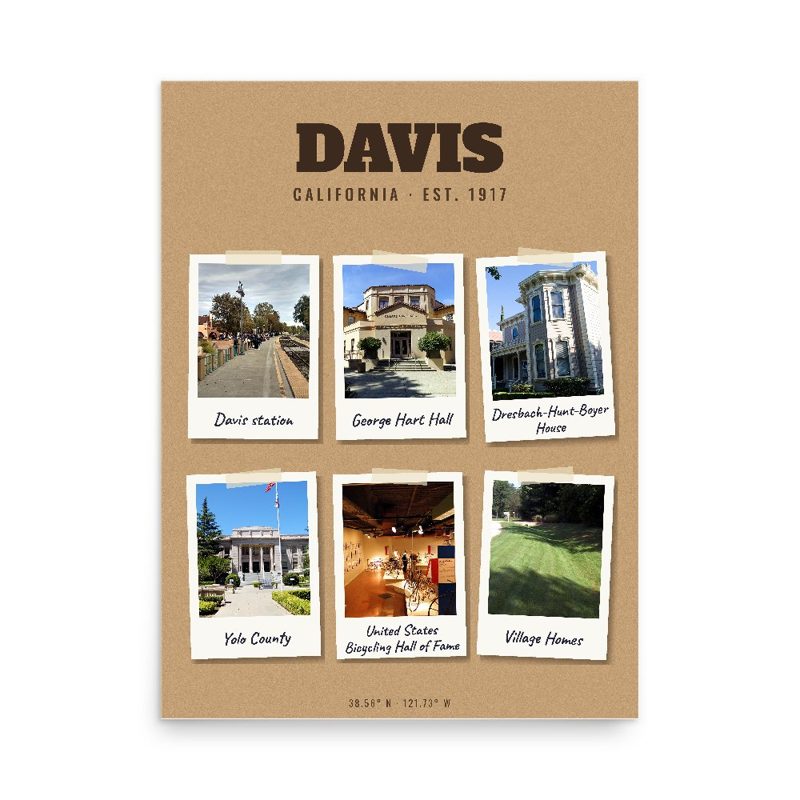
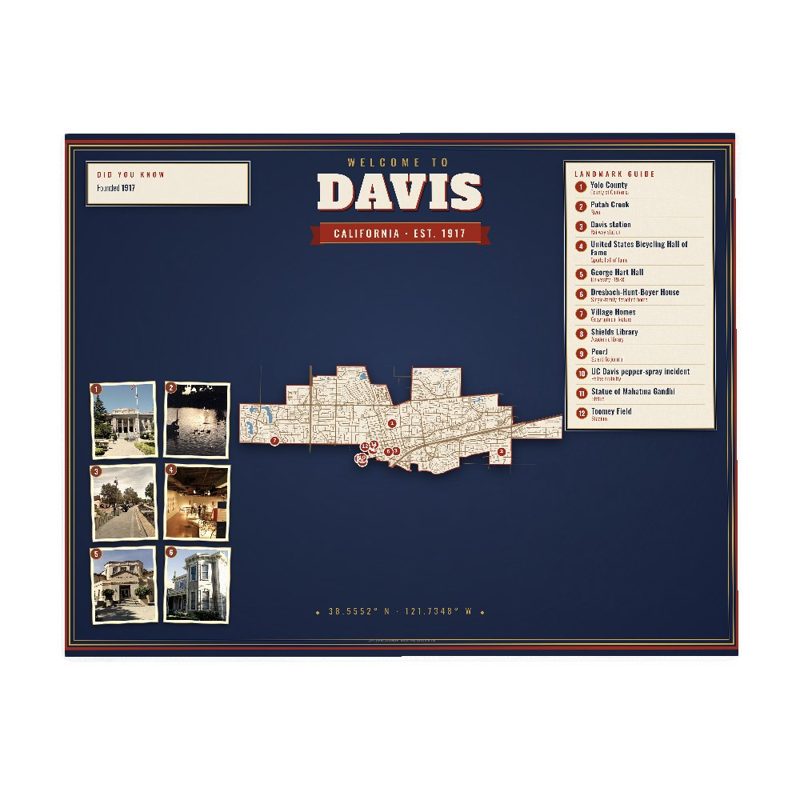

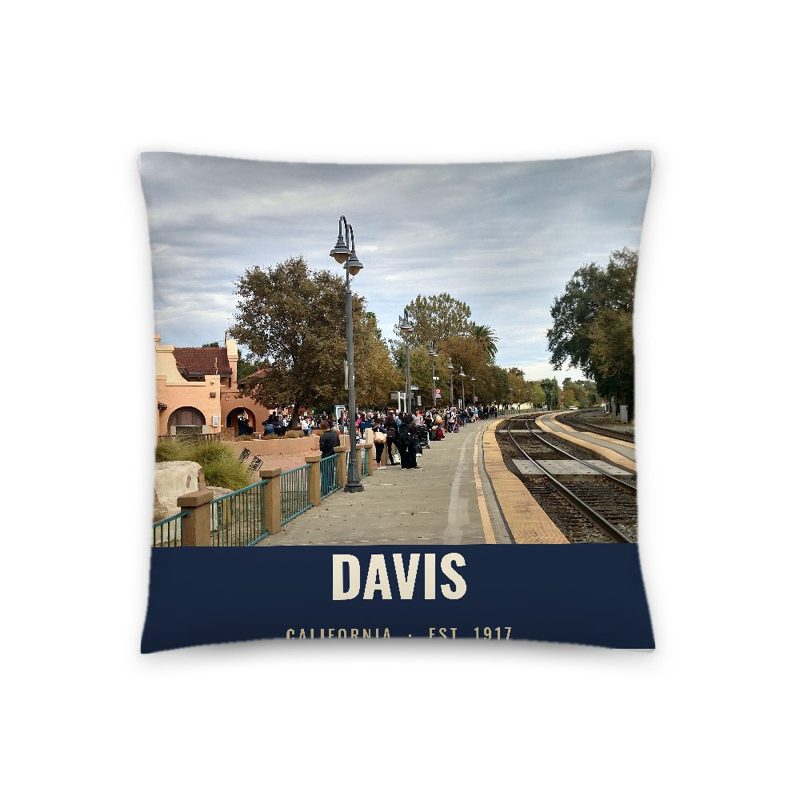


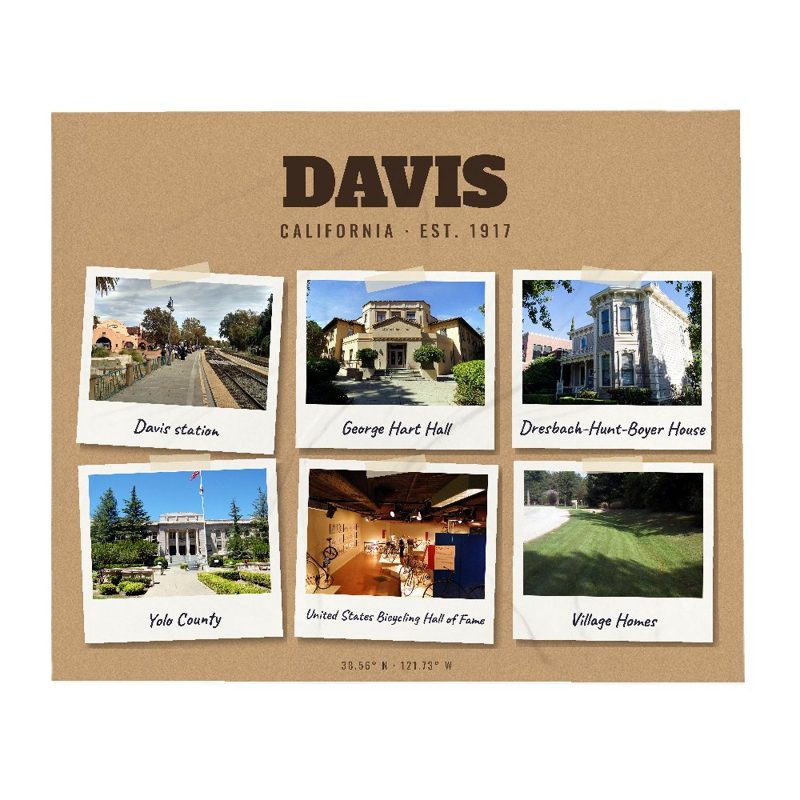
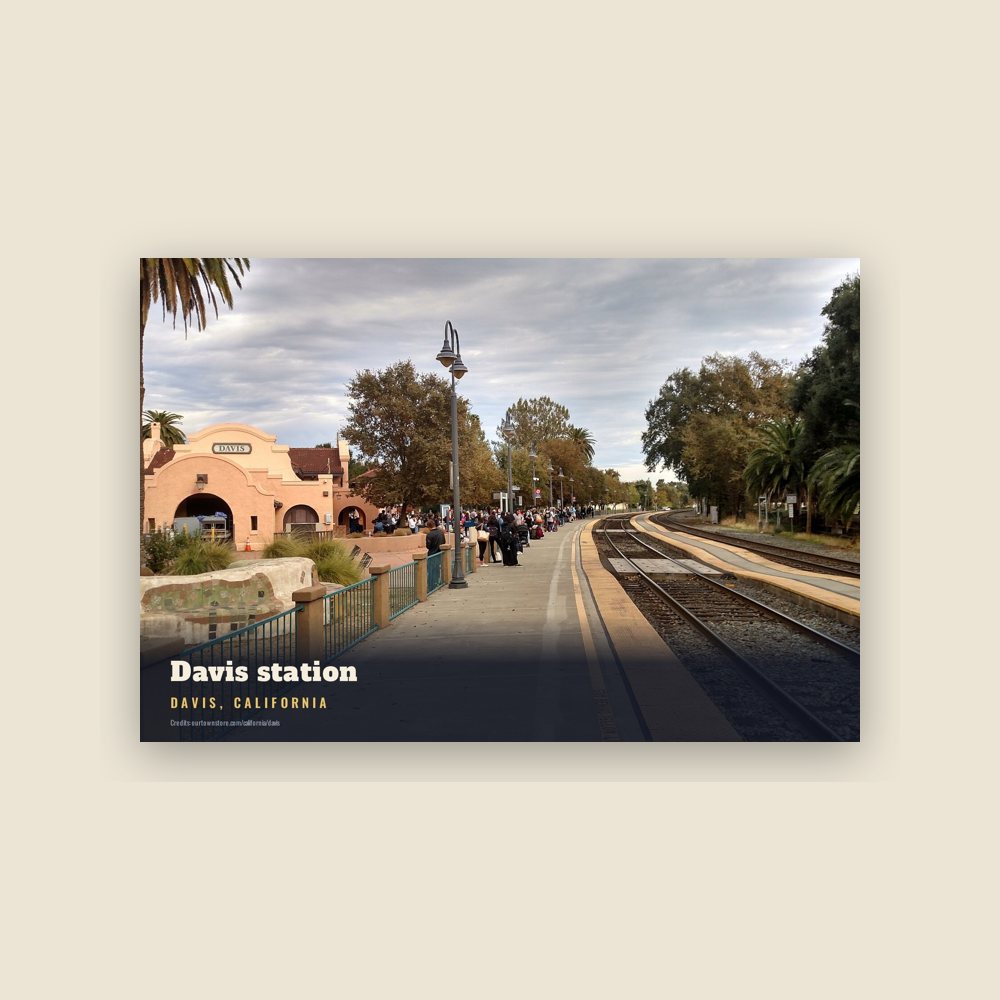

 Davis station
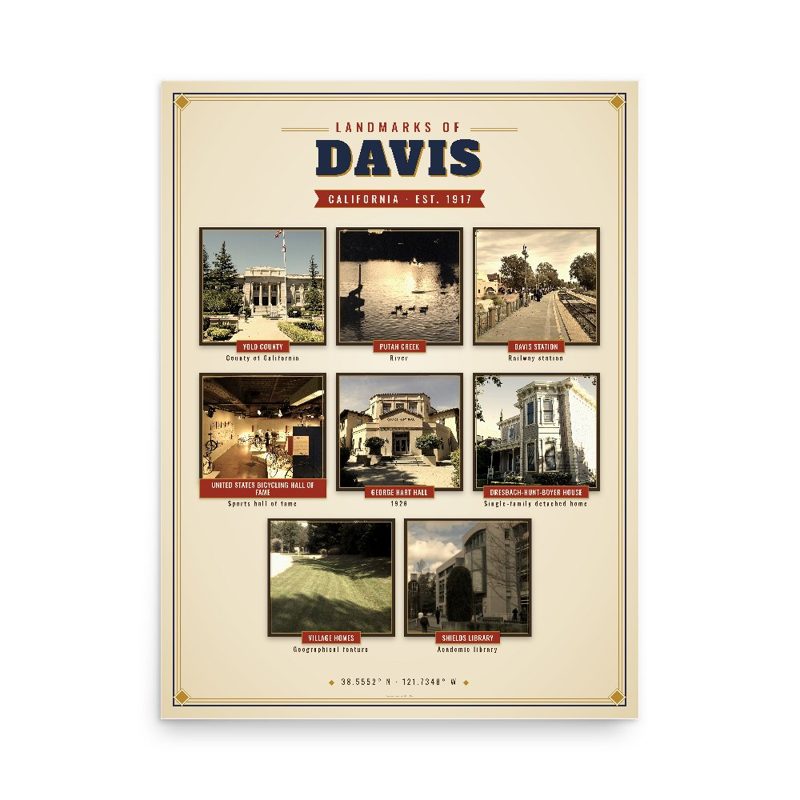
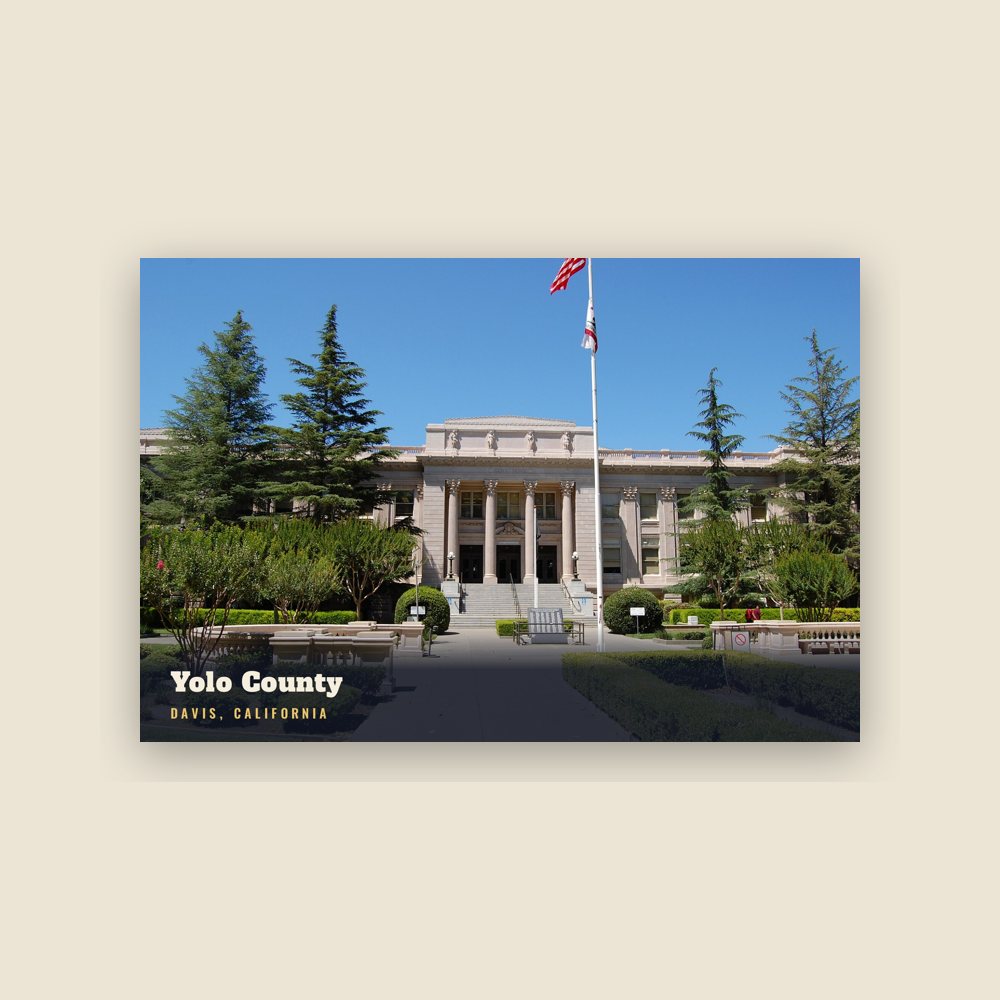
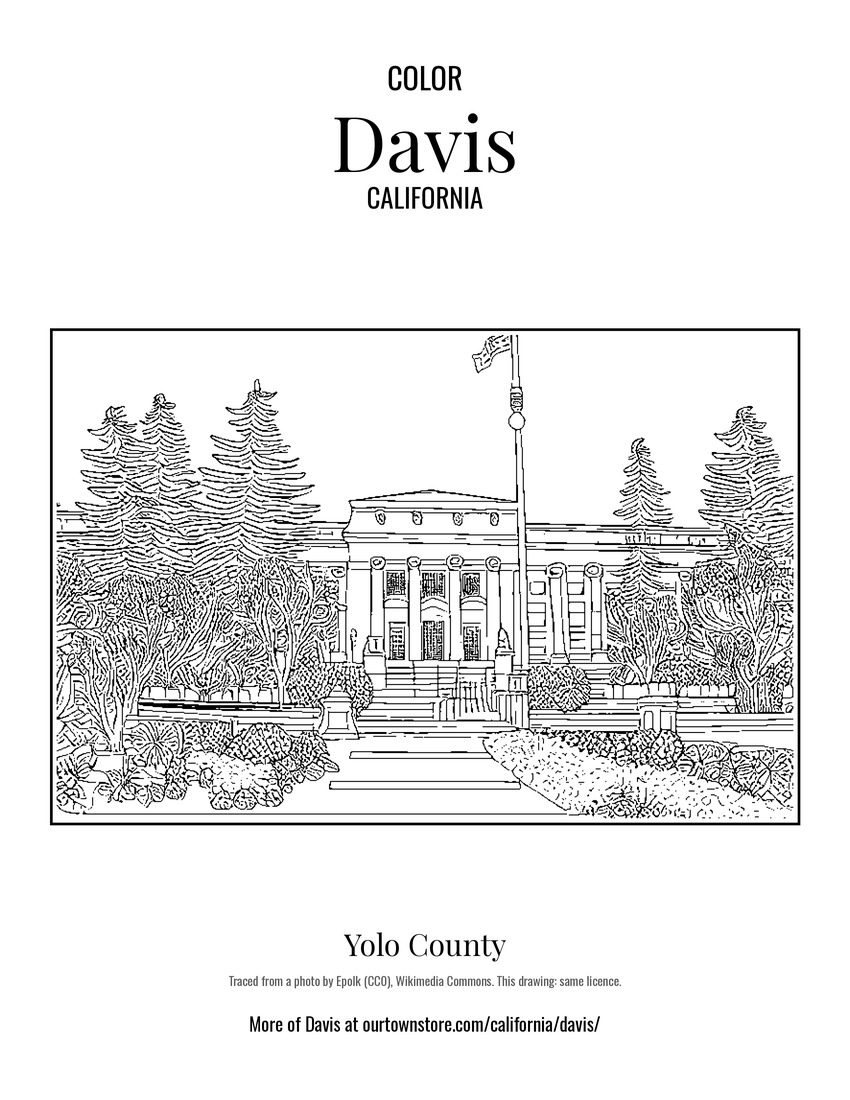 Yolo County
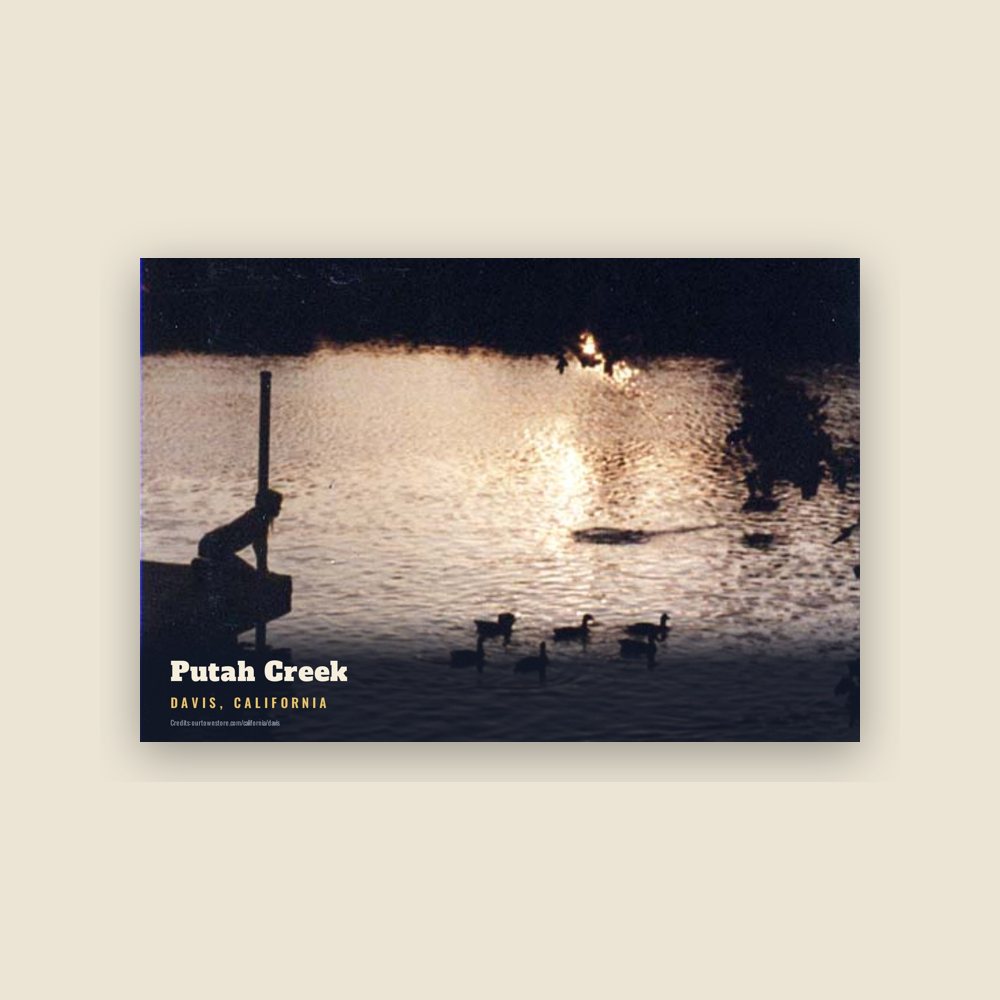
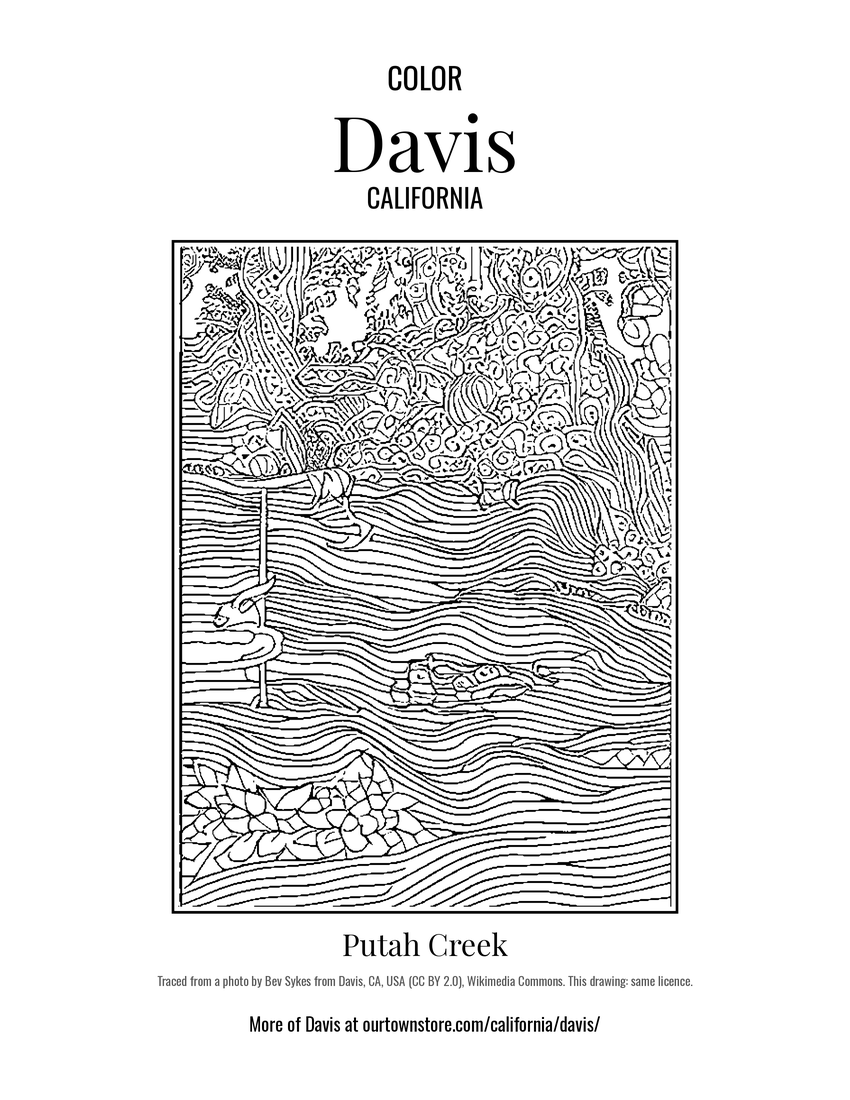 Putah Creek
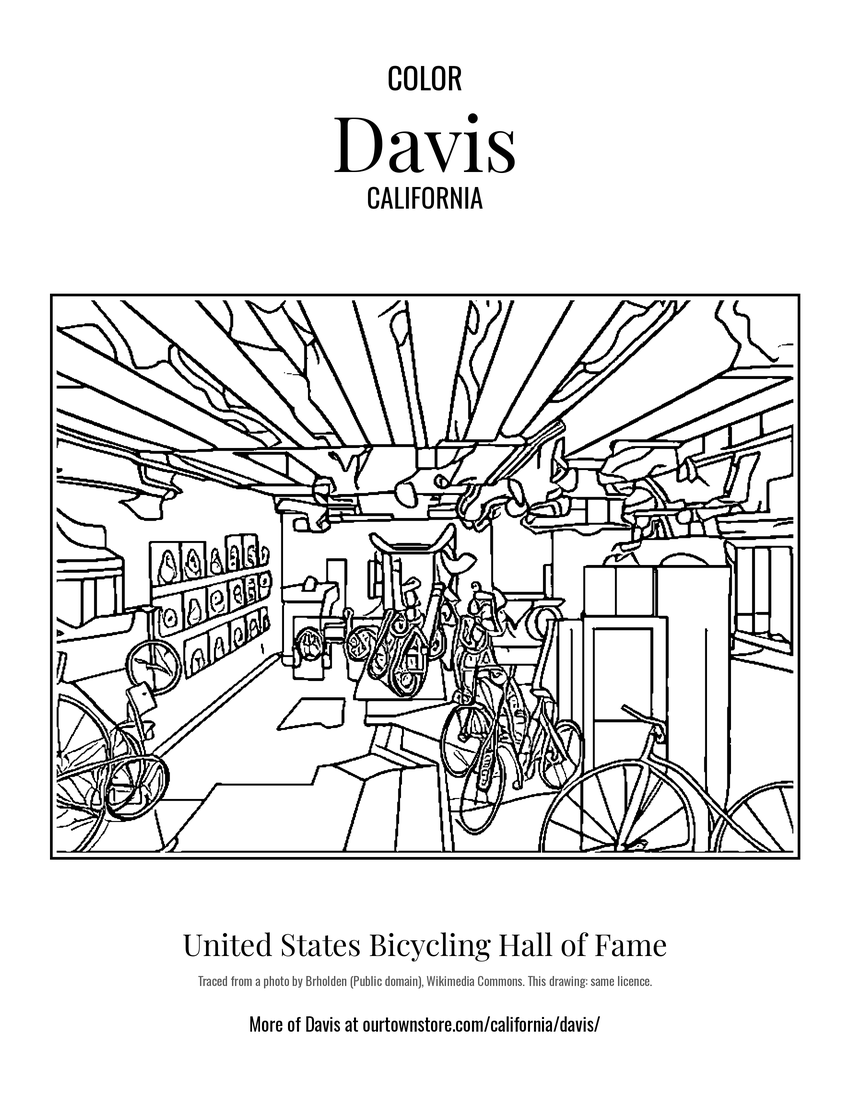 United States Bicycling Hall of Fame