Since 1896
A short history of Marion
Early history
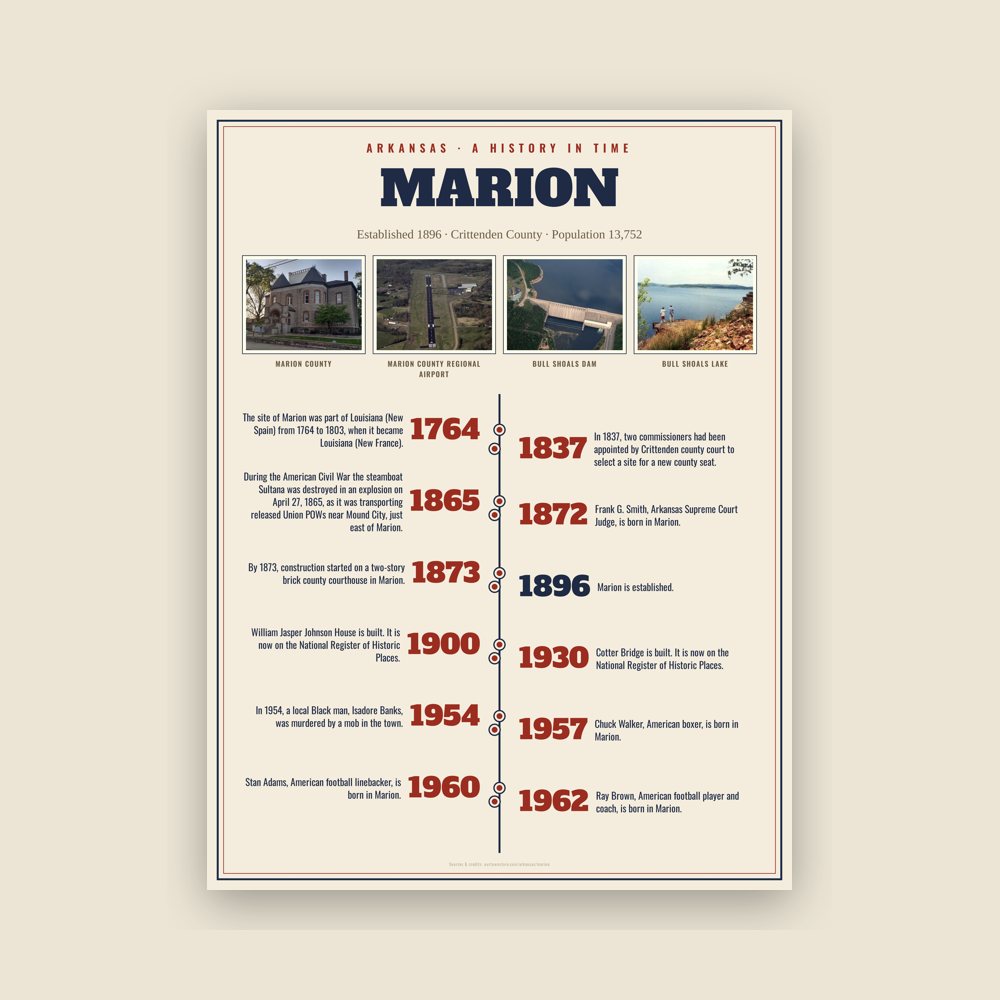
Although Marion was incorporated in 1896, the community predates that significantly. The site of Marion was part of Louisiana (New Spain) from 1764 to 1803, when it became Louisiana (New France). Some of the oldest land titles in the area are from Spanish land grants from a time prior to the Louisiana Purchase. After the Louisiana Purchase the area was part of the Arkansas Territory. During the 1830s the Trail of Tears (the forced removal of Native Americans from Georgia, Alabama, and Mississippi) passed through the area.
In 1837, two commissioners had been appointed by Crittenden county court to select a site for a new county seat. County residents Marion Tolbert and his wife Temperance gave a deed to the commissioners "for the county of Crittenden for county purposes" on June 25, 1837. A town was laid out and named Marion in honor of the man who gave the land for the site. The town of Marion was officially made the county seat of Crittenden County, Arkansas.
Soon after the county seat was moved from its first location of Greenock on the Mississippi River to Marion, a wooden frame building was constructed in the town for holding court. At an unknown point, the building was destroyed by a tornado. In the late 1850s, the first railroad in the state of Arkansas, the Memphis & Little Rock Railroad, laid tracks 5.5 miles south of the town.
Read the full history
American Civil War and after
During the American Civil War the steamboat Sultana was destroyed in an explosion on April 27, 1865, as it was transporting released Union POWs near Mound City, just east of Marion. It is estimated that 1,500 soldiers and crew were killed, the largest loss of life in a maritime accident in US history. This tragedy is commemorated by a historic marker placed by the Daughters of the American Revolution.
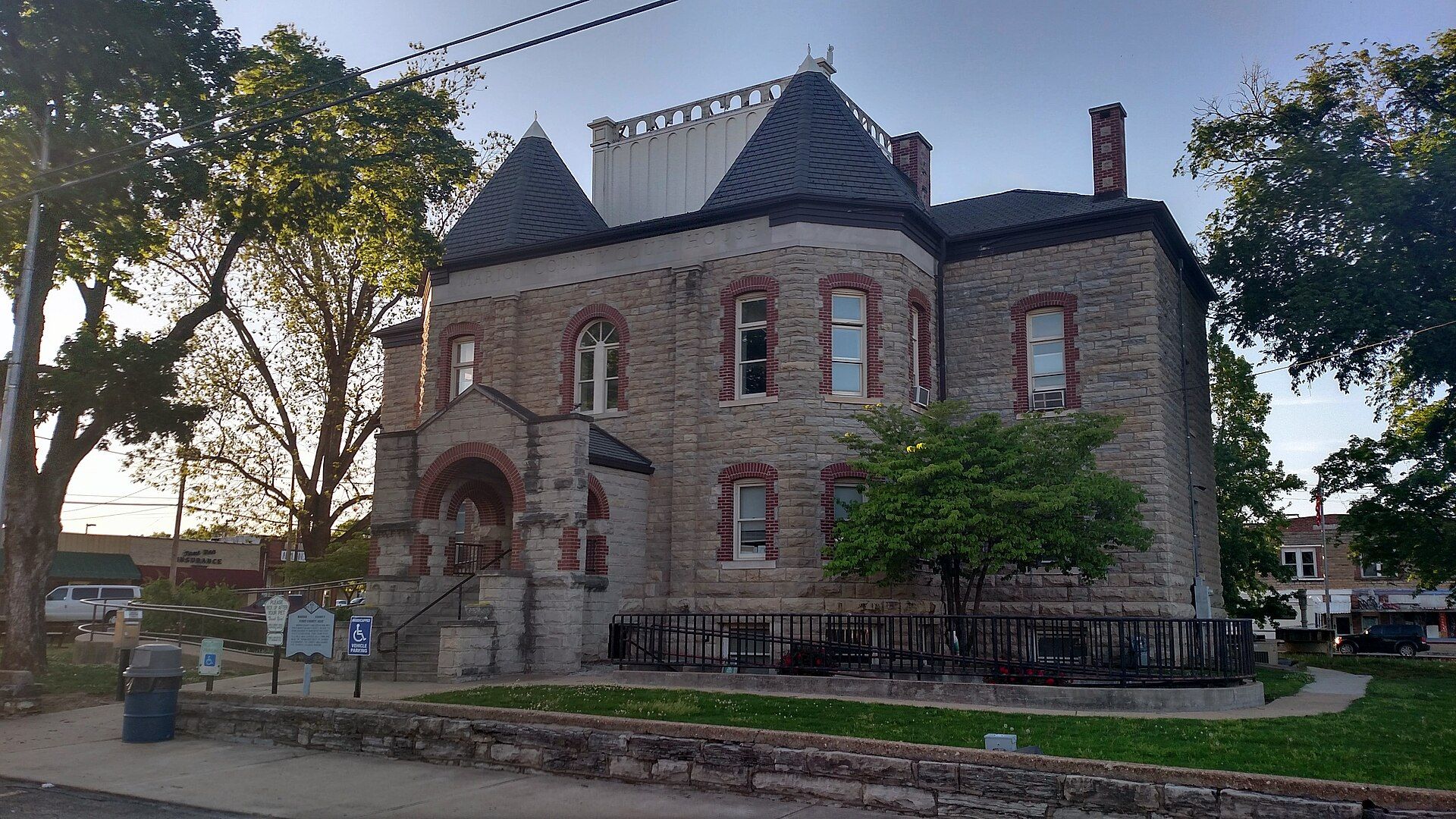
By 1873, construction started on a two-story brick county courthouse in Marion. This building burned in 1908 and was later replaced with the current brick courthouse. The initial contract for the courthouse and jail was $60k, and due to unknown circumstances construction took many years to finish. In the 1880s, the town received its first proper railway connection when the St. Louis–San Francisco Railway built a line through the town to make a connection between St. Louis, Missouri and Memphis.
In 1954, a local Black man, Isadore Banks, was murdered by a mob in the town. He was chained to a tree, covered with gasoline and burned. Nobody was ever charged in the killing.
Incorporation
Italian settlement
In the late 19th and early 20th centuries, many Italian immigrants settled in Marion to engage in agricultural work for local plantation owners, such as Will Dockery. Many families later opened various businesses and contributed significantly to the local economy.
Several Italian businesses exist in Marion and the surrounding area, such as Veanos Italian Restaurant and Sicily's in West Memphis.
Adapted (trimmed) from the Wikipedia article Marion, Arkansas, revision 1378551354 by its contributors, licensed CC BY-SA 4.0.
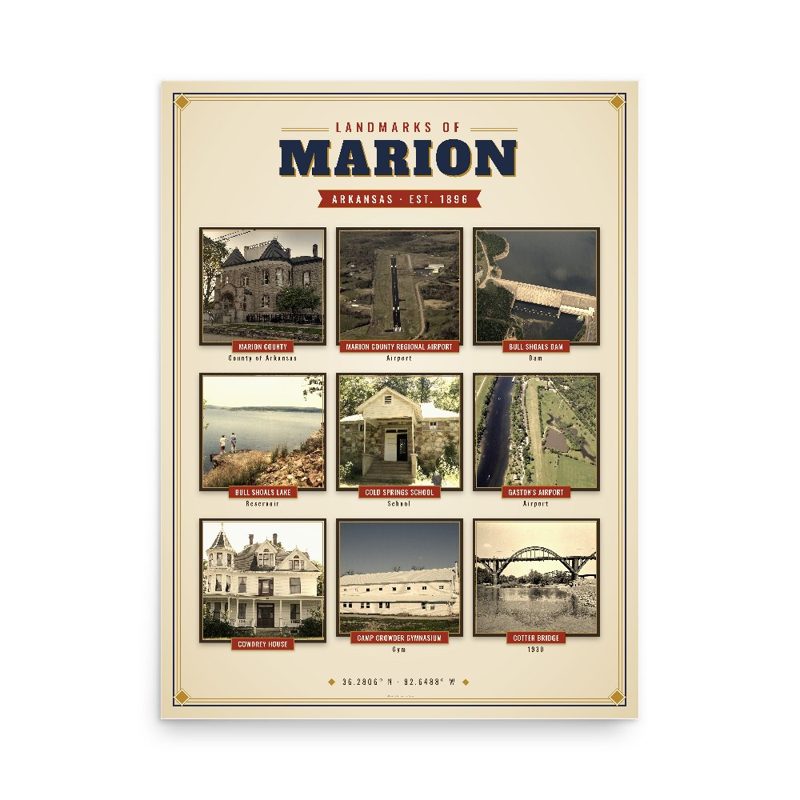


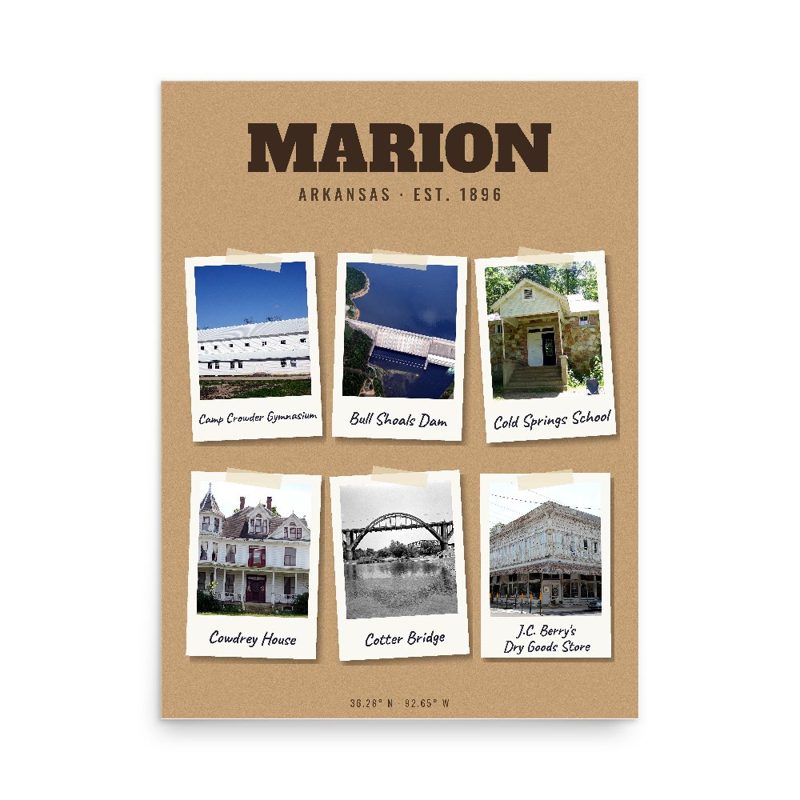
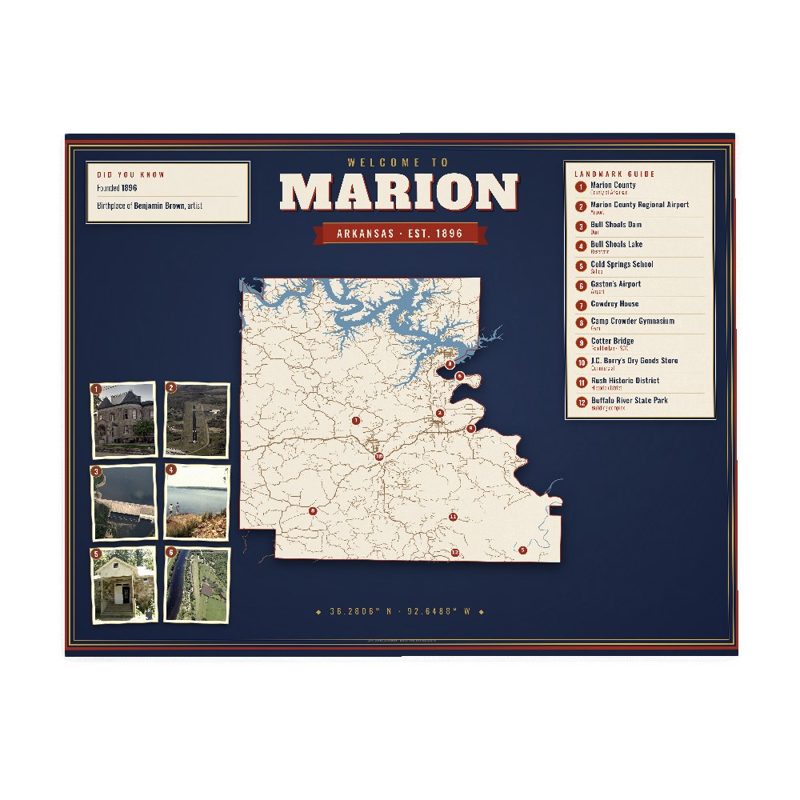
















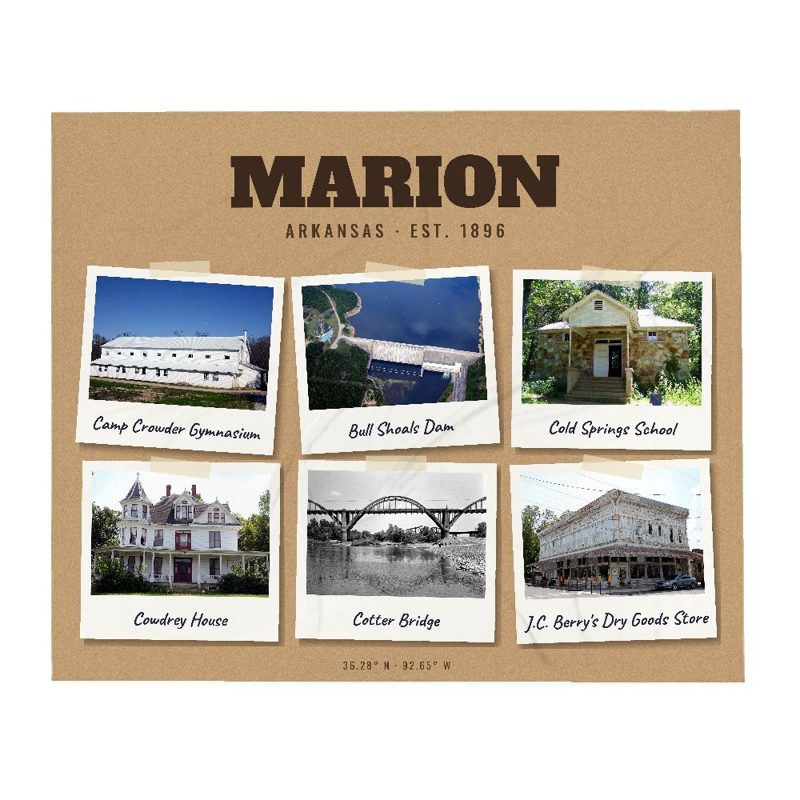




 Cold Springs School
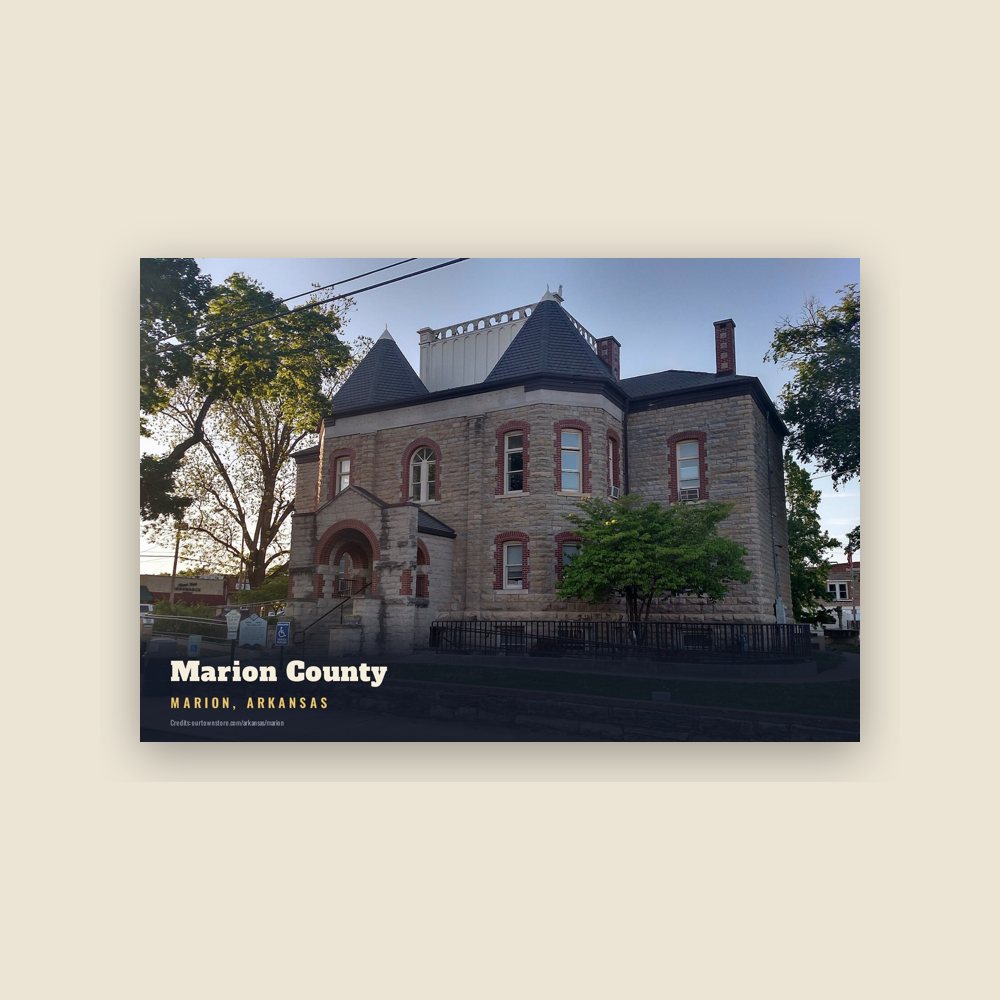
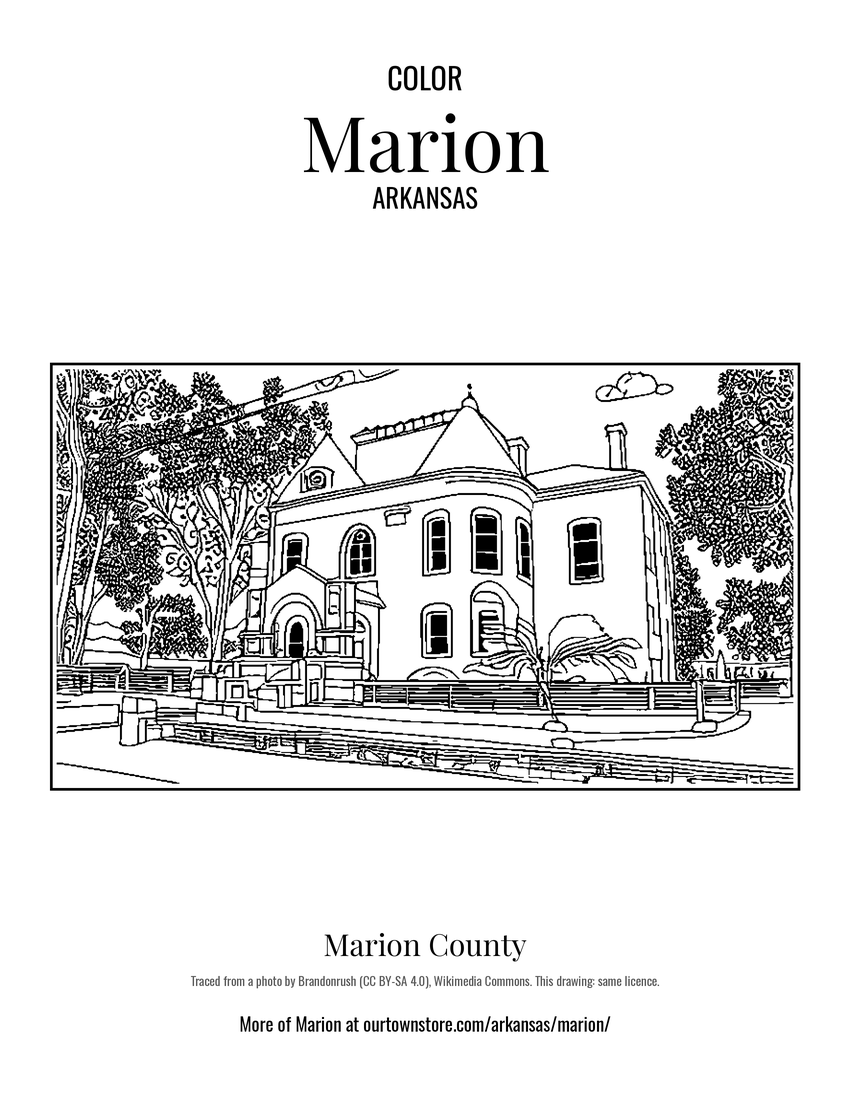 Marion County
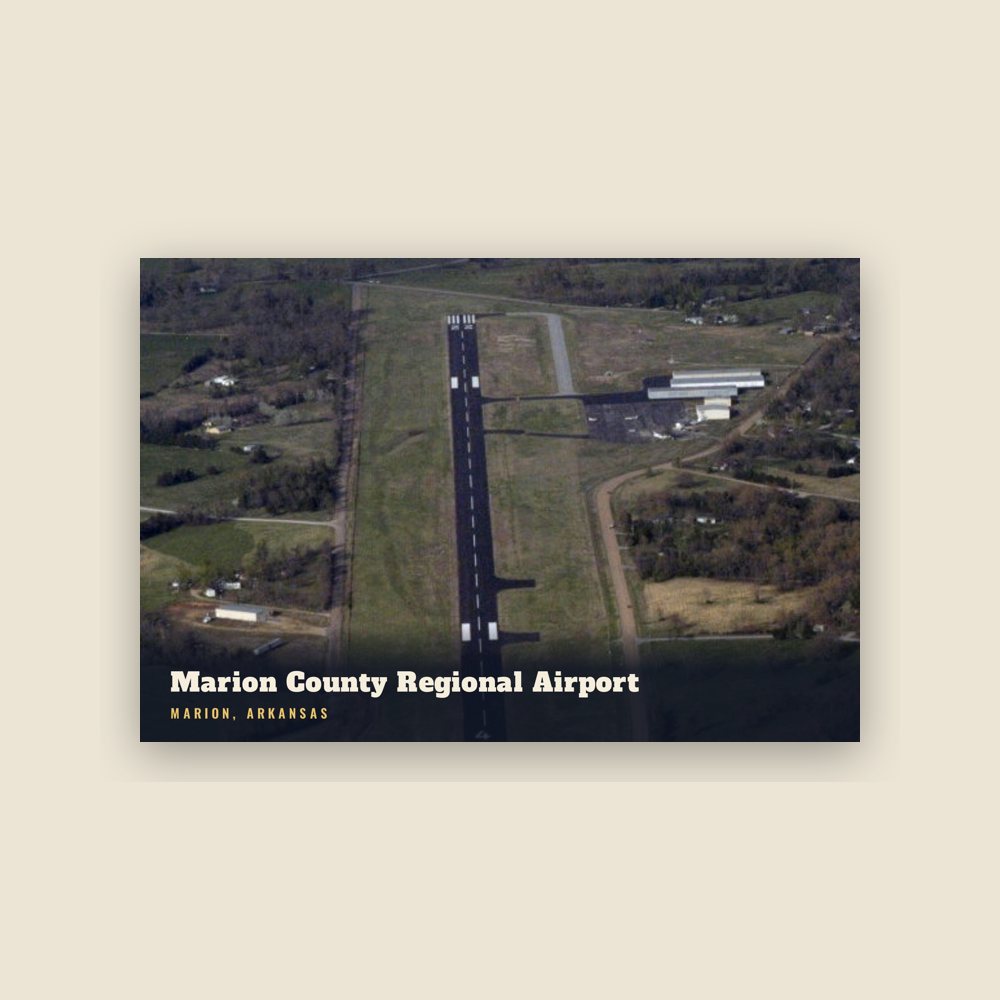
 Marion County Regional Airport
 Bull Shoals Dam