Cart 0
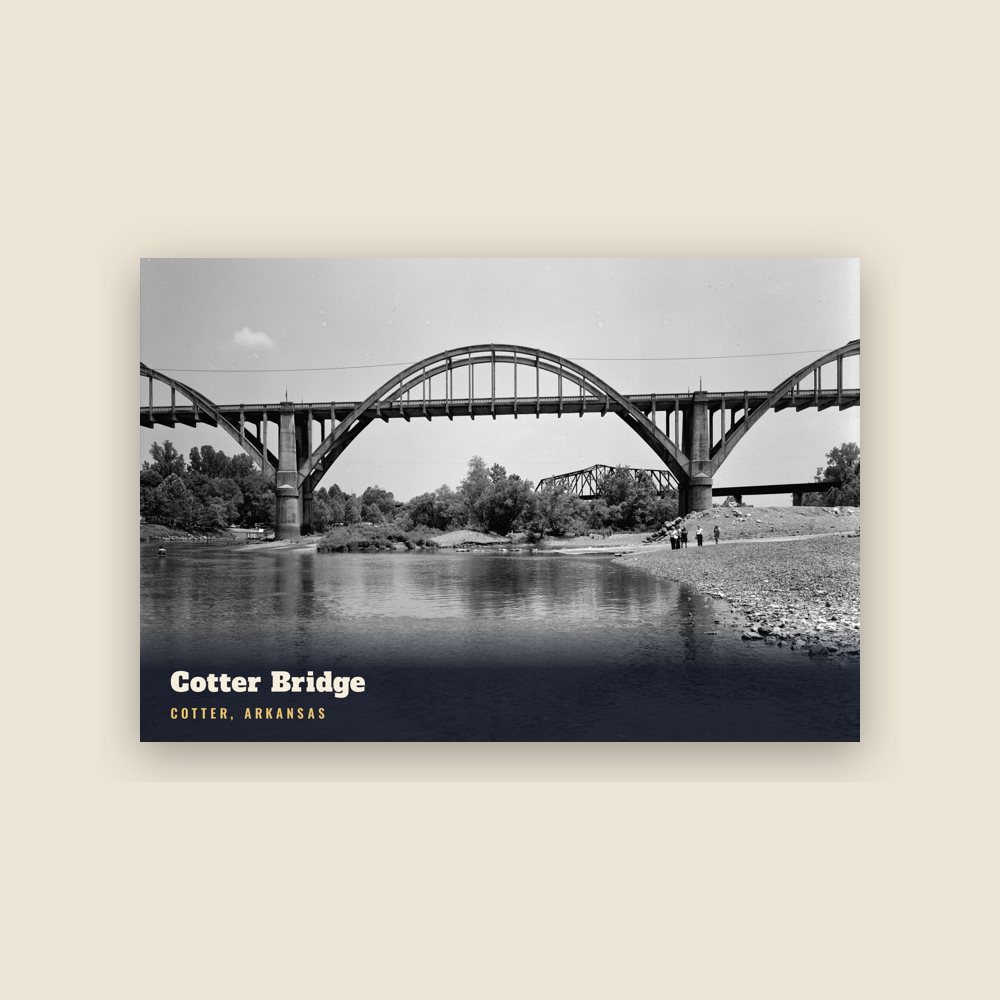
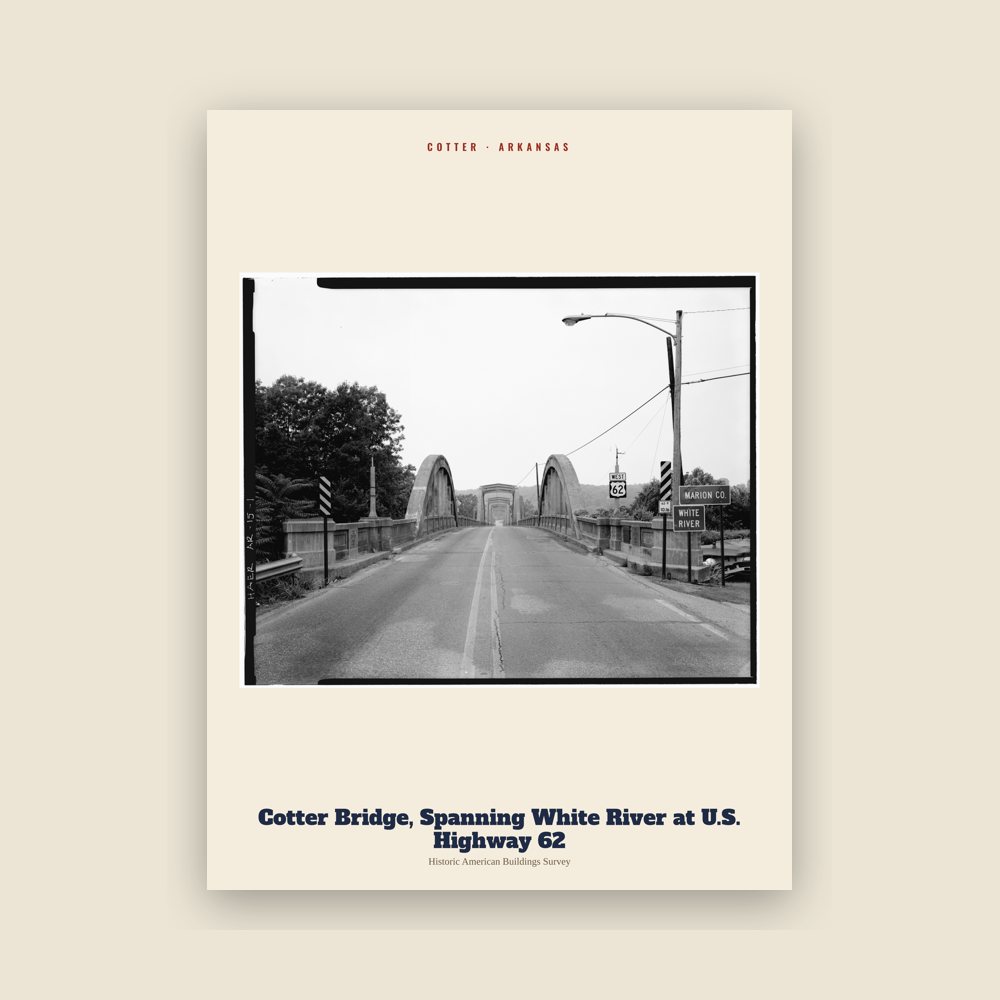
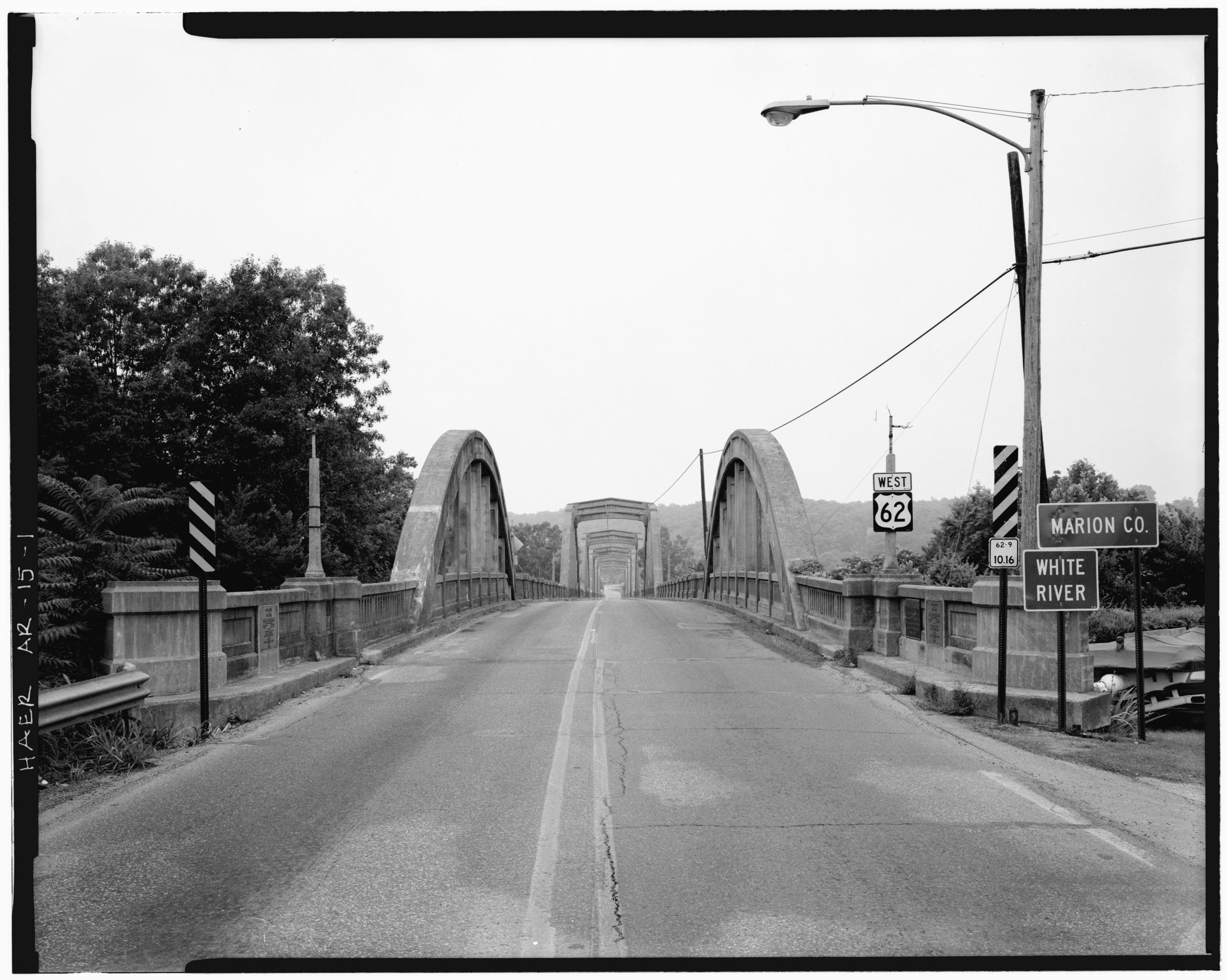
Cotter Bridge, Spanning White River at U.S. Highway 62, Cotter, Arkansas, Historic American Buildings Survey photograph

COTTER

Arkansas · Est. 1905
Shop the collection

Native American Bluff Dwellers were the original inhabitants of the area now known as Cotter for centuries before settlers arrived. Landmarks include Cotter Bridge, Cotter Water Tower and KCTT-FM.

The Cotter Collection

Made for Cotter. Printed to order.

Cotter, Arkansas gifts and souvenirs: 31 designs made from Cotter's own map, landmarks and history, from $10 to $95. Printed to order and shipped free in the USA.

PopularPrice
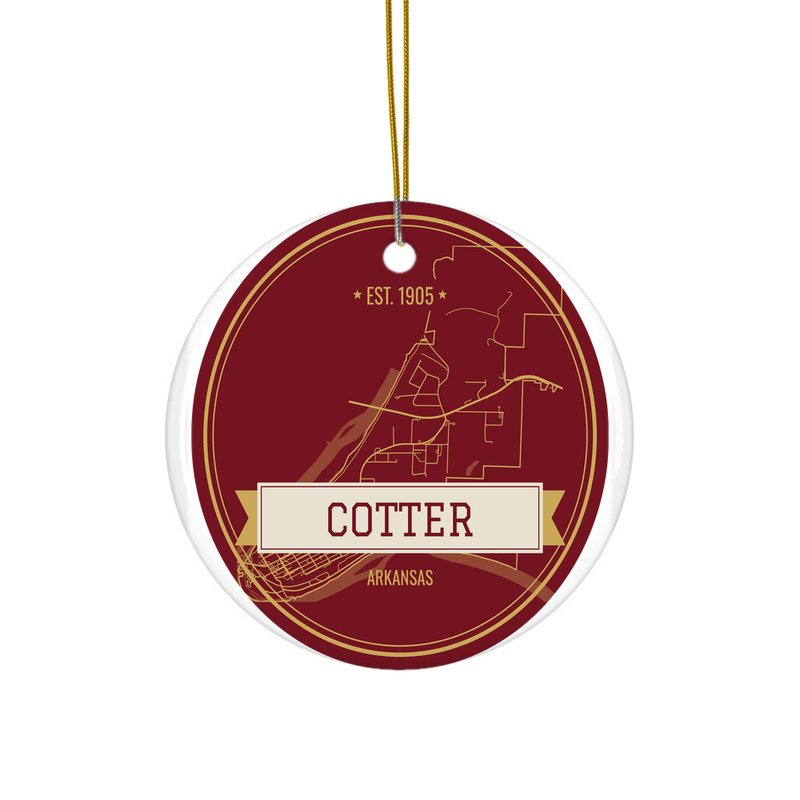
Cotter Hometown Ornament$23
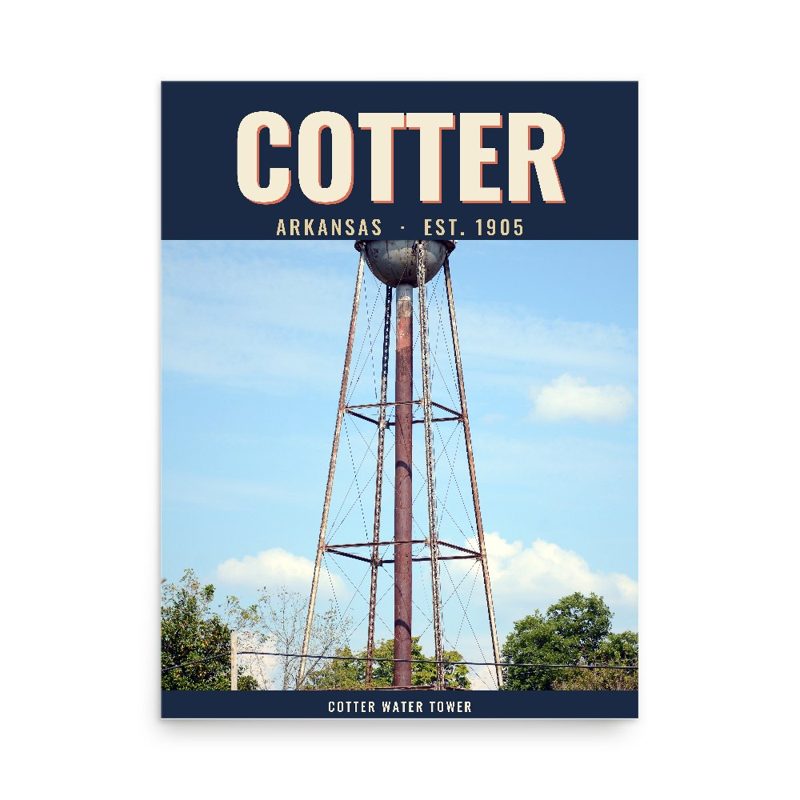
Cotter Vintage Travel Posterfrom $40
Cotter Varsity Crewneckfrom $57
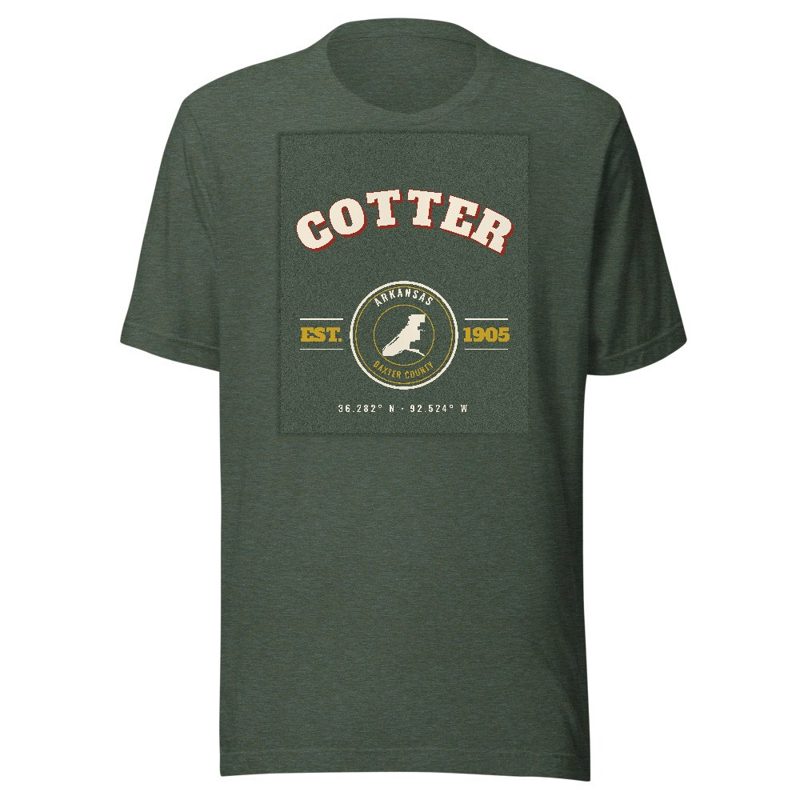
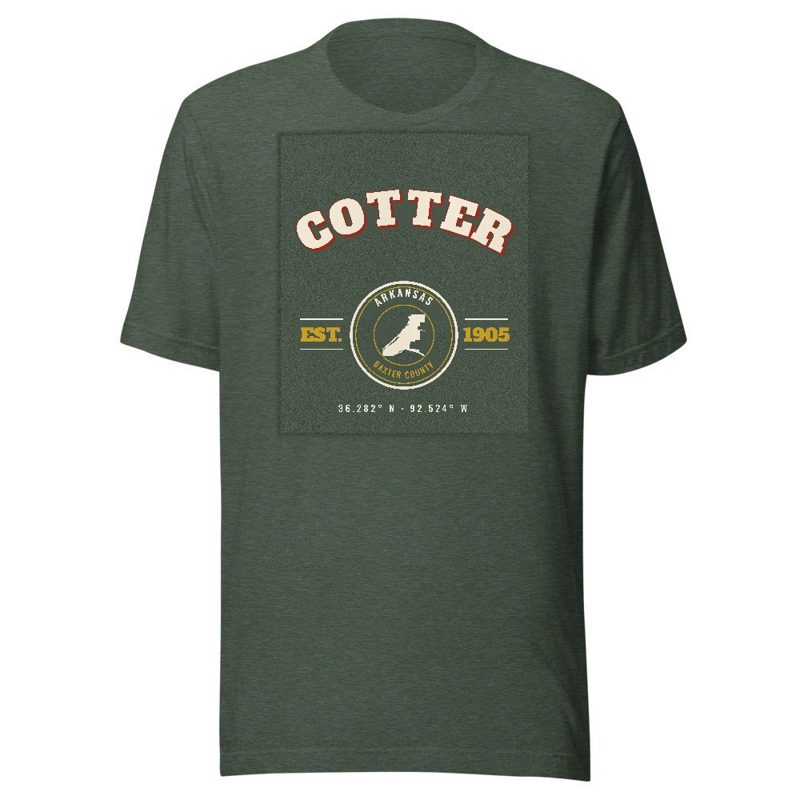
Cotter Est. Teefrom $33
Cotter Town Line Mugfrom $26
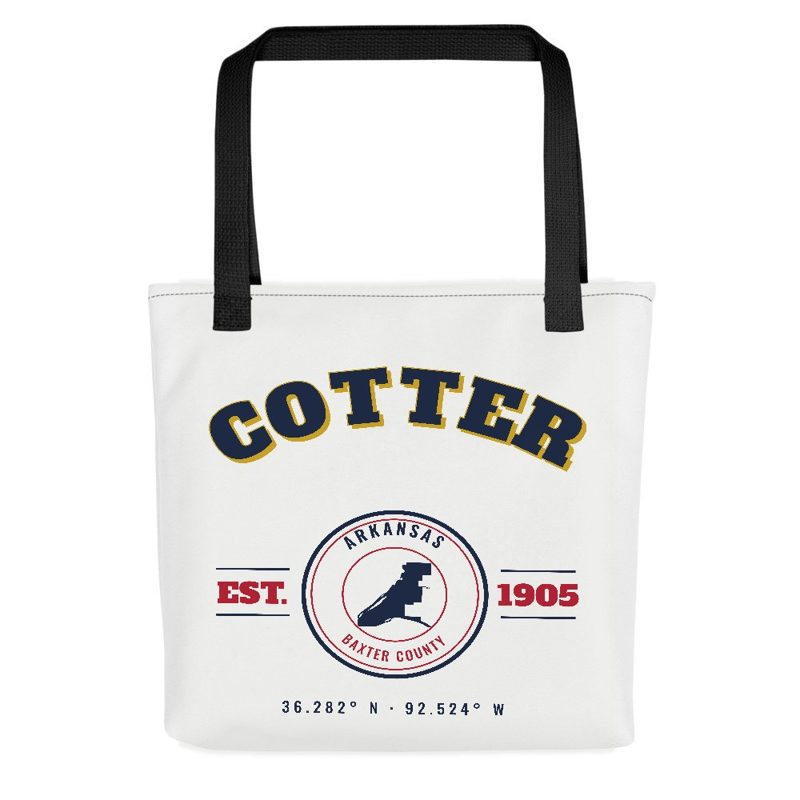
Cotter Market Tote$37
Cotter Hometown Ornament

Cotter Hometown Ornament

Ceramic keepsake, gold ribbon, in 4 styles

$23
Cotter Vintage Travel Poster

Cotter Vintage Travel Poster

Its landmark photo in a classic travel-poster layout

from $40
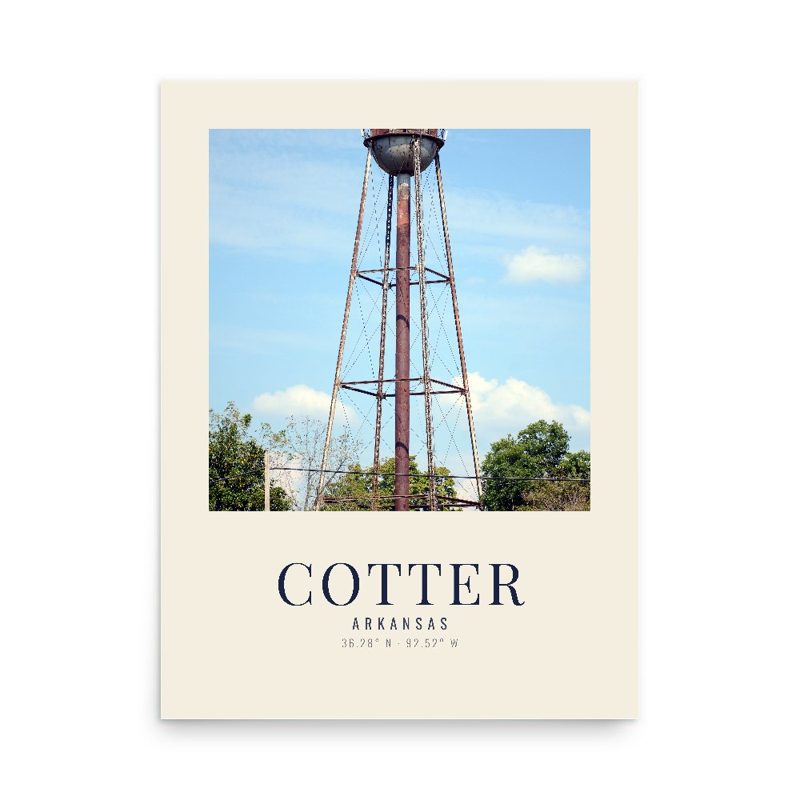
Cotter Photo Art Print

Cotter Photo Art Print

A local landmark photo as a gallery print

from $40
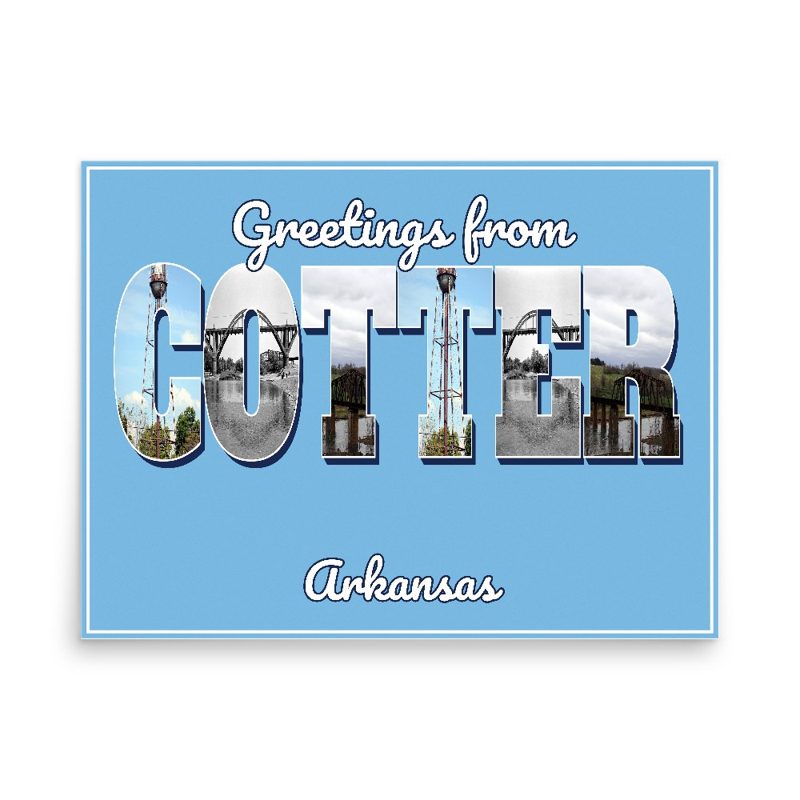
Cotter “Greetings From” Poster

Cotter “Greetings From” Poster

Classic large-letter postcard art, filled with local photos

from $40
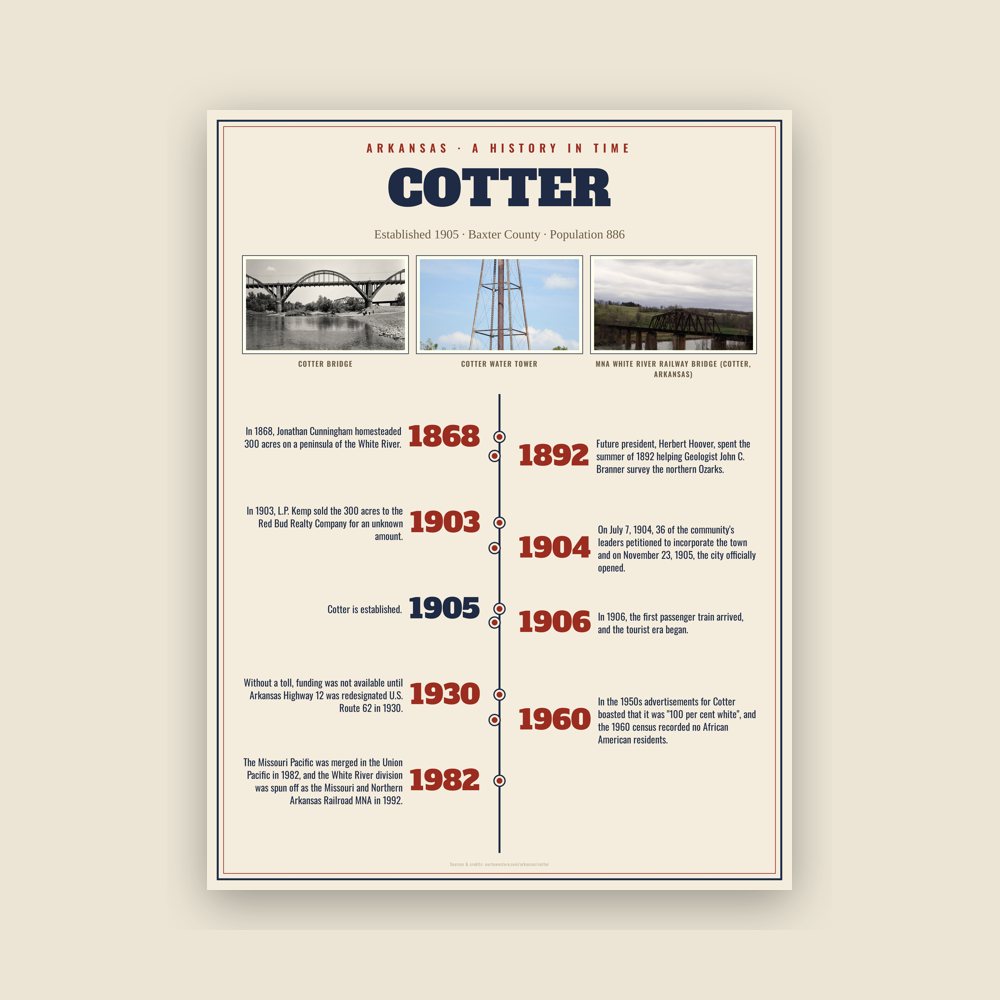
Cotter History Timeline Poster

Cotter History Timeline Poster

The town's story in dates, from its own records, for home or classroom

from $44
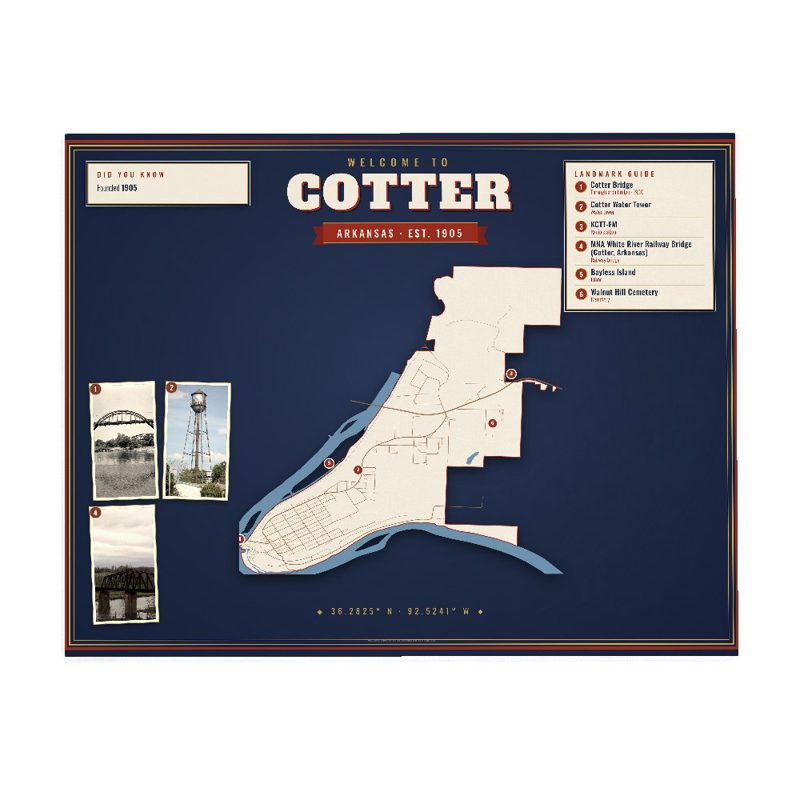
Cotter Map Placemat

Cotter Map Placemat

Map of local landmarks, washable fabric

$31
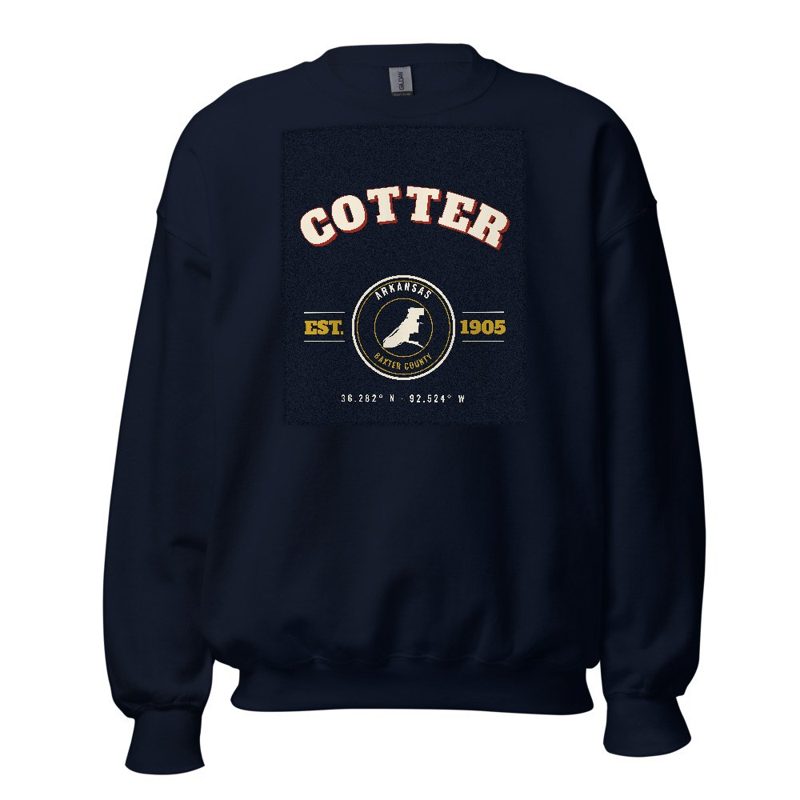
Cotter Varsity Crewneck

Cotter Varsity Crewneck

Heavy-blend fleece, street map printed on the back

from $57
Cotter Hometown Knit Sweater

Cotter Hometown Knit Sweater

Red heavy-blend crewneck, knit-stitch town print

from $57
Cotter Est. Tee

Cotter Est. Tee

Soft Bella+Canvas jersey

from $33
Cotter Est. Youth Tee

Cotter Est. Youth Tee

Kids' Bella+Canvas jersey, youth sizes

$30
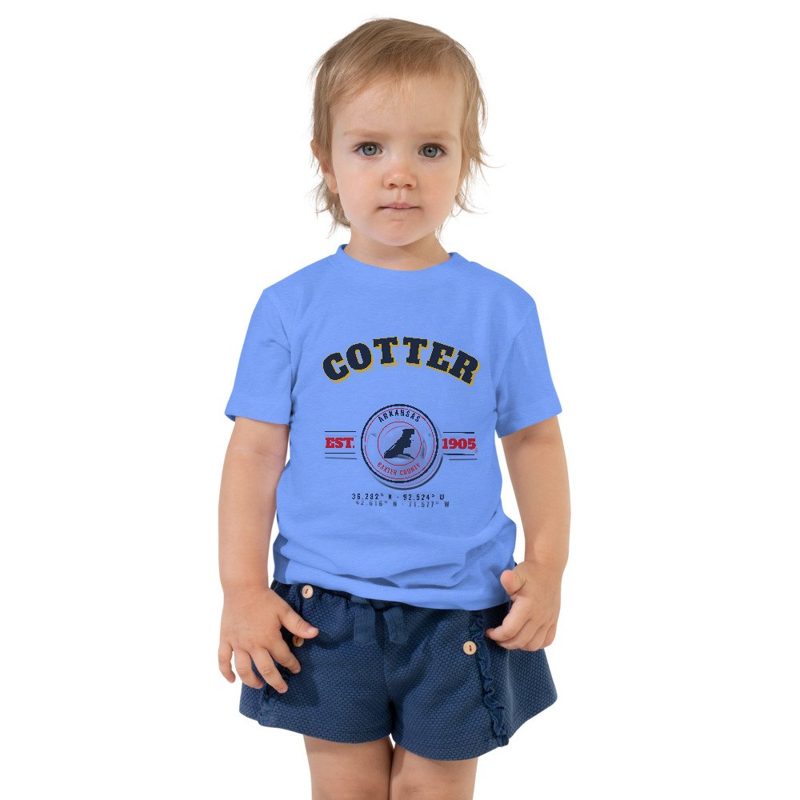
Cotter Est. Toddler Tee

Cotter Est. Toddler Tee

Bella+Canvas toddler jersey

$29
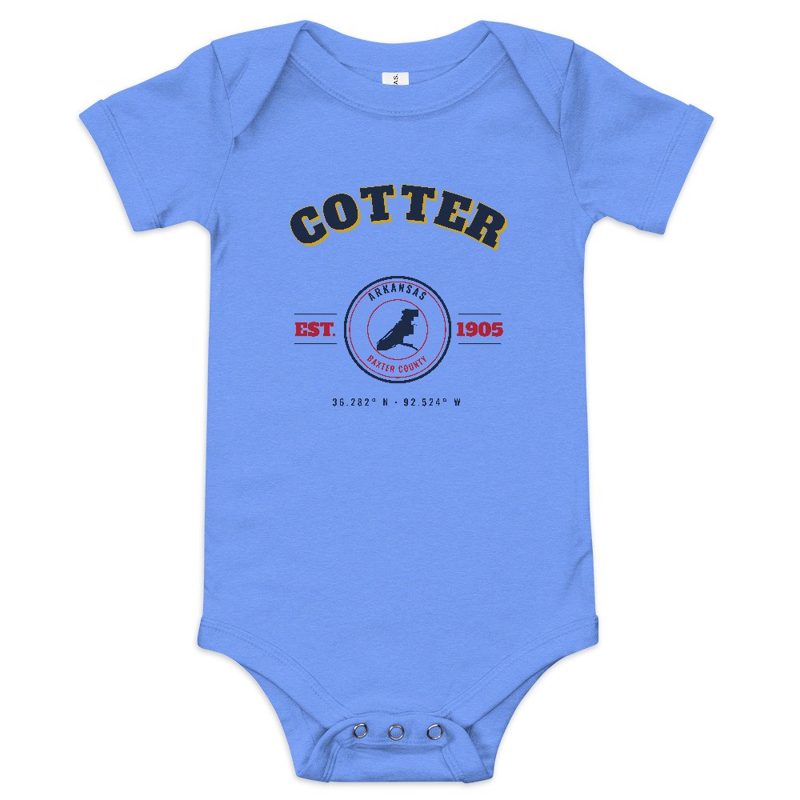
Cotter Est. Baby One Piece

Cotter Est. Baby One Piece

Bella+Canvas baby bodysuit

$30
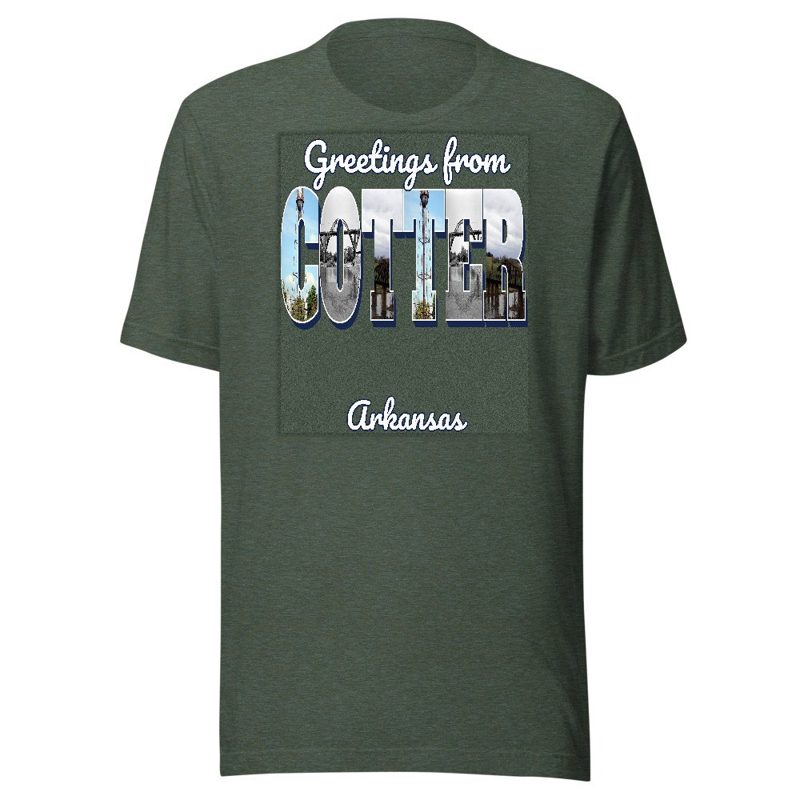
Cotter “Greetings From” Tee

Cotter “Greetings From” Tee

Large-letter postcard art filled with local photos

from $35
Cotter Town Line Mug

Cotter Town Line Mug

Glossy ceramic, dishwasher safe

from $26
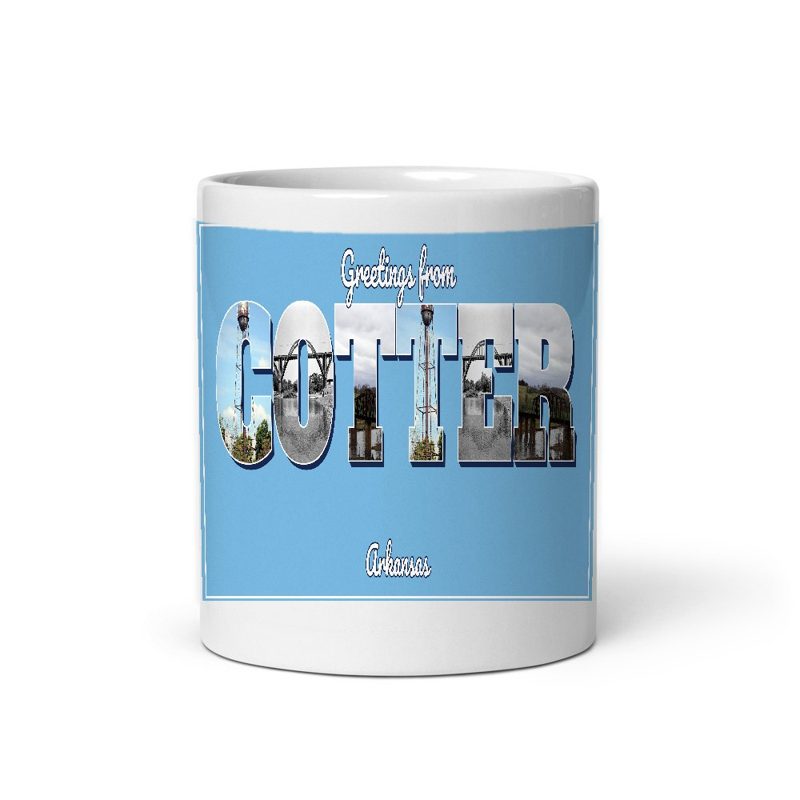
Cotter “Greetings From” Mug

Cotter “Greetings From” Mug

Large-letter postcard art filled with local photos, 11 oz ceramic

from $29
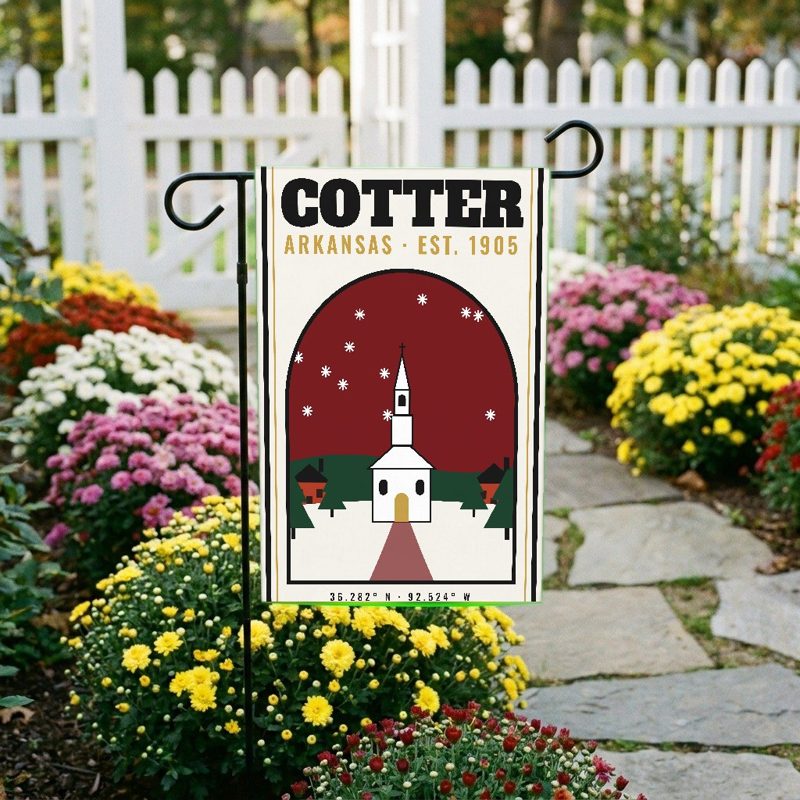
Cotter Garden Flag

Cotter Garden Flag

Weatherproof, for the front walk

$31
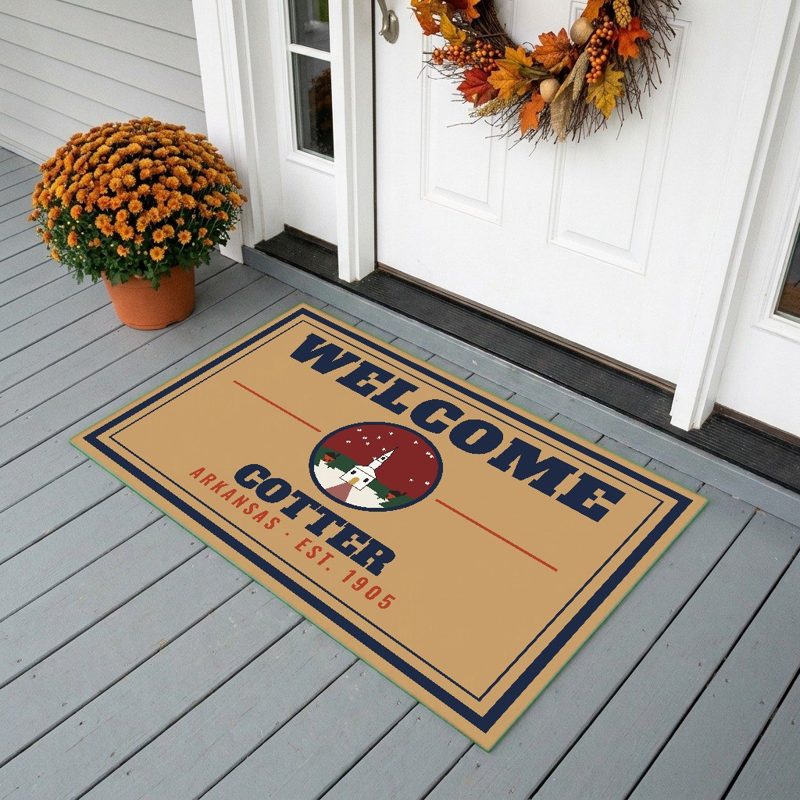
Cotter Welcome Doormat

Cotter Welcome Doormat

24″×16″, printed coir-look fibers, rubber back

$66
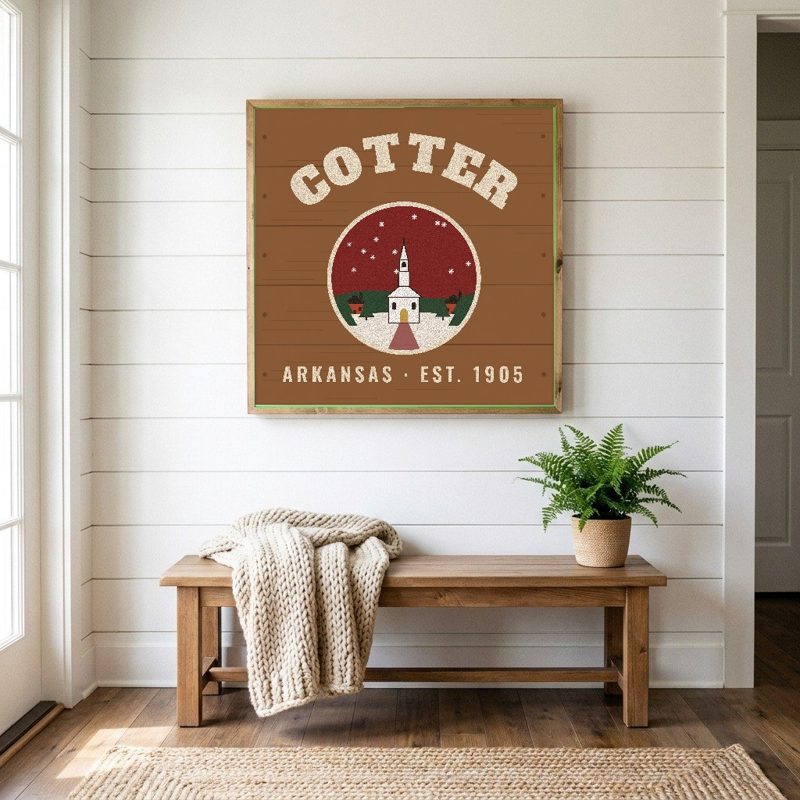
Cotter Hometown Wood Sign

Cotter Hometown Wood Sign

12″×12″ printed wood, ready to hang

$48
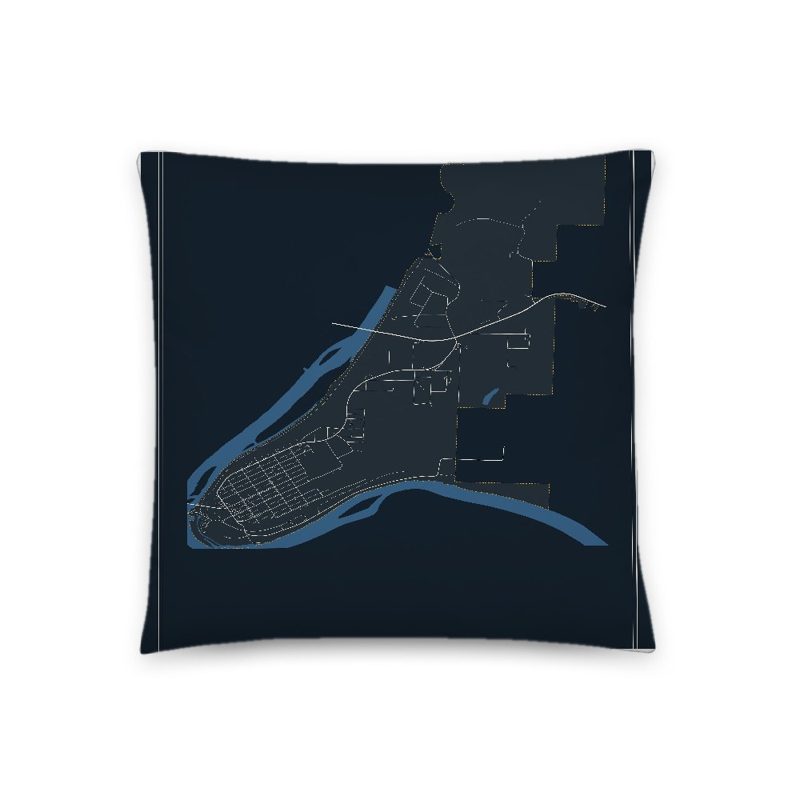
Cotter Map Throw Pillow

Cotter Map Throw Pillow

Soft-touch, zip cover

$47
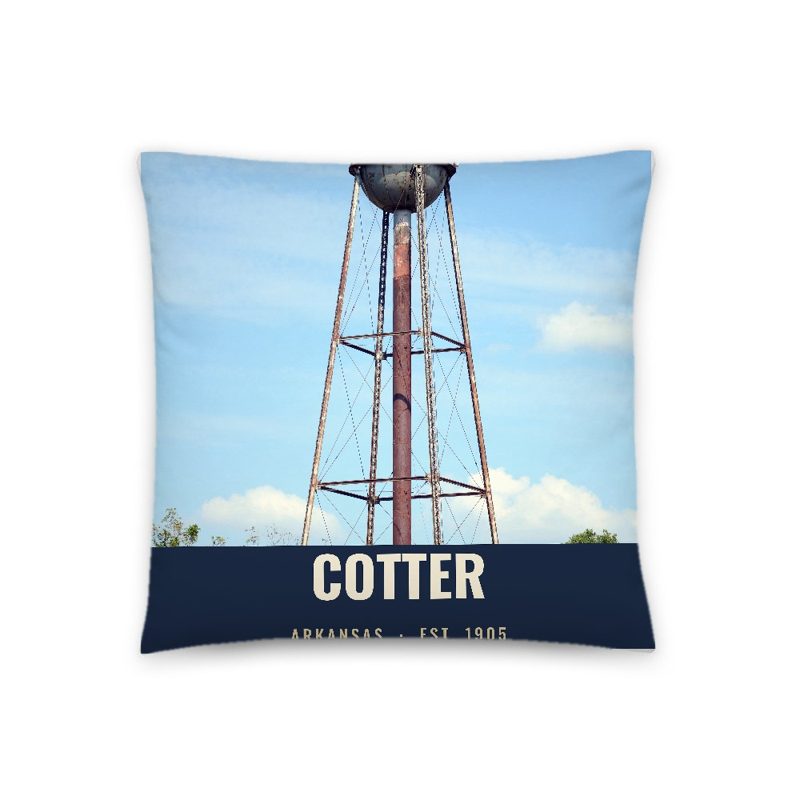
Cotter Landmark Photo Pillow

Cotter Landmark Photo Pillow

A local landmark photo with the town name, 18″×18″

$49
Cotter Market Tote

Cotter Market Tote

Sturdy all-over-print tote

$37
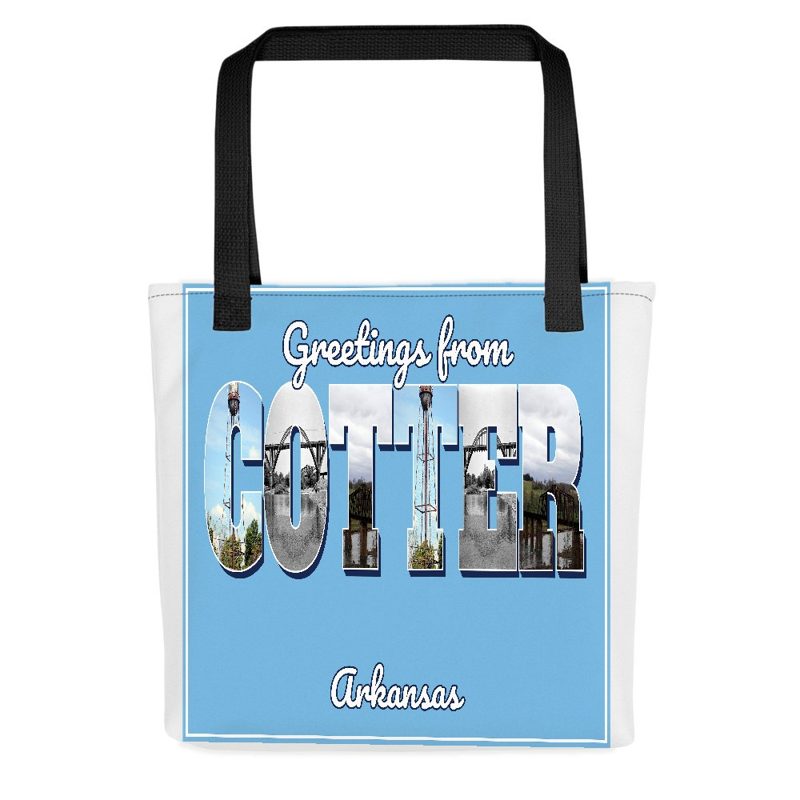
Cotter “Greetings From” Tote

Cotter “Greetings From” Tote

Large-letter postcard art on a sturdy tote

$37
Cotter “Greetings From” Trucker Cap

Cotter “Greetings From” Trucker Cap

Foam-front trucker, printed (not embroidered) with local photos

$33
Cotter Cork Coaster

Cotter Cork Coaster

Glossy top, cork back

$16
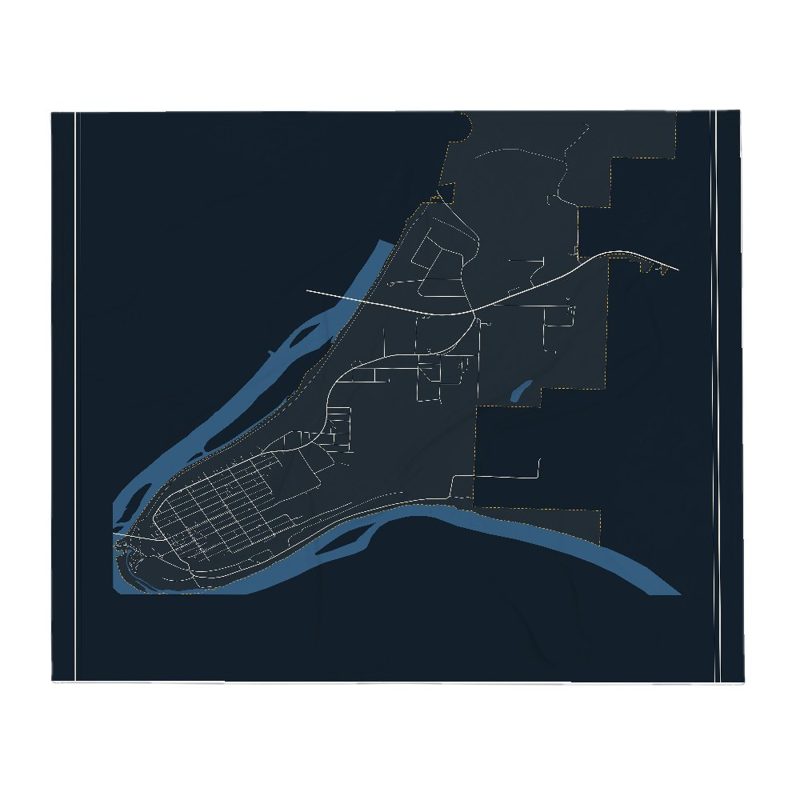
Cotter Street Map Throw Blanket

Cotter Street Map Throw Blanket

Soft fleece, 50″×60″

from $72
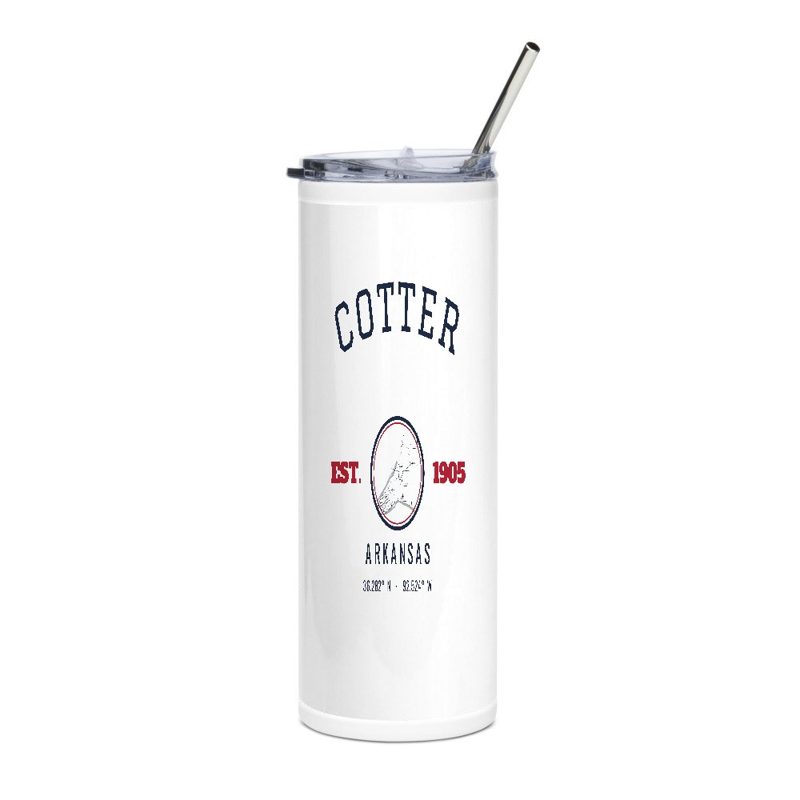
Cotter Est. Tumbler

Cotter Est. Tumbler

20 oz, double-wall stainless

$51
Cotter Cotter Bridge Postcard

Cotter Cotter Bridge Postcard

6″×4″ postcard, glossy front

$10
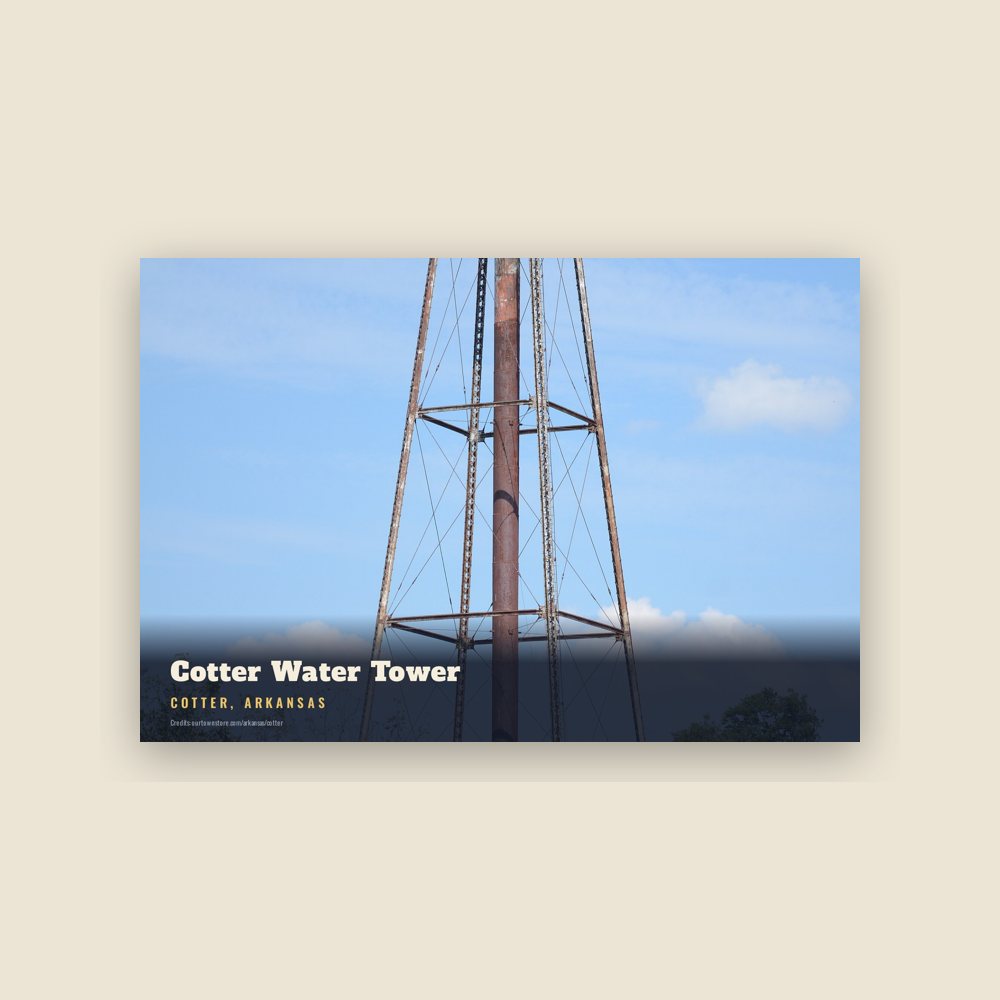
Cotter Cotter Water Tower Postcard

Cotter Cotter Water Tower Postcard

6″×4″ postcard, glossy front

$10
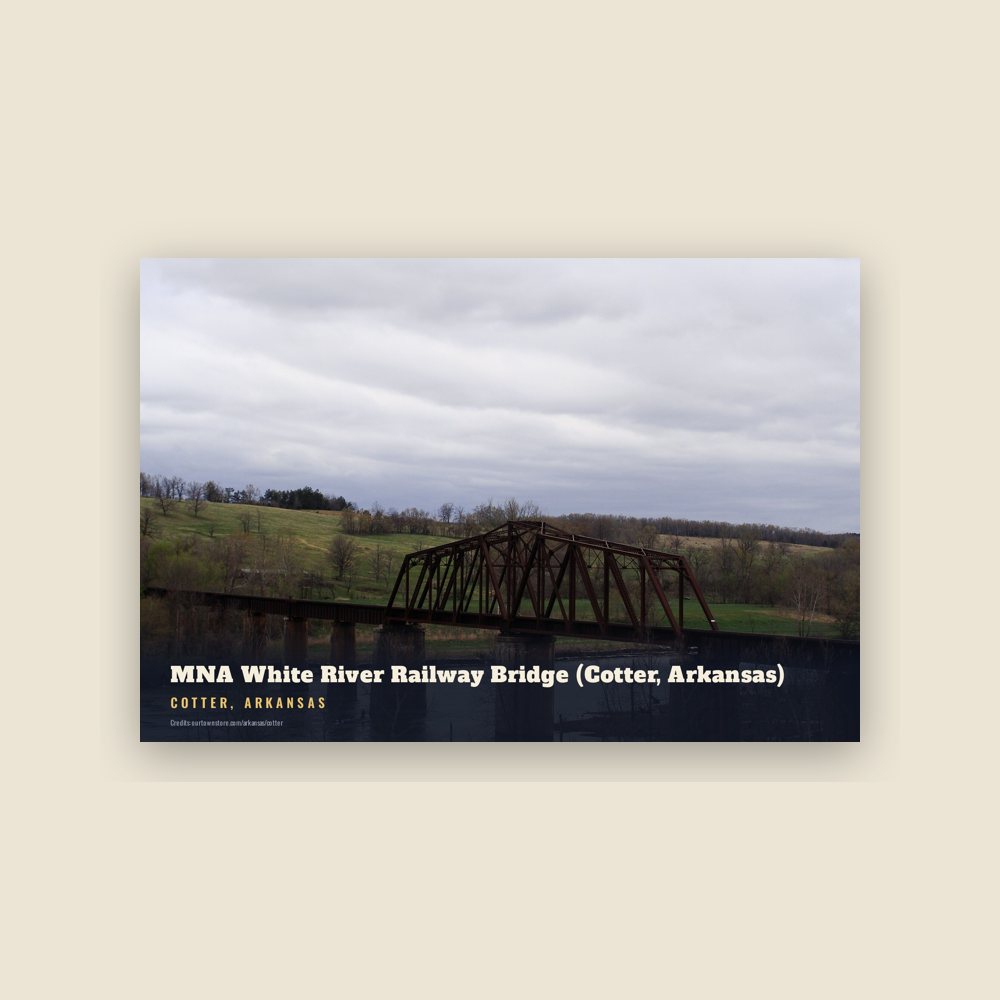
Cotter MNA White River Railway Bridge (Cotter, Arkansas) Postcard

Cotter MNA White River Railway Bridge (Cotter, Arkansas) Postcard

6″×4″ postcard, glossy front

$10
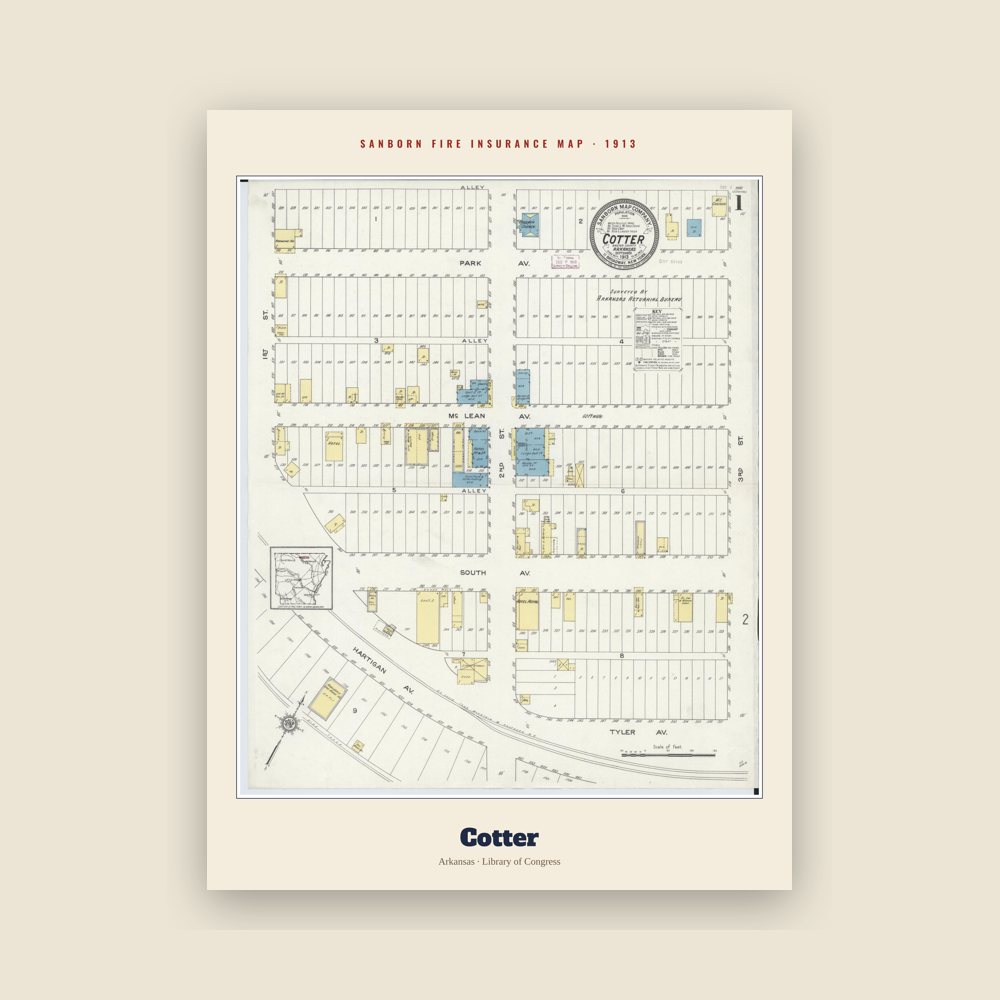
Cotter Sanborn Map Print

Cotter Sanborn Map Print

The town's earliest Sanborn fire-insurance map, drawn building by building and hand-coloured, from the Library of Congress

from $44
Cotter Cotter Bridge, Spanning White River at U.S. Highway 62 Archive Print

Cotter Cotter Bridge, Spanning White River at U.S. Highway 62 Archive Print

From the Library of Congress collections: a historic survey drawing or photograph of the town

from $44
On the National Register

Historic places

Population 2010: 970 → 2010: 1,078 → 2020: 886

From Wikidata (CC0).

Since 1905

A short history of Cotter

Native American Bluff Dwellers were the original inhabitants of the area now known as Cotter for centuries before settlers arrived. When Native Americans were moved westward on the Trail of Tears, approximately 1000 Cherokees crossed just a short distance upriver from the current location of Downtown Cotter.

Read the full history

Exploration and settlement

White River is one of the most beautiful and enchanting streams, and by far the most transparent, which discharge their waters into the Mississippi ... We here behold the assembled tributaries flowing in a smooth, broad. deep, and majestic current ... skirted at a short distance by mountains of the most imposing grandeur.... [The] extreme limpidity and want of colour ... was early seized upon by the French traders on first visiting this stream, in calling it "La Rivière Blanche" (White River).

In 1868, Jonathan Cunningham homesteaded 300 acres on a peninsula of the White River. In 1883, he sold it to L.P. Kemp. During that time, there was a ferry landing about 100 yards downriver called Lake's Ferry. The only power to operate the ferry was the current of the river. At the time, it was the only means of transportation across. Families would travel from Mountain Home and Yellville to visit the area, picnic, fish, and enjoy the nearby spring that was created naturally via the caves under the ground.

Future president, Herbert Hoover, spent the summer of 1892 helping Geologist John C. Branner survey the northern Ozarks. By the early 1900s, there were many mining companies active in both Baxter and Marion Counties. Cotter quickly became a central point where minerals could be shipped via steamboat to much larger cities in central Arkansas or southern Missouri.

In 1902, the city opened a post office. In 1903, L.P. Kemp sold the 300 acres to the Red Bud Realty Company for an unknown amount. Red Bud's principles, W.V. Powell, Jerry South, and Thomas Combs all ended up having avenues named in their honor. A school opened in 1904. On July 7, 1904, 36 of the community's leaders petitioned to incorporate the town and on November 23, 1905, the city officially opened.

White River Line

bought the area and sold over one thousand lots, mostly to railroad employees. The city was incorporated in 1905 as Cotter, Arkansas. By that time, the population was over 600. The town was named after William Cotter, an official for the Iron Mountain. The materials required to build the town and railroad had to be brought in by steamboats down the White River. Once the railroad was completed, the use of steamboats on the rivers of Arkansas decreased and eventually ceased altogether. In 1906, the first passenger train arrived, and the tourist era began. The Missouri Pacific was merged in the Union Pacific in 1982, and the White River division was spun off as the Missouri and Northern Arkansas Railroad MNA in 1992.

Expulsion of African Americans

The construction of the railroad brought many laborers, including African Americans, to the area. However, once the work was completed the sentiment among white residents turned against them. The anti-Black attitude was encouraged by a visit from Arkansas Governor Jeff Davis, who gave a racist speech in Cotter in 1904, and by the local newspaper, the Cotter Courier. In April 1906 the Courier ran an editorial titled "Too Many Negroes", which said that local residents had a "feeling...that the negroes should move on." In and around August 1906, all of Cotter's African Americans were run out of town, except for one family of three, the Masons. In the 1950s advertisements for Cotter boasted that it was "100 per cent white", and the 1960 census recorded no African American residents.

Cotter Bridge

The mercurial White River caused many motorists problems, as the nearest crossing was over 100 miles (160 km) to the north in Branson, Missouri. An inconvenient ferry system made the need for a bridge apparent. Locals wanted a bridge, but they strongly opposed a toll bridge. Arkansas did not have a central highway body at the time, and was instead a patchwork of "road districts", which made the bridge-building efforts even more difficult. Without a toll, funding was not available until Arkansas Highway 12 was redesignated U.S. Route 62 in 1930. The Cotter Bridge was constructed through the area using a unique rainbow arch design.

Flooding
Adapted (trimmed) from the Wikipedia article Cotter, Arkansas, revision 1375653438 by its contributors, licensed CC BY-SA 4.0.

For local organizations

Are you with a Cotter historical society?

We share a part of every Cotter sale with local partners, and we'd love to print from your collection. Old photographs, maps and postcards make the best keepsakes.

Partner with us
Custom orders

Want something Cotter we don't make yet?

A favorite landmark, your street, a school or team, an anniversary gift, a different product. Tell us and we'll get back to you by email.

Free printables

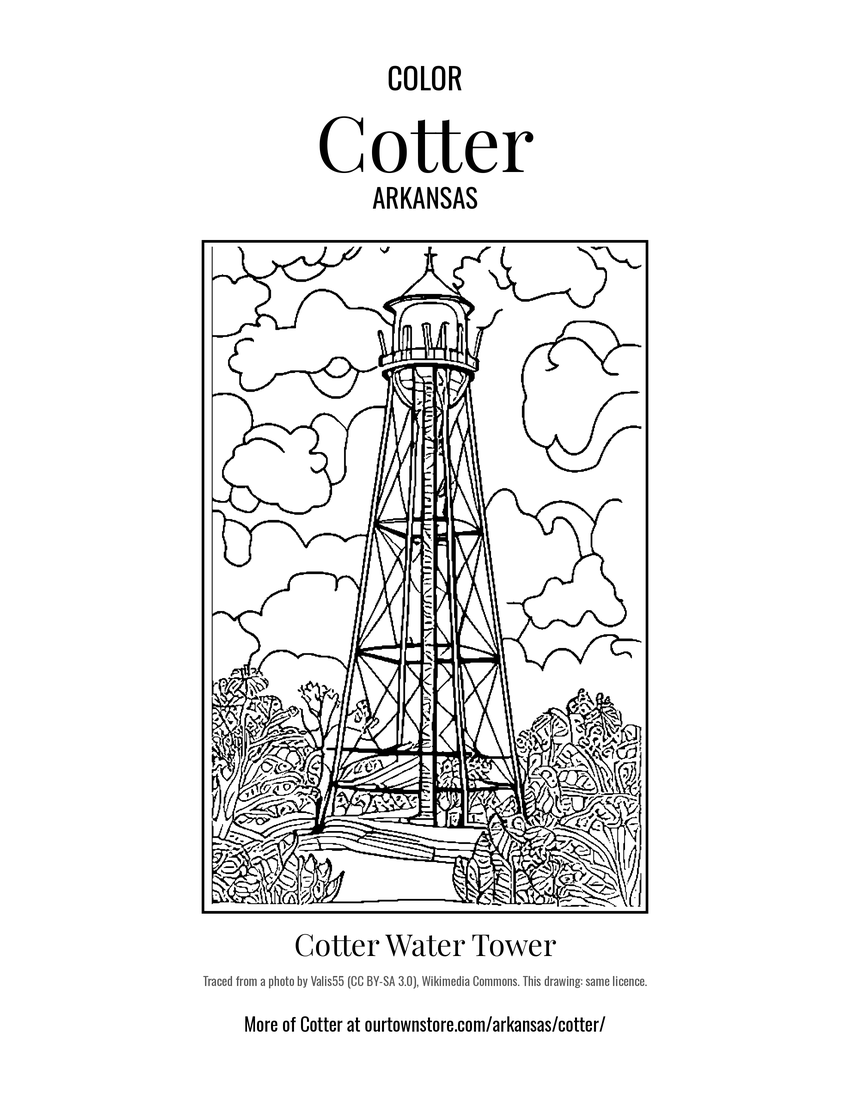
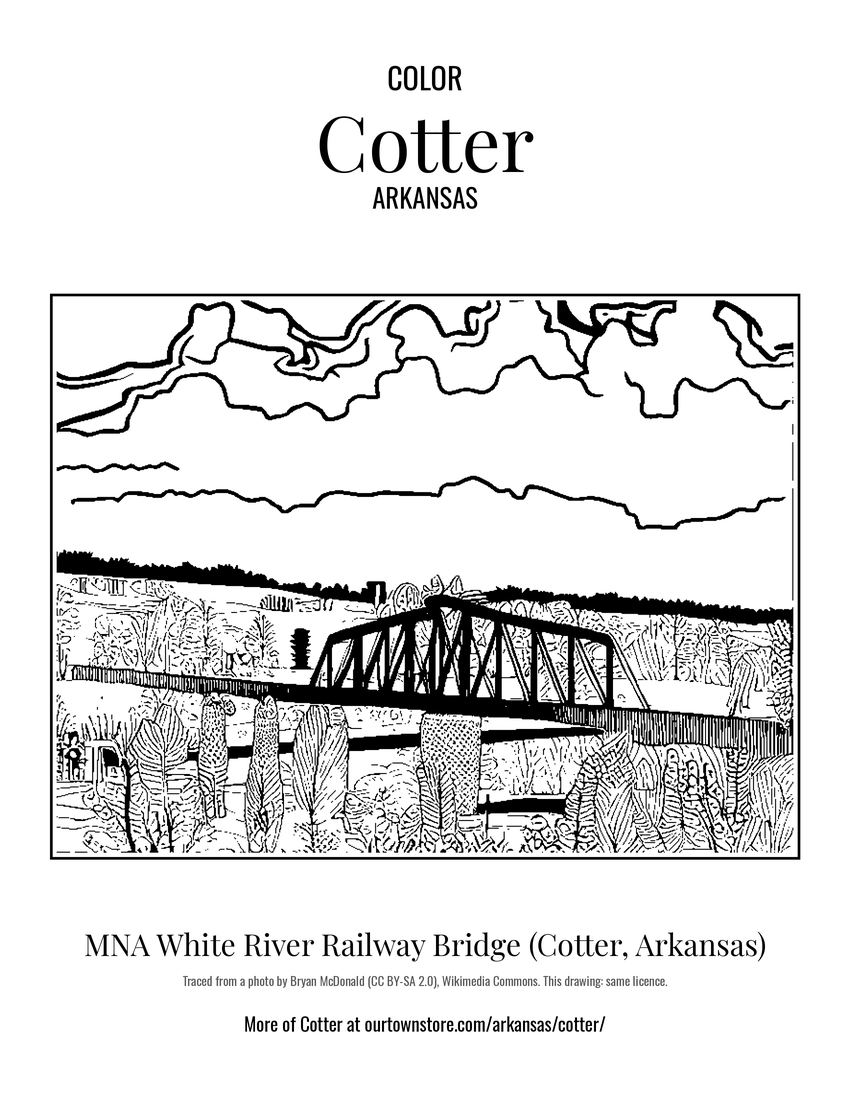
Color Cotter

3 free coloring pages of Cotter, each traced from a photo of a local landmark. Print them at home, at school or for story hour.

Nearby

Neighboring towns

Sources

Cotter's population was 886 in the 2020 U.S. Census, down from 970 in 2010.