Inupiat hunted for game on the west coast of Alaska from prehistoric times. There is recent archeological evidence to suggest that there was an Inupiat settlement at Nome, known in Inupiat as Sitnasuak, before the discovery of gold.
Read the full history
Gold rush
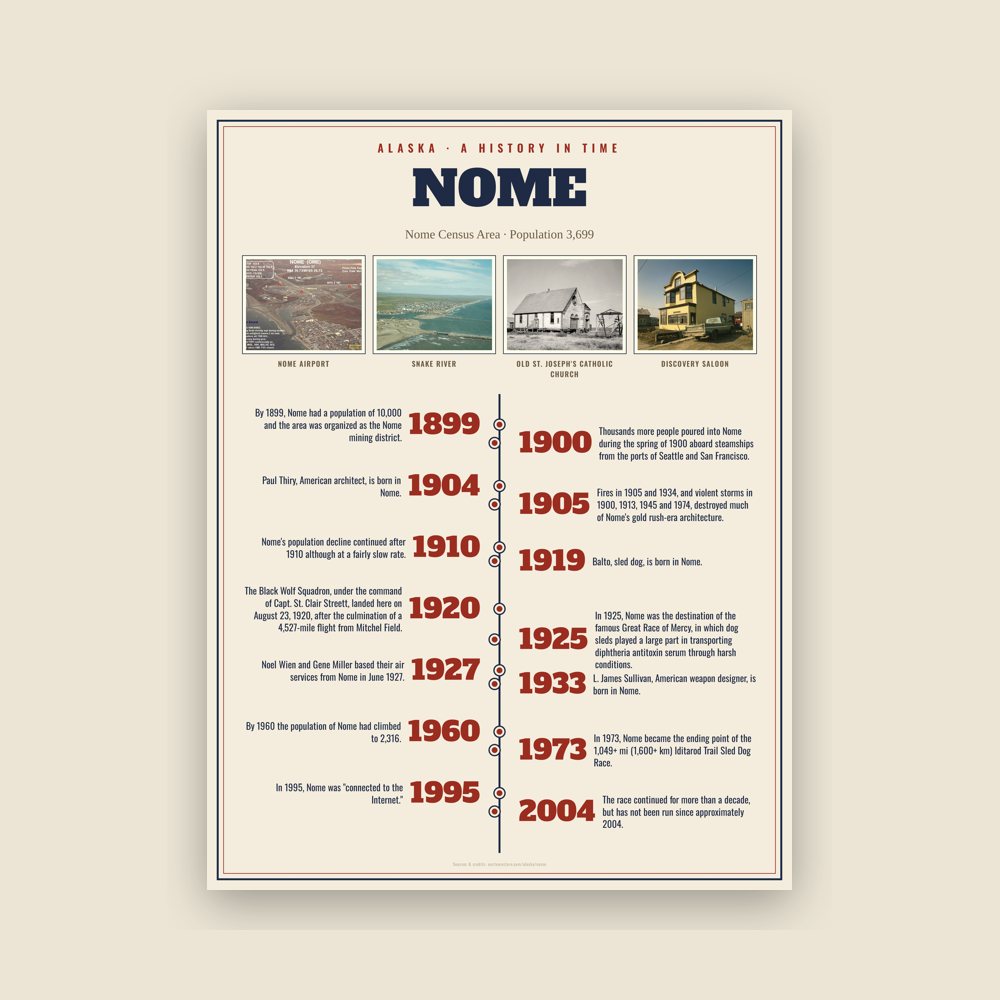
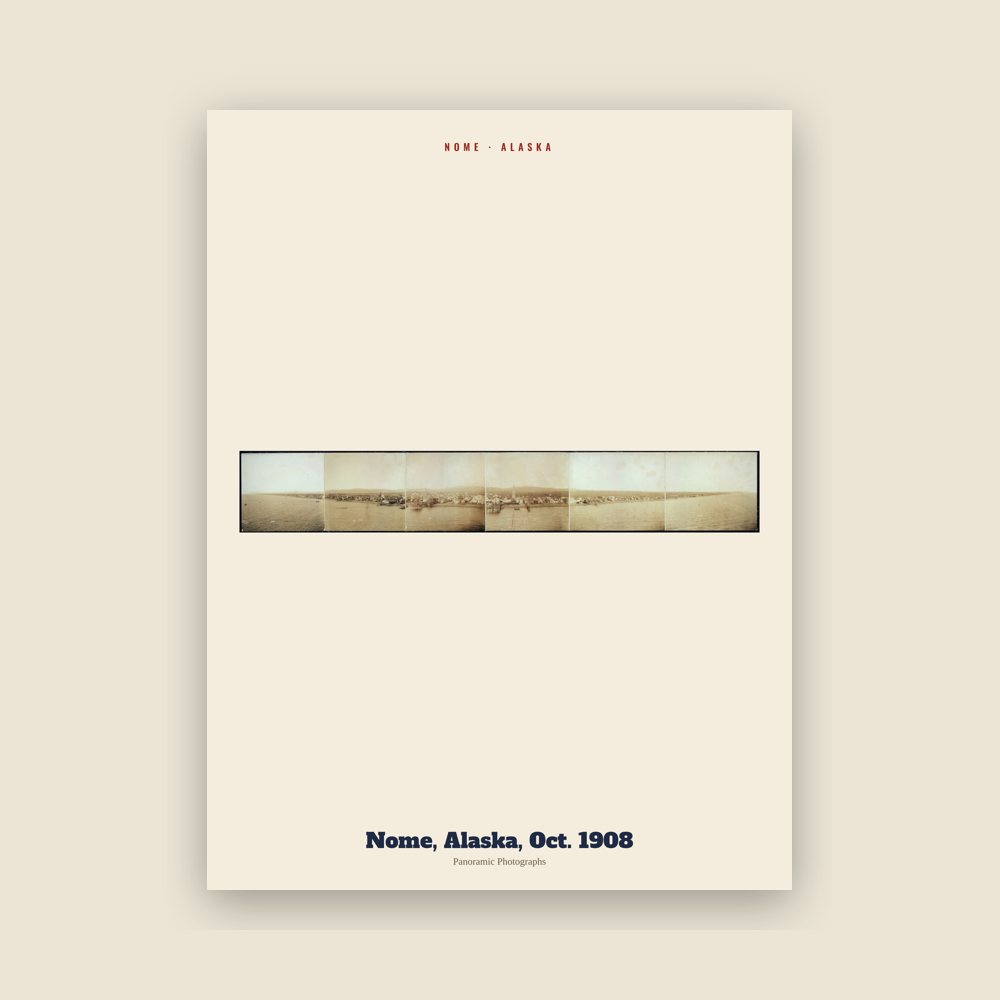
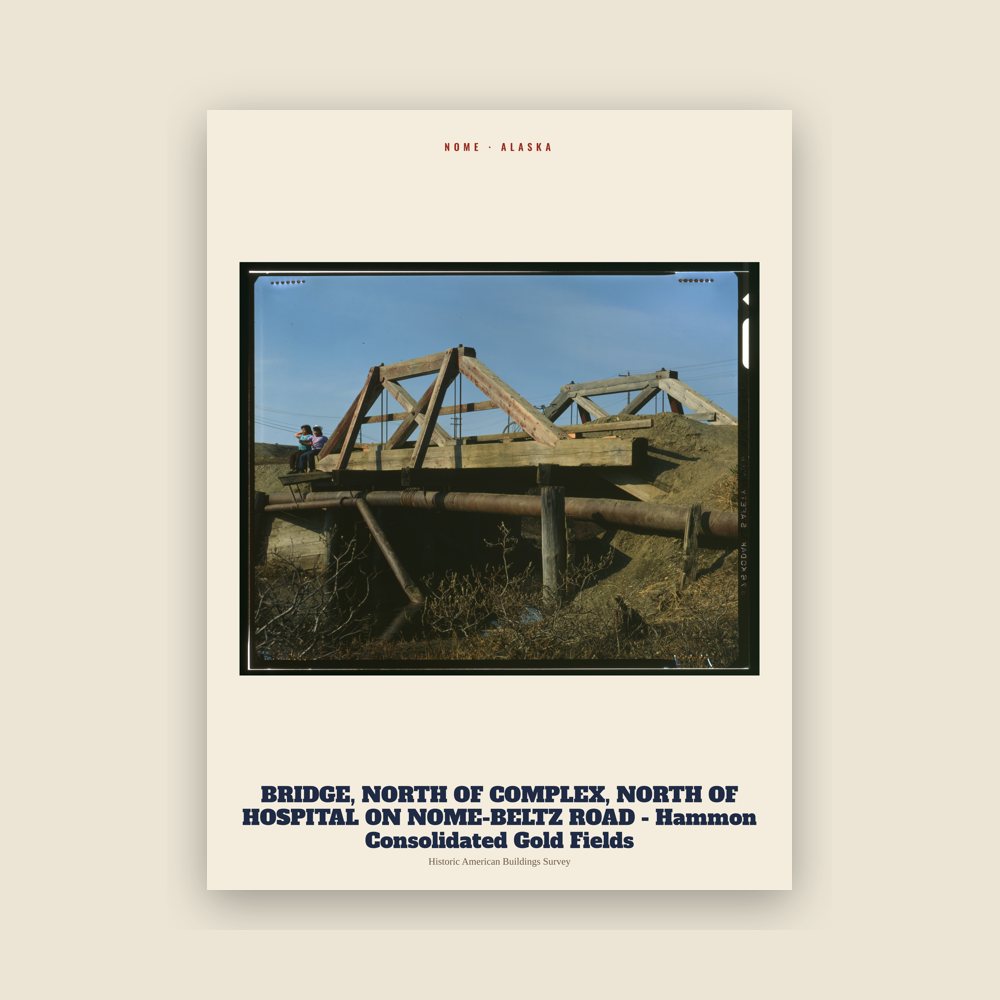
In the summer of 1898, the "Three Lucky Swedes": Norwegian-American Jafet Lindeberg, and two naturalized American citizens of Swedish birth, Erik Lindblom and John Brynteson, discovered gold on Anvil Creek. News of the discovery reached the outside world that winter. By 1899, Nome had a population of 10,000 and the area was organized as the Nome mining district. In 1899, gold was found in the beach sands for dozens of miles along the coast at Nome, which spurred the stampede to new heights. Thousands more people poured into Nome during the spring of 1900 aboard steamships from the ports of Seattle and San Francisco. By 1900, a tent city on the beaches and on the treeless coast reached 48 km (30 mi), from Cape Rodney to Cape Nome. In June 1900, Nome averaged 1,000 newcomers a day.
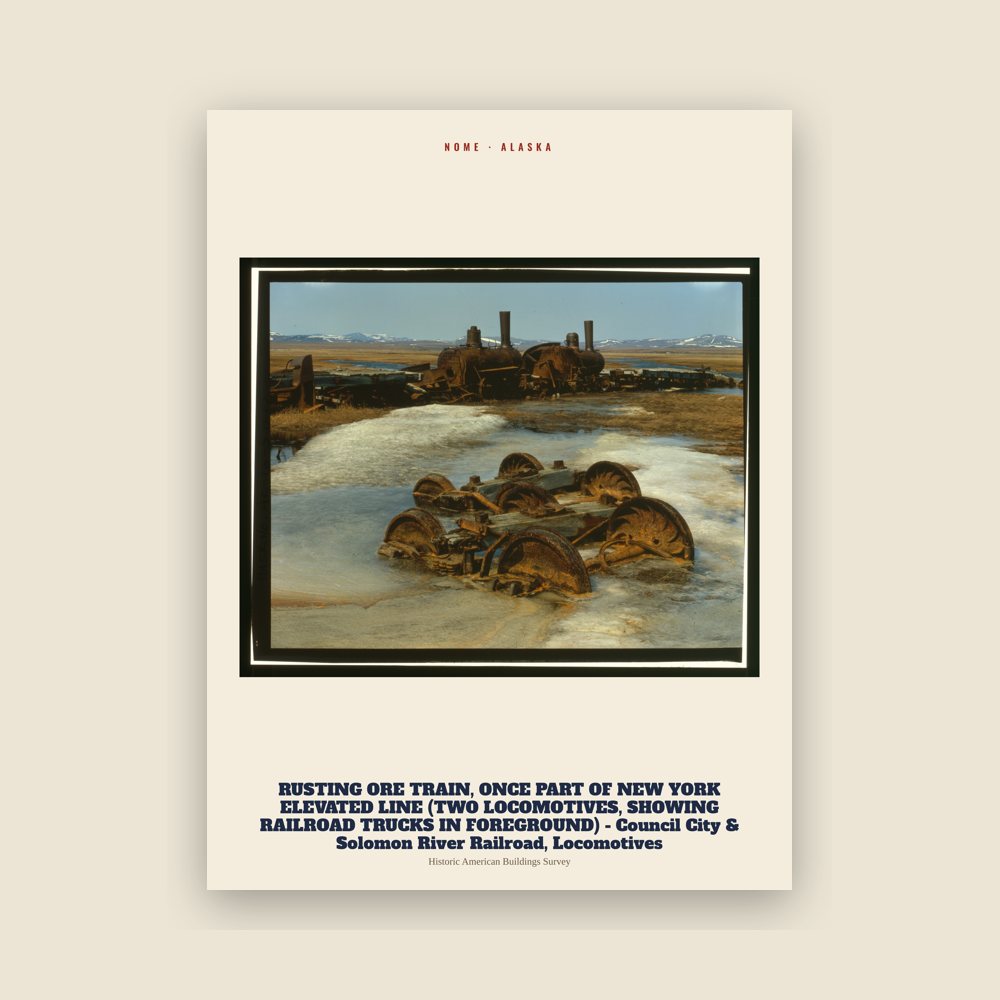
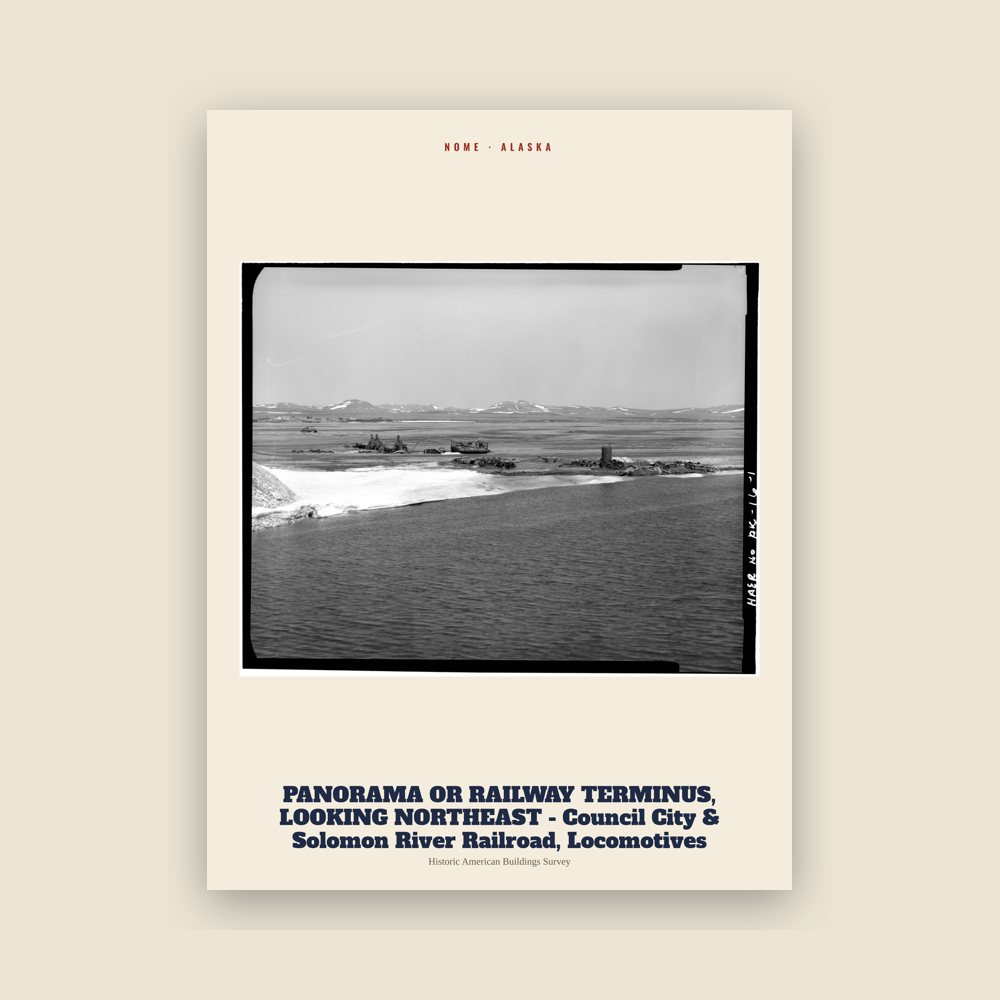
In 1899, Charles D. Lane founded the Wild Goose Mining & Trading Co. His company constructed the Wild Goose Railroad from Nome to Dexter Discovery. It was extended in 1906–1908 to the village of Shelton, also known as Lanes Landing.
Many late-comers tried to "jump" the original claims by filing mining claims covering the same ground. The federal judge for the area ruled the original claims valid, but some of the claim jumpers agreed to share their invalid claims with influential Washington politicians. Alexander McKenzie took an interest in the gold rush and secured the appointment of Arthur Noyes as the federal district judge for the Nome region for the purpose of taking control of gold placer mines in Nome. McKenzie seized mining claims with an unlawfully procured receivership granted by Judge Noyes. McKenzie's claim-jumping scheme was eventually stopped by the federal Ninth Circuit Court of Appeals.
The practice provided the plot for Rex Beach's best-selling 1906 novel The Spoilers, which was made into a stage play, then five films, including one starring John Wayne: The Spoilers, co-starring Marlene Dietrich. The similarly themed Wayne film North to Alaska also takes place in the environs of Nome, and mentions Nome in its theme song. Wyatt Earp, of Tombstone, Arizona, fame, lived in Nome during gold-rush days. In September 1899, Earp and partner Charles E. Hoxie built the Dexter Saloon, the city's first two-story wooden building and its largest and most luxurious saloon out of more than 60 saloons.
Between 1900 and 1909, estimates of Nome's population reached as high as 20,000. The highest recorded population of Nome, in the 1900 United States Census, was 12,488. At this time, Nome was the largest city in the Alaska Territory. Early in this period, the U.S. Army policed the area, and expelled any inhabitant each autumn who did not have shelter, or the resources to pay for shelter, for the harsh winter.
In May 1910, the Industrial Worker, the newspaper of the Industrial Workers of the World (IWW), published a notice from the Nome Miners' Union and Local 240 of the Western Federation of Miners for all unemployed workers to stay away, saying that "All the rich mines are practically worked out."
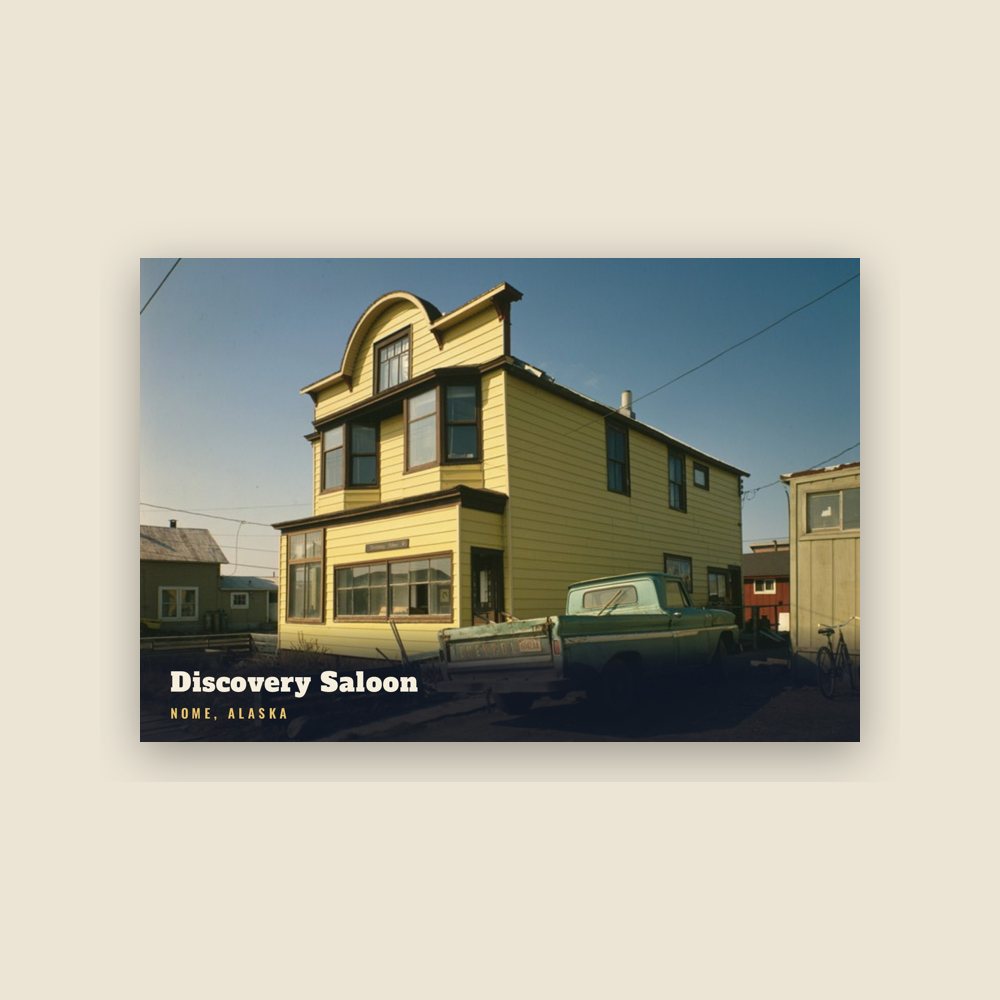
Fires in 1905 and 1934, and violent storms in 1900, 1913, 1945 and 1974, destroyed much of Nome's gold rush-era architecture. The pre-fire "Discovery Saloon" is now a private residence and is being slowly restored as a landmark.
The Black Wolf Squadron, under the command of Capt. St. Clair Streett, landed here on August 23, 1920, after the culmination of a 4,527-mile flight from Mitchel Field. Noel Wien and Gene Miller based their air services from Nome in June 1927.
Serum run
In 1925, Nome was the destination of the famous Great Race of Mercy, in which dog sleds played a large part in transporting diphtheria antitoxin serum through harsh conditions. In 1973, Nome became the ending point of the 1,049+ mi (1,600+ km) Iditarod Trail Sled Dog Race. The latter part of its route was used in the serum run.
The sled driver of the final leg of the relay was the Norwegian-born Gunnar Kaasen. His lead sled dog was Balto. A statue of Balto by F.G. Roth stands near the Central Park Zoo in Central Park, New York City. Leonhard Seppala ran the penultimate, and longest, leg of the 1925 serum run to Nome. One of his dogs, Togo, is considered the forgotten hero of the Great Race of Mercy. Another of his dogs, Fritz, is preserved and on display at the Carrie M. McLain Memorial Museum in Nome.
World War II and later
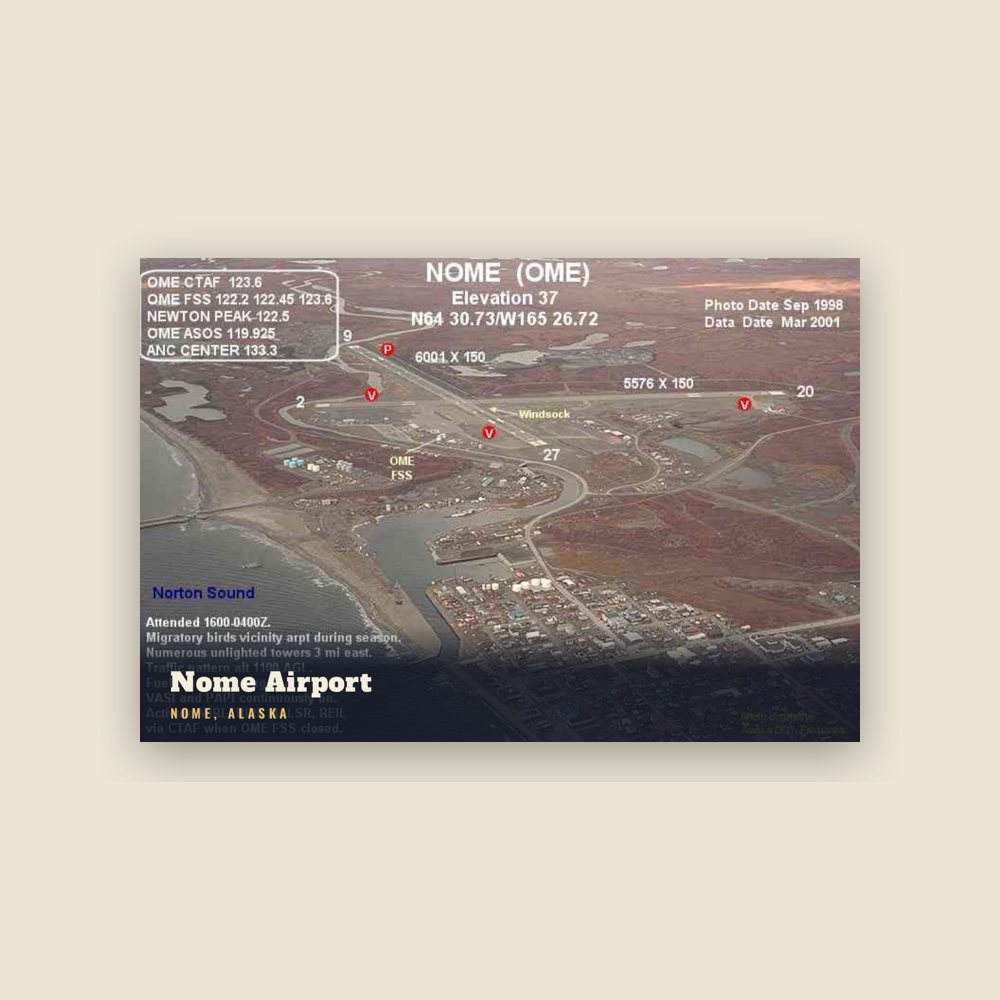
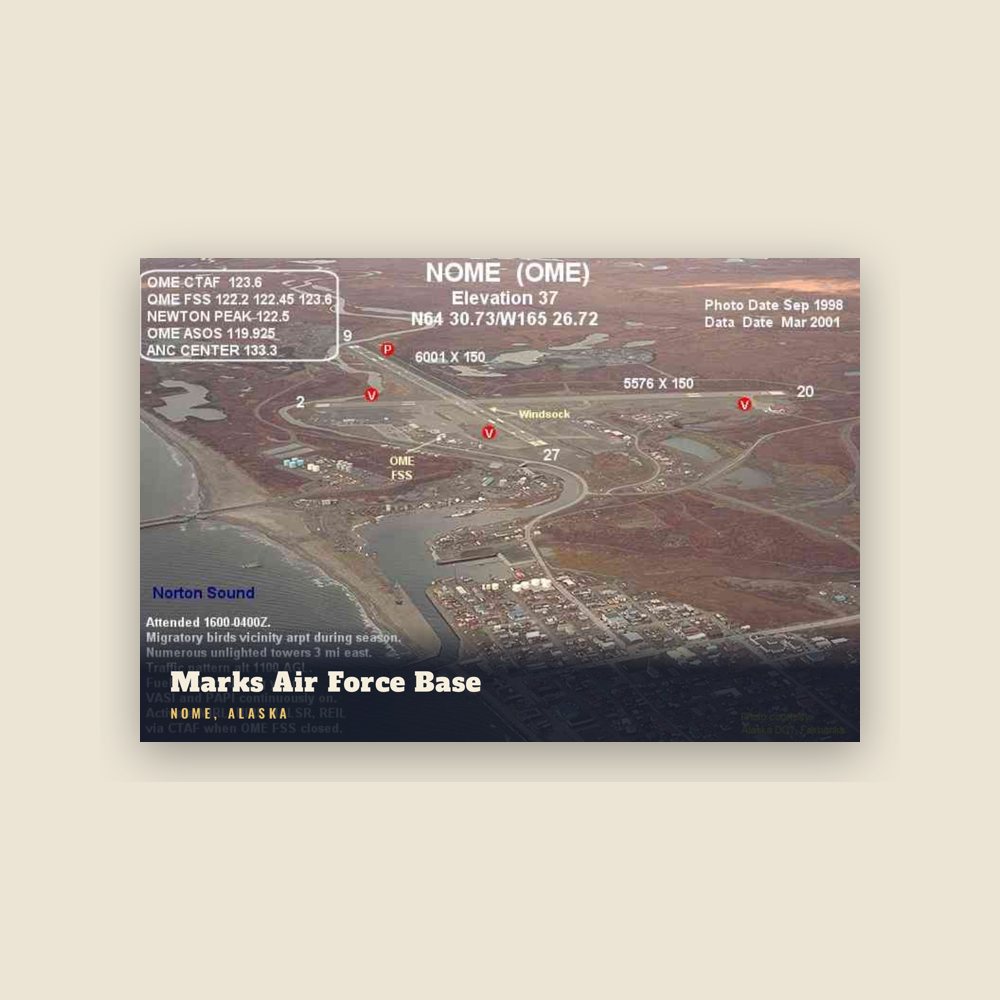
During World War II, Nome was the last stop on the ferry system for planes flying from the United States to the Soviet Union for the Lend-lease program. The airstrip currently in use was built, and troops were stationed there. One "Birchwood" hangar remains and has been transferred to a local group with hopes to restore it. It is not located on the former Marks Air Force Base, now the primary Nome Airport. Rather, it is a remnant of an auxiliary landing field a mile or so away: "Satellite Field". In the hills north of Nome, there were auxiliary facilities associated with the Distant Early Warning system that are visible from Nome but are no longer in use.
Nome's population decline continued after 1910 although at a fairly slow rate. By 1950 Nome had 1,852 inhabitants. By 1960 the population of Nome had climbed to 2,316. At this point placer gold mining was still the leading economic activity. The local Alaska Native population was involved in ivory carving and the U.S. military had stationed troops in the city also contributing to the local economy. In 1995, Nome was "connected to the Internet."
The Hope Sled Dog Race was run between Anadyr, Russia, and Nome after the fall of the Soviet Union. The race continued for more than a decade, but has not been run since approximately 2004.

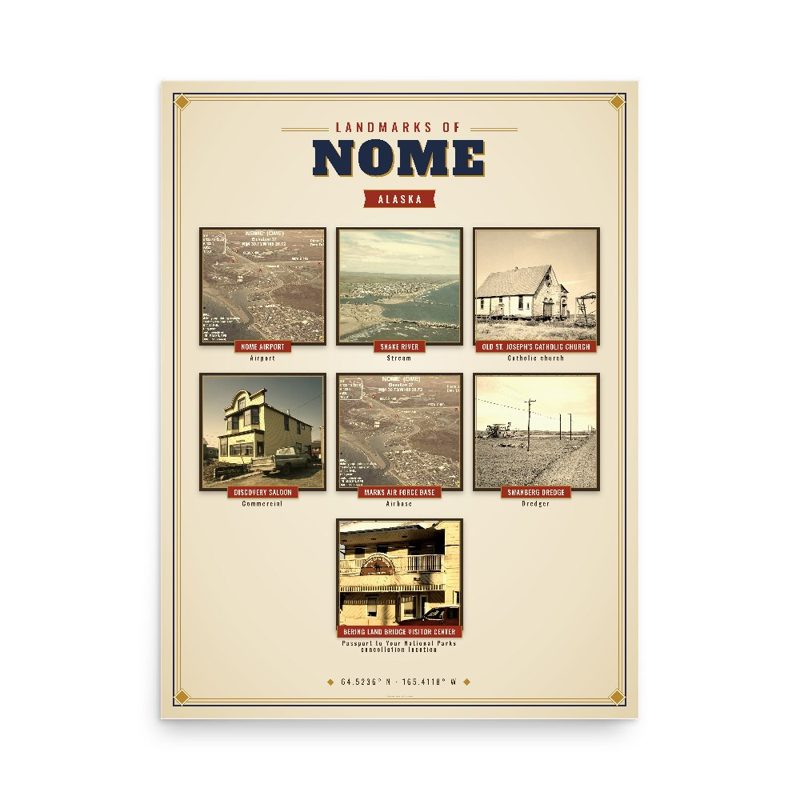
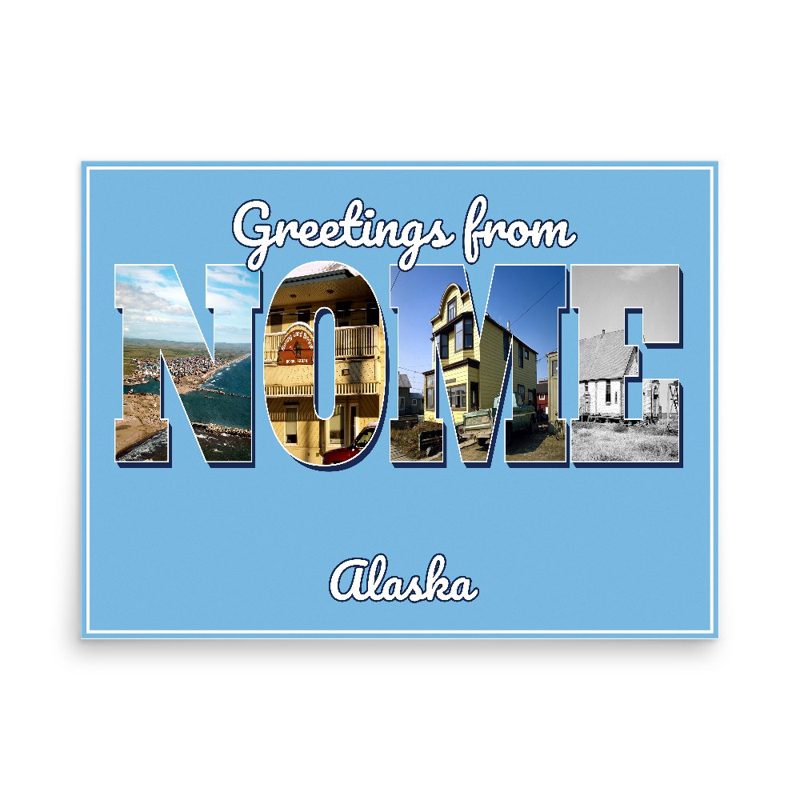
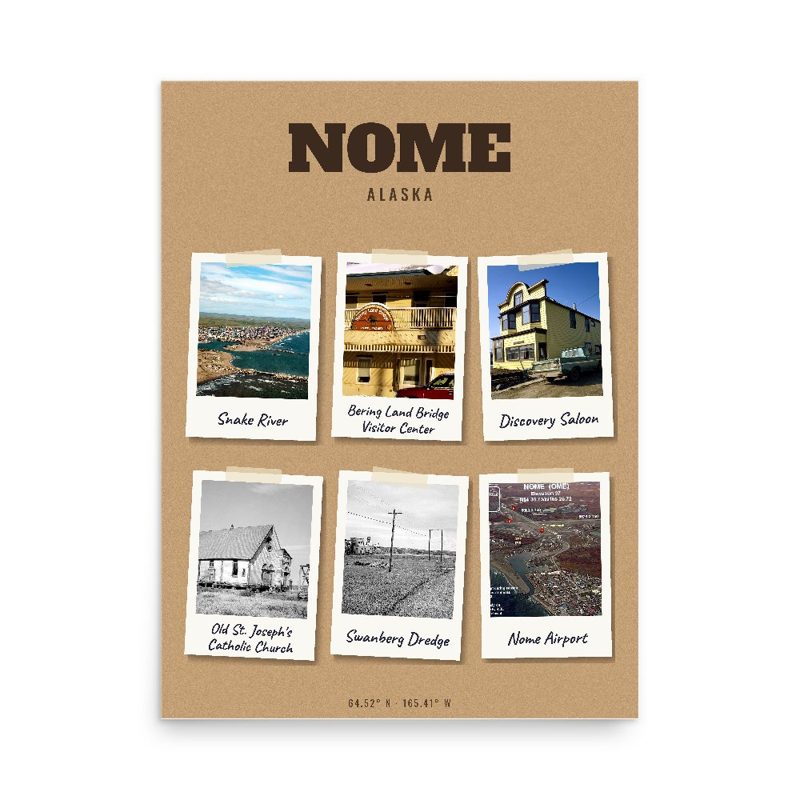
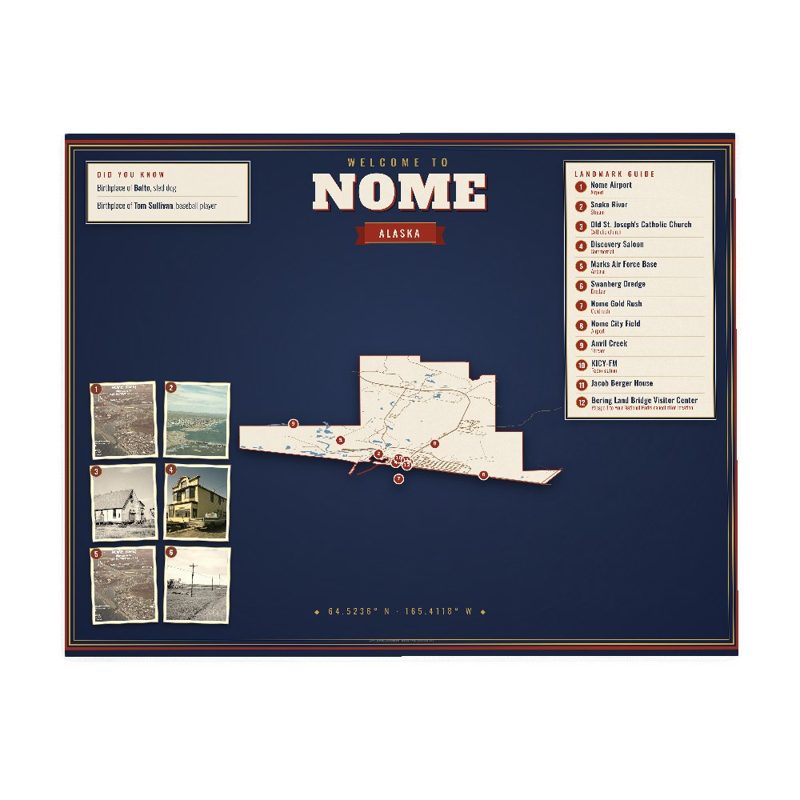



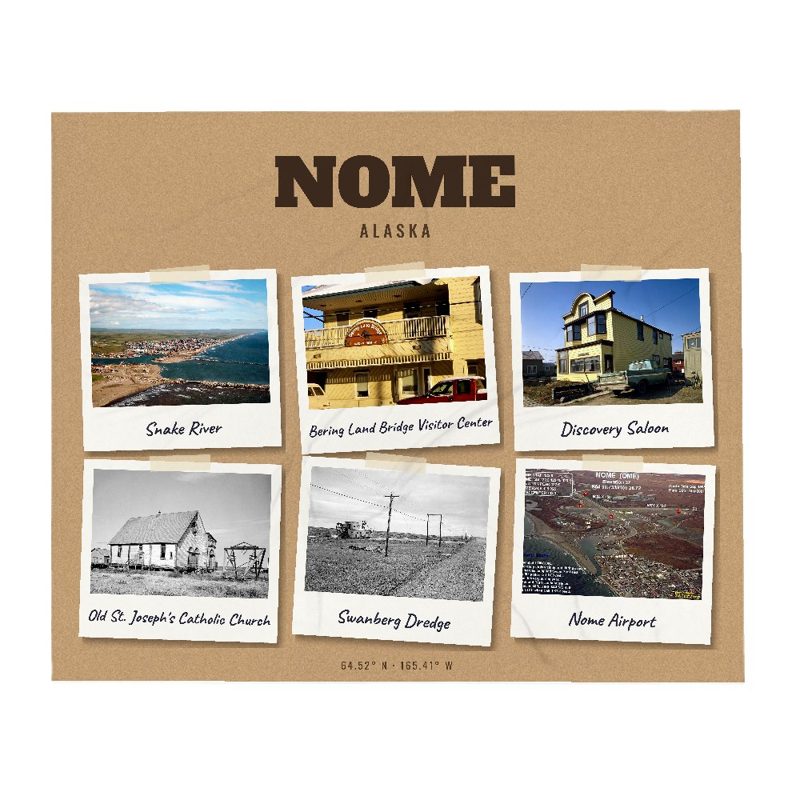
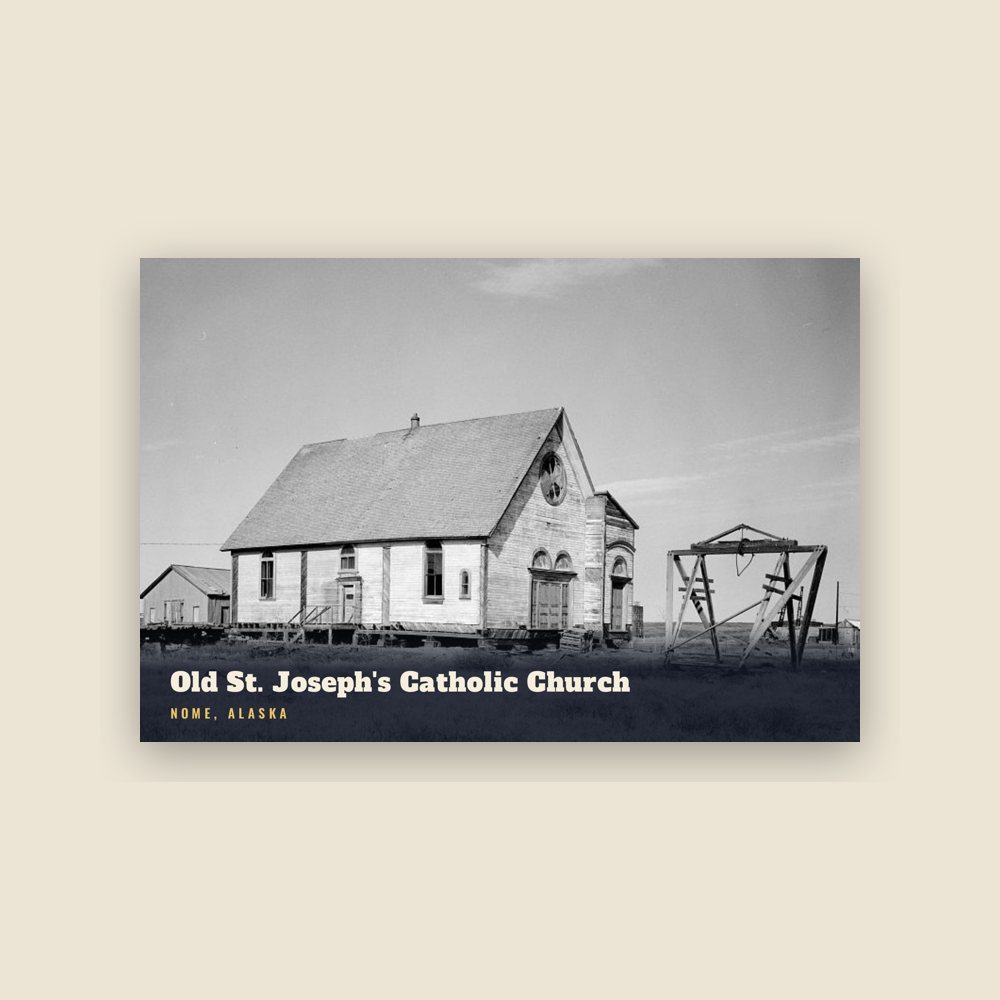
 Old St. Joseph's Catholic Church
 Nome Airport
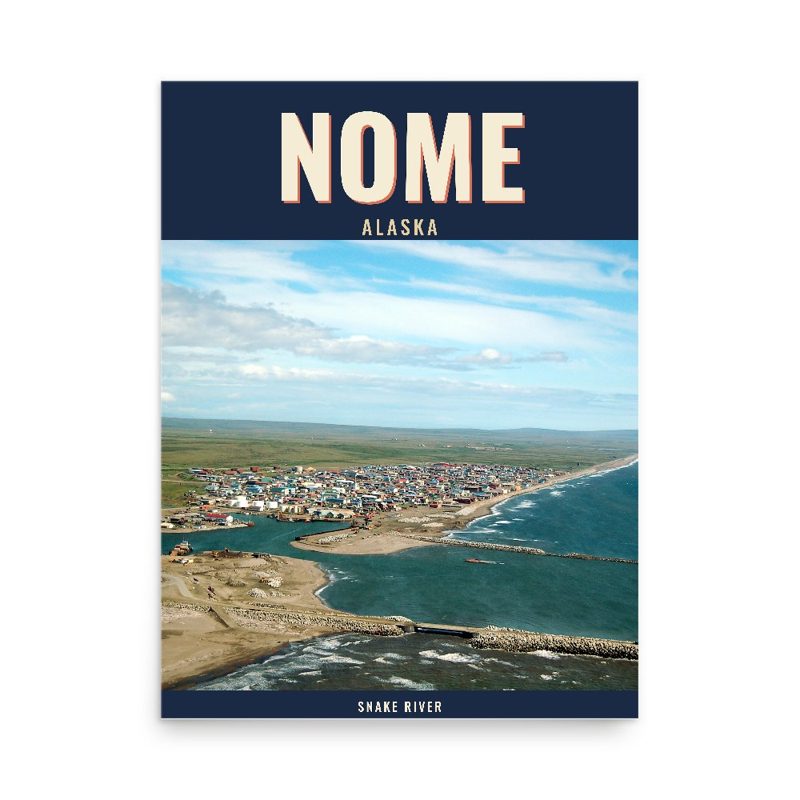
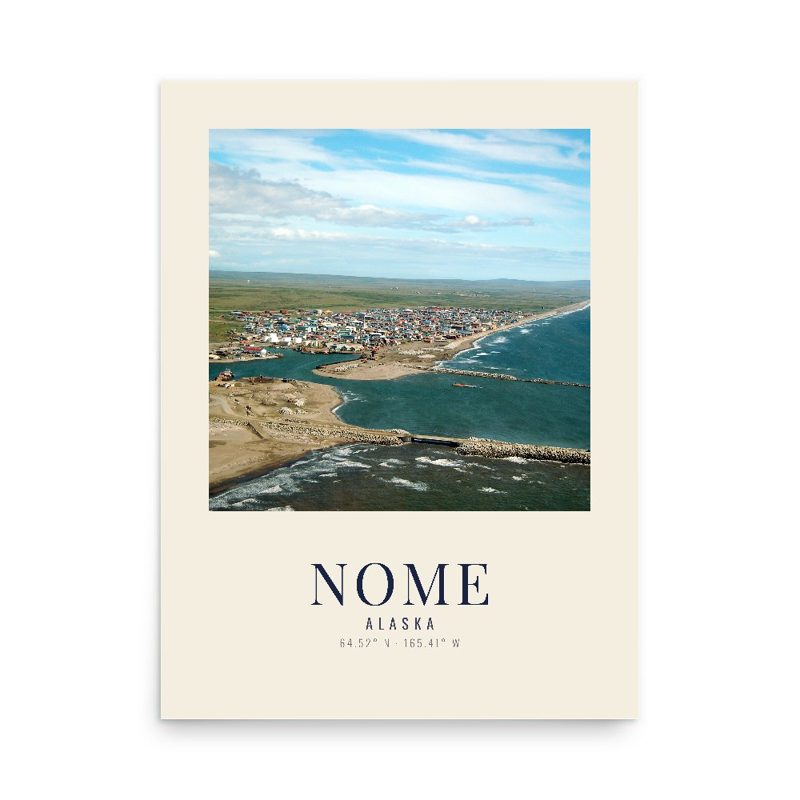
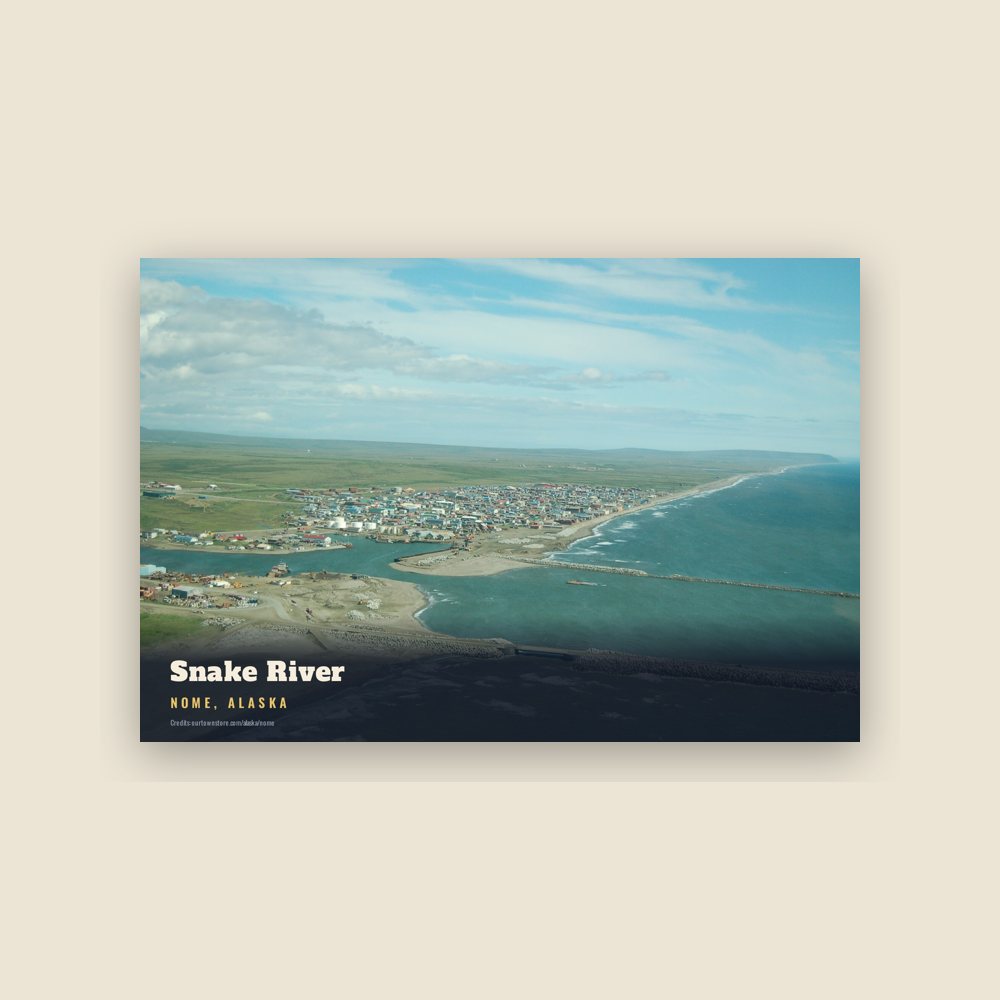
 Snake River
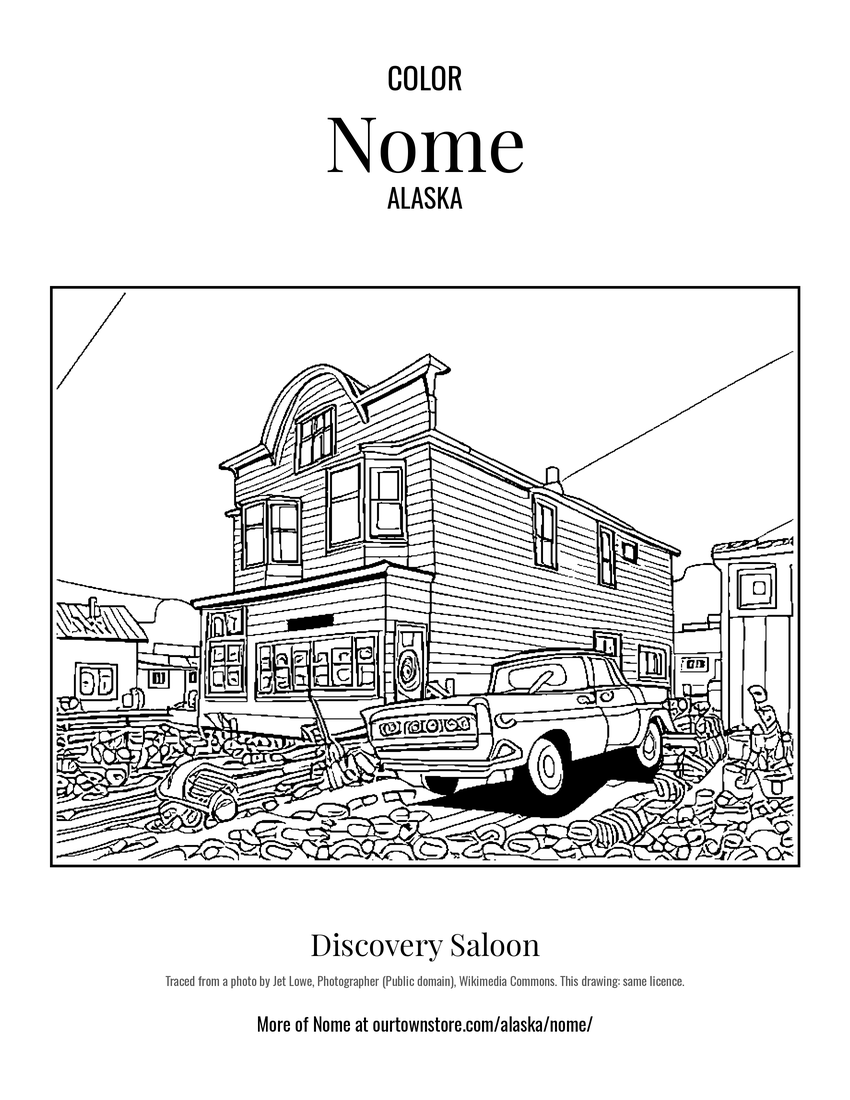 Discovery Saloon