Vestavia Hills is named for the 20-acre (8.1 ha) estate of former Birmingham mayor George B. Ward. Vestavia Hills is the birthplace of Michael Papajohn, character actor.
- CountyJefferson County
- Population39,102 (2020 U.S. Census)
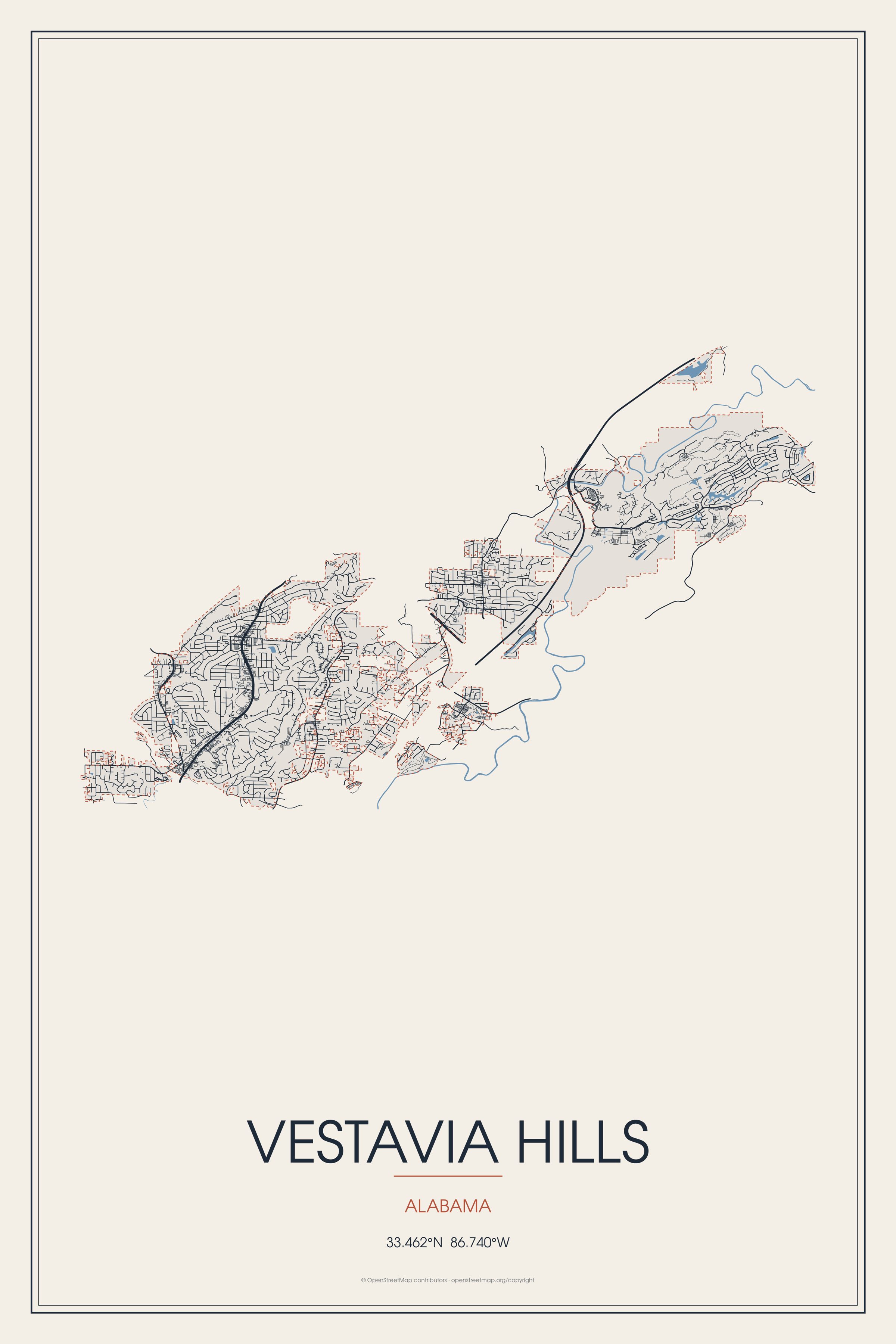
Vestavia Hills, Alabama gifts and souvenirs: 18 designs made from Vestavia Hills's own map, landmarks and history, from $16 to $95. Printed to order and shipped free in the USA.
| Popular | Price |
|---|---|
| Vestavia Hills Hometown Ornament | $23 |
| Vestavia Hills Varsity Crewneck | from $57 |
| Vestavia Hills Est. Tee | from $33 |
| Vestavia Hills Town Line Mug | from $26 |
| Vestavia Hills Market Tote | $37 |
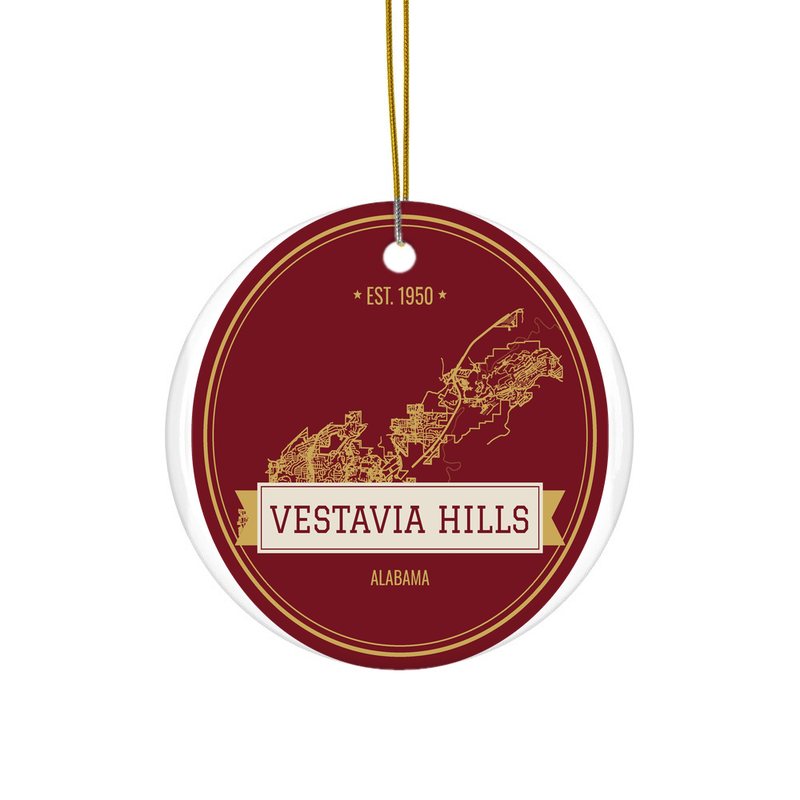
Ceramic keepsake, gold ribbon
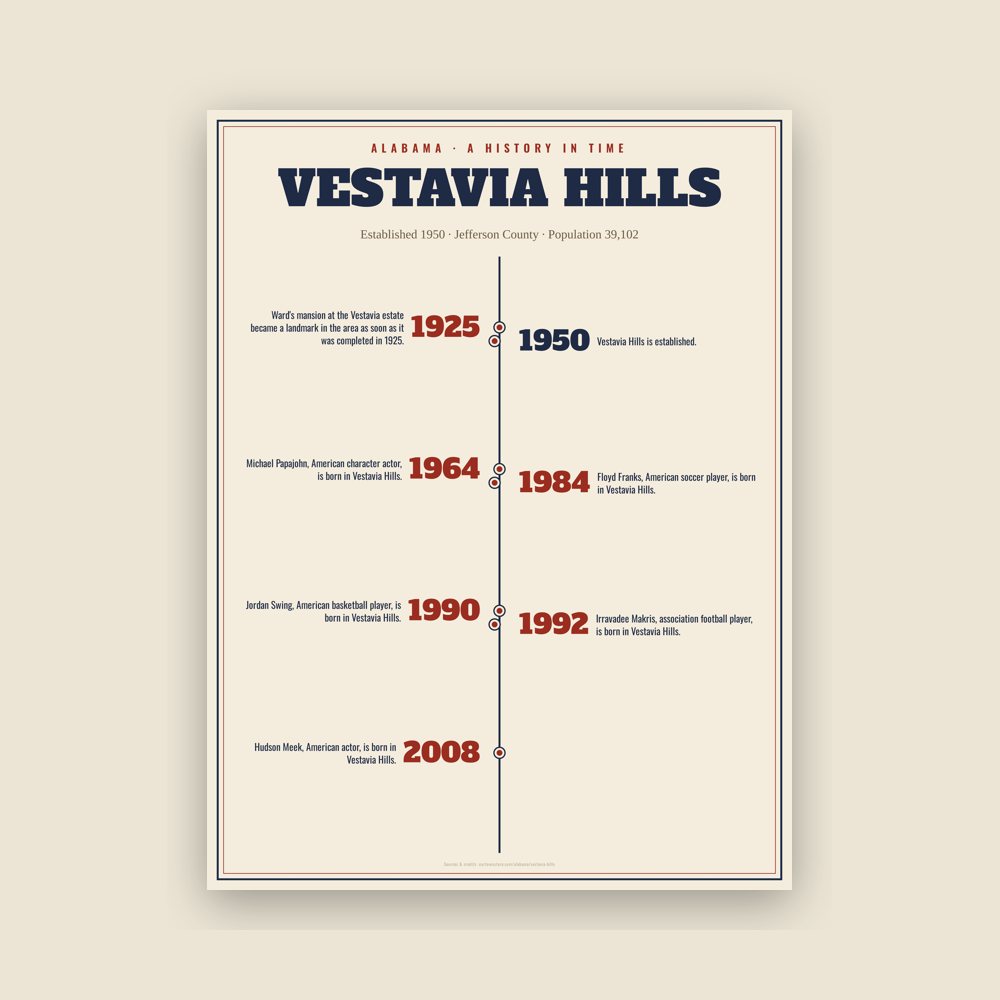
The town's story in dates, from its own records, for home or classroom
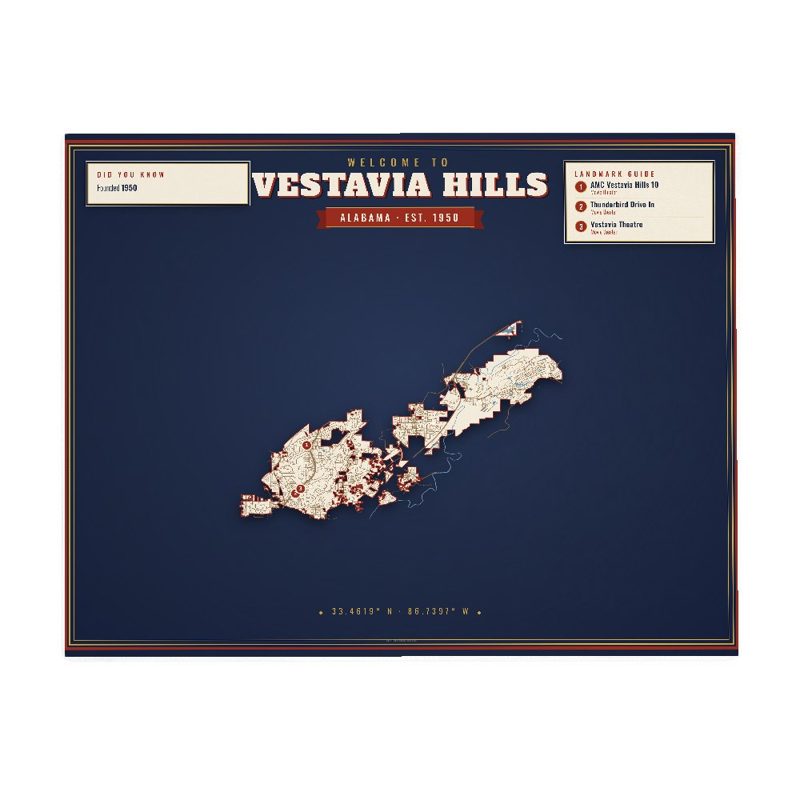
Map of local landmarks, washable fabric
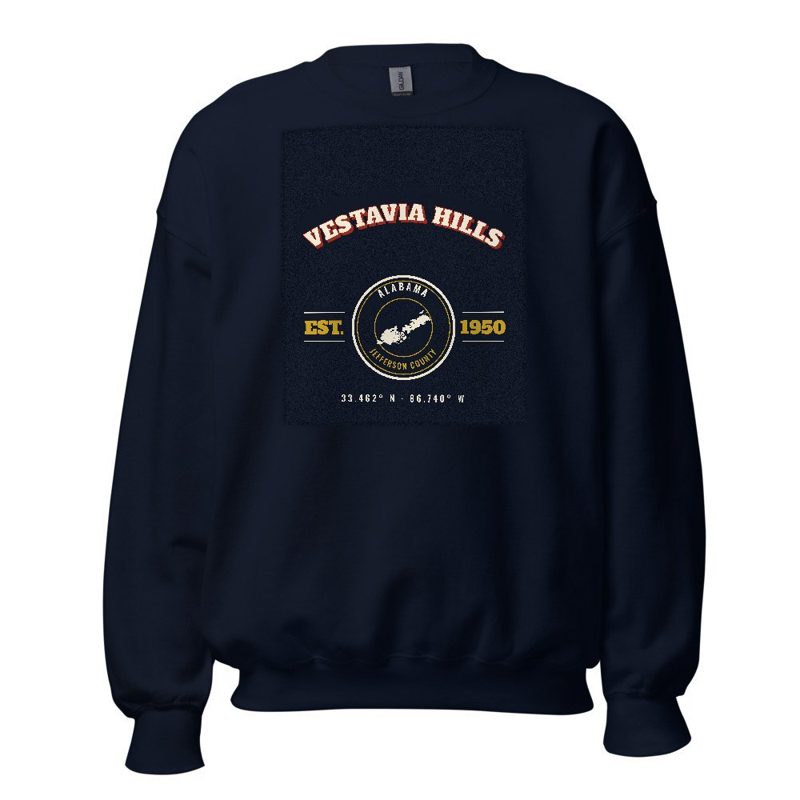
Heavy-blend fleece, street map printed on the back
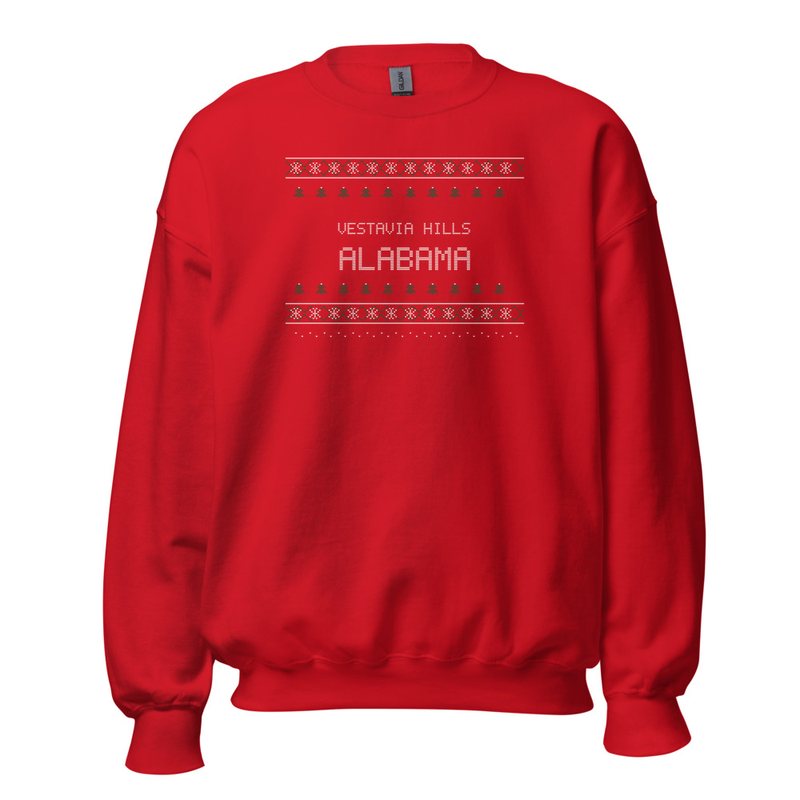
Red heavy-blend crewneck, knit-stitch town print
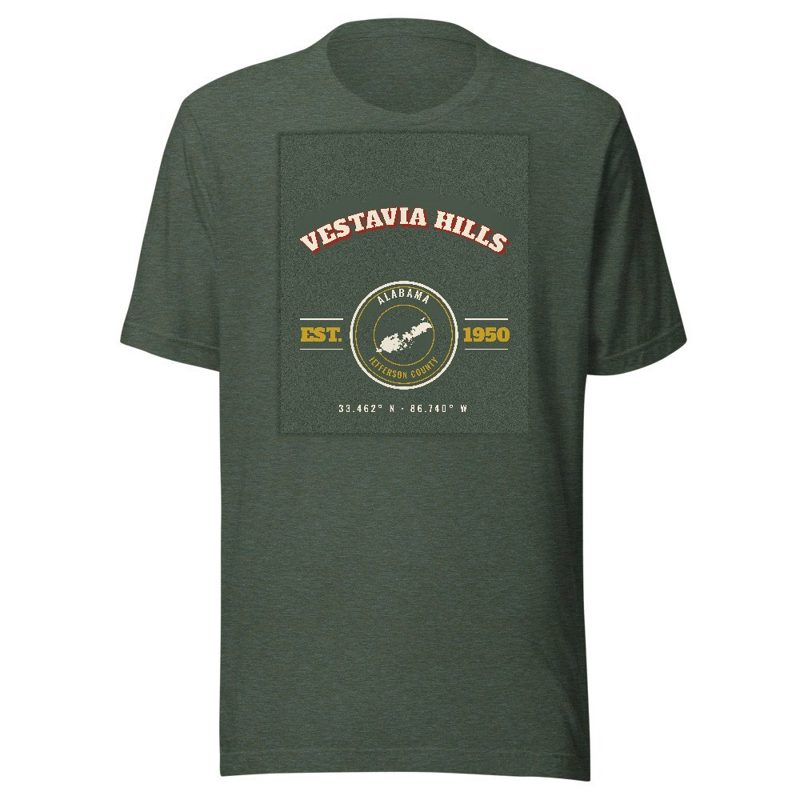
Soft Bella+Canvas jersey
Kids' Bella+Canvas jersey, youth sizes

Bella+Canvas toddler jersey
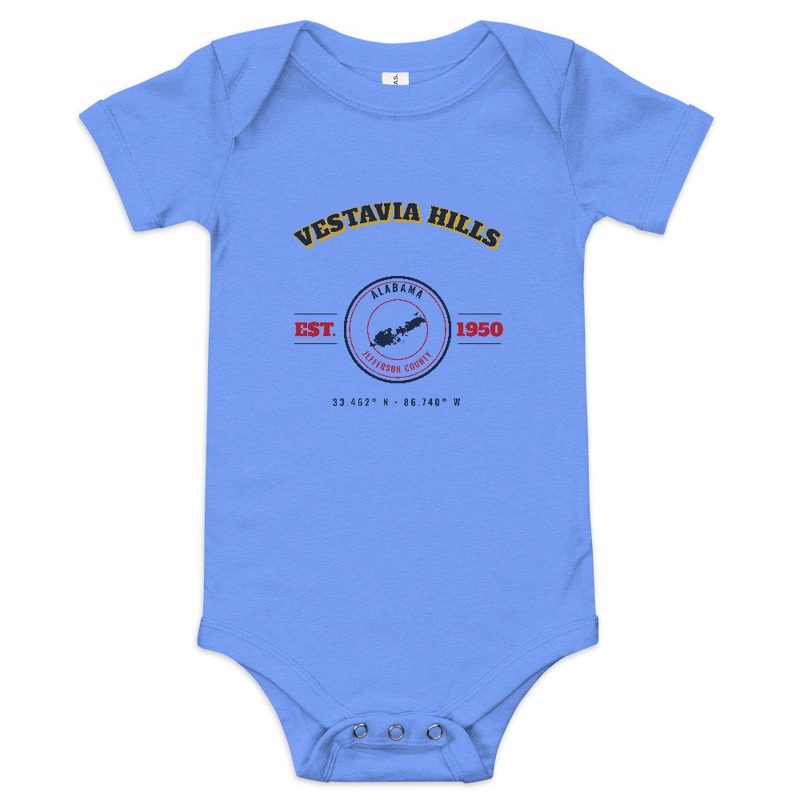
Bella+Canvas baby bodysuit
Glossy ceramic, dishwasher safe
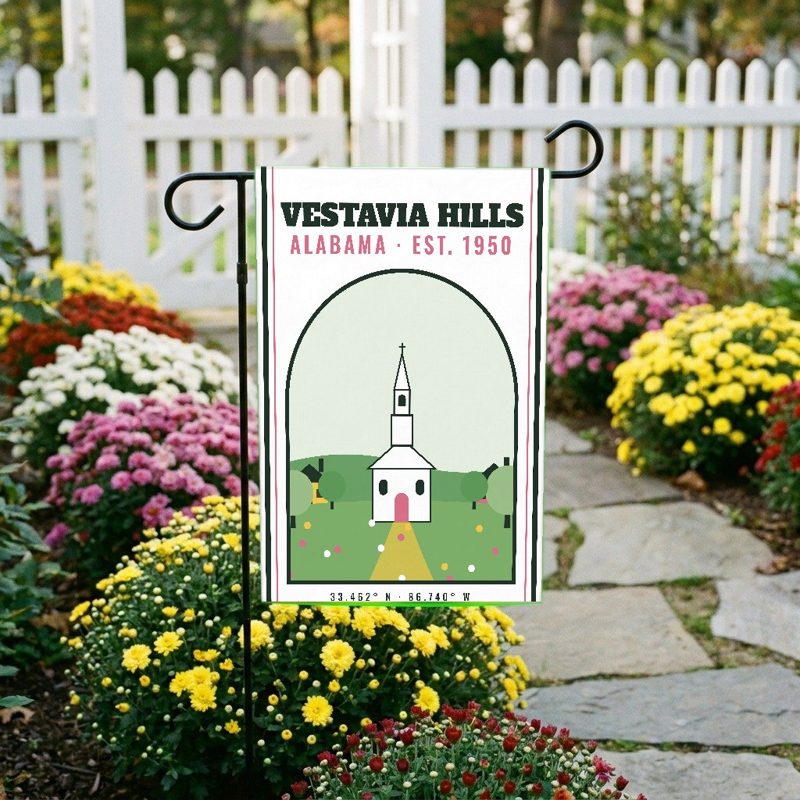
Weatherproof, for the front walk
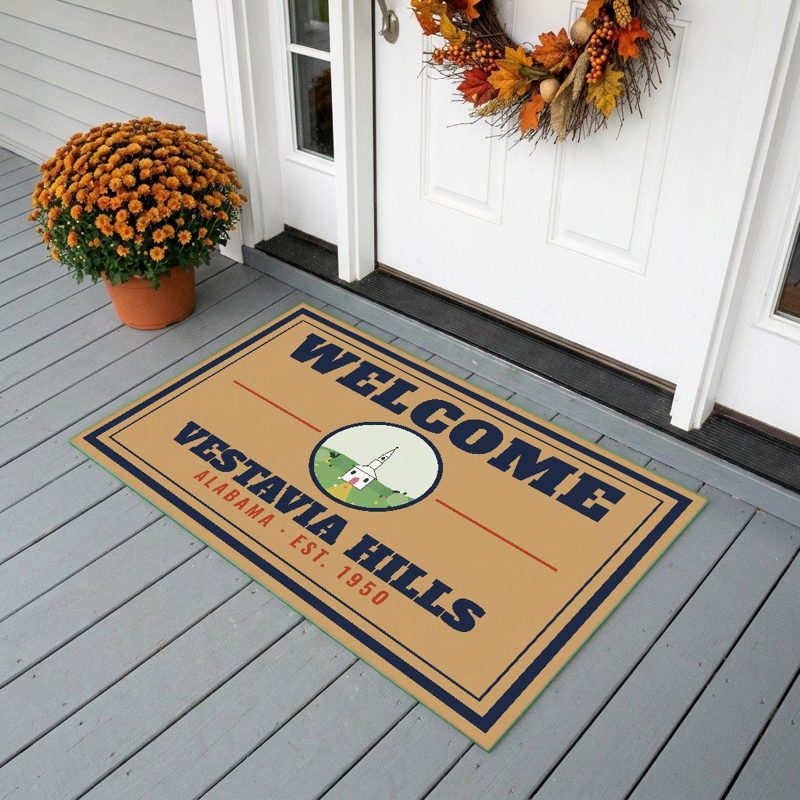
24″×16″, printed coir-look fibers, rubber back
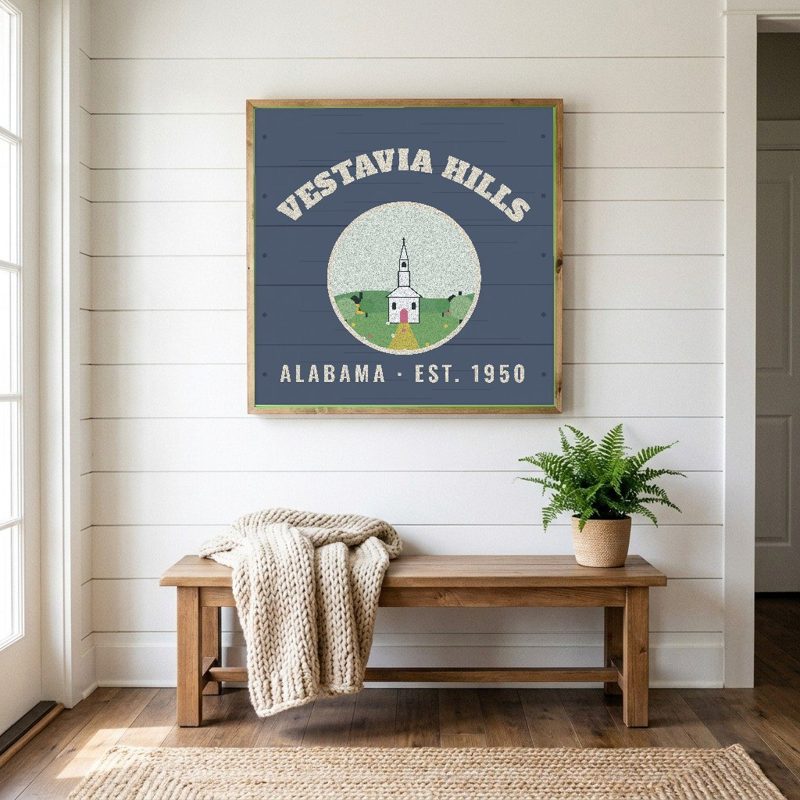
12″×12″ printed wood, ready to hang
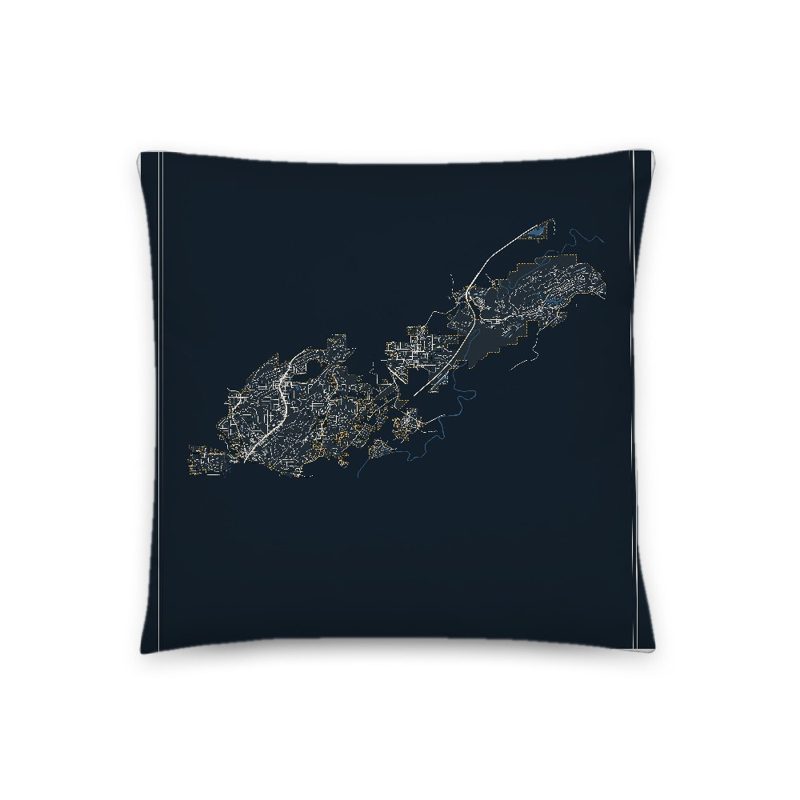
Soft-touch, zip cover
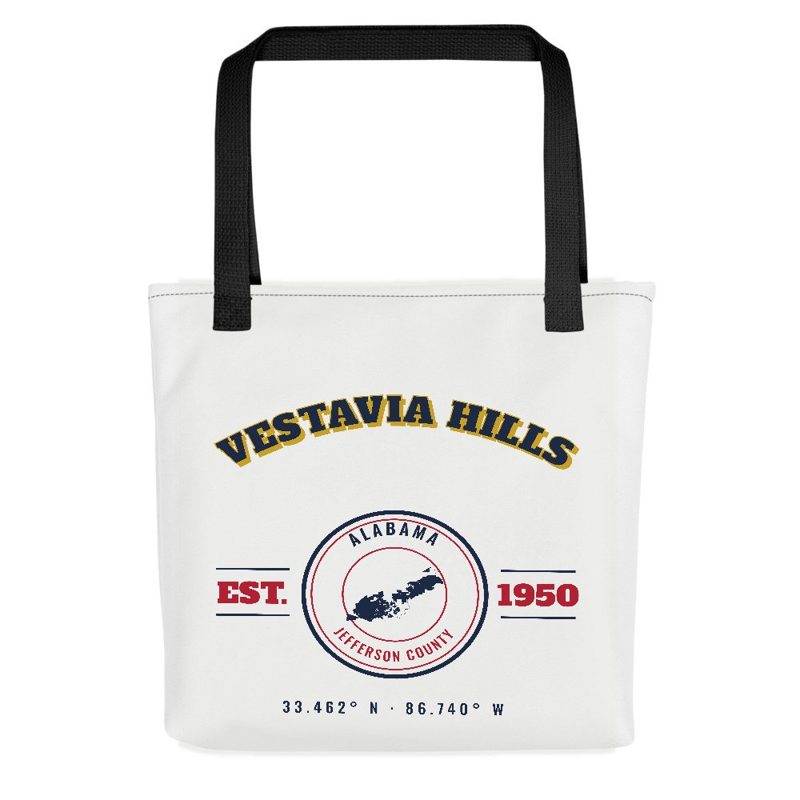
Sturdy all-over-print tote
Glossy top, cork back
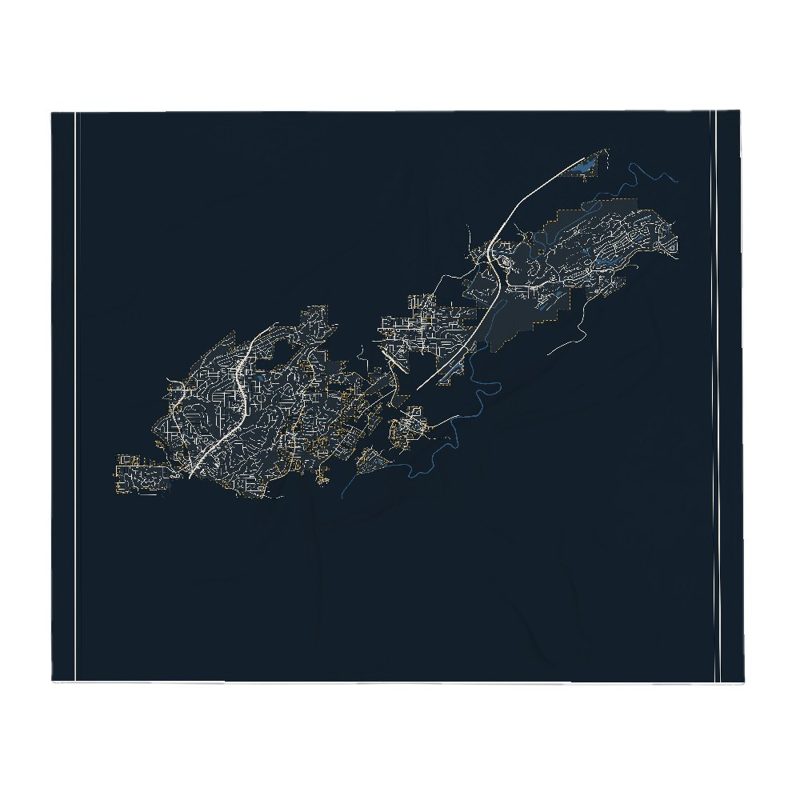
Soft fleece, 50″×60″
20 oz, double-wall stainless
Vestavia Hills is named for the 20-acre (8.1 ha) estate of former Birmingham mayor George B. Ward. Vestavia Hills is the birthplace of Michael Papajohn, character actor.
Population 2010: 34,033 → 2020: 39,102
From Wikidata (CC0).
Vestavia Hills is named for the 20-acre (8.1 ha) estate of former Birmingham mayor George B. Ward. It was situated on the crest of Shades Mountain in what is now the northern edge of the city. Ward's mansion at the Vestavia estate became a landmark in the area as soon as it was completed in 1925. The 2+1⁄2-story house was patterned after the circular Temple of Vesta in Rome, with dark pink sandstone walls encircled by 20 massive white Doric columns surmounted by a carved entablature. The extensive gardens, populated by statuary and peacocks, surrounded a smaller domed gazebo patterned after the Temple of Sibyl in Tivoli.
After Ward's death, the house, something of a tourist stop near the highway between Birmingham and Montgomery, was used as a tearoom and reception hall before being purchased by Vestavia Hills Baptist Church. The church met in the temple like structure for several years before demolishing a portion of the building in 1971 to make way for a larger building; a central portion of the original building remains. The local garden club moved the gazebo to a prominent outcropping closer to the highway, there to serve as a landmark gateway into the community.
The development of Vestavia Hills as a residential suburb began in 1946, when developer Charles Byrd planned a subdivision for approximately 1,000 people on the southern flank of Shades Mountain. The suburb was incorporated as a separate city on November 8, 1950, and has since grown, by rapid development and annexation, into a thriving small city of over 39,000 by 2020.
Adapted (trimmed) from the Wikipedia article Vestavia Hills, Alabama, revision 1376240662 by its contributors, licensed CC BY-SA 4.0.
We share a part of every Vestavia Hills sale with local partners, and we'd love to print from your collection. Old photographs, maps and postcards make the best keepsakes.
Partner with usA favorite landmark, your street, a school or team, an anniversary gift, a different product. Tell us and we'll get back to you by email.
Vestavia Hills's population was 39,102 in the 2020 U.S. Census, up from 34,033 in 2010.