Since 1923
A short history of Muscle Shoals
In the late 18th and early 19th centuries, as Europeans entered the area in greater number, it became a center of historic land disputes. The new state of Georgia had ambitions to anchor its western claims (to the Mississippi River) by encouraging development here, but that project did not succeed.
Under President Franklin D. Roosevelt's administration during the Great Depression, the Tennessee Valley Authority was established to create infrastructure and jobs, resulting in electrification of a large rural area along the river. The Ford Motor Company built and operated a plant for many years in the Listerhill community, three miles east of Muscle Shoals; it closed in 1982 as part of industrial restructuring when jobs moved out of the country.
The area of Muscle Shoals was a part of the historic Cherokee hunting grounds dating to at least the early eighteenth century, if not earlier. In the early 18th century, Muscle Shoals was the site of a French trading post. In 1783, six prominent North Carolinians (William Blount, Richard Caswell, Griffith Rutherford, John Donelson, Joseph Martin, John Sevier) formed a company for the purposes of establishing a colony at Muscle Shoals.
Many Cherokee fought against the rebels during the late American Revolutionary War, hoping to expel them from their territories. After the Revolution, Cherokee attitudes toward the new U.S. republic were divided, as settlers increasingly encroached on their territory. An anti-American faction, dubbed the Chickamauga, separated from more conciliatory Cherokees, and moved into present-day south-central and southeastern Tennessee. Most of this band settled along the Chickamauga Creek, from which their name was derived. They claimed Muscle Shoals as part of their domain. When Anglo-Americans attempted to settle the region in the 1780s and 1790s, the Chickamaugas bitterly resisted them.
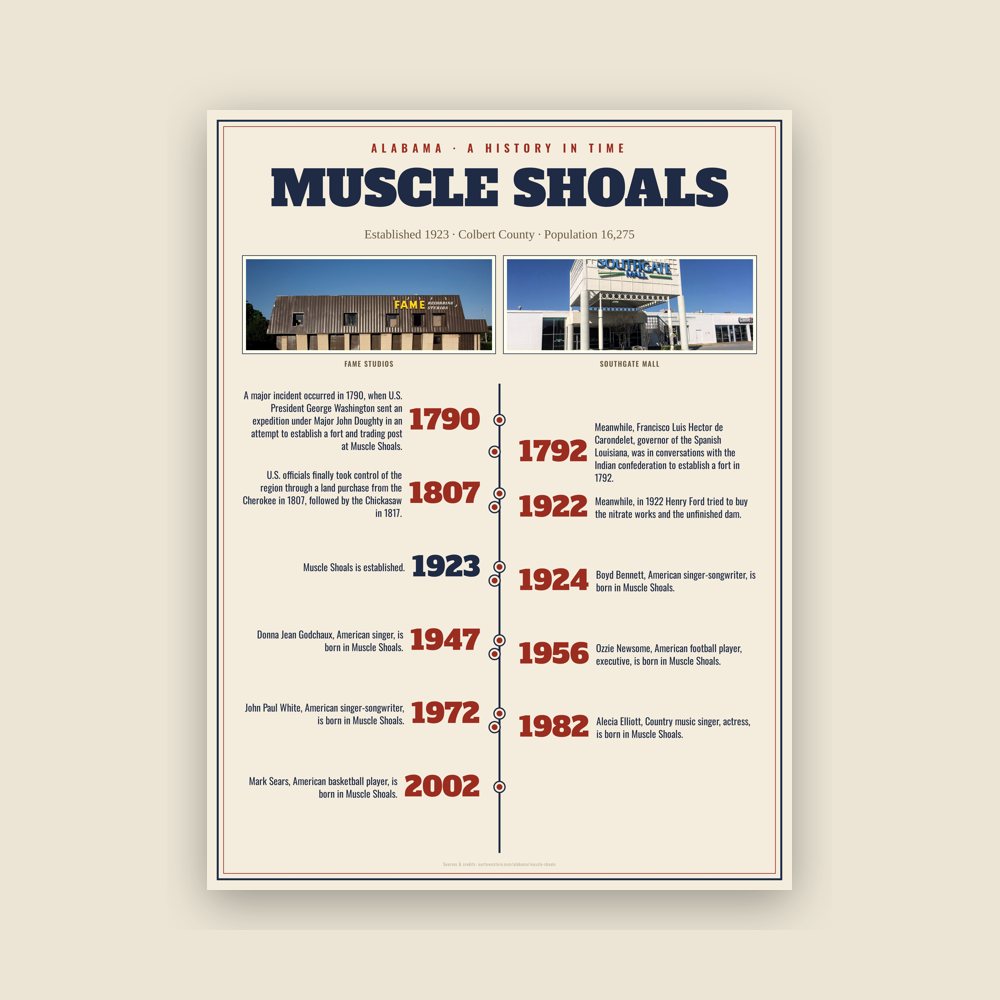
The Upper Creek, residing in what became north and central Alabama, also resented any European or Euro-American presence in the region. A major incident occurred in 1790, when U.S. President George Washington sent an expedition under Major John Doughty in an attempt to establish a fort and trading post at Muscle Shoals. This expedition was nearly annihilated by a Chickamauga and Creek party sent to destroy it, and the administration abandoned the project. Meanwhile, Francisco Luis Hector de Carondelet, governor of the Spanish Louisiana, was in conversations with the Indian confederation to establish a fort in 1792.
Anglo-American settlers in Tennessee continued to agitate for control of this region. The site was particularly desirable, as it controlled access to fine cotton-producing land immediately to its south. In 1797, John Sevier, the first governor of Tennessee, complained to Andrew Jackson that "The prevention of a settlement at or near the Muscle Shoals is a manifest injury done the whole western country." At Sevier's behest, Jackson attempted to persuade Congress and President John Adams to fund a new expedition to take control of the site, but to no avail.
U.S. officials finally took control of the region through a land purchase from the Cherokee in 1807, followed by the Chickasaw in 1817. Fort Hampton was built in neighboring Limestone County to protect both native and Anglo interests. Muscle Shoals was later used as a site from which to exile the Upper Creek to Indian Territory (now Oklahoma).
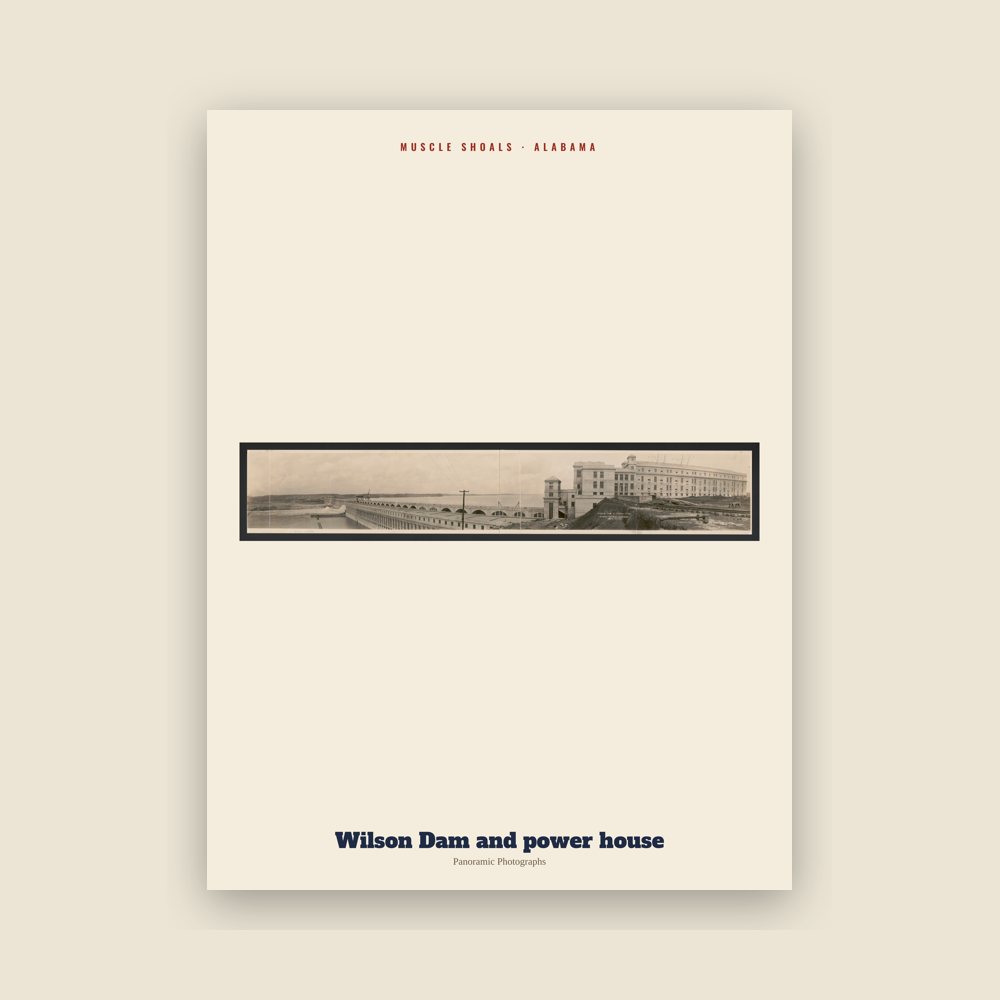
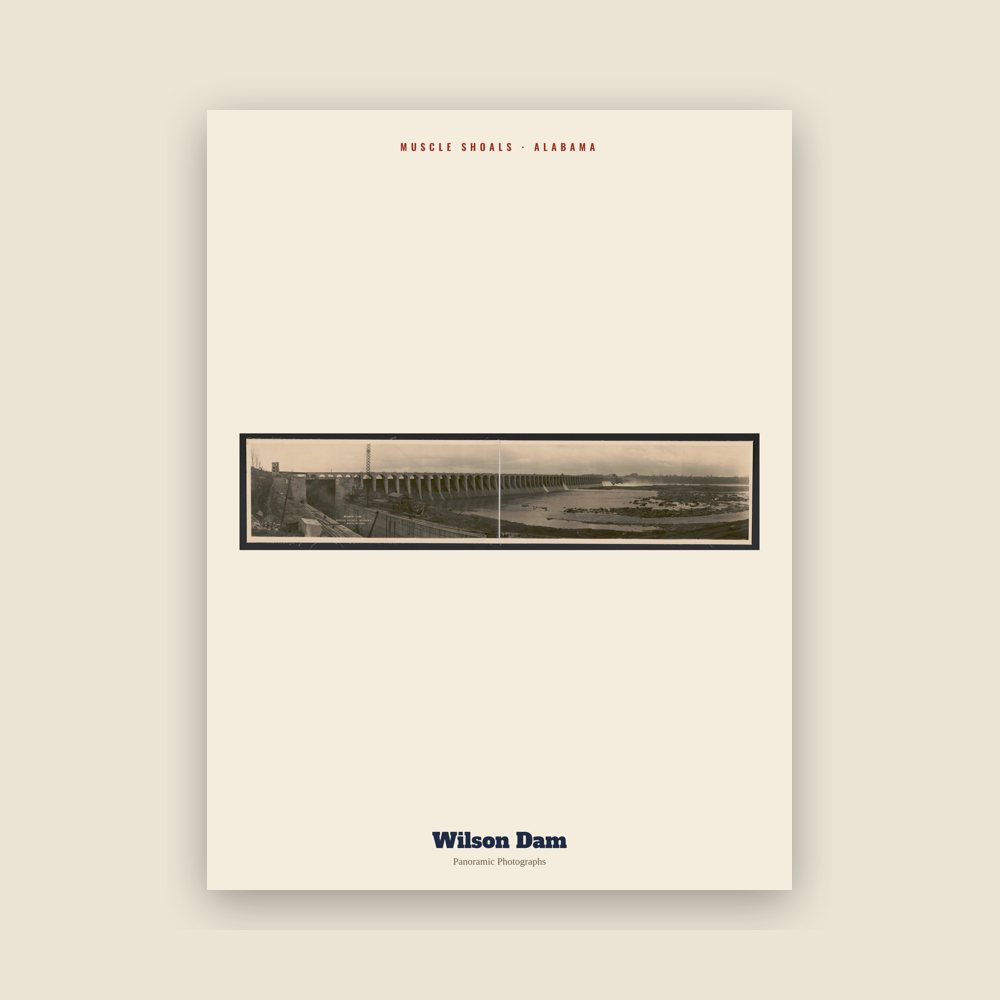
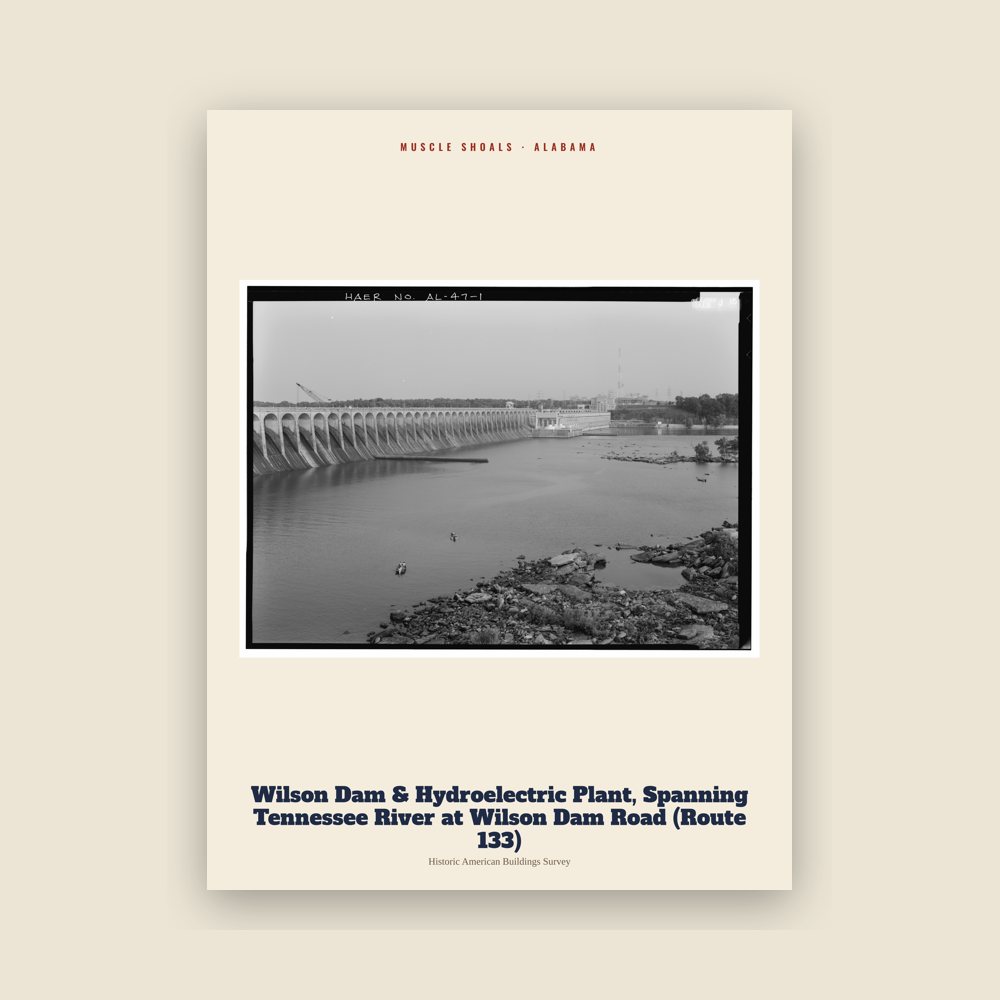
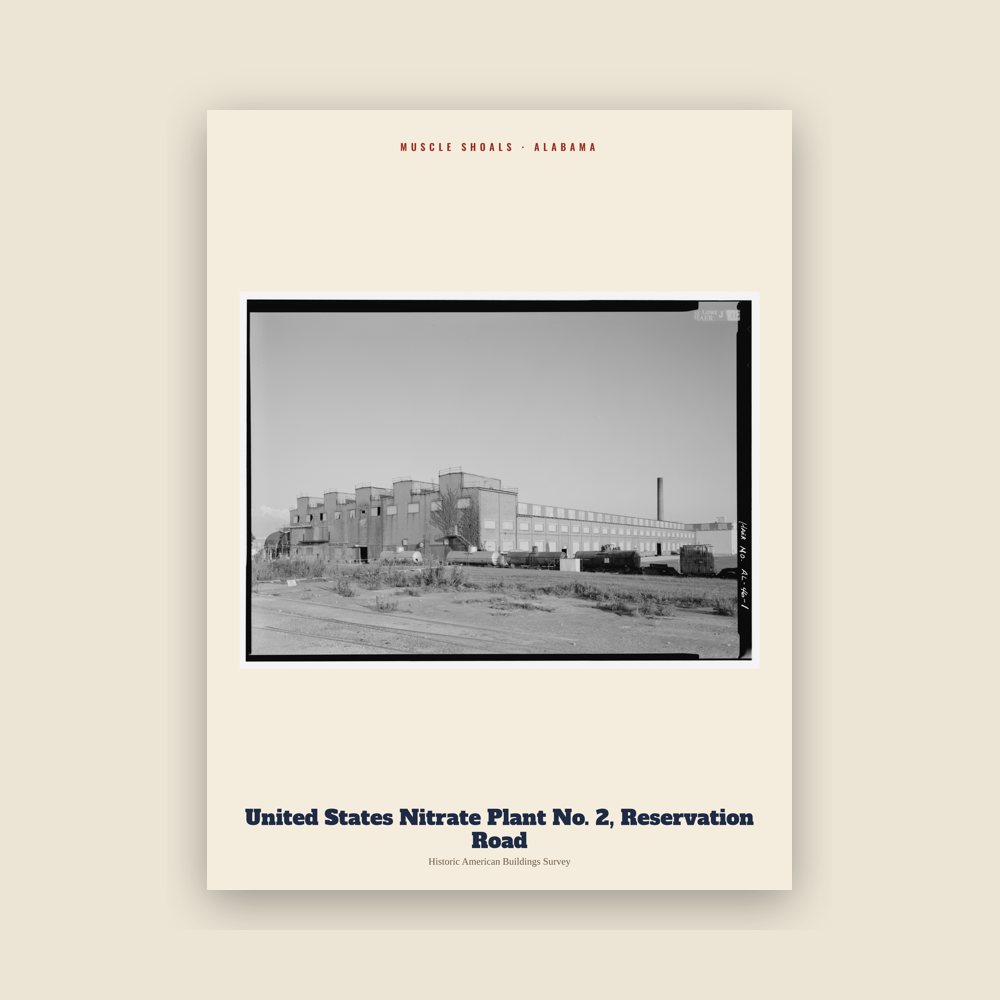
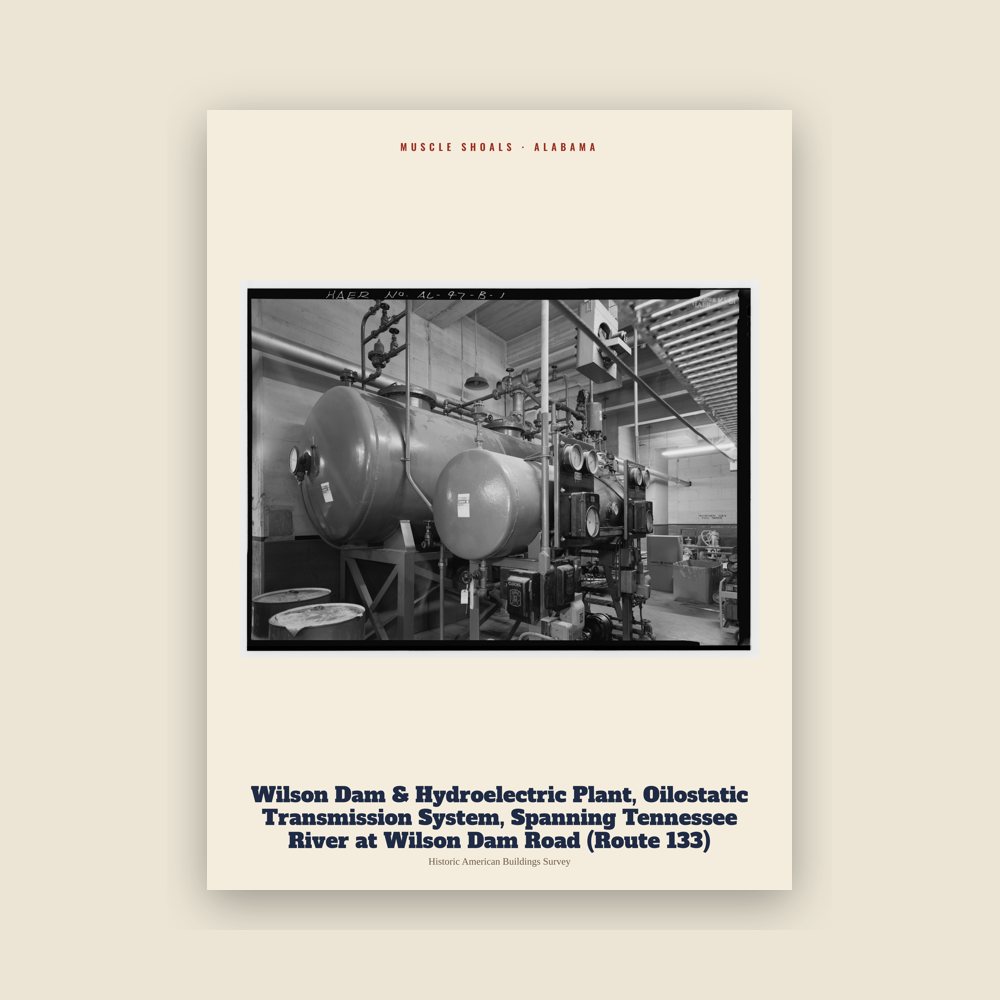
During World War I President Wilson authorized a dam on the Tennessee River just downstream of Muscle Shoals to help power nitrate plants for munitions.
Meanwhile, in 1922 Henry Ford tried to buy the nitrate works and the unfinished dam. The Michigan car manufacturer and industrialist proposed leasing the uncompleted hydro-electric dam at Muscle Shoals on the Tennessee River in Alabama. The US War Department had begun the project during World War I, and engineers estimated a cost of $40 million to complete. At this time, public projects were financed either through raising taxes—which, Congress was unwilling to do at the time- or by issuing bonds. For the Muscle Shoals project, the proposal was for 30-year bonds at 4% interest.
Ford and his friend and fellow inventor Thomas Edison balked at the idea that the US government should have to pay $48 million in interest on top of the $40 million they would have to pay back—all for a project that would benefit the public (the argument being that the hydro-electric dam and accompanying fertilizer plants would create jobs and revitalize the area). Responding to the bond issue, Edison remarked: "Any time we wish to add to the national wealth, we are compelled to add to the national debt." Edison and Ford hoped that a new monetary system could be created where dollar bills were issued directly to workers and manufacturer, with the money being backed by the goods they produced rather than the gold and silver held in bank vaults. Congress eventually rejected Ford's idea.
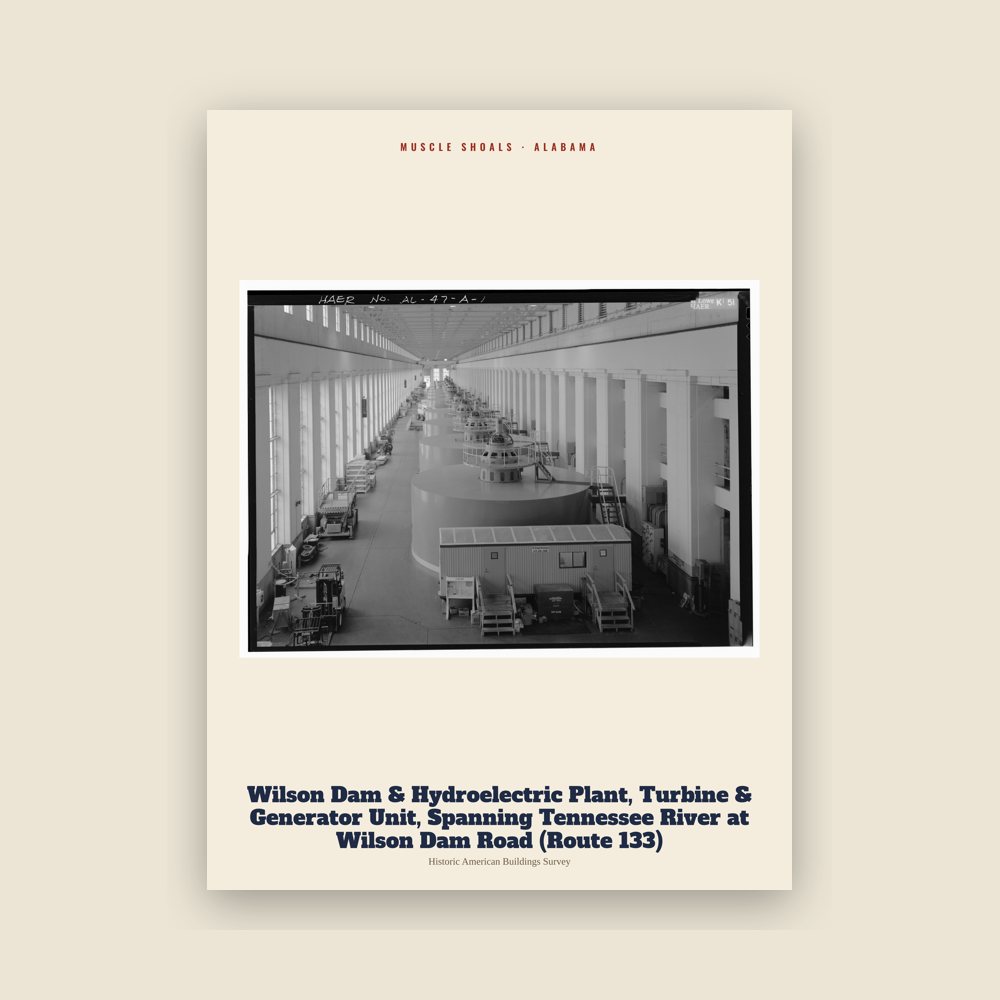
The project of area development based on hydroelectric power languished until the Great Depression. President Franklin D. Roosevelt's administration created the Tennessee Valley Authority in 1933 to construct needed infrastructure and install an electrical system in the rural area, using newly generated electricity from the dam complex.
Adapted (trimmed) from the Wikipedia article Muscle Shoals, Alabama, revision 1378586915 by its contributors, licensed CC BY-SA 4.0.

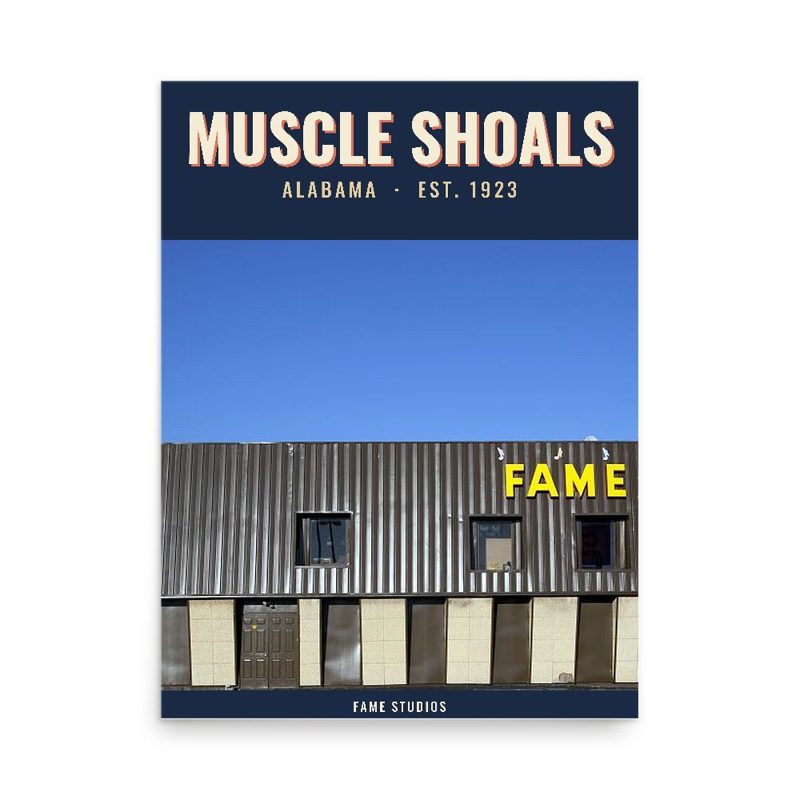
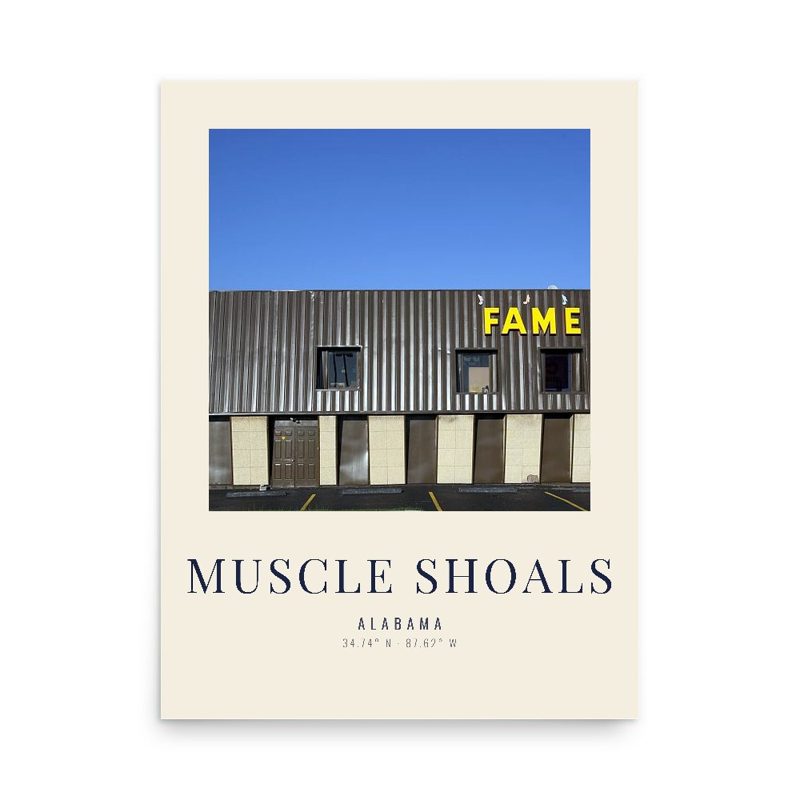
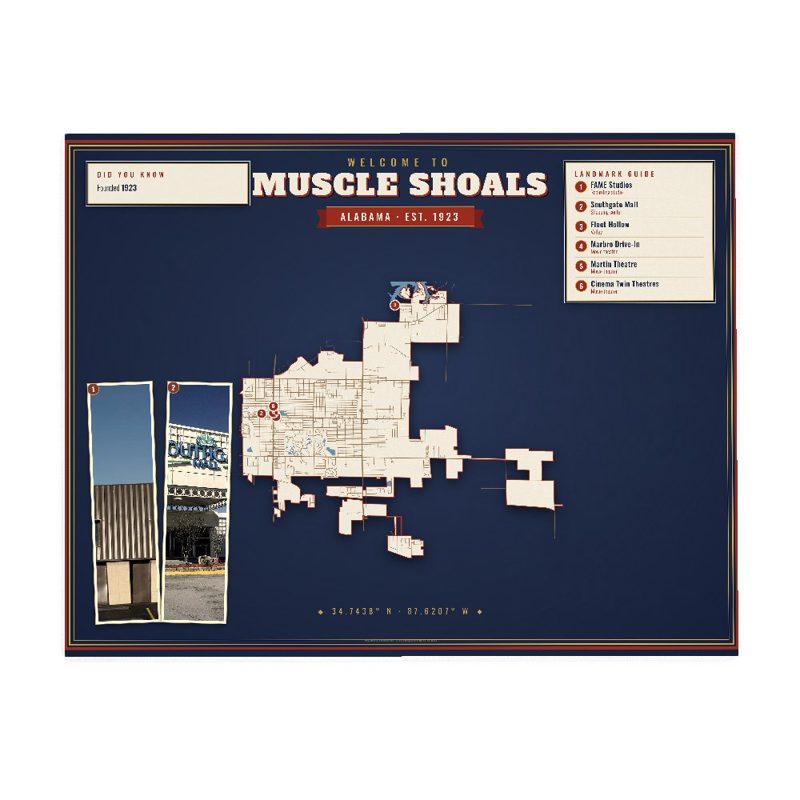
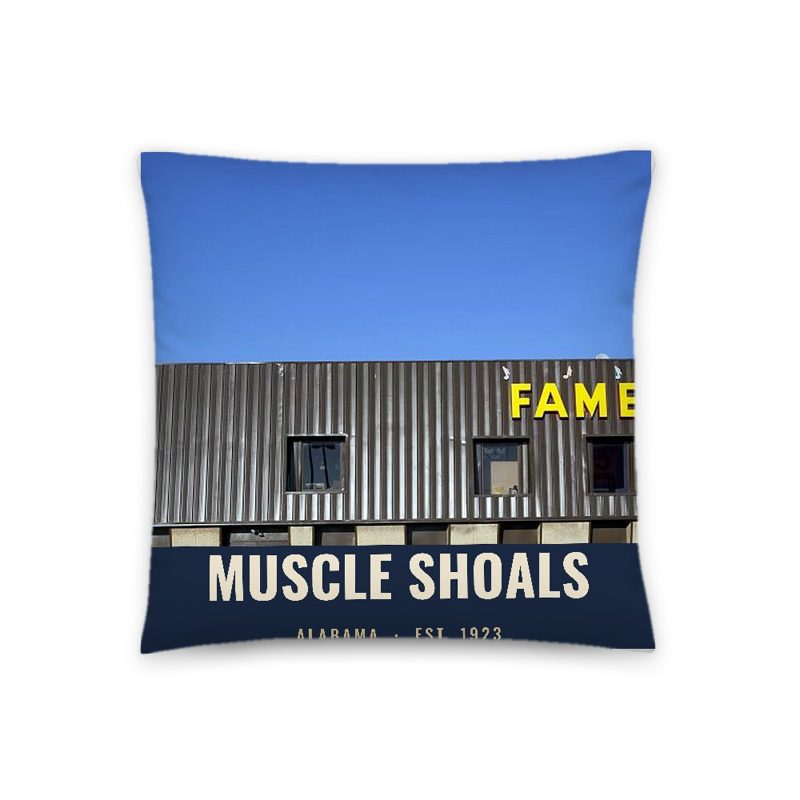
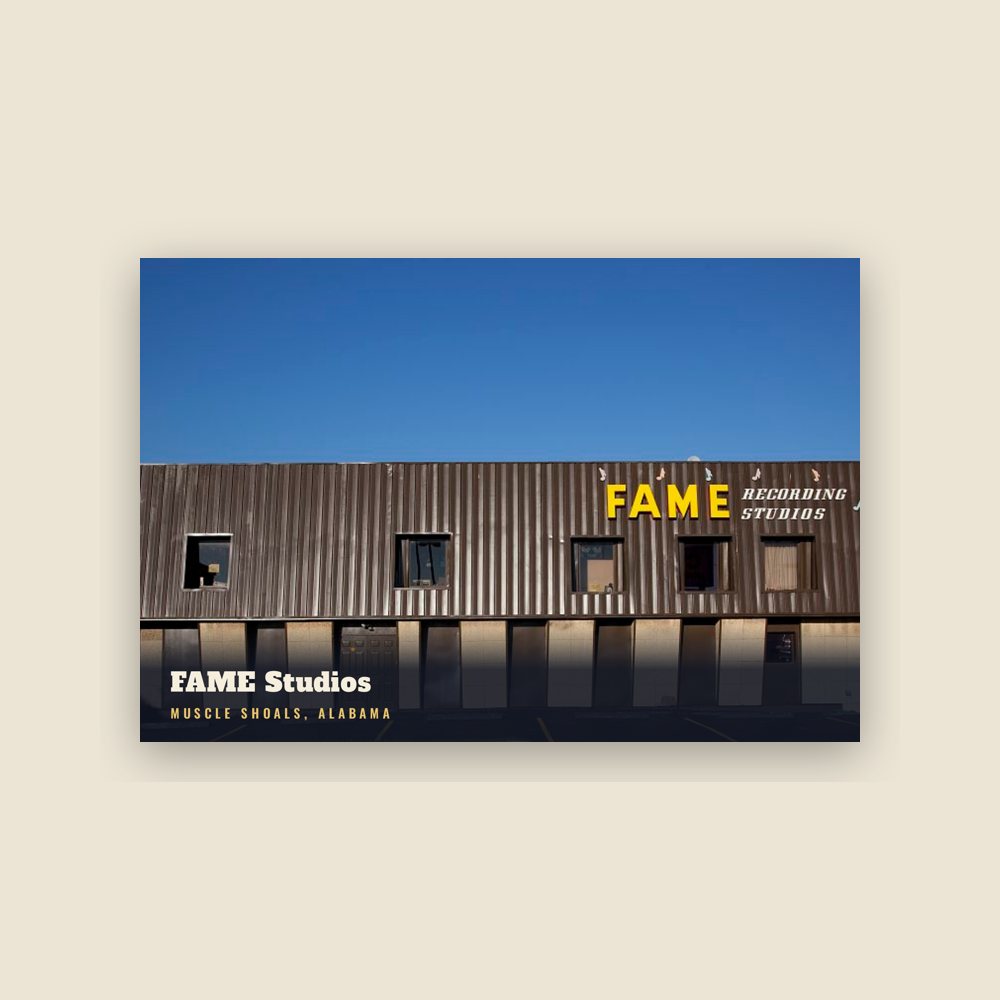
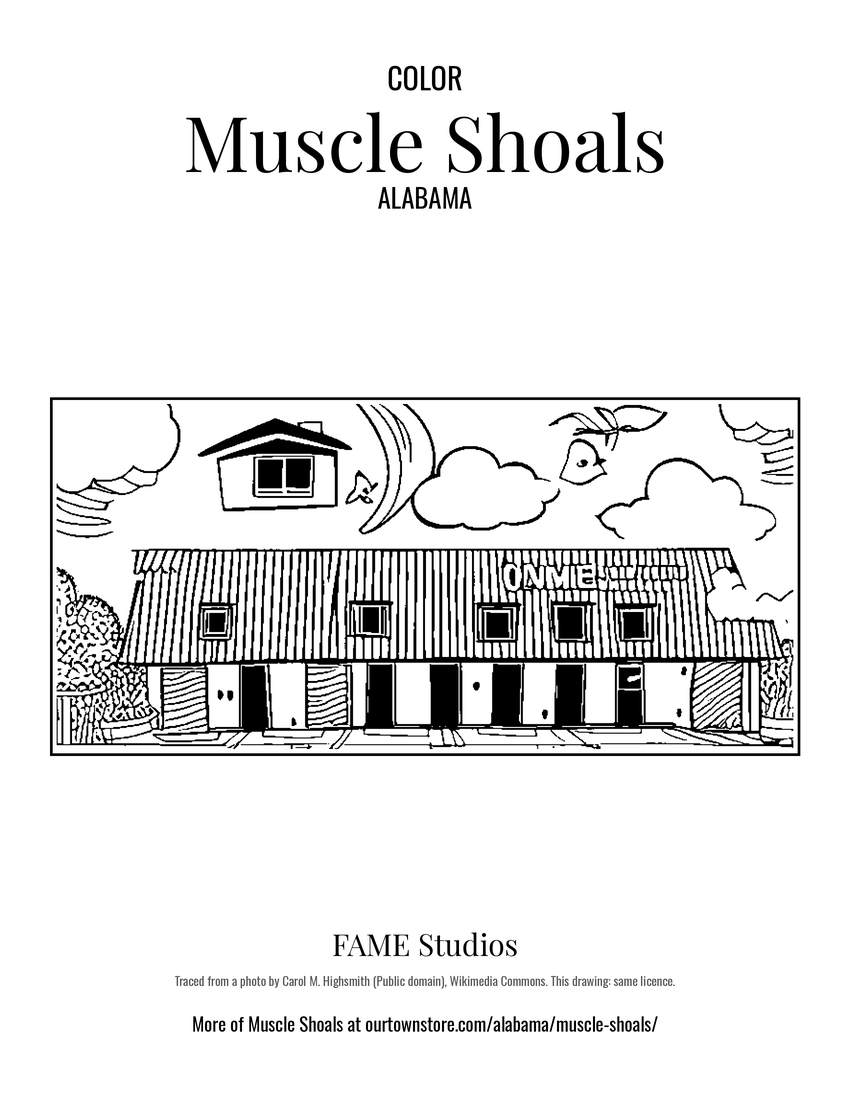 FAME Studios
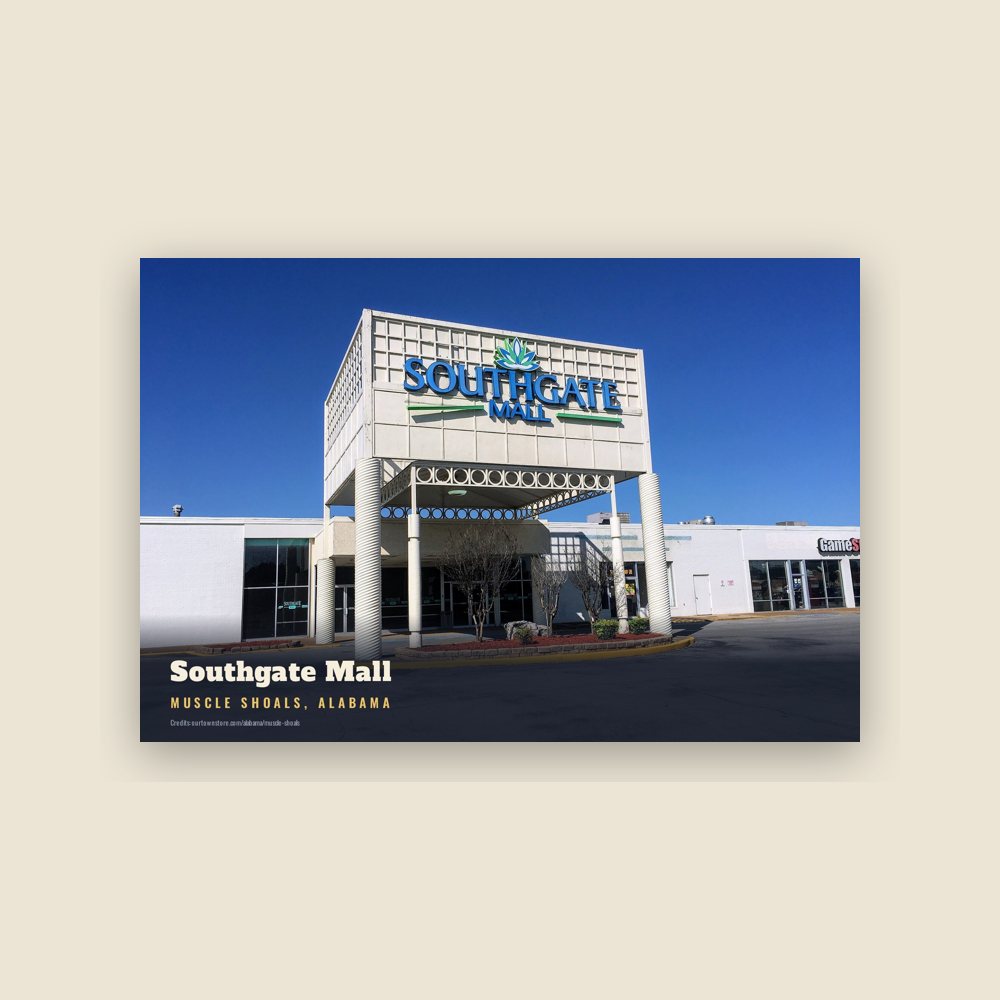
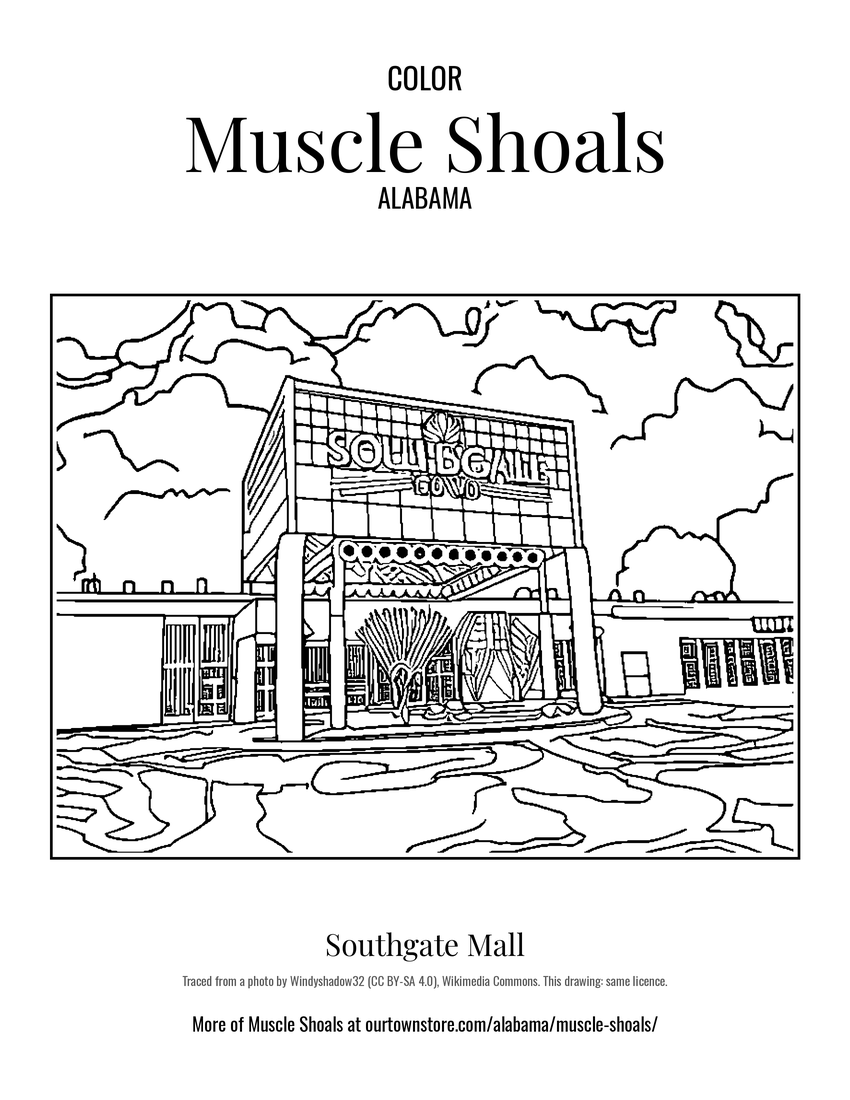 Southgate Mall