Brighton was not settled by European Americans until the late 19th century. Brighton is the birthplace of Albert Hall, actor.
- CountyJefferson County
- Population2,337 (2020 U.S. Census)
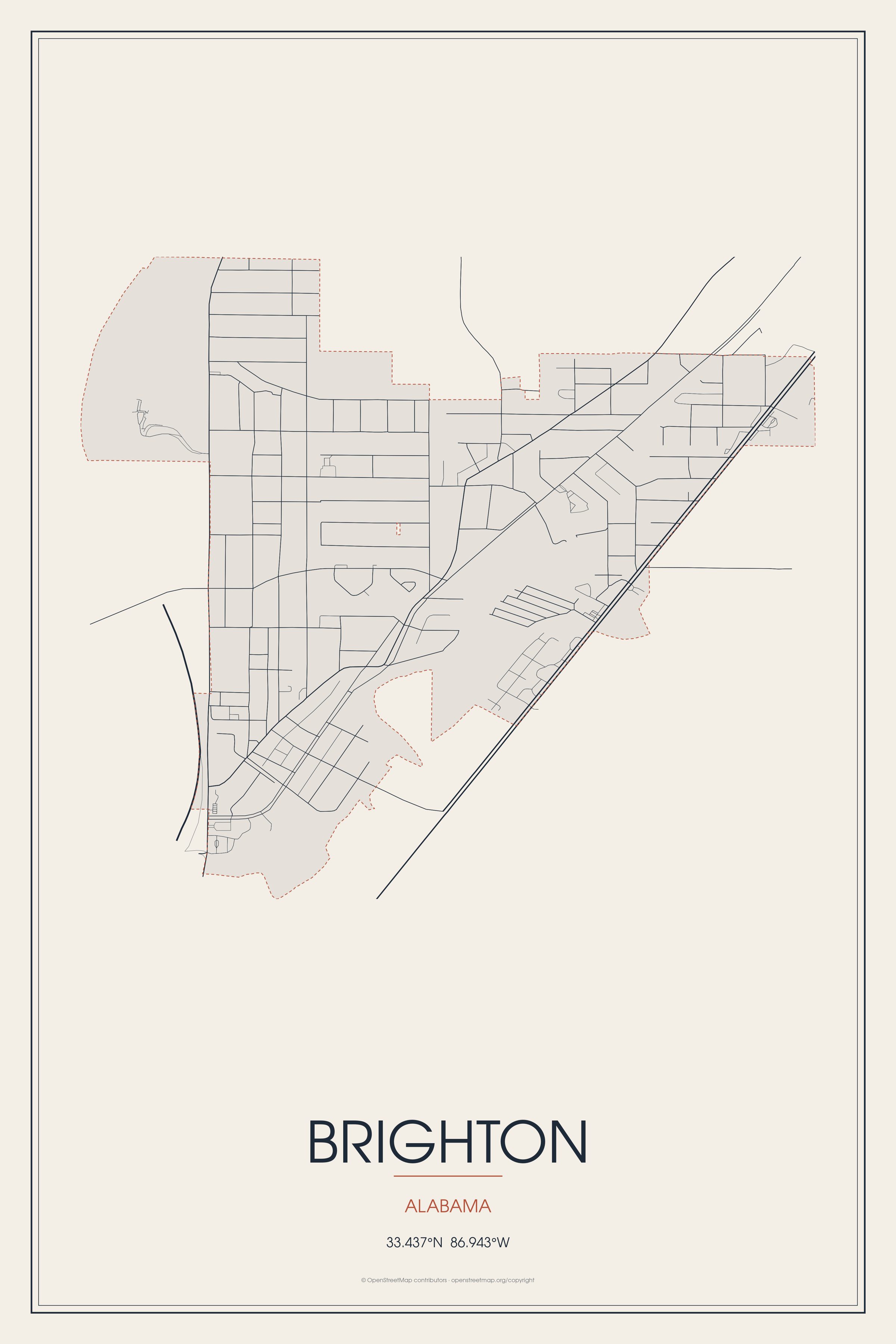
Brighton was not settled by European Americans until the late 19th century. Brighton is the birthplace of Albert Hall, actor.
Brighton, Alabama gifts and souvenirs: 18 designs made from Brighton's own map, landmarks and history, from $16 to $95. Printed to order and shipped free in the USA.
| Popular | Price |
|---|---|
| Brighton Hometown Ornament | $23 |
| Brighton Varsity Crewneck | from $57 |
| Brighton Est. Tee | from $33 |
| Brighton Town Line Mug | from $26 |
| Brighton Market Tote | $37 |
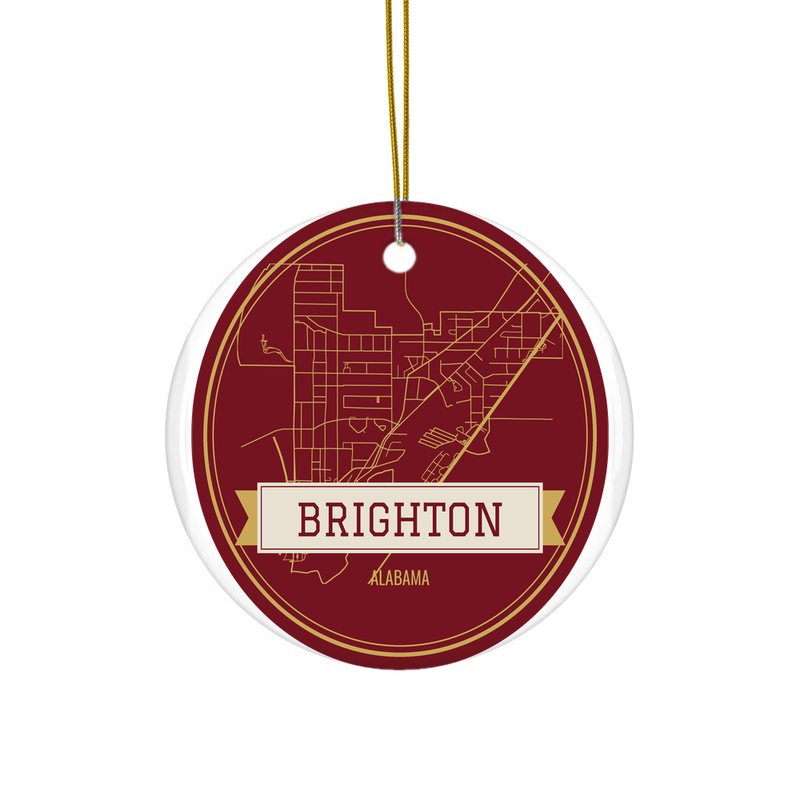
Ceramic keepsake, gold ribbon, in 3 styles
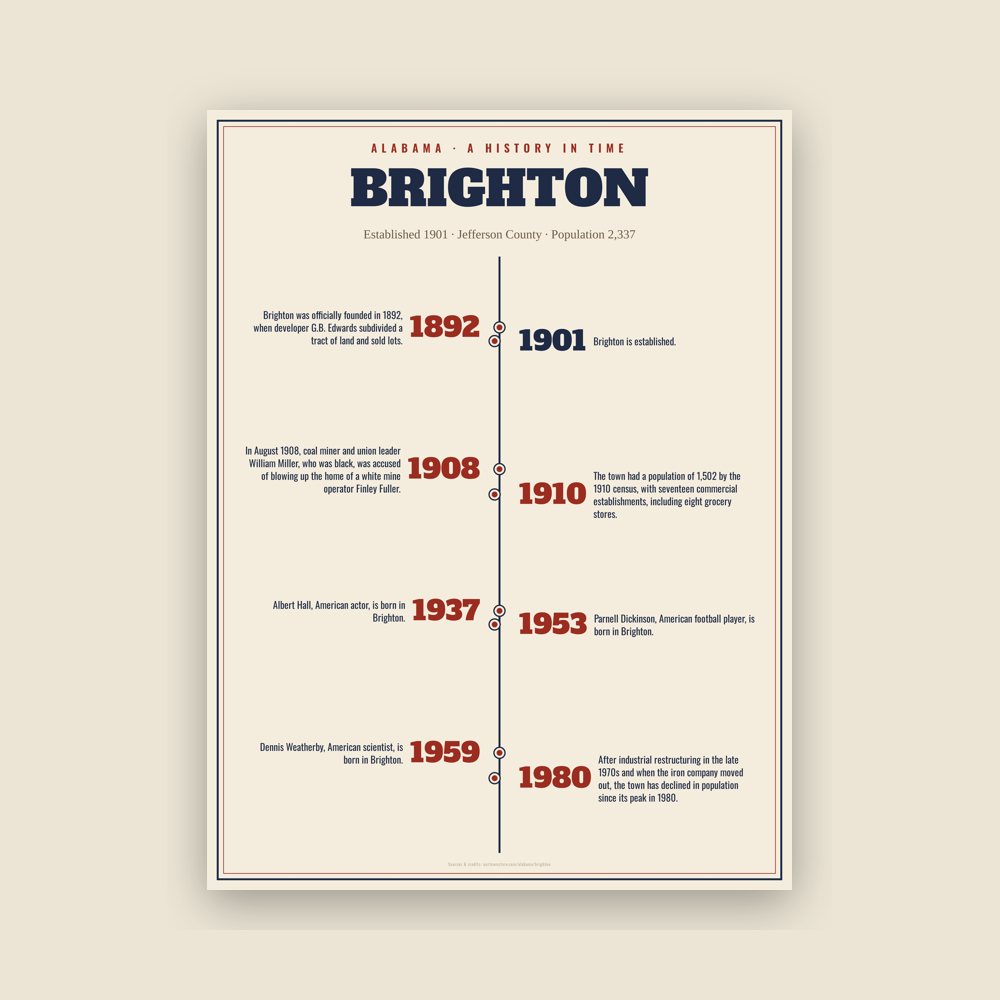
The town's story in dates, from its own records, for home or classroom
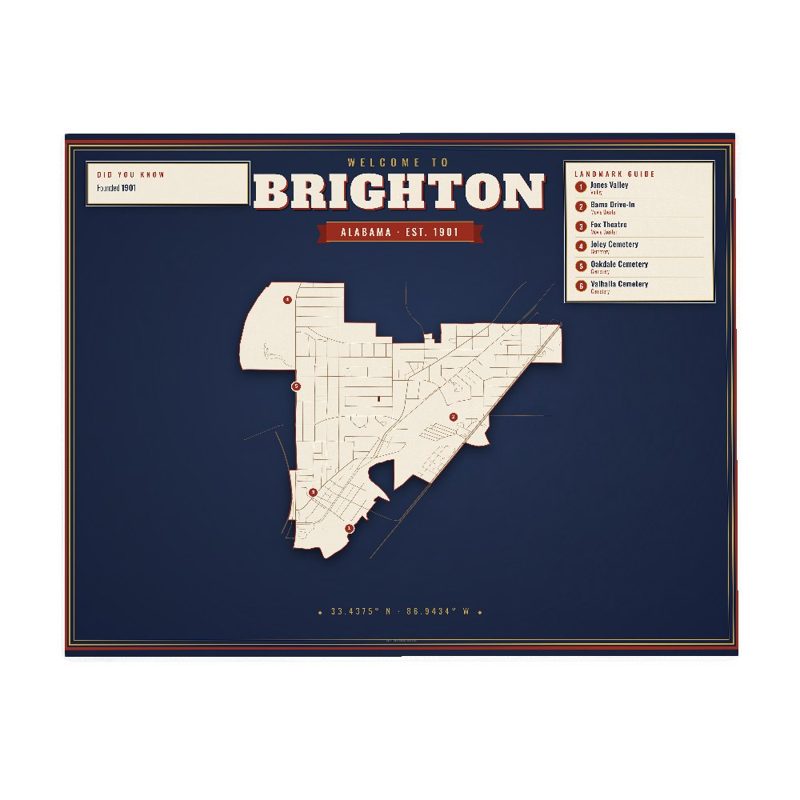
Map of local landmarks, washable fabric
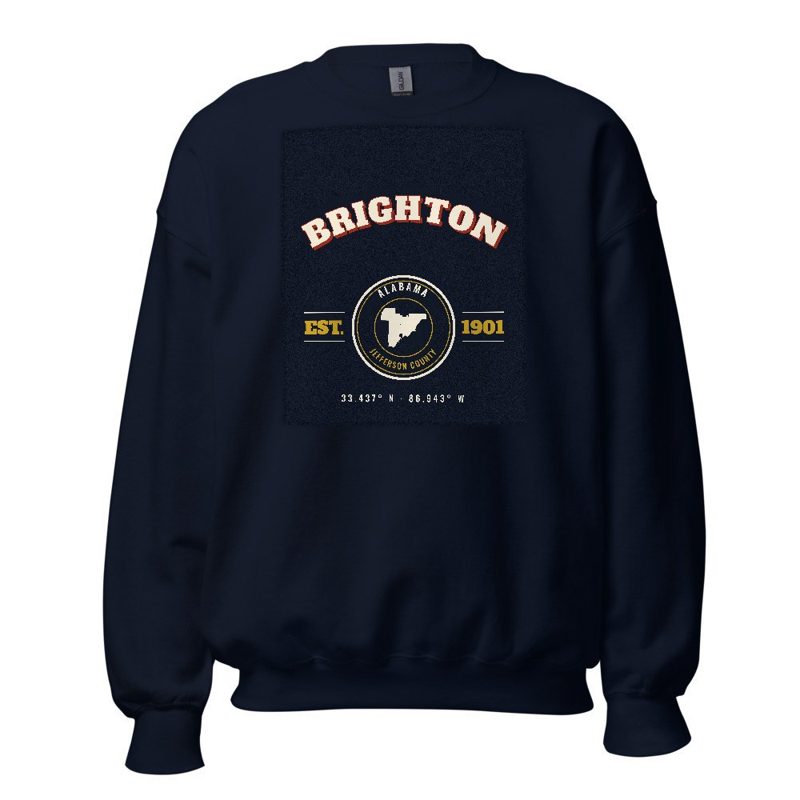
Heavy-blend fleece, street map printed on the back
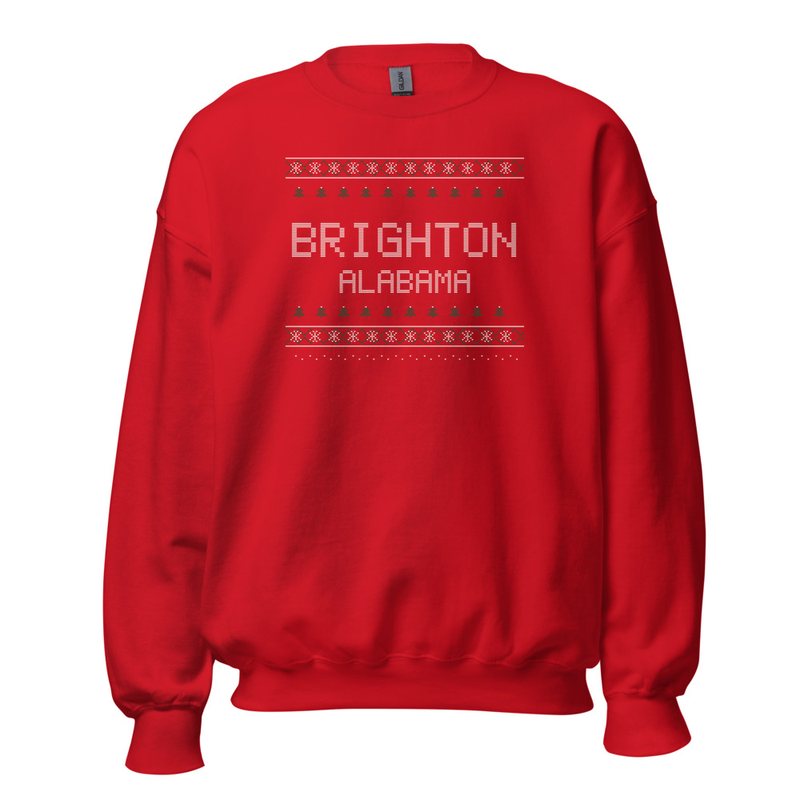
Red heavy-blend crewneck, knit-stitch town print
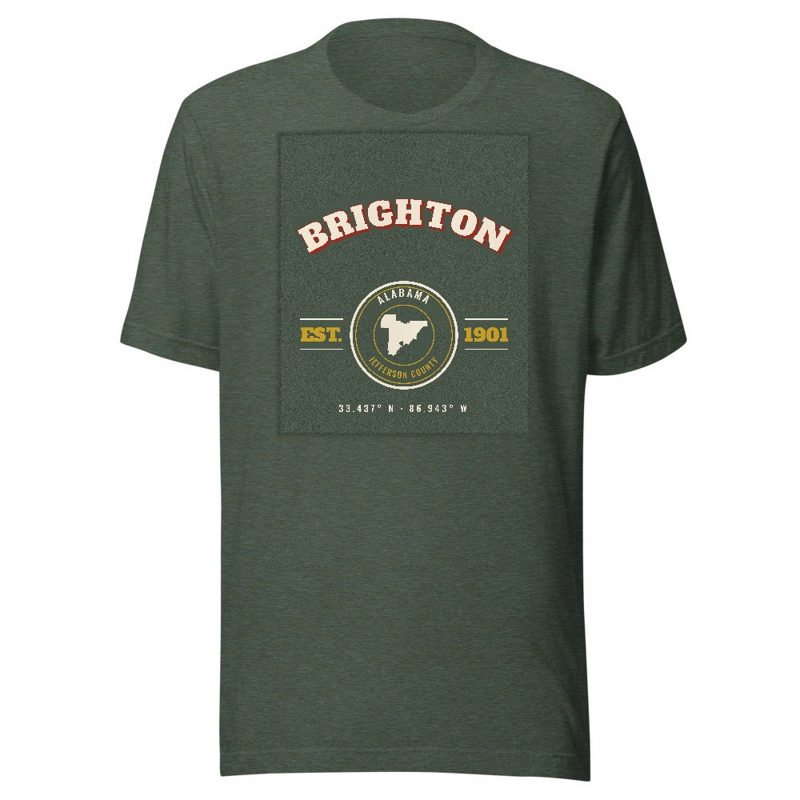
Soft Bella+Canvas jersey
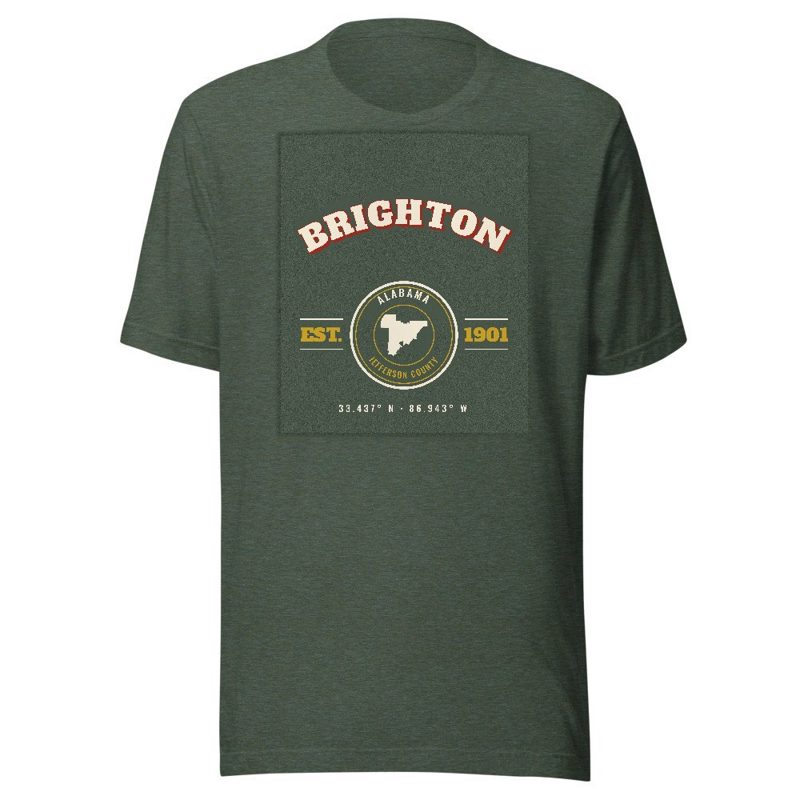
Kids' Bella+Canvas jersey, youth sizes
Bella+Canvas toddler jersey
Bella+Canvas baby bodysuit
Glossy ceramic, dishwasher safe
Weatherproof, for the front walk
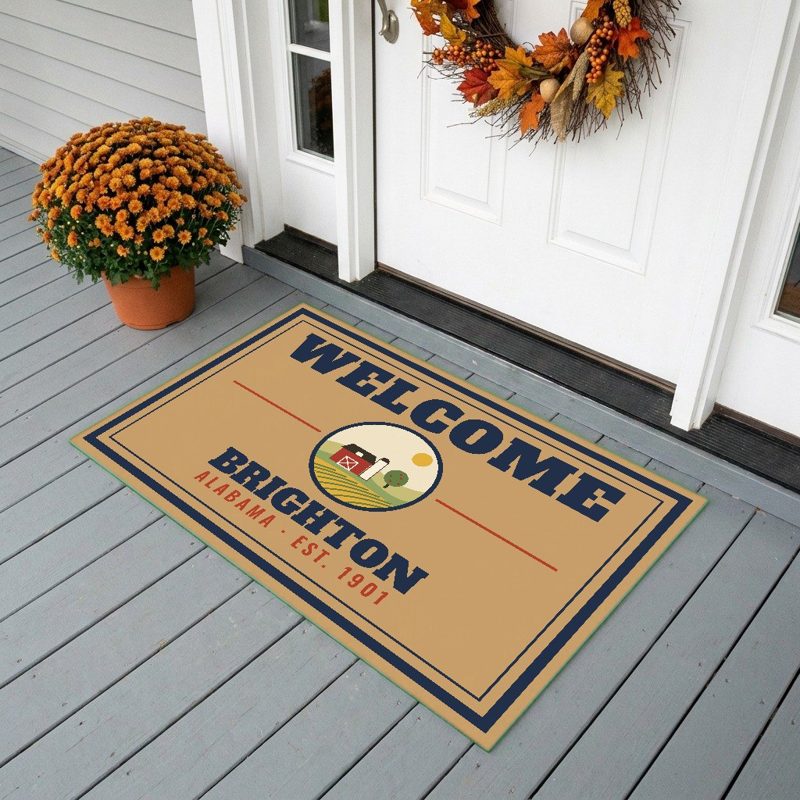
24″×16″, printed coir-look fibers, rubber back
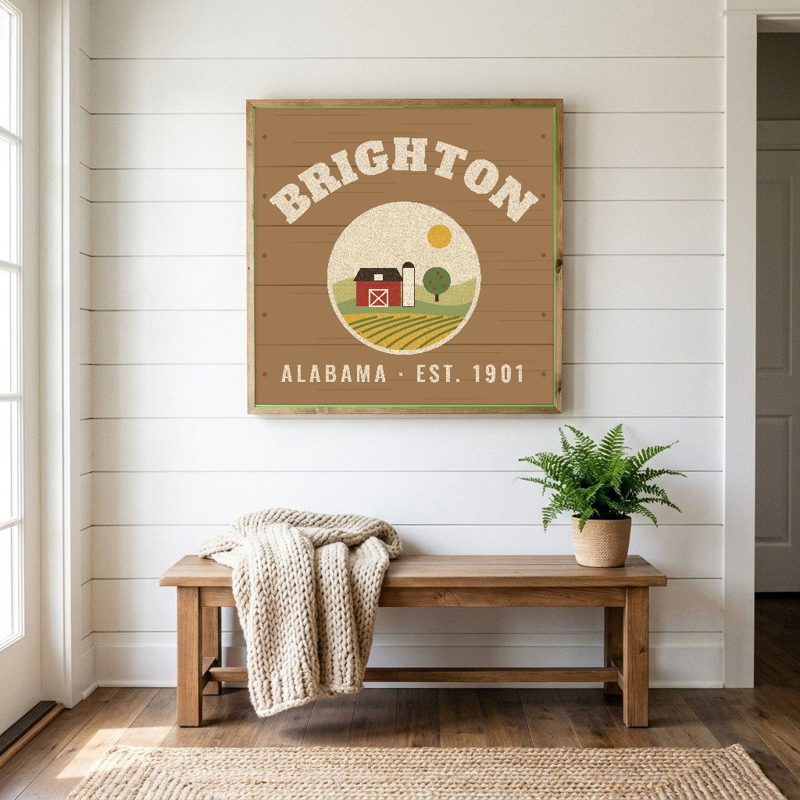
12″×12″ printed wood, ready to hang
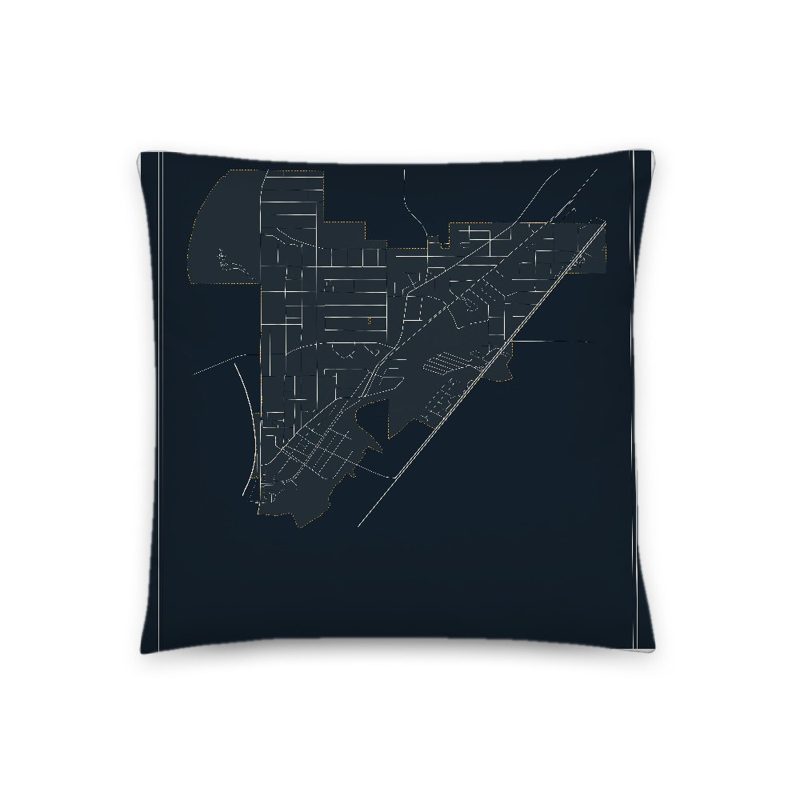
Soft-touch, zip cover
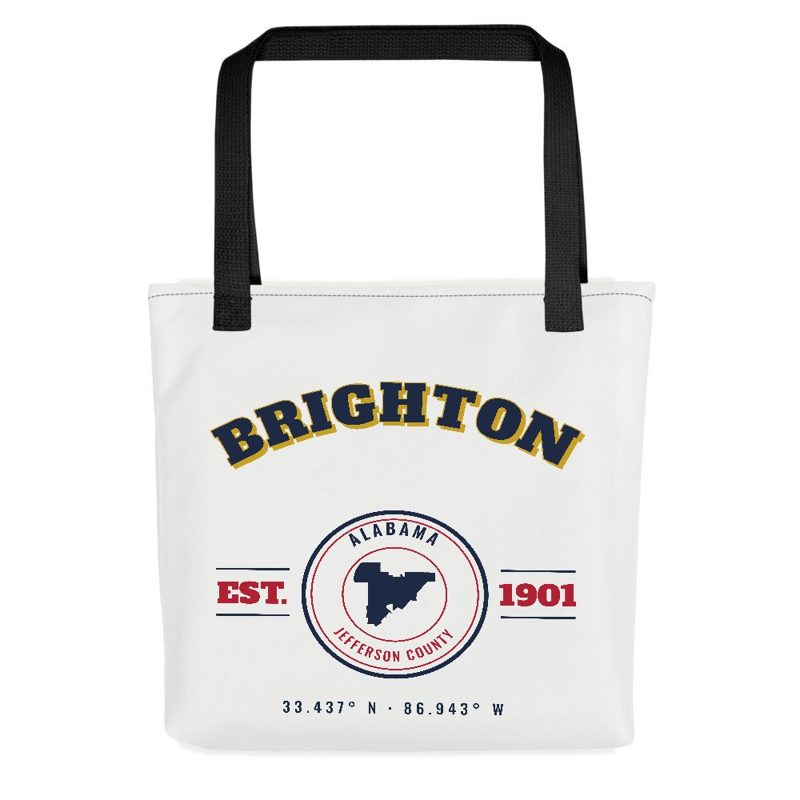
Sturdy all-over-print tote
Glossy top, cork back
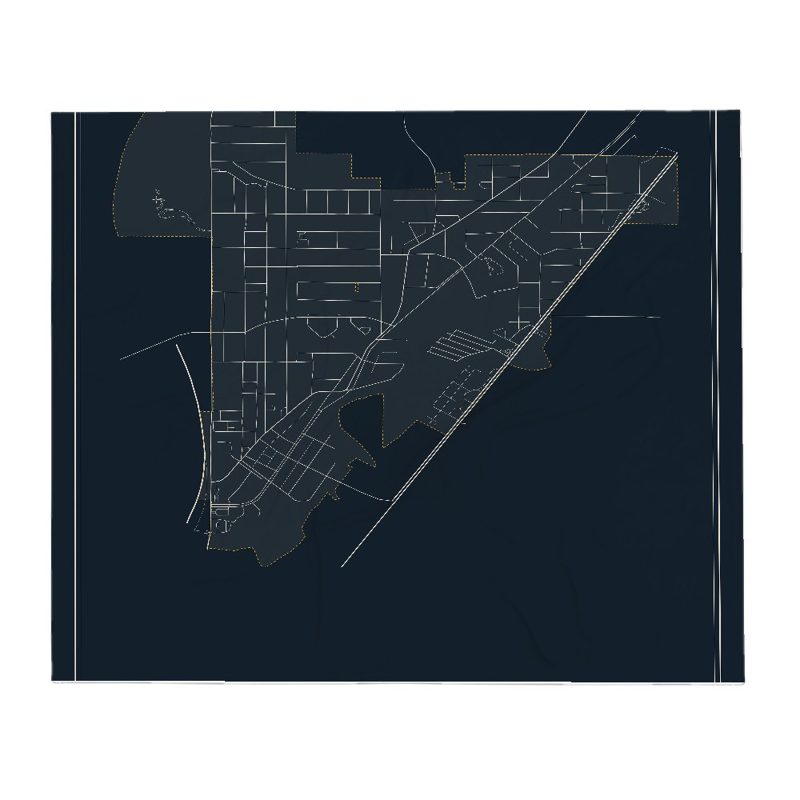
Soft fleece, 50″×60″
20 oz, double-wall stainless
Population 2010: 2,945 → 2013: 2,896 → 2020: 2,337
From Wikidata (CC0).
Brighton was not settled by European Americans until the late 19th century. Brighton was officially founded in 1892, when developer G.B. Edwards subdivided a tract of land and sold lots. It was named after Brighton in East Sussex, a ceremonial county in southern England. It was situated along a dummy railroad line built in 1889 by the Bessemer & Birmingham Railroad Company to connect those two growing industrial cities.
The Old Huntsville Road was renamed as Main Street and the city was incorporated in 1901. By that year, at least 100 families were living in Brighton. The town had a population of 1,502 by the 1910 census, with seventeen commercial establishments, including eight grocery stores.
The city's fortunes have been closely linked to those of Woodward Iron Company. Together with coal mining in this area, the iron company was integral to the industrial development in this part of Alabama, which is based on the much larger cities of Birmingham, Bessemer, and Gadsden. After industrial restructuring in the late 1970s and when the iron company moved out, the town has declined in population since its peak in 1980.
Brighton Cemetery, which is still operating, contains the graves of persons of Scottish, English and German descent who came to work at Woodward.
In August 1908, coal miner and union leader William Miller, who was black, was accused of blowing up the home of a white mine operator Finley Fuller. It was during a period of labor unrest as mine workers tried to organize unions. Miller was lynched by a white mob that dragged him out of the Brighton jail. They hanged and killed him not far from Brighton City Hall. Later, it was found that whites opposed to unionization had bombed Fuller's home; by linking the crime to a black man, they intended to increase general opposition to the union's drive for better wages.
In 2015, after the Equal Justice Initiative (EJI) published its study Lynching in America: Confronting the Legacy of Racial Terror, the city of Brighton resolved to place a historical marker to commemorate Miller for his work with the union and as a victim of lynching. They worked in cooperation with EJI and placed the marker in a ceremony near City Hall. Brighton was the first city in Alabama to install such a memorial. In a related effort, scholarships will be awarded to high school students for writing essays about Alabama's racial history.
Adapted (trimmed) from the Wikipedia article Brighton, Alabama, revision 1378509792 by its contributors, licensed CC BY-SA 4.0.
We share a part of every Brighton sale with local partners, and we'd love to print from your collection. Old photographs, maps and postcards make the best keepsakes.
Partner with usA favorite landmark, your street, a school or team, an anniversary gift, a different product. Tell us and we'll get back to you by email.
Brighton's population was 2,337 in the 2020 U.S. Census, down from 2,945 in 2010.