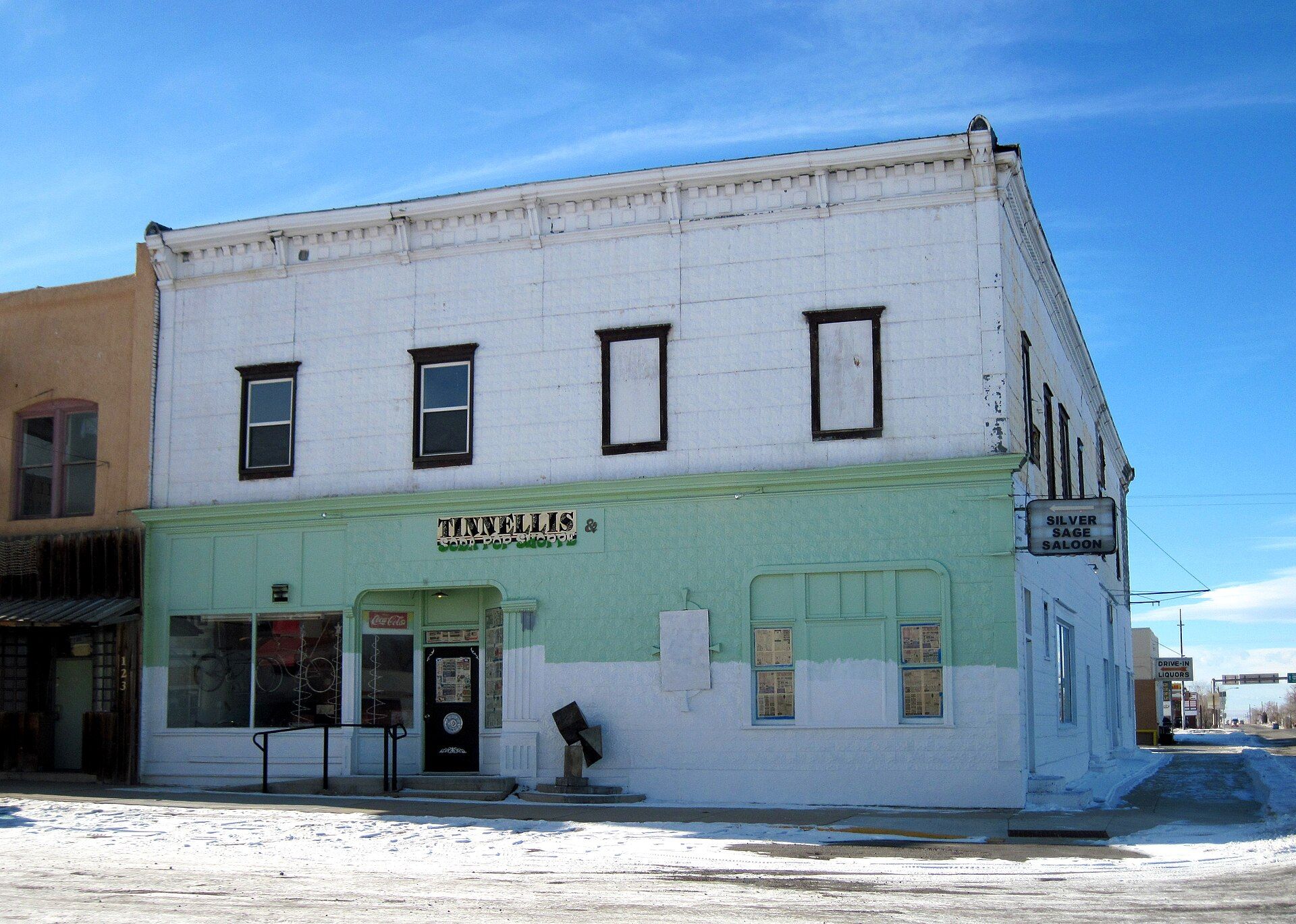
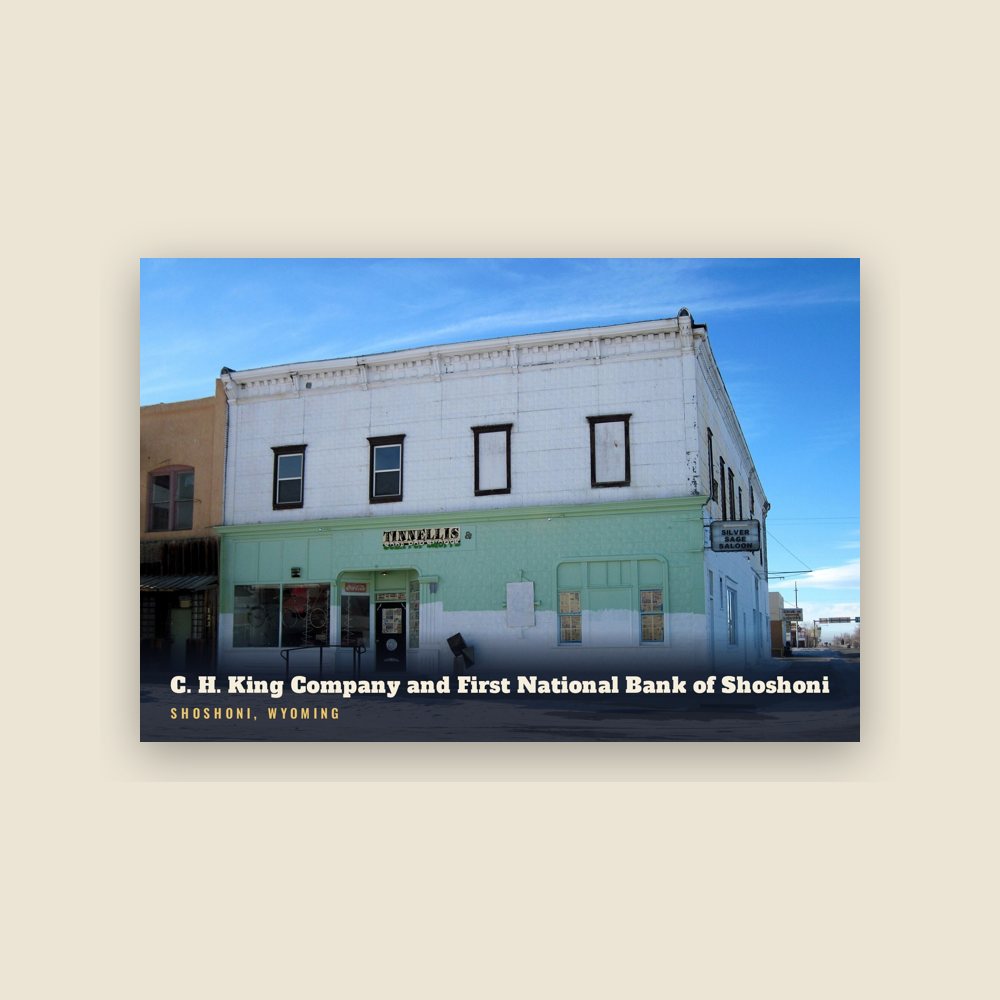
Established as a railroad and mining town, Shoshoni lies at the intersection of U.S. Landmarks include C. H. King Company and First National Bank of Shoshoni. Shoshoni is the birthplace of Isabel Jewell, actress.
Every piece is drawn from Shoshoni's own map data and historic archives, then printed and shipped from the USA when you order. No two towns look alike.
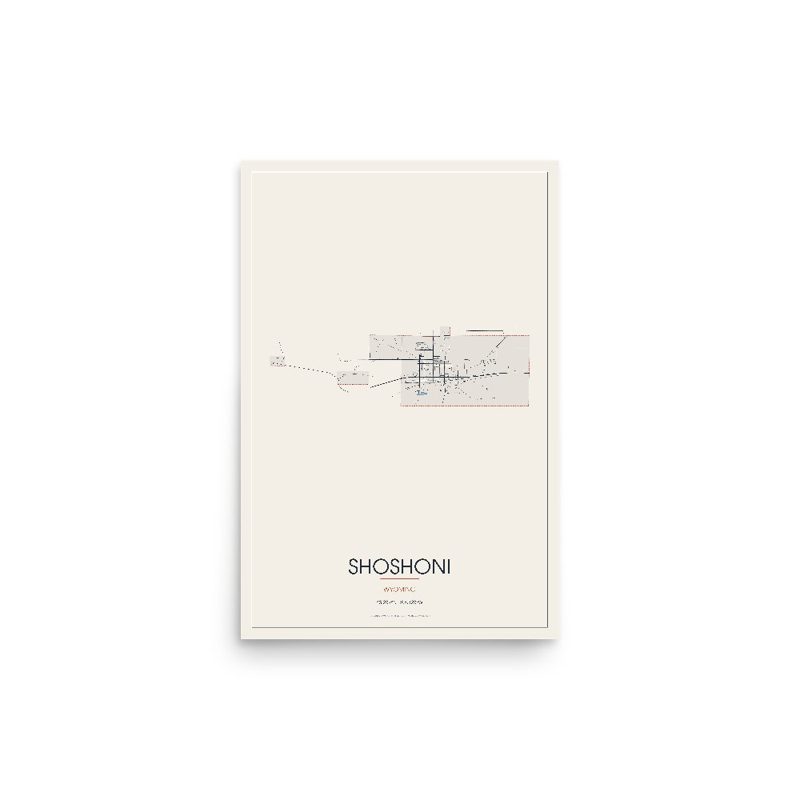
Every road in town, on archival matte paper
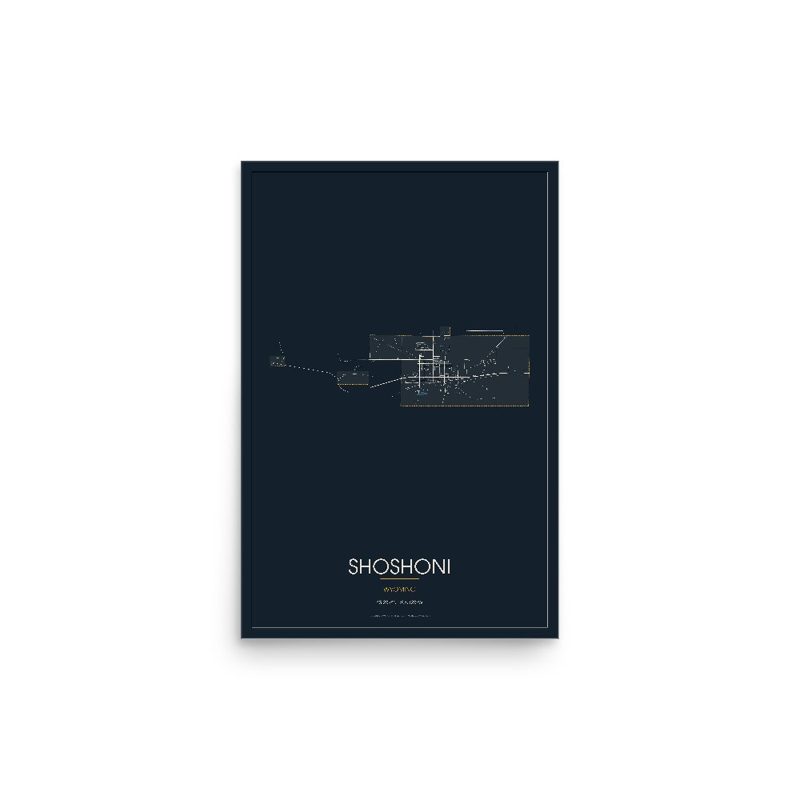
The same map, in navy and silver
Heavy-blend fleece, street map printed on the back
Soft Bella+Canvas jersey
Glossy ceramic, dishwasher safe
Ceramic keepsake, gold ribbon
Weatherproof, for the front walk
24″×16″, printed coir-look fibers, rubber back
12″×12″ printed wood, ready to hang
Soft-touch, zip cover
Sturdy all-over-print tote
Glossy top, cork back
Soft fleece, 50″×60″
20 oz, double-wall stainless
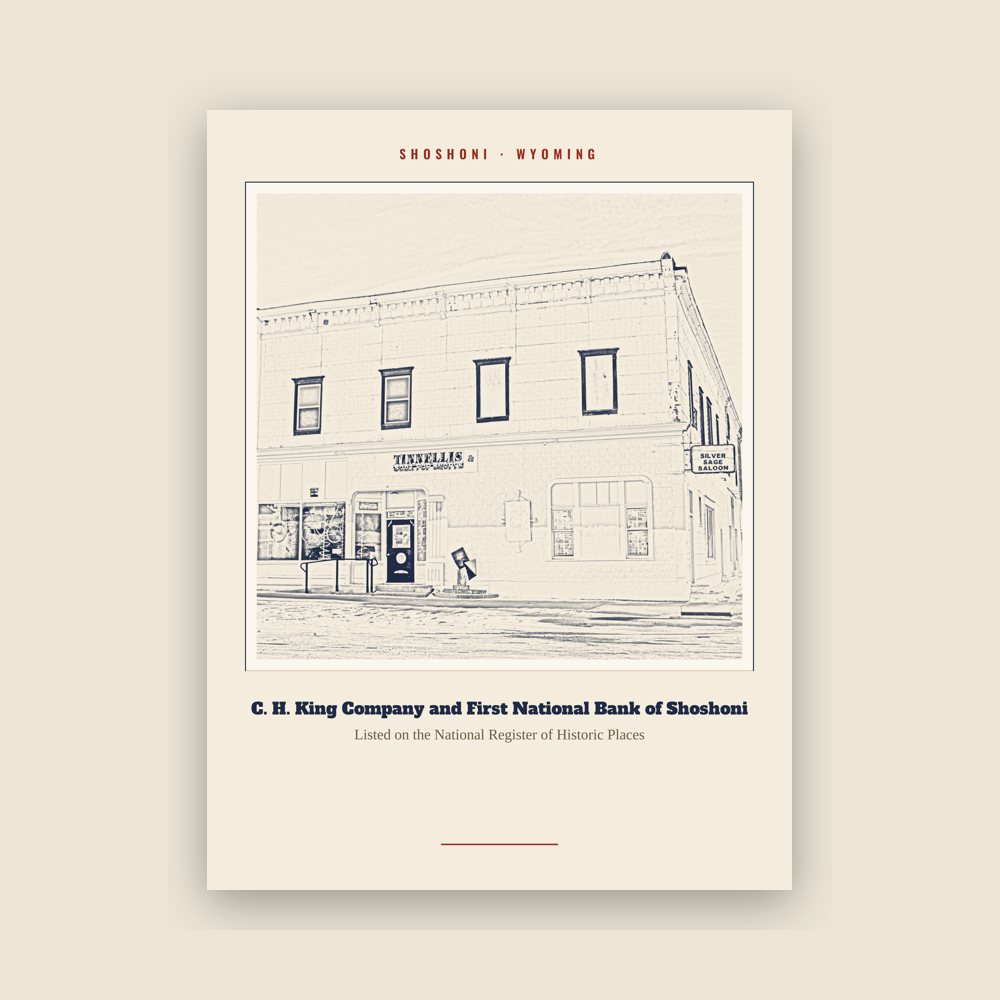
Archival matte print of a local landmark, credited to its photographer
6″×4″ postcard, glossy front
Population 2010: 649 → 2020: 471
From Wikidata (CC0).
The town is named for the Shoshone Indian tribe, most of whom live on the nearby Wind River Indian Reservation. Established as a railroad and mining town, Shoshoni lies at the intersection of U.S. Routes 20 and 26, which together were formerly known as the "Yellowstone Highway". Shoshoni has a dramatic increase in visitors in the summer, when roads to Yellowstone National Park are open. Visitors also stop to camp and fish at nearby Boysen Reservoir and the surrounding Boysen State Park. Anglers participate in fishing derbies at the reservoir, including an ice fishing derby in the winter.
Charles Henry King, a prominent millionaire businessman and banker later based in Omaha, Nebraska, built the C.H. King Company and First Union Bank Building, formerly occupied by Yellowstone Drug Store. The building is listed on the National Register of Historic Places. King and his wife Martha were the paternal grandparents of President Gerald Ford, who was born in their Omaha house in July 1913.
In 2004 a water-intensive mushroom processing plant began operation on land that was annexed by the town and put within its limits. At first it was staffed by prison labor, who were paid minimum wage, in a prison industries program. When they had trouble with production, the plant hired skilled labor from Guatemala. This labor practice stopped when a Department of Homeland Security investigation revealed that some of the workers had problems with their immigration histories. More recently, the plant has ensured all migrant workers are legal. During operations, the plant's composting bunkers emitted unpleasant odors, resulting in numerous complaints from residents during 2005. The Wyoming Department of Environmental Quality investigated the situation and air quality issues. The plant installed a stack and ventilating system in early 2006 to control and disperse odor from the composting bunkers. In 2009, the facility was up put up for sale and purchased in January 2020 by Iglesia Ni Cristo, a Philippines-based religious sect with the intent of using local "honor based" labor to work in the facility.
Adapted (trimmed) from the Wikipedia article Shoshoni, Wyoming, revision 1373602259 by its contributors, licensed CC BY-SA 4.0.
We share a part of every Shoshoni sale with local partners, and we'd love to print from your collection. Old photographs, maps and postcards make the best keepsakes.
Partner with us