A short history of St. Nazianz
19th century
St. Nazianz was organized in 1854 as a religious colony by a group of German immigrants, led by Father Ambrose Oschwald, a Roman Catholic priest. The first settlers in the Oschwald group numbered 113 and came to the United States from the Black Forest of Baden, Germany, seeking religious freedom.
Oschwald and his group sailed for America on the Feast of Corpus Christi in 1854, on two separate ships. The voyage of one lasted 52 days, and the other 55 days. By the time they arrived in Milwaukee by train, several of the group had died. Oschwald bought 3,840 acres (15.5 km2) of land in Manitowoc County for $3.50 per acre. His down payment was $1,500, with the rest paid in five installments.
In late August 1854, Oschwald sent six men to locate the land he had purchased. They took a boat from Milwaukee to Manitowoc, the county seat, then headed west by oxcart, getting as far as the place where Valders now stands. They then cut their way through the dense forest, arriving at their destination on August 27. The men named the site St. Nazianz, in honor of Gregory of Nazianzus. Oschwald followed on September 1 with more men, and the group began working to clear the land and build log houses. Soon after, work started on the community's first church, a 32-by-24-foot structure, which was built by hand. By October 21, the church was half completed, and Oschwald celebrated the first Mass.
Settlers began going by the name "The Association" and agreed to share everything in common and work without pay. That arrangement continued until 1896. The group built shops and mills and the community was thriving within just a few years of its start. People began practicing trades, including blacksmithing, carpentry, masonry, shoemaking, woodworking, tailoring, barrel making, rope making, tanning, weaving, brick-making, baking soda, and brewing.
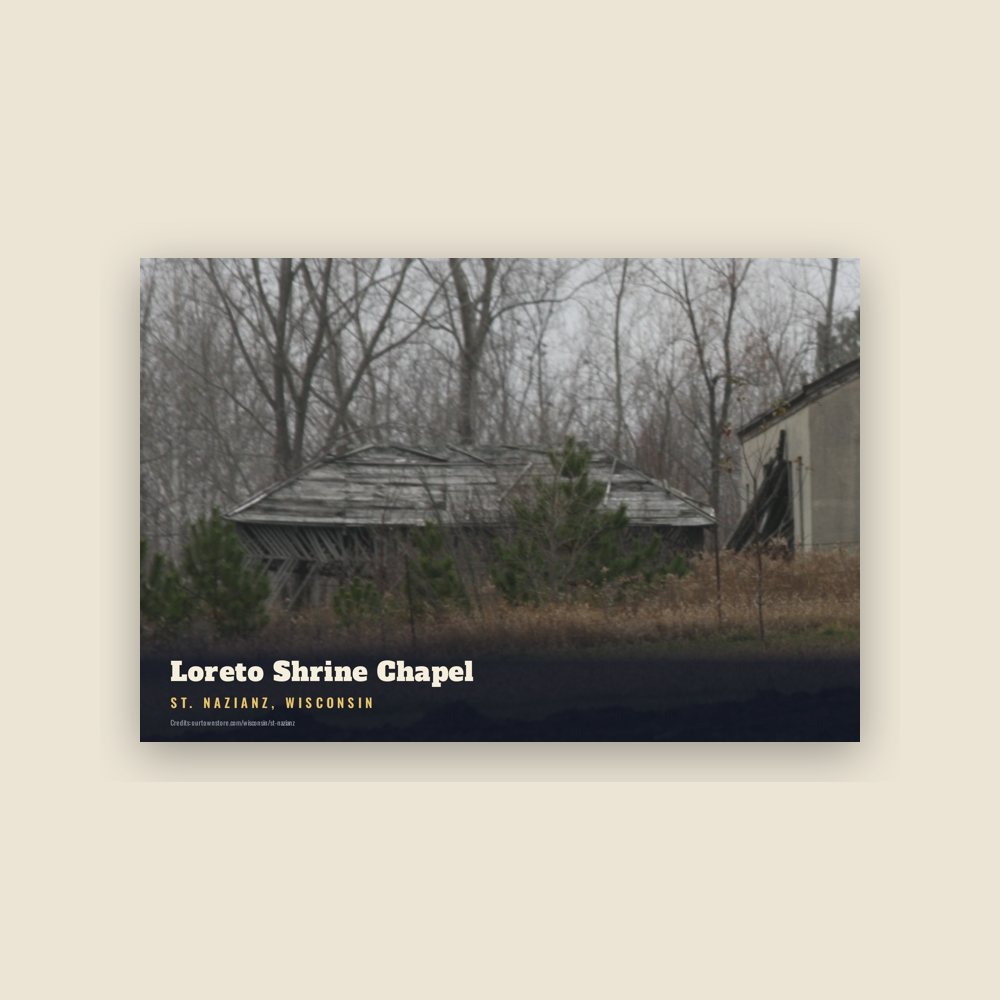
In the ensuing years, Oschwald helped start several religious organizations, including the Oschwald Brothers and the Franciscan Sisters of Christian Charity. Oschwald died on February 27, 1873, and was buried under the altar at the old St. Ambrose Church at the Loreto Monastery. Several years later his body was moved to a shrine near Loreto Shrine Chapel in the village.
The Salvatorian priests and brothers came to St. Nazianz in 1896, 15 years after the Society of the Divine Savior was founded by Father Francis Mary of the Cross Jordan in Italy. The Salvatorian priests and brothers and the Salvatorian sisters worked to improve the holding of the former association and built St. Ambrose Church in 1898.
Read the full history
2000 weather incident
Shortly before noon on May 12, 2000, St. Nazianz and surrounding communities were hit by a severe storm that caused major damage. The storm was initially considered a tornado but was later declared a "thunderstorm super cell moist microburst" by meteorologists. It was reported that the storm produced 120 mph (190 km/h) straight line winds. The National Weather Service reported that at least 75 mph (121 km/h) wind gusts were achieved. Residents who were in St. Nazianz as the storm hit said that it went from noon light to midnight darkness in a matter of seconds.
The storm roughly followed U.S. Route 151, with St. Nazianz and Chilton receiving the worst of the damage, caused largely by wind and hail. The hail ranged from golf ball-size to baseball-size. Many houses were destroyed by the storm, while others sustained major damage. Many cars were totaled or needed hail damage repair. The total damage caused by this storm to St. Nazianz and surrounding areas was estimated at $122 million. It was the state's first storm to exceed $100 million in damage. No casualties were caused by the storm. The village has since recovered considerably.
Adapted (trimmed) from the Wikipedia article St. Nazianz, Wisconsin, revision 1374937339 by its contributors, licensed CC BY-SA 4.0.
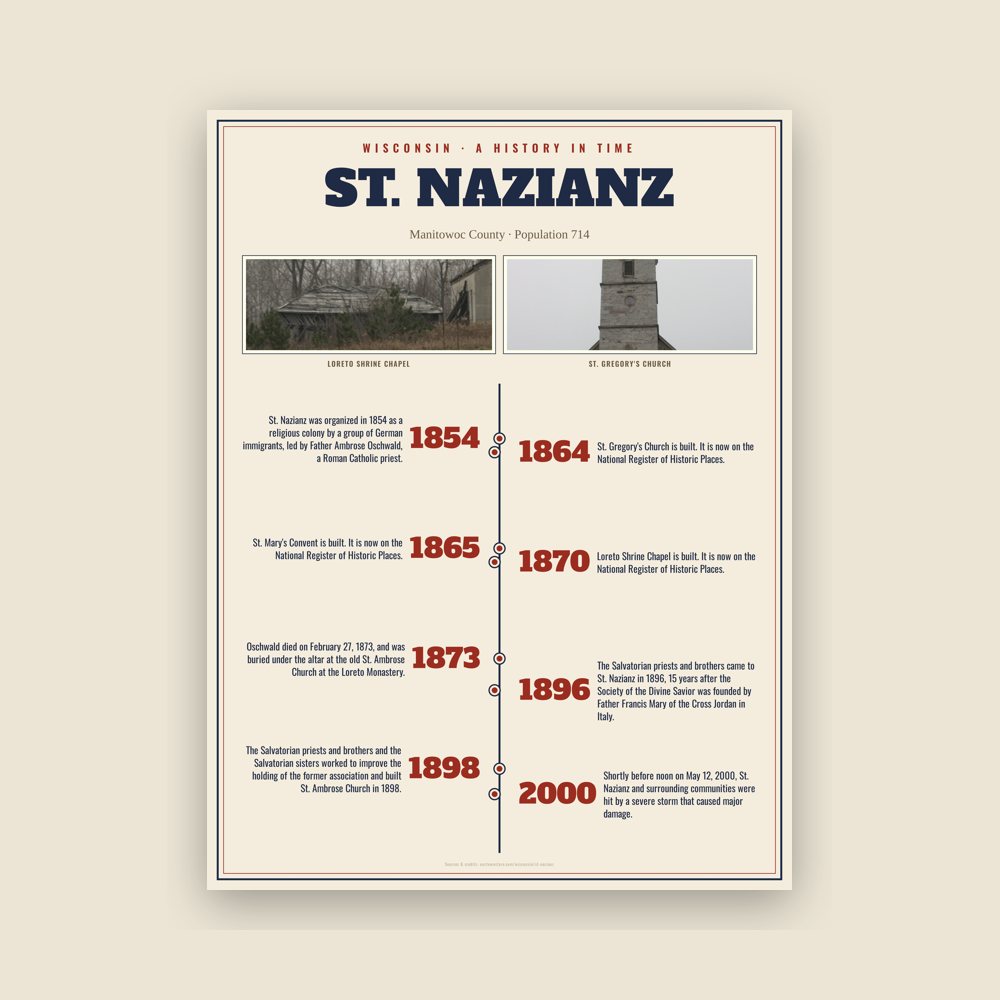
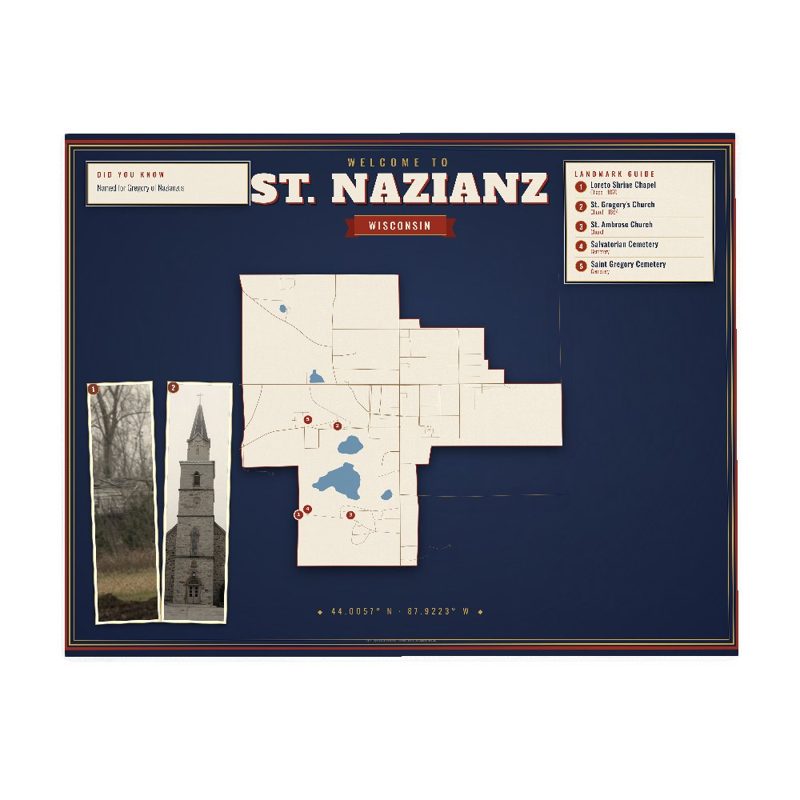






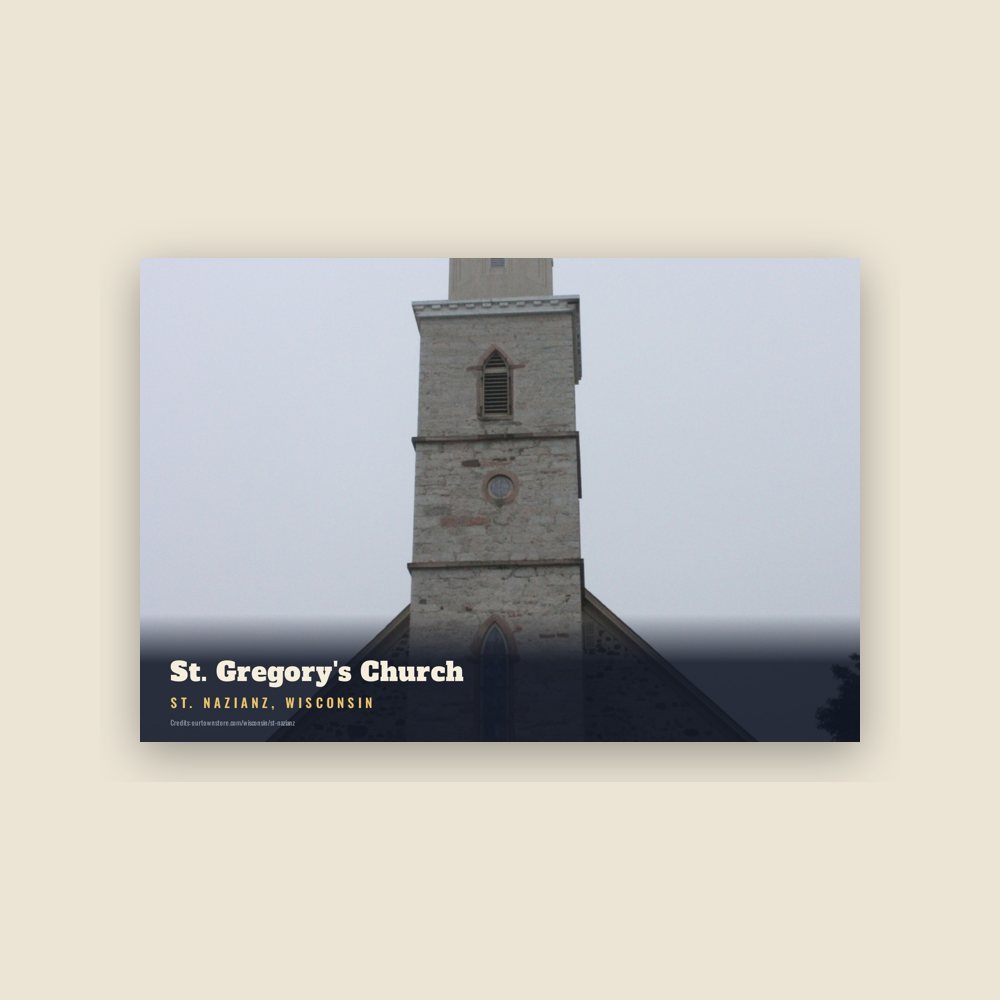
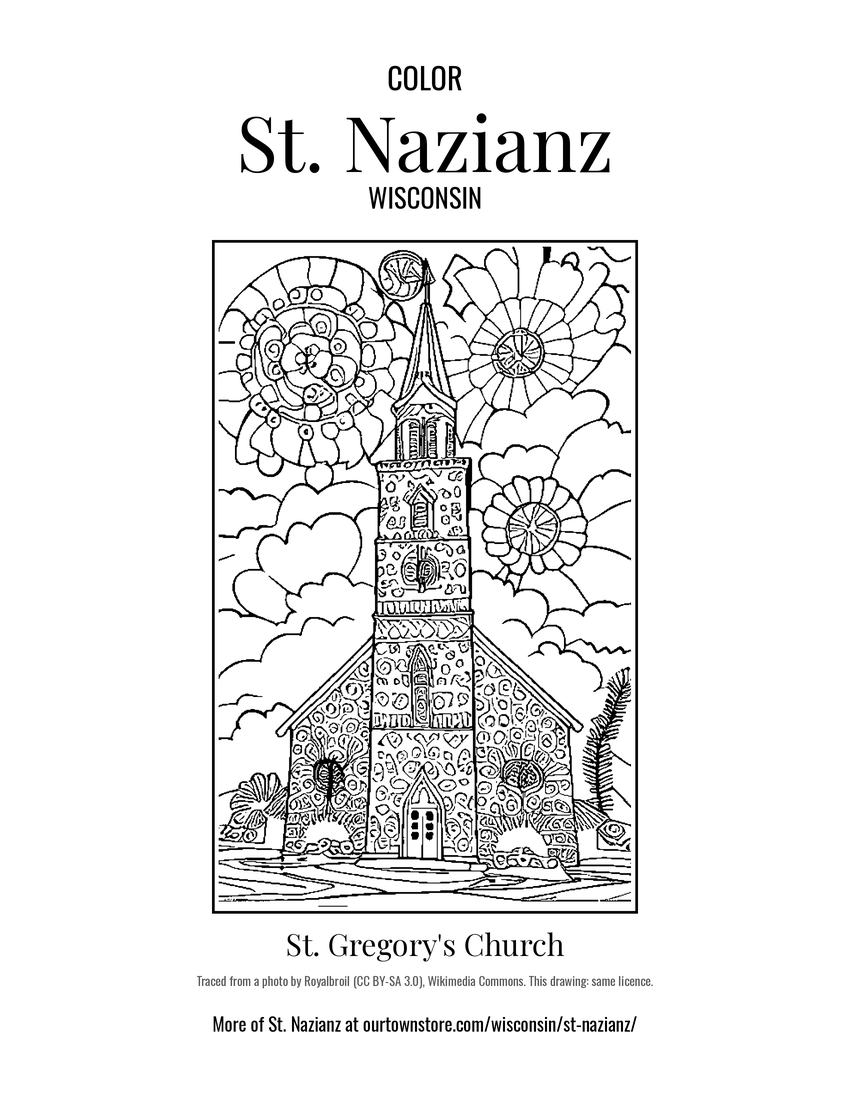 St. Gregory's Church
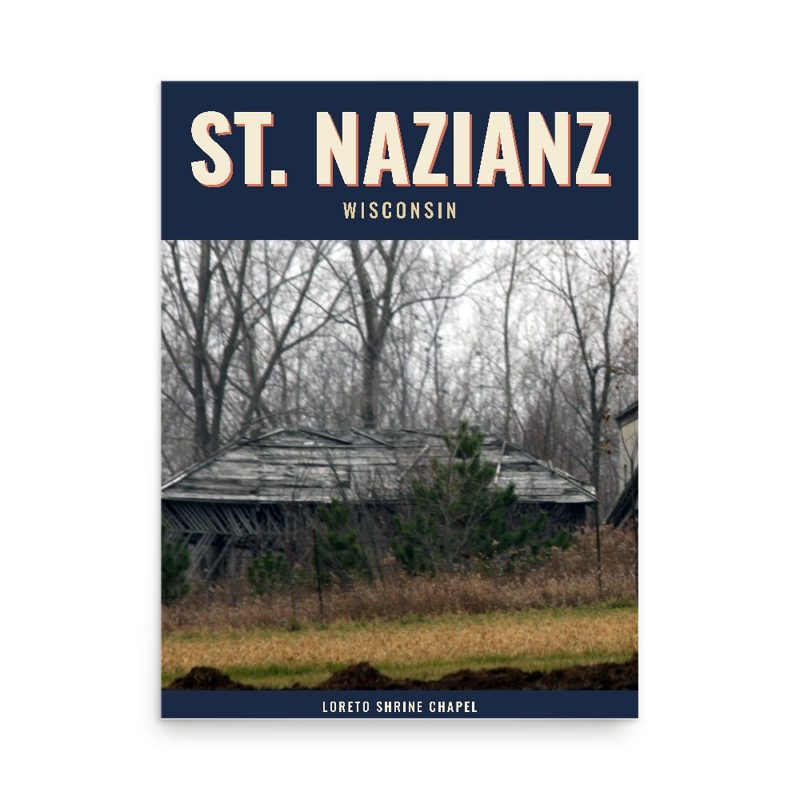
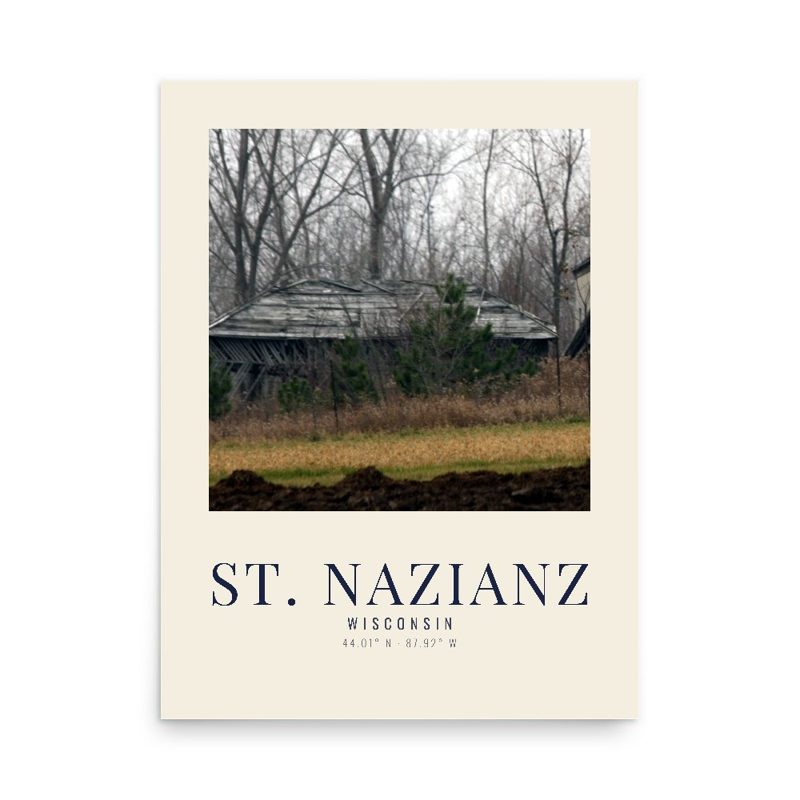
 Loreto Shrine Chapel