A short history of Sauk City
A large village of the Sauk people stood beside the Wisconsin River on the site of Sauk City before the first European-Americans settled there. The Sauk probably arrived around 1746, driven from previous homes in the Fox River valley. In 1766 the explorer Jonathan Carver visited the village, and described what he called the "Great Town of the Saukies": This is the largest and best built Indian town I ever saw. It contains about ninety houses, each large enough for several families. These are built of hewn plank neatly jointed, and covered with bark so compactly as to keep out the most penetrating rains. Before the doors are placed comfortable sheds, in which the inhabitants sit, when the weather will permit, and smoak their pipes. The streets are regular and spacious; so that it appears more like a civilized town than the abode of savages. The land near the town is very good. In their plantations, which lie adjacent to their houses, and which are neatly laid out, they raise great quantities of Indian corn, beans, melons, &c. so that this place is esteemed the best market for traders to furnish themselves with provisions, of any within eight hundred miles of it.
The Sauk probably abandoned this site around 1790. Edmond Rendtorpf would later describe what the he and other early settlers found when they arrived fifty years after the Sauk left, in 1840: All then was covered with Indian hills; thousands of deer bones, glass neck pearls, arrow points of flint, and Indian graves everywhere to be found. Yes here they hunted, fished, raised corn, and died. Time has decayed the bones; the new generation, children of Germans, have picked up their glass pearls, etc. to play with, their corn hills have been leveled, the Village of Sauk City being located upon them..."
Impressed by the beautiful scenery, Agoston Haraszthy, a charismatic Hungarian sometimes called "Count" Haraszthy, purchased a small plot of land along the Wisconsin River in 1840. Later, with his English-born business partner, Robert Bryant, Haraszthy bought additional land and founded the town of Haraszthy (originally called Széptáj, Hungarian for "beautiful place").
In 1849, the name of the town was changed to Westfield. Three years later, in 1852, it was changed again, this time to the current name of Sauk City. The community was incorporated as a village in 1854, making Sauk City the oldest incorporated village in the state.
In 1852, German immigrants founded the Sauk City Free Congregation (Freie Gemeinde). This group, a liberal religious society, celebrated German music, literature, and culture. It met in a private home until 1884, when Park Hall was built as a meeting house. The building is now home to the Sauk County Free Congregation, a Unitarian Universalist fellowship.
In the Harper's Weekly magazine of November 21, 1914, Sauk City was named "America's Foremost City". The article cited a pageant, attended by 4000 people, which enacted scenes from the village's history, and concluded with the naming of the school principal as the Civic Secretary, charged with making the school the center of the life of the town. To that end, the ballot box was transferred from the town hall to the school house.
Adapted (trimmed) from the Wikipedia article Sauk City, Wisconsin, revision 1378744982 by its contributors, licensed CC BY-SA 4.0.
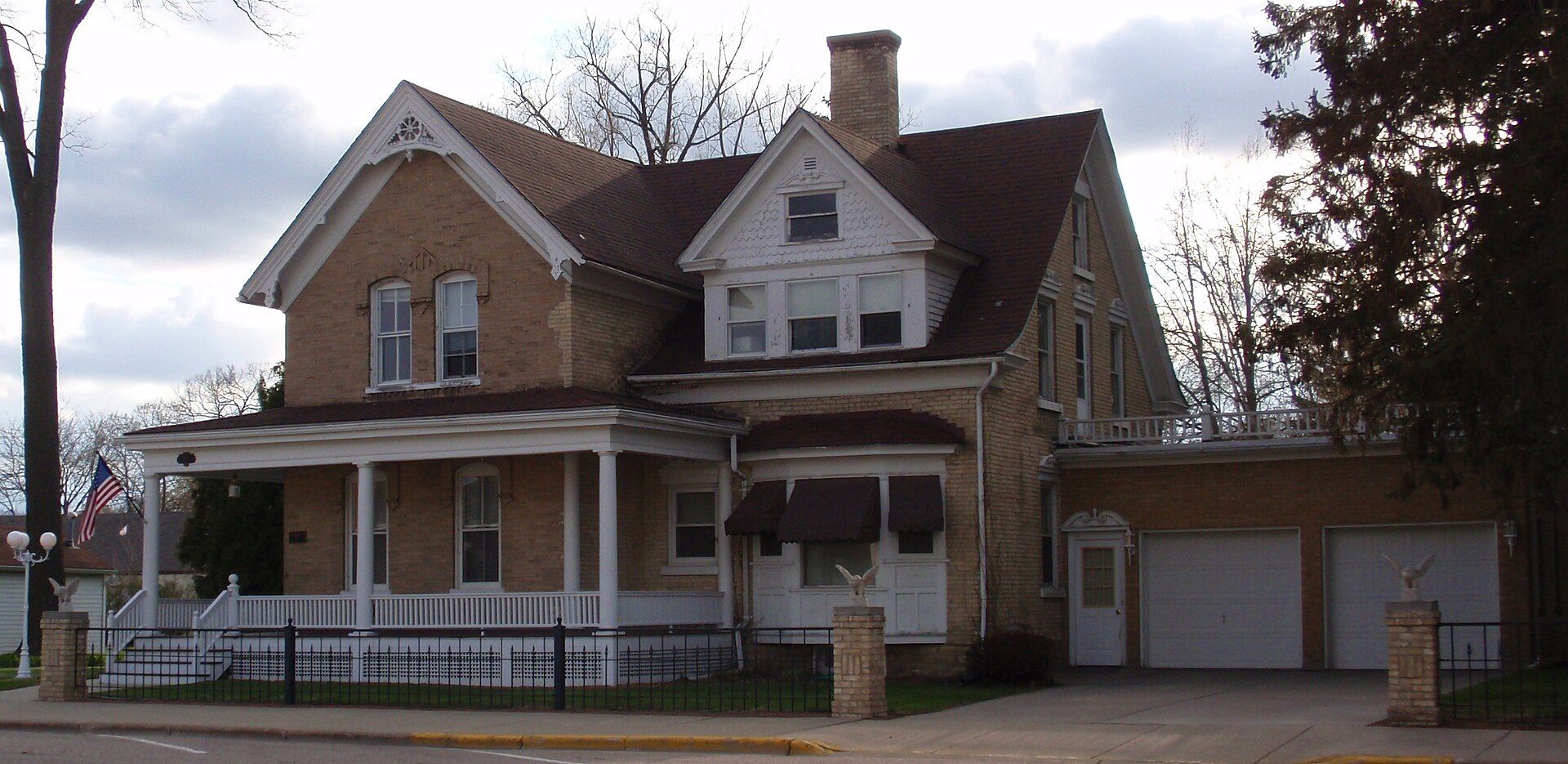





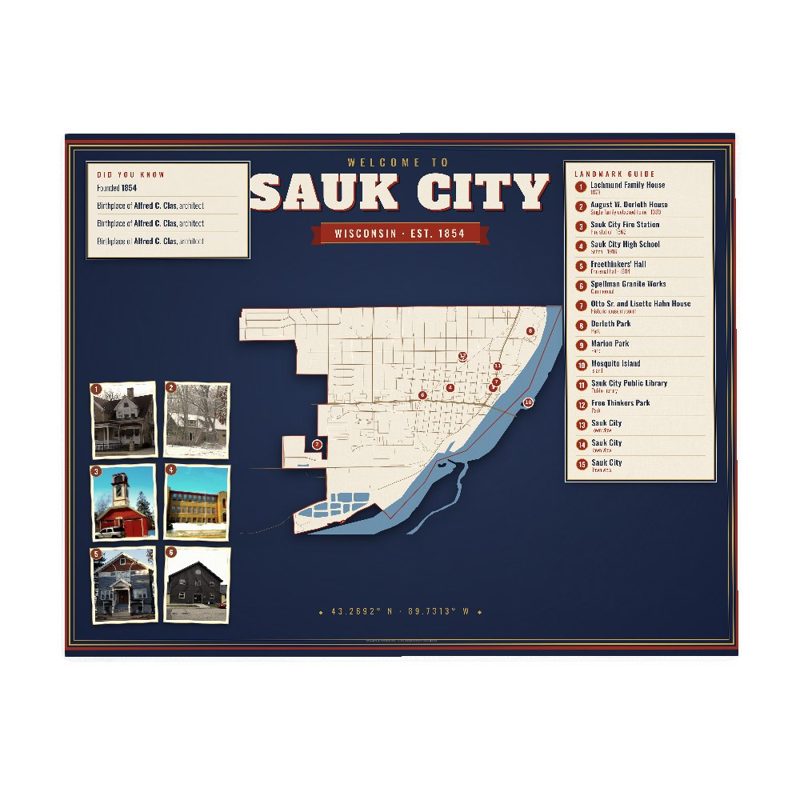



















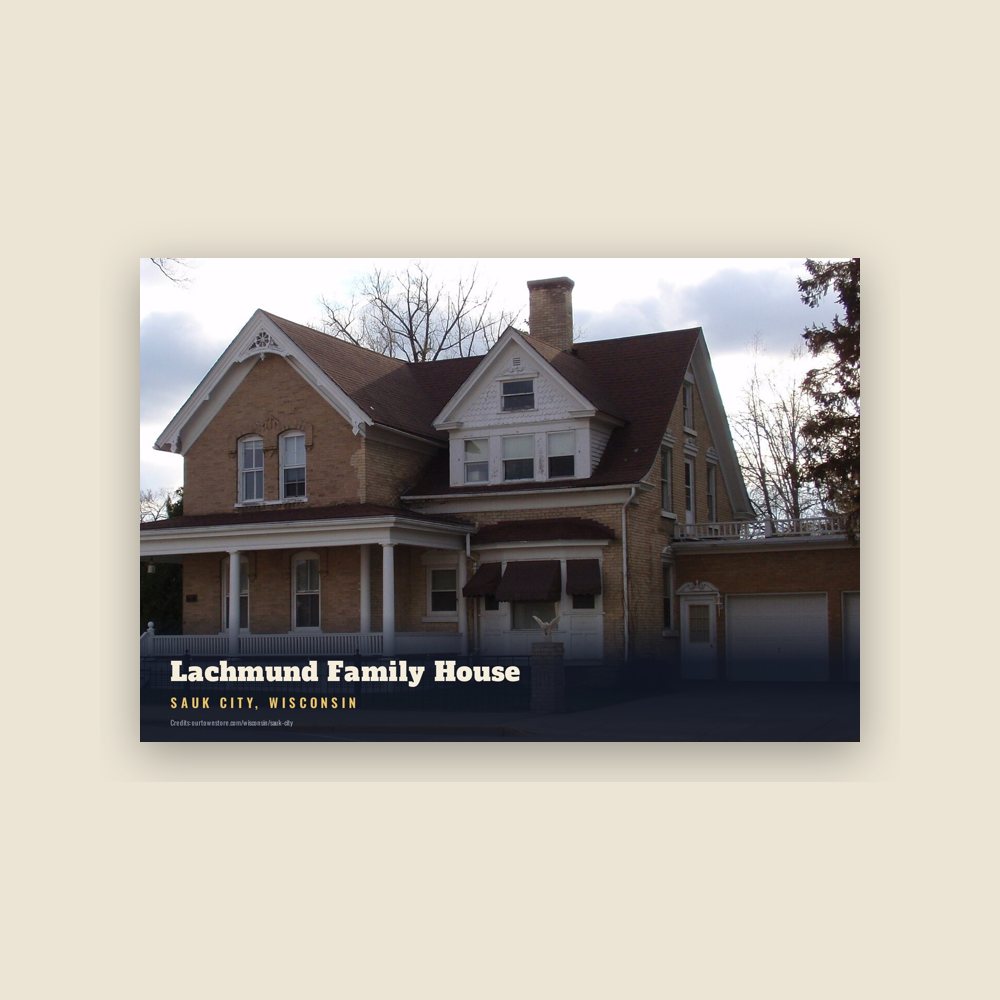





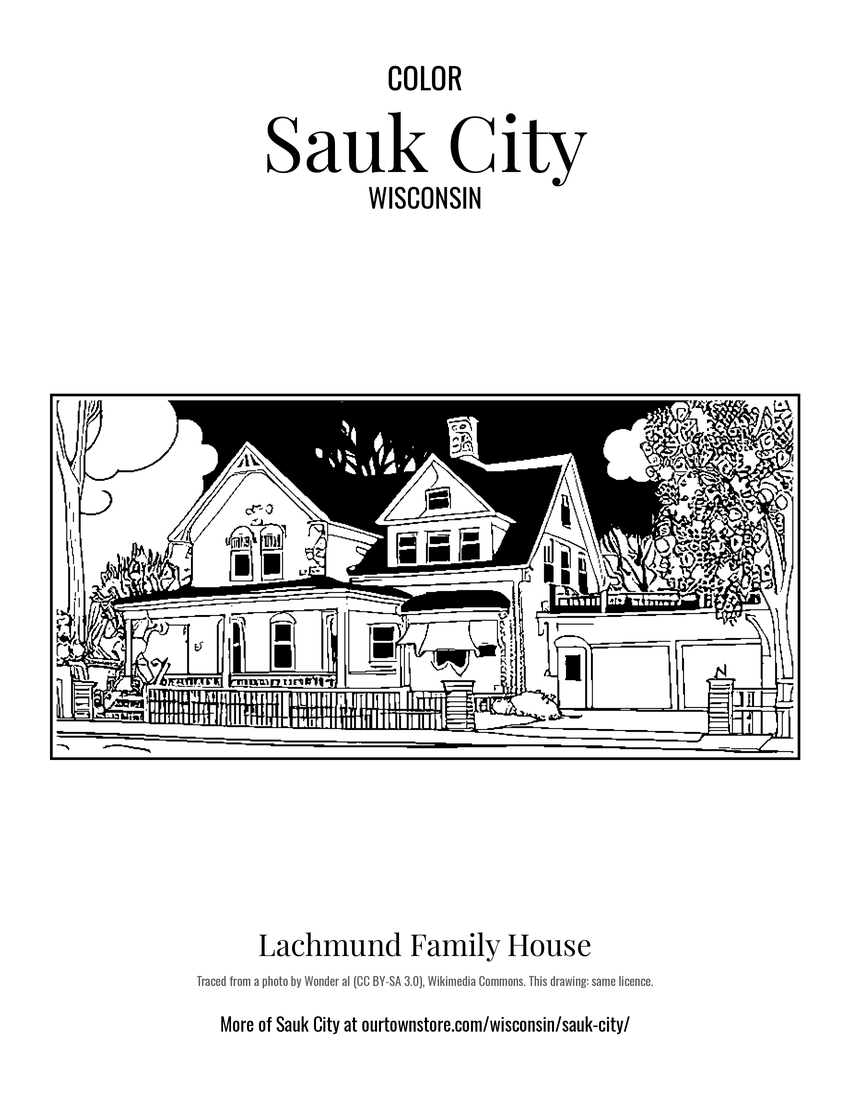 Lachmund Family House
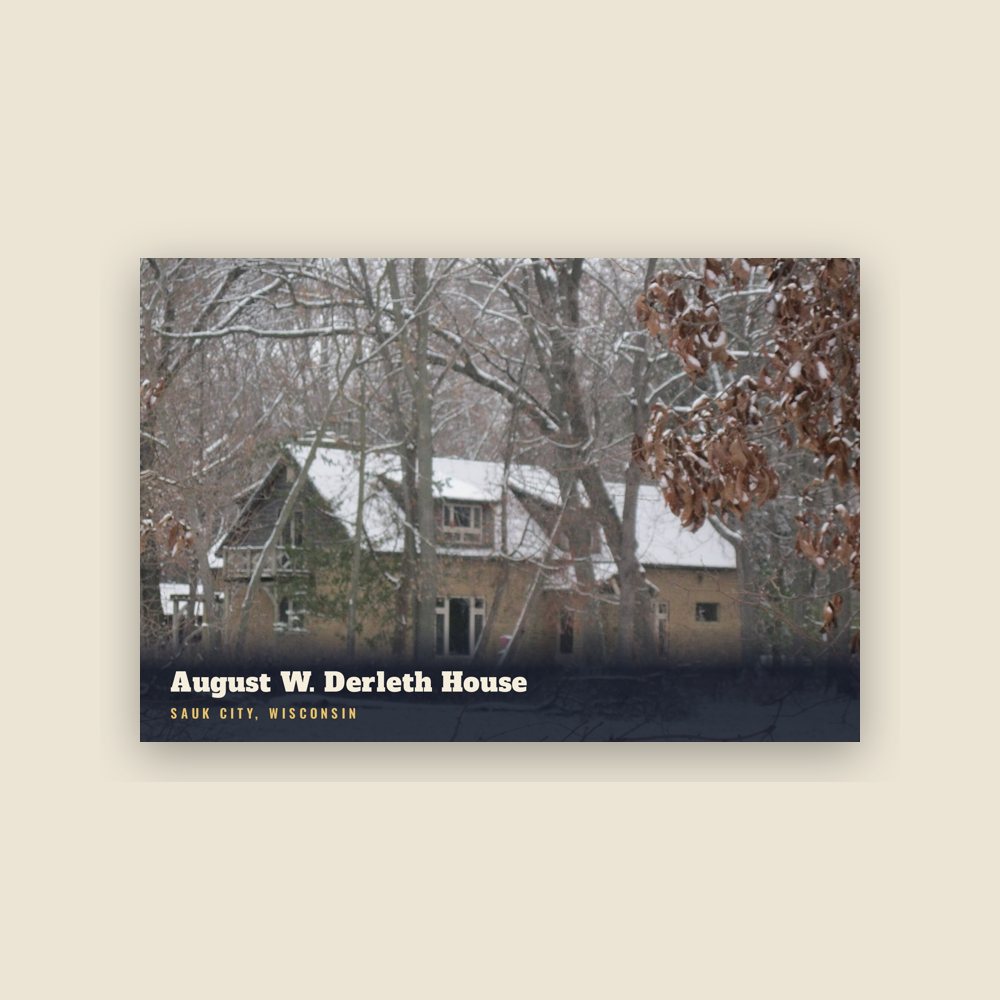
 August W. Derleth House
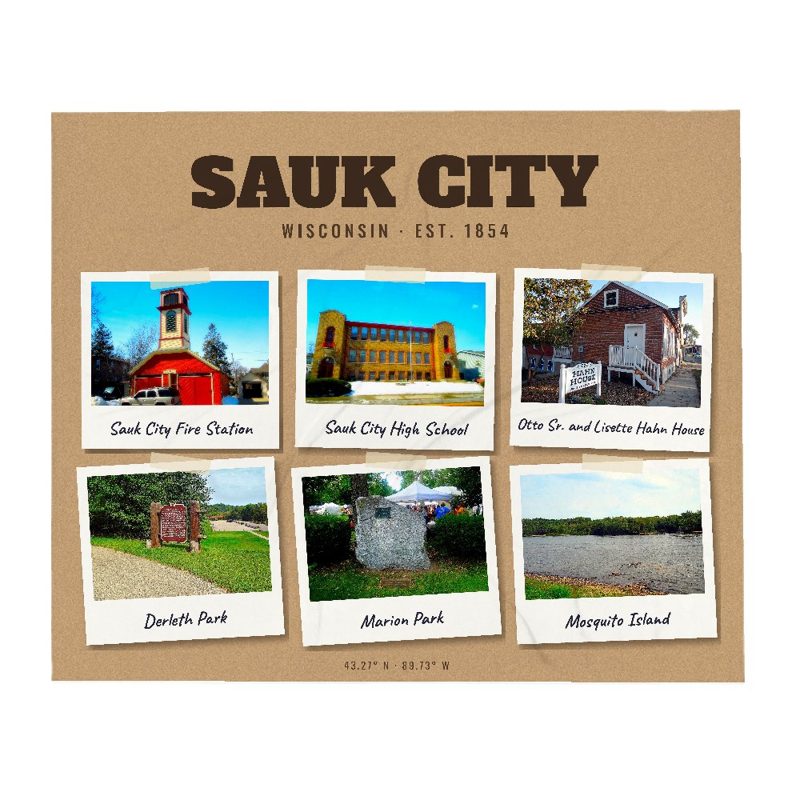
 Sauk City Fire Station
 Sauk City High School