A short history of Mount Horeb
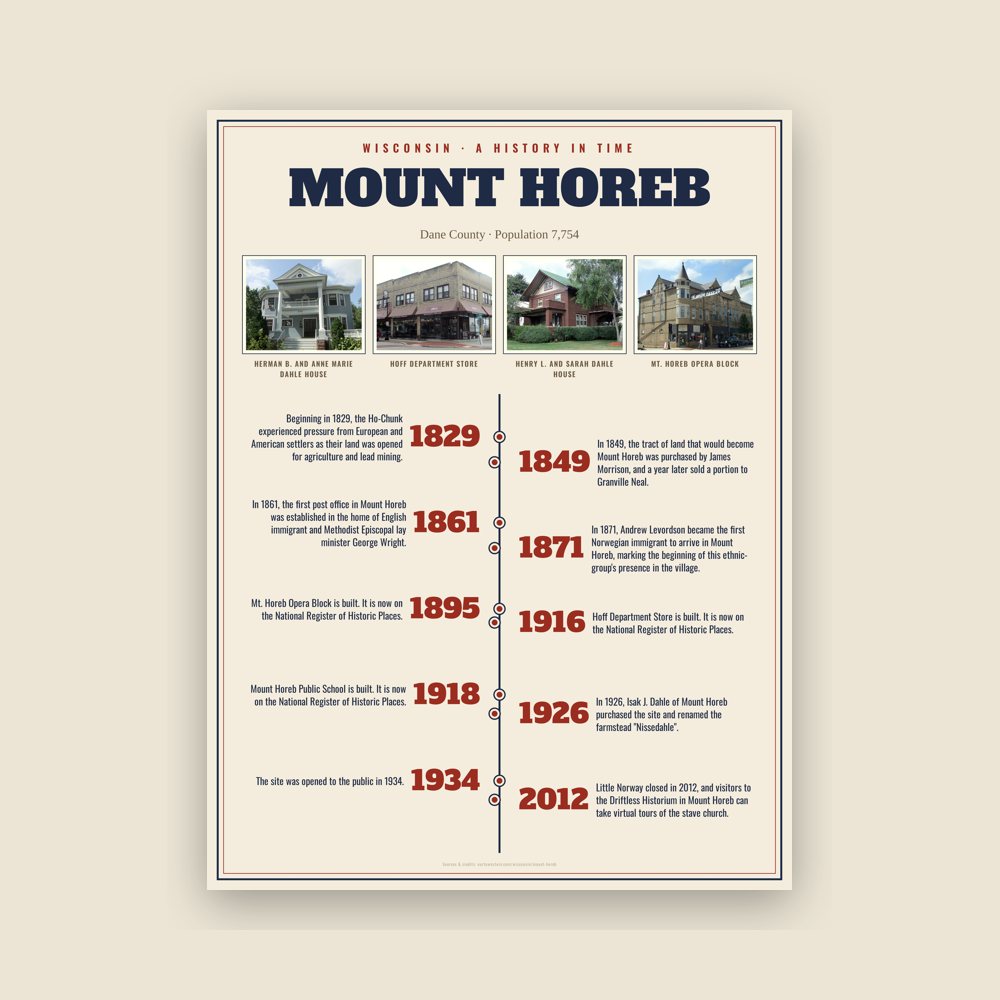
Mount Horeb is part of the ancestral territory of the Ho-Chunk nation. Beginning in 1829, the Ho-Chunk experienced pressure from European and American settlers as their land was opened for agriculture and lead mining. An 1829 treaty ceded the territory that would be the future site of Mount Horeb to the United States.
In 1849, the tract of land that would become Mount Horeb was purchased by James Morrison, and a year later sold a portion to Granville Neal. This initial settlement largely drew individuals of English, Irish, German, and Scottish ethnic backgrounds, as well as Yankees and settlers from Southern states. In 1861, the first post office in Mount Horeb was established in the home of English immigrant and Methodist Episcopal lay minister George Wright. As the new postmaster, Wright selected the name Mount Horeb from the Biblical Mount Horeb, wherein the prophet Moses received the Ten Commandments. When Wright moved to Norwalk, Iowa, the post office moved to a space closer to the settlement referred to as "The Corners." The name changed to "Horeb's Corner" before officially being designated as Mount Horeb.
The presence of Norwegian immigrants played a significant role in the village's growth. Norwegian immigration historian Odd S. Lovoll observes that by the 1870s, Norwegian immigrants had created significant settlements throughout Wisconsin, particularly in Dane County. In 1871, Andrew Levordson became the first Norwegian immigrant to arrive in Mount Horeb, marking the beginning of this ethnic-group's presence in the village.
In 1856, Osten Olson Haugen and his family, who emigrated from Tinn Municipality, Norway, established a forty-acre farmstead between Mount Horeb and Blue Mounds, Wisconsin. In 1926, Isak J. Dahle of Mount Horeb purchased the site and renamed the farmstead "Nissedahle". Over the years, Dahle converted the site into the Little Norway, Wisconsin living history museum, creating an idealized folk version of Norway. The site was opened to the public in 1934. Little Norway became a major attraction in the area, and guests were invited to participate in educational activities as they explored the open-air museum. Little Norway closed in 2012, and visitors to the Driftless Historium in Mount Horeb can take virtual tours of the stave church.
Adapted (trimmed) from the Wikipedia article Mount Horeb, Wisconsin, revision 1374761674 by its contributors, licensed CC BY-SA 4.0.
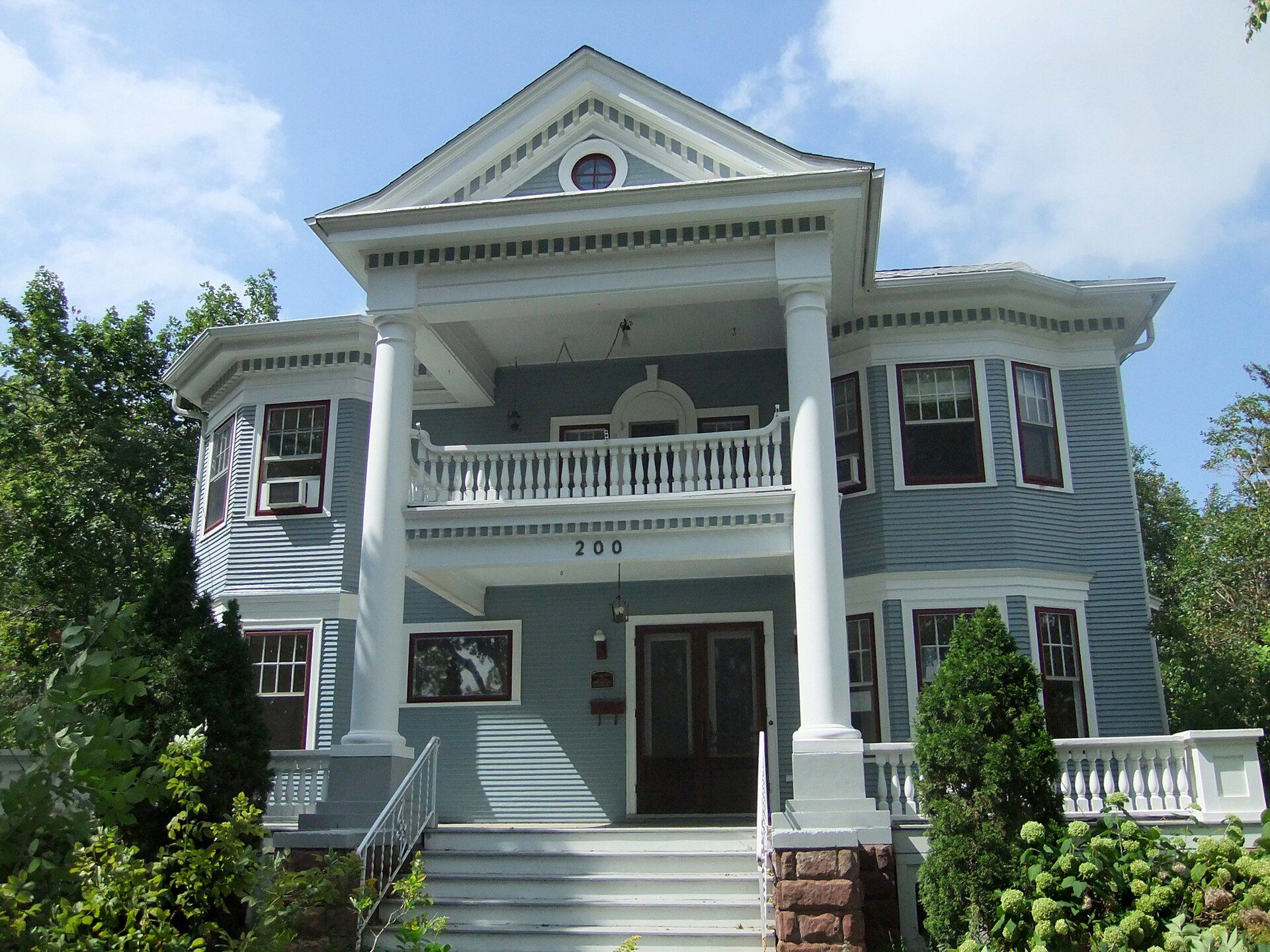
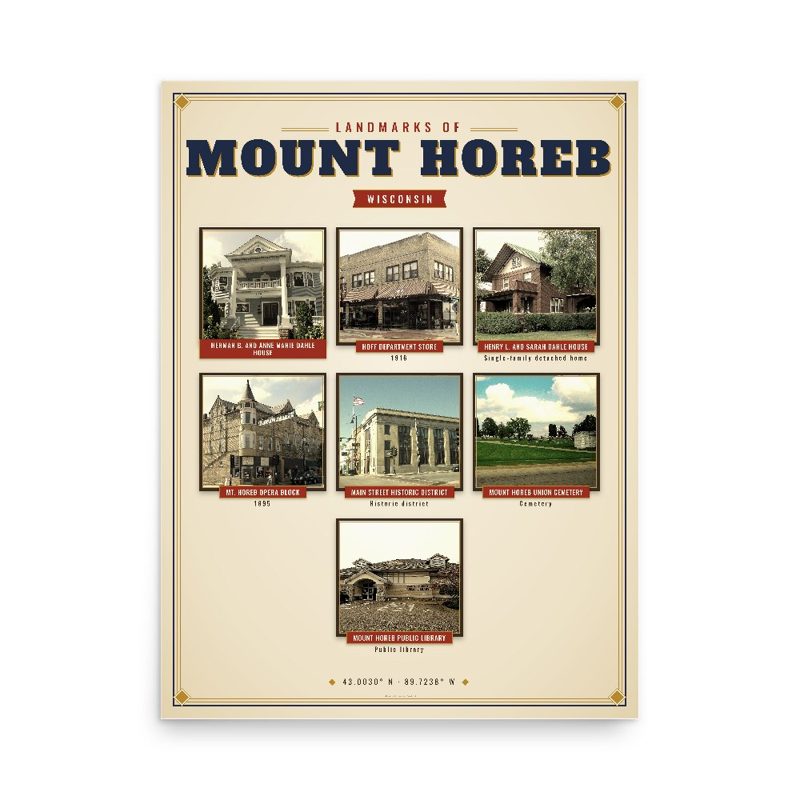
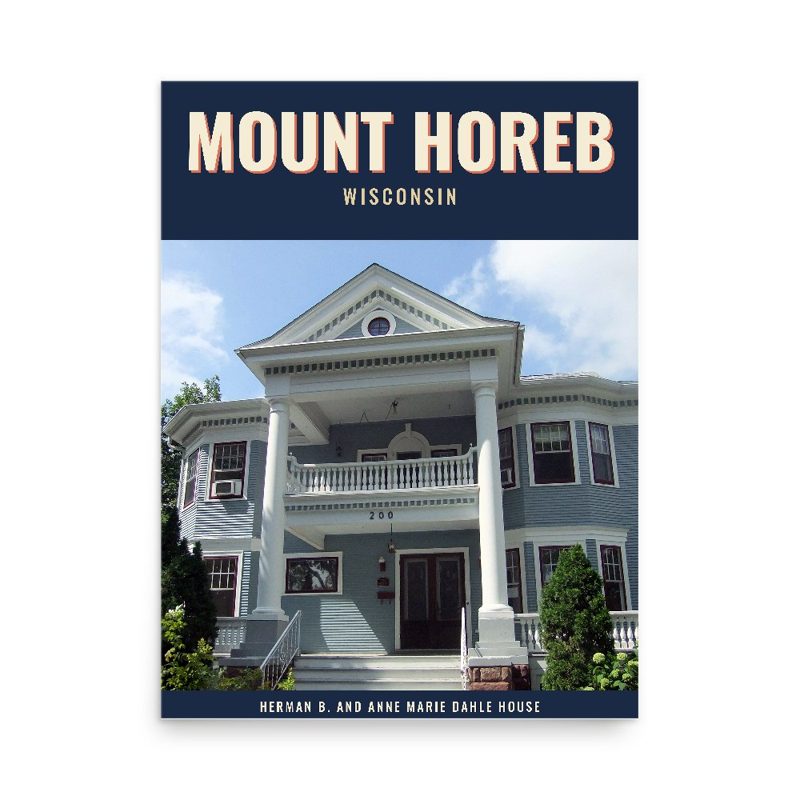
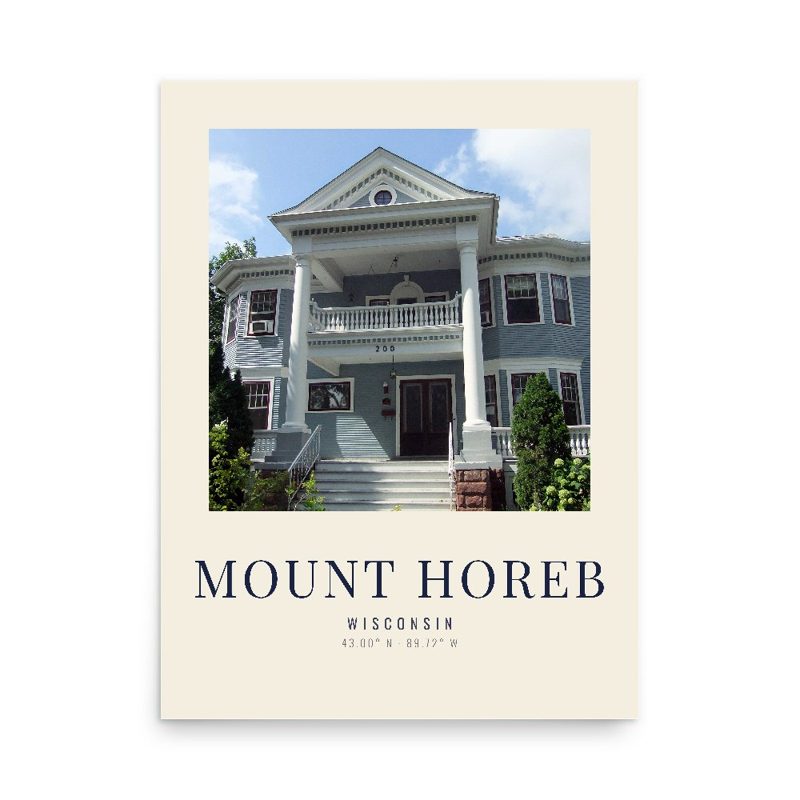
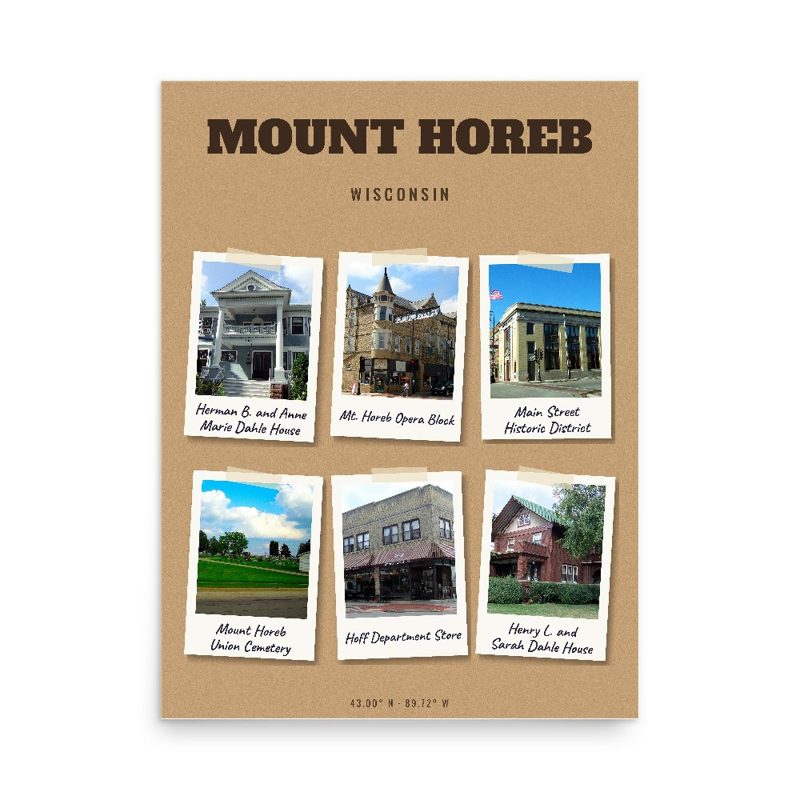
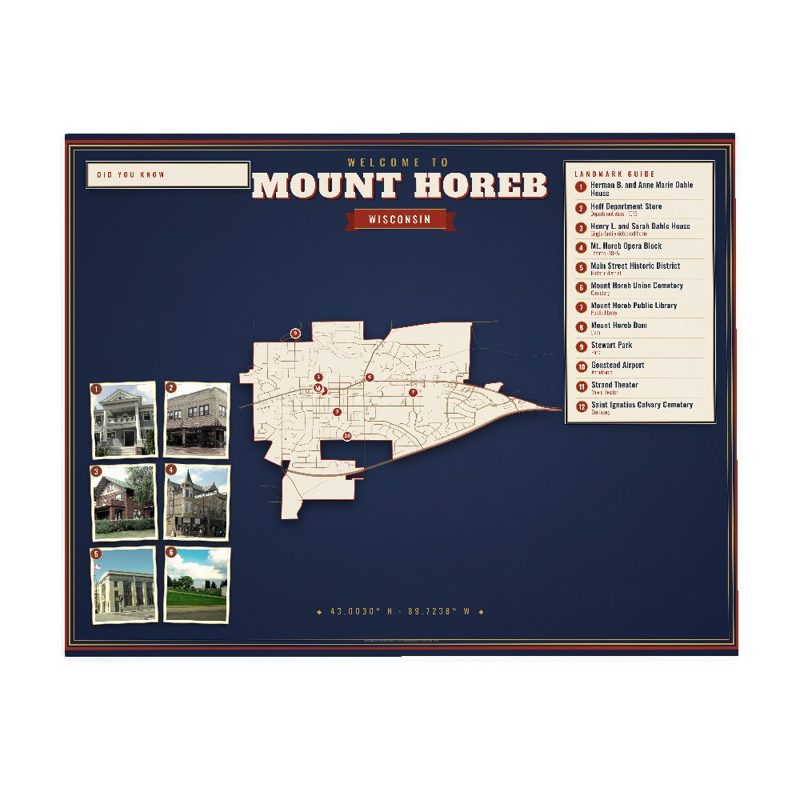
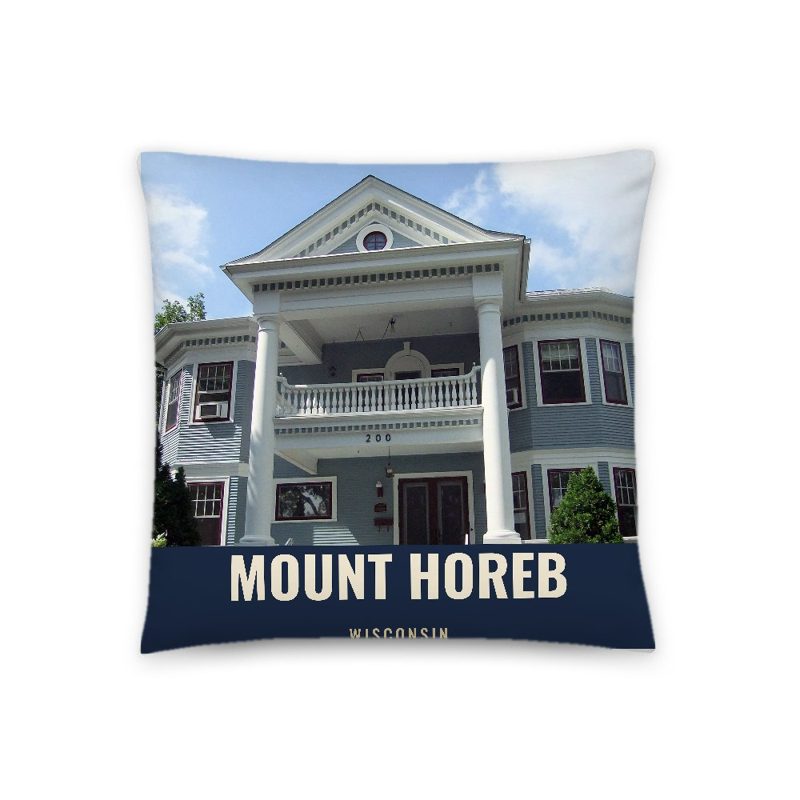
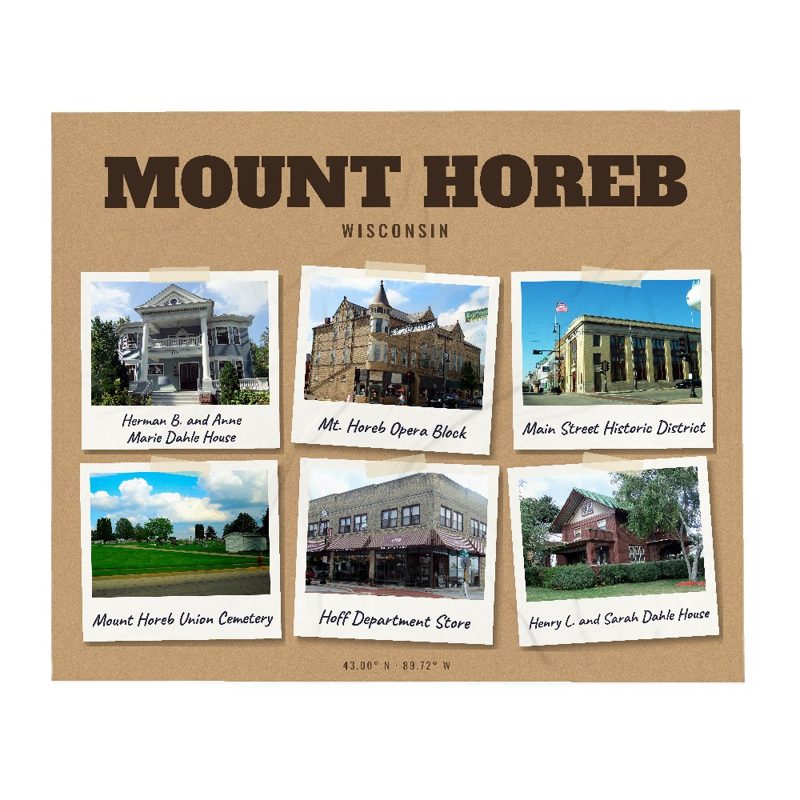
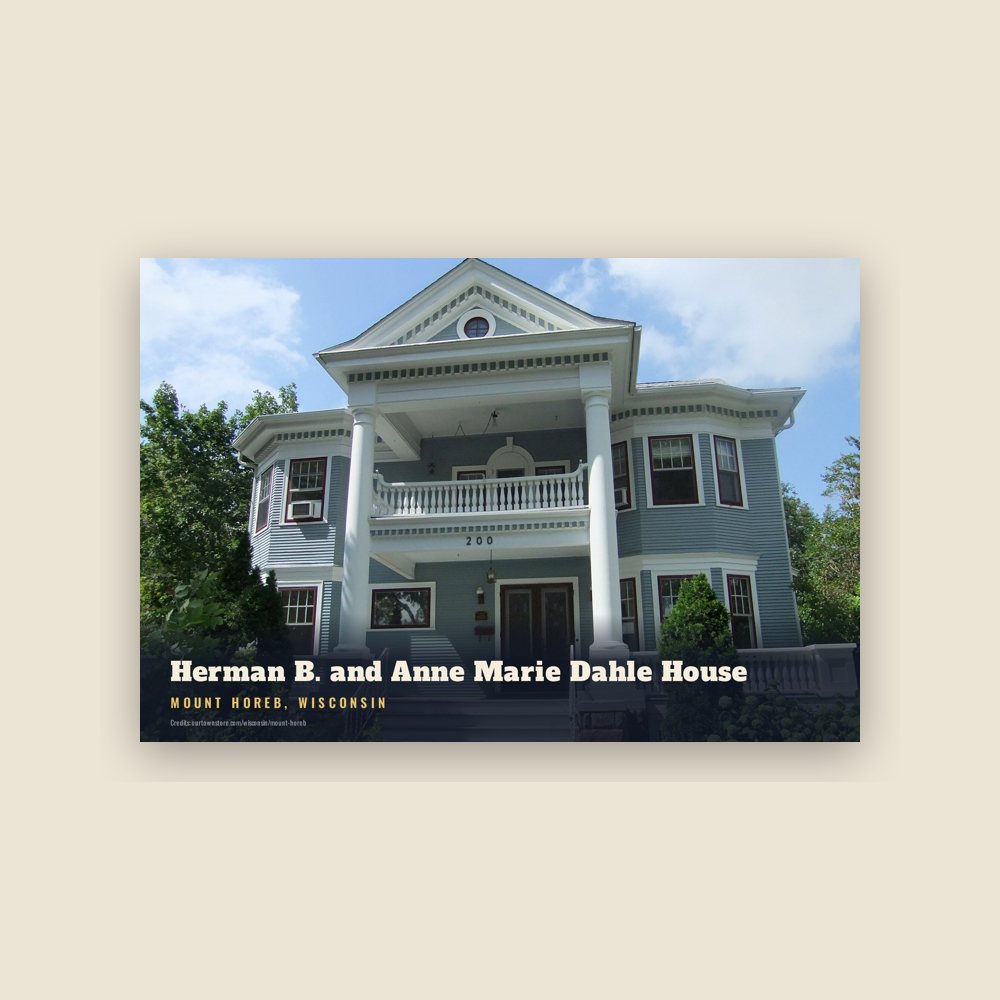
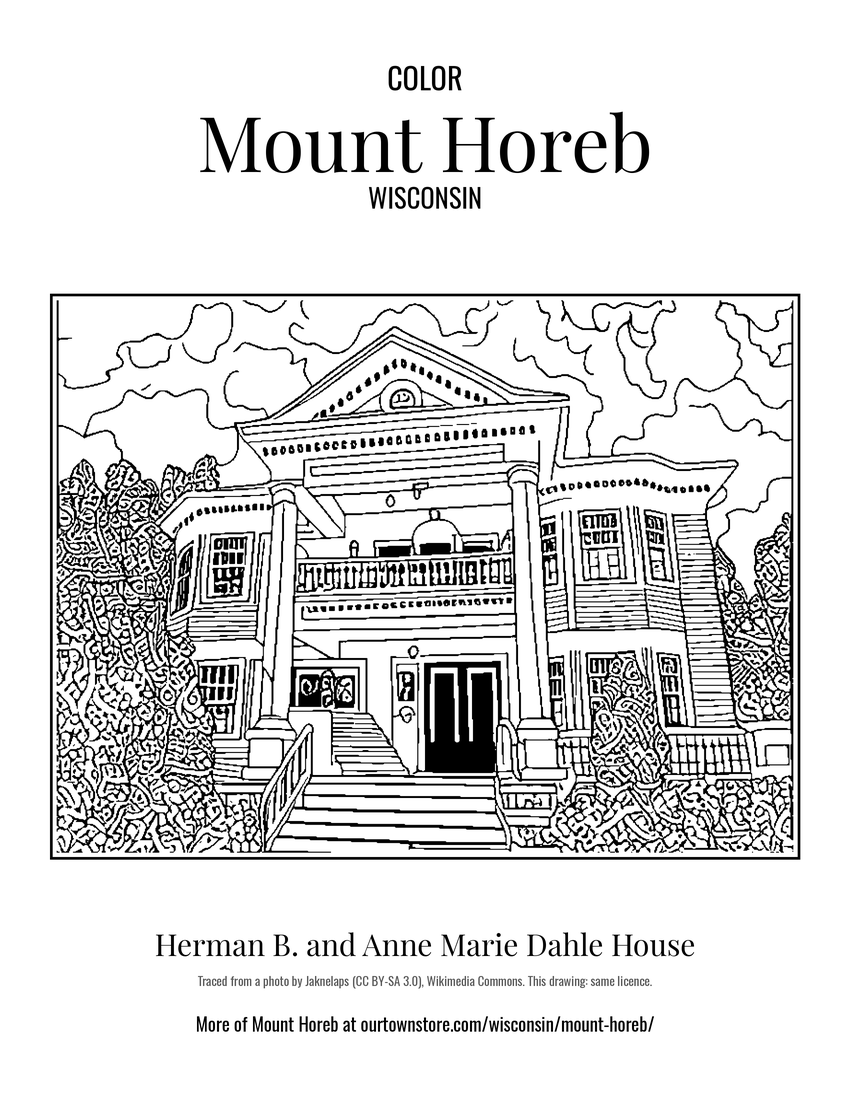 Herman B. and Anne Marie Dahle House
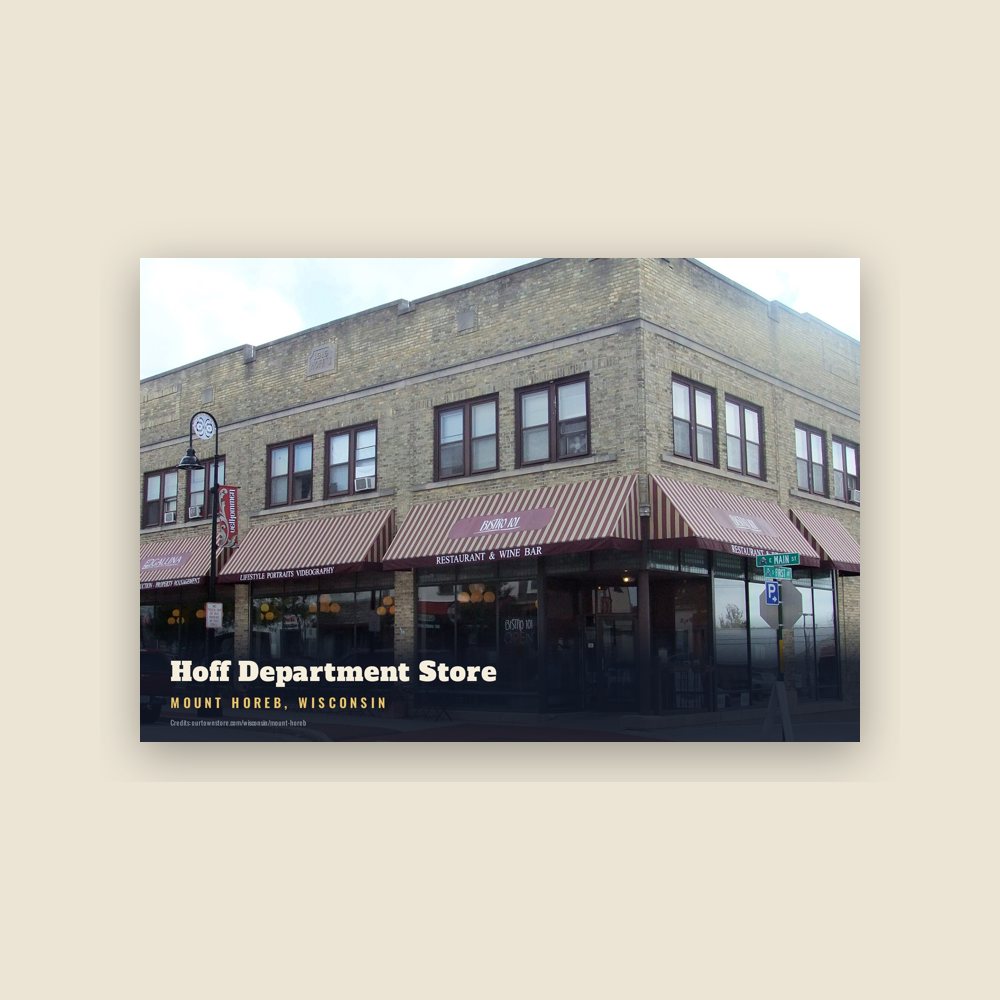
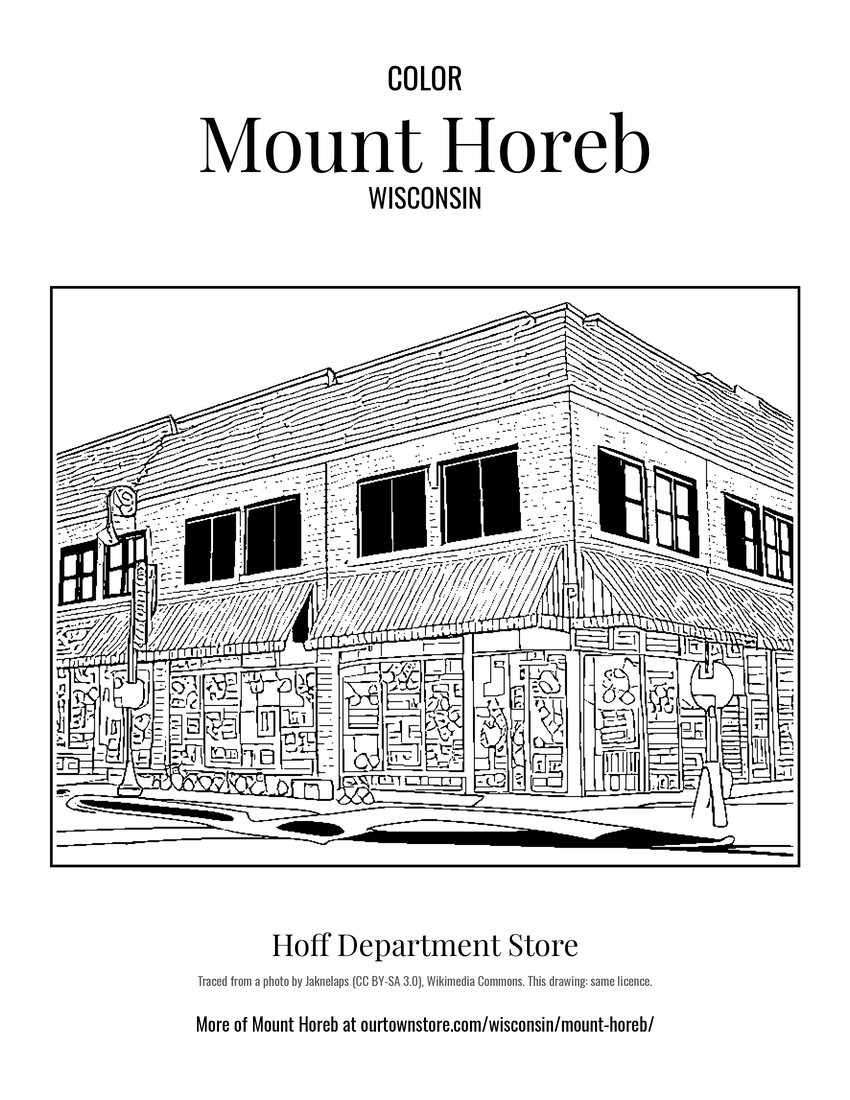 Hoff Department Store
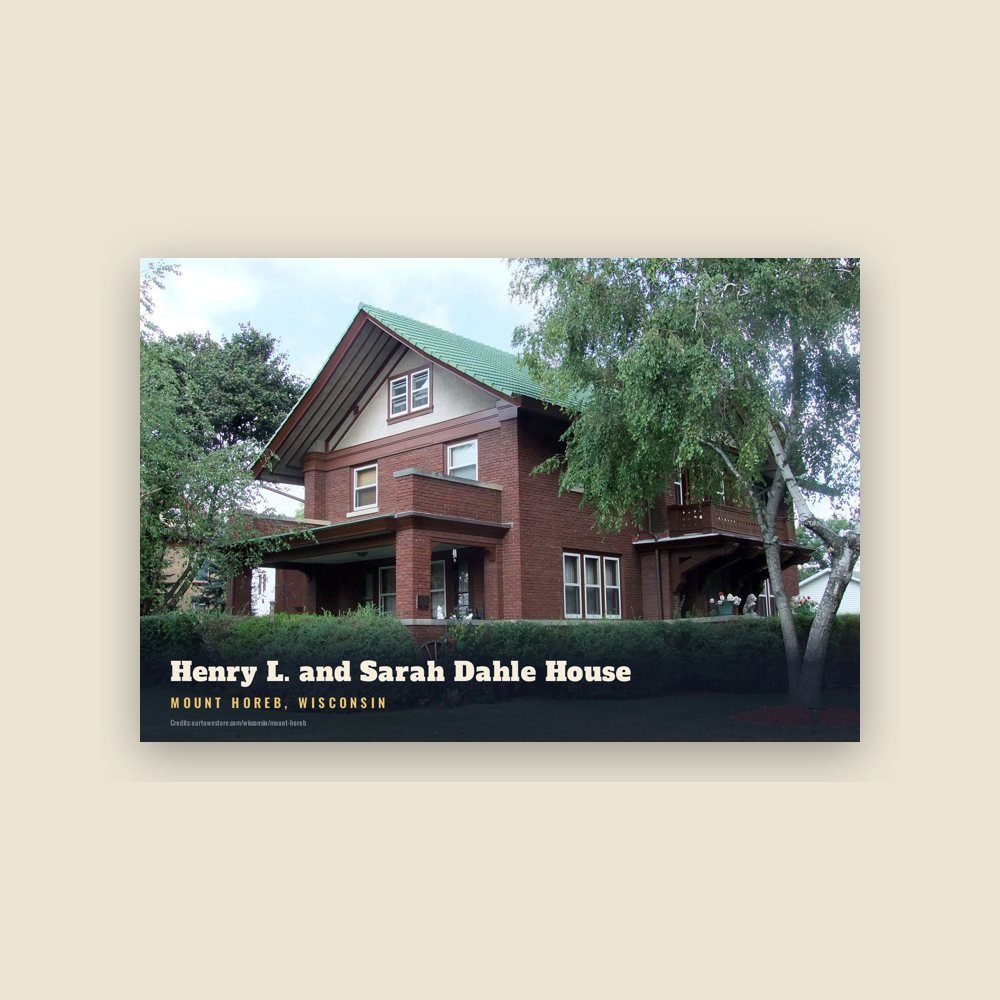
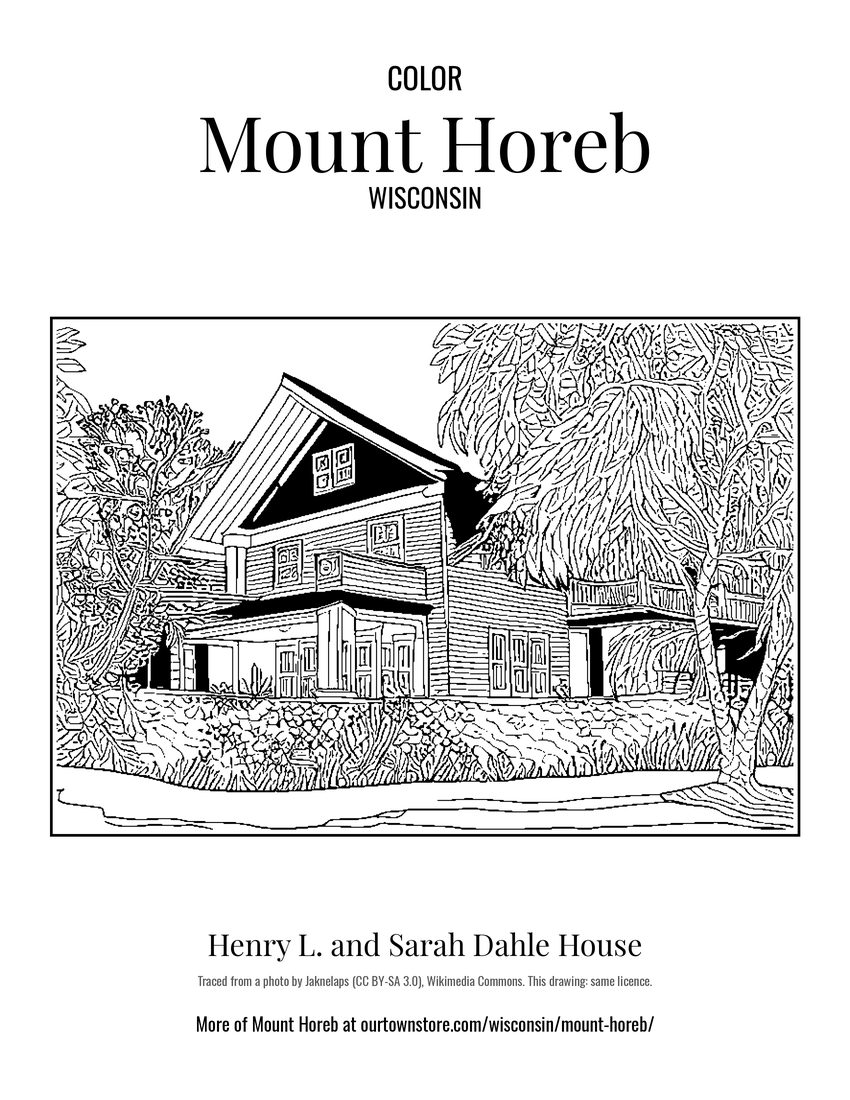 Henry L. and Sarah Dahle House
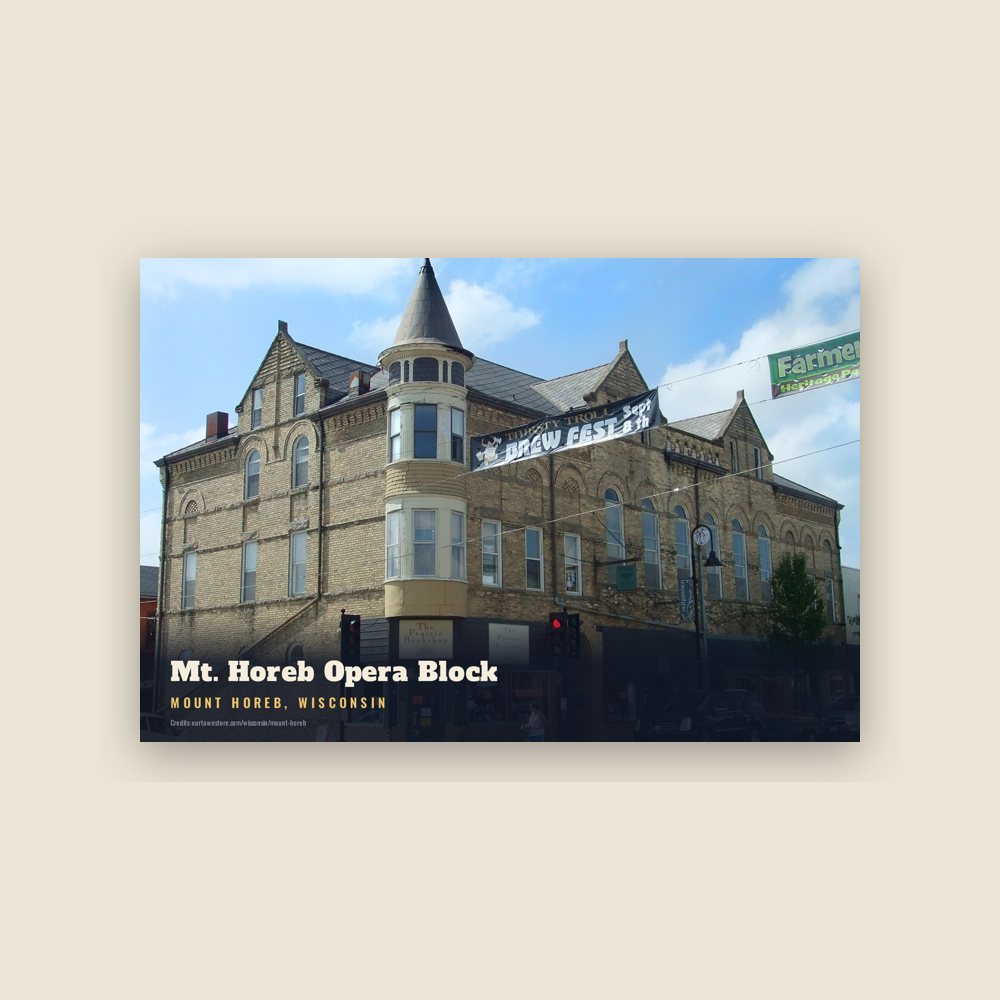
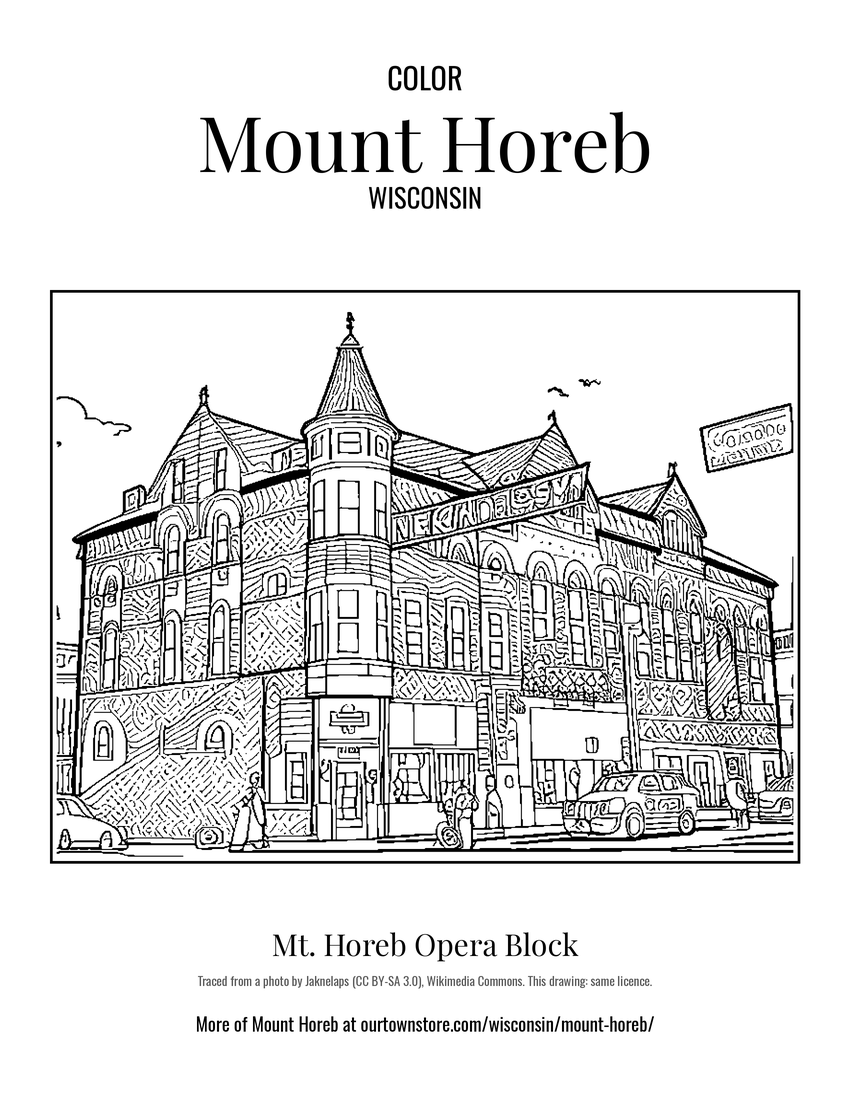 Mt. Horeb Opera Block