Samuel de Champlain, the founder of New France, commissioned Jean Nicolet to form a peaceful alliance with Native Americans in the western areas, whose unrest interfered with the French fur trade, and to search for a shorter trade route to China through Canada. Nicolet and others had learned from other First Nations of the Ho-Chunk (Winnebago) people, who identified as "People of the Sea", and believed they must reside on or near an Ocean. Champlain had also heard about natural resources in the area, including fertile soil, forests, and animals. Nicolet began his journey for this new land shortly before winter in 1634. In what later became a French fur-trading route, he sailed up the Ottawa River, through Lake Nipissing and down the French River to Lake Huron, then through the straits of Michilimackinac into Lake Michigan. He is believed to have landed at Red Banks, near the site of the modern-day city of Green Bay, Wisconsin.
Read the full history
From the trading post La Baie des Puants to the town La Baie verte (1634–1761)
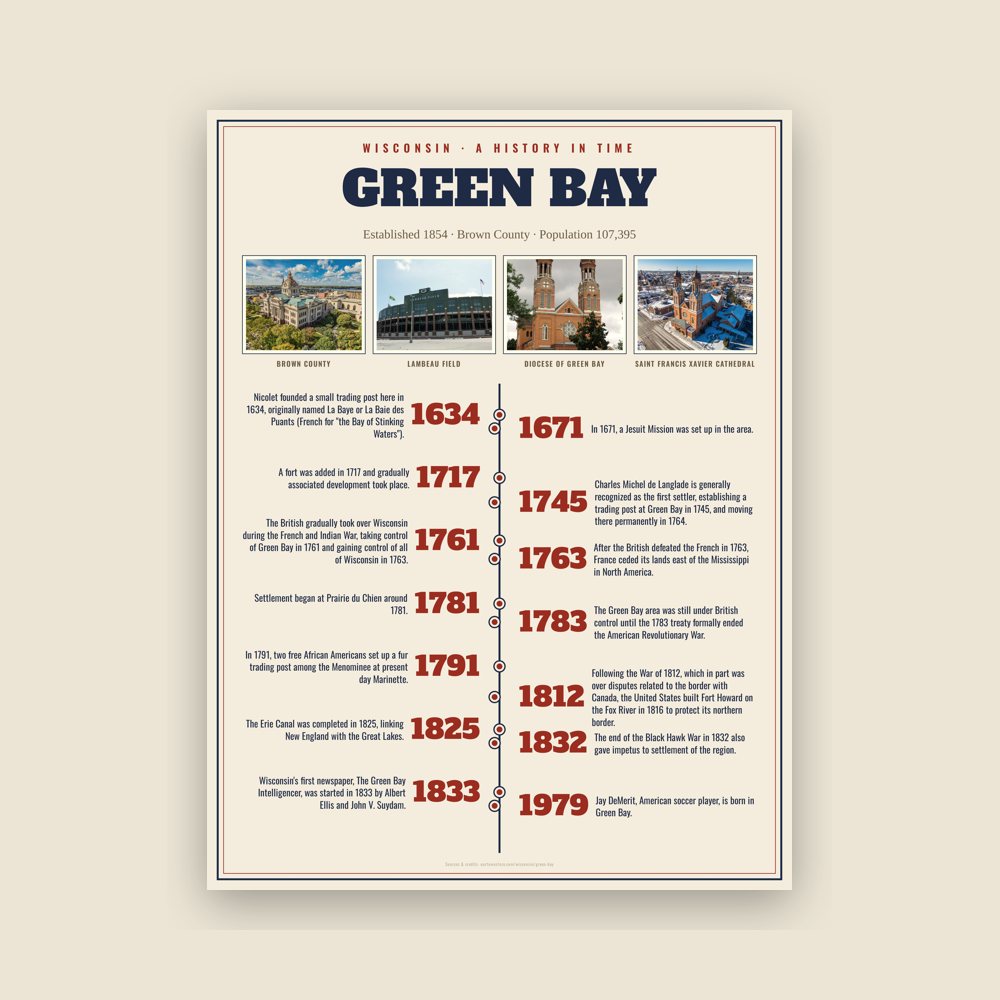
Nicolet founded a small trading post here in 1634, originally named La Baye or La Baie des Puants (French for "the Bay of Stinking Waters"). Nicolet's settlement was one of the oldest European permanent settlements in America. When Nicolet arrived in the Green Bay area, he encountered the Menominee, who occupied this territory. He also met the Ho-Chunk (also known as the Winnebago), a people who spoke a Siouan language.
The Winnebago hunted and fished, and also cultivated corn, beans, squash, and tobacco. Wild rice, which they had incorporated as a dietary staple, grew in abundance along the riverbanks. The women regularly harvested and cooked this, along with a wide variety of nuts, berries, and edible roots which they gathered in the woods. The men typically hunted and fished for food, and the women processed game and other foods in cooking. They prepared and made clothing from the furs, as well as using other parts of animals to make tools, cord, etc. Women also had a role in the political process, as no action could be taken without agreement of half of the women. Nicolet stayed with this tribe for about a year, becoming an ally. He helped open up opportunities for trade and commerce with them before returning to Quebec.
A few months after Nicolet returned to Quebec, Champlain died. His death halted other journeys to La Baie Verte (French for "The Green Bay"). Père Claude Allouez sent Nicolas Perrot to La Baie. After this, the French avoided the area for some decades, because of the intensity of First Nations and European conflicts in the east. In 1671, a Jesuit Mission was set up in the area. A fort was added in 1717 and gradually associated development took place. The town was incorporated in 1754. Great Britain took control of some French areas during the Seven Years' War, known as the French and Indian War in some areas of North America. They took control of this town in 1761. After the British defeated the French in 1763, France ceded its lands east of the Mississippi in North America.
The first permanent settlers were Charles Michel de Langlade and his family from Quebec, who moved to Green Bay in 1765. They are considered the first European settlers in the present-day state of Wisconsin. Langlade, called the "Founder and Father of Wisconsin", was a métis or mixed-race, son of a French-Canadian father and an Odawa woman. He grew up with his mother's family among the Odawa people and became a war chief. The Ottawa were allies of the French during the French and Indian War, and Langlade is credited with planning the ambush of British General Edward Braddock and George Washington. His family was followed to Green Bay by the Grignons, Porliers and Lawes, who brought French-Canadian culture with them. Colorful "jack-knife Judge" Reaume dispensed British justice in the territory after Great Britain took it over following the war. These early ethnic French settlers set the tone for many who followed.
British control (1761–1783)
The British gradually took over Wisconsin during the French and Indian War, taking control of Green Bay in 1761 and gaining control of all of Wisconsin in 1763. Like the French, the British were interested in little but the fur trade. The first permanent settlers, mostly French Canadians, some Anglo-New Englanders and a few African American freedmen, arrived in Wisconsin while it was under British control. Charles Michel de Langlade is generally recognized as the first settler, establishing a trading post at Green Bay in 1745, and moving there permanently in 1764.
Settlement began at Prairie du Chien around 1781. The French residents at the trading post in what is now Green Bay, referred to the town as "La Bey," however British fur traders referred to it as "Green Bay," because the water and the shore assumed green tints in early spring. The old French title was gradually dropped, and the British name of "Green Bay" stuck. The region coming under British rule had virtually no adverse effect on the French residents as the British needed the cooperation of the French fur traders and the French fur traders needed the goodwill of the British.
During the French occupation of the region licenses for fur trading had been issued scarcely and only to select groups of traders, whereas the British, in an effort to make as much money as possible from the region, issued licenses for fur trading freely, both to British and French residents. The fur trade in what is now Wisconsin reached its height under British rule, and the first self-sustaining farms in the state were established as well. From 1763 to 1780, Green Bay was a prosperous community which produced its own foodstuff, built graceful cottages and held dances and festivities. In 1791, two free African Americans set up a fur trading post among the Menominee at present day Marinette.
After independence
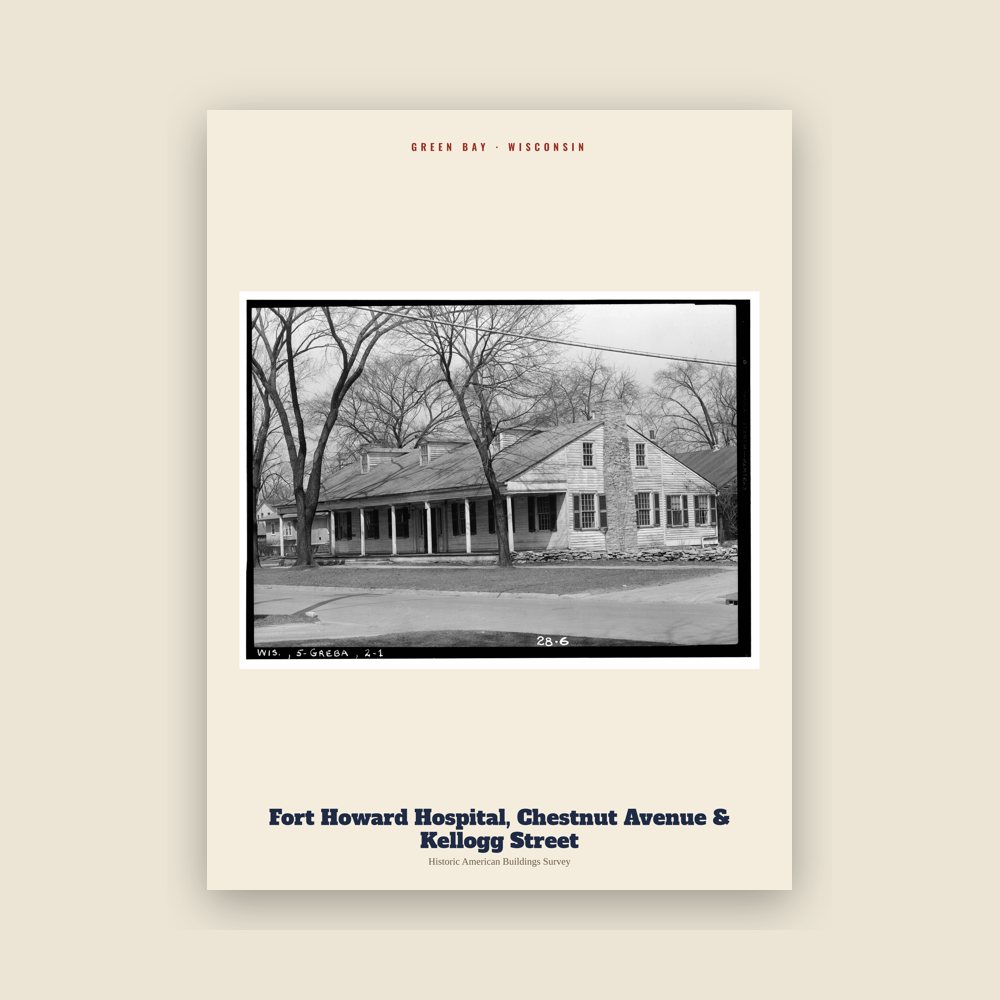
The Green Bay area was still under British control until the 1783 treaty formally ended the American Revolutionary War. Following the War of 1812, which in part was over disputes related to the border with Canada, the United States built Fort Howard on the Fox River in 1816 to protect its northern border. Doty, Whitney, Arndt, Baird and Martin were among the many British-American settlers whose numbers pushed French culture into the background.
The Erie Canal was completed in 1825, linking New England with the Great Lakes. This led to the advance of Green Bay as a trading center. The end of the Black Hawk War in 1832 also gave impetus to settlement of the region. Most of the settlers were farmers from New England who began using the Erie Canal to pour into Wisconsin. As more and more New England settlers arrived, Green Bay developed into a trading center for this population.
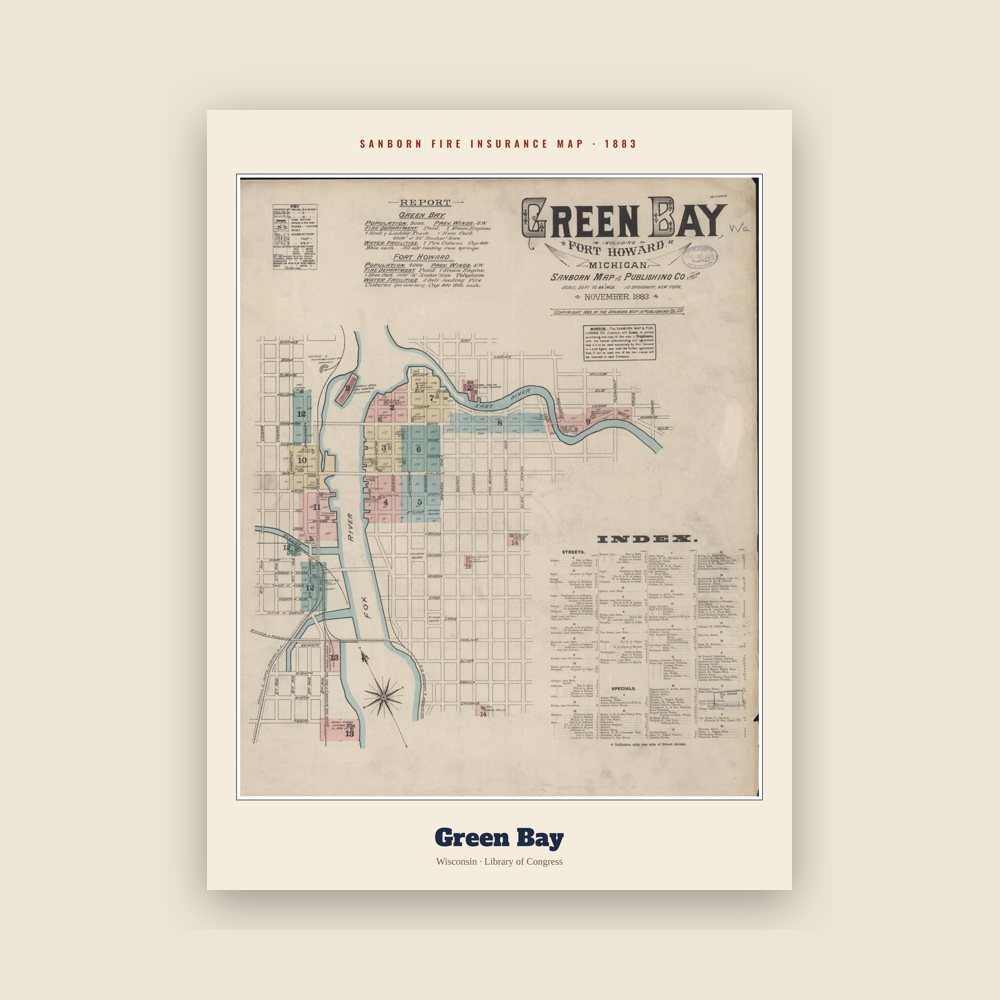
Wisconsin's first newspaper, The Green Bay Intelligencer, was started in 1833 by Albert Ellis and John V. Suydam. The borough of Green Bay, created in 1838, is the center of the present-day city. The borough combined the town of Astor (a company town of the American Fur Company) with Navarino, platted by Daniel Whitney. Before Wisconsin became a state in 1848, its commerce was based on the fur trade, which became dominated by John Jacob Astor's American Fur Company. After statehood, there was a shift away from fur trading toward lumbering. "For a short time in 1860s and 1870s, iron smelting in charcoal kilns rivaled the timber industry while the port handled increasing amounts of fuel, feed, and lumber. Today's major local industry had its start in 1865 when the first paper mill was built."
By 1850 the town had a population of 1,923. The town was incorporated as the city of Green Bay on February 27, 1854. The Green Bay Area Public School District was founded in 1856. Throughout the 1850s, word spread of America's cheap land and good soil, bringing in an influx of Belgian people, German, Scandinavian, Irish and Dutch immigrants, each adding to the culture. The greatest concentration of newcomers came from Belgium. They cleared the land to farm and build their homes.
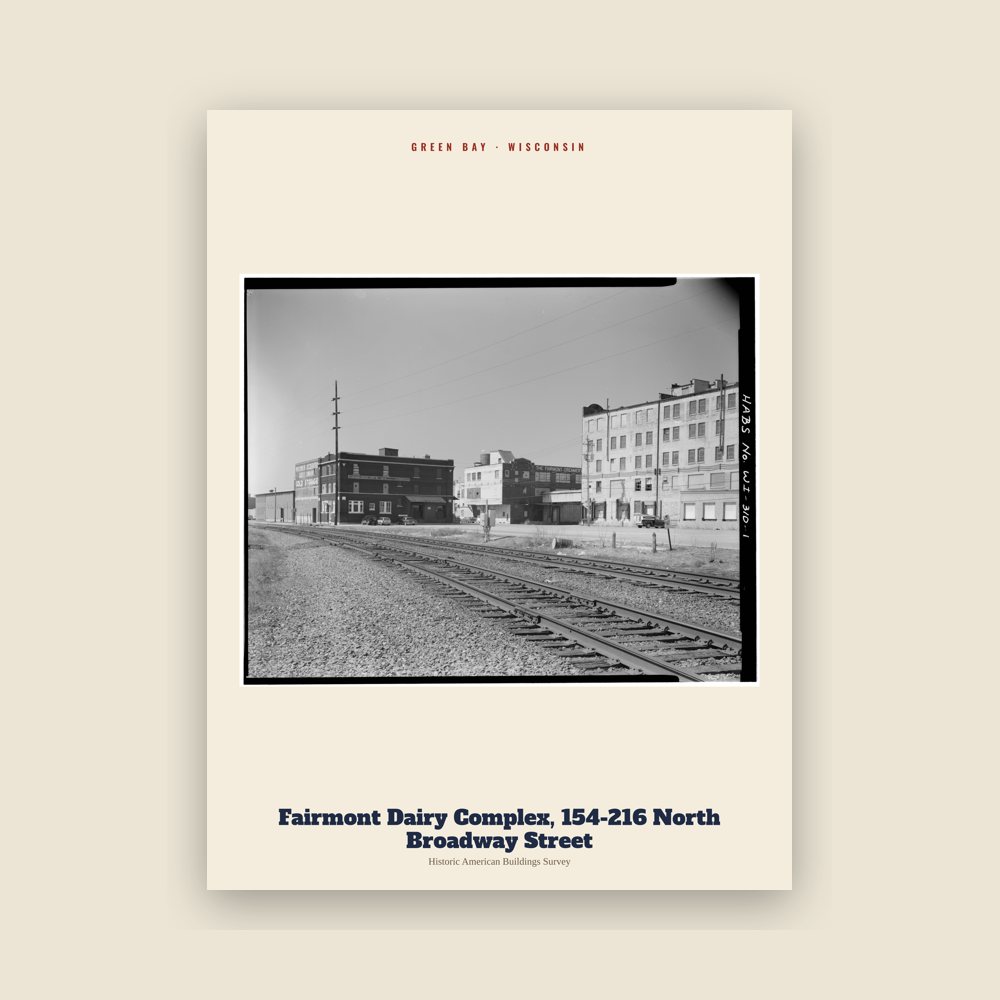
The railroad arrived in the 1860s. The three railroads that would reach Green Bay were the Chicago & North Western (C&NW), SOO Line, (SOO), and the Milwaukee Road (MILW). These railroads were highways which allowed people and products to travel all over the state, increasing business and trade opportunities. The area was able to grow and enrich itself with the use of the plentiful timber resources. This led to the paper industry becoming the major employer in Green Bay, and opened up the port for international trade.
Large numbers of Belgians immigrated to Green Bay in the thirty-year period between 1880 and 1910. Significant numbers of English immigrants, many having lived first in Canada, also moved to Green Bay during this period, usually arriving as large families. There was also a small Dutch community in Green Bay at this time. Green Bay had a larger portion of first generation immigrants from France than any other city in Wisconsin at this time as well.
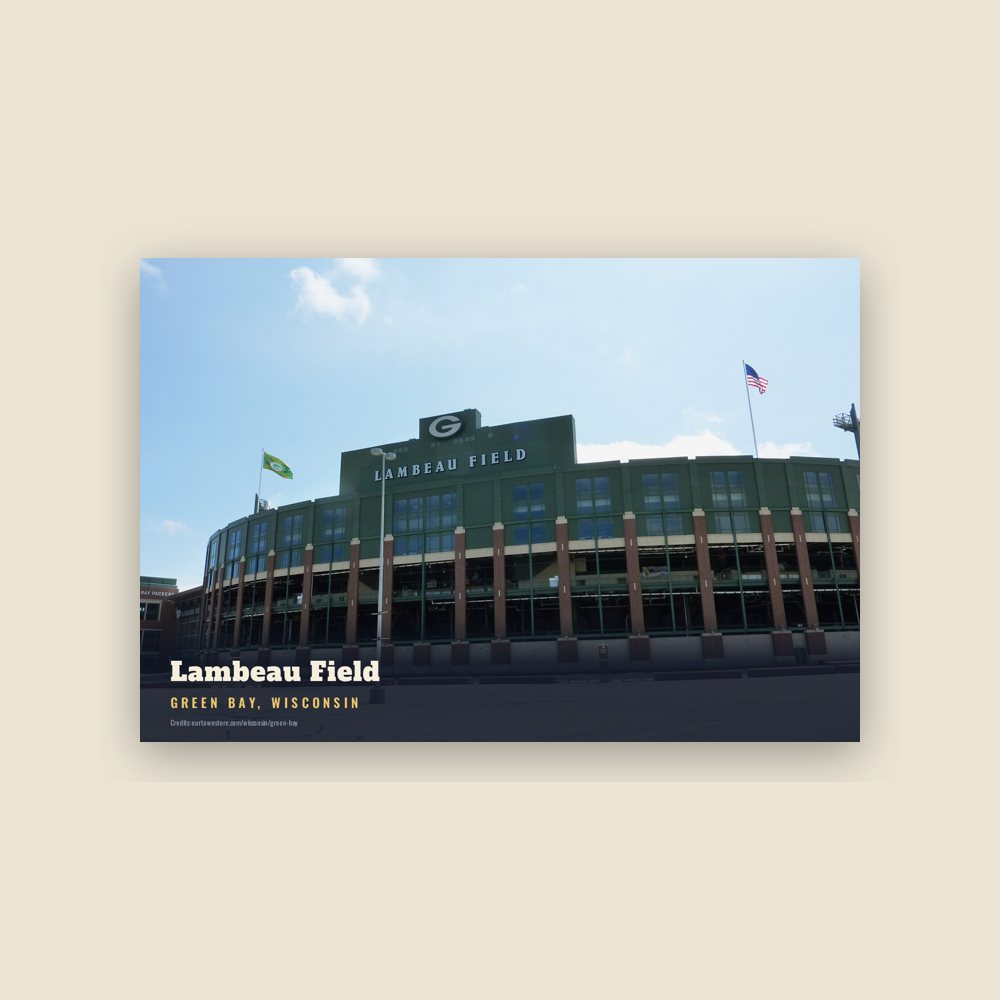
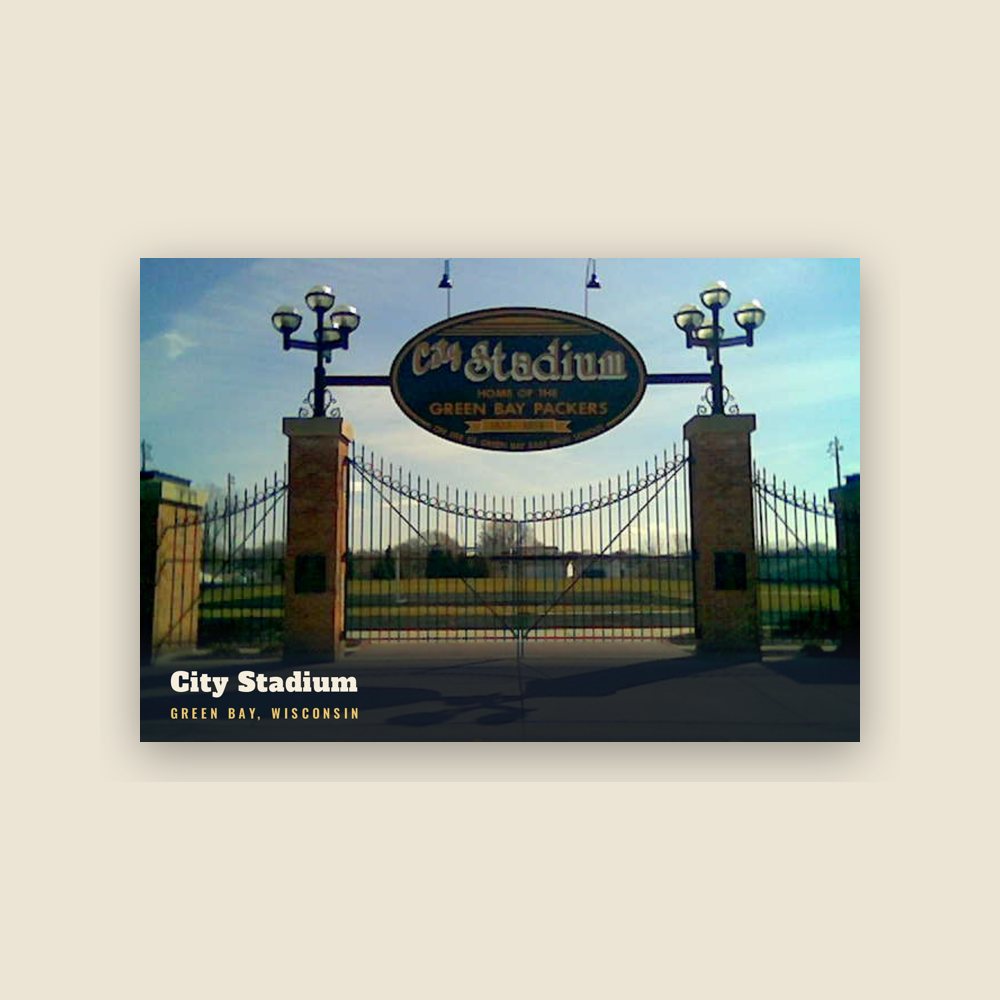
The Green Bay Packers, an American Football team, were founded in 1919. They have been a member of the National Football League since 1921, the only remaining "small town" team in any of the "big four" major league sports leagues. The team has played most of its home games in two stadiums in the Green Bay area: Green Bay and Lambeau Field, their current home. The Packers Heritage Trail highlights these two locations, as well as other local points of interest in and around the city related to the history of the Green Bay Packers.
In 1934, President Franklin D. Roosevelt came to Green Bay to honor its tercentenary. By 1950, the city had a population of 52,735. In 1964, the Town of Preble was consolidated with the city of Green Bay.
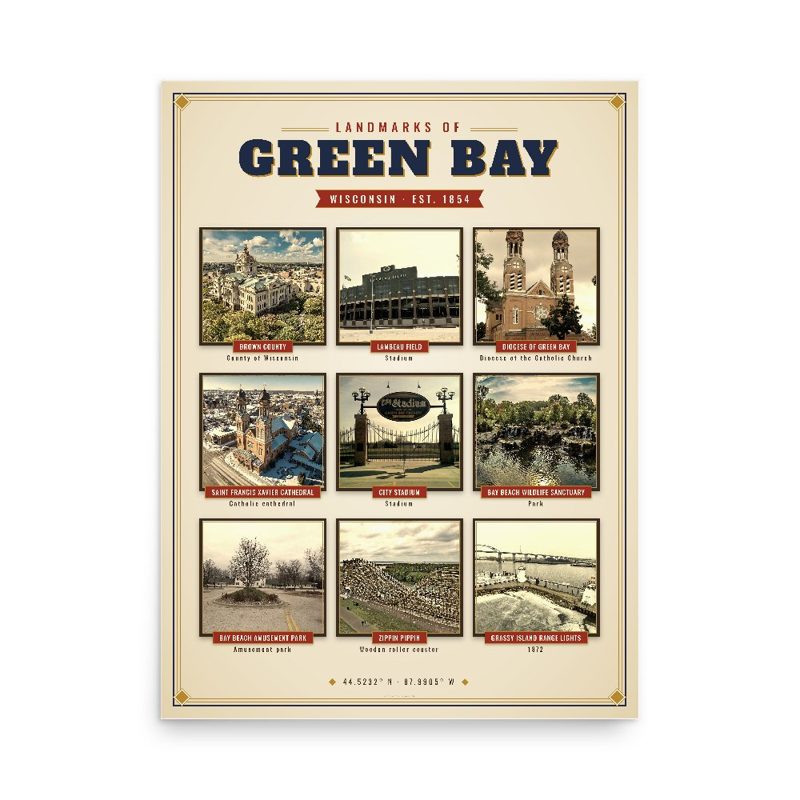
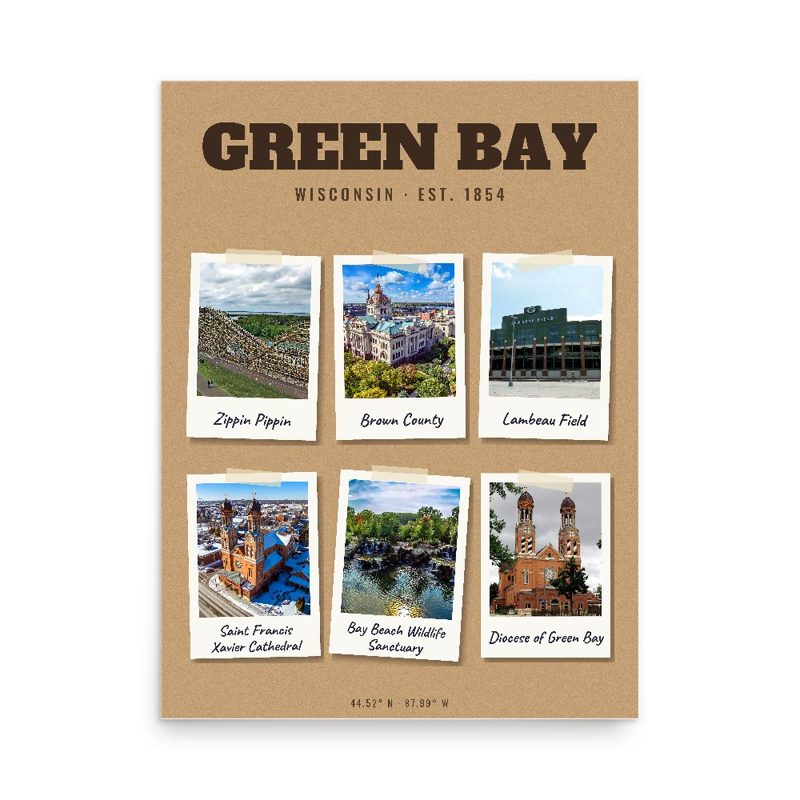
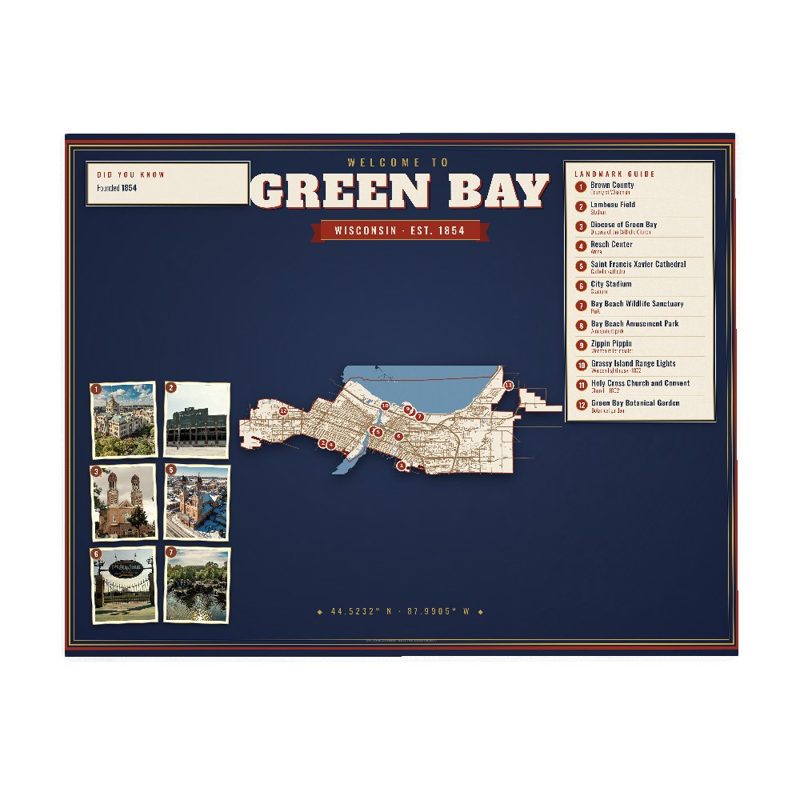



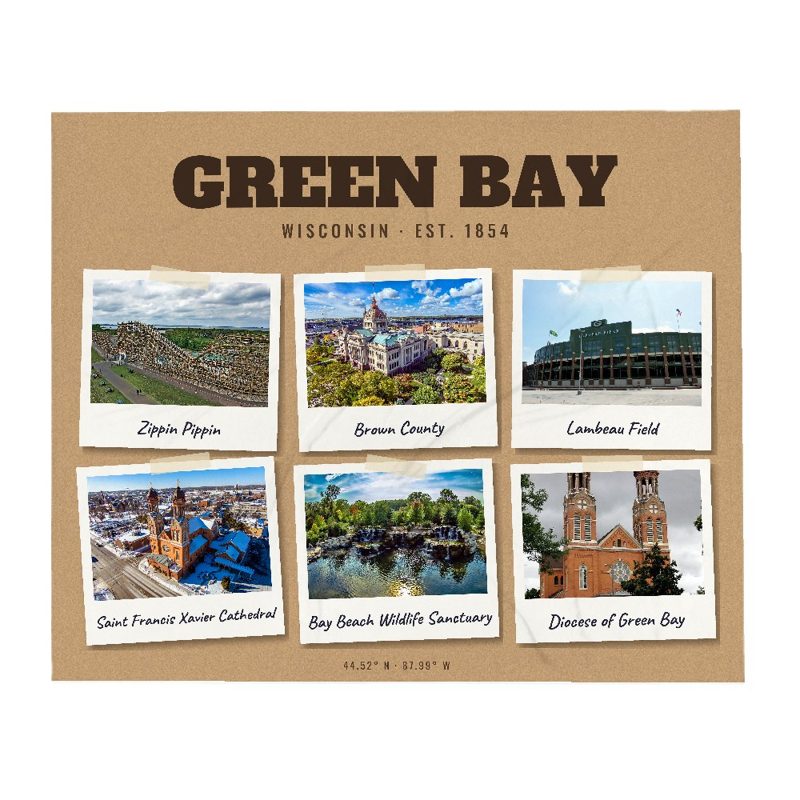
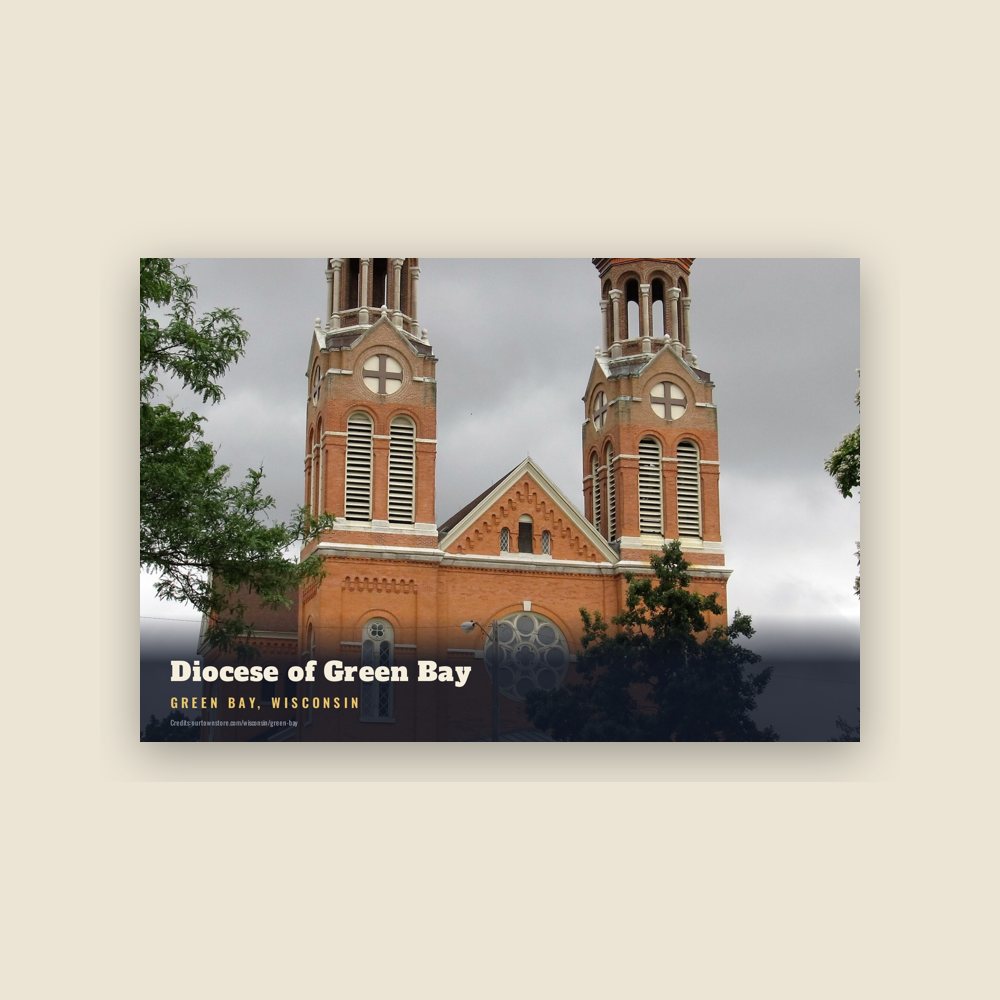
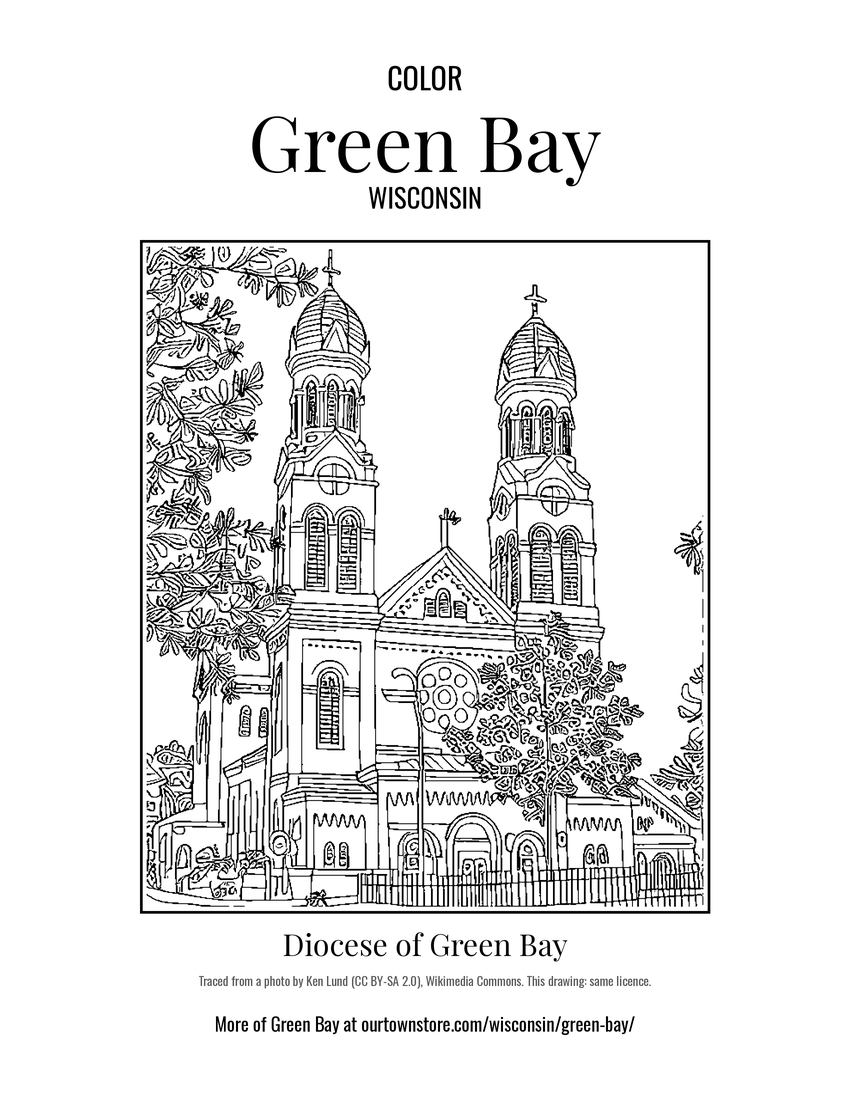 Diocese of Green Bay
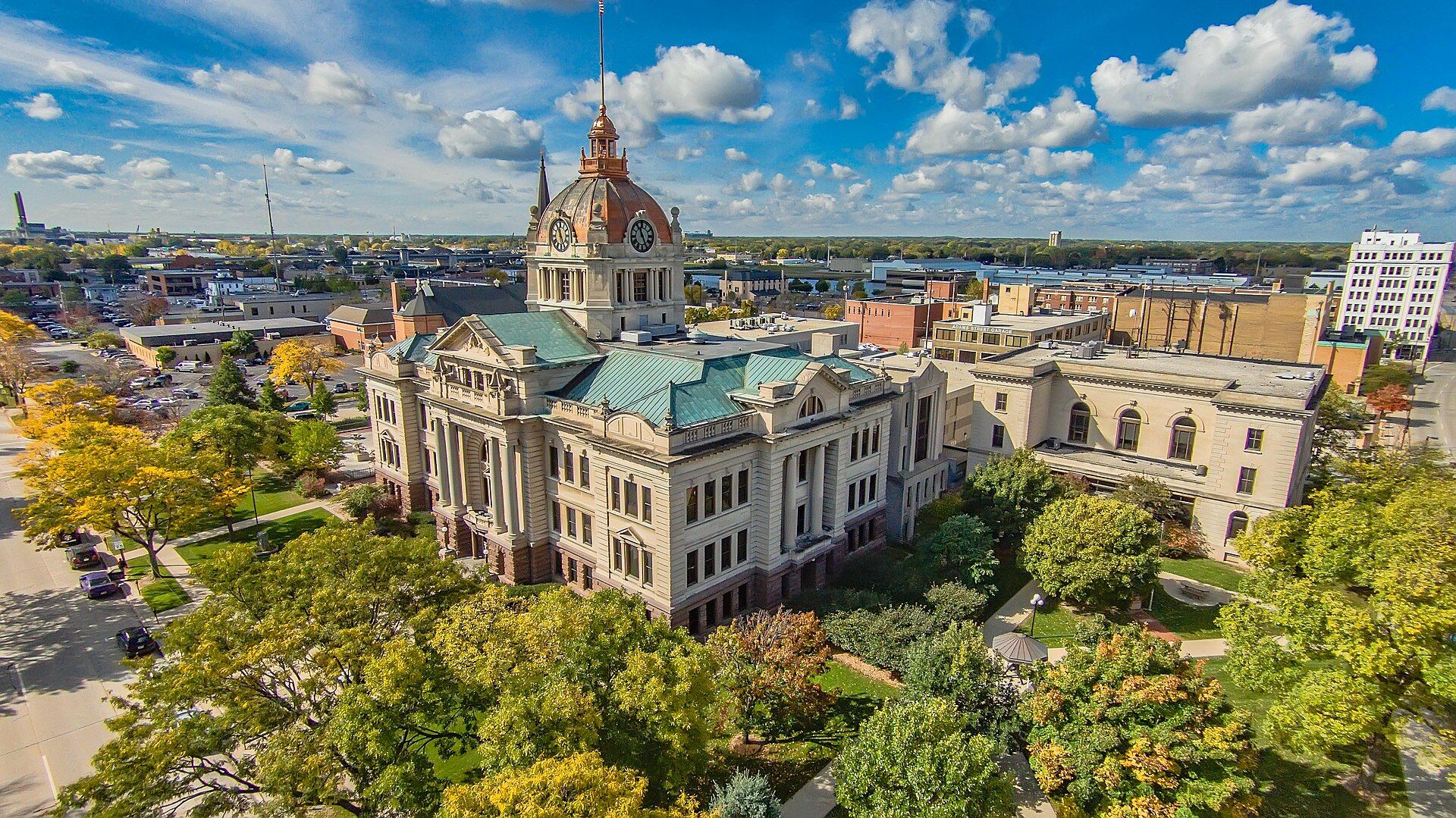
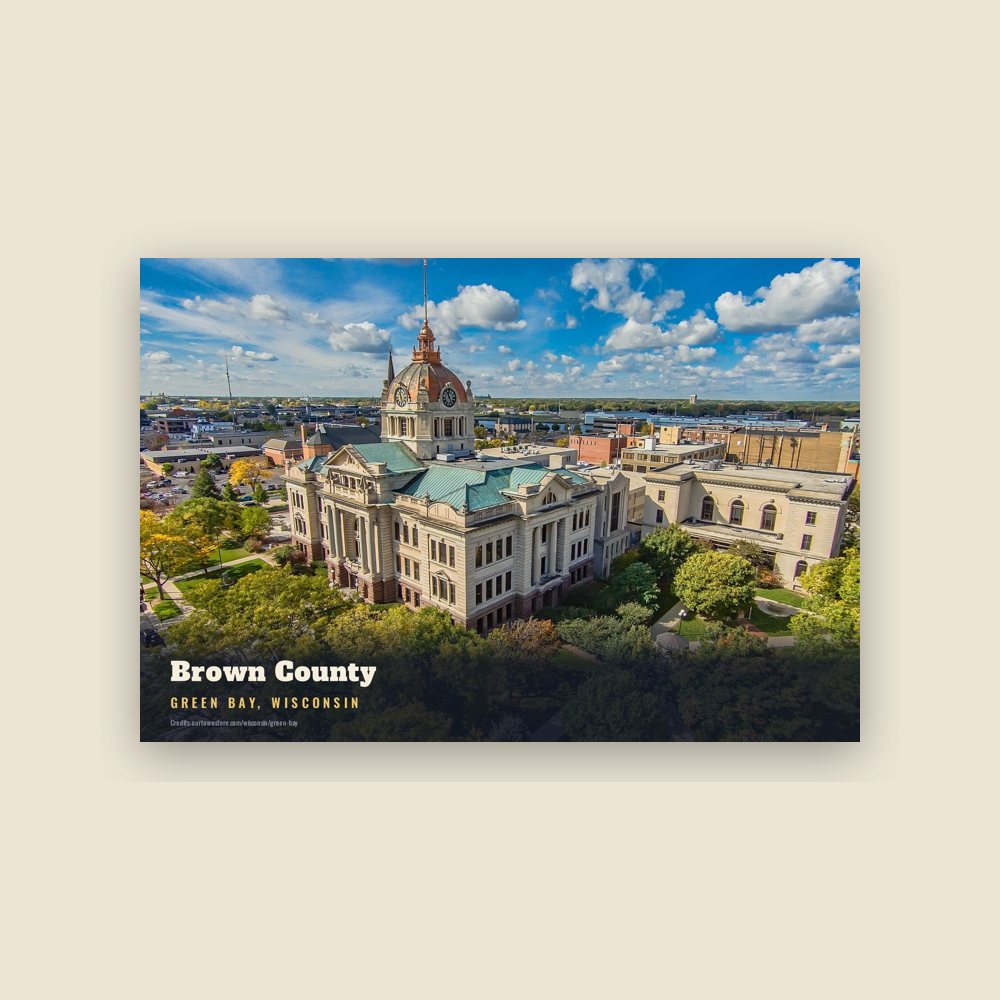
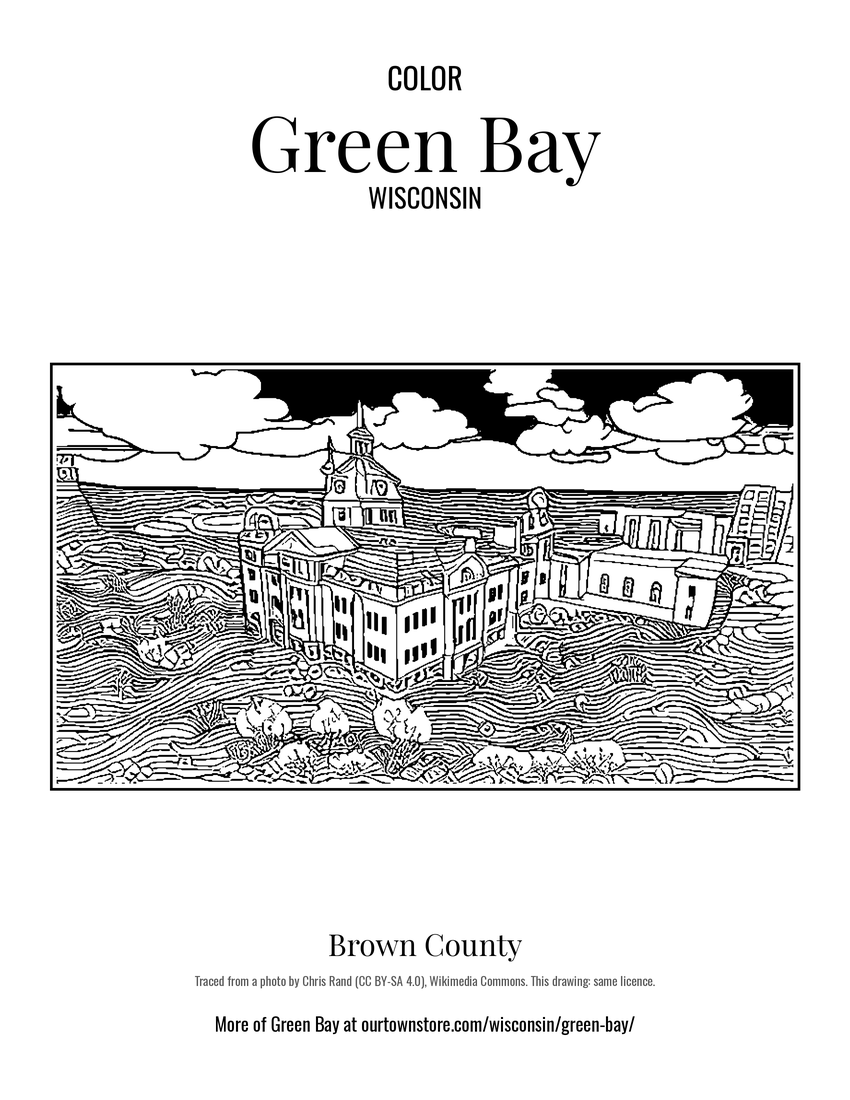 Brown County
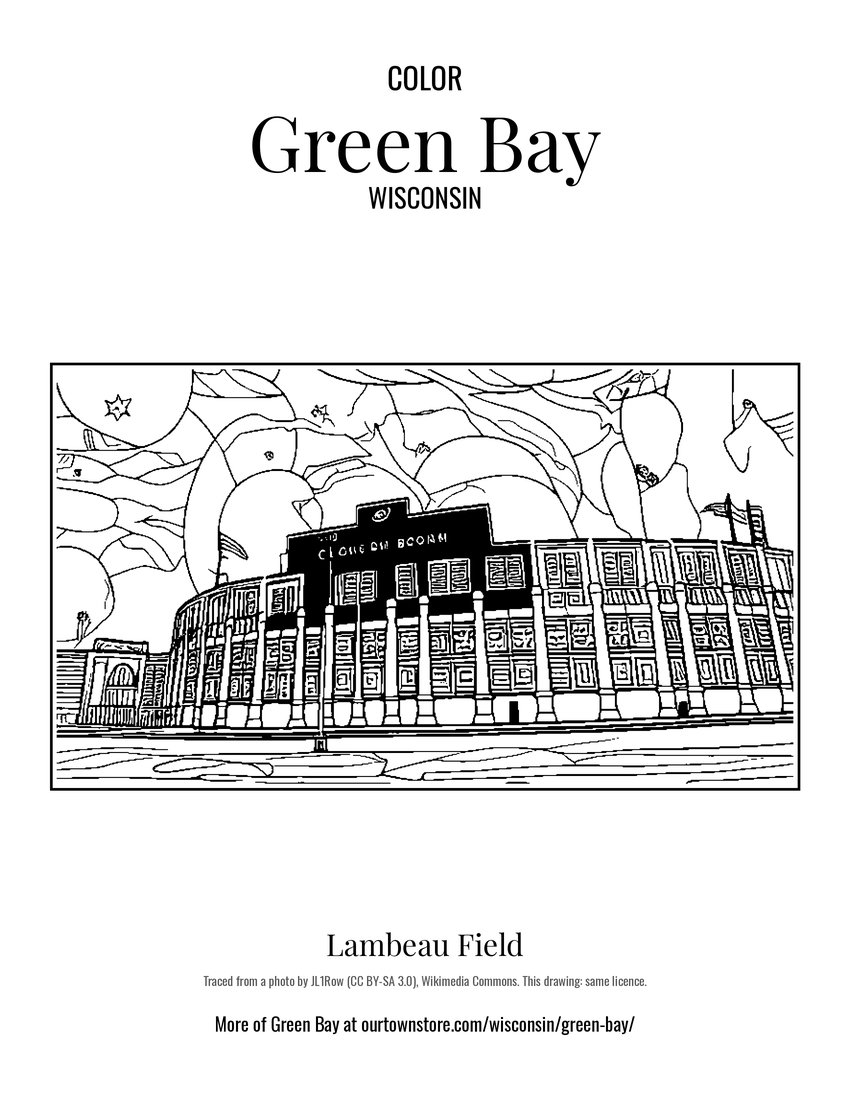 Lambeau Field
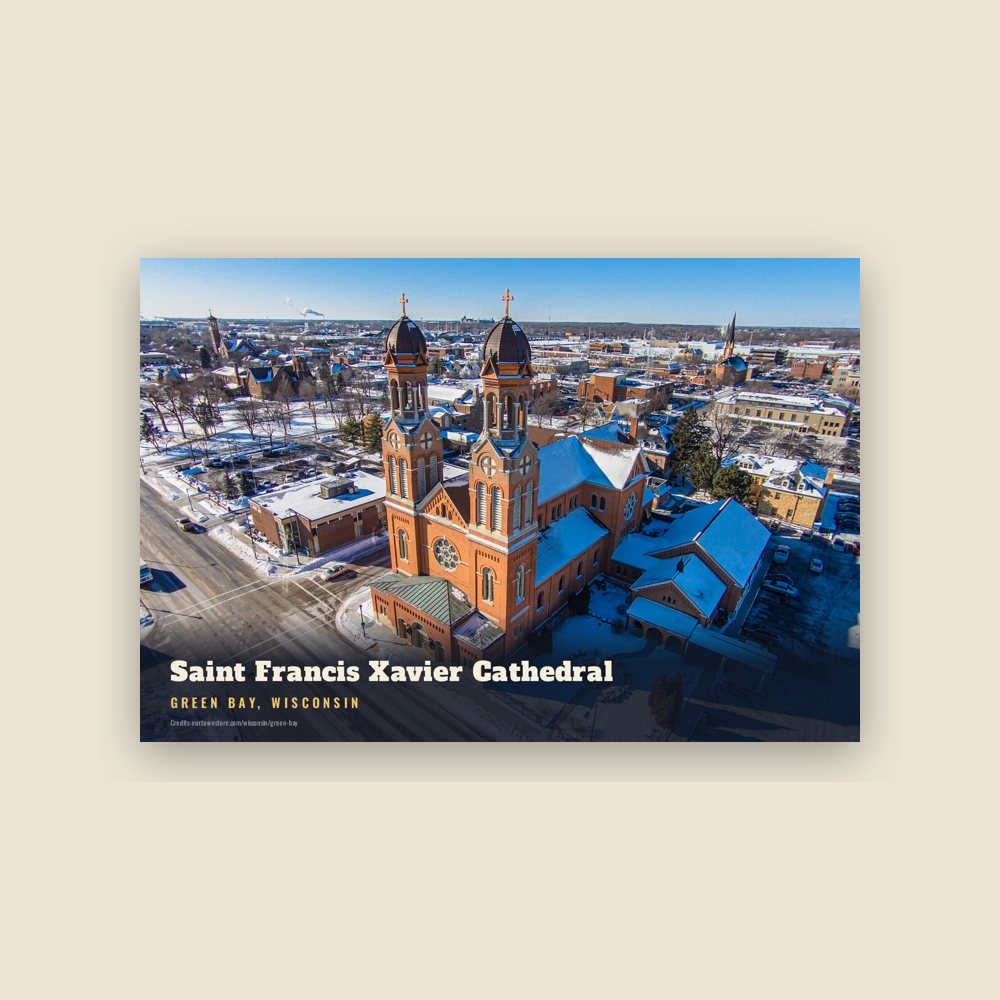
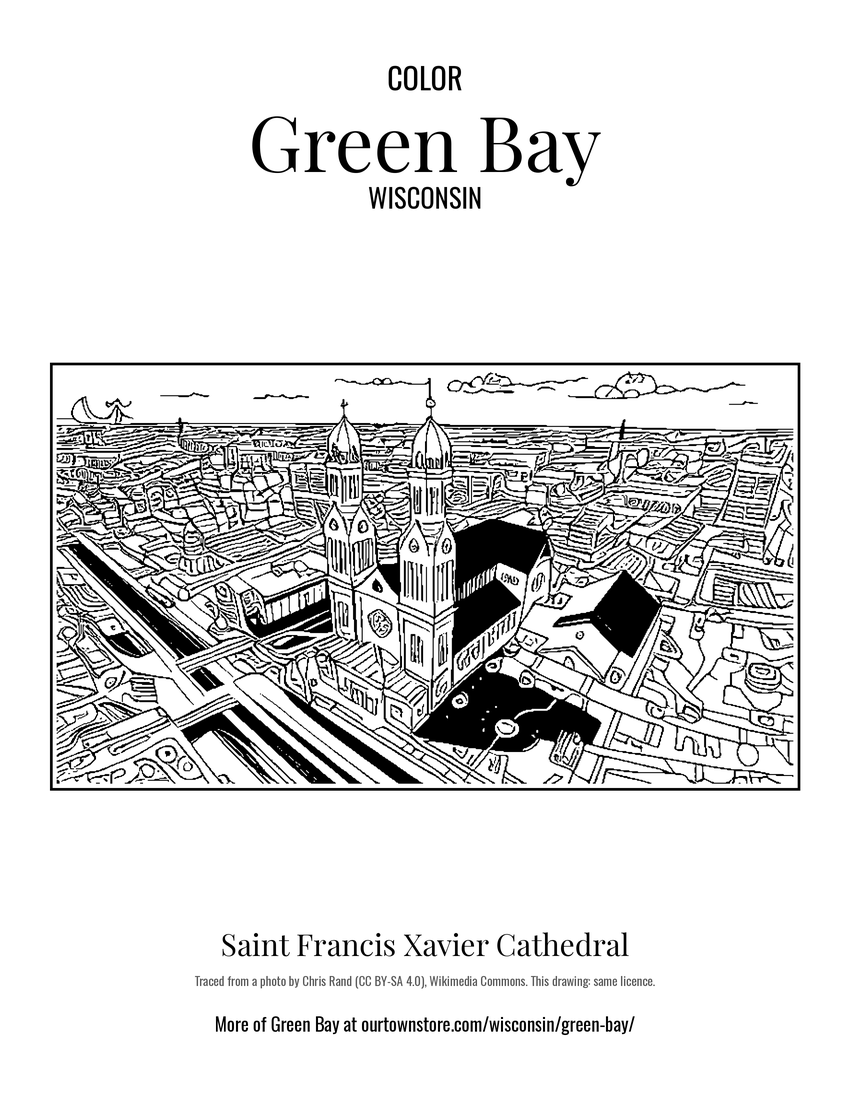 Saint Francis Xavier Cathedral